
Bold blackwork on the hand tends to outlive the delicate single-needle trends you see online. I say that because I have watched thin moons and tiny scripts soften into gray smudges while saturated daggers and geometric wraps kept their attitude through two touch-ups. If you want hand pieces that still read at year two, these 23 ideas favor designs and placements that account for abrasion, touch-up needs, and real-world wear.
1. American Traditional Nautical Dagger, Knuckle Piercing
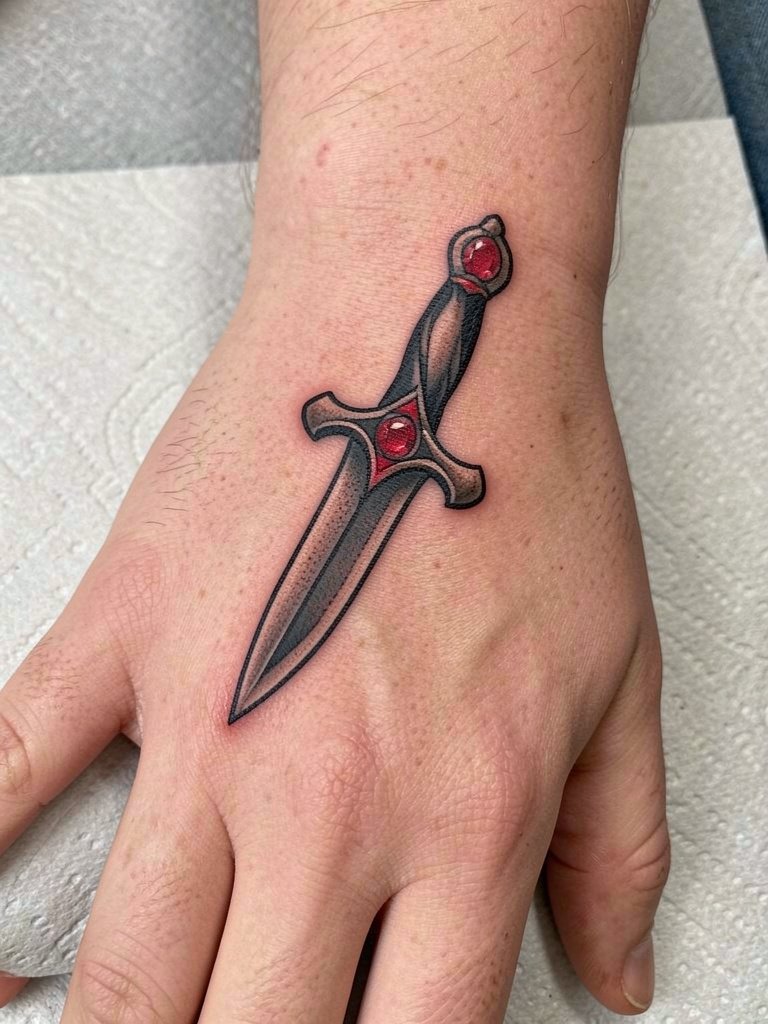
A knuckle dagger reads well because the heavy outline survives constant hand washing and friction. Expect a sharp result immediately and a 20 to 40 percent softening by month six unless you plan a touch-up. Session length is short, typically 30 to 60 minutes for a single knuckle. Pain lands toward the higher end for knuckles. Skip micro-detail inside the blade. The common mistake is requesting tiny filigree that becomes a gray blob. For the appointment wear a black short sleeve cotton shirt so the artist can work the knuckles without sleeve interference.
2. Minimalist Thin-Line Heart or Initials, Side of Hand
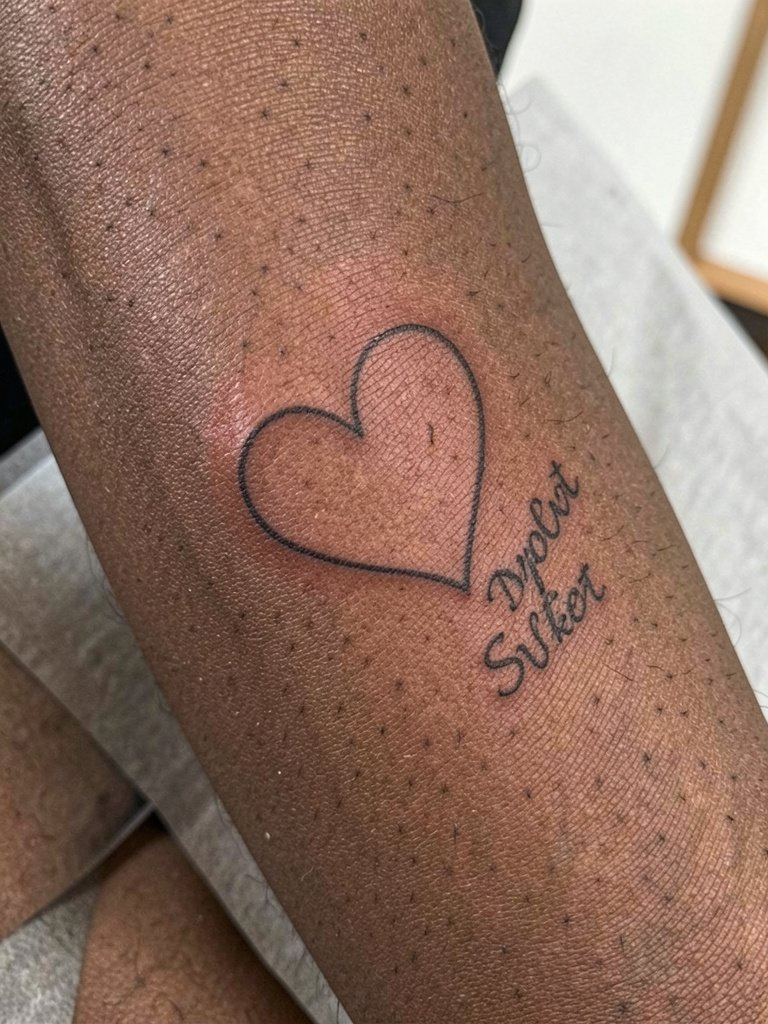
Thin-line hearts and initials sit well on the side of the hand where friction is lower than knuckles. Expect faster loss than forearm work, so plan a touch-up at 9 to 18 months. Session time is 20 to 40 minutes. A typical error is scaling the letters too small. Ask the artist to make line weight a touch heavier than your reference so the symbol keeps contrast after exfoliation. For showing it off, pair with a linen button down shirt in cream that leaves the side of the hand visible when sleeves roll up.
3. Tribal Geometric Band, Full Hand Wrap
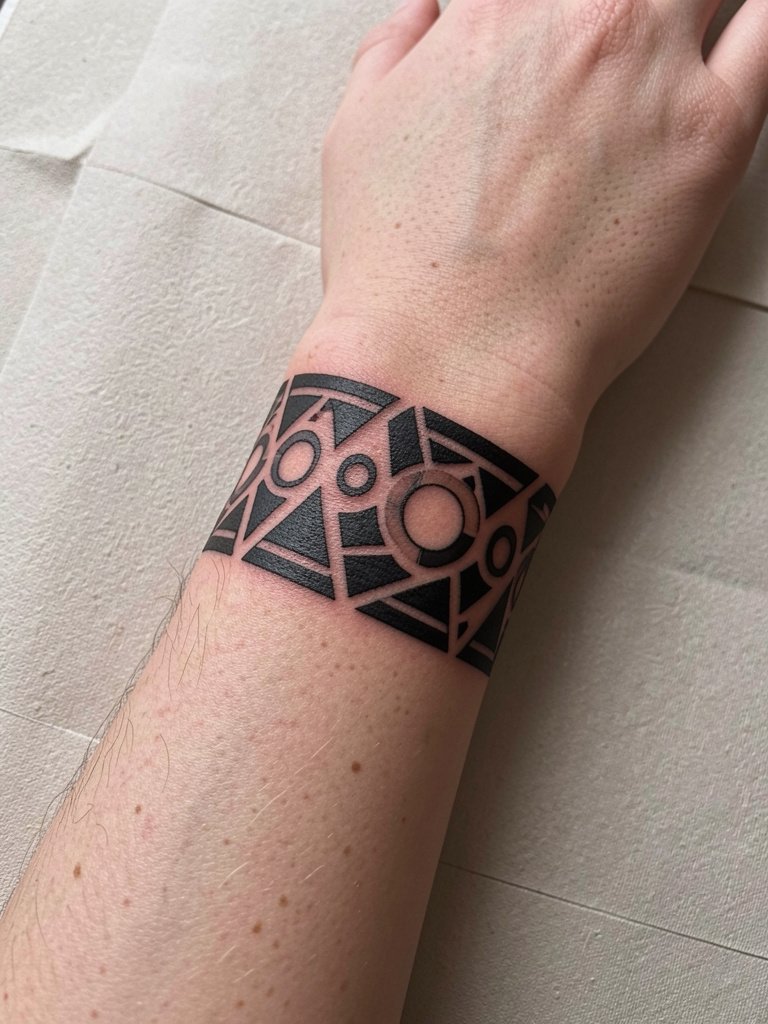
Full hand wraps demand planning for scale and contrast because the hand has unusual contours. Expect two sessions for coverage and a touch-up within the first year. The biggest mistake is crowding shapes too small. Tell your artist you want thicker negative spaces between elements so the pattern keeps definition as lines settle. For outfits, these wraps pair well with a vintage black flannel shirt worn with sleeves rolled to frame the dorsal work.
4. Script Tattoo, Horizontal Knuckle Text
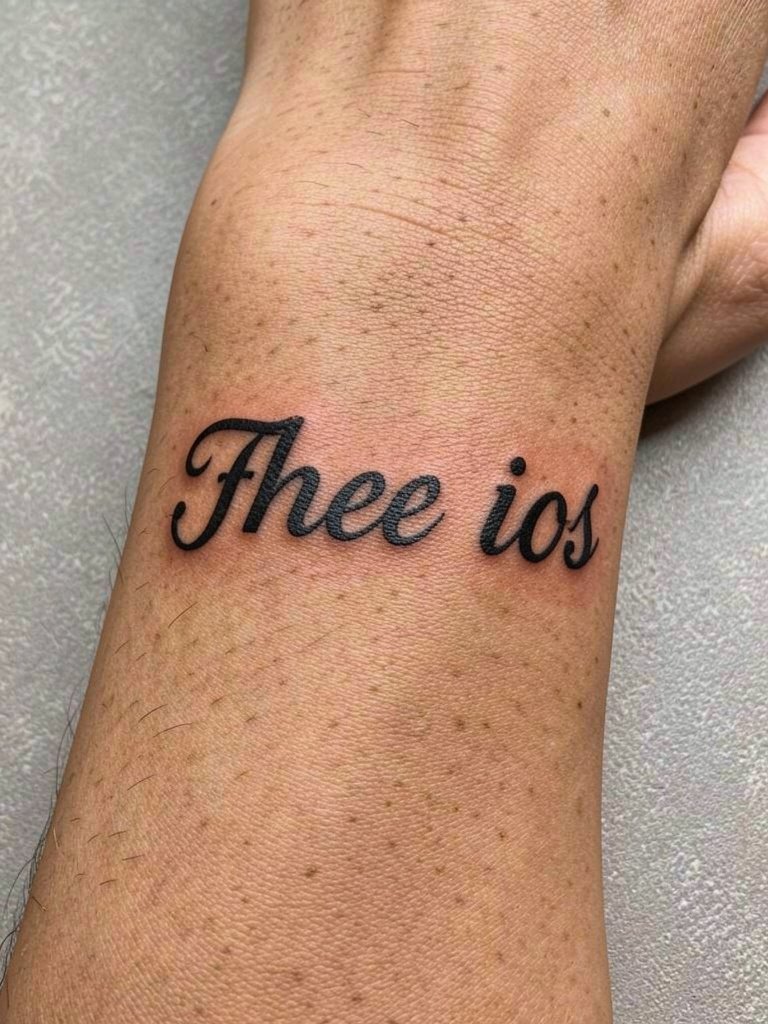
Horizontal script across knuckles works if you limit characters to six or fewer and use robust letterforms. Expect high pain and frequent touch-ups if letters are too thin. A common error is asking for delicate calligraphy that blurs into illegible shading. Be specific about letter height and spacing. During consultation show the artist two font samples at actual scale so they can draw the stencil larger if needed. For the session wear a black short sleeve cotton shirt so sleeves stay clear while the artist works.
5. Skull with Crossbones, Center Dorsal Hand
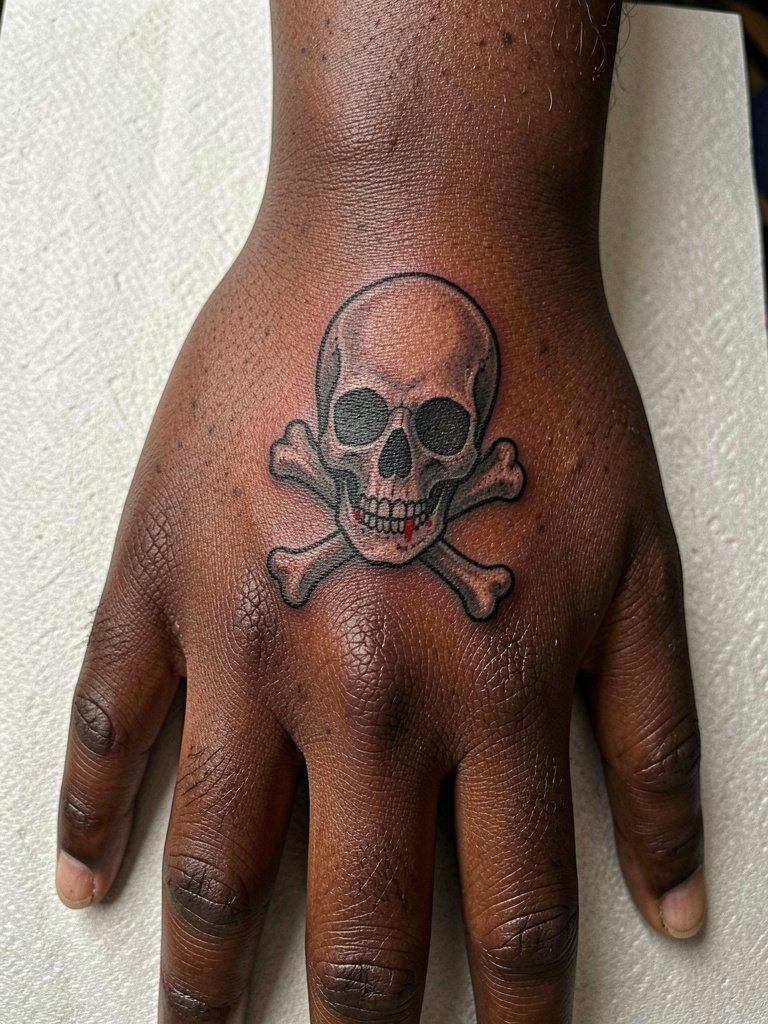
A centered skull is a durable pick because the area tolerates bold outlines. Expect a one-hour session and touch-up within 12 to 18 months. Artists warn against trying to cram photoreal detail into 1.5 inches. The safer version uses clear outline, negative space, and selective gray wash. If you work in a conservative office, note that central dorsal pieces are highly visible. Style the piece with a dark gray solid tee when you want the tattoo to pop against clothing.
6. Celestial Cluster, Side or Center Hand
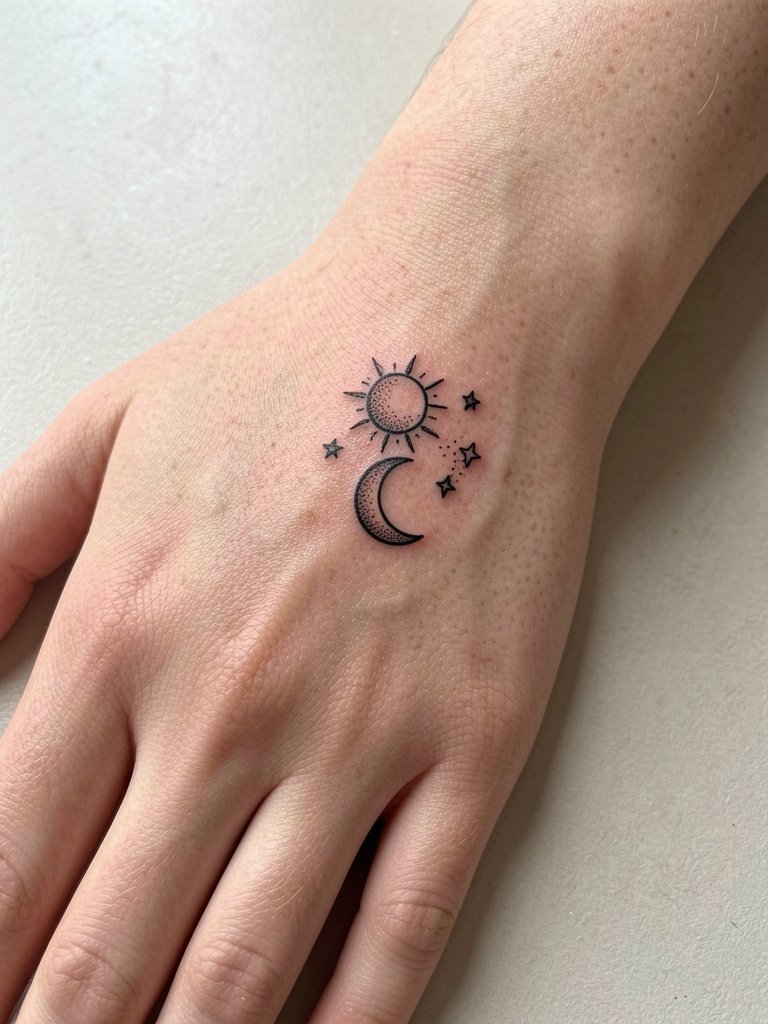
Celestial clusters are versatile and scale well when kept simple. Dotwork gives texture without heavy saturation that blurs quickly. Plan a 30 to 60 minute session and expect a touch-up in 12 to 18 months. A frequent misstep is asking for tiny stars with hairline dots that disappear; request slightly larger dots and spaced stars so the motif keeps shape. For a subtle editorial look wear a sand linen short sleeve shirt that lets the cluster peek when you move your hand.
Pre-Session Picks
The knuckle and side-of-hand picks above need different care and tiny items that make studio time easier.
- Hoshino Balm alternative. Lighter texture that people with high-exfoliation hands report does not clog pores during the first week.
- TattooGlow balm. Users on forum threads praise it for not smearing on knuckles during healing.
- Ink Fix moisture gel. A thinner gel preferred by some for hand tattoos to avoid trapping residue in creases.
- Specialized tattoo balm (Hustle Butter). Artists recommend this over plain petroleum for its non-greasy texture on hands.
- Aquaphor Thin option. A mainstream thin ointment for the first 48 hours that many use sparingly on new hand work.
7. Animal Spirit Silhouette, Side of Hand
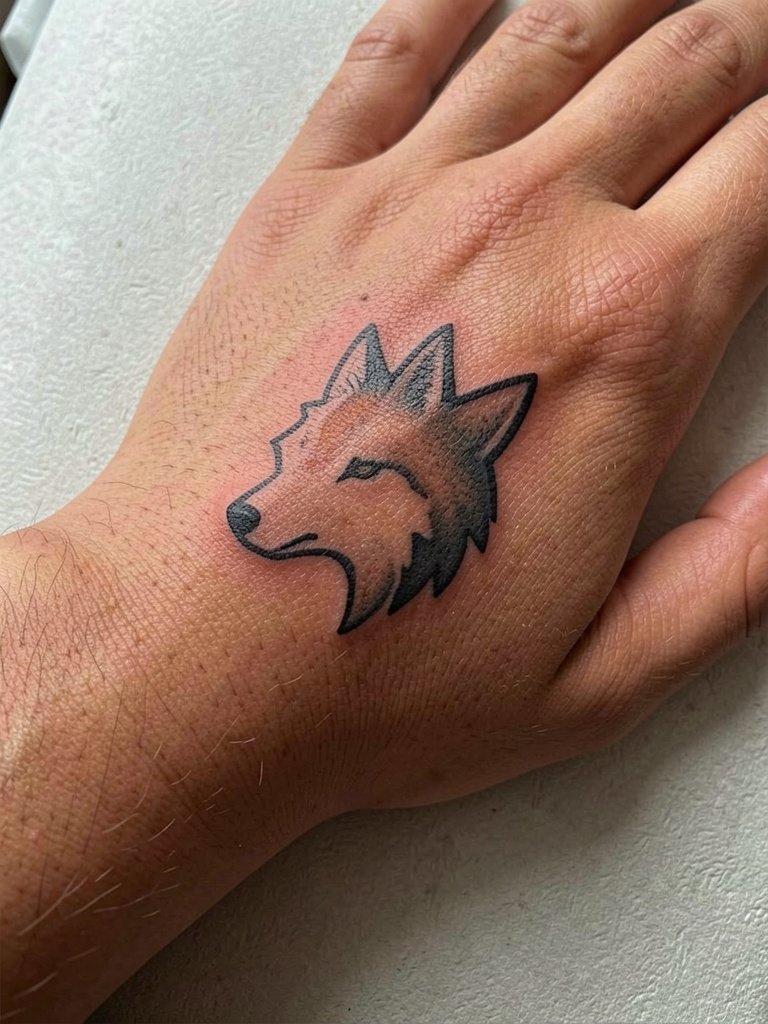
Silhouettes for spirit animals do well if you avoid internal micro-detail. The side of the hand is forgiving compared with knuckles for this approach. Session time is usually 30 to 60 minutes and touch-ups often fall around the one-year mark. The classic mistake is over-detailing the face. Tell the artist you want a clean profile silhouette with enough negative space so it still reads after healing. For an editorial feel try a thin gold chain bracelet on the opposite wrist to balance the composition.
8. Ornamental Mandala, Center Dorsal
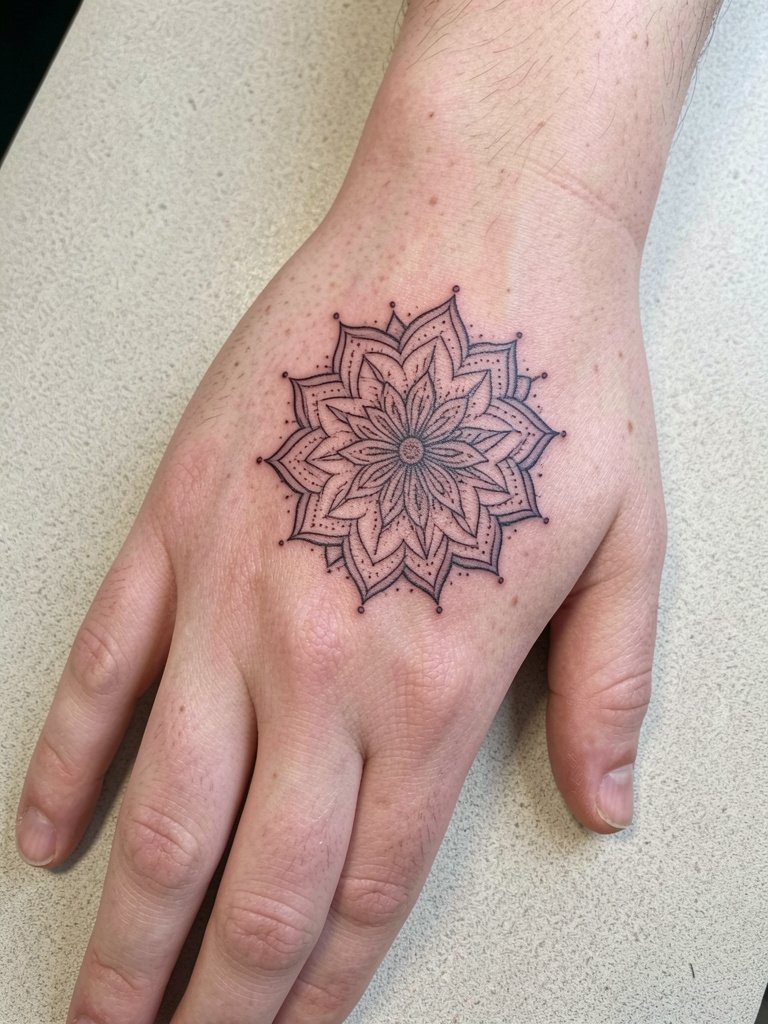
Mandala work can look amazing but it is vulnerable to blowout if drawn too tight. For a mandala on the dorsal hand, increase spacing between radial lines and ask for slightly bolder outer rings. Expect a 60 to 90 minute session. The error people make is demanding ultra-fine spokes that vanish. At six months you may notice softening, and a one-year touch-up keeps edges crisp. For session day wear a black solid color tee so the artist has full hand access and your sleeve stays out of the healing zone.
9. Dotwork Geometric Triangle, Side or Knuckle
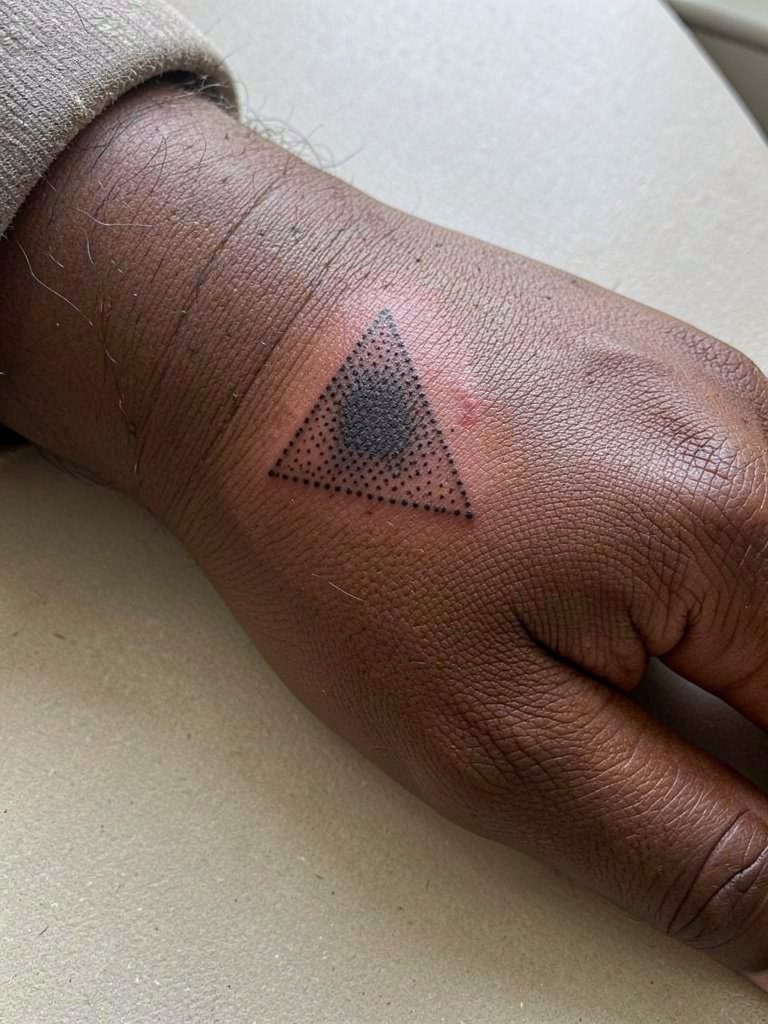
Dotwork triangles read with texture and avoid the heavy saturation that causes blowout. Expect 30 to 60 minutes depending on size and touch-up around one year. The mistake is asking for super-tight stippling on a small canvas. Increase scale slightly so the dotwork pattern can breathe. If you want this on a knuckle, be ready for higher pain and faster fading. Wear a black short sleeve cotton shirt for easy access.
10. Vertical American Traditional Dagger, Side of Hand
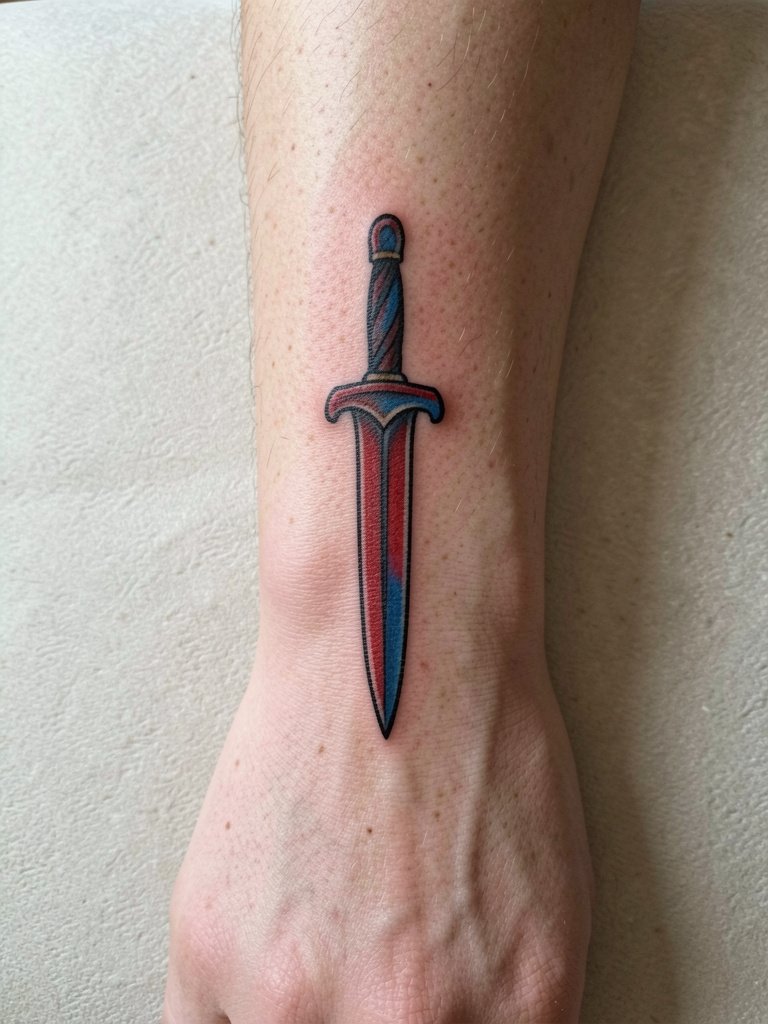
A vertical dagger avoids the high-wear knuckle seam and often outlasts horizontal alternatives. Session length is typically 45 to 90 minutes. The most common error is requesting tiny ornamental insets in the blade that blur. Ask the artist for a bold outline with saturated fills and minimal internal filigree. For a casual, contrast-forward look choose a rolled cuff denim shirt when showing the piece off.
11. Minimalist Line-Work Bird, Side Hand
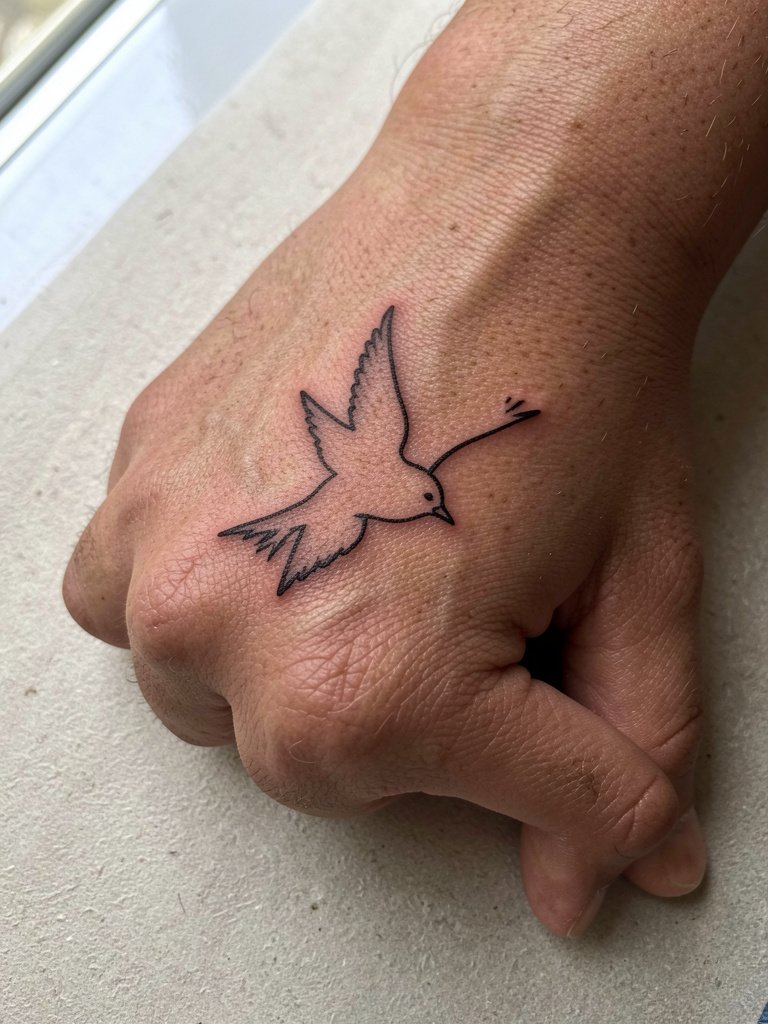
Line-work birds can look elegant but they need slightly heavier single-needle weight on hands. Expect 20 to 40 minutes and a likely touch-up in 12 months. A common mistake is asking for a hairline single stroke that becomes faint. Specify you want slightly reinforced linework so the silhouette keeps its flight path. Pair the finished piece with a sand linen short sleeve shirt to keep it visible in casual looks.
12. Watercolor Celestial Gradient, Center Hand
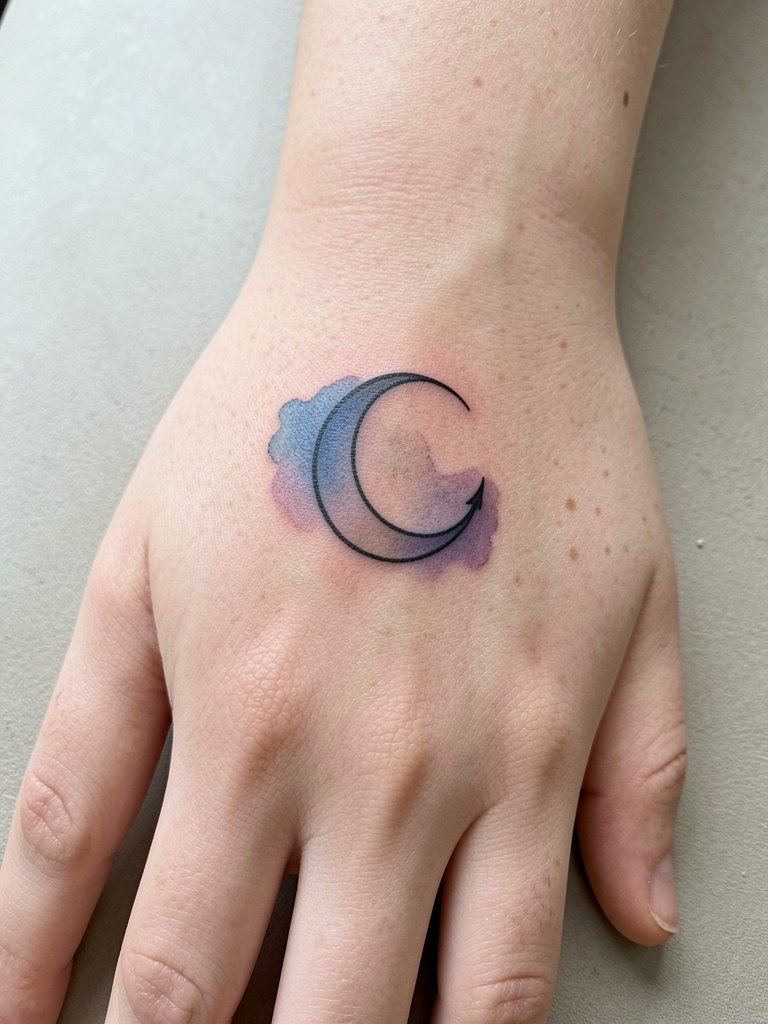
Watercolor on hands is divisive. One group says watercolor washes fade within a year because the pale pigments get eaten by hand exfoliation. Another group argues that saturated watercolor with a bold outline survives longer and that careful touch-ups extend vibrancy. If you choose watercolor, insist on a bold black anchor around the motif and expect a touch-up within 9 to 12 months. The frequent mistake is choosing a faint wash without an outline. For session wear, pick a black solid color tee to keep the area accessible.
13. Neo-Traditional Dagger with Gem, Knuckle Piercing
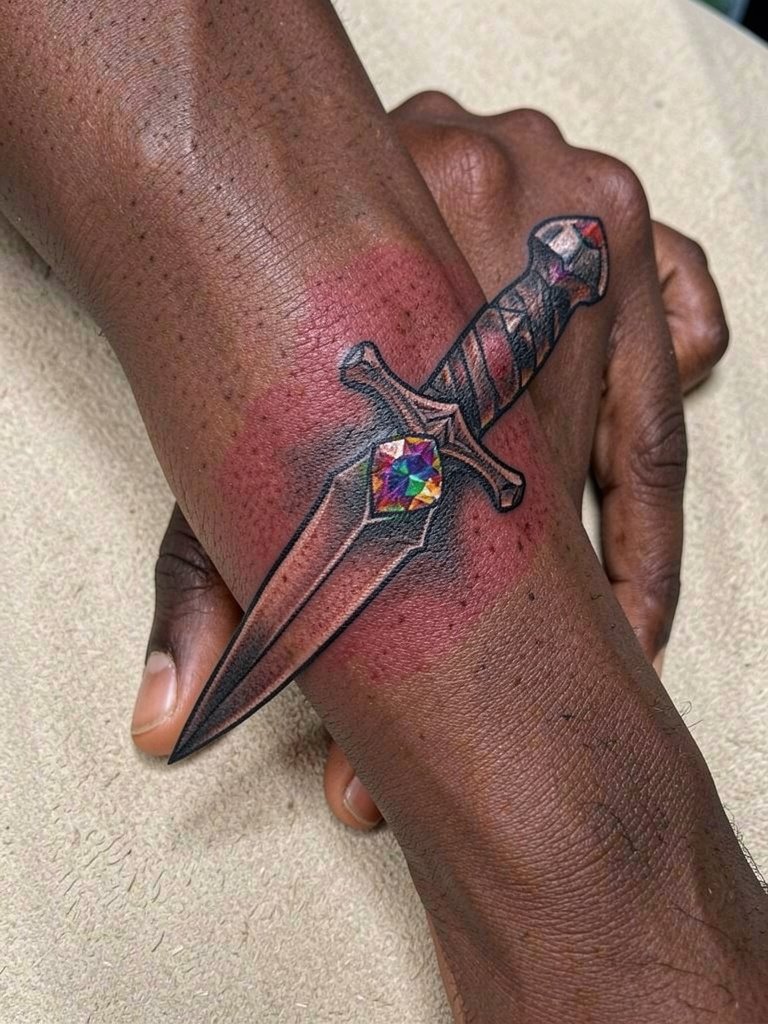
Neo-traditional daggers let you keep color while still using bold outlines that age better on hands. Sessions are usually 45 to 90 minutes for a colored knuckle piece. Avoid tiny gem facets that require micro shading; pick fewer facets and stronger saturation. A common complaint is the tip blurring. Plan for a one-year touch-up to restore sparkle. For showing the gem pick a sleeveless or short-sleeve top on session day so the artist has full access.
14. Blackwork Ornamental Band, Finger-to-Knuckle Wrap
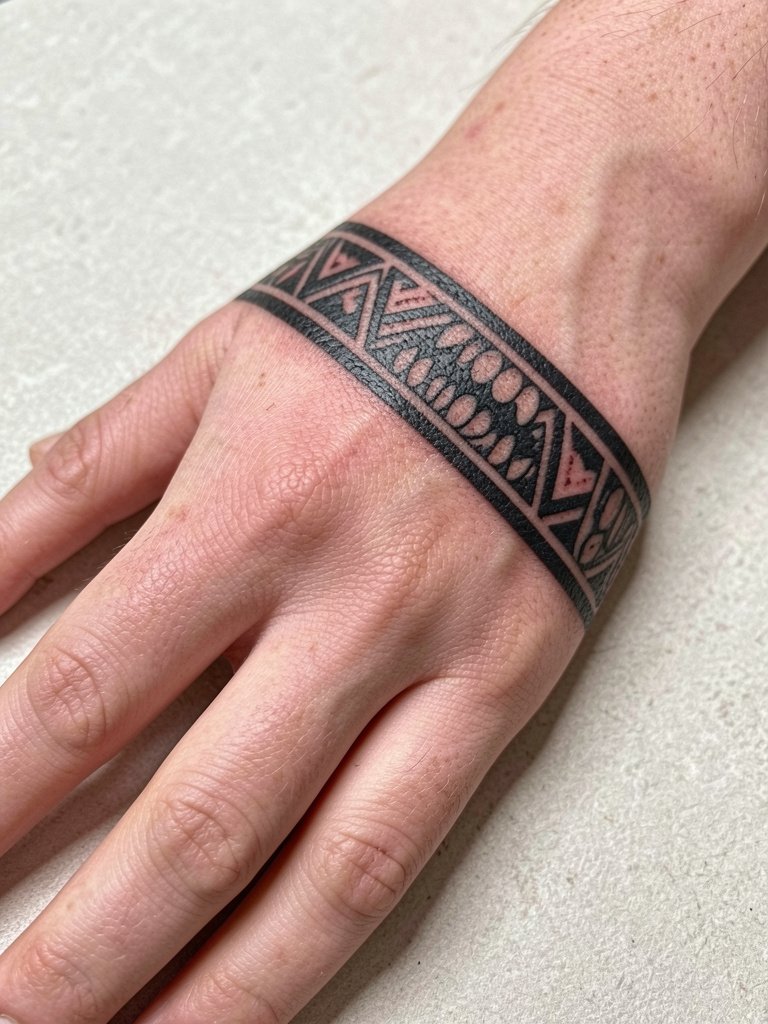
Solid black bands age predictably on finger edges because the saturation resists fading better than thin script. Expect a short session and periodic touch-ups as the finger skin renews. The mistake is picking narrow filigree that disappears. Request a bold band with clear negative-space breaks so wear and swelling do not collapse the pattern. For minimal accessorizing pair it with a minimalist watch on the opposite wrist to keep balance.
15. Minimalist Stacked Initials, Side of Finger
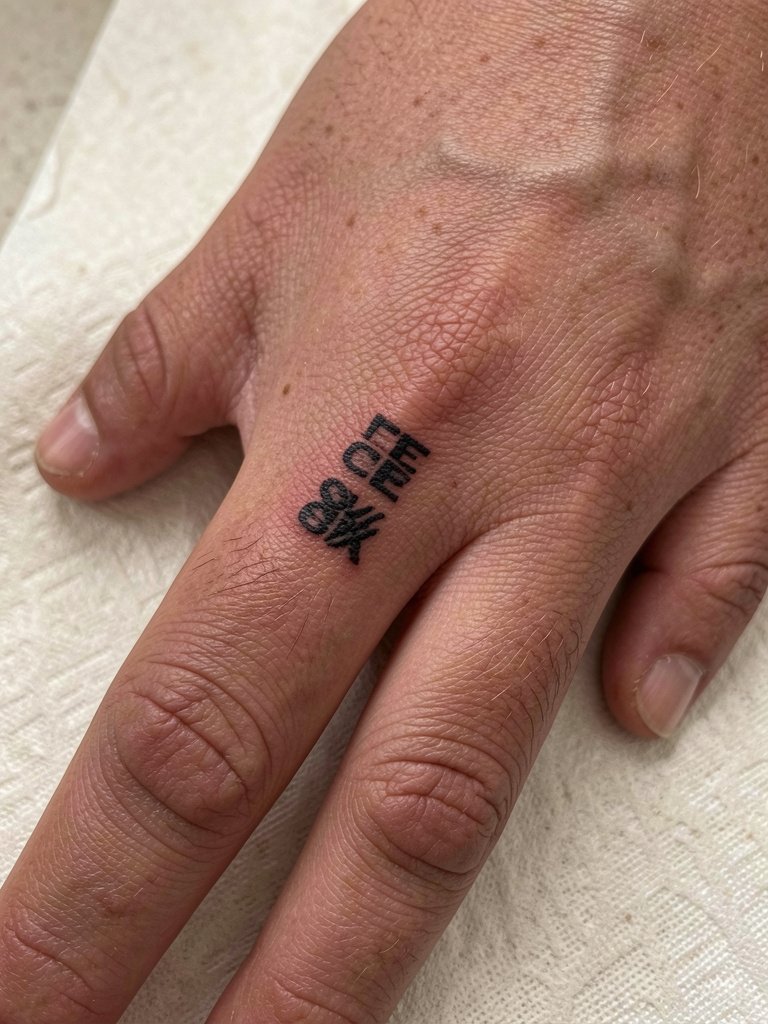
Stacked initials on the finger side are subtle but require cautious sizing. Session time is fast. A typical error is stacking too many characters. Limit to three letters and make each a hair thicker than your reference. Fingers need touch-ups more often than other hand areas. For the appointment avoid rings on the tattooed finger and wear a minimalist watch on the other wrist.
16. Anchor Knot, Lower Thumb Base
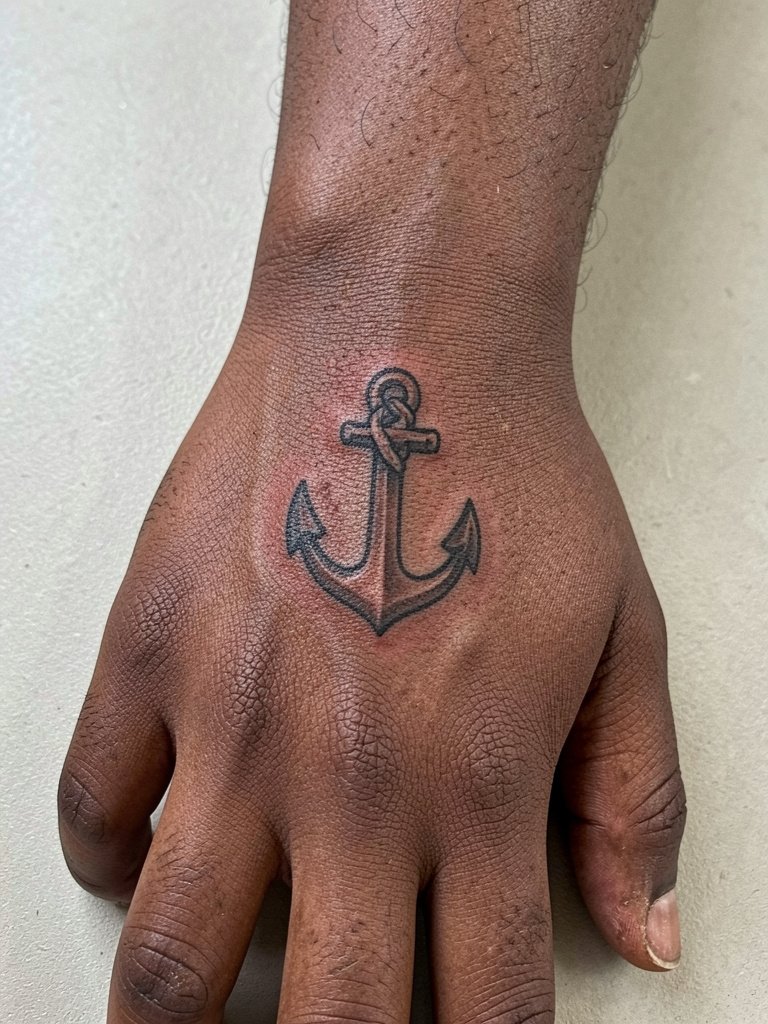
An anchor at the thumb base sits where wear is moderate and the symbol retains shape if scaled properly. Sessions run 30 to 60 minutes. The typical mistake is packing in tiny rope texture. Instead ask for simplified knot silhouette with heavier outline. Expect touch-ups in the first 18 months. When you want to show this off wear short sleeves and no rings on that hand.
17. Tiny Compass, Outer Knuckle or Side
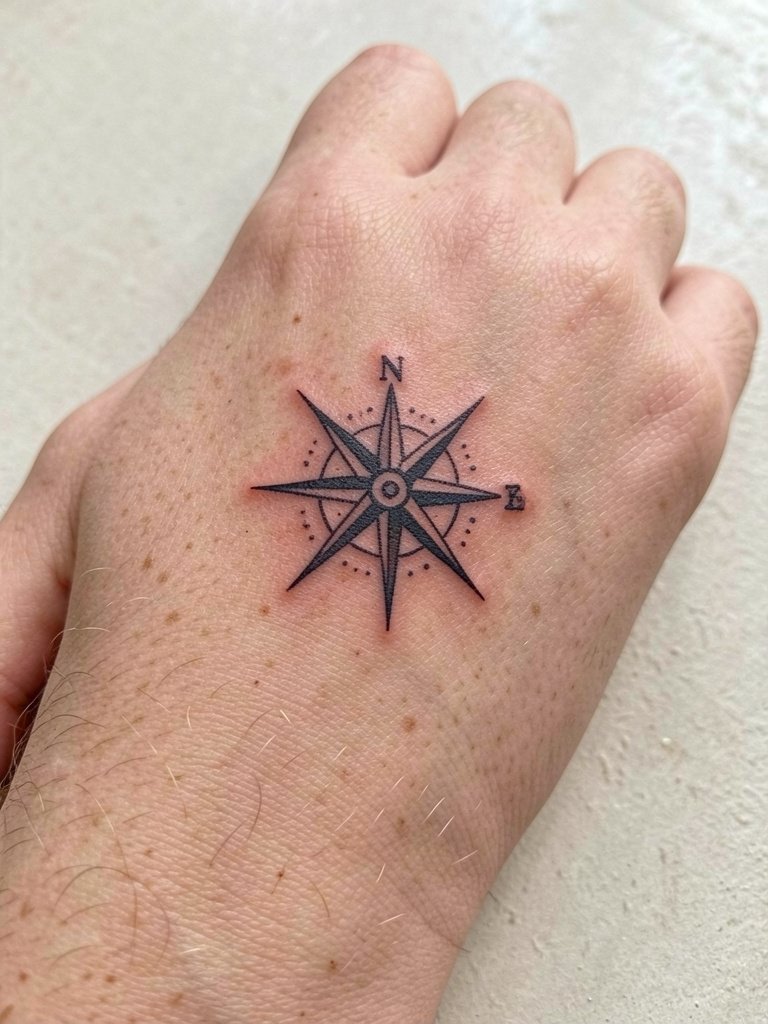
Compasses need bold cardinal markers rather than tiny latitudinal detail. Session time is short and touch-ups may be yearly. The error is asking for micro-map elements that fog into gray. During consultation ask for simplified pointers and a small dot-center to anchor the design. For outfits pick a black short sleeve cotton shirt so the knuckle is visible.
18. Wave Line, Inner Thumb Strip
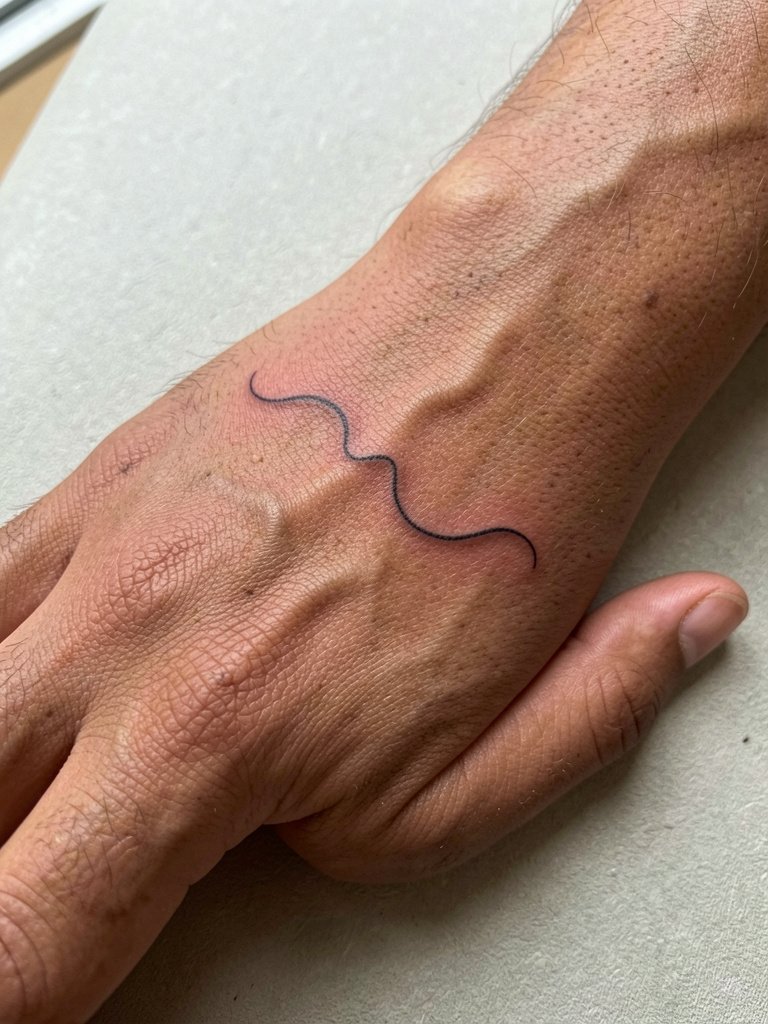
The inner thumb strip is less abrasive than knuckles but still exfoliates. A continuous wave line works if the line weight is bumped up slightly. Expect 20 to 40 minutes and a touch-up before year two. Avoid ultra-fine single strokes. For the studio wear a short-sleeve top so the artist can position your hand for steady linework.
19. Micro-Lettering Under Thumb, Subtle Date
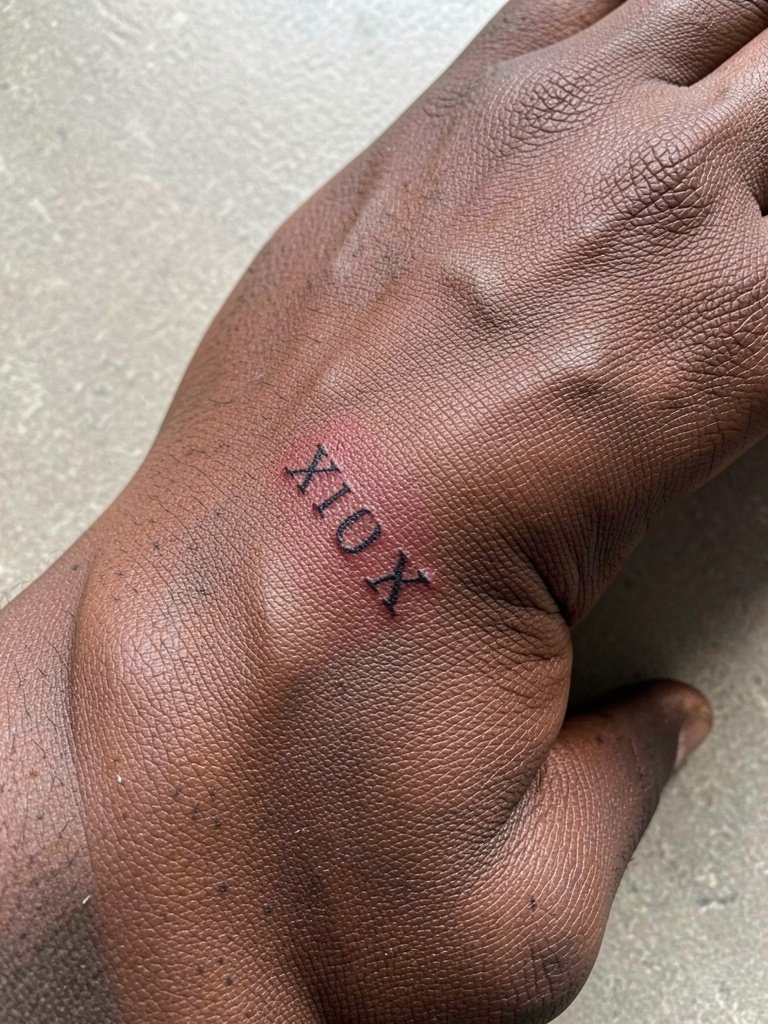
Micro-lettering under the thumb demands extra scale attention. The common mistake is choosing type too small to survive the skin turnover. Ask the artist to map the numerals at actual size on your skin before tattooing so you can see legibility. Expect a short session and potential touch-up at 12 months. For the appointment wear a sleeve that slips easily so your hand can rest flat.
20. Barbed Wire Wrap, Ring Finger Accent
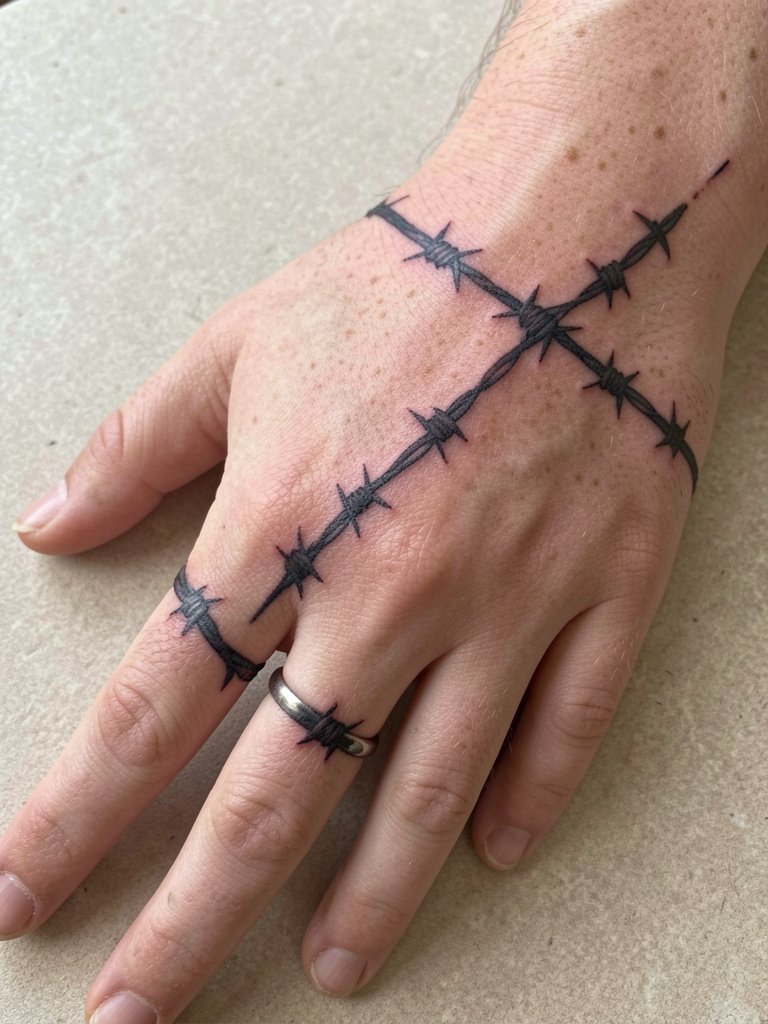
Barbed wire works as an accent but needs clear spacing so the barbs do not merge. Sessions are fast. A mistake is wrapping too tightly so the pattern becomes a solid band. Specify barb spacing and ask the artist to preview the wrap with a marker at actual tension. Fingers often need touch-ups, so plan for that.
21. Small Rosebud, Index Knuckle Accent
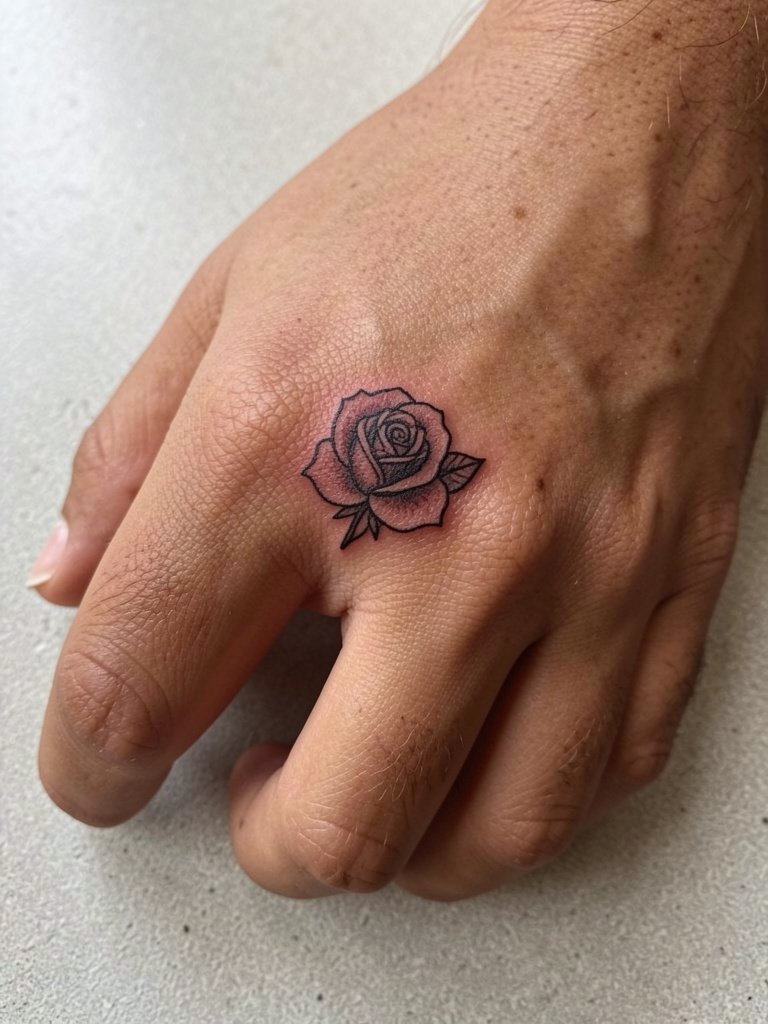
A rosebud works if simplified to iconic petals and a solid outline. Knuckle placement means higher pain and faster blur. Avoid shaded realism in the bud at this scale. Ask the artist to use flat fills and strong contour so the bud keeps its silhouette. For photos and everyday wear keep hands free of rings on that finger during healing.
22. Chain-Link Palm Accent, Near Wrist
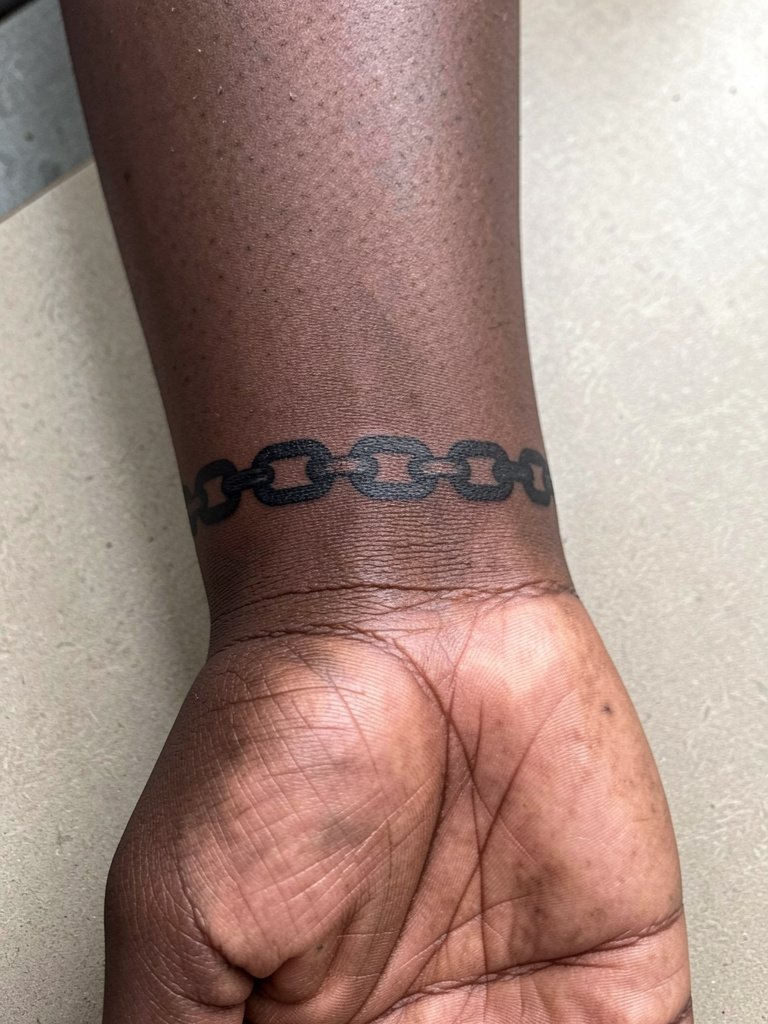
Chain links at the wrist need clear link gaps so lines do not fuse. Session time is short, and touch-ups are possible if washing and bracelets cause friction. The usual error is close-packed links. During the consult show a photo of your wrist in motion so the artist can orient the chain over natural creases. For showing it off avoid watches on that wrist for the first month.
23. Geometric Palm Accent, Small Negative-Space Block
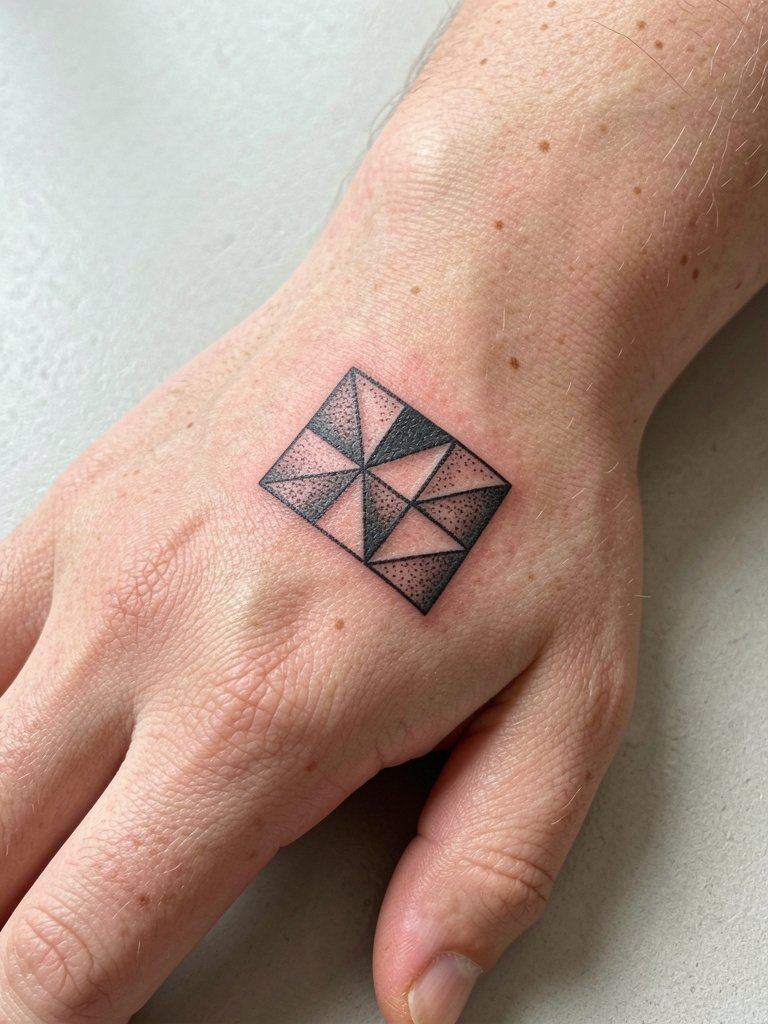
Palm accents are high-risk for early fading because palm skin renews quickly. If you choose this area expect aggressive touch-ups and possibly shorter longevity. A safer approach is to keep the design small, bold, and mostly black with obvious negative space. The common mistake is demanding delicate internal gradients. Plan to touch up within months and accept that the palm will need maintenance.
Frequently Asked Questions
Q: How long should I expect to wait between touch-ups for hand tattoos?
A: From what I have seen, most hand pieces need at least one touch-up within the first 12 months. Some bold blackwork can stretch to 18 to 24 months before another pass, but thin single-needle work often needs attention sooner.
Q: Is fine line safe for hand tattoos or should I go bold?
A: Artists split into two camps. One camp argues that fine line on the hand blurs within 6 to 12 months because of high exfoliation and recommends bold blackwork instead. The other camp says fine line can hold if the artist uses the correct depth and slightly wider spacing, and they point to healed photos at two years to support that. Pick the camp that matches the healed examples you trust and ask the artist to show you two-year healed shots of similar pieces.
Q: Can watercolor work on the hand and still look good over time?
A: There are two clear positions. One side says watercolor fades quickly on hands and that blackwork is the safer option. The other side believes watercolor with strong outlines and saturated pigment, plus regular touch-ups, can last longer. If you prefer watercolor, insist on a bold outline around the wash so the composition keeps structure as the color softens.
Q: Where can I find artists and healed portfolios without tagging names directly?
A: Search hashtags like #handtattoomen, #knuckledagger, and #boldhandtattoo on Instagram and TikTok then filter by location to find nearby portfolios. Use Tattoodo to search keywords such as "American Traditional knuckle dagger" and browse healed examples. Reddit communities like r/tattoos and r/tattooadvice surface peer recommendations and real healed photos across skin tones.
Q: What should I wear to a hand tattoo session and how should I style the finished piece?
A: For sessions wear short sleeves or a shirt you can roll up easily so sleeves do not touch the hand. If your piece is a show-off knuckle dagger or center skull, wear a black short sleeve cotton shirt to create contrast. For side-of-hand minimal pieces a linen button down shirt in cream keeps the look editorial when sleeves are rolled.
Q: Are there specific red flags to watch for when booking someone for hand work?
A: I look for artists who show healed hand shots in their portfolio and who are willing to map stencils at actual size on the skin. Avoid shops that only show fresh photos or that promise "single session forever" results for ultra-fine work. Also ask for healed examples on a similar skin tone to yours.
Q: How do hand tattoos behave on darker skin tones and how can I improve visibility?
A: On darker skin tones high-contrast black outlines and simplified shapes read best. Lighter washes and pastel watercolors often mute into muddy gray. Ask the artist for healed examples on similar skin tones and choose designs with solid silhouettes and saturated black where visibility matters.
