
Minimalist planet tattoos often look best years later when the artist gives the design a little breathing room and slightly heavier linework, not when everything is scraped to the thinnest possible mark. A tiny dot with no spacing can soften into a gray blur, while a 0.8mm-suggested orbit or a clear negative-space halo keeps form visible in photos. Read on for 25 compact planet concepts with placement notes, how they age, and simple styling tips to wear them well.
1. Single-line planet orbit with dot center
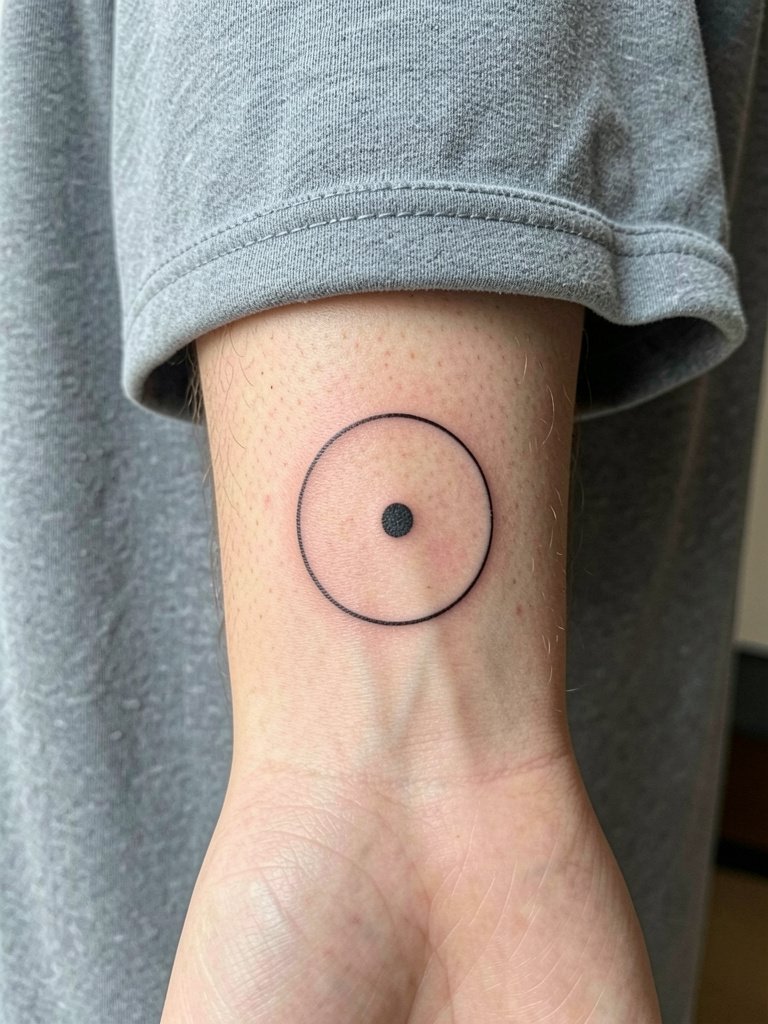
A classic micro orbit that reads as a tiny emblem rather than a scene. Best for first-timers who want a low-pain wrist piece, the session usually runs 20 to 40 minutes. I recommend a slightly heavier line than the reference photo so the dot center stays defined after one to three years. Common mistake is placing it too close to wrist creases where movement and friction blur linework. For showing it off, try a thin gold ring on the same hand and roll your cuffs to keep attention on the piece.
2. Minimalist crescent moon + tiny planet pair
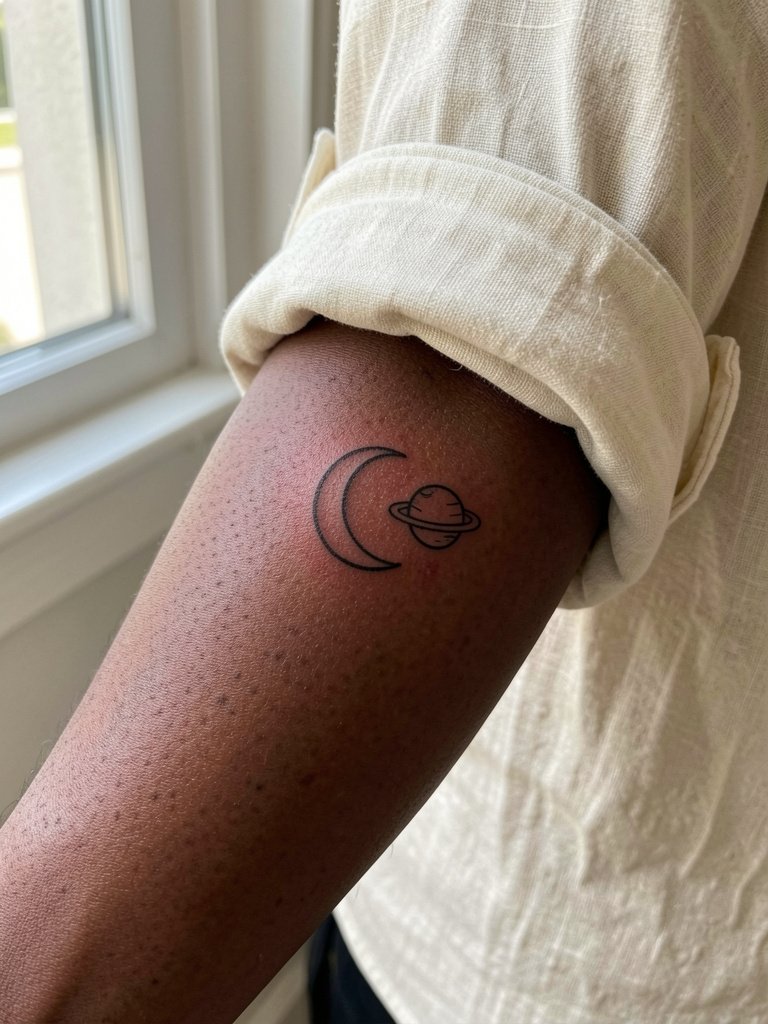
This two-element composition gives a subtle narrative without crowding the forearm. Expect a 30 to 45 minute session and light, steady pain rated around 2 to 3 out of 10. On darker skin, avoid the thinnest single-needle approach because ultra-fine lines can vanish in photos. Instead discuss a hair-thicker contour so the crescent and dot read at six months and three years. For daywear, pair it with a linen button-down shirt with sleeves rolled to frame the tattoo.
3. Orbital ring planet, Hubble-style silhouette
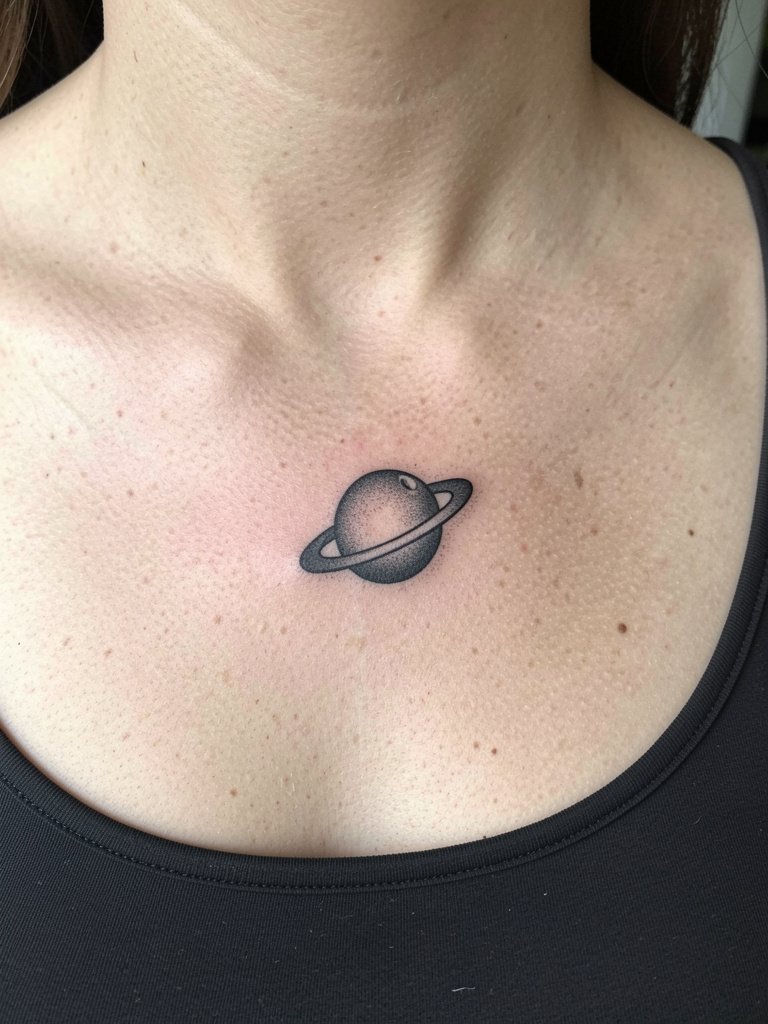
This silhouette version reads strongly from a distance and still keeps a minimalist aesthetic up close. It runs about 40 to 60 minutes depending on stipple shading. The collarbone placement can be sensitive when the needle crosses thin skin, but healed photos at two years often show stable edges if the ring gap is generous. Mistake to avoid is overfilling the silhouette which eats the breathing room that makes the ring read crisp. To accent the area, wear a delicate pendant necklace that sits a few centimeters below the tattoo so both pieces frame each other.
4. Three-dot solar system cluster
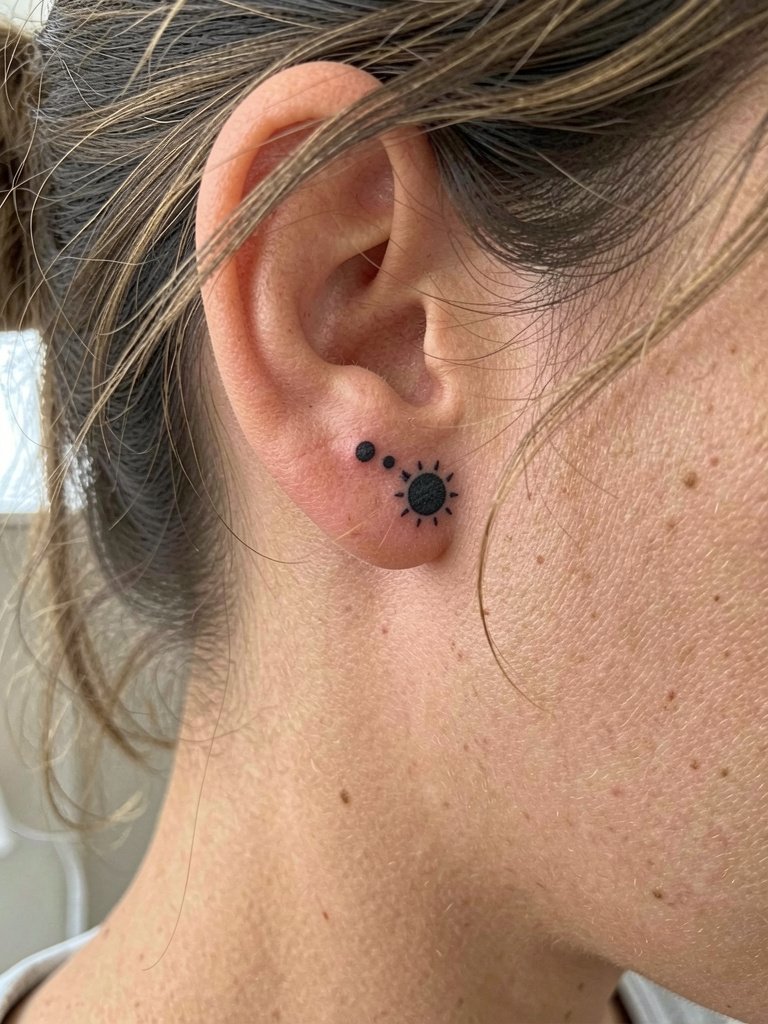
Tiny and private, this behind-the-ear cluster is high on secrecy and low on session time, usually under 20 minutes. It ages well when dots are spaced rather than stacked. A common complaint is the dots merging if they are too close or too dense in the stencil. For styling, tuck hair behind the ear or try a minimal gold ear cuff to draw subtle attention without overwhelming the area.
5. Single-line Saturn with ring gap
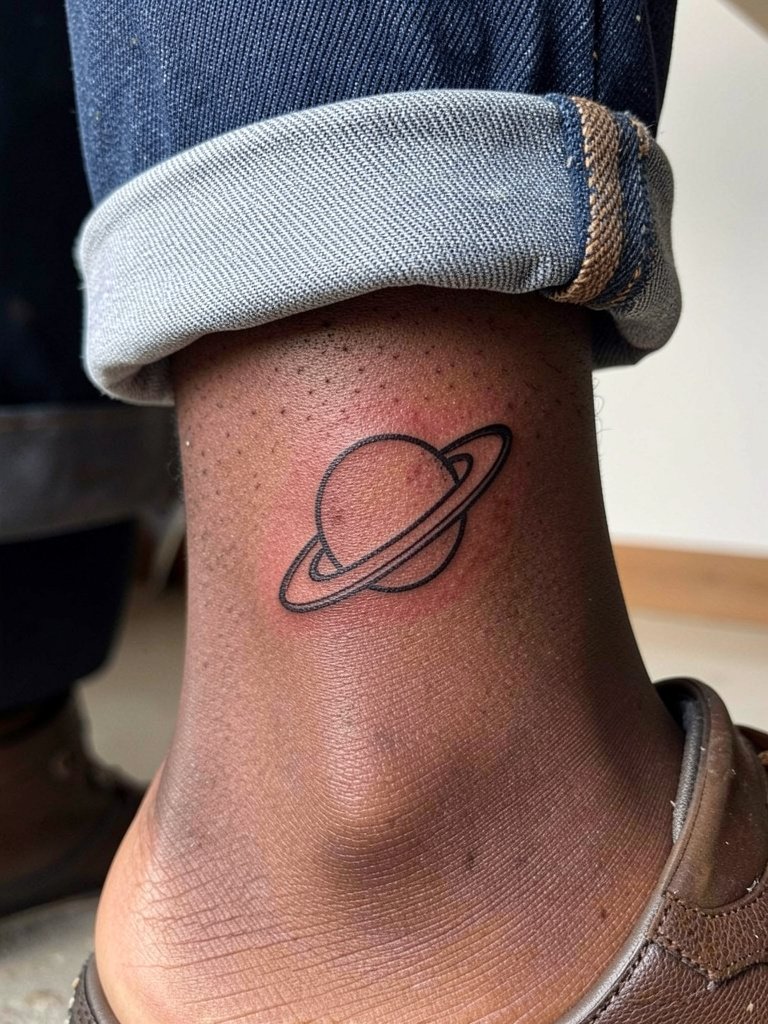
Ankle tattoos face summer friction and sun exposure, so keep line weight confident and avoid ultra-fine rings. This piece takes 25 to 45 minutes and sits low on the pain chart for many people. A common issue is choosing a ring so thin it disappears after a season of sandals and sun. When you want to show it, pair the ankle with thin strap summer sandals that leave the design visible and reduce rubbing from fabric.
6. Minimalist planet with atmosphere halo
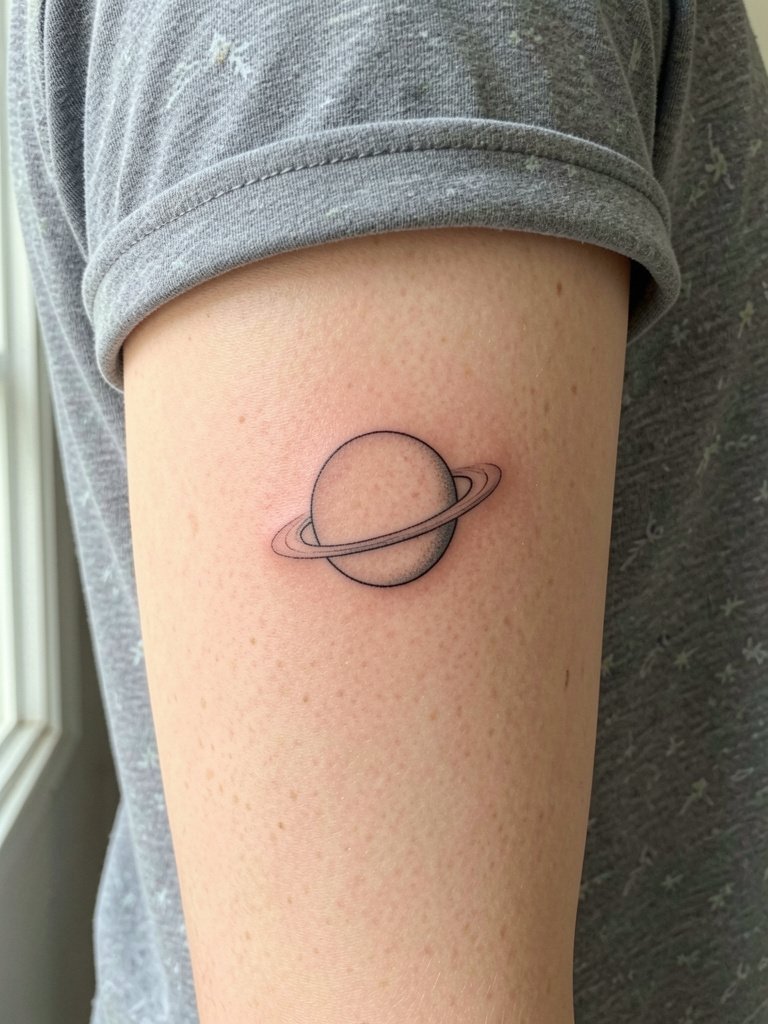
The halo effect uses skin as a highlight and gives the tattoo a glowing read without extra pigment. It takes about 30 to 50 minutes and fares well on inner-arm skin because the area avoids daily abrasion. Mistake to avoid is compressing the halo too close to the main circle which causes muddiness when the ink spreads slightly over time. For session comfort and post-session coverage, bring a loose neutral short sleeve tee so the artist can access the area and you can cover it afterward without pressure on the fresh ink.
Session Day Picks
The wrist pieces and inner-arm halos above heal differently from ankle and collarbone work, so a few small items make the first week smoother.
-
Hakugen Japanese aftercare balm. A thinner balm option mentioned by some artists for fine-line work that avoids the heavy, pore-clogging feel reported by certain healers.
-
Shiseido Tattoo Sun UV-protection sunscreen. Specially formulated for inked skin and helpful for ankle or calf tattoos that face summer sun during the first year.
-
Silicone healing sheets for tattoos. Useful for protecting flat ribcage or sternum pieces during rest periods when friction might blur fine detail.
-
Unscented witch hazel mist. Lighter than ointment, it helps prevent the heaviness that can make fine lines look saturated or "muddy" during healing.
-
Light unscented lotion, Cetaphil equivalent. A gentle lotion for day three onward when the area needs moisture without heavy buildup that can flatten delicate linework.
7. Tiny planet cluster in an arc
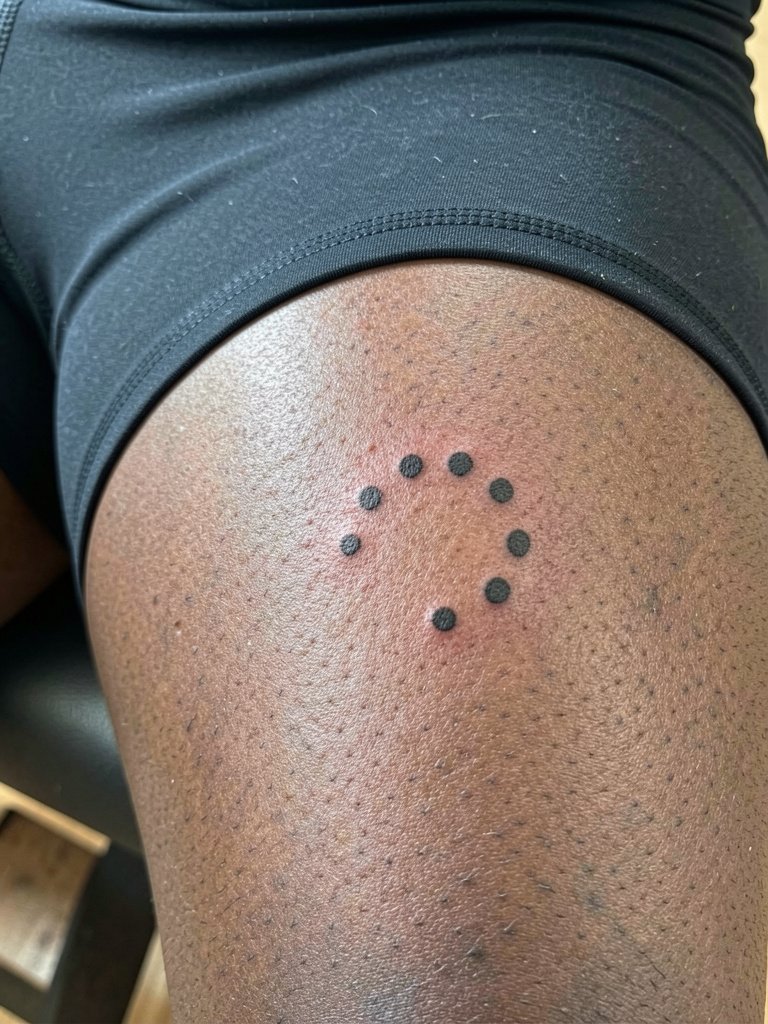
Intimate but simple, a cluster arc on the inner thigh reads like an accent. Sessions are short and tolerable when seated, but the area can shift with weight changes so consider spacing that allows for mild stretching. The usual mistake is packing dots too tight which leads to merging after movement and time. If you plan to reveal the piece, high-waist shorts or a wrap skirt will show it off selectively.
8. Minimalist line-art Earth with meridians
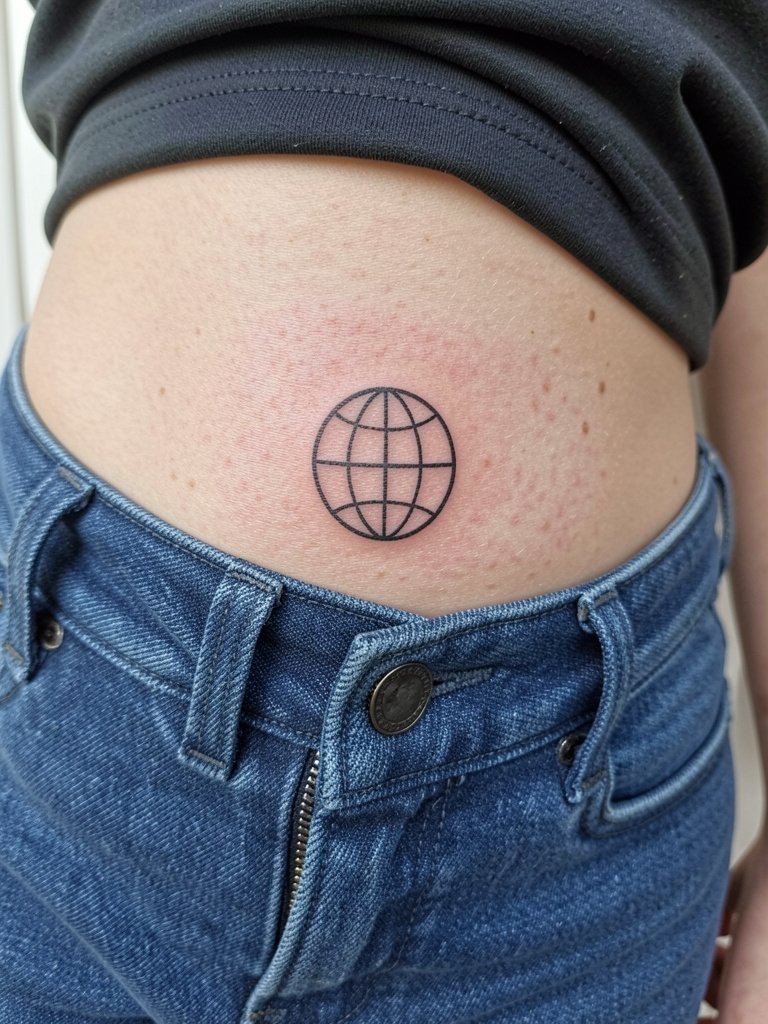
A tiny globe with clean meridians gives geographic clarity without overcrowding the hip. It works well for those who want a recognizable shape without color. Watch out for placement directly under tight waistbands which can rub during healing. Session time is usually 30 to 50 minutes depending on linework. For summer looks, low-rise jeans or crop tops pair neatly with this spot and a layered hip chain can complement the curve.
9. Solar system timeline, planets in a row
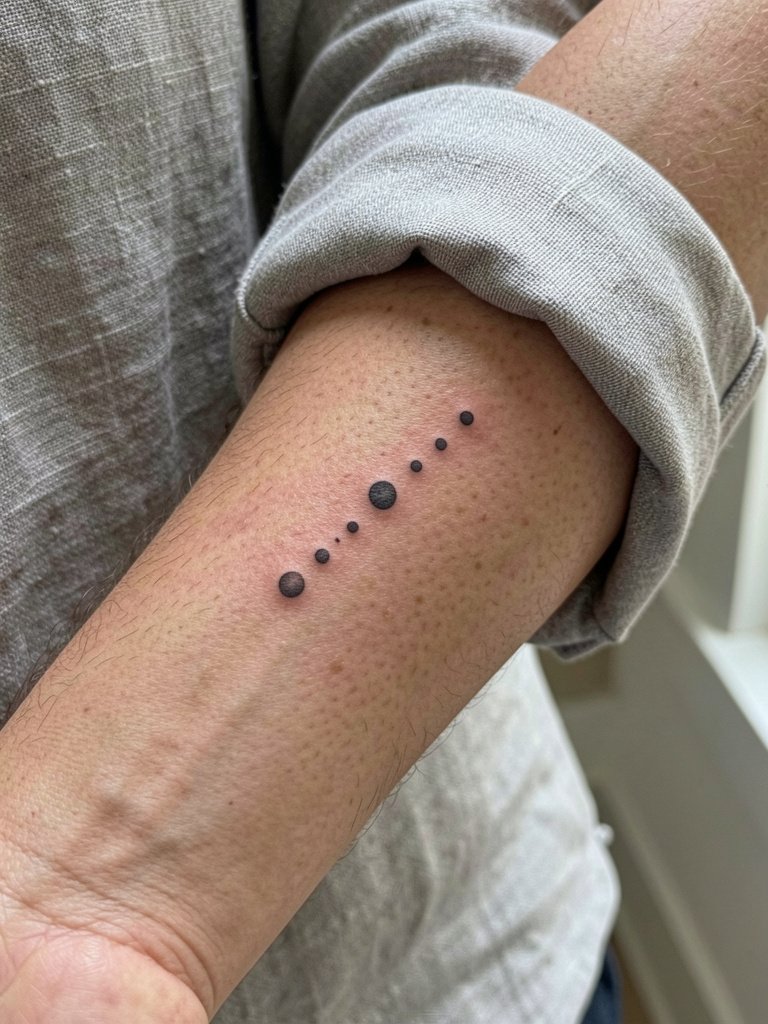
A linear solar line suits narrow forearms and reads well at small scale because the spacing gives each dot room. It takes 30 to 50 minutes and touch-ups are common around year two for micro-dot pieces. Mistakes include compressing too many planets into a centimeter, which removes clarity as the ink shifts. Style it with rolled sleeves and a dainty stacked bracelet set on the opposite wrist to balance visual weight.
10. Minimalist planet with orbiting exoplanet
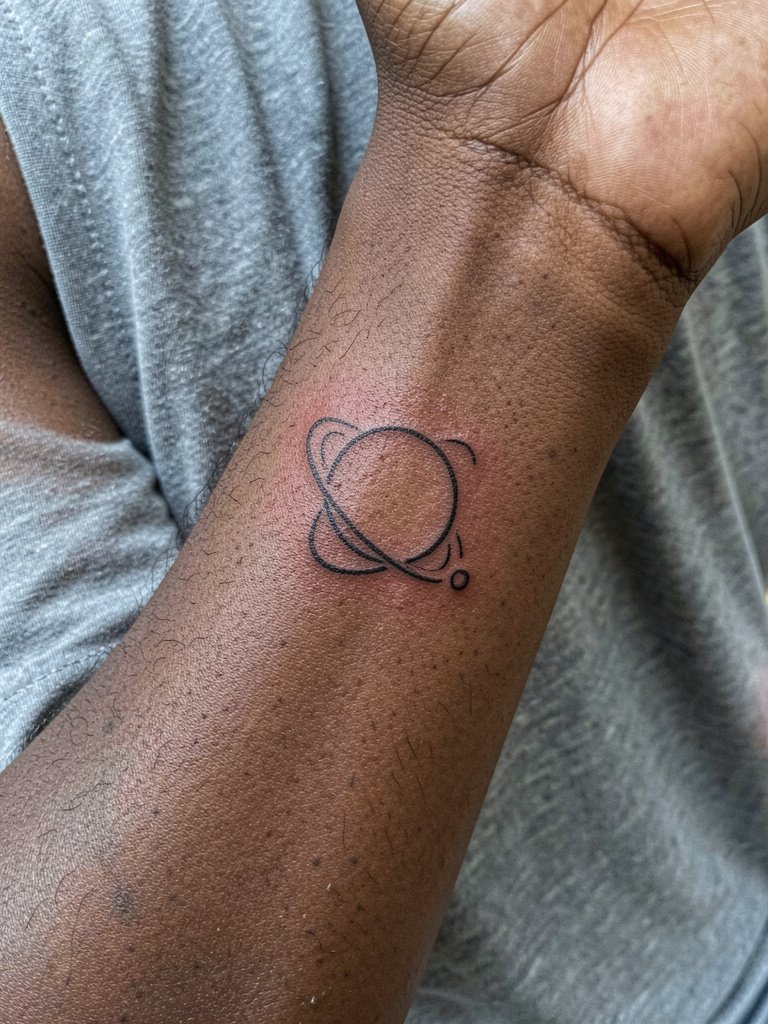
A tiny main body and companion dot read as a mystery or nod to discovery. This is low-pain and quick to ink. For darker skin tones, a small increase in line weight keeps the orbit legible in photos. The usual mistake is using a single-needle reference with zero adjustments for contrast which can flatten in camera shots. Wear a thin gold ring to draw the eye to the wrist without covering the piece.
11. Single-line moon and planet overlap
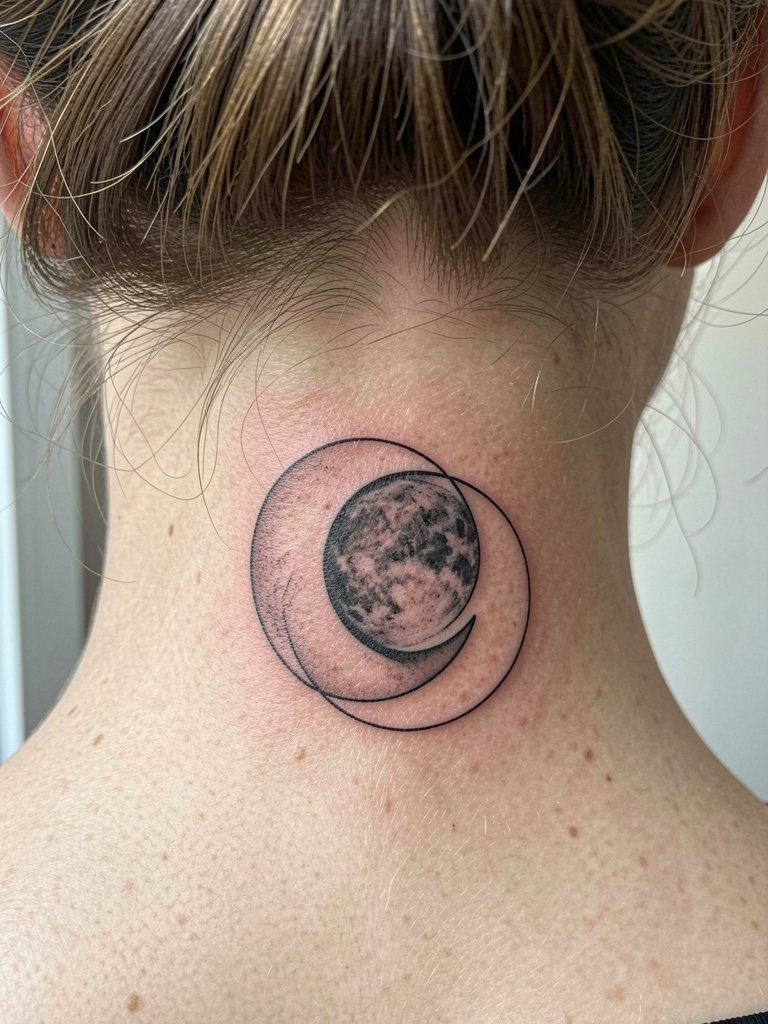
Layering two simple shapes produces depth without extra ink. The nape hides the piece when needed and shows it when hair is up. Expect 25 to 45 minutes and mild discomfort when the needle crosses the spine at the top of the neck. A common mistake is making the overlap so tight the negative space disappears after healing. Pair it with an updo or a delicate choker necklace that sits below the tattoo to balance the neck area.
12. Minimalist planet with a single crater
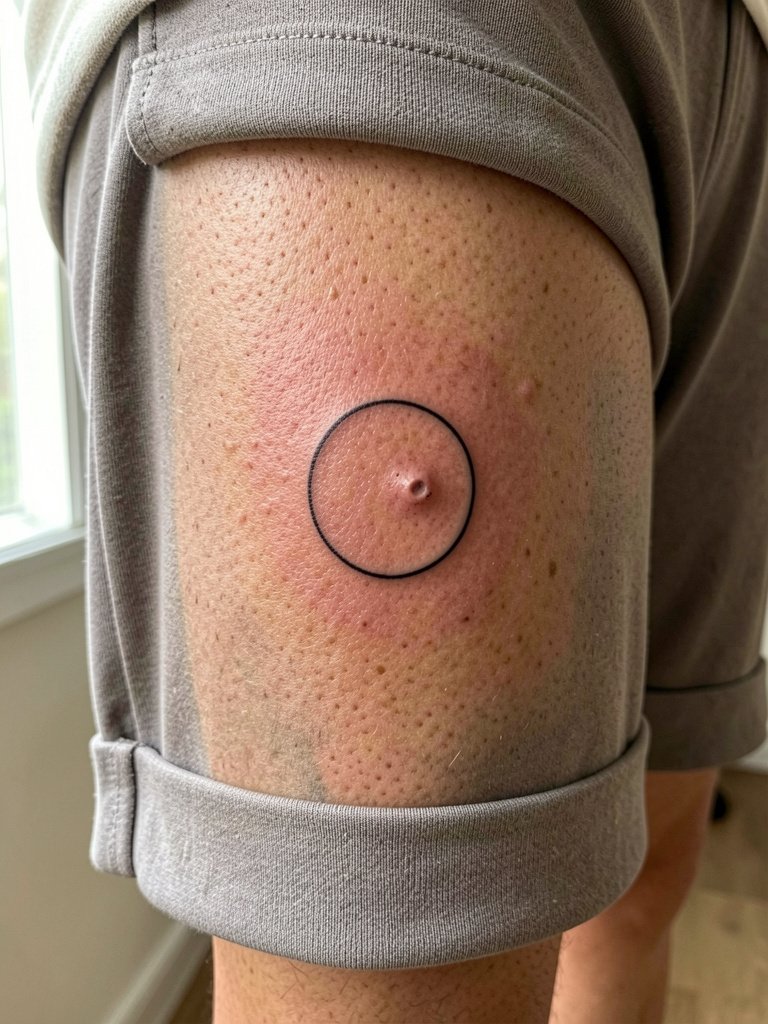
A single crater reads like texture without turning the piece into a tiny portrait. Calf skin tolerates fine detail better than high-movement spots. Sessions tend to be 30 to 45 minutes and bruising is minimal. People often ask for multiple tiny craters which becomes noisy as the ink ages. For footwear and outfits, pair this calf placement with summer dresses that expose the lower leg so the tattoo complements your look.
13. Micro-orbit group on the ribcage
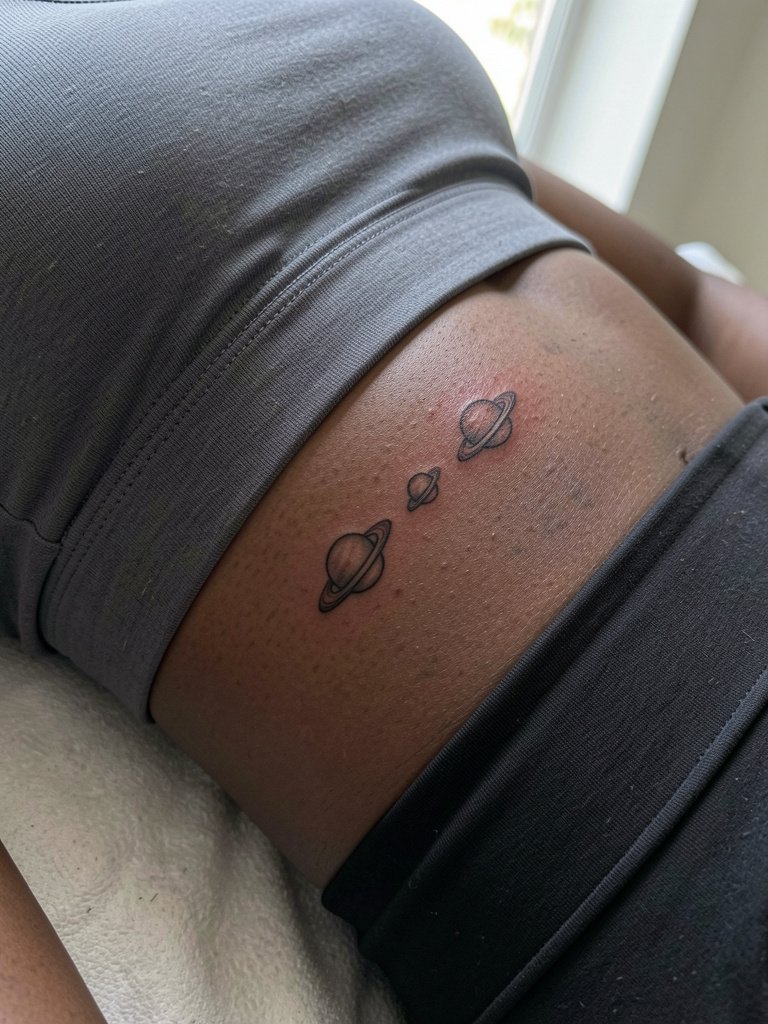
Fine line on ribs triggers a well-known split in opinions. One camp says ribs blur within two years because that skin stretches under pressure and breathing, turning crisp outlines into soft gray patches. The other camp argues that slightly wider spacing and careful placement away from the breast crease lets fine line settle well, and they point to healed three-year examples in their portfolios. If you want a ribcage piece, plan for touch-ups in the two to three year window and avoid the single-needle thinnest option.
14. Invisible orbit lines using negative space
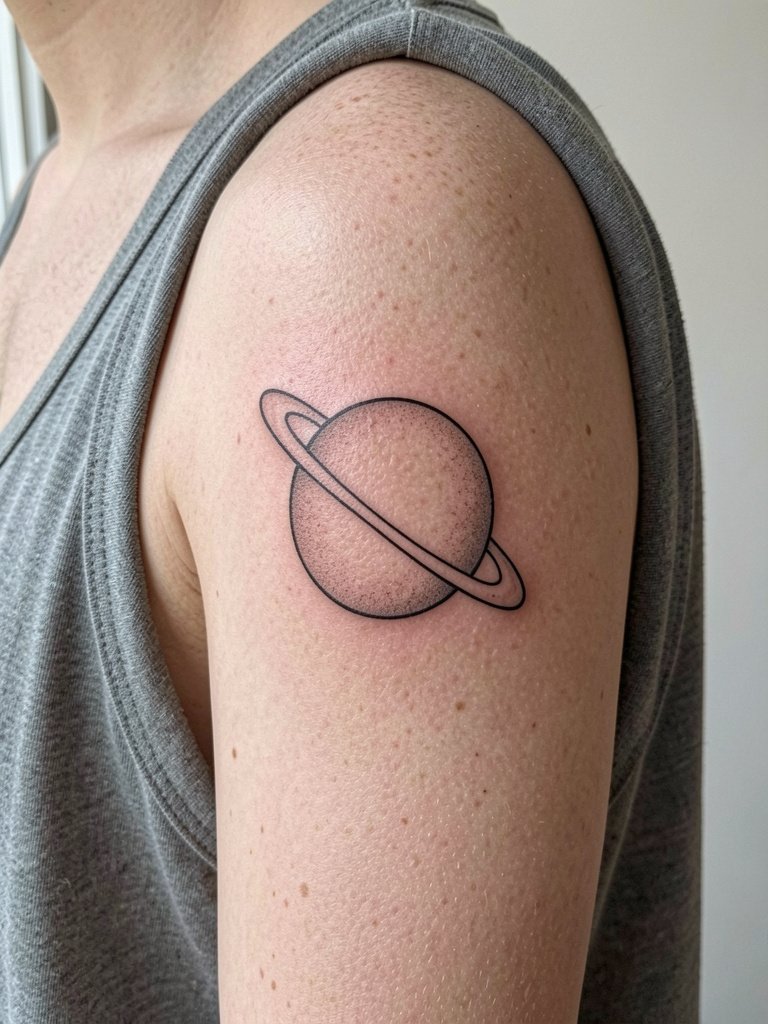
Negative-space orbits age well because there is no extra pigment to blur. This approach requires slightly more space between elements so the skin-gap remains readable after two to five years. The common mistake is shrinking the gap to look delicate, which then vanishes as the ink settles. For show-off outfits, a loose tank and layered chains on the opposite shoulder work well with the placement; try a layered chain necklace for balance.
15. Planet with tiny coordinate micro-script
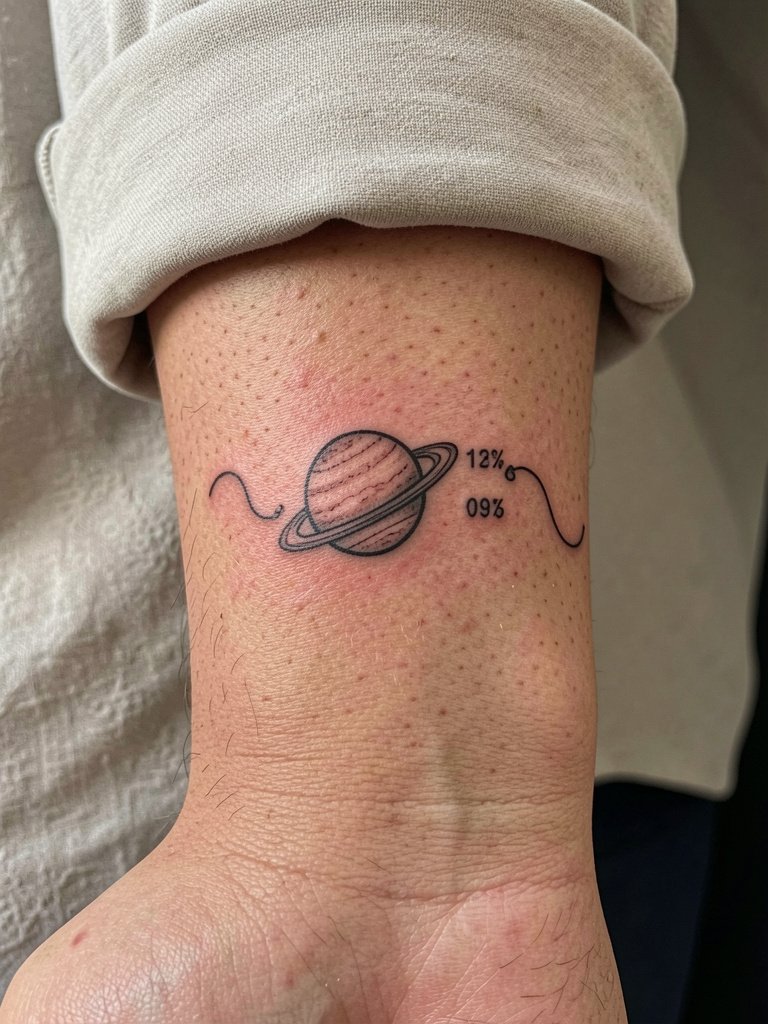
Adding coordinates turns a planet into a personal map without using vague phrasing. Keep the numerals at a legible size because micro-script can blur if the font is too tight. Session runs about 30 to 60 minutes depending on script length. A typical mistake is choosing a script weight that matches the planet outline exactly; a slightly bolder micro font holds up better. Pair this wrist location with a neutral rolled cuff shirt for easy access and framing.
16. Minimalist crescent-saturn hybrid on the ankle
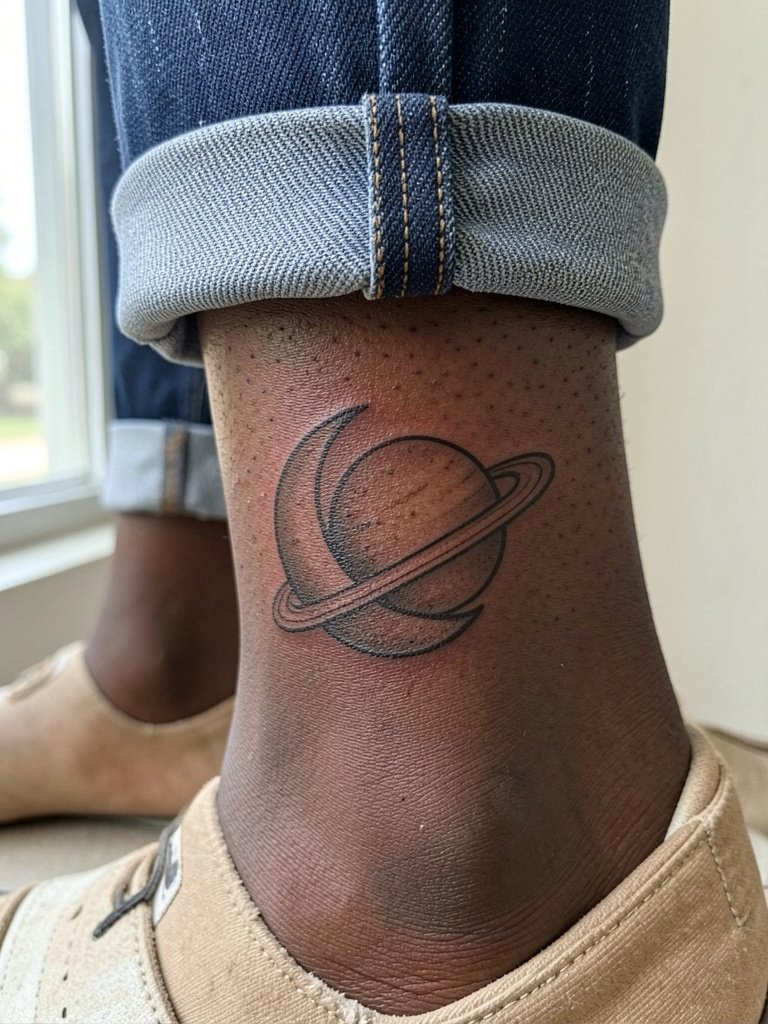
This hybrid reads fresh and decorative while retaining a compact footprint. Ankle work should use slightly heavier lines than wrist micro work because of heat, sweat, and sun exposure in summer. The session is short and the pain is moderate. A common mistake is picking the thinnest possible ring detail which fades unevenly where shoes and socks rub. Style with linen drawstring pants or sandals that keep the ankle visible.
17. Minimal dotwork planet with stipple shadow
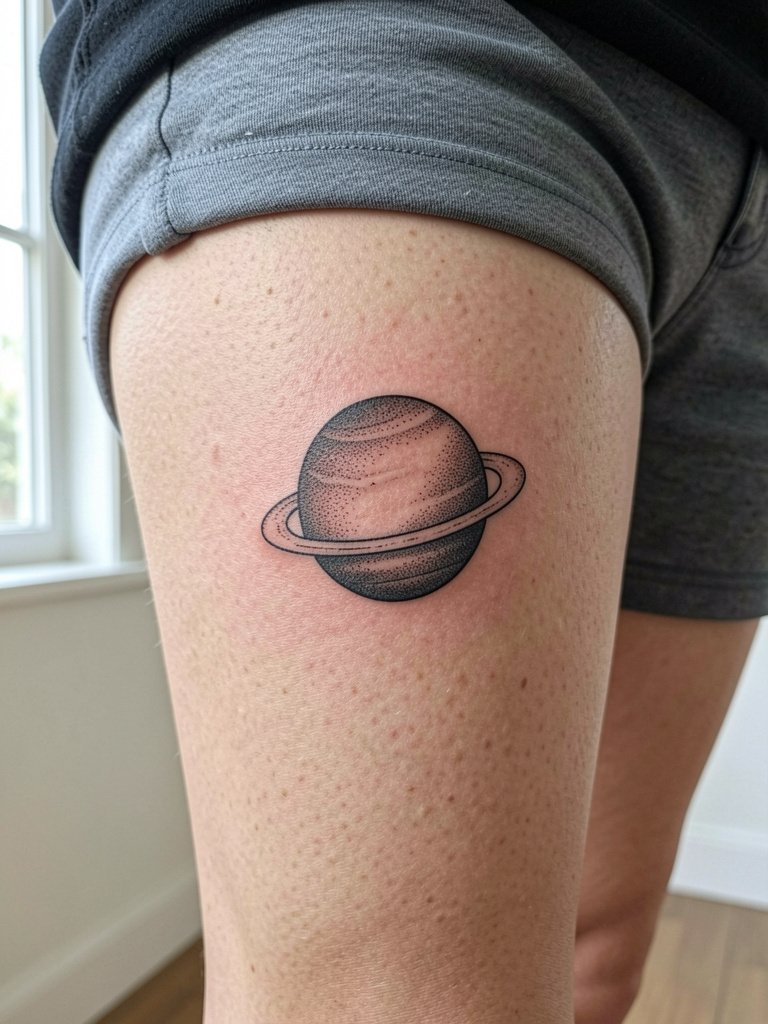
Dotwork gives a tactile texture that reads well at small scale and holds over time when dots are spaced. Thigh skin tolerates detail and touch-ups are straightforward if you want a stronger contrast later. A mistake is crowding stipple too densely which can look muddy after six months. For summer wear, high-waist shorts or skirts let the piece peek through; consider a high waist summer shorts option.
18. Minimalist planetary ring with gap on the collarbone
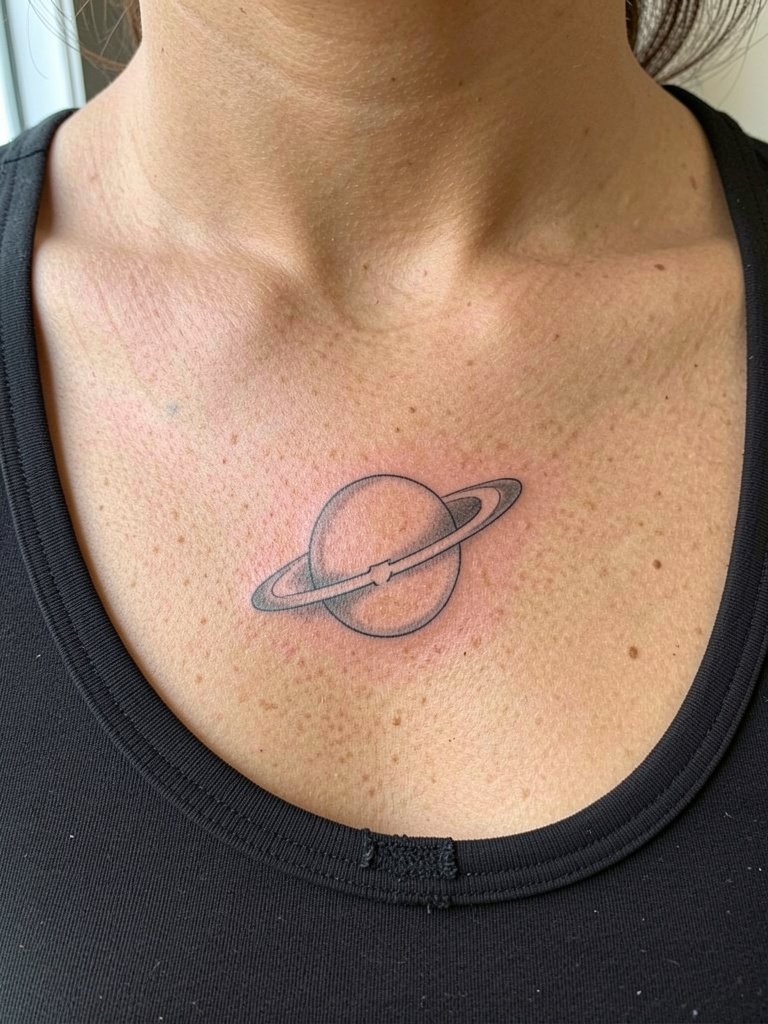
A collarbone ring with a clear gap reads as an iconic symbol rather than a literal planet. It often takes 30 to 50 minutes and benefits from extra spacing so the gap stays visible in photos. The common error is compressing the ring which then closes in on itself as the ink spreads. Show it off with a scoop neck top for evening looks.
19. Tiny knuckle planet dots
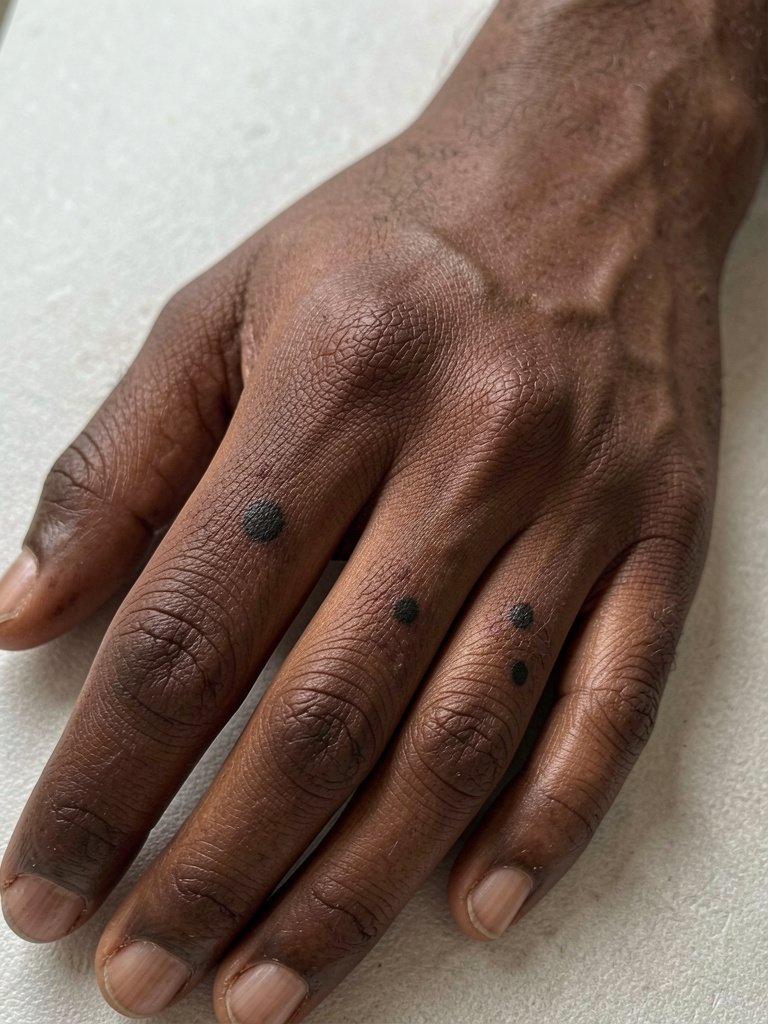
Knuckle tattoos fade faster because of constant washing and hand movement. They are a high-turnover choice but attractive for those who like visible micro accents. Expect touch-ups every one to two years. The biggest mistake is picking very dense detail for a spot that is going to soften quickly. Wear minimal rings and avoid heavy creams during the first month so the knuckle skin can heal cleanly.
20. Minimal sunrise planet, horizon line
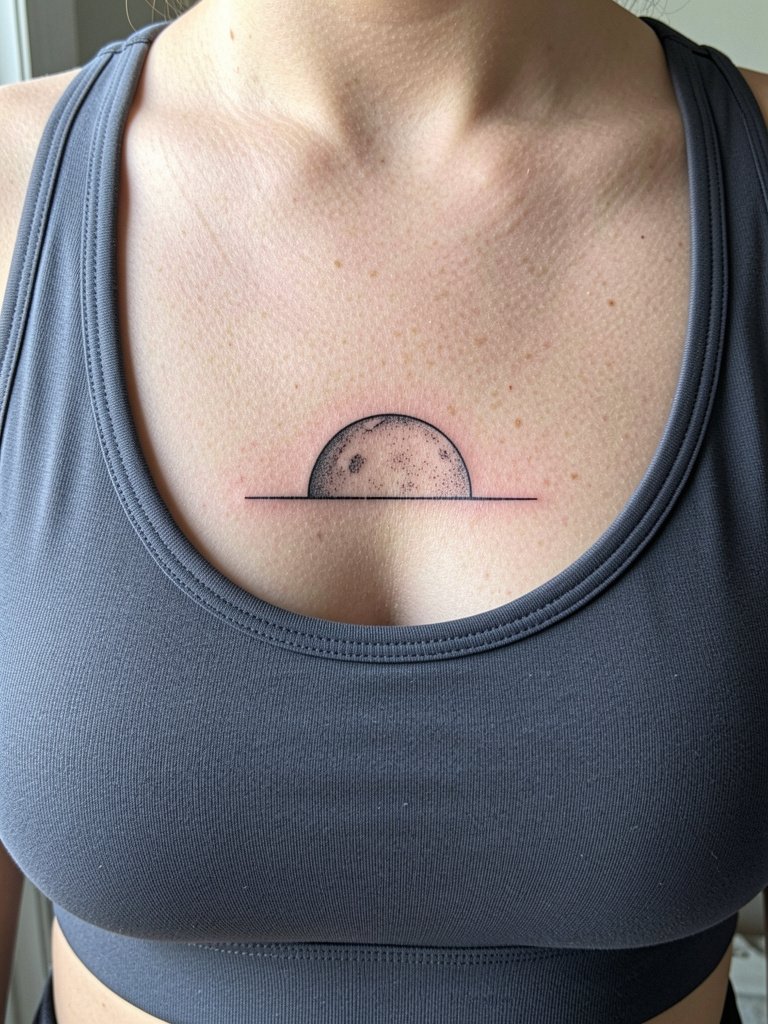
Sternum placements require an artist comfortable with central chest work and with healing on a surface that moves with breathing. This clean horizon look ages well if the lines have room to breathe. Sessions are moderate in length and the pain level sits higher than forearm work. Avoid packing detail into the horizon; a single crisp line holds up better. For fitting outfits, a fitted bandeau or sports bra during the session keeps access easy.
21. Minimalist planet and birth-date micro combo
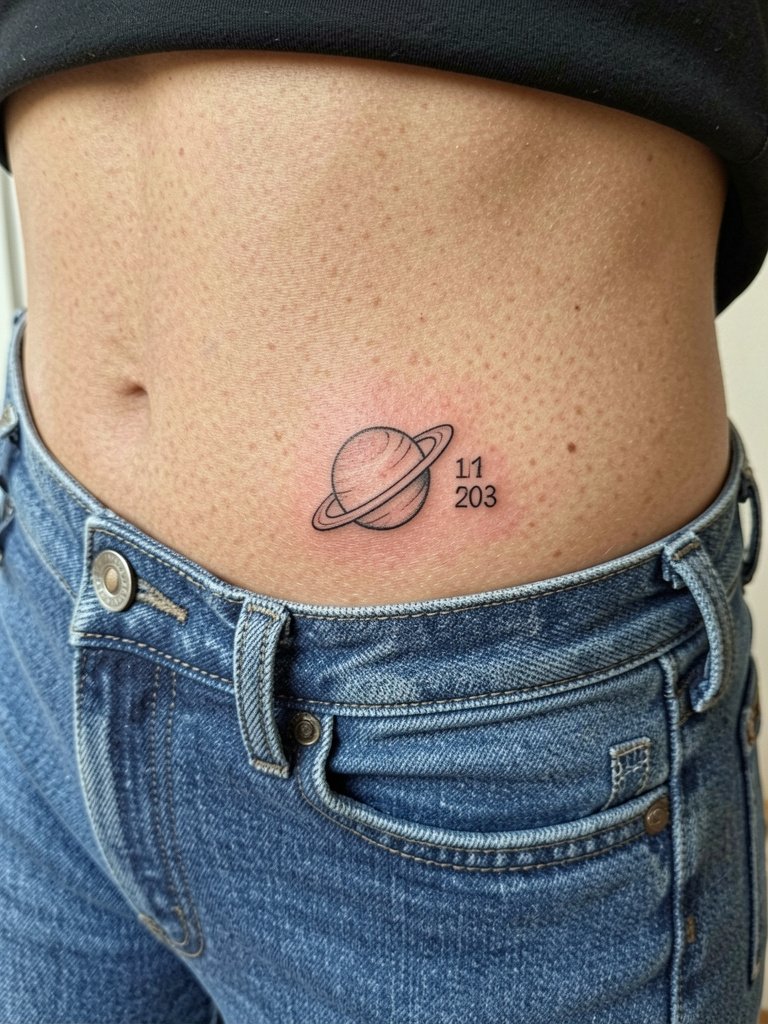
Pairing a planet with a precise date makes the design specific without being wordy. Keep script small but not hairline thin so the numerals remain legible after healing. The hip placement handles touch-ups well but will be influenced by clothes rubbing during the first two weeks. If you plan to reveal it, low-rise jeans and crop tops work well; try low rise jeans that sit below the piece.
22. Minimalist exoplanet cluster around the shoulder blade
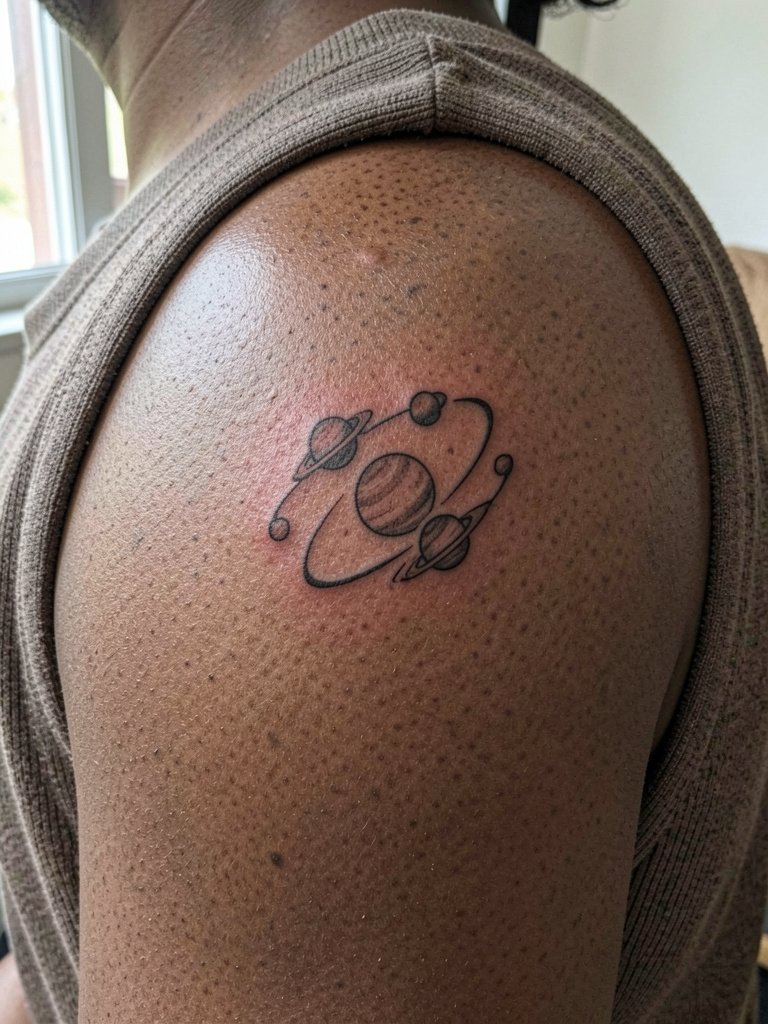
Shoulder blade placements allow slightly larger spacing and read well as a small scene. Sessions last 40 to 70 minutes for multiple elements. The common error is placing too many tiny planets too close, which becomes indistinct after a year. For styling, open-back tops or one-shoulder dresses reveal this piece nicely.
23. Minimalist planet with micro-coordinate ring
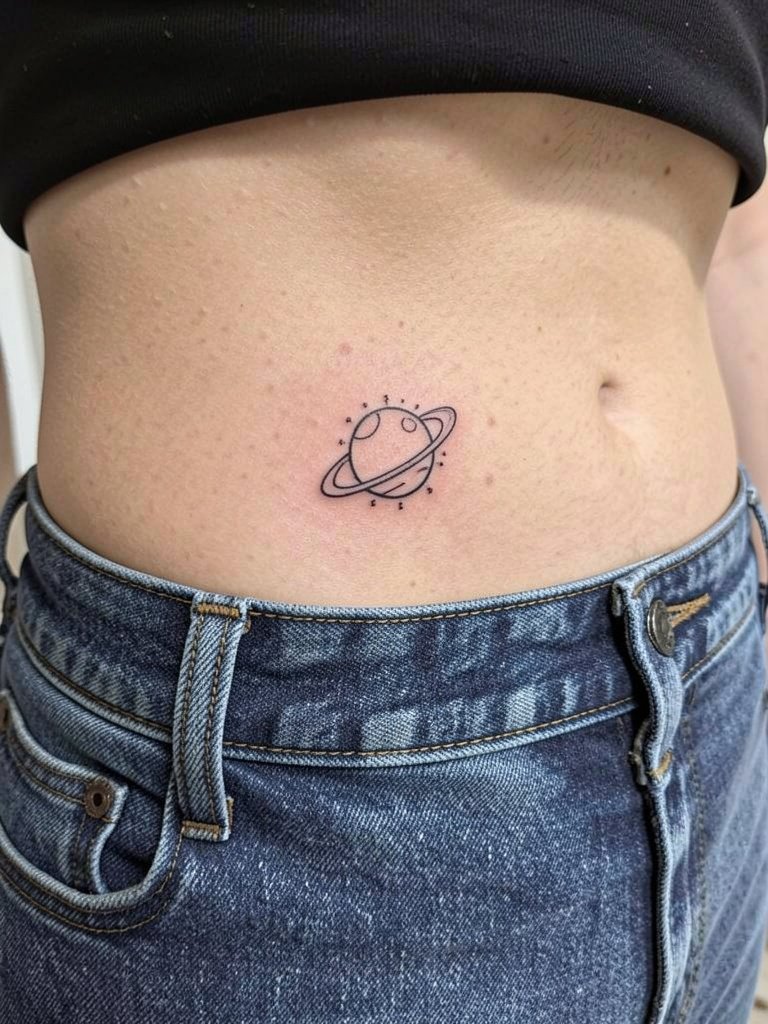
A lower-back micro ring makes a hidden personal emblem with geometric interest. The lumbar area is stable and tolerates thin rings when enough spacing is provided. Mistake is crowding micro-coordinates too tightly which can blur into a single band. For outfits that reveal this spot, a cropped tank or low-rise denim pairs well.
24. Minimalist planet with slight crescent shading
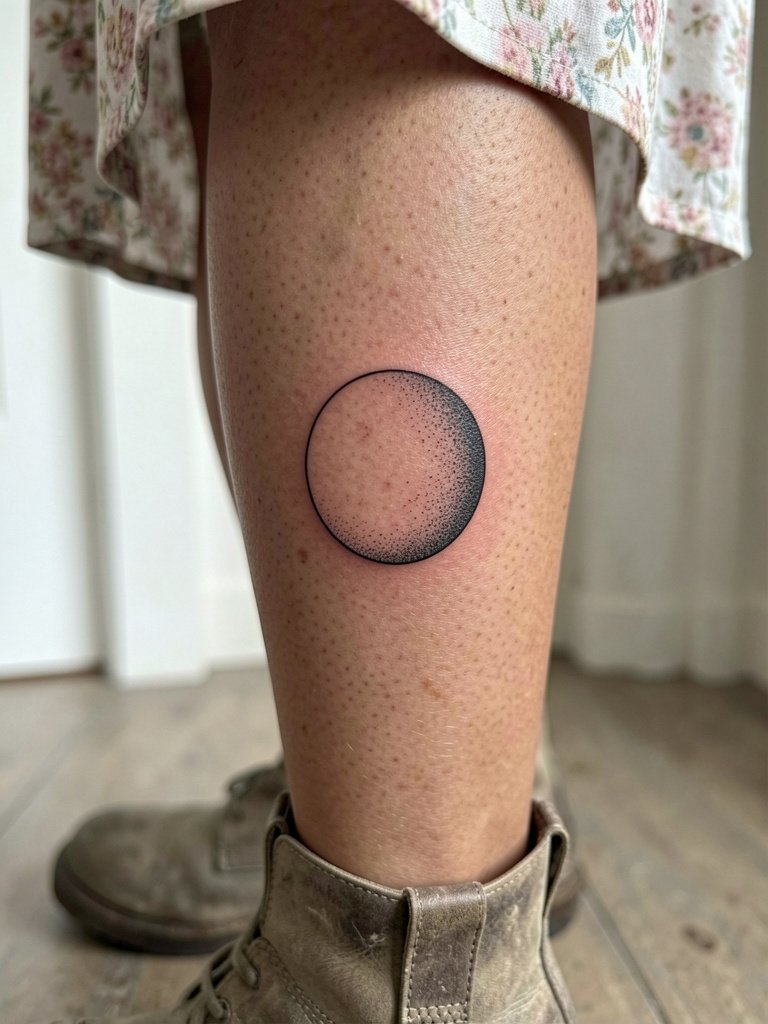
A tiny shaded crescent gives dimensionality without full gray fills. Calf skin holds stipple better than wrists or ankles. Sessions are brief and bruising is uncommon. Watch for overly dense stippling that can compact into a gray patch over time. For footwear that flatters the piece, thin ankle boots or summer dresses that show the lower leg both work well.
25. Minimal planet trio on the shoulder cap
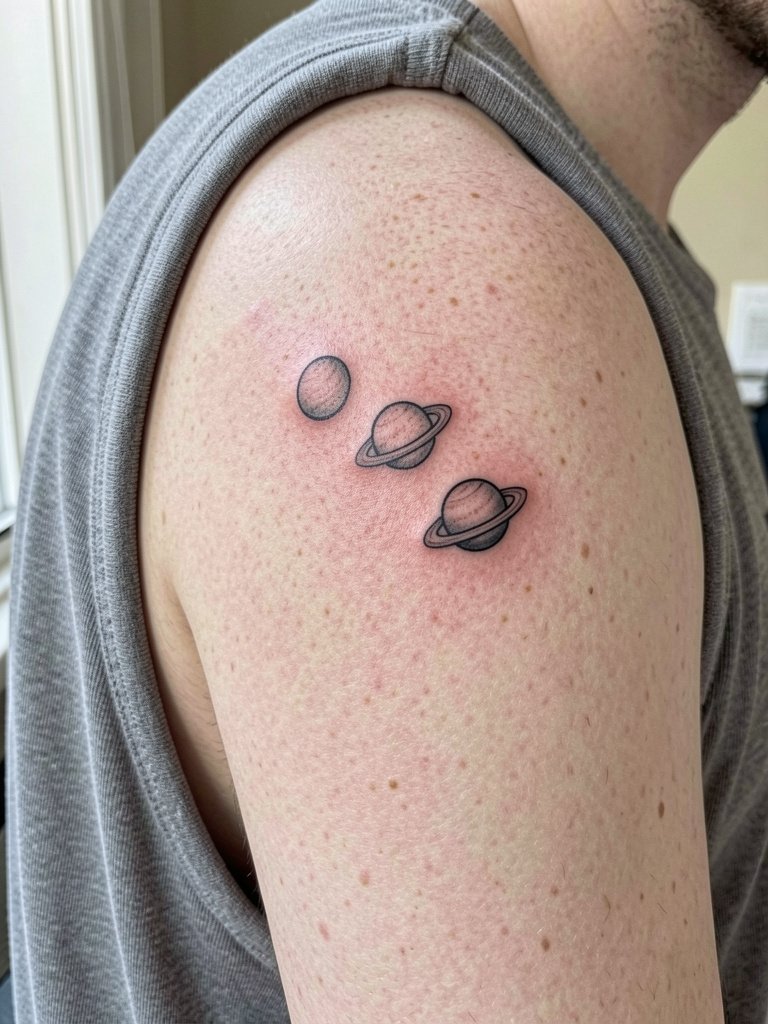
Shoulder cap pieces give a subtle visual curve that follows anatomy and holds up well because the area rarely gets constant friction. Sessions are short and tolerable. Common mistake is shrinking the planets too small to see once healed. For a casual reveal, a loose tank or off-shoulder top complements the rounded placement.
Frequently Asked Questions
Q: How much should I budget for a tiny minimalist planet tattoo?
A: Prices vary by shop and region, but expect a small blackwork or fine-line micro tattoo to be in a low to mid-range bracket today, often higher than five years ago. Tip 15 to 25 percent where tipping is customary and check studio minimums so you avoid surprise costs.
Q: Do single-needle planets work on darker skin tones?
A: Single-needle lines can disappear in photos on deeper tones unless the artist adjusts contour and depth. Some artists prefer a slightly heavier line or a 0.8mm suggestion for contrast, while others report success with single-needle when they adjust technique; both camps produce healed examples. If visibility matters, ask for a healed portfolio example on similar skin or request a gentle test line to see how it reads.
Q: Where can I find local artists who specialize in minimalist planet work without relying on tagged handles?
A: Search hashtags like #minimaltattoo, #planetstonetattoo, and #cosmicfineline on Instagram and TikTok and filter results by location. Use Tattoodo to search keywords such as "single-line planet blackwork" or "dot solar system fine line" and look for portfolios that show healed work. Reddit threads on r/tattoos and r/finelinetattoos can surface peer recommendations and healed photos across skin tones, and booking platforms like Booksy and the Inked App let you filter studios by specialty.
Q: How often will I need touch-ups for fine-line planet tattoos?
A: Small fine-line pieces commonly need touch-ups every two to three years depending on placement, sun exposure, and how the skin heals. High-friction spots like ankles and knuckles may need earlier touch-ups while collarbone and shoulder placements often stay readable longer.
Q: I used Aquaphor on a previous fine-line tattoo and it looked muddy after healing. Is that common?
A: There is a real divide on this. One group of healers and forum users reports that heavy ointments like Aquaphor can clog pores and leave fine lines looking saturated or muddy after healing. Another group of artists maintains Aquaphor prevents scabbing and that soft-looking lines result from technique, not the product. If you have a fine-line piece, many people now opt for a thin witch-hazel mist during early days and a light unscented lotion afterward, and they watch how their skin responded previously to plan the product choice.
Q: Which placements hurt the most for minimalist planet designs and what should I wear to the session?
A: Ribcage, sternum, and ankle areas tend to be more uncomfortable than inner forearm or outer calf. For accessibility, wear clothing that naturally exposes the placement without being pulled. Examples are a loose tank for shoulder and nape work, a fitted crop or sports bra for sternum access, and rolled jeans for ankle pieces. Bring a loose top to cover the area afterward without pressure.