
The forearm is one of the rare places a tattoo can read like a sentence. The designs that still look crisp after five years are usually the ones planned for skin movement and future aging, not the delicate pieces that win likes the day they heal. Expect solid linework, deliberate spacing, and wardrobe choices that reveal the ink when it matters.
1. Black and Grey Realism Jesus Face, Inner Forearm
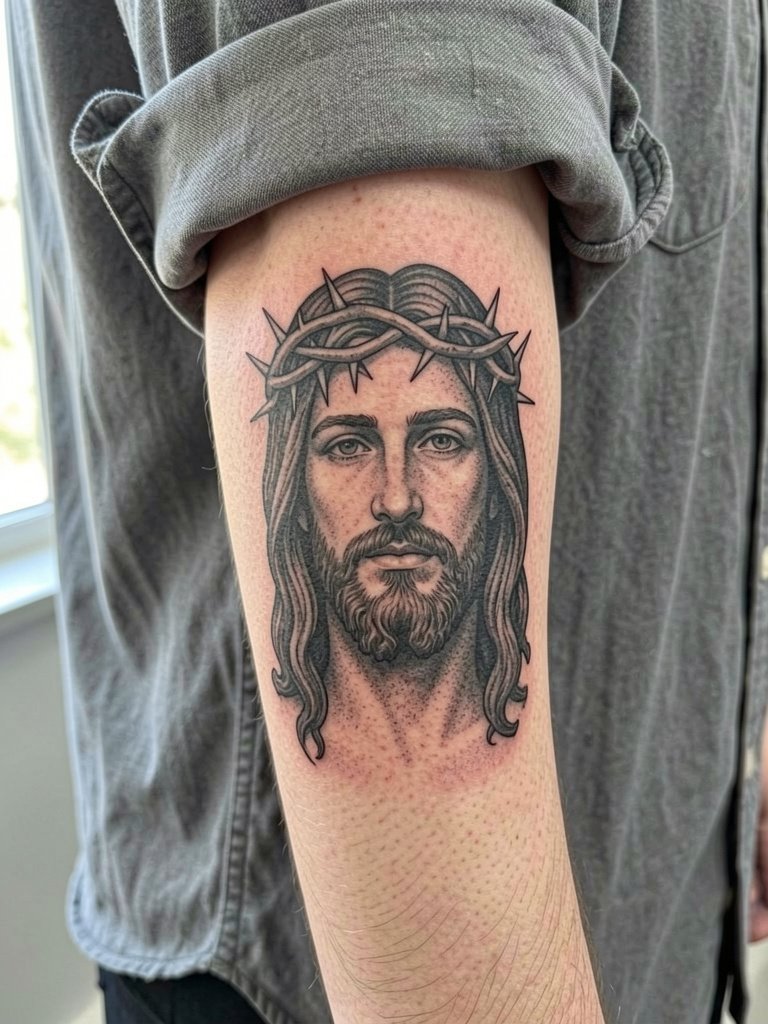
A high-contrast portrait on the inner forearm reads like a vow because the canvas is flat and visible. Choose realism when you want facial detail and emotional expression, but be specific about reference photos so the artist can translate features without overcrowding small planes. On this placement expect moderate pain around the wrist and a session of one to two hours for a 4–6 inch piece. The common mistake is shrinking the face to fit a small wrist area. Ask for slightly larger proportions and softer stipple shading so the highlights do not blur into solid grey by year two. Show-off pairing: wear a rolled cuff linen shirt and a dainty bracelet on the opposite wrist to balance the portrait.
2. Vertical Cross with Thorns, Inner Forearm
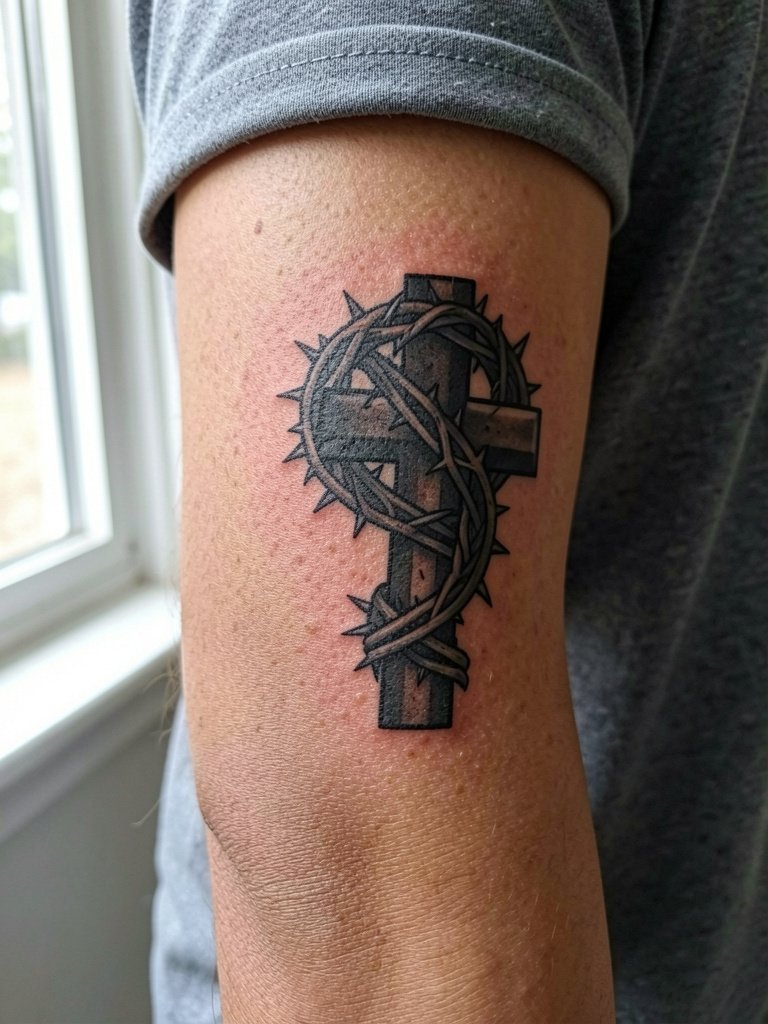
A vertical cross follows the arm's natural line so it rarely looks cramped. This style favors thick linework and strong negative space so the thorns hold detail longer. Tell the artist you want bolder main strokes and thinner thorn tips so the contrast remains at six months and again at five years. Common aging error is using equal thin lines across the whole design, which causes the cross body to lose separation from thorn texture. Session time is usually under two hours. For a rugged show-off look pair it with a black solid t shirt and a leather wrist cuff on the opposite arm.
3. Praying Hands with Rosary, Inner Forearm
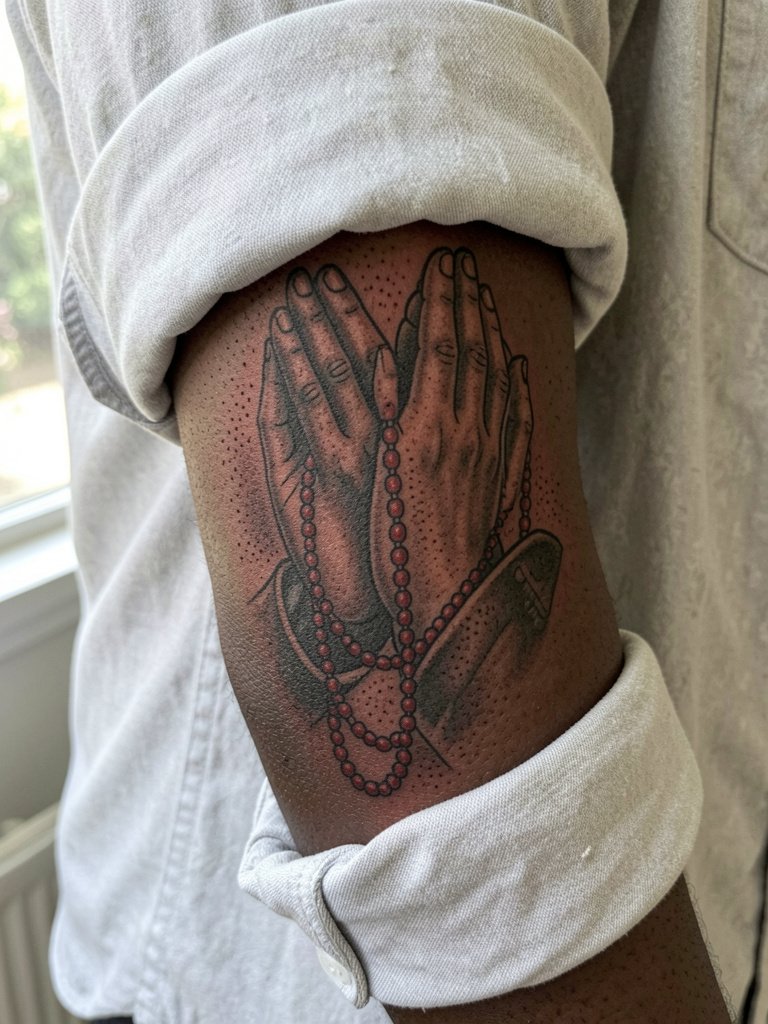
Praying hands with a rosary read well on the inner forearm because the fingers align with the arm's length. For longevity ask for slightly wider gaps between rosary beads and a heavier outline on the hands to avoid blur in the webbing between fingers. A common mistake is insisting on minute bead detail that the skin will soften, turning beads into blobs after a year. The session feels twingy near the wrist and calmer toward the elbow. Touch-up at six to twelve months restores bead highlights. For showing the piece off, try a white crisp button down shirt with the cuffs rolled up.
4. Script Bible Verse Flow (Philippians 4:13), Inner Forearm
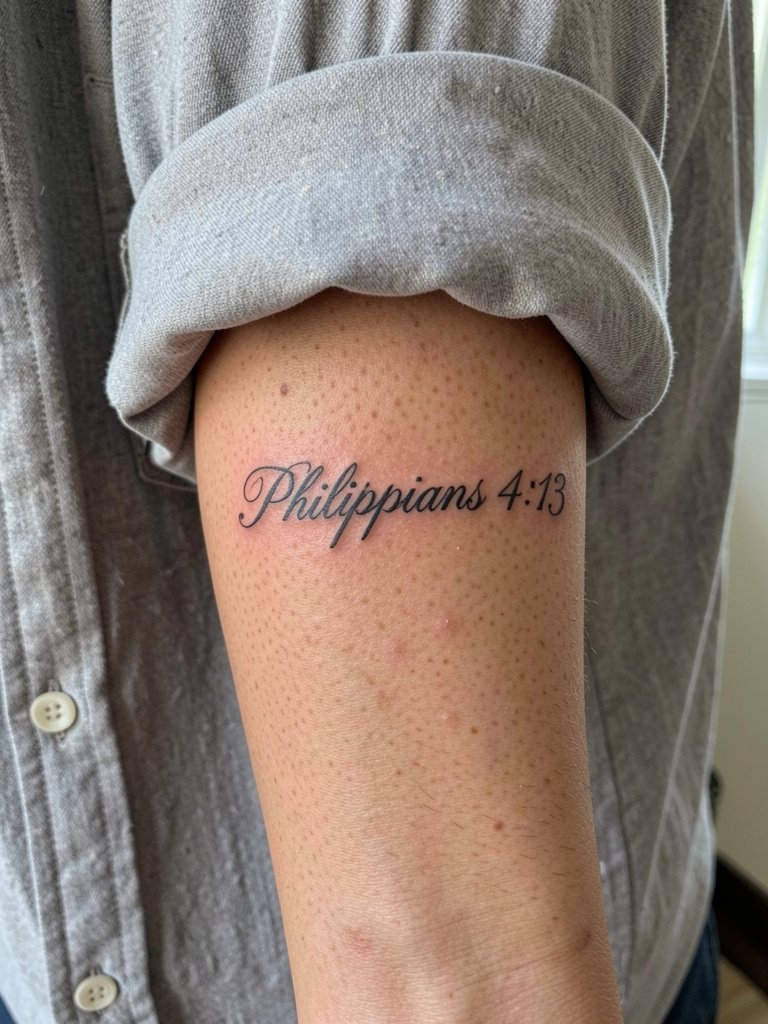
Short verses can fit the forearm curve neatly. The big trade-off is line weight. Fine single-needle script looks elegant but often blurs into thin grey within two to three years. If you want legibility, ask for single-needle letterforms with slightly increased stroke width and wider spacing between words. A practical rule is to keep letters at least one inch tall when possible. Healing timeline: one to two weeks of active care, then reassess at six months for potential touch-up. For session wear pick a loose button-down so the cuff does not press on fresh lines.
5. Ictus (Jesus Fish) with Interior Verse, Inner Forearm
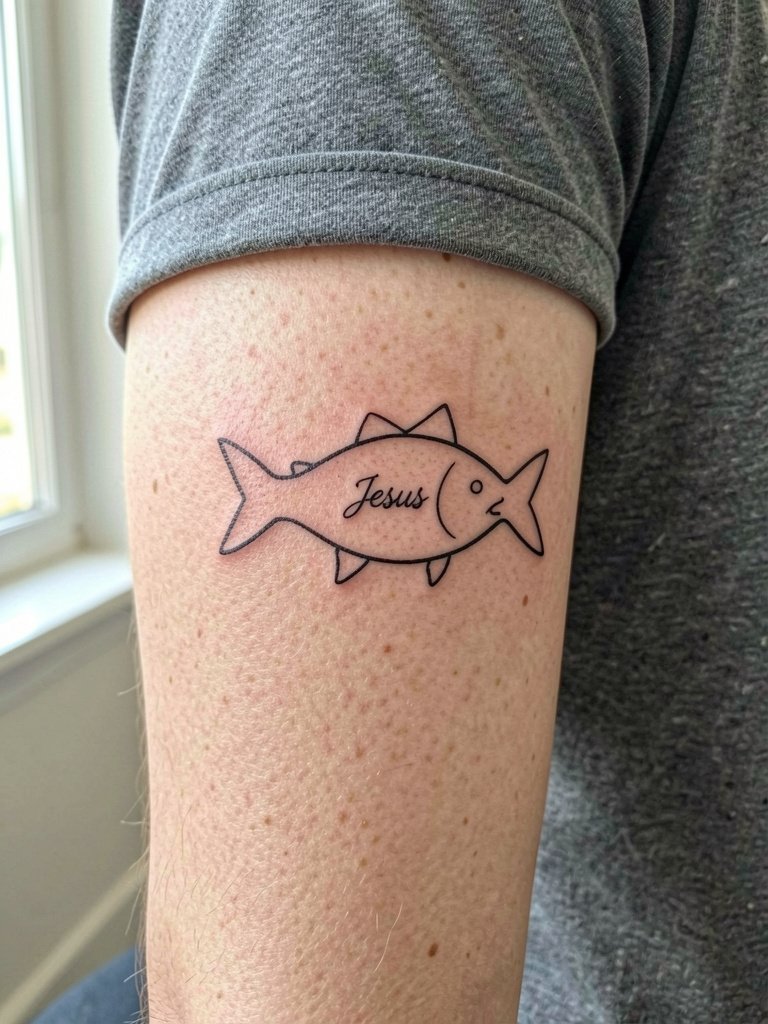
The Ictus is a low-profile choice that reads subtly but clearly when done at a slightly larger scale. Avoid the micro-size trap where the interior word becomes unreadable. Specify exact text and scale during consultation so the artist can propose a one-line outline thick enough to age. Pain is minimal on the inner forearm, and session time is short. The usual mistake is choosing ornate cursive inside a 2-inch fish. If you plan to show it off, it pairs with rolled sleeves on a short sleeve canvas shirt.
6. Cross with Angel Wings, Outer Forearm
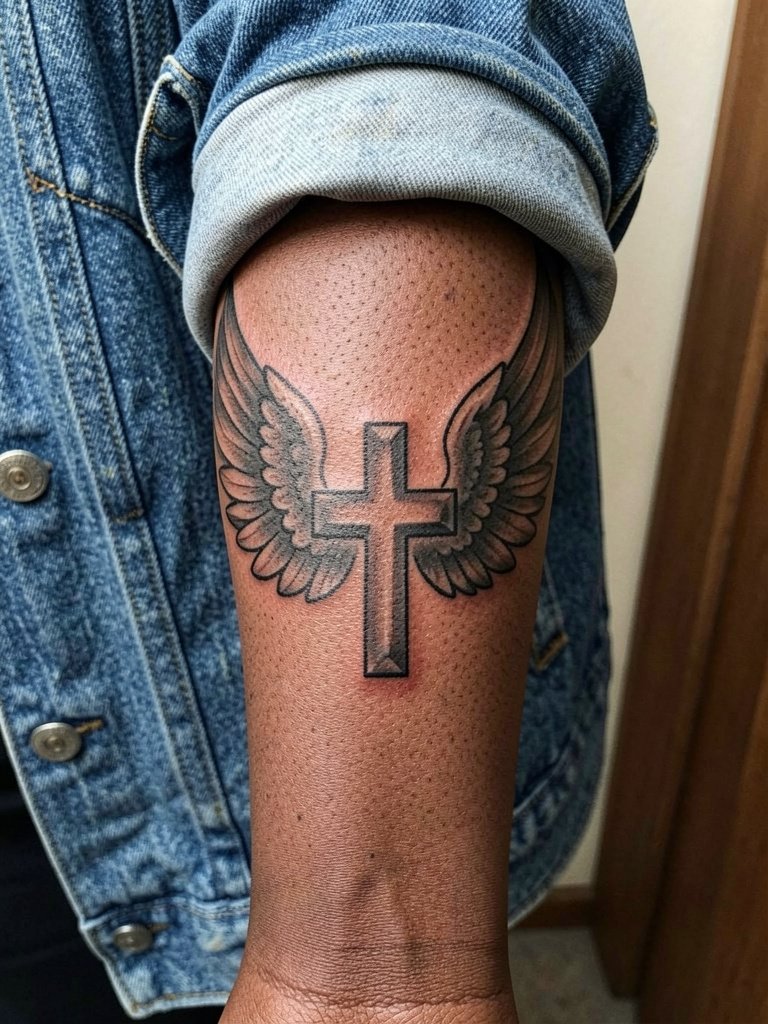
Wings add breadth to a cross and visually lift the symbol from the arm. For this outer-forearm placement ask for wing tips with stipple shading to avoid large flat greys that puddle over time. The outer forearm is less sensitive than the inner, so expect a steadier session and a cleaner line finish. A classic misstep is over-detailing feathers in very small wings. Session wear: vintage denim or a Henley shows off the bold lines nicely. For a rugged ensemble pick a vintage denim jacket.
Before You Book
The inner and outer forearm pieces above have different healing quirks, so a small kit helps the first week and a half.
- TattooGlo Healing Balm. A lighter-feeling indie balm that many people prefer when heavier ointments felt sticky during the first two days.
- Mad Rabbit Healing Balm. Fast-absorbing and fragrance-free, useful when fine-line script needs moisture without clogging.
- Dr. Bronner's Hemp Zest Castile Soap. A gentle, budget-friendly soap for cleaning the area during showers without added fragrances.
- Hustle Butter Aftercare Balm. Good for daily moisturizing after initial scab phase, smoothing faded-looking highlights.
- Aquaphor Healing Ointment. Thin protective layer for the very first 48 hours when keeping moisture locked in is crucial.
7. Silhouette Jesus on Cross with Fading Sun, Outer Forearm
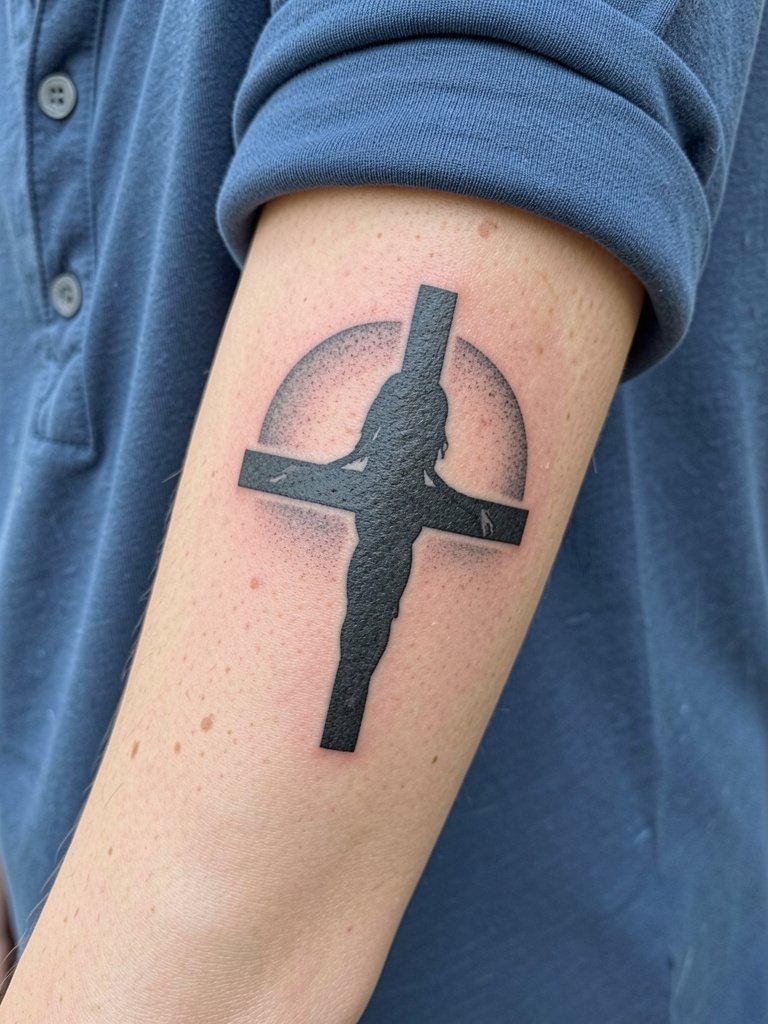
Silhouette work is a smart alternative to detailed portrait realism. One camp prefers realistic portraits for historical weight. The other camp favors stylized silhouettes because they age cleaner and avoid the "dated portrait" problem. One side argues realism honors the subject with fidelity. The other side points to healed photos where fine facial detail has softened badly after five years. For this forearm placement ask for strong contrast edges and minimal interior detail so the silhouette maintains its narrative at long range. Session time is medium and touch-ups typically happen at the one-year mark. Pair it with a solid color Henley for weekend wear.
8. Glowing Cross Held by Hands, Inner Forearm
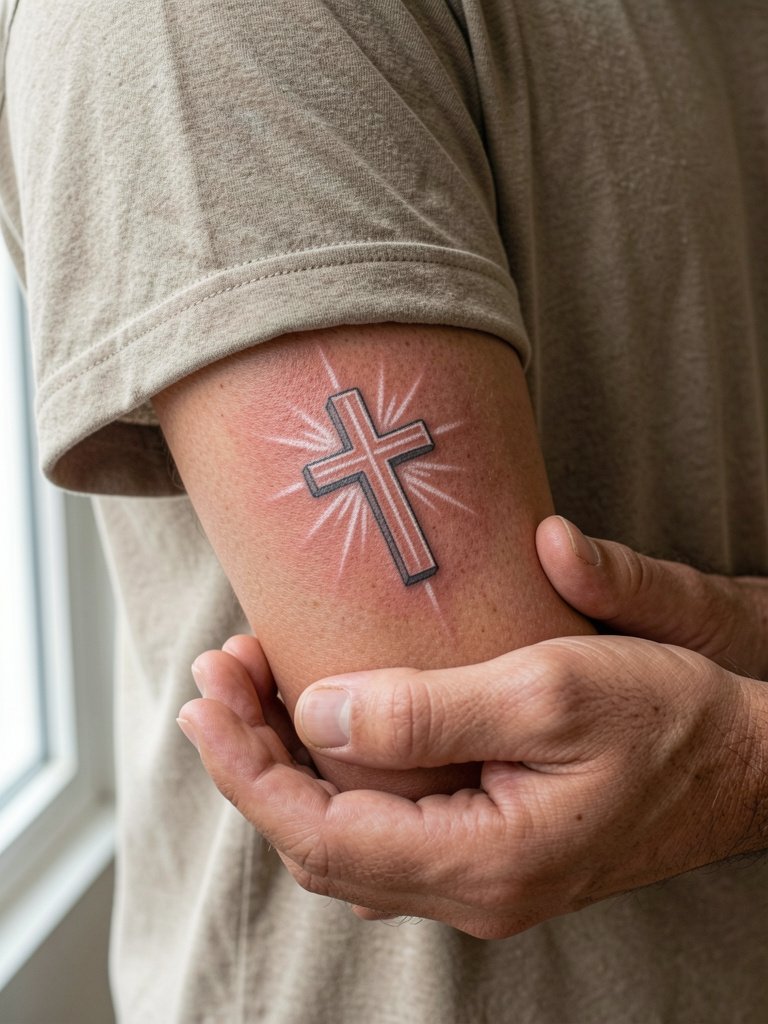
White-ink highlights can create a luminous effect without full color. They need careful placement because white fades faster than black. Discuss exact highlight locations and ask for marginally stronger black contrast around white areas so the glow reads after healing. The inner forearm will show white better on lighter skin tones but still benefits from surrounding black. Expect a slightly longer appointment if white ink layering is involved, and plan a touch-up at six to twelve months if the highlights soften. Wear a loose tank top for session access.
9. Holy Trinity Icon, Inner Forearm
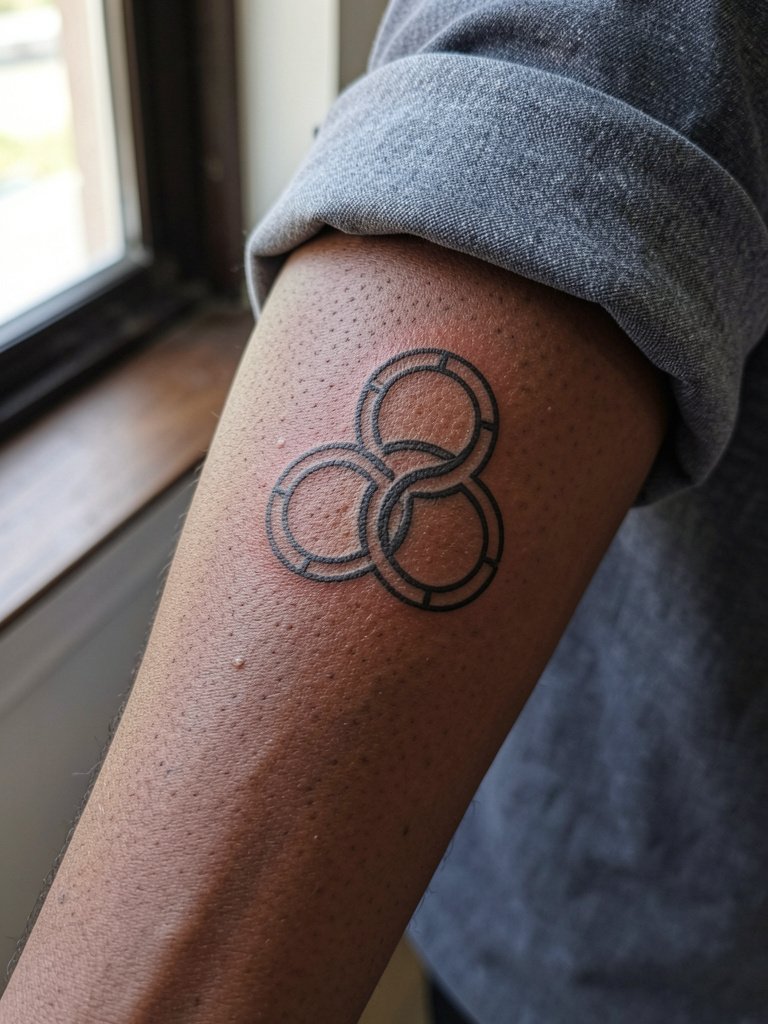
Geometric icons read clearly when lines have breathing room. For the Holy Trinity motif specify exact spacing between circles and request a mockup that scales the icon to both three and five inches. Many people pick a size that compresses the geometry, causing overlapping lines to merge in two years. Session time is short for a single icon, and blowout risk on the inner forearm is low if the artist uses controlled depth. For a smart showing, pair it with a minimalist silver watch.
10. Virgin Mary Portrait, Inner Forearm
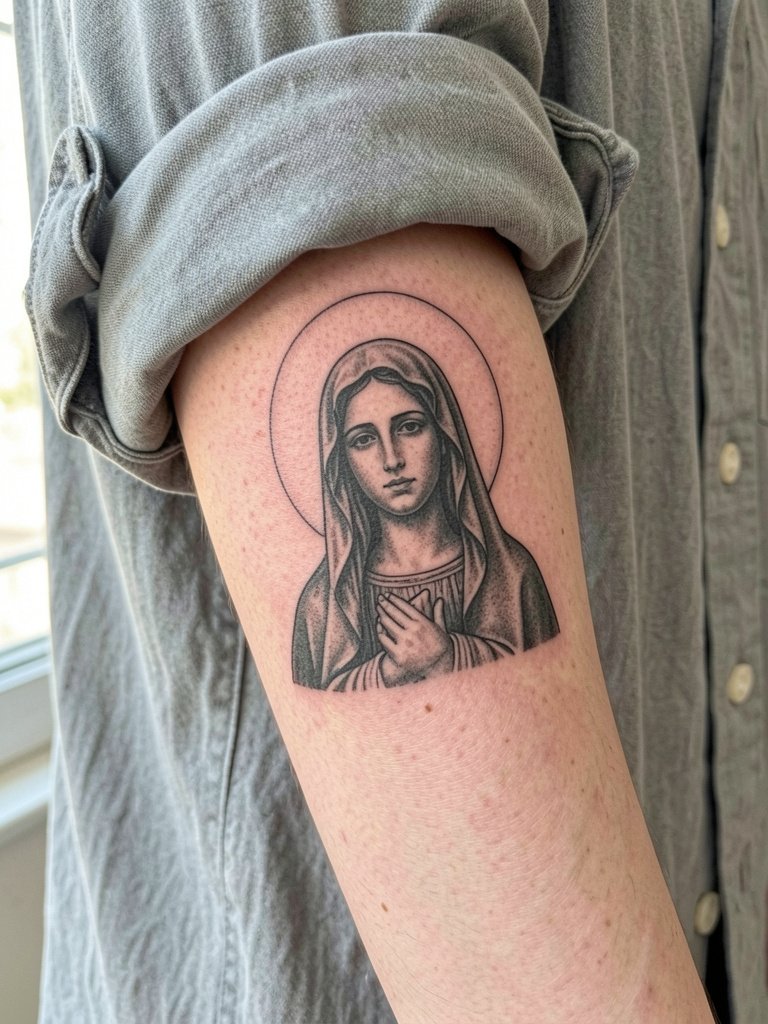
Portraits like the Virgin Mary can evoke devotion, but they demand reference choices that avoid photorealism pitfalls. Ask for a halo rendered in negative space rather than heavy white to prevent early washout. A frequent error is overcrowding the halo with too many tiny rays. Expect moderate session pain and plan for a touch-up window in the first year to sharpen facial highlights. For an elegantly framed look wear neutral rolled cuffs during show-off moments.
11. Biblical Scene Wrap (Mini Narrative), Outer to Inner Forearm Wrap
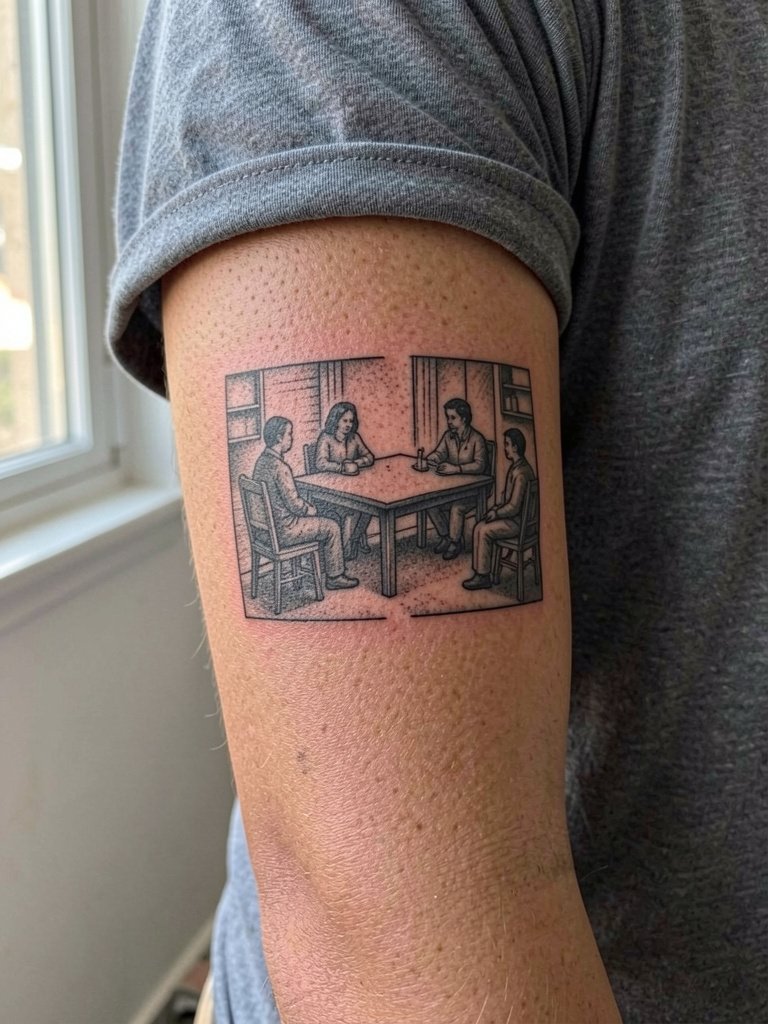
Wrap pieces use the arm as a three-dimensional page, which is powerful but risky at small scale. If you want narrative detail, plan for multiple sessions and larger panels. The common mistake is compressing a Last Supper–style scene into too narrow a band, which makes faces and hands unreadable after healing. Discuss storyboard reference images and spacing so each figure has breathing room. Expect multiple sessions and a higher touch-up likelihood at year one. For outer-forearm narratives, a vintage denim jacket frames the whole sequence.
12. Minimalist Anchor Cross, Inner Forearm
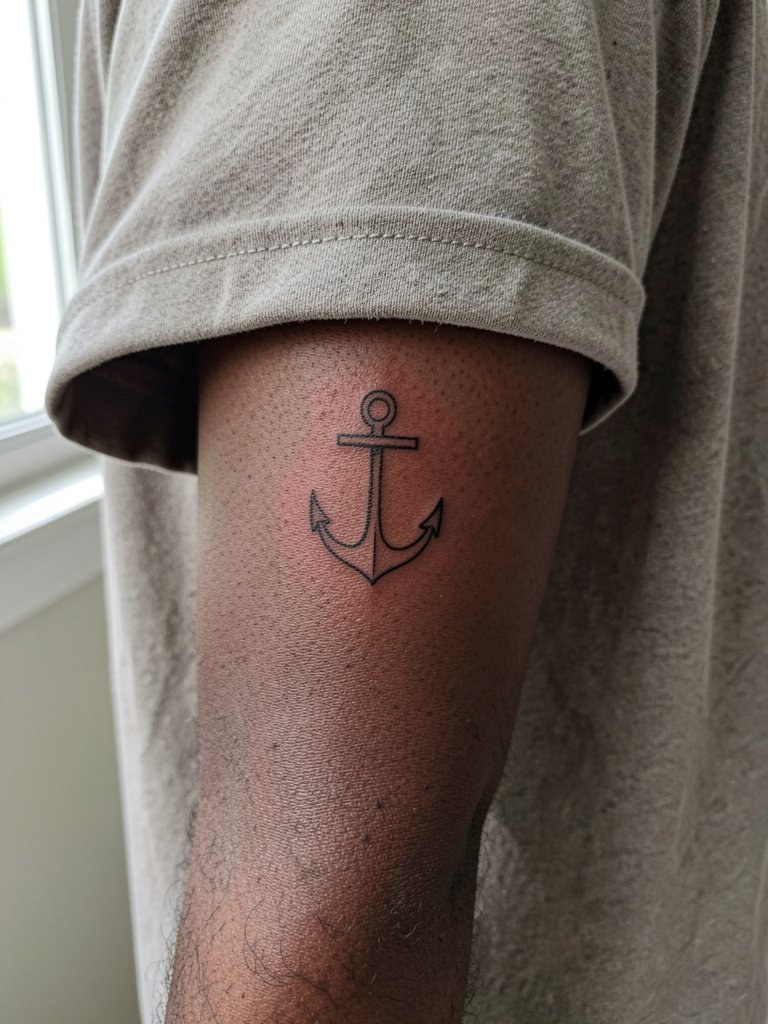
Minimalist icons are great first tattoos but need a slightly stronger base line than you might think. Tiny anchor crosses often lose their center detail because the metal anchor lines can merge with the crossbar. Ask for a modestly thicker anchor shaft and confirm scale in the stencil. Pain is low and session time is short. Keep expectations realistic about legibility after a few years and plan for a small touch-up if needed. Wear a rolled cuff linen shirt when showing it off.
13. Stained Glass Cross, Outer Forearm
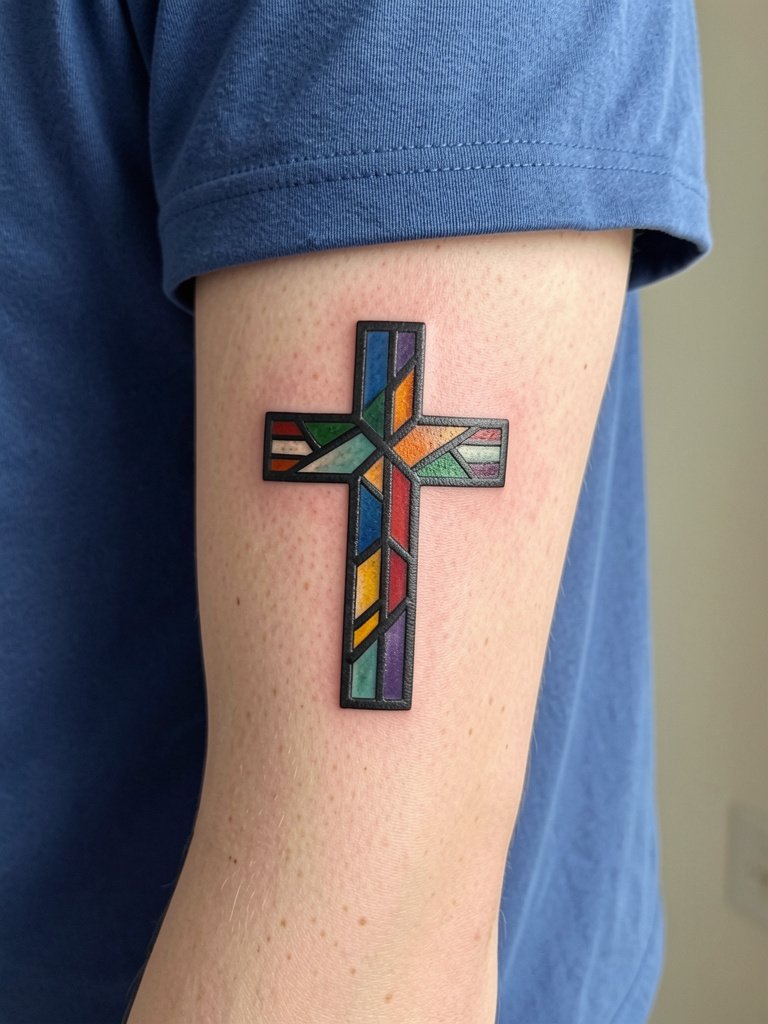
Color accents bring drama but also additional maintenance. One camp favors color for emotional depth. The other camp favors black and grey for long-term consistency. One side says color makes symbols pop and connects with younger aesthetics. The other side says saturated black and grey avoids shifting hues and patchy fade. If you choose stained-glass, insist on strong black leading lines to protect pane separation as the pigments soften. Expect one session for smaller crosses and a possible color boost at year two. For a bright look, pair it with a white tee.
14. Dove with Light Rays, Inner Forearm
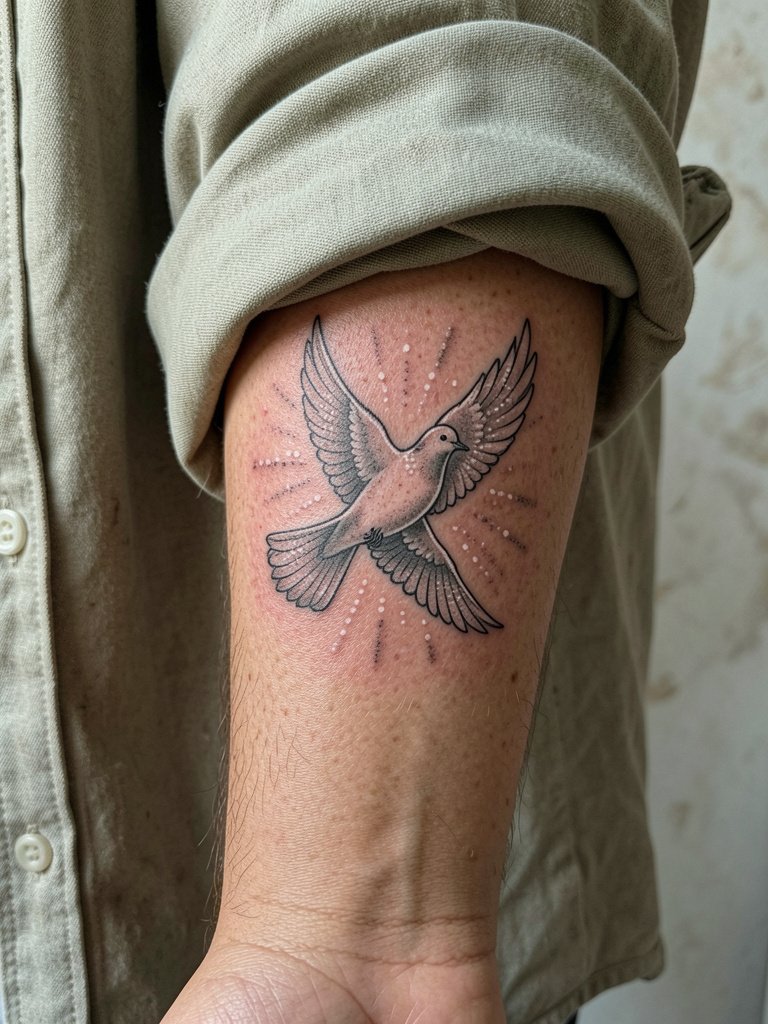
Fine-line doves can be elegant if scaled properly and supported with dotwork rays rather than continuous thin rays. The main risk is over-scattering of tiny light lines that blur into a grey field. Ask for dotwork rays and a slightly heavier beak and wing outline. Pain is gentle on the inner forearm and the session is usually under an hour. This pairs well with a dainty gold stacked bracelet set for evenings out.
15. Thorny Rose Cross, Inner Forearm
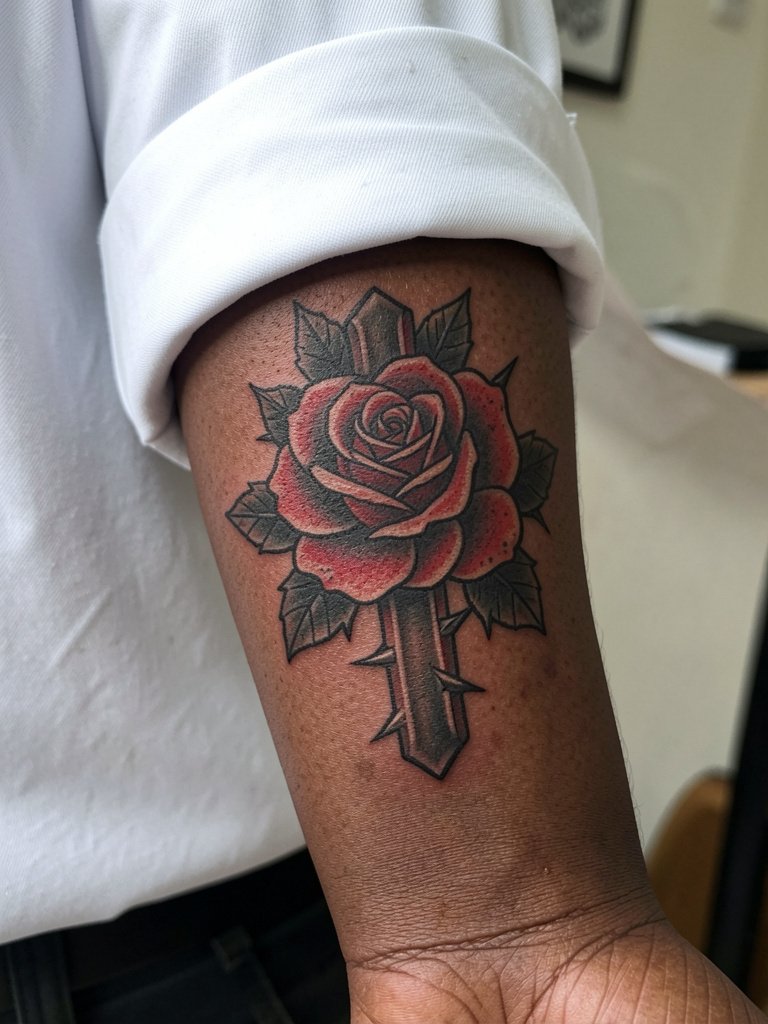
Color accents like a red rose offer contrast against black thorns, but the red should be used sparingly to avoid aggressive fade. Request saturated red with black anchor points so the petal edges keep shape. A common misstep is layering too many tiny veins in petals. The session runs one to two hours and touch-up for color is often needed at year two. For a coordinated outfit try a solid color henley.
16. Abstract Geometric Cross, Inner Forearm
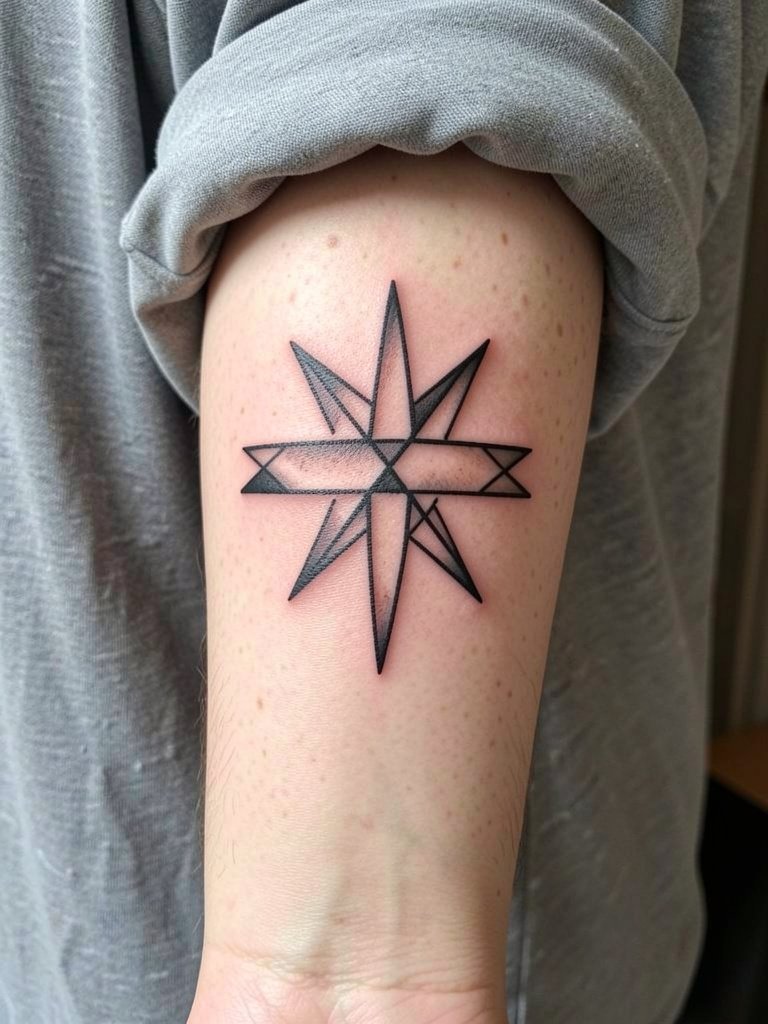
Geometric crosses are an under-explored modern option that keeps symbolism but rejects portraiture. Specify exact corner joins and line spacing so the composition does not compress. The aging advantage is clear because geometry tolerates slight blur without losing intent. The session is efficient and the blowout risk is low on the inner forearm when the artist uses steady single passes. For an editorial finish wear a minimalist silver watch.
17. White Ink Highlights for Spiritual Light, Inner Forearm
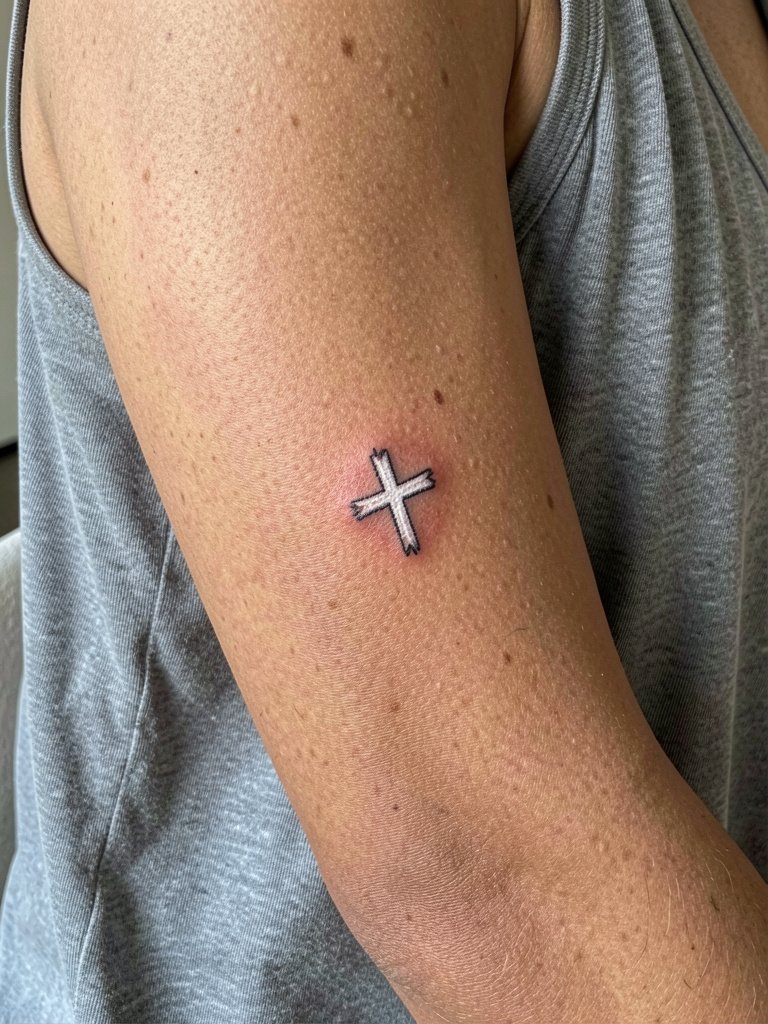
White ink is a specialized technique that can simulate glow without full color. It is under-covered because it requires careful contrast planning. Ask specifically which white brand the artist uses and where they will place highlights relative to the black outline so the effect survives healing. Expect a slightly longer session and a likely touch-up for white within the first year. For session comfort, wear a loose tank top.
18. Forearm "Prayer Belt" Wrap, Full Forearm Band
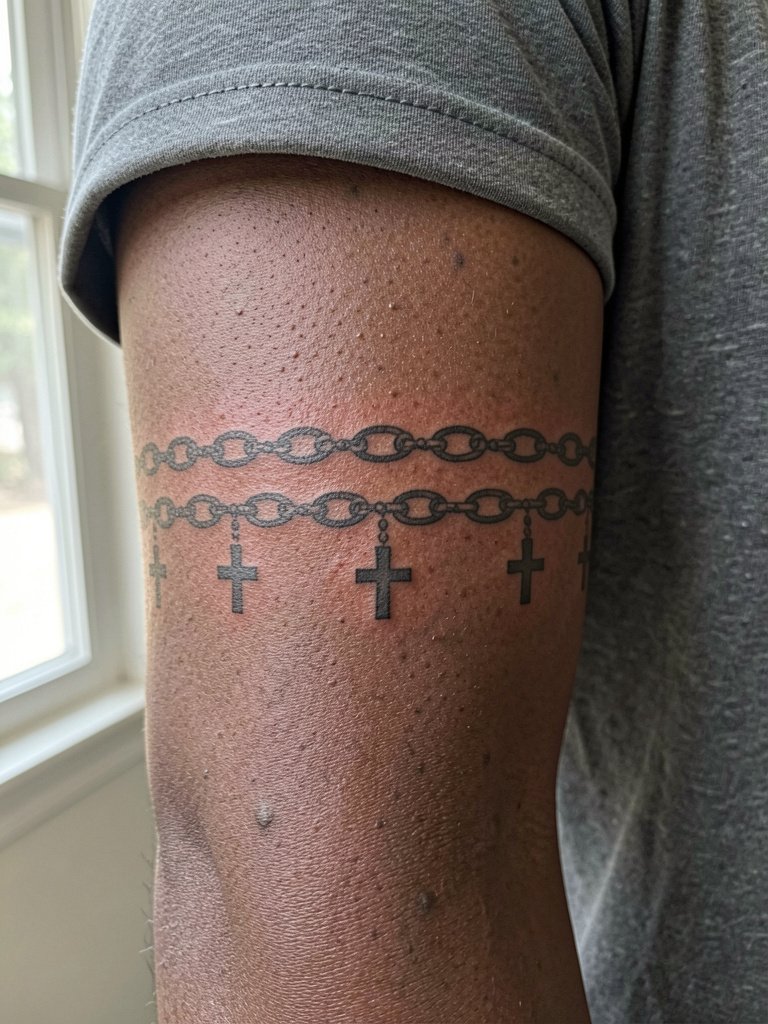
A wrap-around prayer belt uses the forearm as a circle of devotion, which reads best when links are uniform and not crowded. Plan for negative space between repeat elements to avoid visual merging as skin shifts. The obvious mistake is making the band too tight with tiny links. Sessions for a full wrap will be longer and often done in two passes. For showing off the wrap choose rolled sleeves or short sleeves that stop above the band.
19. Small Stipple Sacred Heart, Outer Forearm
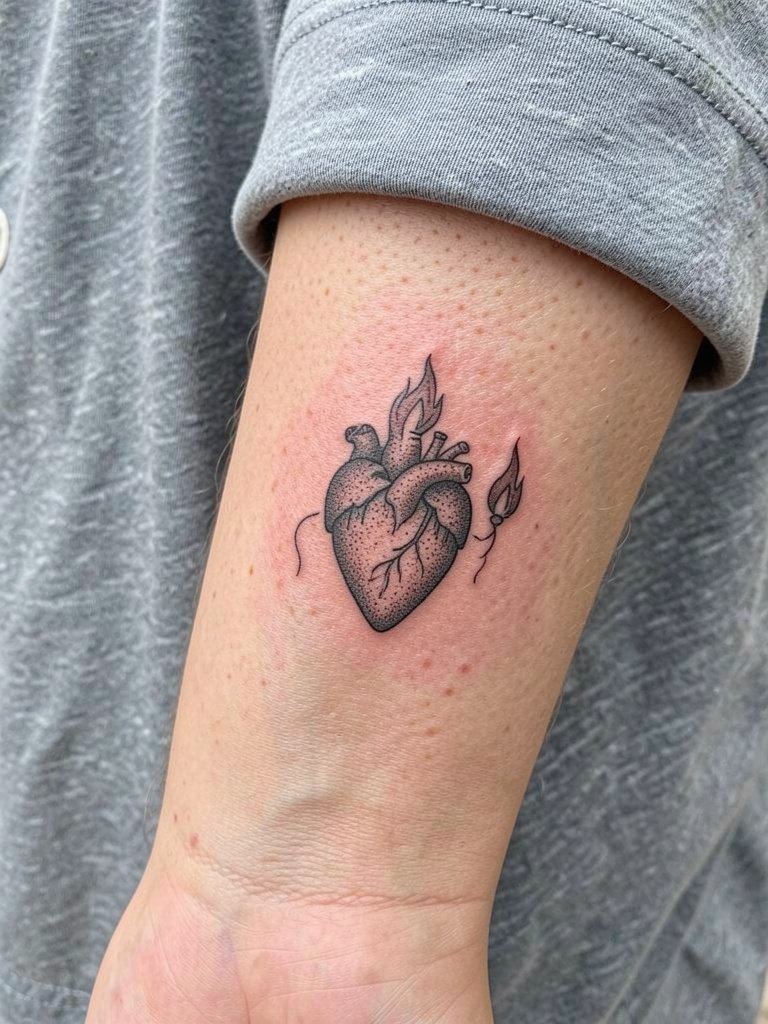
Stipple shading is a low-saturation approach that keeps solidity without heavy grey fields. Tell the artist you want dot density that reads at arm's length, not tiny stipple that disappears into the skin. The outer forearm handles stipple well and pain is mild. A common error is choosing a scalloped flame detail that ages into a smudge. For a subtle show-off pair it with a vintage denim jacket.
20. Rosary Wrist-to-Forearm Link, Wrap
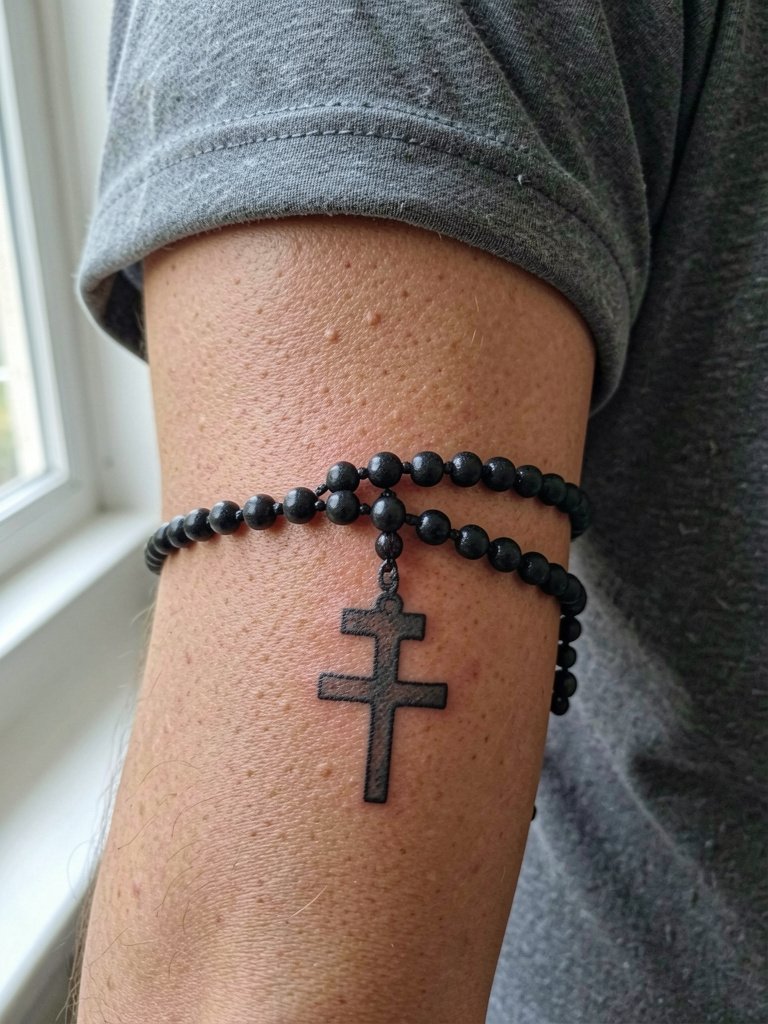
Rosary wraps look delicate but need enough bead spacing so hand motion and washing do not blur them into a chain. Ask for bead spacing that considers the wrist creases and for slightly bolder bead outlines near the wrist where friction is highest. Sessions are short but plan for a touch-up at six months if beads soften. Wear a short sleeve tee during show-off moments.
21. Silhouette Dove Over Horizon, Outer Forearm
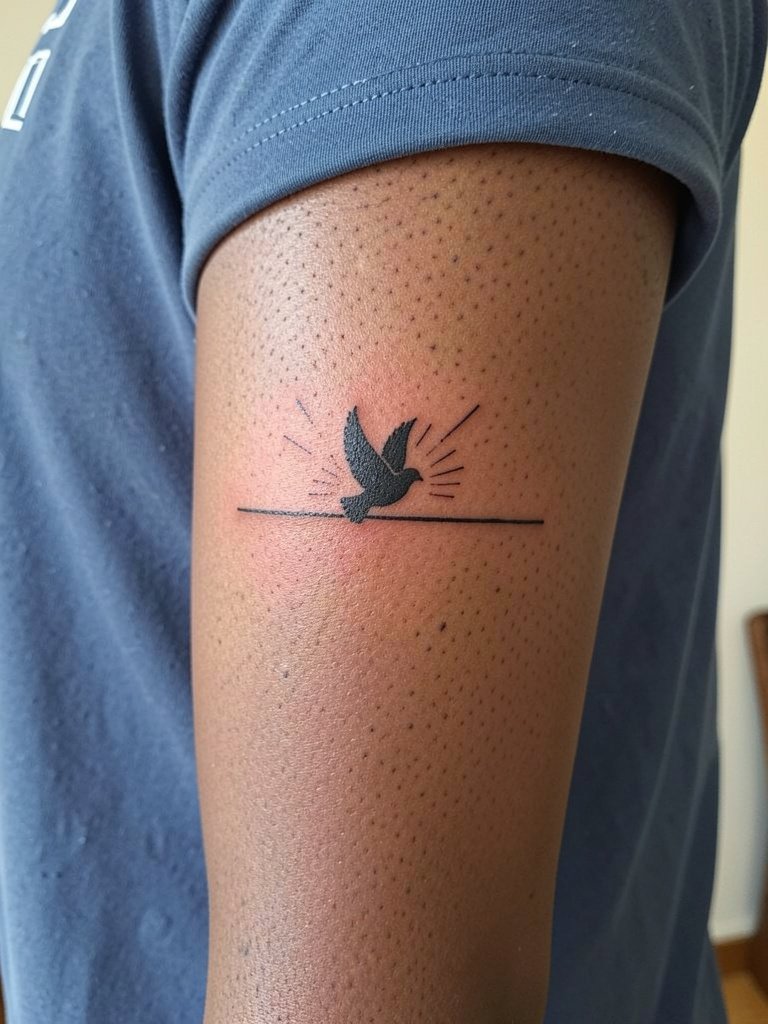
Silhouettes are forgiving because they do not rely on internal detail. If you like the silhouette trend, choose shapes with clear silhouettes and avoid tiny interior lines. Outer forearm silhouettes read across clothing and age predictably. The session is short and touch-up needs are minimal. Styled with a solid color tee it reads clean.
22. Simple Cross on Wrist with Micro-Texture
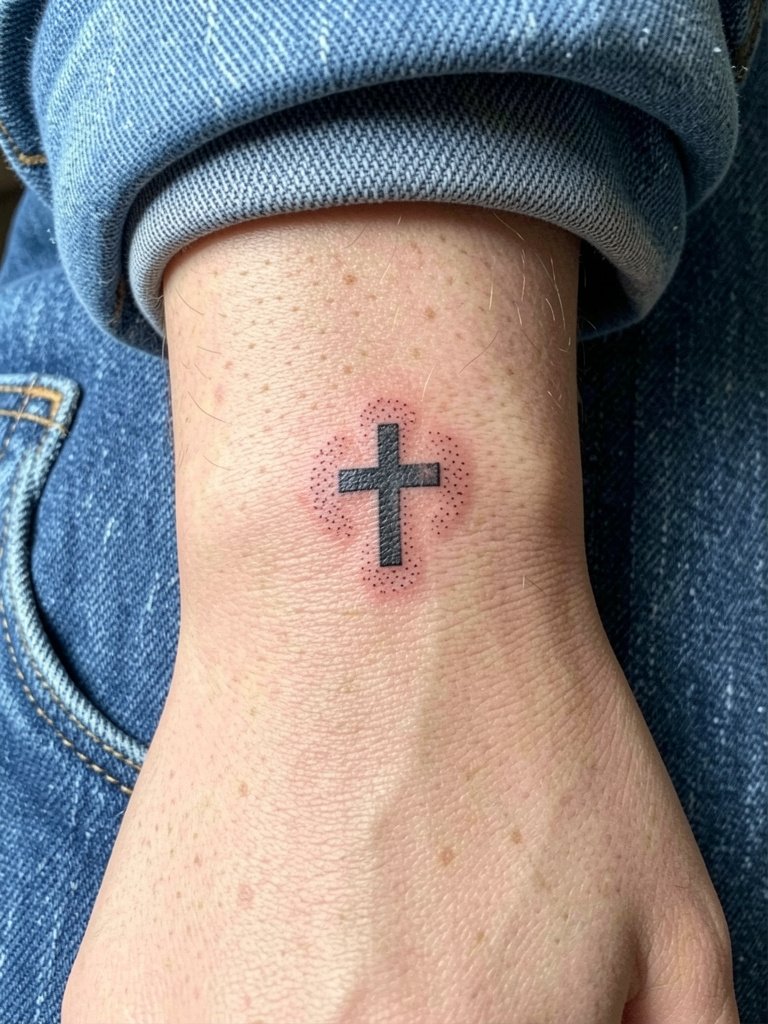
Wrist crosses need clear anchor lines because that area sees frequent washing and friction. Ask for a single bold stroke and subtle micro dot texture rather than thin hairline variants. The wrist is a sensitive spot so expect more immediate sting, but session times are brief. Plan a touch-up at six months for high-wear pieces. For display choose a dainty gold stacked bracelet set to frame the wrist.
23. Anchor Cross with Nautical Details, Inner Forearm
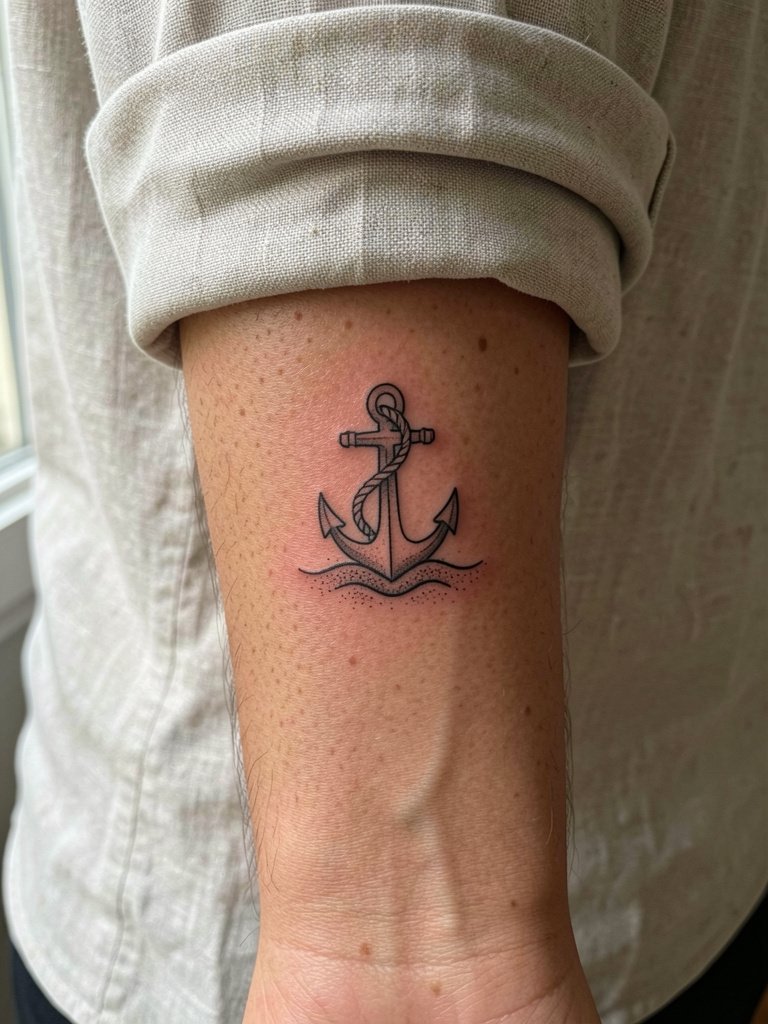
Combining anchor symbolism with a cross makes the icon feel anchored in place. Ask the artist to thicken the anchor shaft slightly and to render rope loops with two-line separation so the rope pattern does not merge into the cross. Inner forearm sessions are straightforward and pain is moderate. For casual show-off pair it with a rolled cuff linen shirt.
24. Minimalist Geometric Fish, Inner Forearm
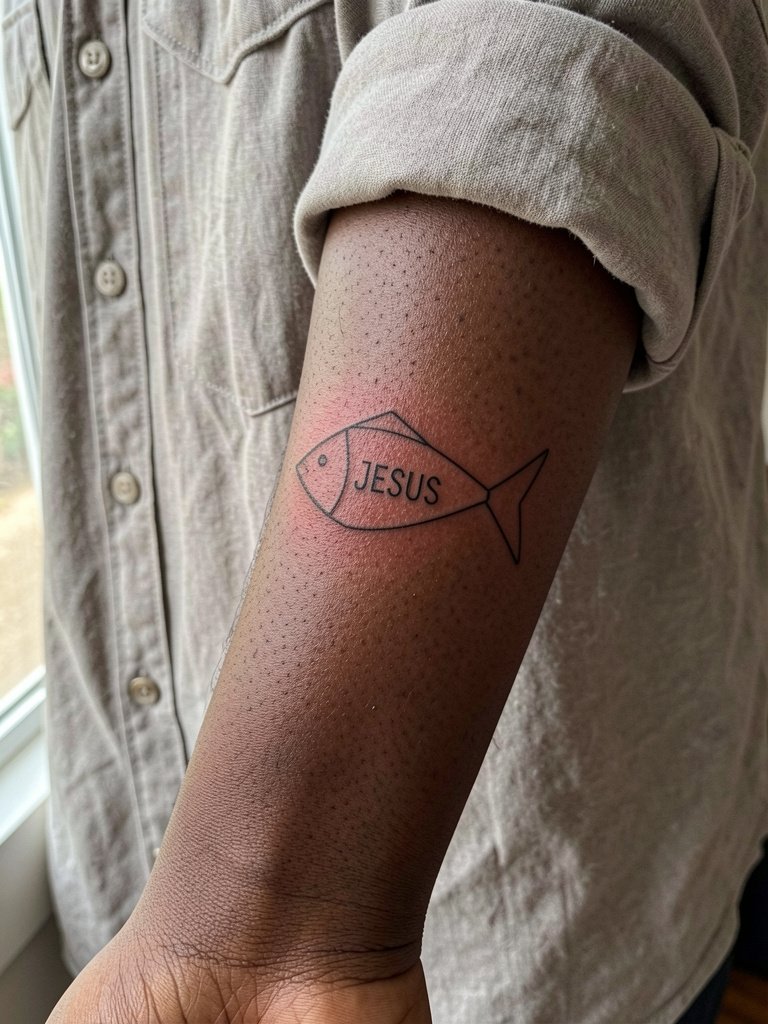
Minimalist geometric fish is an excellent choice for first-time seekers who want clear symbolism. When text appears inside the outline specify the exact words and confirm scale so letters will remain legible. Small continuous-line designs must avoid microscopic curls. Pain is low and session time is brief. For styling, rolled sleeve button-downs showcase the clean silhouette.
25. Dot-Work Halo Over Small Cross, Outer Forearm
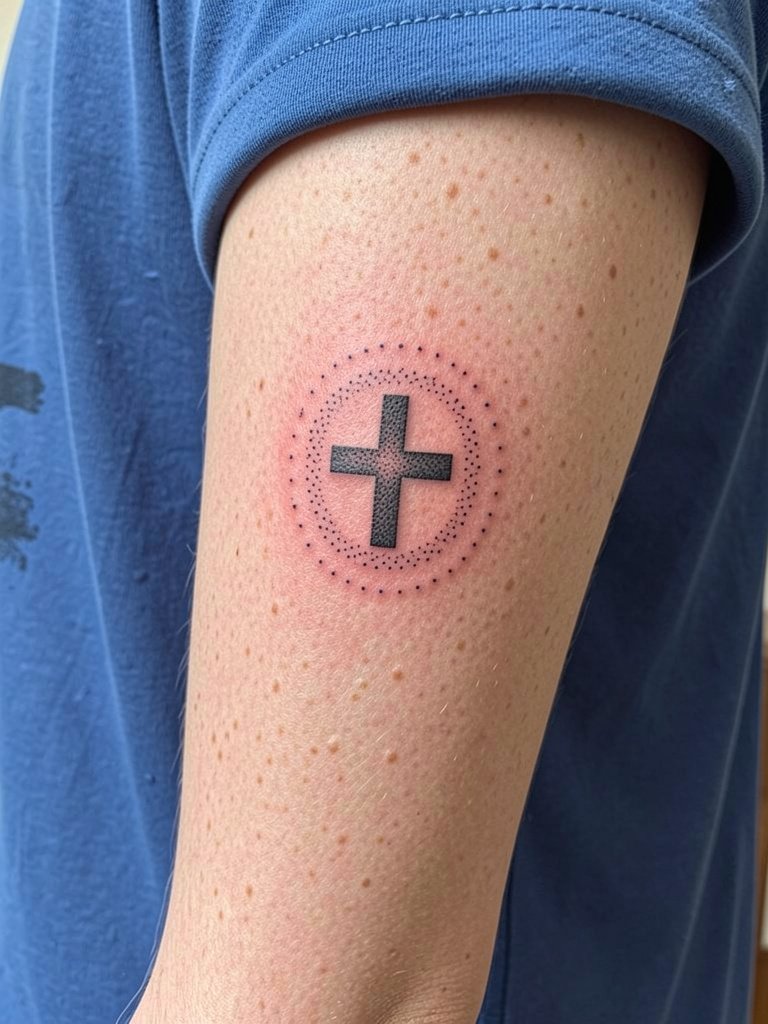
Dot-work halos create a soft glow effect that sidesteps fragile white ink. Ask the artist for dot density samples to choose how the halo will read at arm's length. Outer forearm receives less rubbing, so dot patterns hold better there than on the wrist. Session time is moderate for denser dot areas. For an evening look pair with a vintage denim jacket.
26. Micro-Realism Chalice, Inner Forearm
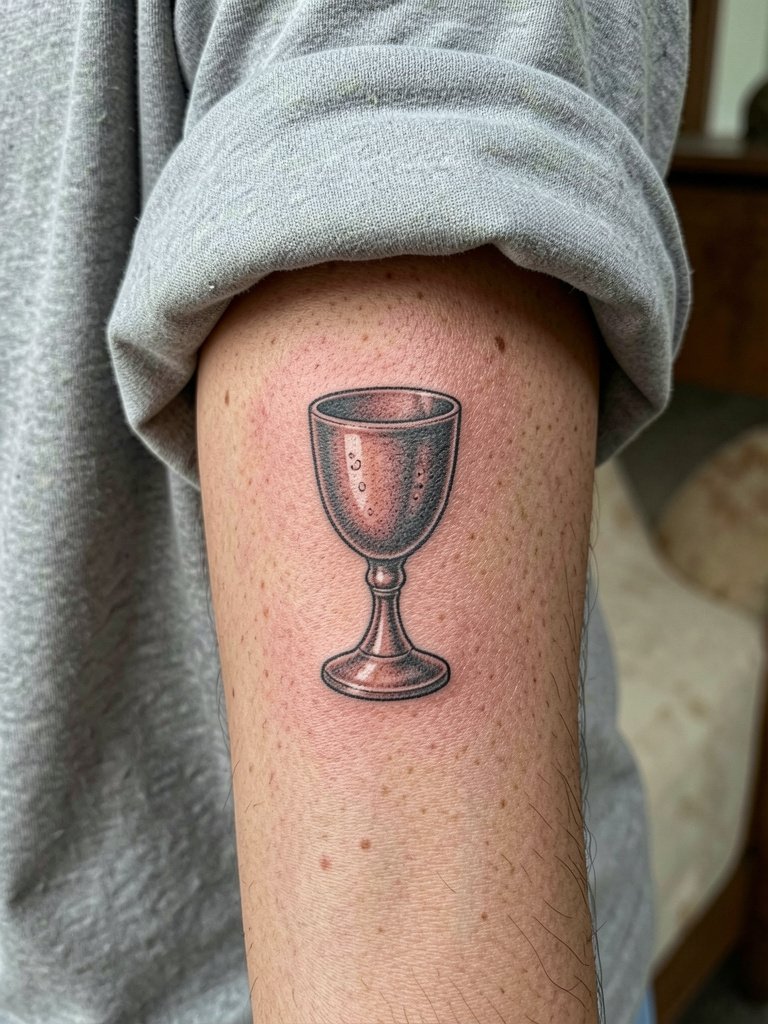
Micro-realism delivers high detail in a small footprint but it is the riskiest long-term for forearm placement. A frequent mistake is cramming reflecting highlights into a one-inch chalice. The alternative is to expand the scale slightly or simplify highlights into crisp blacks and one white-ink point. Discuss scale samples with the artist and expect a touch-up at six months for the brightest specular spots. For session comfort wear a loose button-down.
27. Small Anchor with Cross and Coordinates, Inner Forearm
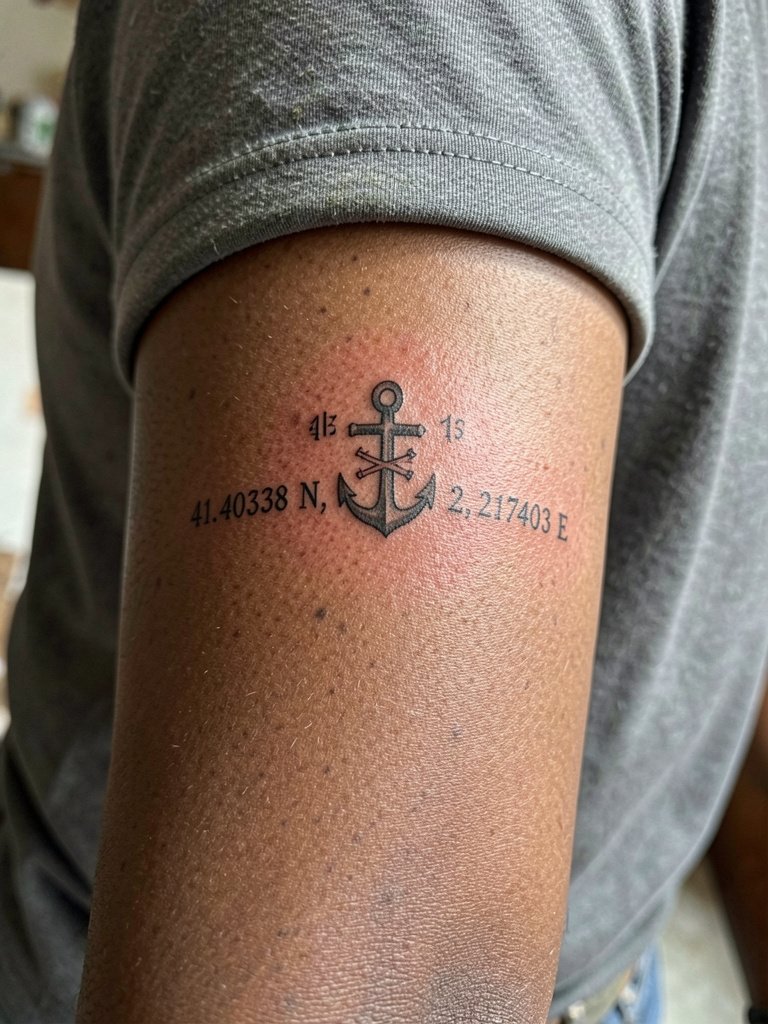
Combining an anchor, cross, and coordinates personalizes the symbol while keeping scale small. When including small text like coordinates specify exact characters and confirm the legible font size. The inner forearm handles small numbers better than the wrist, but still ask for letters at least one millimeter thicker than your reference. Sessions are quick and touch-ups for tiny numerals are common at year one. For casual pairings choose a short sleeve tee.
Frequently Asked Questions
Q: How do fine-line scripts hold up on the forearm over time?
A: Fine-line scripts can look elegant at first but often soften into thin grey writing within two to three years. If legibility matters, ask for slightly wider stroke width and increased letter spacing. Plan a touch-up at six to twelve months and protect the area from UV exposure in the first year.
Q: What should I consider for Christian tattoos on darker skin tones?
A: High-contrast black and grey or selective white highlights improve definition on darker skin. Ask your artist to test line weight on a nearby skin patch or show healed examples on similar tones. Avoid muted sepia tones which can look muddy in photos.
Q: Where can I find healed portfolio examples and local artists without naming accounts?
A: Search hashtags like #christiantattoo, #faithink, and #blackandgreyreligious on Instagram and TikTok while filtering by your city. Tattoodo and the Inked App let you search by keywords like "vertical cross forearm" and show portfolios. Reddit threads in r/tattoos and r/tattooadvice surface peer reviews and healed photos across skin tones.
Q: How much should I budget for a realistic forearm portrait versus a small symbolic cross?
A: Prices vary with artist experience and size, but realistic 4–6 inch portraits typically require longer sessions and higher rates than small symbolic crosses. Expect multiple sessions for heavy realism and factor in a touch-up budget within the first year.
Q: What should I wear to my forearm tattoo session?
A: Pick clothing that gives the artist clear access without tight cuffs. For inner forearm work a loose button-down or a short sleeve tee with an easy cuff roll is ideal. For outer forearm pieces a short sleeve Henley or a denim jacket you can remove works well. A simple, easy-to-remove layer reduces friction on the fresh ink.
Q: When is a touch-up usually necessary for script or realism on the forearm?
A: Most shops recommend checking healed results at six months. Scripts often need a small touch-up between six and twelve months. Realistic pieces may benefit from a color or contrast boost around year one to keep facial highlights crisp.
Q: Are there artist red flags when booking religious tattoos?
A: Pay attention to inconsistent healed photos, refusal to show recent healed work on similar skin tones, or an unwillingness to discuss line weight and placement specifics. A good sign is an artist who provides scaled stencils and explains how the design will settle over time.
