
A lot of forearm cross ideas look great in a saved board and fall apart after a year. Social feeds are full of tiny single-needle crosses and watercolor splashes that photograph well on day one. Real longevity comes from choices about line weight, spacing, and placement that respect wrist flex and palm motion. Read the designs below as if you were choosing one to still read clean after years of wear.
1. Fine Line Minimalist Cross
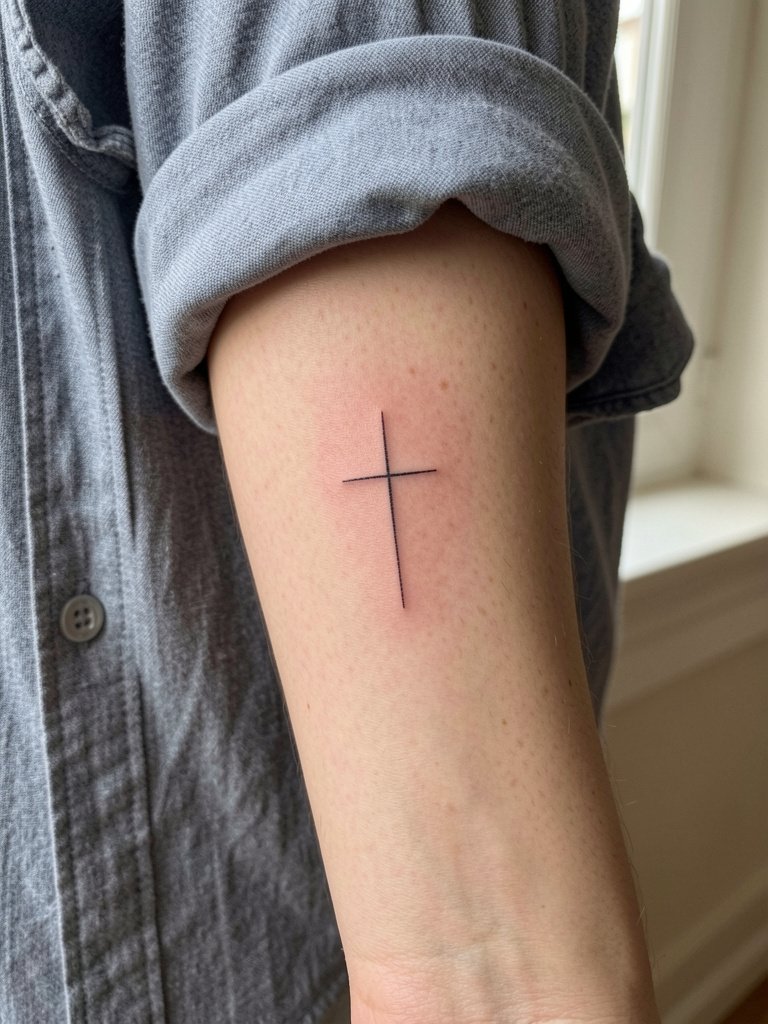
A clean inner-forearm fine line cross reads as simple devotion while staying subtle. I recommend a hair stronger line weight than the Pinterest single-needle look so the mark can survive wrist motion. One practical consultation point is to show the artist a reference at both one-inch and three-inch scales so they can map spacing for long-term clarity. Expect a short session under 30 minutes and a 6–12 month touch-up is common for lines this thin. Artists split on longevity. One camp says true 1mm fine lines blur on the inner forearm within two years because the skin there stretches. The other camp says slightly wider spacing and precise depth let fine line hold, and they point to multi-year healed examples.
2. Celtic Cross with Knotwork, Outer Forearm
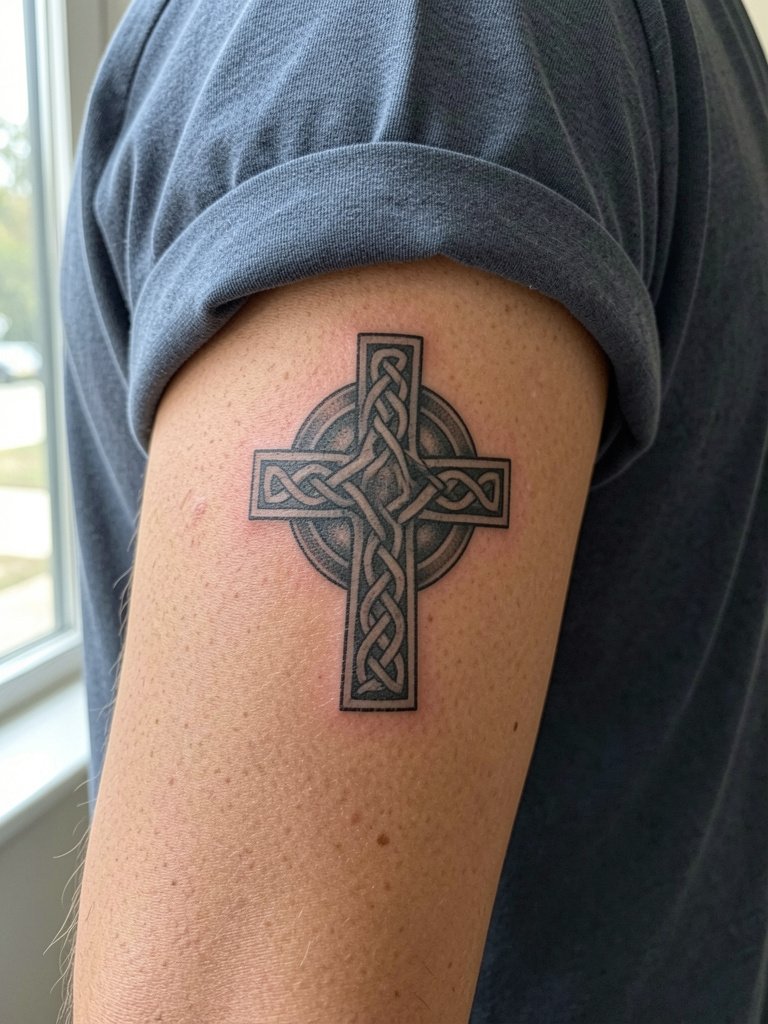
This is the heritage choice when you want knotwork that still reads across meetings and casual encounters. For knot crossings ask the artist to increase negative space inside each loop so the knotwork keeps contrast as saturation softens. A common mistake is compressing too much detail into a small cross. That causes muddiness at six months if the knot gaps close. Session time is typically one to two hours depending on scale, and stipple shading around the ring gives texture without heavy black fills. For showing it off, pair the piece with a solid crewneck tee in black or navy and roll the sleeve to the elbow for steady visibility. Buy the look: vintage crewneck tee black.
3. Gothic Ornate Cross, Inner Forearm
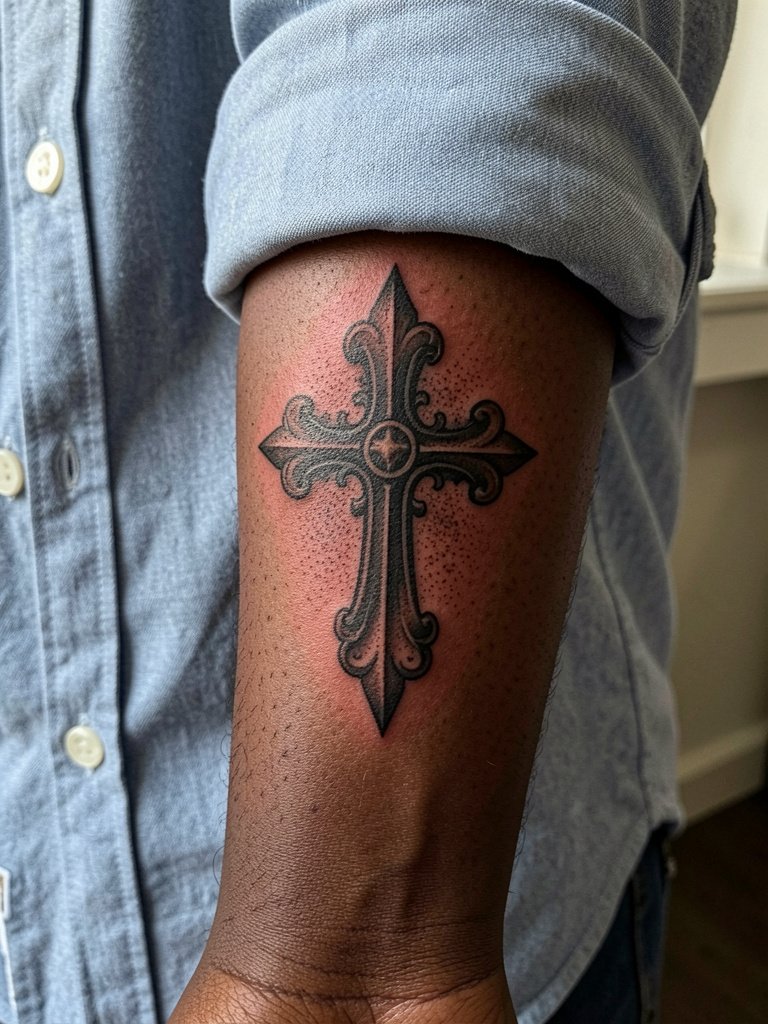
Choose a gothic ornate cross when you want architectural detail and deep black saturation. This style holds up because large, bold shapes age into a dramatic silhouette instead of smudging into an unreadable cluster. A typical session runs 1–2 hours with heavy black fills and stipple shading to create depth. Tell the artist you want strong block black in main panels and lighter stipple for the recesses, that way the contrast remains even if some softening happens. Pain on the inner forearm is moderate, about a 3 to 4 out of 10. The biggest mistake is asking for ultra-fine filigree inside heavy black fields; that interior detail often loses its edge.
4. Thorn-Wrapped Cross, Inner Forearm
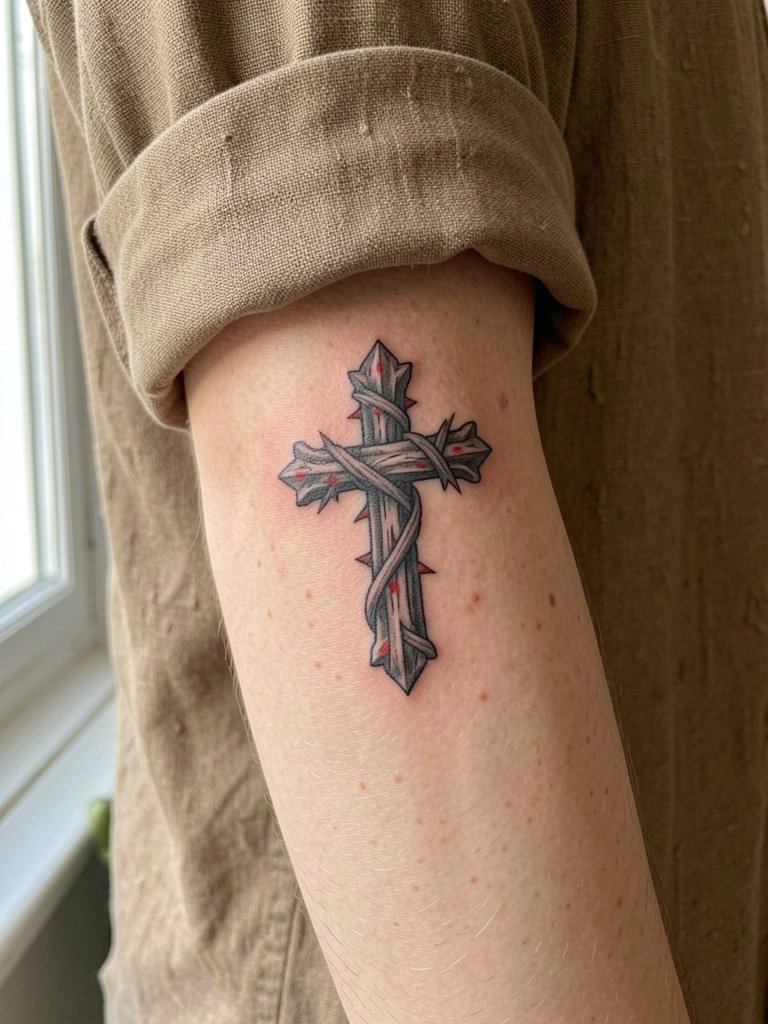
The thorn-wrapped cross reads emotional and organic while still using classic silhouette rules. For a thorn look that stays readable, ask the artist to render thorns with slightly wider stems and to avoid tiny gap-filled thorns that close during healing. One session of about 60–90 minutes usually does this at a mid-sized scale. A real mistake is over-coloring the thorns with bright red across thin lines, which tends to fade and leave a dark smudge. For a dressed-up look, wear earth-toned linen shirts rolled at the cuff so the forearm sits in a warm neutral backdrop. Grab a similar item: earth tone linen shirt.
5. Tribal Dynamic Cross, Outer Forearm
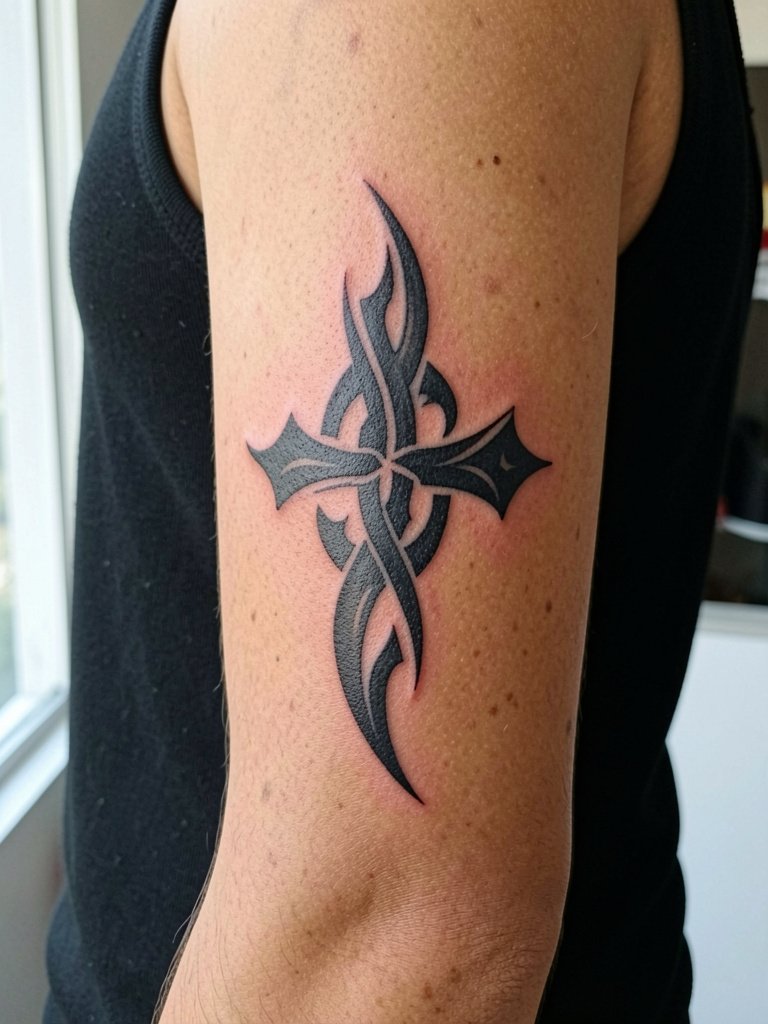
Tribal dynamic crosses rely on negative space and bold blackwork to create motion. They age well because broad black shapes keep graphic clarity as skin texture changes. Ask for vector-style mockups during the consultation so you can see how the curves read at arm length. The session is often under 90 minutes. Avoid the common mistake of requesting tiny spikes and narrow tails inside those curves, which tend to feather into soft edges. This piece pairs with a solid tank top for clean contrast. Try this base: solid black tank top men.
6. Script-Integrated Cross, Inner Forearm
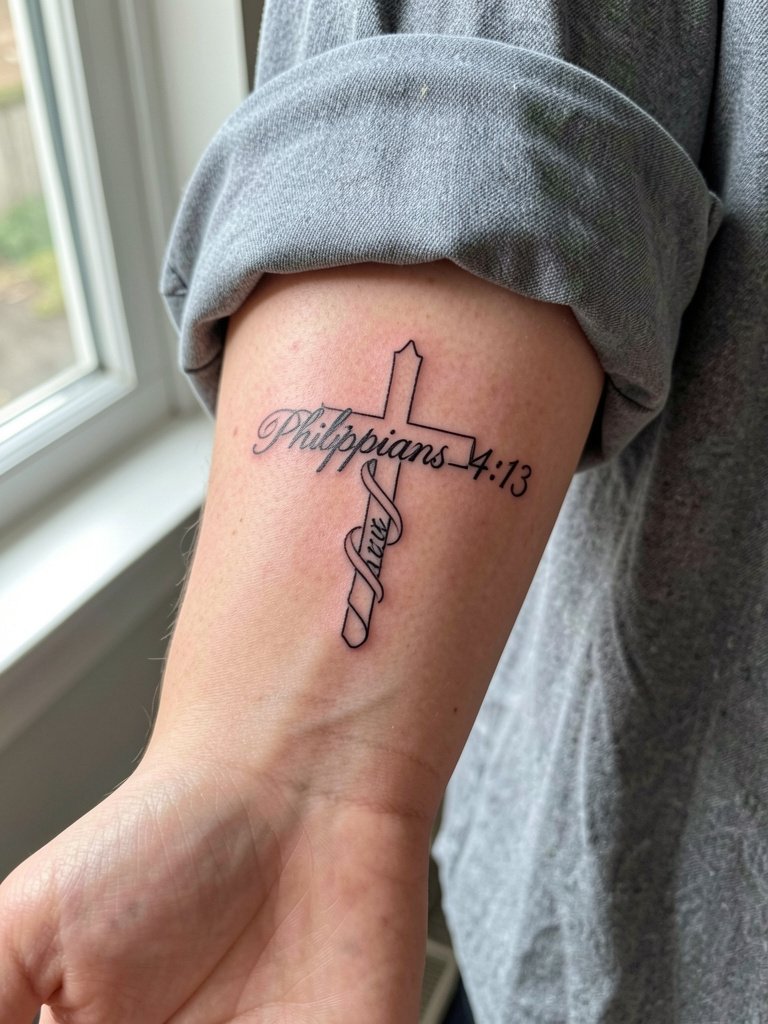
This version mixes a small cross with a wrapped verse line for a literal dedication that stays legible. For script, request that the artist stencil the phrase at your actual wrist curvature so the letters track with the arm. A common failure is using ultra-small looped script that blurs; instead choose a slightly more open handstyle and ask for boldness in the downstrokes. The session is short and you should budget a touch-up at six months if the letters soften. For the appointment wear, choose a loose button-down so the artist has clear access to the palm-up surface. Sample item: linen button down shirt women.
Pre-Session Essentials
The cuts above cover thin lines and dense blackwork, so these items smooth the session and the first few healing days.
-
Honeydew Tattoo Balm. A thinner balm favored for fine-line work, it keeps the skin hydrated without heavy pore clogging that can blur delicate linework.
-
TattooGlove Disposable Balm Glove. Lets you apply aftercare without touching the fresh tattoo, which is handy for inner-forearm pieces where contact frequently happens.
-
Mad Rabbit Cooling Gel. Useful after the first 48 hours if swelling or heat issues appear on detailed needlework around the wrist area.
-
Dr. Bronner’s Unscented Castile Soap. Gentle cleansing for day 1 through day 3 so the skin is clean without fragranced irritation.
-
Saniderm Tattoo Bandage. A breathable second-skin option that keeps ink from scabbing on more detailed crosses, especially useful for knotwork and rosary chain detail.
7. Roman Numeral Date Cross, Inner Forearm
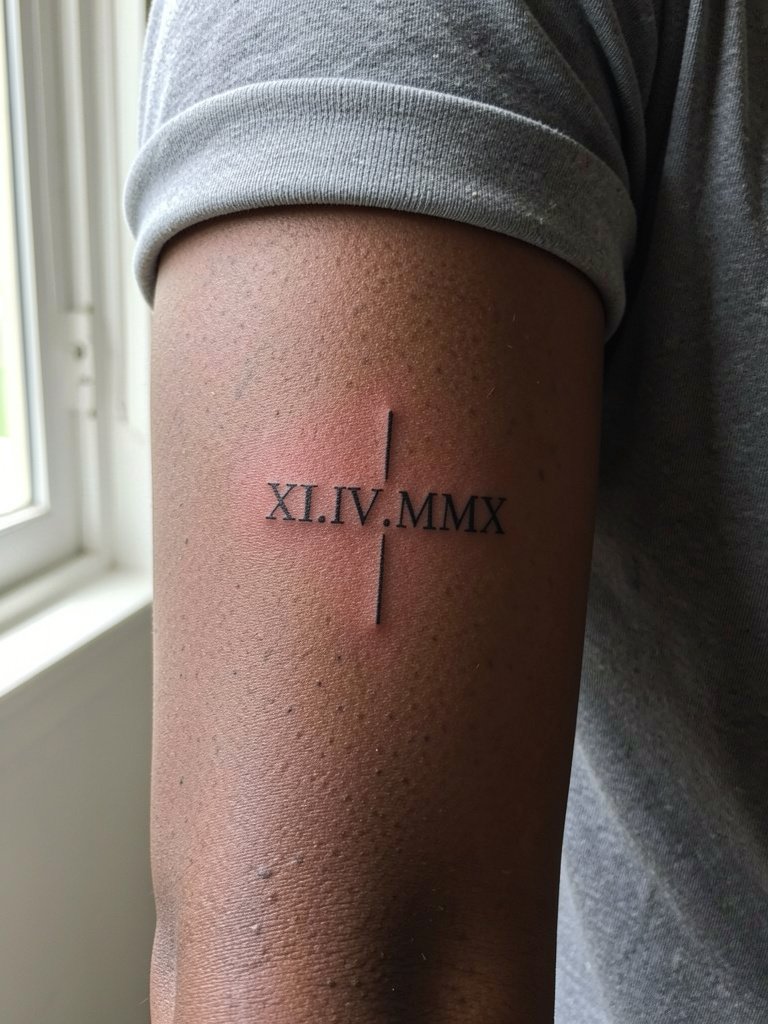
A Roman numeral cross is a compact memorial that stays tidy if you prioritize legibility. Something many people miss is confirming the numerals twice before the session because spacing issues are hard to correct later. Ask the artist to stencil the numerals at the exact size you want and to show the arm from three feet away so you can see scale. For placement near the wrist, expect a slightly higher sensitivity and plan a short session. Wear short sleeves so the artist can work without tight cuffs rubbing the fresh ink. Consider pairing with a minimalist watch on the opposite wrist to balance the wrist area visually. Find a watch style: minimalist watch men.
8. Dove-and-Cross Pairing, Inner Forearm
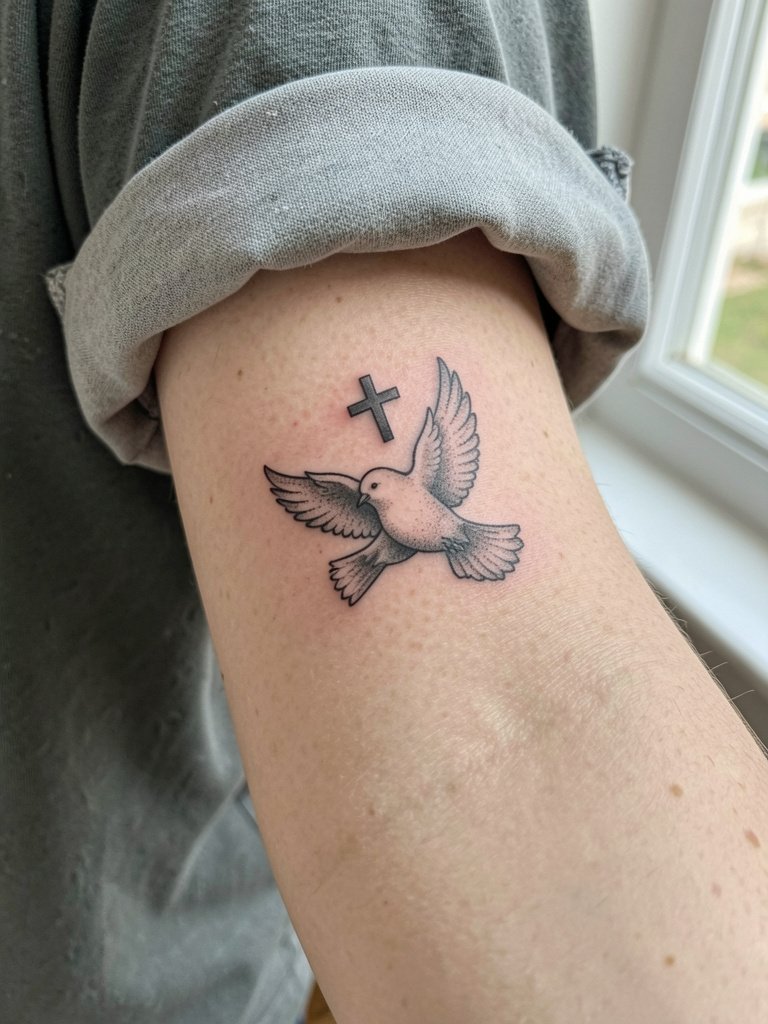
Pairing a dove adds a hopeful companion to the cross without crowding the design. To keep the dove soft and readable at distance, ask for dot work and light stipple shading instead of heavy grey fills that can darken over time. A typical session is under an hour for a small motif. Common mistakes include putting the dove too close to the cross so the silhouettes merge after a year. For a gentle daytime outfit, wear a dainty gold bracelet stack on the opposite wrist to bring editorial balance. Try a bracelet set: dainty gold stacked bracelet set.
9. Anchor-and-Cross Combination, Outer Forearm
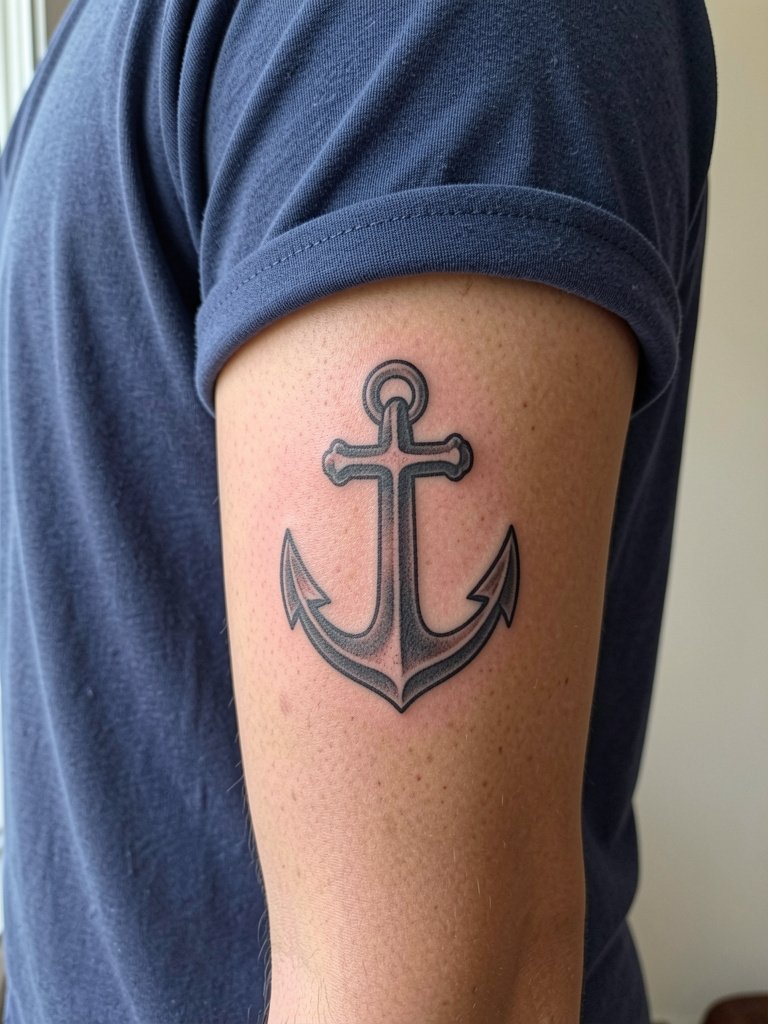
The anchor-cross is a clear symbol for hope and steadiness with nautical flair. When you want the anchor to read next to the cross, ask for thick outer outlines on the anchor and a slightly smaller cross so the silhouette hierarchy is obvious. Avoid equal visual weight for both symbols or they compete at arm distance. Session time is often one hour. For display, a vintage-cut crewneck tee in a solid color provides a clean background for the knot and anchor details. Shop a style: solid color crew neck shirt.
10. Rosary-Chain Cross, Inner Forearm
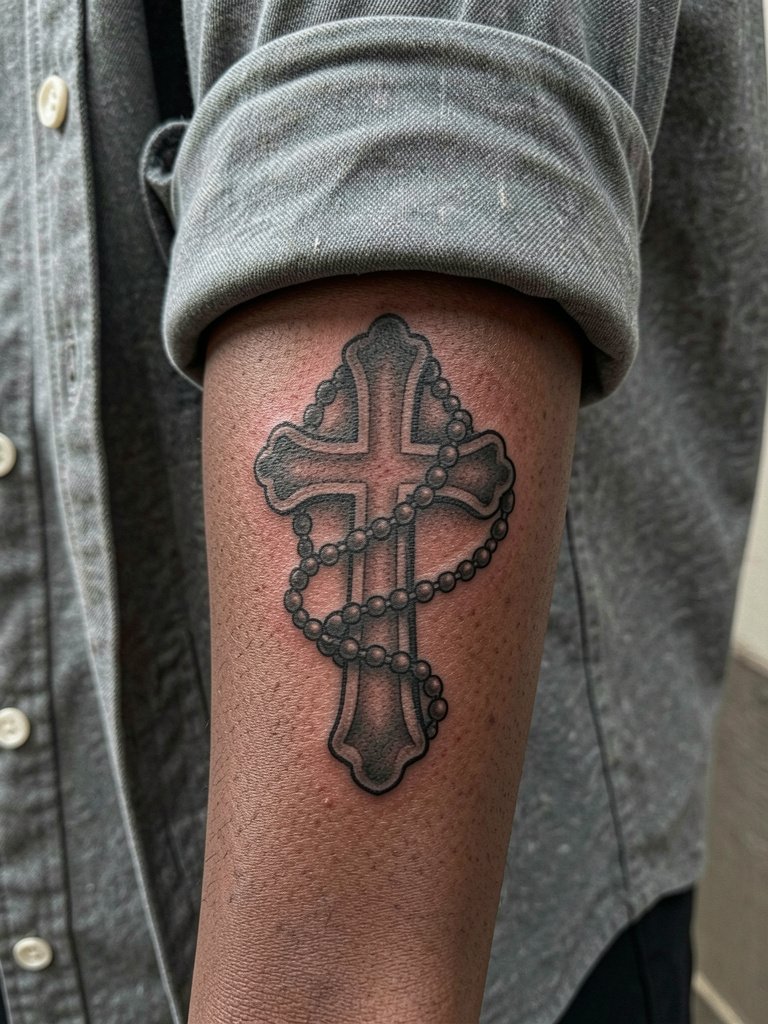
A rosary-chain cross calls for precise bead spacing to keep chain detail from turning into a dotted blur. During consultation, request healed examples of beadwork at similar scale so you can judge bead size against your skin tone. This piece often takes longer because each bead needs individual attention to preserve highlights and shadow. Mistakes include beads drawn too small for the scale, which lose definition after healing. For formal occasions, a matte black ring on the opposite hand can add symmetry to the ritual motif. Try a ring look: matte black ring set.
11. Broken / Fragmented Cross, Inner Forearm
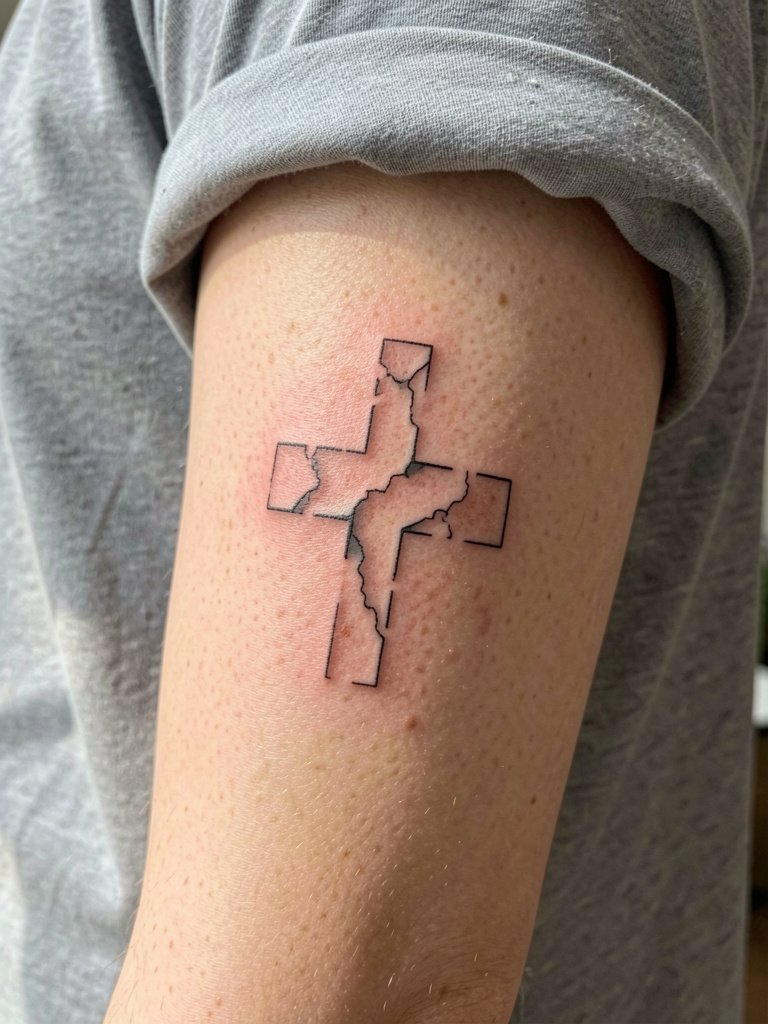
Fragmented crosses lean into imperfection and can symbolize resilience. To keep the intended breaks visible over time, ask the artist to exaggerate gap widths slightly from the reference. The session is short and low-pain for most people. A common error is making the fragments too close together which invites merging as the ink settles. For a minimal show-off pairing, go with a thin gold chain bracelet on the tattoo wrist and a clean watch on the other wrist. Try a thin chain: thin gold chain bracelet.
12. Watercolor Splashed Cross, Outer Forearm
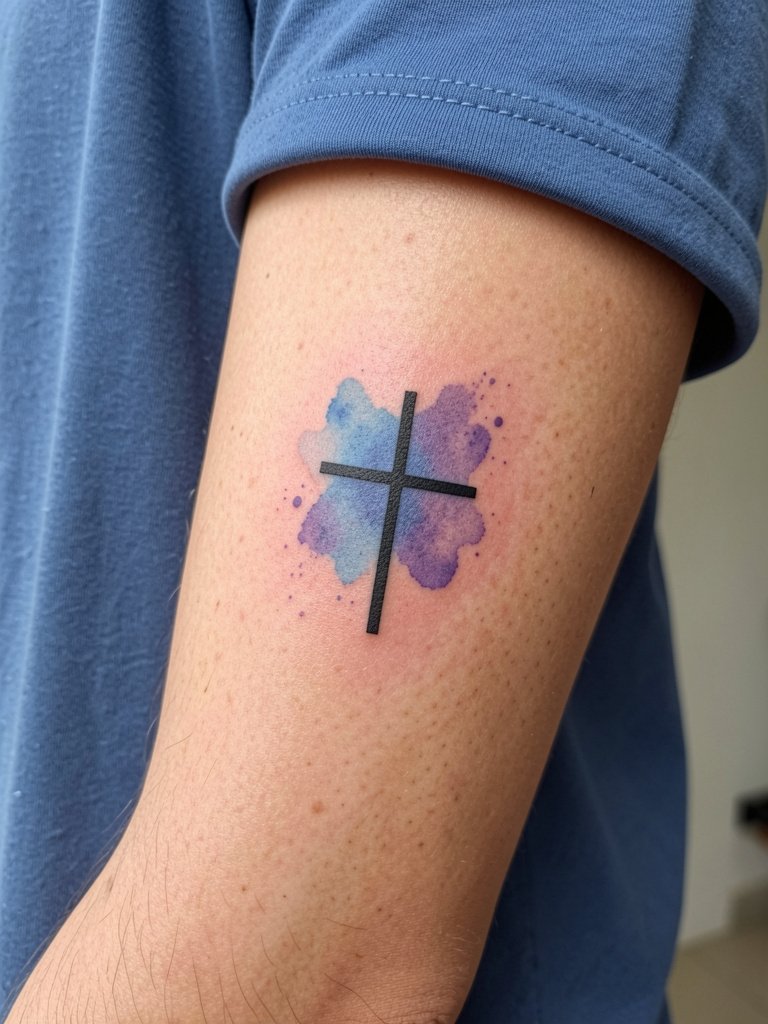
Watercolor splashes give a painterly backdrop that can feel modern, but color retention varies. One camp argues Aquaphor creates a strong moisture barrier that prevents scabbing and helps the color sit; the other camp says thicker ointments clog pores and suggest thinner water-based balms like Hustle Butter to avoid milia. Name both positions when planning aftercare so you know the trade-offs. If longevity matters more than day-one pop, discuss slightly bolder outlines around the cross so the silhouette remains as color fades. For wearing out, solid tees keep the color contrast obvious. Example: vintage crewneck tee black.
13. Micro-Realism Small Cross, Inner Wrist
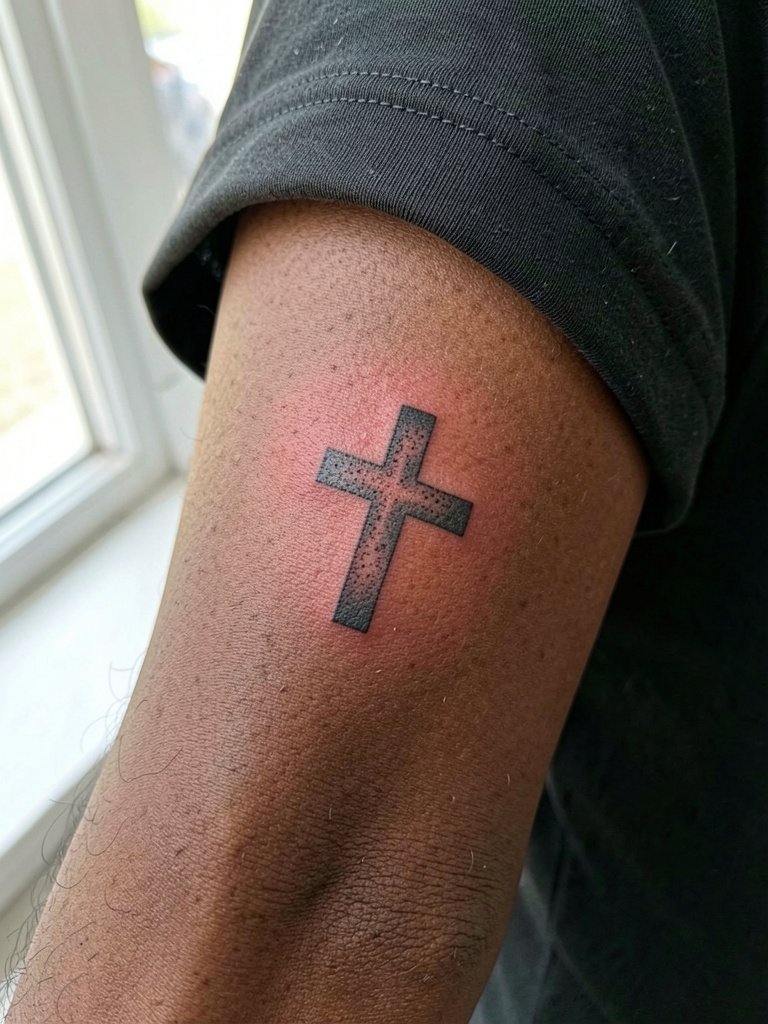
Micro-realism lets collectors carry a secret piece that pays off up close. The main consultation point is to confirm needle grouping and reference healed work because the inner wrist can soften fine textures. Expect a short session but plan for a 6–12 month touch-up because the wrist sees a lot of motion and washing. Common mistakes are scaling the detail too small or placing it too close to the crease where constant flex will blur the edges. For showing it in subtle settings, wear a minimalist watch on the opposite wrist and a thin bracelet on the tattoo wrist. Minimalist watch example: minimalist watch men.
14. Banner Cross with Names, Inner Forearm
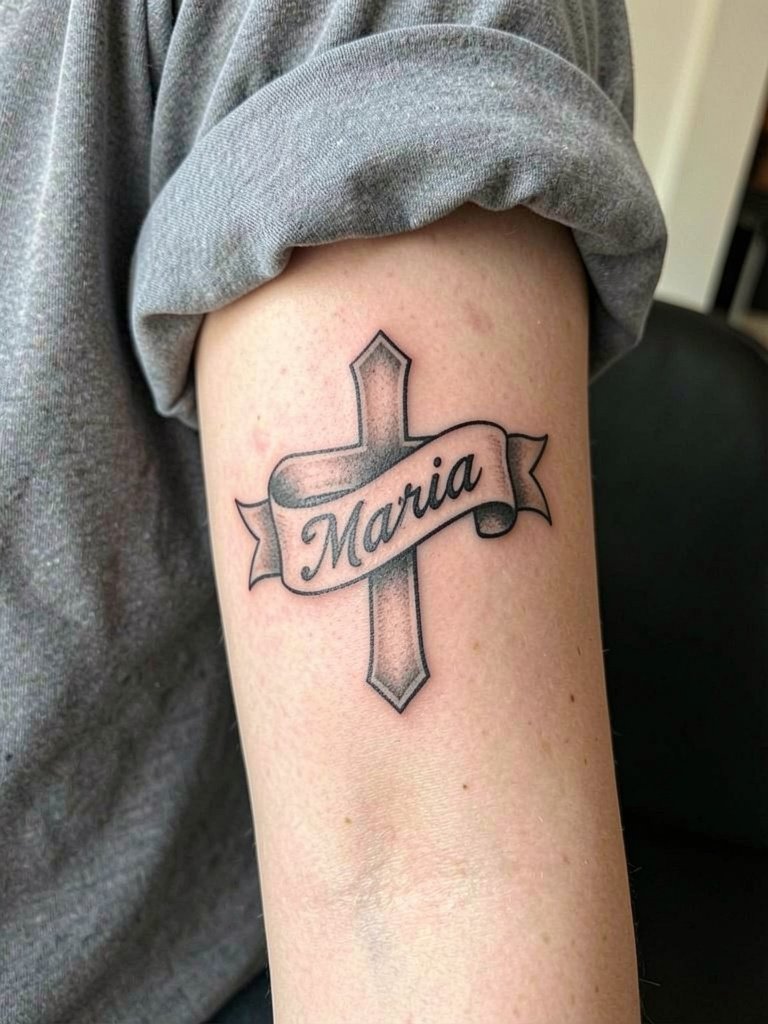
A banner cross is a classic memorial layout that is very legible when letterforms are sized for long-term clarity. Insist on a stencil proof showing the exact banner curve and font size on your arm, and have the spelling double-checked aloud before the needle starts. If the banner is too narrow the script will cloud as the ink spreads. Sessions are typically under an hour for a small name banner. For memorial wear, bold script pairs well with simple layered rings and a clean sleeve roll during the session. Look for ribbon-friendly tops: rolled cuff linen shirt.
15. Geometric Mandala Cross, Outer Forearm
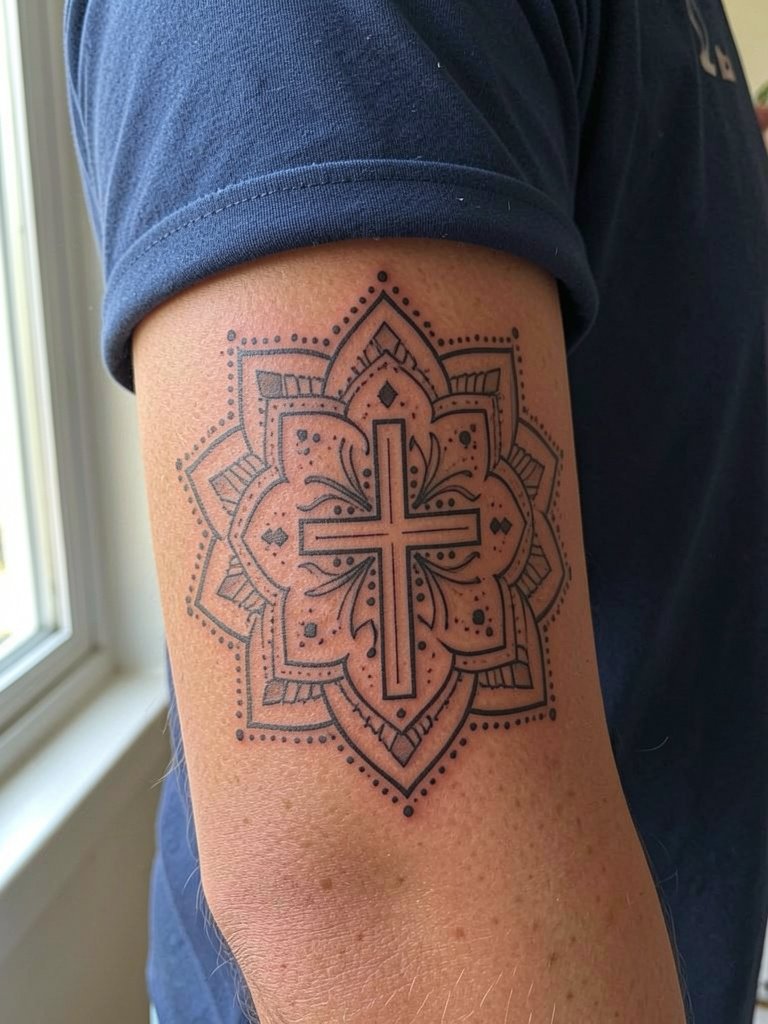
The mandala cross blends sacred geometry with cross form, and it demands breathing room. Tell the artist you want radial spacing scaled up by 10 to 15 percent from tiny flash references so lines do not close over time. Dot work and stipple shading should be previewed in healed photos because tiny dots that are too close will bleed into grey patches. This piece may take one or two sessions depending on size. A common error is squeezing too many concentric rings into a forearm-width area. For outfits, a solid crewneck in charcoal or navy lets symmetrical geometry read without distraction. Try a crewneck: solid color crew neck shirt.
Frequently Asked Questions
Q: Will a fine line cross on my inner forearm blur fast and need a touch-up?
A: Inner-forearm skin moves with palm use and wrist flex, so very thin single-needle lines are more likely to soften faster than slightly bolder lines. If longevity is a priority, ask for a 1.5mm to 2mm effective visual weight and expect a touch-up at 6–12 months for micro work.
Q: How should I dress for the appointment for an inner forearm or wrist cross?
A: Wear a loose button-down or short-sleeve top for inner-forearm access and remove tight watches or bracelets on the tattooed wrist. For outer-forearm work, a short-sleeve or tank that leaves the thumb-side surface exposed is best. Example session wear search: loose button down shirt women.
Q: Where can I find healed portfolios and local artists without naming specific shops?
A: Search hashtags like #crossesattoo, #finelinescross, and #celticcrossink on Instagram and TikTok and filter by location. Use Tattoodo or Booksy to search keywords such as "Celtic cross blackwork" and then look for healed pictures. Reddit communities like r/tattoos surface user-shared healed photos and local recommendations.
Q: Is numbing cream safe for a forearm cross session?
A: Artists are split on this. One camp says numbing cream helps first-timers stay still so the artist can work cleanly. The other camp warns that numbing creams can alter skin texture and ink uptake, and some artists will not work on creamed skin. If you plan to use one, be explicit with timing and brand and ask how many minutes before application is safe for that studio.
Q: How should I change aftercare if I have darker skin tones and want the cross to keep contrast?
A: Healed contrast depends on pigment choice and saturation more than brand of balm. Request a slightly deeper charcoal or denser saturation in your stencil proof and follow a conservative moisturize-and-airflow routine. If you see patchy fading in months, schedule a touch-up with color-saturation goals in mind.