
Bold skull pieces look aggressive in photos but what keeps them readable on real skin years later is spacing, saturation, and placement choices that match how you live. Thin, detailed skulls trending on social feeds often blur on hands and ribs, while solid blackwork and thoughtful negative space keep the form crisp. Read the first idea for a forearm approach that balances detail and longevity.
1. Micro Fine-Line Skull on Inner Forearm
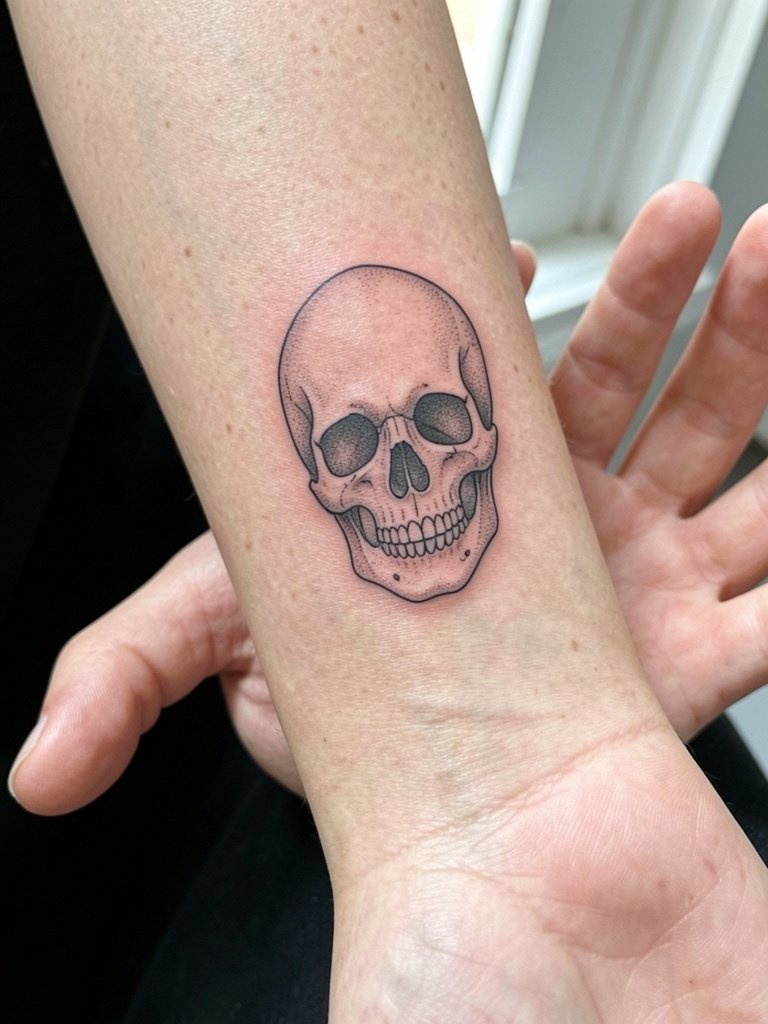
This tiny inner-forearm skull reads best at a slightly larger micro scale than most saved images. I usually recommend a three-inch baseline so the jaw and teeth do not merge by year two. In the consult bring reference photos at two scales so the artist can show how line spacing translates to real skin. Common mistakes are asking for single-needle detail on textured or oily skin and expecting it to hold. Expect a one-hour session and a possible touch-up at 6 to 12 months for crisp teeth and eye sockets. For the appointment wear a loose short-sleeve tee so the artist can roll the sleeve without pressure.
2. Neo-Traditional Skull with Roses on Upper Arm
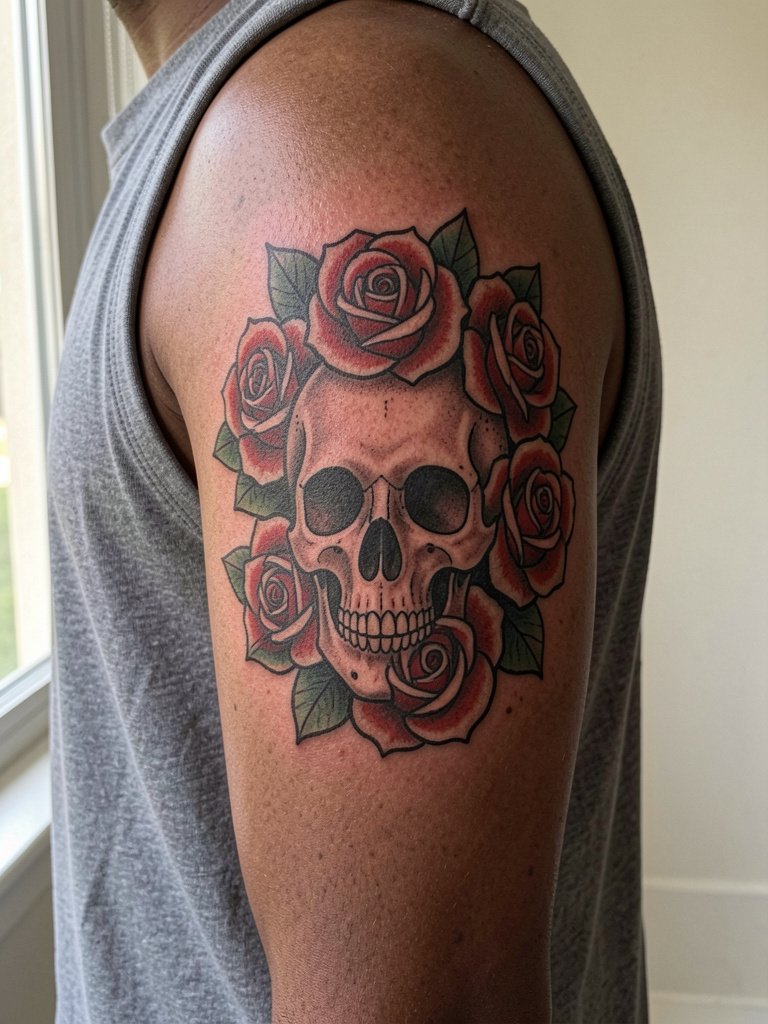
If you want something that still reads from across a room, neo-traditional skulls are reliable because their bold outlines protect detail as the skin ages. Tell the artist you want the flowers to sit slightly off the skull so color fields do not bleed into the facial features years out. A common error is squeezing too many tiny petals close to the eye sockets. Session length is usually two to three hours and the outer upper arm handles saturation well so touch-up needs are infrequent. For show-off outfits pair the piece with rolled-sleeve henleys that stop above the bicep and let the roses frame the pull of the sleeve.
3. Geometric Half-Skull Over Collarbone
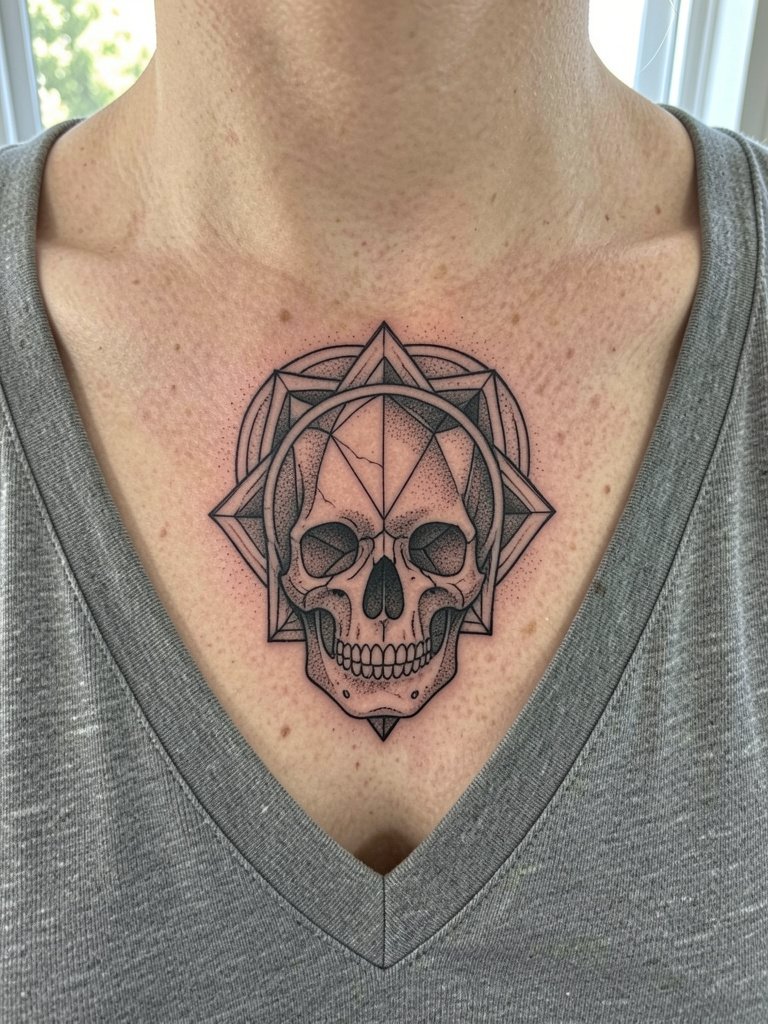
The collarbone is a visually striking site but it moves a lot with the chest and shoulders, so geometric detail needs slightly thicker linework than identical designs on flatter skin. In the consult specify that the negative space be used to define the jaw and teeth so the design keeps shape if the lighter stipple softens. Pain here is moderate and sessions run one to two hours depending on how much dot work you want. Avoid asking for ultra-fine single-needle geometry along the bone edge, which tends to blur. For evening looks the piece pairs well with open-neck shirts that keep the collarbone visible without rubbing the fresh ink.
4. Tiny Skull on the Finger Top
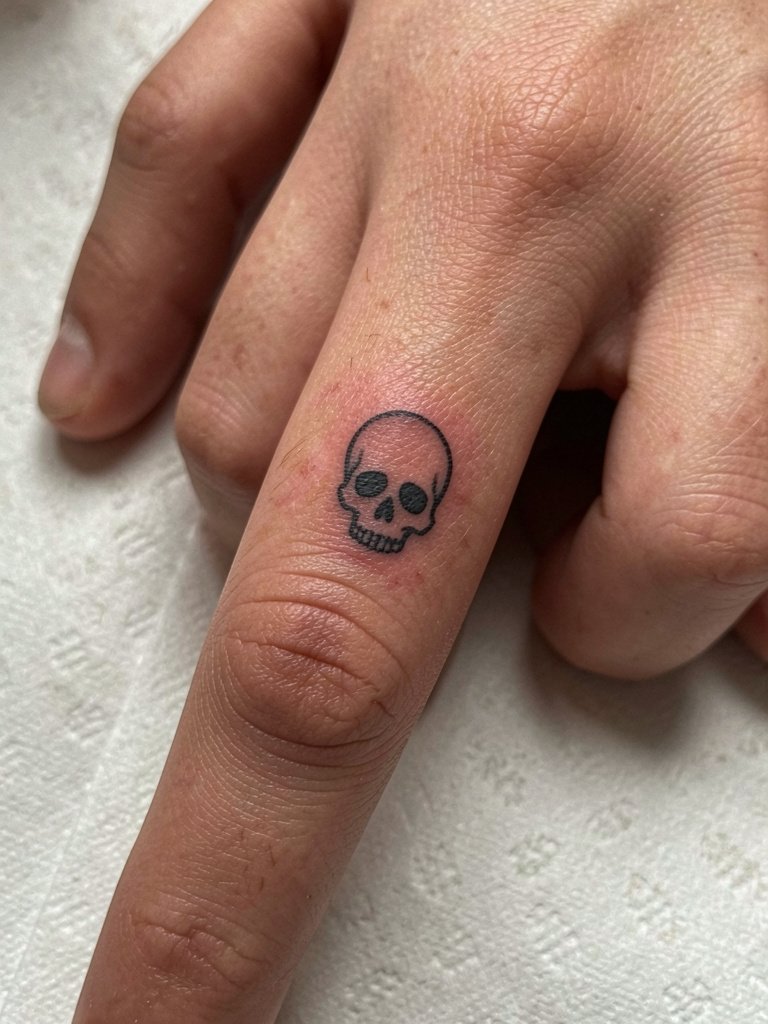
Finger skulls are popular but risky because hand skin sees constant washing and abrasion. I recommend simplified geometry and heavier line weight so the piece ages into a crisp glyph rather than a blob. Mention in the consultation you prefer bold negative space teeth instead of tiny hatch shading. The session is short but expect a higher chance of touch-up six to twelve months later because of frequent friction. If you type or wash hands a lot plan for a touch-up window and protect the area while it heals by avoiding heavy hand creams for the first week.
5. Blackwork Full Skull on Shoulder Blade
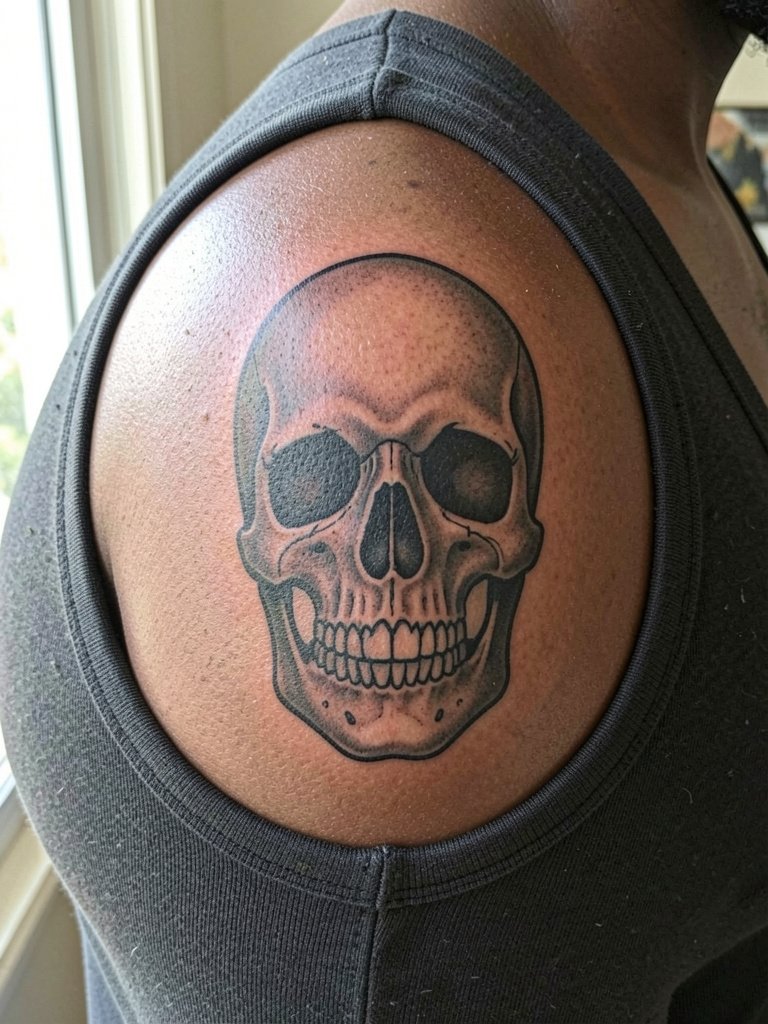
Shoulder blade skin handles heavy saturation very well, which is why solid black skulls here keep their silhouette for years. I like to map out broad dark planes in the stencil so the jaw and eye cavities stay distinct as the piece ages. A mistake is asking for too many micro highlights inside a solid black field. Expect a longer first session of three to four hours and then a possible color-correction visit after healing. For outfit pairing, show the piece with scoop-neck tanks that expose the blade without rubbing the work.
6. Watercolor Skull with Splat Effects on the Calf
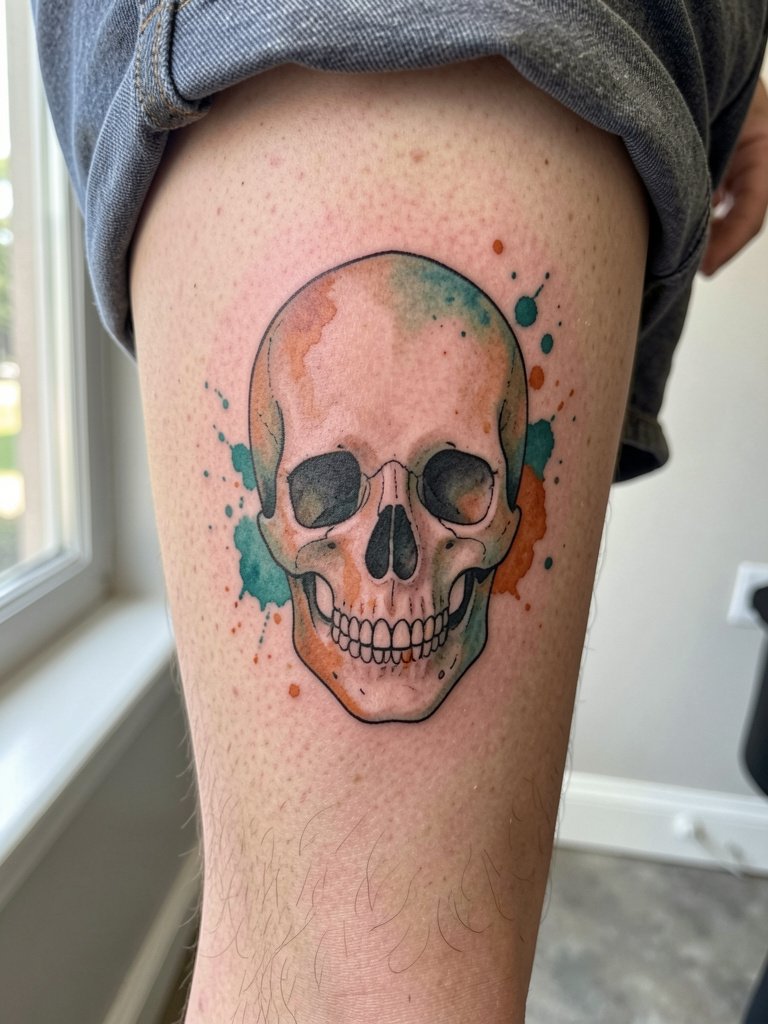
Watercolor textures look striking on the calf because the area is less exposed to friction. To keep the washes readable, ask for defined black contours around key features so the color can fade without losing form. The main error is trusting light, painterly washes on high-contact areas where they will dull quickly. Expect two to three hours for layering and a touch-up at one year to refresh the soft pigments. For after-session comfort and showing the calf, bring comfortable drawstring shorts so the artist can work unimpeded and you can keep fabric off the area while it seals.
Pre-Session Essentials
The forearm, calf, and shoulder blade pieces above ask for different prep. These items make the first day and the first week easier for both you and the artist.
-
Stencil transfer paper kit. Lets you preview how a skull's jawline and negative space will sit on curved skin, which is vital for inner-forearm and collarbone placement.
-
Topical numbing cream. Used 30 to 45 minutes before a sensitive session on the ribs or behind the ear helps you get through longer stencil work without needing to stop.
-
Thin protective film roll. Keeps finger and wrist pieces protected during the first days of frequent hand washing and friction.
-
Fragrance-free gentle body wash. Cleanses fresh ink without irritation for areas like the calf and upper arm where soap residue can dull saturation.
-
Aquaphor healing ointment. A thin layer for the first 48 hours helps seal in moisture on dense blackwork that wants to crust.
7. Realism Half-Skull Portrait on the Thigh
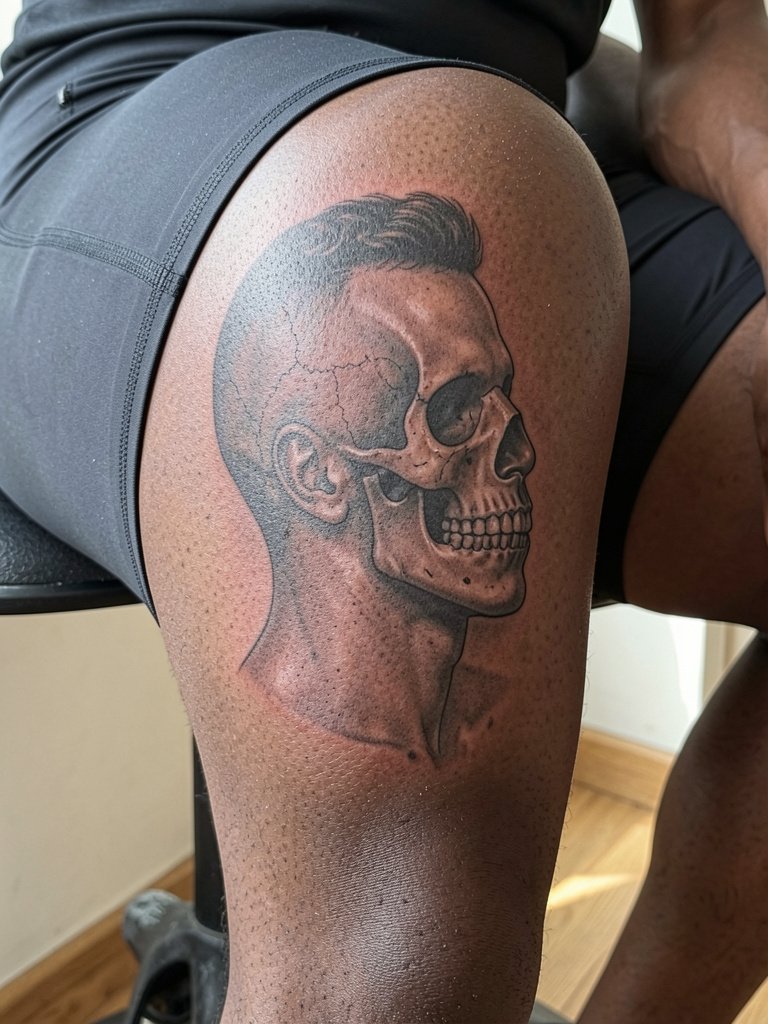
The thigh is ideal for larger realism skulls because the skin is thick and touch-ups tend to last. I often advise blending the skull into a portrait or background so the piece retains context if small shadows soften. Discuss with your artist how much contrast you want between the human profile and the bone so they can plan saturation layers accordingly. Sessions can be longer, three to five hours, possibly across two visits. For the appointment wear athletic shorts that allow access without tugging on the skin and that you can sit comfortably in during the session.
8. Sugar Skull with Dot Work on Outer Upper Arm
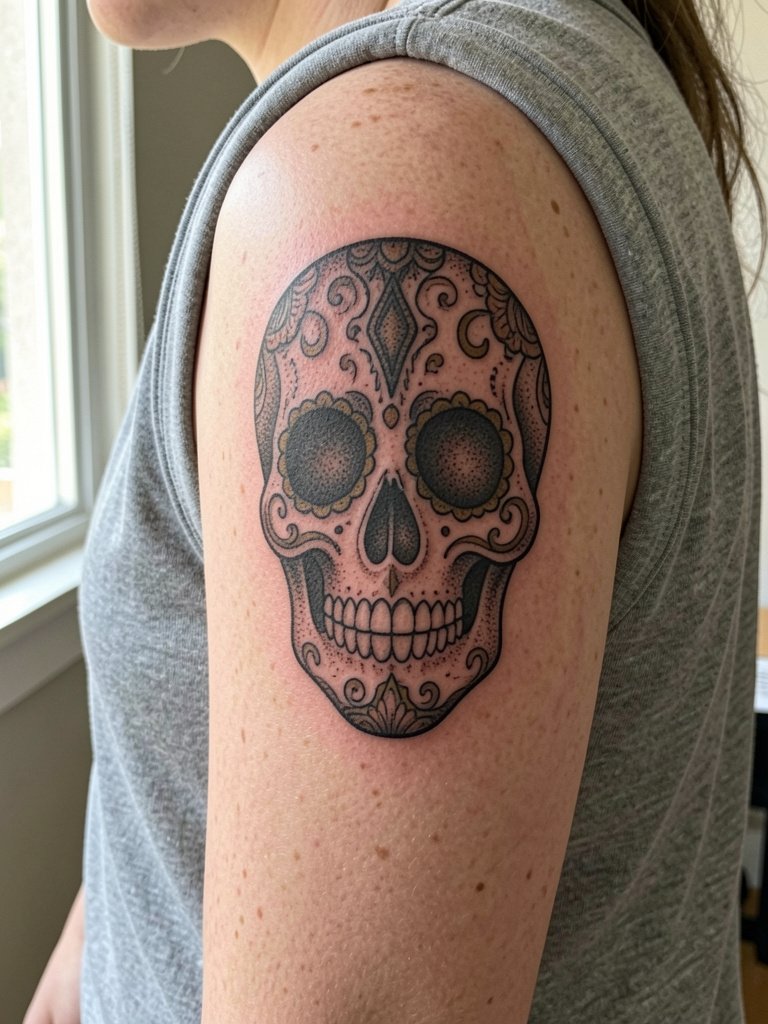
Dot work sugar skulls reward patients who like texture and subtlety. The outer upper arm keeps stippling readable because it is a stable skin surface. Tell the artist if you prefer tighter stipple for a soft gradient or broader dot fields for long-term contrast. A typical session is two to three hours. A frequent mistake is over-detailing the ornamental filigree inside the skull at too small a scale. This design ages gracefully, but if you want to keep the dots crisp plan a light touch-up after the first year.
9. American Traditional Skull and Dagger on the Bicep
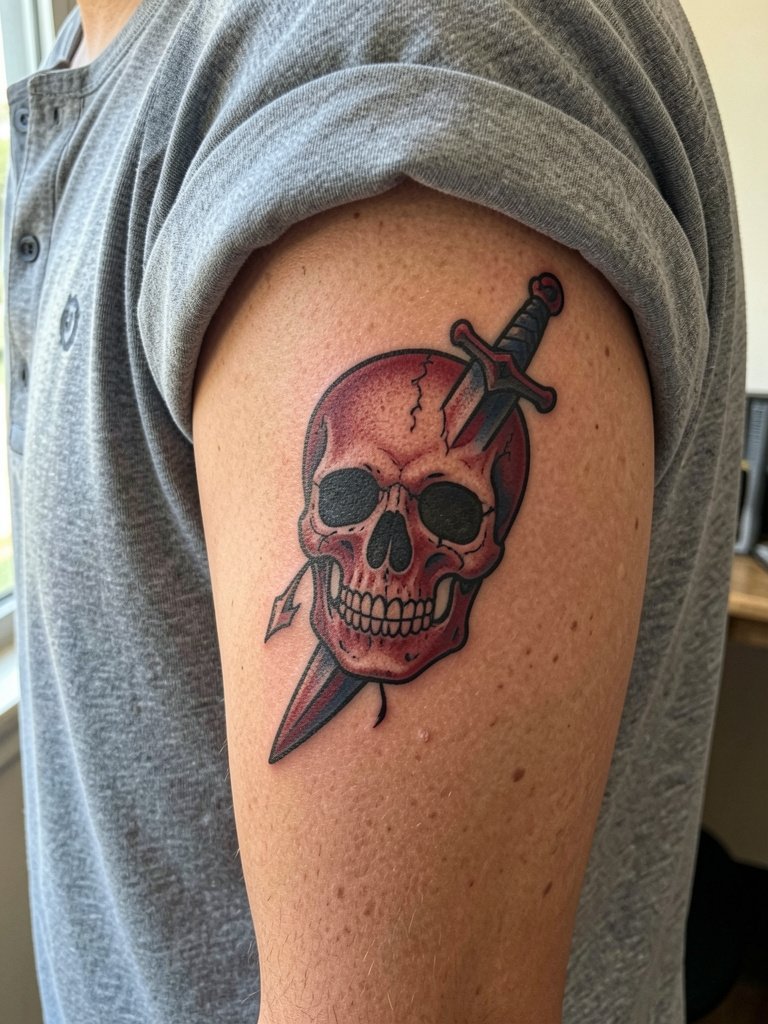
Classic skull-and-dagger pieces last because the strong outlines shelter the colored fills from early blur. Specify in your consultation that the dagger edge stays separate from the skull contours by a few millimeters so the two elements remain distinct over time. The bicep tolerates saturation and looks great with contrast, and session time is usually two to three hours. If you want to show it off, pair with rolled-sleeve henleys that sit above the bicep so the work is visible without rubbing the fresh skin.
10. Mandala Skull Centered on the Sternum
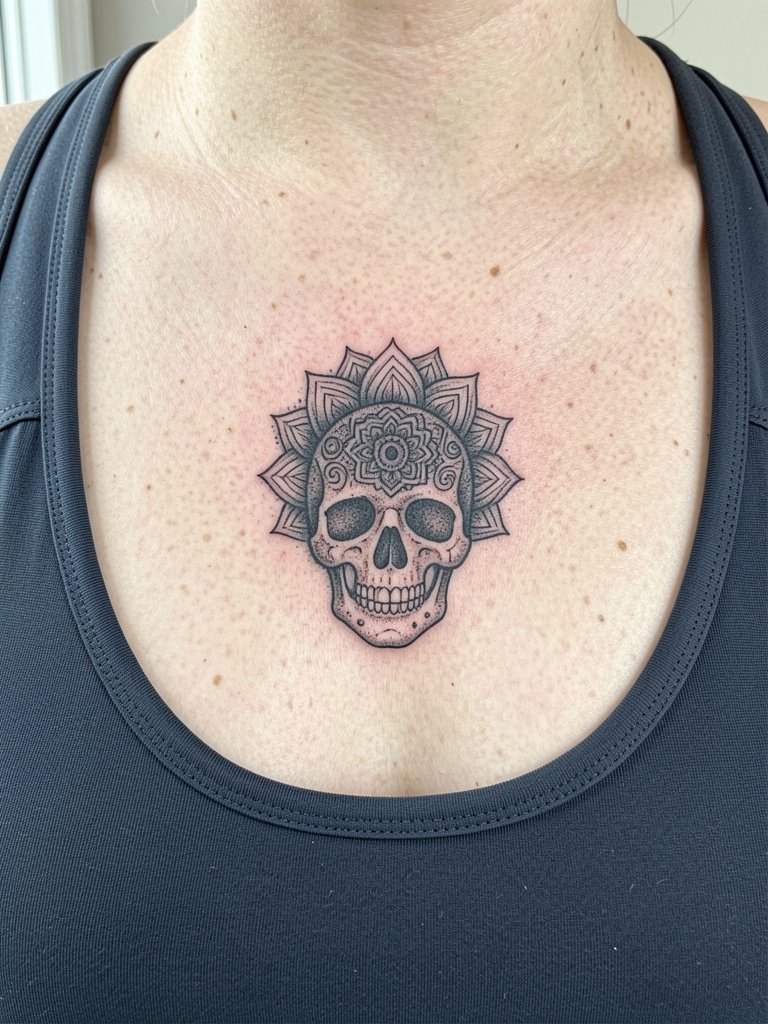
Sternum skulls split artists into two camps. One group argues the sternum moves and stretches too much for fine line work and that those lines blur within two years, especially where the skin thins near the center. The other group says with slightly wider spacing and careful needle depth fine line mandala detail can settle well, and they will show healed photos to back that up. Pain is high for sternum work and sessions are often broken into multiple short visits. If you choose this placement be ready for a paced schedule and realistic expectations about touch-ups.
11. Negative-Space Geometric Skull on Inner Bicep
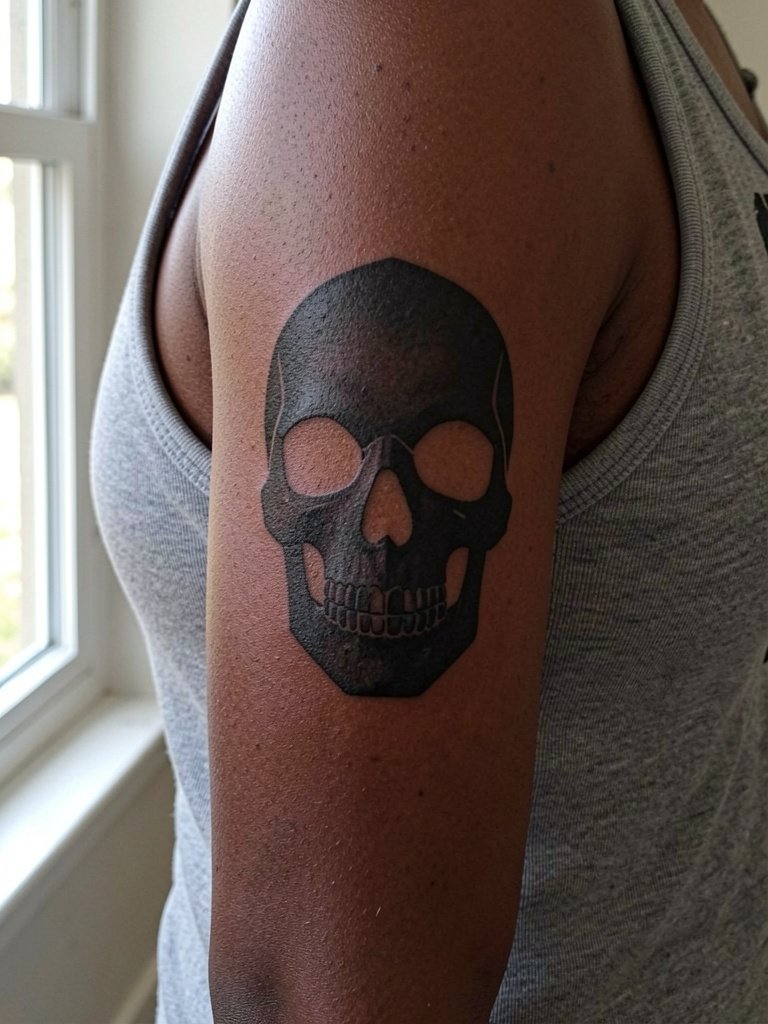
Negative-space skulls on the inner bicep use your natural skin tone as part of the image which helps longevity because the design does not rely on tiny highlights. Request that the artist plan for slightly thicker black blocks around the jaw so the shape holds if subtle edges soften. The inner bicep is forgiving for saturation, but the placement has more stretch when the arm moves, so expect a two-hour session and a possible touch-up at one year. For the session wear a loose tank top so the artist can access the area without the shirt tugging on the skin.
12. Minimal Line Skull Behind the Ear
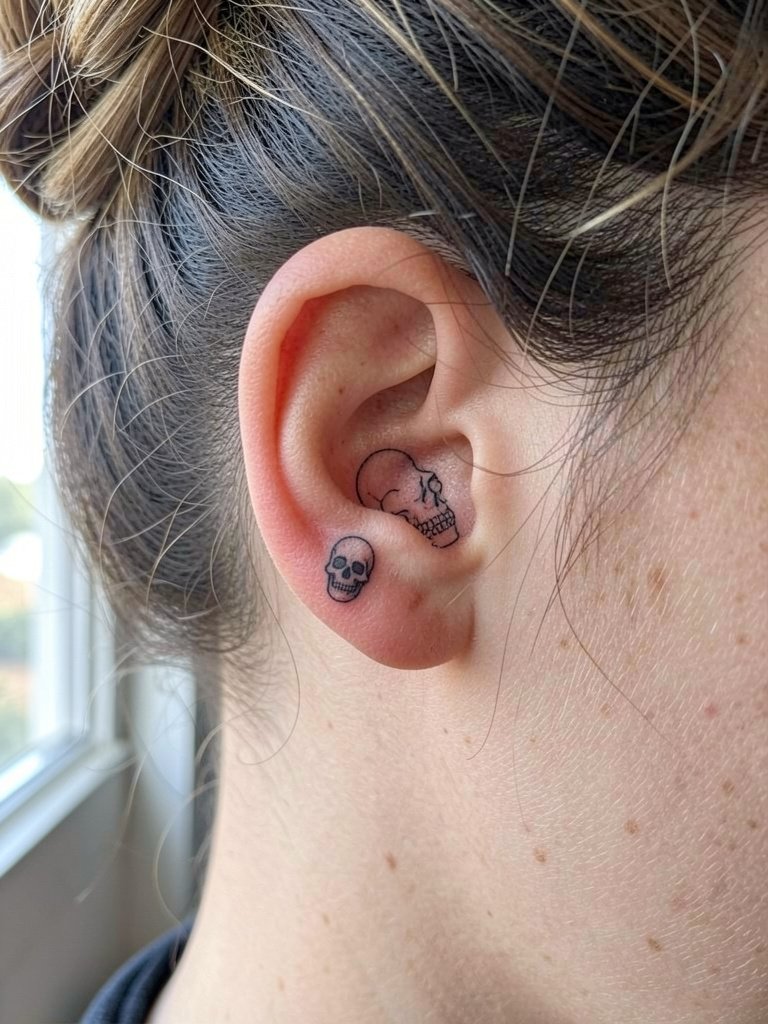
Behind-the-ear skulls are subtle but sensitive. The skin there is thin and healed linework can look softer than intended. Ask for a slightly bolder contour than the reference so the silhouette remains readable after healing. Sessions are brief but the area can be tender and may need a touch-up at six months. This placement often requires a specialist who regularly works on hairline and mastoid skin, because the technique differs from larger flat surfaces.
13. Scripted Skull Portrait on the Ribcage
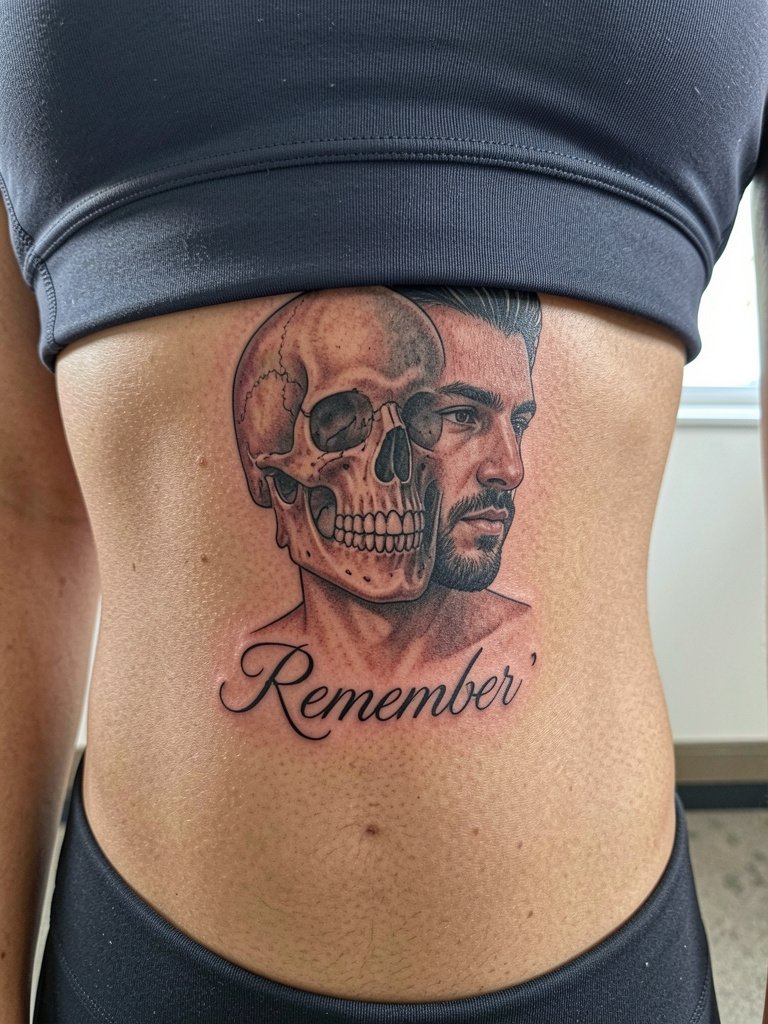
Fine-line script and portrait work on ribs spark a clear debate. One camp warns that rib skin flexes and stretches causing thin lines to blur within a couple of years, especially across the oblique muscles. The other camp maintains that strategic spacing and slightly deeper needle passes let the same thin lines settle cleanly, and they point to healed images at three years as proof. If you pick ribs, consider spacing the script away from high-flex zones and plan for a staged session so shading can be layered safely. Sessions on the ribcage are among the more painful ones, so expect breaks and a multi-hour window.
14. Abstract Fragmented Skull Sleeve Detail on Forearm
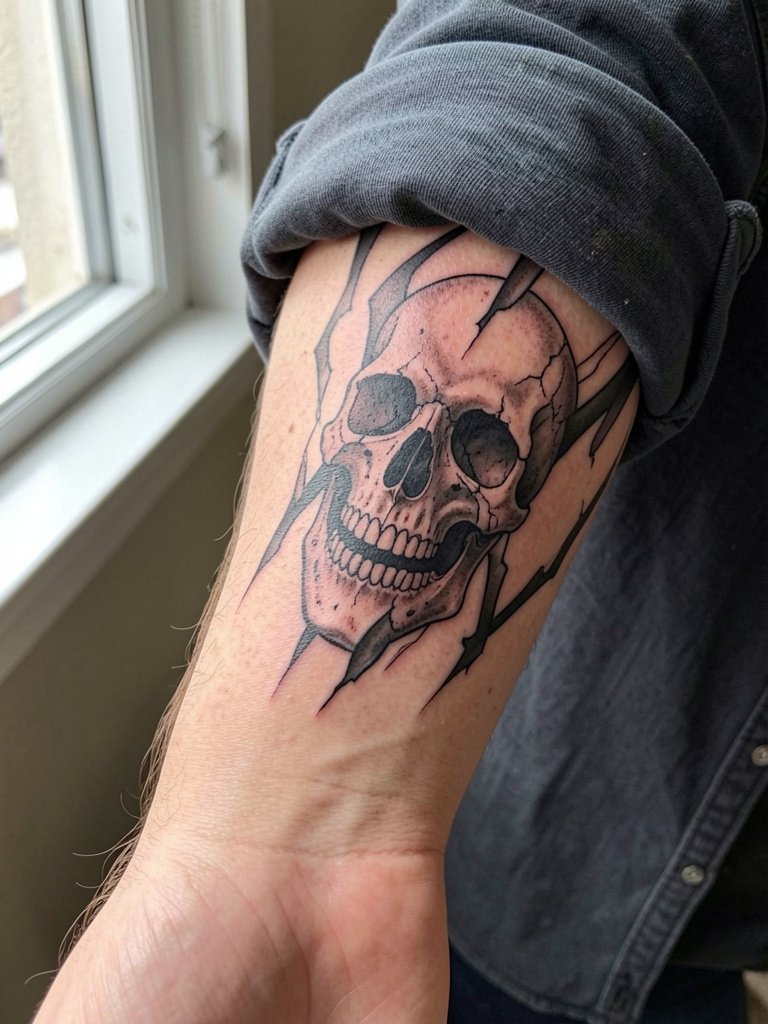
Fragmented skulls work well as sleeve elements because the breaks in the design let future additions slot in easily. In the consult discuss how the negative space lines will sit with any planned surrounding motifs so they do not collide visually as the sleeve grows. Forearm skin is low risk for blowout but the wrist area approaches higher friction, so keep the most fragile detail away from the distal edge. Typical session time for a cluster of sleeve details is two to four hours. For showing off the forearm choose rolled-cuff shirts that reveal the art without rubbing the fresh ink.
15. Tiny Ankle Skull for Subtle Placement
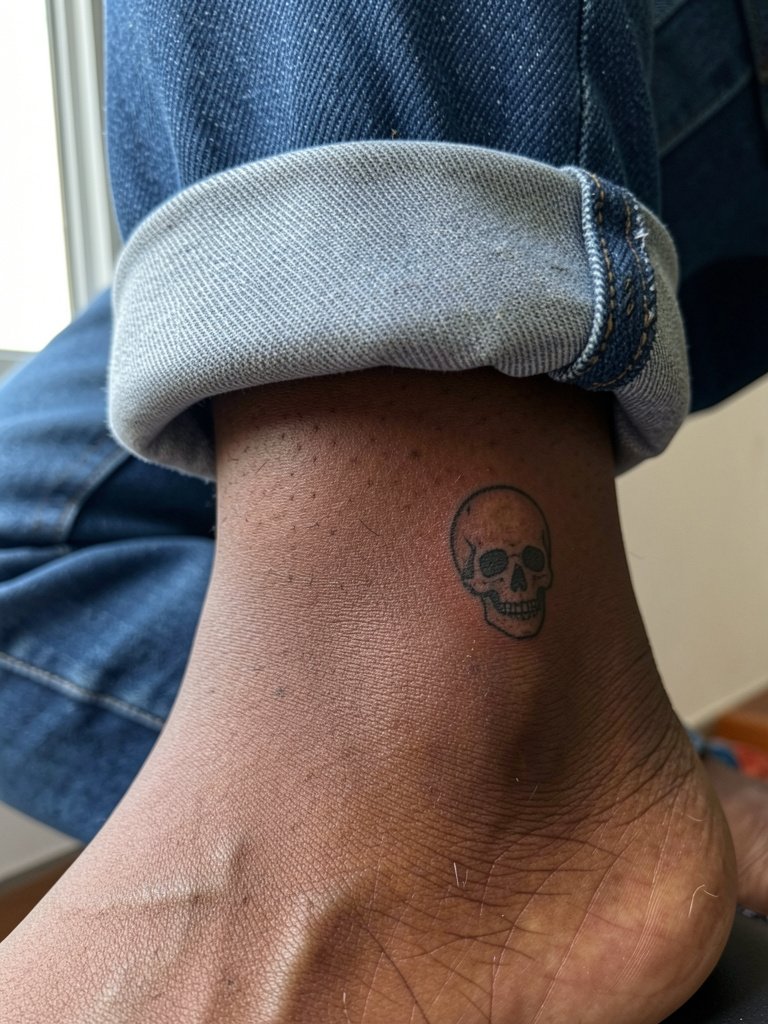
Ankle skulls are great if you want subtlety but know they will take hard wear from socks and shoes. I recommend bold silhouettes rather than fine detail so the skull ages into a clear icon. Discuss the exact placement with your artist so the top of the ankle bone does not disturb the jawline. Sessions are quick and often under an hour. For the appointment wear jeans with cuffs you can roll up easily and slip-on shoes so you do not press against fresh ink.
Frequently Asked Questions
Q: Which skull styles hold up best on hands and fingers?
A: Bold simplified skulls with heavier line weight and minimal interior shading hold up best on hands and fingers because those areas see constant washing and abrasion. I have seen fine single-needle detail on fingers blur within a year while compact glyph-style skulls remain readable.
Q: How painful is sternum or ribcage skull work and how should I prepare?
A: Sternum and ribcage sessions rank high on pain because the skin is thin with less fatty cushion and the needle sits close to bone. Prepare by scheduling shorter sessions, sleep well the night before, and use numbing cream if you tolerate it. Bring layered clothing so you can adjust comfort without tugging on the area.
Q: Where can I find healed examples and discovery pathways without naming specific artists?
A: Search targeted hashtags on social platforms for healed photos and use location filters to find portfolios in your city. Browse portfolio aggregator sites and subreddit threads that collect healed work in various skin tones. Narrow searches with terms like "healed skull tattoo forearm" or "healed rib skull" to see long-term results.
Q: How often do skull tattoos need touch-ups based on placement?
A: Expect touch-ups for high-friction placements like fingers and ankles within the first year, while solid blackwork on shoulders or thighs often goes longer between visits. Plan a realistic one-year check-in for detail refresh, and a five-year refresh if you want high-contrast preservation.
Q: Can cultural or decorative skull motifs be adapted respectfully?
A: Yes, approach culturally rooted motifs by learning their origin and asking the artist about appropriate symbolism and respectful styling choices. If using sacred or traditional patterns, mention in the consultation that you want context-aware interpretation rather than decorative copying.