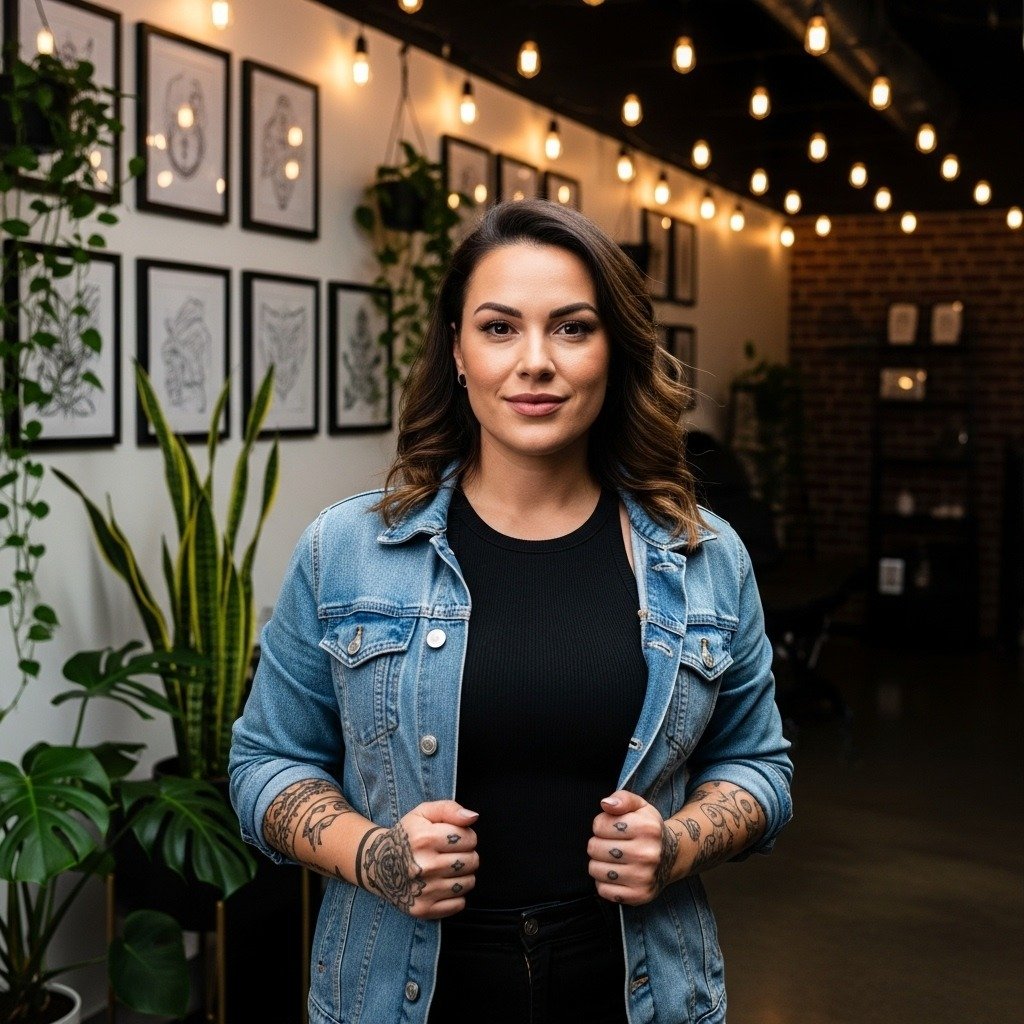
Tiny moon tattoos look effortless online, but the reality is small scale demands deliberate choices about line weight, placement, and wardrobe if you want the design to last. Some micro crescents hold crisp for years, while others soften into a blur because of skin texture or placement. Read the short design notes below to match a small moon to your skin, your daily clothes, and a realistic touch-up timeline.
1. Single-Stroke Crescent on the Wrist
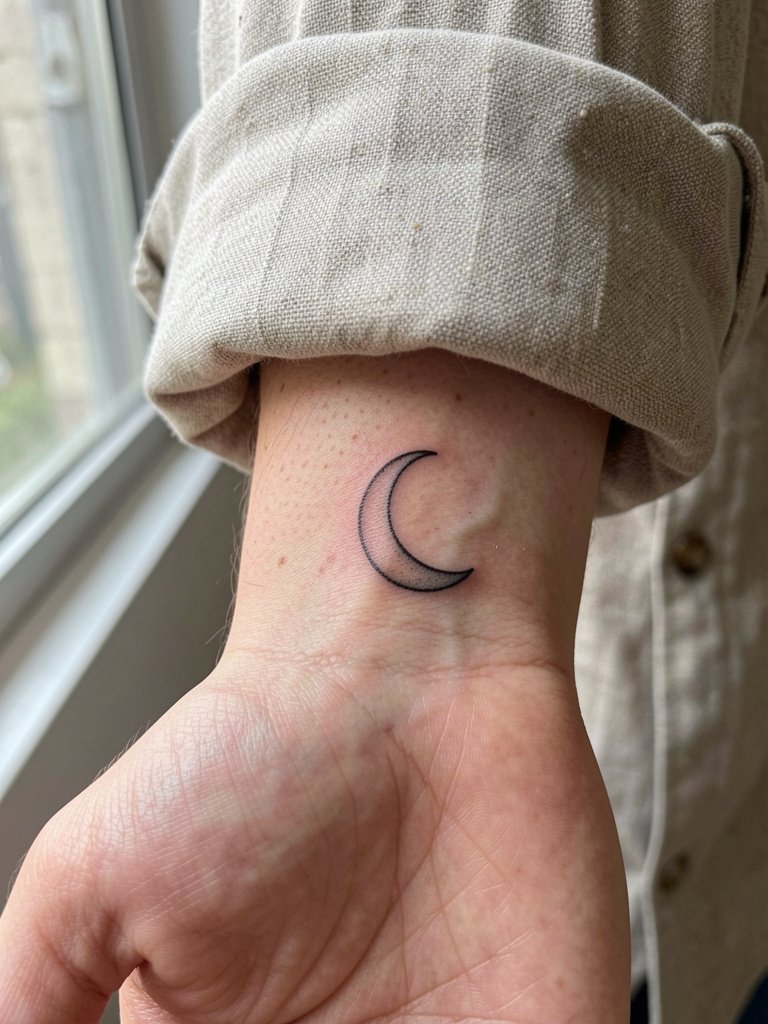
A single-stroke crescent reads as clean and elegant on the inner wrist because the flat palm-up surface gives the artist steady skin to work on. Recommend a hair-thicker single-needle line than the Pinterest example so the crescent still reads at the two-year mark. Bring two reference photos at different scales so the artist can show how that single line looks at one inch versus two inches. Expect low session time and mild wrist sensitivity that most people find manageable. Common mistake: asking for ultra-razor-thin single lines without accounting for daily wash friction. For showing the piece, try a rolled-up linen button-down in cream or olive to keep attention on the linework.
2. Fine Line Crescent with Tiny Stars, Inner Forearm
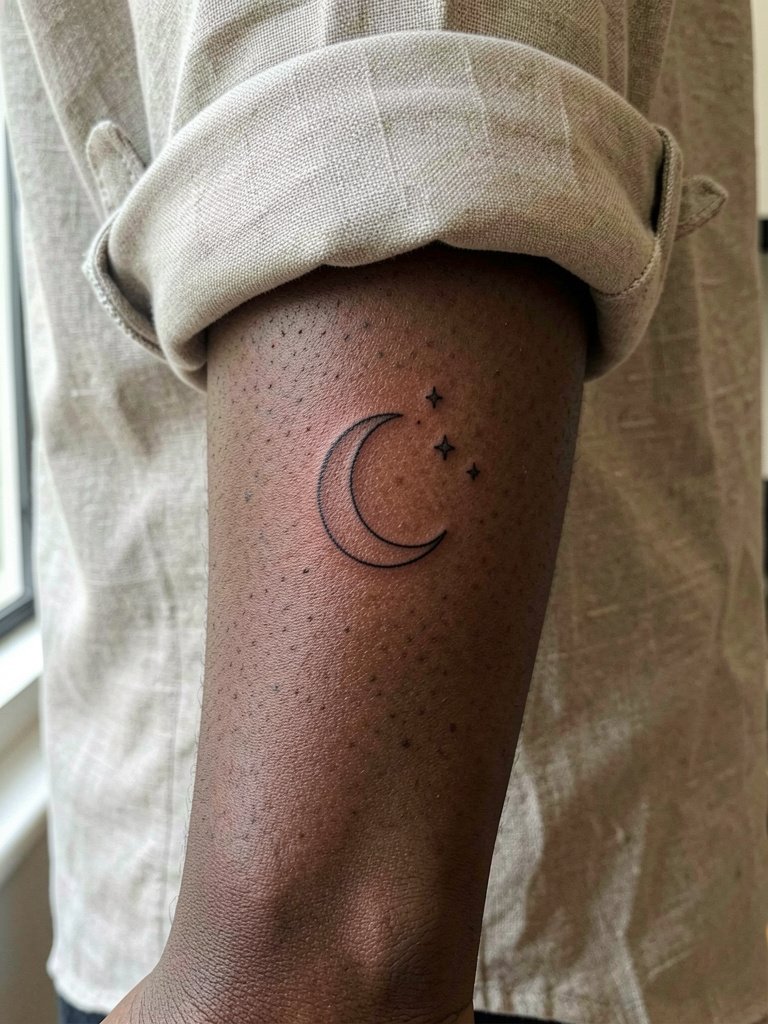
The inner forearm gives room for a tiny crescent plus micro-stars without crowding the composition. Ask for slightly increased dot spacing for the stars so they do not merge into a single blob as the skin heals. If longevity is the priority, request the crescent line to be a hair thicker than a typical 0.25mm single-needle. At six months this looks crisp; at two years a too-thin line can ghost on textured skin. Session feel is low to moderate pain and quick needle time. For a simple outfit that highlights the design, wear a rolled cuff linen shirt in cream or sand and a thin leather strap watch.
3. Dotwork Crescent at the Collarbone
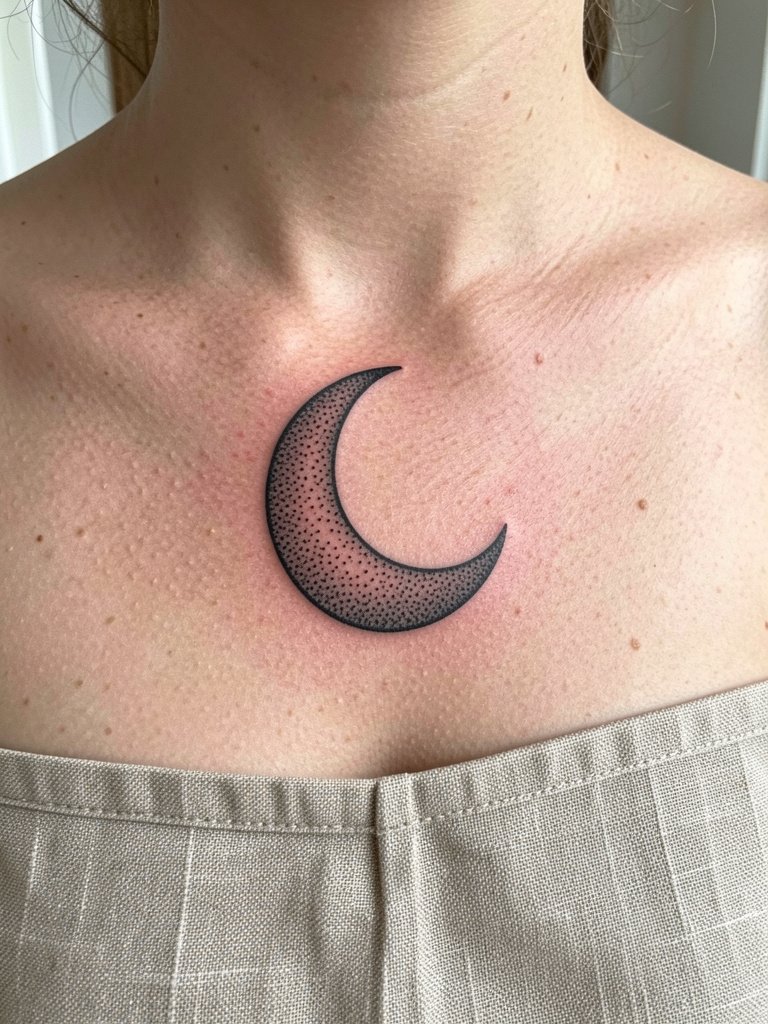
Dotwork adds texture to a collarbone crescent without relying on line weight, so it is a good choice for skin that tends to soften thin lines. Specify dot density transitions during consultation and request a healed photo reference of a similar placement. A common aging issue is doing dotwork too tight, which compresses into a muddy patch by year two. The session feels light but requires steady positioning from the sitter to keep the stippling even. Style pairing: strapless or wide-neck linens and layered delicate chains frame the crescent well. Consider a layered delicate gold chain set to accent the area.
4. Wire-Frame Geometric Crescent, Inner Upper Arm
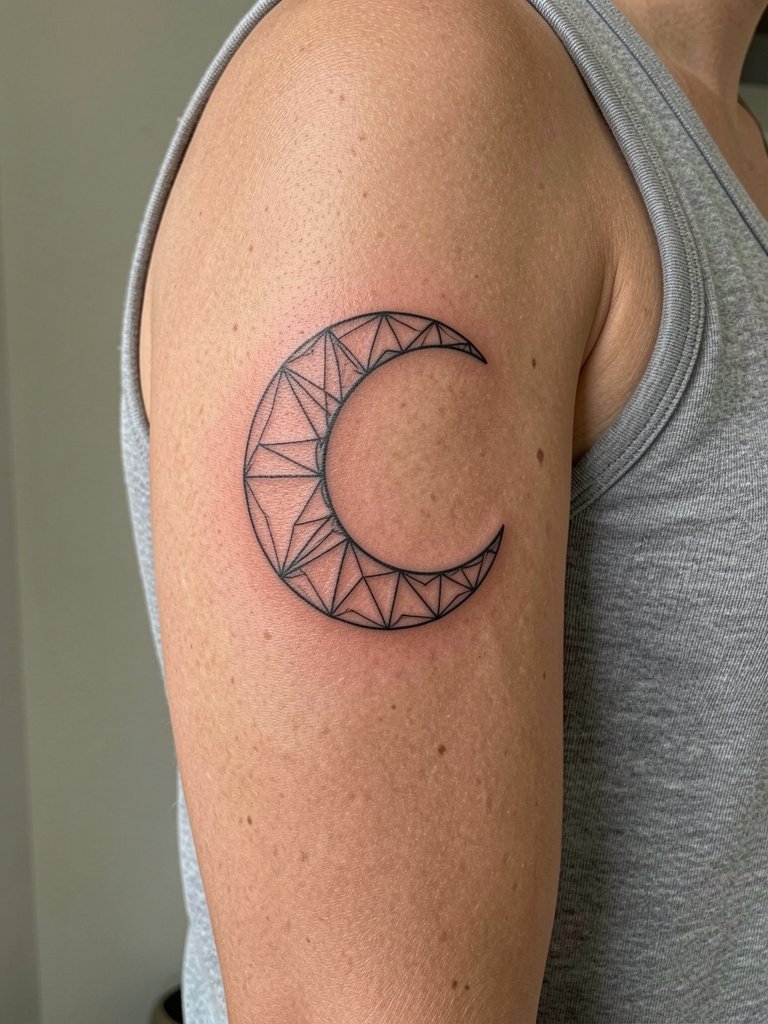
This geometric option reads modern because the open interior avoids heavy saturation, which helps preserve contrast over time. When you sit with your artist ask them to mock up the negative space so you can see how the crescent scales on the inner-facing surface. A mistake I see often is shrinking geometric crescents down too small, which makes precise angles lose definition after healing. Expect a slightly longer stencil placement to align the angles with the arm's axis. No styling suggestion here so the image stays focused, but session wear should be a sleeveless top for clear access.
5. Minimalist Rose Moon Silhouette on the Sternum
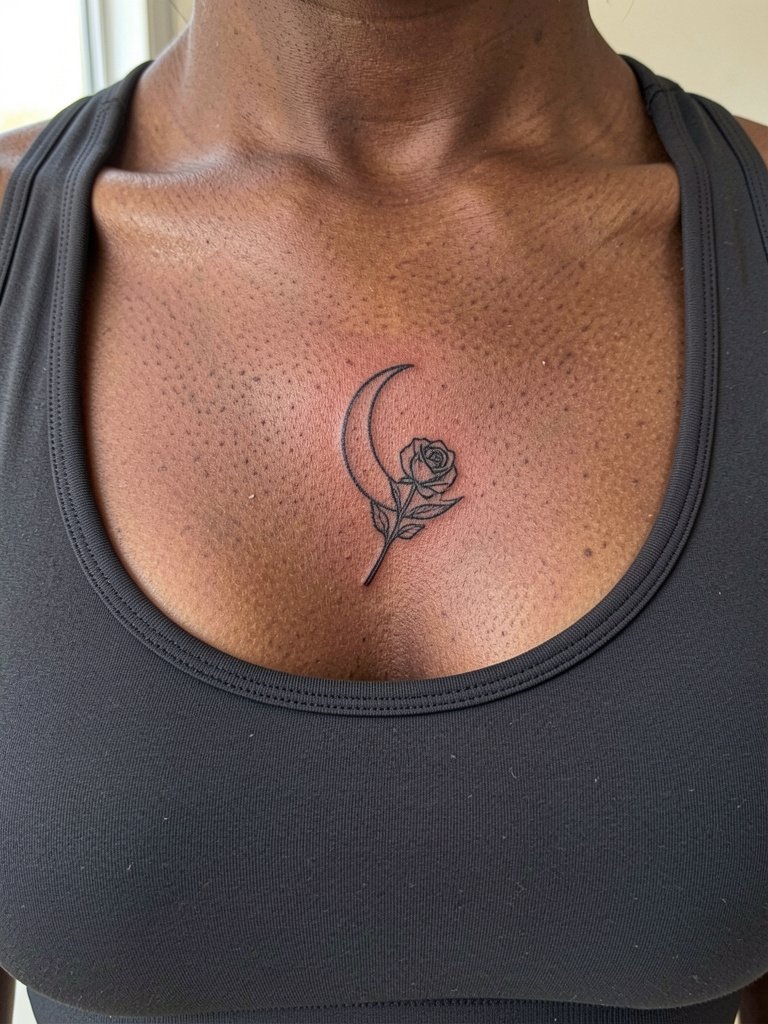
Sternum placements deliver a private, centralized composition with strong visual symmetry when done well. Be explicit about how the rose stem sits relative to the breastline so the artist can center the design for your anatomy. Fair warning, sternum work can be more painful than forearm pieces because of thin tissue and proximity to bone. Also ask about session breaks if needed, for the comfort of long single-needle passes. This area often benefits from a slightly thicker outline to avoid feathering over time. Professional considerations apply for sternum work, so ensure the studio has solid healed photos of similar placements.
6. Black-and-Gray Realism Full Moon, Shoulder Blade
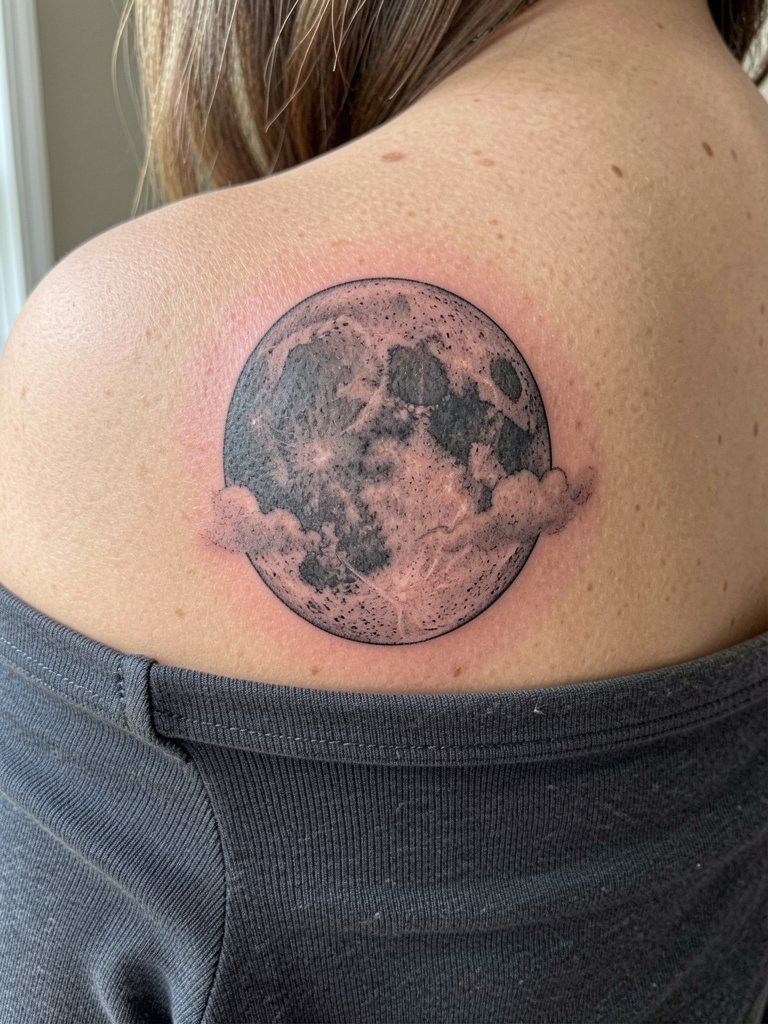
A mini full moon in black-and-gray realism shows depth without color, and the shoulder blade is forgiving for soft gradients. Ask for a healed portfolio image of a half-inch to two-inch realism piece so you can compare crater detail in the same skin tone. Common aging pattern: micro shading can soften into low-contrast gray patches if the initial saturation is insufficient. The session will feel moderate because of scapular contours and requires you to lie still for clean gradients. Off-shoulder tops and minimal drop earrings highlight this placement. For the session, bring a backless or off-shoulder top to avoid fabric rubbing.
Pre-Session Essentials
The wrist, sternum, and shoulder blade pieces above each have different session needs, so these five small items smooth the chair time and the first week.
-
Hawaiian Sol Aftercare Balm. A lighter balm many people prefer for sensitive skin on collarbone and sternum work, it avoids the heavy feel that can trap sweat in warm spots.
-
Japanese Tsubaki Tattoo Cream. Thinner than traditional ointments, it helps with smaller dotwork and fine-line pieces where excessive oil can blur detail.
-
Australian Hooga Healing Gel. A non-greasy gel some guest-spot artists recommend for small forearm and wrist tattoos because it soothes without clogging pores.
-
Mad Rabbit Tattoo Balm. Contains calendula and vitamin E and is often chosen for itchy healing windows on ankle and shoulder blade placements.
-
Saniderm Tattoo Bandage Packs. An occlusive film option that many people use for the first 48 to 72 hours to reduce scabbing and friction on high-movement areas like wrists and fingers.
7. Neo-Traditional Moon with Floral Frame, Nape
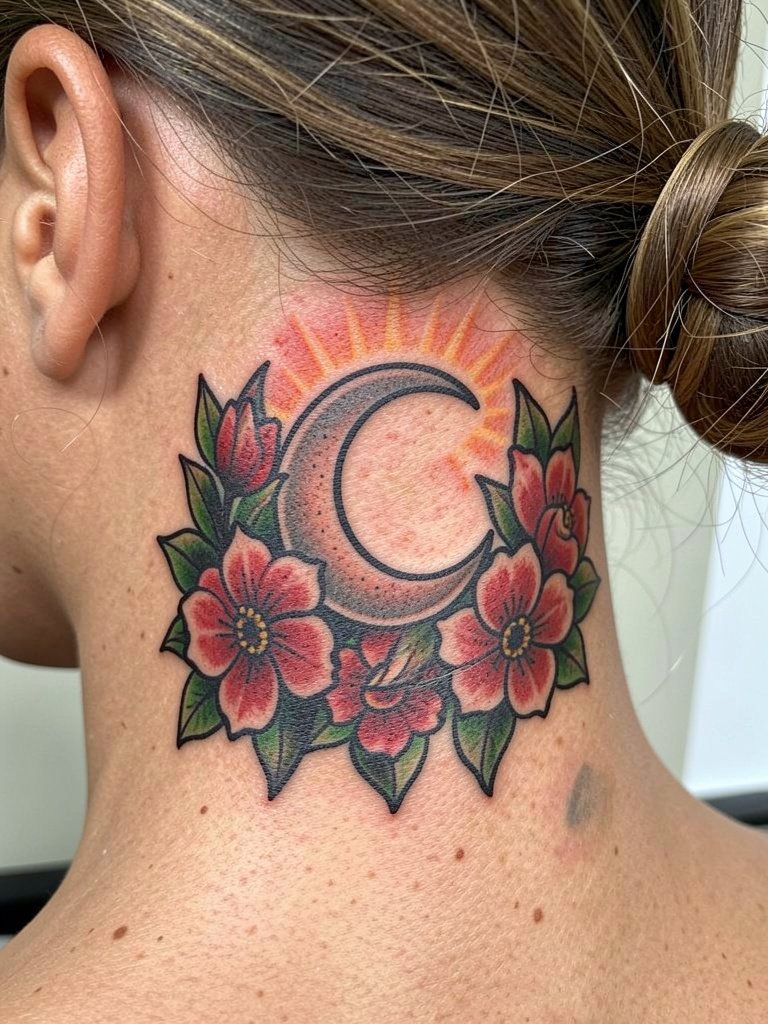
Bold neo-traditional lines help a small nape moon resist blurring, and floral framing gives the eye room so the moon does not look too tiny. Ask the artist about color placement and how the halo will sit under hairlines. The nape can be hidden or revealed depending on your hairdo, so consider the post-session styling you plan. Session feel is low to moderate and the area heals quickly if your hair stays up and clean. For showing it off, keep hair in a low bun or half-up style and tuck in delicate hairpins to draw attention.
8. Dotwork Geometric Moon Phase Array, Lower Back
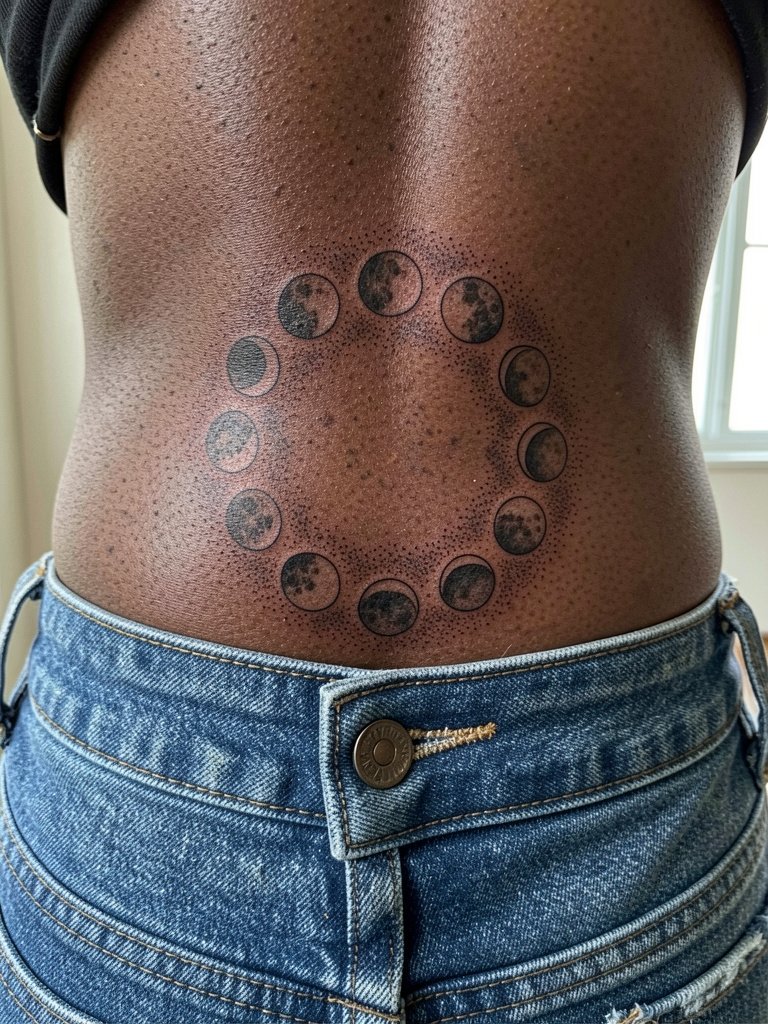
A geometric phase array needs breathing room, so keep the design closer to two inches rather than micro scale. Talk to the artist about phase spacing and dotwork density so the circular rhythm survives a few years without merging. Lower back skin tolerates heavier dot shading, but friction from waistbands can be a factor during healing, so wear low-rise fully fastened jeans in the first week. Expect moderate session time due to the concentric layout. For sensitive cultural motifs like mandalas, ask the artist to explain pattern origins and their approach to respectful adaptation.
9. Watercolor Indigo Moon with Nebula, Inner Forearm
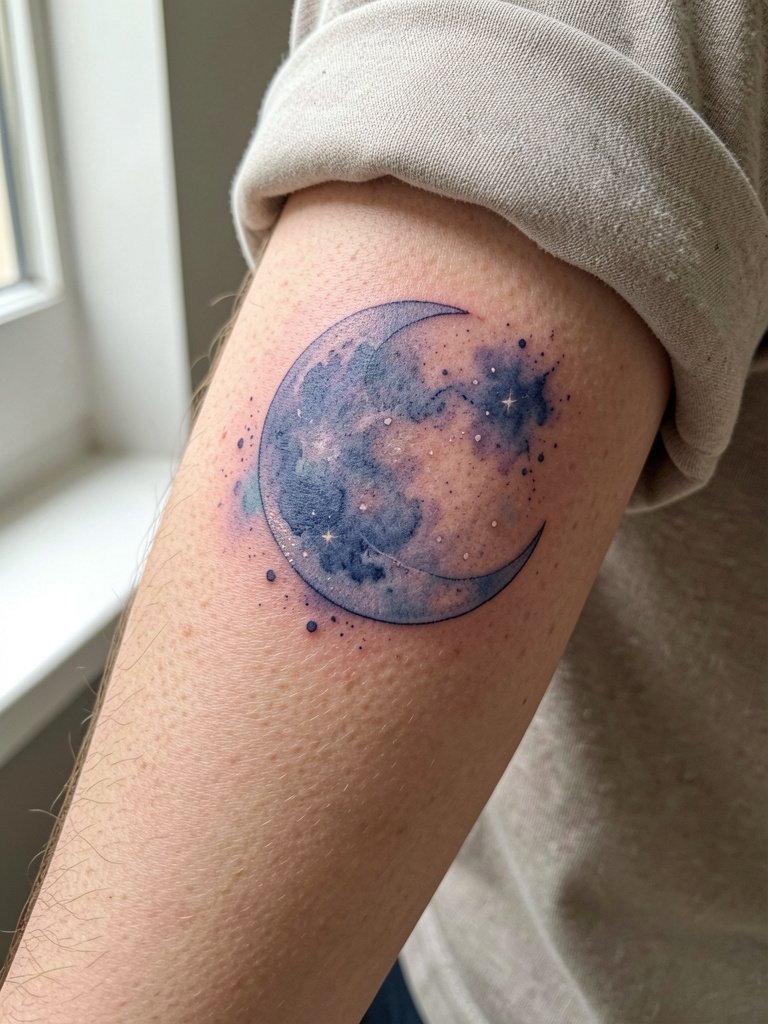
Watercolor effects look ethereal on the forearm but they do tend to soften faster than black-and-gray. One camp of aftercare advocates says thinner balms avoid clogged pores and whiteheads; the other camp points to occlusive options that reduce scabbing and preserve saturation. One group says Aquaphor can clog pores for some people and they prefer lighter balms. The other group argues that an occlusive barrier prevents scabbing and helps color retention. If you choose watercolor, ask for stronger initial saturation and plan on touch-ups in two years for color refresh. For wear, pair with rolled cuffs and thin leather strap watches to keep the color palette visible.
10. Script-Integrated "Wax and Wane" Crescent, Wrist
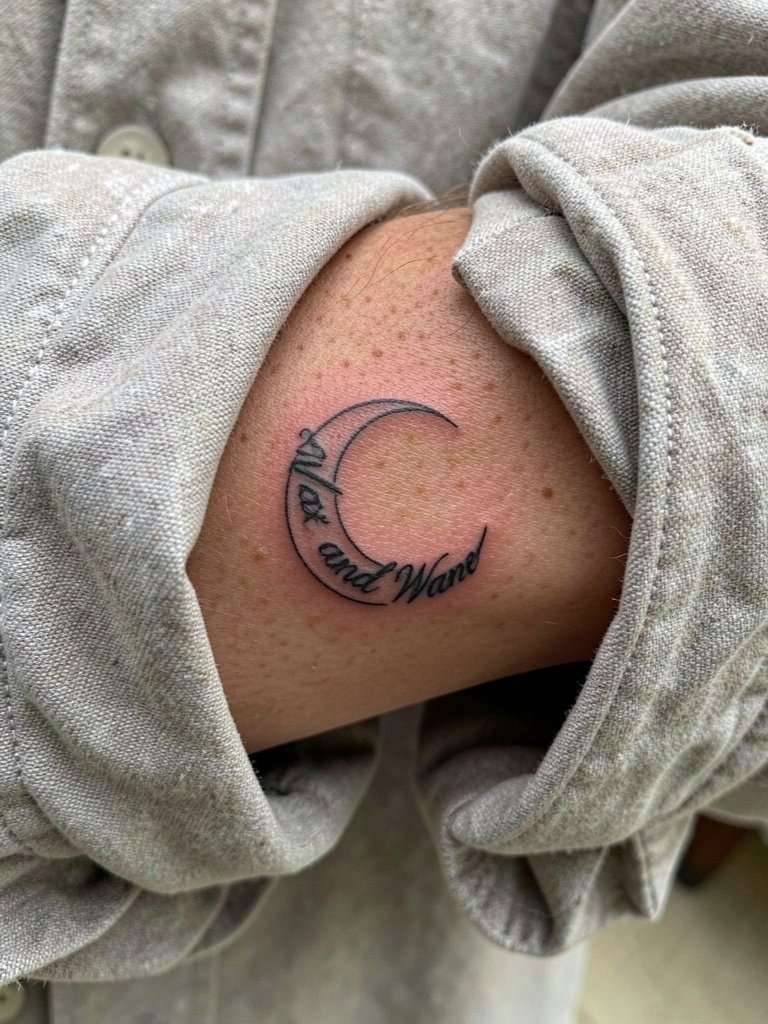
Script plus crescent is a classic combo that needs spacing. Bring the exact word or phrase you want in the exact script you prefer so the artist can scale the lettering to the moon arc. A common mistake is squeezing too much cursive into a tiny crescent, which becomes illegible once healed. The session is brief and sensitive at the wrist; plan for a short break if needed. For a minimal accessory pairing, try a dainty gold stacked bracelet set on the opposite wrist to balance the composition.
11. Sun-Moon-Star Balance Trio, Behind the Ear
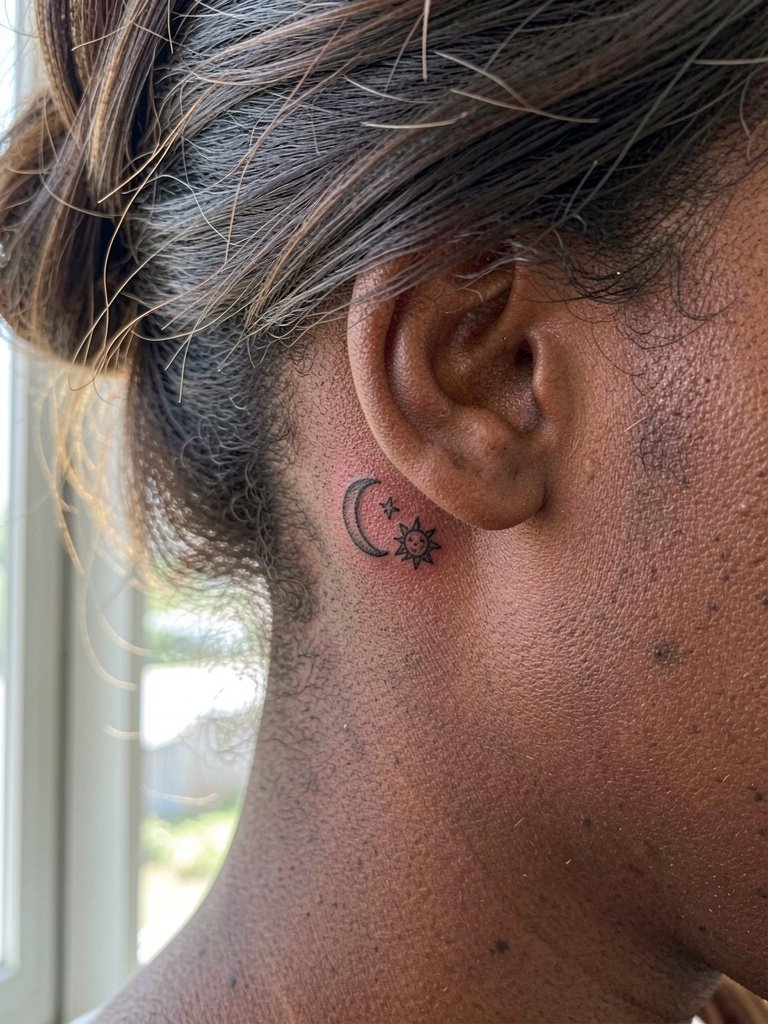
Behind-the-ear placements can be delightfully discreet but trade visibility for subtlety. Ask the artist to show a stencil placement while your hair is up so you can confirm sightlines. These tiny motifs have low session time and only occasional mild tenderness. A frequent regret is making the trio so small it disappears in photos; scale it just enough to show the sun symbol without losing the crescent shape. Style tip: wear your hair up or use half up hair pins to reveal the spot when you want it seen.
12. Micro-Realism Crater Crescent, Finger
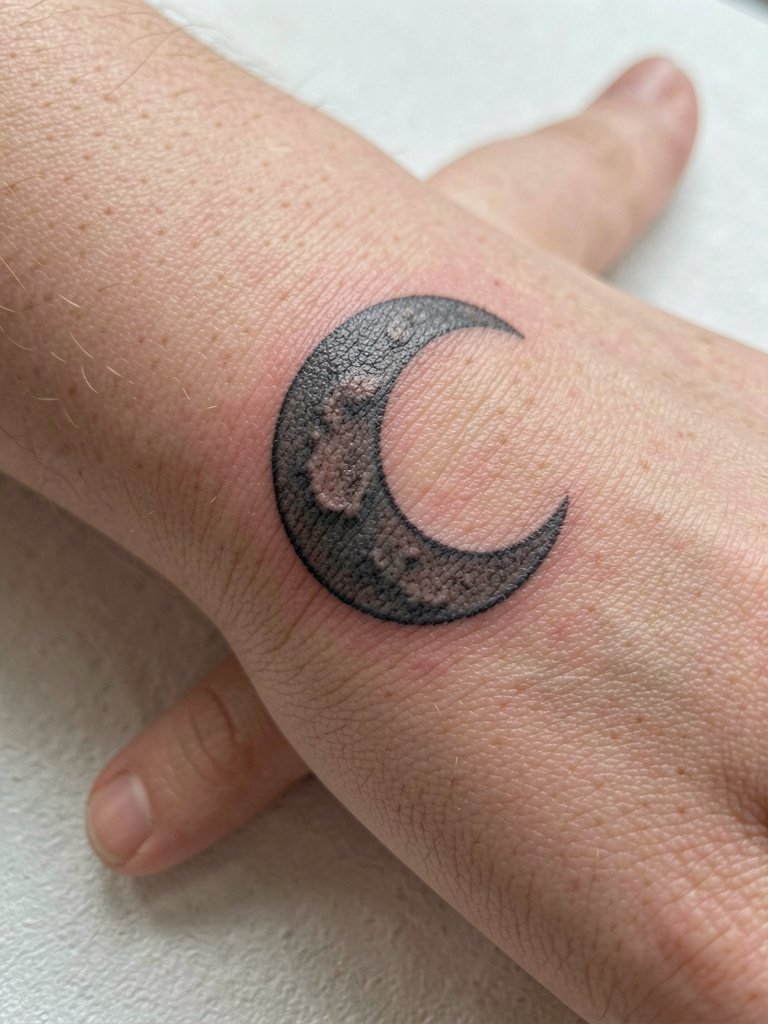
Finger tattoos are high-friction small canvases, so micro-realism with a slightly thicker boundary prevents rapid blur. Discuss realistic touch-up expectations and placement alignment with your artist so the crescent sits where rings and everyday contact avoid it. The finger will need touch-ups more often than an arm piece, often within one to two years. Common mistake: asking for micro detail in an area that sees daily washing and typing. For session wear, plan on short focused time and no jewelry on that digit during healing. Professional consideration: hand and finger work requires an artist experienced in micro touch-ups.
13. Half-Moon with Minimal Clouds, Nape
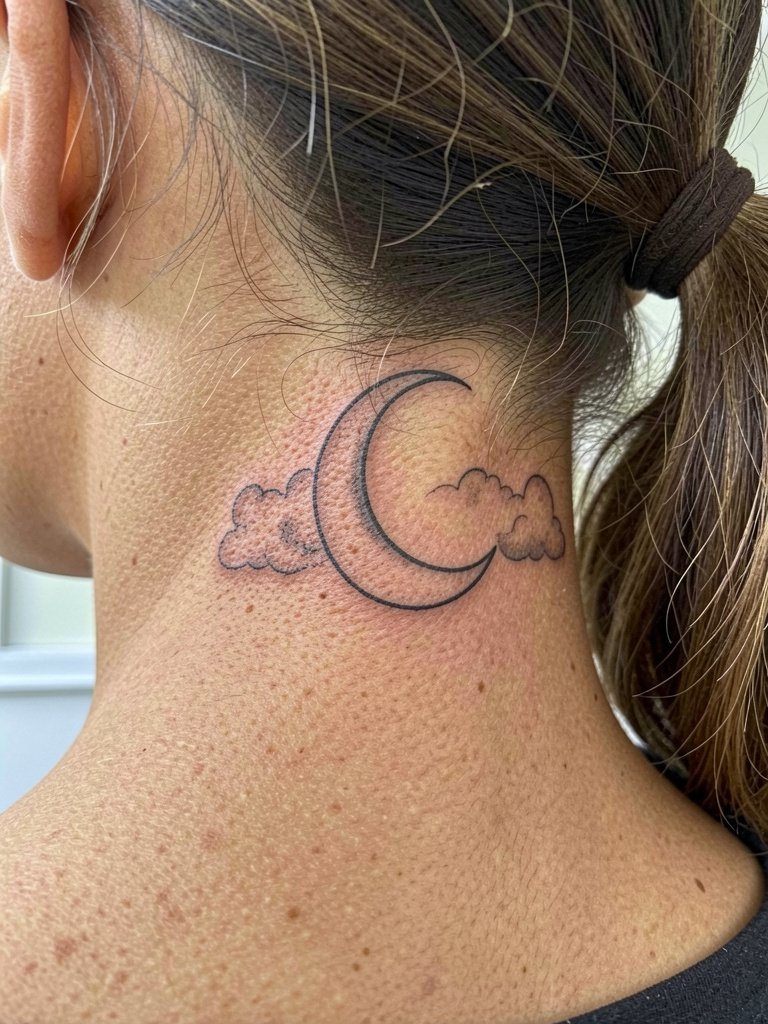
Half-moon plus clouds on the nape reads soft and mysterious while still offering strong silhouette. Request slightly heavier cloud wisps in the stencil so they do not ghost into faint smudges. The nape heals well if hair is kept up for the first week and shampooed gently. Pain level is moderate and brief. For visibility, style your hair in a low bun or ponytail and consider thin back jewelry. If you plan frequent hair treatments, mention that during consultation so the artist can account for future color exposure.
14. Sacred Geometry Moon Mandala, Breastbone
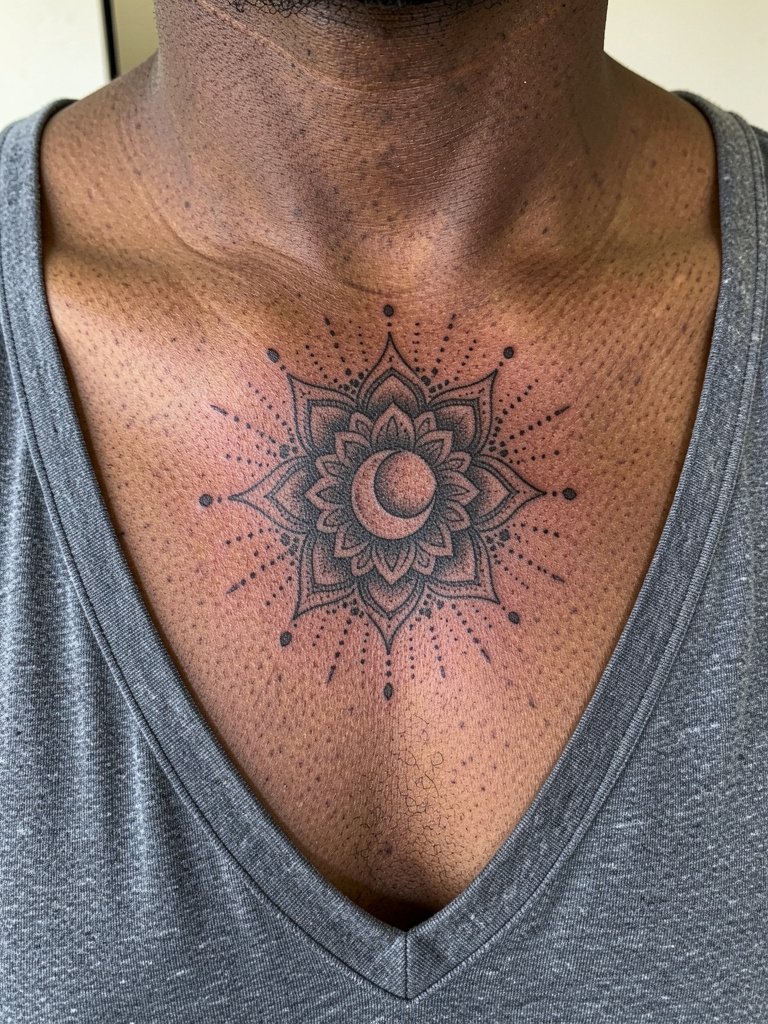
A mandala-centered moon needs precise symmetry, so the artist will likely take extra time with placement and tape alignment. Breastbone skin can be sensitive, and the piece may require a short session with breaks. For sacred geometry, ask how the radial lines will scale to one another so they do not merge at a micro size. Cultural origin note: mandala patterns carry traditions in several cultures, so discuss respectful representation and intent with your artist. Because the area is intimate, plan session wear that allows easy access without pulling fabric during the appointment.
15. Full Moon Rose Mandala, Outer Upper Thigh
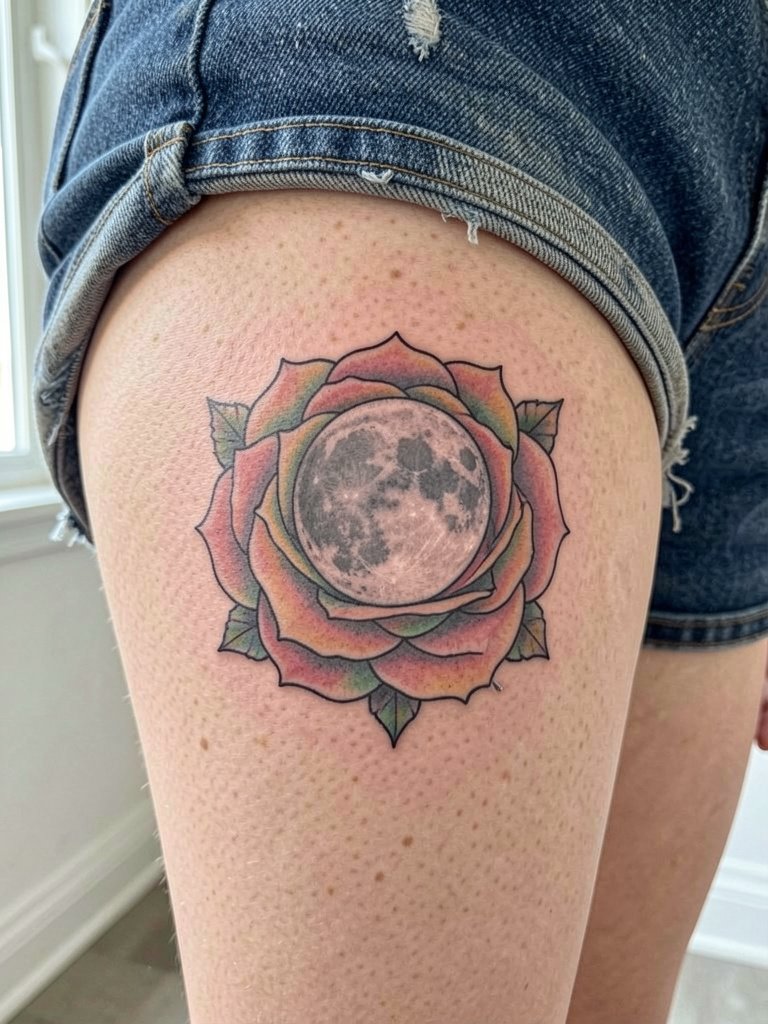
The outer thigh offers a forgiving surface for a slightly larger circular composition and lets artists use color without early washout from friction. Request healed photos of color work on similar skin tones so you know how reds and greens read after a year. Session is low to moderate discomfort and suits a relaxed lying position. For showing it off, choose high-low hem dresses or shorts with a side slit. Try a high low hem dress for evenings when you want the design visible.
16. Monthly Phase Tracker, Side Hip
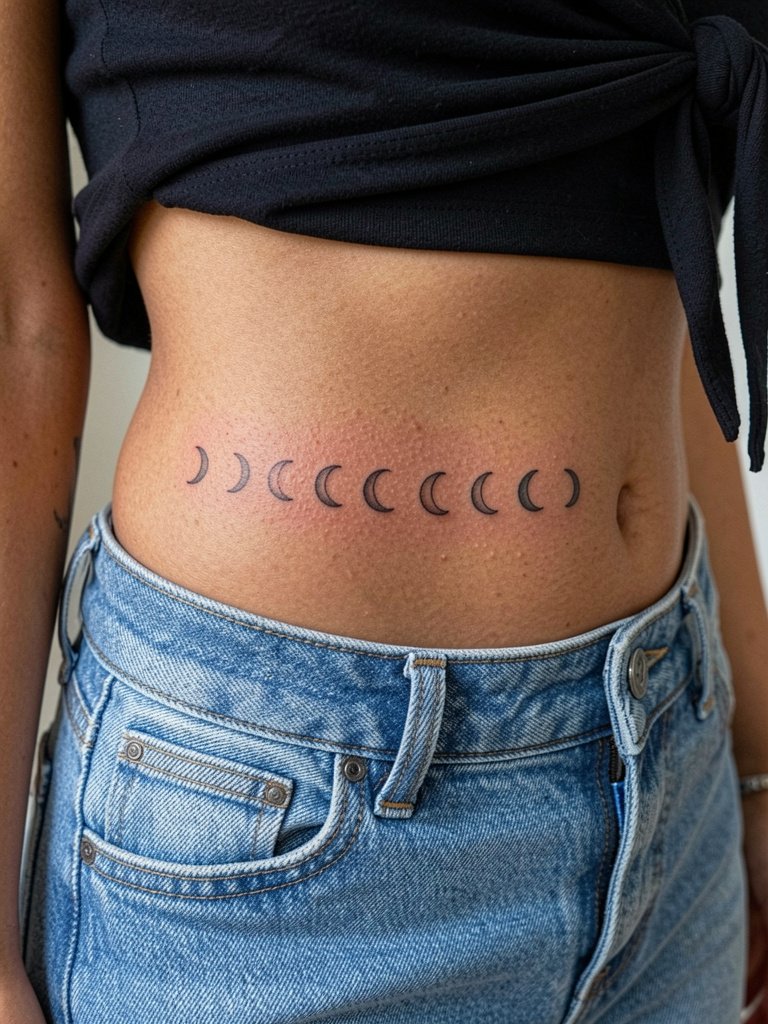
A monthly phase tracker is a compact way to mark milestones with repeatable minimoons. Discuss spacing so each tiny crescent remains distinct when you sit or bend at the hip. Because the lateral hip moves with clothing and walking, the dots need a hair more separation than a flat surface design. Session wear suggestion: side-opening tops or crop tops that allow the artist clear access without fabric tugging. Avoid placing micro phases too close to the waistband where friction can disrupt healing.
17. Layered Moon plus Animal Silhouette, Medial Inner Thigh
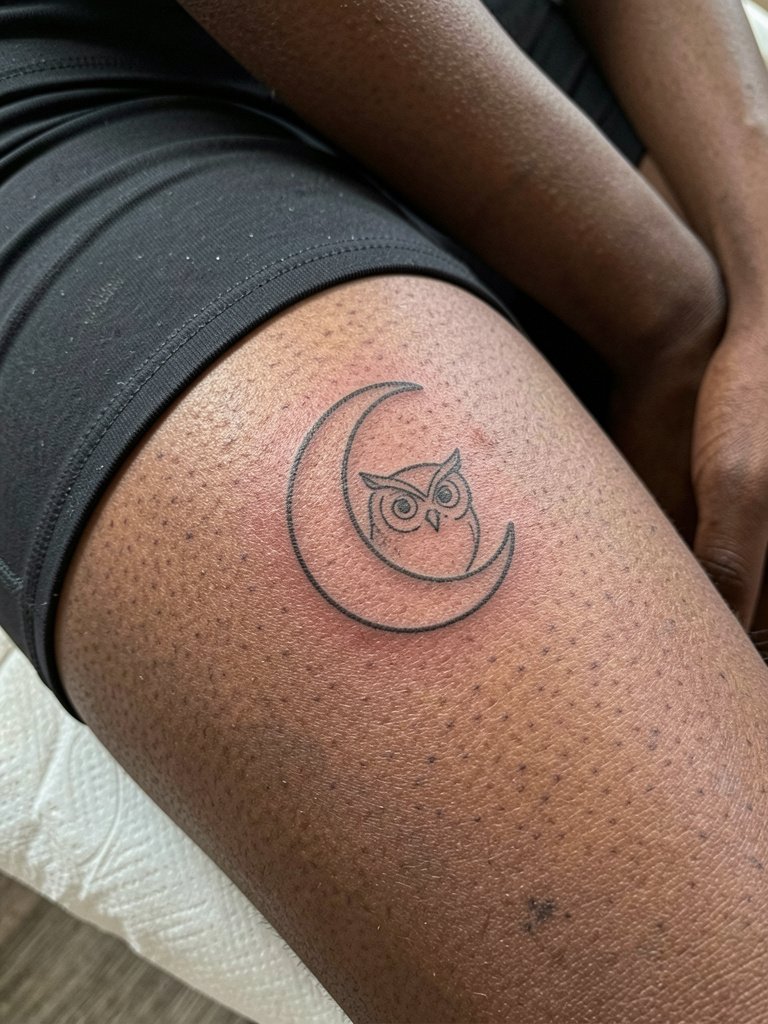
Layering a night‑guardian silhouette inside a crescent gives small-scale symbolism more presence without needing large size. The inner thigh is intimate and prone to friction, so space the figure slightly from the edge and request a touch-up plan at the one-year mark. Sessions here can be more sensitive; if you are concerned, discuss numbing timing and breaks so you can sit comfortably. For wardrobe, high-waisted shorts or flowy skirts that reveal the thigh on movement work best for showing the piece.
18. High-Contrast Moon for Darker Skin, Ankle
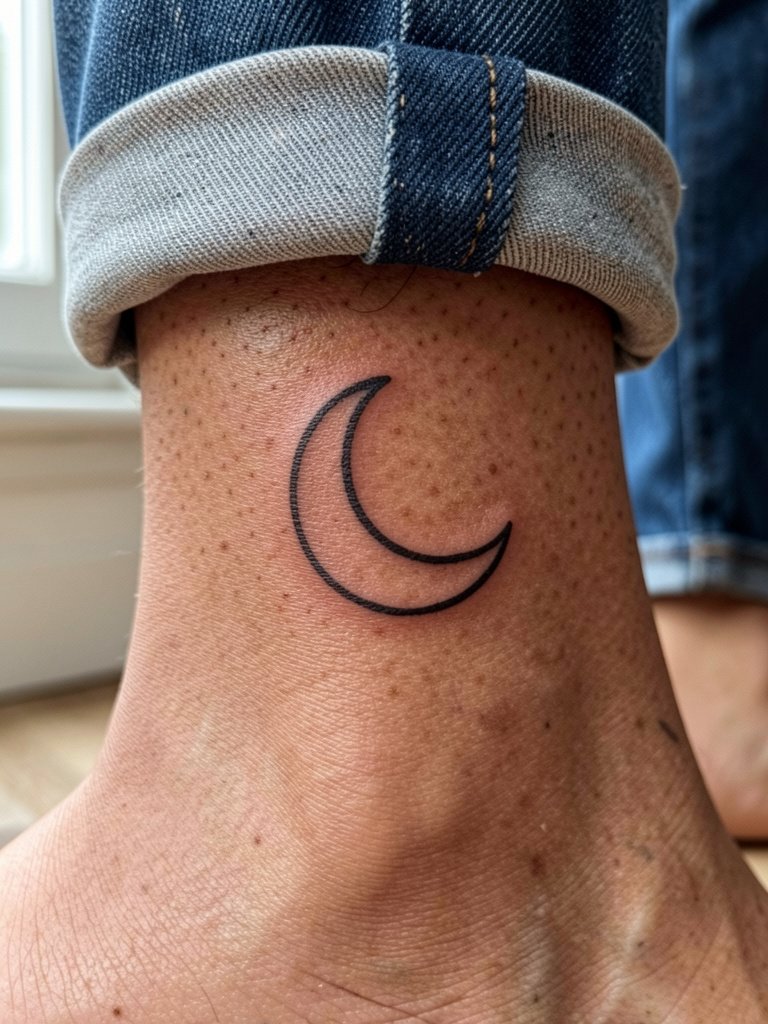
On darker skin tones, very fine single-needle lines can look ghosted in photos, so request a slightly heavier contour or a small black-fill crescent to keep the shape visible. Ask to see healed examples on similar skin tones to calibrate saturation. The ankle is a forgiving spot for visibility but it experiences friction from socks and shoes during healing, so keep footwear minimal for the first week. For showing off, roll your jeans cuff or choose cropped trousers to reveal the ankle.
19. Tiny Haloed Moon with Subtle Stippling, Calf

The calf provides a smooth curved plane that keeps a haloed micro moon readable without increasing scale. Ask the artist to place the halo so it reads from a standing angle and not just when you lie down. Stippling adds sparkle without heavy saturation and ages well when spaced properly. The session is low to moderate and most people are comfortable without numbing. For outfits, cropped trousers or open-back sandals pair best to display the stippled halo.
Frequently Asked Questions
Q: How much should I budget for a small moon tattoo?
A: Pricing varies by studio and location, but small moons typically fall in a micro to small price band. Expect a range rather than a fixed number, and factor in a modest tip of around 15 to 25 percent for chair-side artists.
Q: Which small moon placements age best over two to five years?
A: Flat surfaces with less frequent stretching hold detail best. Inner forearm, shoulder blade, and outer thigh tend to maintain crispness. High-motion areas like fingers, ribs, and ankles need thicker contouring and a realistic touch-up plan.
Q: I have darker skin. How do I make sure a fine line moon shows up in photos?
A: On medium to dark tones, ask for slightly heavier line weight or small black-fill accents so the silhouette reads in camera light. Request healed examples on similar skin tones and plan a one-year touch-up when contrast can be refreshed.
Q: How should I find an artist who has healed examples, without naming them directly?
A: Search platform hashtags and filter by location, then look for portfolio photos labeled "healed" or "after." Try tags like #moon tattoo and #finelinetattoo, use location filters on Instagram and TikTok, and browse Tattoodo and Booksy keyword results for healed portfolios. Reddit communities also surface peer recommendations and real healed shots.
Q: Which clothes should I wear to my appointment for wrist, collarbone, and thigh placements?
A: For wrist and forearm pieces, a loose button-down or short-sleeve top makes access easy. Collarbone and sternum work calls for strapless or wide V-neck tops so the artist can reach without tugging fabric. For the thigh, wear loose shorts or a skirt with an open side to allow the artist to access the area comfortably.
Q: Do different aftercare products change healing or longevity for fine-line moons?
A: People report different experiences. One camp on forums prefers lighter non-greasy gels to avoid whiteheads. Another camp favors occlusive films or ointments to reduce scabbing. Try a short patch with the product your artist recommends and check how your skin reacts before committing to a long regimen. The products listed above cover a range of textures so you can test what suits your skin.