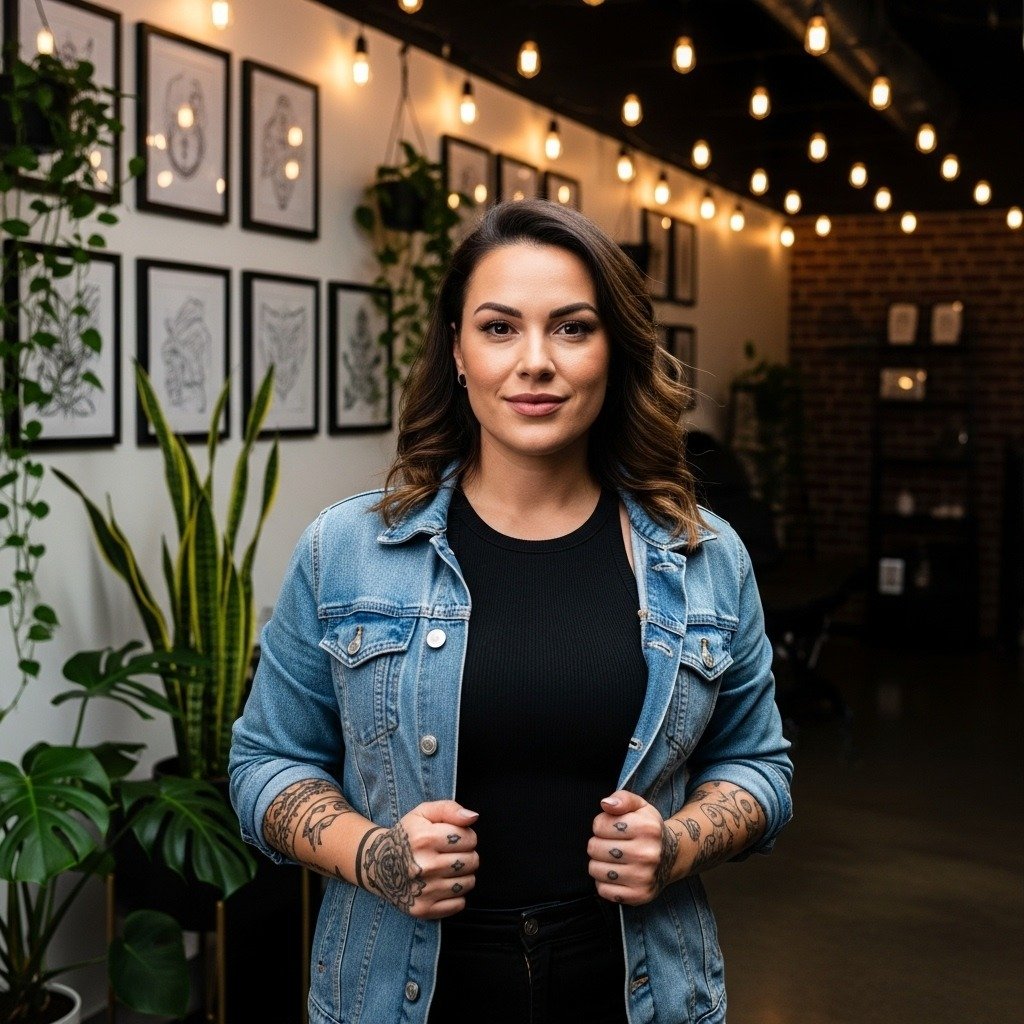
Someone I know spent eight months scrolling wedding rings and wrist tattoos before realizing the real problem was not the design. It was picking a style that would age with their skin and daily habits. I’ve spent time in five shops across Brooklyn and seen which wrist pieces still read crisp after two years. Below are twelve wrist tattoo ideas that balance look with longevity and practical tips for booking, pain, and healed care.
1. Fine line crescent moon on inner wrist

Someone I know first saw this on a friend and loved how it sat next to rings. Inner wrist pain is noticeable but less sharp than over the bone, and a single short session usually does the trick. Ask your artist for slightly stronger linework than the thinnest needle to avoid early fading. The common mistake is asking for hairline strokes that vanish after sun and friction. At six months you should see crisp points, at two years expect softer edges and possibly a touch-up. Best for people who want discreet celestial symbolism and are willing to protect the area from daily sun.
2. Dainty heart outline on side wrist

Fair warning: the side wrist moves a lot when you grip things and that motion can blur ultra-thin lines. I recommend this for first-timers who want a tiny romantic mark that reads at arm’s length. Tell your artist to space the line slightly thicker than a micro hairline and to avoid shading inside the heart. A version that ages poorly is the overly filigreed outline with lots of tiny curls. Expect a touch-up around year one if you want that crisp outline to persist. The session is short and the pain is mild to moderate, mostly from movement rather than depth.
3. Fine line constellation spanning the side wrist
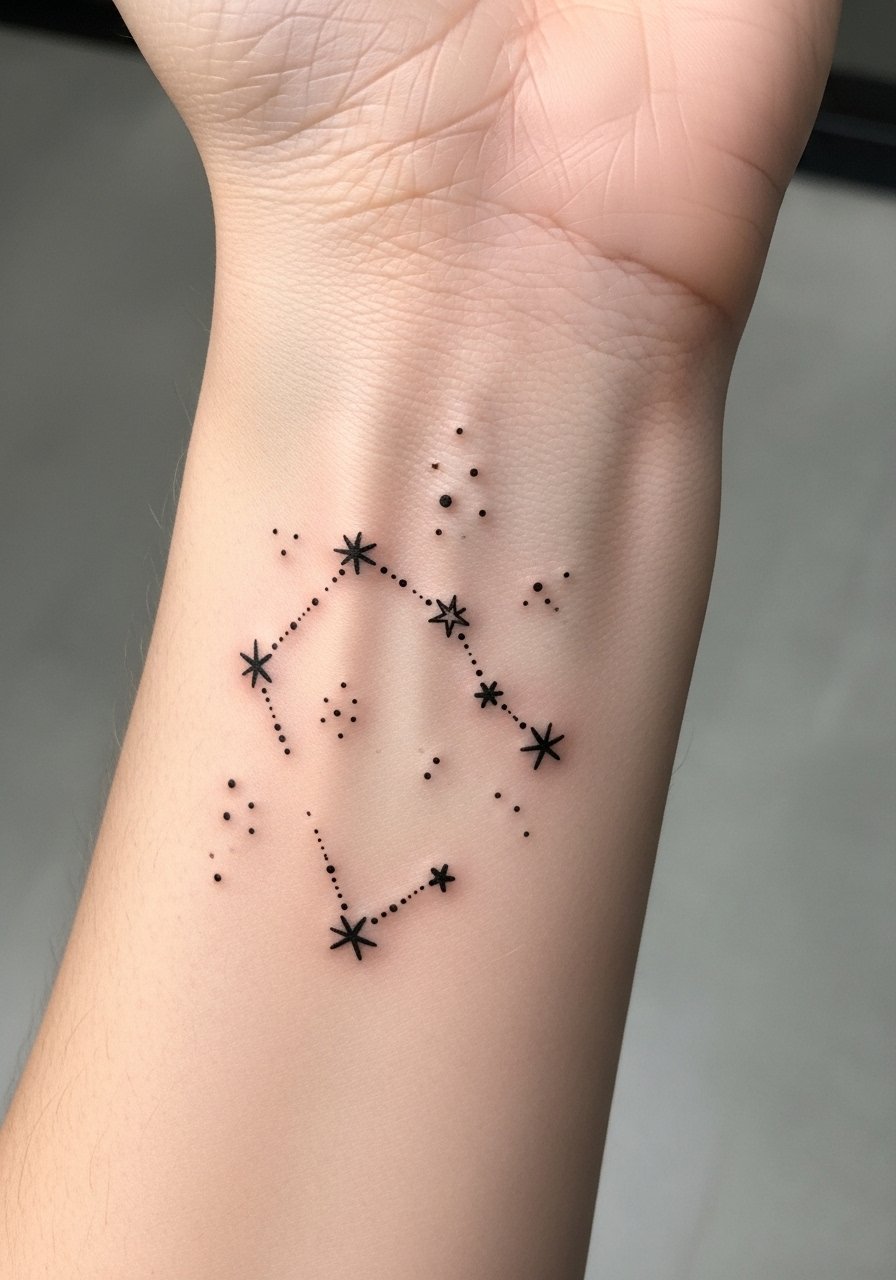
When you sit down with your artist for this, bring the exact star map or zodiac points you want so placement matches wrist movement. Artists split on fine line longevity on wrists. One camp argues fine line blurs faster in high-movement areas. The other camp says with proper spacing and slightly bolder nodes, the design settles well. I suggest asking which approach the artist uses and seeing healed photos from at least a year out. At six months the dots will look tidy, by two years lines might soften and need a touch-up. This is a great option if you want personalized celestial detail without heavy color.
4. Small floral vine wrapping the wrist
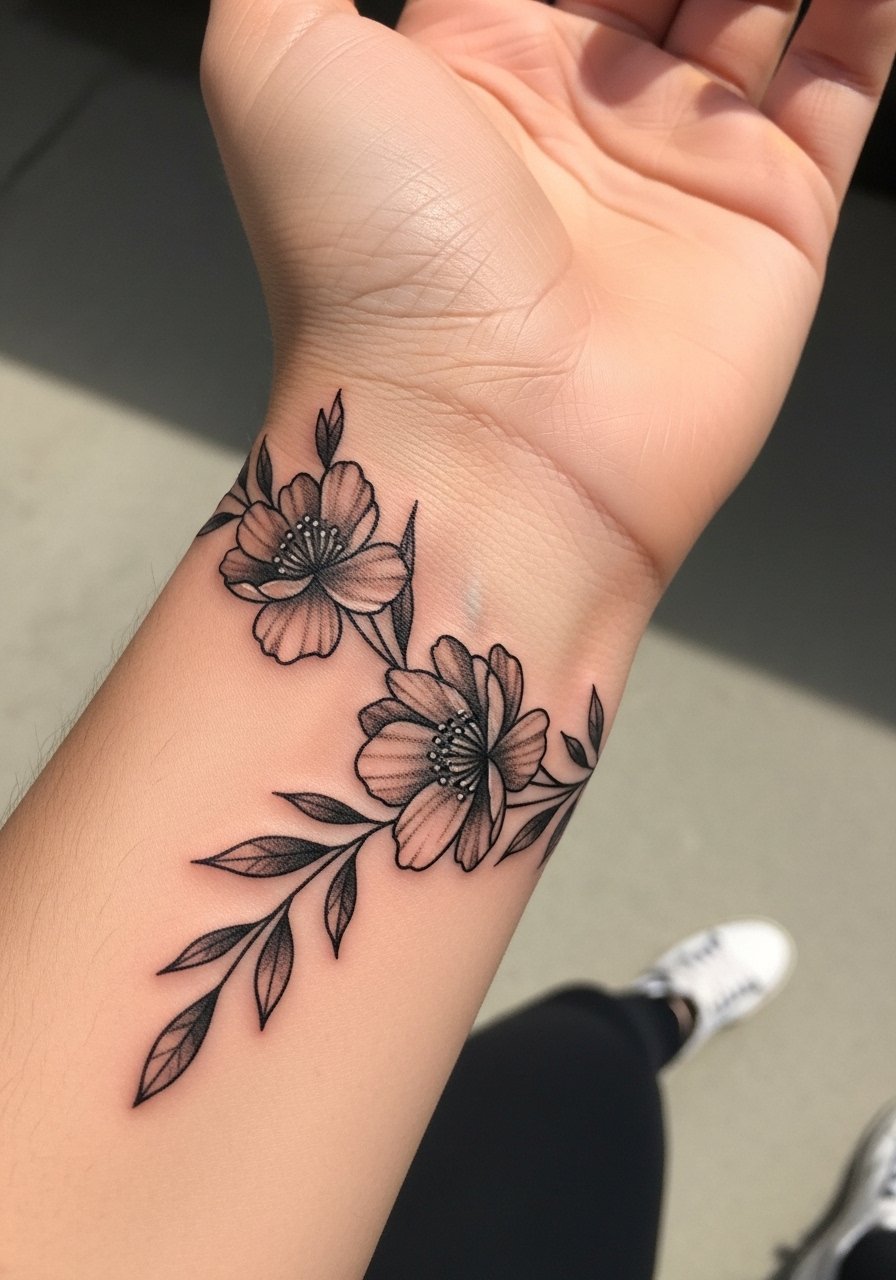
There is a reason people pick vines to elongate the wrist. Visually they move with the arm and can be scaled into larger pieces later. The common mistake is forcing too many tiny leaves into a narrow band. Tell your artist to space leaves for negative space and to use stipple shading instead of heavy shading near the bone. Pain spikes when the vine crosses the wrist bone. At six months the vine should look like subtle texture, at two years lines that hugged the bone may feather. Best for collectors who want a piece that can grow into a sleeve.
5. Ornamental mandala band around the wrist

There is visual payoff in choosing a mandala that reads like jewelry rather than a lace doily. For longevity pick solid blackwork for the main bands and leave delicate filigree wider than you think. The session usually takes two sittings if it wraps fully. A frequent error is squeezing too much tiny detail into a thin band, which leads to early blur. Expect good saturation at six months and stable contrast at two years if you avoid constant sun. Note that this pattern draws from spiritual traditions, so many people opt for simplified motifs rather than direct religious replicas.
6. Micro-realism lotus on the inner wrist

Most watercolor pieces on wrists fade quickly, but micro-realism can hold if the artist uses tight stipple shading and controlled saturation. There is debate about numbing cream on wrists. One group says numbing helps clients tolerate the thin-skin pain and keeps movement still. The other group warns numbing masks feedback so artists might overwork the skin. If you plan to use numbing, mention it in the consult so the artist can adjust technique. This lotus session feels sharp but short. Expect crisp stippling at six months and subtle softening by year two, with touch-ups as needed to refresh color or tiny highlights.
7. Watercolor rose on side wrist
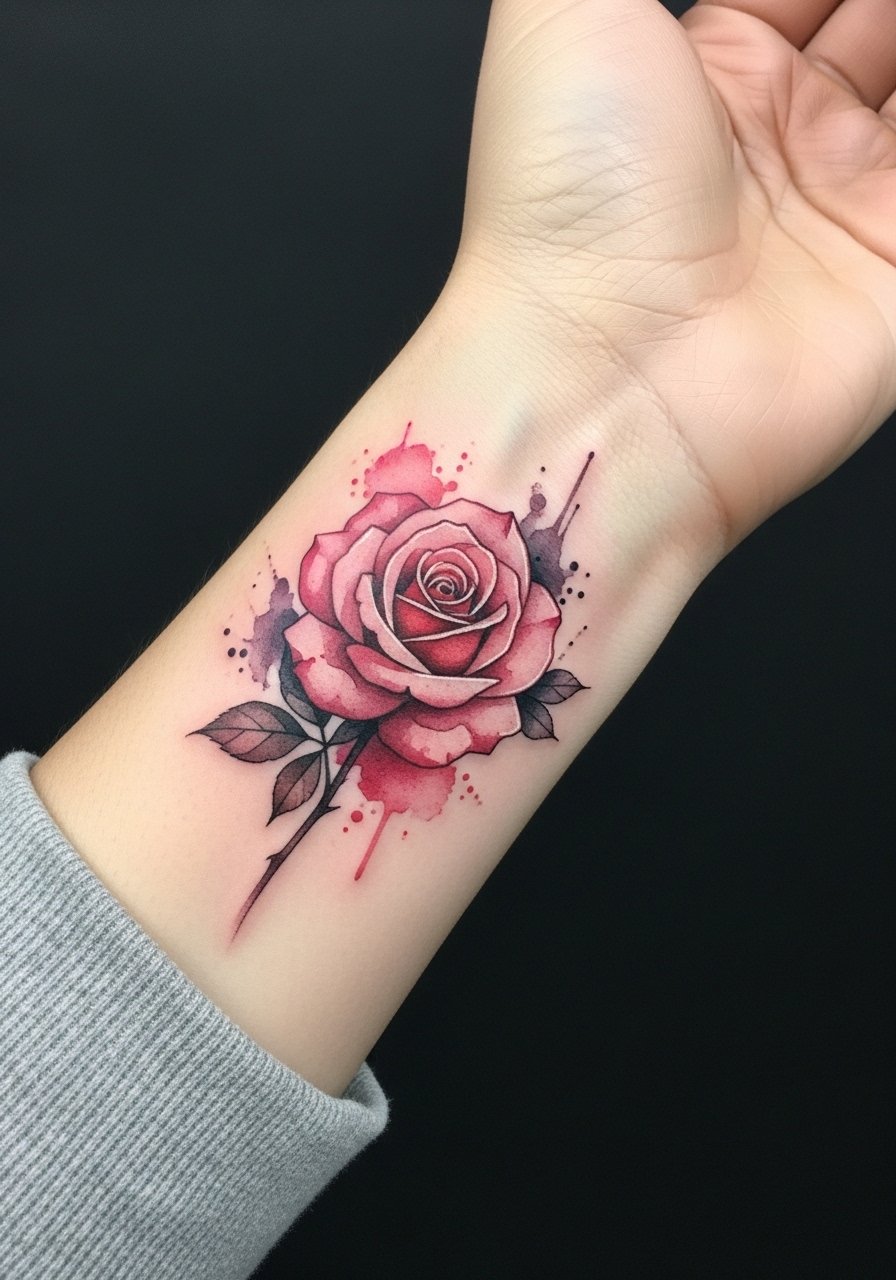
Visual impact leads here because a soft watercolor rose reads like a miniature painting by your watch. Watercolor requires careful placement away from constant friction and sun exposure. Ask the artist to anchor the color with a faint outline or dot work so pigment has edges to hold onto. The common aging problem is washed-out color from sun and rubbing. At six months the rose should keep its wash, at two years colors might need a saturation touch-up. Best for people who can promise daily SPF on their wrists and gentle long-term care.
8. Ignorant style script quote on inner wrist

When you choose a handwritten, imperfect script, the personality comes from uneven strokes and playful spacing. Tell the artist exactly which font vibe you want and bring a few sketches. A real mistake is picking ultra-tiny lettering that clumps as it heals. Inner wrist lettering sits where you’ll read it often so plan for legibility over ornament. Expect sharp letters at six months and softer counters by two years. This style is quick to do, but small text often needs touch-up sooner than a solid icon. If the phrase is meaningful, specify exact capitalization and spacing during the consult.
9. Neo-traditional butterfly on the wrist bone
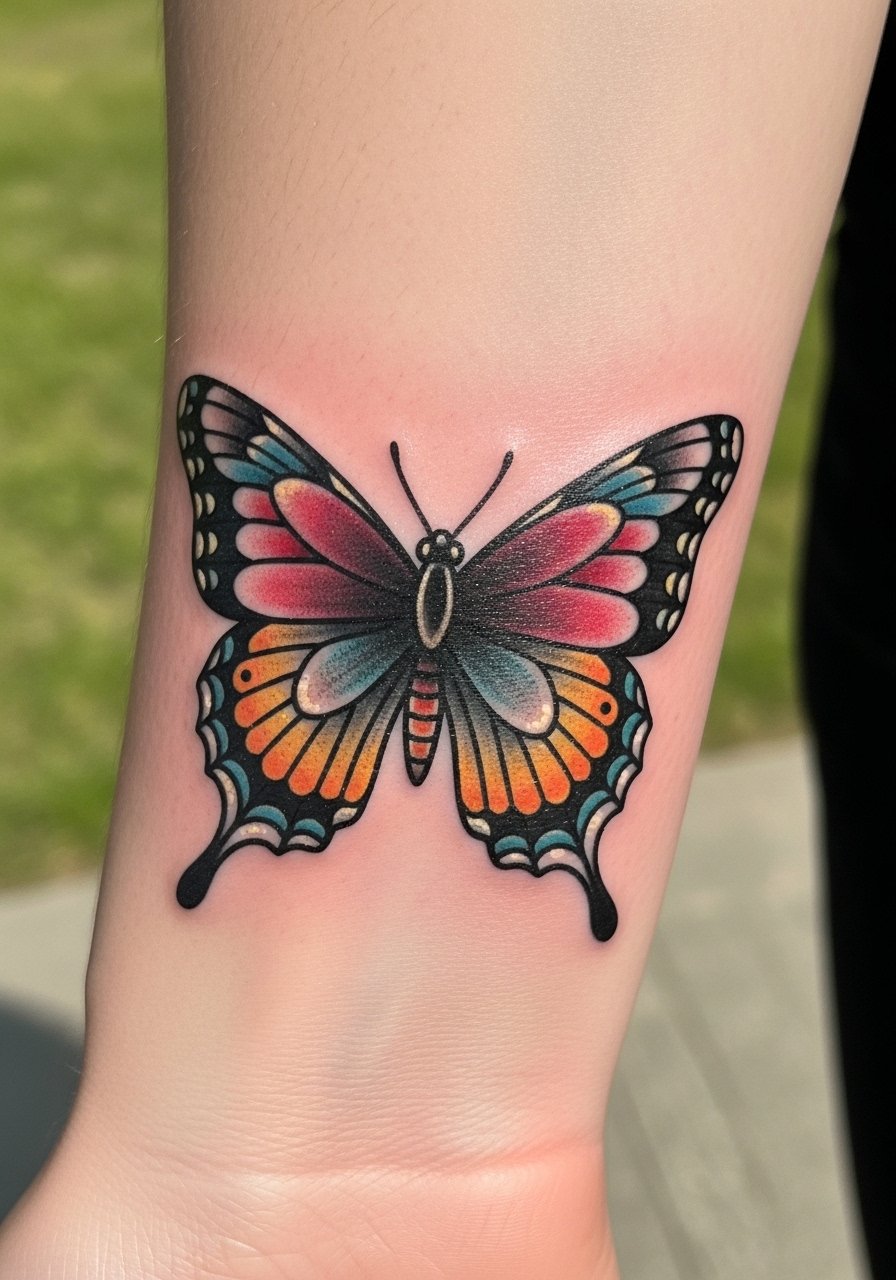
There is something about bold outlines with saturated fills that holds up across time and movement. Wrist bone is one of the more painful spots, expect sharp moments and longer healing if color sits over bone. Tell your artist you want thicker outlines and solid saturation to resist early fading. A common error is choosing gradient fill with thin outlines, which loses definition faster on the wrist bone. At six months the color should read rich, at two years outlines will still define the piece though small fill areas may need a top-up. This reads well from a distance and pairs with rings.
10. Blackwork geometric arrow on outer wrist

The biggest mistake with geometric work is going too small or letting lines sit too close together. The arrow benefits from a clean, bold seat so negative space keeps the shapes readable. Outer wrist is lower on the pain scale than the bone but is exposed to sun and friction, so ask for solid fill and crisp linework. At six months a bold black arrow should retain shape, at two years minor softening is normal but the silhouette holds. This style is excellent for people who want a modern, directional motif with low maintenance.
11. Minimalist semicolon on inner wrist
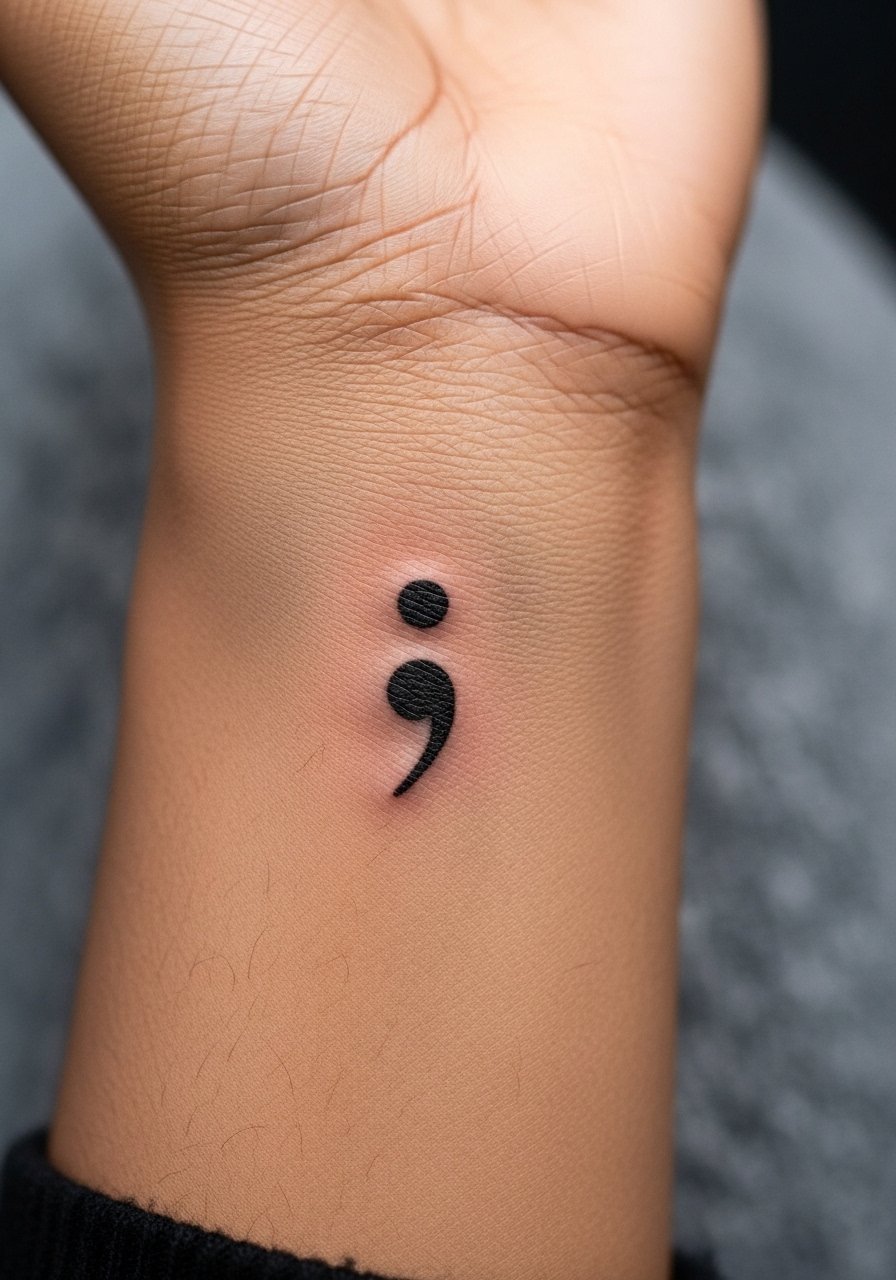
I’ve seen semicolons become quiet markers of resilience for many people. The inner wrist placement makes them visible during low moments, and tiny bold marks hold up better than hairline ones. The typical mistake is asking for a faint dot that becomes indistinct after a few months. If the semicolon matters as a symbol, request slightly bolder dotwork and plan a one-year touch-up. Pain is modest and the session is over quickly. This is a strong pick for anyone who wants an understated, symbolic mark that reads clearly at a glance.
12. Patchwork cherry blossom on inner wrist

Consultation lead works here. When you sit down with your artist, explain whether you want a single cluster or a piece meant to link into future work. Cherry blossoms benefit from negative space and controlled color saturation. A common mistake is overloading small petals with too much pink, which can bleed into a smudge over time. At six months blossoms show delicate color, at two years the black anchors usually remain while softer pinks need touch-up. This design adapts well into sleeve work for collectors thinking long term.
Tattoo Prep and Aftercare Essentials
Healing wrist work depends on careful prep and consistent care. Below are items I recommend for the first two weeks and for long-term maintenance. The shopping list includes mostly lesser-known or generic descriptors because I prefer products that are fragrance-free and low profile. One mainstream option is included because some people specifically ask for it.
Healing and daily care
Fragrance-free gentle foaming cleanser for sensitive skin. Use during the first week to remove sweat and oils without stripping new ink. Clean twice a day with gentle hands.
Fragrance-free non-greasy healing balm. Apply a thin layer after cleaning to keep the area supple and avoid crusting.
Medical-grade second skin bandage, 6-inch roll. Useful for short-term protection if you work with frequent hand washing or sweat.
Pre-appointment prep
Micropore surgical tape, 1-inch roll. Useful to secure light dressings after the session when needed.
Gentle exfoliating mitt for later maintenance. Once healed, occasional gentle exfoliation helps skin turnover without harming linework.
Long-term maintenance
Fragrance-free mineral sunscreen SPF 50. Daily sun protection on wrists extends saturation and contrast.
Saniderm tattoo bandage starter pack. Some people use a single Saniderm application for the first day or two. Others prefer dry healing. Ask your artist which they recommend for wrist placements.
Every tattoo is different. Always follow your artist's specific aftercare instructions. Consult a dermatologist if you have skin concerns or unusual healing issues.
Frequently Asked Questions
Q: Will fine line wrist tattoos blur faster than bold line work?
A: From what I’ve seen, fine line tends to soften sooner on high-movement spots like the wrist. One group of artists prefers very delicate lines for aesthetic reasons. The other group recommends slightly bolder linework so the design remains legible. Ask to see healed photos from the artist and plan a touch-up in the first one to two years if you want to preserve fine detail.
Q: Is a wrist wrap mandala harder to heal than a single small icon?
A: Wrap pieces often take longer because they sit over movable skin and sometimes the bone. They usually need two shorter sessions rather than one long sit. Expect a careful aftercare routine for the first two weeks and keep the wrap dry. If the band crosses the wrist bone, expect extra tenderness and slightly slower healing.
Q: Do watercolor wrist tattoos need different aftercare than traditional blackwork?
A: Yes. Watercolor relies on softer saturation and is more vulnerable to UV and friction. I recommend diligent daily sunscreen once healed and avoiding long sun exposure in the first three months. The same gentle cleaning and balm apply, but expect color refreshes sooner than solid black pieces.
Q: Should I use Saniderm or dry heal on my wrist tattoo?
A: Artists are split. One camp says Saniderm speeds initial healing and lowers scabbing risk. The other camp prefers dry healing so the ink settles without moisture trapping. I suggest asking the artist what they’ve used successfully on wrists and following their protocol. If you choose Saniderm, monitor for irritation and remove per the product timing.
Q: How much does a tiny wrist tattoo usually take in session time?
A: Most small wrist pieces finish within 20 to 60 minutes depending on detail and color. Simple marks like a semicolon or small arrow are very quick. Wraps and color work take longer and sometimes require a second appointment.
Q: Can I get a wrist tattoo if I plan to work in a conservative office?
A: Hand and wrist visibility can affect perceptions in some workplaces. If that is a concern, consider inner-side placement that is easy to cover with long sleeves or jewelry. I’ve seen people choose subtle inner wrist marks that stay private during office hours and show up outside work.