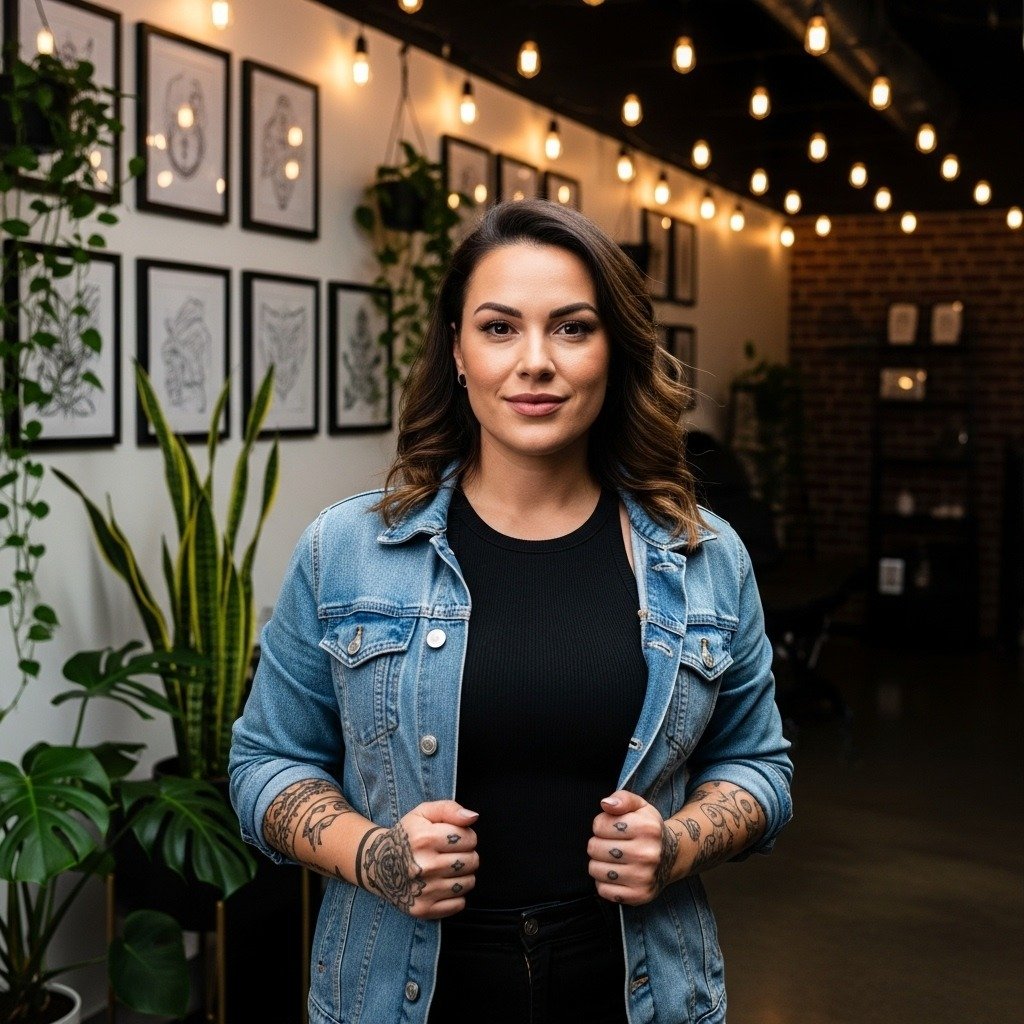
Bold blackwork and carefully placed realism last longer than the wispy options most people pin. Fine-line wolves on the ribcage often blur fast. Hand tattoos can cost more to touch up than the first session. Forearm pieces need sun care or they will lose contrast inside a couple of years. Read on for 23 wolf designs laid out by style, placement, what usually ages badly, and the wardrobe notes that actually make the ink look intentional.
1. Black & Grey Lone Wolf with Moon, Outer Deltoid
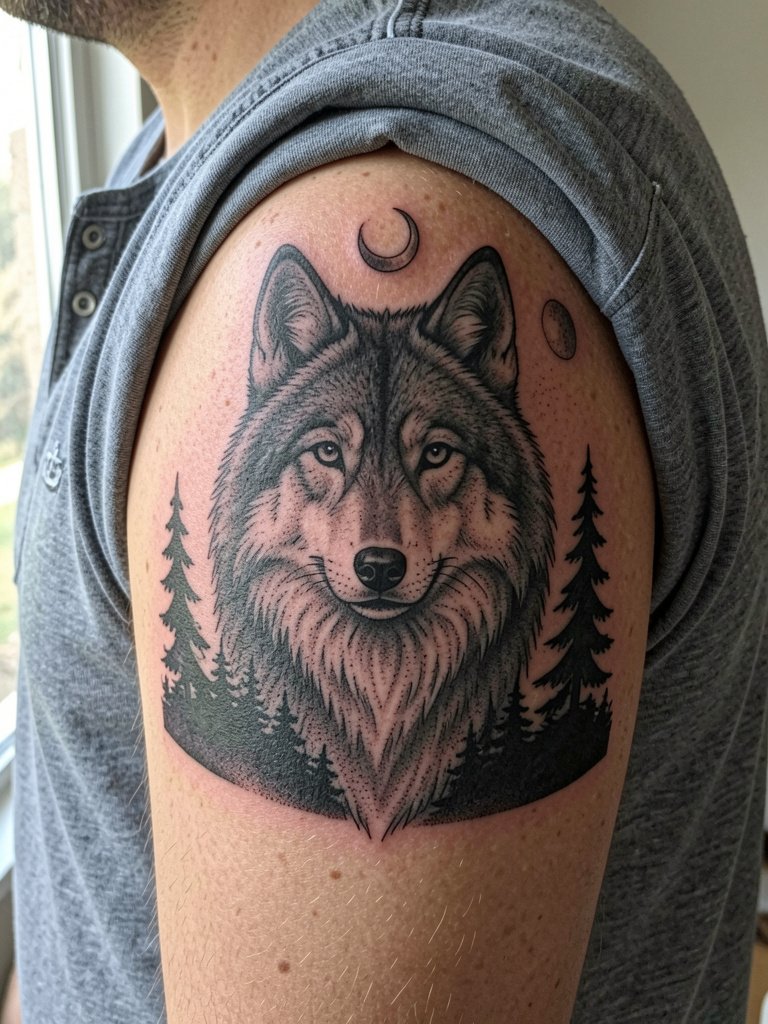
A black and grey lone wolf reads clean for years when the artist gives the fur breathing room. Pick this for upper-arm placement when you want scale without chest commitment. Linework should be bold enough to resist blowout as the deltoid takes frequent movement, and plan one solid session with a short follow-up touch-up. For the session day wear a short sleeve henley so the artist can roll the sleeve without tugging the fabric. A common mistake is shrinking the moon and crowding the face. The result that holds up has space between the features and high contrast in the eye area.
2. Tribal Jagged Wolf Silhouette, Outer Bicep
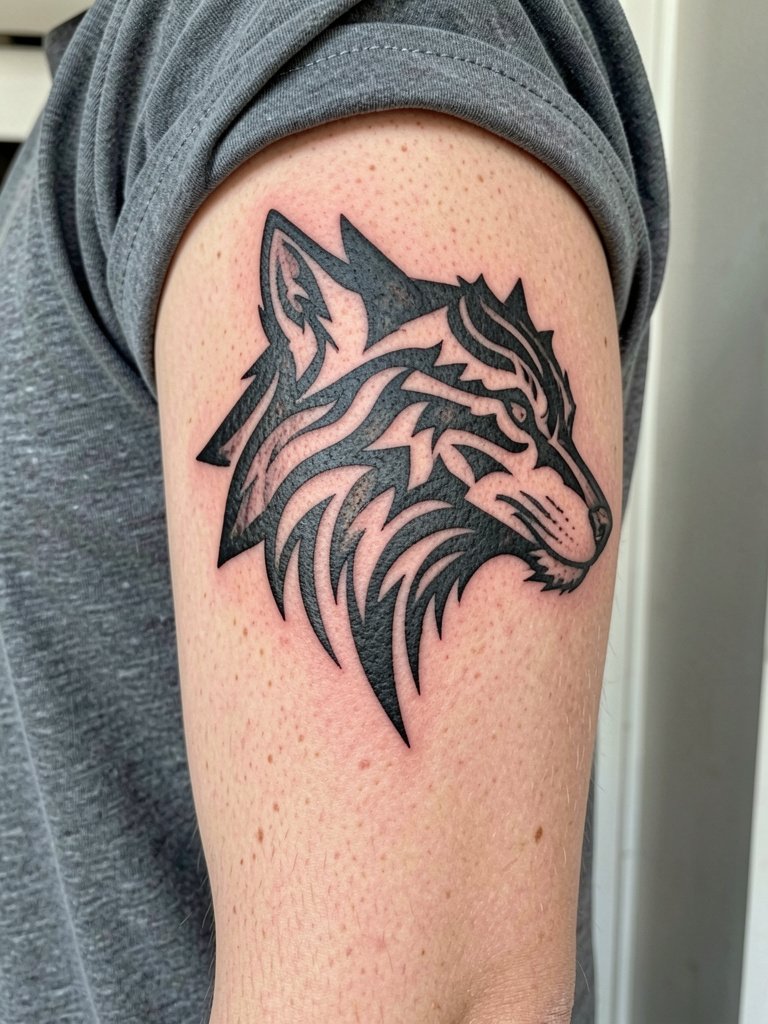
Tribal blackwork is one of the most durable wolf choices because saturation and broad shapes resist fading. Choose this when you want a design that will still read strong after years of sun exposure. Discuss exact silhouette balance with the artist and show a photo of the muscle curve so the shape wraps well when you flex. For showing it off, pair the piece with rolled short sleeves and a layered silver chain, and test that look using this layered silver chain necklace. Avoid overly narrow spikes; they blur into each other on healing skin.
3. Geometric Split-Faced Wolf, Inner Forearm (Palm-Up Surface)
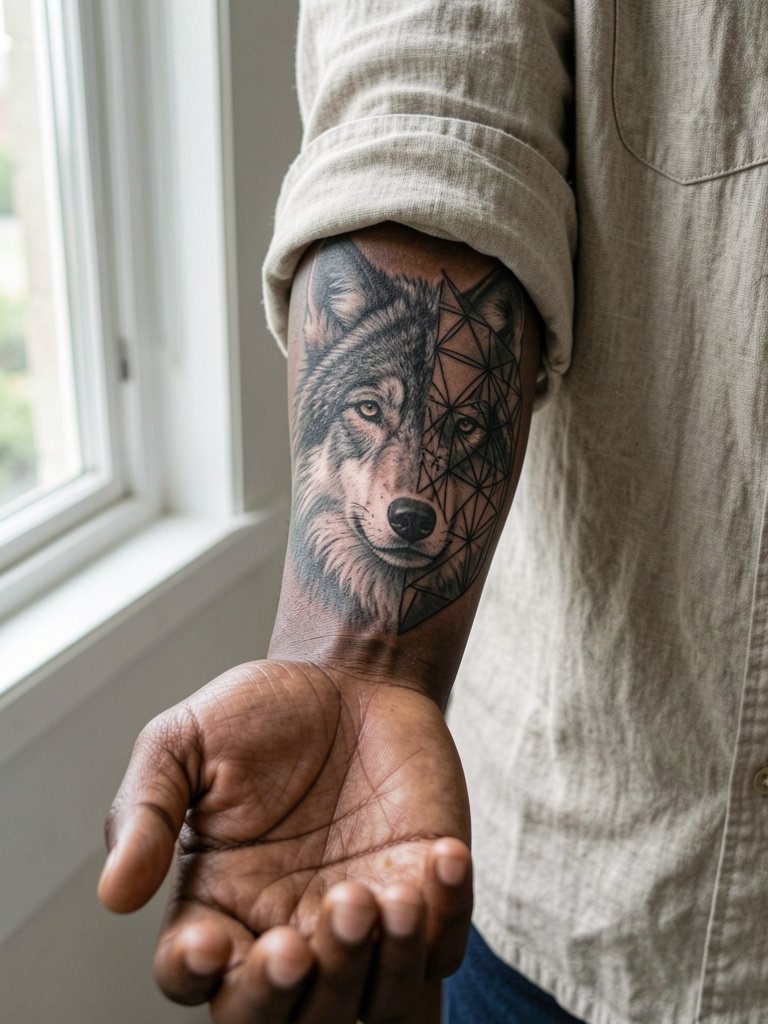
The split-faced wolf balances organic texture and crisp geometry. I recommend this for inner forearm placement because the palm-up surface holds fine line and geometry with less distortion than the outer arm. Bring two reference photos at different scales so the artist can show how the geometric half reads at three inches versus five. Expect moderate session pain and a one-to-two-session timeline. For outfit pairings try a rolled-up linen shirt in cream or sand and a linen button down shirt to keep attention on the linework. A mistake is asking for the geometry too small; lines need breathing room to stay crisp.
4. Minimalist Outline Wolf Silhouette, Inner Wrist
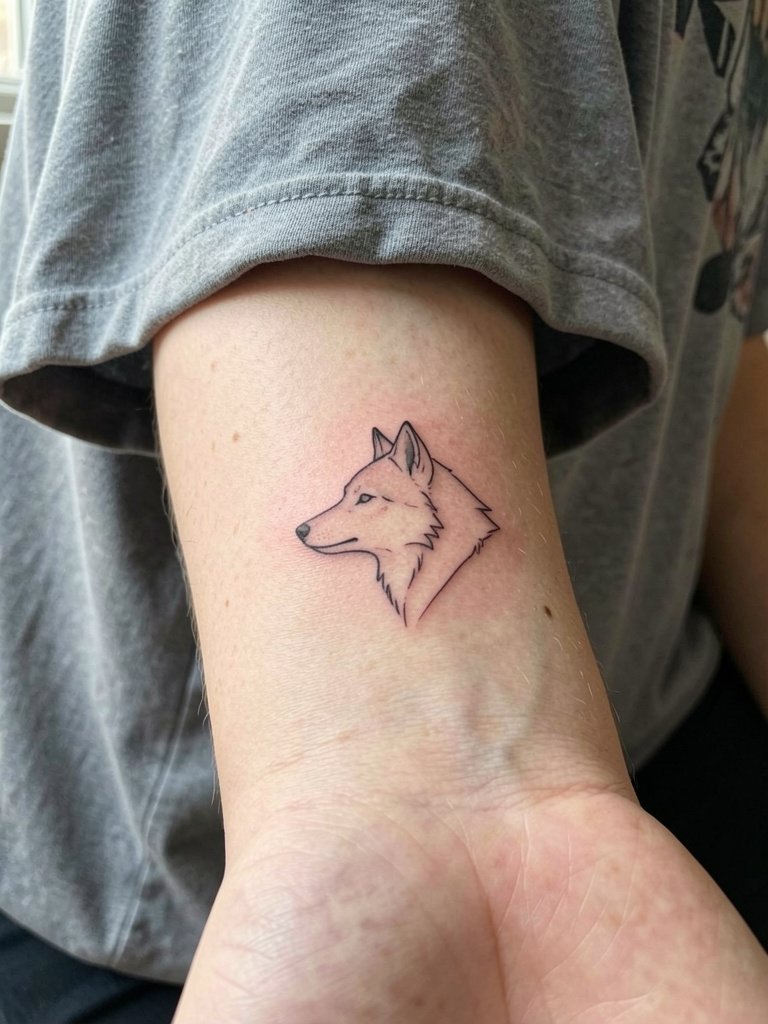
Minimalist silhouettes read clean when placed where skin stays stable. The inner wrist is a good spot if you want a subtle motif that can be covered by a watch. Expect sharp immediate contrast at six months and a slight softening by two years unless the line is kept slightly heavier than a decorative script. A common error is choosing a single-needle weight that is too fine for constant wrist movement. For the session pick a loose short-sleeve or button-down so the artist can access the wrist easily. Keep in mind hand and wrist areas often need touch-ups earlier than upper-arm work.
5. Neo-Traditional Alpha Wolf Snarling, Shoulder Blade
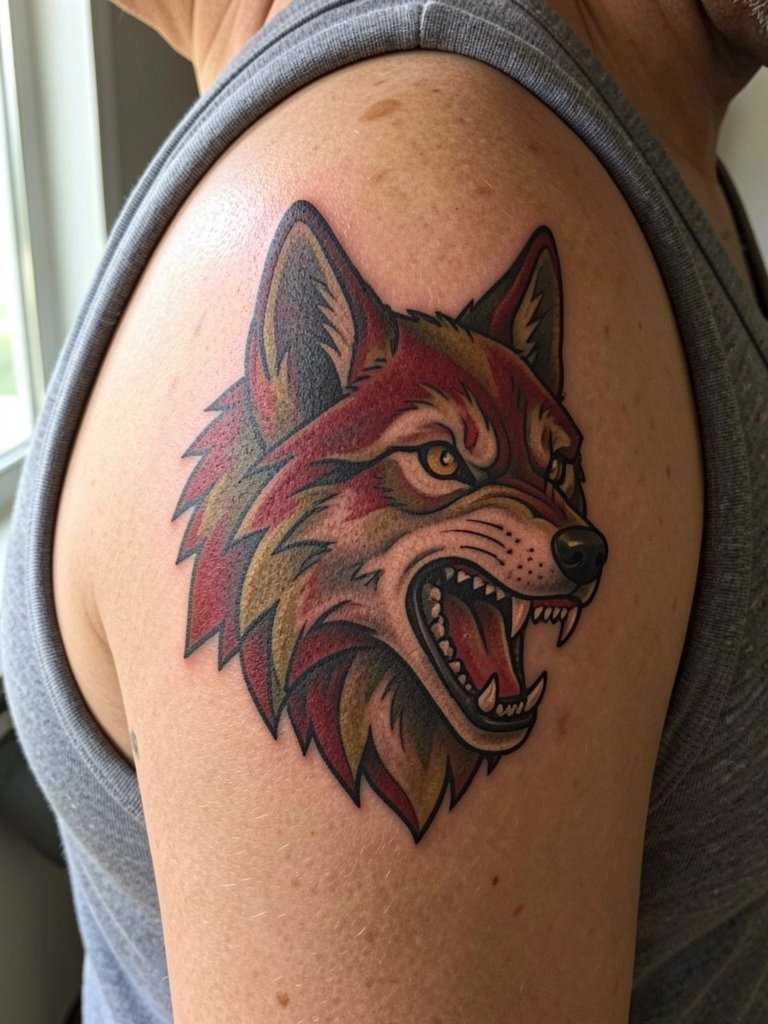
This neo-traditional take modernizes the classic alpha snarling wolf while keeping bold outlines that age well. Shoulder blade placement provides a large, flat canvas ideal for color blocking and reduces the speed of fading compared with forearms. Ask the artist how they plan to balance flat neo-traditional fills with the face detail so saturation does not overwhelm linework. That dialogue should include which pigments they favor for long-term saturation. Expect low-to-moderate pain and one-to-two sessions. The biggest misstep is cramming too many color accents into the snout area.
6. Red-Ink Claw Marks Over Wolf Eyes, Chest Panel
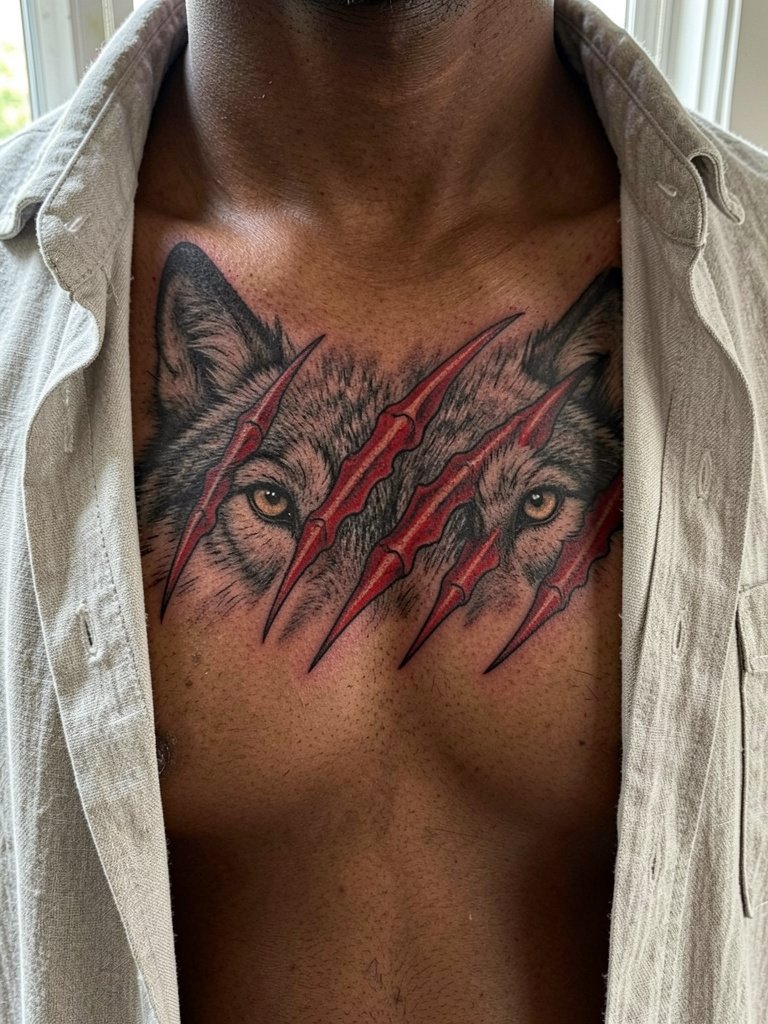
Use red accents sparingly so they read like deliberate scars rather than random color. On chest placement the skin tolerates color well, but watch for thick scab formation over heavy red fills. For session wear choose an open-collar linen shirt so the artist can get clean access without tight fabric. The visual impact depends on the red saturation staying vibrant, so discuss pigment choices and a likely touch-up window. One mistake I see is asking for thin red scratch lines that heal patchy; thicker, textured slash work holds color better.
Session Day Picks
The small pieces above and the chest panels share two session needs: clothing that gives clear access and a lightweight balm for after the first few hours.
- Japanese Aftercare Balm (Tattoo Cure). A thinner, less greasy option that users report speeds surface healing without clogging pores, helpful after chest or forearm sessions.
- Australian Witch Hazel Balm. Used by blackwork clients to reduce inflammation on bold tribal pieces and speed settled saturation.
- UK Sugar Scrub for Scar Prevention. Small-batch scrub some artists recommend during late-stage healing on large sleeves to smooth early raised texture.
- German Zinc Oxide Paste. Thicker paste that can prevent thick scab formation on dense chest fills during the first week.
- Aquaphor Healing Ointment. A familiar option for the first 48 hours of surface care when thin application is needed on fine-line forearm work.
7. Howling Wolf with Cosmic Color Realism, Ribcage
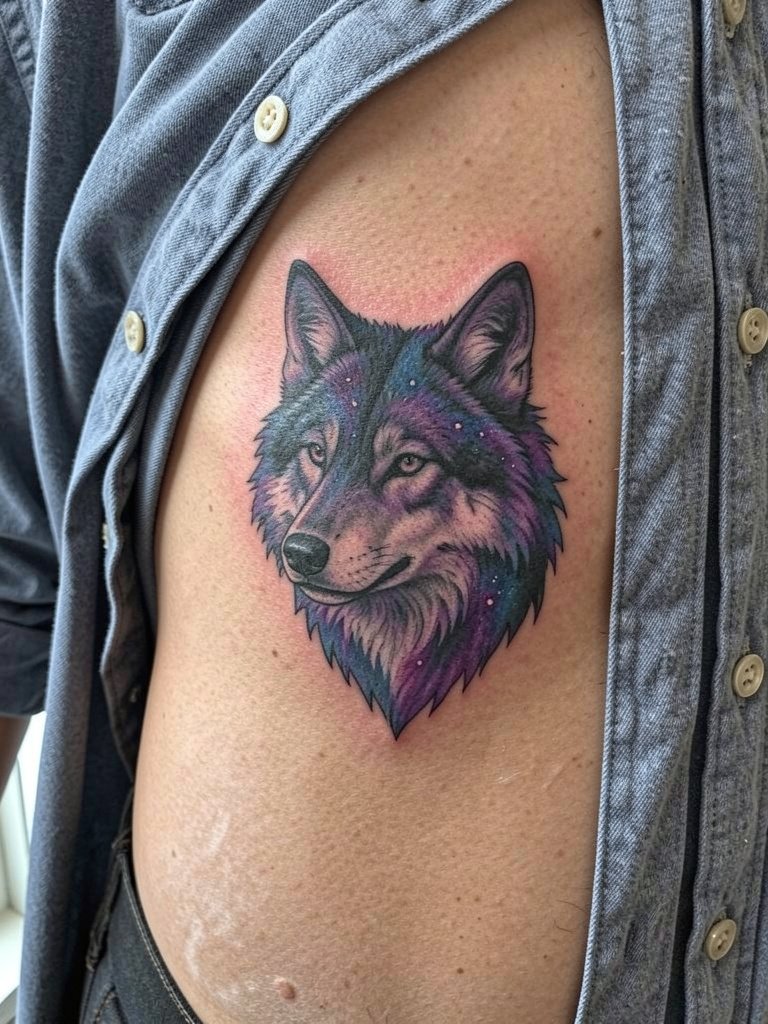
Ribcage sessions are notorious for fading when fine line is used in high-stretch areas. One group of artists argues that fine-line ribs blur within a couple of years because the skin stretches constantly under movement and compression. Another group says fine line settles fine on ribs if the artist slightly widens spacing and controls depth, and they point to long-term healed examples. If you want color realism here, expect higher pain and two to three sessions. My practical advice is to favor slightly heavier line weight for the rib outline and reserve the most delicate single-needle detail for less mobile areas.
8. Dual-Color Realism Wolf, Chest Center
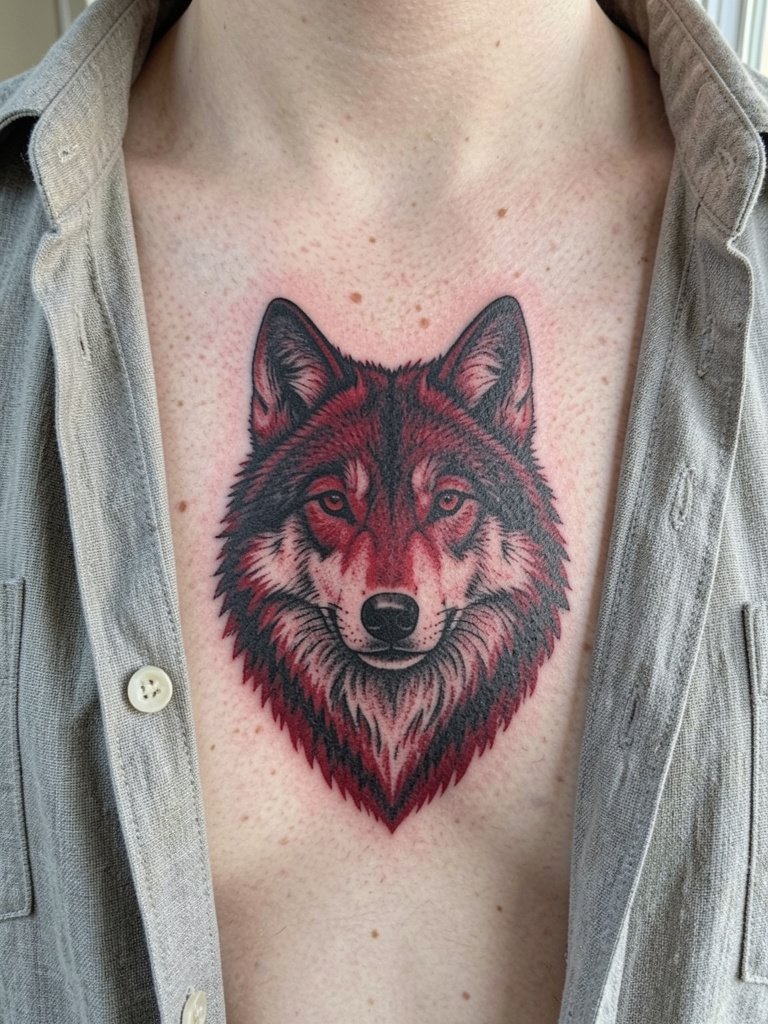
Color fans praise the drama of two-tone realism but the longevity debate is active. One camp says black-and-grey pieces keep contrast for a decade or more and that red and blue fade faster in three to five years. Another camp counters that modern pigments and strict aftercare make saturated color last seven to eight years and deliver stronger immediate impact. If color is important, discuss pigment brands and planned touch-up windows with the studio. For wardrobe, open-collar linen in charcoal or deep blue flatters the contrast and keeps the chest visible without rubbing the area.
9. Symmetrical Geometric Wolf Face, Sternum
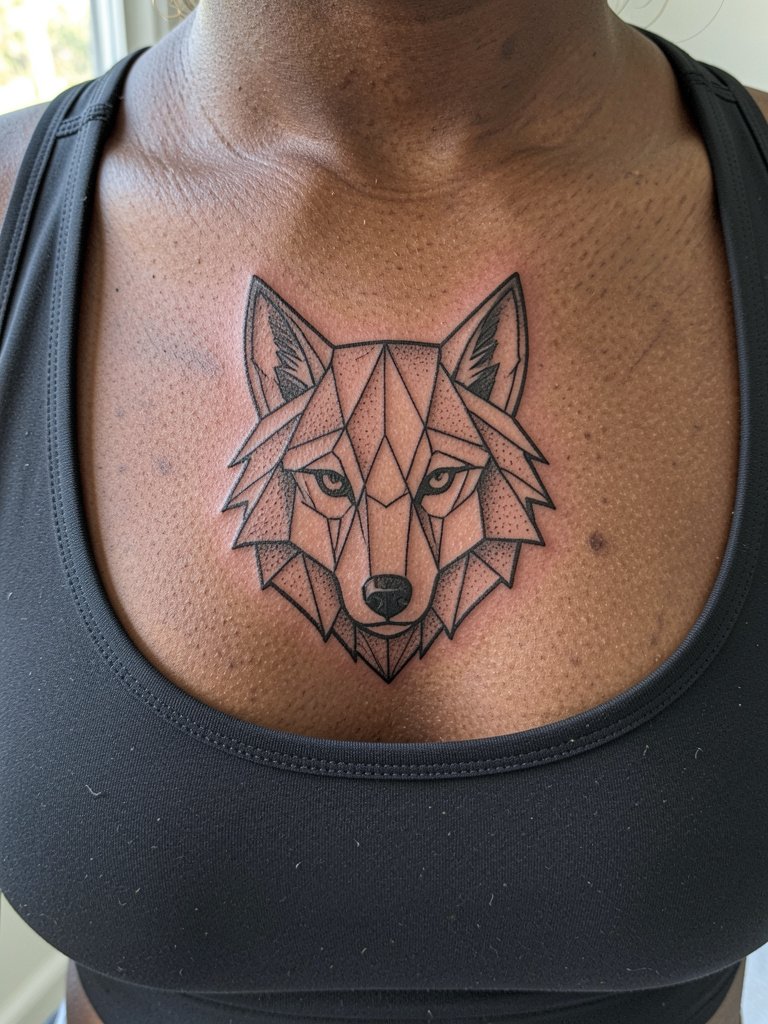
Sternum placements require a specialist who understands chest curvature and breath movement. This spot reads best when symmetry is given room so the geometry does not compress into the midline over time. Expect moderate-to-high pain and one long session or two shorter ones. A real mistake is forcing micro-detail into a narrow sternum band; the negative space must balance the geometry. For session wear pick a fitted bandeau or sports bra to allow access without fabric rubbing the area after the session. Professional chest experience from the artist matters here.
10. Lone Wolf Dark Realism with Moon Background, Shoulder Blade
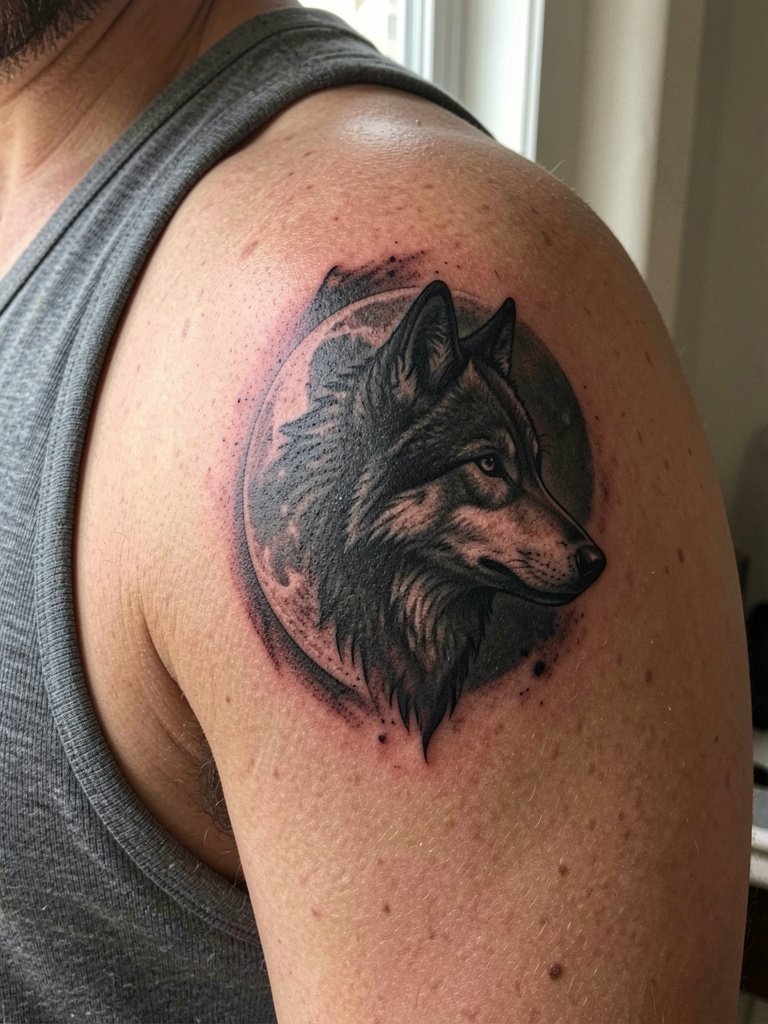
Dark realism on the shoulder blade ages well because the area avoids constant sun and friction. This is a good large-visual option when you want moody atmosphere without committing to a full back piece. Ask the artist how they will create skin breaks and moon texture so the wolf retains separation from the background at one and five years healed. For show-off dressing, a muscle tee or tank top in black or olive frames the piece and keeps the moon visible. The most common error is letting the background wash swallow the wolf's facial contrast.
11. Snarling Wolf Head, Outer Deltoid 3D Effect
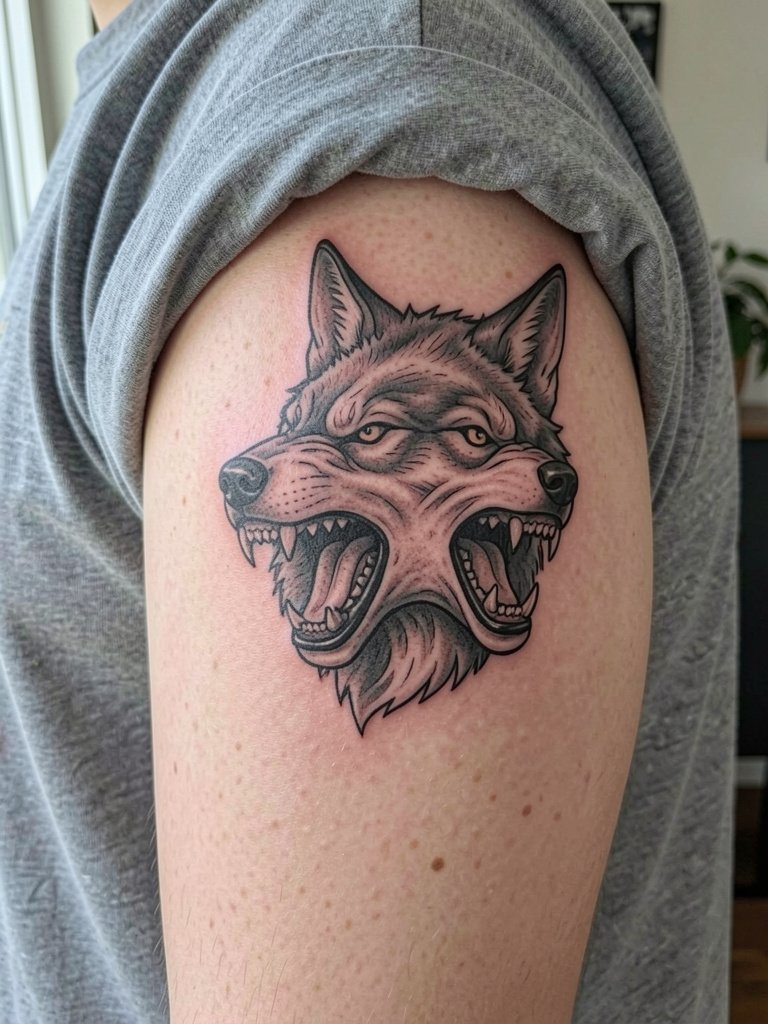
This placement leverages anatomy for visual movement. When sized to the deltoid curve, the jaw looks wider during flex and keeps a dynamic presence. Discuss exact placement while standing so the artist maps the jawline to the muscle. Expect moderate pain and a single session for a mid-sized head. For wardrobe, rolled sleeves on slim tees highlight the effect and a matte black leather pendant can complement the darker palette. Avoid oversharpening tiny details that will blur with muscle motion over time.
12. Wolf Pack Scene, Full Sleeve Narrative
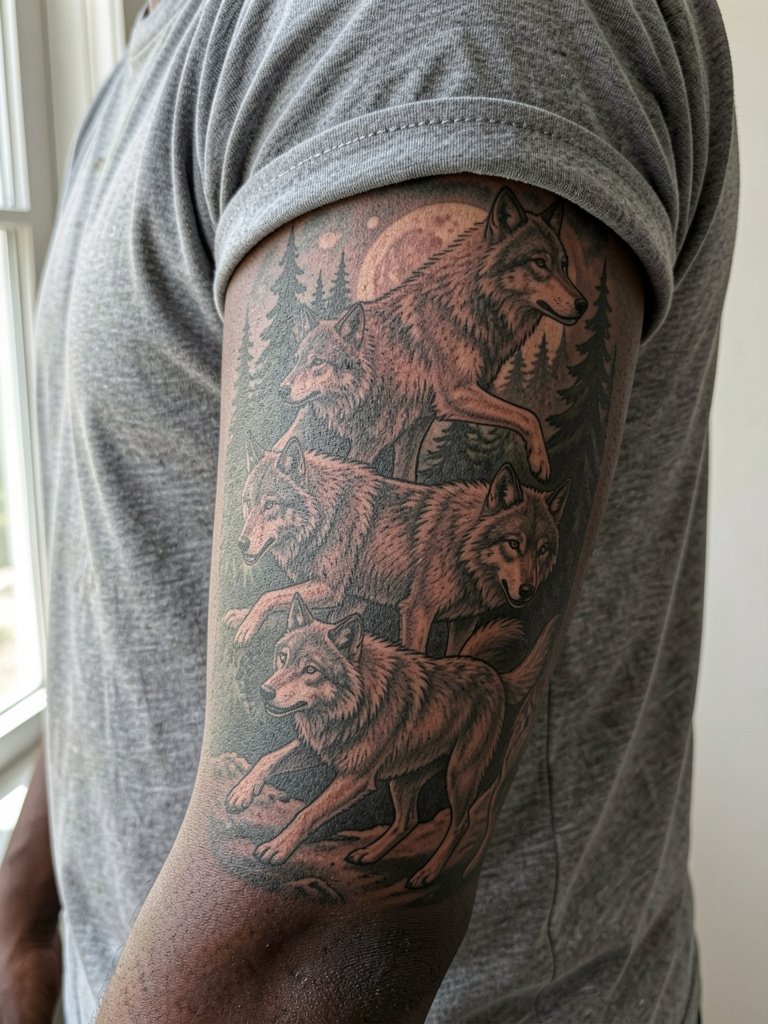
Full sleeves are long commitments and often trigger the numbing cream debate. Some artists and clients support topical numbing for multi-hour sessions because it reduces client movement and prevents artist fatigue. Other practitioners warn that numbing can mask pain signals and might slightly affect ink uptake or healing. If you plan a sleeve, clarify session pacing and whether the studio applies numbing and how they manage breaks. Expect three to five sessions and plan clothing that allows staged access without rubbing fresh ink. A red flag is a studio with no clear touch-up policy for multi-session projects.
13. Small Wolf Hand Tattoo, Lateral Hand
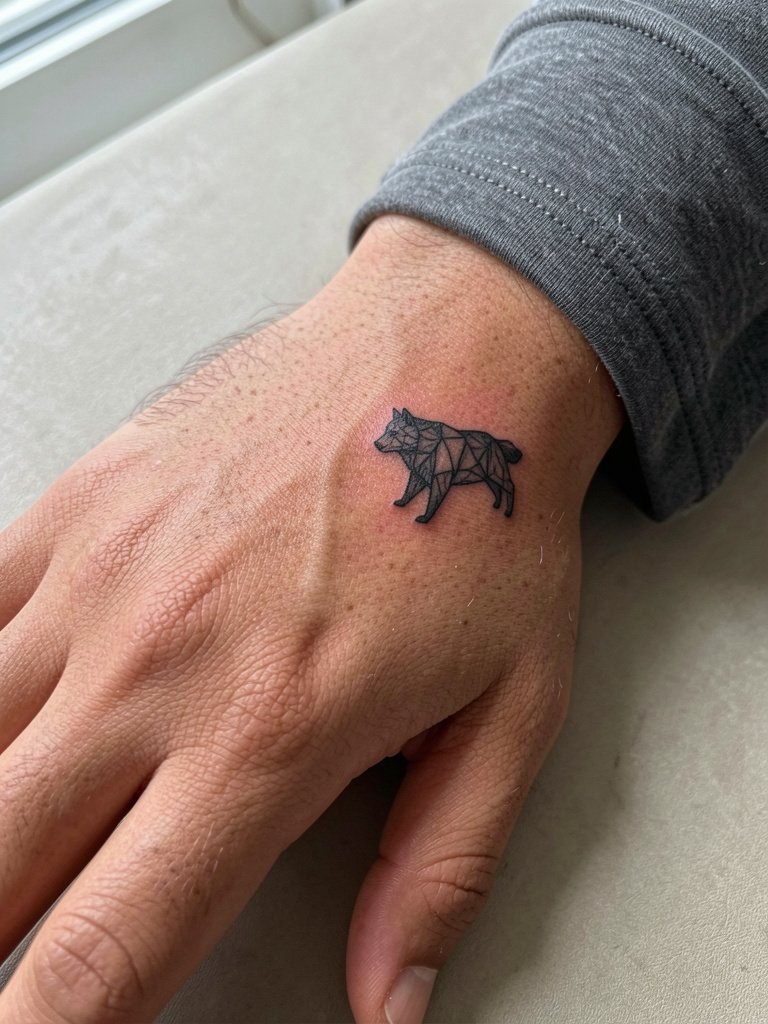
Hands heal differently and need a reality check on touch-ups. Expect the initial piece to hold for months and then require refreshes every couple of years due to constant washing and friction. Smaller hand motifs often cost more to touch up than they did to ink because studio minimums apply. For showing off a compact hand piece keep the rest of the outfit minimal with a slim-fit tee and a thin ring on the opposite hand, and consider this slim fit t shirt to pair with casual looks. Note that many studios require extra care instructions and a clear agreement on follow-up touch-ups for hand work.
14. Medium Wolf Forearm Tattoo with Story Elements
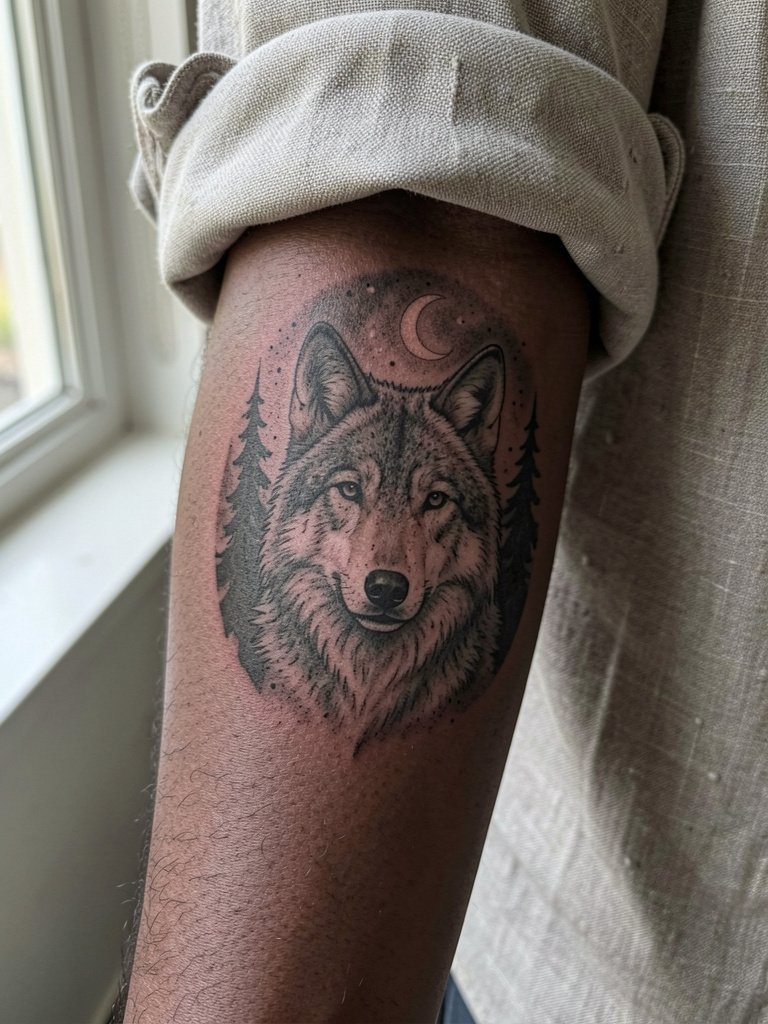
The forearm gives room for narrative detail without the long-term distortion risks of the ribs or thigh. For a storytelling piece include compositional breathing room so the forest elements do not collapse into the wolf face after a few years. During the consult bring scaled references for the moon and tree line so the artist can mock how they layer at arm length. For outfits, rolled-up linen shirts in cream or olive keep the arm visible and complement the tonal range. Touch-ups on forearms are common every two years if frequently sun-exposed.
15. Wolf Head on Nape, Back of Neck
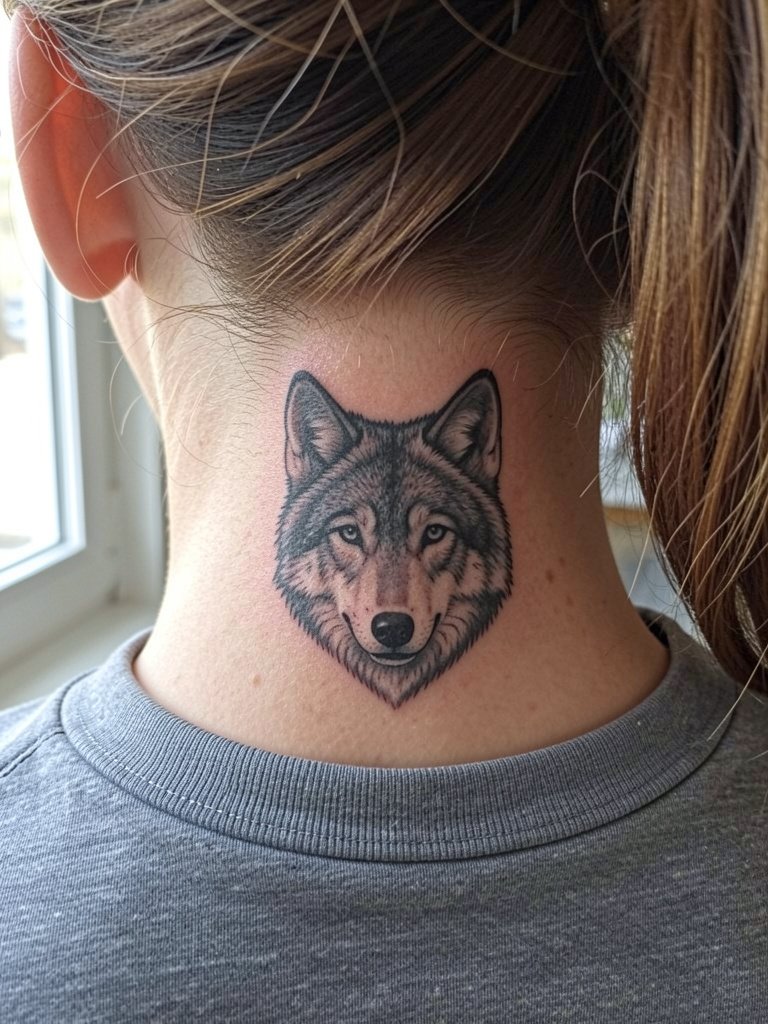
Nape placements are bold and visible when hair is up. The skin there tends to be slightly more mobile, so detailed fur needs slightly wider line weight than the same design on the chest. Mention exact hairline placement during your consult and bring photos of how you plan to wear your hair so the artist can position the piece to peek out rather than sit fully exposed. For showing off, short-sleeve polos and crew-neck tees in dark tones frame the nape, and a matte black chain can add balance. Expect moderate pain and a one-session timeline.
16. Micro-Realism Wolf Portrait, Calf
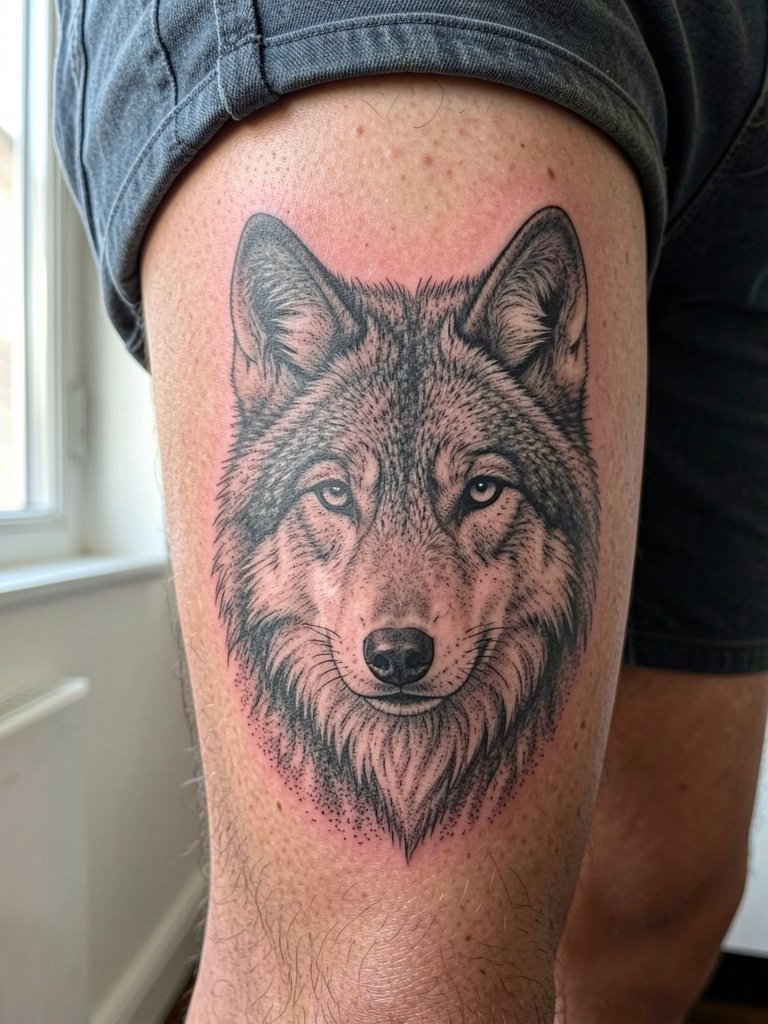
Calf skin handles micro-realism well because it avoids constant hand contact and has a lower blowout risk than the forearm. This is a solid pick for a portrait-sized wolf with fine texture. Discuss exact eye placement so it catches light in photos. For show-off looks try slim-fit shorts and rolled hems; a slim fit shorts silhouette keeps the calf visible. Common mistakes are over-compressing details into a very small oval; give the portrait breathing room so the tension of fur and eye holds.
17. Wolf Paw Print with Date, Wrist Band
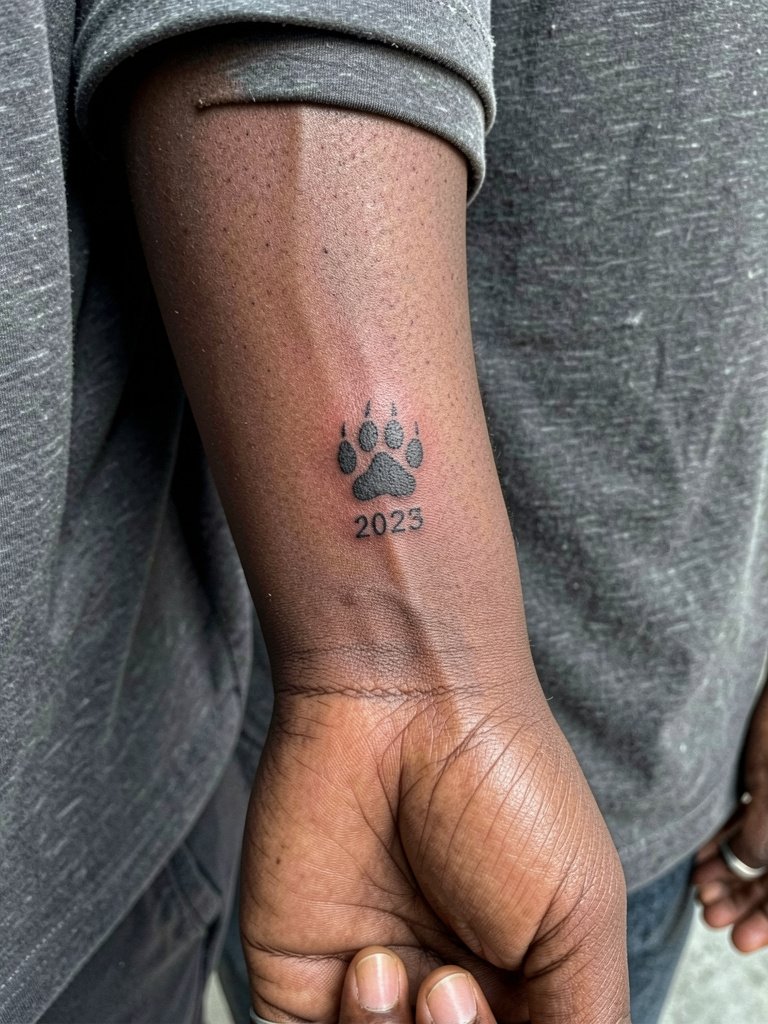
Wrist band and small date combos are simple but need solid line weight to endure heavy use. If the date is numerals or Roman numerals specify the exact text during the consult so the artist lays out spacing properly. Wrist work sees more contact and washing, so expect touch-ups sooner than chest or calf work. For outfit pairings keep sleeves rolled and use a thin silver ring or minimalist bracelet on the opposite hand to balance the look. The usual error is making the numerals too small to stay legible after a year of wear.
18. Wolf Skull Hybrid, Outer Thigh
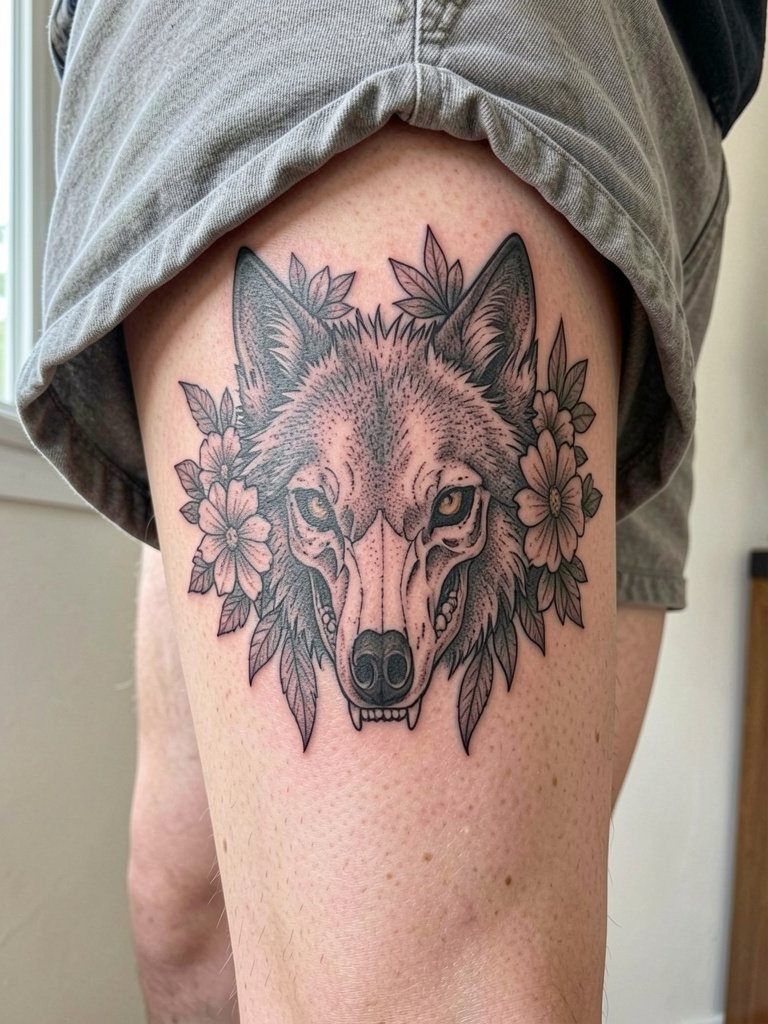
Thigh placements let you go large and detailed with less daily friction, but weight-change impacts are relevant. If your body fluctuates expect some stretching over time and discuss sizing to allow for future contour changes. For session wear pick loose shorts or drawstring pants so the artist can roll the leg without compressing the area. A common mistake is doing extremely narrow detail across the upper thigh where expansion can blur fine elements. Opt for mid-range detail and strong contrast.
19. Wolf and Compass, Upper Back
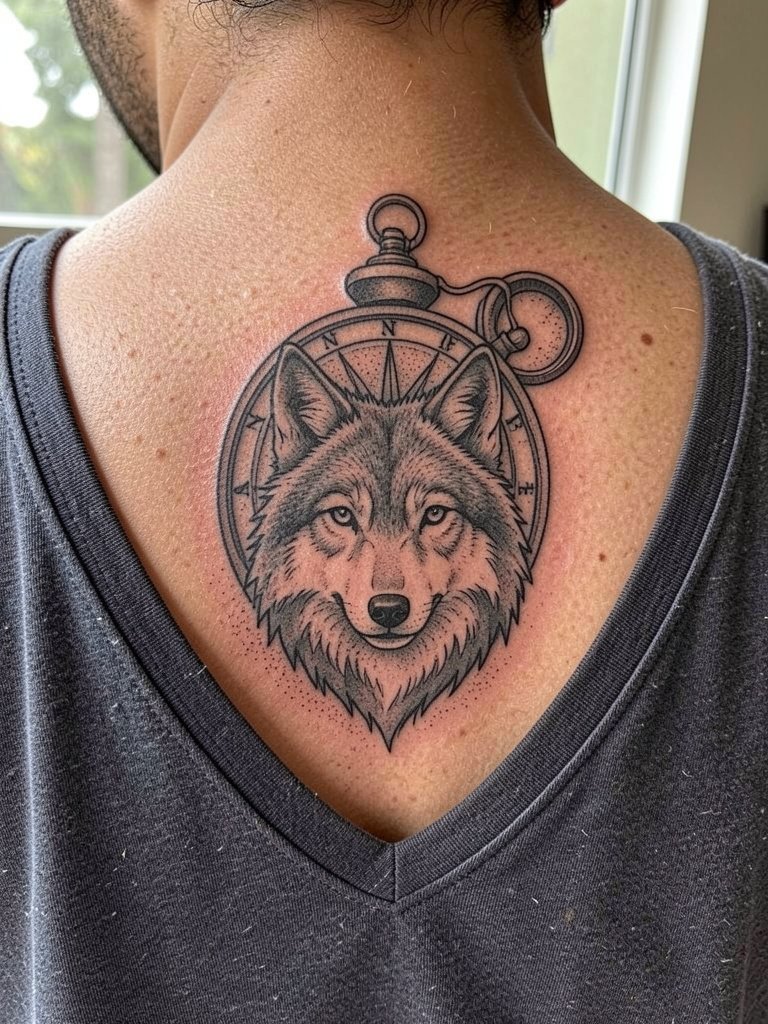
Upper-back compositions are ideal for centered motifs that balance the shoulders. Discuss how the compass points will align with your spine so the artwork sits straight while you stand. The skin here holds detail well and needs less frequent touch-ups than hands or forearms. For session comfort wear a backless or loose shirt for access and expect one or two long sessions depending on complexity. The common oversight is shifting the compass off-center relative to posture.
20. Mandala Wolf Face, Chest Center
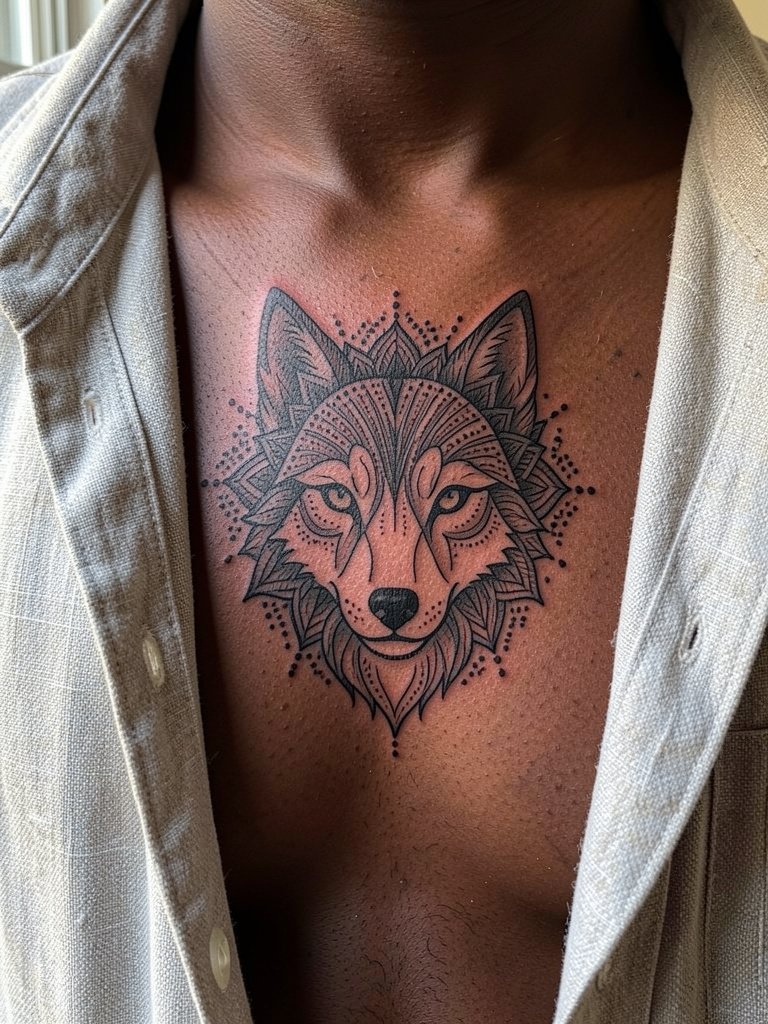
Mandala geometry across the chest needs symmetry and spacing to avoid visual collapse. Ask for larger initial spacing between concentric rings to prevent lines closing up as the tattoo ages. This design benefits from medium-weight linework rather than single-needle micro-lines. For showing off wear open-collar linen in deep blue or charcoal. A frequent misstep is insisting on overly dense dot work that raises scabbing during healing on larger chest fills.
21. Norse Rune Wolf with Knotwork, Half Sleeve
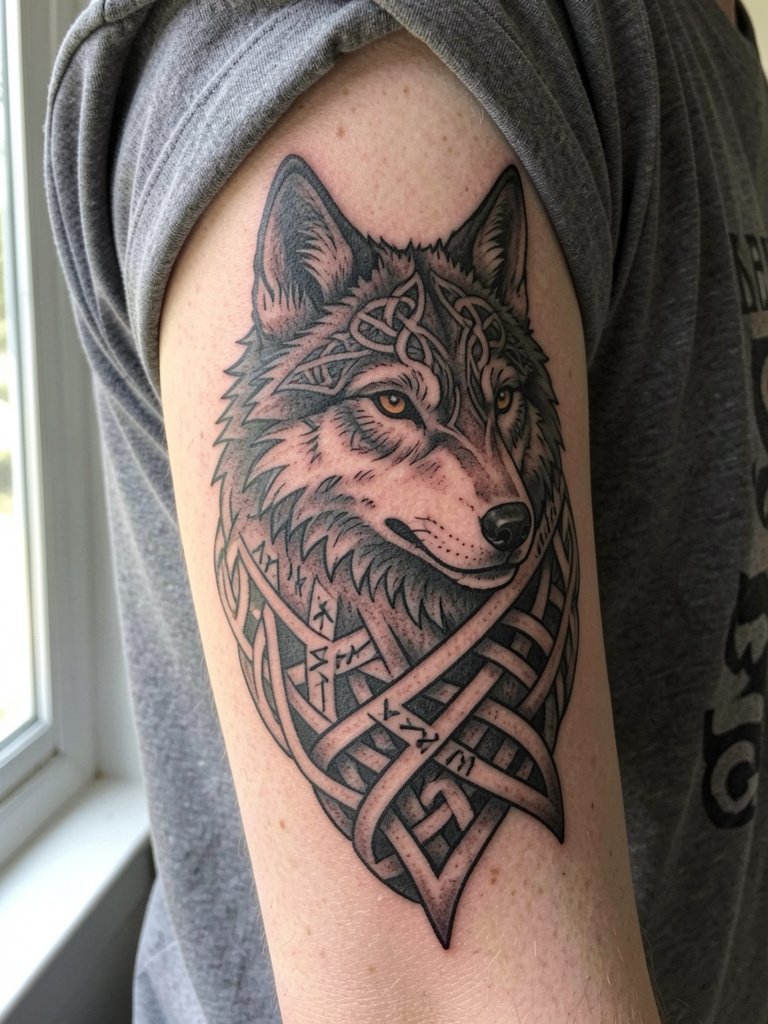
Knotwork and rune elements demand respect for cultural origins and accurate linework. If you include historic symbols be explicit about which runes and their intended meaning so the artist can place them correctly. This style reads well as bold blackwork and holds up long because of heavy line and saturation. For session wear a loose short sleeve so the arm can be worked in stages. Avoid copying full historic panels without context; ask the artist to adapt knotwork so it sits well on the arm anatomy.
22. Tiny Behind-the-Ear Wolf, Mastoid Area
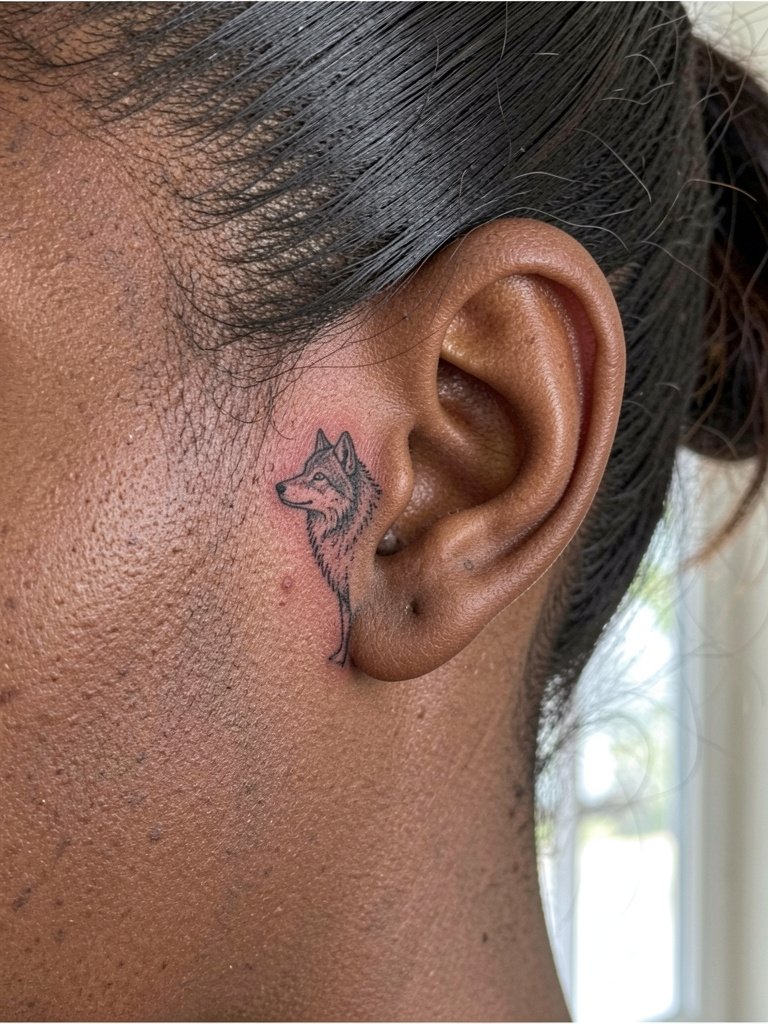
Behind-the-ear ink is very visible when your hair is up and requires an artist confident with small-scale work on that curved surface. The mastoid area is prone to small blowouts if the line is too thin, so slightly bolder single-needle work is better than ultra-fine scripts. For the session have hair pulled back and wear a top that keeps the neck unobstructed. Many studios treat this area as a specialist placement and may require additional appointment details.
23. Minimal Ankle Wolf Silhouette
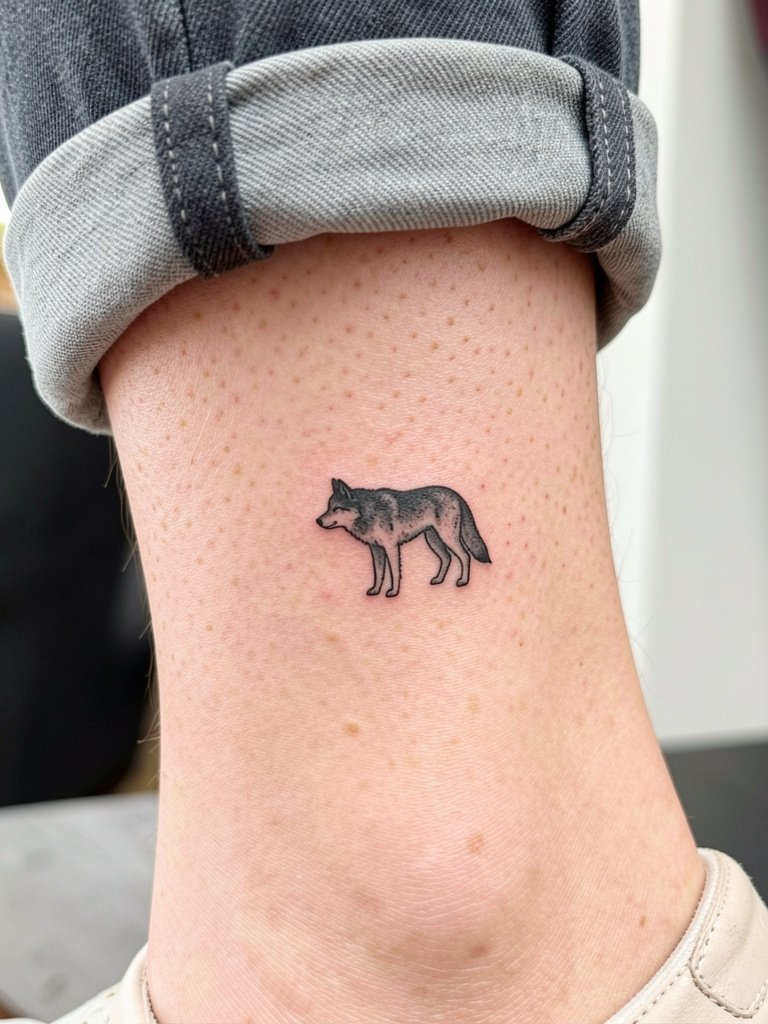
Ankle placements face abrasion from socks and footwear, so silhouettes that are too delicate can blur. Ask for a modestly heavier outline and plan for a touch-up within a year if you wear boots or tight socks often. For summer styling, slim-fit shorts and a leather ankle bracelet on the opposite leg keep the area balanced and visible. Avoid ultra-thin single-needle silhouettes at the ankle unless you accept a shorter retention window.
Frequently Asked Questions
Q: How long before a wolf tattoo needs a touch-up on the forearm or hand?
A: Forearm pieces exposed to sun usually need a touch-up every two years to keep contrast. Hand and finger tattoos often need refreshes sooner because of constant washing and friction. Plan your budget for at least one touch-up in the first 18 months for hands and every couple of years for forearms if you go outside a lot.
Q: Is ribcage fine-line a bad idea for a wolf design?
A: Artists are split. One group says fine-line on the ribs blurs within one to two years because that skin stretches and moves a lot. Another group says fine-line settles fine when the artist widens spacing slightly and controls depth, and they will show healed examples to back that claim. If you lean toward fine detail, discuss spacing and plan a slightly heavier lineweight for outlines.
Q: Where can I find healed portfolio examples and local studios without naming artists?
A: Search hashtags like #wolftattoo, #blackandgreywolf, #geometricwolf and filter by location on Instagram and TikTok. Tattoodo and the Inked App let you search by keywords such as "black and grey wolf realism" and show portfolio examples. Reddit communities like r/tattoos and r/tattooDesigns surface peer recommendations and healed shots across skin tones.
Q: Do modern color pigments last on wolf tattoos or should I stick to black-and-grey?
A: There are two camps. Some prefer black-and-grey for proven longevity and say color, especially reds and blues, fades quicker. Others point to modern pigments and tight saturation practices that keep color vivid for longer with proper sun care. If you choose color, ask the studio which pigments they use and schedule an expected touch-up window.
Q: What should I wear to a shoulder blade or deltoid session so the artist has easy access?
A: For shoulder blade or deltoid work a tank top or loose short-sleeve shirt is best because it gives access without tight cuffs. For chest or sternum pieces choose an open-collar shirt or fitted bandeau for easy access. Pick clothing you can remove or adjust without stretching the new ink.
Q: My skin is darker. Which wolf styles show up best?
A: On darker skin bold outlines and high-contrast black or saturated pigments read best in photos and in person. Avoid muted pastels that lose visibility. Ask the artist to mock the design at actual size to confirm visibility before the session.
Q: What are red flags when booking a big wolf sleeve or chest piece?
A: Red flags include no healed portfolio, vague touch-up policies, last-minute cancellations without written terms, or a studio that cannot show consistent healed examples for the style you want. For large, multi-session projects get a clear timeline, deposit terms, and a written touch-up policy before you commit.