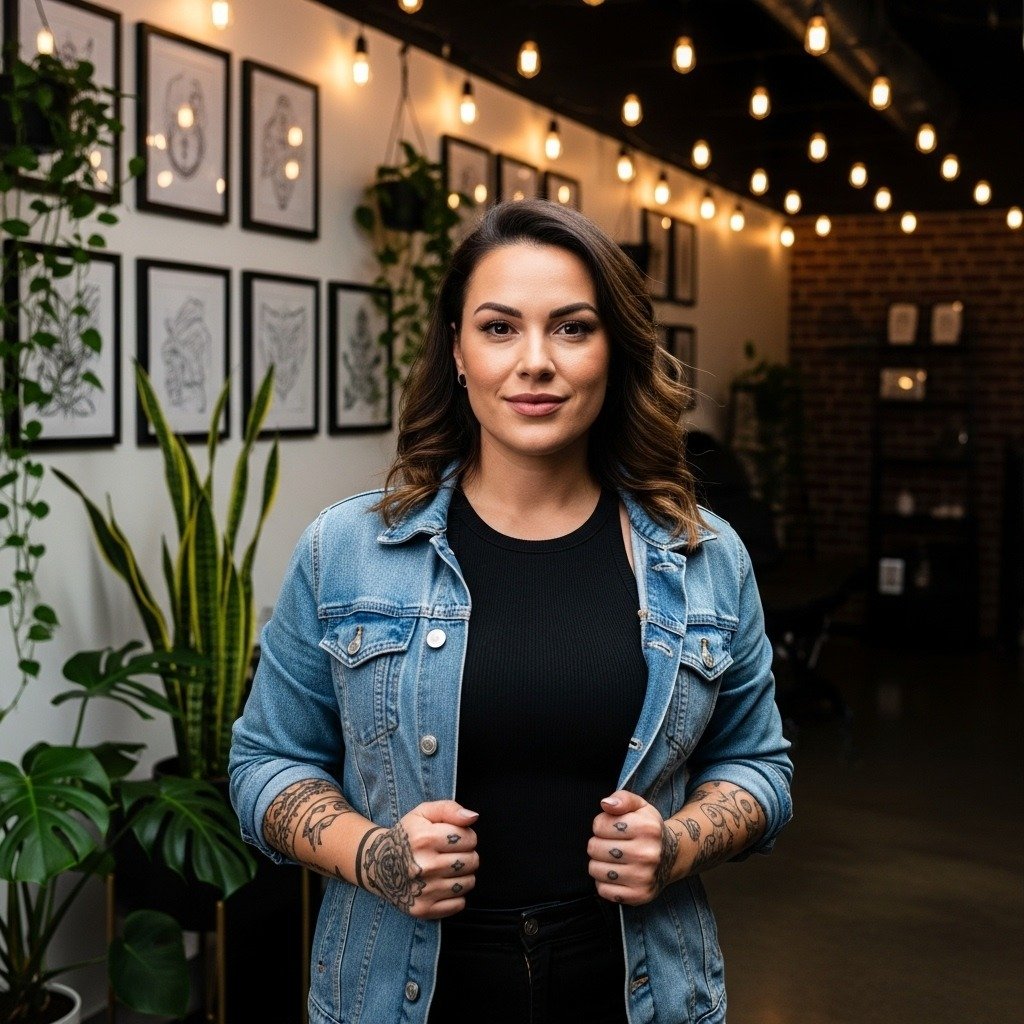
Fine single-needle data streams look incredible on camera, but they do not always hold up the way bigger blackwork does. I see people get seduced by tiny node maps and then come back for a touch-up when the spacing closes. This piece lays out playable cyberpunk sleeve directions that balance detail with longevity so you can pick a sleeve that still reads at year three.
1. Cyber Sigilism Neural Network Sleeve
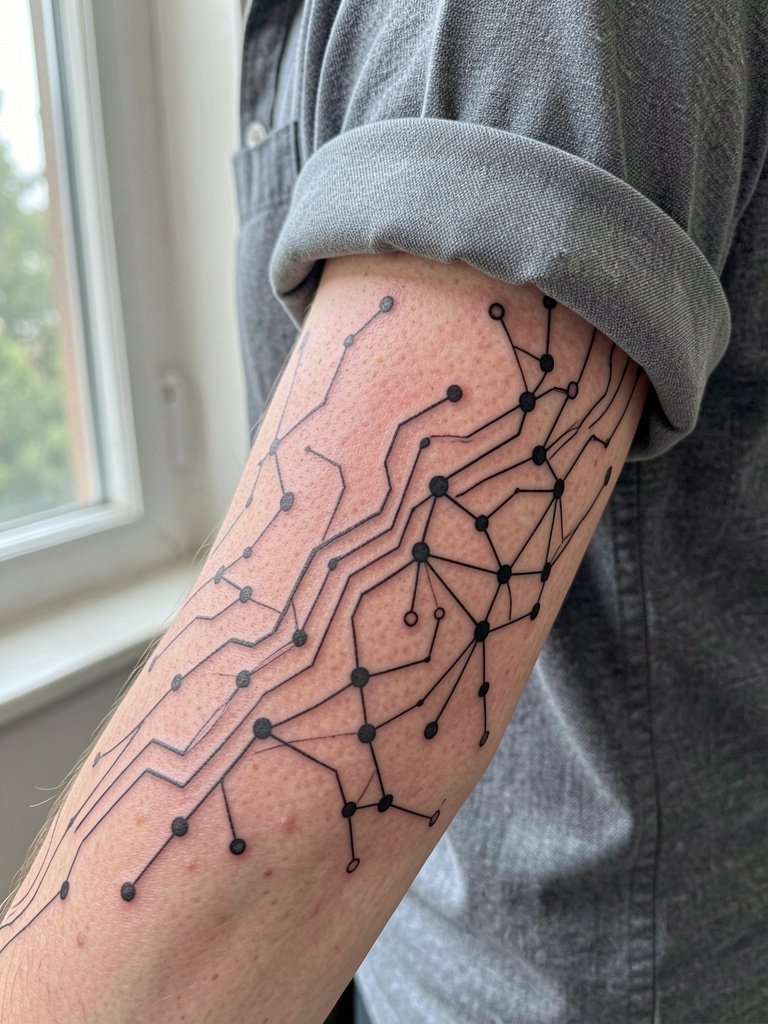
This is the classic Cybersigilism approach that reads like veins of data beneath skin. I recommend slightly wider node spacing than some reference images show so the single-needle linework does not fuse over time. If you want this on the outer forearm plan for multi-session layout so the artist can space nodes where the arm creases. Common mistake is requesting ultra-thin continuous circuitry without breathing room. For showing it off, rolled-up short sleeves in olive or charcoal create a neutral frame, and a matte black minimalist watch on the opposite wrist adds tech contrast.
Fine line longevity splits artists into two camps. One group argues single-needle on the forearm blurs into a blob within two years because the skin stretches and moves daily. The other group says with correct needle depth and slightly wider spacing, the lines settle clean, and they point to healed three-year photos to back that up.
2. Biomechanical Circuit Spine Wrap
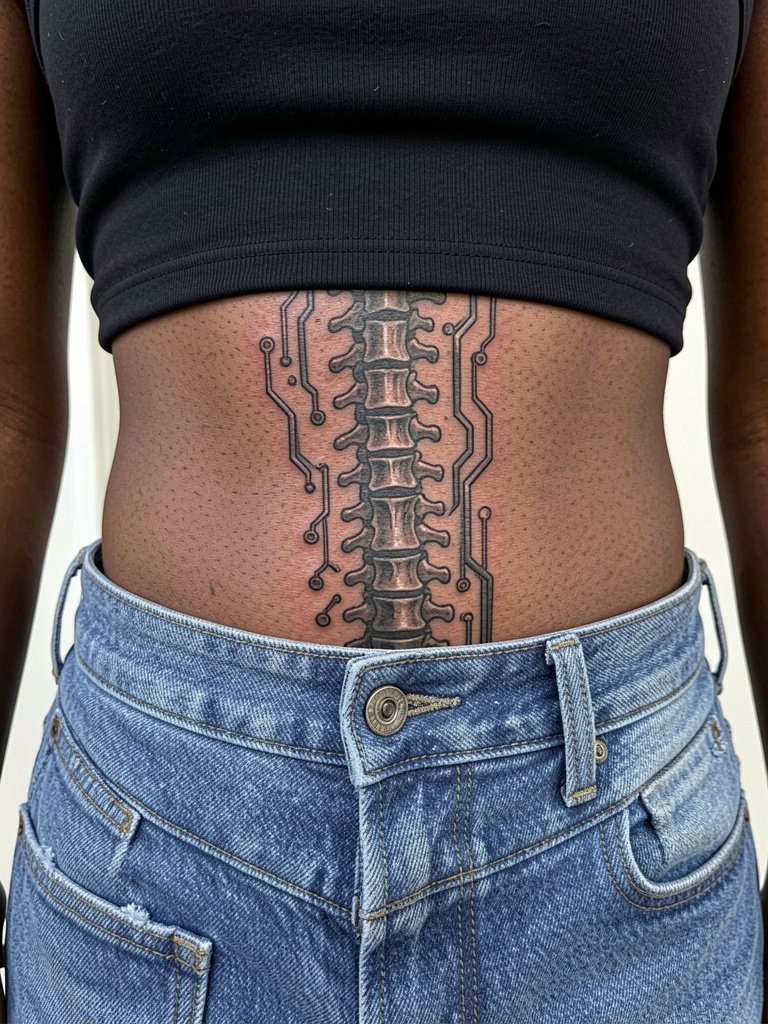
This spine wrap is dramatic because it uses the body's centerline to sell the mechanical illusion. Expect heavier shading and longer session blocks for the lumbar canvas. Pain on the lower back varies but most people rate it moderate. A common error is crowding tiny circuit detail too close to the spine where healed contrast is crucial. For session comfort wear low-rise pants that let the artist work without fabric tugging and consider a matte black minimalist belt for the show-off look afterwards.
3. Cyberpunk Floral Hybrid, Rose with Fiber Optic Stems
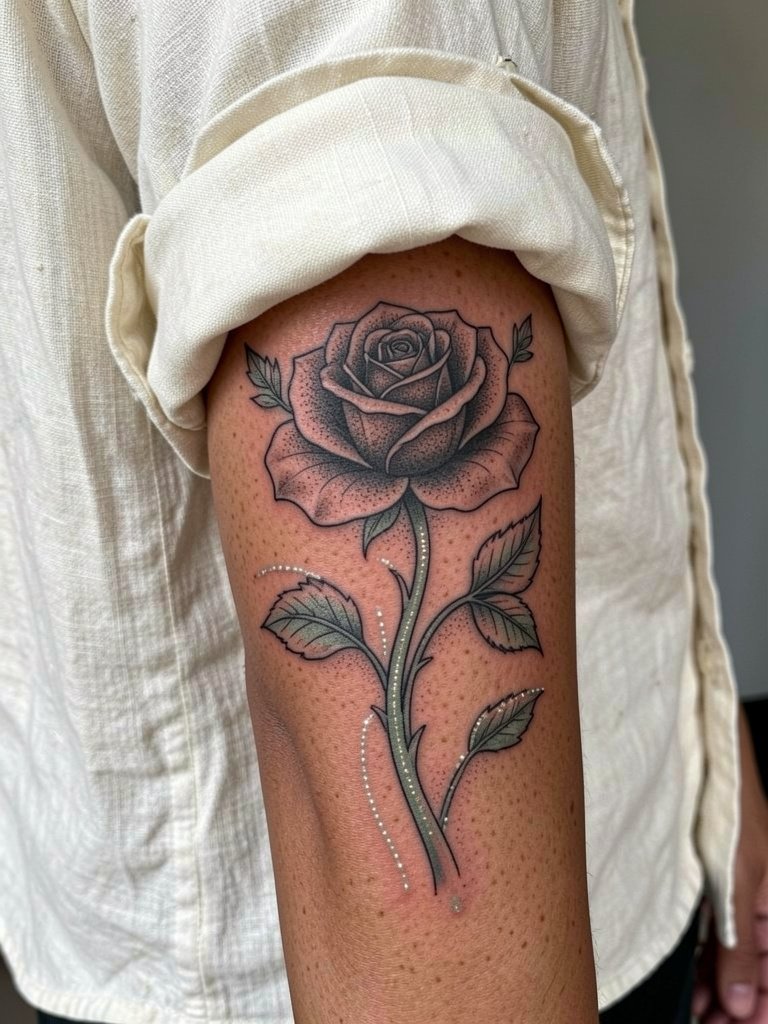
This hybrid balances organic forms with tech details so it reads soft but cybernetic. For inner forearm placement ask the artist to keep the petal edges slightly bolder so they do not vanish with time. A mistake I see often is asking for neon highlights that photographers amplify but which fade and muddy on darker tones. The session is friendly for most people and you can wear a cream linen button down the day after to complement the sage accents when you show it off.
4. Glitch-Effect Circuit Board Sleeve
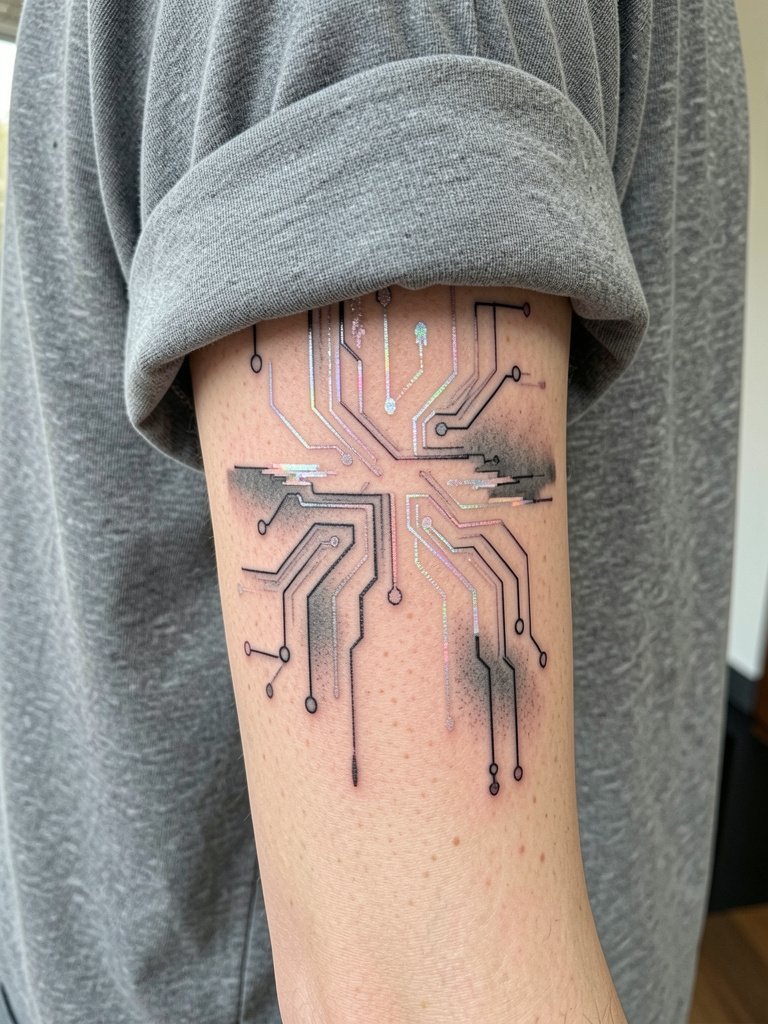
Glitch circuits work best when panels are deliberately isolated rather than tightly packed. That makes the "break" feel intentional and reduces blowout risk on the inner forearm. Expect 3 to 4 sessions to map and place each glitch block. The design needs a grey wash that reads from a distance and fine crisp contour lines up close. Keep the shimmer subtle rather than bright neon so the composition ages better.
5. Cherry Blossom with Circuit Branches
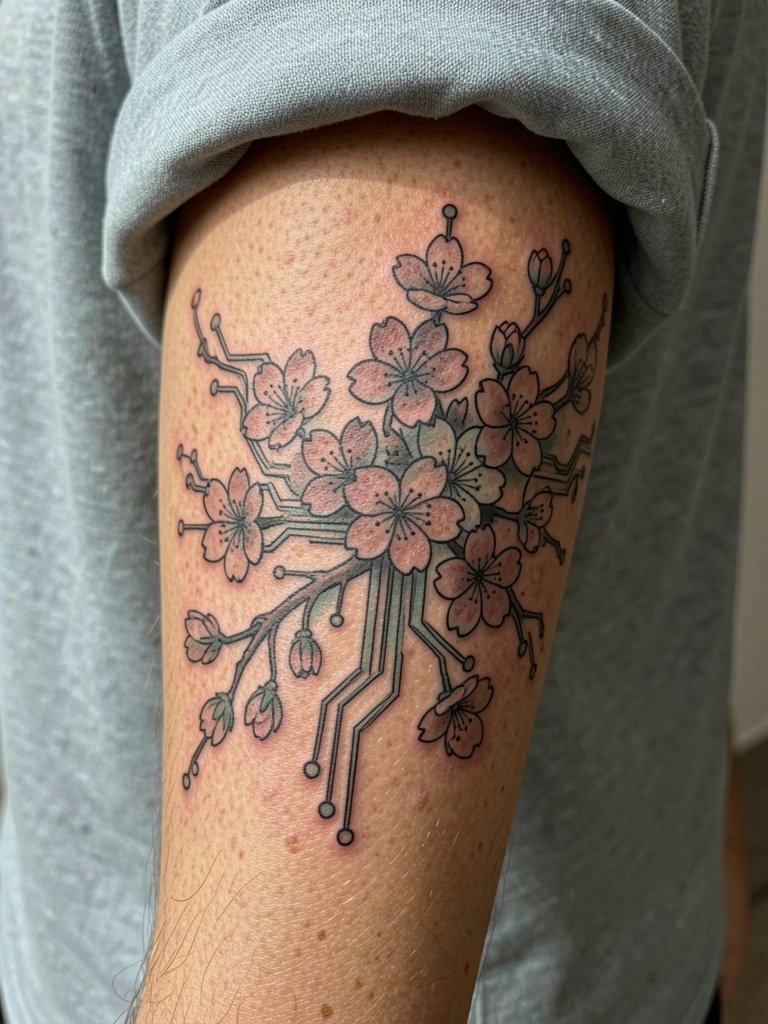
This one borrows traditional floral scale and injects micro circuitry into the branchwork so the piece reads graceful from across a room. A frequent error is compressing blossoms too small which makes the circuitry dominate later. Ask for larger blooms with spaced circuit branches so the pastel fills have breathing room. For show-off dressing, soft rolled cuffs and a slim stacked bracelet look natural, try pairing with a dainty gold stacked bracelet set on the opposite wrist.
6. Soft Circuit Mandala Sleeve
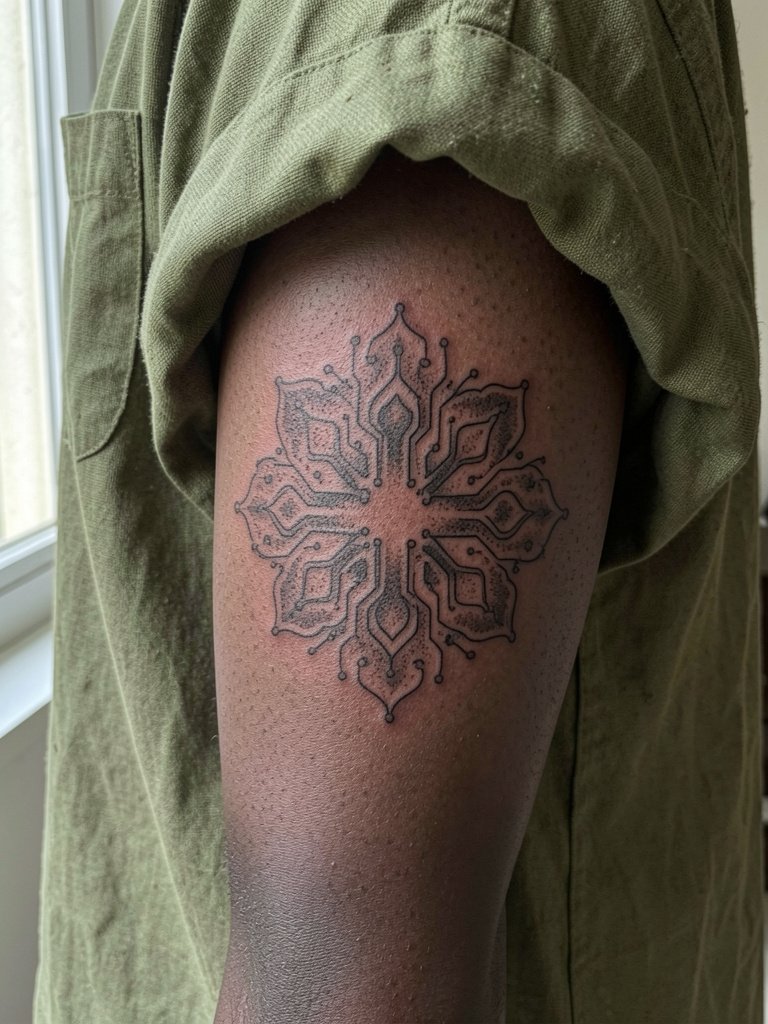
The mandala reimagined with circuit geometry is perfect for someone who wants detail without aggressive biomech. Because the inner bicep is softer, spacing matters more than needle thickness. Plan for 3 to 4 sessions and ask for healed portfolio examples on the same placement. For wardrobe, oversized linen in olive or sand frames the mandala without crowding, and a thin matte silver chain necklace on the opposite wrist gives subtle contrast.
Session Day Picks
The forearm and inner-bicep pieces above need careful session-day prep to protect fine line detail and keep you comfortable in the chair.
-
Holographic shimmer powder. Some artists use a tiny amount under protective film to suggest a muted glint during healing, which helps showcase holographic-style gradients in the early photos.
-
Muted pastel ink set. Palette sets in sage, dusty rose, and slate blue make it easier for artists to pick complementary low-saturation colors that age better than neon.
-
AR-trigger ink sample pack. For experimental AR-integrated touches, these specialty inks are part of early testing and can tie into a digital overlay concept.
-
Muted earth tone ink (sage terracotta options). Artists who favor soft tech palettes use these for long-term wearable glows that photograph well across skin tones.
-
Saniderm second skin roll. A thin breathable film for the first 72 hours helps protect fine line circuit work from bacteria and friction during early healing.
7. Y2K Binary Code Script Wrap
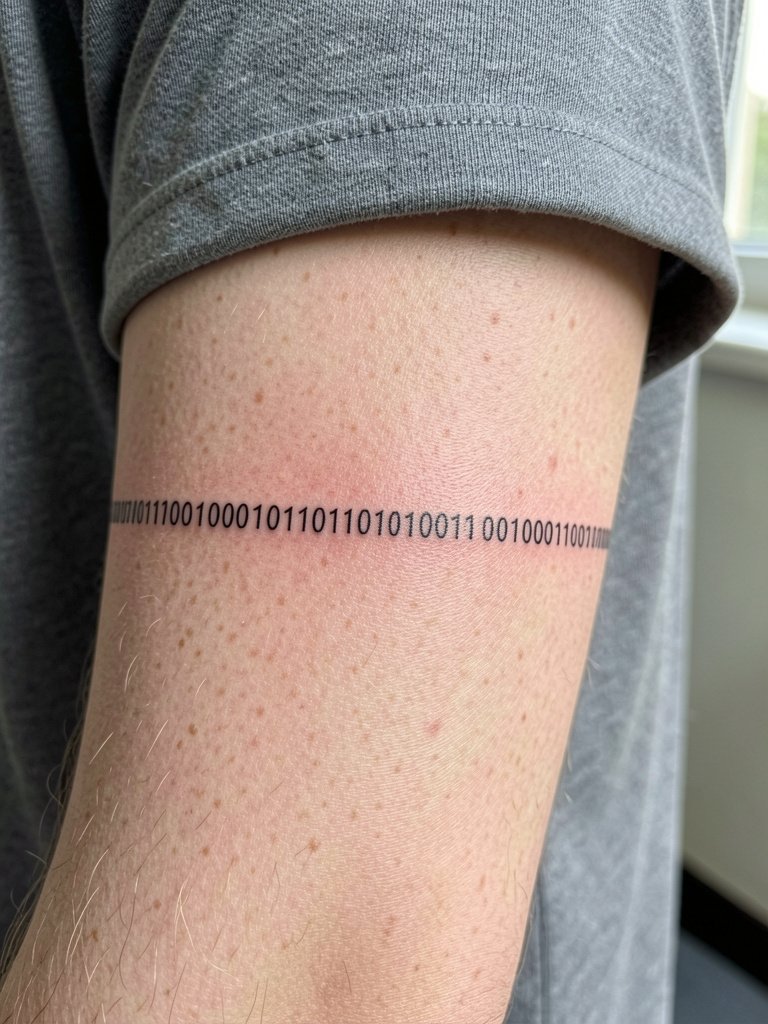
Y2K binary wraps read like digital jewelry and function well as half-sleeves or wrist accents. For longevity, keep the script at a slightly larger scale than micro text so the ones and zeros do not blur together. Placement on the inner forearm makes touch-ups simpler than on finger wraps. Style this with a thin chain bracelet set on the opposite arm for a balanced tech-jewelry vibe.
8. Minimalist Data Stream Sleeve with Finger Wraps
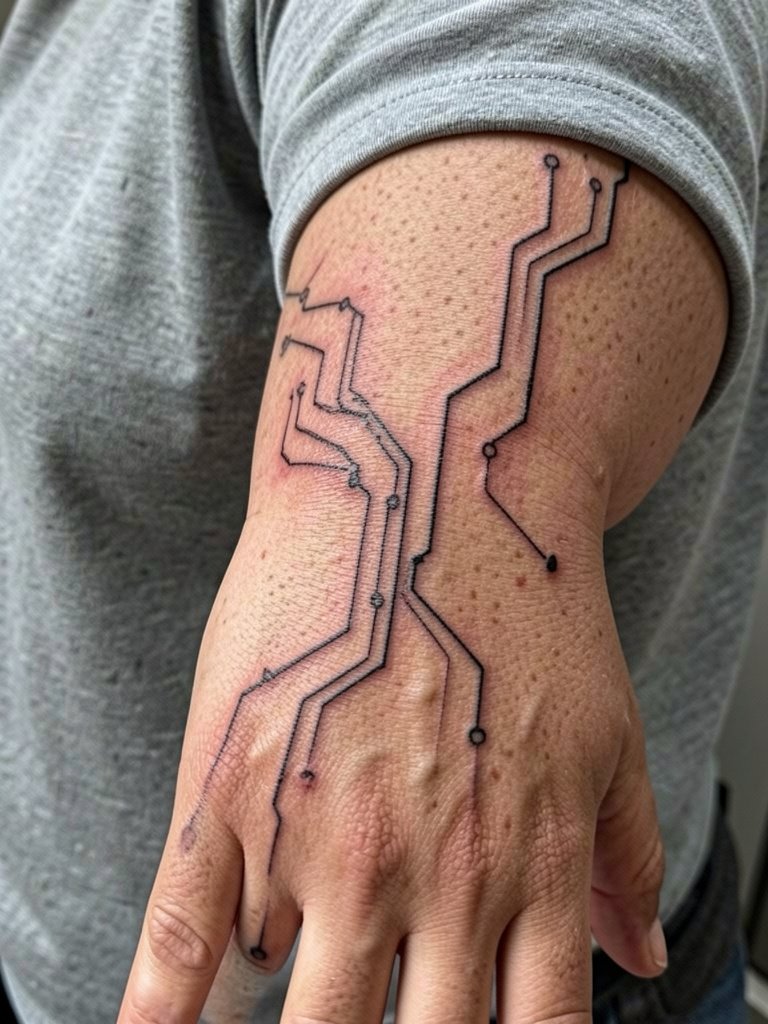
Minimalist streams are understated but ask for spacing between each wrap that accounts for swelling and daily abrasion. Fingers are high-friction zones so expect faster fade and more frequent touch-ups. During the session leave rings at home and wear short sleeves so the artist has clean access. Pair the finished look with a thin chain ring set on the opposite hand, keeping rings minimal to avoid crowding the finger wraps.
9. Holographic Shimmer Gradient Sleeve
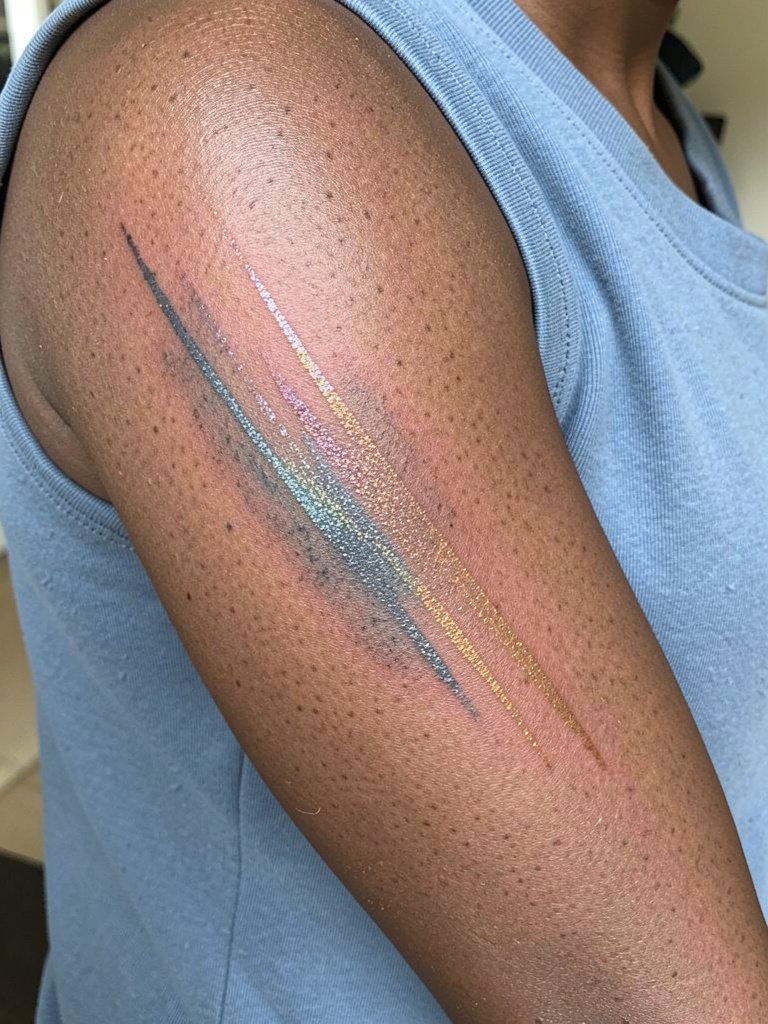
Shimmer gradients are a great way to suggest glow without saturating neon. Ask for a grey wash base with very thin pastel tones layered on top to keep saturation low. On medium and darker skin tones prioritize high-contrast black outlines with white highlight dots to replicate the glint. For wardrobe try a slate blue sleeveless top when you want the gradient to complement your clothing.
10. Lotus with LED-Style Highlights
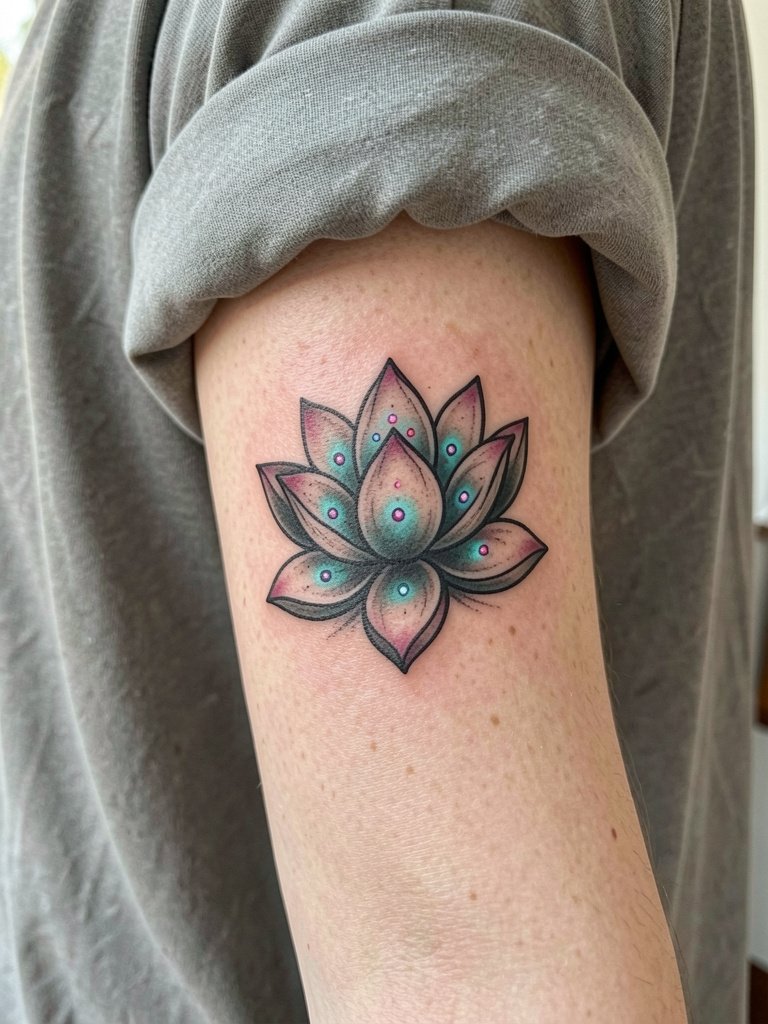
The lotus reads as spiritual tech when the LED dots are placed to follow natural petal curvature. Keep the LEDs small and restrained if you want them to age gracefully. For session wear choose a short sleeve or tank top for easy artist access. The inner forearm heals reliably when you avoid direct sun during the first three weeks.
11. AI-Assisted Algorithmic Pattern Sleeve
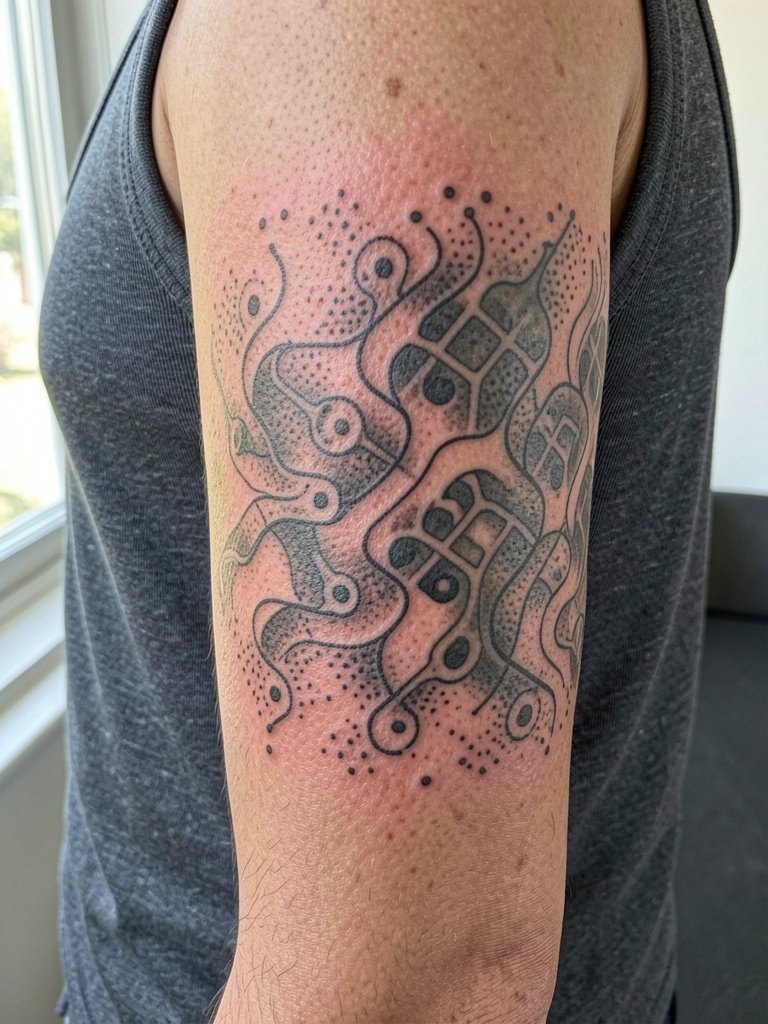
Algorithmic patterns can yield a truly custom sleeve when an artist refines machine-generated layouts by hand. One camp argues AI tools produce generic outputs that feel like an off-the-shelf dump and lack soul. The other camp says AI speeds concept work and that the artist must always refine and hand-finish the output so the final piece is bespoke. If you plan to use AI, ask for a human-refined mock where linework and spacing are adjusted for healed readability. A simple matte black minimalist necklace works well with upper-arm pieces and keeps the focus on the sleeve.
12. Neon-Overload Cooling Gradient (Muted Version)
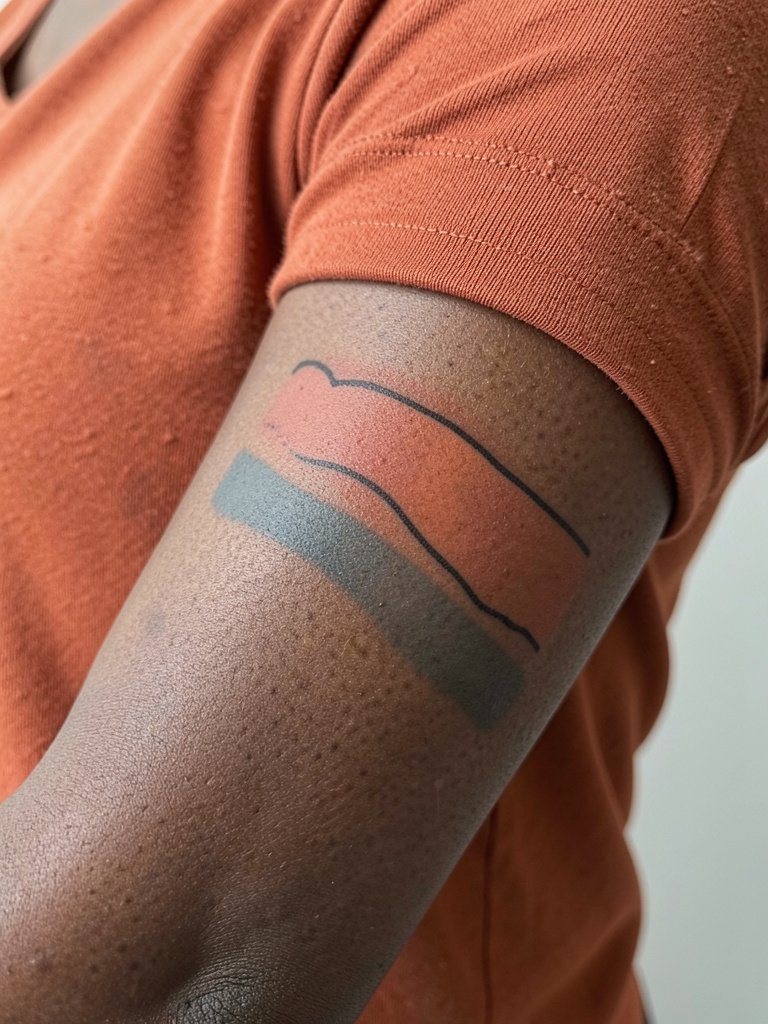
Neon is cooling off and muted earth tones are the safer, more wearable route. One camp insists bright cyan and magenta are essential to cyberpunk's glow and core identity. Another camp points out neon fades fast and looks dated, advocating sage and terracotta glows for longevity. If you prefer the muted approach, specify palette swatches and ask the artist to test healed samples so you can preview aging behavior. For the show-off look a terracotta short sleeve top complements warm gradients.
13. Cyber-Jewelry Finger Wrap Accent
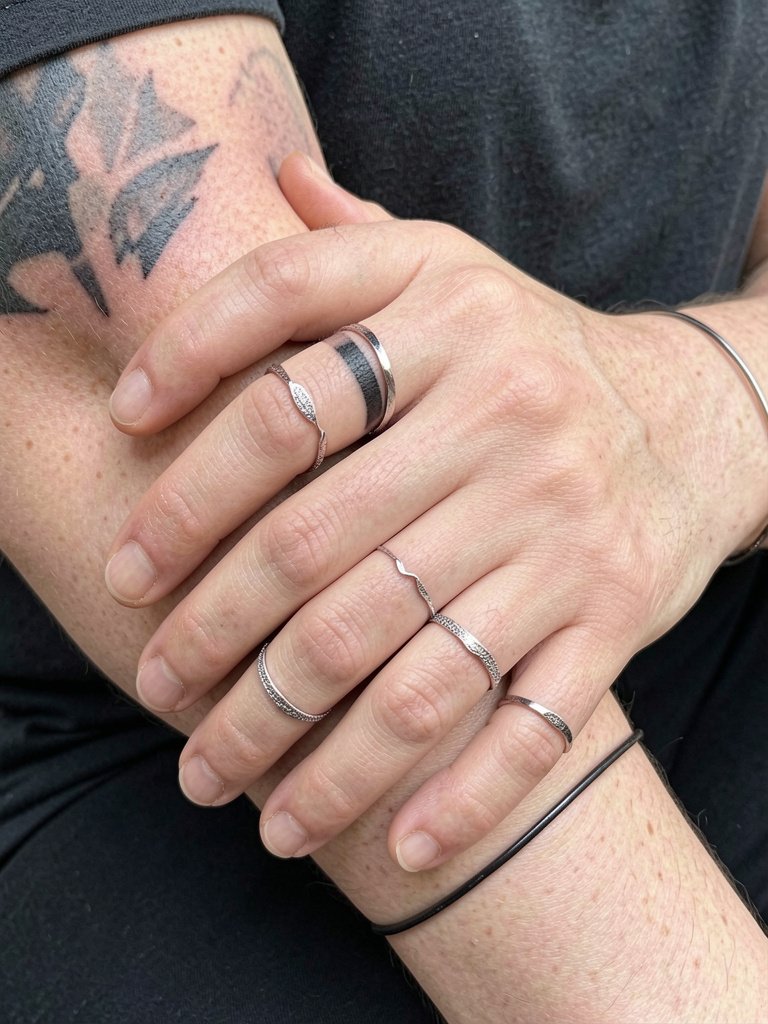
Finger wraps carry a higher fade and touch-up profile from hand washing and friction. Ask for a slightly bolder single-needle weight around the knuckle and expect an annual touch-up for crispness. Avoid chunky rings that compress or distort the wrap. When styling, choose minimalist rings on the opposite hand and a thin bracelet, for example a dainty finger ring stack search looks delicate and keeps the finger wrap central.
14. Tech-Glyph Minimalist Sleeve
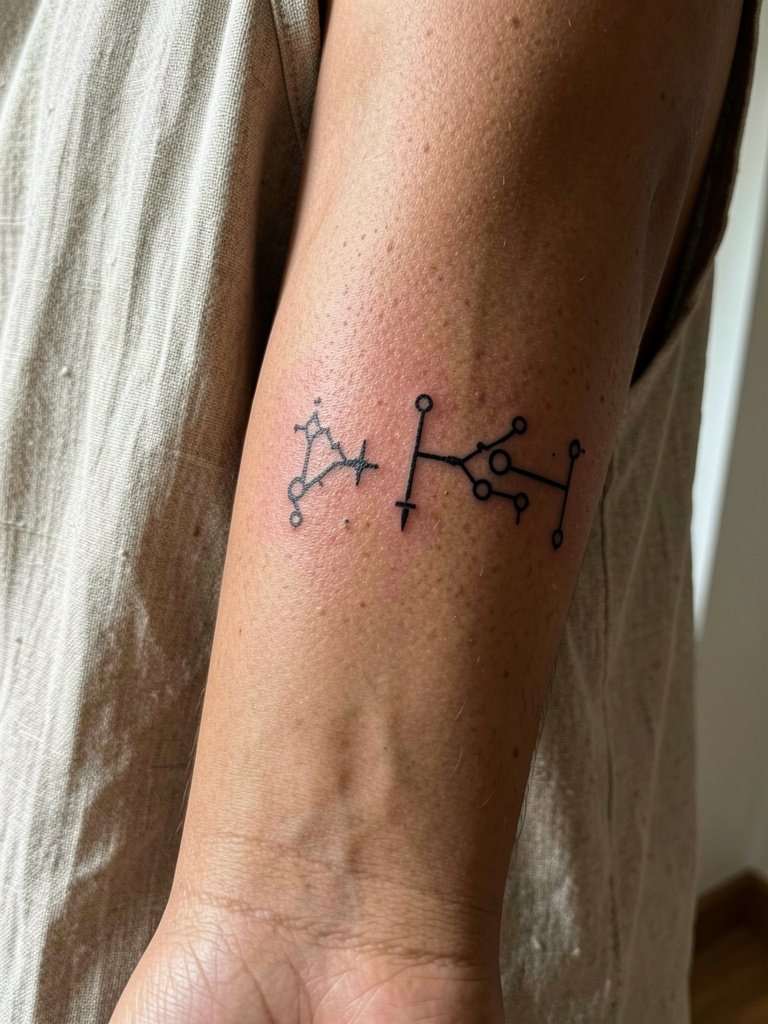
The key to glyph work is spacing. Oversized glyphs beat tiny clustered ones in durability. A mistake many make is asking for dense rows that look busy once healed. Keep each glyph at a scale that reads at arm distance and leave negative space to preserve shape. For session comfort wear a loose tank or short sleeve so the artist can access the inner upper arm without fabric interference.
15. Biomechanical Arm Illusion Full Sleeve
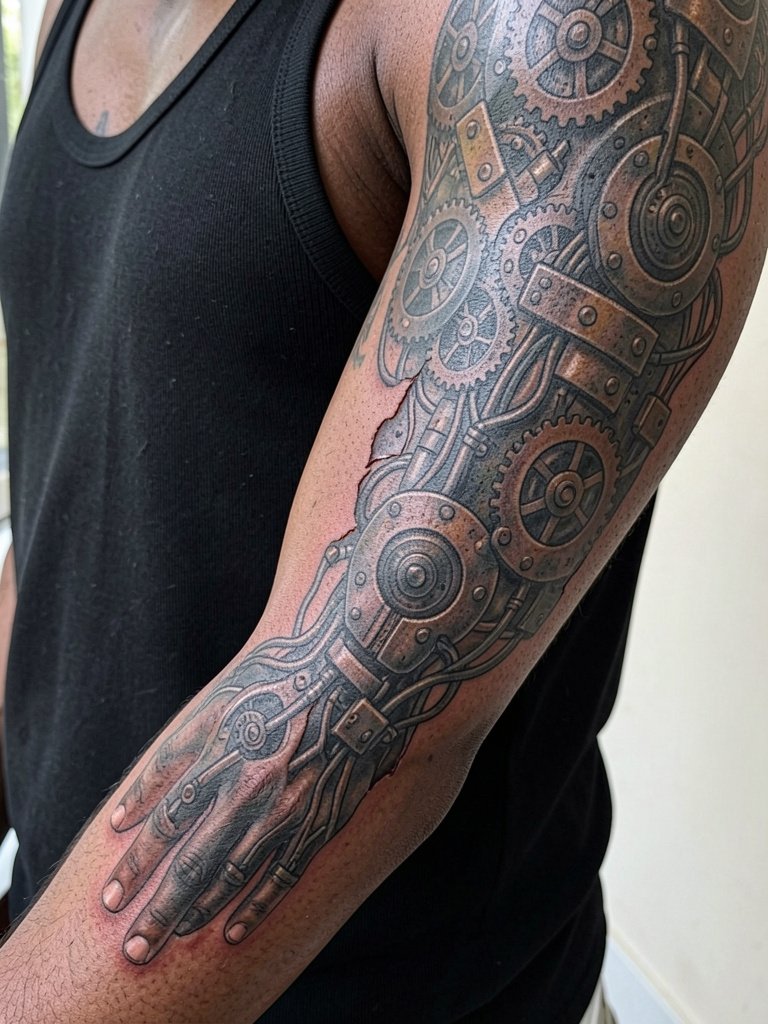
This illusion demands time and a studio comfortable with heavy black and grey realism. Expect multiple long sessions and realistic shading that creates depth. Pain varies by location and shading density, so break sessions strategically. Avoid requesting tiny gear detail in tight zones where blowout is likely. For the show-off look a solid black tank top and a matte black minimalist necklace lean into the biomech aesthetic.
16. Augmented Reality (AR) Integration Ready Tattoo
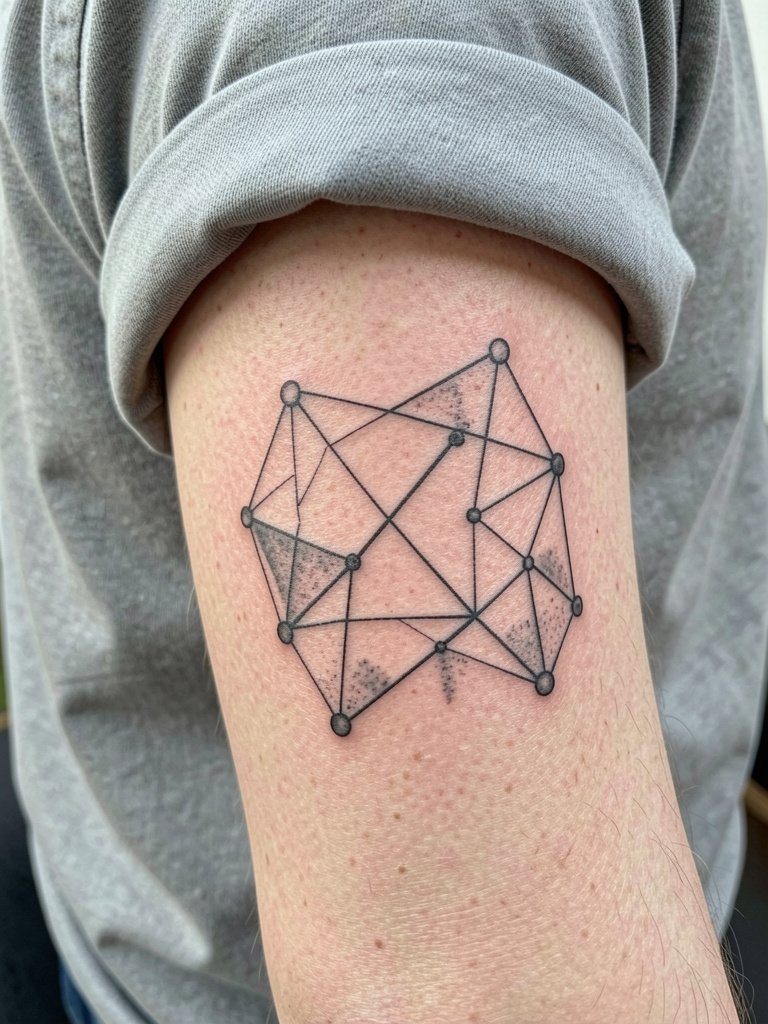
AR-ready tattoos are emerging. They rely on high-contrast shapes and consistent spacing so an app can track and overlay animation. This is an experimental route so discuss AR app compatibility and marker placement precisely. A common oversight is embedding too much small detail where the tracking needs clear geometry. For session day wear loose sleeves so the artist can place markers without distortion.
17. Lotus-Meets-Circuit Upper Arm Composition
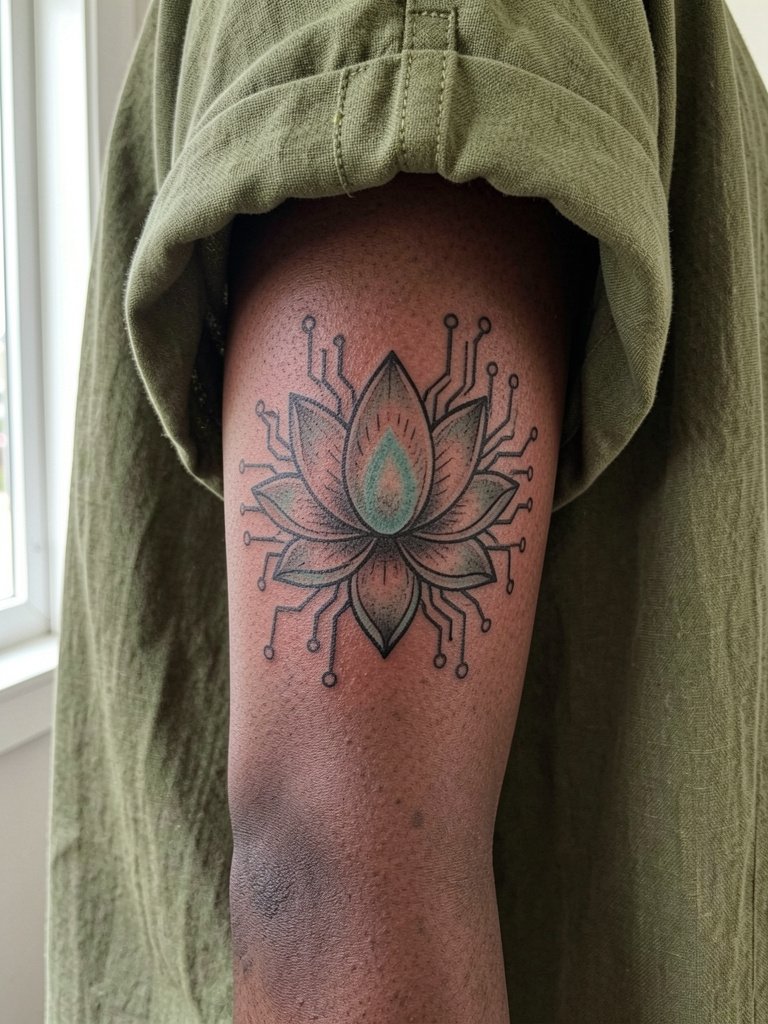
This composition lets you combine spiritual symbolism and circuit geometry on the inner upper arm where the skin is forgiving. Avoid tiny petal filigree that will soften as the arm moves. A tip is to bring both large and small references so the artist can show scale mockups. For dressing a loose linen shirt frames the piece and a thin matte silver chain necklace adds subtle shine.
18. Patchwork Sleeve Strategy for Budget Builds
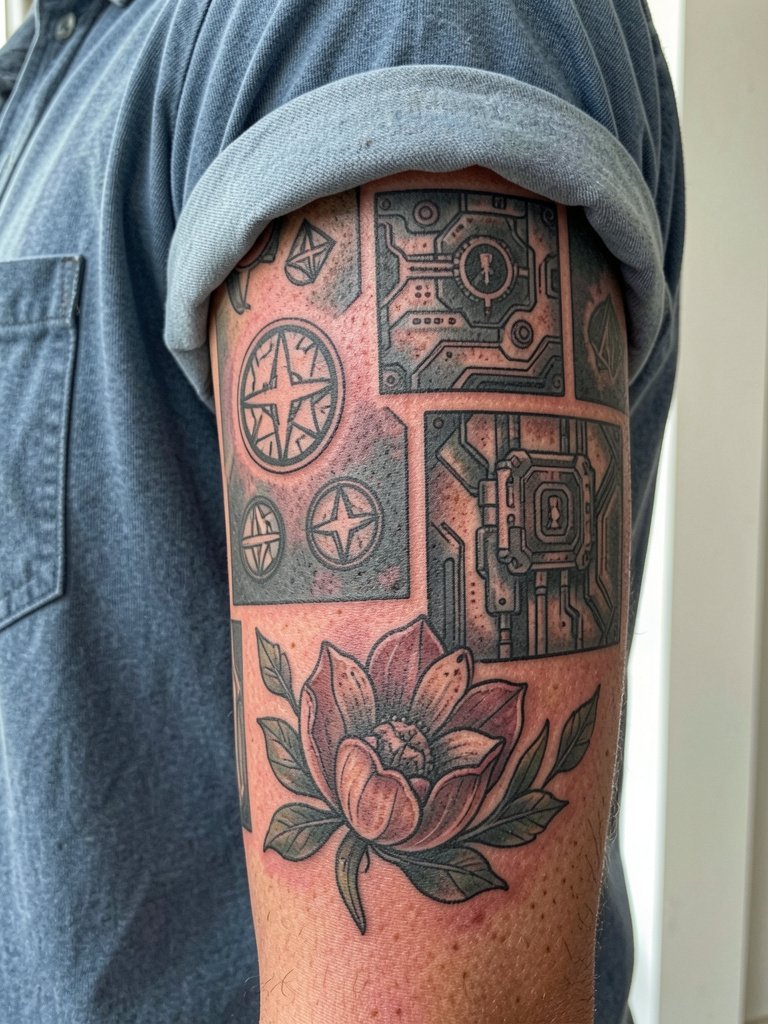
If a full sleeve price is out of reach, build a patchwork sleeve over time. Start with 3 to 4 cohesive panels and connect them later with background circuitry or grey wash. A common mistake is mixing unrelated scales and ending with mismatched panels. For session-day comfort wear short sleeves so each panel sits cleanly and does not catch on cuffs.
19. Bioluminescent Circuit Reef Sleeve
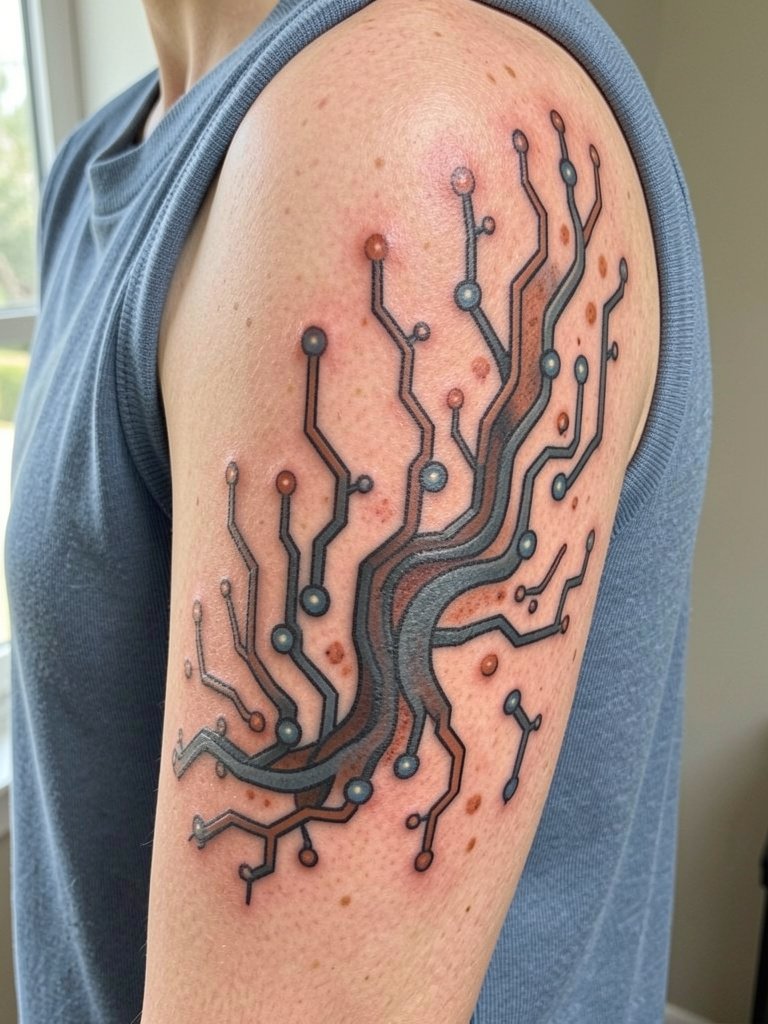
This is a more organic take that reads like a living circuit reef. It pairs well with shoulder cap placements and looks great with sleeveless tops in slate blue or terracotta. When planning, ask for mapping that follows muscle lines so the tendrils flow naturally when you move. A light sleeve like this typically needs fewer heavy shading sessions and more precise dot work to create the bioluminescent effect.
Frequently Asked Questions
Q: How much does a cyberpunk sleeve cost and how should I budget for it?
A: Expect a wide range depending on style and studio. Conservative full-sleeve budgets start at approximately one thousand and many detailed sleeves land in the two to four thousand range over multiple sessions. If budget is a concern, build a patchwork sleeve in phases and prioritize the panels that matter most to you.
Q: Will single-needle Cybersigilism blur quickly on my forearm?
A: It depends on spacing and healed photos. Some artists argue single-needle on the forearm blurs within two years because skin stretches and moves. Others maintain that with slightly wider spacing and precise depth the lines settle and stay legible for years. Ask for healed three-year examples from portfolios on the same placement rather than relying on fresh photos.
Q: Where can I find Cybersigilism and AI-assisted portfolios without naming specific artists?
A: Search hashtags like #cybersigilismtattoo, #cyberfinesigil, and #neuronetsleeve on Instagram and TikTok and filter by location. Use Tattoodo and Inked App to search keywords such as "biomech sleeve" or "fine line cyberpunk" and review healed shots. Reddit communities like r/tattoos and r/CyberSigilism surface peer recommendations and healed examples across skin tones.
Q: What are the best tattoo aftercare tips for fine line work in summer?
A: Keep the fresh tattoo out of direct sun and avoid heavy ointments that clog channels. Consider a thin breathable film for the first three days to protect fine circuitry from sweat, then switch to a light non-greasy moisturizer. If heat is a persistent issue, plan sessions for cooler parts of the day and wear breathable, loose session clothes.
Q: How do I avoid an AI-generated "Midjourney dump" when using algorithmic concepts?
A: Require the artist to hand-refine any AI layouts and request a hand-finished mock. Bring multiple reference scales so the artist can show how modules read at three inches versus five. Insist on visible human linework adjustments before your session so the final piece does not look generically generated.
Q: Which palettes age better, neon or muted earth tones, for cyberpunk sleeves?
A: Muted earth tones like sage and terracotta typically age with more grace because they sit lower in saturation and contrast less with natural skin changes. Bright cyan and magenta can look striking initially but are more likely to fade unevenly. If you like glow, ask for a grey base with small high-contrast highlights to simulate shimmer without full neon saturation.