Bold black knotwork often outlasts the prettiest single-needle spirals on the forearm, and that surprises a lot of first-timers. Sticker shock, fine-line fade, and unexpected wrist pain are the three most common headaches I hear before people book. Read these eleven band ideas and you will get specific line-weight notes, session-day clothing tips, and realistic healed expectations for each style.
1. Classic Celtic Knot Armband
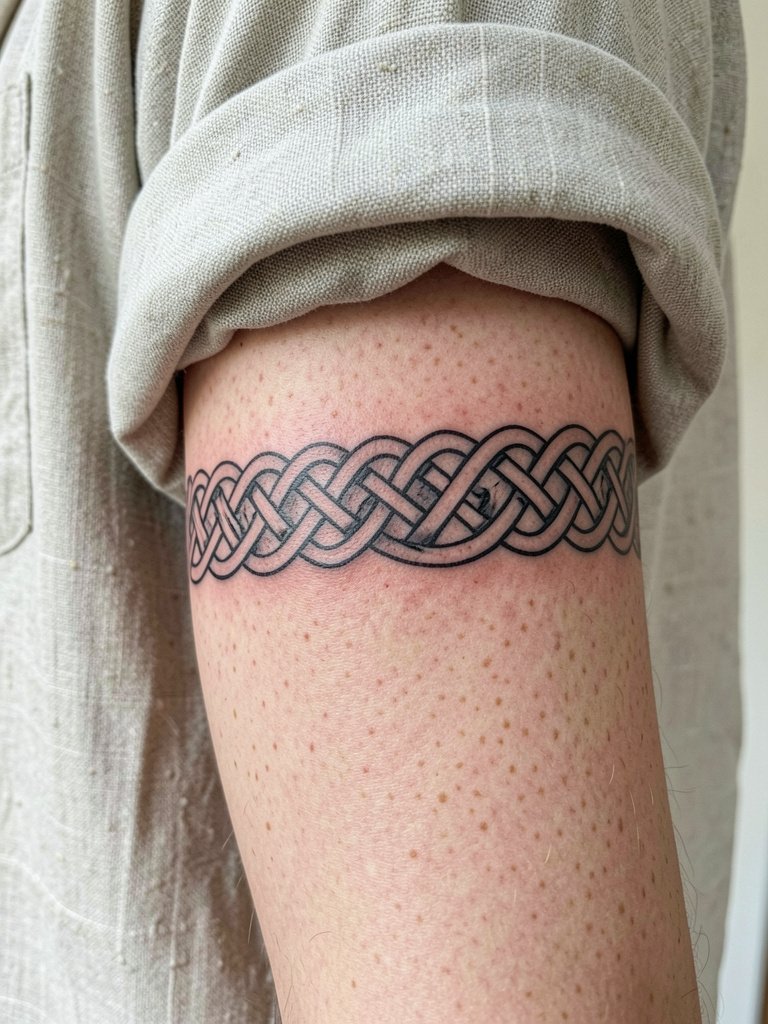
The classic knot armband is a reliable choice when you want clean, readable linework. Ask for 2–3mm line weight and 2–3mm spacing between strands so the knots do not merge in a few years. A common mistake is shrinking a complex knot into a band under two inches, which invites blur and the look of a single dark ring. Session time for a simple band is usually under an hour. For the appointment wear a loose button-down so the artist can roll the sleeve without pressure on fresh skin. Over time expect some softening of edges by year two and a touch-up window around 6–12 months if needed.
2. Viking-Celtic Hybrid Band
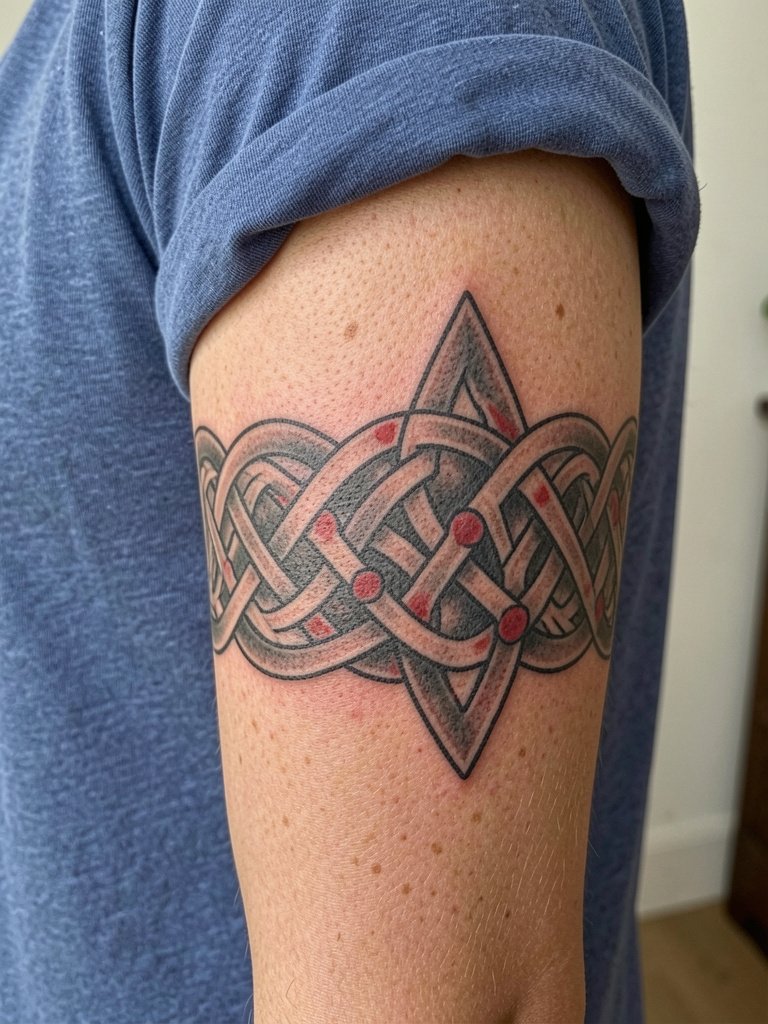
This hybrid uses heavier linework and shade to marry Norse motifs with Celtic flow. Ask your consultation to show a value study so you can see where the grey will sit against the black knots. Outer forearm placement tolerates slightly tighter detail than the inner side, but keep knot spacing at least 2mm to avoid the ring effect. Expect a 60–90 minute session for a 3–5 inch band. For showing it off, a solid-color short sleeve tee with the sleeve pushed up complements the darker palette, and a chunky silver cuff on the opposite wrist balances the look. Blowout risk is lower here than on the inner wrist, but heavier saturation means a more noticeable touch-up if lines spread.
3. Fine Line Celtic Spiral Band
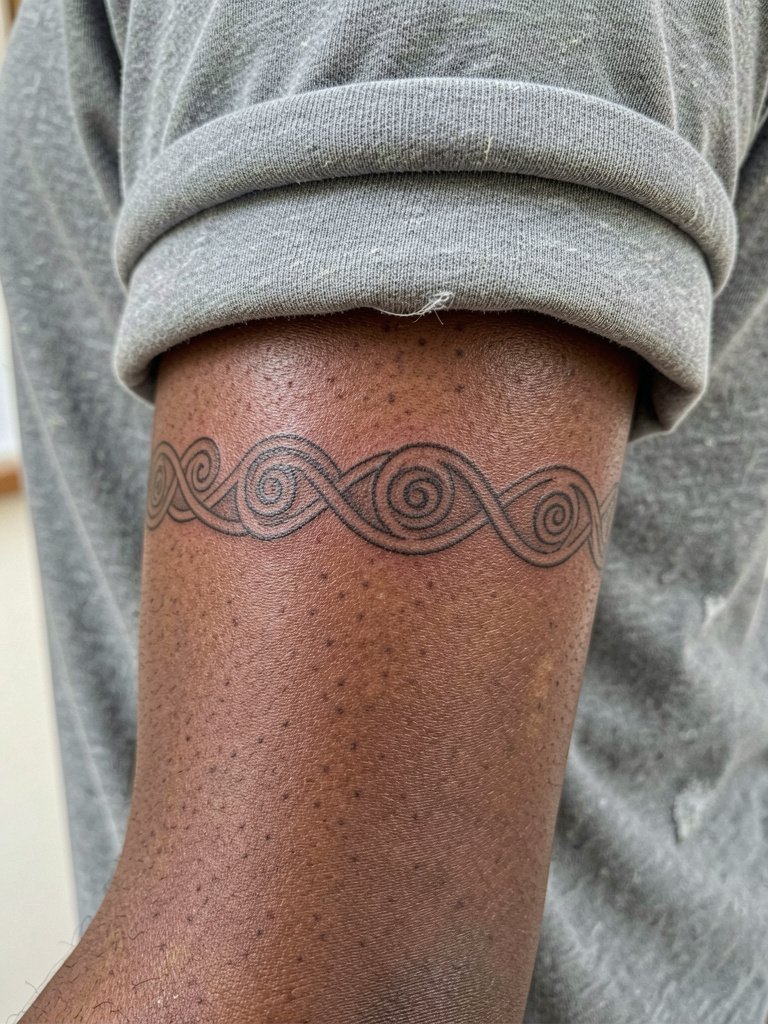
Fine-line spirals look elegant the first year but spark the biggest debate among artists. One camp says single-needle spirals under 1mm blur within two to three years because forearm skin moves daily and strands close in. Another camp argues that with a 1.5mm minimum line weight and slightly looser knot spacing the spiral can stay distinct for several years, and they point to healed examples to back that up. If longevity matters, specify a slightly heavier single-needle thickness and ask for mockups at actual band width. The session feels quicker than shaded pieces, but fine-line work is less tolerant of shakiness, so expect the artist to work methodically. Plan for a likely touch-up at 6–12 months.
4. Double-Row Celtic Band
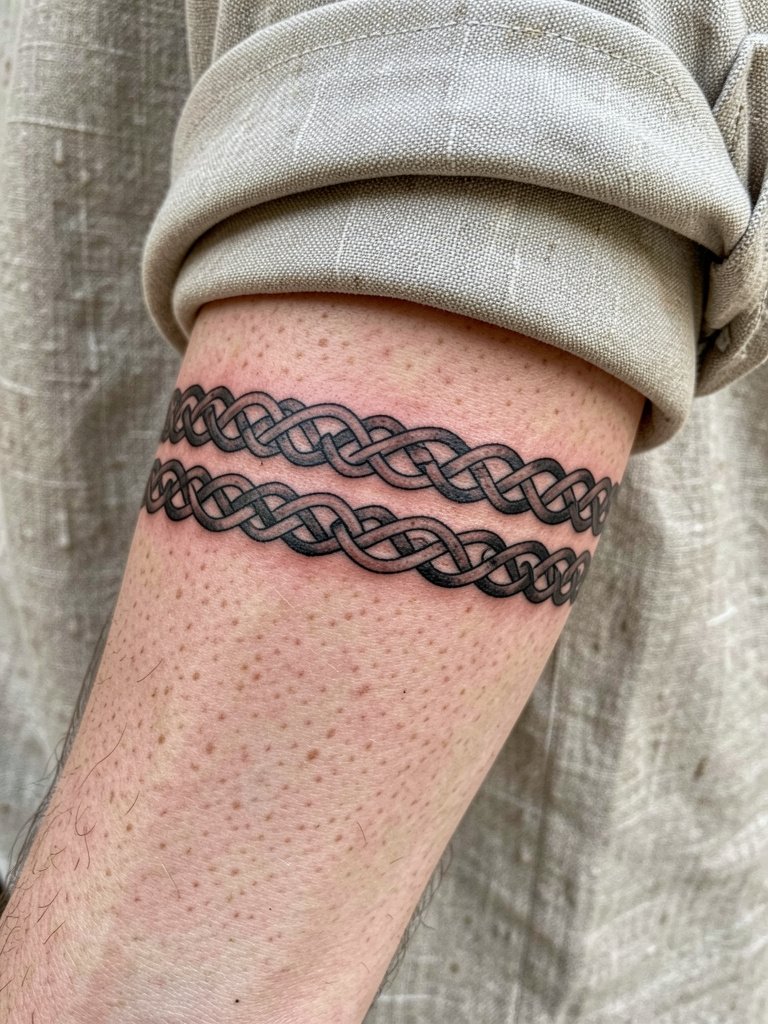
Double-row bands add depth but they demand careful spacing. A practical consultation item is a printed mockup at both two-inch and four-inch widths so you see how the parallel knots read at different scales. The most common error is packing two dense knot patterns into too little vertical space, which accelerates blur. Expect a 45–90 minute session depending on complexity, and plan a touch-up at 6–12 months if the inner edges soften. For session wear choose a loose button-down to avoid cuff pressure on fresh ink. At six months healed the double-row still reads bold; at two years the inter-band contrast is the tell for whether spacing was adequate.
5. Celtic Tree of Life Armband
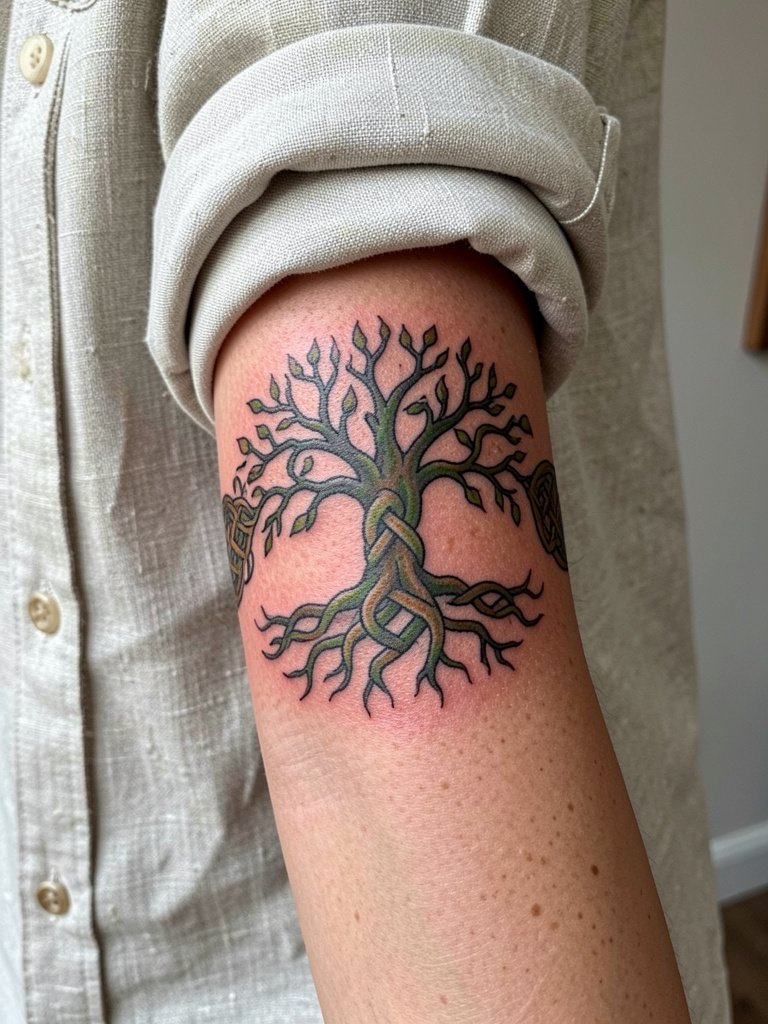
A Tree of Life band integrates figurative detail into knotwork, so conversation during the consult should include which elements stay as linework and which get subtle color fills. Large roots and trunk elements benefit from heavier linework to keep the tree readable at five years. This piece often takes two sessions when color is involved. For the appointment wear a loose button-down and bring layered sleeves so the artist can easily expose the inner forearm. For showing the finished band, a rolled-up linen shirt in cream or olive frames the black-and-brown palette, and stacked dainty gold bracelets on the opposite wrist add contrast. Plan for a touch-up if the foliage shading recedes after sun exposure.
6. Celtic Cross Band
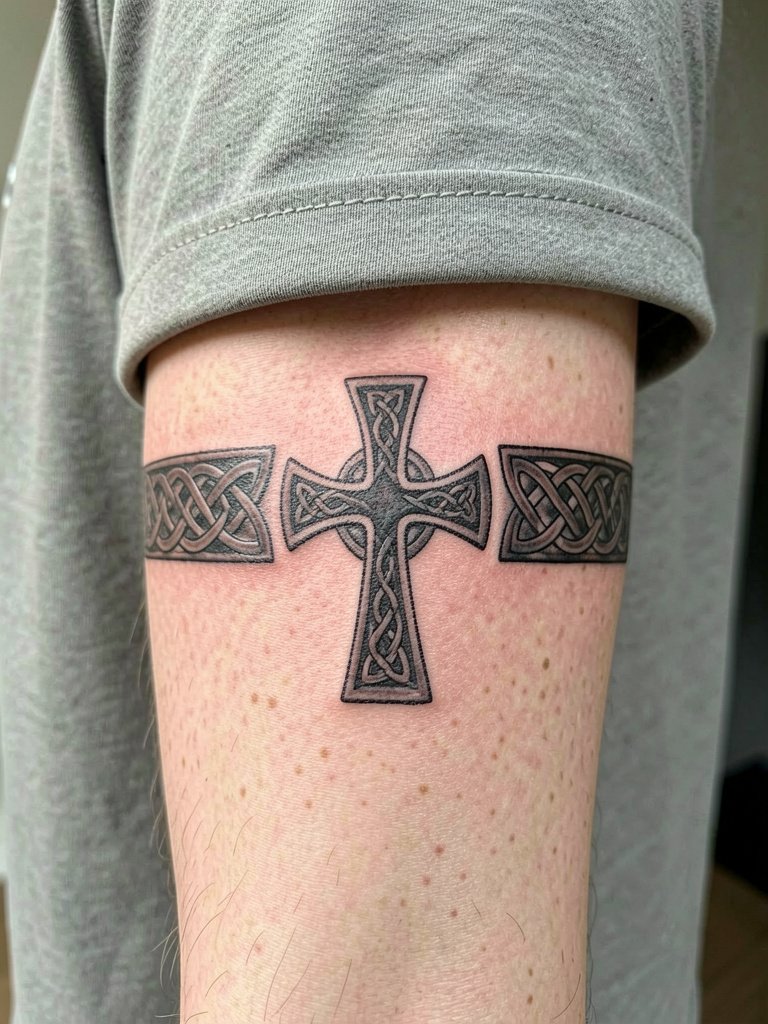
Centering a cross inside a running knot band needs precise stencil placement so the cross sits visually balanced when the arm moves. Bring two reference photos showing the cross at different band widths so your artist can scale the motif properly. Memorial pieces often favor bold lines to preserve legibility over time. Expect a single session for a well-sized band and a possible touch-up at 6–12 months if edges soften. For session comfort wear a loose short-sleeve shirt so the artist can expose the inner forearm without tugging at fabric.
Session Essentials
Those first six bands cover a lot of linework and inner-forearm repairs, so a few targeted products make the chair day and the first week easier.
- Tattoo Med balm. Thinner than heavy ointments, it helps fine-line work settle without trapping moisture where tight knotwork sits.
- Bepanthen aftercare cream. Lighter texture for people who find petroleum-based products too greasy during the first few days.
- TattooLife anti-inflammatory balm. Promoted in artist circles for reducing short-term swelling on denser knotwork pieces.
- Saniderm second-skin protective film. Useful for reducing friction on inner-forearm bands where sleeves brush the area for several days.
- Aquaphor healing ointment. A mainstream go-to for the first 48 hours if you prefer a thin protective layer before switching to a lighter balm.
7. Minimalist Single-Knot Band
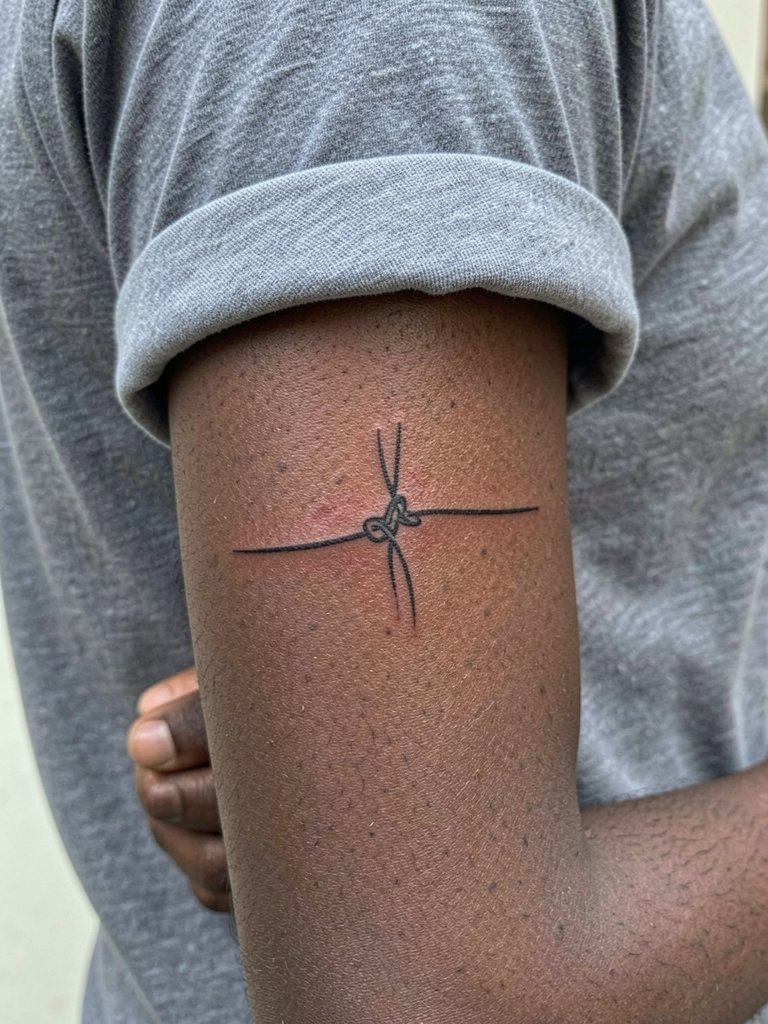
For a tiny knot that reads from a three-inch band, line weight and spacing are everything. One group of artists says leaving a single-needle knot under 1mm almost guarantees blurring within a few years. The other group says a 1.5mm minimum and clear negative space will preserve the motif. If you want the minimalist look with better longevity, have your artist redraw the knot slightly looser and show a scaled mockup at actual size. Session time is short but the inner wrist can spike in sensitivity near the crease. For showing this piece, stacked dainty bracelets on the opposite wrist create a balanced look. Plan a touch-up at 6–12 months if the knot softens.
8. Celtic Shield Knot Band
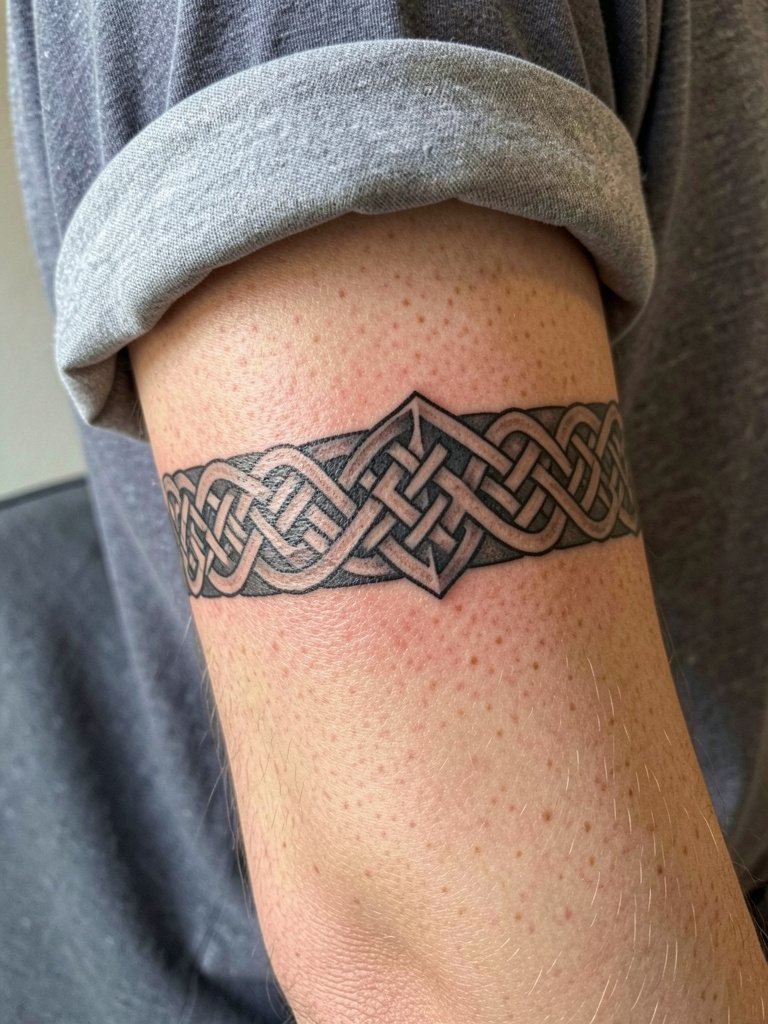
Shield knots read as bold protective bands because of heavier saturation. The consultation should clarify how dense you want the interior fills so the artist can estimate session time and machine passes. Dense blackwork hides small imperfections but requires more healing attention for scabbing. Expect 60–120 minutes depending on coverage and a likely touch-up inside the first year as black settles. A common mistake is cramming too many micro details into a small shield area. For session wear pick a loose sleeve so the cuff does not compress fresh ink during the first 48 hours.
9. Celtic Serpent Band
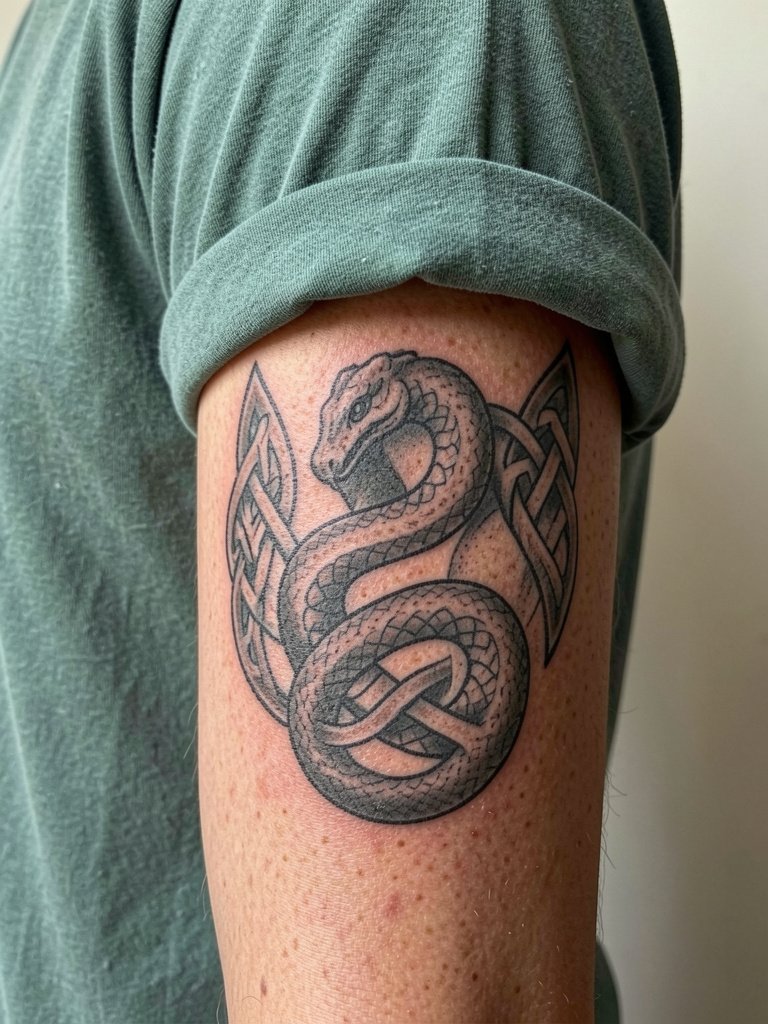
A serpent weaving through knots adds motion and makes the band feel cinematic. Ask for a value sketch so you can see how the serpent overlaps knots at full size. Outer forearm sessions feel more comfortable for most people because the skin is firmer and easier for the artist to stretch. For wardrobe, a solid-color short sleeve tee with sleeves pushed up pairs well, and a chunky cuff on the opposite wrist complements the composition. Allow for one to two sessions when the serpent includes shading and color accents. If the snake crosses the wrist joint, expect slightly more fading over time and a higher chance of touch-up.
10. Celtic Heart Band
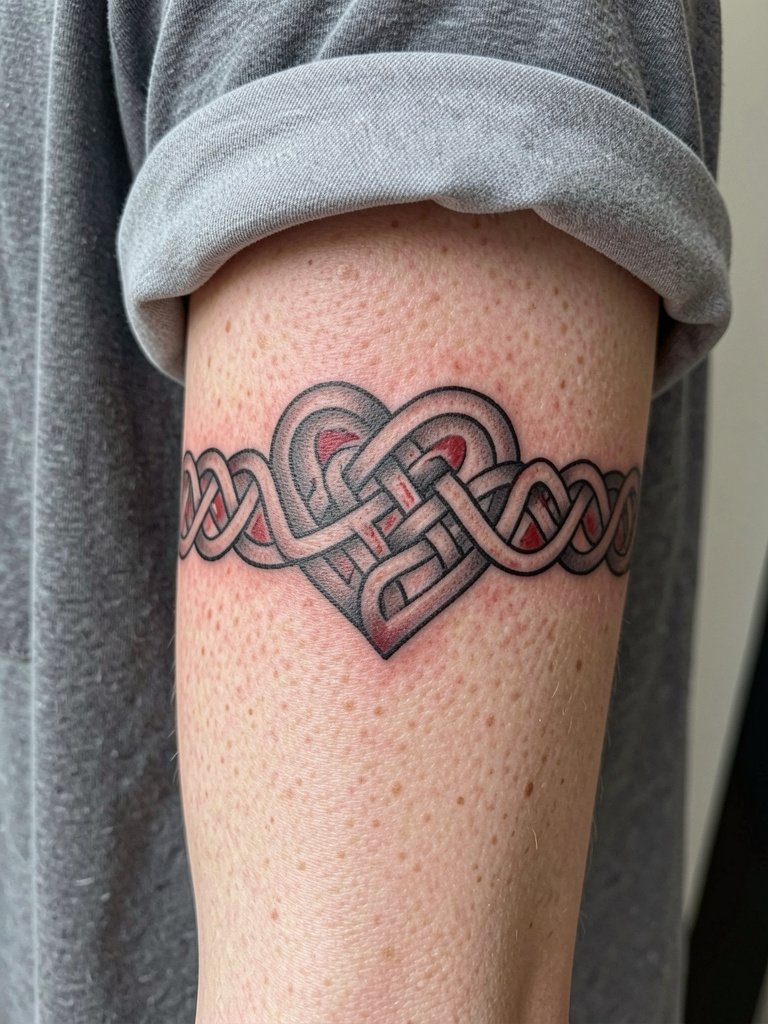
A heart knot works well for matching couple bands because it reads clearly at small sizes if the knot lines are bold enough. During the consult bring both wrists so the artist can mirror the scale and center the motif for each arm. Couples often forget that dominant hand activity affects healing and contrast, so expect slight differences in how each heals. The session is usually under an hour for a focused design, and a touch-up at 6–12 months smooths any asymmetry. For date-night styling, a cropped sleeve or rolled linen shows the band nicely without competing with other pieces.
11. Celtic Dragon Band
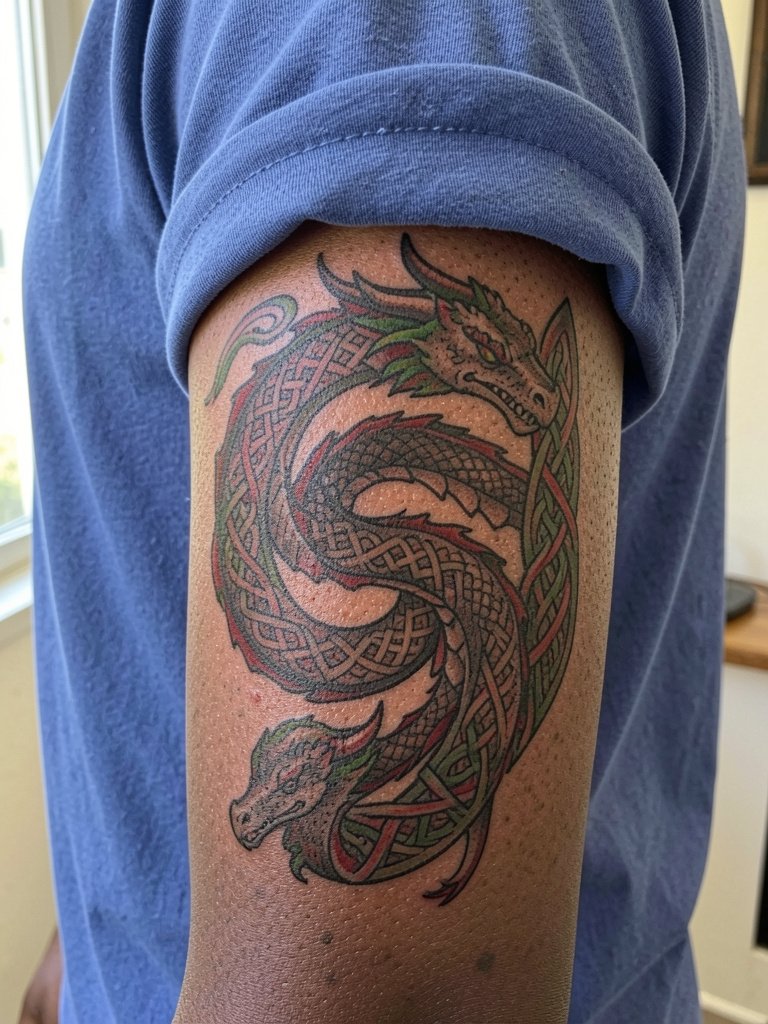
Dragons add scale and movement and are a good fit for outer forearm real estate where dynamic composition reads at arm length. For the consult specify how much color you want woven into the knotwork because colored accents can help the dragon silhouette stay visible on darker skin tones. This design often requires two sessions for linework and color layering. For the appointment wear a short-sleeve tee that you can push up without tugging so the artist has steady skin to work on. A chunky cuff either side of the band balances bold lines when you are showing the piece off. Expect a touch-up window after color settles.
Frequently Asked Questions
Q: How much should I budget for a forearm Celtic band?
A: Small bands typically run in the lower price tier while large, heavily shaded bands take longer and cost more. City, artist experience, and how many sessions you need are the main drivers. Bring a printed size mockup to get a clear session-time estimate so you are not surprised at the booking stage.
Q: Will a fine-line Celtic band fade quickly on my forearm?
A: Fine-line pieces can fade faster unless the line weight and spacing are planned for longevity. One group of artists advises against sub-1mm lines on forearms because skin movement blurs tight knots. Another group says 1.5mm lines with deliberate spacing will remain readable for several years. Expect a touch-up at around 6–12 months for peace of mind.
Q: Should I use Saniderm or dry healing for an inner-forearm knot band?
A: Artists and clients split on this. Some people prefer dry healing because they feel it reduces trapped moisture and the risk of ink migration in tight knotwork. Others prefer Saniderm because it shields fresh knots from friction and bacteria for the first five to seven days. Your choice depends on your skin type and how much friction the area will see from clothing in the first week.
Q: How do I find artists who show healed Celtic bands across different skin tones without naming shops?
A: Search hashtags like #celtictattoo and #celticbandtattoo on Instagram and TikTok and filter by location to see local portfolios. Tattoodo and studio directories let you search keywords such as "bold celtic band forearm" and show healed examples. Reddit tattoo threads surface peer recommendations and healed photos across skin tones, which is useful when you want real-world aging examples.
Q: What should I wear to my forearm session and to show the tattoo afterward?
A: For the appointment wear loose, short-sleeve or rolled-sleeve tops so the artist can access the forearm without fabric pressure. For showing the armband, rolled-up linen shirts in neutral tones and dainty stacked bracelets frame inner-forearm knotwork nicely. See rolled cuff linen shirt for ideas.
Q: When is a touch-up likely needed for a Celtic band?
A: Most Celtic bands benefit from a touch-up between six and twelve months, especially if they include fine detail or shading. Expect touch-ups sooner for pieces with tight knotwork or colored accents, and a bit later for bold blackwork that settles smoothly.