
A tiny mark tucked behind the ear reads like a private accent, visible when you clip your hair up and hidden the rest of the time. The skin there is delicate and the space is shallow, so design choices that look crisp on day one can soften faster than you expect. These ideas favor clear shapes, smart spacing, and styling that actually makes the tattoo sing when you want it to.
1. Fine-Line Floral Sprig Behind the Ear

A floral sprig reads delicate and personal in that tiny behind-the-ear pocket. I recommend this when you want something organic without heavy black, and when you plan to wear your hair up often so the detail shows. Ask for slightly heavier main stems rather than a single whisper-thin line because the skin there can blur fine single-needle strokes over a few years. Expect a crisp look at six months, softer edges by year two, and a likely touch-up at year three if you want the original contrast restored. For the appointment, wear a button-up or a shirt you can remove without tugging at your hair, and bring a soft silk hair scarf so you can style the healing area gently.
2. Tiny Star Cluster, Offset

A small constellation of stars gives a subtle asymmetry that reads like jewelry. Recommend this design when you want the look of a pierced cuff without metal. Specify the spacing between stars in millimeters so the artist can map how the cluster sits behind the ear. The common mistake is asking for dots so tiny they vanish into pores. Go slightly larger on the dots and you will keep the sparkle at year two. Expect low pain, a 20 to 35 minute session, and a possible light touch-up after one to three years. Pair with delicate small hoop earrings when you wear your hair up.
3. Crescent Moon with Stipple Halo
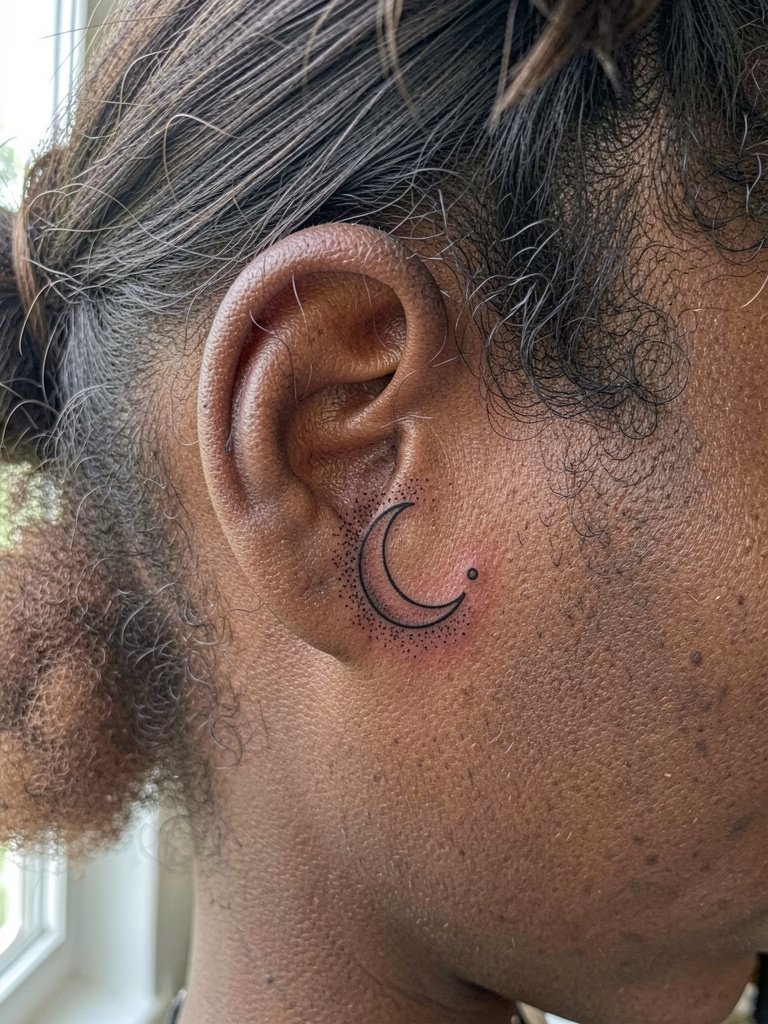
Fine-line crescent moons behind the ear split artists into two camps. One camp warns that single-needle halos on that thin skin blur and lose crisp stippling within two years. The other camp says that with deliberate spacing and slightly denser dot work the halo settles and still reads as texture at three years. If you want the stipple to stay, request demo photos showing healed stipple on similar skin tone and ask for a mapped spacing plan. This piece usually takes 30 minutes, is low on pain, and benefits from a touch-up schedule at two years to preserve the halo.
4. Micro Script Single Word
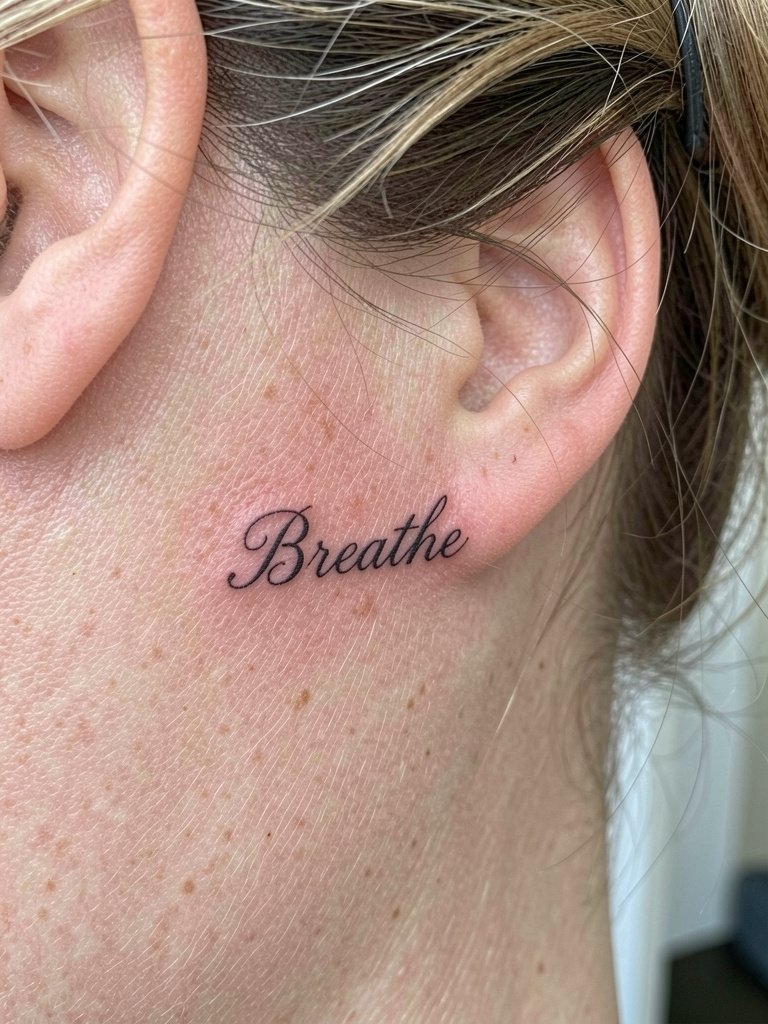
A tiny script word sits like a private mantra that peeks out when you tuck hair behind your ear. For legibility, pick short words and ask the artist to show the word at actual size before inking. The mistake I see most is choosing ornate flourishes that collapse on the thin behind-the-ear skin. At six months the word will look clean, by two years the thinnest strokes can soften into faint hairlines, and you should budget a touch-up if you want the original contrast. Session time is usually under 30 minutes, and it is an easy piece for first-timers who want a low-commitment visible accent.
5. Tiny Anchor, Bold Black

A petite bold anchor reads sharper over time than ultra-fine alternatives because solid outlines retain contrast in shallow skin. I recommend this when you want a punchier symbol that still fits the micro scale. Ask the artist for a sample stencil with the planned outline thickness so you can see how the negative space will age. Common mistakes include too much interior detail that clogs as the skin heals. Expect moderate session comfort, a 20 to 40 minute chair time, and touch-ups every few years if you want to keep the black saturated. For the session wear a loose T-shirt and bring a pack of basic hair ties so you can keep hair off the area without pulling.
6. Geometric Triangle Stack, Minimal

Minimal geometric stacks hold up if you allow breathing room. The design works well when you want symmetry and an architectural feel without color. Specify exact millimeter spacing between the triangles before the session so the artist can scale the set to the behind-the-ear curve. A too-tight stack is the usual mistake because thin parallel lines can merge with skin movement. Expect a 30 minute session, low to moderate pain, and a likely touch-up by year two if the outermost thin lines are part of the composition. This is best for someone who likes clean, repeatable motifs.
Pre-Session Essentials
These small behind-the-ear tattoos heal quickly but the area is sensitive to friction from hair and hats. A few items smooth the appointment and the first week.
-
Stencil transfer paper kit. Lets you preview the exact placement behind the ear before the needle touches skin, which matters for asymmetrical clusters and tiny script.
-
Topical numbing cream. Applied as directed before the session it can reduce jumpiness on the mastoid area without affecting linework.
-
Thin protective film roll. A breathable film helps prevent hair from sticking to fresh ink during the first 24 to 48 hours.
-
Fragrance-free gentle body wash. Use gentle soap for showers so the tiny lines do not get irritated in the early healing window.
-
Aquaphor healing ointment. A thin layer for the first couple of days keeps micro linework from drying and flaking excessively.
7. Tiny Leaf Outline, Vertical

A vertical leaf follows the neck line and reads elegantly when you tuck hair behind the ear. I recommend it for anyone who wants vertical rhythm instead of a horizontal symbol. Discuss line weight and ask to preview the stencil at actual size so the vein detail does not disappear into pores. The frequent error is asking for a super-thin vein that will blur. Expect a twenty to thirty minute session, low pain, and a touch-up option after one to three years. For showing it off, try a loose updo with a soft silk scrunchie so the area stays visible without rubbing.
8. Tiny Bird Silhouette in Flight

Tiny animal silhouettes divide opinion among tattoo pros. One camp argues that single-needle silhouettes on thin behind-the-ear skin can lose crisp wing detail within a few years. The other camp contends that a slightly bolder silhouette with clean negative-space highlights will settle and still read well at year three. If you want a bird that stays bold, ask the artist to thicken the outer contour and remove micro feather lines that might merge. This design suits people who favor symbolic shapes and takes about 20 minutes with low pain.
9. Minimal Wave Line Accent

A single wave line reads simple and travel-ready. I recommend this for people who want a hint of movement without complex detail. Discuss the curve radius with the artist so the wave follows the natural mastoid contour and does not look forced. Tiny S-curve waves that are too narrow tend to blur into a single line over time. Expect a short session and low pain. This design pairs well with summer hats for show-off days, try a wide-brim sun hat when you want the tattoo visible and shaded.
10. Tiny Mandala Dot Cluster

Mandala-style dots behind the ear can look ornate in miniature but they require cultural sensitivity. These patterns have spiritual roots in several cultures so consider the origin and whether the symbol is being used respectfully. Some people see stylized mandala elements as universal art, while others warn that copying sacred designs without context can be appropriation. If you choose this route, ask your artist for a simplified motif inspired by mandala geometry rather than a direct replica of a sacred emblem. Tiny dotwork requires slightly more session time than a single line, and stippling can soften with age so plan for a possible touch-up at year two.
11. Constellation with Tiny Stars

A tiny personal constellation feels private and map-like. Specify exact star spacing and the angle you prefer so the connecting lines run naturally with the neck. The error is requesting micro connect-the-dot lines that are too faint to hold. At six months the constellation reads crisp, by year two the thinnest connectors might need reinforcement. Expect a short session and low pain. For evenings out, pair it with a thin choker necklace that frames the neck without covering the mastoid area.
12. Micro Lightning Bolt

A micro lightning bolt is graphic and fast to do. Recommend this one for people who want a punchy symbol that ages better in bolder contour than in micro detail. Discuss exact angle and thickness so the bolt does not look disproportionate on the curved mastoid plane. The typical mistake is too thin a bolt that blurs into a soft streak. Sessions are quick and discomfort is low, but expect a touch-up in a couple of years if you want the sharp contrast maintained.
13. Tiny Open Heart Outline
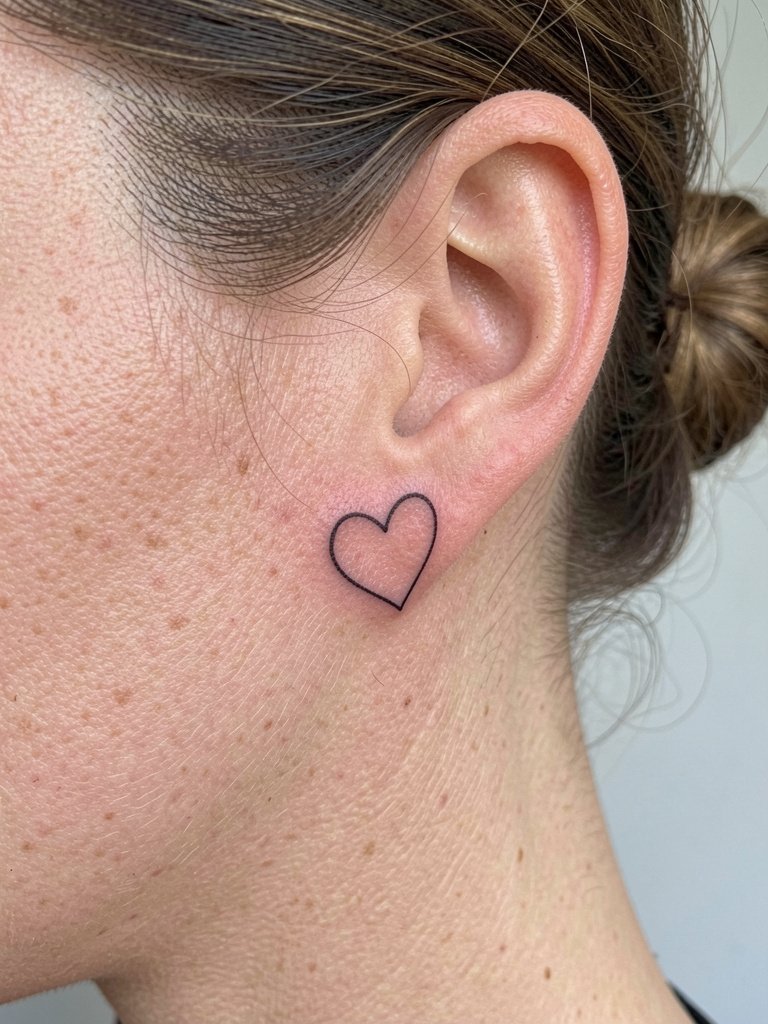
A small heart outline is classic micro ink that still feels modern behind the ear. Ask the artist to preview the heart at the exact millimeter size and request marginally thicker outer strokes to preserve the silhouette. Tiny open hearts that start with feather-thin lines can wash out within a year on this placement. Expect 15 to 25 minutes in the chair and light pain. To show it off without overexposure, style your hair with a low chignon and a minimal ear cuff that complements the pocket behind the ear.
14. Micro Music Note

A micro music note sits naturally behind the ear given the placement's acoustic connotations. If you want it to read at a glance, choose a slightly larger note head rather than a very thin stem-only version. The common mistake is over-finessing the stem which may blur, making the symbol read like a line. This piece takes about 15 minutes and is low pain. For session convenience and minimal rubbing during healing, use a soft silk headband to keep hair away without pressing the fresh tattoo.
15. Tiny Coordinates or Small Numerals

Coordinates make a private statement that only those who look closely will read. When you pick numbers, specify exact punctuation and font style before the stencil is made because tiny text can become illegible if cramped. The usual mistake is squeezing too many characters into the mastoid area. Expect a 20 to 35 minute session and plan for a touch-up if the numerals lose crispness after a year or two. This placement benefits from an artist experienced in micro text work, so book someone who shows healed examples of similar scale.
Frequently Asked Questions
Q: How painful is a behind-the-ear tattoo compared with other small placements?
A: The mastoid skin behind the ear is thin and can feel sharper than the forearm but less intense than rib or sternum work. Most people describe it as a quick stinging or scratching sensation that eases within minutes, and sessions for these tiny pieces usually stay under 45 minutes.
Q: How long before a tiny behind-the-ear tattoo needs a touch-up?
A: Small single-needle work often shows softening at one to three years, while bolder blackwork can go longer before a touch-up is needed. Plan a touch-up window around the two-year mark if you want the original contrast preserved.
Q: Are there professional or social downsides to a tattoo behind the ear?
A: Opinions split on visible neck and ear-area tattoos. One group says behind-the-ear marks are discreet, easy to hide with hair, and rarely cause workplace issues. The other group warns that in conservative industries any neck-area tattoo can be noticed during meetings or when hair is up, and they recommend considering visibility before inking.
Q: Where can I find healed examples and portfolios without naming specific artists?
A: Search platform hashtags like #TinyEarTattoo and #BehindTheEarInk on social video apps, filter by location for healed shots, and use community boards that tag healed portfolios. Tattoo forums also flag portfolio galleries with keywords such as "micro" and "healed" so you can compare how detail reads on different skin tones.
Q: What should I wear to the appointment for a behind-the-ear tattoo?
A: Wear something that lets you keep hair off the area without tugging. A button-up top or a loose tank worn with a zip-up sweater is practical. You can also bring a soft silk hair scarf to hold hair back gently while the artist works.
Q: Are there cultural or sensitivity issues with small symbolic designs like mandalas?
A: Yes. Some ornamental motifs come from spiritual traditions, and using them without context can upset people who consider them sacred. If you pick a culturally rooted symbol, ask for a respectfully adapted motif or choose an artist who explains how they are honoring the source.