
Fine-line tiger work can read intimate and bold at the same time, if you plan scale, placement, and line weight from the start. Pick a design that gives lines room to breathe and avoid single-needle filigree on thin, high-friction skin. The sections below spotlight small, wearable tiger ideas that age more predictably when you match size to placement and book a touch-up review at the one-year mark.
1. Minimalist Tiger Silhouette, Inner Forearm
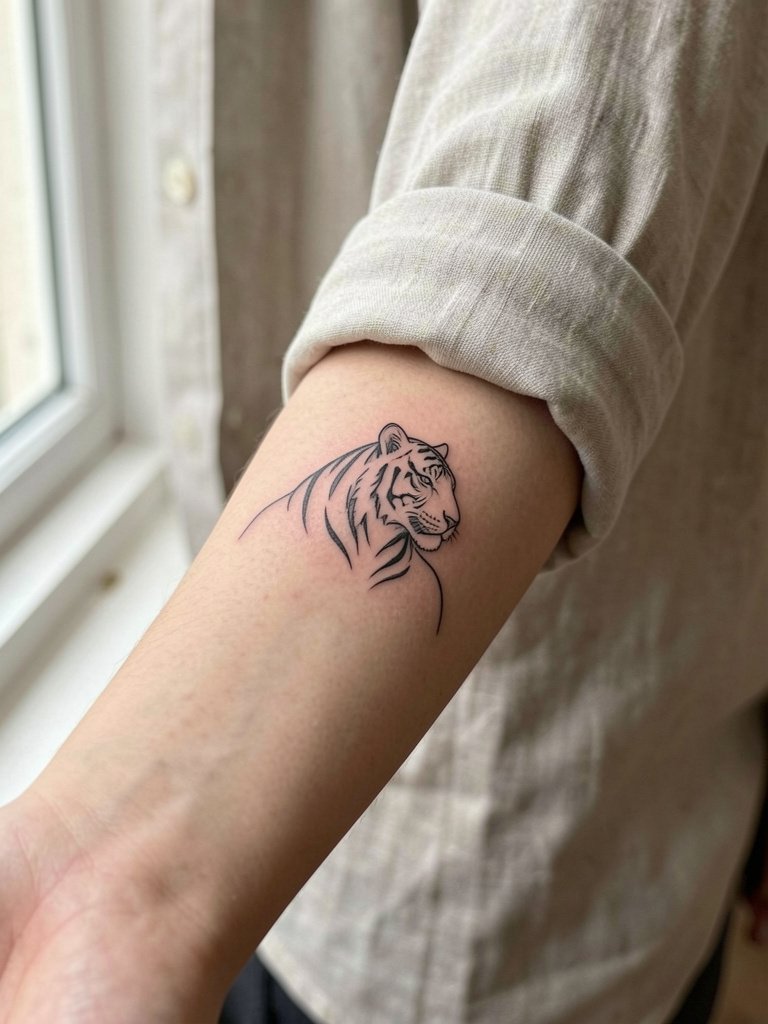
Clean single-stroke silhouettes read great on the inner forearm because the skin is flat and not prone to extreme stretch. Expect a short session and mild vibration from the machine, not the deep burn of ribs. A common mistake is asking for an ultra-thin single-needle trace at tiny scale, which vanishes by year two on this surface. Bring two reference photos showing line weight at one inch and three inches so the artist can scale the silhouette for longevity. For showing the piece, try a rolled cuff linen button-down in cream or olive to keep attention on the linework during casual wear.
2. Fine Line Tiger Face with Dotwork Stripes, Collarbone
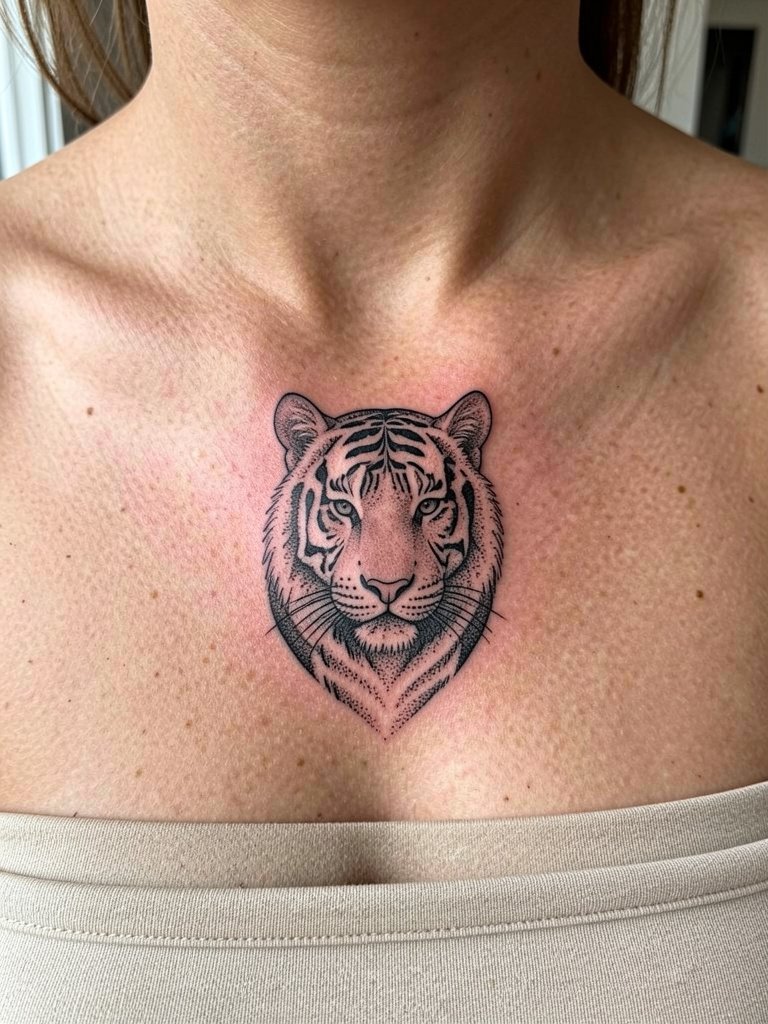
Dotwork stripes add texture without dark patches, which helps the collarbone stay crisp as the skin moves. Pain on the collarbone is moderate because the bone sits close to skin, but single sessions usually finish under two hours. The frequent error is packing in tiny facial details at too-small scale. Ask for slightly wider dot spacing in areas near the clavicle so the stipple keeps contrast after healing. Show-off pairing: a strapless neutral top balances the horizontal canvas of the collarbone without pressing on fresh ink.
3. Geometric Tiger Head, Lateral Hip Bone
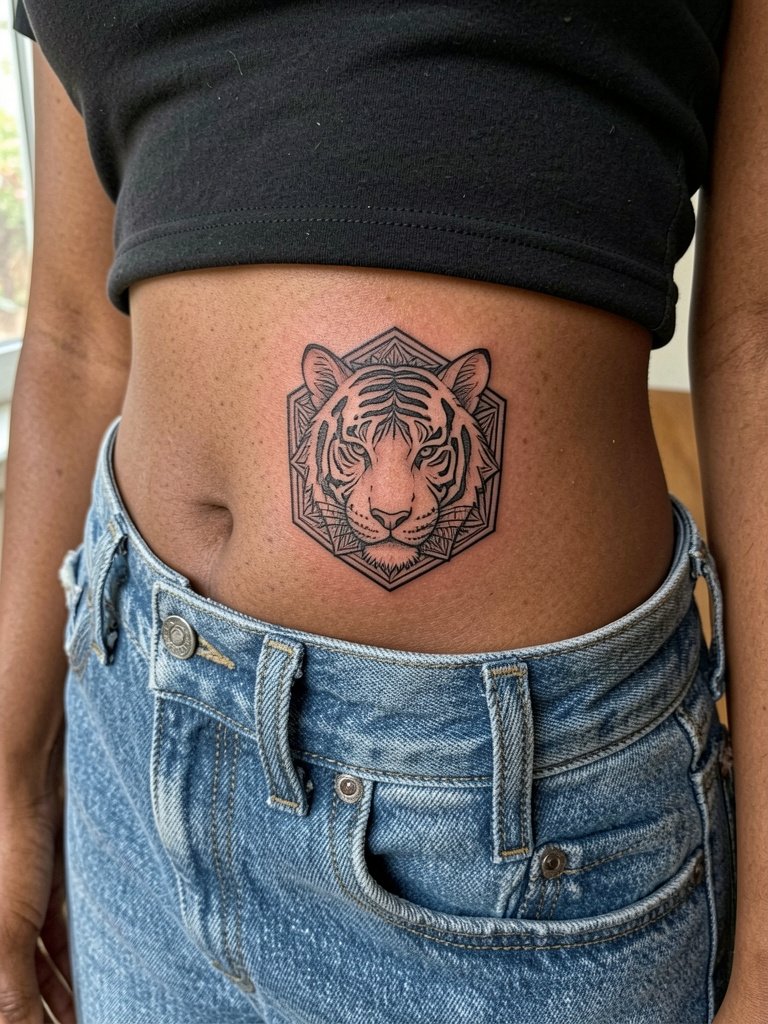
Geometric tiger heads work when the negative space has breathing room. The lateral hip is a forgiving canvas because curves hide small shifts, but avoid ultra-small geometry that blurs into a single tone after movement and washing. For the session, wear low-rise pants so the artist can roll the waistband down without pressure on the area. A common mistake is insisting on exact symmetry at too-small a scale, which forces heavy passes and increases blowout risk. Expect moderate pain and plan for a touch-up at the 12-month review if you notice any line softening.
4. Tiger Roar Graphic Tribal, Inner Upper Arm
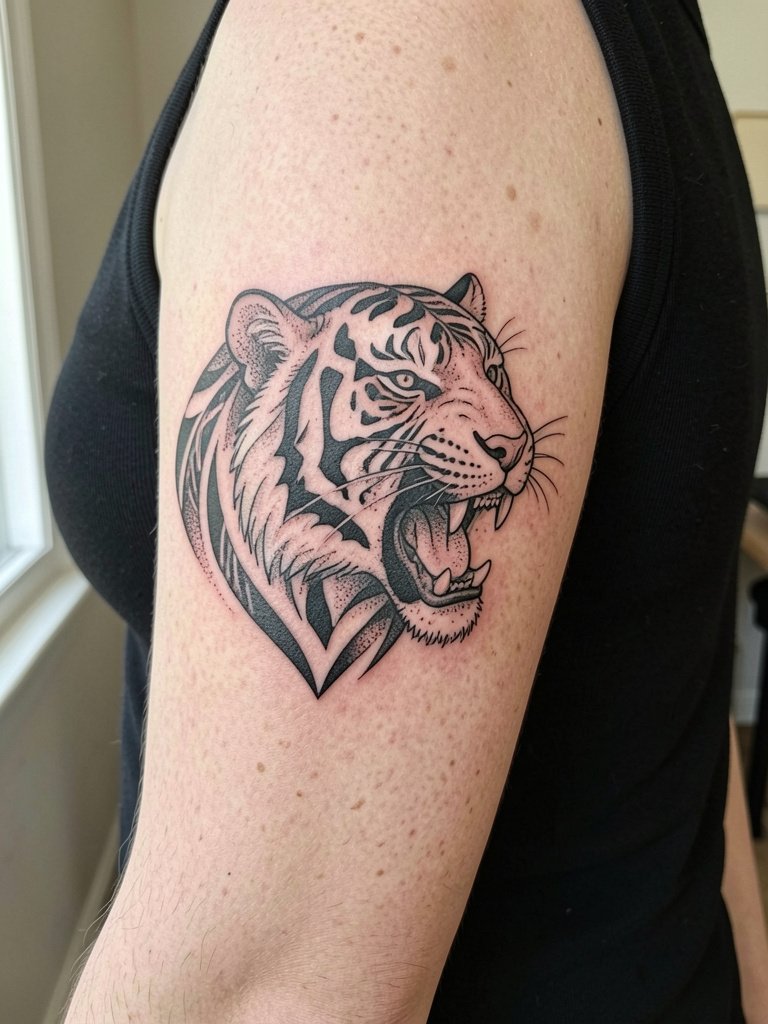
This modern tribal overlay gives energy without heavy black fills that age into blocks. When a tribal motif appears, note its cultural origin and ask for an artist who can adapt motifs respectfully for your body and story. Inner-upper-arm skin tolerates detail better than wrist skin, but avoid extremely dense tribal knots at small size. For session comfort and easy access, wear a sleeveless solid top. Common mistakes include requesting high-contrast black fills at tiny scale, which either blow out or need thicker lines to survive.
5. Micro-Realism Tiger Profile, Inner Forearm
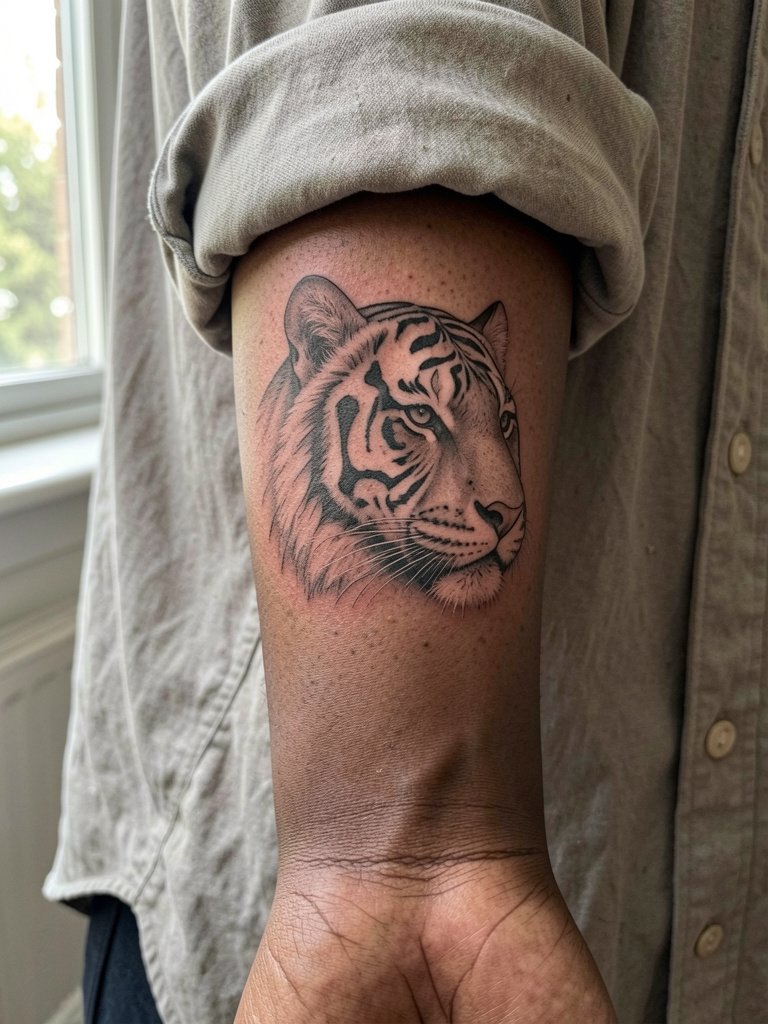
Micro-realism rewards scale. Put this at 1.5 to 2 inches so the negative-space eye reads after six months. There is a live debate about whether fine line fades faster than bold line. One camp argues fine line loses ink quicker because thin channels lose pigment under sun and friction. The other camp says fine line holds if artists use slightly thicker 0.25mm setups, stop overworking the skin, and plan touch-ups at a year. Be specific with the artist about healed examples on similar skin tones so you can evaluate how that style ages over time.
6. Tiger Paw Plus Branch Combo, Wrist
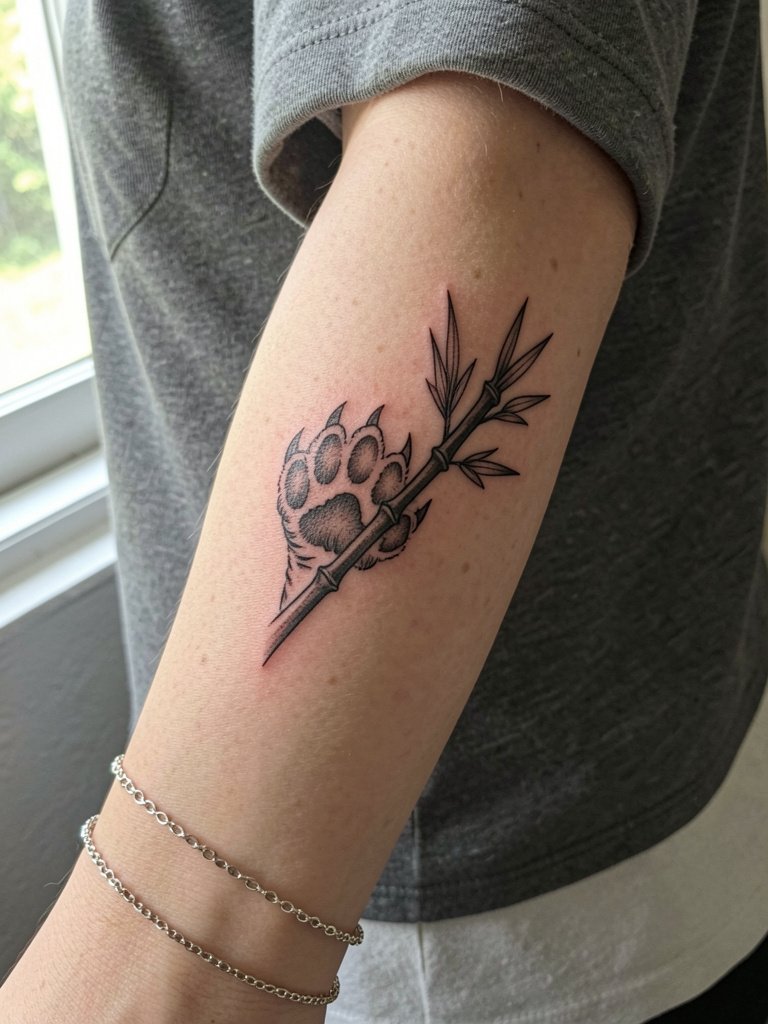
Wrist pieces face friction from watches and bracelets, so a simple paw plus a thin bamboo branch keeps the visual story while resisting smudge. The wrist usually needs a quick session under an hour and feels sharp during the first passes but calms after fifteen to twenty minutes. Avoid asking for ultra-tiny seed details that vanish with daily hand washing. For showing it off, pair with a minimalist watch on the opposite wrist and a thin chain bracelet set on the tattooed wrist when healed. Expect a touch-up window within 9 to 18 months if the outer edge softens.
Pre-Session Essentials
A few small tools smooth sessions for the placements above, from delicate collarbone stipple to wrist work.
-
Dr. Jon's Tattoo Soap. Gentle, fragrance-free cleansing that artists recommend for sensitive skin and for keeping fine line areas from drying too fast during the first week.
-
Hustle Butter Deluxe. Softer texture than the regular formula, useful for dry skin during healing and for preventing tight crusting that hides micro-line detail.
-
TattooMed Aftercare Spray. A thin spray helps nape and sternum tattoos avoid sticky buildup from thicker ointments while keeping the linework visible.
-
Bepanthenol Cream. A milder moisturizer many people with thin-skin placements use during the later healing window.
-
Zensa Numbing Cream. Used by some first-timers for sternum or rib work when applied and removed properly, though it is debated whether numbing masks depth feedback during the session.
7. Dotwork Full-Body Tiger Silhouette, Lower Back
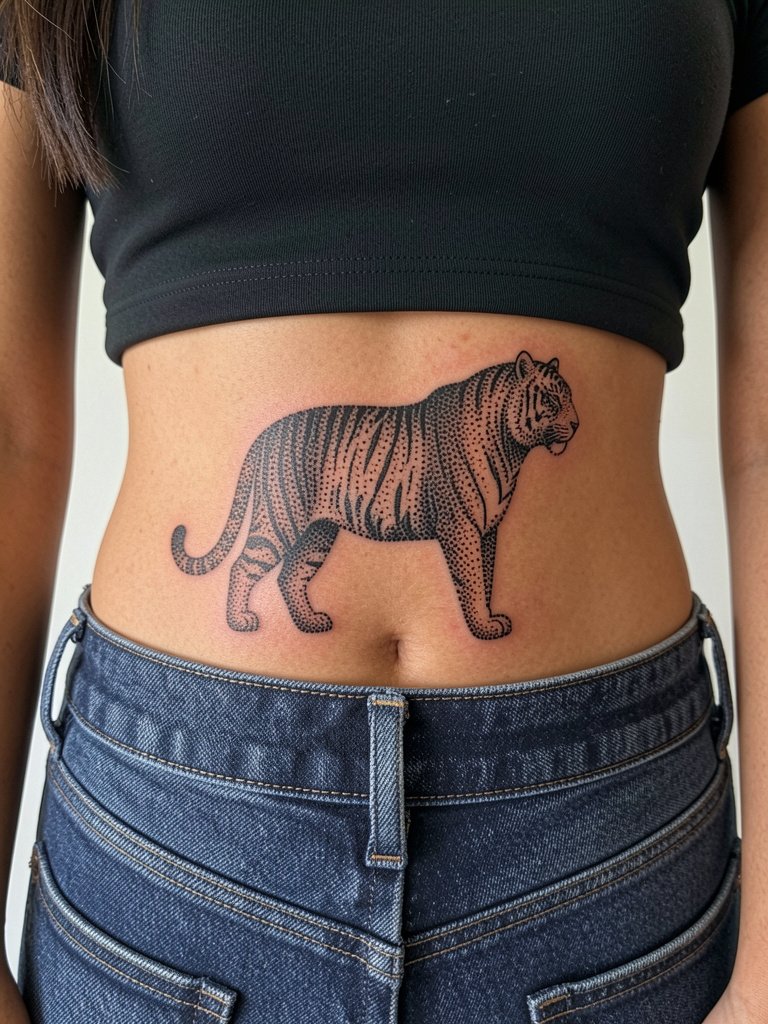
Dotwork silhouettes let a large piece breathe without heavy black blocks, which is useful on the lower back because the area can move with bending and sitting. Sessions can run longer, expect a two-hour block for a three-inch piece, and the main risk is over-saturation that flattens the dot gradient. For wearing the healed design, crop tops in neutral tones and layered thin chains draw attention to the small-of-back vertical line. For the session wear, pull on low-rise jeans so the artist can access the area without fabric pressure. A common mistake is asking for full black fills where stippling would preserve texture and longevity.
8. Tiger Plus Moon Fine Line, Nape
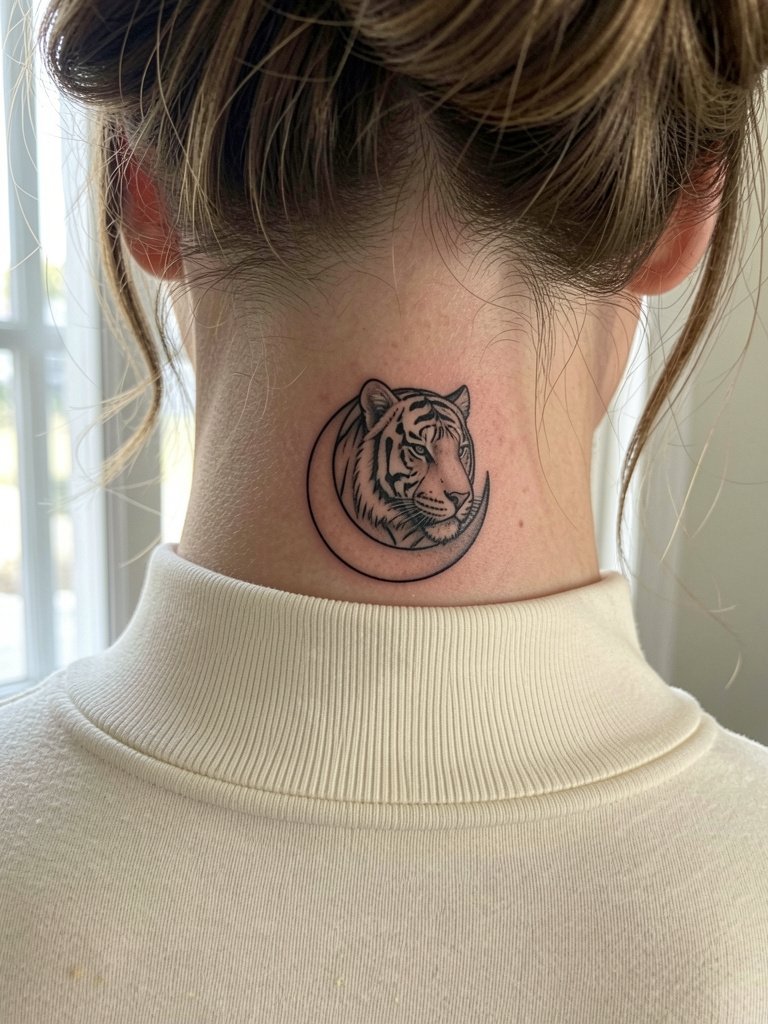
Nape tattoos read dainty and fierce at once, but summer hair products and constant rubbing from collars can affect early healing. This placement benefits from low-touch aftercare and avoiding heavy conditioners that sit on the area during the first two weeks. For showing it off, a high neck cream top frames the piece while keeping the hairline neat. Expect low to moderate pain and plan for a careful one-month check to confirm no scabbing trapped under hair. If you use numbing products for neck work, be aware there is disagreement. One camp warns numbing creams hide the artist's depth feedback and increase scarring risk. The other camp treats numbing as an accessibility tool that, when removed before tattooing, does not harm ink retention.
9. Ornamental Tiger Head in Floral Mandala, Sternum
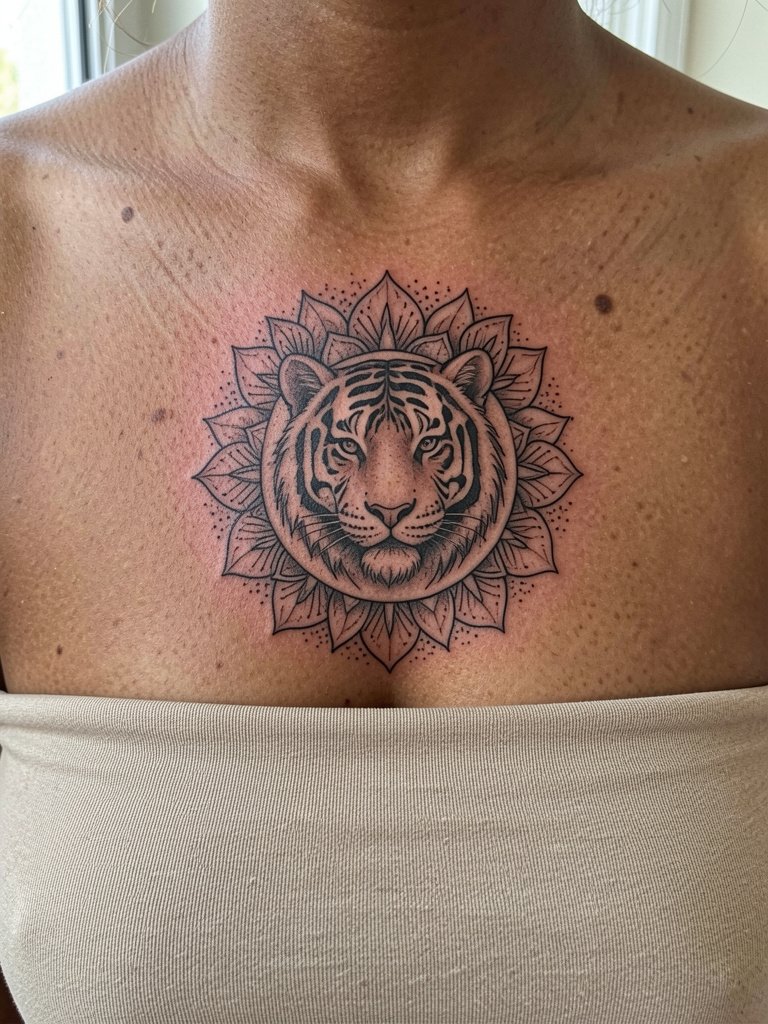
Sternum pieces can be high-impact but they are also intimate and require experience with thin-skin shading. Pain can be higher here, and artists often space sessions to avoid overworking the area. When a session crosses that discomfort threshold, some clients consider topical numbing. People are split on numbing. One view says numbing cream can mask depth feedback and lead to scarring or poor retention on sensitive sternum skin. The alternate view treats modern numbing creams as legitimate accessibility aids that, when removed at the right time, let anxious clients complete a session without harming the ink. If you pursue a sternum ornamental, bring layered chain references rather than broad color samples so the artist can plan petal spacing for long-term clarity.
10. Tiger Eye Close-Up, Inner Forearm
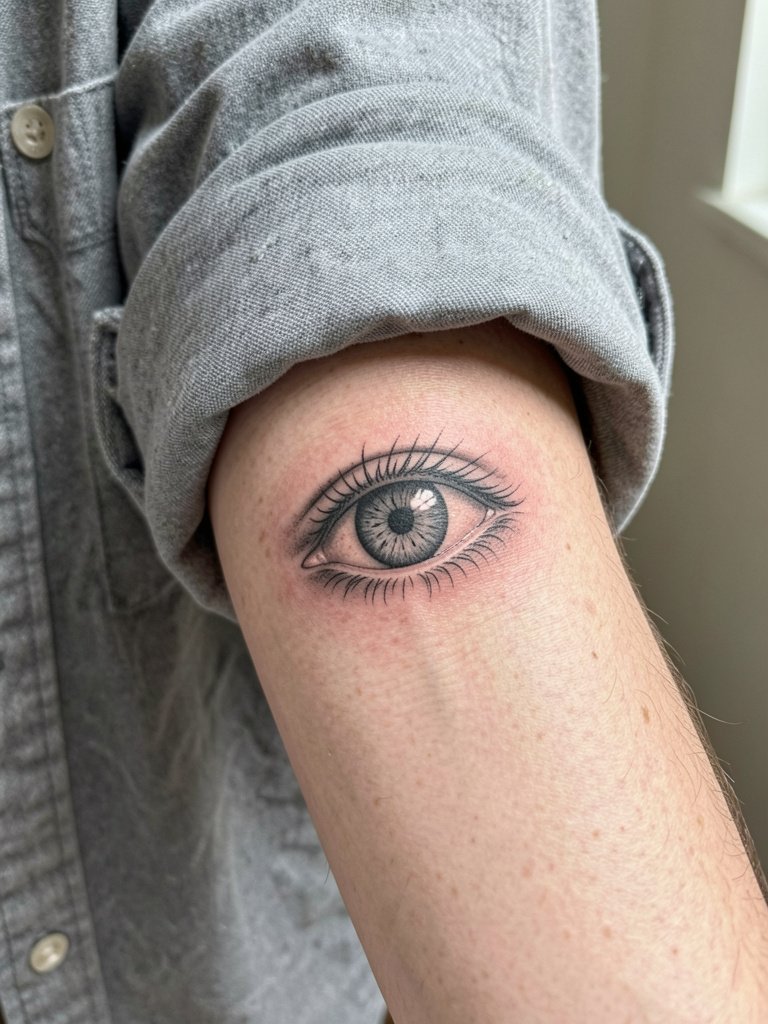
A tiger-eye close-up packs drama into a tiny spot but demands careful line weight planning. Single-needle detail can look incredible at six months and soft by year two on high-use forearms unless the needle thickness is chosen to match your skin. Avoid asking for maximum micro detail in a one-inch piece without checking healed photos on similar skin types. The session feels pinchy and precise; expect pauses to let the skin cool. For display, a rolled-cuff linen look keeps focus on the detailed iris without competing patterns. Plan a one-year touch-up to restore any softened highlights.
11. Tiger and Lotus, Medial Inner Thigh
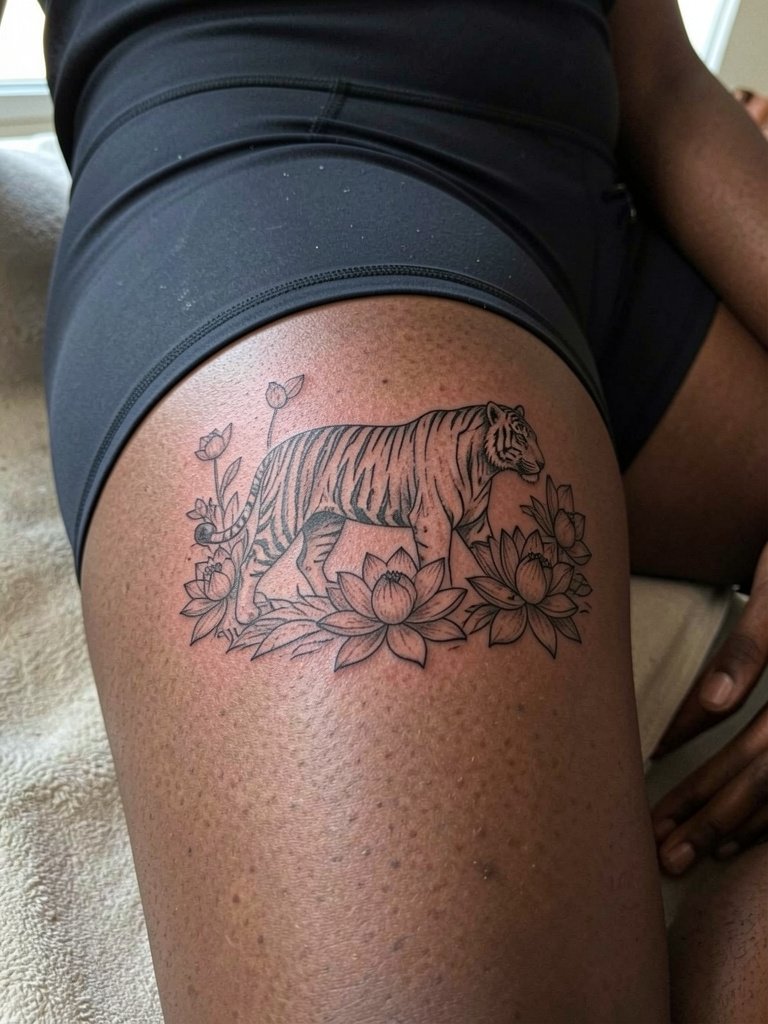
Inner-thigh work reads as private and symbolic, but the skin there moves with weight changes and friction. If you expect body-shape shifts, consider an alternate placement because the inner thigh can stretch and warp fine line detail over time. Sessions feel deeper with sensitive nerve endings and often need a relaxed, multi-break approach. Common mistakes include demanding extremely thin filigree that will blur when the area stretches with weight fluctuation. For the appointment, wear loose drawstring pants or a skirt so the artist can access the site without tight waistbands. Expect to plan a touch-up at the 12-month review if the lotus petals soften.
Frequently Asked Questions
Q: Will a fine line tiger fade faster than a bold tiger?
A: It depends on placement and technique. One perspective says thin lines lose pigment faster under sun and friction and will soften sooner than bold lines. The opposite perspective notes that fine line will hold if the artist uses slightly heavier line weight where needed, avoids overworking, and plans touch-ups; seeing healed examples on similar skin helps decide which approach to choose.
Q: Are single-needle tiger details visible on darker skin tones?
A: Single-needle can look faint on darker skin unless the line weight and contrast are adjusted. Request healed photos on similar skin tones and ask the artist to plan slightly thicker fine lines or subtle black-and-grey shading for contrast, rather than pure single-needle filigree at very small scale.
Q: How should I dress for a collarbone or sternum session?
A: Wear a strapless or button-down top for collarbone or a strapless top for sternum so the artist has full access without fabric pressure. A good show-off pick to plan outfits around a healed collarbone piece is a delicate pendant necklace worn on the opposite side so jewelry frames the ink without covering it.
Q: Where can I find healed fine line tiger portfolio samples without naming artists?
A: Search platform tags like #finelinetattoo, #dotworkfineline, and #napetattoos on Instagram and TikTok, and use location filters to narrow to your city. Reddit threads in r/tattoos and r/tattooadvice often link to healed sets and show progress photos in different skin tones.
Q: How often should I plan touch-ups for small fine line tiger tattoos?
A: Expect to review the piece at 9 to 18 months for small wrist, forearm, or collarbone work. Healed checks let you see where lines softened and which areas need a hair heavier line to survive sun and wash cycles.
Q: What causes blowout on fine line tiger work and how can I reduce risk?
A: Blowout usually stems from too deep a needle or excessive passes in a small area. Reduce risk by asking for slightly wider spacing in dense areas, avoiding single-needle at very small scale on thin skin, and planning a modest size increase so lines do not sit too close to each other.