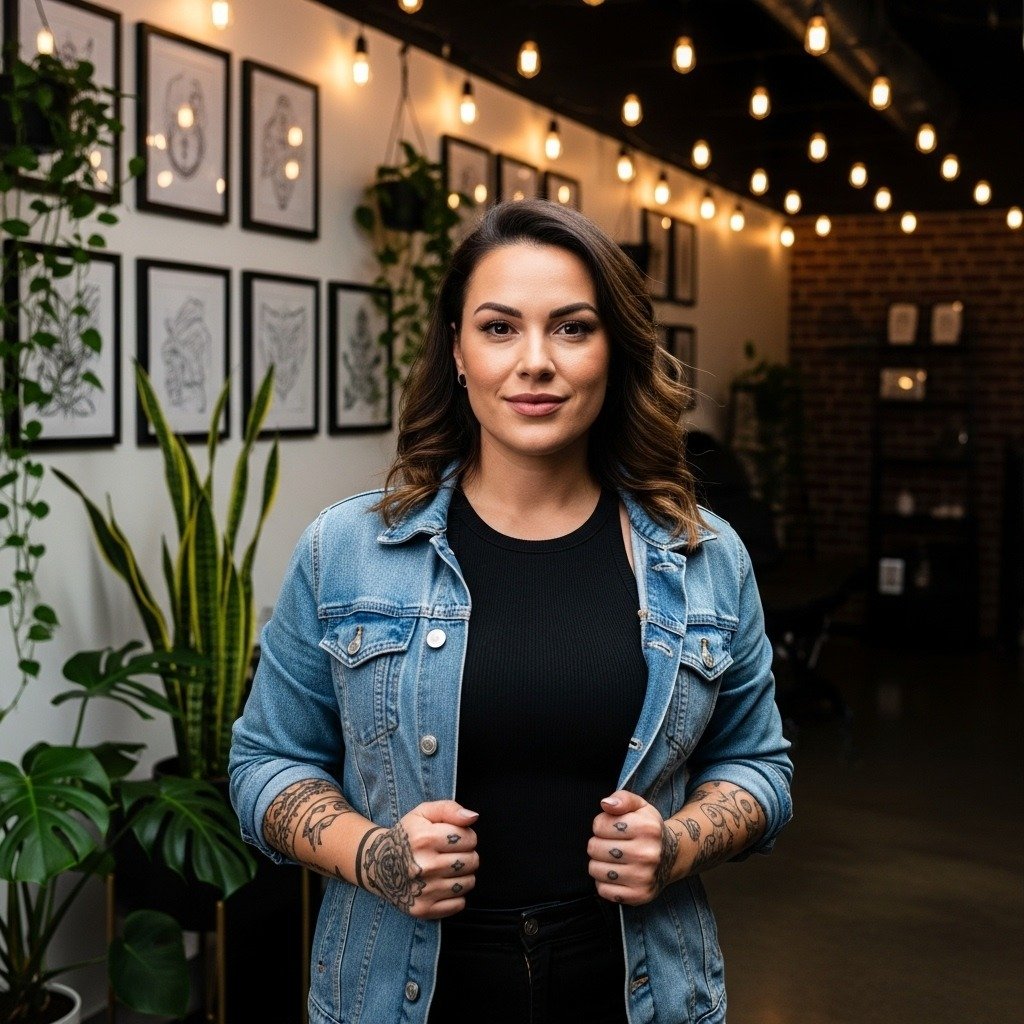
Small hand tattoos sit where life touches art the most. They catch handshakes, coffee cups, and sleeve cuffs, so the design needs to work close up and eight years from now. Think placement, line weight, and how often the area meets water and friction. Read on for 15 hand-focused ideas that balance presence with longevity, plus practical notes you can take into the chair.
1. Tiny Single-Needle Anchor on the Side of the Thumb
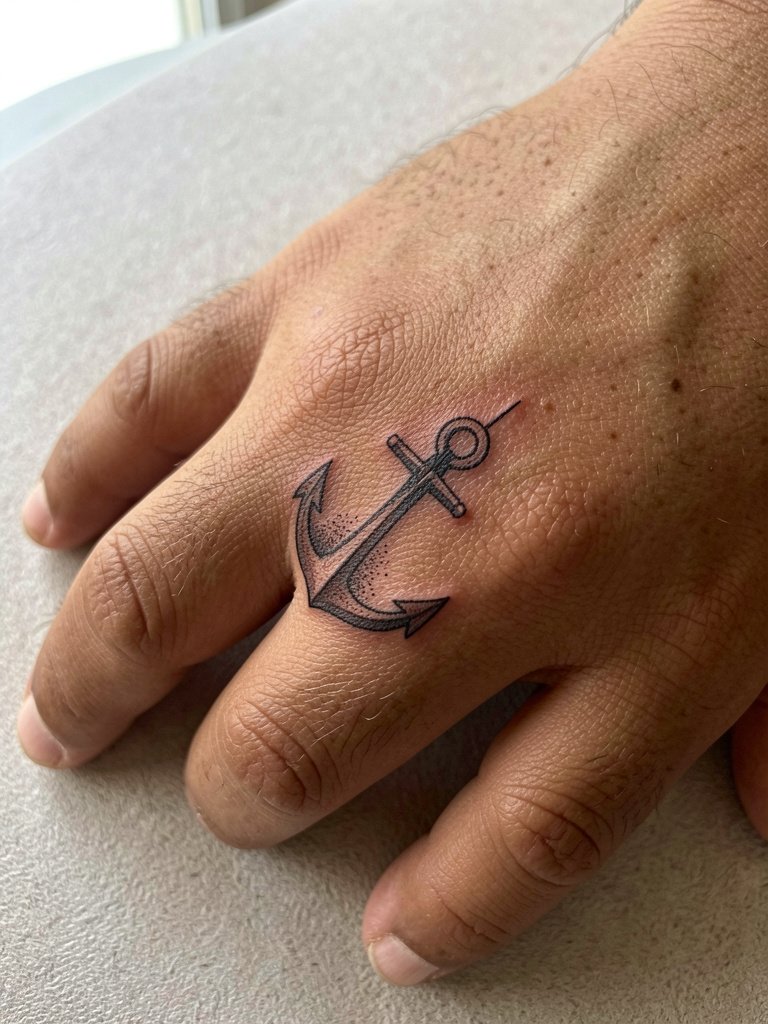
Thumb and webbing see constant motion and washing, so pick a slightly heavier single-needle than ultra-fine script to keep the shape legible over time. Expect the session to be quick, often 15 to 25 minutes, with a sharp buzzing sensation when the artist works the lateral fleshy area. Discuss exact size and negative space with your artist, and bring a scaled reference so the anchor sits clear of the web crease. Common mistake is shrinking the design to coin size, which leads to early softening. Plan for a touch-up at the 9 to 18 month mark. For showing it off, cuffed denim jackets frame the thumb and let the symbol read at a glance, try a rolled sleeve in neutral tones with an open cuff denim jacket to pair.
2. Micro-Consonant Script Along a Finger Bone
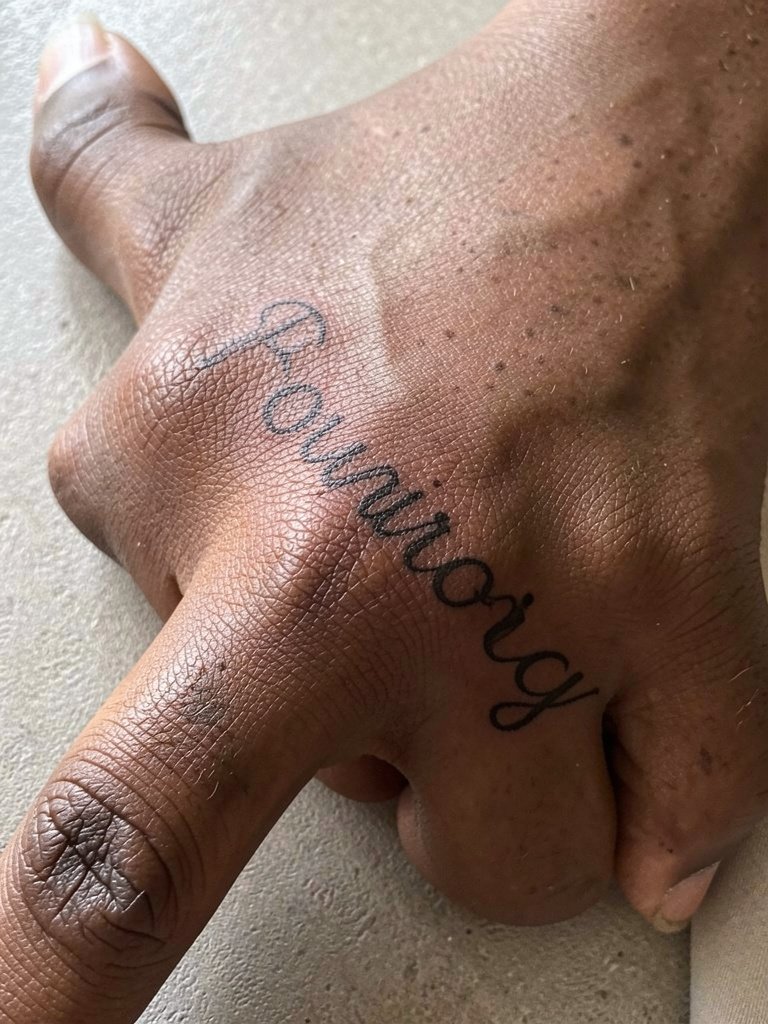
Finger scripts age faster because the skin is thin and frequently rubbed. One camp of artists says tiny script on fingers blurs within a year on most people. Another camp believes slightly bolder stroke and strategic spacing keeps the word legible for several years. If you prefer a word here, increase the line weight by a tick from your Instagram reference and pick letters with open counters. The session takes 20 to 40 minutes and feels stinging rather than deep aching. Do not place script directly over a joint crease. For outfits, slim ribbed sweaters or thin leather gloves highlight knuckle and finger work when you want to show it, try a pair of leather touch-screen gloves for colder months.
3. Micro-Realism Eye on the Back of the Hand
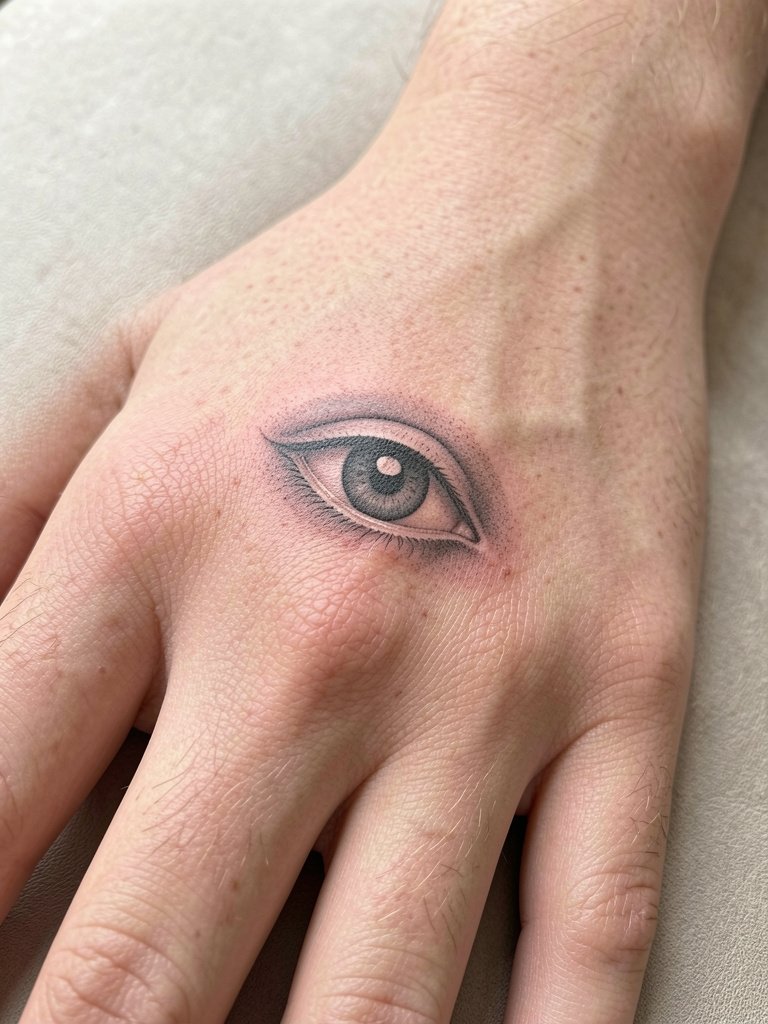
A small realistic eye reads like jewelry when placed centrally on the back of the hand, but it needs balanced shading and enough black to survive washing and sun. Expect a one-hour session with sharp surface sensitivity. Ask for slightly higher saturation in the midtones so the catchlight remains visible after six months. A common mistake is asking for micro realism at too small a scale. If you want the detail to stay crisp, add 25 to 40 percent more size than the initial impulse. Because this is a visible placement most artists advise a thorough portfolio review to confirm healed examples on similar skin tones.
4. Dot-Work Crescent Moon on the Side of the Index Finger
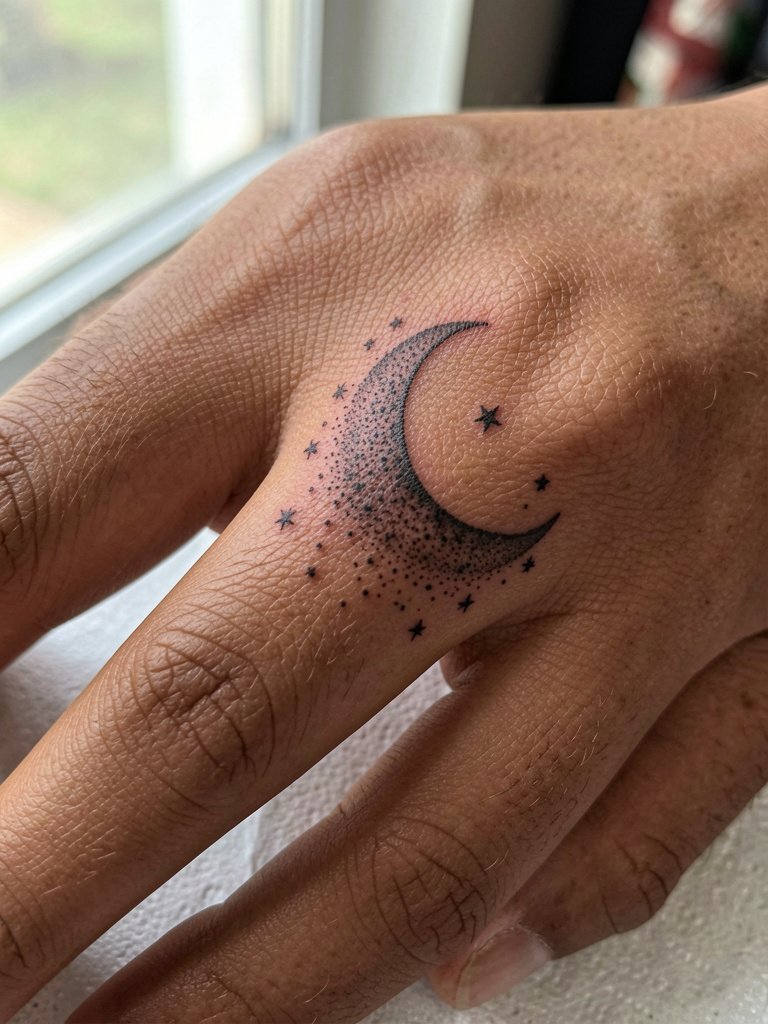
Dot work holds surprisingly well when the artist uses slightly larger stippling near edges, because the ink does not sit in a single continuous line that can blur. The technique looks delicate at first and then maintains texture as it heals. Session time is typically 30 to 50 minutes and feels like constant light tapping. Tell the artist you want gradual density toward the crescent's inner curve so the silhouette remains readable after a year. A mistake people make is asking for ultra-fine dots that the hand skin will migrate. Wear slim stacking rings when you want to frame this detail, and pair them with a delicate midi ring set to emphasize placement.
5. Small Blackwork Chain Link Along the Side Palm
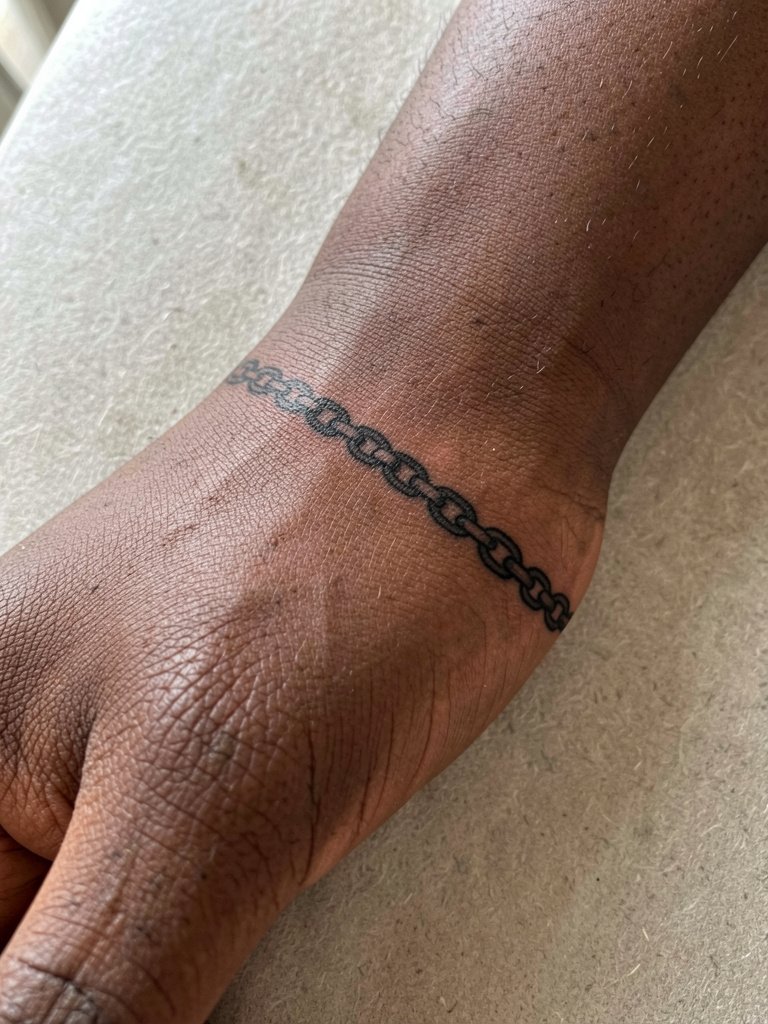
Edges of the palm are exposed to frequent abrasion and moisture. A heavier blackwork chain reads longer than tiny, delicate links. Discuss with the artist how the design sits relative to the natural palm lines so the links do not fall into creases. Session time varies from 30 to 60 minutes depending on how many links you want. One common mistake is wrapping the chain too close to the lifelines, which can cause rapid softening. For showing it off, short sleeve shirts with a narrow cuff or bracelet watches create a visual break that highlights the palm edge. Try a leather cuff watch with a narrow face such as a minimal leather watch strap.
6. Miniature Geometric Palm Mandala
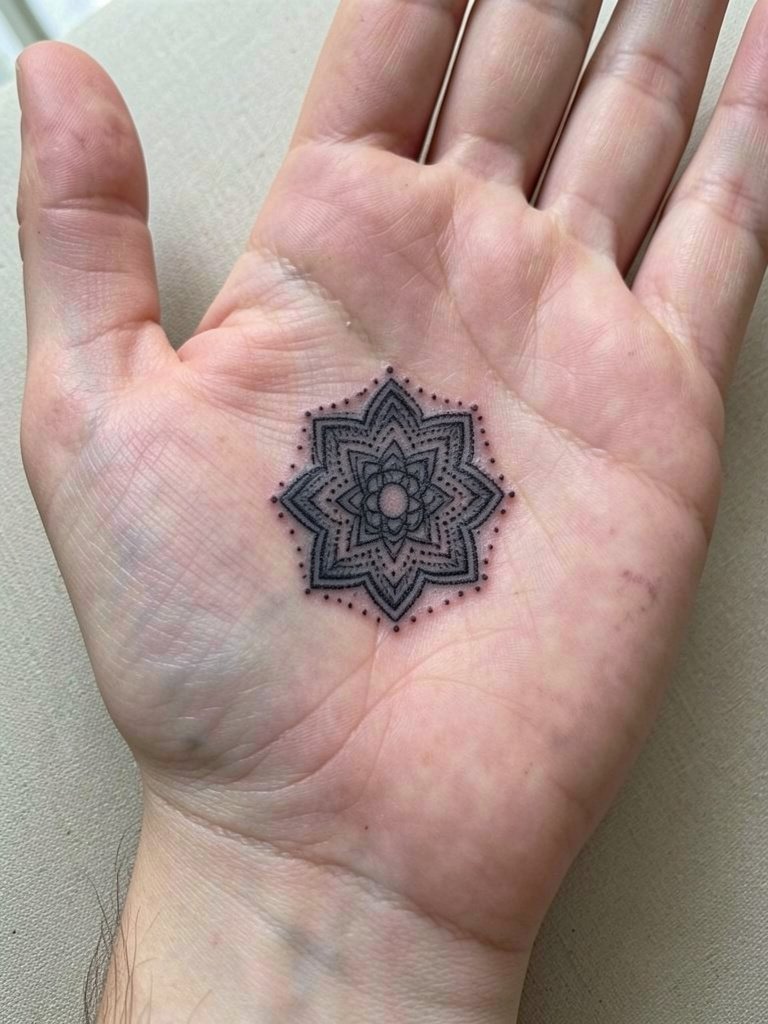
Palm tattoos are notoriously high maintenance. One group of artists refuses palm work for longevity reasons because palm skin sloughs and the ink often fades rapidly. The other group will take palm pieces if a client accepts likely early touch-ups and understands a possible one to two year fade. If you want a palm mandala, discuss ink density and plan for a touch-up window at six months to a year. The session feels intense because the skin is thick and the pressure is closer to bone. Avoid intricate micro-lines in the palm center. For appointments, wear a short sleeve top so the artist has full access, and bring a cotton short sleeve tee to stay comfortable.
Session Day Picks
These small hand pieces mean more hand washing and movement during the first week, so a few specific items smooth the chair time and first days.
-
Disposable stencil transfer sheets. Use these to preview exact placement on the hand surface, especially useful for knuckle and palm designs above.
-
Topical numbing gel. Applied per instructions, it can ease tight-area sessions like palm or finger bones without compromising linework when timed correctly.
-
Thin protective film roll. Handy for wrapping finger and thumb pieces when you need to keep water off during the first 24 hours.
-
Fragrance-free gentle body wash. A mild cleanser helps during showers without stripping fresh ink of necessary moisture.
-
Multi-purpose healing ointment from a mainstream brand. A trusted ointment for the first 48 hours supports fine line work without heavy residue.
7. Tiny Botanical Sprig Across the Top of the Hand
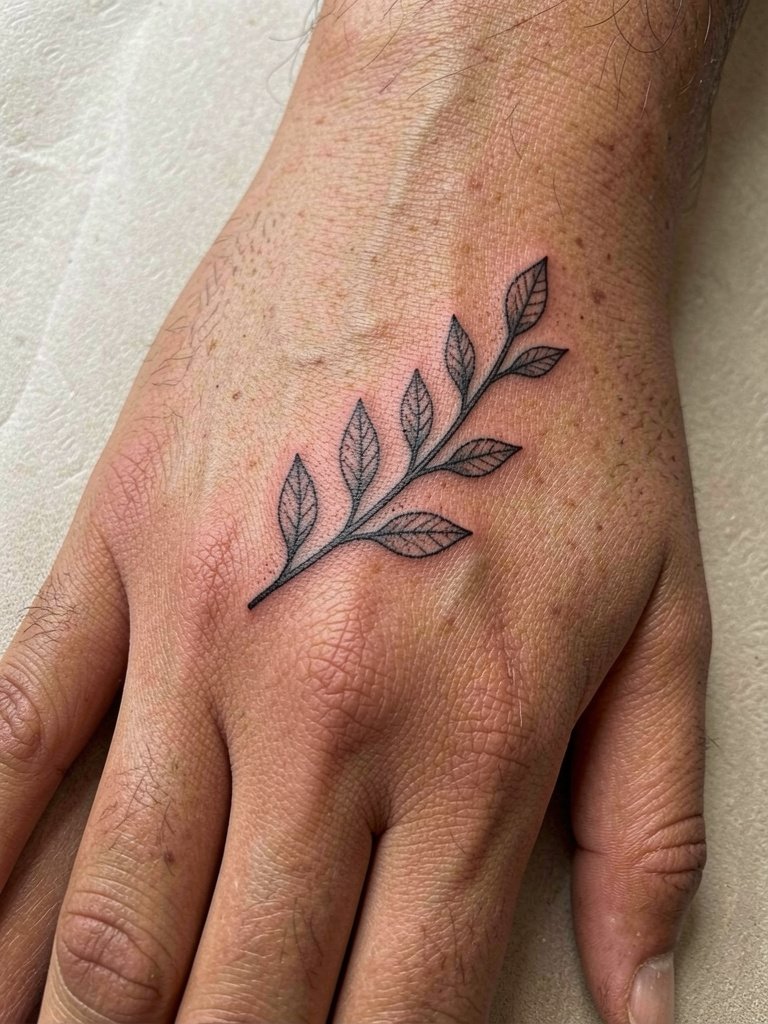
Dorsal hand botanical work needs rhythm that follows the tendons. I recommend slightly thicker final strokes than a typical single-needle reference so the leaves hold contrast after regular washing. The session lasts 30 to 45 minutes and feels sharp on top of the hand. Ask the artist to map the sprig across tendons so the leaves do not sit directly over knuckles. A common error is centering the motif on the wrong tendon, which makes it look off every time you flex. Pair this look with short sleeves and a simple bracelet set to let the sprig sit visually, and consider an open cuff brass bracelet.
8. Minimalist Triangle Stack on Knuckles
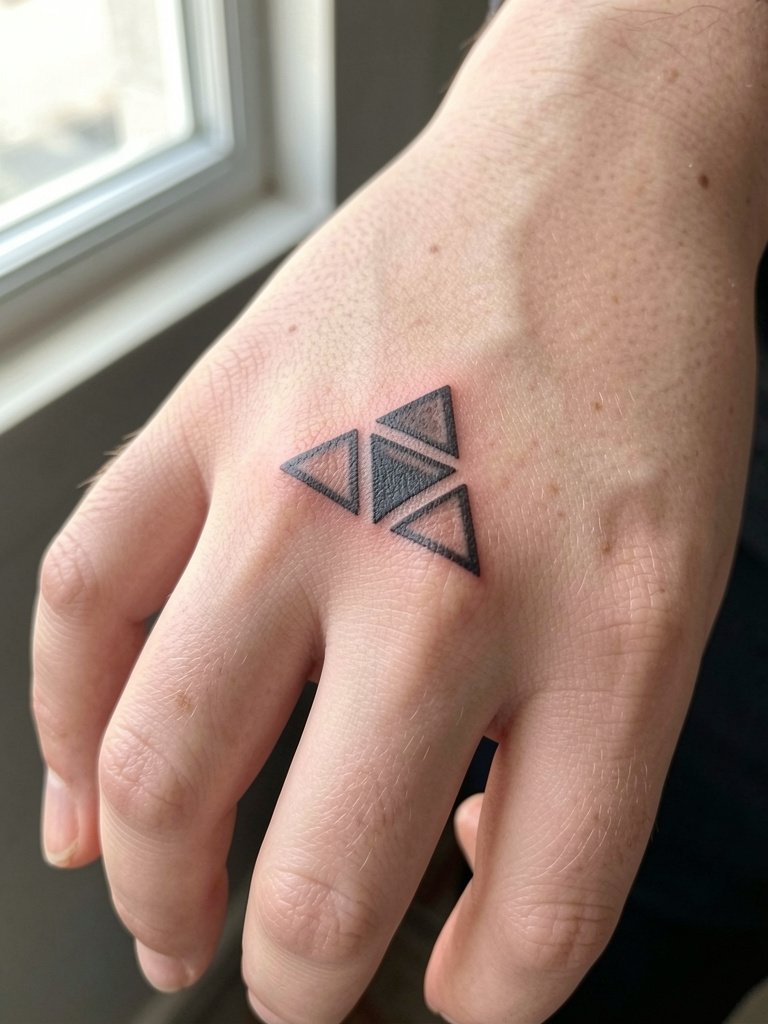
Knuckle geometry reads like modern signet work but needs slightly heavier lines and a low-contrast fill so the shapes do not bleed into surrounding skin. Discuss anchor points for each triangle so spacing stays even when you make a fist. The session is brief, often 20 to 35 minutes, and includes notable surface discomfort. People often request ultra-thin triangles and then notice blending at six months. For outfits, cropped sleeves and ring stacks highlight knuckle geometry, try a slim stacking ring set to complete the look.
9. Micro-Blackwork Anchor on the Wrist Cuff
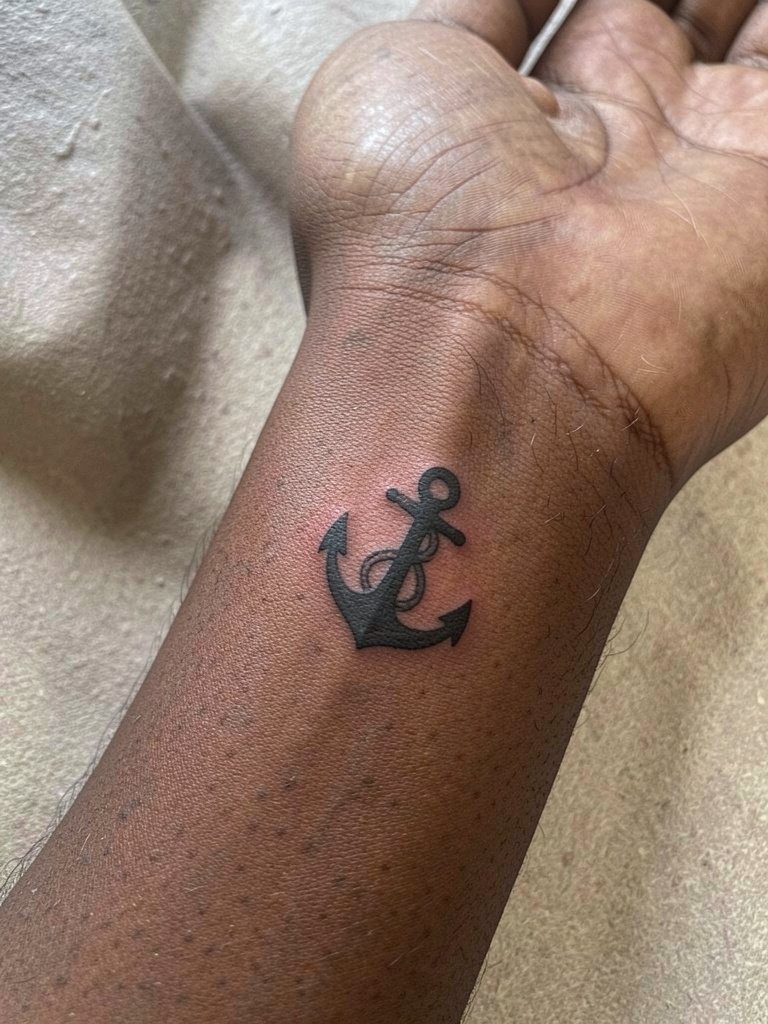
Inner wrist pieces are visible and contact-prone from watches and bracelets. Prefer a solid silhouette over intricate internal details so the shape remains readable after repeated contact. Expect 20 to 40 minutes of work. Tell the artist you want the bottom of the anchor clear of the wrist crease so the line avoids constant fold stress. A common mistake is putting delicate inner detailing too close to the crease. For showing the wrist, short cuff shirts and slim watches frame the mark, consider a minimalist leather band watch.
10. Tiny Color Dot Accent Near the Thumb Web
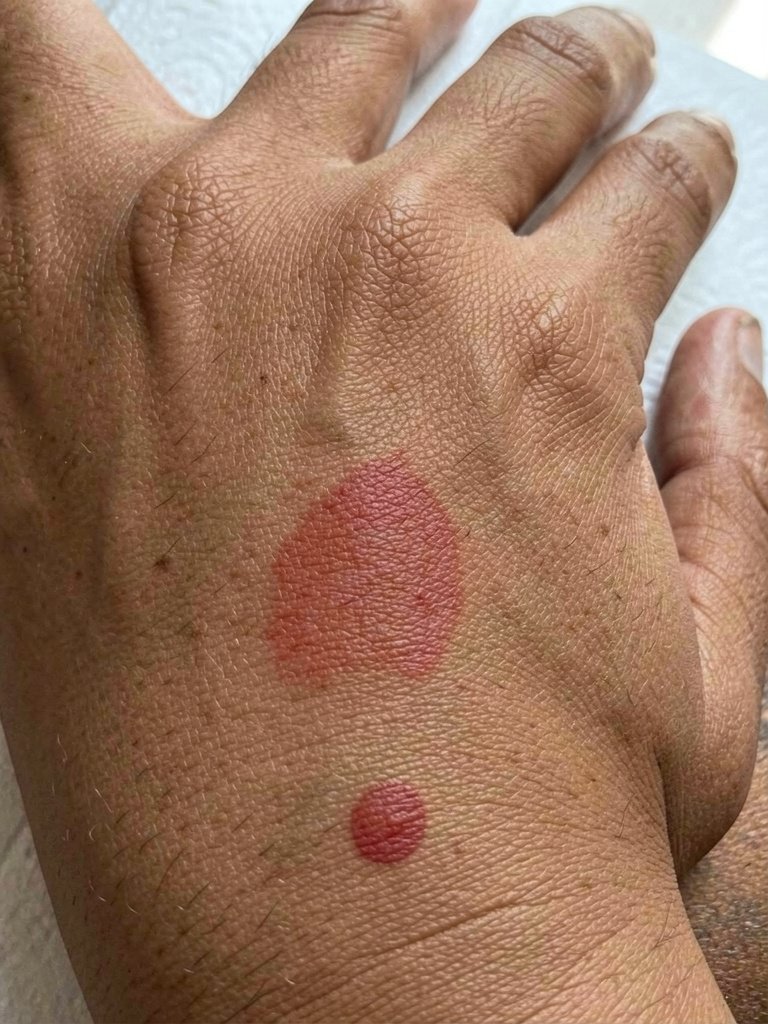
A tiny color pop can be striking but color in high-friction hand zones fades faster. One group of artists argues color is ill-advised on hands because pigments break down quickly. The other group will use saturated pigments and plan a realistic touch-up schedule. If you want color, choose a single stable pigment and accept a one-year touch-up cadence. The session is short and often less painful than the knuckle areas. For styling, short nails and neutral polish redirect the eye to the dot, and pairing with a nude manicure works well. Consider a nude gel polish kit to complement it.
11. Micro-Traditional Rose on the Base of the Finger
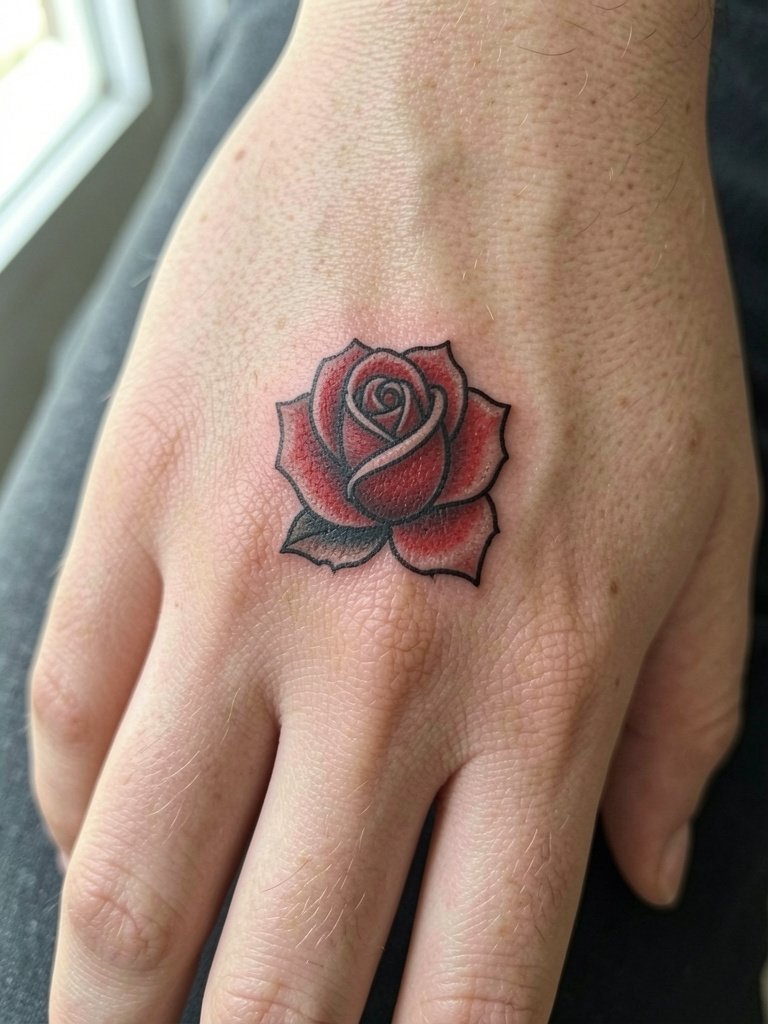
Traditional roses use thicker outlines and solid fills, which help them persist on finger placement. Discuss how much black outline you want versus flat color so the design does not lose its silhouette. Typical session time is 30 to 50 minutes. A frequent mistake is asking for too many petals in too small a space. Keep the motif compact and bold to reduce blowout risk. For nights out, short sleeves and stackable rings draw attention to finger roses; try a vintage-inspired ring set.
12. Fine Line Compass at the Thumb Base
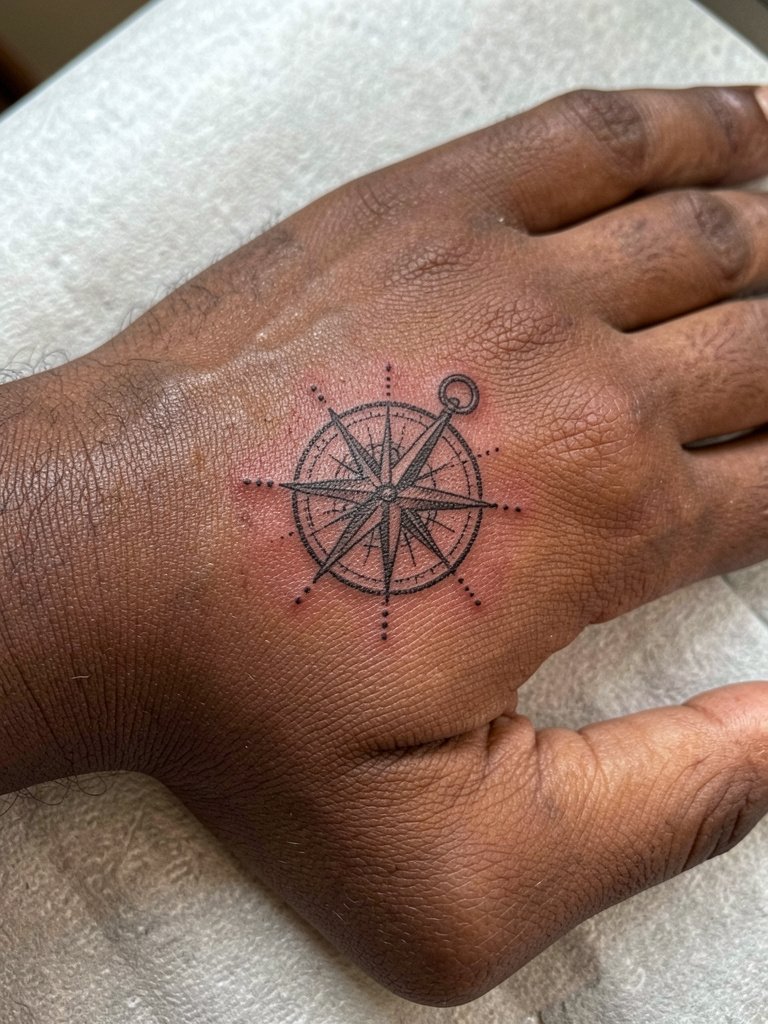
Small directional symbols work if you compromise on line weight. Fine radial lines on the thumb base require slightly heavier primary points to keep the cardinal marks visible after months of use. The session is typically 30 to 45 minutes and sensitive near tendon attachments. Request preview stencils that show how the compass reads when the hand flexes. Avoid tiny ornate embellishments that will fill in. For showcasing, short sleeve polos and rolled cuffs keep the hand visible. Pair with a classic woven bracelet that does not rub the area.
13. Micro-Script Date Along the Side of the Hand
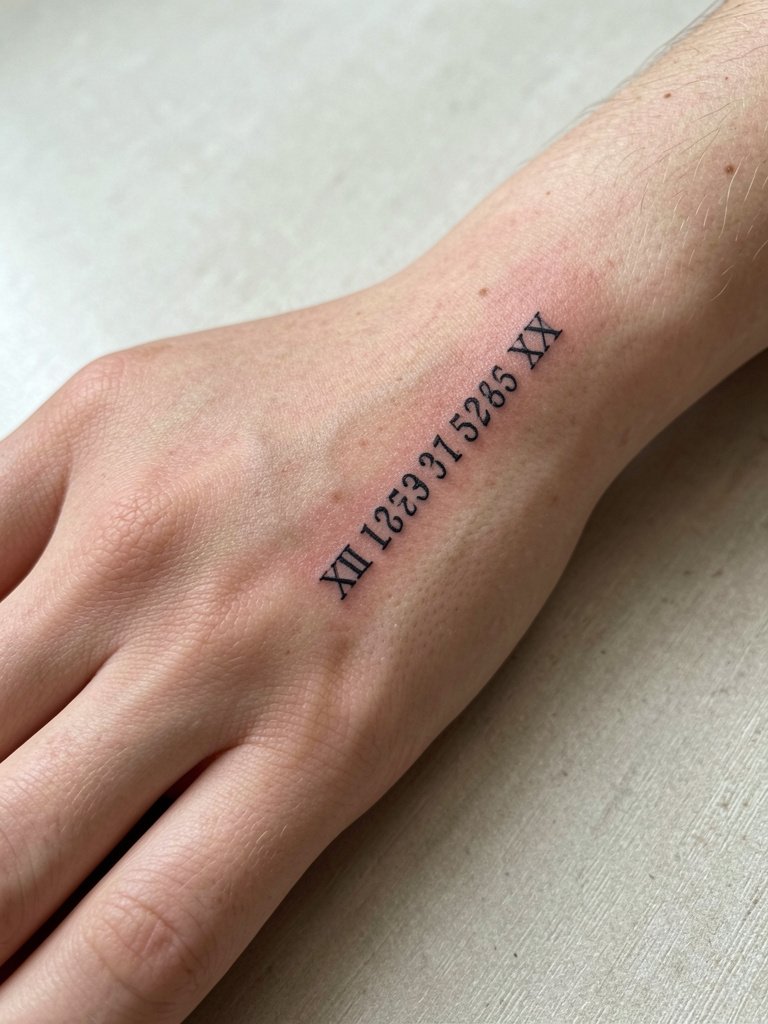
Dates and coordinates are meaningful but need readable type. Use a slightly bolder serif than the thinnest single-needle setting and set the numerals with modest spacing. The session is quick, often 15 to 30 minutes, and the side-of-hand skin feels more brush-like than knuckle skin. A common mistake is stacking too many numbers into a small height. For accessories, minimal chains and thin bracelets draw the eye without rubbing the ink. Consider a thin chain bracelet to frame the script.
14. Micro-Illustrative Tiny Animal Paw on the Outer Thumb
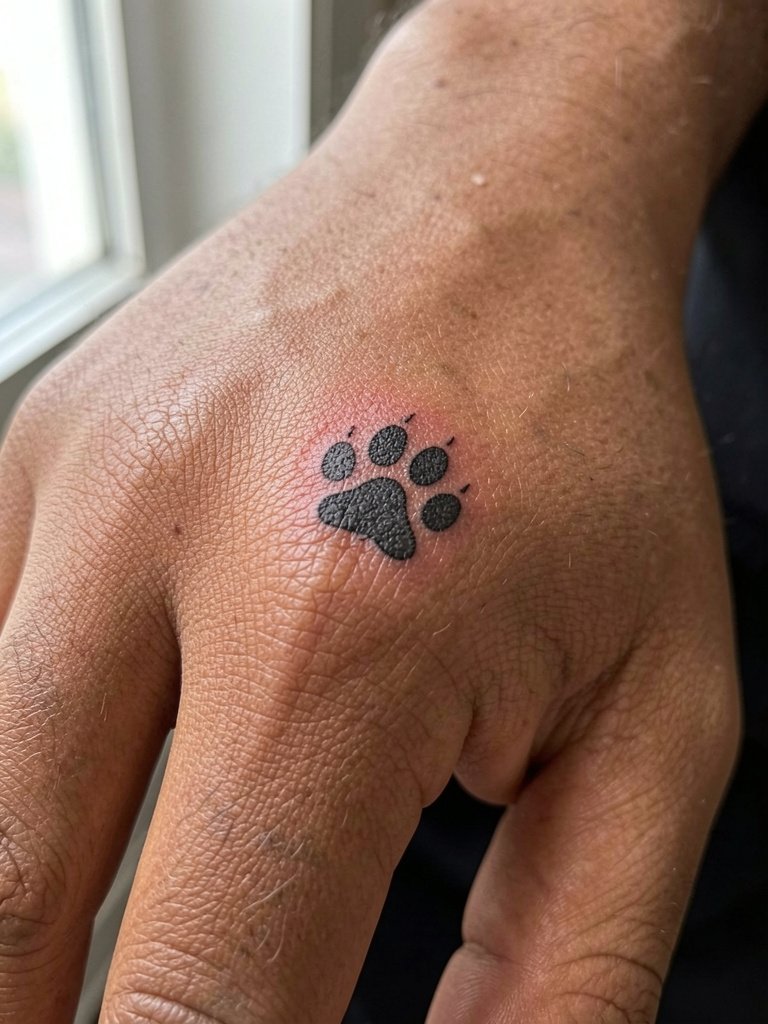
Cute motifs like paw prints hold well if kept bold and simple. They sit on a high-contact area so ask the artist to place the pads away from tight bracelet contact points. Sessions are short and feel like surface scratching. People often make the print too detailed for the small canvas, which causes blurring. For a polished look, pair with neutral nail polish and a simple band ring, such as a thin sterling band, to balance the visual weight.
15. Tiny Scripted Word Along the Knuckle Arch
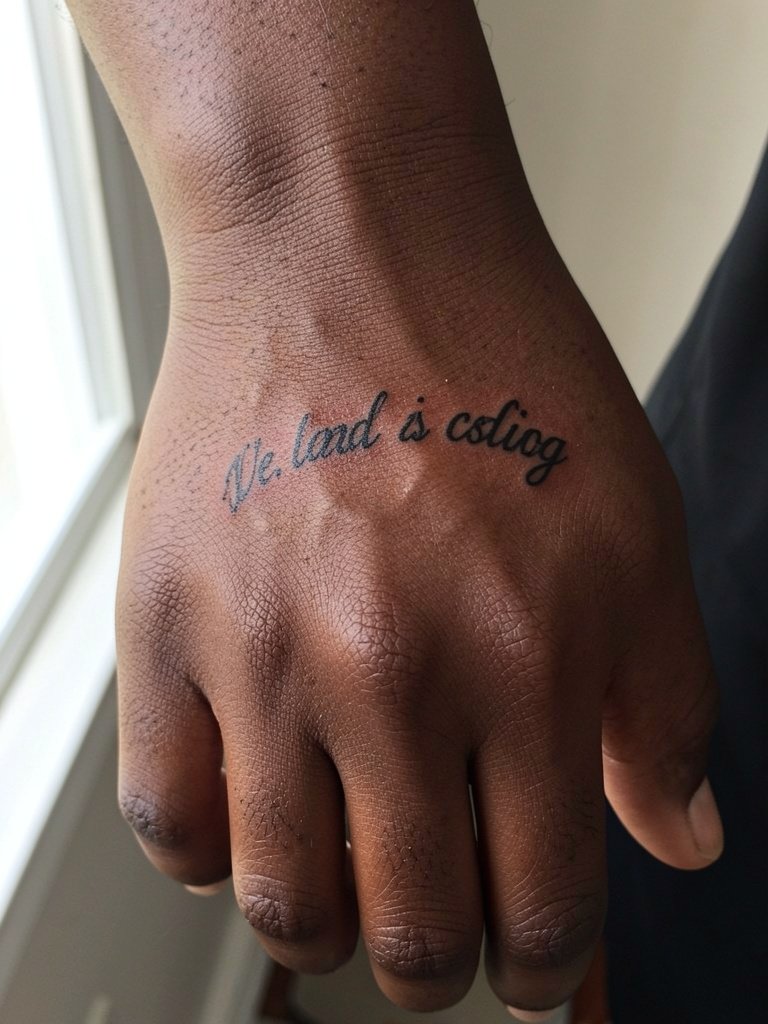
Knuckle arch scripts need open letterforms and deliberate spacing. Ask for letterforms that keep counters open and for primary strokes about 15 to 30 percent thicker than your smallest reference. The session can be 30 to 60 minutes depending on length, and the sensation is quite sharp. A typical error is asking for connected cursive across a moving area, which can blur into illegible shapes. For styling, cropped sleeves and stacked bangles draw attention to the knuckles. Try a thin bangle set to frame the area.
Frequently Asked Questions
Q: How do small hand tattoos age compared with forearm or calf work?
A: Hand skin takes more friction and sun exposure, so small designs often need touch-ups sooner. In my experience, solid black silhouettes and bold outlines survive longer than ultra-fine single-needle details. Plan for a realistic touch-up window between six months and two years depending on placement.
Q: Where can I find healed examples and portfolios without naming specific artists?
A: Search targeted hashtags on social platforms and use location filters to find nearby healed photos. Try tag combinations like #HealedHandInk, #MicroHandTattoo, and #KnuckleTattooHealed. Tattoo-focused forums and community boards often have threads with multiple healed shots in different skin tones.
Q: Are hand tattoos more painful than other small placements and what should I wear to the appointment?
A: Hands usually score higher on sensitivity than forearms because the skin is thinner and closer to bone. Sessions are often short but sharp. Wear short sleeves or a tank so the artist can access the wrist and hand without fabric in the way. A loose cotton tee works well, and a simple short sleeve option like a cotton short sleeve tee is practical.
Q: How do I avoid common mistakes with tiny scripts and single-needle pieces on the hand?
A: Increase line weight modestly from your smallest reference and allow a little more spacing in letters. Ask for a preview stencil at full scale on your hand so you can move it and see how it sits with tendons. Also agree on a touch-up plan before you leave the studio.
Q: Are there cultural or professional considerations I should know about for hand tattoos?
A: Hands are highly visible and may be read by employers or communities in ways you do not intend. For culturally significant designs, acknowledge origin and consider whether simplified motifs are appropriate. If in doubt, choose symbolism that references the idea without borrowing sacred imagery outright.