Someone I know waited months to book a tiny wrist rose because their last finger tattoo faded so fast. Another friend had a ribcage grin that hurt more than expected but still became the piece they kept. A canceled booking left someone scrambling for a backup shop. Below are compact gothic options that consider fading, pain, placement and realistic touch-up timelines, with practical notes for your consultation.
1. Gothic Rose with Thorns on the Inner Wrist

Someone I know first noticed this as a dark-romance wrist piece that reads from close up. Recommend bold linework and compact stipple shading during your consult so the thorns stay crisp on that high-motion spot. The big mistake is asking for ultra-fine petals for a 1-inch design. Fine line petals will blur on the wrist within a year. Expect mild pain, a 45 to 75 minute session, and a touch-up around year one if you wear lots of rings or bracelets. Ask the artist for slightly heavier linework than a flash photo shows.
2. Gothic Black Rose Outline on a Finger or Ankle

Fair warning, fine line on fingers divides artists into two camps. One group says those lines blur in six to twelve months because of friction and thin skin. The other group argues that with correct needle depth and spacing fine line can hold. My advice is to ask which camp your artist falls into before booking. For ankles, the same outline will age much better. Fingers need bolder linework or plan for annual touch-ups. Session time is short but expect higher fade risk on the hands.
3. Gothic Butterfly with Subtle Skull Accents on the Shoulder Blade

This one hides a mortality motif within delicate wings. For the shoulder blade, the surface tolerates more shading, so request soft whip shading for wing texture and small skull silhouettes tucked into the pattern. If someone asks for watercolor washes here they often regret it after a year because gray washes can ghost. A 90 to 120 minute session will get good saturation. Mention you want higher saturation around the skulls if you hope to photograph it against black clothing.
4. Gothic Cross with Vines on the Forearm

The forearm is forgiving, which makes this a reliable placement for ornamental pieces. Tell your artist to keep the vine spacing open so the negative space reads when healed. A common error is shrinking the cross too small which compresses detail and invites blowout. Expect a one-session piece around an hour. Forearm tattoos show well in photos and age predictably with regular sunscreen and touch-up planning after three to five years.
5. Small Pentacle on the Upper Arm

People pick tiny occult symbols to signal interest without shouting it. For an upper arm pentacle ask for solid blackwork with clear point intersections so the geometry stays sharp. If you get the symbol too small the gaps close and it looks muddy when healed. This placement heals fast and hurts less than ribs. Session time is short and a single touch-up usually fixes any early fading. If cultural or spiritual meaning matters to you, explain that in the consult so the artist treats the geometry respectfully.
6. Gothic Cheshire Cat Grin on the Ribcage

Fair warning about numbing cream. Artists split into two camps. One camp suggests numbing cream for the ribcage to help first-timers get through the session. The other camp says numbing can change how your skin takes ink and hide natural tension the artist uses for consistent linework. If you want numbing, ask the artist how they work with it. Ribs rank high on pain charts so plan a two-session booking window. Micro-realism needs careful shading, and expect a touch-up after the first healing cycle.
7. Minimalist Bat Wings Behind the Ear

This hidden placement is popular for quick, summer-friendly healing. The behind-ear skin is thin so the session is fast but the area is delicate. Ask for slightly heavier linework than a whisper-fine flash to avoid early blur. A common mistake is choosing a design with too many interior lines. Keep it graphic and let the silhouette do the work. Note that hair growth and hairstyling can change how often you see it. Expect low downtime but plan for a small touch-up if you sleep on that side a lot during healing.
8. Skull with Lace Motif on the Lower Back

This piece blends morbidity with ornamentation and suits a slightly larger small placement. For the lower back ask your artist to anchor the lace with heavier linework and use stipple shading to keep texture without solid patches that might pool. A common problem is asking for ultra-detailed lace under 2.5 inches which loses clarity. Session time is 90 minutes to two hours depending on detail. The lower back heals well but can shift with weight changes, so discuss placement relative to your body contours.
9. Raven Silhouette on the Collarbone
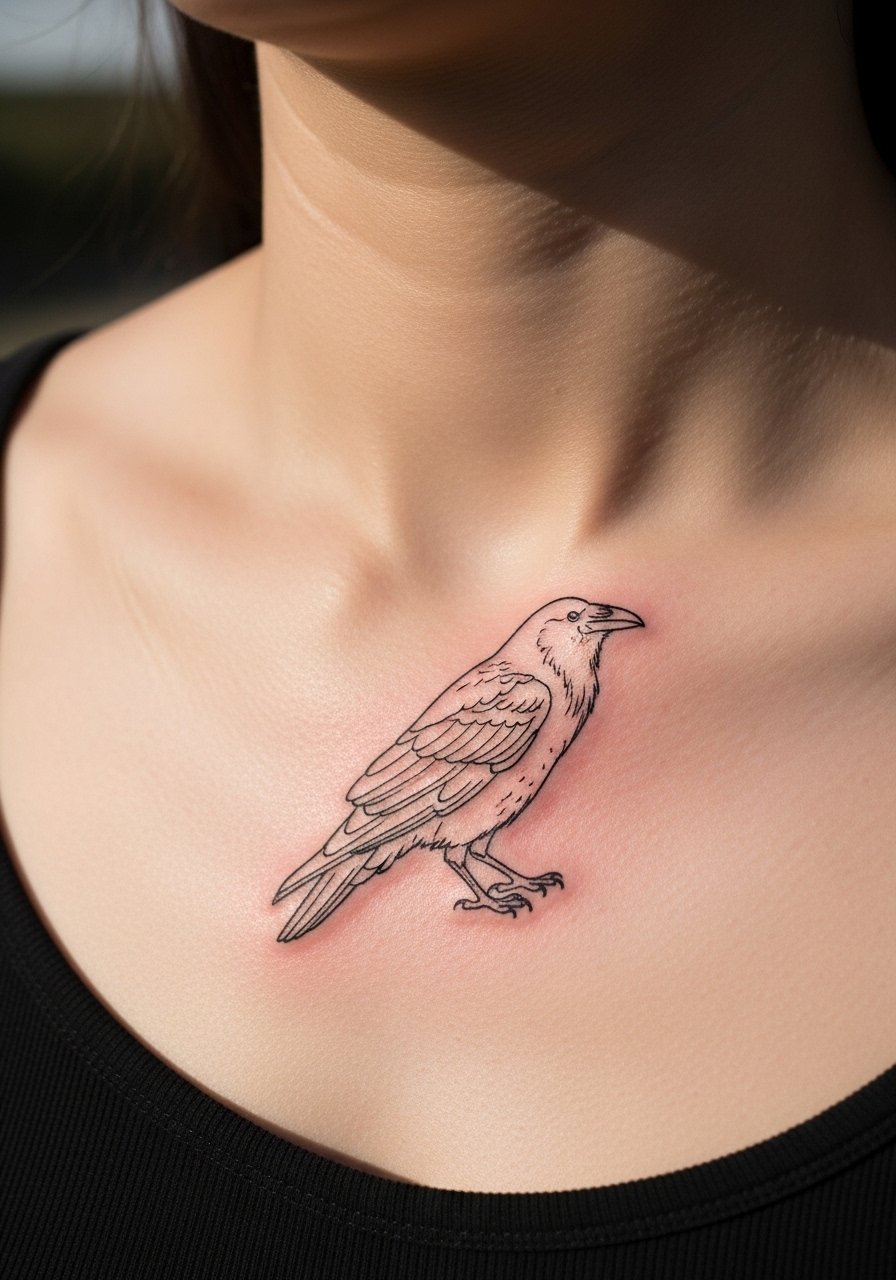
Collarbones give a hidden-reveal effect when clothes move. For a raven silhouette select clean linework and flattened negative space so it reads against skin tones. One in three people I know who tried subtle fills on collarbones ended up asking for darker saturation later. The area is moderate in pain and photographs well. If you plan a sleeve later, mention that so the artist can size and angle the bird for future flow. Avoid putting too many tiny feathers that will merge as the piece heals.
10. Heart with Daggers on the Thigh

Thigh placements let you keep the piece private and allow for bolder linework. For a small heart with daggers ask for confident contour lines and solid saturation around the dagger barbs. A frequent mistake is shrinking the dagger detail under 1.5 inches which risks losing the bite of the design. Pain is lower on the outer thigh and sessions last about an hour. If you expect weight fluctuations discuss how placement will perform over time with your artist.
11. Moon and Stars Cluster on the Inner Wrist

Celestial motifs are subtle but meaningful. On the inner wrist choose contrast between moon shadow and star highlights so the shapes remain legible as the skin ages. Fine dots and micro stars need spacing to avoid blur at six to twelve months. The mistake people make is crowding the cluster into a one-inch area. Expect a short session and plan a light touch-up after the first year if you wear heavy wrist accessories. Sunscreen on the area speeds preservation of saturation.
12. Spider Web with a Tiny Spider on the Ankle

Ankle web work gives an entrapment motif in a place that moves a lot. Ask the artist for slightly thicker radial lines so the web keeps its geometry after swelling and healing. A common error is asking for ultra-fine webbing that becomes a gray smudge in high-friction footwear. This placement can be tender but sessions are brief. Because shoes and socks rub the area, plan a two-week healing strategy that minimizes abrasion and expect a touch-up if you wear tight boots regularly.
Tattoo Prep and Aftercare Essentials
Below are practical items I recommend for a small gothic piece. I put products into three categories so you can pack what you need for appointment day and the weeks after. Pick the sizes that match your tattoo and healing plans.
Fragrance-free gentle cleansing foam for sensitive skin. Use for the first week to remove ointment residue without stripping the area. Cleansers with foam texture rinse clean and reduce scabbing risk.
Lightweight fragrance-free balm for daily moisture. Apply a thin layer after washing. Avoid heavy pots that trap moisture and cause clumping.
Medical-grade occlusive bandage, 6-inch roll. Useful for covering an ankle or wrist overnight if you expect friction from clothing. Use as directed by your artist.
Disposable nitrile gloves, box of 50. Handy if you plan to apply ointment without contaminating the area. They also help when checking healing without leaving oils.
Aquaphor Healing Ointment, small travel jar. A single mainstream option for those who prefer a known ointment. Use sparingly as artists often recommend lighter balms for tattoos.
Fragrance-free mineral sunscreen SPF 50. After full healing this protects saturation and prevents gray ghosting in blackwork.
Soft silicone scar sheet or gentle adhesive to protect against friction. Use this on high-wear placements like fingers and ankles when you return to heavy activity.
Portable cold pack with fabric cover. Reduces swelling and eases the first 24 hours, especially for larger small pieces like ribs.
Every tattoo is different. Always follow your artist's specific aftercare instructions. Consult a dermatologist if you have skin concerns or unusual healing issues.
Frequently Asked Questions
Q: Will a fine line black rose on my finger blur faster than one on my forearm?
A: Yes, fingers face constant friction and thin skin, so fine line is more likely to blur there. On a forearm the same design benefits from better surface area and less rubbing. If you love the finger placement, ask for slightly heavier linework or plan annual touch-ups.
Q: I want a ribcage micro-realism piece. Should I ask for numbing cream?
A: Artists are split on numbing cream. Some recommend it for comfort, especially on ribs. Others worry it masks skin feedback that helps consistent linework. Ask your artist how they accommodate numbing and how it affects their technique before you decide.
Q: My skin is darker. Which small gothic designs will show best in photos?
A: High-contrast blackwork with clear silhouettes reads best across skin tones. Ask for solid saturation and defined negative space. Test a temporary marker version if you want to preview how it photographs under different lighting.
Q: How long should I expect to wait for a touch-up on fine line wrist pieces?
A: In my experience a realistic touch-up window is around 12 months for fine line on wrists. Some pieces settle fine longer, and some need earlier work depending on your lifestyle and sun exposure. Budget a one-year check-in with your artist.
Q: Are small occult symbols like pentacles risky to get in public places?
A: That depends on your environment. A small pentacle on the upper arm reads as subtle to many people. If you work in conservative settings you might place it on the upper arm where it can be covered. Use discovery pathways like local blackwork studio searches and Reddit threads to find artists who have experience with symbolic work.
Q: What should I bring to my consultation to get the exact look I want?
A: Bring clear reference photos that show line weight and composition, plus notes on which details you want emphasized. Mention future plans, like sleeve extensions. If touch-up timing or longevity concerns matter to you, say so. Trust your artist's portfolio, and ask how they handle touch-ups and cancellations.