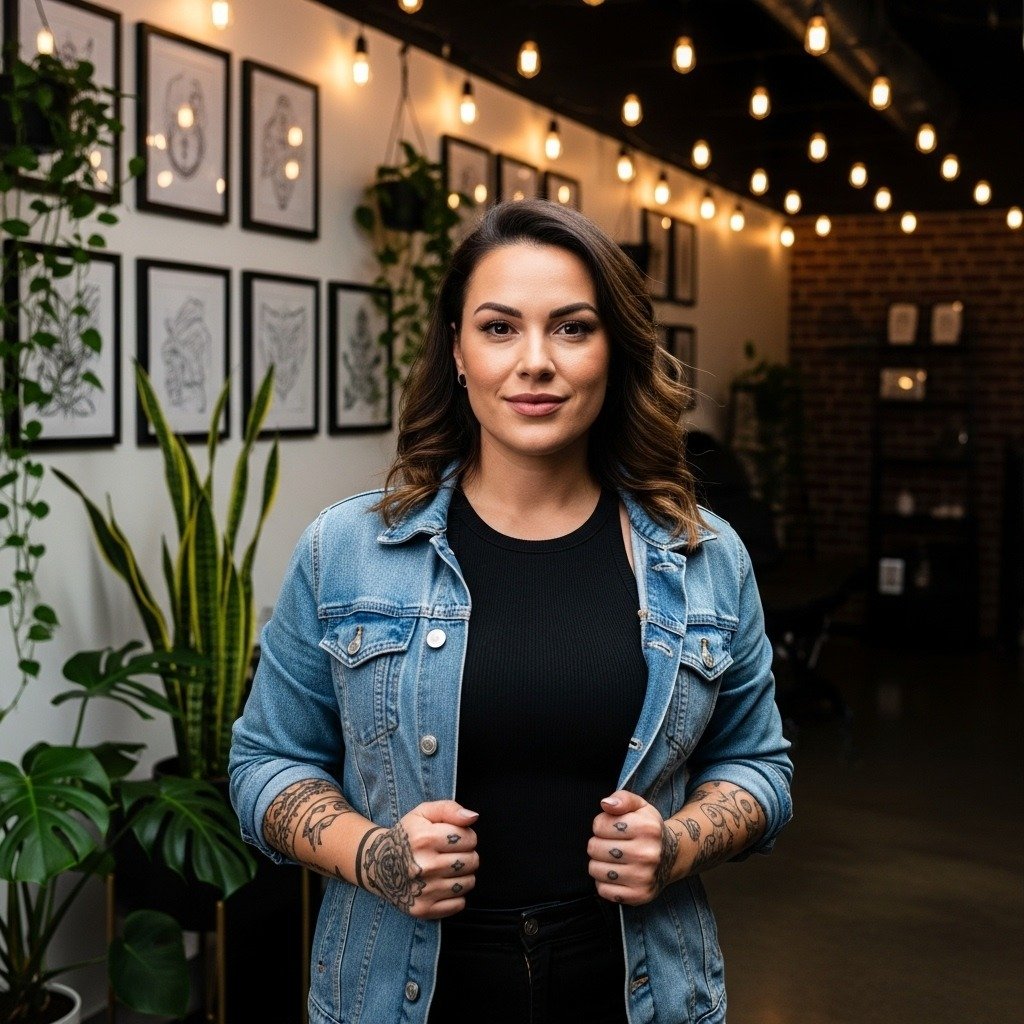
A shoulder piece can be one of the most flexible choices you make. You can hide it under a blazer for work, show it off in a tank for summer, or let it peek with an off-shoulder dress at an event. The trade-offs are real: motion on the lateral deltoid can mellow fine lines, and high heat and sun make fresh ink ask for extra care. Below starts a gallery of designs and specific notes to bring to your consult.
1. Fine Line Shoulder Cap Floral
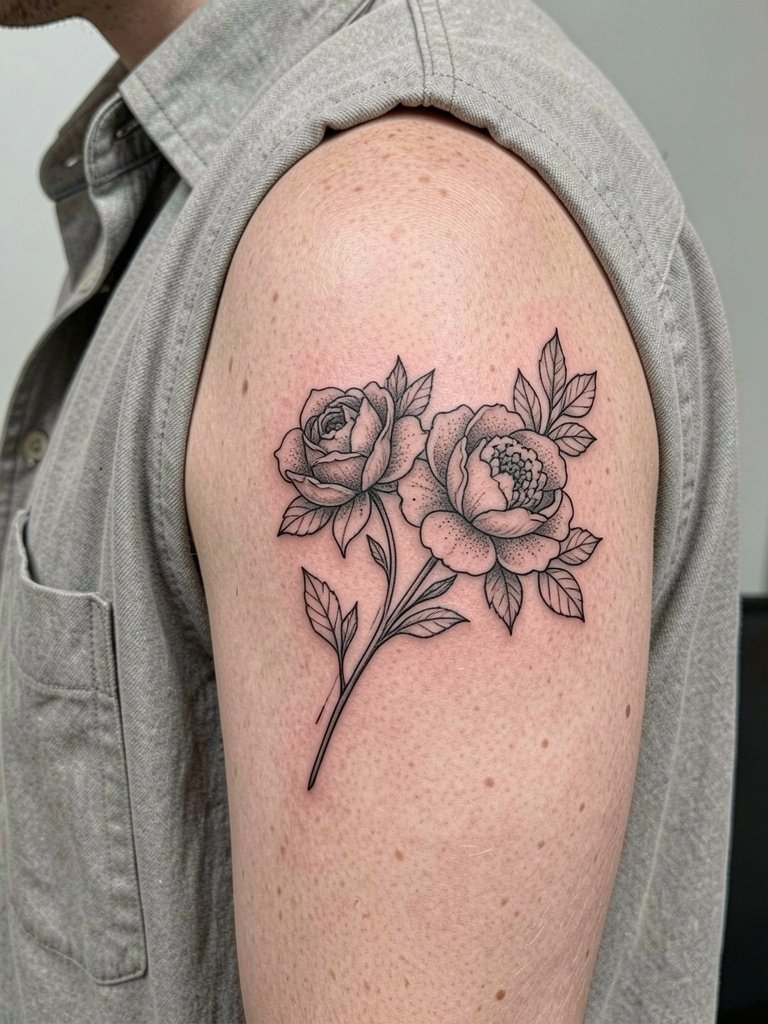
Fine line florals read airier than bold work and suit someone who wants a soft presence without heavy saturation. One camp cautions that single-needle florals on the shoulder can blur within two years because the lateral deltoid moves and compresses lines. The other camp says properly spaced single-needle work at correct depth settles fine and points to healed examples as proof. For a petite frame, ask for vertical composition that flows down the shoulder blade so the piece creates length instead of crowding. Session note: most artists finish a 4–6 inch cap in one two-hour slot. For the appointment wear a button-down short-sleeve shirt so the artist can roll the sleeve without tight cuffs.
2. Shoulder-to-Back Bohemian Cascade
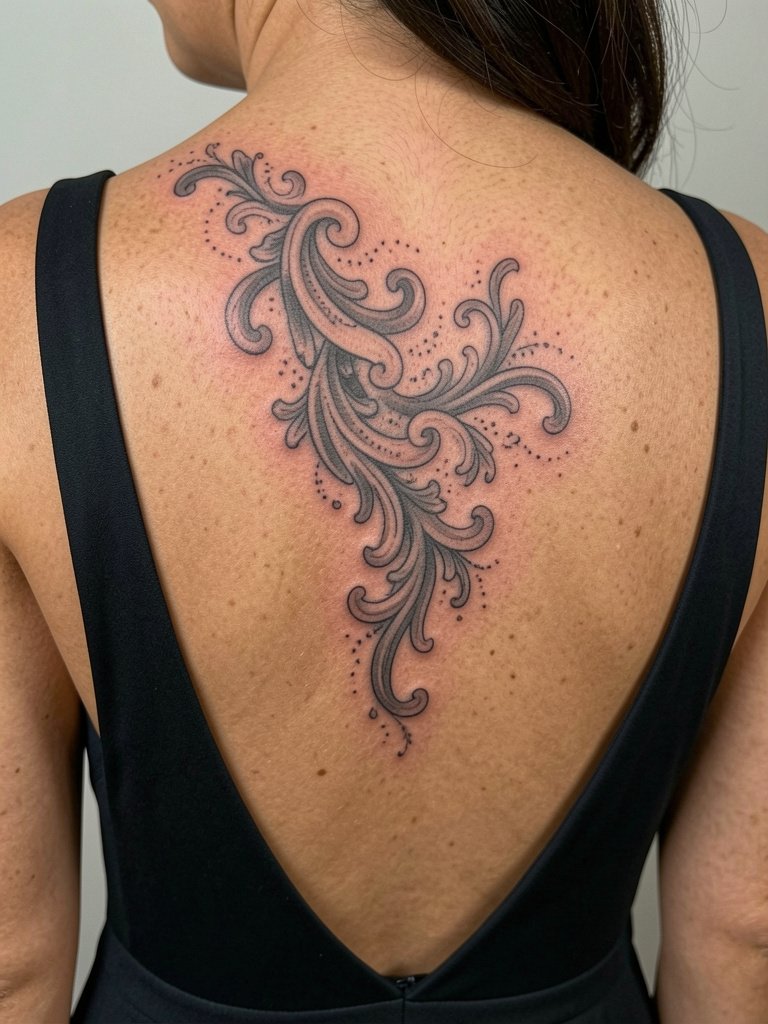
This shoulder-to-back layout is made for reveal moments. It works best when the focal element sits on the cap and secondary filigree travels toward the spine so gowns and swimsuits can frame the cascade. Practical note: larger cascades usually take multiple sessions and a composition sketch that considers how straps and bra lines will sit. A common mistake is squeezing too much detail into the cap instead of spacing elements along the upper back, which makes the design read congested after healing. For showings, pair the design with backless dresses that keep the cascade visible without tugging at the skin during wear.
3. Bold Blackwork Half-Sleeve Flow
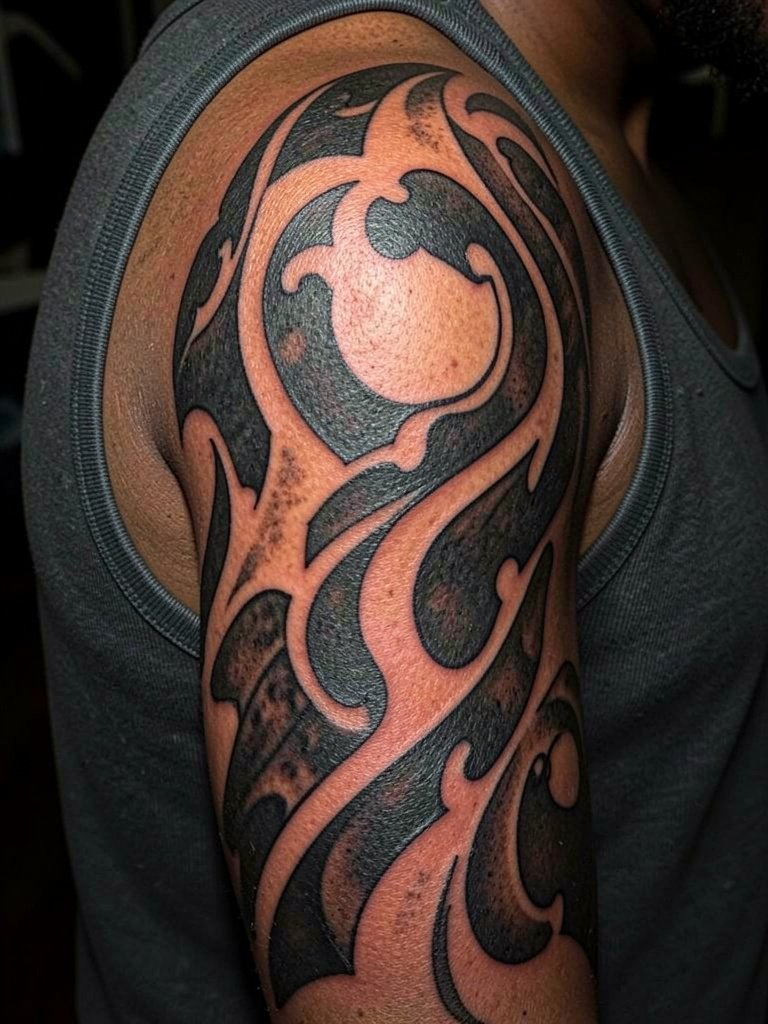
If you want presence that lasts, saturated blackwork is the go-to for shoulder pieces that must read from a distance. Expect multi-session work and heavier tap time in the chair, but the trade is long-term clarity and contrast. Watch for the classic error of trying to scale a delicate flash into a half-sleeve without adapting the composition; thick fields need breathing room. Pain on the lateral arm is generally moderate. Wear a tank top that gives full access to the cap and down toward the elbow for seamless session flow.
4. Petite Vertical Shoulder Blade Script
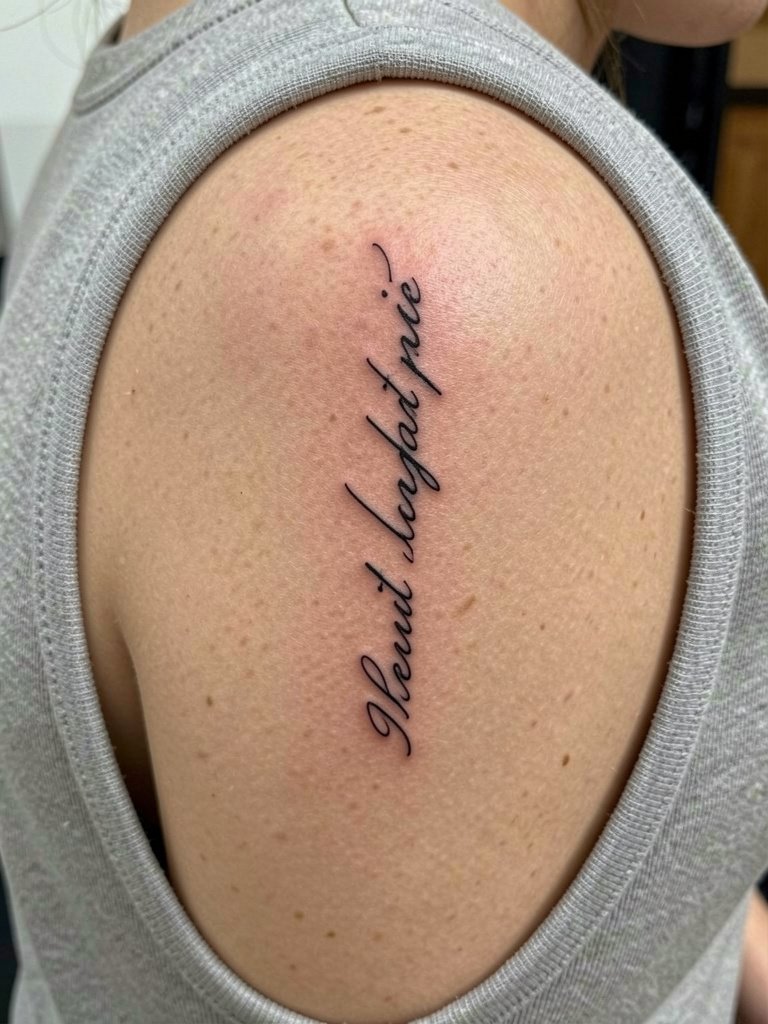
Vertical script down the shoulder blade elongates a narrow frame and reduces the crowded look small scripts get on the cap. Keep text under five words, place the lettering on the flatter back surface rather than the high-motion lateral cap to reduce distortion. A typical mistake is asking for ultra-thin lettering without accounting for movement; on shoulders a slightly heavier hairline will hold longer. Session time is usually under an hour for a short phrase and pain is low to moderate. For photos and events, open-back tops frame the script perfectly; try an open-back top that shows the vertical line.
5. Anterior Front Deltoid Mandala
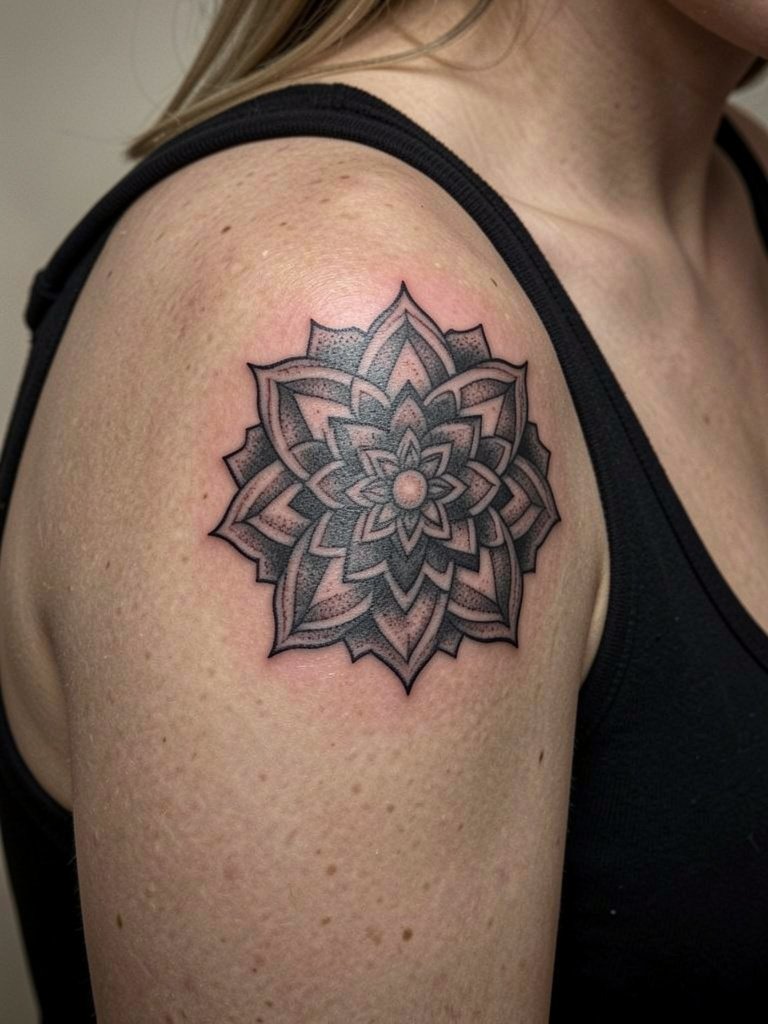
A circular mandala that sits on the front of the deltoid uses the shoulder's rounded surface to its advantage. These pieces require crisp geometry so plan for tight stencil alignment and a steady hand. One common misstep is forcing radial symmetry into a small size; mandalas need room for petals and negative space to avoid blurring at year two. Expect a two-hour session for a four-inch cap and bring reference photos showing the desired petal spacing so the artist can scale appropriately. For outfits, tank tops and strapless dresses keep the front mandala visible and balanced.
6. Watercolor Butterfly Shoulder Wrap
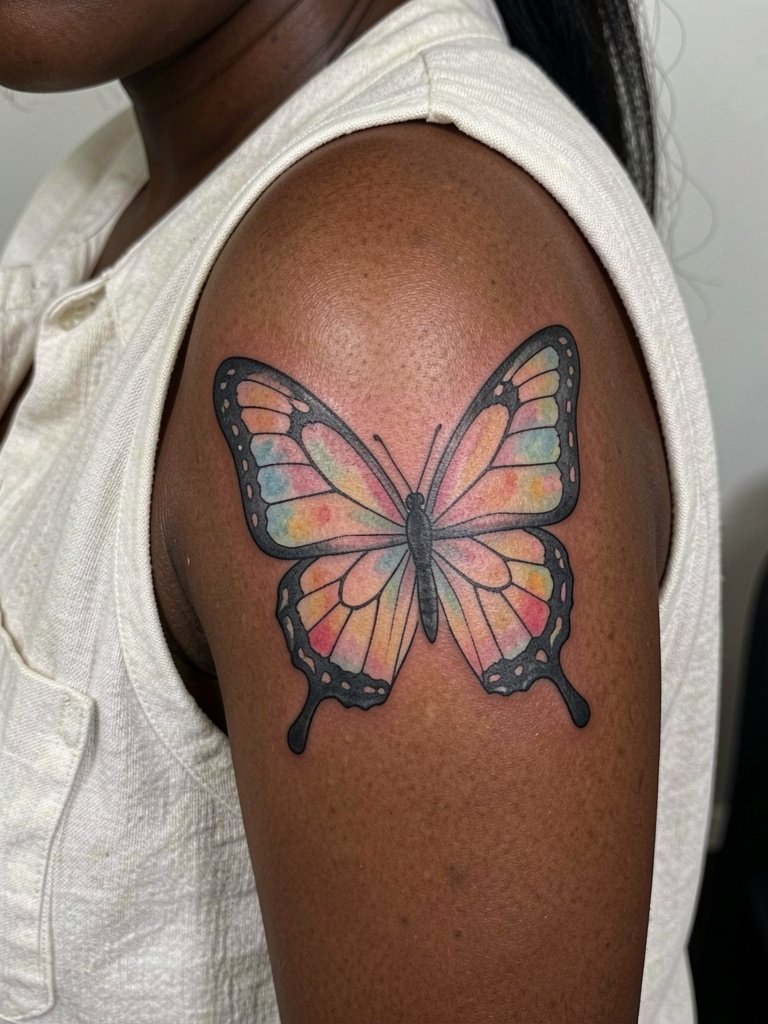
Watercolor butterflies look ethereal on the shoulder, but collectors debate durability. One camp warns that watercolor pigments on high-motion zones like the shoulder fade and blur faster than black or heavily saturated color. The opposing camp argues that when artists use careful layering and slight line anchors, watercolor can age gracefully and remain an aesthetic favorite. If you choose watercolor, plan for a touch-up at year two to refresh gradients. For the session wear a sleeveless blouse so the artist has clear access without tight straps.
Before You Book
The shoulder designs above include a mix of single-session caps and multi-session cascades, so a few practical items make the chair and the first week smoother.
- Loose drawstring linen pants. Comfortable session wear that avoids waistband pressure if your lower back or hip area will be involved in a cascade.
- Button-down short-sleeve shirt. Easy to roll or remove for full shoulder access without tugging at sleeves during the appointment.
- Dainty gold stacked bracelet set. Accessory pairing that complements fine line shoulder caps without competing for attention.
- Stencil transfer paper kit. Lets you preview placement iterations on skin so the mandala and script compositions can be repositioned before the first pass.
- High SPF sunscreen. Protects fresh and healed shoulder ink from UV fading when you sun-expose the area after healing.
7. Angel Wing Arch
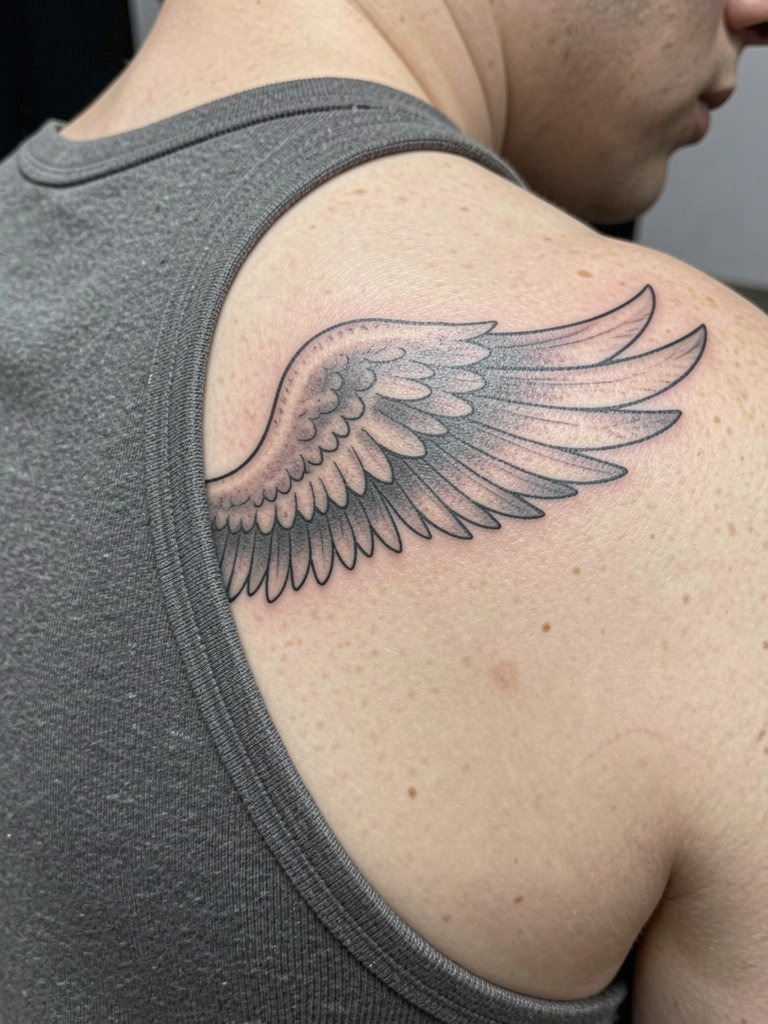
An arching wing reads spiritual without taking up the whole back. The design plays well with wrap garments and off-shoulder tops. Artists often recommend slightly bolder quill lines than a wrist script because the shoulder's motion can thin single-needle strokes over time. If you want the arch to follow the scapula, have your reference images include a range of poses so the artist can map the wing to bone landmarks. Pain is moderate near the top of the shoulder. For wardrobe, try off-shoulder blouses that show the arch when you want it visible.
8. Celestial Moon and Star Cluster
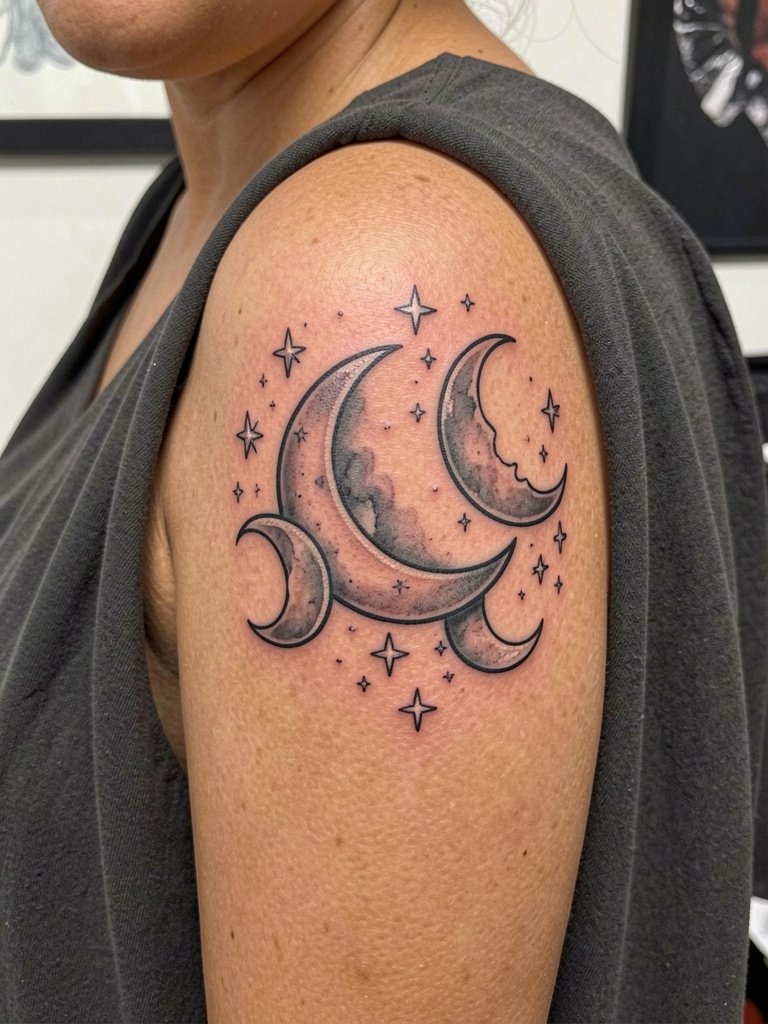
Small clusters of moons and stars make the outer shoulder feel curated rather than overcrowded. For longevity favor crisp anchors such as tiny crescent outlines paired with soft background shading instead of relying only on pale wash. A common mistake is compressing too many celestial elements into one small area; negative space helps the cluster read across movement. Session time for a medium cluster is about an hour to ninety minutes. To show it off, wear wide-neck dresses or sleeveless tops that expose the lateral deltoid.
9. Vine Scroll Shoulder Cap
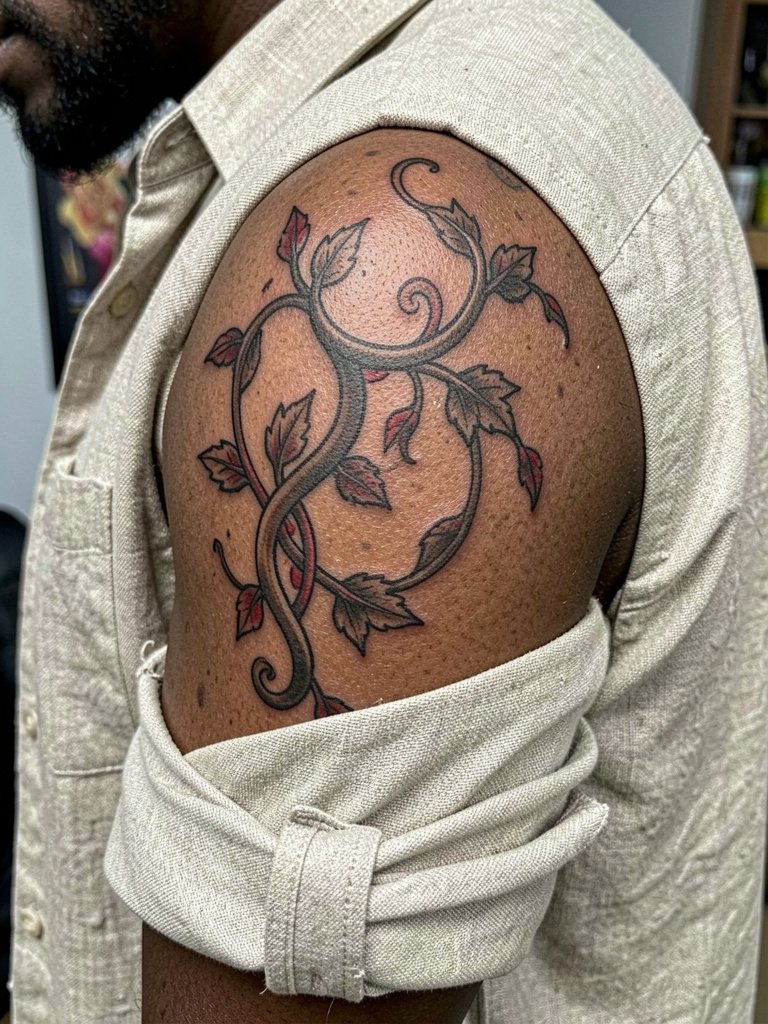
Vine scrolls are versatile and photograph well across skin tones when the artist balances outline and color saturation. Keep the scrolls flowing with the shoulder curve to avoid elements looking awkward when you raise your arm. One mistake is forcing identical leaf spacing around the entire cap; natural variation gives the vine a hand-drawn feel and prevents a mechanical look after healing. Session length is usually under two hours for a detailed cap. Pair with rolled-up linen shirts in neutral tones to keep the linework visible and styled.
10. Geometric Triangle Shoulder
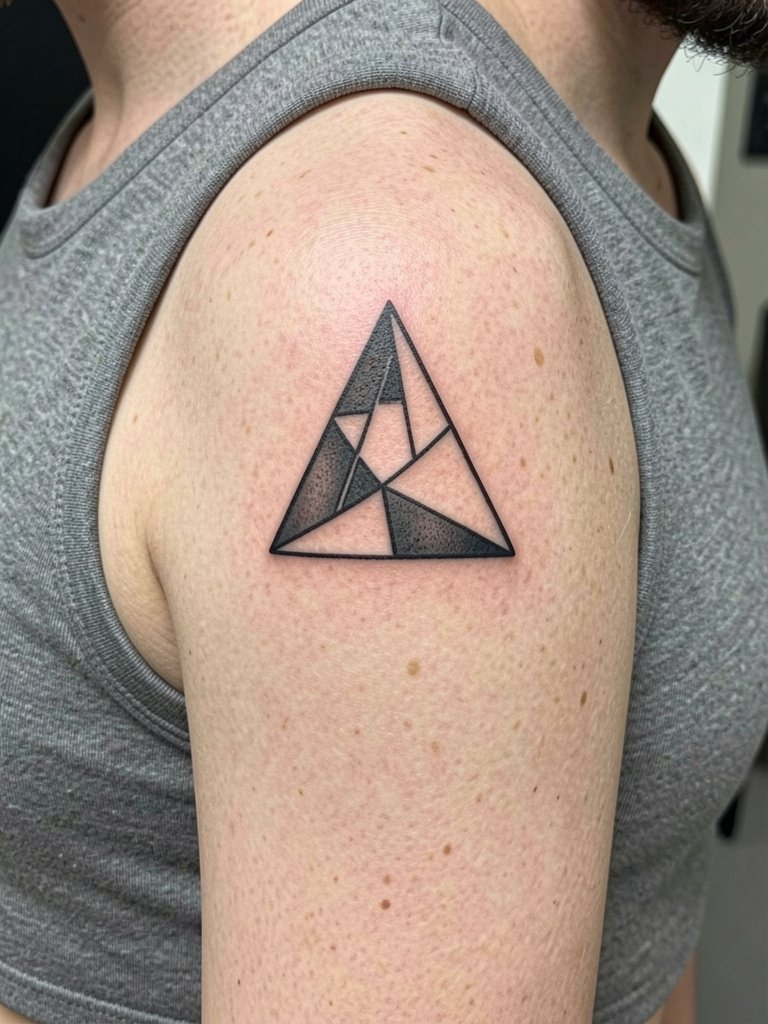
Geometric triangles demand exact linework and enough size so the lines do not merge over time. The biggest mistake is going too small; geometry needs breathing room. If the triangle will anchor a future sleeve, talk about line thickness and spacing so the artist can match future flows. Expect a short session under an hour for a two- to three-inch motif. For minimal outfits try a crop top that frames the shape cleanly.
11. Cherry Blossom Shoulder Flow
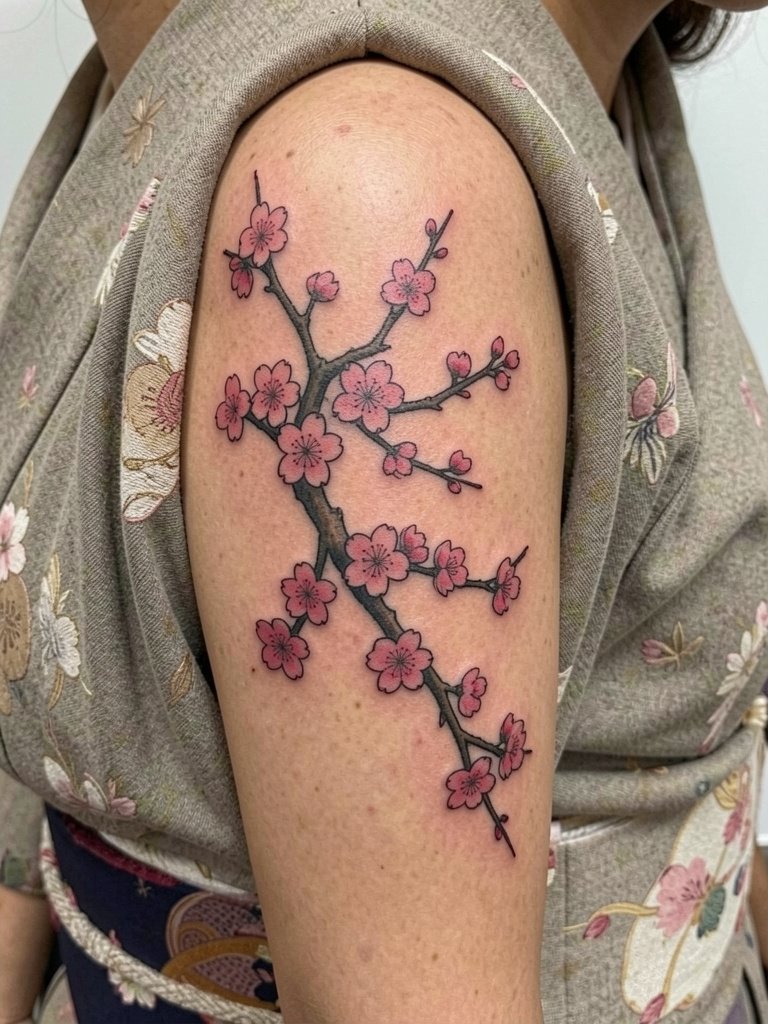
Cherry blossoms create motion across the shoulder while still reading feminine and scripted. For this style be explicit about petal size and pigment choices because pink hues fade faster and may need a touch-up. A real mistake is asking for tiny scattered blossoms on textured skin where the detail will vanish; instead plan clustered blooms with defined branches. Sessions often run one to two hours for a cap that flows. Show it off with off-shoulder tops that reveal the branch without stretching the skin.
12. Roman Numerals Tucked Under Floral
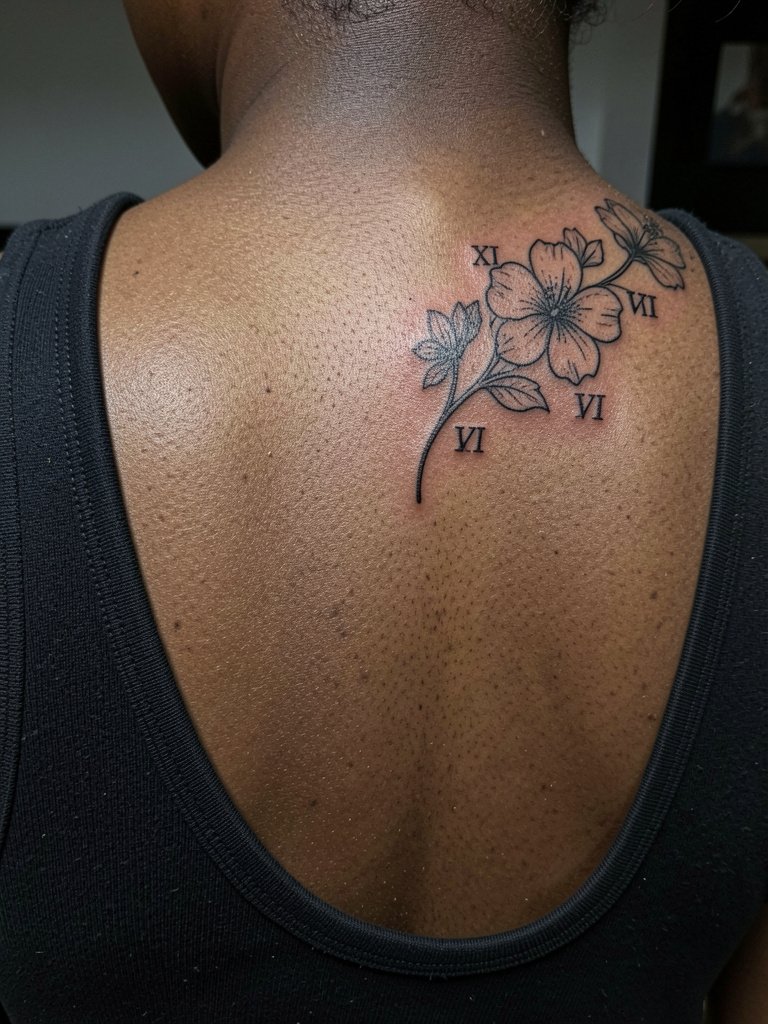
Tucking Roman numerals beneath a flower gives a personal marker without dominating the visual. Place numerals on flatter upper back skin to minimize stretching that distorts straight characters. A common error is choosing ultra-small numerals that blur into the stem; aim for legible spacing and request a stencil sized to three to four inches for readability. Session time is short and touch-ups are common for tiny scripts, expect a possible touch-up at year one. For sessions wear a tank top that can be lifted or removed easily for upper back access.
13. Micro-Realism Shell or Pearl
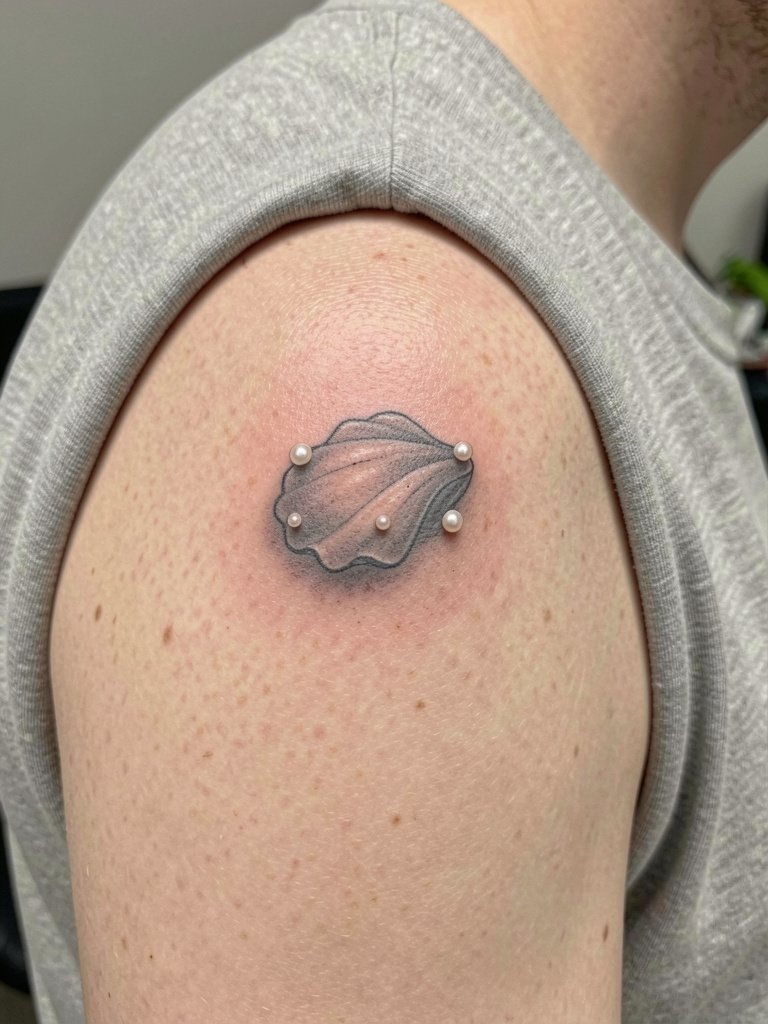
Micro-realism on the shoulder is a good choice if you want an object that looks tactile at close range. Because the shoulder moves, avoid packing micro texture into a tiny space; give the shell two to three inches so shading keeps depth over time. Artists sometimes decline very small micro-realism on the lateral deltoid because blowout risk increases on high-motion rounded surfaces. Pain is low and session time is brief. Style it with layered delicate necklaces or a dainty gold pendant to echo the pearl motif.
14. Stipple-Shaded Sunburst
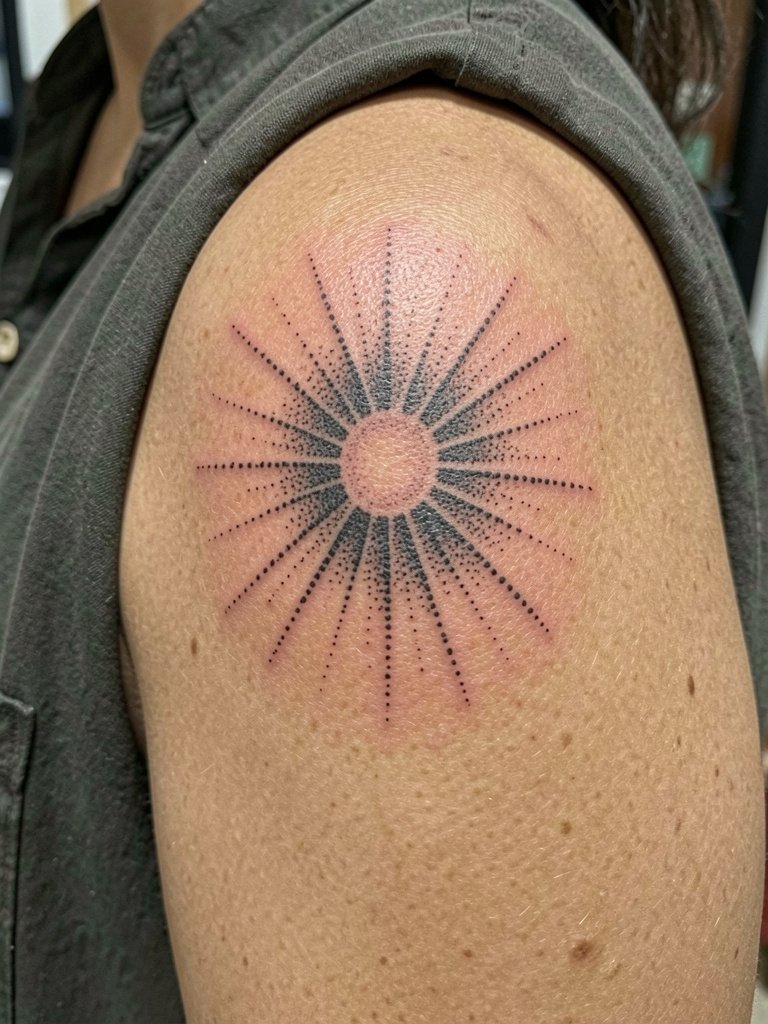
Dot-work sunbursts rely on consistent stipple density to keep the fade natural. A mistake is asking for an ultra-tight dot cloud that sits on soft tissue; dots need slight spacing to avoid merging as the area ages. Stipple techniques age differently than solid fills and typically require less dramatic touch-up frequency. Expect a two-hour session for a detailed sunburst. For everyday wear pick tops with scoop necks that let the radial pattern read without covering the cap.
15. Bold Floral Shoulder Patch
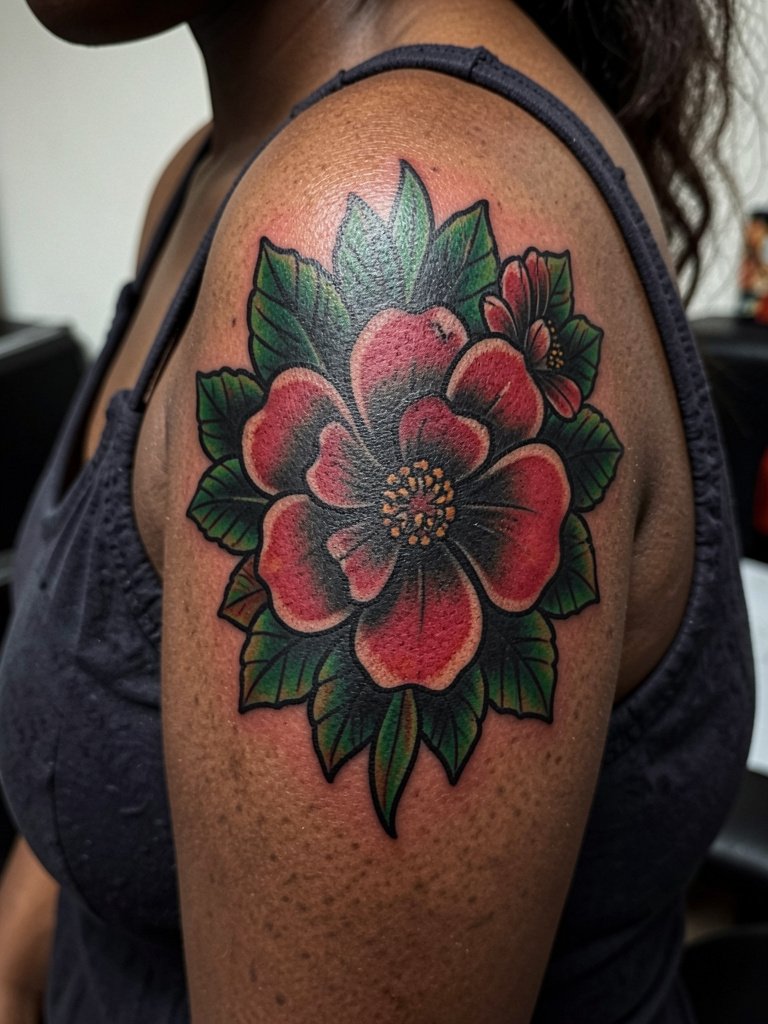
A saturated floral patch is the durable counterpoint to fine-line florals, especially if you want a piece that keeps contrast over years. These patches take longer and feel like extended tap time, but they hold pigment and mask minor blowouts. Mistakes happen when clients request flash colors without considering how those pigments age against their skin tone; ask for healed examples on similar skin. Expect multiple sessions for larger patches. For evening looks, strapless or one-shoulder dresses frame the cap and balance a bold patch.
16. Minimal Anchor Icon
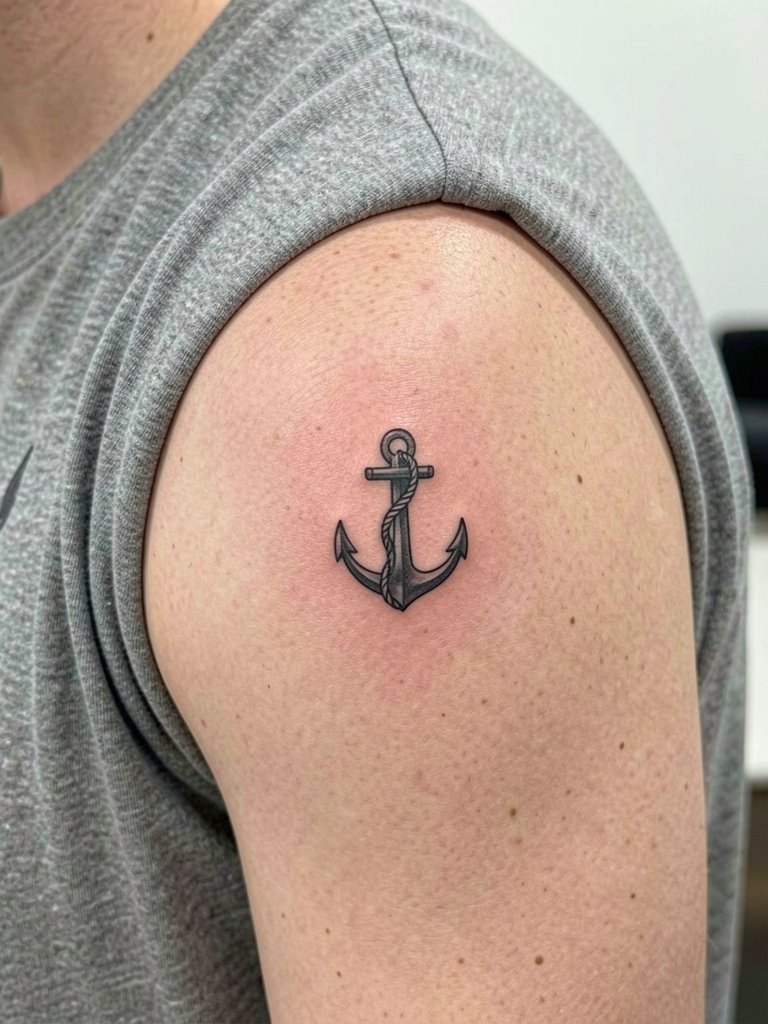
A tiny anchor reads crisp on the front deltoid if sized correctly. The mistake is scaling it too small for motion-prone skin; anchors need a modest silhouette so the rope and stock stay legible. Session time is short and pain is moderate. If you want a nautical nod without commitment, place it slightly higher on the front shoulder where it is easier to conceal with a strap. For casual wear try a crew-neck tee that frames the small icon.
17. Abstract Brushstroke Wrap
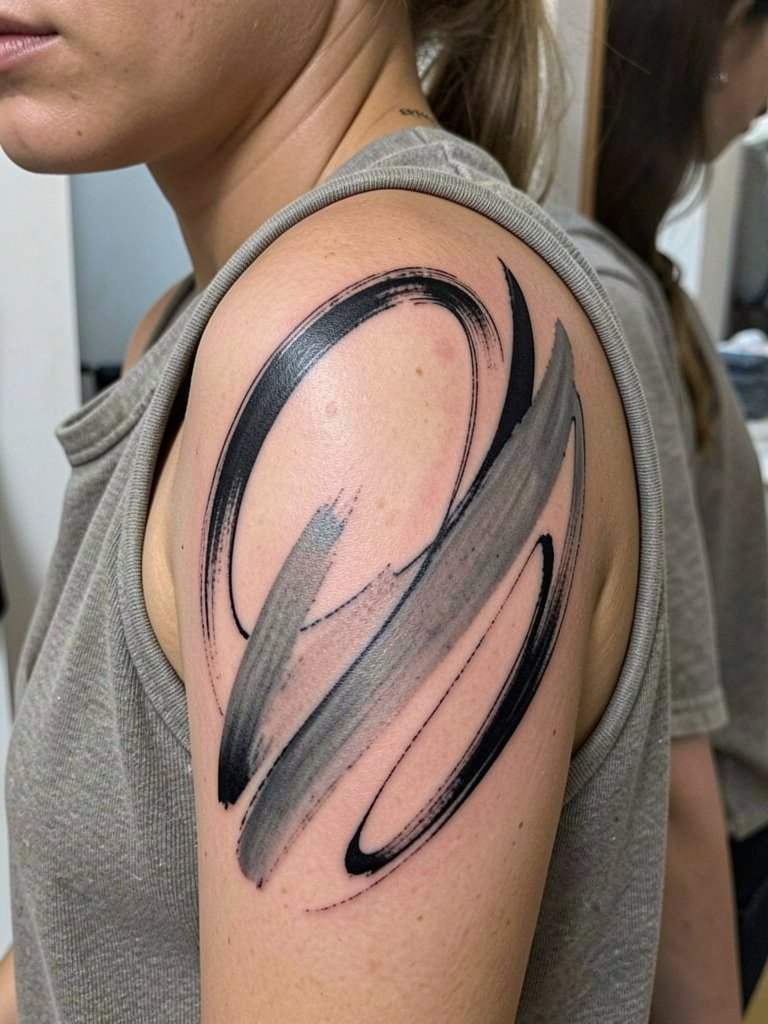
Brushstroke wraps let you treat the shoulder like a living canvas that moves with the arm. Because the marks are intentionally irregular, they tolerate minor blurring better than tight geometry. A common error is asking for razor-thin strokes that disappear after a year; recommend broader strokes with negative-space breaks. Sessions vary based on coverage. For an editorial fit pair the wrap with neutral sleeveless pieces that keep the motion of the brush visible.
18. Script Ribbon Along the Deltoid
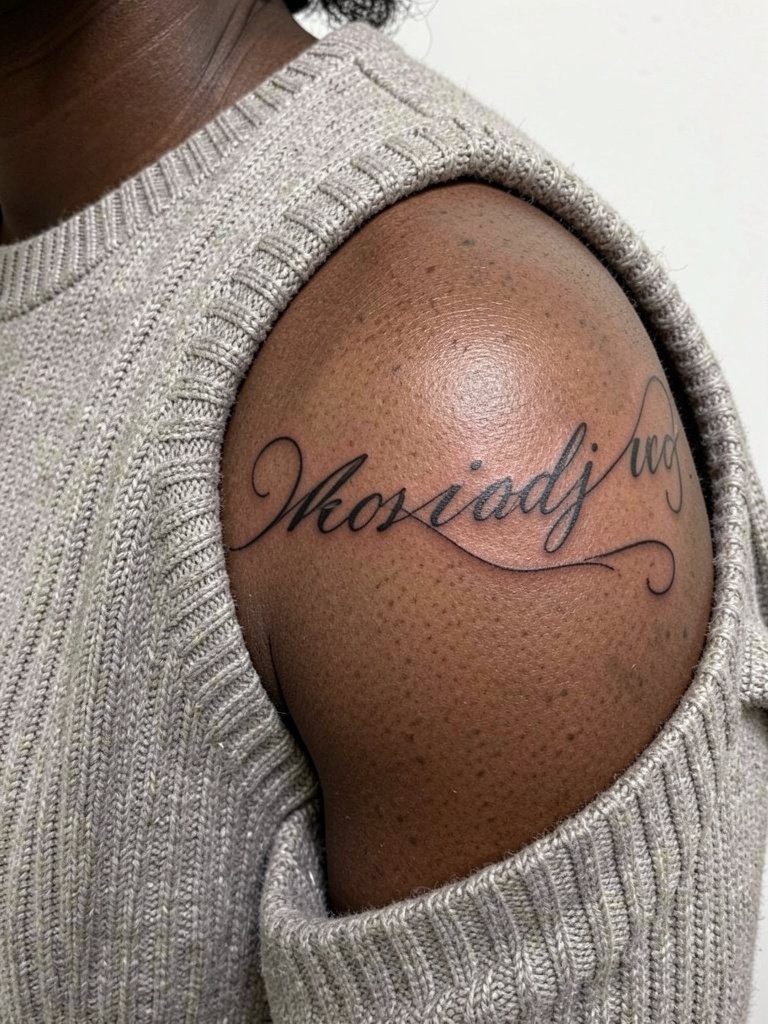
A ribbon-style script that follows muscle contour looks intentional when the lettering maps to anatomy. Avoid putting long text on the curved cap itself; instead place the ribbon where the skin flattens as the arm moves to reduce distortion. The common mistake is choosing a script sample that sits too loosely on paper; bring scaled references at the same length you want inked. Sessions are typically under ninety minutes for a short ribbon. Pair with off-shoulder knits that let the script show without stretching.
19. Botanical Half-Moon Crescent
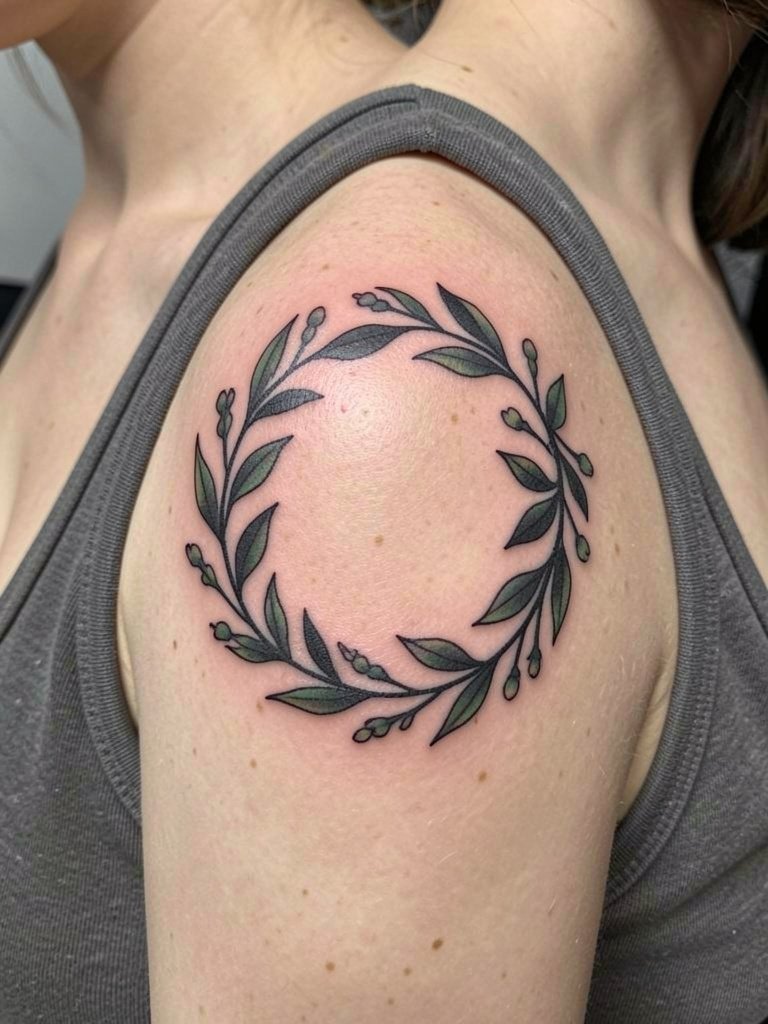
A half-moon botanical reads well on the cap and can be scaled to balance necklaces or other chest pieces. The main mistake is mirroring a floral pattern that belongs on flat skin without adjusting for curvature, which makes petals collapse visually. For longevity favor slightly stronger outline work in places that take friction from straps. Sessions are moderate in length. Style it with layered necklaces or choose a scoop-neck tank to expose the crescent.
20. Thorned Vine Band
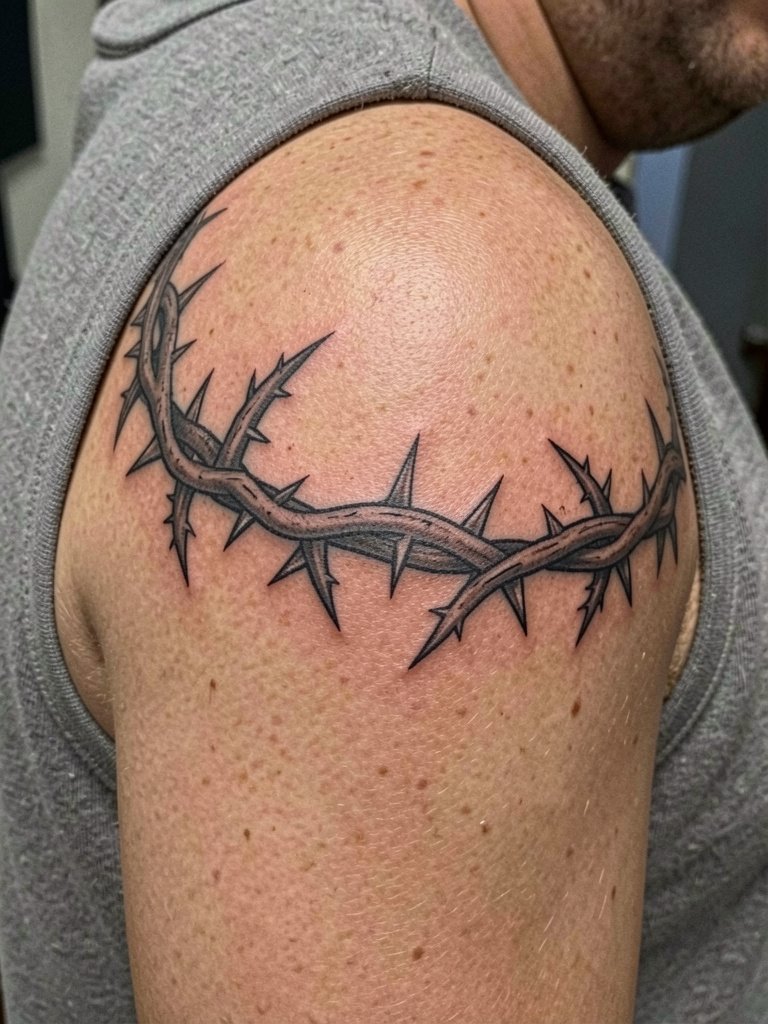
A thorned band provides an edgier silhouette while staying confined to the cap. The trick is to avoid a true closed ring that feels restrictive; instead allow the band to taper or break so future layering with a sleeve is possible. A common error is making the band too tight around the roundest part of the arm which can distort when muscles flex. Sessions vary but are usually under two hours. Wear sleeveless or rolled sleeves the day of the session for unimpeded access.
21. Shoulder-to-Arm Patchwork Transition
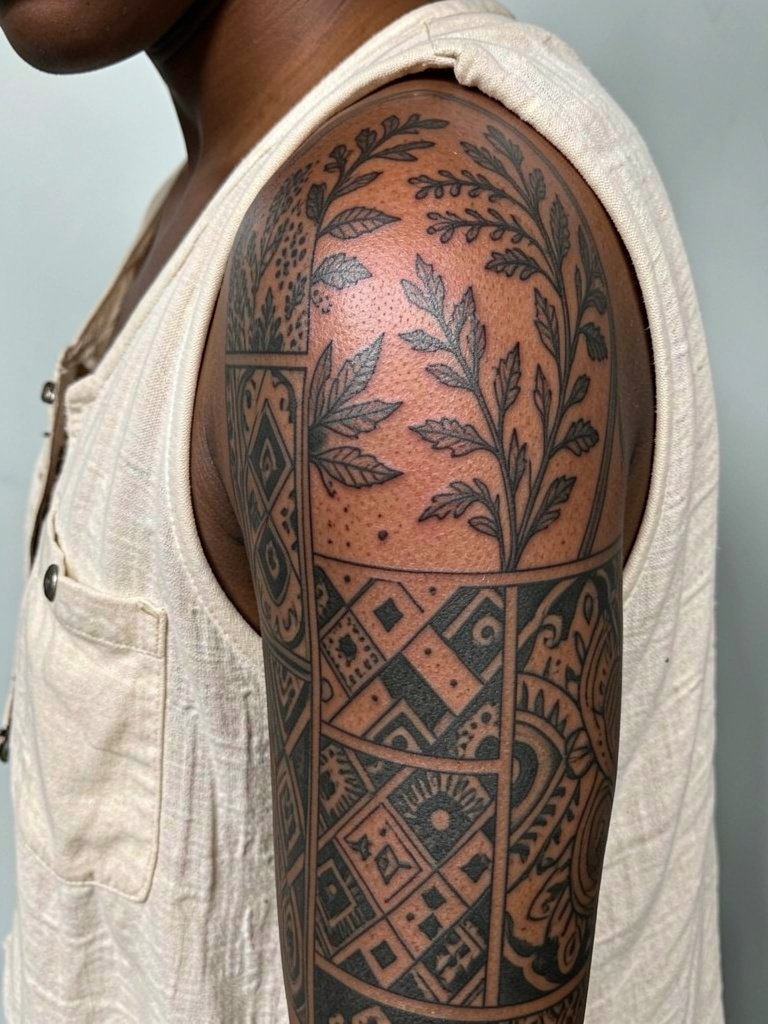
If you are expanding toward a sleeve, a transition patch at the shoulder is smart planning. The important consult topics here are scale harmonization and how each panel will read from a distance versus up close. A frequent mistake is matching panels by style without considering how the shoulder curve will join them; ask for mockups that show the piece with the arm both at rest and raised. These transitions take multiple sessions and a clear plan for saturation and spacing. For outfits choose tops that reveal the cap when you want to show off the progression.
Frequently Asked Questions
Q: Where can I find healed portfolio examples and local artists without naming specific people?
A: Search hashtags like #shouldertattoo, #finelinetattoo, #shouldercap, and #shouldertattoofwomen on Instagram and TikTok and filter by location. Use directories that let you search keywords like "fine line shoulder cap" and look for healed photos rather than fresh work. Reddit threads in r/tattoos and r/tattooadvice also surface peer recommendations and healed shots across skin tones.
Q: How should I pick between front/outer shoulder and back-of-shoulder placements if I need to hide ink for work?
A: The visible front and outer shoulder get seen in most casual tops, so pick those if you want frequent visibility. If you need concealment, the posterior shoulder and upper back near the shoulder blade are easier to hide with standard workwear and jackets. Think about which outfits you wear most and bring those to your consult so the artist can suggest placement that matches your daily life.
Q: Do fine-line shoulder tattoos always blur faster than bold work?
A: Artists disagree. One group says the shoulder's constant movement makes single-needle work blur within a couple of years, especially on the lateral cap. The other group argues that with slightly wider spacing and correct needle depth fine-line work can heal crisp and hold well. The practical takeaway is to review healed photos of similar pieces and ask for spacing adjustments rather than assuming one technique is always better.
Q: What should I wear to a shoulder tattoo session so the artist has good access?
A: For shoulder caps and transitions wear loose button-downs, tank tops, or a short-sleeve shirt that can be rolled or removed without tugging at the ink area. For shoulder-to-back cascades bring a top that can be taken off easily so straps or bands do not disturb the stencil. A button-down short-sleeve shirt is a reliable session option.
Q: How often do shoulder tattoos need touch-ups, realistically?
A: It depends on style, pigment saturation, and your sun exposure. Fine-line pieces may need a gentle touch-up around year two to maintain crispness, while saturated blackwork often holds longer before a refresh. Plan for a photographic check at six months and discuss a touch-up window with your artist based on how the piece healed.
Q: Are there wardrobe pairings that make shoulder tattoos look better for formal events?
A: Yes. Shoulder-to-back cascades read especially well with backless or off-shoulder formal dresses that reveal the design in a framed way. Round mandalas and front-deltoid pieces pair neatly with strapless or wide-neck gowns that keep the shoulder unobstructed. For daytime looks neutral linen shirts and rolled sleeves keep detail visible without competing.
Q: Is sun exposure the biggest threat to shoulder ink during summer healing?
A: Sun is a major factor. Fresh ink should avoid direct sunlight and high-heat sweating as both can affect scabbing and pigment retention. Use physical cover where possible and wait until the piece is fully healed before regular sunscreen application.