A clean fine-line snake can read like jewelry or a study in motion. What most people do not realize is that the same thin stroke that looks fragile on day one can either dissolve into a blur or become a graceful, aging mark depending on placement, line weight, and how the design is planned around the body. Read these specific ideas to see which small decisions protect the linework and which ones wear out fast.
1. Single-Line Continuous Snake on Inner Forearm
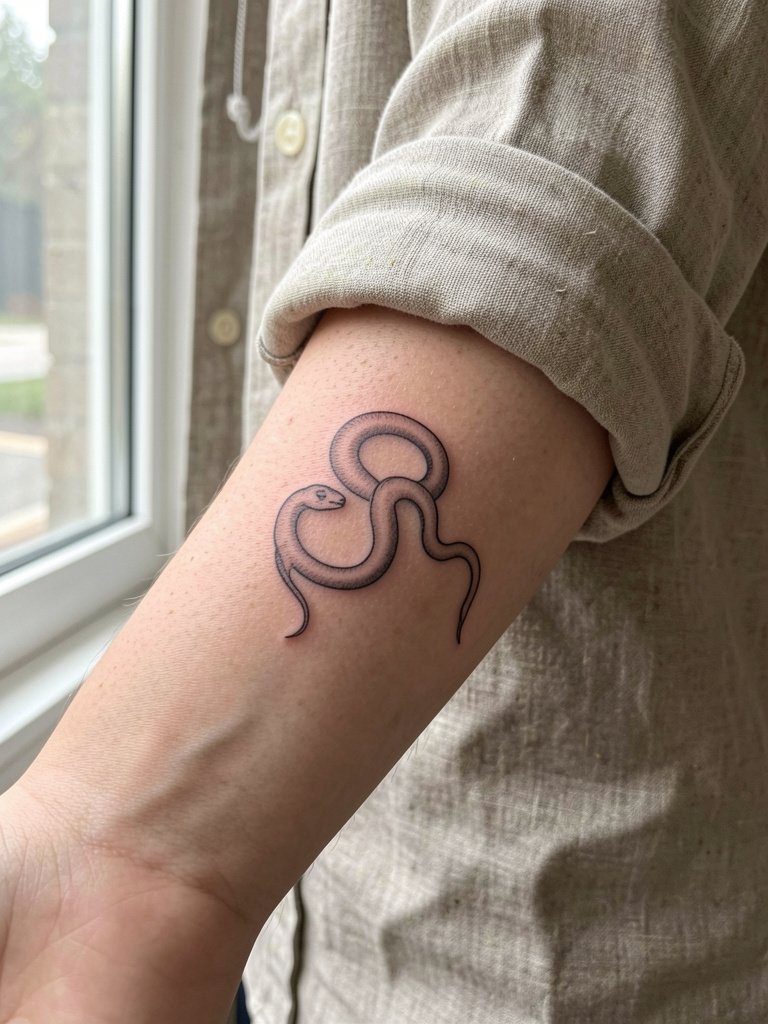
This is the purest fine-line look. I recommend it when you want the serpent to feel like a single confident stroke, not a packed illustration. For longevity, ask for slightly heavier single-needle work along anchor curves so the line still reads at year three. Artists disagree about single-needle durability. One camp says single-needle is mainly aesthetic and will fade or blur within three to five years if placed on a high-motion area. The other camp says single-needle holds for decades when the depth and ink quality are right, and they point to healed portfolios to back that claim. Expect a short session time for a small forearm piece and light pain. This placement pairs well with rolled cuffs and linen button down shirts when you want to show the entire line.
2. Geometric Snake with Triangles on Lateral Hip Bone
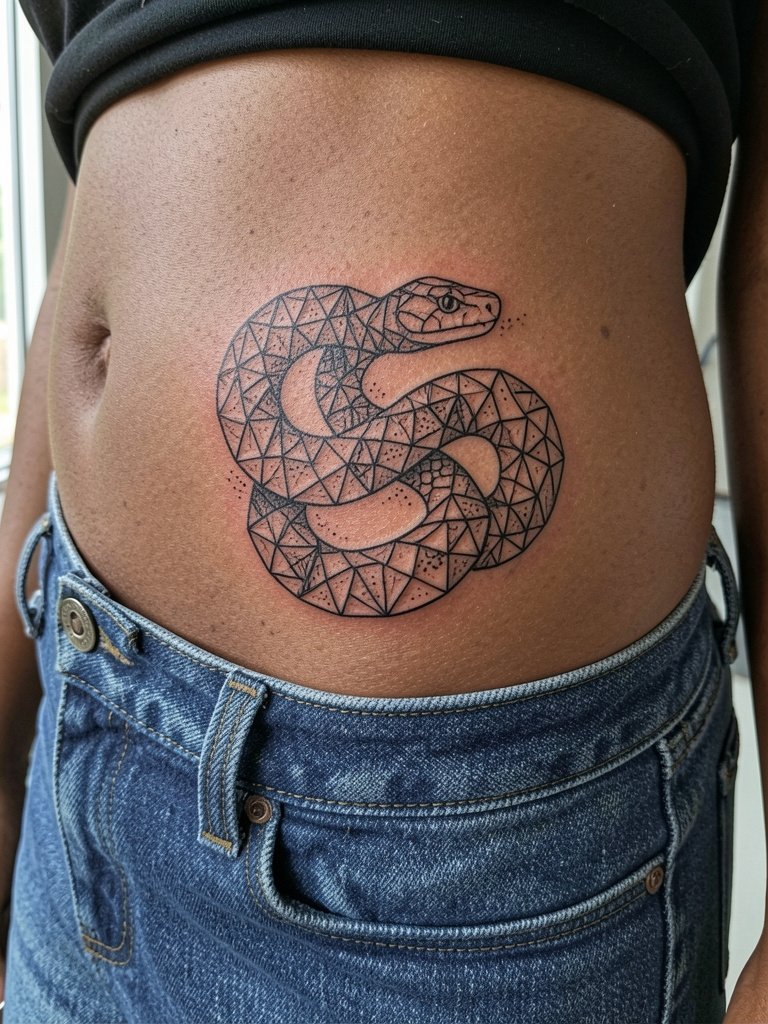
A geometric approach keeps the snake feeling modern and architectural. I suggest this when you want clean repeatable angles rather than lifelike scales. During the consult bring a sketch that shows exact triangle sizes so the artist can map how negative space reads on your skin. A common mistake is shrinking geometry to fit under a waistband. The shapes need breathing room, or edges will merge with time. Session-wise this is low to moderate pain, and touch-ups may be needed in three years if you have frequent friction from waistbands. Show it off with high-waisted shorts and a thin gold chain belt, and wear linen drawstring pants to the appointment so the artist can roll the side up easily.
3. Snake and Minimal Rose on Inner Forearm
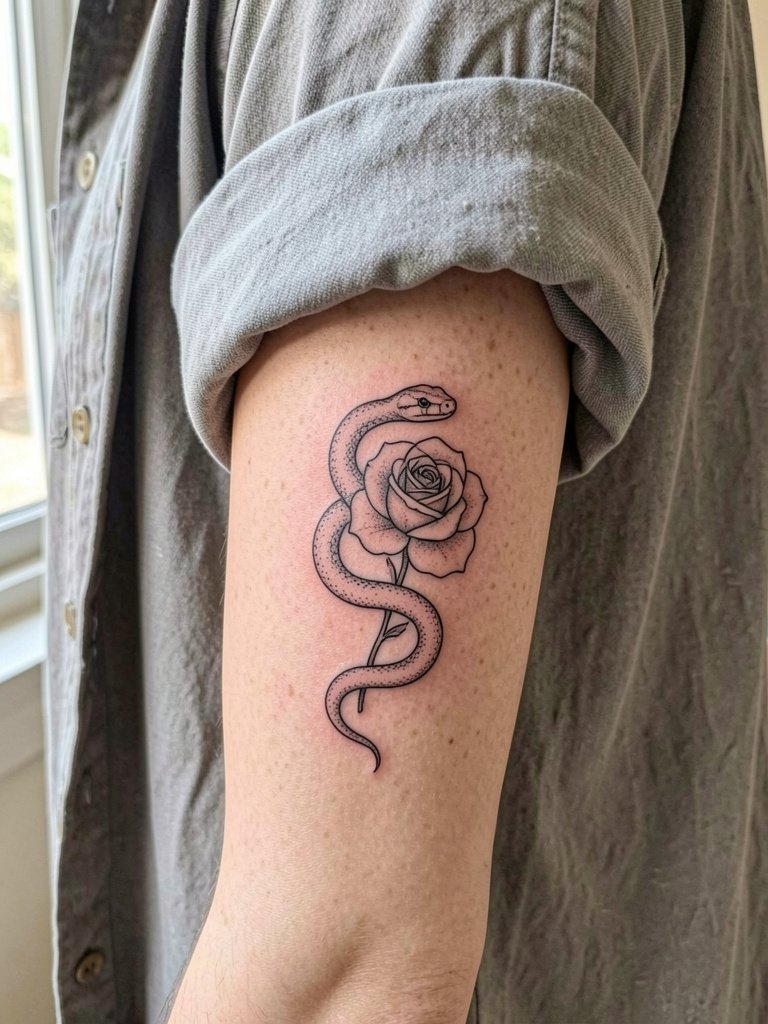
This design softens the snake motif with a floral counterpoint. It works when you want the symbolism tempered but still readable up close. Tell the artist you want the rose petal centers stippled rather than shaded with a wash so the scales around it keep their crisp separation. A typical aging mistake is over-filling the petals so the tiny rose becomes a dark blob at year two. Expect a single session and mild-to-moderate forearm discomfort. For showing off, pair the piece with rolled-up linen shirts in cream or olive and a dainty bracelet on the opposite wrist. Link a dainty gold stacked bracelet set to enhance photos.
4. Snake and Dagger on Outer Forearm
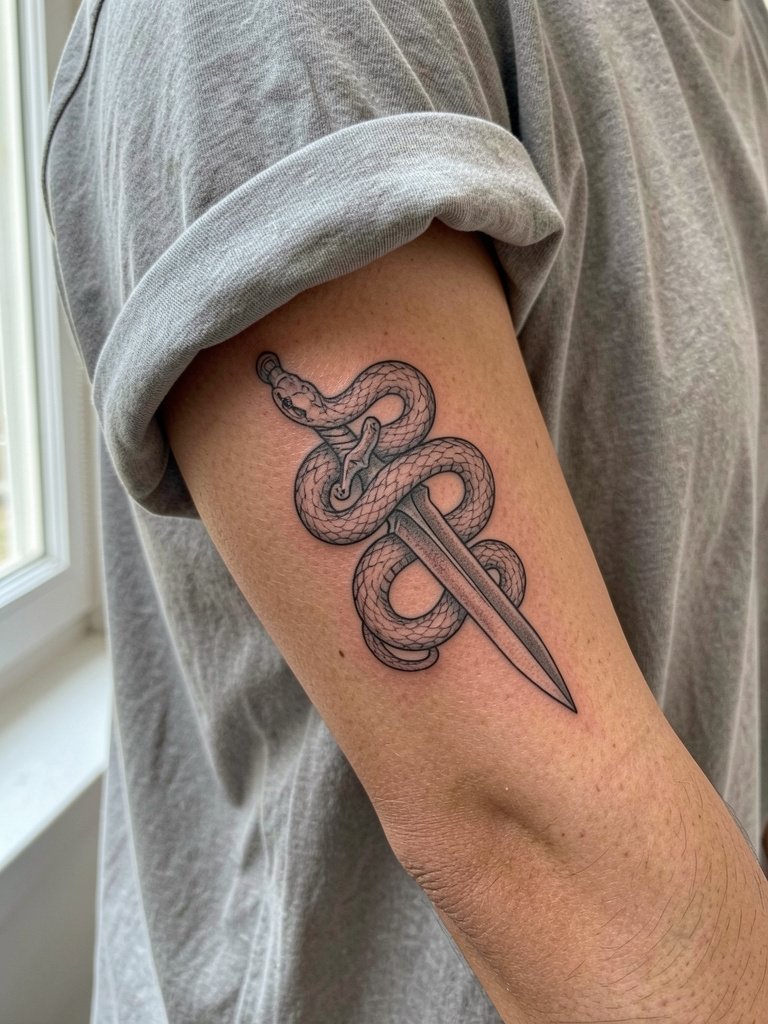
The dagger-snake motif translates well to fine line because the composition already favors vertical flow. Request a thin-but-solid outline around the dagger so the silhouette reads from a distance. A common error is trying to miniaturize all the blade detail into a two-inch area, which leads to blurring. Session time is moderate and comfortable for most people. For wardrobe, a cropped blazer or cropped jacket in black complements the dagger’s structure. Bring a cropped blazer to the post-session photos if you want a sharp contrast.
5. Minimal Snake and Tiny Skull on Inner Wrist
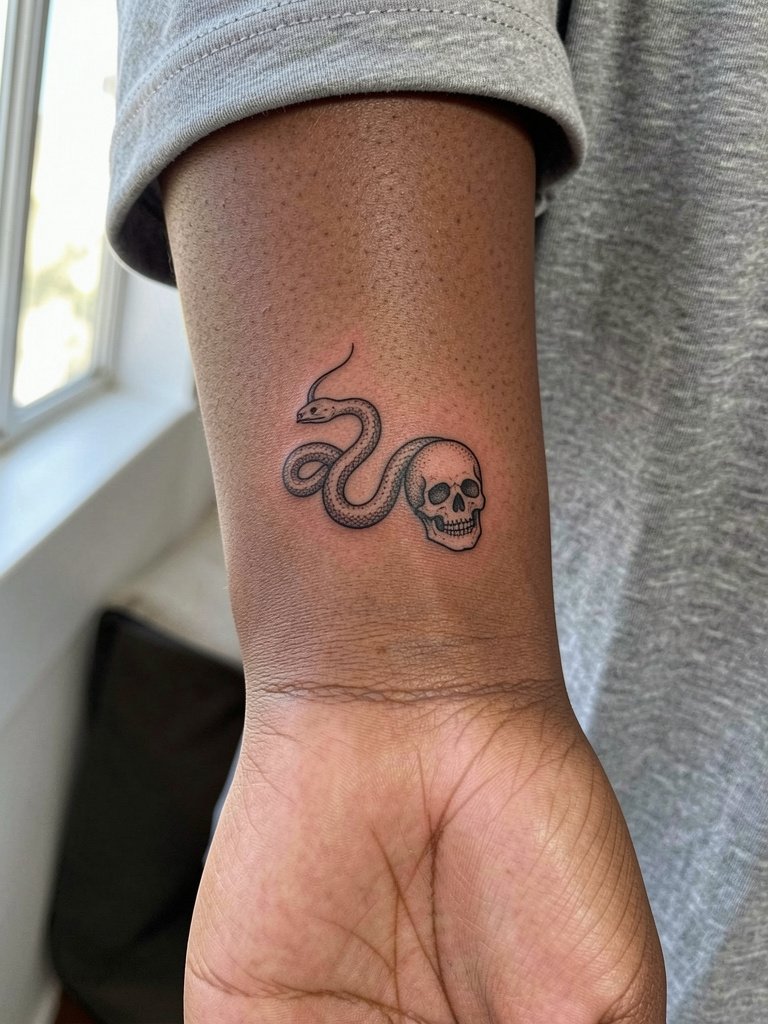
Tiny dark symbolism works as a discreet piece when it sits where a bracelet would. The inner wrist eats the finest lines, so specify a slightly bolder single-needle contour around the skull to preserve contrast. The biggest mistake is requesting filigree-level detail inside the skull, which will likely blur. Expect a sharp sting and a quick session. This is a good jewelry replacement and pairs nicely with a minimalist watch on the opposite wrist. Consider a minimalist watch for balance in photos.
6. Coiled Shoulder Snake That Follows the Deltoid
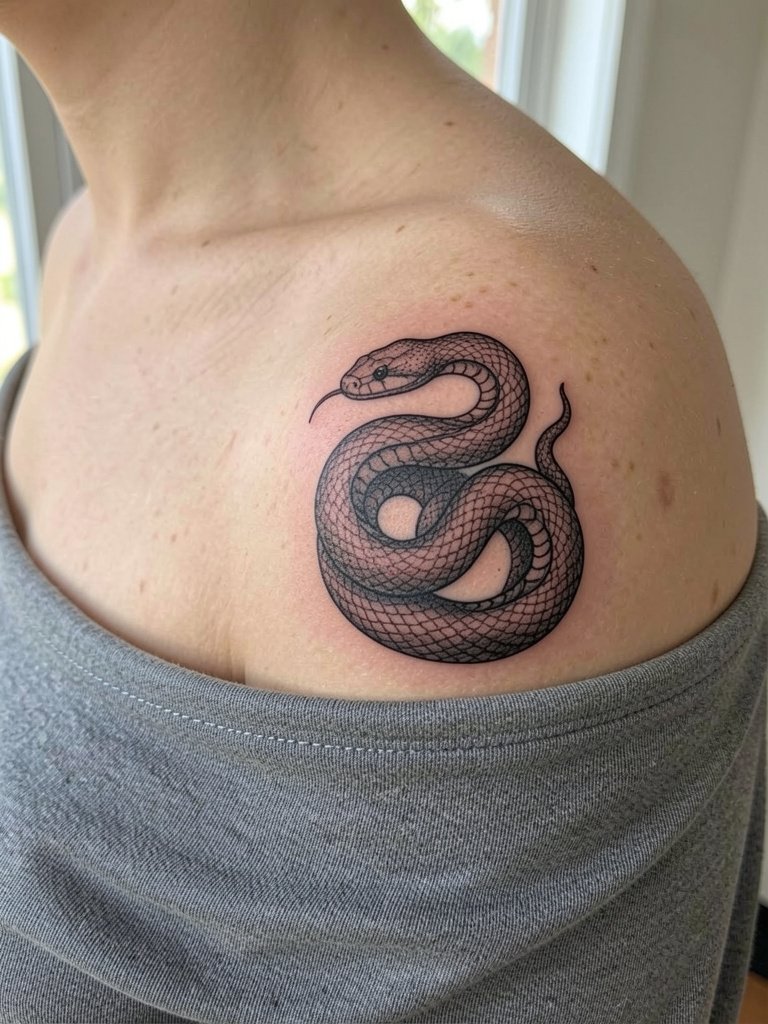
Shoulder coils are flattering because they ride the curve rather than fight it. Specify that the snake’s belly lines align with the muscle curve so the coil reads as one shape across movement. Many people request ultra-fine loops on the deltoid, which fade into indistinct hairlines after a year. Expect a comfortable session and minimal blowout risk if the artist spaces the lines. For showing it off, wear off-the-shoulder tops or tanks in neutral colors. Pack an off shoulder top for any reveal photos.
Session Day Essentials
The forearm and wrist ideas above need different session supplies than a rib or spine tattoo, so a few small items make the appointment and first week smoother.
- Bepanthen skin care cream. Lightweight moisturizer that keeps fine line areas soft without the heavy greasiness that can obscure tiny channels.
- Tagaderm transparent film dressing. Medical-grade barrier for long snake runs on the leg or back where friction is a problem.
- Mad Rabbit Tattoo Balm Gentle. Less oily formulation that helps maintain crispness on micro-realism scales.
- Dr. Bronner's Unscented Castile Soap. A gentle cleanser recommended in small amounts during cleaning, if your artist approves.
- Hustle Butter Deluxe. Used by many for the initial days of healing because it sits thin and does not pull dense fine line channels.
7. Vertical Spine Snake That Mimics the Backbone
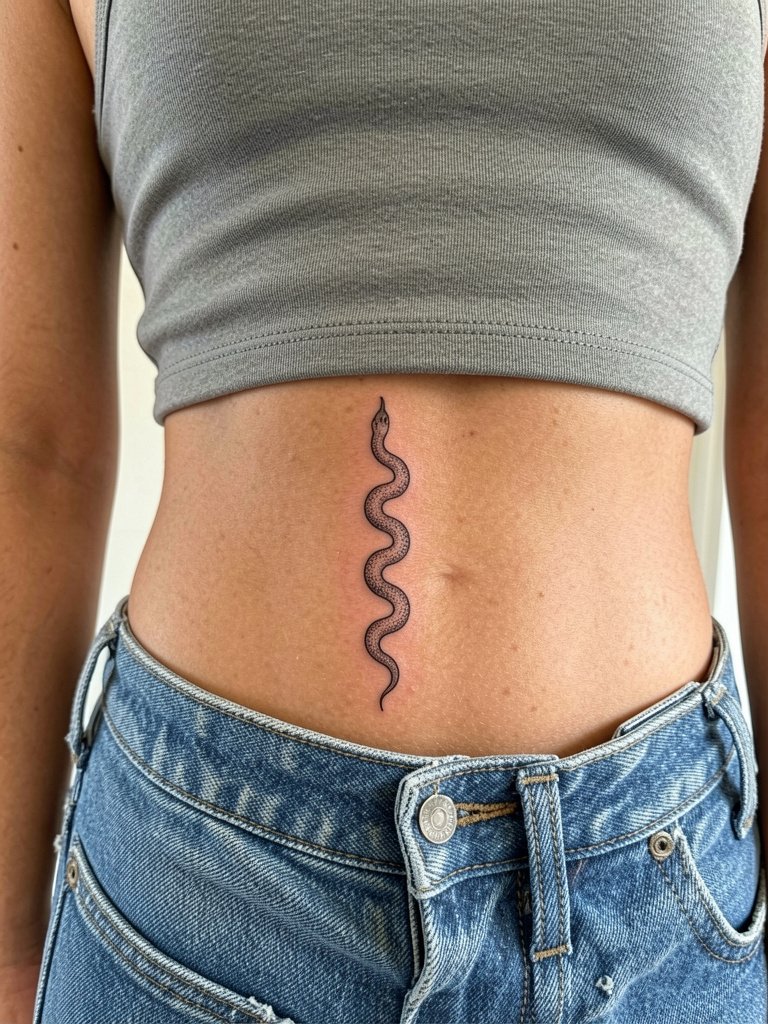
A spine snake reads as body architecture when the composition follows the vertebral line. Ask for a slightly bolder center line so the silhouette remains distinct as the skin stretches. The rib-style controversy does not apply here, but expect moderate pain and longer session time for a long vertical piece. Healed photos usually show the centerline holding, while fine-scale detail on the edges may need touch-ups at year two to three. This placement looks sharp with high-waisted pants and cropped tops that reveal the lower back. For session comfort, wear a two-piece set so you can expose the area easily.
8. Ankle Wrap That Reads Like Jewelry
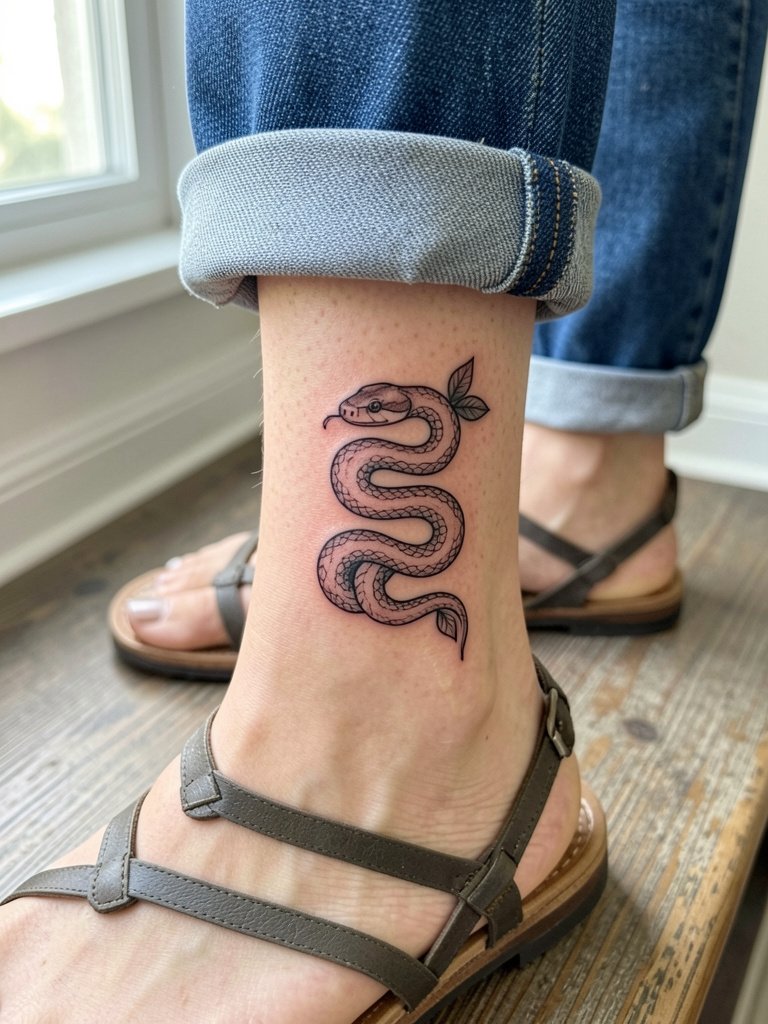
This is the jewelry-replacement move. Because the ankle sees constant friction from socks and shoes, pick bold single strokes for the part that hugs the bone rather than ultra-thin filigree. The common mistake is too-fine detail around the front of the ankle that dissolves after frequent rubbing. Session pain is low to moderate. Style it with strappy sandals or ankle boots that frame the design and bring a subtle focus. Wear strappy sandals for your first show-off photos.
9. Snake Coiled Around a Floating Orb on Upper Chest
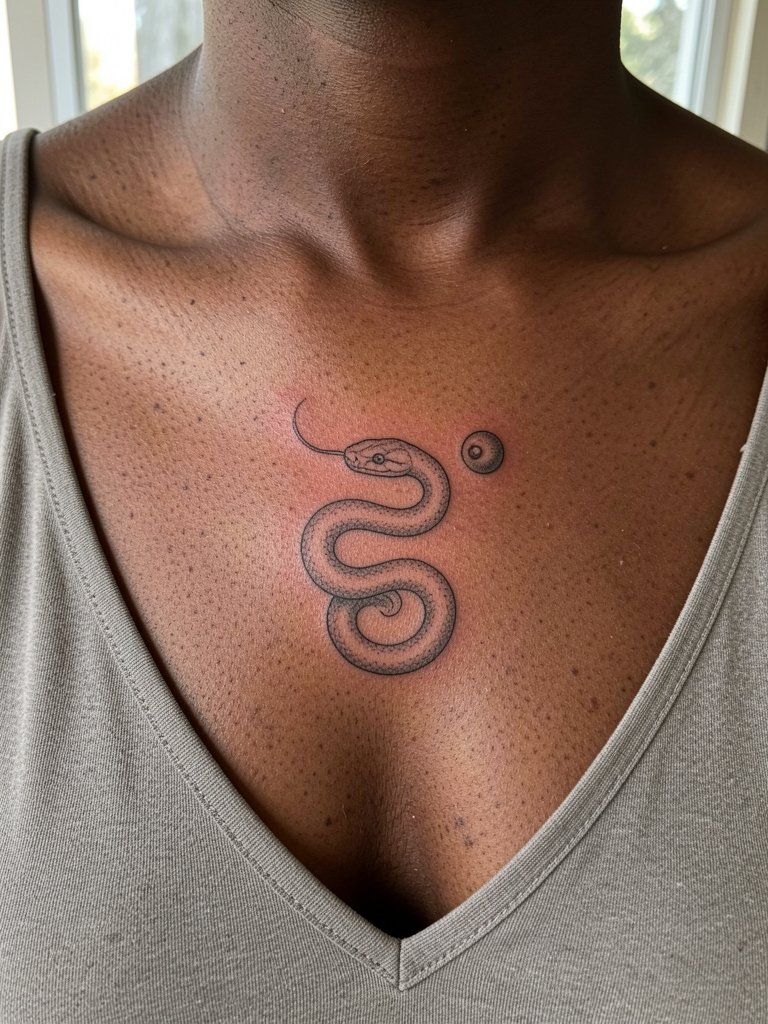
An orb-around-snake gives a surreal, editorial feel. Ask the artist to keep the orb slightly smaller than you think so the thin serpent still reads around it. A typical problem is over-detailing the orb, which competes with the line and softens the composition. Expect light to moderate chest discomfort depending on proximity to sternum. V-neck tops and thin pendant necklaces that sit above the design complement this placement. Try a thin pendant necklace for layered photos.
10. Japanese-Inspired Fine Line Serpent on Inner Forearm
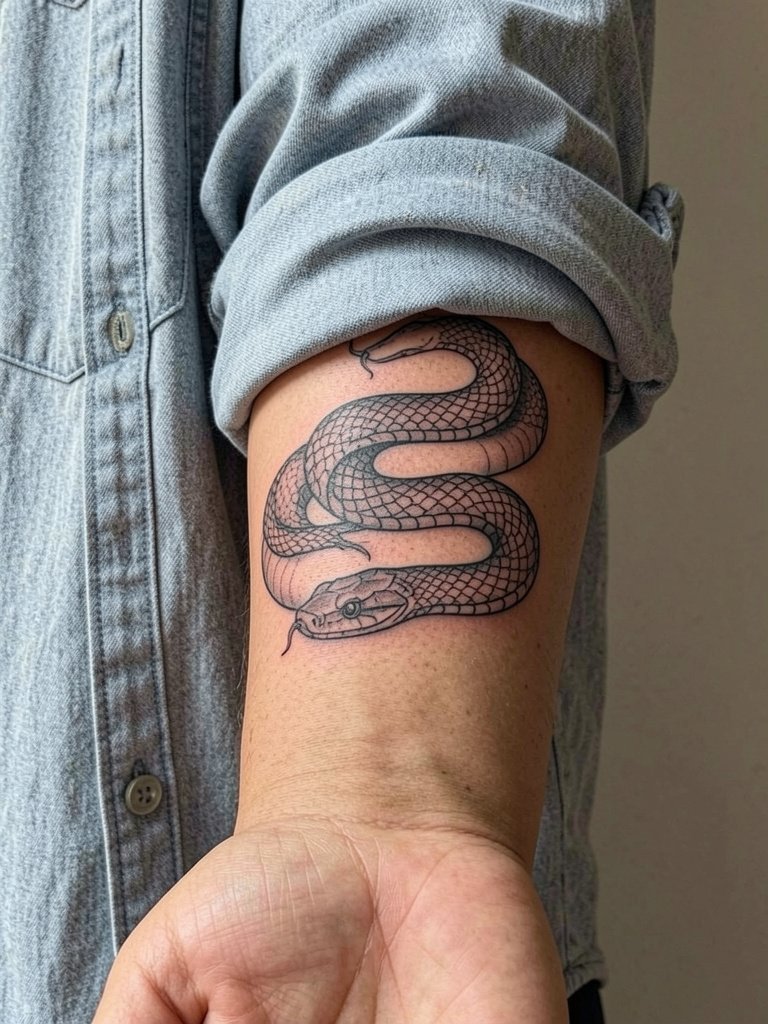
This gives cultural flavor without heavy traditional outlines. Respect origin by asking for stylistic elements rather than copying a sacred crest. The mistake is shrinking intricate motifs to tiny sizes where patterns collapse. For inner forearm placement expect moderate sensitivity and a short session. Shirts with rolled sleeves in neutral tones highlight the linework. Bring a linen button down shirt to the appointment so the artist can work with the sleeve out of the way.
11. Ribcage Coil That Follows the Side Torso
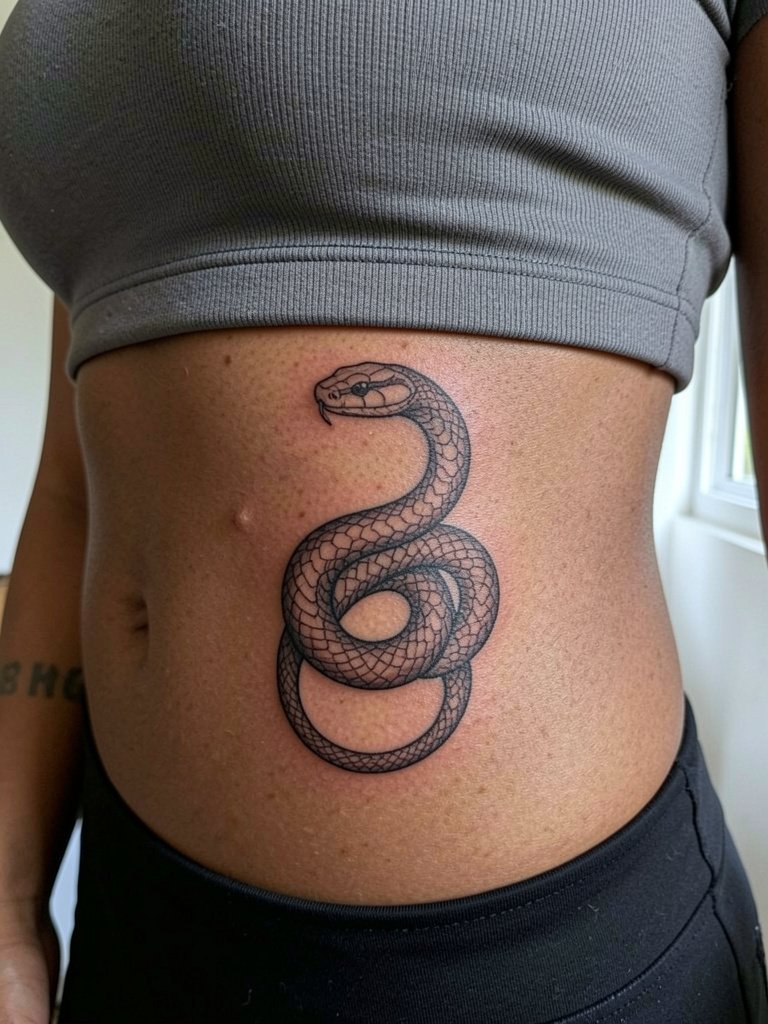
Fine line on ribs is where opinions split. One camp says ribs blur within two years because the skin stretches and shifts constantly and under-bra compression accelerates line merge. The other camp says fine line settles fine on the ribs when the artist uses the correct needle depth and slightly wider spacing, and they will show healed three-year photos to prove it. Because the area moves with breathing, request slightly heavier anchor lines along folds and plan for a touch-up window at two to three years if you want the pattern crisp. Pain is high here, so consider breaking larger ribs into two sessions. Wear a loose top or a two-piece set so the artist can access the side without tight fabric.
12. Snake Wrist Band That Circles the Wrist
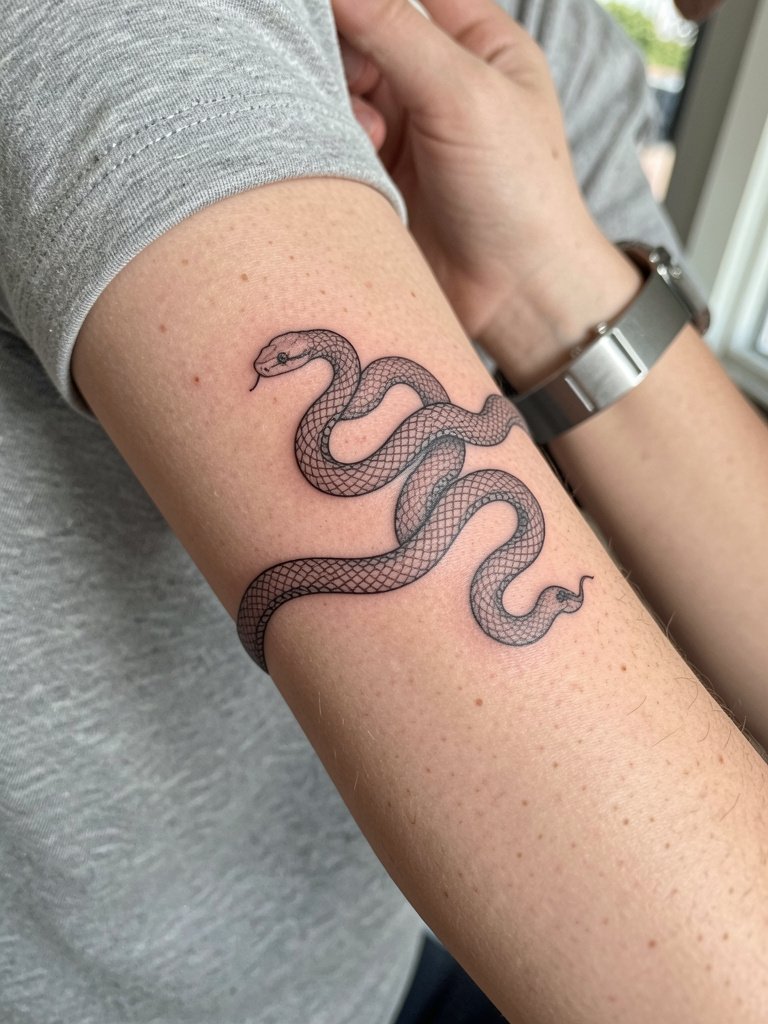
The wrist band replaces jewelry in a low-visibility way. Plan for slightly bolder line where the band meets the wrist crease to compensate for frequent movement and washing. The common error is trying to fit too much scale detail into the band, which blurs quickly. Expect a sharp session and schedule touch-ups every two to three years if you wash your hands often. Style with thin chain bracelets on the opposite wrist or a thin chain bracelet set to keep the focus balanced.
13. Negative Space Scale Pattern on Inner Forearm
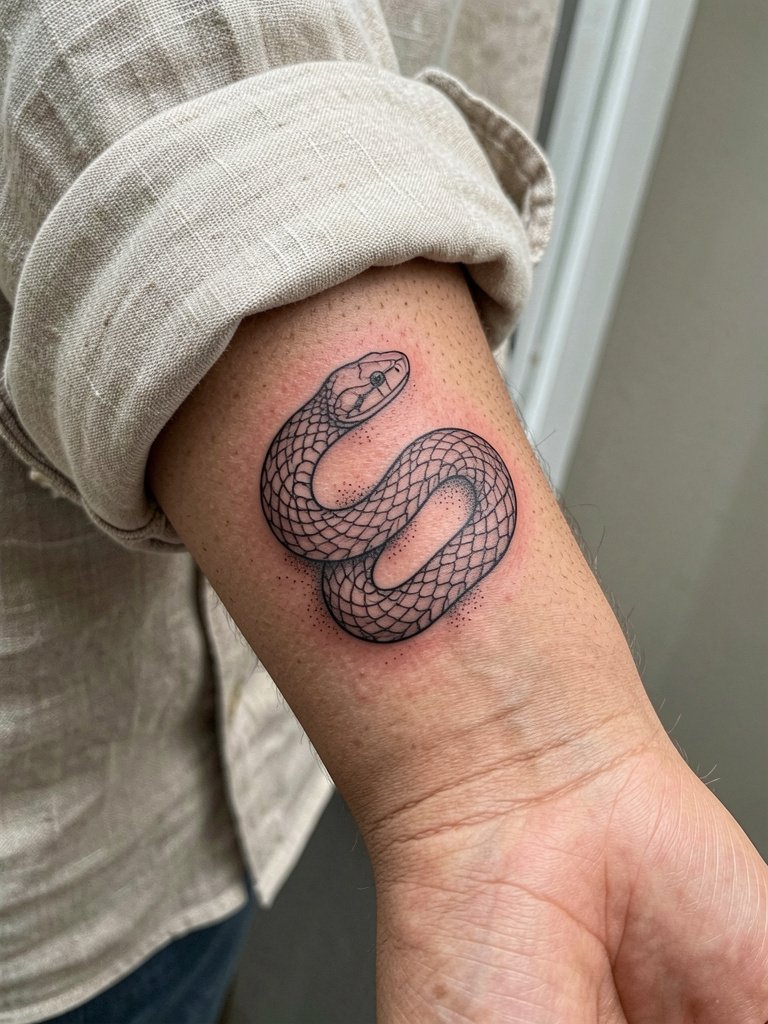
Negative space scales are a smart aging choice since they rely on skin contrast instead of tiny interior lines. When opting for this, ask the artist to space the scale cutouts slightly wider than your reference image so they do not fill in with scar tissue. A mistake is using negative space on very dark skin without compensating for contrast; subtle highlights or slightly bolder outlines help. This reads well with rolled cuffs and cream linen shirts. Bring a rolled cuff linen shirt for appointment ease and photo styling.
14. Micro-Realism Snake Head on Inner Upper Arm
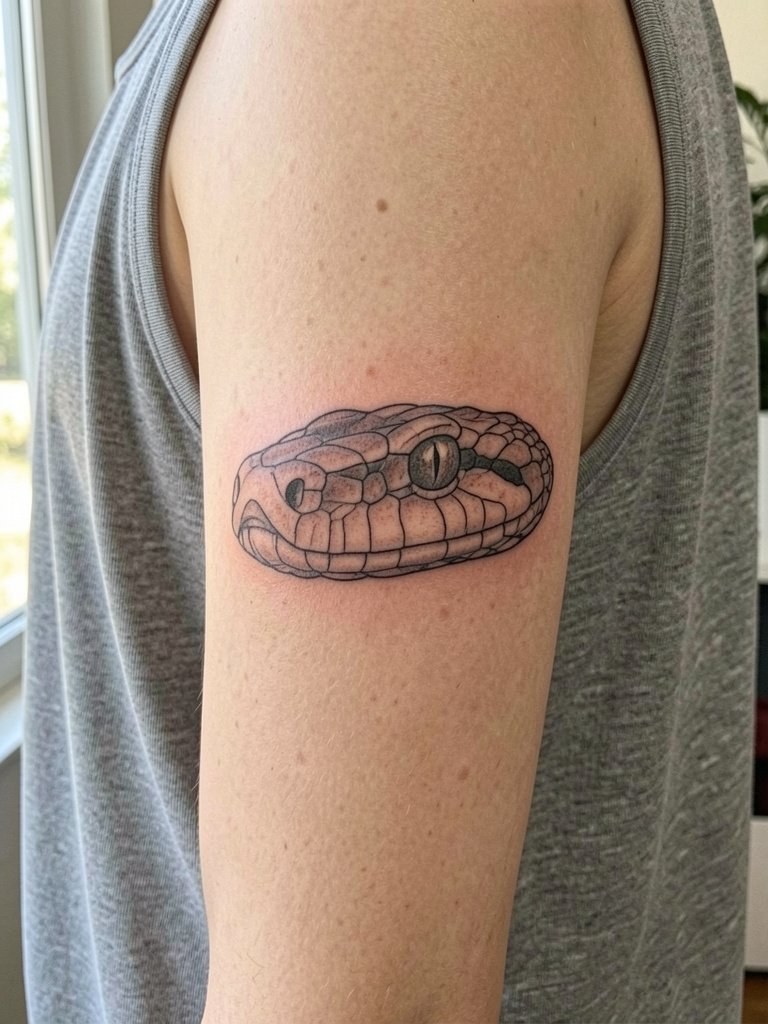
Micro-realism gives collectors the look of depth without bold blackwork. Ask for healed-closeup examples at the same scale you want so you can see how tiny scales hold. The usual mistake is overpacking scales at the expense of contrast, which flattens after a year. Inner upper arm is moderate pain and tends to age well if the artist leaves micro-highlights rather than trying to micro-shade every scale. This piece pairs with loose-sleeve dresses or off-shoulder tops for subtle reveals. Wear a loose sleeve dress for the first reveal photos.
15. Snake Tangled in a Delicate Web on Outer Forearm
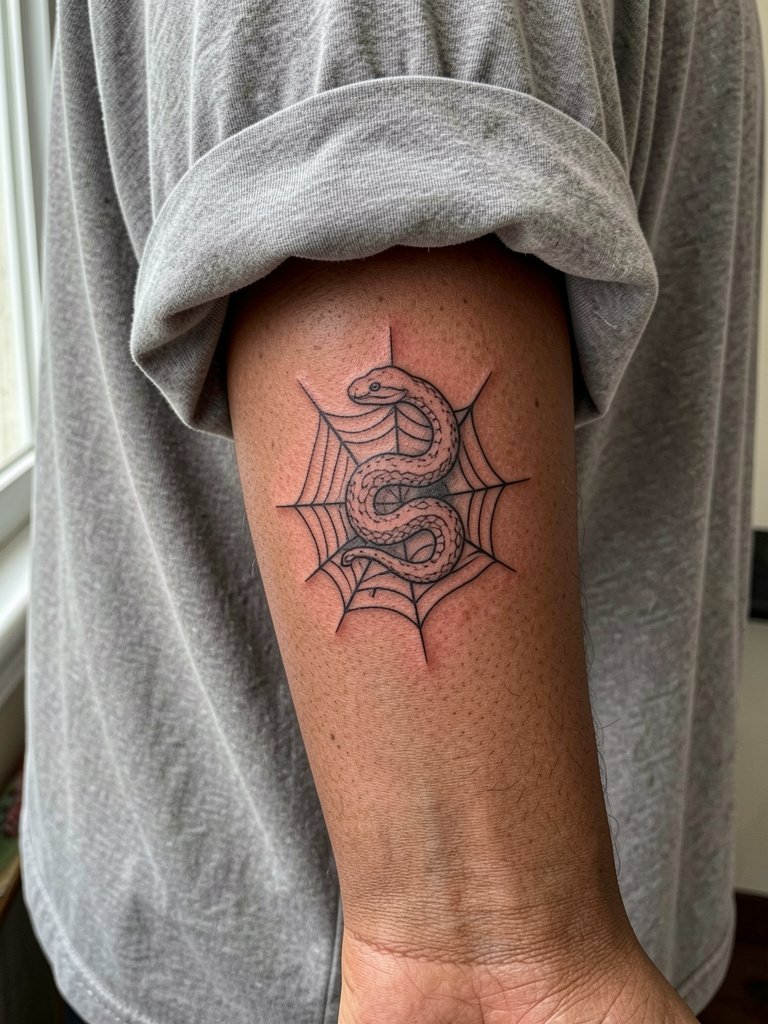
A web adds geometry and narrative to a snake motif. Specify that web intersections remain open and not filled, otherwise those junctions blur into a gray patch over time. The typical error is adding tiny spider details that do not survive the first year. This placement is comfortable and photographs well with cropped jackets or structural blazers. Pair it with a black structural jacket for editorial photos.
16. Tiny Coiled Calf Piece That Follows Muscle Lines
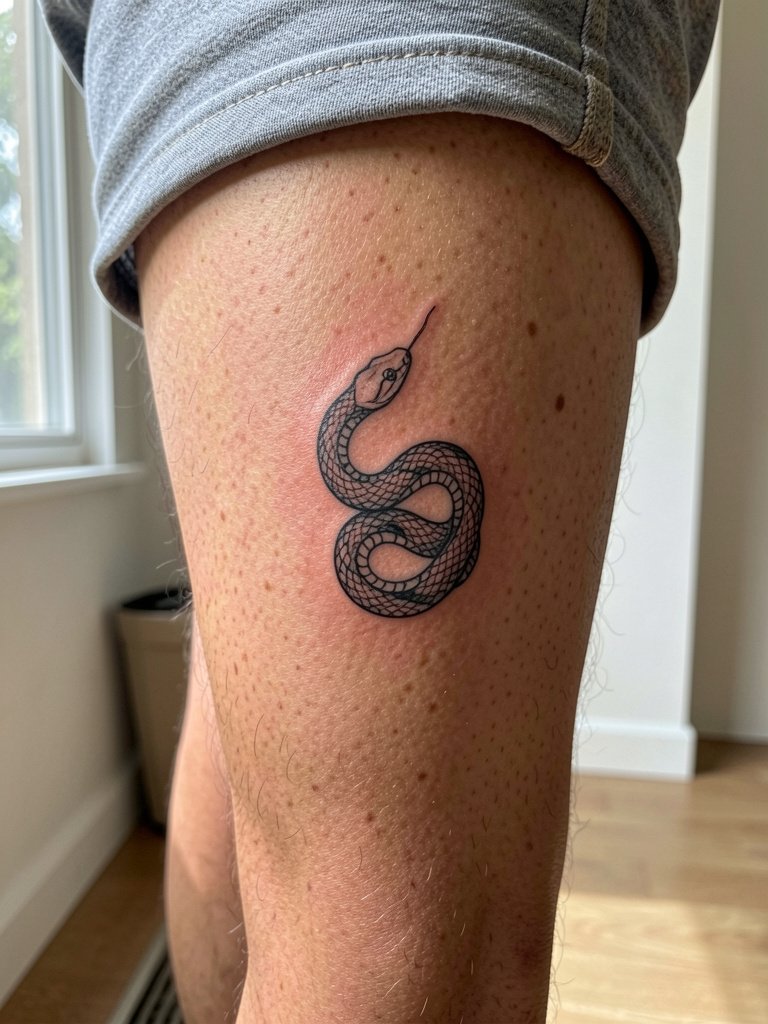
The calf handles longer runs well because swelling is minimal and lines do not compress like at joints. Ask the artist to map how the coil sits over the muscle so movement does not distort the silhouette. People sometimes choose too-thin inner coil loops that age into indistinct marks after summer swelling. Session pain is low to moderate. For shows off, pair with shorts and ankle boots in neutral tones. Bring loose pants or shorts to the session so the artist can expose the area without tight cuffs.
17. Snake Head with Negative Space Scales on Upper Thigh
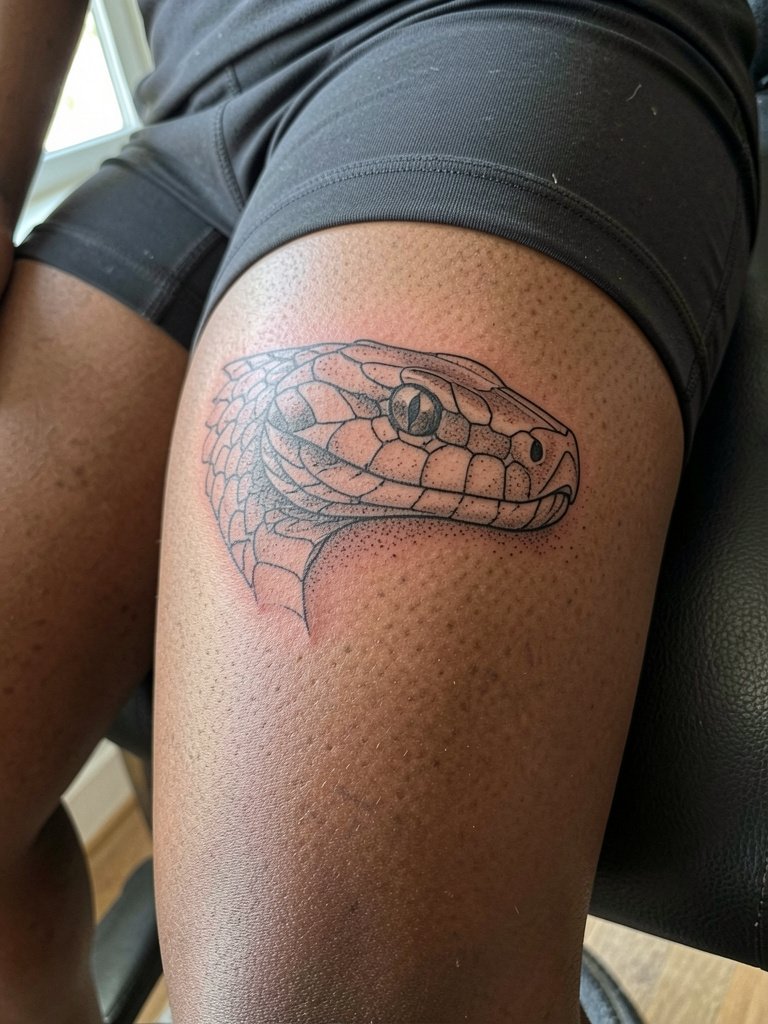
Thighs give room for detailed heads without the compression issues of ribs. When planning, request scale placement that uses negative space for highlights to preserve contrast on darker tones. The error is copying reference photos made for lighter skin without adjusting value. Expect low-to-moderate pain and a relaxed session. Style with mid-thigh skirts or shorts and bring modest athletic shorts to keep the area accessible during the session.
18. Minimal Geometric Snake Around Collarbone
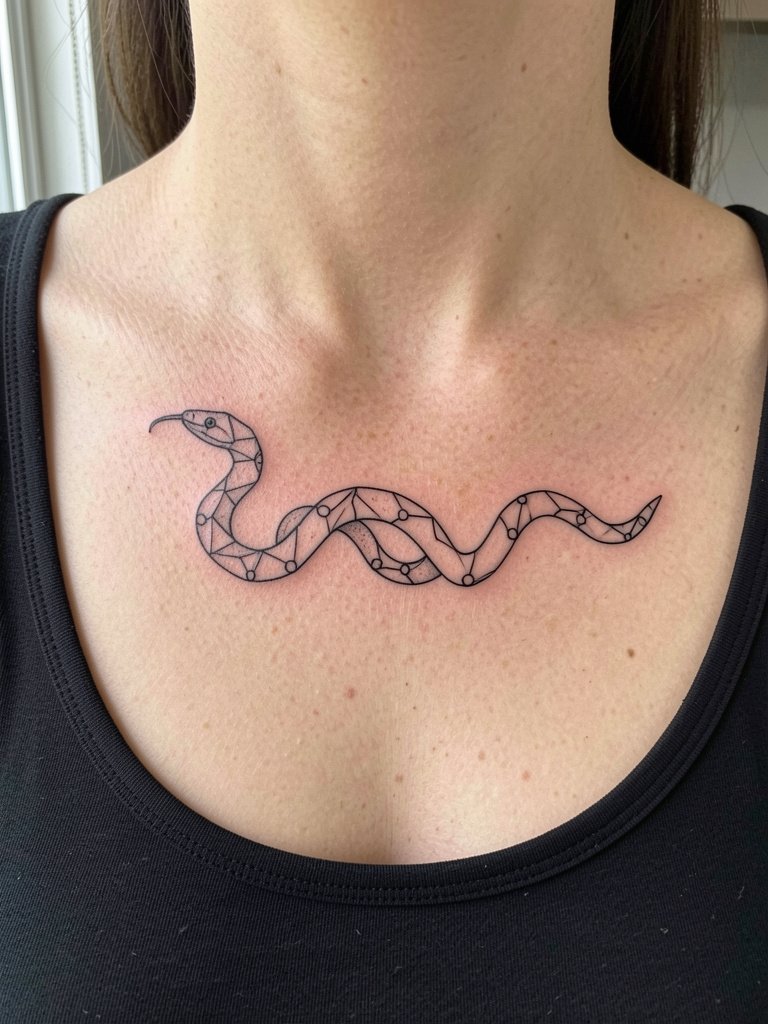
A collarbone piece that uses geometry reads modern and editorial. Ask for slightly stronger anchor points at shoulder and sternum so the line remains defined as you move. People often get tiny nodes that blur into a single mark because of proximity to clothing and movement. Pain is mild to moderate. V-neck and scoop-neck tops show the piece well. For a quick style lift, try a v neck top that frames the collarbone.
19. Small Snake Behind the Ear
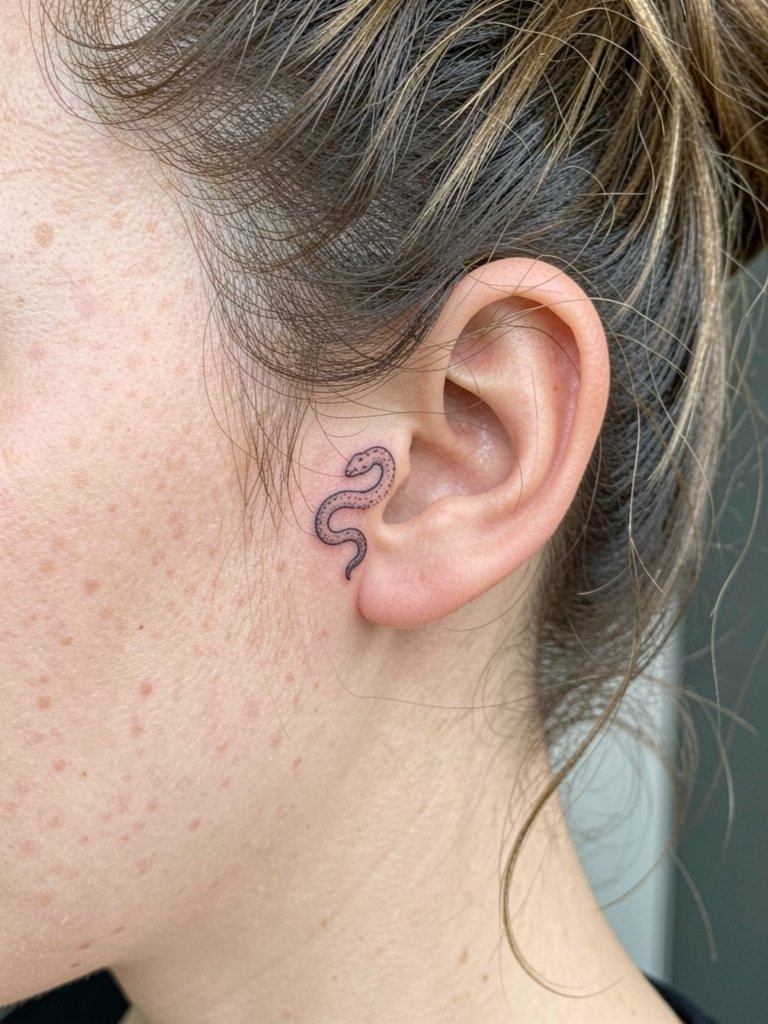
Behind-the-ear pieces need crisp silhouettes because the area is small. Ask your artist to keep the shape bold enough to read in photos when hair is up. The error is expecting micro-detail to survive where hair and moisture can obscure it. Pain is low. Style with short hair or an updo to reveal the mark. For discreet reveals, tie hair up or try delicate earrings that do not compete.
20. Snake and Orb on the Upper Arm Outer Bicep
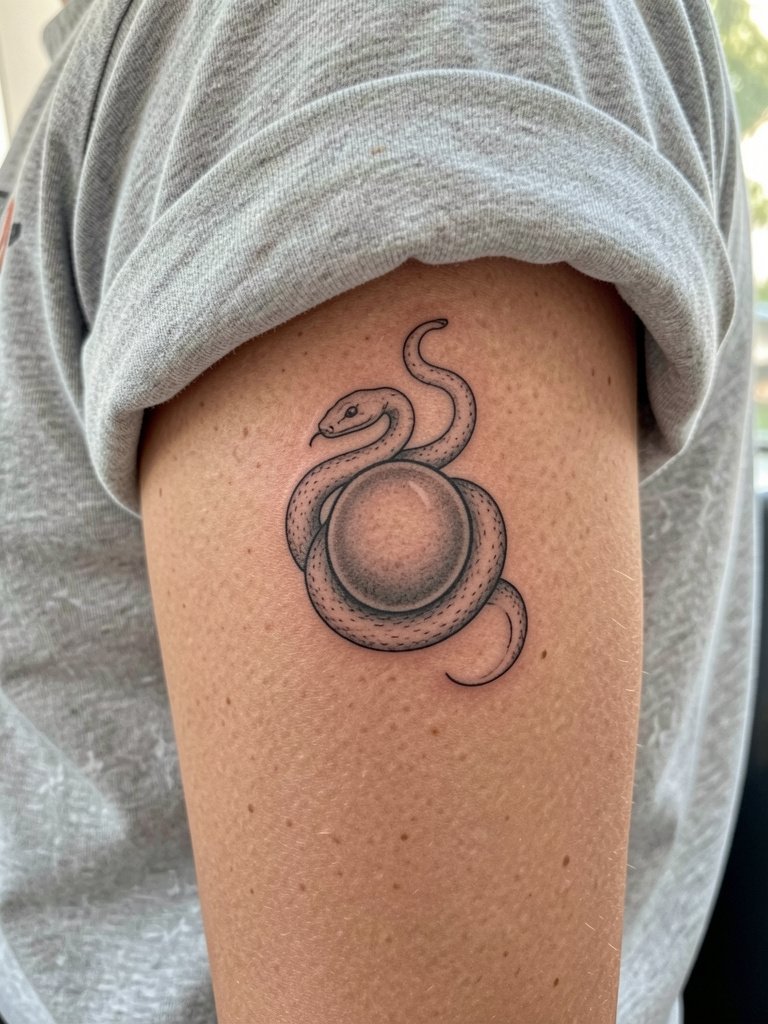
Outer bicep allows slightly more detail and tolerates thin shading better than the wrist. Tell the artist you want the orb to remain airy with stippling rather than a wash. A typical mistake is over-saturating the orb which competes with the snake lines. This placement is lower pain and quick. Pair with cropped jackets or sleeveless tops that show off the outer arm. Bring a loose fit t-shirt for session comfort.
21. Tiny Snake on Finger That Wraps the Digit
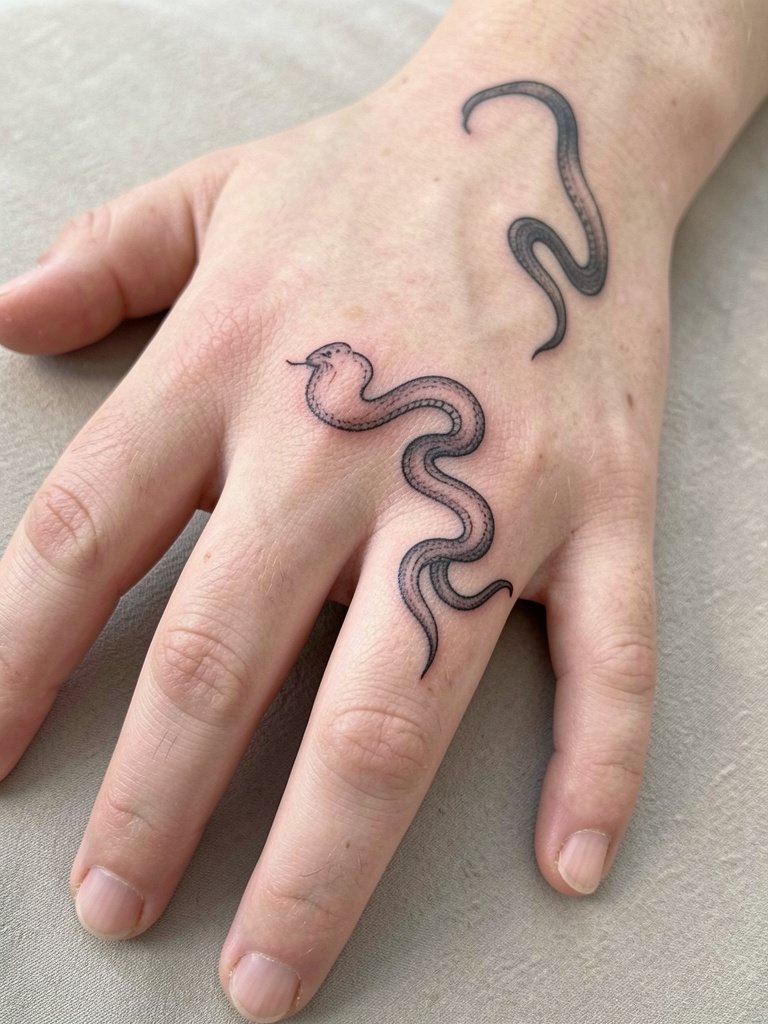
Finger tattoos are convenient but they wear differently because of washing and friction. Request that anchor portions of the snake be slightly thicker than midline curls to slow fading. The mistake is demanding full micro-detail on the finger where constant use will flatten the lines. Expect faster fading and the likelihood of touch-ups within a year. Style-wise, minimal stacked rings or bare fingers keep the focus on the line.
22. Dramatic Coiled Shoulder Blade Placement
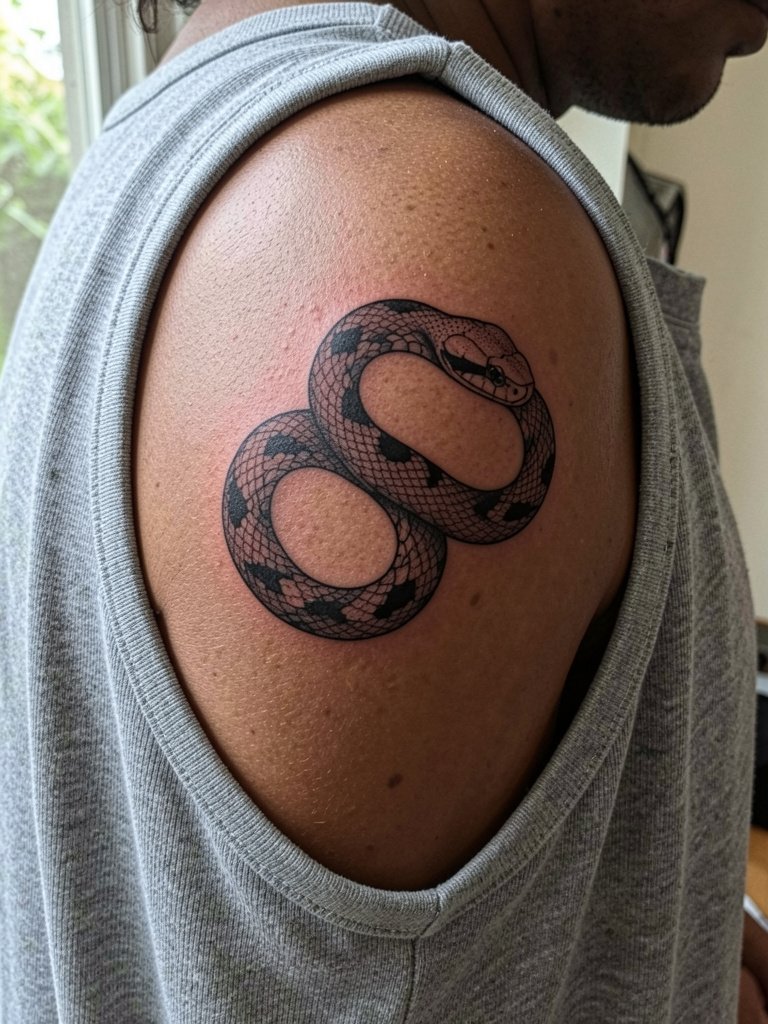
The shoulder blade accepts sweeping coils and shows them well. Ask for scale orientation that follows the blade so the coil looks like a single sculptural piece across motion. A common oversight is not accounting for shoulder blade movement during sleep and exercise, which can distort thin inner details. Expect a comfortable session and strong long-term read. Reveal it with off-the-shoulder tops or tanks.
23. Linear Forearm Snake with Dot Work Shading
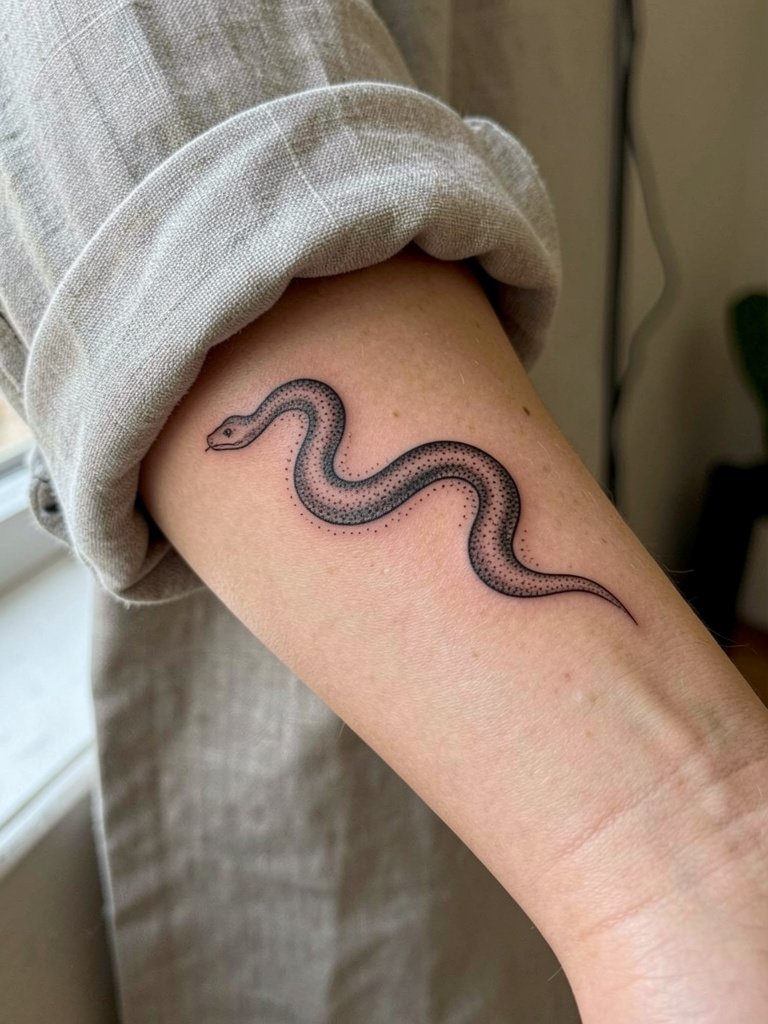
Dot work softens the texture without adding heavy washes, which helps fine line longevity. Ask for spacing guidelines so dots are not packed too tight, which is the common error that makes shading turn muddy. Expect a medium session and a comfortable heal. Pair with rolled cuffs and dainty wrist jewelry if you want the forearm to read like an outfit detail. A single dainty wrist bracelet keeps the image balanced.
24. Snake and Leaf Motif on the Ankle Side
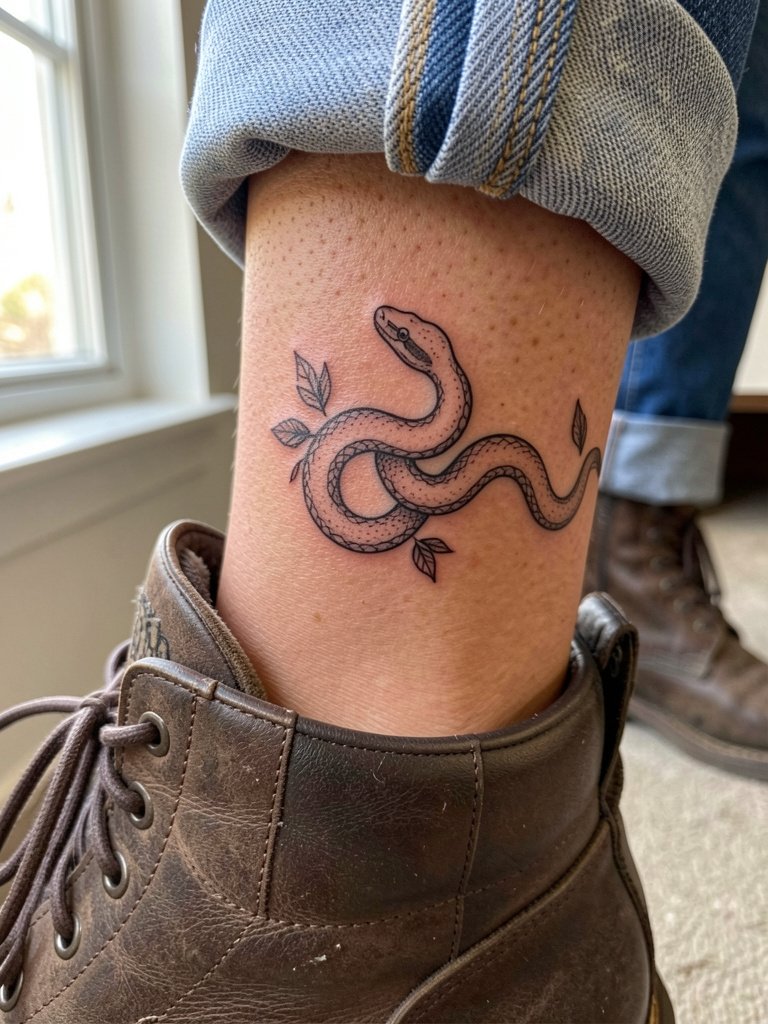
Leaf accents add a botanical softness to the ankle wrap. When you book, request the artist place the leaves on the outer facing curve so they remain visible when shoes are worn. The usual mistake is placing detail where socks rub, causing early wear. Expect low pain and quick sessions. Strappy sandals or boots frame the ankle and make photos pop. Roll jeans and bring ankle boots for a styled look.
25. Small Curled Snake Near the Waistline
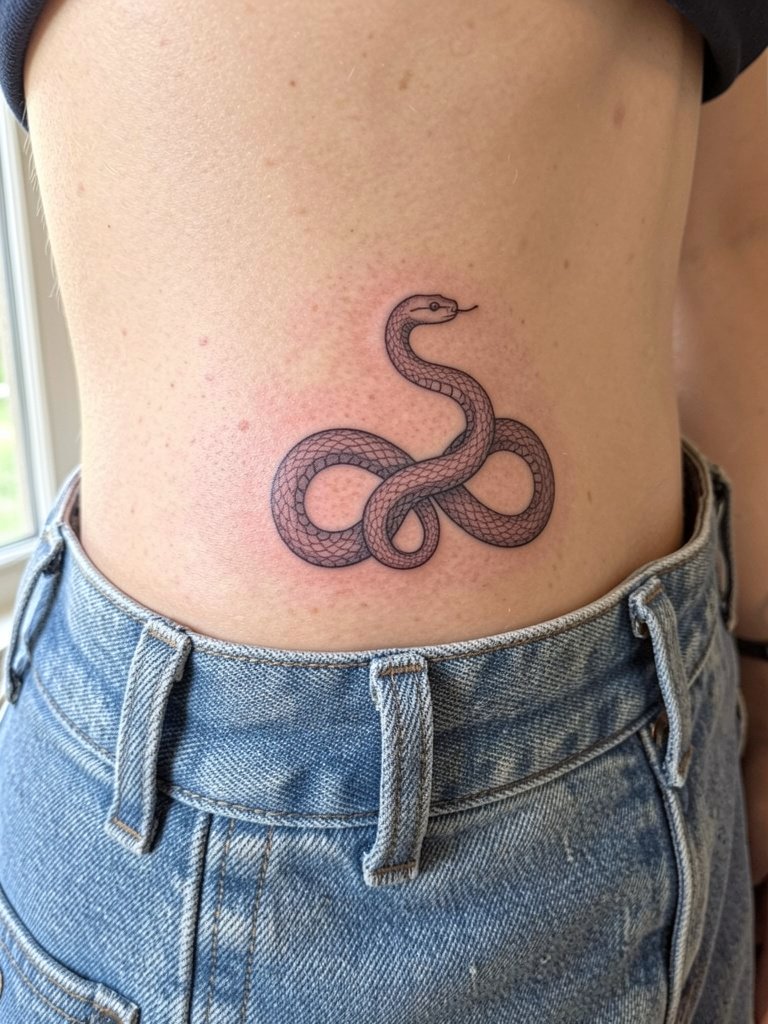
A waistline curl flatters the torso and works like a framed accent when paired with high-waisted bottoms. Tell the artist you want the coil centered above the waistband and not tucked under it. The mistake is placing it too low so everyday wear hides it. Session is brief and pain is moderate. Style it with high-waisted shorts and a thin chain belt for framing, and bring high waisted shorts to show how it will sit under clothing.
26. Micro-Realism Eye and Snake on the Chest
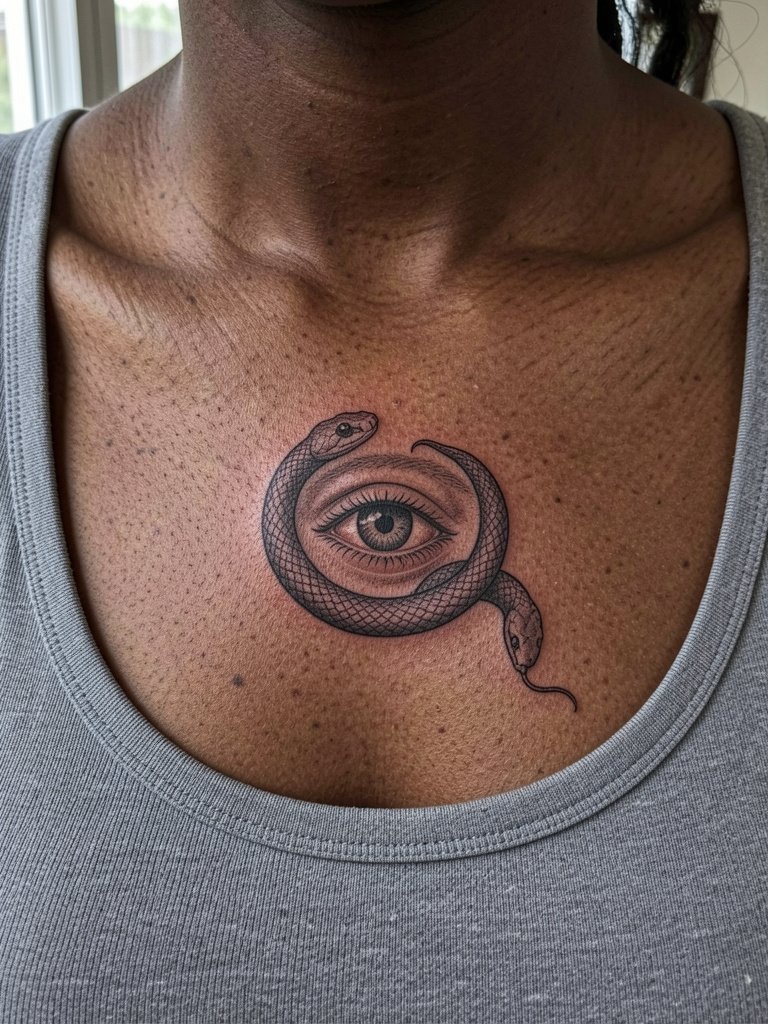
An eye-in-snake reads esoteric and holds detail well on the upper chest because the skin there moves less than ribs. Request micro-contrast highlights for the eye rather than dense shading. The mistake is adding tiny lashes or texture that vanish with healing. Expect light to moderate discomfort. Show it off with camisoles or v-neck tops.
27. Ornamental Snake Bracelet on Ankle with Tiny Gem Accent
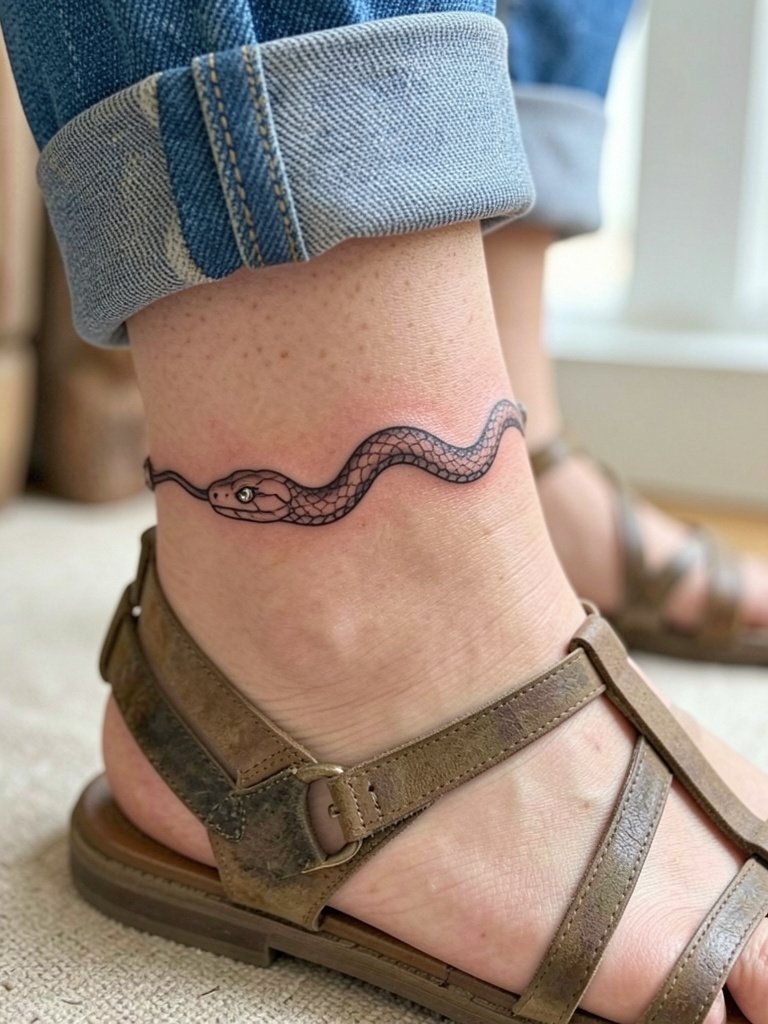
Think of this as the most decorative jewelry swap. The gem accent should be left in negative space or as a slightly bolder dot so it keeps contrast. The common mistake is over-rendering color or tiny sparkles that do not survive frequent foot washing. Session pain is low. Style it with sandals and rolled jeans for a deliberate, casual reveal.
Frequently Asked Questions
Q: How much should I budget for a small fine line snake?
A: Expect studio minimums rather than the old $100 walk-in price in many cities. For small forearm or wrist pieces budget for a studio minimum and be prepared for touch-ups in two to three years if you want the piece to read like day one. If price is a major concern look for newer artists with solid healed portfolios and ask to see work at the exact scale you want.
Q: Will a fine line snake show up well on dark skin?
A: Fine line can be visible on darker skin tones, but it often needs slightly heavier anchor lines or selective negative space so the form reads in photos. Ask for subtle highlights or slightly bolder outlines around focal points and request healed photos of similar skin tones at the scale you want.
Q: What are the real risks of single-needle versus multiple-needle fine line?
A: There is a two-sided debate. One viewpoint says single-needle is primarily aesthetic and will fade faster or blur within a few years if placed in high-motion zones. The counter viewpoint holds that single-needle is a legitimate technique that lasts when executed with the right depth and ink and that many healed examples show decades of stability. For your session be specific about line weight variations so your artist can adapt the needle choice to the placement.
Q: Where can I find reliable fine-line portfolios and healed examples without tracking down named artists?
A: Search hashtags like #finelinetattoo, #singleneedletattoo, and #finelinesnake on Instagram and use the location filter to find artists near you. Reddit communities such as r/tattoos and r/finelinetattoos often share healed shots and peer recommendations. For studio-level searches try typing "[your city] + fine line tattoo studio" into directories and filter for portfolios that show healed work rather than only fresh photos.
Q: What should I wear to the appointment based on placement?
A: Wear clothes that give clear access to the area without tight seams pressing on fresh ink. For inner forearm or wrist bring a loose button-down or short-sleeve top. For hip or rib work wear a two-piece set with a cropped top and loose pants. If you plan to photograph a new shoulder coil, bring an off-the-shoulder top. A practical pick for forearm pieces is a linen button down shirt that rolls easily and photographs well.
Q: How often do fine line snakes need touch-ups?
A: Many fine line pieces benefit from touch-ups at the two to three year mark, especially in high-friction zones like the wrist, fingers, and ribcage. Expect touch-up frequency to depend on your skin, sun exposure, and whether the artist left extra space for future rework. Plan for a realistic maintenance window when budgeting.