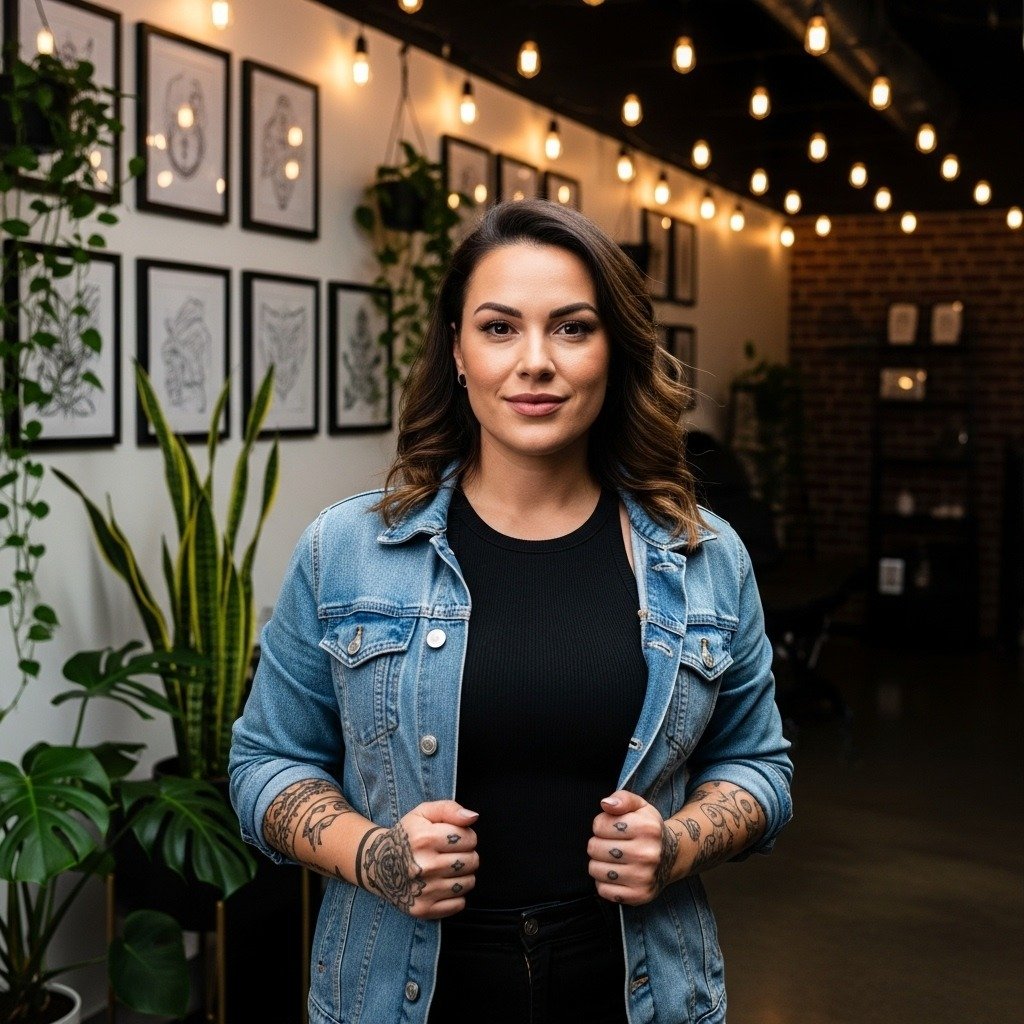
Wrist music tattoos are tiny commitments that act like daily cues. People expect a crisp clef or single note to look the same forever but the wrist is a high-motion, high-friction spot, and that reality changes how you plan size, line weight, and aftercare. Expect a bit more pain than the forearm, plan for at least one touch-up within two years for fine-line work, and budget for artist minimums so you do not get surprised at booking time.
1. Fine Line Wrapping Staff of Notes
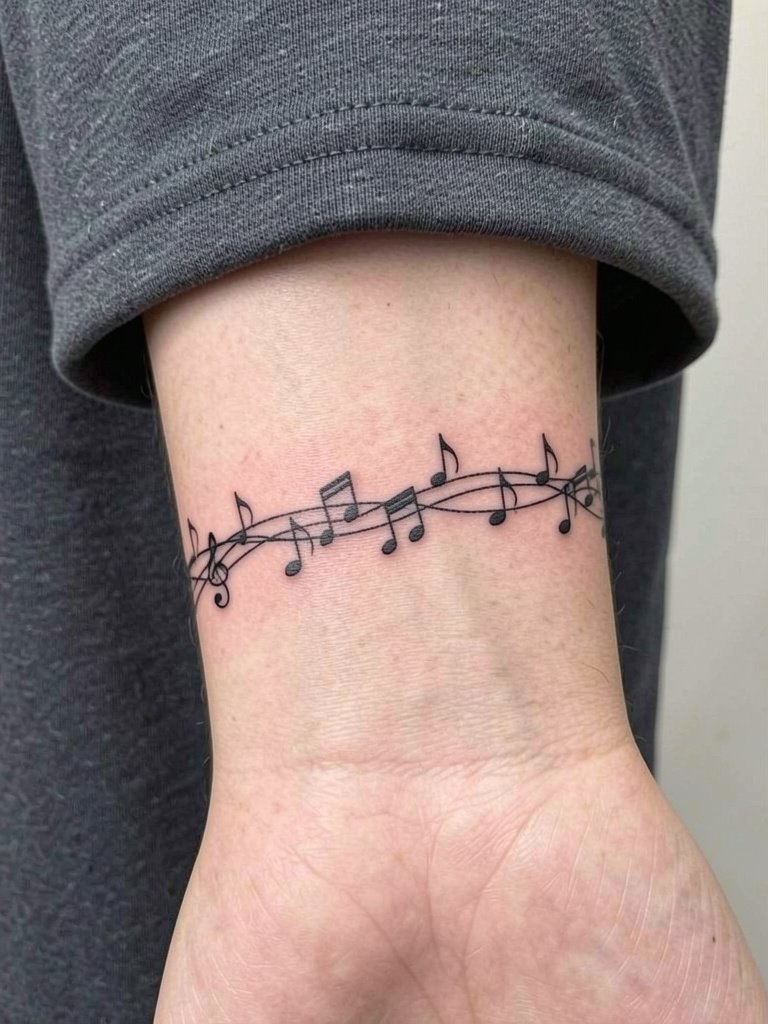
This is the go-to for music lovers who want rhythm that reads from any angle. I recommend slightly heavier single-needle line weight than the Pinterest samples, about 0.35 mm, so the staff keeps its spacing at 2 years healed. Common mistake is shrinking the staff so each note sits under 6 mm; that invites early merging and the staff looks muddy after a year. Session time for a full wrap is short, often under an hour, and pain sits at medium because the inner wrist has thin skin over tendons. Expect one touch-up in 12 to 24 months. If you want to wear bracelets, pick thin chain stacks to frame the band rather than wide cuffs that hide the wrap.
2. Minimalist Single Note on the Lateral Wrist
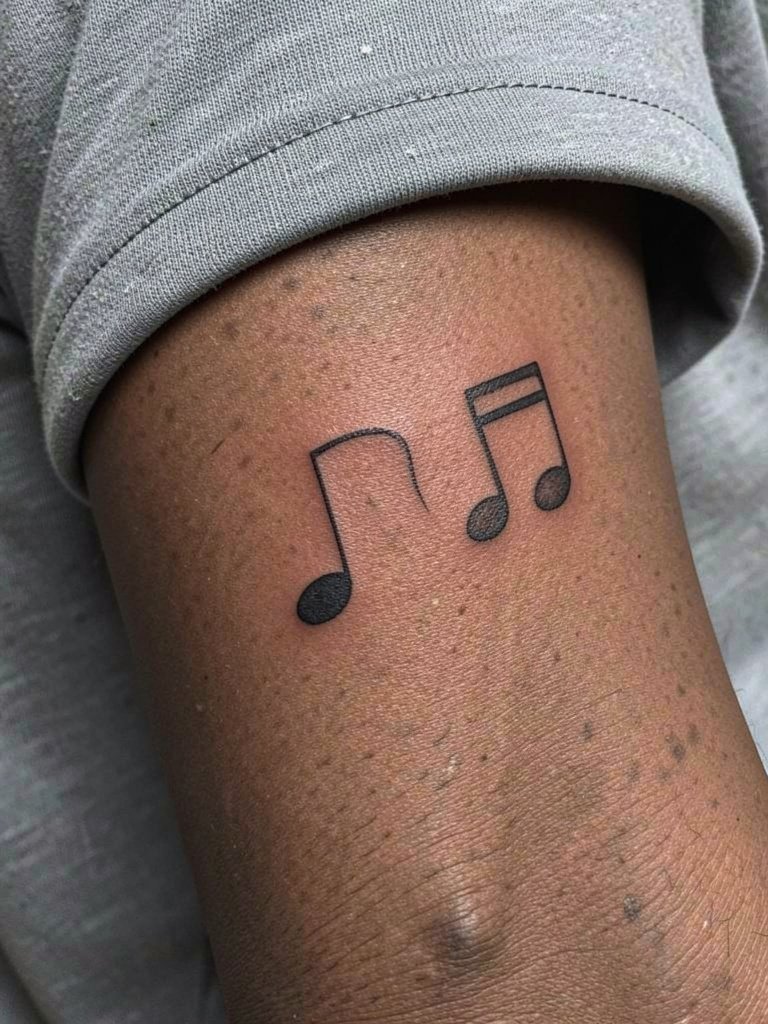
A single isolated note reads like a small personal marker but it needs room to breathe. For dark skin tones choose a slightly bolder outline rather than a micro 0.25 mm needle. The session is quick, often 15 to 30 minutes, and the pain is medium because the lateral wrist sits over bone. Common aging issue is photography invisibility; thicker black linework and a 6–8 mm note head keep the shape visible in photos. For the session wear a short-sleeve top so the artist has full access. To show it off, pair the wrist with a thin chain bracelet set on the opposite wrist for balance.
3. Treble Clef Wrapped as Heart Motif
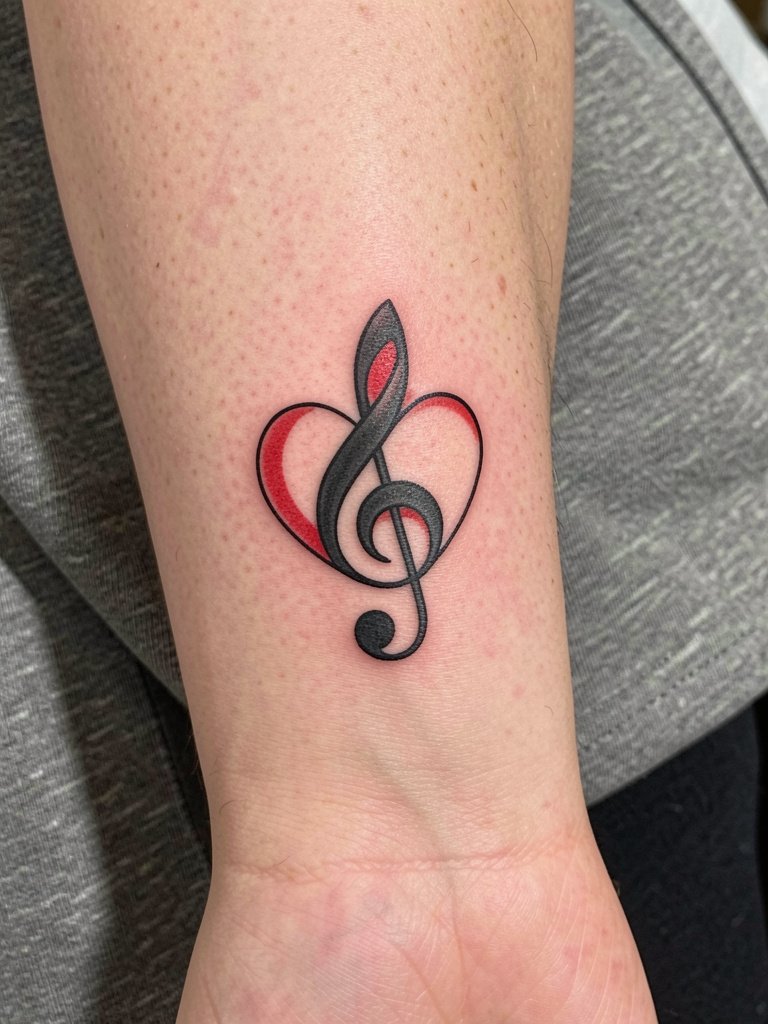
This design blends symbolism and readability. One mistake is making the heart loop too small so the red accent fades into the curves after a year. Size the motif so the heart fill is at least 5 mm across. Ask for slightly heavier contour around the clef so the interior counters do not collapse over time. The inner wrist placement increases chances of early softening, so plan a touch-up at 12 months. For outfits, a stacked thin chain looks polished; try a dainty wrist bracelet stack on the opposite hand to frame the ink.
4. Blackwork Waveform Spectrogram
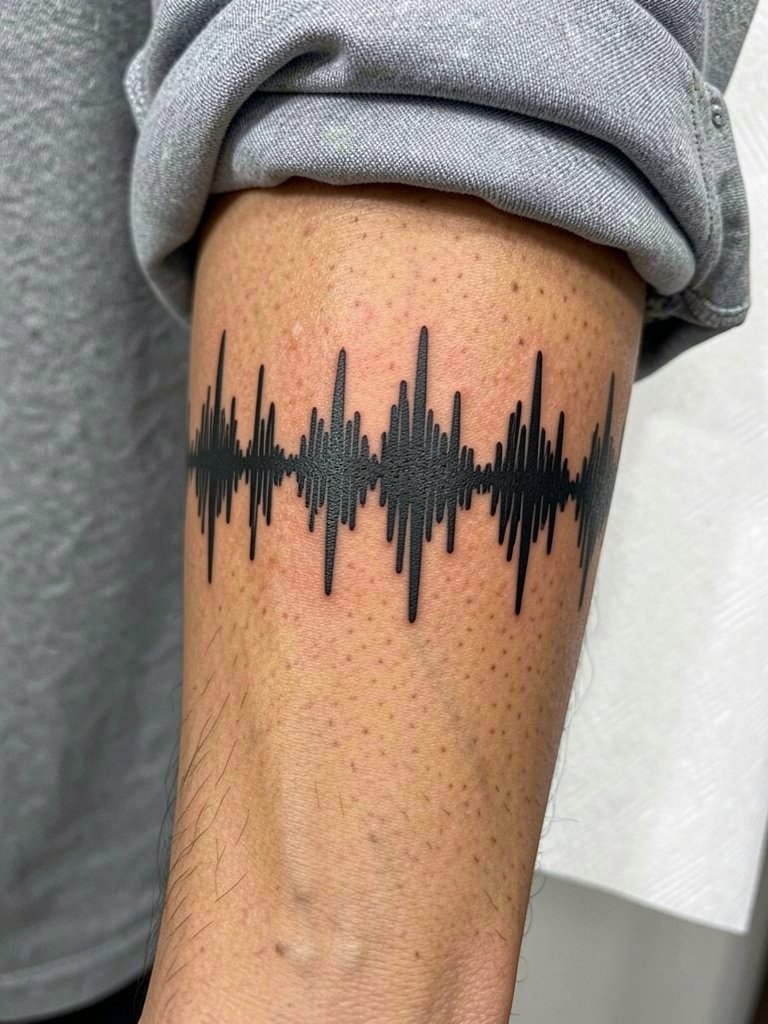
Waveforms make a strong modern statement and they age more predictably because the heavy blackwork resists early blur. If you want an exact song clip, bring a high-resolution waveform file so the artist can translate peaks into readable negative space. The drawback is session time can stretch to an hour if the wrap is detailed. Pain is medium to medium-high where the band crosses the bone. Wear a loose short-sleeve top for access. For showing off, a sleek leather cuff on the opposite wrist highlights the graphic band without crowding it. Expect low touch-up needs compared with fine-line staffs.
5. Sheet Music Snippet in Fine Line
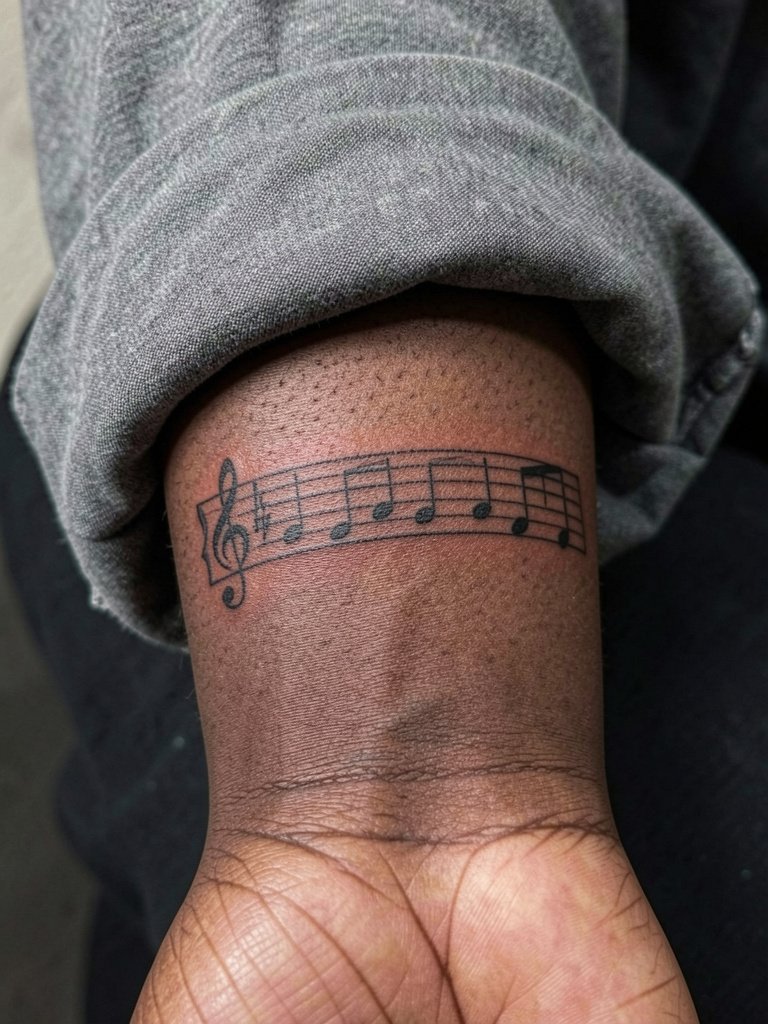
A notated measure is a literal way to carry a favorite phrase of music. The common trap is scaling the staff too small; aim for 8–12 mm staff height so beams and rests remain legible at two years healed. Ask for exact transcription of the measure and bring both the printed score and a photograph of how you want the curve to sit on your wrist. Expect about 45 minutes in the chair and medium pain on the inner wrist. For photos, a rolled cuff linen shirt in neutral tones complements the black ink. Try pairing with a rolled cuff linen shirt when you want the measure visible.
6. Micro Grand Piano with Treble Clefs
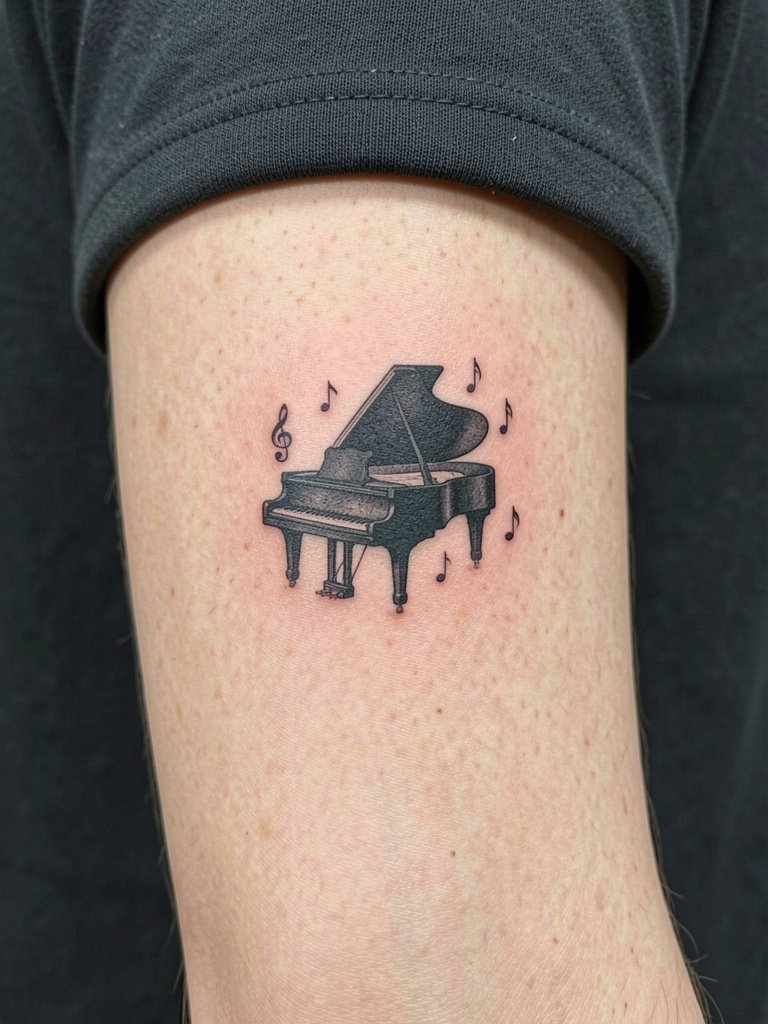
A micro piano needs careful planning because tiny realism demands contrast to read in photos. The typical error is asking for excessive interior detail at 10 mm height. Instead, go slightly larger, about 12–15 mm, and accept simplified interior shading. The session is detail-focused and can take up to an hour. Pain is medium on the lateral wrist and blowout risk is moderate if lines are too fine. For showing off, a minimalist watch on the opposite wrist keeps the look balanced and draws attention to the instrument.
Session Day Picks
The first six ideas include fine-line staffs, micro instruments, and waveform wraps, so a few niche tools make those sessions smoother and the first week of healing less fussy.
-
Tattology Balm. A lighter balm alternative that users report sits less greasy on thin wrist skin, which helps with early puffiness from fine-line pieces.
-
Healing Ink Balm. A less-occlusive formula noted for fast absorption, useful for people who found Aquaphor too heavy during the first two days.
-
Ink Marvel Aftercare. Budget friendly and breathable, this one works well if you want a thinner daily layer while the wrist peels.
-
Silicone Wrist Guard. A simple sleeve to protect fresh wrist work from watch and bracelet friction while you heal.
-
Aquaphor Healing Ointment. The classic first-day thin layer option that many people still use for the initial 48 to 72 hours.
7. Delicate Quaver Chain Around the Wrist
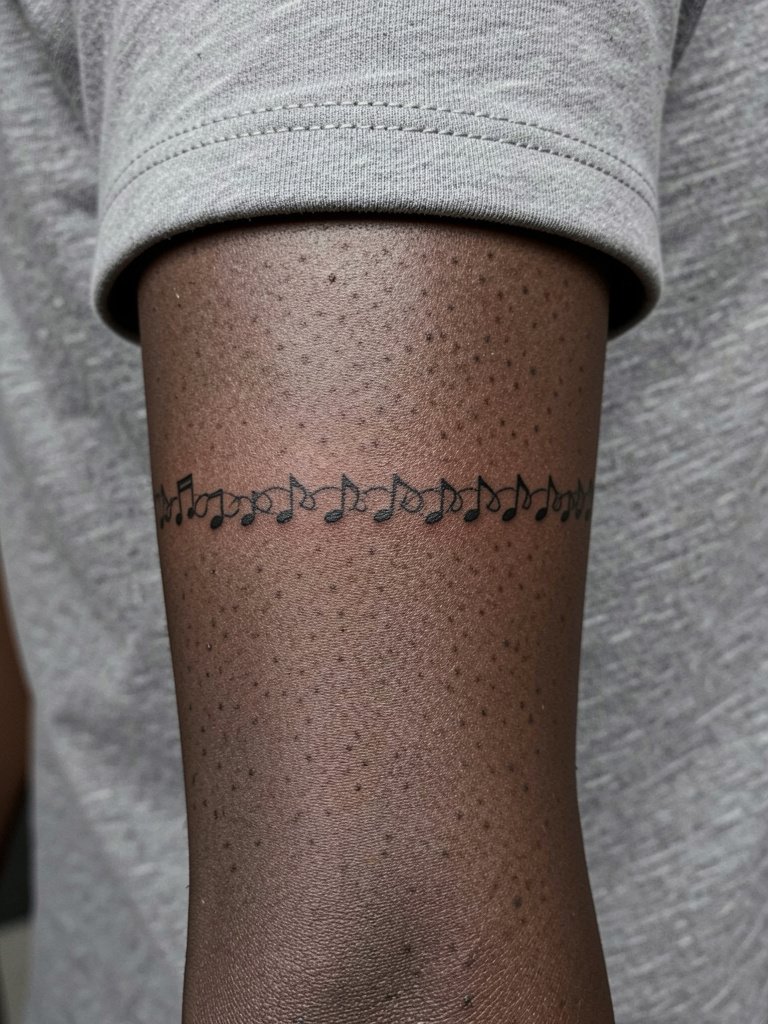
Chains of linked quavers work as rhythmic jewelry, but the failure pattern is going too small and making each note under 6 mm. That invites merging in 9 to 18 months. Increase individual note size slightly and keep 1–2 mm gaps between stems so the chain breathes. Session time is typically under an hour and pain sits at medium for the band. For wardrobe, the look pairs with stacked thin chain bracelets on the opposite wrist, and during the session wear a sleeveless top for easy access. Plan a light touch-up at year one if you want the chain to remain crisp.
8. Bass Clef on Inner Wrist Alone
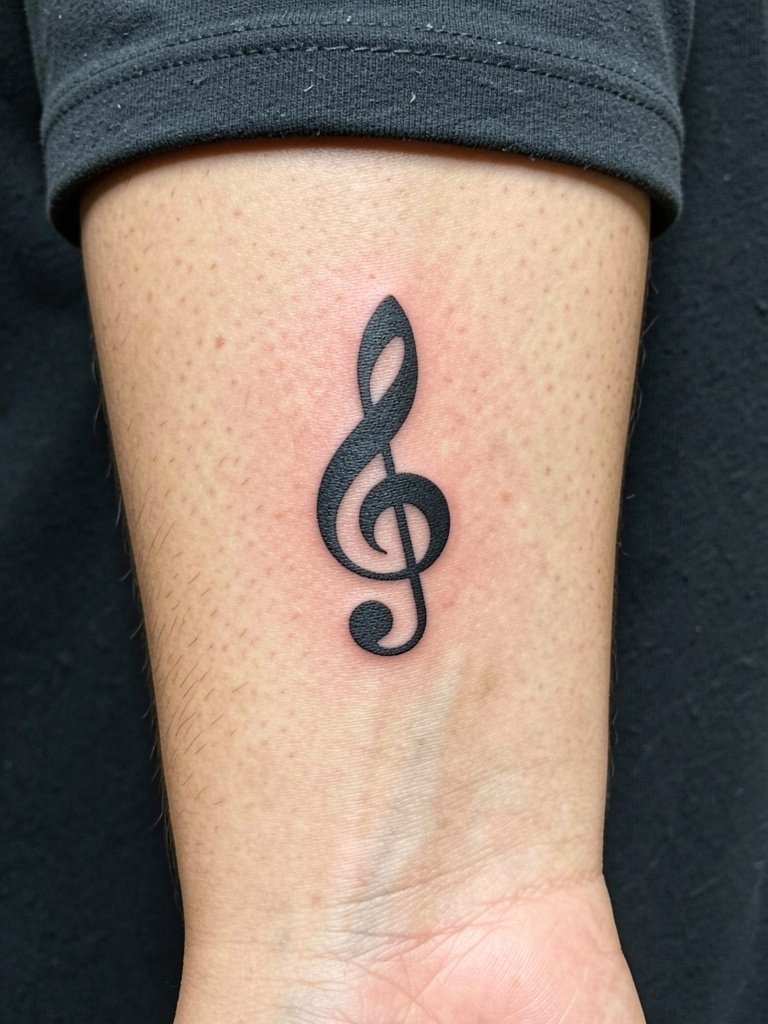
Bass clef lovers get the benefit of a shape that holds up when drawn with confident weight. The danger is asking for a micro bass clef under 8 mm; on the inner wrist those small counters can bleed into one another. This design is simple to tattoo and usually takes 20 to 30 minutes. Pain is medium. On darker skin choose richer black saturation so the counters remain distinct in photos. A common client error is asking for pale color fills; stick to solid black or the shape will wash out.
9. Color-Accent Heart Note on the Lateral Wrist
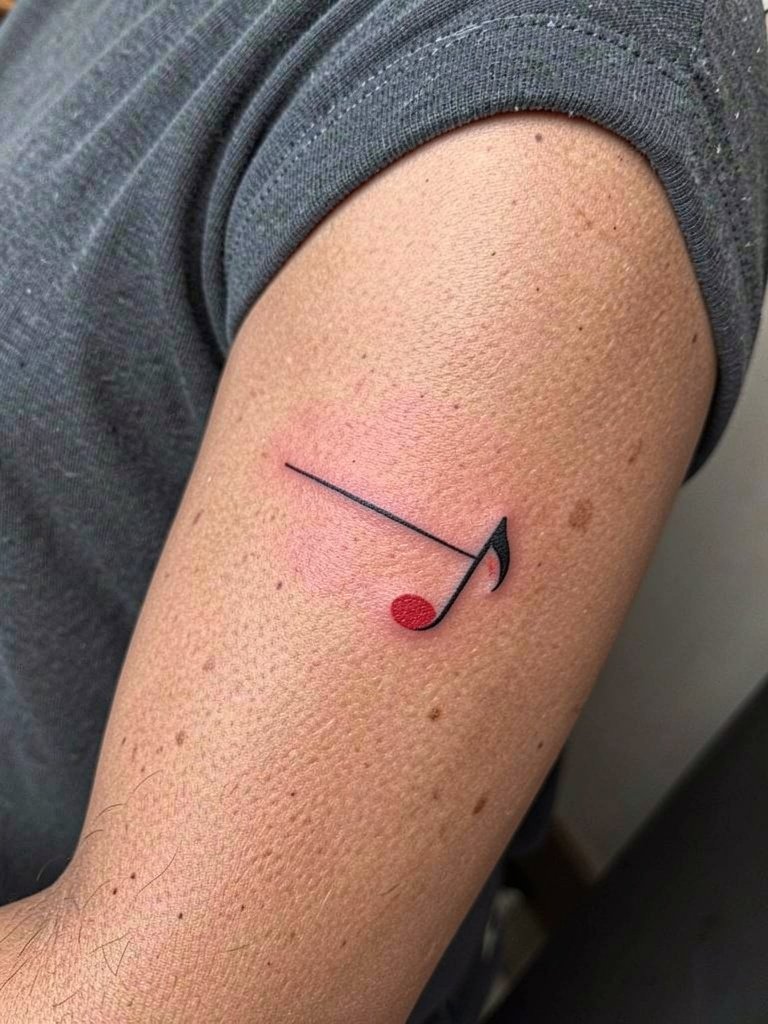
Selective color can be striking when the accent is restrained. The most common mistake is choosing a pale pastel that disappears on darker tones and in healed photos. Pick a saturated red or gold, and keep the accent area at least 5 mm across so it reads. Session time is short and pain is medium. During the session avoid bracelets on that wrist and wear short sleeves. For evenings out, a minimalist watch on the other wrist keeps the focus on the color pop without covering the ink. Expect the color to require more sun protection to stay vivid.
10. Ignorant-Style Random Notes Cluster
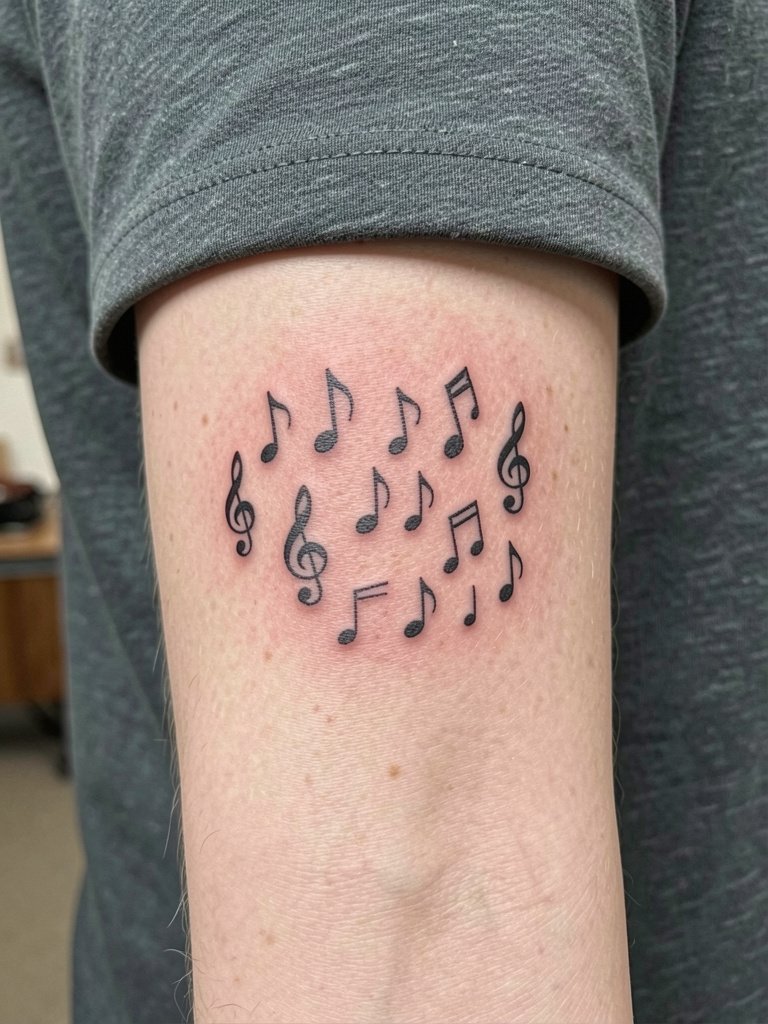
Ignorant-style clusters read intentionally off-kilter and they can age in interesting ways because uneven line weight disguises small blurring. That makes them a good choice if you like a lived-in look. The downside is they are easy to make generic. Bring clear references that show the exact hand-drawn wobble you want so the artist reproduces the intent rather than approximating it. Sessions are short and pain is medium. If you plan to cover or expand the cluster later, keep the negative space flexible so a future piece can anchor to it.
11. Ornamental Music Staff with Mandala Ends
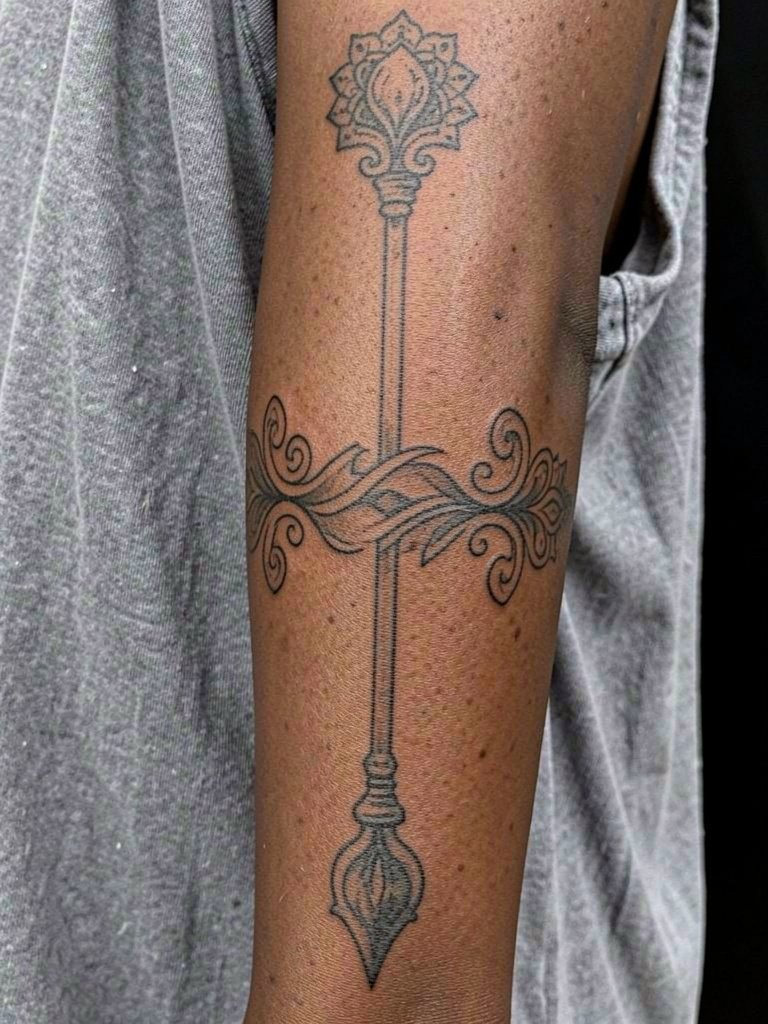
Ornamental bands read as jewelry and can age well if the mandala terminals are spaced and sized to avoid minute interior dots thinner than 1 mm. The typical mistake is packing tiny stipple work into a 5 mm flourish. Allow 3–4 mm of open space in each mandala petal for longevity. Expect a longer session for the detail, often 60 to 90 minutes. Pain ranges medium to medium-high where the band crosses bone. For showing off, a rolled linen shirt on cooler days reveals the full wrap elegantly. If you plan an adjacent forearm piece later, leave a clean margin so the art connects cleanly.
12. Mini Vinyl Record with Musical Grooves
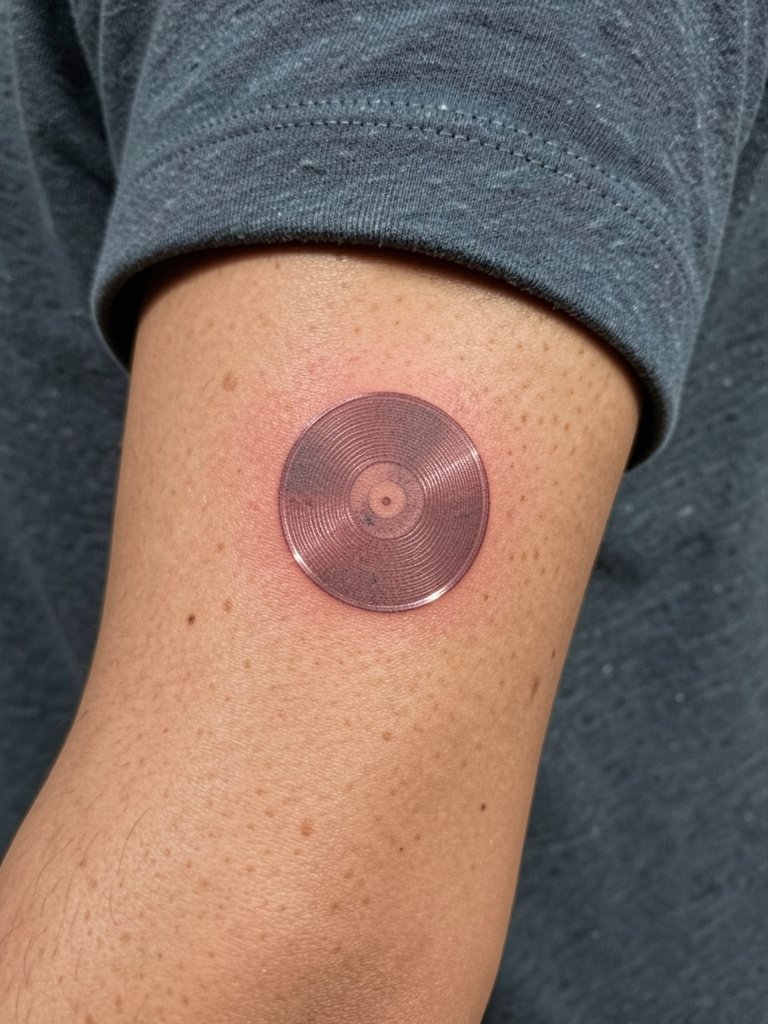
A micro vinyl hits the audiophile sweet spot but it needs enough diameter to keep groove lines readable. Go for 10–14 mm diameter and accept simplified grooves rather than hyper-real micro lines. Session time is short. The outer wrist has moderate friction so a thin protective sleeve during the first week helps, and you should avoid tight watches. For outfit pairing, lightweight leather or cloth cuffs on the opposite wrist create a vintage vibe while leaving the record visible.
13. Single-Note Rest on Inner Wrist
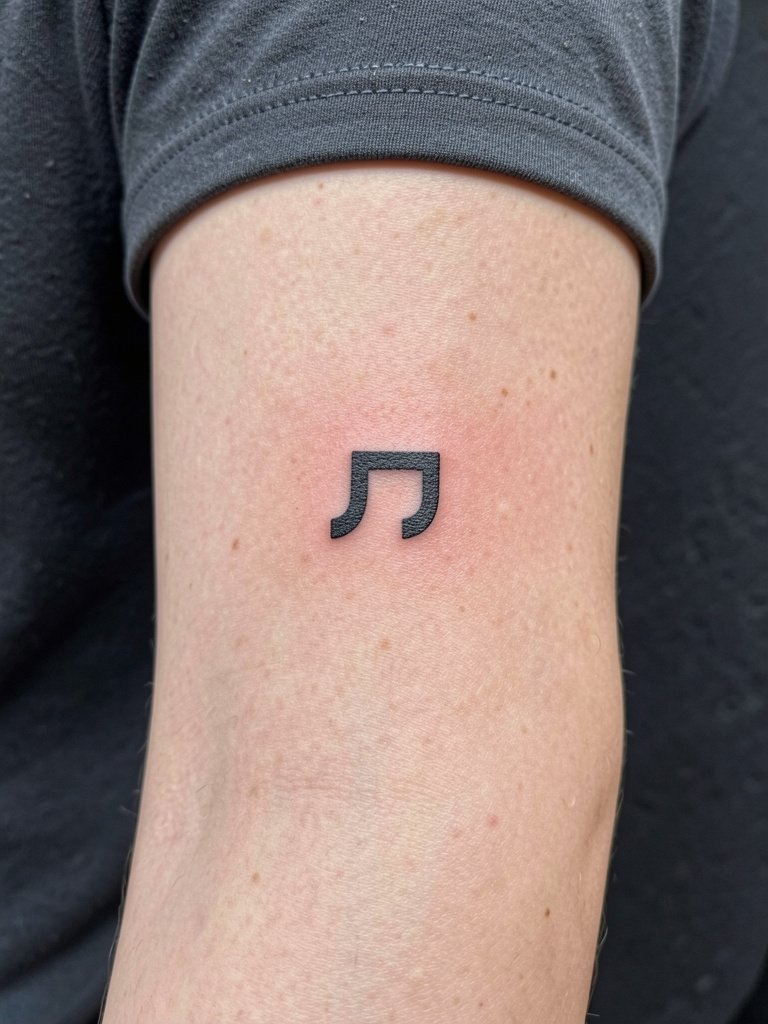
A rest symbol is a quiet, conceptual choice. Because of its small negative space, it needs a little extra contour to stay crisp. Size the rest so the tallest stroke is at least 7 mm. Sessions are brief and pain is medium. The inner wrist placement speeds visible fading, so plan a touch-up within 12 to 18 months if you want it to keep a sharp silhouette. For daily wear pair it with a thin open-back midi dress or short sleeve top that keeps the wrist visible without covering the ink.
Frequently Asked Questions
Q: How much should I budget for a small wrist music tattoo these days?
A: Artist minimums have moved up in many cities so realistic planning is important. Expect to pay an artist minimum and factor in a 15 to 25 percent tip. Also consider a small allowance for one touch-up within 1 to 2 years, especially for fine-line pieces.
Q: Will a fine-line staff or single-note blur quickly on the wrist?
A: Artists are split on this. One camp argues fine-line on the wrist blurs within 1 to 2 years because the skin moves and the area faces constant friction. The other camp says fine-line holds when the artist uses correct depth and slightly heavier single-needle work, and they point to healed photos at 2 to 3 years that support that approach.
Q: Is numbing cream recommended for a first wrist tattoo?
A: Opinions vary. Some people find topical numbing cream very helpful for managing anxiety and staying still, which makes precise linework easier. Other artists avoid numbing creams because they can change skin texture and ink absorption. If you consider it, tell the studio ahead of time so they can advise on timing and product choice.
Q: Which aftercare approach is best for a wrist piece that sees a lot of sun and friction?
A: People tend to pick either a thicker ointment for the first 48 hours or a thinner breathable balm thereafter. One camp favors a brief Aquaphor layer early on and then switching to a lighter balm. Another camp prefers starting with a specialty balm that breathes from day one to reduce puffiness. Try a small sample and watch how your skin reacts.
Q: Where can I find local portfolios and healed examples without relying on named artists?
A: Search hashtags like #musicnotetattoo, #finelinetattoo, and #wristtattoo on Instagram and TikTok and filter by your city to find nearby portfolios. Tattoodo and booking apps let you search keywords such as "audio waveform wrist" or "single note fine line" to see healed shots. Reddit communities often surface peer recommendations and healed examples across skin tones.