
Someone I know spent months saving screens and still felt unsure because the problem was not the image. It was the placement and how Roman numerals age on real skin. After time in five shops across Brooklyn and conversations with artists who focus on linework, I started noticing which dark Roman numeral styles women choose now and why. Below are 25 ideas that consider placement, pain, aging, and what to tell your artist when you book.
1. Fine Line Roman Numerals on Inner Forearm
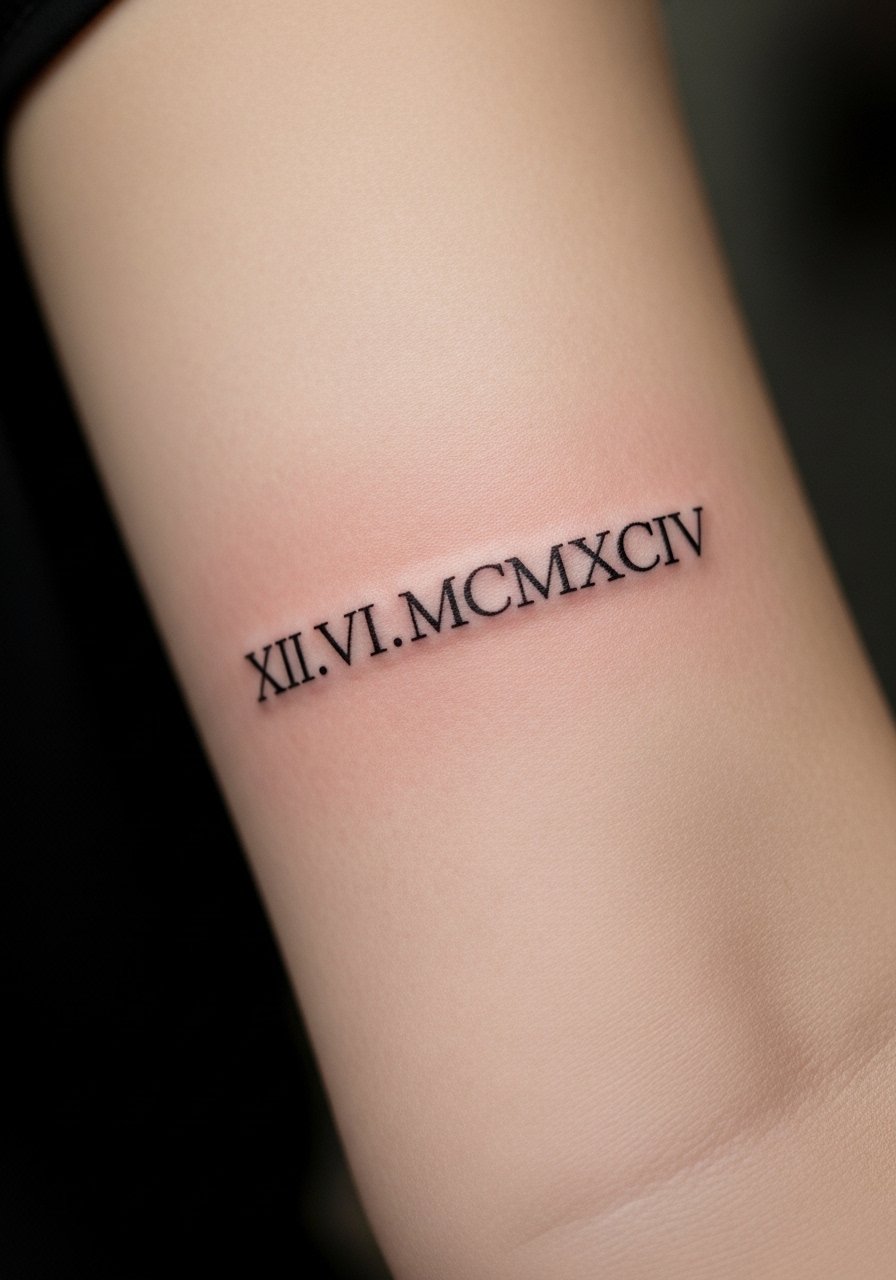
Someone I know first saw this on a friend and chose the inner forearm for visibility. Expect a 2 to 3 hour session for precise linework. The pain is moderate and the area heals cleanly if the lines are spaced properly. Tell your artist you want slightly heavier lineweight than ultra-fine so the numerals do not blur by year three. A common mistake is asking for numerals too small. That invites blowout and unreadable digits. On lighter skin this reads crisp at six months and by two years it may need a small touch-up to restore saturation.
2. Bold Black Roman Numerals Along the Clavicle

Fair warning, clavicle linework can hurt more than forearm pieces because the bone is close to skin. Sessions are often under two hours for a simple set of numerals. The strong black outline holds up better than skinny strokes in this spot. If you want a dramatic silhouette, ask for solid single-pass linework and slightly increased spacing between characters. The mistake I see is compressing numerals to fit too small a space. That causes the numerals to merge after healing and makes touch-ups more invasive.
3. Small Roman Numeral on the Side of a Finger
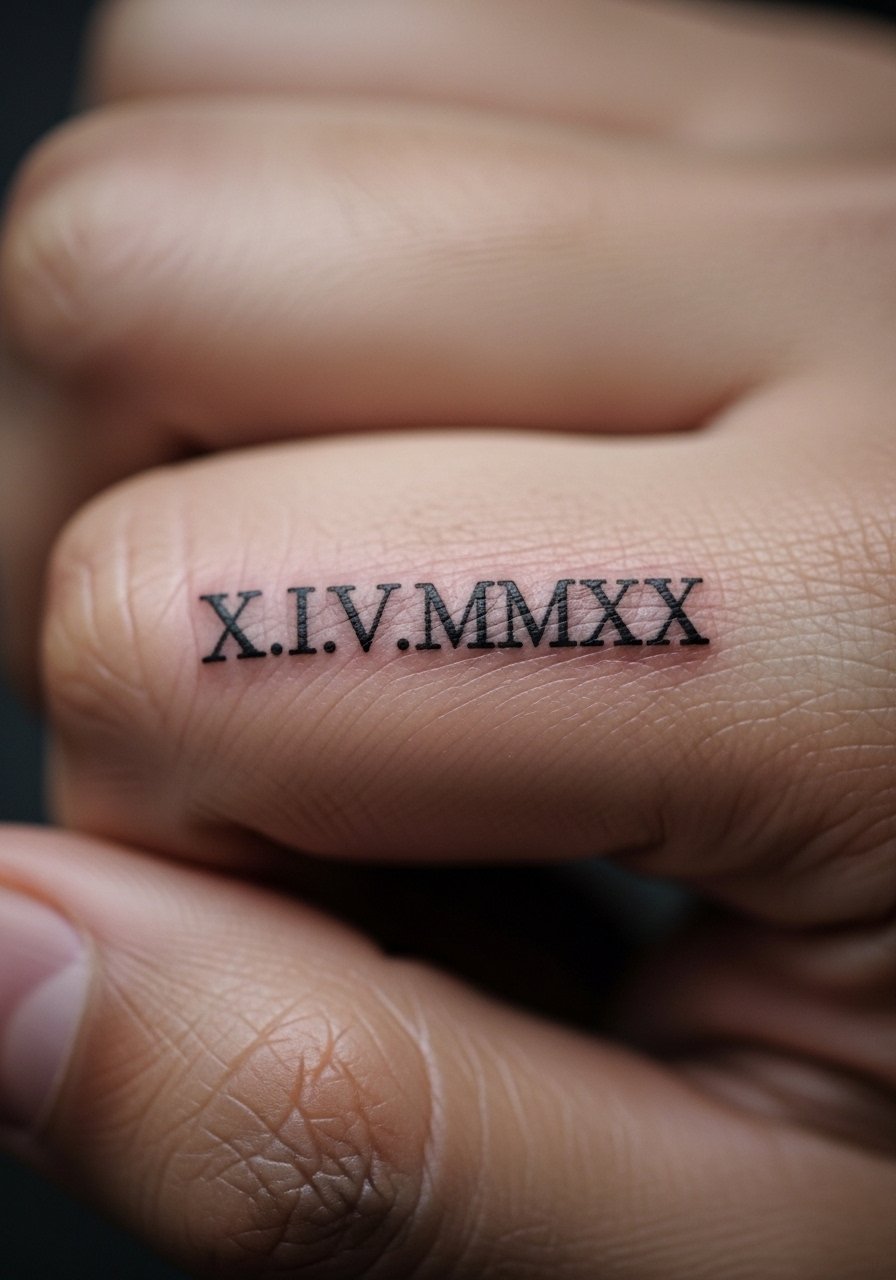
Hand and finger work is a fast session but a long term commitment. Expect fading within a year on finger placements because of constant washing and friction. If you plan to work in a conservative environment, know that hand tattoos still matter in hiring decisions. Ask your artist about touch-up plans and whether they recommend a waterproofing bandage the first week. The common error is going too tiny. Slightly bolder numerals last better. For this placement, touch-ups every 12 to 18 months are normal.
4. Roman Numerals Wrapped Around the Wrist
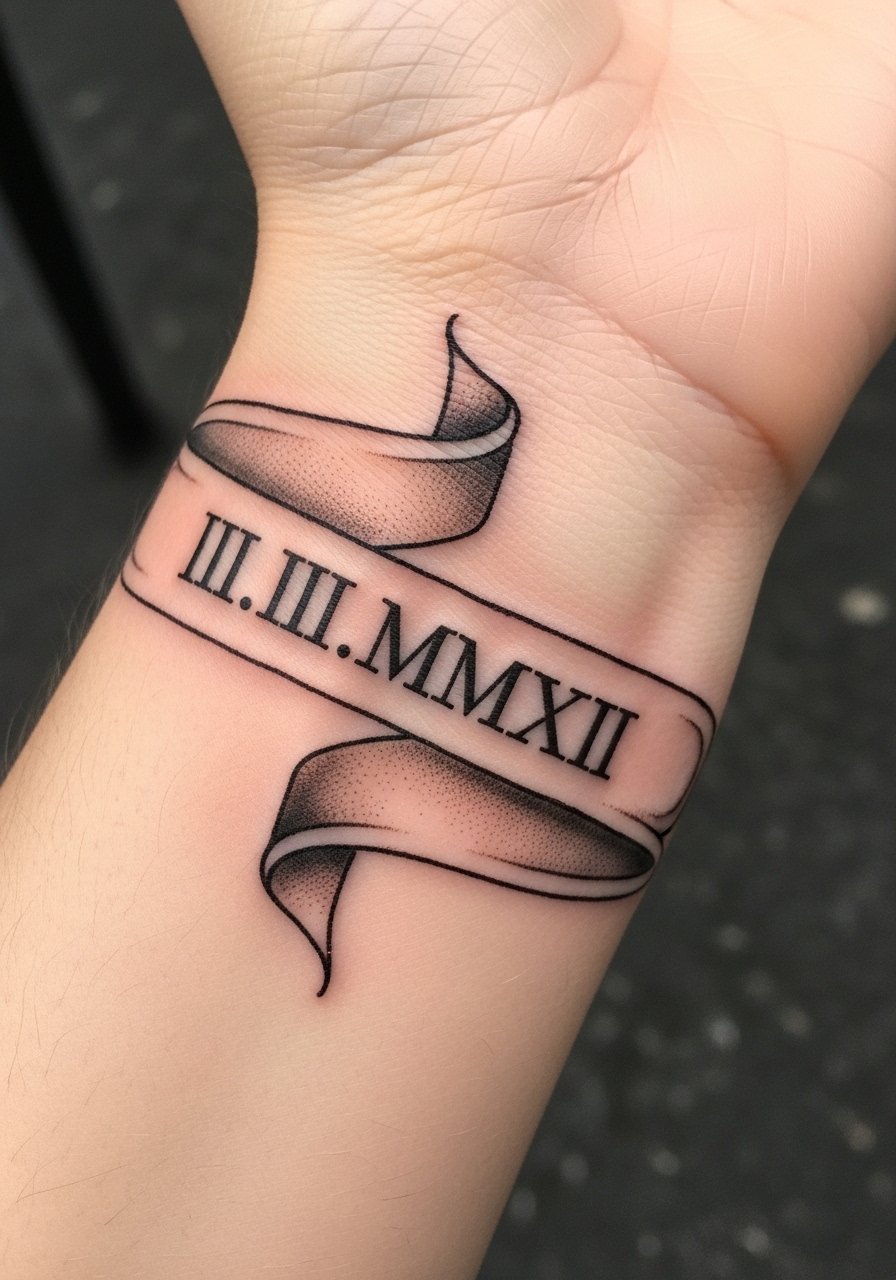
There is a visual impact to a cuff-style numeral that reads like a minimal bracelet. Sessions usually run 1 to 2 hours and pain is low to moderate. On wrists the skin moves a lot so ask your artist to orient numerals with the wrist crease, not across it. The version that ages poorly is tiny script-style numerals that blur into a gray line after two years. Ask for clean linework and slightly increased saturation so lines do not break up as the piece heals.
5. Stacked Roman Numerals on the Ribcage
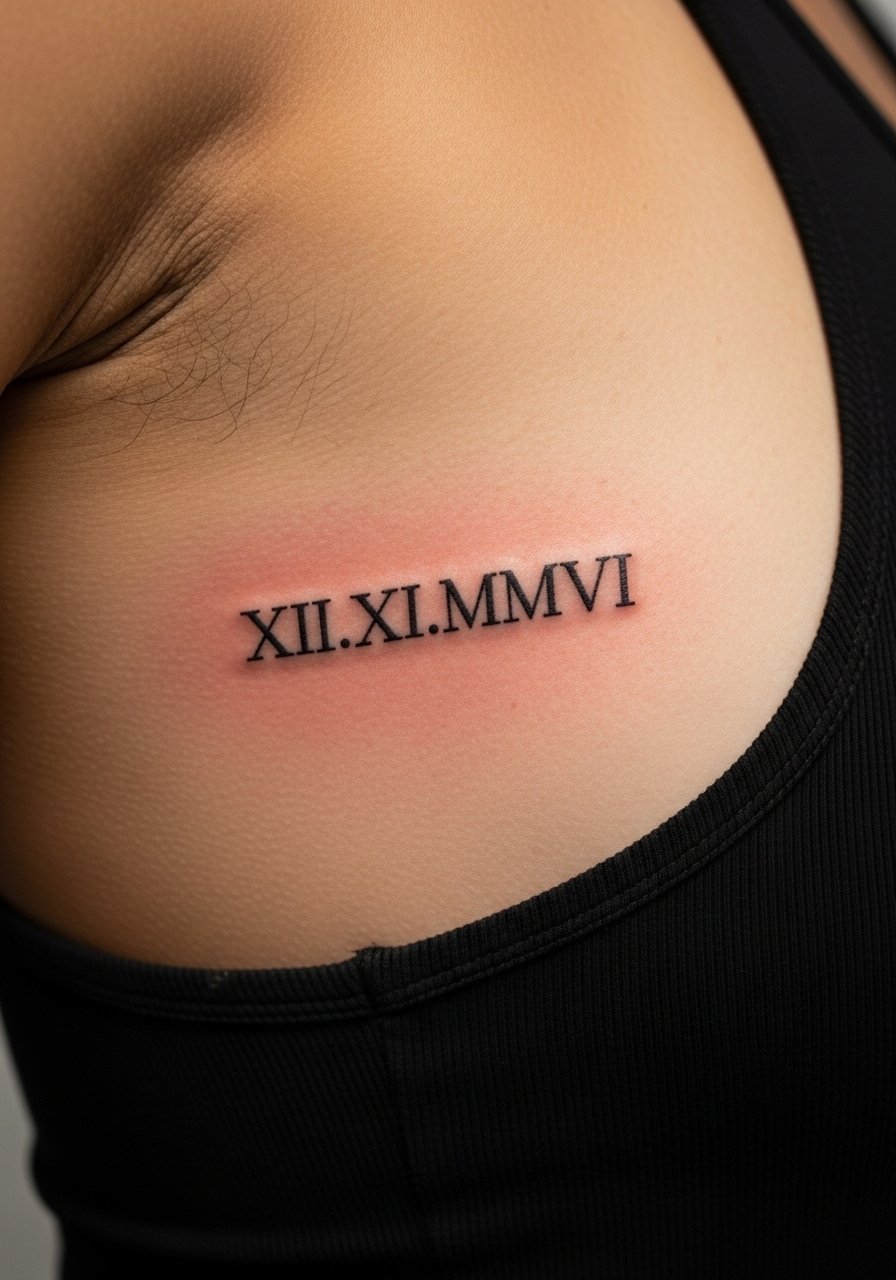
Fair warning, the ribcage rates high on pain scales. Many women choose this spot for privacy and drama. Artists are split on whether fine line holds up on ribs. One camp says stretch and shallow depth blur fine line within two years. The other camp argues that with correct needle depth and spacing it will settle well. Ask where your artist stands and plan for a touch-up in the two to three year window. The biggest mistake is requesting extremely thin numerals for such a mobile surface.
6. Roman Numerals Along the Spine

When you sit with your artist for this one, bring photos that show the exact vertical spacing you want because spine pieces can skew if the body shifts during healing. Sessions may take 2 to 3 hours depending on length. Spine linework looks crisp on darker tones if the saturation is strong from the start. A common mistake is asking for numerals that follow the curve too tightly. That can accentuate blowout and make touch-ups harder later. Expect mild-to-strong pain for this placement.
7. Minimalist Roman Numerals Behind the Ear

The behind-the-ear spot is subtle and often read as a private memento. Sessions are quick, under an hour. The downside is a higher chance of blowout if lines sit too shallow. Ask your artist for a slightly thicker line than you might at first want. Also note that hair growth and washing affect healing. If you want a clean tiny numeral, prepare for possible touch-ups in 12 to 24 months. The mistake is trusting ultra-fine lines in such a fibrous area.
8. Roman Numerals Along the Rib Accent with Stipple Shading

There is something about pairing numerals with stipple shading that gives depth without heavy color. Sessions run longer because of the gradient work, often 2 to 4 hours. The stipple helps the numerals read as part of a composition while avoiding saturation that fades oddly. Tell your artist you want the stipple soft and distant from the numerals to reduce risk of ink spread. The wrong move is tight stipple that touches the digits, which can make the numbers look blotchy after a year.
9. Curved Roman Numerals Following the Collarbone Hollow
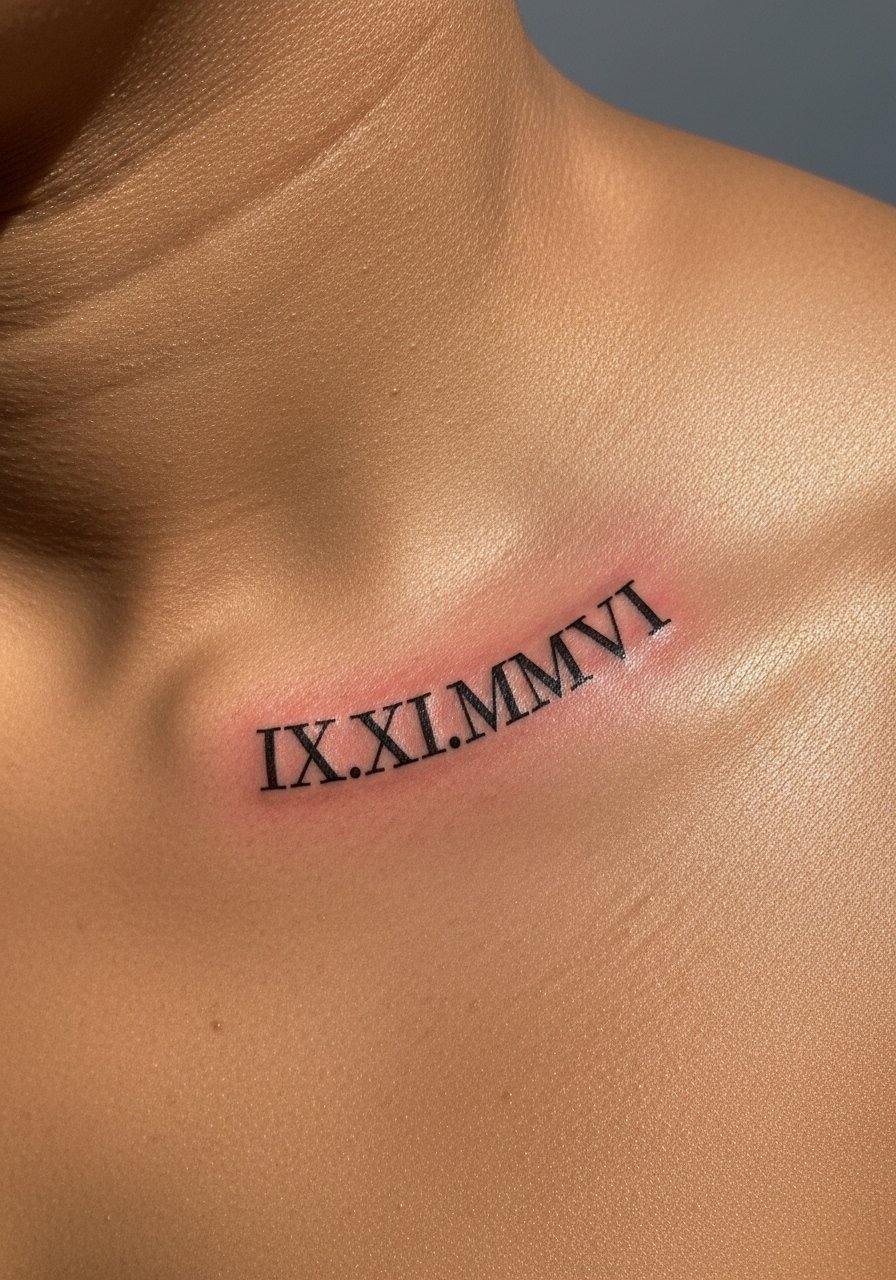
Visual impact lead works here because a curved row of numerals hugs the collarbone and reads like intentional jewelry. Sessions are usually 1.5 to 2.5 hours. The collarbone area moves with breathing so spacing and needle depth matter. A frequent mistake is bending numerals into a curve without compensating for stretch. Ask your artist to map the curve on you while upright. Over time the curve will mellow, and a small touch-up may be recommended around year two.
10. Roman Numerals as a Sternum Accent

Sternum work is intimate and it hurts more than surface placements. If you consider this, know that specialized artists who do chest pieces often create better results. The controversy is whether the sternum can hold very thin numerals. One group warns about constant movement and skin stretch. Another group gets clean results by increasing spacing and depth. Tell your artist early if you plan larger chest pieces later so they can orient the numerals for expansion. Expect a session of two hours and plan for a possible touch-up.
11. Roman Numerals Over the Rib Cage with Whip Shading

Aging lead fits because whip shading behind numerals adds softness as the skin moves. Sessions typically stretch to 3 hours. Whip shading reduces hard edges and can make the numerals look less stark as they age. The mistake is asking for heavy black fill behind the numerals, which can overwhelm and blur. For long-term clarity, request spaced numerals and subtle shading that complements but does not touch the digit strokes.
12. Micro Roman Numerals Near the Ankle
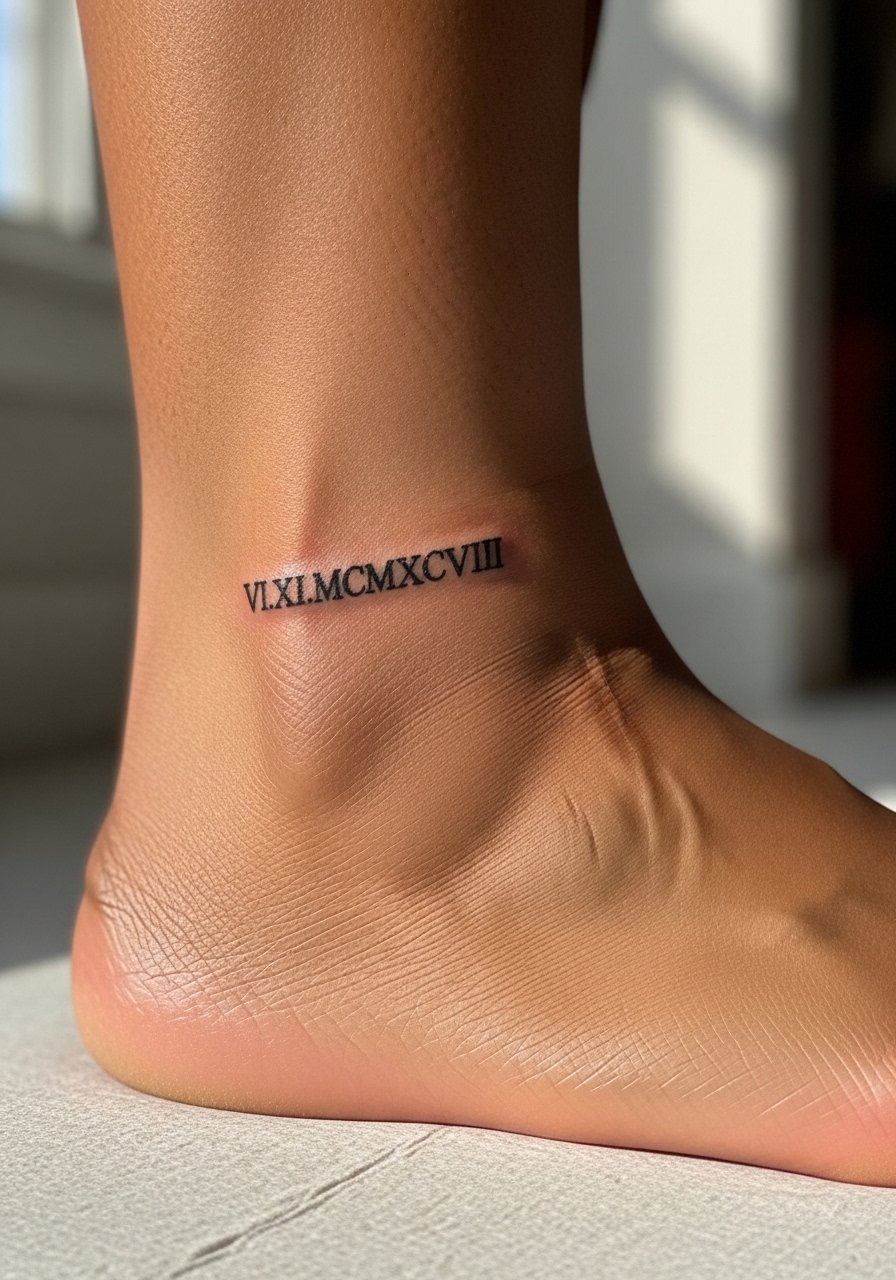
Ankle placements are low to moderate pain but high movement from shoes and socks. The session is quick. The common error is requesting script-like numerals that are too thin. For better longevity ask for slightly more saturation and a touch more lineweight. If you plan to wear ankle jewelry, show the artist the spot so the numerals are not covered or compressed. Touch-ups may be required at two years depending on activity and shoe friction.
13. Roman Numerals Framed by Geometric Linework on the Upper Arm

Consultation lead fits here. When you sit down with your artist, bring both the exact numeral text and the geometric references for scale. This placement is moderate pain and sessions are often 1.5 to 3 hours depending on the framing. Geometric framing helps the numerals age by giving them breathing room, but avoid tiny intersecting lines that can blur into the digits. Ask the artist to separate the geometry and the numerals by a few millimeters to reduce the blowout risk.
14. Roman Numerals Across the Foot Arch

There is a visual impact to arch work, but pain and healing can be tricky due to shoe wear. Sessions are short, but the spot is prone to fading rapidly. The common mistake is choosing placement where shoes rub. If you love this area, plan for frequent touch-ups and ask about avoiding ink near seams where friction is highest. For longer life, choose slightly bolder numerals and limit sessions to when you can wear open shoes for healing time.
15. Roman Numerals Embedded in a Floral Blackwork Band on Upper Bicep

Visual impact lead applies because a blackwork band reads like a bracelet that stays bold even as color fades. Sessions can be two to three hours. Floral blackwork around numerals protects the digits from appearing isolated and it can mask minor blurring later. The mistake is overcrowding the numerals with heavy fill that obscures the characters. Ask for contrast and defined negative space around each numeral so the digits remain legible at five years.
16. Vertical Stack of Roman Numerals on the Side Rib with Micro-Realism Texture

Aging lead fits because micro-realism touches can add age-friendly texture without dulling numerals. Sessions take longer, often 3 to 4 hours, because of the tiny texture work. This style reads as an intimate archival mark that looks hand-done instead of machine-stamped. The common error is asking for too fine micro texture near thin numerals. Keep distance between texture and digits and plan for a reassessment at year two.
17. Roman Numerals Across the Shoulder Cap
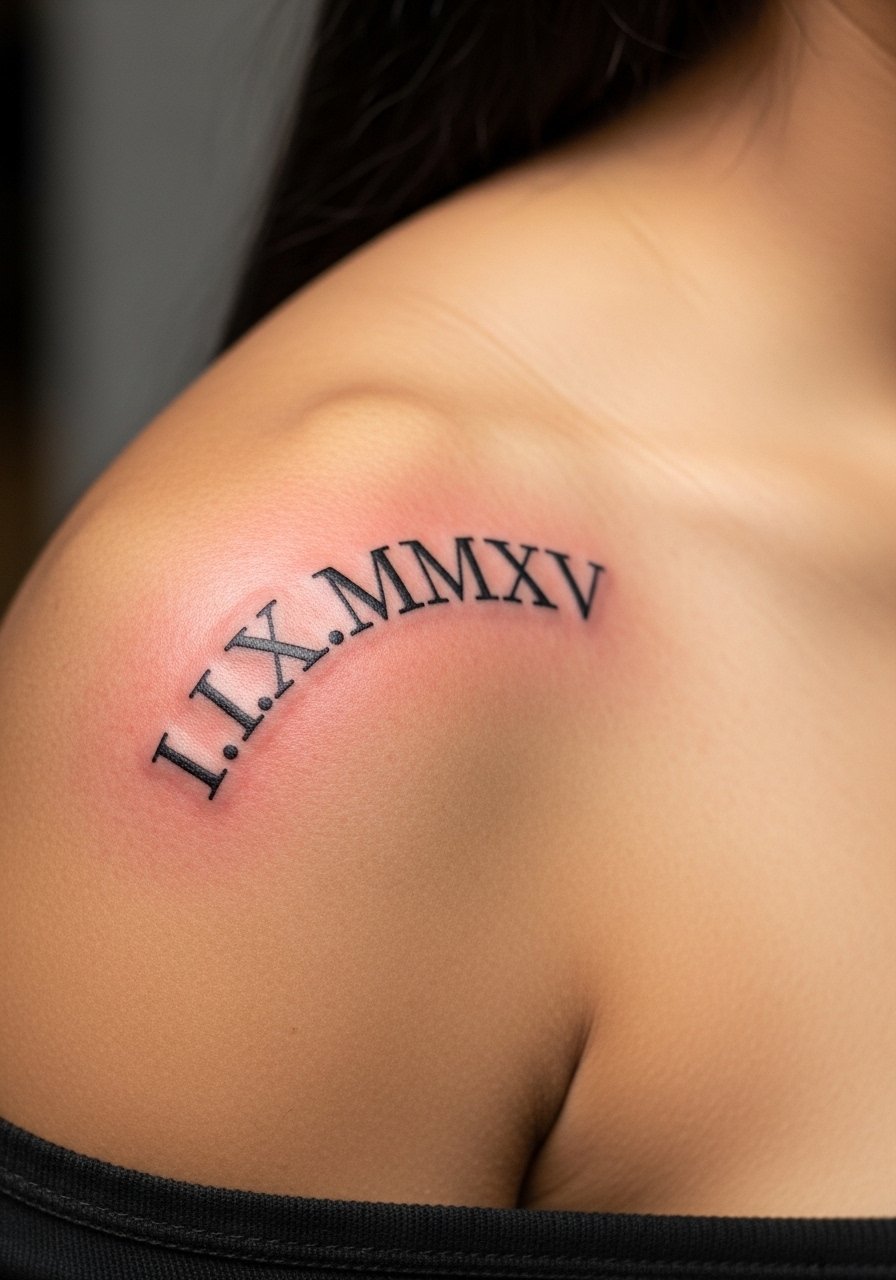
Personal observation lead works here because shoulder caps show well in summer tops and also heal reliably. Sessions are moderate in length and pain is manageable. Shoulders get partial sun exposure, and UV is the biggest ink killer from what I've seen. Ask your artist about higher saturation to start and plan sunscreen once healed. The mistake is neglecting sun protection, which accelerates fading and desaturation.
18. Roman Numerals as a Subtle Collar Tattoo Under Hairline

Mistake lead fits because hiding numerals under hair can tempt people to go extremely tiny. Tiny equals fast fade in this fibrous spot. Sessions are short and pain is low. If you want privacy but longevity, ask for slightly larger numerals and for the artist to test spacing while your head is upright. Hair oils can affect healing, so keep the area dry and follow aftercare directions closely.
19. Roman Numerals Along the Outer Thigh with Soft Dot Work

The outer thigh is a forgiving surface with low daily friction. Sessions can last 1.5 to 3 hours. Dot work halos help the numerals read integrated and can disguise minor blurring years later. A common mistake is placing numerals too close to the groin crease where movement causes distortion. For a session plan, discuss size and spacing so the digits keep crisp edges at two and five years.
20. Roman Numerals in Blackletter-Inspired Numeral Block on Upper Chest

Visual impact lead is relevant because blackletter-inspired numerals read bold and hold visual weight from a distance. Sessions are longer when letters are stylized. The downside is the potential for overcrowded strokes. The mistake is cramming ornate elements into small numerals. If you like this aesthetic, scale up the piece and ask for extra spacing. Expect a touch-up at year two for saturation maintenance.
21. Roman Numerals Under a Small Shoulder Blade Portrait

Consultation lead applies because this is a composite approach that needs planning. When you book, bring final portrait references and the exact numeral text. Sessions vary but expect multi-hour appointments. The key is keeping numerals separate enough from the portrait to avoid merging as the skin ages. A mistake is placing numerals too close to shaded portrait edges. Leave negative space so both elements remain readable without competing for saturation.
22. Roman Numerals Worn Like a Ribcage Bracelet with Dot Work Accents

Mistake lead fits because many people compress a bracelet wrap too tightly. That increases blowout risk. Sessions are 2 to 3 hours. The dot work accents can age gracefully if placed a touch away from the digits. Ask your artist to space the numerals and accents so movement does not cause smudging. This placement rewards patience with touch-ups planned at two to three years.
23. Roman Numerals Along the Side of the Neck
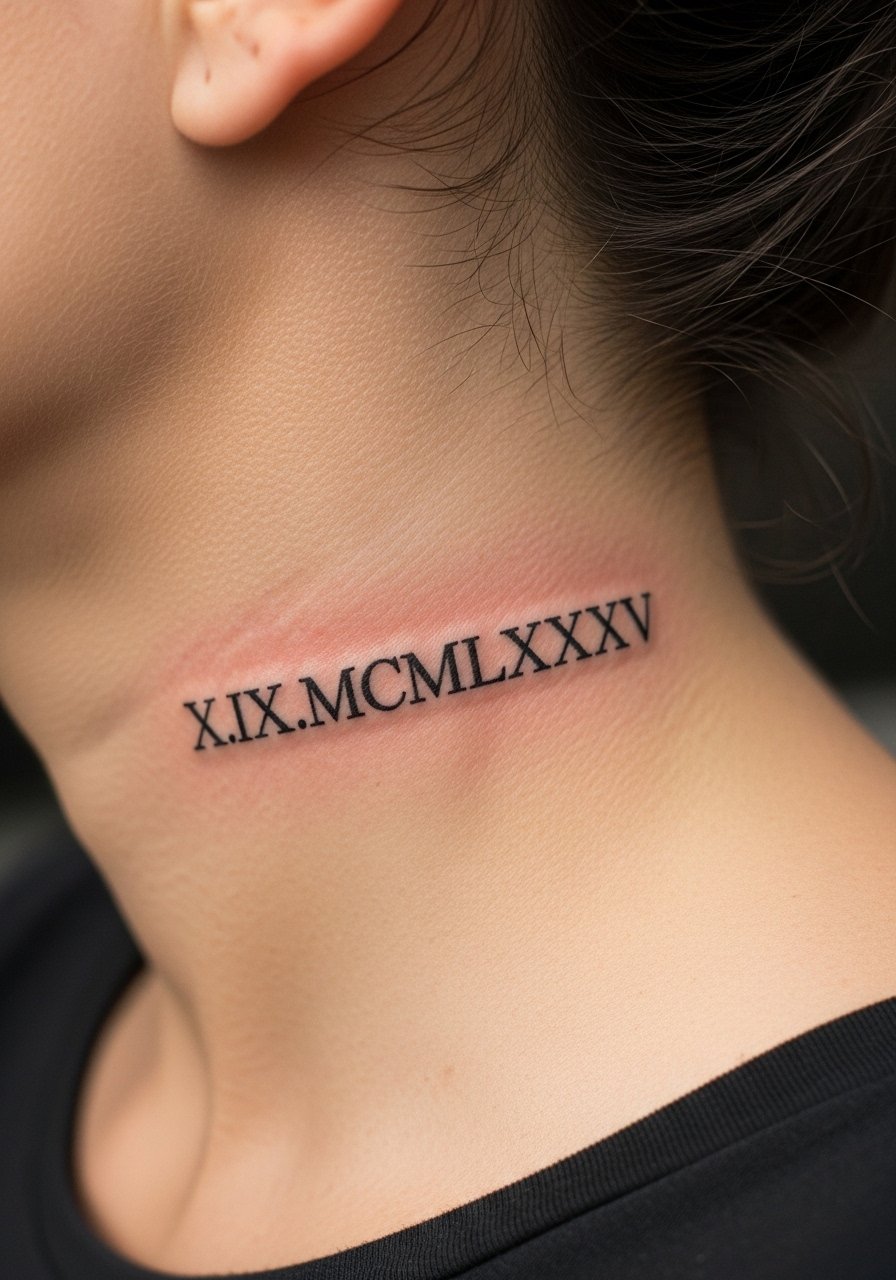
Hand and face adjacency requires a note about professional considerations because neck tattoos still affect some job prospects. Sessions are quick but pain can be sharp. The controversy here is visibility and permanence. One camp sees neck numerals as bold lifelong statements. The other camp cautions about social and employment impacts. Think about career trajectory and ask the artist about concealment options. For longevity, avoid ultra-fine numerals in this mobile area.
24. Roman Numerals as a Thin Band on the Upper Finger

Mistake lead works because upper finger bands wear quickly from daily use. Sessions are short but expect more frequent touch-ups than elsewhere. The common error is choosing script-like numerals that fade into smudges. Choose a slightly bolder numeration and plan on touch-ups every year or two. Keep moisturized with a fragrance-free balm during healing and protect from friction as much as possible.
25. Roman Numerals Carved into a Collarbone-to-Shoulder Sweep with Dot and Linework

Visual impact lead fits because a sweep from collarbone to shoulder reads like a custom signature. Sessions are around 2 to 3 hours. Dot and line accents help the numerals age by providing structure and negative space. The mistake is packing too many tiny elements into a narrow sweep. Ask for breathing room and slightly heavier initial saturation so the overall motif stays cohesive as the skin settles.
Tattoo Prep and Aftercare Essentials

Healing right matters as much as design choice. I spent time in five neighborhoods chatting with artists and clients about what actually helps a new numeral hold color and crisp edges. Below are curated items grouped by when to use them. Each link goes to a search that can help you find a version that matches your specific sensitivities.
Healing and aftercare essentials:
Fragrance-free gentle foaming cleanser for daily washing. Use twice daily for the first week to remove excess plasma without stripping ink. It helps avoid scabbing that can pull pigment.
Lightweight fragrance-free healing balm. Apply a thin layer after cleaning to prevent cracking and to support even saturation while skin repairs.
Medical-grade second skin bandage, single-use sheets. Useful for the first 24 to 48 hours if your artist recommends occlusion. It reduces friction and keeps contaminants off.
Pre-appointment prep:
Gentle exfoliating mitt for two weeks before appointment. Light exfoliation evens skin texture before a session. Stop exfoliating 48 hours before your appointment.
Broad-brim hat or UV protective clothing. Avoid pre-session sunburns and plan to protect the area once healed.
Long-term maintenance:
Fragrance-free moisturizing lotion with gentle emollients. Use regularly to keep skin supple and ink looking saturated.
High SPF mineral sunscreen with matte finish. UV exposure fades ink faster than most daily wear and tear, so sunscreen is key for numerals that sit on exposed skin.
Soft, breathable cotton bandage for physical activity. Use when exercising to protect new work from sweat and rubbing.
Every tattoo is different. Always follow your artist's specific aftercare instructions. Consult a dermatologist if you have skin concerns or unusual healing issues.
Frequently Asked Questions
Q: Will fine line Roman numerals on the ribcage blur quickly and need frequent touch-ups?
A: It depends on the artist and your skin. Artists split into two camps on ribs. One group says ribs stretch and shallow lines blur within two years. The other group gets consistent results by spacing numerals and using slightly stronger lineweight. Plan to discuss touch-up timelines with your artist and expect a possible touch-up in the two to three year range.
Q: How should I size Roman numerals on fingers or hands to reduce fading?
A: Go slightly larger and pick heavier linework than you might at first want. Thin numerals on fingers and hands contact water and friction constantly. The trade-off is visibility versus longevity. Expect touch-ups every 12 to 24 months for finger work.
Q: Do Roman numerals require different aftercare than other small black tattoos?
A: Not fundamentally, but numerals rely on crisp linework so avoid anything that causes scabbing or prolonged moisture. Use a fragrance-free cleanser and a lightweight balm from the first week. If you want shopping options, the gentle foaming cleanser and lightweight balm in the list are what clients often choose.
Q: Are there placement choices that reduce blowout risk for numerals?
A: Yes. Areas with thicker, less mobile skin like the outer thigh and upper arm tend to show less blowout. Avoid ultra-thin numerals on highly mobile or bony spots unless your artist adjusts spacing and lineweight accordingly.
Q: How do I find an artist who understands Roman numeral spacing and longevity without naming specific studios?
A: Look for portfolios that show healed work, not just fresh photos, and search local directories, convention guest lists, and hashtag threads for healed examples. Bring questions about touch-up policies and ask to see healed photos of similar placements during consultation.
Q: If I want a memorial date, should I use Roman numerals or regular numbers for clarity?
A: Roman numerals are stylish and discreet, but they can be less readable at small sizes. If clarity matters, scale up the numerals slightly and ask the artist to use stronger lineweight. If you plan daring placements like fingers or ribs, consider a size that balances discreetness and legibility.