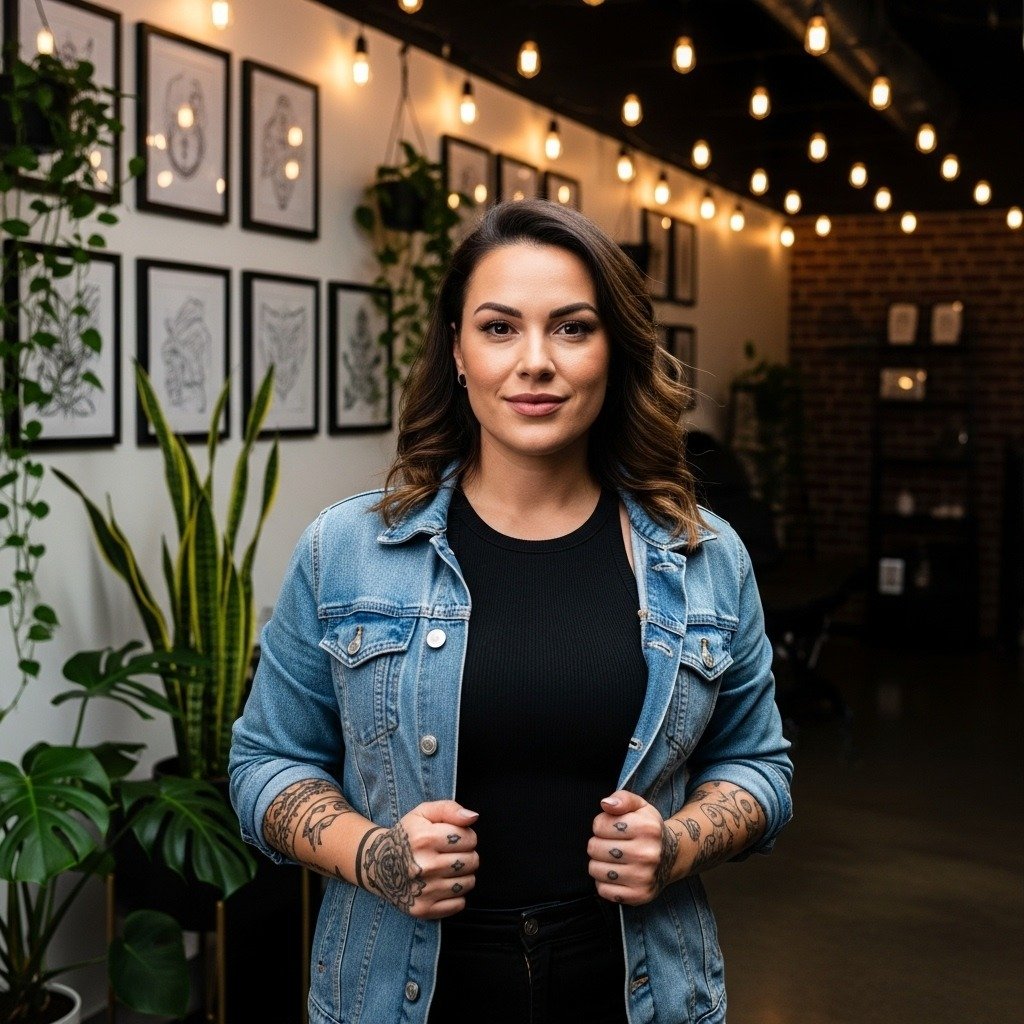
Fine-line rib pieces on Pinterest look effortless, but the ribcage is a high-movement area and not every pretty sketch keeps its shape. Expect small sessions in the $100 to $300 range and larger wraps in the $500 to $1,500 range, depending on detail and color. This list focuses on vertical, body-aware layouts that sit with the side torso rather than fight it, and it shows what to ask for so the work still reads well after two or three years.
1. Fine-line vertical vine with tiny blooms
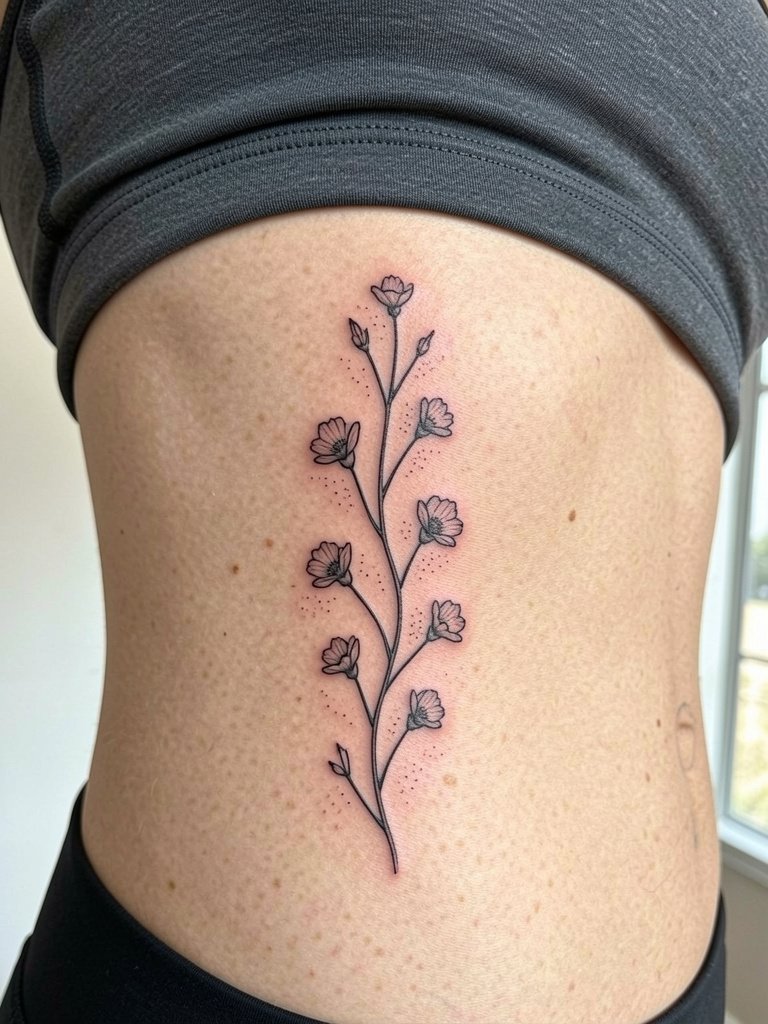
This is the classic pick if you want something slender that follows the rib curve. I recommend a slightly heavier single-needle line than the Pinterest micro lines because the side torso moves and ultra-thin strokes tend to blur into faint gray by year two. During consultation bring a photo scaled at three and five inches so the artist can show how spacing changes. Expect a one-session layout for a medium-length vine and a touch-up within 12 to 24 months to keep contrast. For the session wear a loose cropped tank so the artist can work without underwire interference.
2. Cascading mixed-flower spray with negative space
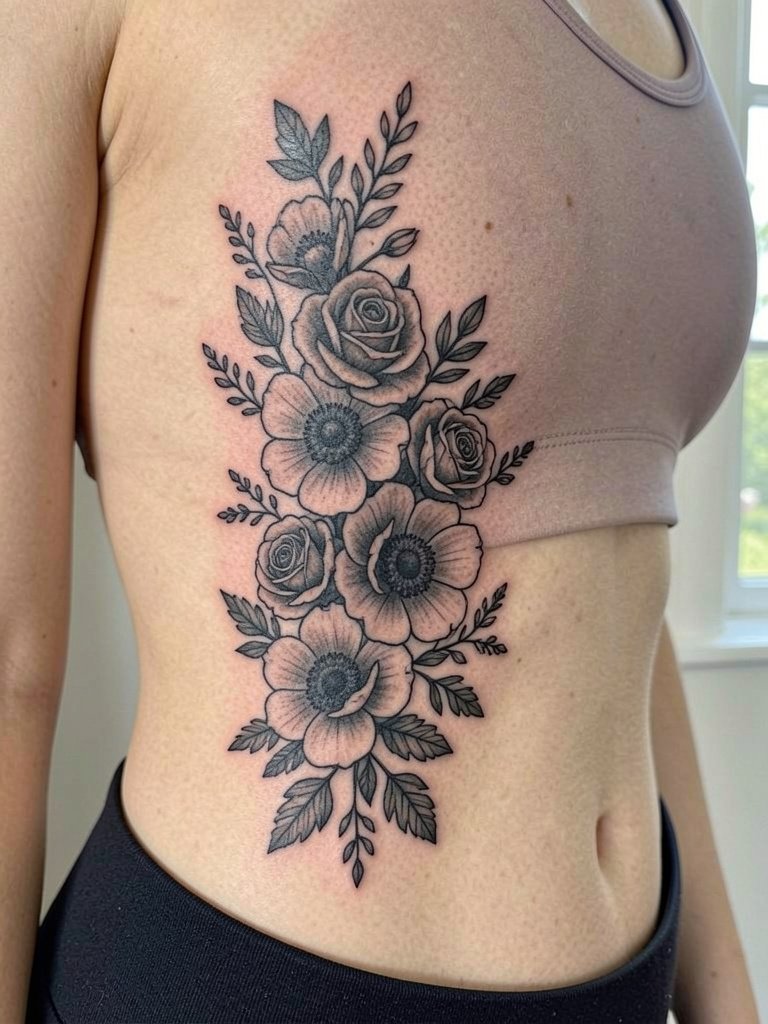
Mixed blossoms let you combine scale and variety while avoiding a single overworked bloom that looks flat later. One common mistake is packing tiny petal detail into a narrow band; the petals need breathing room or they become a gray blotch. Ask for leaf and petal separation with intentional skin gaps and medium-weight linework to preserve contrast. Healed photos at six months and two years will show whether negative space remains crisp. Pair this with an open-back midi dress for nights out, the back exposure frames a vertical spray beautifully.
3. Single lotus in minimalist linework

A single lotus reads spiritual without heavy ornament. The risk here is requesting ultra-fine stems with tiny gaps. On the ribcage that can soften quickly. Specify slightly bolder contour lines and a touch of stipple shading to keep the shape when the skin stretches. This style typically heals crisp at six months and will need a light touch-up around two years if you want the petals darkened. For the session wear a loose button-down shirt so you can unbutton without shifting underwire.
4. Watercolor floral wash with defined contour

Color softens the ribcage visually, but pick concentrated pigment rather than faint washes so the design does not read as a bruise after healing. Artists split on florals versus symbolic alternatives. One camp argues that florals are flattering and scale well across the ribs and will always be a safe, feminine choice. The other camp says florals are overdone and that mandalas, birds, or script can feel more personal and less predictable. If you want color, ask for controlled saturation with a clean black contour to prevent feathering during healing. Show-off pairing: a side-slit maxi dress highlights a mid-rib spray.
5. Vertical flock of tiny birds in flight

Birds create upward movement and can be scaled to hug the rib curve. The usual mistake is crowding the silhouettes so they merge. Ask the artist to show the design at actual size and to space the birds so each silhouette keeps its contour at two and five years healed. Pain on the ribs can peak when the needle crosses bone spots between intercostal areas, so expect short breaks and a one-hour to two-hour session for a medium-length flock. Style tip: pair with a ribbed tank top for casual show-off moments.
6. Scripted vertical quote in flowing cursive

Script works beautifully along the ribs if you size it correctly. The mistake is copying thin social-media fonts exactly. On the ribs that kind of script can blur. Request that the letterforms be drawn slightly larger and that baseline spacing be previewed on skin. Discuss how the text reads at three and five inches so you know how legible it will be across seasons. Session tip: bring a bra without underwire or a loose tank to the appointment so the artist can angle freely. Style it with an open-back midi dress for evening wear.
Pre-Session Essentials
These items smooth the rib session and the first week after, especially for vertical and wrap pieces covered earlier.
-
Breathable ribbed camisole. A soft camisole avoids seams and underwire rubbing the fresh area while still letting you show positioning during the consultation.
-
Silicone tattoo shield sheets. Thin shields reduce friction from clothing in the first days without trapping excessive moisture, helpful for long vertical ribs and wrap work.
-
Fragrance-free moisturizing balm. Choose a non-irritating, fragrance-free option to keep linework supple during the peeling stage.
-
Low-profile protective film roll. Cut-to-fit film protects the area from accidental rubbing during the initial healing window.
-
Aquaphor healing ointment. A thin, controlled layer for the first two to three days helps with scabbing control on narrow, detailed linework.
7. Stipple-shaded mandala edge that hugs the ribs

A mandala can anchor the side torso when designed to follow the rib arc rather than sit as a flat circle. The visual trick is to break the edge with openwork so the piece breathes on curved skin. Some people underestimate session time here because stipple shading is slow. Expect multiple short passes and a touch-up at 12 to 18 months to refresh stipple contrast. For showing it off, lightweight neutral tops with a scoop or boat neckline frame the pattern without competing.
8. Feather with linework veins and soft shading

Feathers read as movement and work well in a long narrow window. People often ask for feather filigree that is too thin. Ask for a defined central shaft and slightly heavier vein strokes to avoid early fuzziness. The session usually covers a one-hour layout plus shading, and the area tolerates soft whip shading well. Pair with a loose drawstring linen pant and a cropped top when you want to let the feather show.
9. Dandelion seeds blown vertically

The airy dandelion looks natural on ribs, but tiny seed detail can lose definition. Specify a clear focal seed or two with slightly heavier dots so the motif keeps shape after peeling. Discuss where the seeds land visually so the composition works when you move. Blowout risk is moderate because the seeds rely on crisp dots. For a casual outfit, a high-waisted skirt or pants that sits below the design keeps the piece visible in summer.
10. Small symbolic motif with quiet negative space

Tiny symbols can be intimate and discreet, but tiny detail ages faster on the ribcage. If you want a small motif, request slightly daubed fill rather than hairline strokes so it reads after two years. The session is quick and healing is straightforward if friction is minimized. Style note: a side-slit maxi dress or low-rise jeans highlights a small motif when you want it seen.
11. Blackwork crescent and dot-work cascade
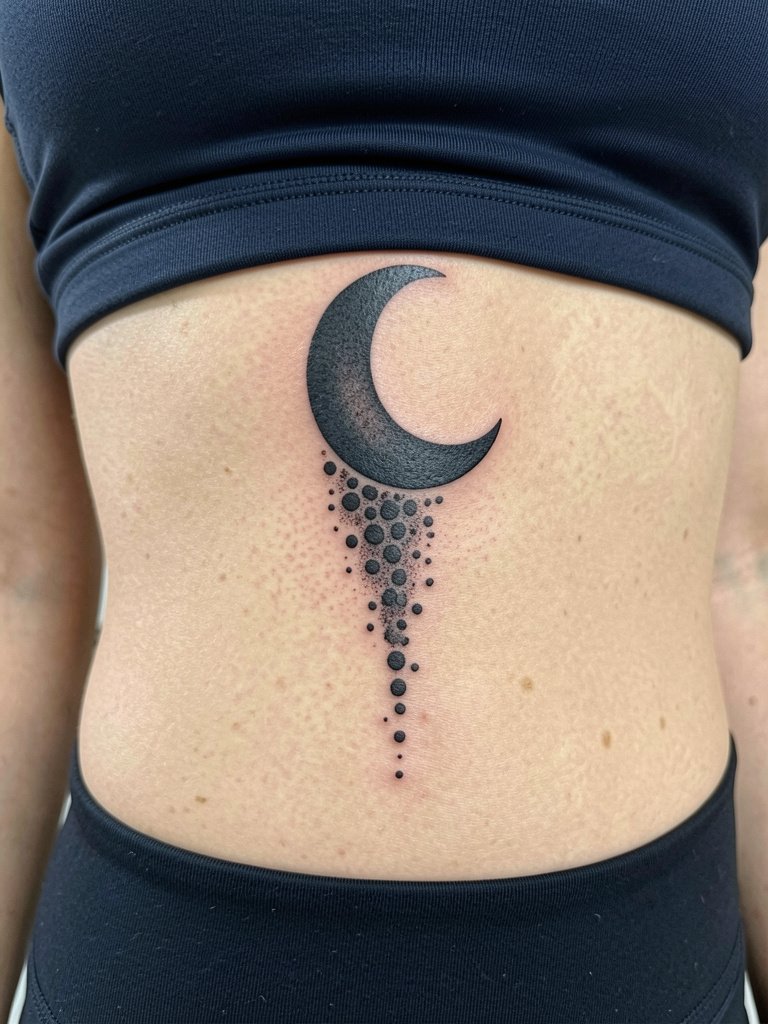
Blackwork handles the rib texture well because saturated areas read consistently as the skin ages. The main tradeoff is session time when you ask for solid fills. Ask the artist to show healed examples of similar fills on ribs so you know how saturation holds. Touch-ups for saturated black pieces are typically farther apart than for single-needle work. For wardrobe, a fitted scoop or boat-neck top frames the crescent without cutting the composition.
12. Wraparound ornamental vine that meets at the front

Wraps give motion but they need a mapped path so the design does not look cut off at seams. Bring photos of your usual tops so the artist can plan where the vine will end. Because wraps may cross areas with different skin tension, ask for slightly bolder outlines where the piece will sit near the waistline. Larger wraps often require two sessions and often a touch-up at one year. Pair with low-rise jeans or a side-slit maxi dress to let the wrap read in motion.
13. Geometric line cluster with negative gaps

Geometric groupings can look architectural on the ribs but need breathing room. The main mistake is compressing too many angles into a narrow strip. Ask for spacing proofs and for a mockup that shows the design while you move and bend. Periodic touch-ups may be required when small negative gaps begin to close. For a modern look, wear structured linen tops that sit cropped so the geometry reads against the skin.
14. Tiny constellation with star dots and connecting lines

Small star clusters can look delicate, but faint connectors often fade into faint gray. Request anchor dots that are slightly denser and connecting lines drawn with a controlled weight to keep the constellation readable. The session is brief and usually tolerable, but remember that the rib area is more sensitive at the mid-intercostal points. Wear a soft tank to the appointment so there is no metal or tight fabric over the area. For evening wear, a ribbed tank top frames the constellation without competing.
15. Single-line continuous wave that follows the rib curve

A continuous single-line concept reads as subtle movement. The key is consistent line weight. If the line is too thin it will fragment on the ribcage. Ask the artist to test a one-inch section at consultation so you can see how a single pass will look on your skin. This design typically heals clean and needs minimal touch-up if executed at the right depth. For casual showing try cropped tees with a natural waistline.
16. Botanical spine-to-rib connector with shaded stems

Connector pieces that transition toward the back look intentional when the artist plans sightlines at different body angles. Ask for a mockup with you standing and twisting so the connector reads seamlessly from profile to three-quarter back. Because this crosses areas with different tension, expect the shading to be slightly heavier in places and to possibly need a one-year touch-up. For showing off, open-back tops or low-back dresses frame the connector elegantly.
17. Minimalist crescent moon and tiny glyphs

Glyph-style marks are intimate and symbolic but too many marks can read cluttered. Decide which glyphs actually matter and space them vertically so each symbol keeps identity. The ribcage is unforgiving for tiny bewildering marks. One session is typical and a light touch-up at 18 months keeps edges crisp. For outfits, cropped shirts that sit above your waistband show the motif cleanly.
18. Openwork lace band that sits along the lower ribs

Lace bands can sit low and peek above waistlines. The common error is tight repeating detail that looks cramped on curved skin. Ask the artist to expand cell spacing and to show how the scallop sits when you bend. Because this is near the waistband, minimize friction during healing with soft, non-binding waistbands. Pair the finished piece with high-waisted skirts or low-rise jeans to let the lace edge be visible.
19. Botanical skeleton key with ornate teeth

Keys can read as lock-and-memory motifs when paired with vines. Request slightly heavier tooth edges and careful shading so the teeth keep definition rather than turning into a soft gray block. This kind of illustrative piece often needs two passes for full clarity and a realistic touch-up at one to two years. For outfits, open-back tops and scoop necks work well to showcase a vertical key.
20. Two-part mirror stems that frame the rib curve

Mirror stems create a natural frame for the torso and are flattering when the negative space between them is planned. The mistake is assuming perfect symmetry on a body that is not symmetrical. Ask the artist to mark the center and test posture positions before inking. These read well at one session and will age predictably if linework is medium weight. When dressing, cropped and open-back styles keep the framing visible.
21. Tiny map coordinates stacked vertically

Coordinates are personal but require absolute clarity in lettering. Ask for a slightly heavier digit weight than your usual print font so numbers remain legible as the skin ages. This is a small piece with low session time and a predictable touch-up schedule. For showing off, a cropped top or a dress with a low side seam keeps the stacked numbers visible without forcing exposure. Consider bringing a printed reference at appointment to match spacing precisely.
22. Ornamental band with negative lace breaks
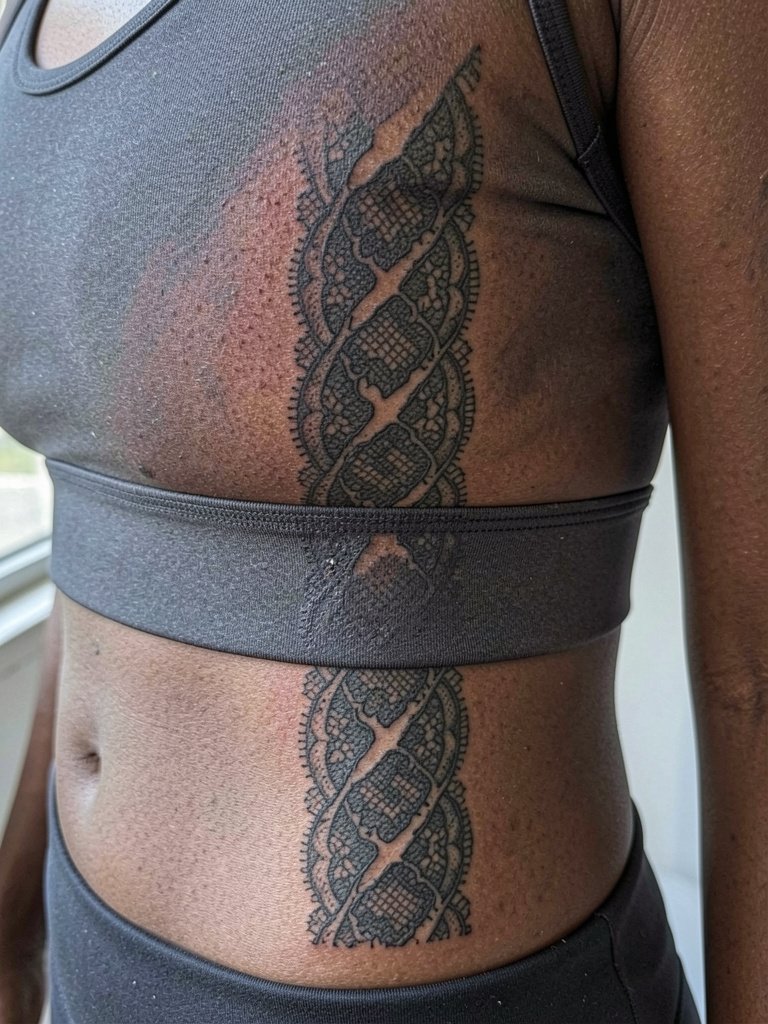
Ornamental bands can look like jewelry when negative gaps are respected. The primary aging issue is sections filling in if lines are too close. Ask for cell sizing that is proven on curved areas and for a mockup that shows the band while you bend. These pieces often need medium session time and a one-year review to see if edges require softening or redefinition.
23. Large, gently curving floral that anchors a rib wrap

Big rib pieces need room to breathe. The common error is compressing a full composition into a narrow stripe. Bring multiple scale references and ask the artist to draft the piece at full intended width so you can see how the petals will sit across ribs and into the back. Larger wraps will usually need two sessions and a defined touch-up plan. For wardrobe, low-rise bottoms or open-back options let a wrap read without being cut.
Frequently Asked Questions
Q: How much does a rib tattoo usually cost and why do prices vary?
A: Expect small rib sessions in a broad range around $100 to $300 and larger rib wraps from roughly $500 to $1,500 depending on your city, the artist, and color. Complexity, session time, and color work are the main drivers of cost because longer sessions and additional pigments require more studio time and potential follow-ups.
Q: Will fine-line work on the ribs hold up over time?
A: Artists split into two camps on this. One group argues that the ribcage moves and stretches enough that single-needle fine-line work blurs within a couple of years, especially if the lines are ultra thin. The other group maintains that with slightly heavier line weight and proper spacing, fine-line pieces can settle cleanly and show good longevity, pointing to healed examples as evidence.
Q: How should I dress for the appointment and during the first week of healing?
A: For the appointment wear a loose or cropped top you can move without tugging at underwire, like a loose button-down shirt or a soft camisole. During the first week avoid tight waistbands and underwire that sit directly over the tattoo and choose breathable fabrics that limit friction.
Q: How can I find artists who post healed rib photos without searching names?
A: Search style and placement tags on social platforms rather than artist names. Try hashtags like #ribtattoo, #ribtattooideas, and #finelinetattoo and use location filters on Instagram and TikTok to narrow to your city. Browse healed-photo threads on Reddit to see real results and compare fresh versus healed shots before booking.
Q: Do color and watercolor ribs need more aftercare than black and gray?
A: Color work usually needs more attention because pigment saturation and layering can increase peeling. Plan for gentle, fragrance-free moisturizers and minimal friction. Black and gray often reads more predictably over time, but any rib tattoo benefits from sun protection and periodic touch-ups to maintain contrast.