A lot of lion tattoos you see online look great at first and then soften into a smudge a few years later. Trends favor fine-line profiles and watercolor washes, but the designs that age best use clear spacing, confident linework, and targeted contrast where the skin stretches most. Read on for realistic options that balance immediate impact with long-term clarity, plus practical notes on placement, session feel, and what to wear the day you book the chair.
1. Hyper-Realistic Roaring Lion Head on Upper Chest
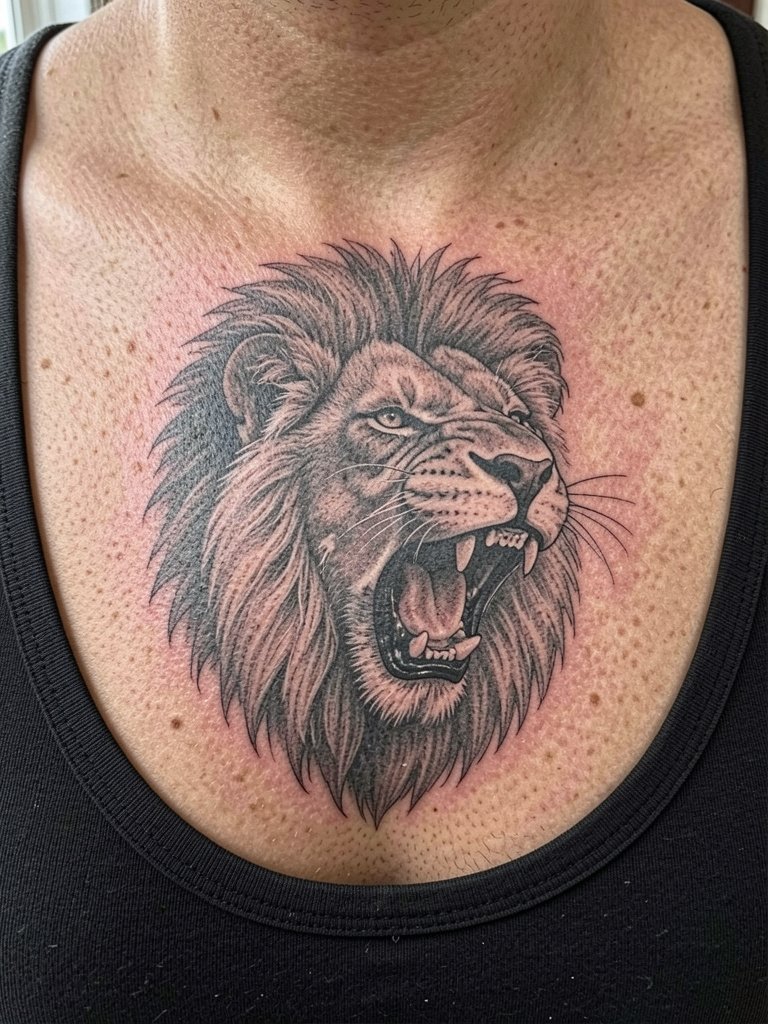
This chest placement lets a photoreal approach breathe. Request reference photos that match the face angle you want and bring a scale example so the artist maps mouth depth and tooth spacing. The session usually runs two to four hours per pass depending on size, and expect multi-session work for full saturation. Fine single-needle texture can look amazing day one but will often blur if placed too small. For a long-lived result pick slightly wider line weights and ask for deeper contrast in the mane where the chest moves during sleep. For the session wear an open-collar shirt so the artist has clear access to the sternum and collarbone area.
2. Geometric Lion with Sacred Geometry on Inner Forearm
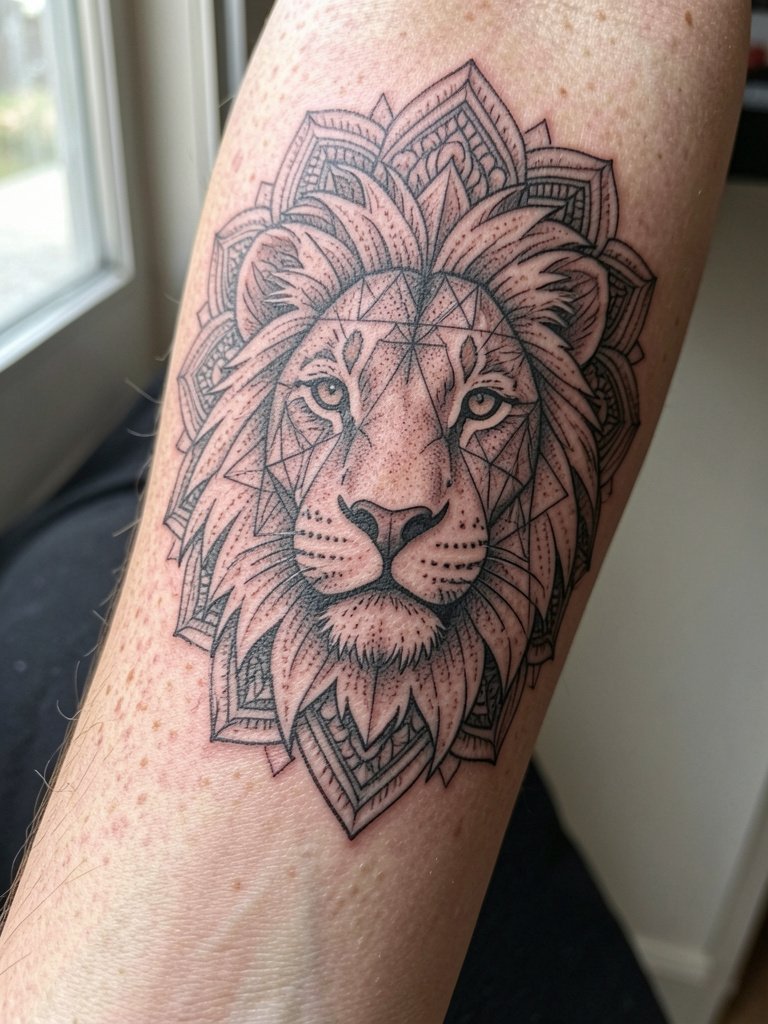
A geometric lion reads clean on the inner forearm when the shapes have breathing room. The common mistake is cramming tiny triangles into a small wrist band. For longevity scale the main lion face to three to four inches across so the geometry keeps its symmetry as the forearm shifts. The session is steady, two short sessions for linework and then shading. Blowout risk is low here compared with ribs, but ask the artist to space intersecting lines slightly wider than you think. When showing off, rolled-up linen shirts in cream or olive frame the forearm nicely and you can link a crew neck olive tee for the look.
3. Minimalist Single-Line Lion Silhouette on Lateral Wrist
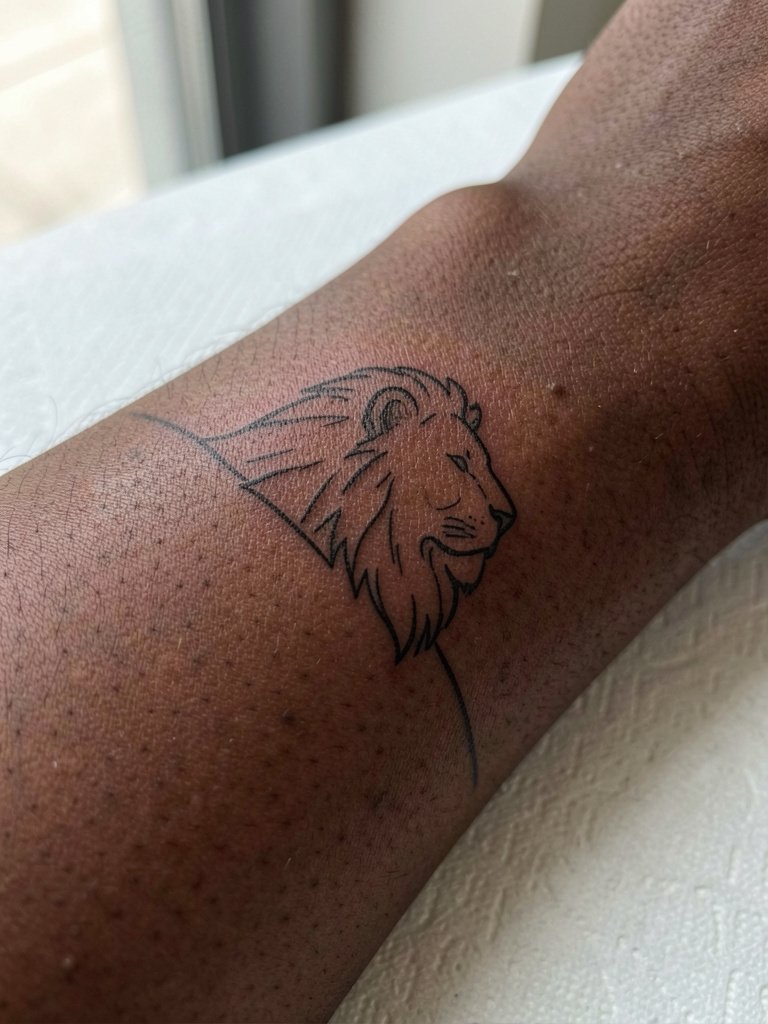
This single-line option is a solid first tattoo if you want something quiet and precise. The trap is requesting it too small so the single-needle line softens into a hairline blur within a year. Make the silhouette slightly larger and ask the artist to use a steady single-needle pass with consistent spacing. Session time is short, thirty to sixty minutes. For the appointment avoid tight watches and plan to remove any wrist accessories. For daily wear try a minimalist watch on the opposite wrist to balance the composition.
4. Tribal Lion with Bold Blackwork on Upper Arm
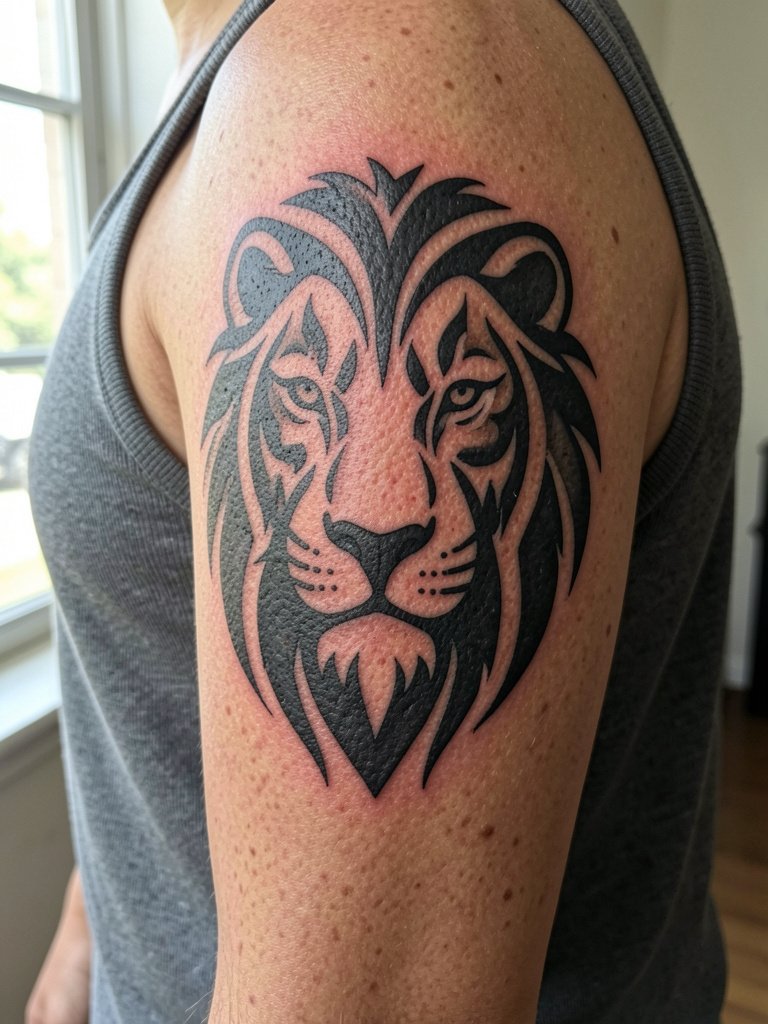
Solid black fills and angular mane shapes make this style age predictably, especially on the upper arm where sun and friction are moderate. Avoid the 1990s flash look by asking for modern negative-space highlights inside the mane. Pain is moderate on the outer bicep and most sessions finish in one to two hours. Bold blackwork holds well on darker skin tones and needs less frequent touch-up than very fine detail. Session wear should be sleeveless or short-sleeve. For showing off, pair the piece with a sleeveless tank and a vintage-cut denim jacket over it for layered looks.
5. Lion with Crown on Nape or Sternum
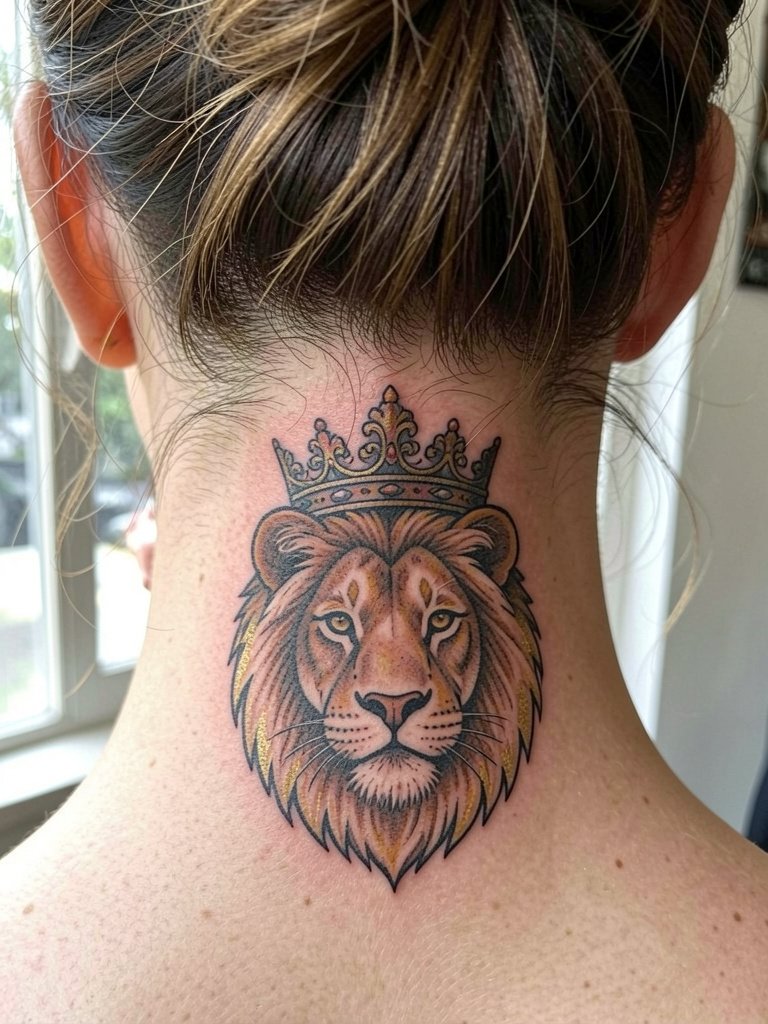
A crowned lion balances regal motifs with classic linework. Decide if you want it centered on the nape or shifted slightly for collarbone symmetry. Nape pieces require an artist experienced with hairline placement because the skin here moves with every head turn. Sessions are one to two hours depending on ornament detail. If you want yellow or gold accents, accept that color may need touch-up sooner than black-and-grey. For full reveal pair with open-collar shirts in navy or charcoal and consider short hair for maximum visibility. For the appointment wear a button-down that you can remove easily.
6. Lion and Lamb Composition on Outer Upper Thigh
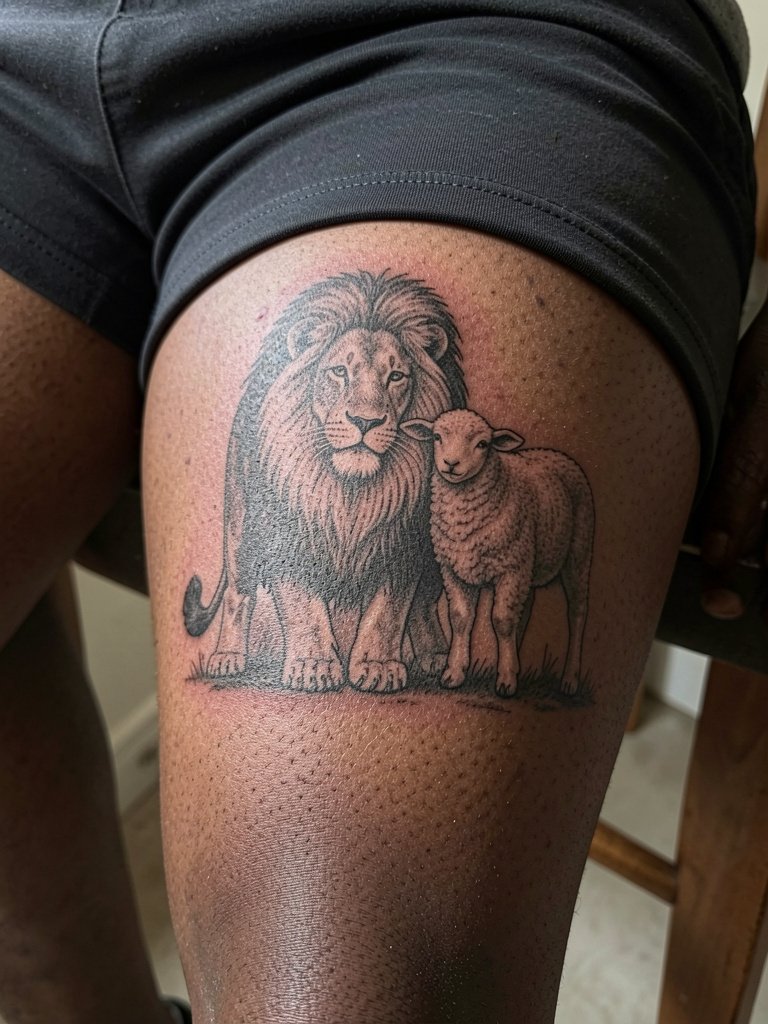
Pairing a lion with a lamb gives narrative contrast and avoids pure aggression. The outer thigh holds ink well because it sees little abrasion, so you can go finer without losing detail. Common mistakes include tiny lamb faces that lose expression at six months. Plan for two sessions if you want deep shading and distinct facial contrast. For session comfort wear loose drawstring shorts so the artist can roll the leg without fabric pressure. To show the piece, low-rise linen pants in cream or sand work well and you can try low rise linen pants men.
Session Day Picks
These first six ideas include chest, forearm, nape, and thigh work, so a few specific products smooth the session and early healing window.
- TattooGlove hypoallergenic balm search. A lighter balm option noted by some clients for sensitive skin and used by artists in Japanese-style healing routines, helpful for sternum and nape pieces that may react to thick ointments.
- Hustle Butter DIY supplies search. A popular thinner balm alternative mentioned by users who prefer less greasy textures during the first few days on large chest work and thigh compositions.
- Lumeon moisturizer UV filter search. Designed to help color retain vibrancy, useful if you add gold or red accents to a crowned lion.
- Mad Rabbit tattoo balm search. A mid-range specialty balm some artists recommend for color pieces and for controlled saturation on forearm geometry.
- Saniderm tattoo film search. Useful for short-term protection during the first 48 to 72 hours after chest or forearm sessions to keep bacteria and friction away.
7. Half-Lion Face with Clock or Mandala on Inner Forearm
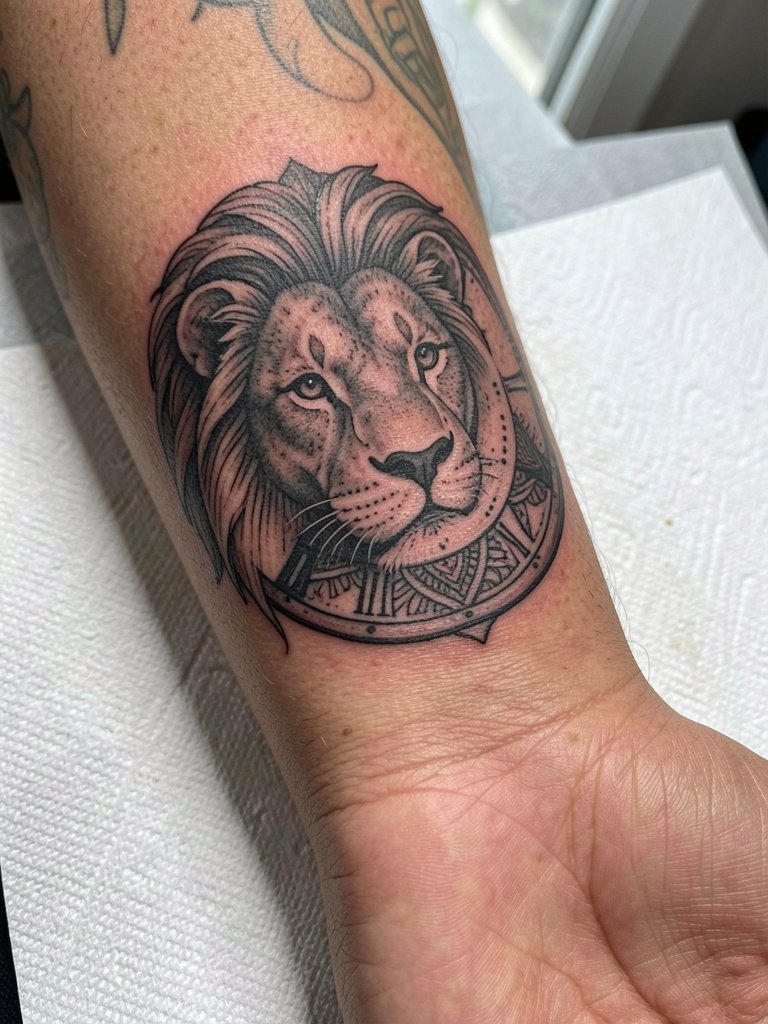
Splitting a lion with a clock or mandala creates symbolic layers without crowding the face. The inner forearm shows both elements clearly if the clock numerals are bold and the mandala rings are spaced. A typical mistake is using tiny Roman numerals that blur. Discuss exact numeral style and mandala ring width so the artist can plan spacing for long-term clarity. Expect one to two sessions. For the appointment wear a loose short-sleeve shirt. When you want the piece to pop, a slim-fit crew-neck tee in olive or sand complements geometric edges.
8. Japanese Shishi Lion Sleeve
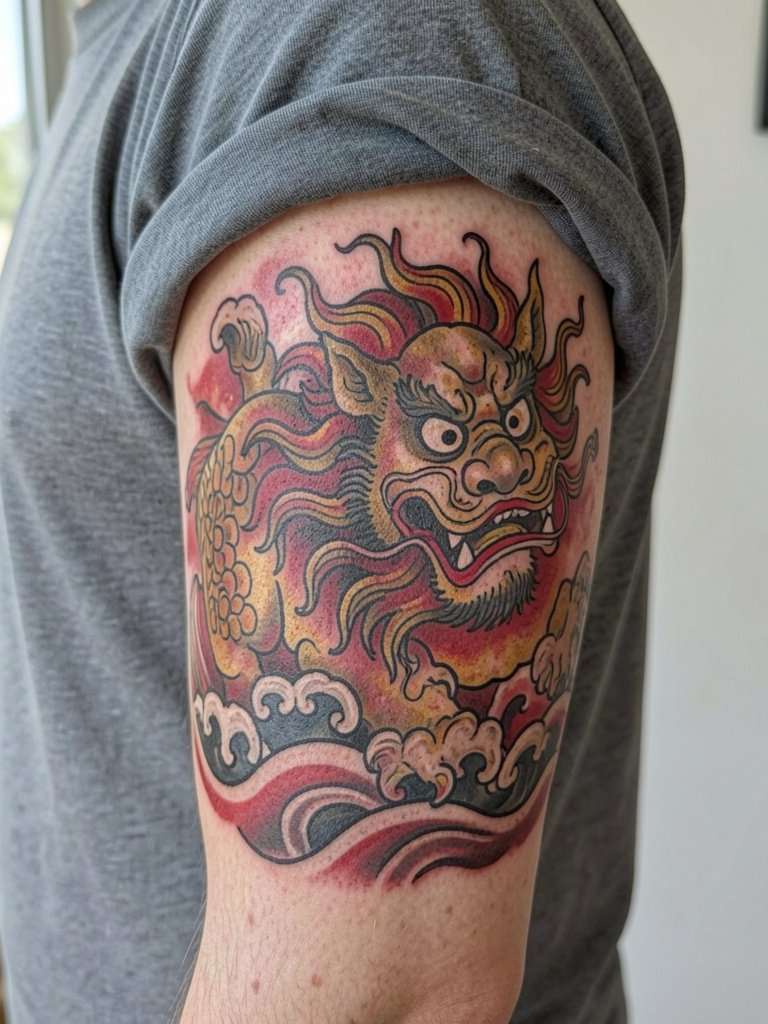
Shishi adaptations read great in full-sleeve work because the flowing composition follows the arm’s natural curves. This is a long-term project that typically requires multiple sessions over months. Traditional color palettes demand saturation passes to lock in pigments. The common oversight is trying to compress a full Shishi into a small bicep band. For longevity commit to a sleeve or upper-arm panel and ask the artist to map how waves and mane flow with muscle movement. Session wear: loose short-sleeve or tank so the artist can work shoulder to wrist easily. For styling finish, layer with a black sleeveless tank.
9. Lion Cub for Fatherhood on Inner Thigh
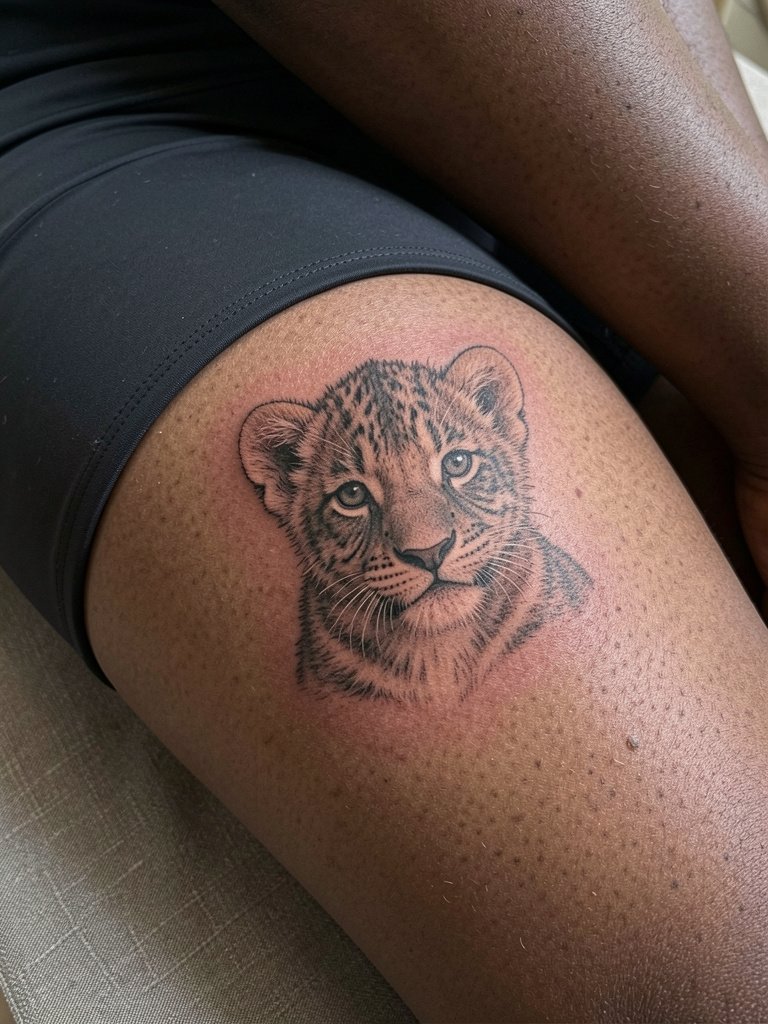
A cub portrait communicates family or guardianship without overt aggression. Inner thigh placement is private and retains detail well because it sees minimal friction. The most common mistake is underestimating how color or fine fur strokes read on darker skin. Ask for higher contrast in the cub’s eyes and for stipple shading to define fur rather than thin hairlines. Session time is usually one to two hours. For comfort wear modest athletic shorts during the appointment. Low-rise linen pants are a good show-off option when you want a partial reveal.
10. Lion Head with Floral Mandala on Calf
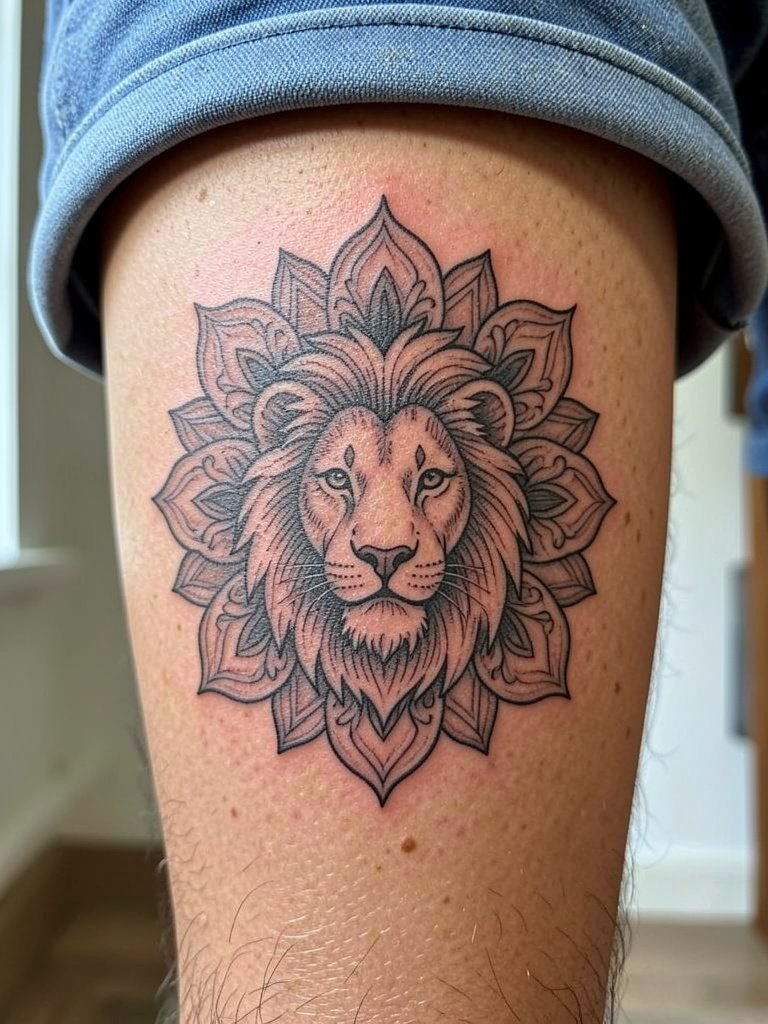
Encircling a lion with a mandala softens the angle of the face while preserving bold centerline contrast. Calf skin is forgiving, so you can go for tighter mandala details than on the forearm. Watch out for too many thin petals adjacent to thick mane lines. A good pattern alternates stipple shading with larger negative spaces so the mandala reads even at distance. Sessions are usually two sessions for line and fill. To show this placement, rolled-up chinos in sand or olive keep calf work visible and seasonally flexible. For the appointment, wear loose shorts or drawstring pants.
11. Lion Silhouette with Watercolor Sunset on Upper Back
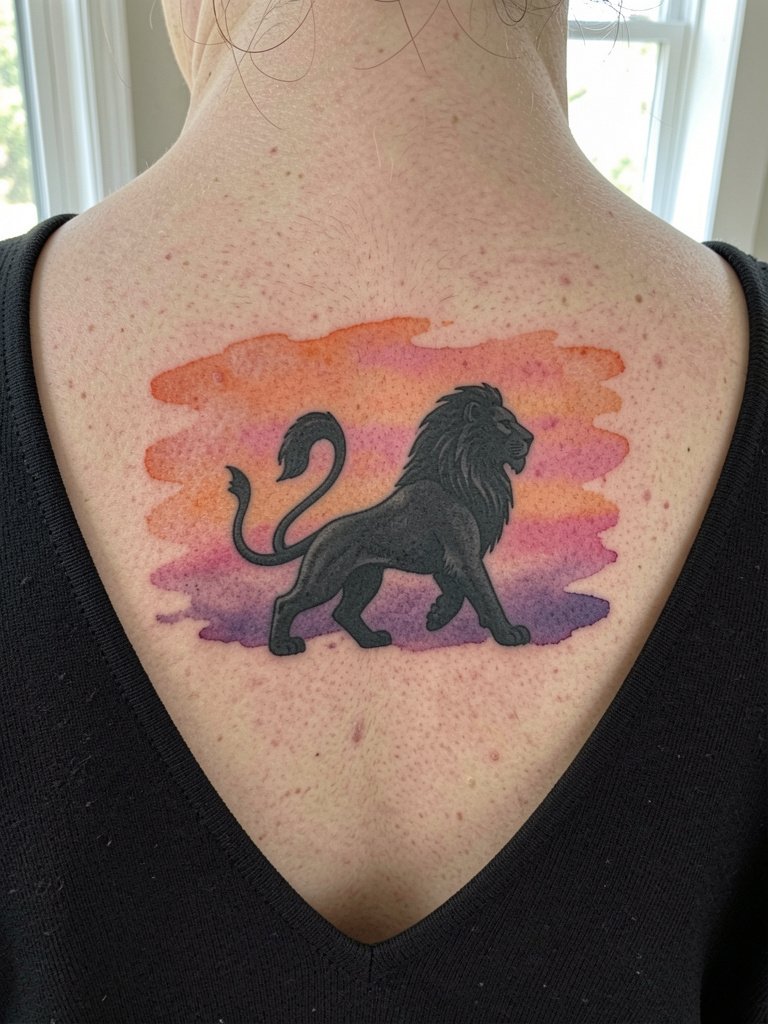
A silhouette with watercolor looks striking at first but tends to fade faster than saturated black, especially on sun-exposed back areas. If you want this look pick dense color fields and plan for a color refresh at year two to four. Common mistakes include soft washes without boundary contrast, which bleed into each other as they age. Session time is one to two hours depending on the color field. If you prefer longevity, choose a darker silhouette edge around the watercolor. For styling, wide-neck tops highlight the upper-back placement. Consider a layered silver chain to frame the area.
12. Lion with Sword on Shoulder or Upper Chest
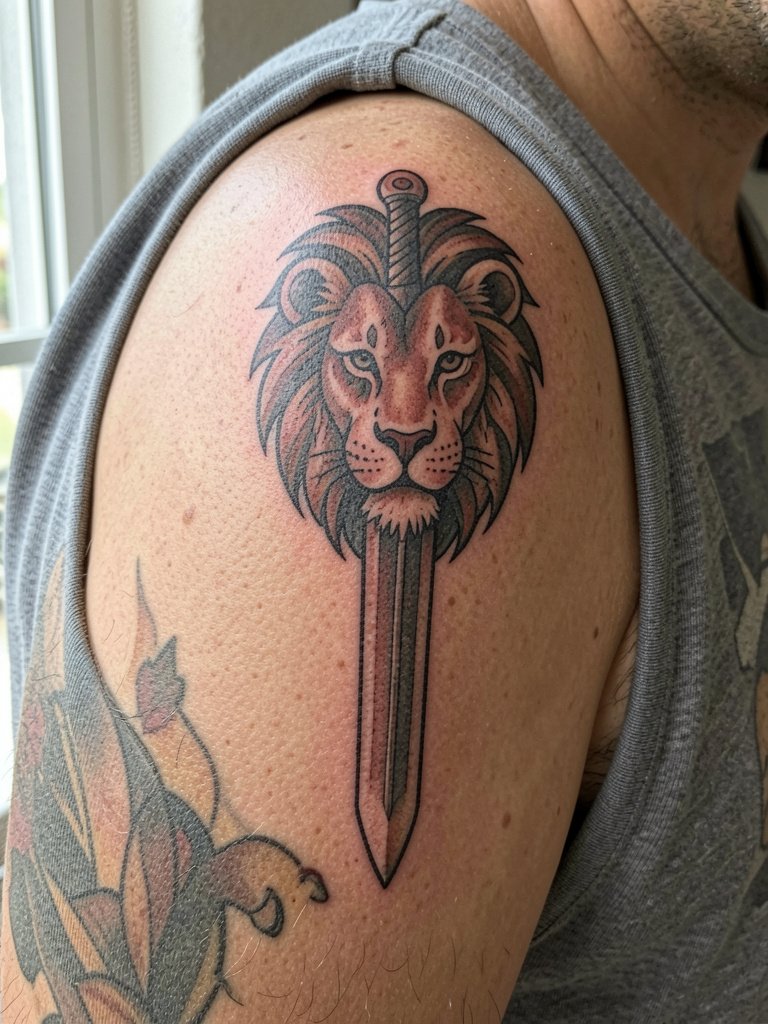
Sword motifs paired with lion heads create a classic warrior composition. Placement on the shoulder reads well from multiple angles and allows the sword blade to sit along the chest curve. Keep blade details bold so guard lines do not blur with mane texture. Pain on the shoulder is moderate and sessions usually finish in one long pass or two short sessions for shading. For showing off, a tank top or open-collar shirt frames the shoulder nicely. For the appointment wear a loose tank so the artist can rotate the arm freely.
13. Lion Face with Celtic Knots on Inner Forearm
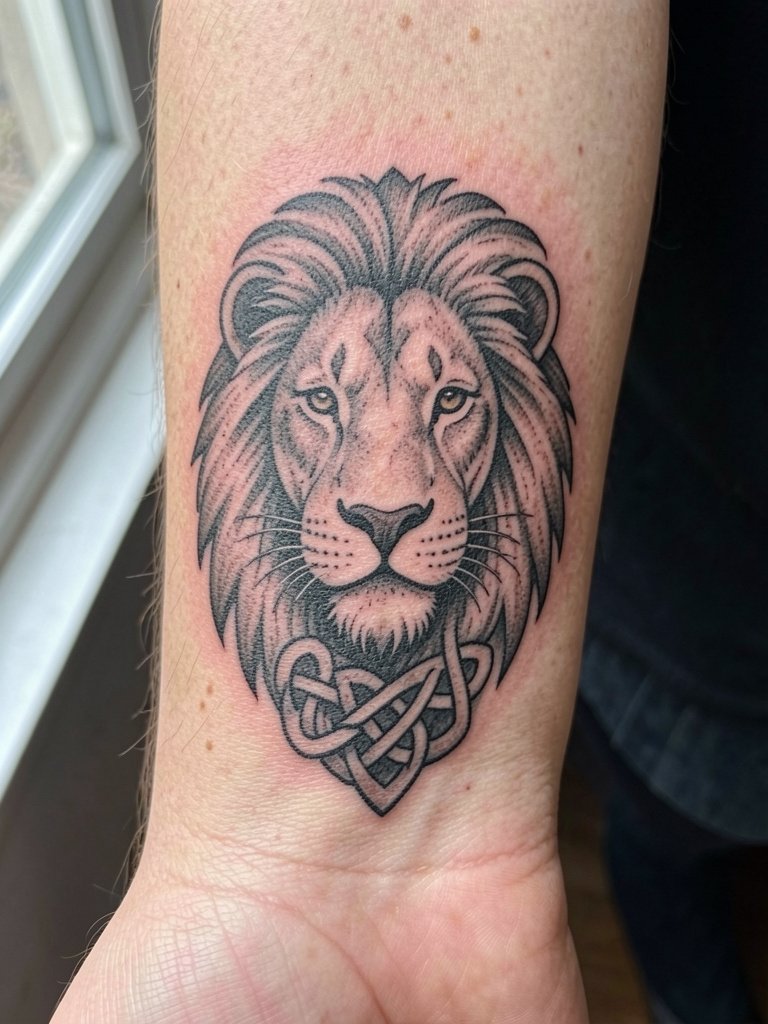
Heritage-focused knotwork needs generous spacing to avoid the classic muddied knot look against fur texture. If you want Celtic elements, ask for thicker knot bands and deeper contrast in the lion’s snout so the two languages do not fight. Sessions generally run one to two hours. Small knotwork runs risk of turning into indistinct shading on oily skin, so plan scale accordingly. For styling, a slim-fit tee with sleeves rolled shows the inner forearm without distraction and a minimalist leather wrist cuff on the opposite arm balances the look.
14. Lion Head with Crown of Thorns on Sternum
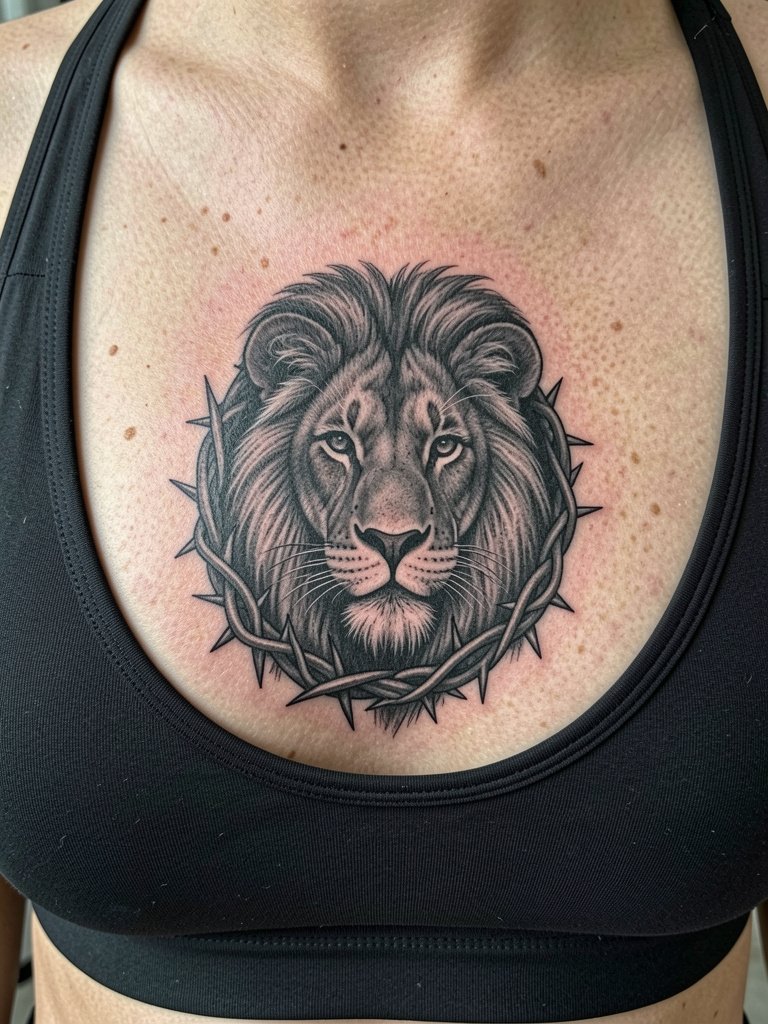
This darker, symbolic twist benefits from bold contrast to keep thorn details sharp as the sternum flexes. Artists are split on numbing cream use for sternum work. One camp says topical numbing helps clients complete complex chest sessions without flinching. The other camp warns numbing creams can change skin texture and lead to patchy ink. Name both positions and then plan: if you choose numbing, specify the timing and brand so the artist can adapt technique. Sternum sessions are intense and often require two passes. For session wear a loose tank or button-down that is easy to remove.
15. Micro-Realistic Lion Eye or Ear Detail Behind the Ear
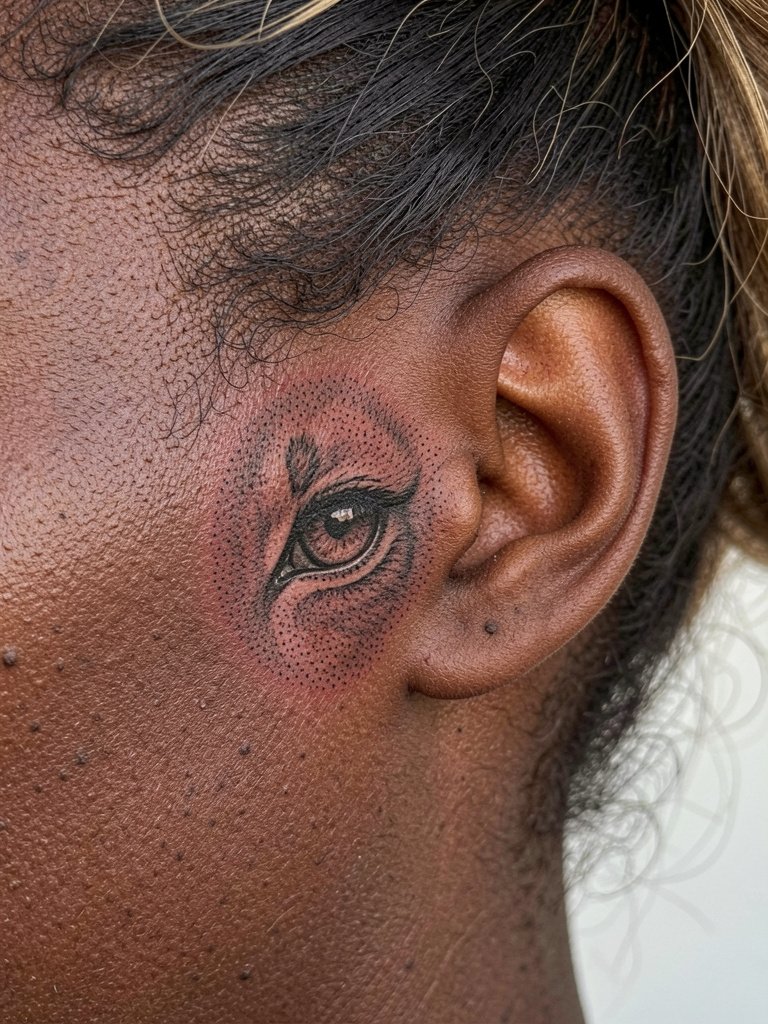
Micro fragments like a single eye or ear work as secret details in a sleeve or as a standalone nod. The inner mastoid site heals well but demands extreme precision. The main mistake is expecting full photorealism in a tiny space. Ask for a healed-size mockup to ensure the detail is legible at three to four centimeters. Sessions are short, often under thirty minutes. Sensitive placement note: behind-ear tattoos require experience with thin skin and proximity to hair follicles, so pick a studio familiar with micro-realism. For showing off, short hair or an updo is ideal.
16. Collarbone Regal Lion Accent
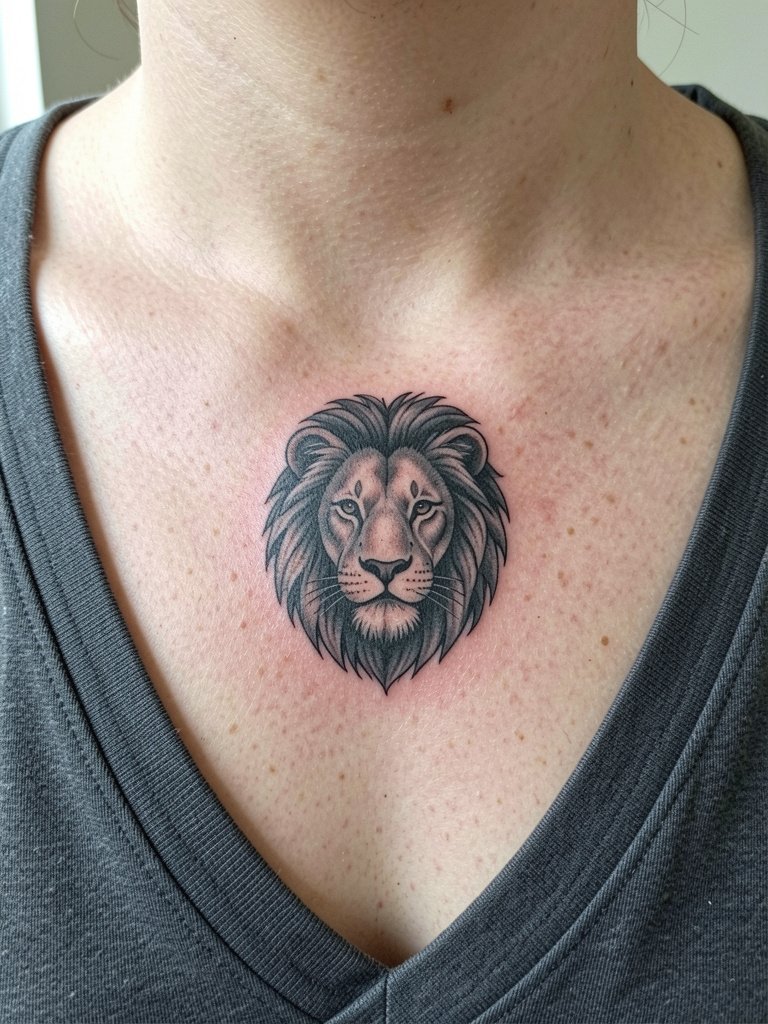
Collarbone placements are striking but sit on moving skin, so bold outlines keep the design readable as the area flexes. A common error is choosing too much tiny detail for such a thin canvas. Opt for a design two to three inches wide and ask the artist to define the jawline with heavier linework rather than micro strokes. Pain is higher across the bone and sessions are usually brief. For showing off try open-collar shirts in navy and layered silver chains. For appointment wear a button-down you can remove easily.
17. Small Paw Print or Minimalist Mark on Inner Wrist
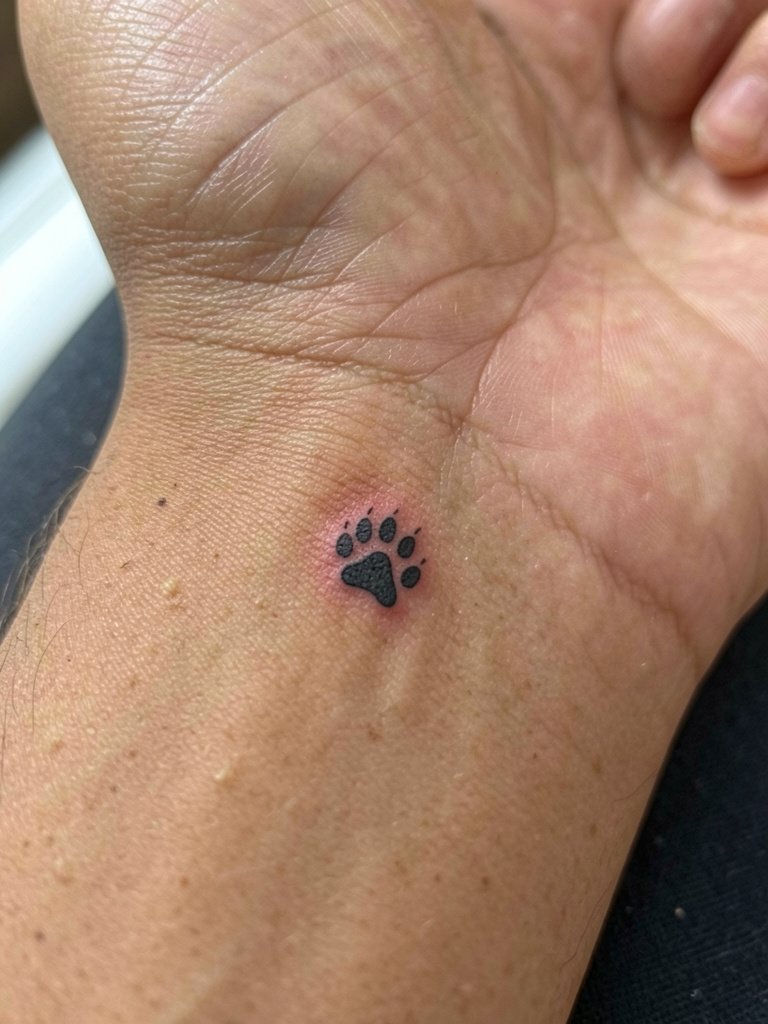
Small wrist marks are popular first-tattoo choices but hands and wrists fade quickly. Expect touch-ups every one to two years. To improve longevity choose slightly bolder dots in the paw pads instead of ultra-thin outlines. Session time is short and healing is fast. For the appointment remove watches and bracelets. To highlight the wrist without putting pressure on the new ink wear a dainty bracelet set on the opposite wrist.
18. Compass Lion on Calf or Lower Leg
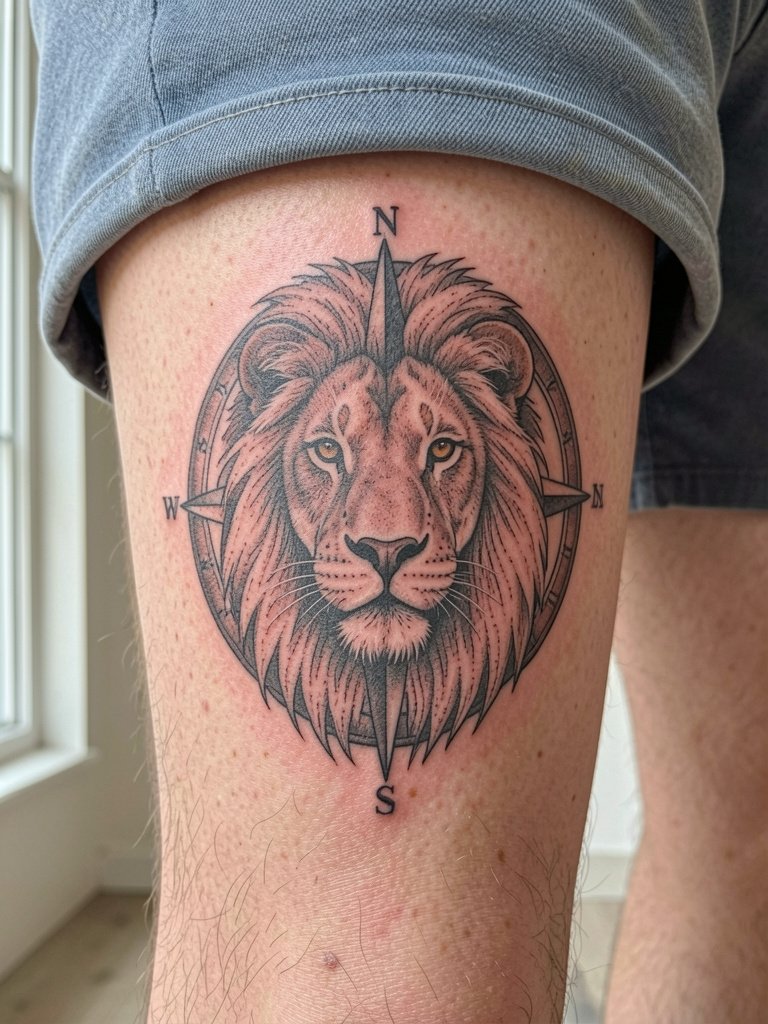
Combining navigational symbols with a lion can signal direction or guidance. On the calf you can include fine compass ticks if the artist spaces them generously. A common mistake is cramming the compass ticks too close to the lion’s face. Sessions are usually one or two. For display roll up chinos or wear minimalist leather sandals for summer visibility. For the appointment pick loose shorts so the artist can access the lower leg easily.
19. Patchwork Sleeve with Micro Lion Fragments
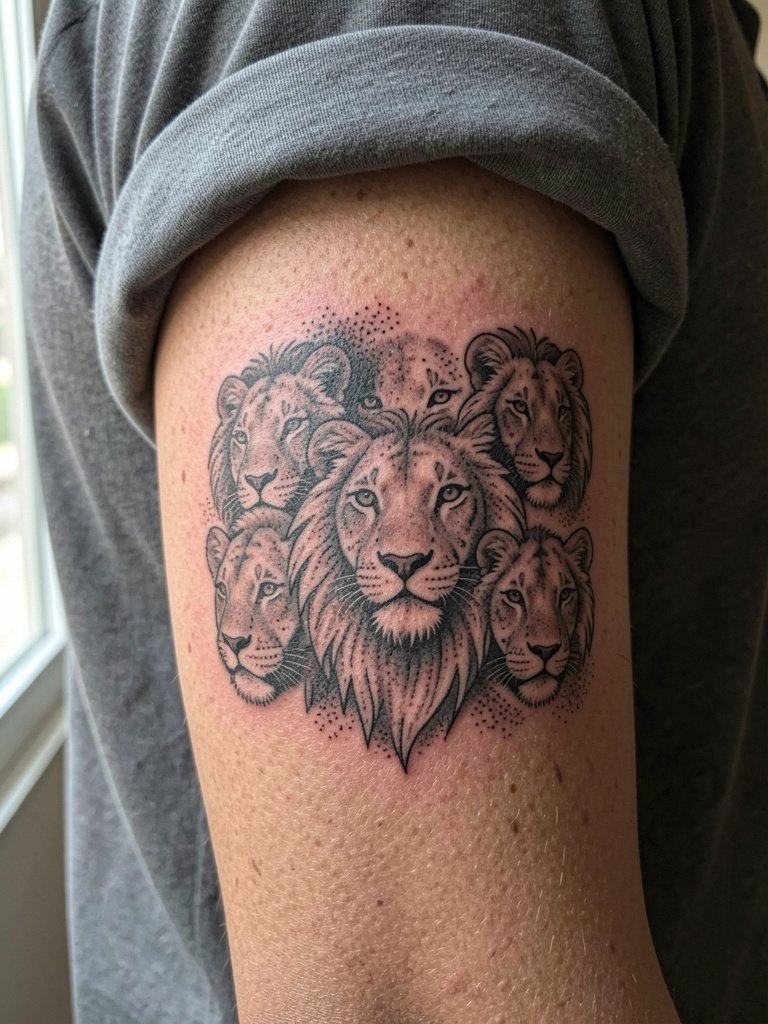
A patchwork approach lets collectors hide a lion within a larger narrative. The benefit is you can blend micro-realism with bold patches that age differently. The mistake is inconsistent scale among fragments that confuses the eye after healing. Plan a tempo of large to small elements and commit to a multi-session rollout. Sessions vary widely. For showing off the patchwork, a slim-fit crew-neck tee keeps the arm readable and a minimalist leather wrist cuff complements the sleeve.
20. Dotwork Stipple Lion on the Chest Pocket
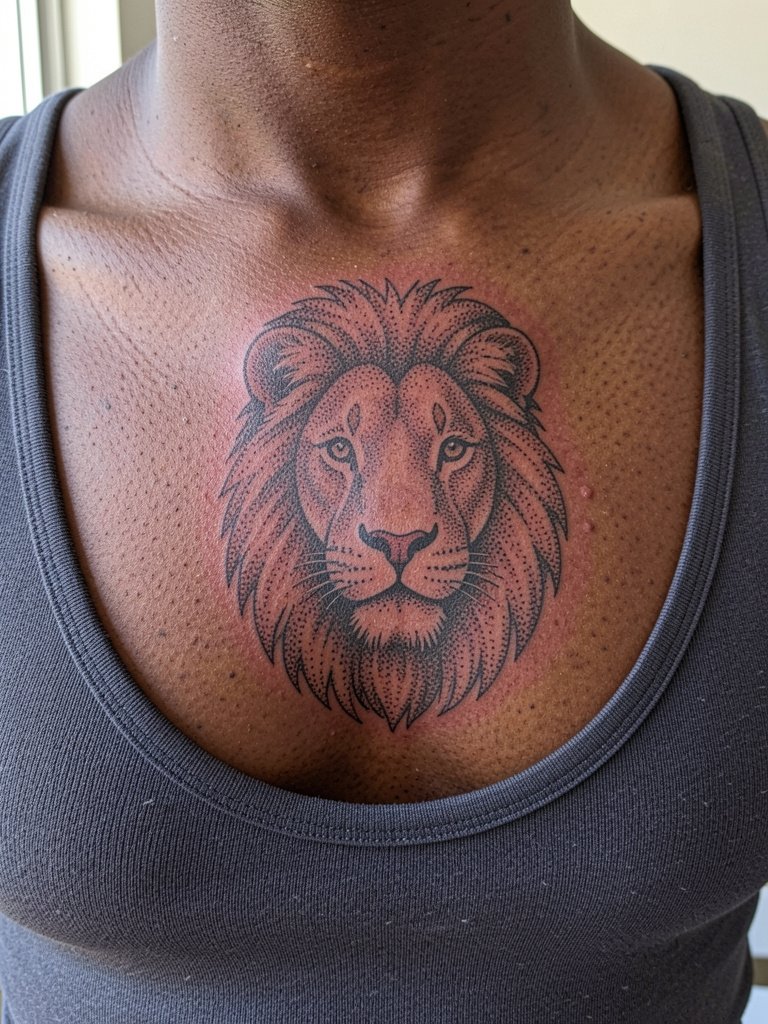
Stipple work creates texture without heavy blacks, but stippling needs scale to remain clear. The chest pocket shows stipple wonderfully if the dots are sized for long-term readability. Common errors include dot sizes that are too tiny, which merge over time. Count on two sessions for dense stipple coverage. For the appointment wear a loose tank or button-down. To show the area, open-collar shirts and layered chains add depth.
21. Lateral Hip Geometric Lion
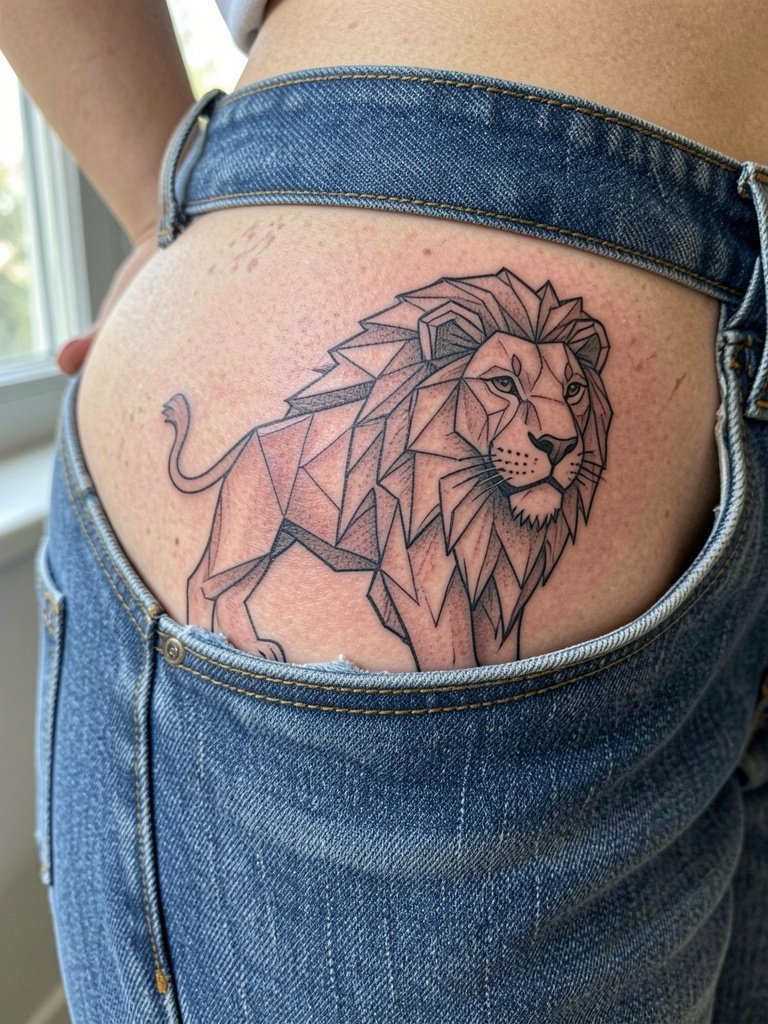
Hip placements suit geometric lions because the side surface gives room for vertical symmetry. The usual mistake is underestimating curvature; straight lines should be mapped to body shape so the pattern reads flat when standing. Sessions are often one long pass for linework then a short follow-up. For session comfort wear drawstring pants. When showing off, low-rise linen pants or an open blazer partial reveal pair well and you can link low rise linen pants men.
22. Bold Blackwork Hand or Knuckle Lion
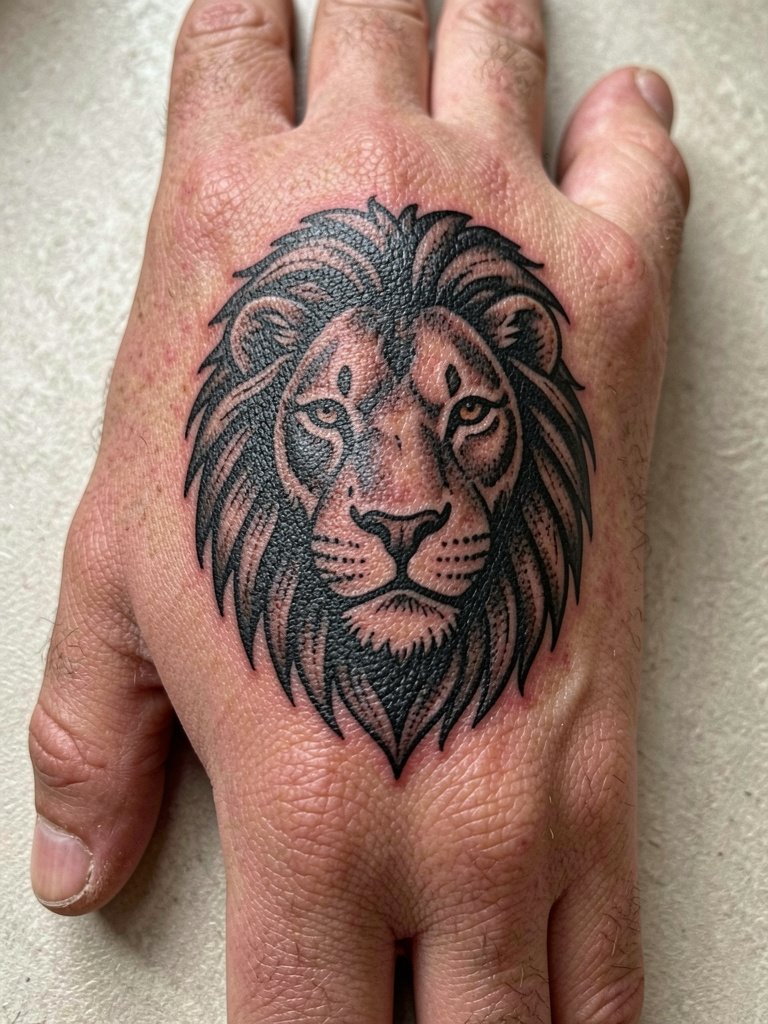
Hand tattoos fade faster than most placements due to constant washing and friction. One camp argues hand pieces blur in one to two years and need frequent touch-ups. The other camp accepts hands as temporary canvases and recommends bold, simple shapes that wear well and can be refreshed. If you choose a hand lion, pick broad areas of black and limit micro detail. Touch-ups will likely be annual. For the session plan for a short intense pass and accept maintenance. Avoid wearing rings on the tattooed hand for the first few weeks.
23. Small Nape Lion with Crown Accent
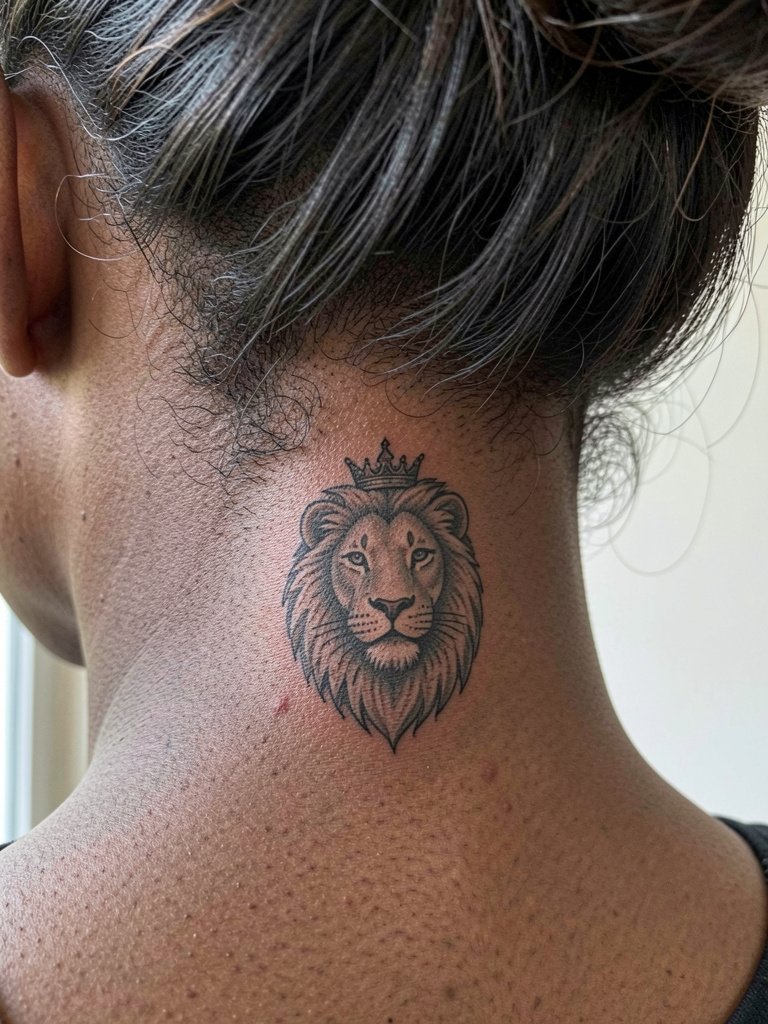
A compact nape piece is discreet and ages well if scaled correctly. The nape moves a lot when sleeping so heavy outlines help retain shape. A common oversight is seeking too much tiny ornamentation in crown details. Sessions are short. Sensitive placement note: the nape requires precision and aftercare attention because of hairline proximity. For showing off, open-collar shirts and short hair make the piece visible.
24. Chest-to-Shoulder Half Sleeve Roaring Lion
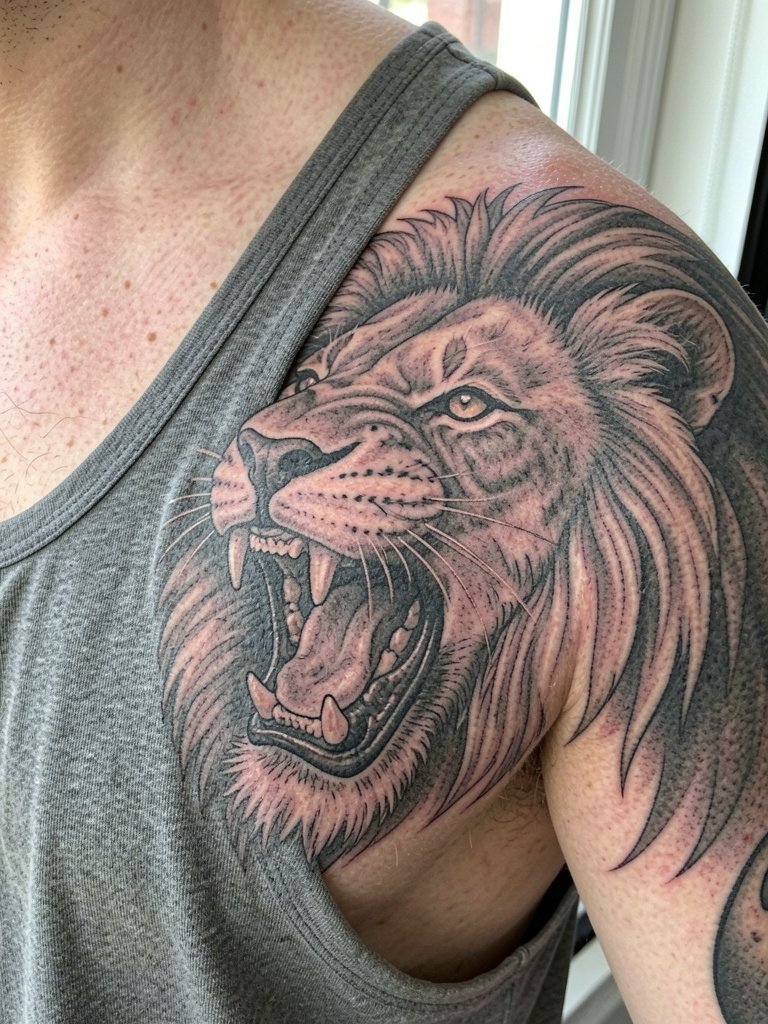
Connecting chest and shoulder gives a dramatic canvas for a roaring head that reads from multiple angles. The challenge is mapping jaw and mane so they do not distort with shoulder movement. Discuss how the face will look when the arm hangs and when it lifts. Sessions typically require at least two passes. For the appointment wear a loose tank. For everyday styling try open-collar shirts or layered chains to frame the chest and shoulder blend.
25. Tribal Mane Dotwork on Upper Arm
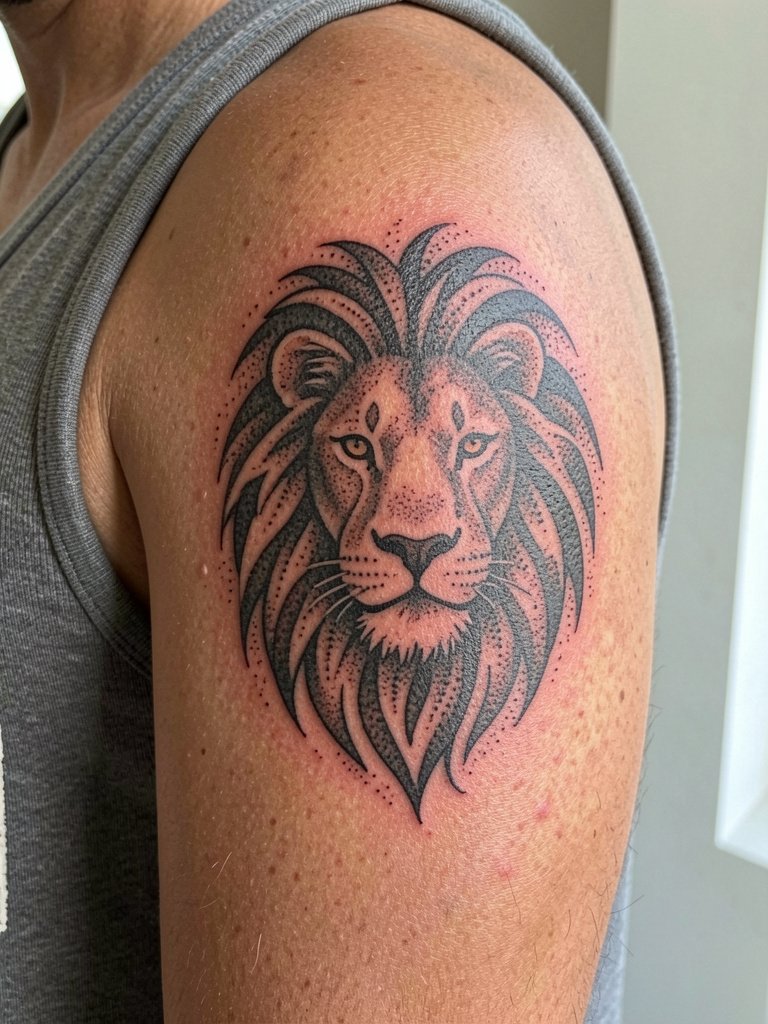
Dotwork can modernize a tribal mane and reduce the heavy fill look. The pitfall is inconsistent dot density that causes patchy texture after healing. Request a test area for stipple density to confirm the visual weight. Sessions are moderate in length and often spread out. For showing off pair with a black sleeveless tank and a denim jacket for layered seasons. Session wear should be sleeveless or short-sleeve.
26. Mandala Mane Full Back Panel
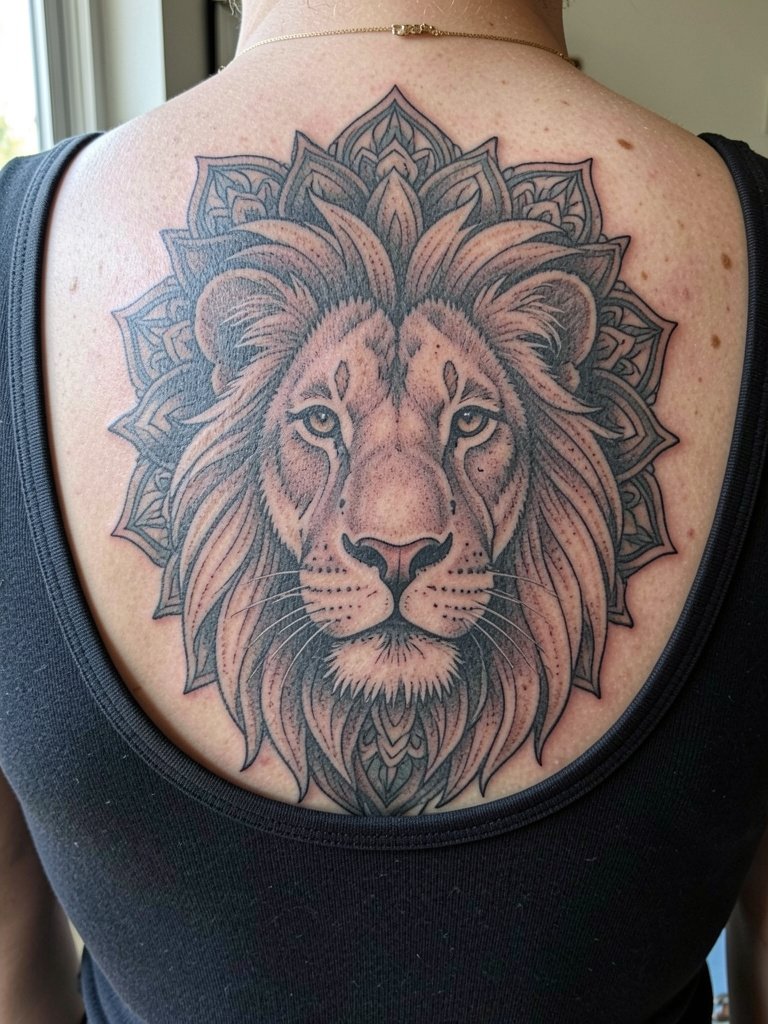
A mandala mane works brilliantly on the back where symmetry can be executed at large scale. The common mistake is over-detailing central facial features while ignoring the negative space necessary for mandala rings to read over time. Plan multiple sessions and stage the mandala rings outward so each ring has room. This placement benefits from photos of healed multi-year examples to set expectations. For comfort during sessions bring layered clothing that is easy to remove.
27. Lion Cub with Initials for Fatherhood on Lower Chest
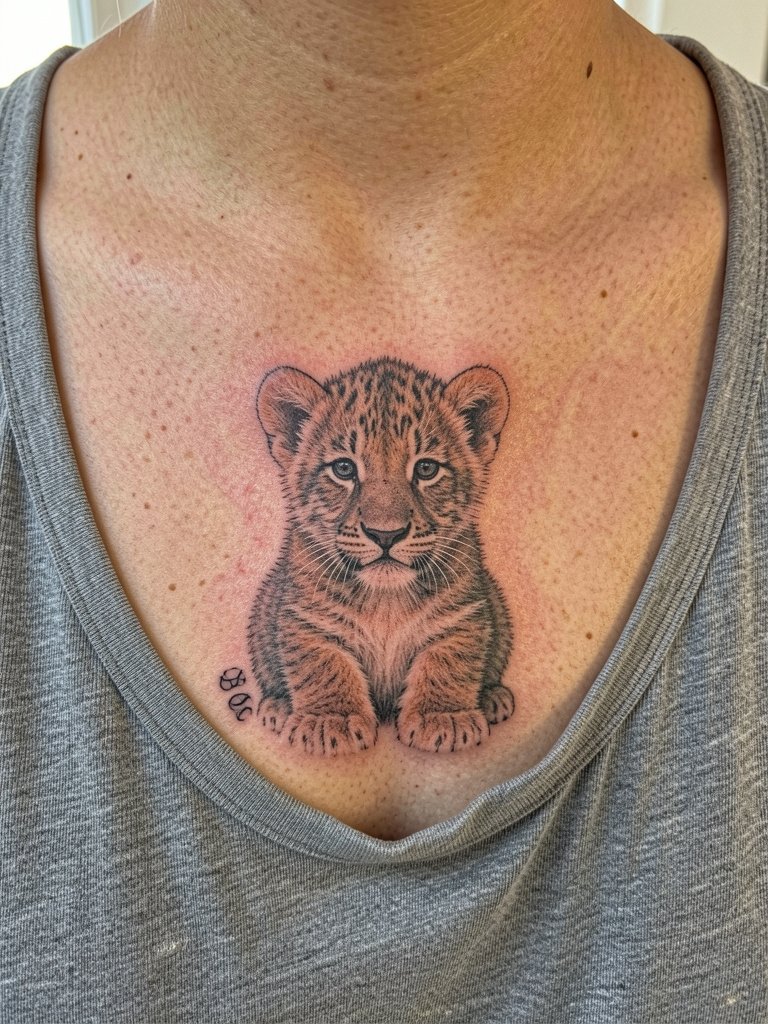
Combining a cub portrait with initials is a discreet fatherhood marker that avoids cliched slogans. Keep initials simple and bold enough to read at small scale. The lower chest takes gentle shading well but avoid making the initials so fine that they blur. Sessions are usually under two hours. For the appointment wear a button-down or loose tank. For showing off try v-neck shirts to frame the lower chest composition.
28. Silhouette Skyline Lion on Ankle
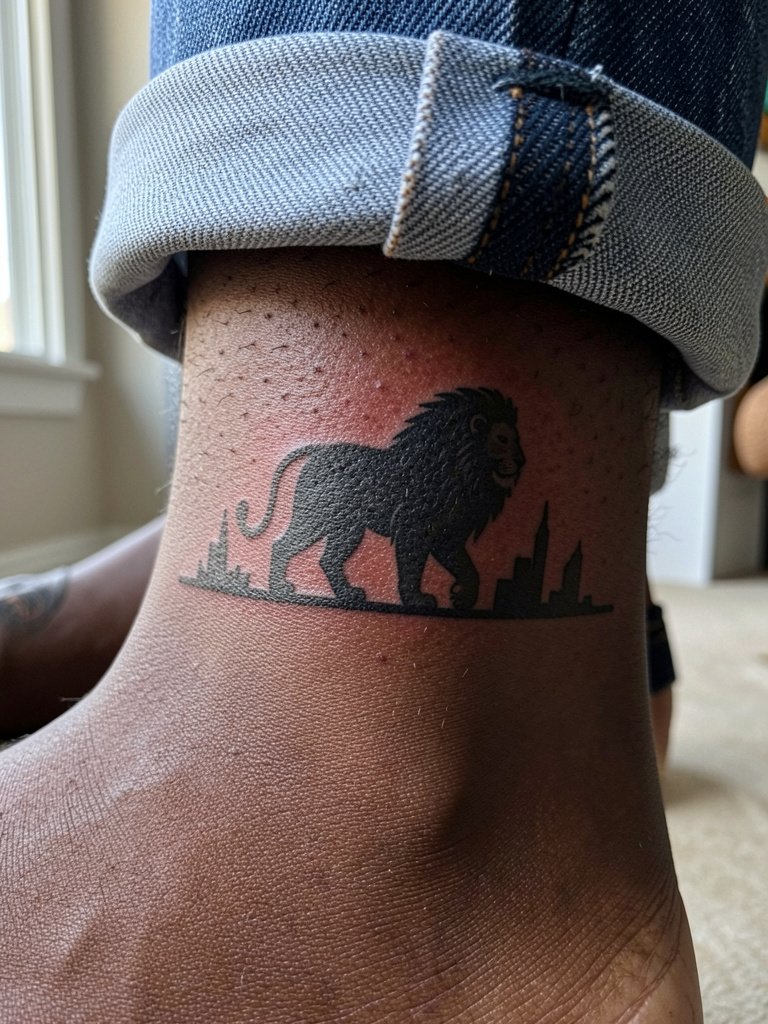
Ankle silhouettes are low-commitment and photograph well. The trade-off is higher wear from socks and shoes. If you want this placement, accept that the piece will need a touch-up sooner than larger panels. Keep the skyline thin but distinct and use a strong silhouette edge. For the appointment roll jeans or wear shorts. For summer styling, minimalist leather sandals show the ankle work and keep friction minimal. Consider a touch-up plan after the first year.
29. Micro Nose-to-Eye Fragment on Inner Wrist or Behind Ear
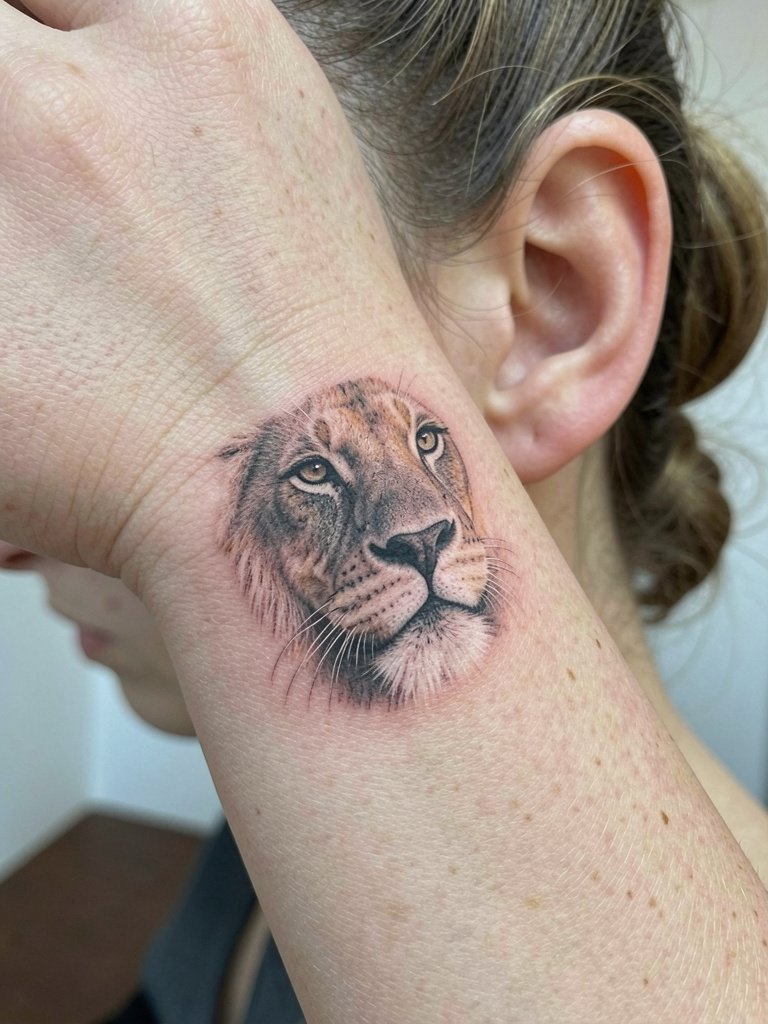
A tiny nose-to-eye fragment makes a subtle collector piece that sits well in a sleeve or as a secret accent. The central risk is overpromising photorealism in a micro area. Ask the artist to show a healed mockup at scale so you know how the eye will read at three to four centimeters. Sessions are brief. Sensitive placement note: behind-ear micro work requires careful aftercare because of hair proximity. For showing off, short hair or an updo highlights the tiny detail.
Frequently Asked Questions
Q: How do I decide between color and black-and-grey for a lion tattoo?
A: Color can be striking but often needs touch-ups sooner than black-and-grey, especially on exposed areas like forearms. If longevity is a priority choose black-and-grey with selective color accents. If you want color, ask for a saturation pass and plan a refresh schedule at year two to four depending on sun exposure.
Q: Will a fine-line lion on my ribs blur quickly?
A: Artists are split. One camp says ribs stretch and shift so ultra-thin lines blur within one to two years. The other camp says with slightly wider spacing and expert depth control fine-line can settle well and show acceptable healed results at three years. If you like fine-line there is a middle ground: increase scale slightly and request slightly heavier line weight where the skin creases.
Q: Where can I find healed examples and artist portfolios without naming specific artists?
A: Search hashtags like #liontattoo, #liontattoomen, and #finelinelion on Instagram and TikTok and filter by location to find nearby artists. Use Tattoodo and the Inked App to look for keywords such as "hyper-realistic lion chest" or "geometric lion forearm" and check for healed portfolios. Reddit threads in r/tattoos and r/tattooadvice also surface user-reported healed shots across skin tones.
Q: What should I wear to the session for a sternum, hip, or thigh tattoo?
A: For sternum pieces choose a loose tank or a button-down you can remove easily. For hip tattoos wear low-rise pants with a comfortable waistband so the artist can access the lateral hip. For inner thigh pieces pick drawstring shorts or fitted bike shorts so you can expose only the area the artist needs. A practical session outfit reduces awkward fabric adjustments.
Q: How often will hand or wrist lion tattoos need touch-ups?
A: Hand and wrist tattoos commonly need touch-ups every one to two years because of frequent washing and friction. If you want lower maintenance pick bold black shapes instead of ultra-fine detail and accept a yearly check-in with your artist to refresh faded spots.