
Someone I know spent months scrolling for inner arm tattoo ideas before realizing the real question was how each style would age under frequent friction and sunlight. The inner arm is forgiving in some ways and tricky in others. These 15 designs focus on what lasts, what to ask your artist, and the small choices that keep a piece looking intentional after two or five years.
1. Fine Line Script Along the Inner Forearm

Someone I know first saw this neat script on a friend and booked the next week. Fine line script looks delicate but carries real risk if the lines are too close together. Tell your artist you want slightly increased spacing and a slightly firmer line weight so letters do not blur together with time. Pain on the inner forearm is mild to moderate and a single session usually takes under an hour. At six months the ink should read crisp. By two to five years expect softer edges and a possible touch-up around year three. A common mistake is asking for hairline strokes on thin skin, which increases blowout risk.
2. Minimal Botanical Branch Nestled by the Elbow Crook

Fair warning, the elbow crook is tender and sessions feel like intermittent pressure and vibration. A thin botanical branch uses negative space to breathe, which helps it age better than dense shading. Ask for small gaps between leaves and stipple shading rather than solid fill so the piece does not look muddy after a few years. Expect a short session, often under 90 minutes. The biggest mistake is requesting tiny leaves packed close together, which age into a blob. Touch-ups are usually a single pass at year two if needed.
3. Micro-Realism Bee on the Inner Bicep

When placed on the inner bicep a small micro-realism insect creates a private detail that peeks out when you move your arm. Tell your artist you want contrast over tiny texture because micro detail loses definition faster than bold linework. Pain on the inner bicep ranges from moderate to high depending on proximity to the armpit. At six months the highlights should still pop. At two years some midtone flattening is normal. A real mistake is expecting the same level of micro detail as a small portrait without allowing for slightly larger scale.
4. Geometric Mandala Band Along the Inner Forearm

There is debate within artists about how tight geometric lines should be on flesh that flexes. One camp prefers slightly wider spacing to avoid future merging. The other camp says precise dot work with correct needle depth holds up. Name both camps when you consult your artist and ask which approach they use. This placement reads like a bracelet and session time depends on detail, often two hours. Mistakes include compressing the pattern too small, which causes warping as tissue ages. Mandalas trace to spiritual practices, so be mindful of direct religious symbols and consider respectful variations.
5. Single-Line Minimalist Portrait on the Inner Upper Arm

Most watercolor or single-line portraits that tried to be too tiny aged poorly in the last decade. This approach keeps the line confident and slightly bolder so the silhouette stays readable. In consultation mention you want a single continuous line with a firm start and stop so the face does not disappear into blur. Pain on the inner upper arm is moderate and sessions are compact, often 60 minutes. A common mistake is asking for extreme thinness for a design that sits where skin shifts. Expect to consider a touch-up after two to four years.
6. Tiny Roman Numerals Near the Inner Wrist

I have seen people pick tiny numerals for dates without thinking about scale. The inner wrist is visible and moves a lot, so choose a serif or monospace type with slightly thicker strokes for longevity. Pain on the wrist is moderate and session time is brief. At one year the numerals should still read clean. By three to five years you might see feathering if the type was hairline. Tell your artist the exact text you want in the reference to avoid gibberish in the final piece.
7. Delicate Floral Cluster Along the Inner Arm

A floral cluster on the inner arm can be scaled to be discreet or decorative. The aging trick is to favor line spacing and avoid tiny packed petals. Tell your artist to use stipple for shadow instead of heavy block shading so the tattoo breathes as it heals. Pain is mild to moderate and sessions vary from 45 to 120 minutes. A common mistake is copying a highly detailed photo and asking for it at a postage-stamp size. Expect touch-up work in the third year if you want crisp petal edges.
8. Scripted Coordinates Under the Bicep

When someone I know chose coordinates, they picked a clean monospace font to avoid ambiguous curves. Coordinates on the inner arm are personal and low-profile. Tell your artist you want slightly increased kerning between numbers and commas to reduce blurring. The area is moderate for pain and quick for a single-session tattoo. Over time the digits may soften, so plan for a touch-up if you want exact crispness long-term. Keep the text simple and exact when you bring references.
9. Ornamental Lace Panel Near the Inner Elbow

Visual impact matters for lace patterns because they read across shape more than color. Ask for negative space to define the lace rather than heavy fill. The inner elbow means a bumpy session and occasional breaks, so expect light discomfort and short paused breaks. A common mistake is insisting on extreme micro filigree which loses clarity. Over years the negative space approach helps the pattern remain legible with minimal touch-up.
10. Tiny Constellation Cluster Along the Inner Forearm

There are two camps about dot work density for constellations. One camp presses more dots for visible contrast. The other recommends fewer, more strategic dots so points do not merge. Ask your artist which camp they follow and show how bold you want the stars. The inner forearm is friendly for this piece and session time is short. People often request too many tiny stars. Simpler maps age cleaner and demand fewer touch-ups.
11. Bold Blackwork Crescent Nestled on the Inner Upper Arm

There is a visible difference in how saturated blackwork ages on lighter versus darker skin tones. Some artists prefer heavy saturation to ensure longevity. Others argue that very dense black can sit oddly on certain skin types. Ask about saturation strategy and how they adapt shade for your tone. The inner upper arm tolerates dense black well and pain is moderate. Expect the piece to stay strong longer than fine line work, but plan for a small touch-up if needed after several years.
12. Stipple Shaded Heart Behind the Inner Elbow
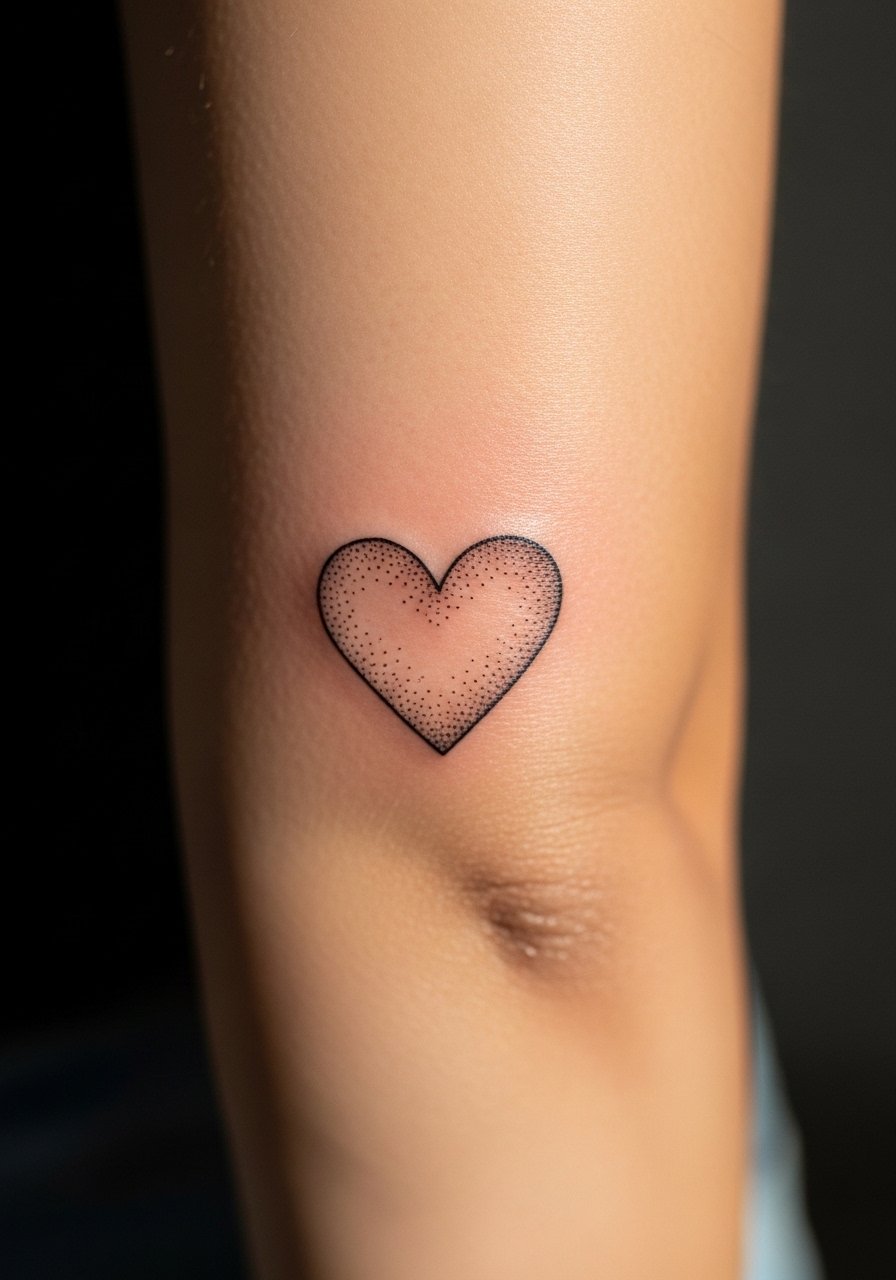
The spot behind the inner elbow shifts with movement and that impacts healing. Stipple shading avoids blocky fades and gives a soft texture that blends well over time. Tell your artist you want dot density that reads at arm-resting state rather than fully flexed. Pain is variable and can spike when close to the joint. A typical session is under an hour. A common mistake is asking for heavy solid fill here, which creases and looks uneven as skin moves.
13. Tiny Floral Wristband That Wraps the Inner Arm

Visual impact lead works here because a wrap-around band looks intentional from any angle. On the inner arm the wristband sits where skin meets clothing often, so pick spacing that avoids immediate rubbing. Ask for slightly bolder outer lines and open interior details so the band does not compact. Pain at the wrist is moderate. A common mistake is wanting the band super thin, which can cause early blurring. Plan for a touch-up if the band is in a high-friction area.
14. Dot Work Mandala Spot on the Inner Bicep

Aging and dot work have a special relationship. In some cases the dots can soften into a halo. One artist camp says tighter dots create impressive texture. The other says looser spacing preserves clarity. Be explicit with your artist about dot size and spacing. The inner bicep is a forgiving canvas and pain is medium. Mistake lead: people sometimes compress the mandala too much for the area. Looser spacing preserves the radial pattern longer and reduces blowout risk.
15. Tiny Anchor or Symbol Near the Inner Wrist

When you want a tiny symbol, think about scale rather than detail. The inner wrist moves and gets sun exposure, so pick a slightly stronger line weight than you might prefer for a fresh look that lasts. Pain is moderate and session time is brief. The usual mistake is asking for ornate details in a tiny icon. If you want ornamentation, increase the size a bit. Touch-ups at year two or three are common if you expect pin-sharp edges years later.
Tattoo Prep and Aftercare Essentials
After Inked Tattoo Moisturizer, 2 oz – lightweight, fast absorbing aftercare lotion. Use after the initial healing phase to maintain saturation and reduce flaking. I recommend applying a thin layer twice daily once the tattoo is no longer open.
Tattoo Goo Advanced Healing Ointment, 1 oz – gentle ointment for first few days. Helpful when you need a thicker barrier during the first 48 hours. Use sparingly to avoid clogging pores.
H2Ocean Tattoo Aftercare Spray, travel size. Good for rinsing sweat and debris during early healing without rubbing.
Ink-Eeze No Sting Cream, soothing lotion. Use for sensitive skin patches or light irritation after the scab phase.
Rejuvi Tattoo Cleanser Pads, fragrance-free cleansing wipes. Handy for gentle cleansing on the go when you cannot use water right away.
Saniderm Tattoo Bandage, single-sheet medical-grade occlusive dressing. If you prefer occlusive healing for the first few days this product is the mainstream option I see most people use. Use it once at the start if your artist recommends it.
Lightweight fragrance-free balm, travel tin, non-branded. A generic, non-comedogenic balm that keeps the area moisturized without heavy residue for long-term wear.
Medical-grade second skin bandage, generic roll, breathable. Useful for protecting a tattoo during workouts or sleep when you expect friction.
Every tattoo is different. Always follow your artist's specific aftercare instructions. Consult a dermatologist if you have skin concerns or unusual healing issues.
Frequently Asked Questions
Q: How long before a fine line script on the inner forearm needs a touch-up?
A: It depends on line weight and sun exposure. I have seen fine line scripts hold well for two to three years with good sunscreen and regular moisturizing. If the letters are hairline thin, plan mentally for a touch-up around year two to restore crisp edges.
Q: Will dot work mandalas on darker skin still show the radial pattern after healing?
A: Yes, when spacing and dot size are adjusted for tone. Some artists favor tighter dots for contrast. Others space dots slightly farther apart to preserve definition. Ask your artist how they adapt dot density for your skin tone and expect a possible light touch-up if you want the darkest contrast.
Q: Are inner bicep micro-realism tattoos more likely to blur than inner wrist pieces?
A: Micro-realism can blur anywhere if details are too small. The inner bicep is a softer canvas and can hide slight softening better than the wrist. Scale up micro details slightly for the bicep and discuss contrast so shading ages without losing the subject.
Q: Should I use an occlusive bandage like Saniderm on my inner elbow tattoo?
A: Saniderm can speed the initial phase of healing for some people, especially in high-movement spots. It is the mainstream option I see often. Follow your artist's guidance because skin type and location matter. Remove it according to instructions to avoid trapping moisture too long.
Q: How do geometric bands wrap around the inner forearm without twisting the pattern as the arm moves?
A: The key is proper spacing and slightly larger pattern repeats. Ask your artist to test placement while your arm is both flexed and relaxed. Avoid compressing motifs too tightly. Planning the wrap with movement in mind reduces future distortion.
Q: When should I avoid getting an inner arm tattoo because of career or healing concerns?
A: Inner arm tattoos are relatively easy to conceal under sleeves. If your job has strict visible ink policies, consider placement closer to the inner upper arm. For healing, if you foresee heavy friction from clothing or sports, delay the piece until you can give it a few weeks of gentler handling.