
Someone I know spent eight months scrolling images before they realized the real problem was matching a design to how their skin and life would treat it. I have spent time in five shops across Brooklyn, and I have watched artists edit hourglass ideas to make them last. Below are ten bold hourglass tattoos that carry weight and age the way you want, plus what to ask your artist at the consult.
1. Fine-line hourglass with trailing wildflowers on the inner forearm
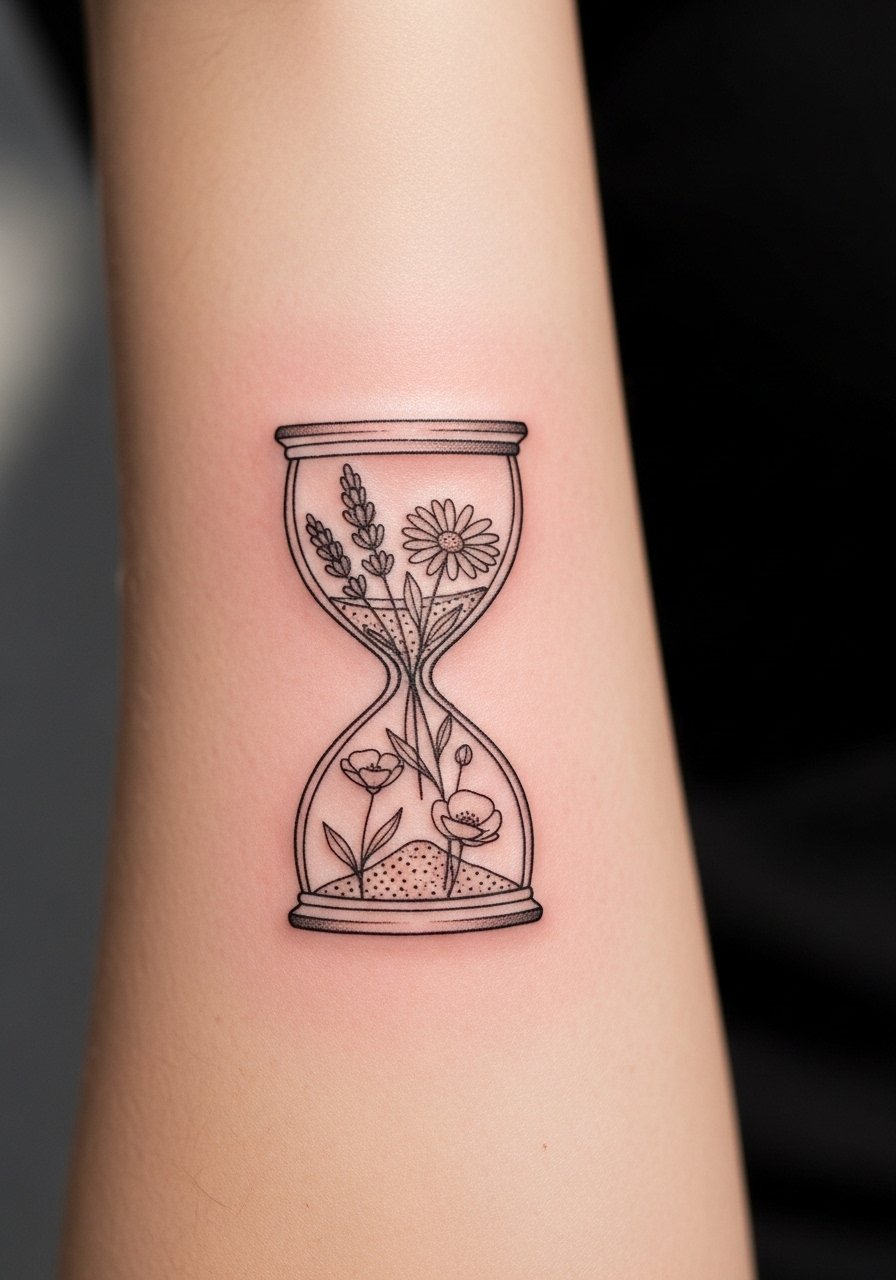
Someone I know first saw this style on a friend and booked the same placement. Fine-line works here because the forearm moves less than the hand. Expect a session of about one to two hours and light discomfort. Tell your artist you want consistent needle depth and slightly larger negative space around petals to avoid early blur. A common mistake is asking for pencil-thin stems that merge after a year. If you want this to age, ask for slightly bolder anchor lines and crisp negative space. Touch-ups are common around year two. This placement shows linework clearly, but it will soften. Ask the artist to show healed photos from six months and two years.
2. Blackwork hourglass wrapped in moon phases on the outer bicep
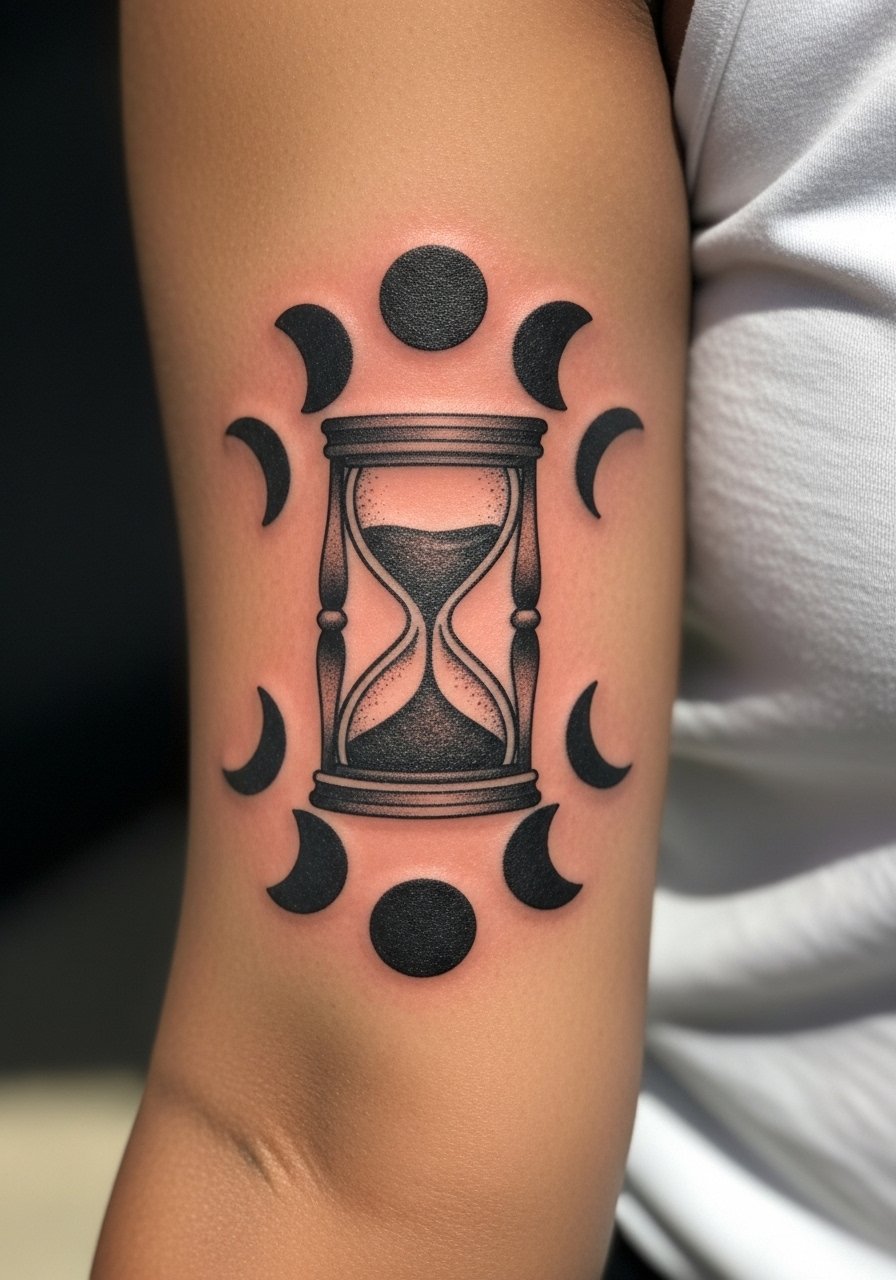
There is something about solid black saturation that reads well from a distance. Pain is mild to moderate on the bicep. Session time is usually two to three hours depending on saturation. If you want longevity, prioritize strong linework and heavy saturation in the bulbs so the negative space inside the sand remains visible as it fades. A mistake people make is shrinking the moon phases too small. That risks blowout or muddying. Tell your artist you want clean, uninterrupted black fills and crisp negative shapes. This style needs fewer touch-ups than fine line, but expect minor refreshes at year three to maintain the contrast.
3. Micro-realism hourglass with falling petals on the ribcage
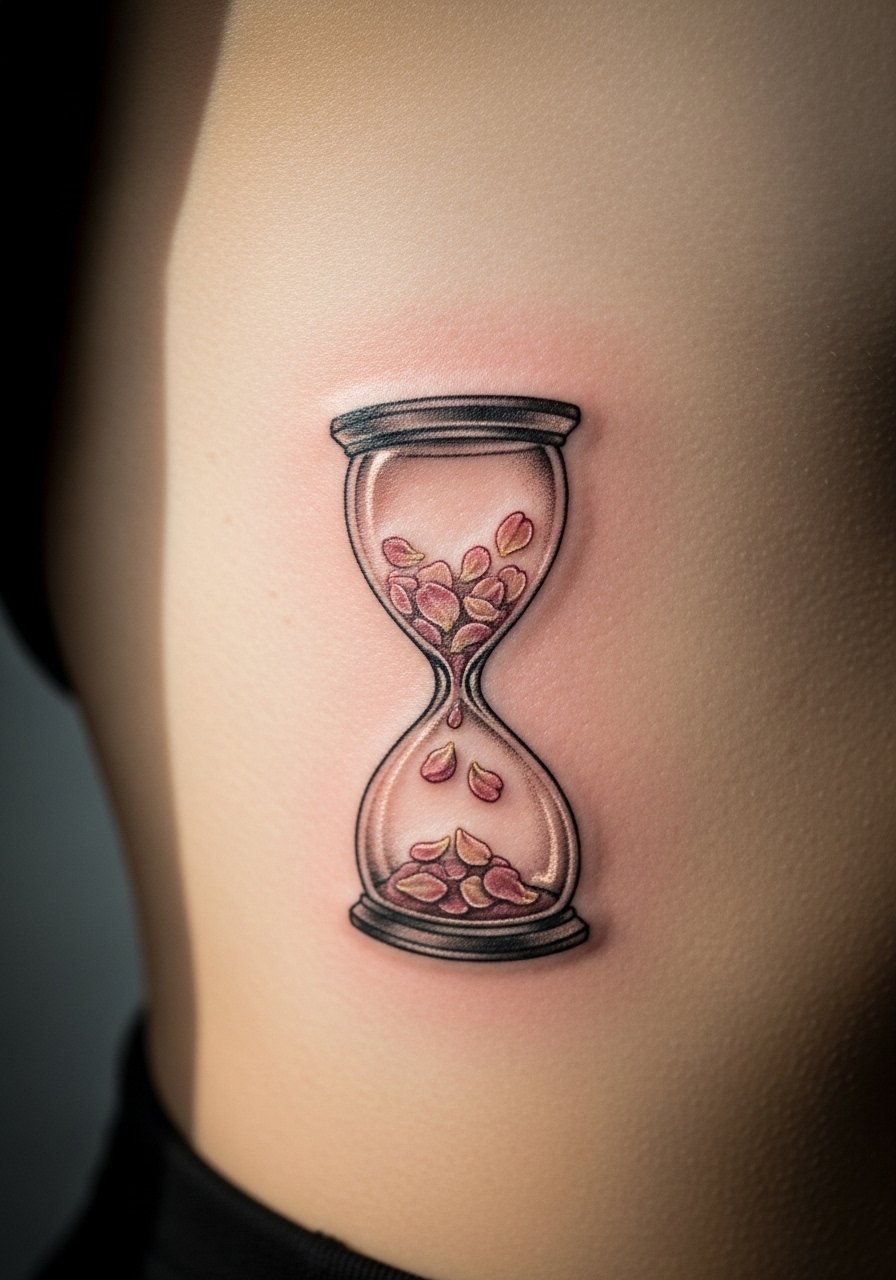
Fair warning, the ribcage is a 7 out of 10 on most pain scales. Many artists split on whether micro-realism on ribs holds detail long term. One camp argues the skin stretch and movement blur tiny details within two years. The other camp says with controlled depth and spacing, micro details can last. Ask your artist where they stand and to show healed ribs in similar tonal ranges. Sessions here are longer and may require breaks. Plan for a two to three hour session and expect touch-ups around year two if you want crisp tiny petals. Consider slightly enlarging the smallest petals to reduce blowout risk.
4. Traditional hourglass with roses and bold outlines on the thigh
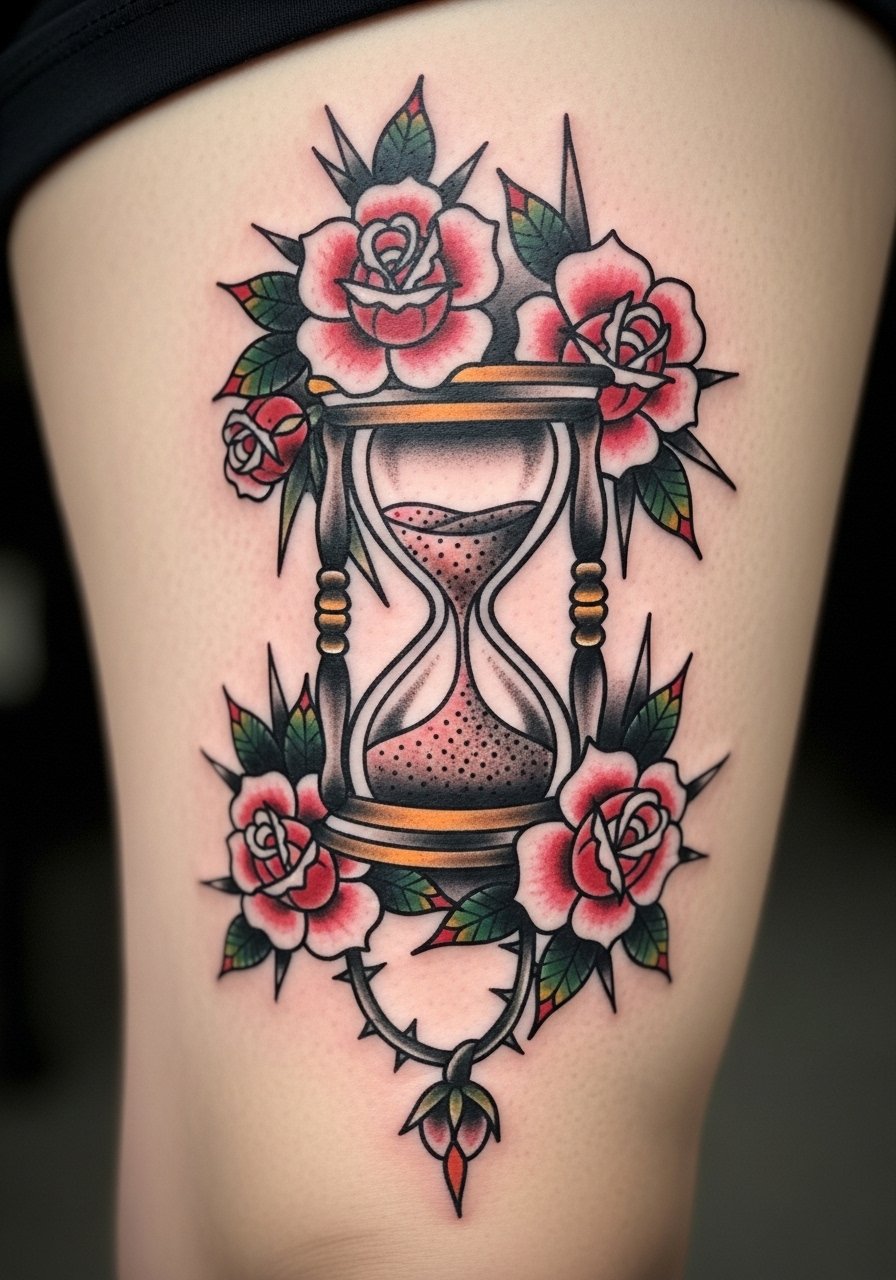
There is a clear visual impact with American traditional linework and saturated color on the thigh. Pain is moderate, but the flesh holds saturation well so color stays vibrant. This style often fits people who want a design that ages more predictably. Tell your artist you want bold outlines and heavy color packing inside the bulbs so the sand reads against the roses. A mistake is over-detailing the roses inside the hourglass, which can blur into the sand. Healed at six months the black will have softened slightly and at two years the saturation may need a refresh to keep the roses distinct.
5. Geometric hourglass nested in a mandala on the upper back
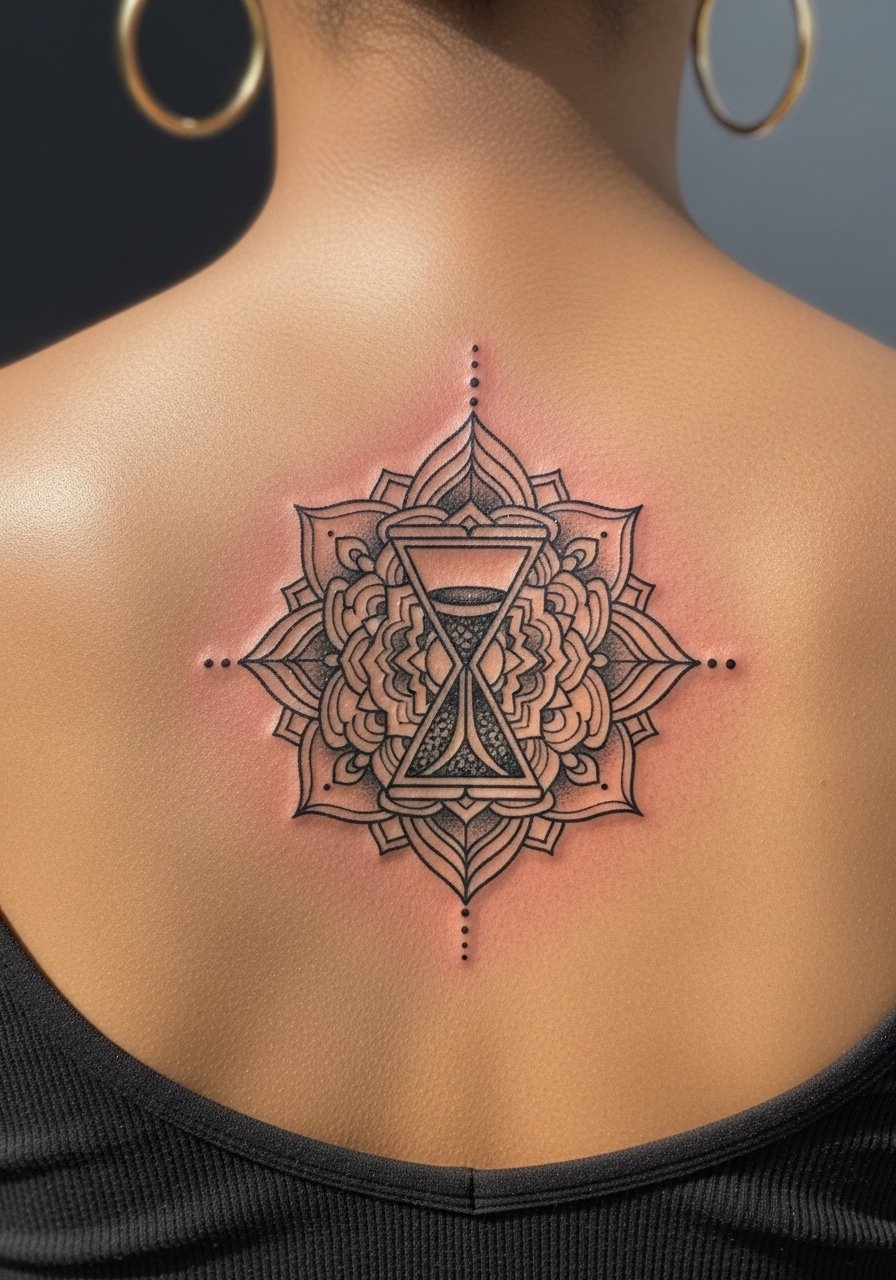
When you sit down with your artist for this one, bring references that show exact line weight and spacing. Mandala geometry needs room to breathe so the shapes do not turn into a blur. There is a conversation to have about cultural origin here. One side treats mandala patterns as modern geometry. The other side highlights spiritual and Buddhist origins and prefers adaptation rather than direct replicas. Mention your intent and ask for subtle variations if you want to avoid appropriating sacred patterns. Upper back has low blowout risk and the area tolerates dense dot work or stipple shading well. Expect a multi-hour session and a likely touch-up around year three.
6. Stipple-shaded hourglass with compass accents by the ankle
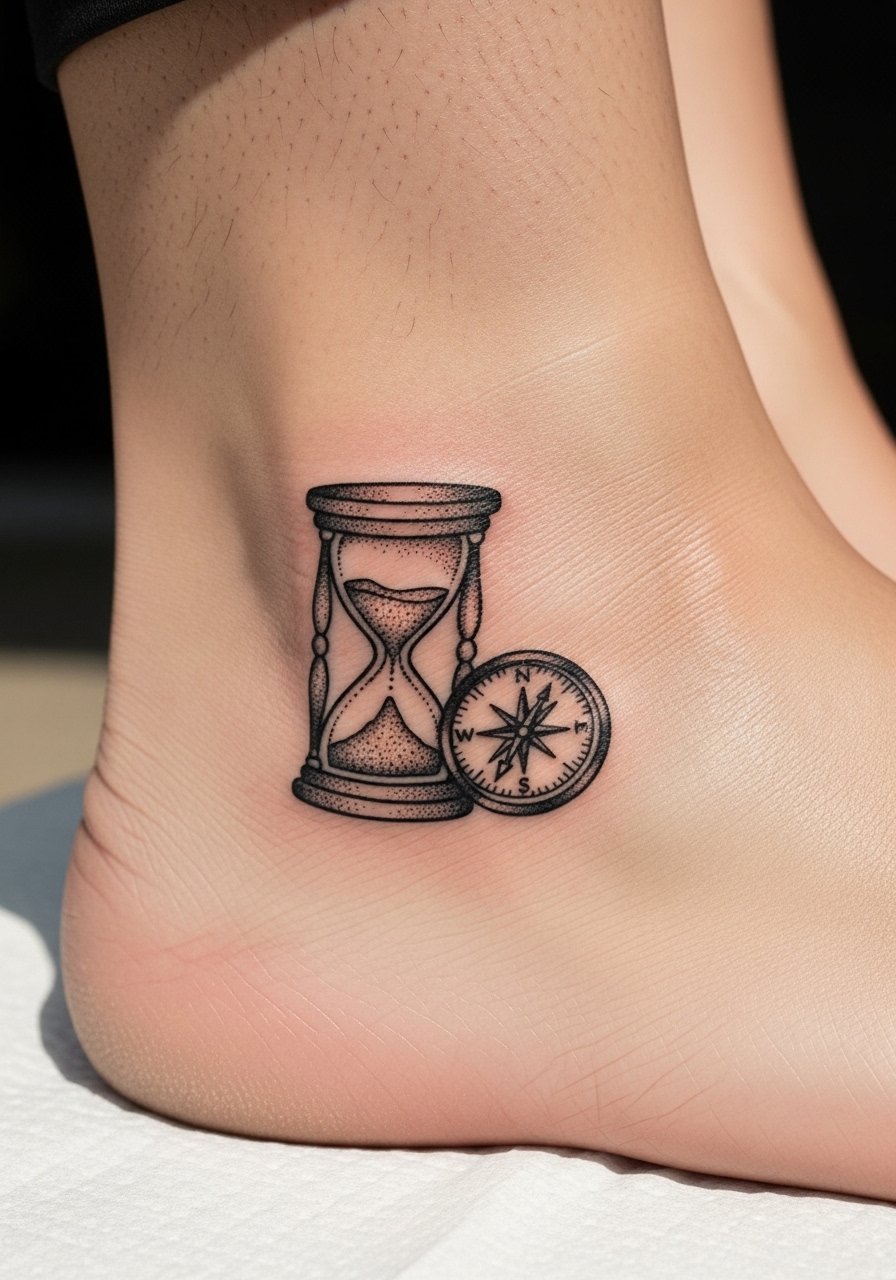
A lot of people underestimate ankle movement. The worst mistake is going too small with stippling. Dot work needs scale so each dot retains its space as skin settles. Tell your artist you want spacing between dots and avoid a heavy central fill that could absorb into surrounding tissue. Pain around the ankle can spike because of thin skin and proximity to bone. Session time is often one to two hours. Healed at six months the stipple should look soft. Anticipate a touch-up if the dots merge after active years of wear or friction from shoes.
7. Watercolor hourglass with a phoenix rising from the sand on the sternum
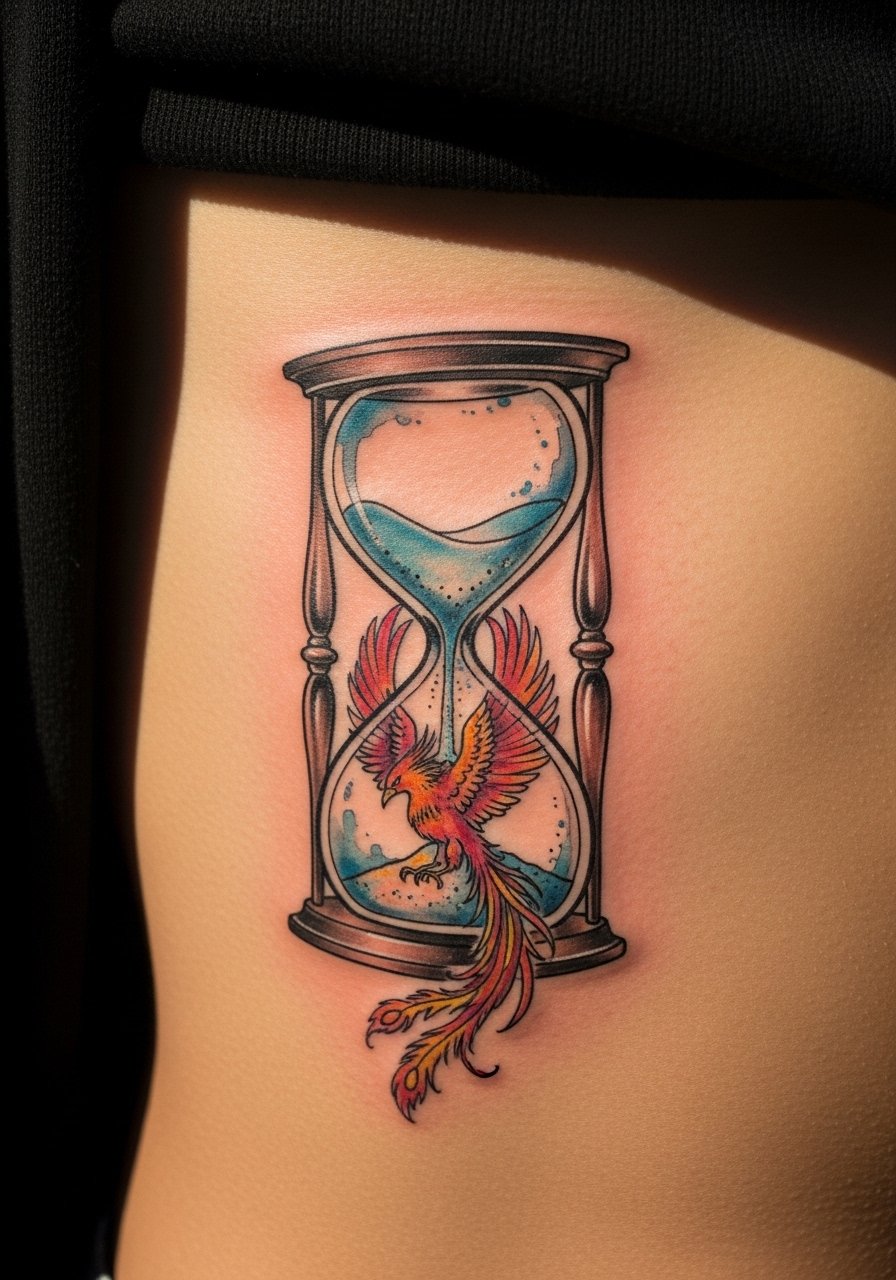
Sternum tattoos can be intense in pain and may require a specialized artist who works on chest pieces. Watercolor styles are debated in the community. One camp says watercolors fade into blotchy color patches over several years unless anchored by linework. The other camp says skillful layering and controlled saturation can keep the washes readable longer. If you want this look, ask for anchoring outlines and a saturation plan. Sessions will be longer and healing requires careful clothing choices to avoid rubbing. Expect touch-ups for color refreshes every few years if you want the phoenix to keep lively color.
8. Minimalist hourglass with Roman numerals on the inner wrist
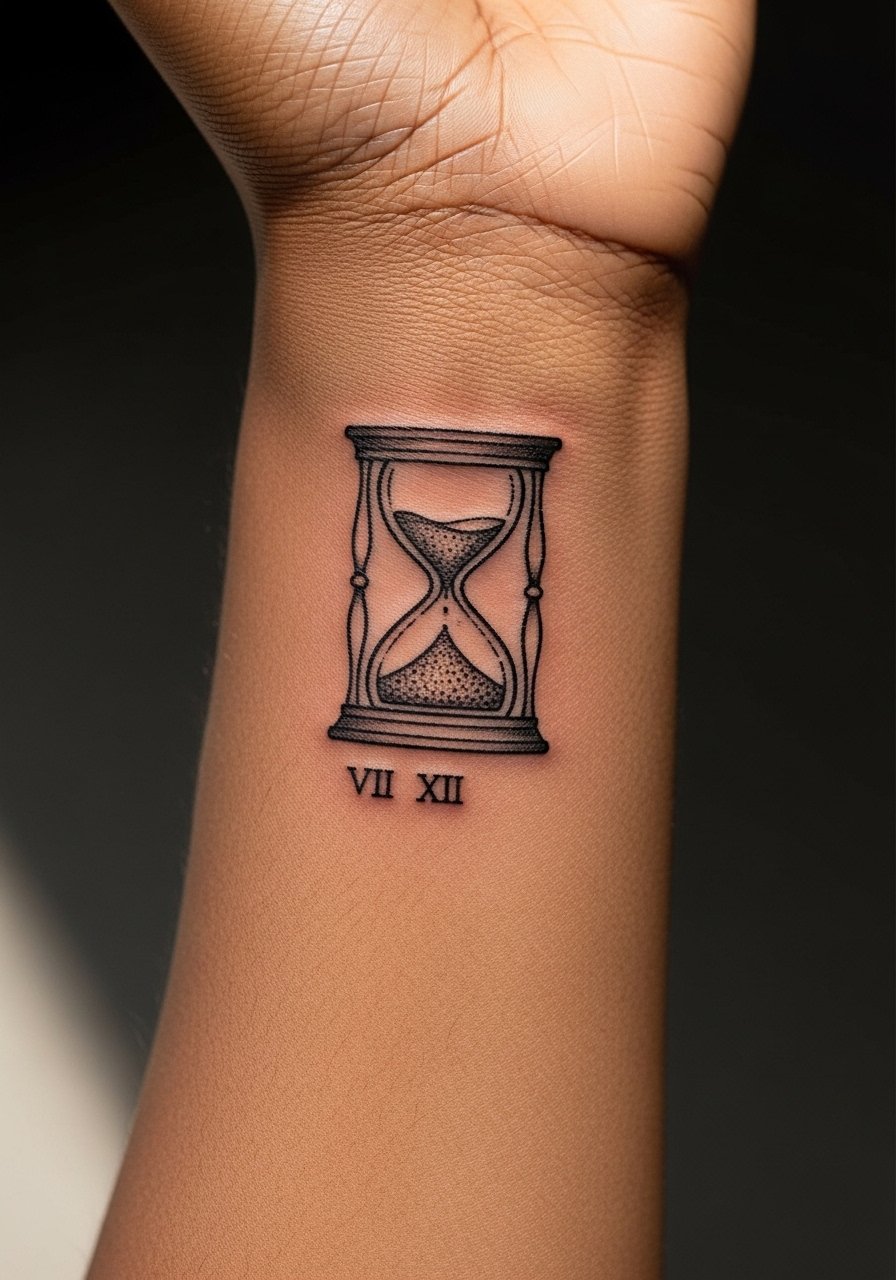
The inner wrist is a high-visibility placement and it moves constantly. Most minimal wrist pieces need touch-ups sooner than thicker work. If you choose Roman numerals, specify exact type and size. The number '1994' or 'XIX.IV.MCMXCIV' must be given verbatim to avoid gibberish in an image prompt or stencil. Expect light to moderate pain. Session time is short, often under an hour. A common mistake is asking for ultra-thin numerals. Ask your artist to slightly bulk up the numerals so they read after one to two years. Hand and wrist tattoos still affect hiring in some industries, so think about career impact before committing.
9. Neo-traditional hourglass with exposed gears and clockwork on the calf
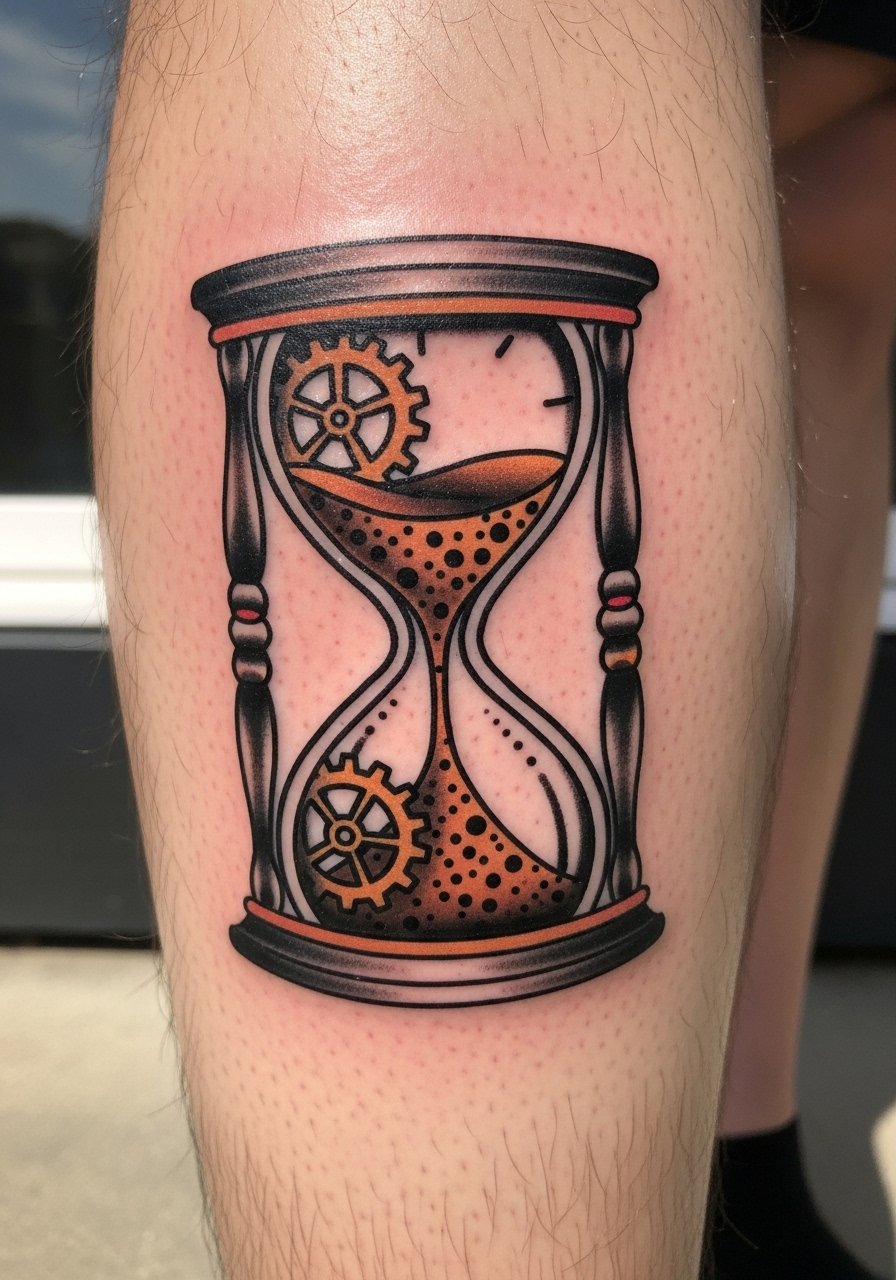
There is real payoff when you combine mechanical detail with bold neo-traditional outlines on the calf. Calf skin holds saturation and detail well and the area is forgiving for larger compositions. Sessions range from two to four hours depending on gear complexity. Tell your artist if you want metallic tones versus flat black fills because saturation choices change longevity. A mistake is cramming too many tiny gears into a small vertical hourglass. Give the gears room. Healed at two years the bold outlines will still read, and touch-ups are mainly for color refresh. Calf placement also allows you to expand into a larger leg piece later.
10. Full forearm story sleeve that uses an hourglass as the focal anchor
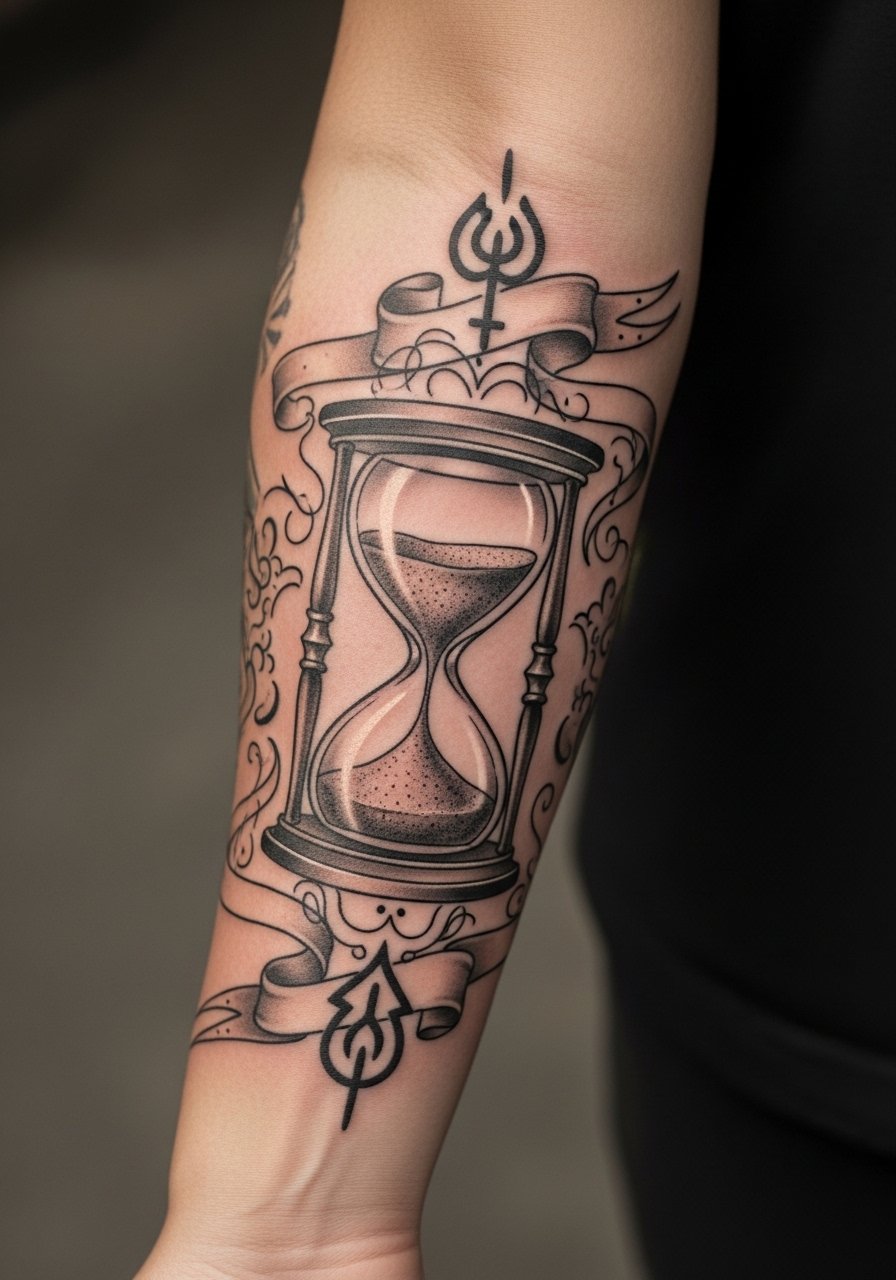
When you plan a sleeve, the hourglass can be the narrative pivot that ties other symbols together. Start the consult by showing the life moments you want included and tell the artist which symbol should catch the eye at arm distance. Expect multiple sessions adding up to a full-day booking or several shorter appointments. A common mistake is leaving the hourglass too small relative to surrounding elements. That causes the focal point to get lost when the piece ages. Discuss a layered plan so the hourglass has heavier linework and saturation, and smaller secondary items use stipple or whip shading. Touch-ups will be staged after full healing.
Tattoo Prep and Aftercare Essentials
When a design carries personal meaning you want it to last, aftercare matters. Below are practical items I recommend packing for the appointment and keeping through the first few months of healing. I include lesser-known options artists have mentioned in shops I visit and one common protective bandage people often choose. Use the links to compare options. Replace YOURTAG with the supplied tag in each link.
H2Ocean Tattoo Aftercare Plus Spray for healing and gentle cleansing. Use for light saline rinse during the first week if your artist approves. It reduces crusting without stripping color.
After Inked Tattoo Moisturizer and Aftercare Lotion. A lightweight balm that many people find absorbs quickly and reduces shine while keeping saturation.
Tattoo Goo Original Aftercare Salve. Good for heavier scabbing phases when a thicker occlusive helps prevent cracking.
Wicked Fast Tattoo Salve for accelerated scab softening. Apply sparingly on tougher scabs after consult with your artist.
Bepanthen Nappy Care Ointment for sensitive skin healing support. Many people use this for gentle occlusion and to avoid fragrances that irritate.
Saniderm Transparent Tattoo Bandage for covering fresh work. One widely used transparent option that protects against friction and bacteria while allowing some breathability. Ask your artist if they recommend a second-skin for your placement.
Fragrance-free moisturizing lotion for long-term hydration. Use after the initial healing to keep skin hydrated and help color sit evenly as you age.
Every tattoo is different. Always follow your artist's specific aftercare instructions. Consult a dermatologist if you have skin concerns or unusual healing issues.
Frequently Asked Questions
Q: Will the fine-line hourglass on my forearm need touch-ups sooner than a blackwork piece?
A: Yes, fine-line tends to soften faster than solid blackwork. It depends on your skin type, sun exposure, and how much friction the spot gets. Expect a possible touch-up at around two years for crispness, and plan to protect the area from UV to stretch that timeline.
Q: If I want micro-realism on my ribs, how do I evaluate an artist's skill without naming them?
A: Look for healed rib photos in shop portfolios and on verified directories. Ask the artist to show close-up healed images at six months and two years for similar skin tones. Bring those examples to your consult and discuss expected session time and touch-up policy.
Q: Do watercolor hourglass pieces need different aftercare than traditional saturated pieces?
A: Watercolor styles often rely on subtle washes and lighter saturation. That means you should avoid heavy exfoliation and use fragrance-free moisturizer during healing. If you plan to use Saniderm for the first few days, confirm with the artist since some watercolor work benefits from shorter occlusive periods.
Q: How risky is blowout for geometric mandala hourglasses on the upper back versus the forearm?
A: Upper back has lower blowout risk because skin is thicker and moves less than the forearm. For geometric work, ask the artist to space lines wider and avoid ultra-thin single-needle lines if you want a five-year backstop on clarity. The artist's technique and needle depth matter more than placement alone.
Q: For a sleeve with an hourglass anchor, what is a realistic touch-up schedule?
A: Realistically expect minor touch-ups after the piece fully heals and then a color or line refresh at two to five years depending on exposure and wear. Plan touch-ups in stages so your artist can refine saturation without reworking the whole sleeve at once.
Q: Will stipple shading on the ankle blur faster than stipple on the calf?
A: Often, yes. The ankle deals with more friction from shoes and thinner skin, which can cause dots to merge sooner. If you love stipple there, ask for slightly larger dots and more spacing. That reduces the chance of early merging and keeps the pattern readable longer.