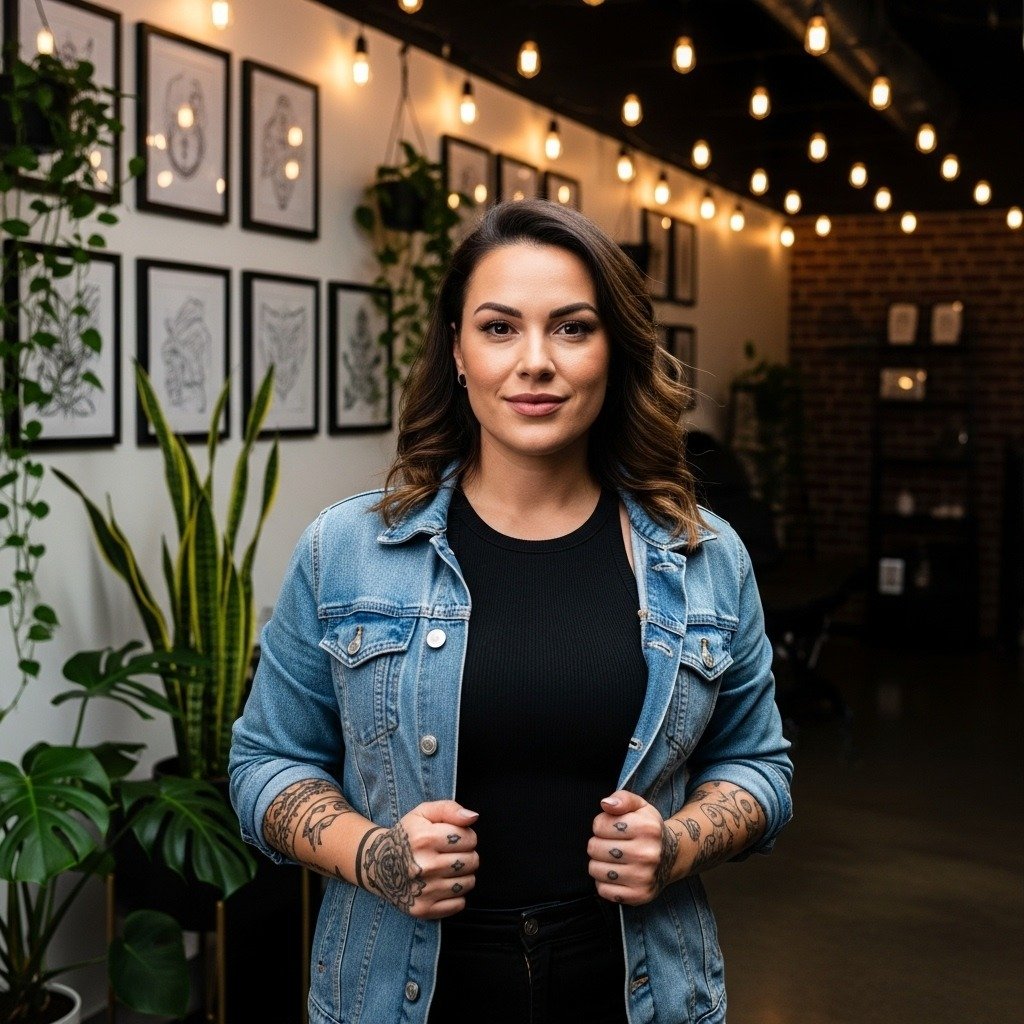
Hand tattoos for women look simple in photos but they ask a lot from the skin. The right spacing, slightly heavier line weight, and a wardrobe plan for healing day make the difference between a crisp palm-up script at month six and a blurry smudge at year three. Read the ideas below with an eye for placement, how the design ages, and straightforward session wear so you walk into the chair knowing what you want and why.
1. Fine Line Floral on the Back of the Hand

A single-needle floral reads elegant when the lines have room to breathe. For the hand back choose a spray of leaves about 2 to 4 centimeters wide so the leaves do not merge over time. Common mistake is asking for ultra-thin petals jammed into a 1 cm band, which looks fragile at week six and often softens into a single dark shape by year two. What to bring to the consult are two reference photos at different scales so the artist can show how the same bloom looks at three inches versus one inch. Expect moderate pain during the session and a higher touch-up chance in the first two years because hands receive so much sun and friction. For the session wear a loose short-sleeved top and avoid bracelets on the tattooed wrist.
Note on professional considerations: hand placements remain highly visible so plan placement with work dress codes in mind.
2. Geometric Dotwork Mandala at the Wrist

A compact mandala reads disciplined when spaced with dotwork instead of thin continuous lines. Dot clusters give texture and age more gracefully than a single continuous micro-line that can blur. Discuss stipple density with the artist and ask them to show healed examples of dotwork on similar skin tones so you understand contrast. A typical aging problem is packing too many concentric rings into a tiny diameter, which makes the center collapse visually after a year. At the appointment wear a short-sleeved top or a rolled sleeve to avoid pressure on the fresh ink. For showing off later, stack thin chain bracelets on the opposite wrist to frame the piece, for example thin chain bracelet set.
Include cultural respect if your mandala borrows sacred geometry and avoid direct sacred symbols without understanding their meaning.
3. Single-Word Script on the Side of a Finger

Finger-side script is intimate and low profile when placed on the lateral edge where rings do not press. The most common error is choosing a delicate calligraphy sample intended for paper at the same tiny scale. Specify slightly heavier line weight up front and bring two scale references so the artist can redraw the letterforms at a size that heals with clarity. The finger surface heals fast but receives heavy friction from washing and rings, so touch-ups are more likely within the first year. Pain is sharp during the pass but short in duration. Wear a sleeveless or short-sleeved top so the artist has complete finger access. After the piece settles, pair subtle midi rings on other fingers to let the script read unobstructed, for example delicate midi ring set.
Note on professional considerations: finger work is visible in most hand gestures so think about workplace norms before committing.
4. Blackwork Wrist Cuff That Reads Like Jewelry

A solid black cuff behaves like a permanent bracelet and tends to age predictably when the fill is dense. The upside is that dense black holds contrast longer than wispy linework on the hand. The mistake is carving micro-patterns into a 1 cm band where fine details blur. Ask the artist to show healed cuff work and to scale the negative-space motifs so they keep definition after two years. Session time is often short compared with a color piece, but expect skin sensitivity because the wrist has thinner tissue and lots of movement. For the session, wear a short-sleeved top and remove watches or bracelets. Style it with a neutral fitted top so the cuff reads as jewelry, for example neutral fitted t-shirt.
Note on professional considerations: a wrist cuff is highly visible in photos and video calls so imagine how it appears in professional settings.
5. Tiny Micro-Realism Motif on the Hand Back

Micro-realism on the hand showcases artist skill but needs breathing room to avoid turning into an indistinct dark patch. A good scenario for micro-realism is a single small object that you want to be recognizable at arm's length, like a tiny moth or a coin. Tell the artist the smallest dimension you expect the piece to remain legible at and request a plan for stipple shading rather than extremely fine hatch lines. Realistic pieces often need a touch-up after the initial year, especially if they sit on the knuckles or near joints. For the appointment wear a loose short-sleeved shirt and keep the hand bare of rings. When framing photos later, neutral nail polish and short nails keep the focus on detail, for example nude nail polish.
Note on professional considerations: small realism pieces still read as visible ink so consider when and where you want that visibility.
6. Patchwork Mix Across Fingers and Wrist
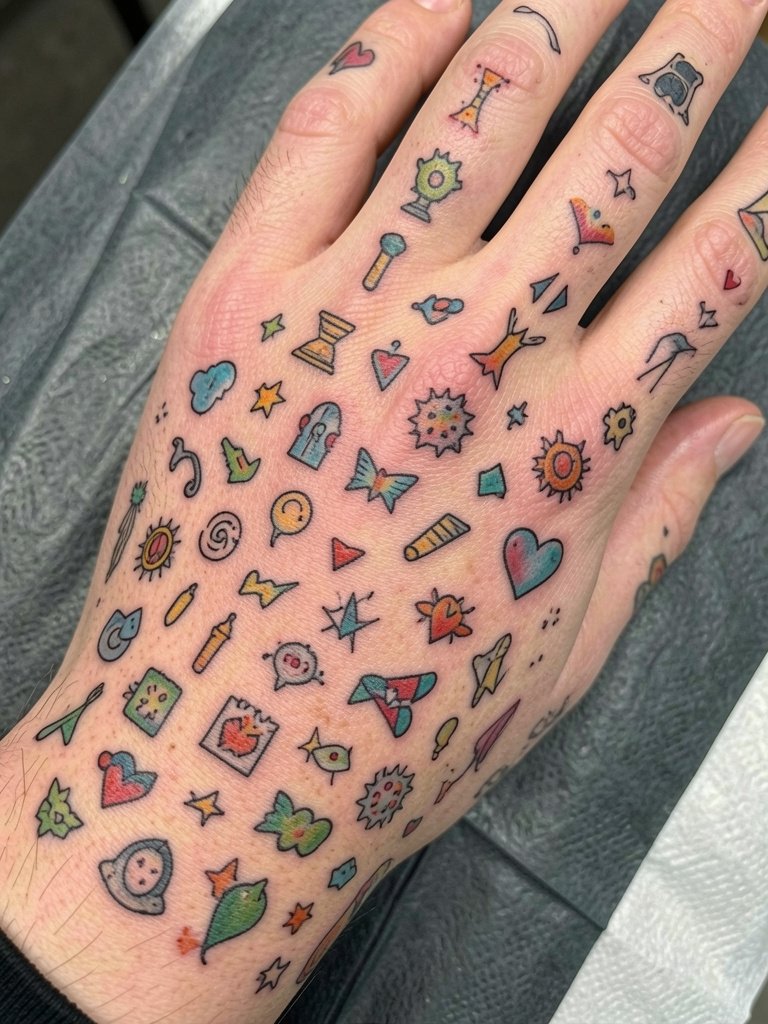
Patchwork lets you collect flash-like pieces over time and build a personalized collage. One scenario where patchwork works is when you want flexible additions later rather than committing to a single theme. Common mistake is asking for perfectly matching line weights from the start so the pieces end up too uniform and age into the same blur. Ask the artist to map negative space between elements so future additions can be placed without crowding. Expect multiple short sessions rather than one marathon. For the session wear a sleeveless or short-sleeved top and bring a photo of your current jewelry to plan visual balance. For casual shows, rolled linen sleeves create a frame for mixed motifs, for example linen three-quarter sleeve top.
Note on professional considerations: many workplaces still view extensive hand ink as bold, so plan placements with that in mind.
Pre-Session Essentials
The first six designs all stress wrist and finger sensitivity and the likelihood of early touch-ups. A few practical items smooth the appointment and the first week of healing.
- Tattoo healing salve search. A balm with light scent control helps keep thin linework from drying out in the first 48 hours while letting the skin breathe.
- Organic tattoo aftercare balm search. An alternative salve option for people who prefer plant-based formulations during the sealing window.
- Thin protective film roll search. Helps protect finger and wrist tattoos from soaps and friction while you sleep or during heavy hand use.
- Fragrance free body wash search. A gentle, unscented cleanser avoids irritation during daily showers without stripping pigment.
- Aquaphor search. A thin layer for the initial 24 to 48 hours helps retain moisture for fine line work without clogging skin if used sparingly.
7. Minimalist Crescent Moon on the Inner Wrist

A tiny crescent on the inner wrist reads as a subtle accent but it needs enough stroke width to survive heavy use. The biggest mistake is asking for a hairline curve that disappears after repeated washing and sunlight. Ask the artist to thicken the outer curve by a hair so the moon keeps definition at the six month mark. Expect a short appointment and a likely touch-up in year one. For the session wear short sleeves and avoid watches. To show it off, choose layered necklaces and keep your opposite wrist bare, for example delicate layered necklace.
Note on professional considerations: inner wrist work is easy to see in video calls so consider placement if you require conservative presentation.
8. Hidden Palm Motif Under the Fingers

Hidden palm tattoos can be a privacy play because they show only when you open your hand. They come with healing challenges because palms experience thick callus formation and constant moisture. Artists are split on whether palm work is a durable choice. One camp says palm skin renews quickly and most fine detail fades within a year so heavy blackwork is safer. The other camp argues that with custom placement and bold graphic shapes small palm designs can last when planned for touch-ups. Expect multiple touch-ups and ask the artist for a realistic maintenance plan before committing. For the appointment wear sleeveless or short sleeves and plan for a slightly longer healing window.
Note on professional considerations: a palm tattoo is easy to conceal in many professional contexts but shows in close encounters.
9. Tiny Chain Bracelet Script Around the Wrist

A bracelet-style tattoo mimics jewelry and is forgiving when composed of slightly bolder links rather than hairline chains. The common error is requesting ultra-fine chainwork that blurs into a single dark band. Ask for link spacing so each link keeps definition over time and to preview how the band looks closed versus a small gap. Session time is often short but be prepared to remove watches and bracelets. For showing off, pair with minimal cuffs on the opposite wrist and choose rolled sleeves, for example thin gold stacked bracelets.
Note on professional considerations: a bracelet tattoo is visible but stylized, which sometimes reads as accessory rather than statement ink.
10. Knuckle Lettering in a Small Serif

Knuckle lettering is high visibility so letterform choices matter more than the word. Choose letters with interior counters and allow space around each character so they do not merge into each other. A typical mistake is packing ornate serif details into tiny letters which creates blobbed interiors after healing. Ask for mockups scaled to each knuckle and request slight bolding of serif terminals. Expect a single short session per hand and a realistic touch-up four to eight months later. Wear short sleeves and keep nails neutral for photography.
Note on professional considerations: knuckle work is extremely visible and can affect first impressions in conservative fields.
11. Tiny Color Accent Bloom on a Finger

Using one color accent on a small motif adds visual interest without committing to a full-color piece that could age unevenly on the hand. The aging pitfall is choosing colors that lack saturation at small scales; pale tones often wash out. Ask for a saturated pigment for the accent and a plan for touch-up to refresh the color if it softens. The finger top takes repeated friction so plan a one-year check. For the appointment wear short sleeves and keep the finger free of rings for at least a month. Styling tip is to pair with neutral or short nail polish to let the color pop, for example minimalist ring set.
Note on professional considerations: small color accents are visible but often read as subtle jewelry in casual photos.
12. Ornamental Linework That Traces the Thumb Webbing
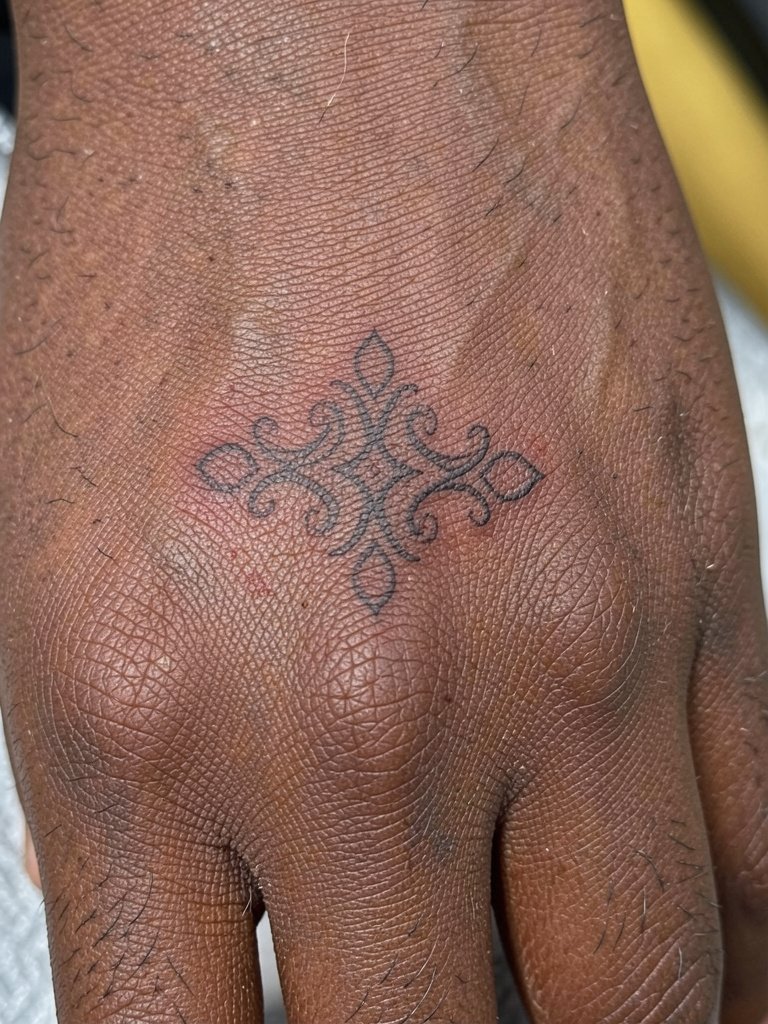
Webbing work is discreet when placed in the thumb-index space and has the advantage of surprise reveal. It is a sensitive area and the skin can be thinner and move a lot making touch-ups common. Artists differ on whether single-needle work holds well in webbing. One position prefers bold simple forms because detail rarely survives. The other position takes careful fine-line placement and schedules a touch-up at three to six months. Expect a short but sensitive session and plan numbing if you prefer. For session wear sleeveless or short sleeves and plan to avoid tight gloves while healing.
Note on professional considerations: webbing is easy to conceal in most professional contexts.
13. Delicate Color Accent Behind the Knuckle

A tiny color note behind a knuckle gives the eye a focal point without demanding a large canvas. The pitfall is expecting pastel washes to remain vivid in a high-friction zone. Favor a single saturated hue and ask the artist about pigment longevity at the knuckle. There is a higher probability of early fading so plan a touch-up at eight to twelve months. The session is quick but sensitive. For photos pair the piece with short neutral nails and a solid color top so the hand reads clean.
Note on professional considerations: this placement appears in close-up hand photos so consider visibility.
14. Small Geometric Stack Along the Finger Top
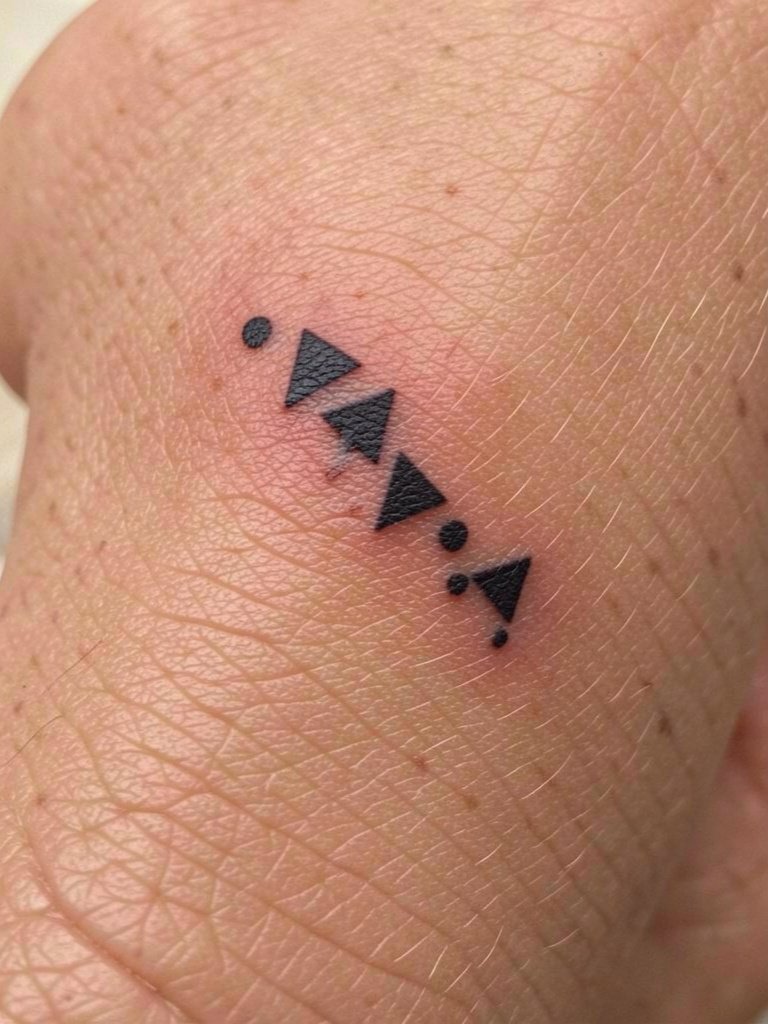
Stacked geometric marks work well when you want modular options that you can add to over time. The common misstep is starting with shapes that are too small and close, which causes the edges to fuse as the skin moves. Tell the artist you plan future additions so they can leave consistent negative space. Expect a short appointment but a higher early touch-up chance. For session wear short sleeves and keep hands free of jewelry for the healing window. To wear post-healing, short nails and minimal rings on the opposite hand complement the linear aesthetic, for example neutral crew neck shirt.
Note on professional considerations: small geometric pieces can be easy to explain in conservative workplaces.
15. Neo-Traditional Small Motif on the Hand Back

Neo-traditional hand motifs use stronger outlines and controlled color which age better on moving skin than soft watercolor washes. The mistake is asking for tiny watercolor fields in a high-motion area because those edges tend to feather. Request strong outlines and compact color patches, and ask the artist to plan saturation with a follow-up session if needed. Session time is moderate if color is involved. For the appointment avoid jewelry and choose a short-sleeved top. The piece pairs well with bracelets on the opposite wrist, for example thin gold stacked bracelets.
Note on professional considerations: saturated small color can read as decorative rather than stark, but it is still visible.
16. Cover-Up Strategy for an Old Hand Tattoo

Cover-ups on the hand require honest conversation about scale because the new artwork often needs to be larger and darker than the original. A frequent error is trying to hide dark old work with another fine-line piece that cannot mask the underlying pigment. Talk specifics with the artist about how much darker and larger the new design will be and whether laser fading is advisable first. Expect multiple sessions and a realistic timeline for color layering. For the appointment wear short sleeves and bring photos of the old tattoo as well as the desired design.
Note on professional considerations: a cover-up is a reclamation move but it usually increases visibility, so plan accordingly.
17. Watercolor Wash Accent Near the Wrist

Watercolor effects can be striking but they often need touch-ups earlier on hand placements because soft edges blur with sun exposure and washing. If you want color washes, opt for a slightly more saturated core and ask the artist how they plan to preserve contrast in small areas. The mistake is mapping a painterly wash into a 2 cm area expecting long-term subtlety. Session time is longer when multiple pigments are used. For the appointment wear short sleeves and avoid jewelry. To show it off, neutral outfits let the color read clearly, for example rolled sleeve long sleeve shirt.
Note on professional considerations: color on the hand is very visible and may attract attention in conservative settings.
18. Micro-Realism Portrait Accent on the Side of the Hand

Micro-portraiture on the hand demands an artist with proven healed examples in that exact placement because skin texture and movement distort detail. The common issue is believing a studio flash portfolio of fresh ink mirrors healed reality. Ask to see three-year healed photos of similar-scale portraits and get a realistic touch-up plan. Expect a longer session and a higher price point due to concentration of detail. For the session wear short sleeves and keep the hand free of rings for healing. For photos, choose solid-color fitted tops to avoid visual noise, for example fitted long sleeve shirt.
Note on professional considerations: portraiture on hands can be intensely personal and will be visible in close settings.
19. Tiny Symbol in the Thumb Base

The thumb base is a compact area with motion that invites early fading, so a slightly bolder line weight is safer. A typical mistake is requesting micro calligraphy there. Ask the artist to redraw the symbol at a scale that maintains the negative space after six months. Expect a short but sensitive session and a likely touch-up within the first year. For the session wear sleeveless or short sleeves and plan to keep the thumb free from pressure for several days.
Note on professional considerations: this placement is often hidden in gestures but shows when offering a handshake.
20. Minimalist Constellation Spread Across Finger Tops

Tiny constellation layouts look deliberate when each dot has weight and the connecting lines are slightly bolder than a hairline. The error is thin connecting strokes that disappear with joint movement. Ask the artist to define dot sizes and to test line weight on a practice area so you see how it will read after healing. Sessions are short per finger but expect a collective touch-up for alignment. For the appointment wear short sleeves and keep the fingers ring-free while healing. For styling, photos with natural open-hand gestures show the pattern best, for example short neutral nail polish.
Note on professional considerations: discrete finger tops can be less conspicuous than knuckles but still visible.
21. Script Wrapped Along the Wrist Crease

Script that follows the wrist crease reads well when the flow follows natural skin folds rather than cutting across them. The common mistake is bending text across a highly mobile crease without compensating for skin shift which can break letterforms. Bring a mockup that shows the phrase at rest and when the wrist is flexed so the artist can adapt kerning and letter scale. Expect short session time and plan a touch-up if letters soften. For the session wear a short-sleeved top and remove wrist accessories. For wear, pair with thin chain bracelets on the opposite wrist to balance the visual field, for example thin chain bracelet set.
Note on professional considerations: wrist script is often visible when you type or gesture.
22. Subtle Symbol in the Webbing Between Fingers

Webbing symbols are private and revealable, but they are in a high-motion zone so choose simple bold shapes rather than intricate detail. A common oversight is requesting filigree in that space which quickly loses clarity. Ask the artist for a shape proof at scale and request a follow-up touch-up plan. Expect a sharper pain level and a short session. For the appointment wear sleeveless top and avoid tight gloves during healing. For photos, deliberate finger separation shows the piece, and simple solid-color tops keep the focus on the hand, for example sleeveless top.
Note on professional considerations: webbing work is usually private and rarely a professional concern.
23. Small Black Geometric Cuff at the Base of the Hand

A narrow geometric cuff at the hand base makes a tidy visual anchor and often lasts well if the pattern gives negative space room to age. The mistake is packing micro-motifs into a 1 cm band. Ask the artist for mockups showing negative-space breathing room and confirm whether solid fills or pattern gaps will hold longer. Session time is moderate and a touch-up after 12 months is common. For the session wear short sleeves and avoid bracelets. For looking polished in photos choose fitted neutral tops that let the cuff act like jewelry, for example solid color crew neck shirt.
Note on professional considerations: this placement often reads as accessory in casual photos but remains visible.
Frequently Asked Questions
Frequently Asked Questions
Q: How much should I budget for a hand tattoo and likely touch-ups over time?
A: Budget ranges vary by style but expect an initial session cost range that depends on linework, color, and detail. Factor in a realistic touch-up at around year one and occasional refreshes after that, especially for fingers and palms. Think of the cost as ongoing maintenance rather than a one-time expense.
Q: Do fine-line hand tattoos really fade faster than bolder work?
A: Artists and collectors split into two camps on this. One camp says fine-line work on hands often fades or blurs within 12 to 18 months because thin strokes have less pigment mass in moving skin. The other camp argues fine-line holds when the artist uses slightly heavier single-needle depth and leaves breathing room between lines, and they point to healed portfolios to support that view. Practical takeaway is to ask for examples of healed fine-line work in the same placement to see real outcomes.
Q: Where can I find artists and healed portfolios without naming specific artists?
A: Search hashtags like #handtattoo, #finelinetattoo, and #wristtattoo on Instagram and TikTok with location filters to find nearby portfolios. Use keyword searches on curated sites to locate healed photos rather than only fresh shots. Reddit communities such as r/tattoos and r/tattooadvice also share peer recommendations and healed examples across skin tones, which helps you compare long-term results.
Q: What should I wear to my appointment for wrist and finger work?
A: Opt for short sleeves or a sleeveless top so the artist has full access and nothing presses on fresh ink. Remove watches and bracelets and skip rings on the tattooed hand. Bring a loose top you can roll up without tugging at the area.
Q: How do hand tattoos look on different skin tones and what should I ask the artist?
A: Visibility depends on contrast and pigment choice, so ask to see healed examples on skin tones similar to yours. Request slightly bolder line weight or denser dotwork in some styles so the design maintains clarity in photos and daily life. If a design borrows from a cultural origin, ask the artist how they plan to treat those elements respectfully.
Q: Are there safety or hygiene red flags I should watch for in studios?
A: Look for clear sterilization practices, fresh disposable needles per client, and an artist willing to show healed work rather than only fresh photos. If a shop rushes design decisions or pressures you to choose a small, ultra-detailed piece for a difficult placement, consider that a warning sign.
Q: Can I wear jewelry with my healed hand tattoo and what pieces work best?
A: Many hand tattoos pair well with minimal jewelry to avoid visual competition. Thin chain bracelets, delicate midi rings on non-tattooed fingers, and neutral nail polish help the tattoo read cleanly in photos. For example, a thin chain bracelet set or a delicate midi ring set complementarize fine line work without obscuring it.