
I spent months bookmarking geometric tattoo feeds before I realized the real problem: picking a design that actually ages well on my skin. These 25 geometric tattoo ideas stick to clean lines, sacred geometry, and smart placements so your ink looks intentional long after the Instagram hype fades.
Quick context: This list focuses on geometric tattoo ideas — from fine-line mandalas to blackwork sleeves. These designs work great on arms, chest, legs, and neck. Sacred geometry and optical illusions are trending in 2026. Around 30% of U.S. adults report having at least one tattoo (Statista, 2021). Dermatologists also stress daily sunscreen to protect ink (American Academy of Dermatology).
Geometric Mandala On Outer Arm
Style/Technique: Sacred Geometry / Blackwork
Pain Level: Low-Medium (3-4/10)
Session Time: 1-3 sessions
Best For: Balanced, visible arm pieces
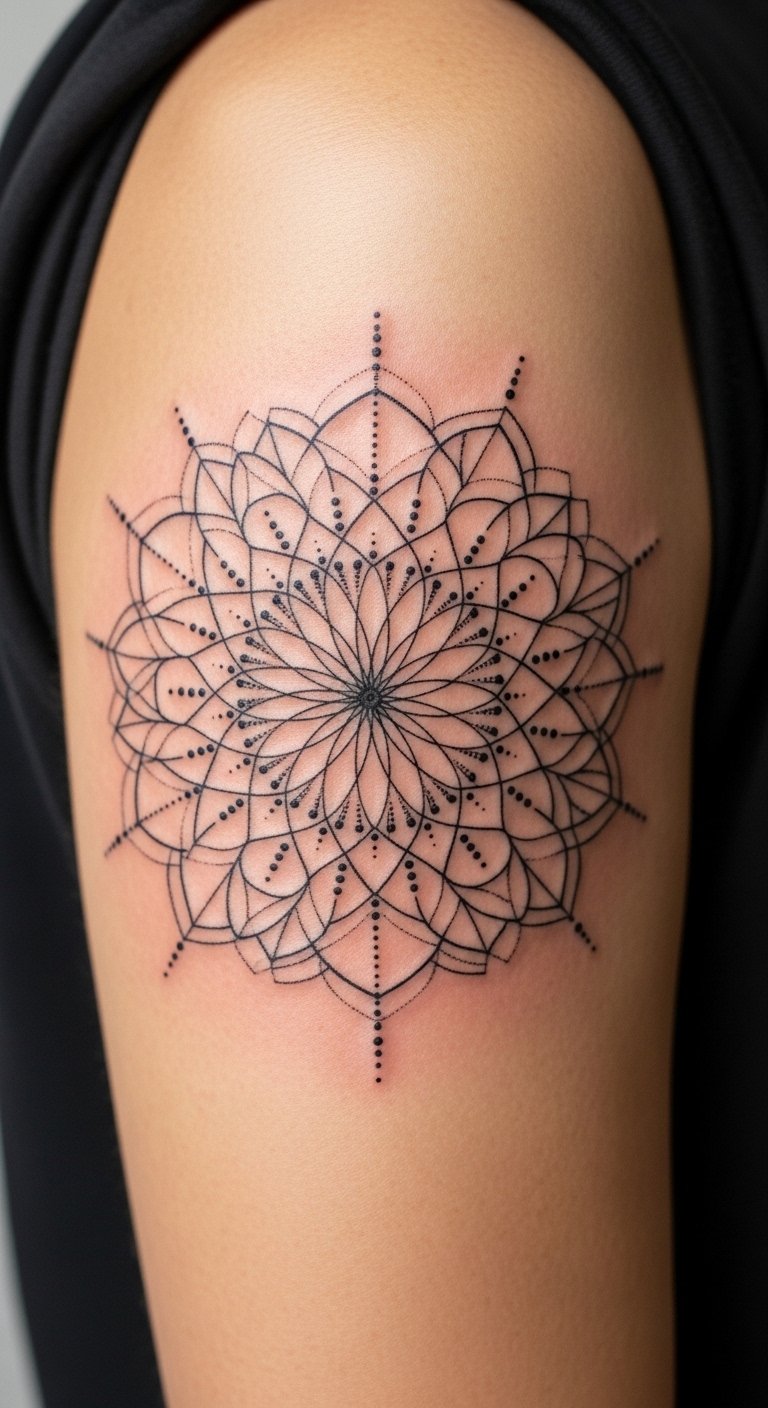
I love mandalas for balance. They read as spiritual and modern at once. Outer arm gives a flat canvas so symmetry holds. Expect mild soreness and a week of surface healing. Blackwork mandalas age well if the artist uses bold primary lines with fine fill. Mistake to avoid: tiny, overly dense detail that blurs with time. Ask for healed examples of geometric mandala meaning in similar placements.
Geometric Wolf On Forearm
Style/Technique: Geometric / Blackwork Realism Hybrid
Pain Level: Low (3/10)
Session Time: 1-2 sessions
Best For: Symbolic sleeve starters, visible arm art
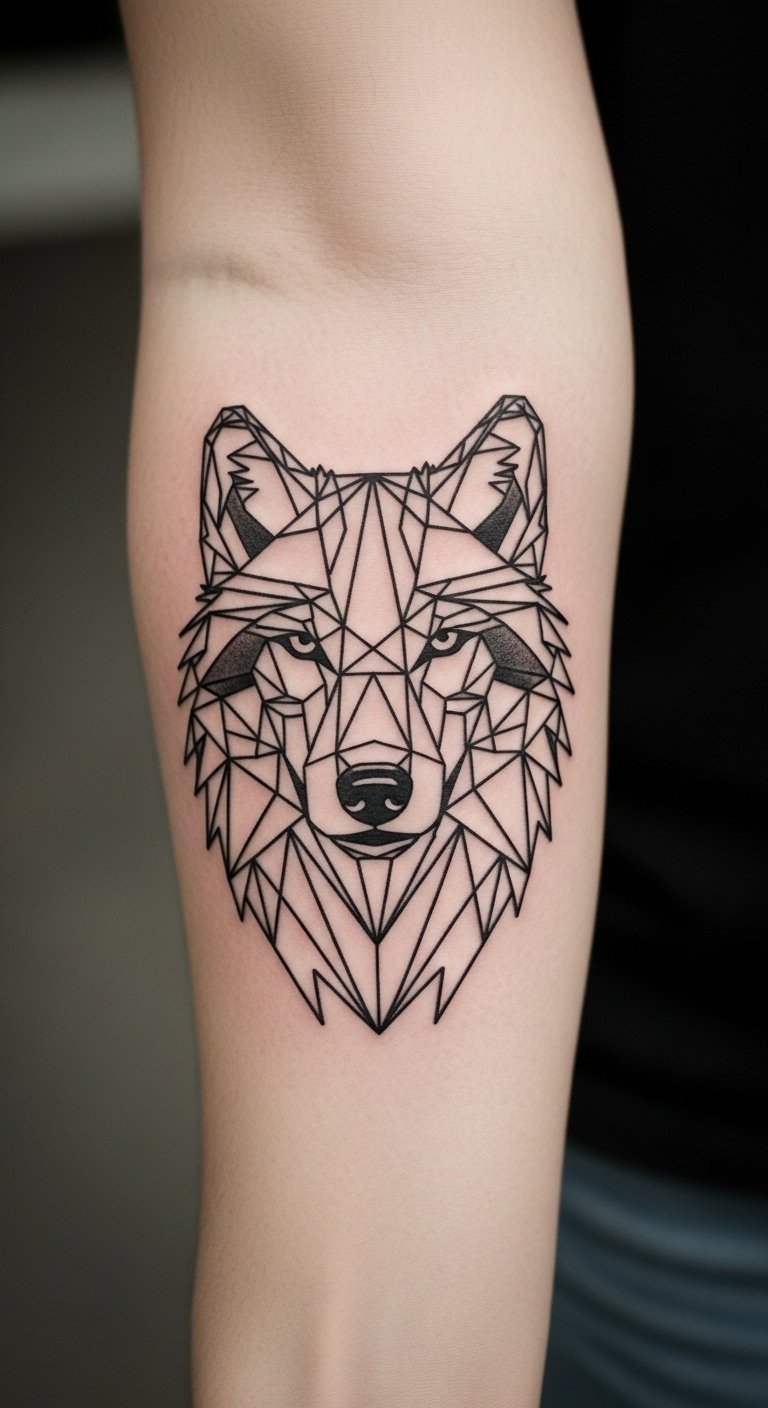
A wolf rendered in geometry feels smart and symbolic. Forearm is stable skin and shows off clean line work. Expect localized soreness during the session. Fine-line fur details need a skilled hand so the shapes stay crisp while aging. Avoid overcrowding the face area with texture. Look for artists who post geometric wolf healed shots.
Flower Of Life On Upper Chest
Style/Technique: Sacred Geometry / Minimalist Fine Line
Pain Level: Medium (4/10)
Session Time: 1-2 sessions
Best For: Central, meaningful chest pieces
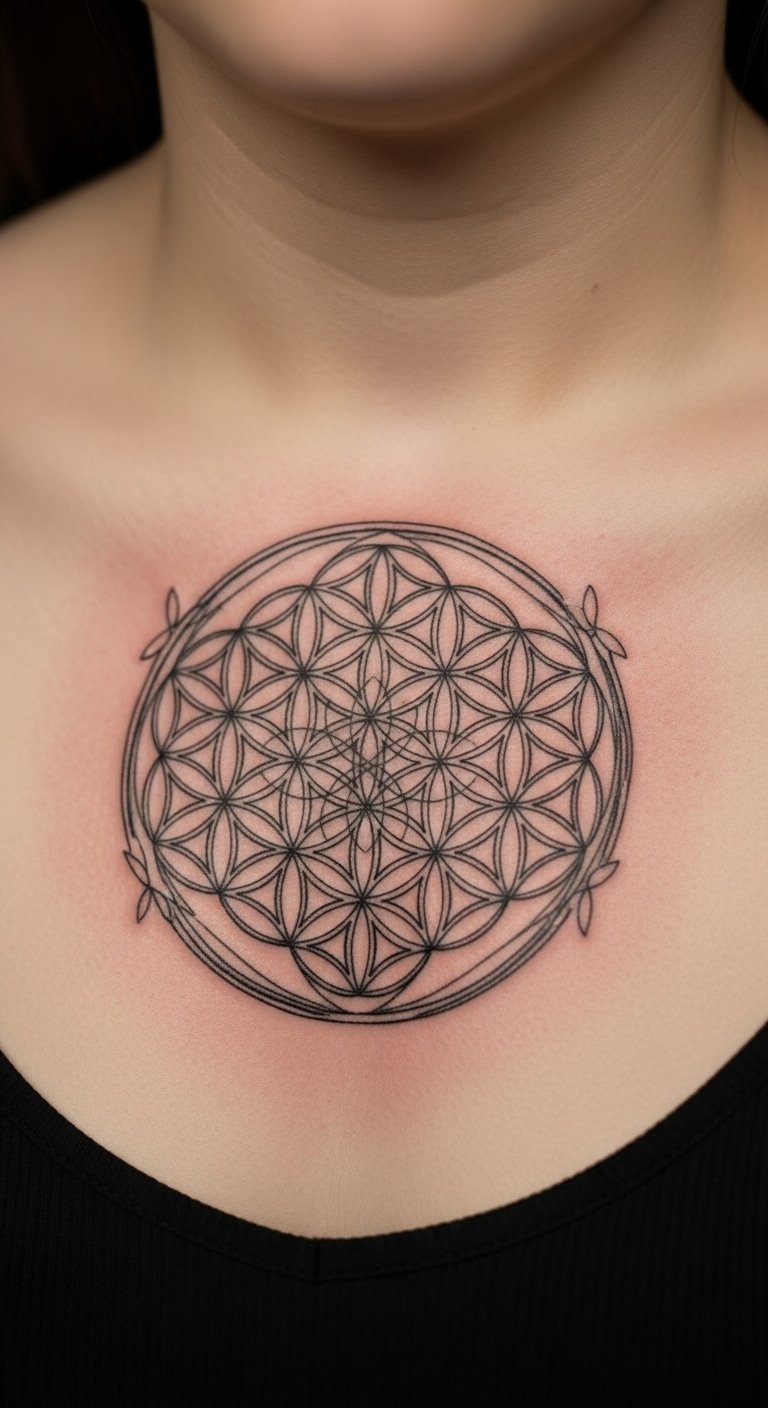
The Flower of Life reads as unity and structure. The chest's curvature can enhance symmetry if mapped to the sternum. Expect a bit more tenderness near bone. Fine-line versions need artist precision; otherwise lines can spread. Common mistake: placing too small over the sternum. Ask to preview a full-size stencil and discuss geometric mandala meaning.
Full Geometric Sleeve With Repeating Patterns
Style/Technique: Geometric Sleeve / Blackwork
Pain Level: Medium-High (5-7/10 across sessions)
Session Time: Multiple sessions
Best For: Cohesive statement pieces
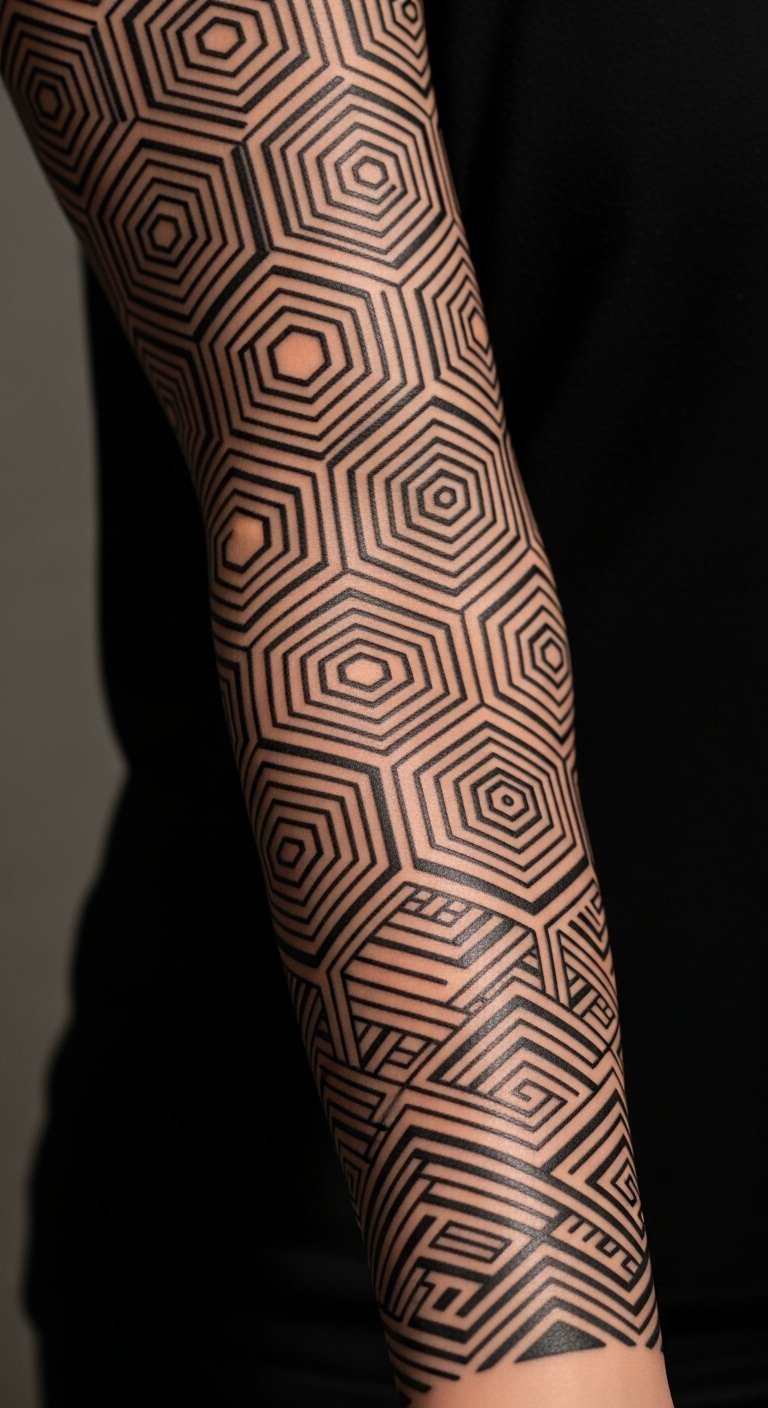
A sleeve lets you build repeating patterns and optical flow. It’s where geometric and personal elements meet. Expect long sessions and staged healing. Repeating patterns should follow muscle contours — otherwise they warp. Avoid patchy fills and uneven line weight; ask about artist portfolio work on sleeves and patterns that wrap the arm.
Minimalist Geometric Lines On Wrist
Style/Technique: Minimalist / Fine Line
Pain Level: Medium (4/10)
Session Time: 1 session
Best For: First geometric tattoo, subtle ink
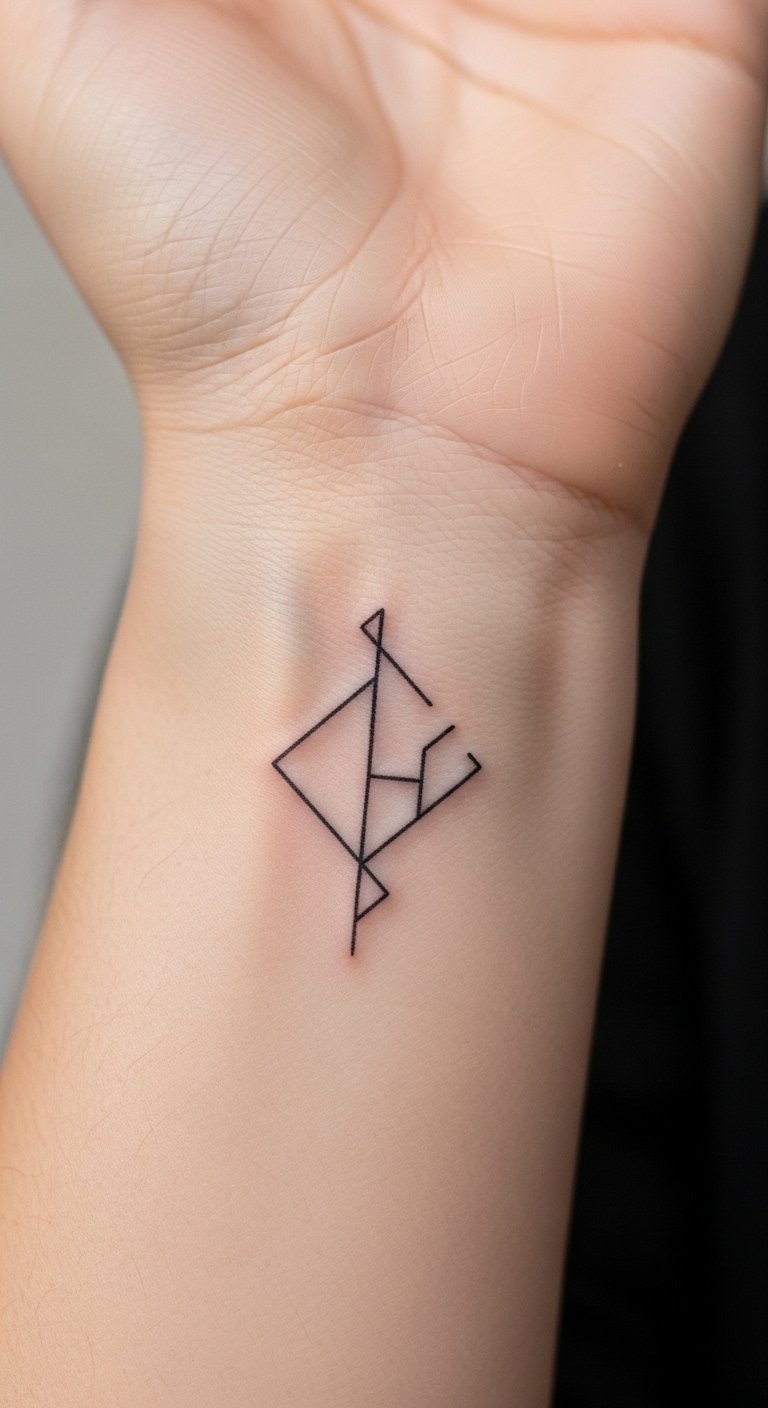
Tiny geometric lines feel elegant. The wrist is visible and heals fast but can blur if lines are too thin. I recommend slightly thicker single-needle work for longevity. Keep designs simple. Common regret: choosing ultra-fine detail that doesn’t last. This is a classic "first geometric tattoo."
Geometric Death Moth On Pectoral
Style/Technique: Neo-Traditional Geometric Hybrid
Pain Level: Medium (4-6/10)
Session Time: 1-2 sessions
Best For: Symbolic chest pieces
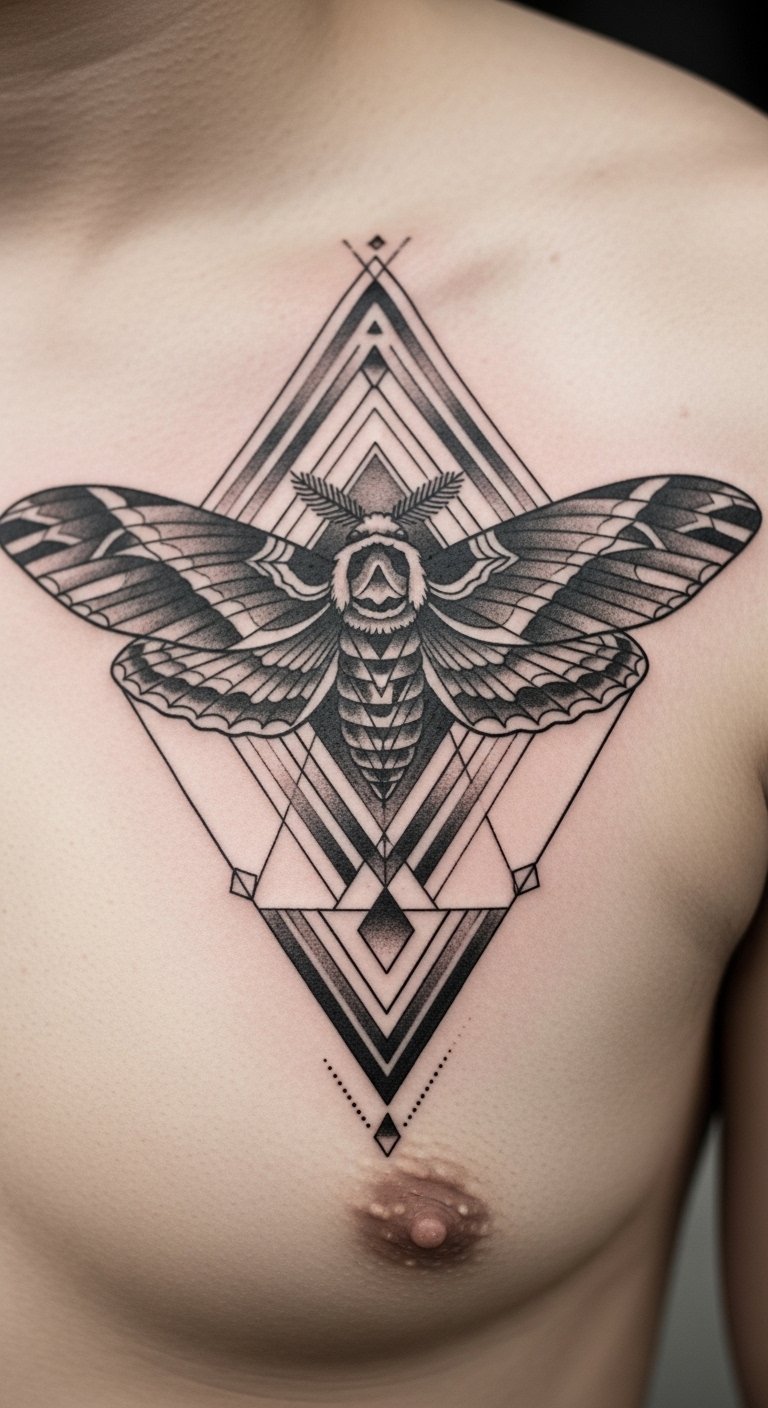
Death moths combine transformation symbolism with precise geometry. The pectoral provides a broad, stable area. Expect moderate pain near the sternum. Shading and shapes hold well if black ink dominates. Mistake: too much tiny stippling that fades unevenly. Ask your artist for matching blackwork examples.
Geometric Mountain Landscape On Upper Arm
Style/Technique: Illustrative / Geometric Hybrid
Pain Level: Low-Medium (3-4/10)
Session Time: 1-3 sessions
Best For: Story tattoos with nature motifs
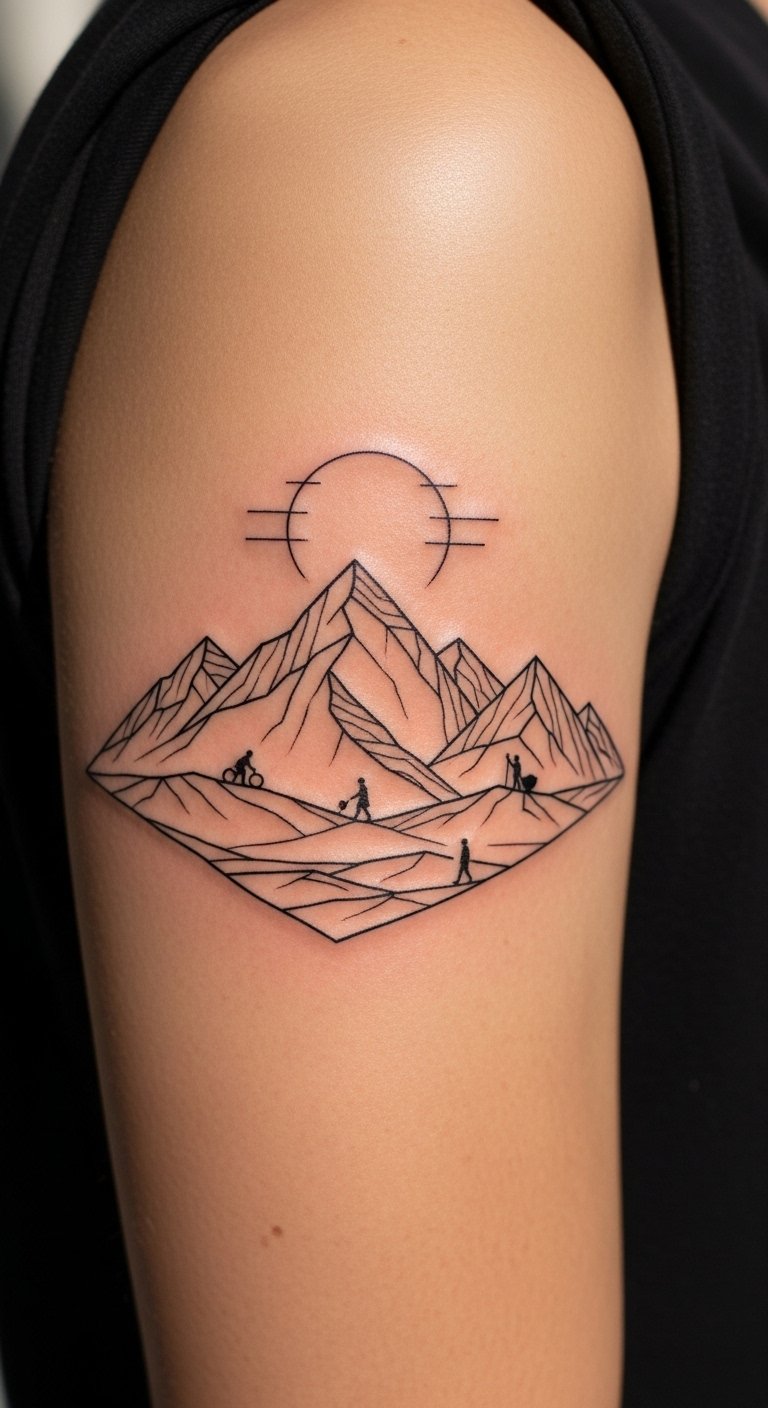
Mountains done with geometry read modern and personal. Upper arm contours keep lines stable. Expect modest soreness and straightforward healing. Keep contrast high so fine ridgelines don’t wash out. I like artists who mix realism elements with geometry for storytelling.
Optical Illusion Sphere On Thigh
Style/Technique: Geometric / Optical Illusion
Pain Level: Low (3/10)
Session Time: 1-2 sessions
Best For: Mesmerizing leg pieces
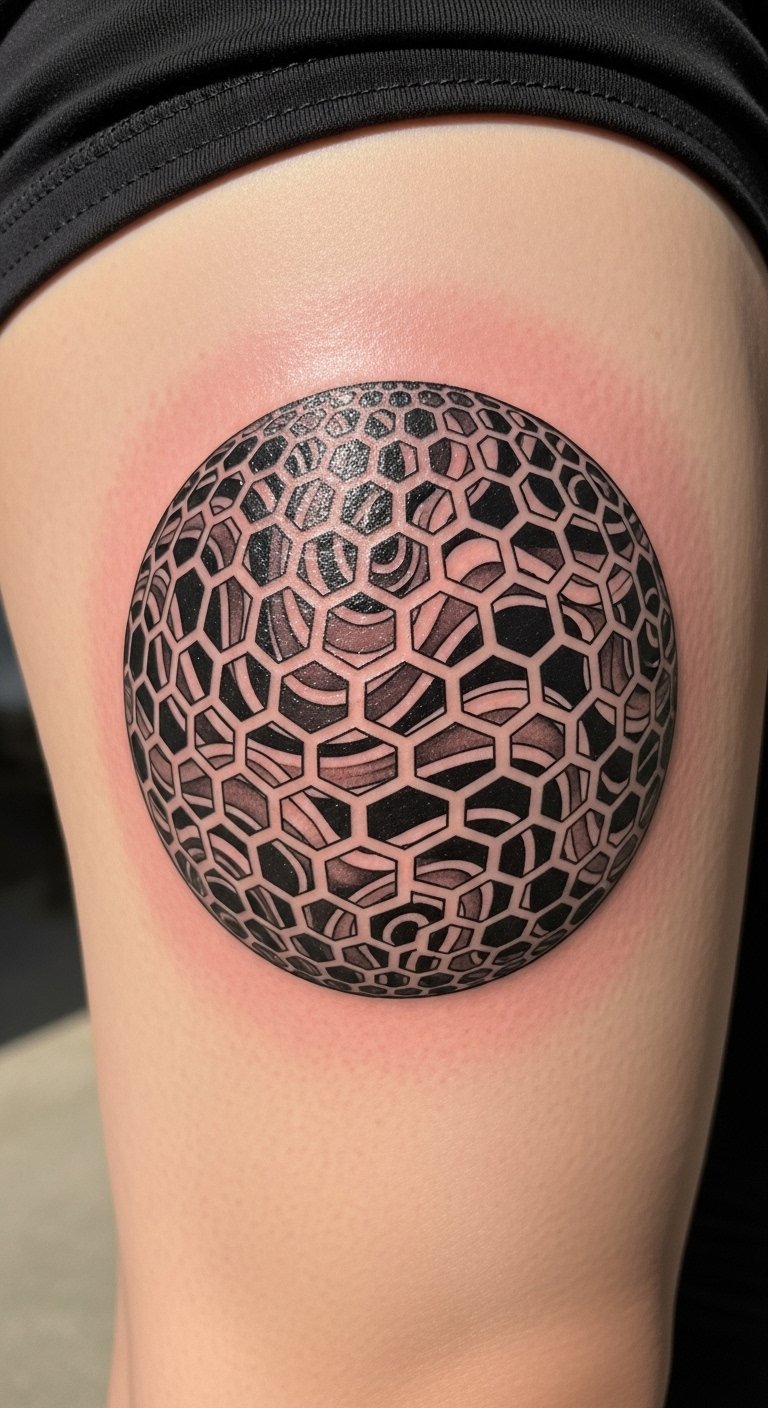
Leg pieces allow larger optical illusion work that looks hypnotic in motion. Thigh skin is forgiving. Healing is easy if you avoid tight clothing. Mistake: too-small patterns that lose the illusion. Plan for medium-large scale to keep the optical effect.
Tree Triangle Mandala On Bicep
Style/Technique: Mandala / Geometric Organic Hybrid
Pain Level: Low (3/10)
Session Time: 1-2 sessions
Best For: Symbolic growth pieces
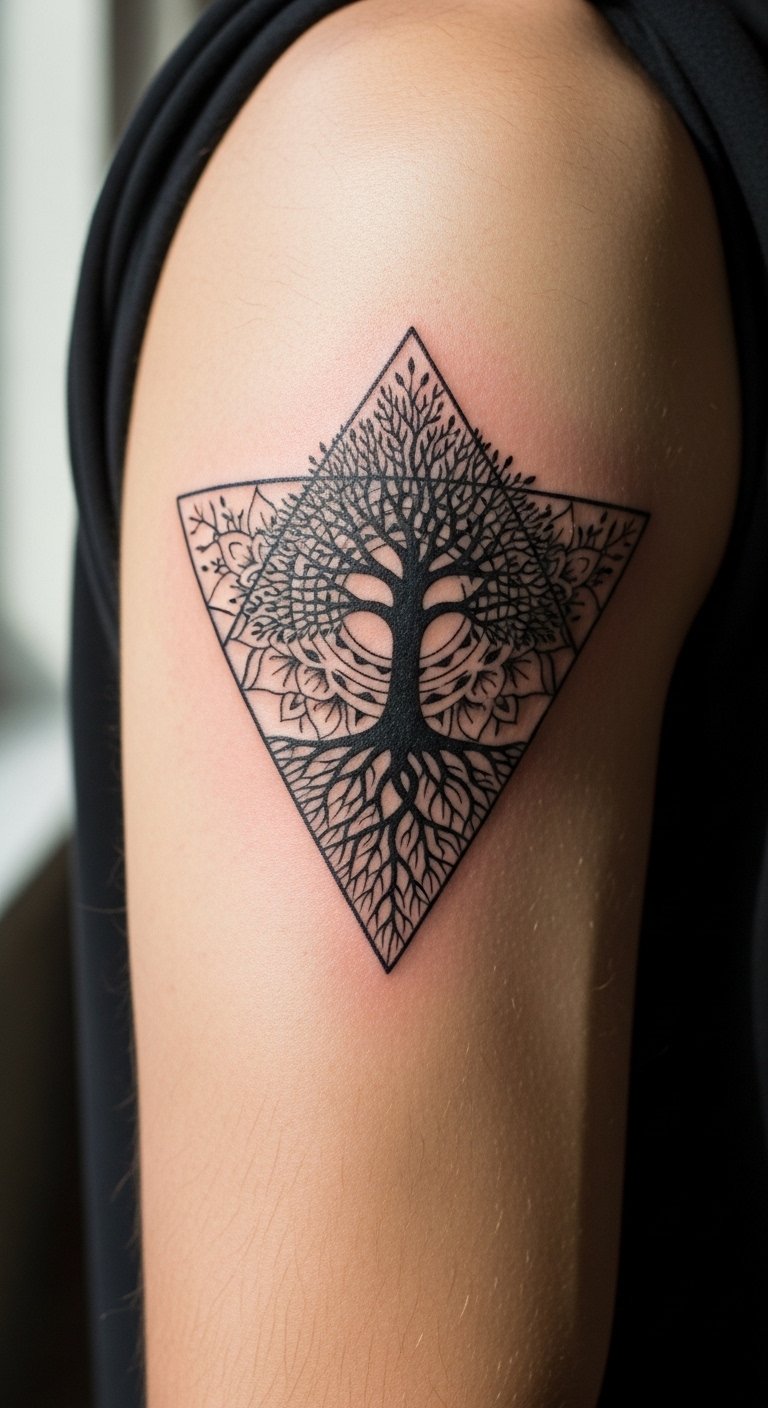
This blends organic symbolism with strict forms. Bicep muscle movement flatters triangles. Expect normal soreness and solid aging if lines are bold enough. Common mistake: tiny branches in the mandala center that get muddy over time.
Hexagon Tribal Pattern On Forearm
Style/Technique: Tribal-Geometric / Blackwork
Pain Level: Low (2-3/10)
Session Time: 1 session
Best For: Patterned forearm wraps
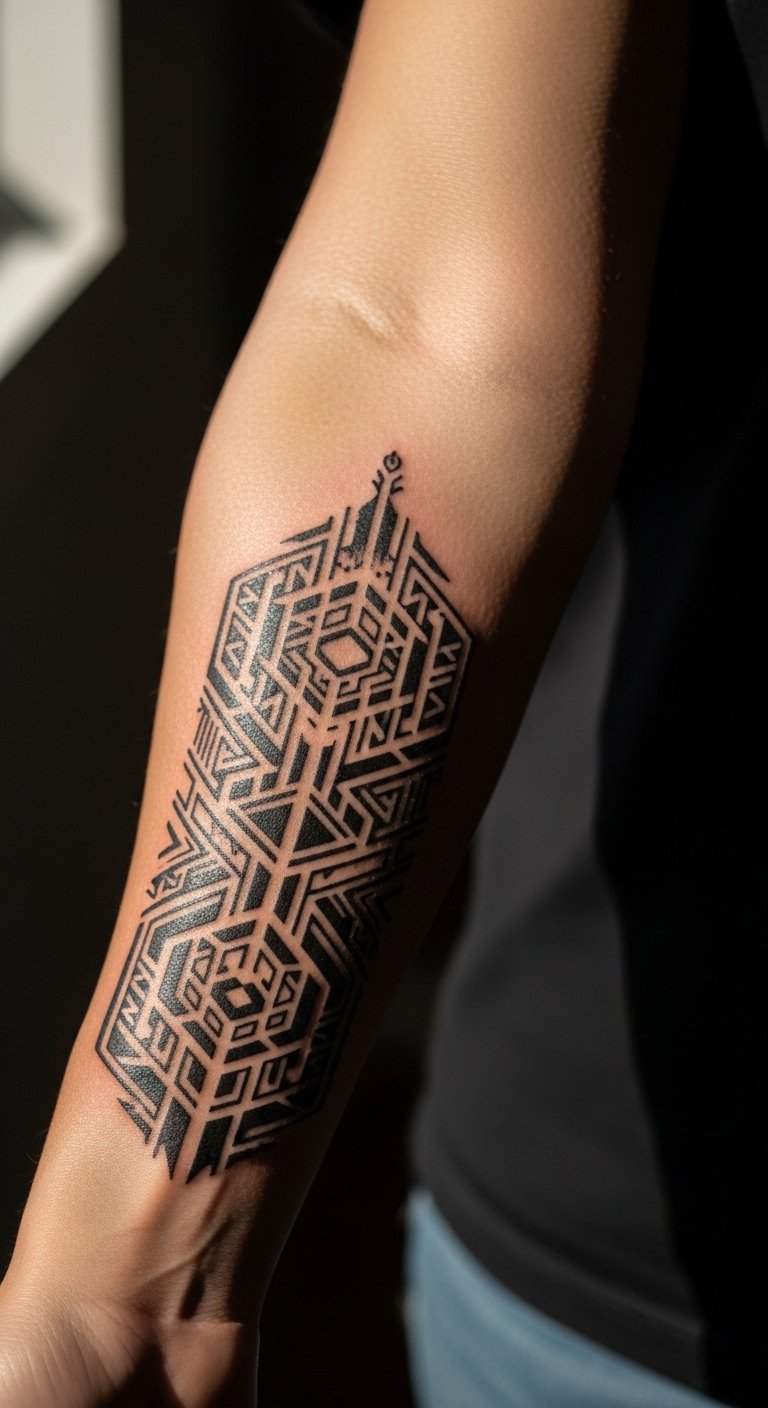
Hex patterning nods to tribal roots while staying modern. Forearm placement keeps shapes legible as you move. Keep negative space intentional. Overfilling small gaps is a common error. Ask for healed forearm portfolios.
Geometric Lion With Tree And Key On Arm
Style/Technique: Realism-Geometric Hybrid / Black & Gray
Pain Level: Medium (4-5/10)
Session Time: Multiple sessions
Best For: Narrative arm pieces
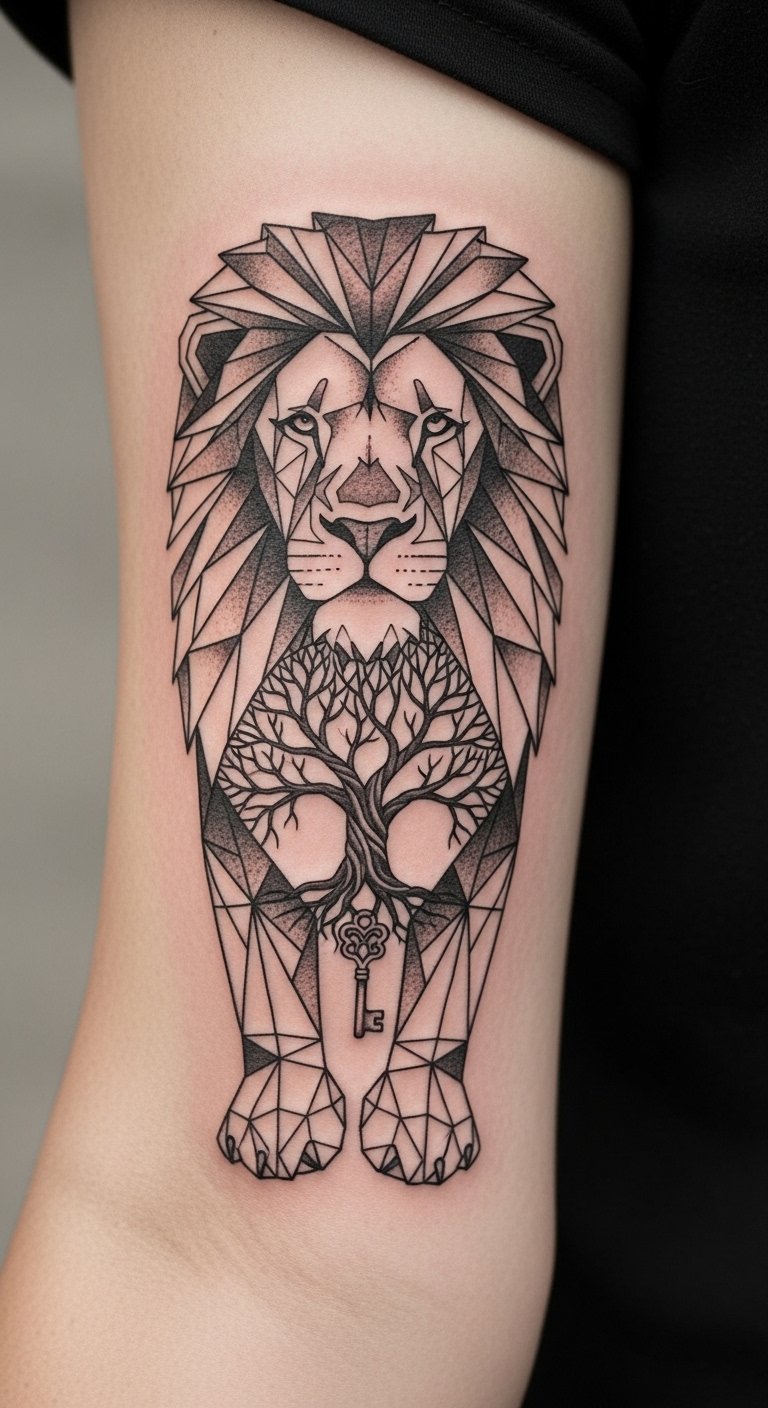
Combining a lion with symbolic elements reads like a personal crest. Arms give enough room for detail. Expect staged sessions and careful aftercare. Avoid cramming separate symbols too close; let each breathe.
Fine Line Geometric Deer On Upper Back
Style/Technique: Fine Line / Realism-Geometric
Pain Level: Low (2-3/10)
Session Time: 1-2 sessions
Best For: Subtle back pieces tied to stories
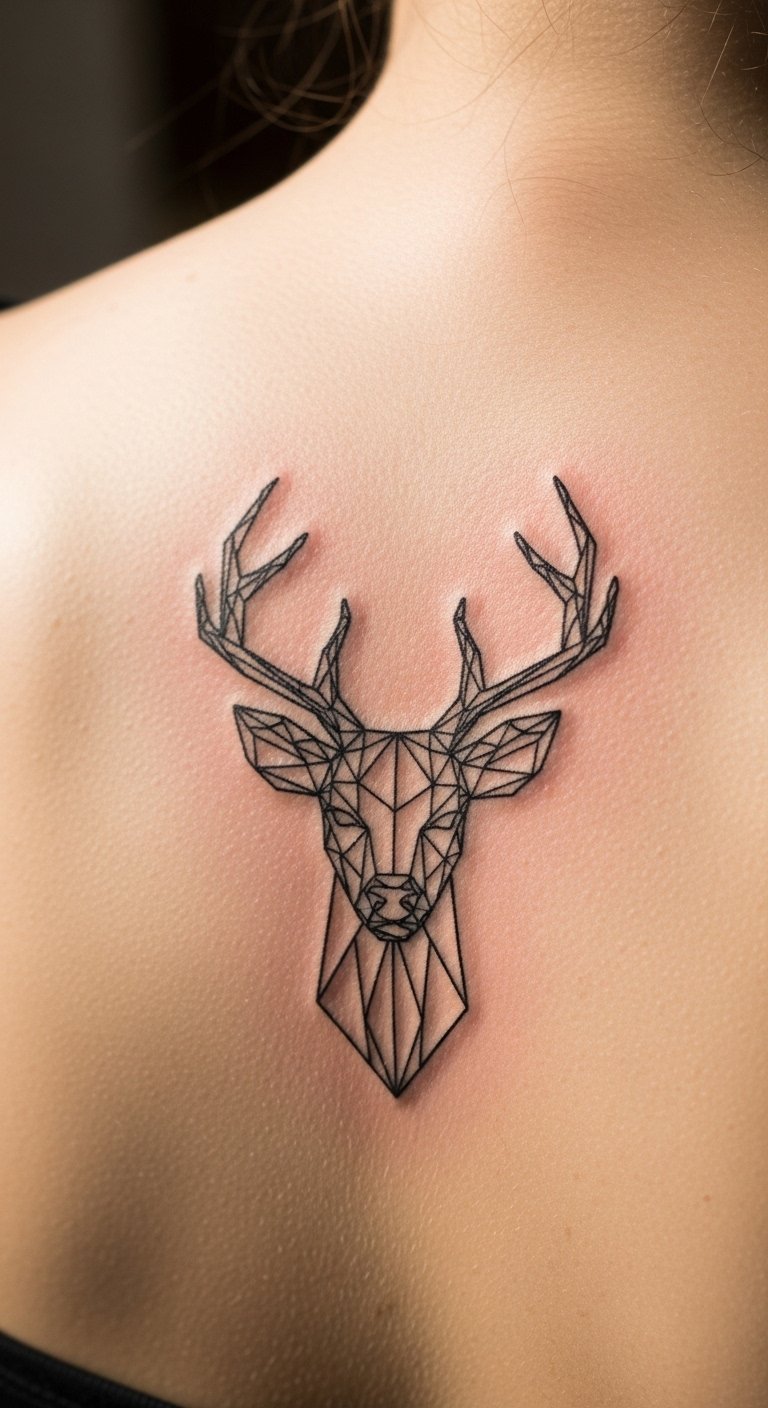
Upper back offers stable skin and gentle curvature for antler geometry. Fine lines look elegant when spaced. Expect an easy healing period. The usual mistake is making antler detail too dense.
Geometric Neck Mandala
Style/Technique: Blackwork / Geometric Mandala
Pain Level: High (6-8/10)
Session Time: 1-2 sessions
Best For: Statement symmetry pieces
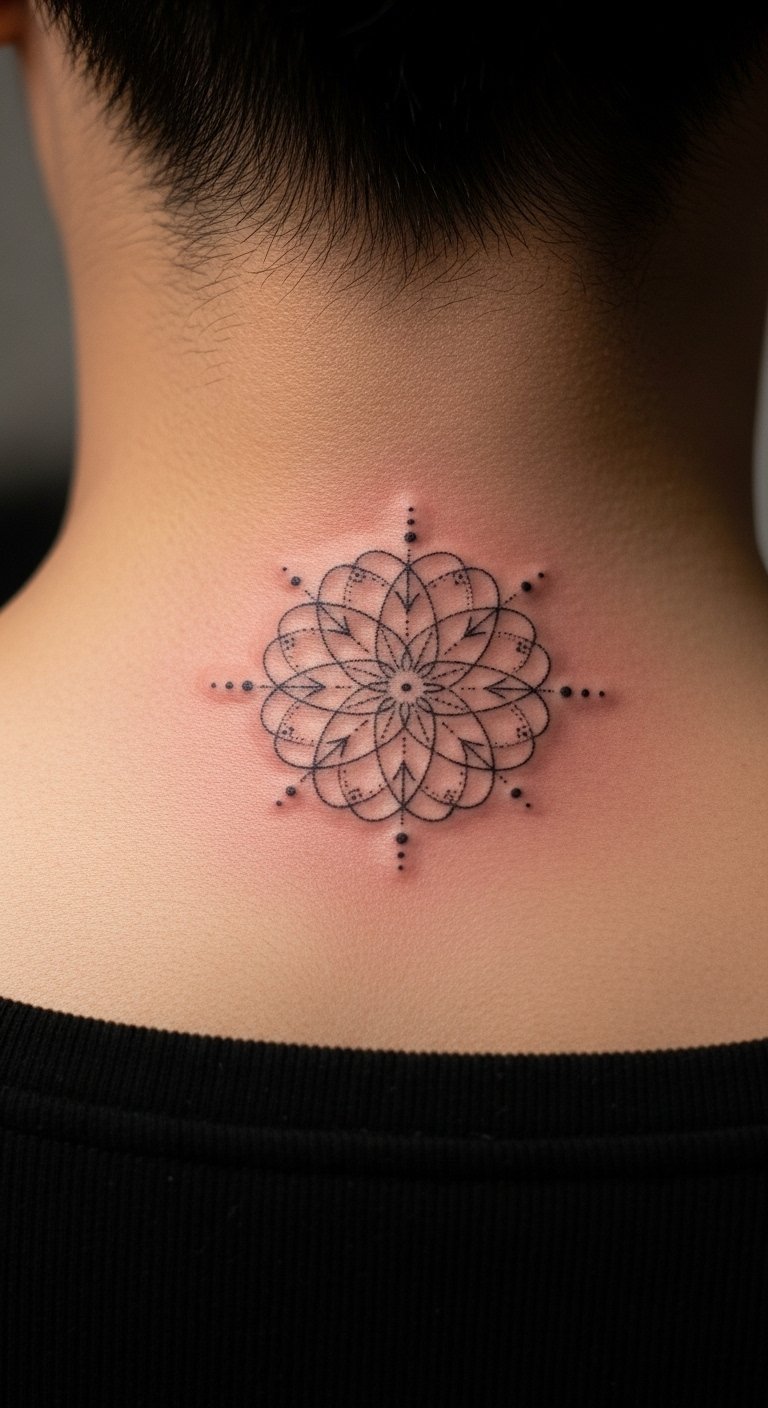
Neck pieces are bold and painful. They sit on a visible area that should be well-considered. Lines must be strong to last against sun exposure. Avoid tiny details on the neck; choose bold geometry.
Micro Geometric Rings On Fingers
Style/Technique: Micro / Minimalist Geometric
Pain Level: High (6-7/10)
Session Time: Short session, touch-ups likely
Best For: Subtle yet visible micro-tattoos
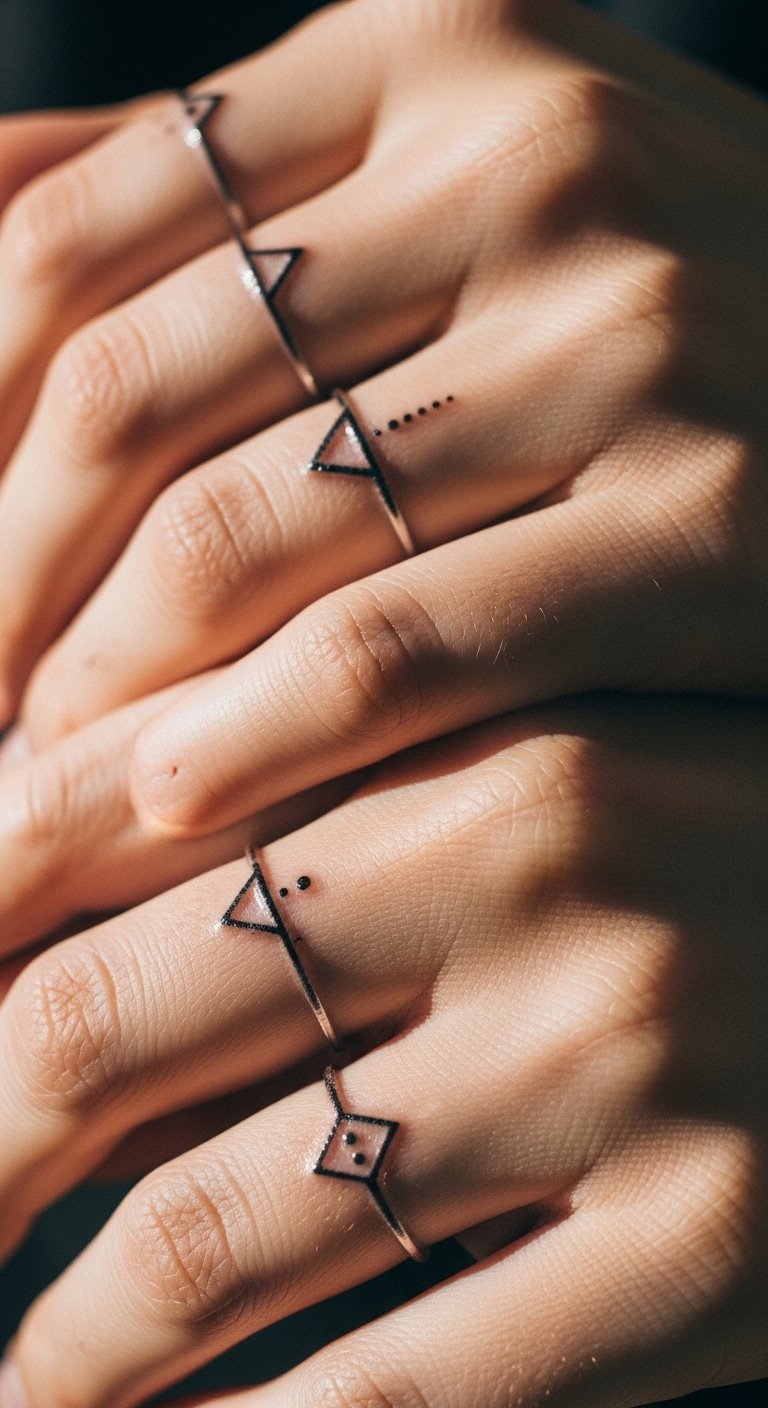
Fingers are high-maintenance. Micro geometrics look delicate but fade faster. Expect touch-ups. Don’t pick ultra-thin lines for finger work. Consider bolder micro shapes and plan for maintenance.
Minimalist Mountain Range On Ankle
Style/Technique: Minimalist / Fine Line
Pain Level: High (6/10)
Session Time: 1 session
Best For: Discreet geometric nature pieces
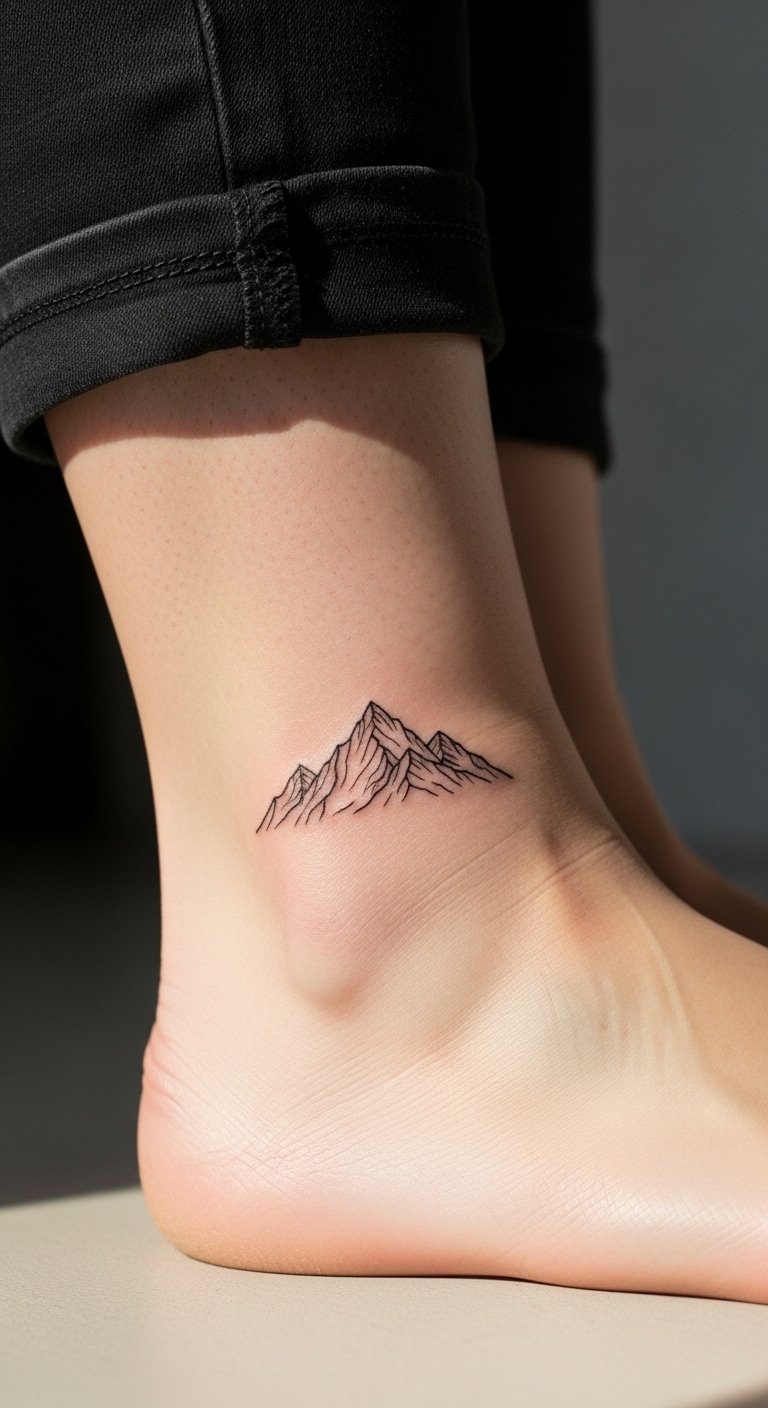
Ankle bones increase pain. Minimalist geometry here reads crisp and personal. Avoid tiny tight lines — they blur on the ankle. Keep a bit of scale for longevity.
Arabic Mosaic Inspired Sleeve
Style/Technique: Historical Geometric / Blackwork Sleeve
Pain Level: Medium-High (5-7/10)
Session Time: Multiple sessions
Best For: Cultural, tile-inspired full-arm art
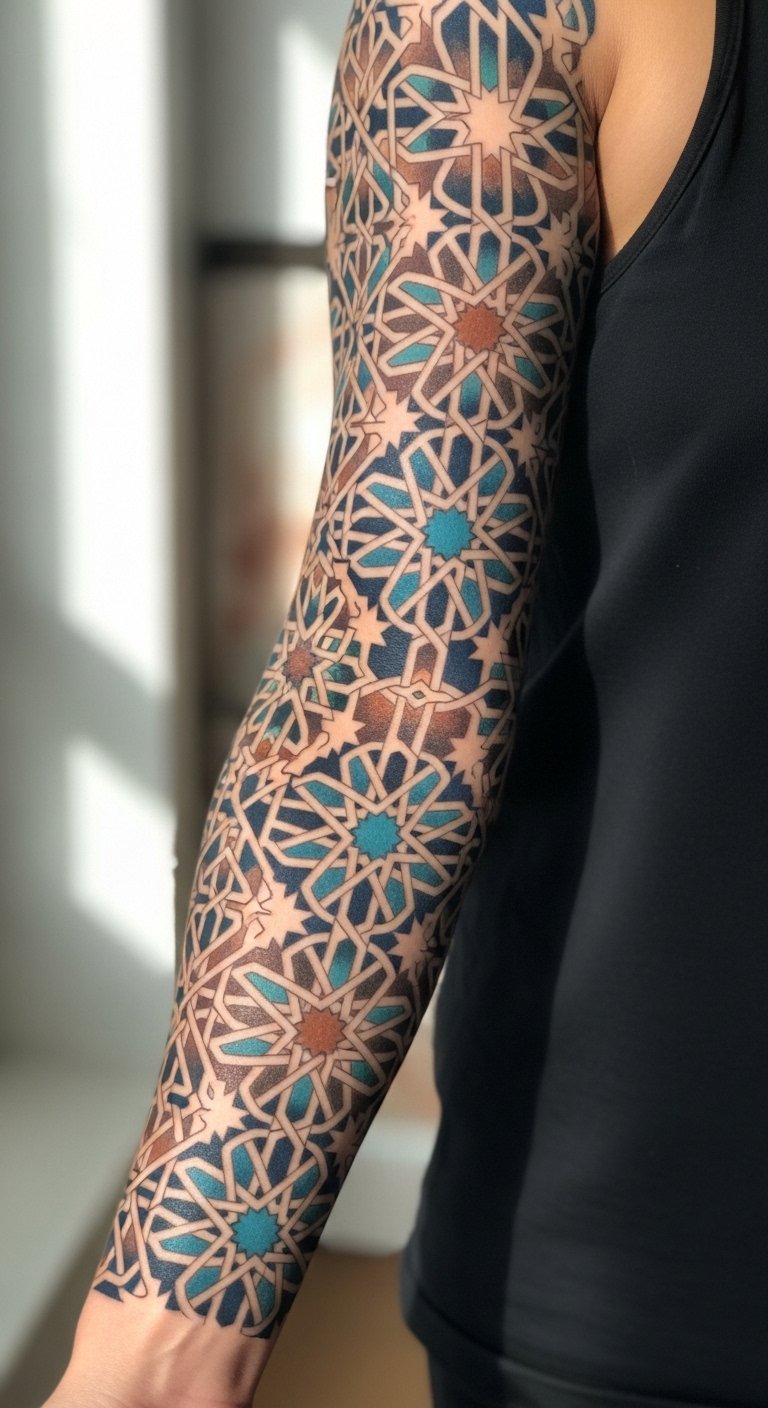
I love bringing Old World tile patterns into modern sleeves. Patterns should respect cultural origins. Follow muscle contours to keep symmetry. Mistake: ignoring negative space — mosaics need breathing room.
Pop-Culture Geometric Panels On Arm
Style/Technique: Geometric / Pop Culture Hybrid
Pain Level: Medium (4-6/10)
Session Time: 1-3 sessions
Best For: Fans who want abstract nods to media
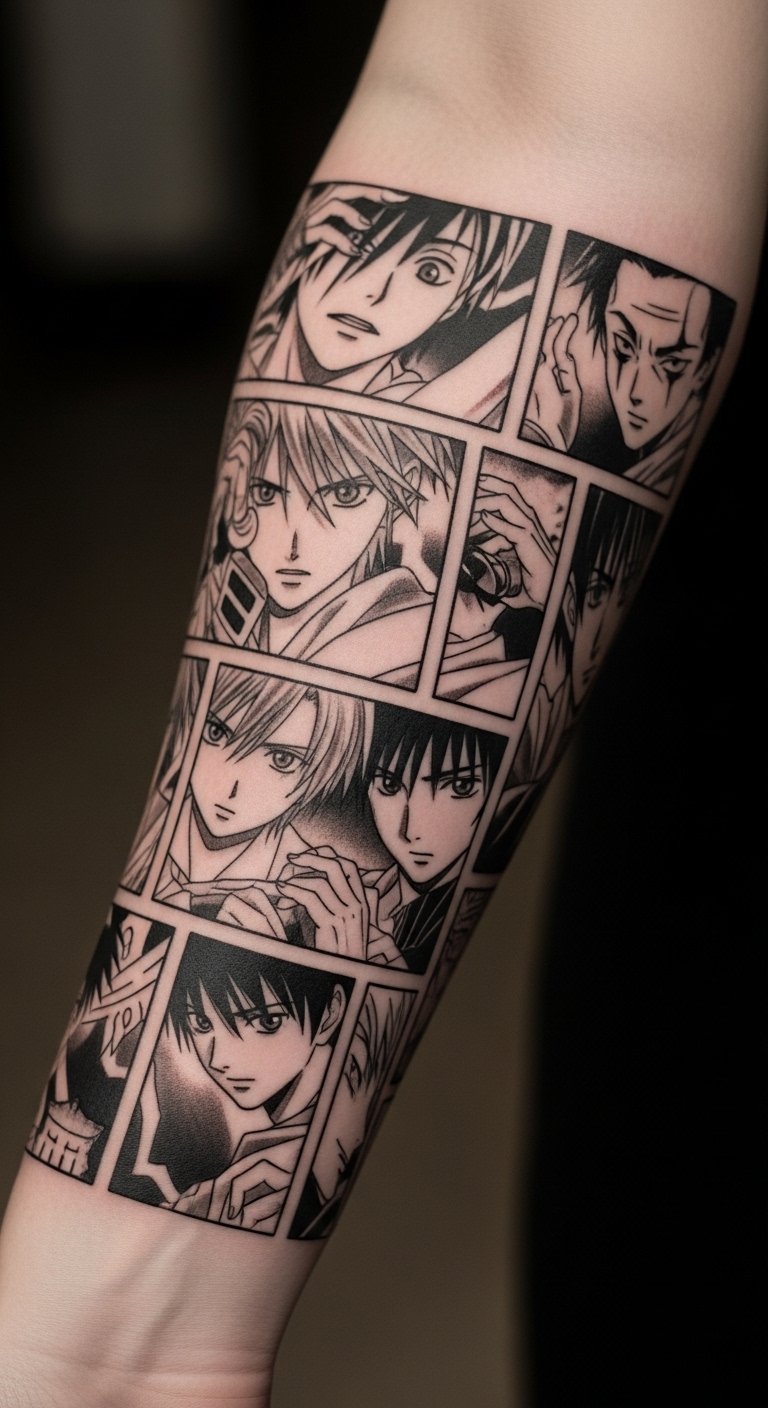
Abstracting pop-culture scenes into panels keeps the reference subtle and stylish. Forearms show detail well. Avoid direct copies or copyrighted prints; make it personal. Artists like @kimi_tattooist do great panel work.
Muscle-Contour Geometric Tortoise On Calf
Style/Technique: Body-Contour Geometric / Illustrative
Pain Level: Low (3/10)
Session Time: 1-2 sessions
Best For: Tattoos tailored to muscle shape
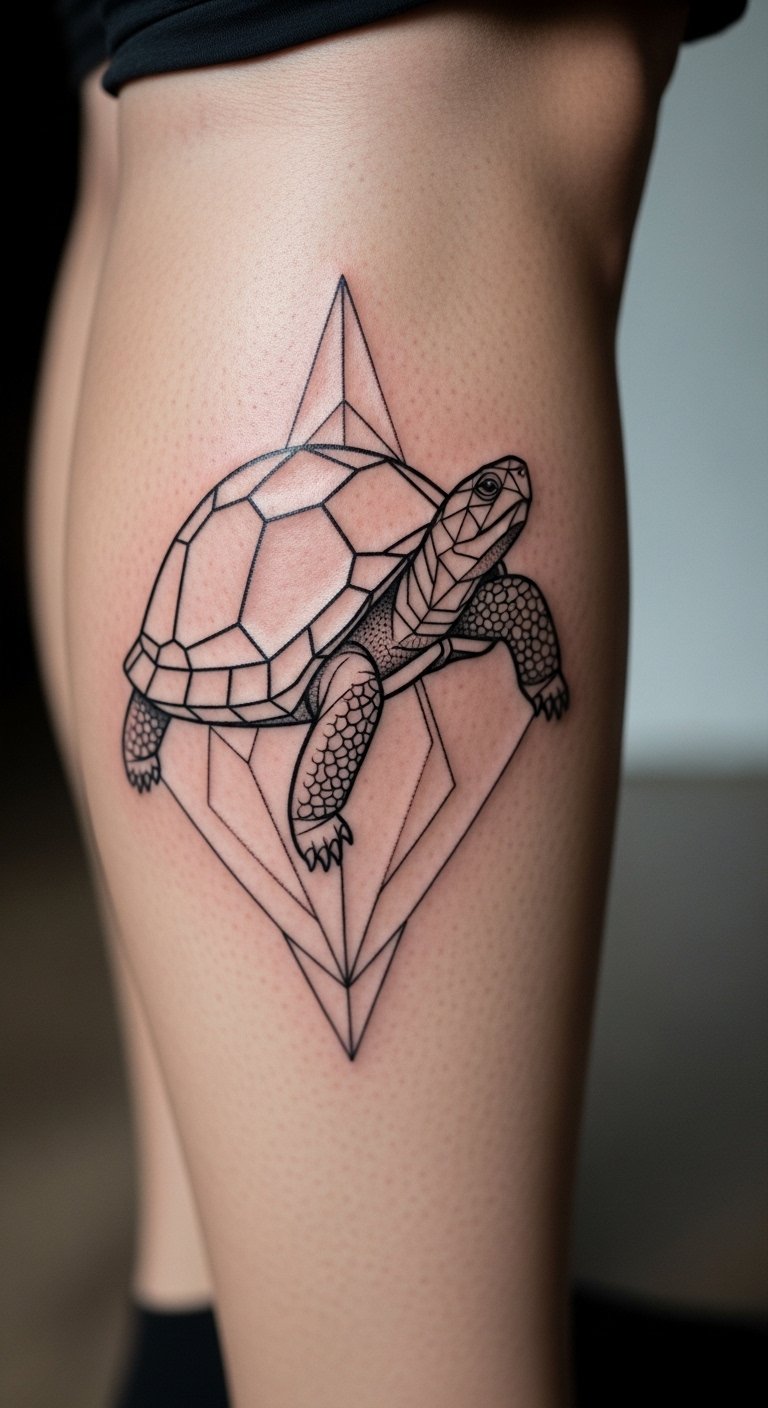
Designing geometry to follow muscle structure makes the piece feel alive. Calf is forgiving and ages well. Test with a stencil in motion to avoid distortion.
Infinite Continuity Pattern Across Ribcage
Style/Technique: Repeating Sacred Geometry / Blackwork
Pain Level: High (7-8/10)
Session Time: Multiple sessions
Best For: Meditative, wraparound designs
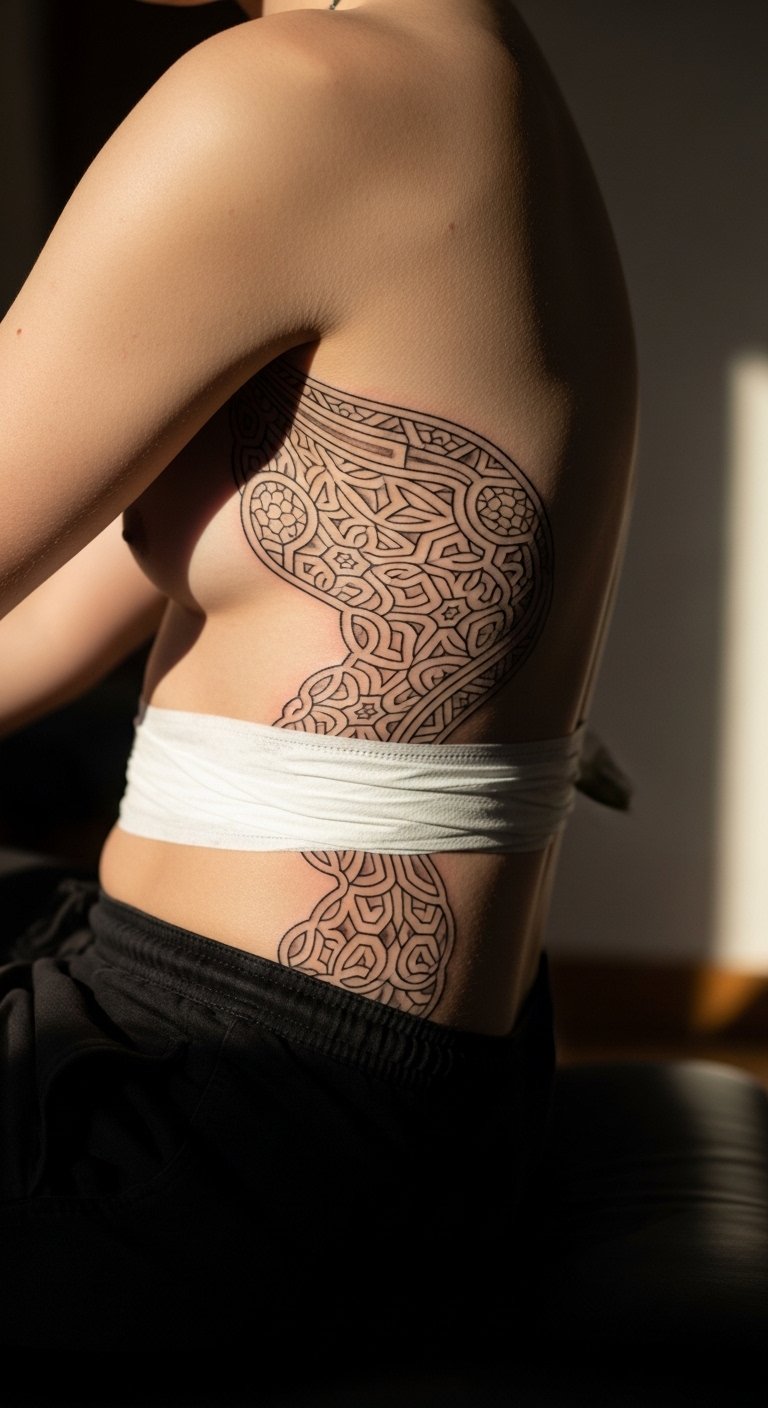
Continuity patterns across the ribcage feel like a meditative map. Ribs are painful and need careful aftercare. Keep lines bold enough to survive stretch and movement. Avoid over-fine meshes that fuzz early.
Geometric Compass On Calf Or Sternum
Style/Technique: Minimalist Geometric / Fine Line
Pain Level: Medium (4-6/10 depending on sternum)
Session Time: 1 session
Best For: Travel or direction-themed tattoos
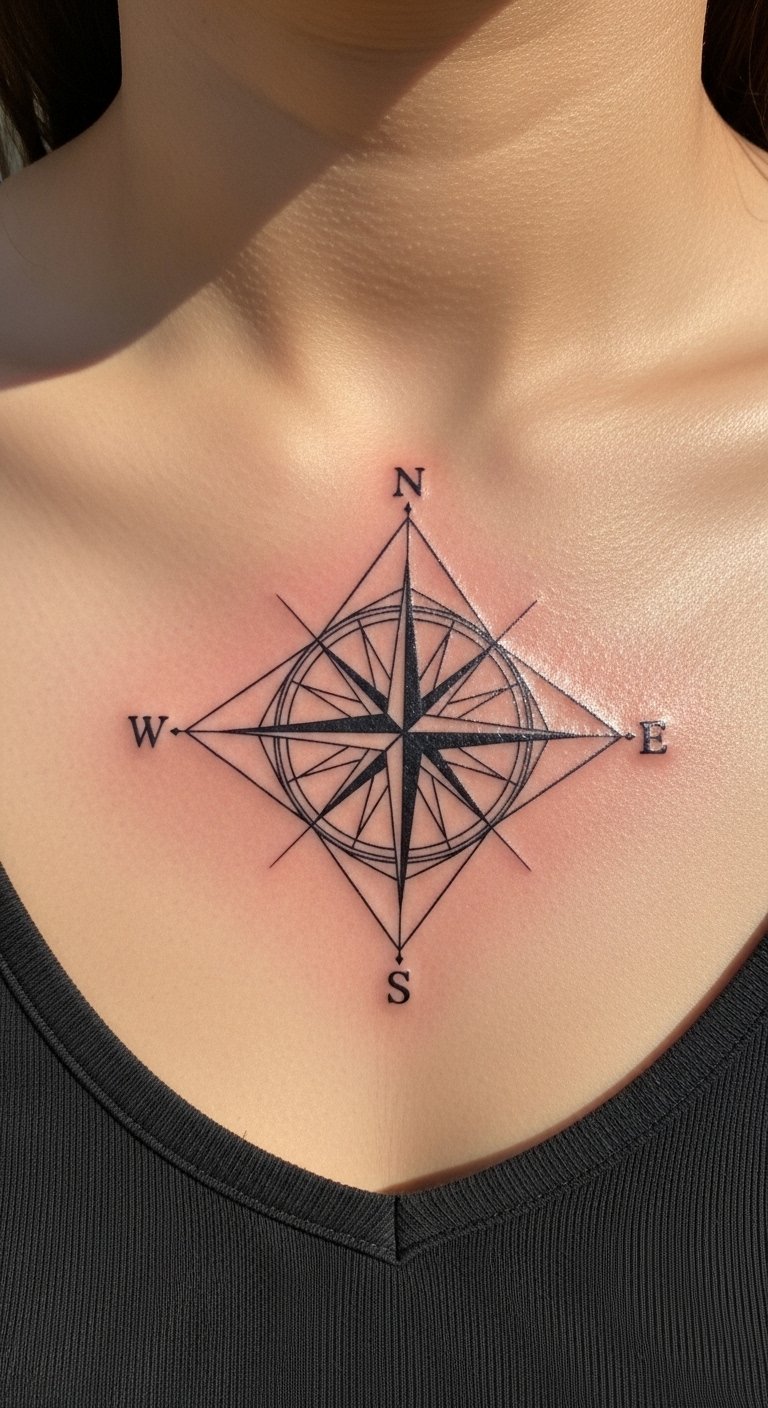
A geometric compass reads precise and meaningful. Sternum placement elevates symmetry but increases pain. Calf is easier and still visible. Ask for healed sternum examples.
Blackwork Geometric Spine Column
Style/Technique: Blackwork / Vertical Geometric Stack
Pain Level: High (7-9/10)
Session Time: Multiple short sessions
Best For: Bold vertical statement pieces
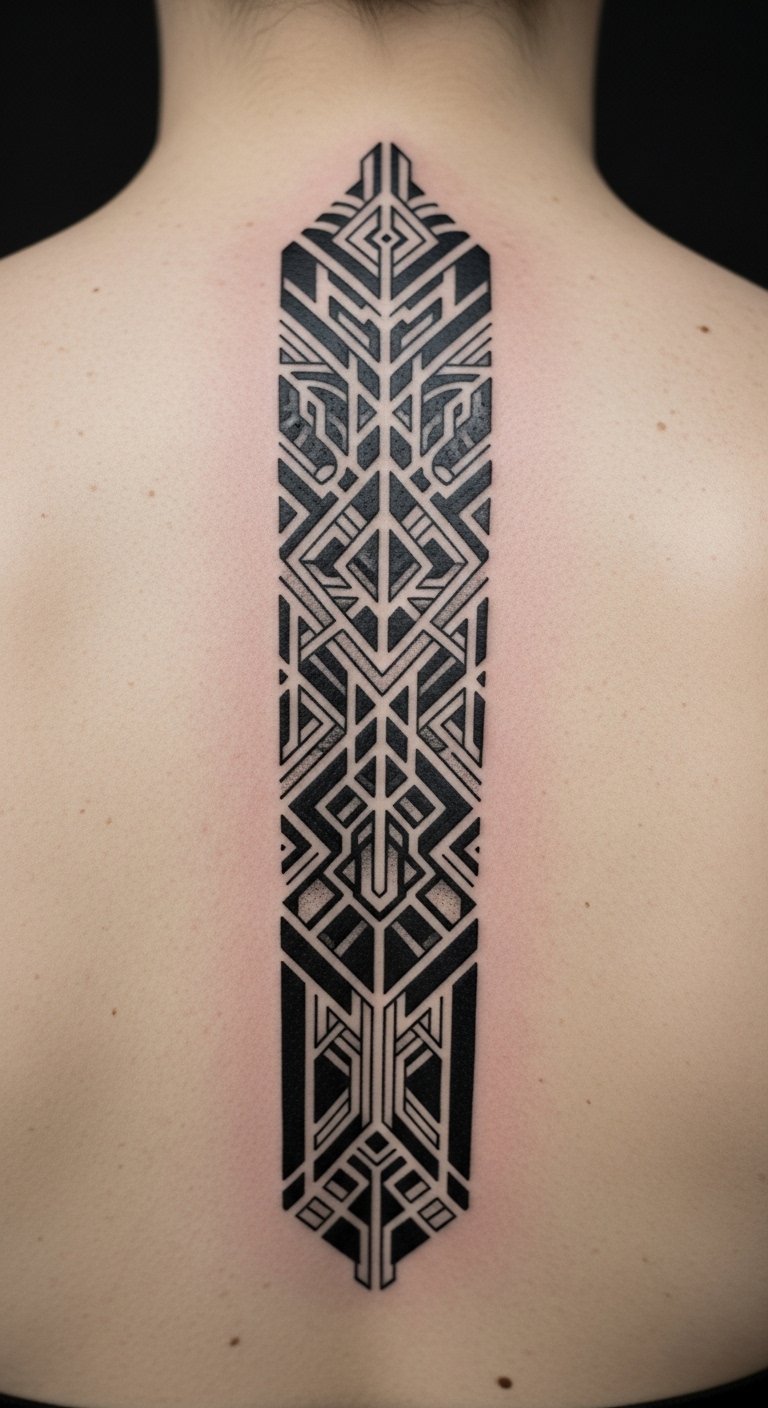
Spine work is dramatic and painful. It ages well if lines are strong and spacing generous. Avoid tiny filler near the spine; keep it bold.
Geometric Bear Chest Hybrid
Style/Technique: Realism-Geometric Hybrid / Black & Gray
Pain Level: Medium (4-6/10)
Session Time: Multiple sessions
Best For: Personal strength-themed chest pieces
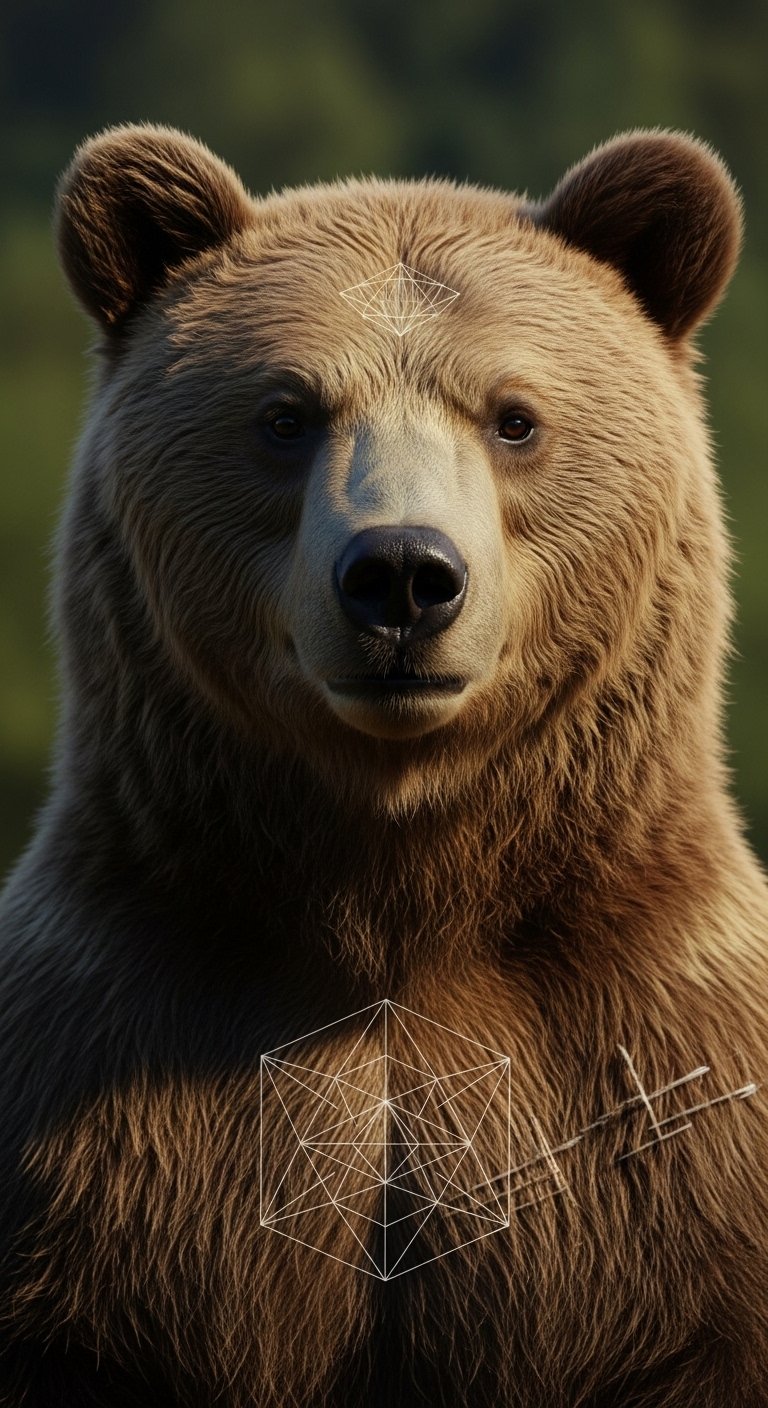
A bear with geometric overlays balances realism and abstraction. Chest placement gives scale. Expect staged sessions and steady aftercare. Too many small texture marks can muddle the hybrid look.
Optical Band Around Bicep
Style/Technique: Optical Illusion / Geometric Band
Pain Level: Low (3-4/10)
Session Time: 1 session
Best For: Repeatable armbands and sleeves starters
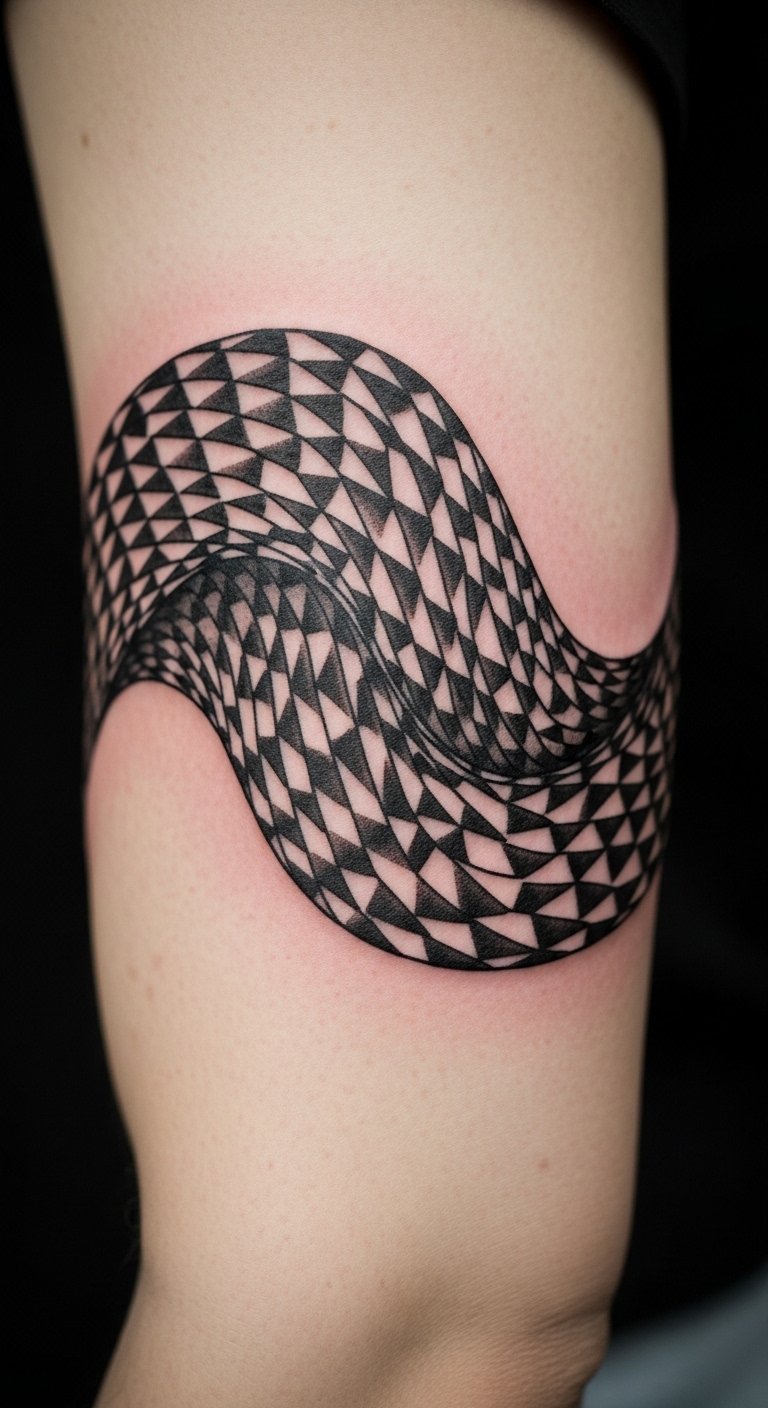
Bands are compact but effective. Biceps offer movement that enhances the illusion. Keep the band wide enough to read the pattern. Mistake: narrow bands lose detail.
Sun And Moon Geometric Mandala On Sternum
Style/Technique: Mandala / Symbolic Geometric
Pain Level: Medium-High (5-7/10)
Session Time: 1-2 sessions
Best For: Central chest symmetry pieces
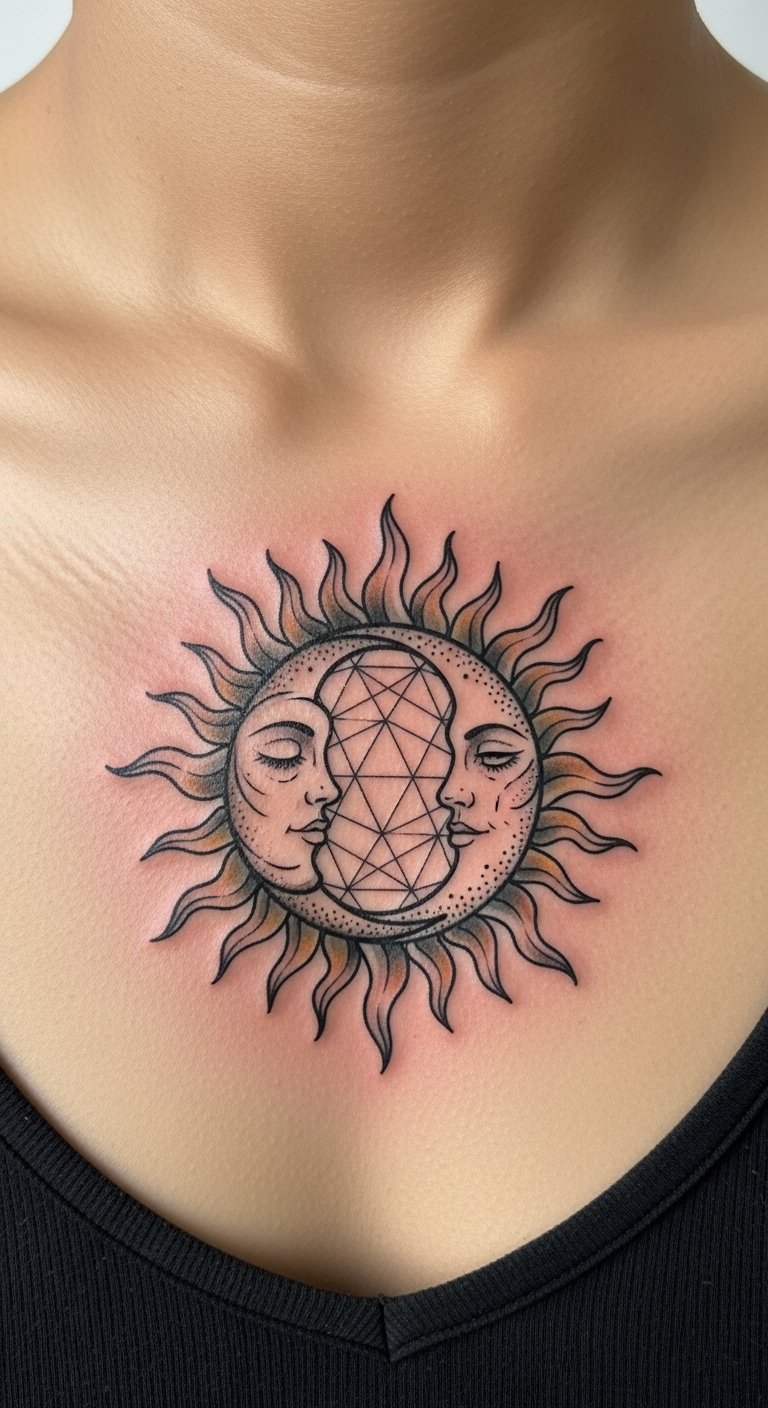
Combining celestial symbols in geometry feels timeless. Sternum symmetry elevates the look. Avoid skimping on line thickness; delicate work can fade faster here.
Constellation And Lines On Thigh
Style/Technique: Minimalist Geometric / Fine Line
Pain Level: Low (2-3/10)
Session Time: 1 session
Best For: Story-driven, large-scale thigh work
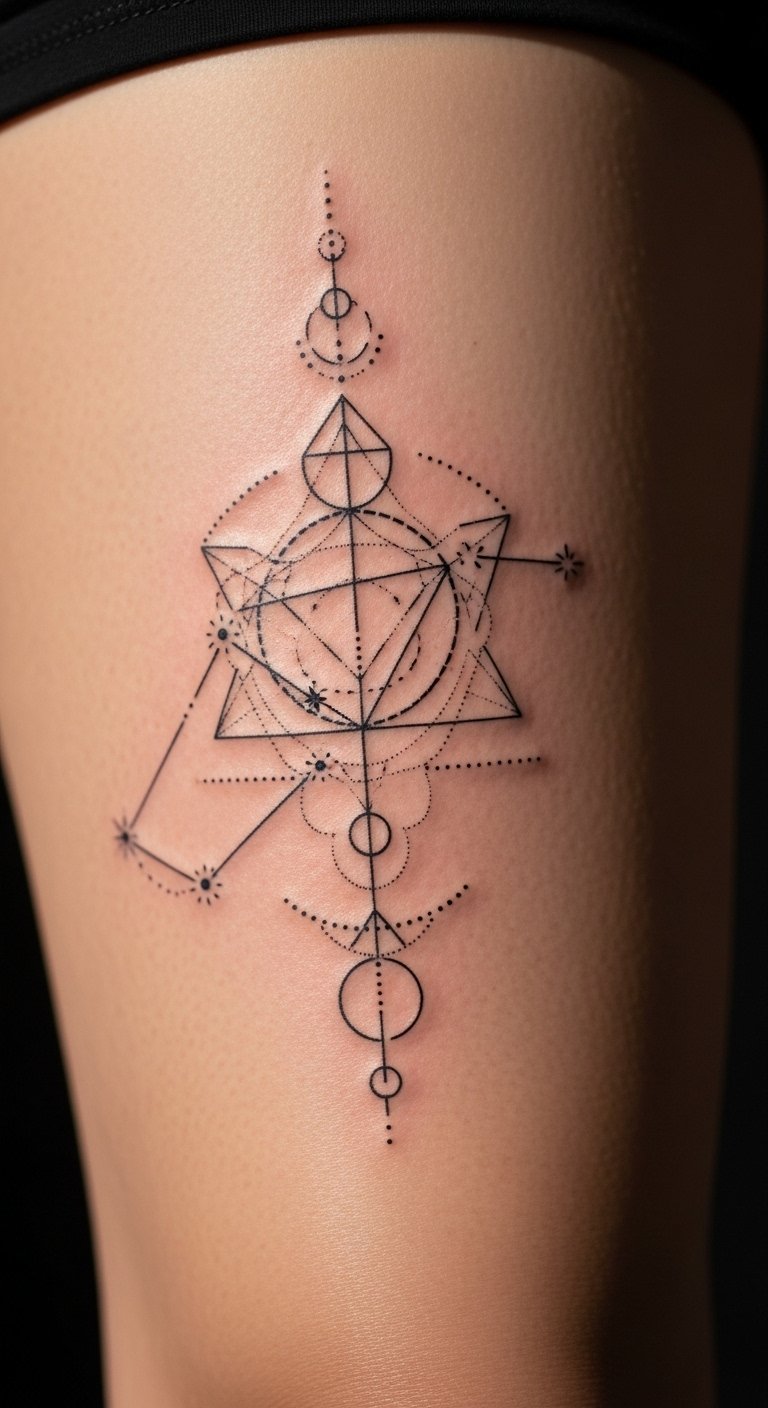
Thighs take larger compositions and heal easily. Connect constellation dots with geometric lines for a smart personal map. Keep spacing so stars don’t blur into one another.
Tattoo Prep and Aftercare Essentials
Aftercare Essentials:
- Aquaphor Healing Ointment, 14oz tube — For the first 3–5 days, recommended by many artists
- Saniderm Transparent Adhesive Bandage, 6-inch roll — Second-skin healing method, use as directed
- CeraVe Fragrance-Free Moisturizing Lotion, 12oz — Daily moisturizer after initial ointment phase
- Dr. Bronner's Unscented Castile Soap, 8oz — Gentle cleaning
Before Your Appointment:
- Numbing Cream with 5% Lidocaine, 30g — Ask your artist before use
- Stencil Transfer Paper, 8.5×11 pack — For custom at-home testing
Long-Term Maintenance:
- SPF 50 Sunscreen Stick for Tattoos — Daily protection keeps lines crisp
- Mad Rabbit Tattoo Balm, 2oz — Healed-skin maintenance recommended by artists
- Hustle Butter Deluxe, 2oz — Vegan aftercare option
Optional Comfort Items:
- Tattoo Numbing Spray, 1oz — For touch-ups or sensitive spots
- Hydrocolloid Bandages, 10-pack — Small tattoo protection alternative
Frequently Asked Questions
Q: How bad does a tattoo actually hurt?
A: Pain depends on placement. Forearm and outer thigh: lower (2–4/10). Ribcage, spine, ankle: higher (6–9/10). For sensitive areas ask about a numbing cream with 5% lidocaine.
Q: What if I regret my tattoo?
A: Sit with the design for months. Start with a discreet placement if unsure. Laser removal exists but is a long process.
Q: How do I keep my geometric tattoo from fading?
A: Daily sunscreen is essential. Use an SPF 50 sunscreen stick and keep the skin moisturized with fragrance-free lotion.
Q: Can I work out after getting inked?
A: Wait 48–72 hours minimum. For flex areas wait longer. Sweat can introduce bacteria and impede healing.
Q: Should I get a small geometric tattoo first?
A: Only if you love the design. Small tattoos (finger, wrist) often need touch-ups. Consider a slightly bolder line weight for longevity.
Q: How long does healing take?
A: Surface healing ~2–3 weeks. Full healing 2–3 months. Keep it clean, avoid picking, and follow aftercare. Saniderm or Aquaphor during early days helps.
Q: Do tattoos look different on different skin tones?
A: Yes. Black and gray work best across tones. Bright colors may appear muted on deeper tones. Ask artists for healed examples on similar skin.
Conclusion
Start with a solid stencil and a calm consultation. A good artist will help scale geometry to your body and recommend line weights that age well. Invest in aftercare like Aquaphor and daily SPF to keep geometry sharp. Which geometric idea are you leaning toward?
