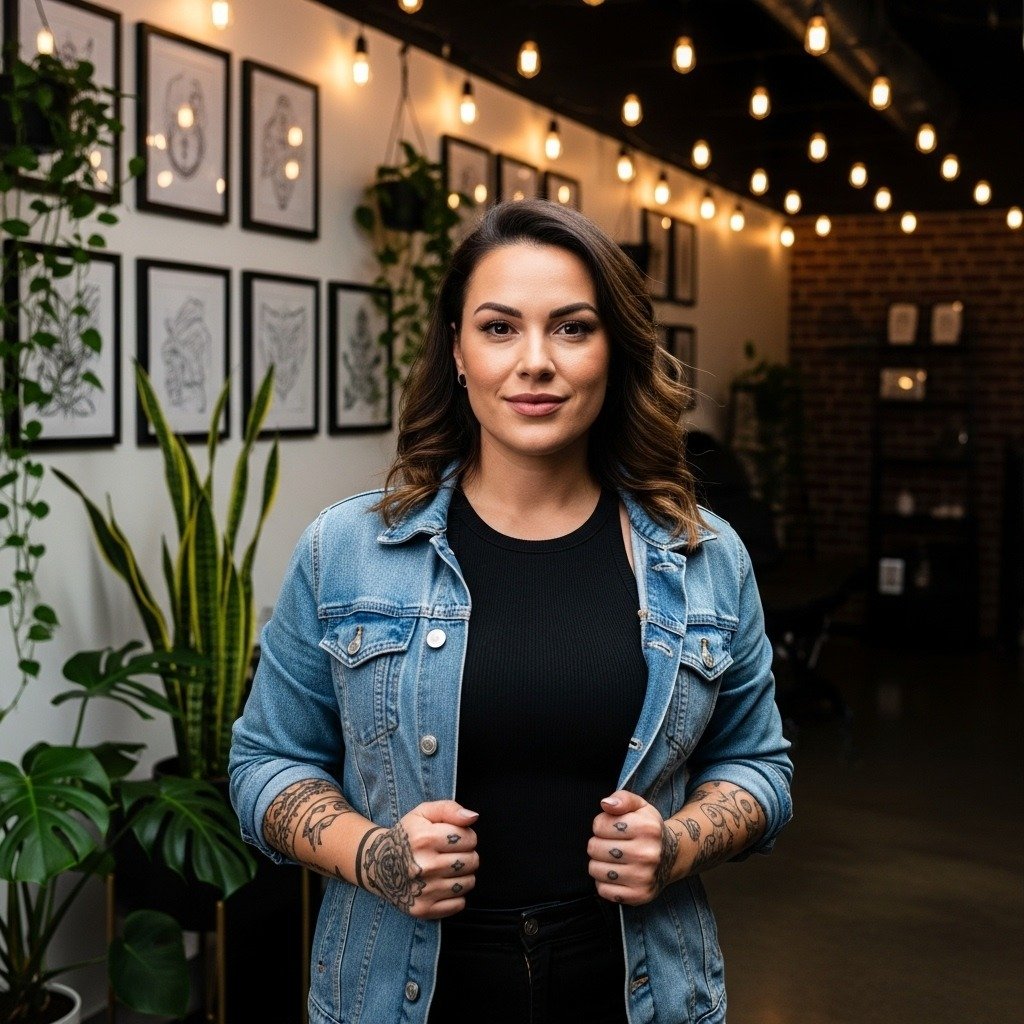
The smallest forearm pieces that still look crisp after five years are often not the wispy scripts that flood saved boards. Heavy black where it matters, slightly wider spacing in single-needle work, and a placement choice that limits sun and friction make a huge difference. Below the skin-level choices are the real trade-offs you will live with, and the first idea leans straight into a placement that keeps tiny numerals readable for the long haul.
1. Fine Line Roman Numerals on Inner Forearm
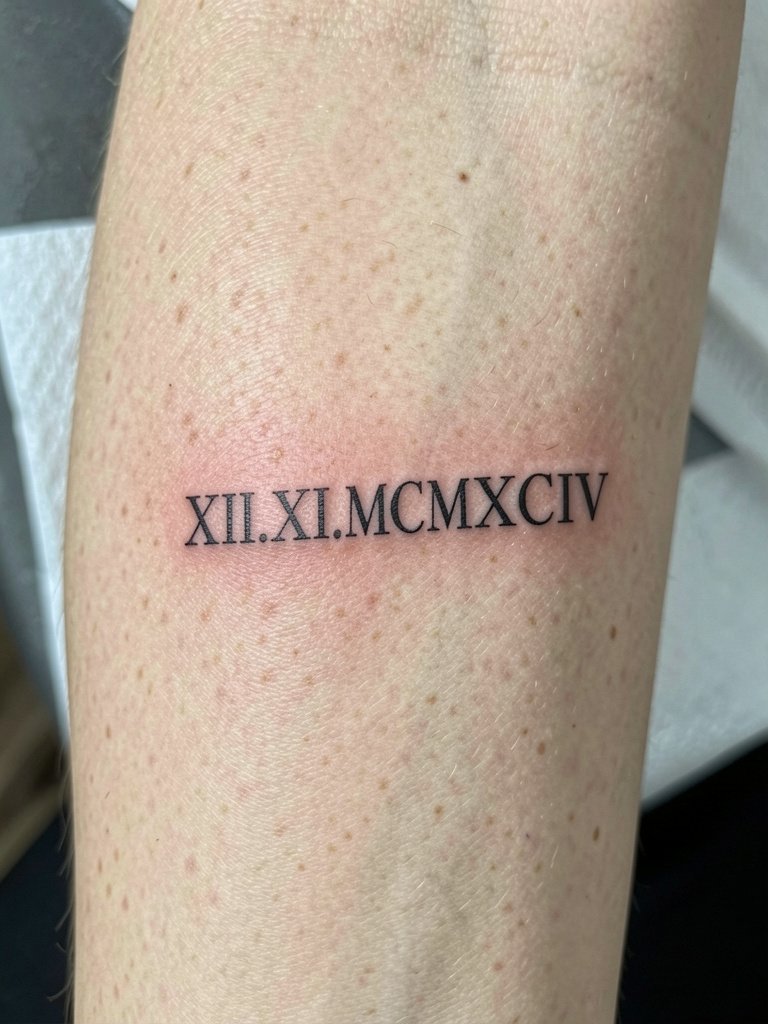
Roman numerals on the palm-up inner forearm are one of the best small-date placements for clarity over time. One reason is less direct sun and fewer watch-band rubs, which helps fine line stay readable. Artists split on where fine line ages best: one camp says outer forearm fades faster because daily sun exposure and friction blur thin lines, while the other camp argues the inner forearm keeps detail longer if the needle depth is slightly heavier to avoid blowout. If you want to keep digits legible, ask for slightly wider spacing and a single-needle weight that reads like a hairline but with presence. Wear-wise, this area looks tidy when you roll a linen button-down sleeve; for show, pair with linen button down shirt and a dainty gold stacked bracelet set on the opposite wrist during reveal photos.
2. Neo-Traditional Anchor with Roses on Outer Forearm
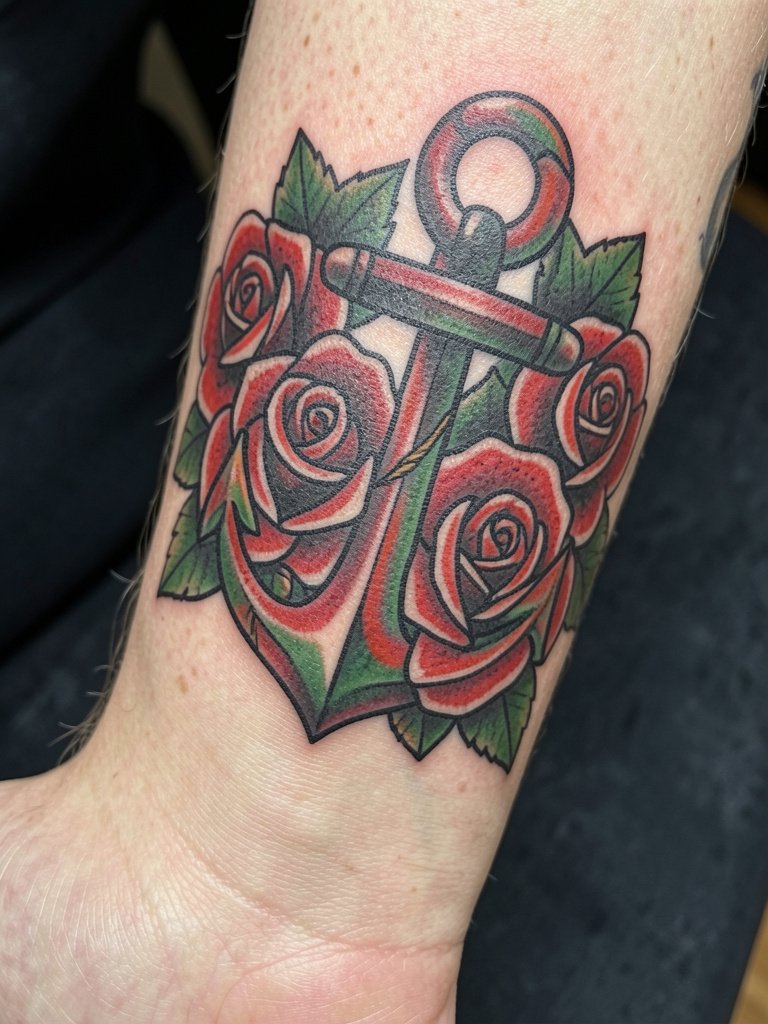
A saturated neo-traditional anchor sits boldly on the outer forearm and ages into its color rather than into a shabby smudge. The outer forearm gives the artist a broad canvas for saturated fills, and that saturation is the reason these pieces often outlast watercolor-style work. If you want vivid color longevity, specify full saturation and a plan for at least two sessions so the artist can pack color without overworking a single sitting. Common mistakes include squeezing the composition too small; take the design up an inch or two so petals and anchor details have room to breathe. For casual outfits that foreground bold lines, a solid vintage tee or a cotton tank reads best, try a vintage solid color tee and a cotton tank top for session comfort and photos after healing.
3. Blackwork Ornamental Mandala Wrapped Around Elbow
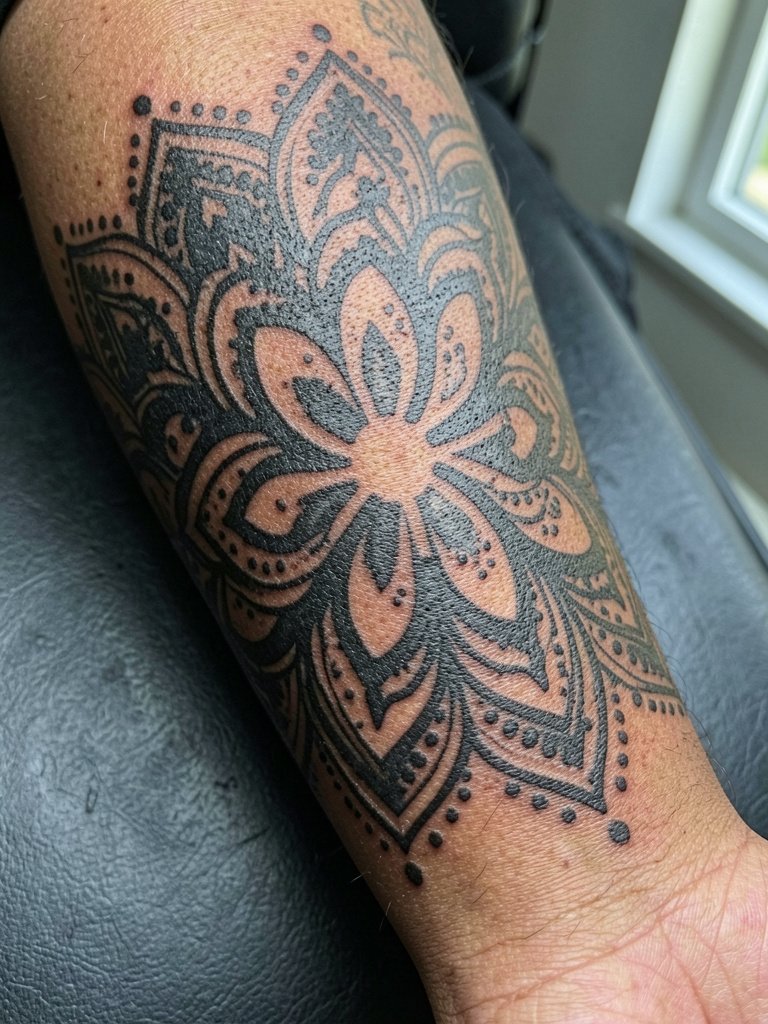
Mandala wraps use bold black to conquer a tricky joint. The elbow area stretches and compresses, so heavy anchor lines and open interior negative space are what keep the pattern readable as the skin moves. A typical error is requesting tiny filigree too close to the crease; that detail often softens into an indistinct lump after repeated joint movement. Ask your artist for a radial pattern with at least 3 mm between major anchor lines so the shape stays defined at six months and at two years. Respect the cultural origin of radial and sacred geometry designs by requesting a visual brief that highlights pattern structure rather than copying religious motifs.
4. Micro-Realism Portrait on Inner Bicep
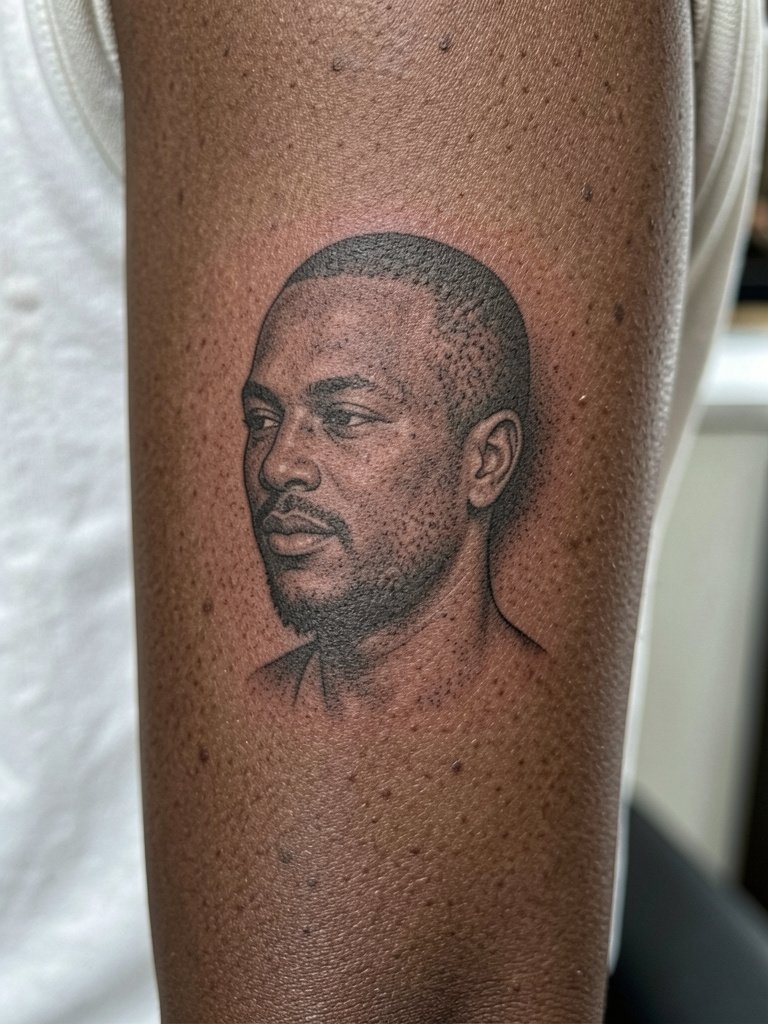
Micro-realism on the inner bicep gives you a stable surface with less UV exposure, which helps delicate portrait detail survive. Be explicit about what you want from the portrait: bring a tight close-up photo, a mid-distance reference, and ask the artist to map how the photo will read at three and five inches on skin so shadow placement stays true. There is a real debate about numbing cream. One camp says numbing cream is a legitimate tool for high-pain areas and helps clients remain still for multi-hour detail work. The other camp warns numbing alters skin texture and can cause ink to spread unevenly. If you use numbing, request a protocol: topical applied 45 minutes before and a short reassessment break halfway through long sessions so the artist can check saturation without guessing.
5. Ignorant Style “Blob” Symbol on Outer Forearm
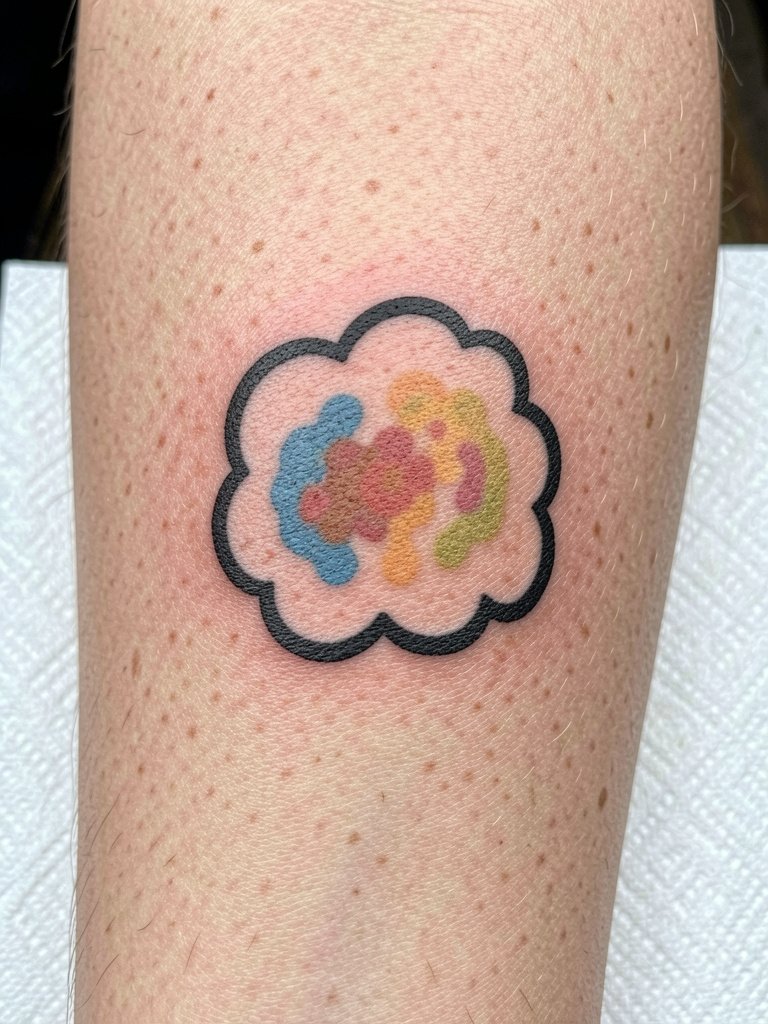
The ignorant style blob is low pressure and intentionally naive, which is why many first-timers choose it. The point here is not precision but visual humor, so avoid asking for a tiny version that reads like a smudge. One common mistake is over-detailing a deliberately crude shape, which defeats the aesthetic. This style is forgiving when it comes to touch-ups because the heavy linework and bold fill hide minor late-stage saturation issues. Expect a single short session and lower cost, and plan on a touch-up at six to twelve months if an edge softens.
6. Fine Line Botanical Vine on Inner Forearm
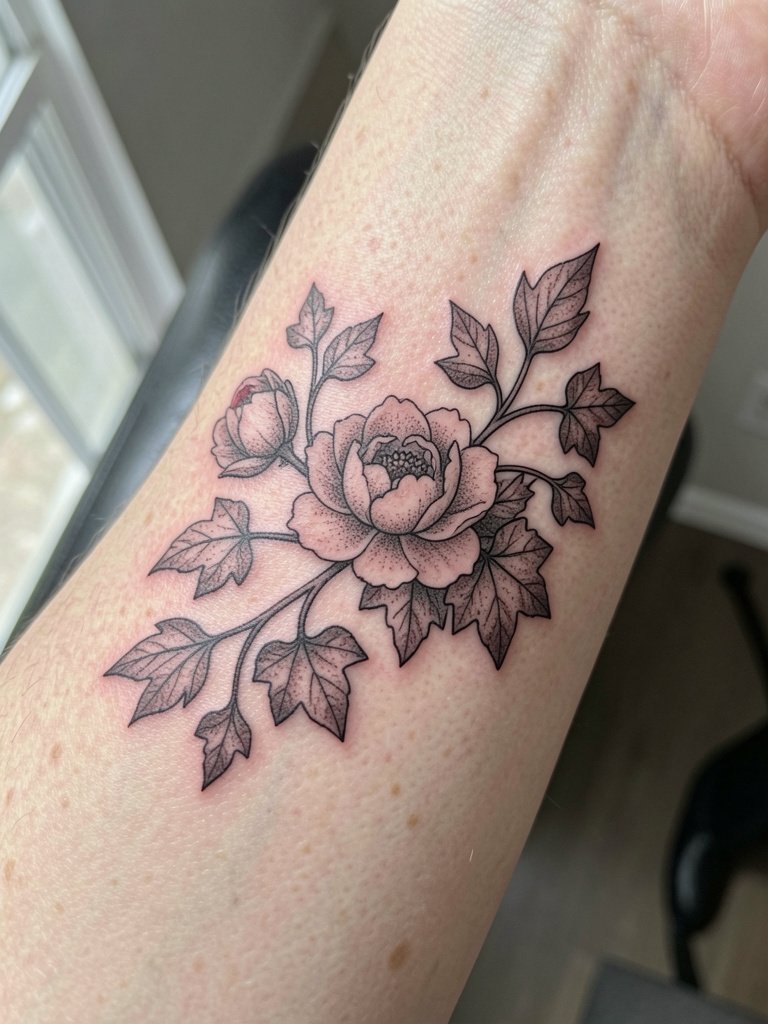
A flowing botanical vine fits the inner forearm naturally and is a top pick when you want curvature that complements arm movement. The usual request that ages poorly is ultra-thin single-needle filigree placed too close together; after two years the elements can merge. A practical tweak is to increase negative space between leaves and to use a touch of stipple shading to retain shape at three years. There is also the Aquaphor versus plant-based balm argument for healing. One side says Aquaphor’s occlusive layer protects fresh ink from bacteria when applied thinly and removed after a day. The other side warns Aquaphor can clog pores and recommends thinner plant-based balms for clearer healing. Plan a short touch-up timeline around the six- to nine-month mark if any leaf edges soften.
Session Day Picks
The inner forearm vines and the small numerals above have different care needs during the first week, so the following items help the most during session day and the early healing window.
-
Mad Rabbit Tattoo Serum. A lighter serum that absorbs quickly, useful for non-greasy moisture on fine line work without heavy residue that can trap lint.
-
Dr. Jart Tattoo Balm. Thin consistency preferred by many people with darker skin tones because it avoids a heavy film that can mute contrast in early photos.
-
Zen Tattoo Studio Custom Balm. A fragrance-free option that mirrors professional studio recommendations for sensitive inner-arm placements.
-
Plant-based tattoo aftercare balm. For folks who reacted poorly to occlusives in the past, a plant-derived balm can reduce clogged pores during the first week.
-
Hustle Butter Original. A mainstream plant-based alternative that many clients use instead of heavier petrolatum products when the artist agrees it suits the skin type.
7. Black-and-Grey Realism Wave on Outer Forearm
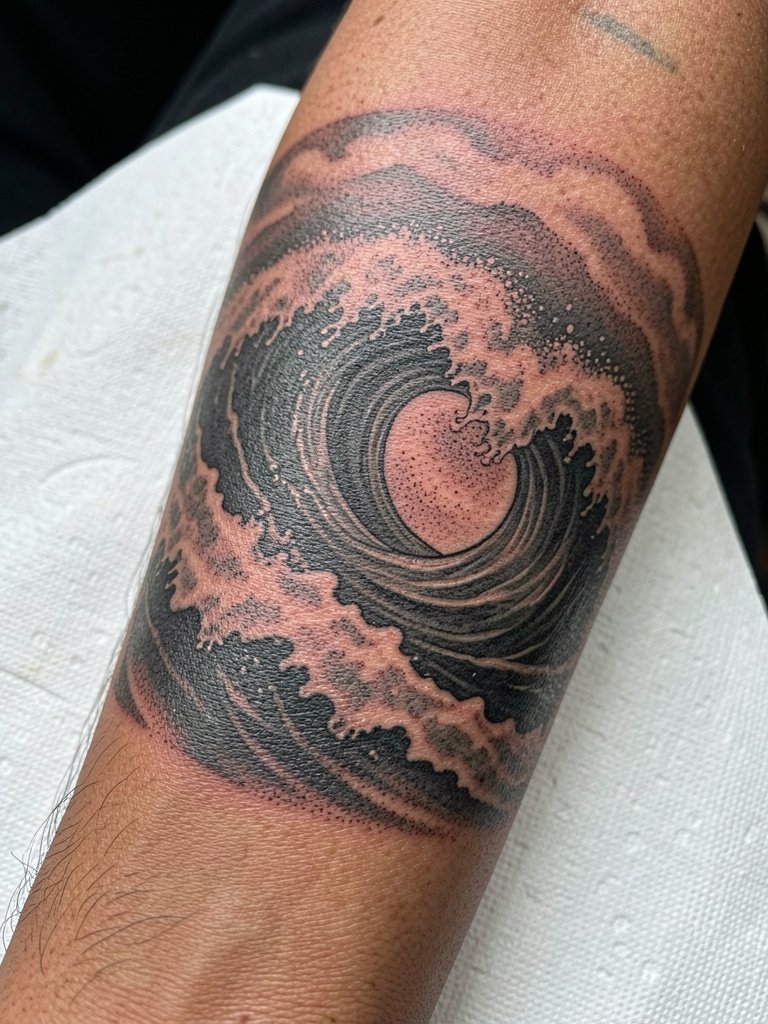
A lifelike wave relies on subtle shading and the room the outer forearm provides, which keeps tonal transitions clean as the piece heals. If you want a durable wave, ask the artist to focus on stipple transitions in shadowed zones rather than extremely fine crest lines that can disappear with time. Sessions for this size usually run multiple hours and often two sessions for full tonal depth. For showing off the piece after it heals, solid-color vintage shirts read best; consider a navy short sleeve tee and a cotton tank top so the arm silhouette and shading are visible without competing patterns.
8. Minimalist Single-Star or Dot Cluster on Inner Forearm
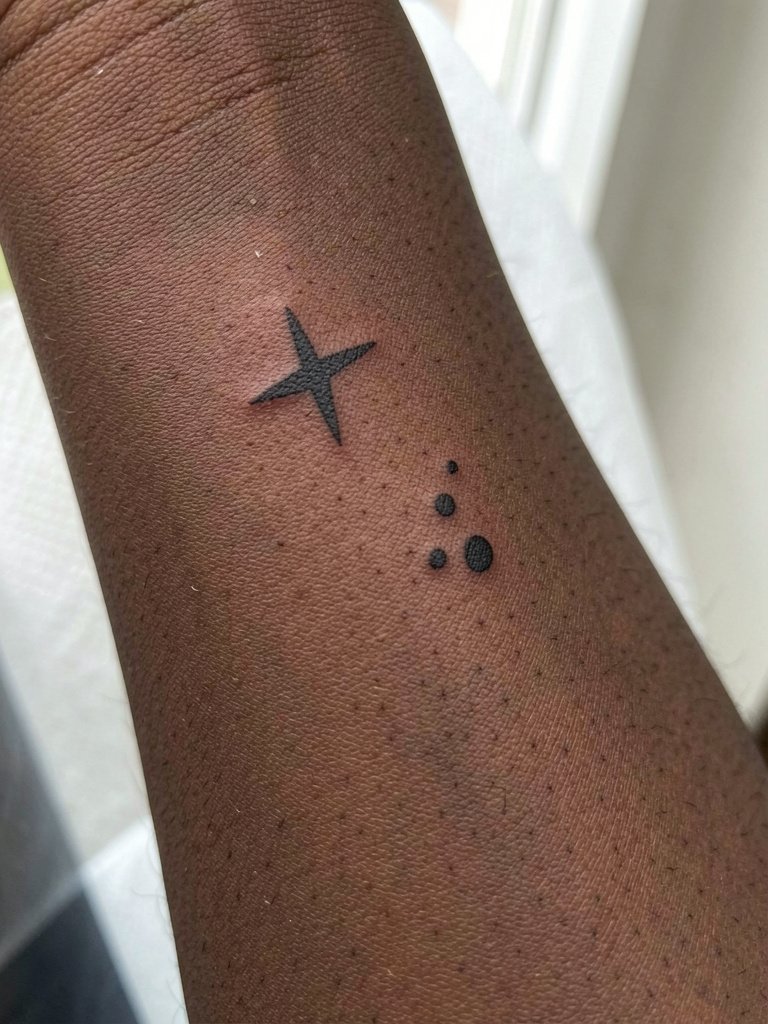
Tiny symbols are popular because they let you mark a moment with minimal commitment. The hard part is preserving crisp edges on darker skin or textured areas. The successful approach is higher contrast black ink with a slightly bolder needle than a true microline so the star holds. Expect a 30- to 45-minute session and a realistic touch-up window at six months if dots soften. If you want a visible marker for milestones, place the cluster with at least 6 mm between elements so each dot keeps its identity as the skin settles.
9. Japanese Irezumi Dragon Flowing Along Outer Forearm
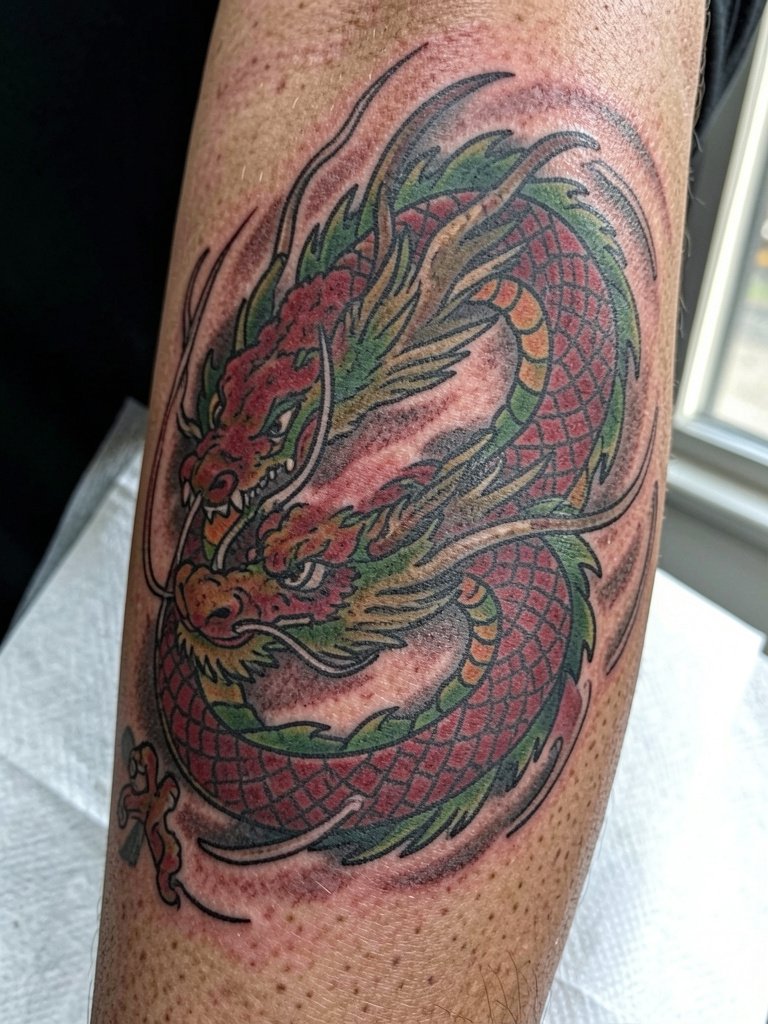
A full or half-sleeve dragon designed in Irezumi style benefits from flow that follows muscle shape, which gives the piece motion when your arm moves. Because this style has cultural roots, include a sentence in your brief that shows respect for the origin and asks the artist how they will adapt motifs faithfully. Large-scale color work needs staged sessions so saturation and healing are balanced. For daily wear that highlights the dragon’s silhouette, solid vintage cuts in navy or deep red are best. Pack an outfit option like a vintage solid color tee and a lightweight jacket so you can reveal the arm gradually in photos.
10. Geometric Triangle with Hidden Symbol on Inner Forearm
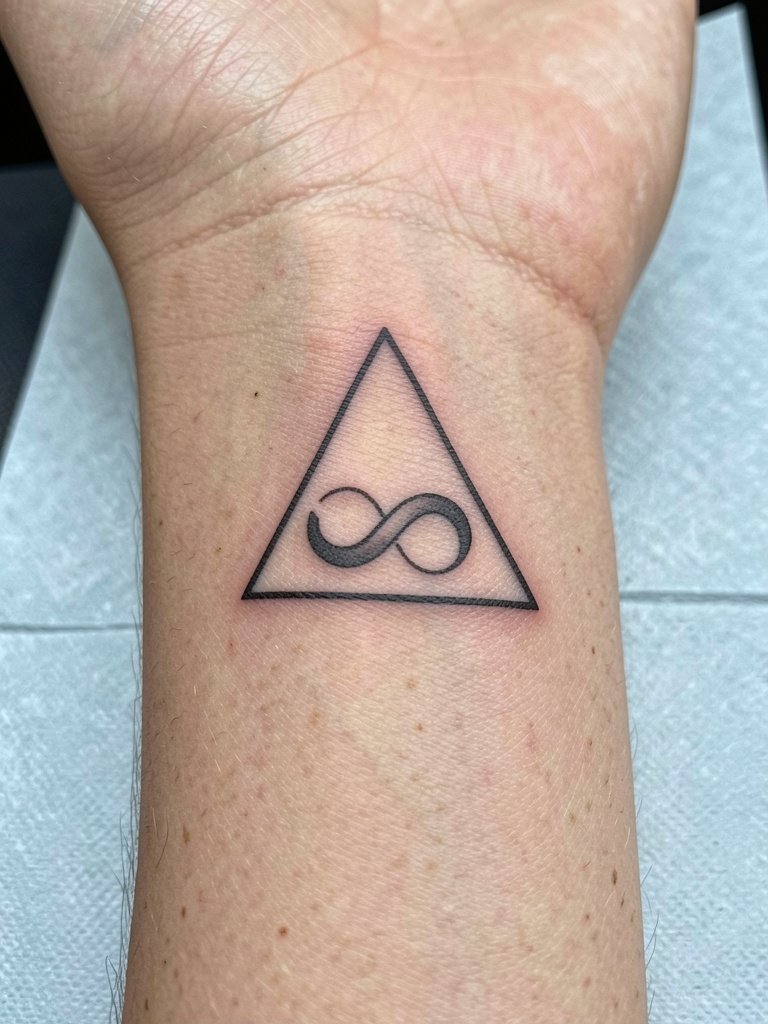
Geometric designs need breathing room. The hidden-symbol triangle reads best when the outer triangle lines are bold enough to act as an anchor while the interior motif remains delicate. A frequent error is choosing a triangle too small, which makes the hidden symbol unreadable at arm distance. Ask the artist to map how negative space will behave at three-inch and five-inch scales. Expect a single session and plan a touch-up at six months if crisp intersections lose contrast.
11. Abstract Continuous Line on Inner Forearm
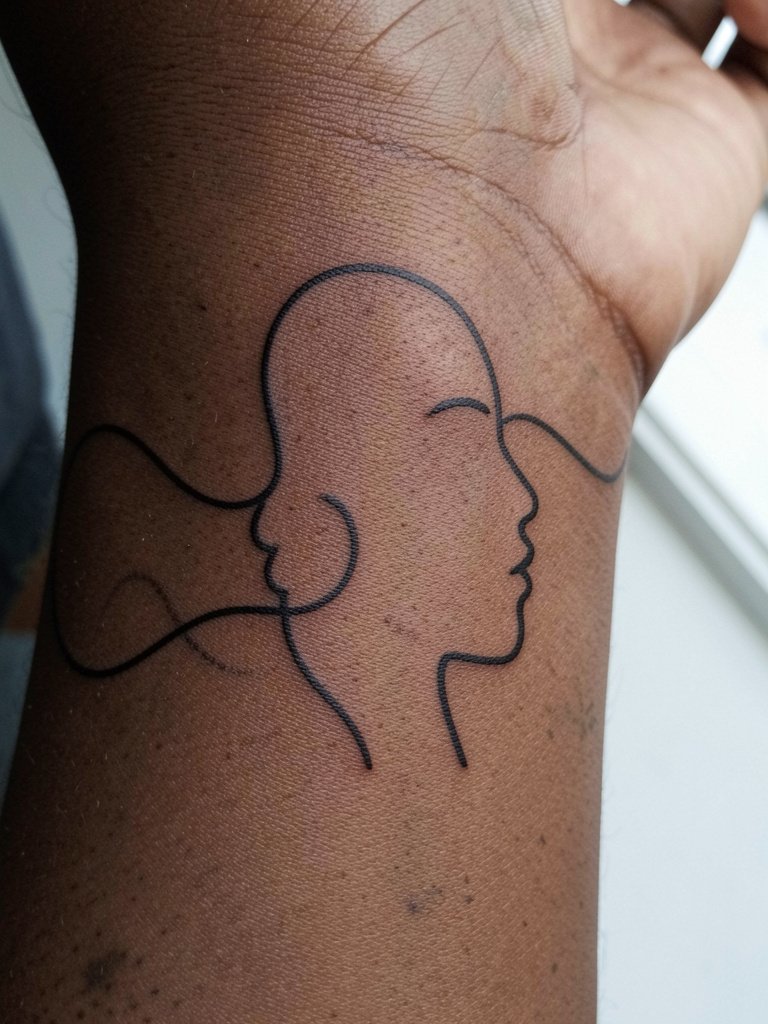
Continuous-line pieces are emotional in their simplicity and forgiving in touch-ups if you plan spacing correctly. The practical trick is to avoid hair-thin linework for long stretches on softer inner-forearm skin because blowout risk rises with very skinny, unbroken strokes. Ask the artist to vary the line weight slightly at structural points so the silhouette holds at two and five years. For showing off this flow in outfits, an open-back or off-shoulder top frames the forearm nicely; try an off shoulder dress cream for evenings out, and wear a loose tank top to the session so the artist has unobstructed access.
Frequently Asked Questions
Q: Which forearm placement keeps fine line detail the longest?
A: The inner forearm (palm-up surface) generally holds fine line better because it avoids the constant sun exposure and friction the outer forearm sees. That said, the inner forearm is softer skin, so the artist may choose slightly heavier single-needle spacing to avoid blowout. Pick an artist who shows healed inner-forearm examples at similar scales.
Q: How should I dress for a forearm or inner bicep appointment?
A: For the inner forearm, wear a loose button-down or a tank so the artist can roll your sleeve without pressure. For the inner bicep, a strapless top or loose tank gives clear access and avoids fabric pressing on the area. A session-day outfit like a loose tank top is practical and keeps the area clean.
Q: Where can I find healed forearm portfolios and local artists without direct names?
A: Search hashtags like #forearmtattoo and #finelineforearm on Instagram and TikTok and filter by location to surface nearby portfolios. Use Tattoodo and Booksy with keyword searches like "inner forearm fine line" to see healed images, and check Reddit communities for peer-shared healed photos across skin tones.
Q: Will a tiny wrist or forearm symbol need touch-ups often?
A: Small symbols can be touch-up candidates, especially on high-friction spots like the wrist. Plan for a possible touch-up at six to twelve months, and accept that digits or single dots may require a light refill sooner than heavy blackwork.
Q: How do I decide between Aquaphor and a plant-based balm for healing?
A: Both approaches work depending on your skin. Some people report clogged pores with heavy occlusives and switch to thinner plant-based balms for crisper healing. Others use a pea-sized layer of a petrolatum product for the first 24 hours without issue. If you have acne-prone or reactive skin, test a small patch of the recommended balm before applying it widely.
Q: What are red flags when scouting studios for forearm work?
A: Look for portfolios that show healed shots rather than only fresh work. Ask about session pacing and touch-up policies, and avoid studios with high last-minute cancellation reports. A deposit and a clear rescheduling policy are signs of a studio that manages client time professionally.