Someone I know decided to get a foot tattoo after three years of saving mood boards. The problem was not choosing the image. The problem was knowing which spot would hurt most, which styles fade from shoe friction, and how to plan two weeks with open footwear. I spent time in five shops across Brooklyn and heard the same three warnings over and over. These picks focus on dark, high-contrast designs that read well in sandals and survive the rubbing that kills lighter work.
1. Fine line cherry blossom on the top of the foot
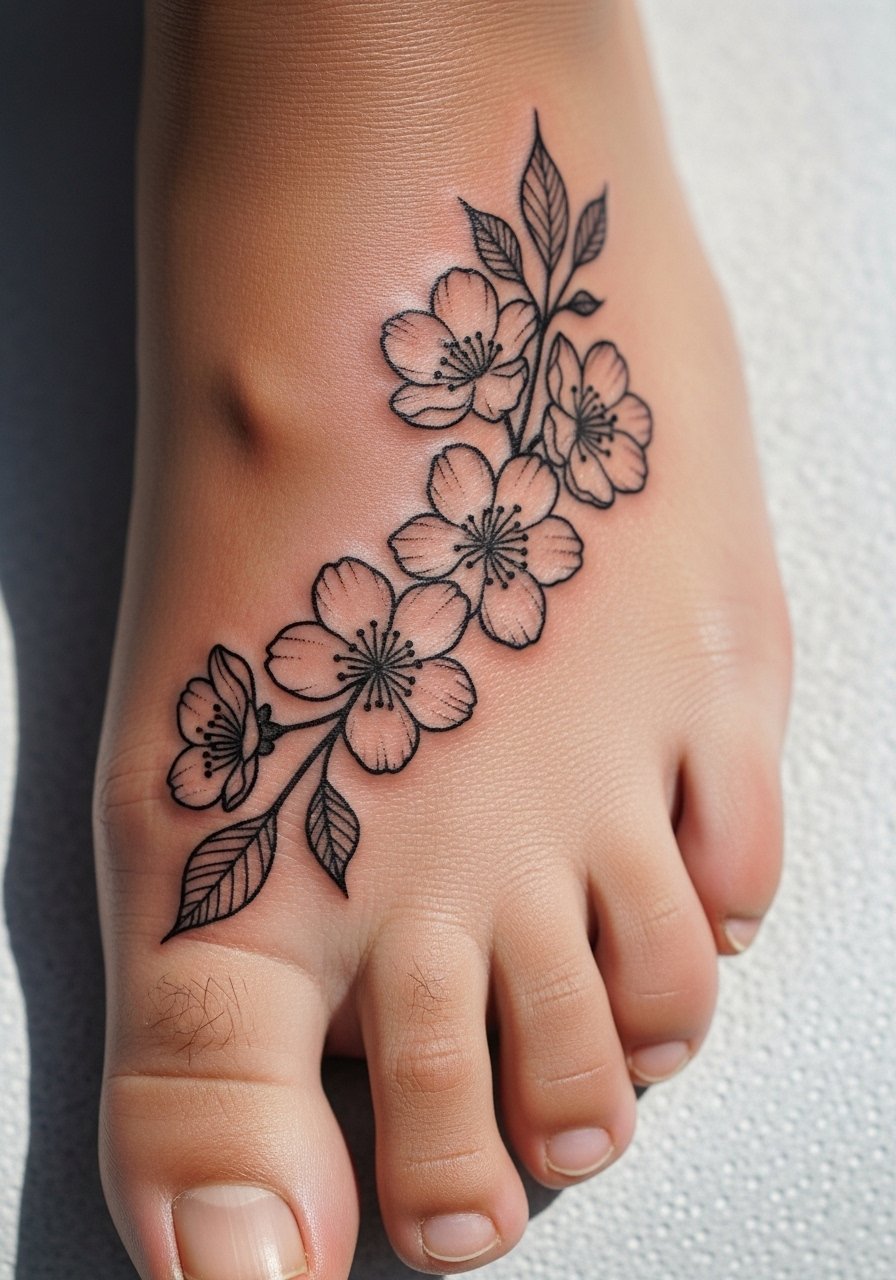
Someone I know first saw this on a friend who kept sandals on all summer. Fine line cherry blossoms read as a band of tiny branches across the foot top. Pain is high on the top because the skin sits close to bone, but sessions are short. Ask your artist for slightly bolder contour lines and stipple shading in the buds. The common mistake is asking for ultra hairline branches that vanish after six months. If you want the same silhouette but longer life, push for heavier main stems and fine inner detail only. Expect a light touch-up around the six to twelve month mark. Blowout risk exists where the design hugs the toe crease, so give the artist room to space the branches.
2. Minimalist feather along the foot arch

Fair warning about arch work on the foot. The arch hides well in shoes, but the area can swell when you stand for hours, which affects how the ink settles. The feather is great for people who want concealment during the week and a peek in sandals on weekends. Tell your artist you want the quill to stay bold near the base and feather out with stipple shading toward the tip. The mistake I see most is placing the feather too thin so it disappears in a year. Pain here is medium compared with the top. Plan a single short session and a touch-up window at six to nine months.
3. Small script quote curving around the ankle

Most script on feet ages differently than people expect. Lettering that sits on the ankle curve needs consistent letter spacing and slightly heavier stroke weight to avoid blurring. When you sit down for consults, bring the exact short phrase and the font sample. Ask the artist to ink a practice stencil on skin to check flow. Expect a one-session appointment for a two-inch phrase. The biggest mistake is choosing a super-fine, ornate script for a curved placement. That style reads well in mockups but fills in after heal. For longevity, prefer clean, slightly weighted linework and plan a touch-up if letters soften after a year.
4. Snake coiling around the ankle in blackwork
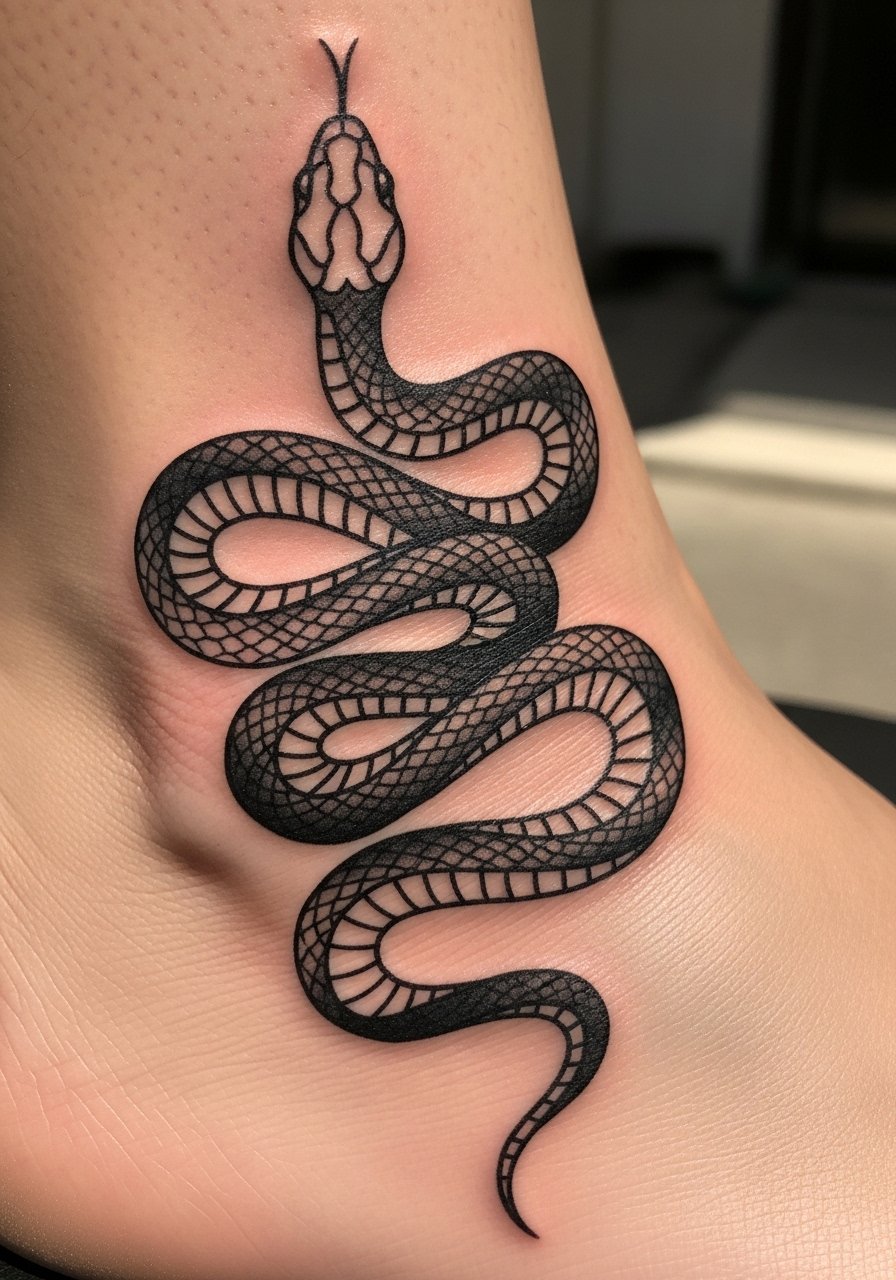
There is a visual impact to a dark ankle wrap that reads from across a room. Snake coils elongate the lower leg and work well with anklets or low boots. This style is more painful near the ankle bone and softer on the inner ankle. Tell your artist you want solid contour with tight stipple shading for texture rather than thin internal lines. A common error is making the head too small relative to the wrap, which loses character on healed skin. Expect one to two sessions depending on scale. Blackwork holds much better than light color in this placement, and touch-ups at year two keep the scales crisp.
5. Phases of the moon along the foot side

The moon phase line is a favorite for people who want a linear motif that follows the foot's curve. Aging here becomes a debate among artists. One camp says fine circles are too delicate and blur from skin movement. The other camp argues that carefully spaced thin rings with small gaps will keep shape if the depth is right. Name both camps when you ask about longevity. The side of the foot is lower on the blowout risk scale than the top, but friction from shoes still matters. Pain is moderate. Keep the moons spaced at least a few millimeters apart and expect a touch-up between year one and year three.
6. Mandala on the foot arch

When I first saw a mandala placed along the arch I realized how well symmetry can tuck into footwear. The arch gives a natural canvas for radial work, but the design needs breathing room. Ask for a version that uses stipple shading and slightly bolder outer rings. A common mistake is packing fine concentric rings into a tiny space, which blurs into an indistinct blob after healing. There is also a sensitivity issue. Mandala patterns draw from Buddhist and Hindu traditions, so some clients choose to adapt motifs rather than replicate a sacred piece. Expect two short sessions for a two-inch mandala and a likely touch-up at the year mark.
7. Matching mountain silhouettes across both feet

Artists split on whether bilateral foot tattoos should be identical or intentionally asymmetric. One camp favors mirror images for a neat pair. The other camp prefers small variations that acknowledge walking patterns and natural asymmetry. For hikers and outdoors people this style reads as movement while staying bold. Tell your artist you want the peaks simplified into solid shapes so they hold up against friction. The mistake is over-detailing tiny ridgelines that grind away from shoe rubbing. Pain is manageable since the design sits away from the thinnest top spots. Expect a single session per foot and a combined touch-up if one side fades faster.
8. Tiny star constellation on the heel

There is a comfort in heel placements because they hide under socks and show in backless shoes. Star clusters can be placed off the calcaneus to avoid constant pressure during walking. During consults request tiny dot work anchored by one or two slightly bolder stars. The common mistake is making all the dots equally faint, which leaves nothing to read in a year. Pain on the heel is lower than the top of the foot but still present near the bone. Expect one short session and a possible touch-up at nine to twelve months. Black ink constellation work outlasts light color here.
9. Mini Medusa head with snake accents near the toes

A less-seen mythic option is a small Medusa motif near the toes. It reads as bold and sculptural when done with dark linework and thoughtful negative space. This design is for people who want a dramatic symbol tucked in a small area. The mistake I see is trying to include facial detail that the scale cannot support. Ask your artist to focus on silhouette, eye sockets, and snakes rendered with whip shading for motion. Pain near the toe creases is higher. Expect a single session if the design stays compact and a touch-up at year one to preserve contrast.
10. Dark whale silhouette on the foot arch

Most watercolor whales fade fast on feet, so this darker silhouette version solves the longevity problem. If you love ocean imagery but worry about color fade, a strong black-blue silhouette keeps the theme while surviving shoe friction. During the consultation ask for a single-session stencil on the arch to check proportions with foot curvature. The frequent error is adding light washes that patch out over time. Pain across the arch is medium and healing is straightforward. Expect one session and a touch-up if the whale's belly loses saturation after heavy sandal use.
Tattoo Prep and Aftercare Essentials

Fragrance-free gentle foaming cleanser for tattoos. Use this during the first week to remove bacteria and residue without stripping the skin. Clean with lukewarm water and pat dry.
Lightweight fragrance-free healing balm. Apply a thin layer after cleaning to keep the area hydrated while avoiding clogged pores.
Medical-grade second skin bandage, single-sheet size. Useful for the first 24 to 72 hours if you need to protect the ink from shoes or sand.
Non-stick sterile gauze pads, multi-pack. Keep these on hand for blotting excess lymph and for gentle coverage while dressing.
Moisture-wicking shower sandals. Plan a pair for the healing period so you can avoid closed shoes and protect the tattoo during showers.
Aquaphor Healing Ointment, original formula. Use sparingly during the first few days if recommended by your artist. I include this as one mainstream option that many artists reference.
Fragrance-free sunscreen broad-spectrum SPF 50. Use for long-term protection once the tattoo is fully healed to prevent UV-related fading.
Antibacterial gentle soap bar. A small travel bar is handy for keeping the area clean when you are out and about.
Every tattoo is different. Always follow your artist's specific aftercare instructions. Consult a dermatologist if you have skin concerns or unusual healing issues.
Frequently Asked Questions
Q: Will fine line cherry blossoms on the top of the foot blur faster than bolder versions?
A: Yes, fine lines on the top tend to soften sooner because the skin is thin and rubs against shoes. The two camps are clear. One says fine line will blur within a couple of years. The other says careful needle depth and a slightly heavier primary outline keeps the look. If you prefer fine detail, plan for a touch-up in year one or two.
Q: How do I protect a mandala on the arch while shoes are unavoidable?
A: Keep the area bandaged with a medical-grade second skin when you must wear shoes for long stretches. Once healed, use broad-spectrum sunscreen to limit UV fade. The shopping list link to a fragrance-free SPF helps with long-term maintenance.
Q: Are dark silhouettes like black whales or mountains better than color for foot placements?
A: From what I've gathered, dark silhouettes hold up far better than pale color washes on feet. Color can look great at first and then patch out due to friction. Solid black or near-black blue keeps the silhouette readable for longer and requires fewer touch-ups.
Q: If I want matching mountains on both feet, should they be identical?
A: It depends on aesthetic taste. Some people prefer mirrors for symmetry. Others ask for slight differences so the set reads as a pair rather than carbon copies. Mentally plan for small variation and request a test stencil for both feet before the session.
Q: How long before I can safely wear closed shoes after a foot tattoo?
A: Plan to avoid tight closed shoes for at least ten to fourteen days if possible. If you must, use a breathable, low-pressure shoe and protect the area with a non-stick sterile pad during the first week to reduce rubbing and infection risk.
Q: Do snake wraps at the ankle need thicker linework to avoid blowout?
A: Yes, snakes with very fine internal detail can lose definition where skin stretches or blisters. Ask for bold contours and textured shading like whip or stipple so the pattern reads even if some internal lines soften. Trust your artist on spacing and depth while being specific about wanting strong outer lines.