
Bold blackwork ages more reliably than fragile single-needle detail when you want an eagle that still reads at year five. If you want fierce presence from across a room, plan for spacing and heavier lineweight up front, not a last-minute saturation pass. Below are concrete eagle directions and placement notes that help the design survive daily friction, sun, and time while still looking intentional on men who wear them.
1. Realistic Bald Eagle Chest Piece

A large, realistic eagle head across the upper chest reads bold even as details soften over time. I recommend this over a tiny chest patch because the broad planes let shading age cleanly. Bring close-up portrait references and ask for the eye to be slightly overscaled so it keeps presence after two years. Chest sessions feel like steady vibration and deep pressure, so expect two to four hours depending on detail. Common mistake is packing too much tiny feather work near the sternum. Plan a touch-up window at around 12 to 18 months for saturation top-ups.
2. Neo-Traditional Eagle on the Shoulder Cap
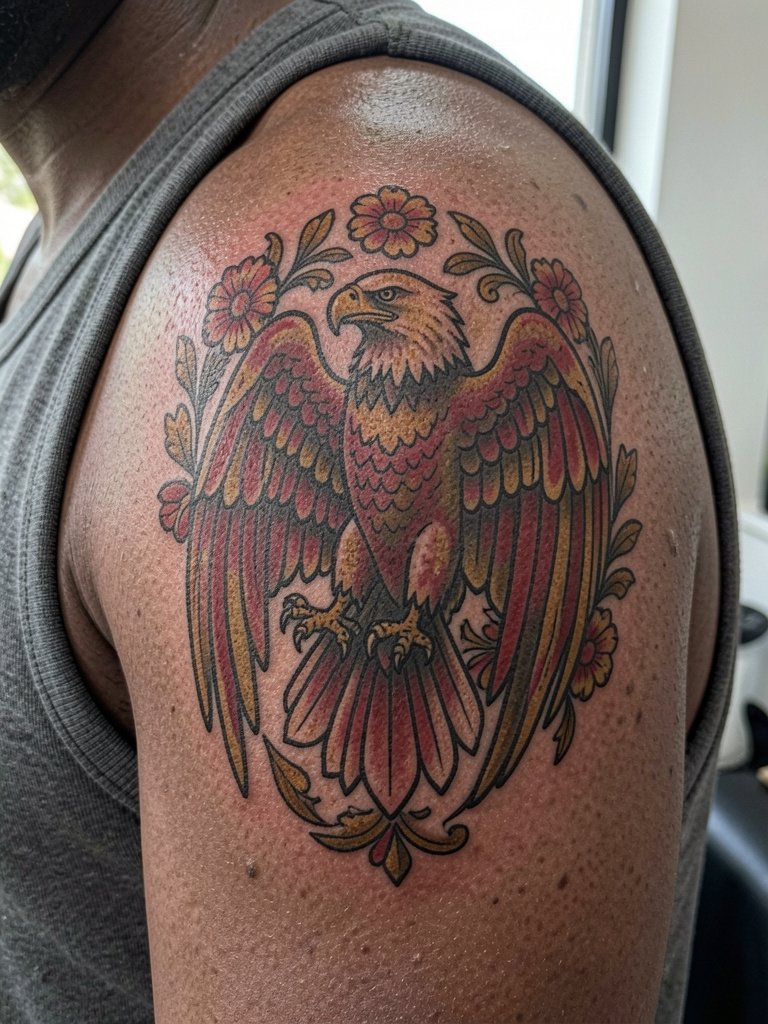
Neo-traditional gives the eagle a bold silhouette that reads from a distance and handles summer shirt sleeves well. I advise this when you want a statement shoulder piece that pairs with short sleeves, not a faint sketch that disappears. During the consultation, show color swatches you like and ask for flat color blocks instead of micro gradients so saturation lasts longer. Shoulder work is moderate on pain, often done in one session under three hours. Expect a touch-up at year two for color refresh if you spend a lot of time in the sun.
3. Minimalist Linework Eagle on the Inner Forearm

The inner forearm is ideal for clean linear eagles because the skin surface is flat and easy to work. Pick a slightly heavier single-needle lineweight than your reference so the contours survive the first two years. Ask for mockups at two sizes during the consult to see how the continuous line reads at three versus five inches. Sessions here are quick, often under 90 minutes, and healing shows early crispness at six months. A common mistake is demanding ultra-thin lines that blur into a single stroke by year three. For show-off outfits, this placement pairs well with rolled sleeve short-sleeve shirts that frame the forearm.
4. Geometric Eagle Sleeve Accent on Outer Forearm
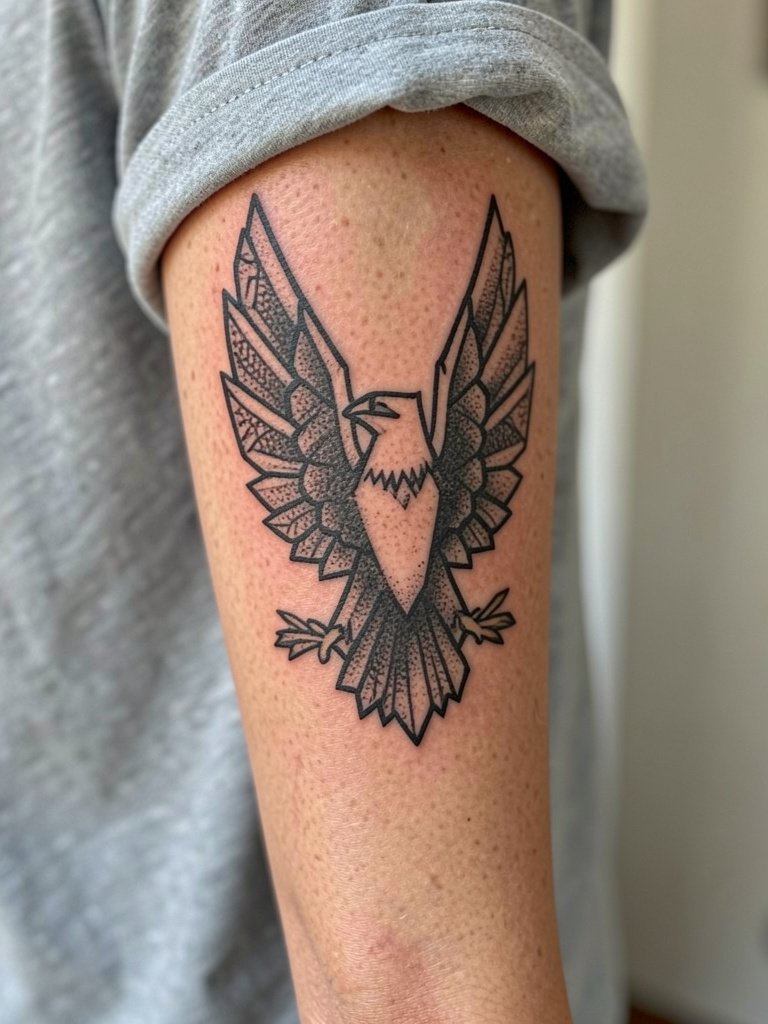
Geometric work uses negative space to suggest feathers so the eagle reads like architecture more than wildlife. I suggest this over a full realism sleeve if you want lower maintenance and a graphic look that veils minor fading. During planning, bring proportional templates so the artist can balance wing panels to arm curvature. Outer forearm sessions are medium in discomfort and usually split into two shorter sittings for even saturation. Mistakes occur when artists try to force symmetrical geometry onto a tapered arm without adjusting scale.
5. Blackwork Spread Wings Across Back

Blackwork wings across the back become a bold graphic that holds up through years of sun exposure because solid fills resist line blur. I recommend this for guys who prefer low-detail drama instead of tiny feather textures. Plan the negative-space breaks with your artist so the wings match shoulder motion. Back sessions can be long and feel like repeated tapping across wide areas, so split into two to four sittings. Expect touch-ups at two to three years if daily sun exposure is heavy.
6. Small Eagle Talon on the Wrist

Wrist talons make a compact, symbolic piece that reads well with watches and bracelets. I prefer a slightly thicker outline here rather than filigree to avoid early blur from frequent washing and friction. During the consult, request the artist to show the design wrapped around the wrist so it does not distort when you move. Wrist sessions are short but the area is sensitive, with sharp surface pain for most people. For appointment comfort, wear a short-sleeve button shirt with loose cuffs so sleeves can be adjusted without rubbing the fresh ink.
Pre-Session Essentials
These first six placements range from chest to wrist, so a few small items smooth the chair time and the first week.
-
Stencil transfer paper kit. Lets you preview the linework on skin before committing, especially useful for the chest portrait and forearm linework in ideas above.
-
Topical numbing cream. Applied 40 to 60 minutes before can reduce surface pain on the wrist and ribs without affecting line accuracy.
-
Thin protective film roll. Keeps wrist and hand tattoos clean during the first week of friction from washing and typing.
-
Fragrance-free gentle body wash. Cleanses the healing area without irritating the fresh linework on chest and back pieces.
-
Aquaphor healing ointment. Thin protective layer for the first few days locks in moisture for small blackwork without clogging needle channels.
7. Heraldic Eagle Crest on the Thigh

A thigh crest works when you want a private statement that can be shown selectively. I recommend this over a smaller crest on the hip since the thigh gives breathing room for the scrollwork. Ask for the banner text layout during the consult so the lettering sits on relaxed skin, not stretched. Thigh sessions tolerate longer sittings and pain is moderate. Common mistake is packing tiny script into a banner that later becomes unreadable. For longevity, plan a light touch-up at around 18 months.
8. Single-Needle Eagle Head on the Calf
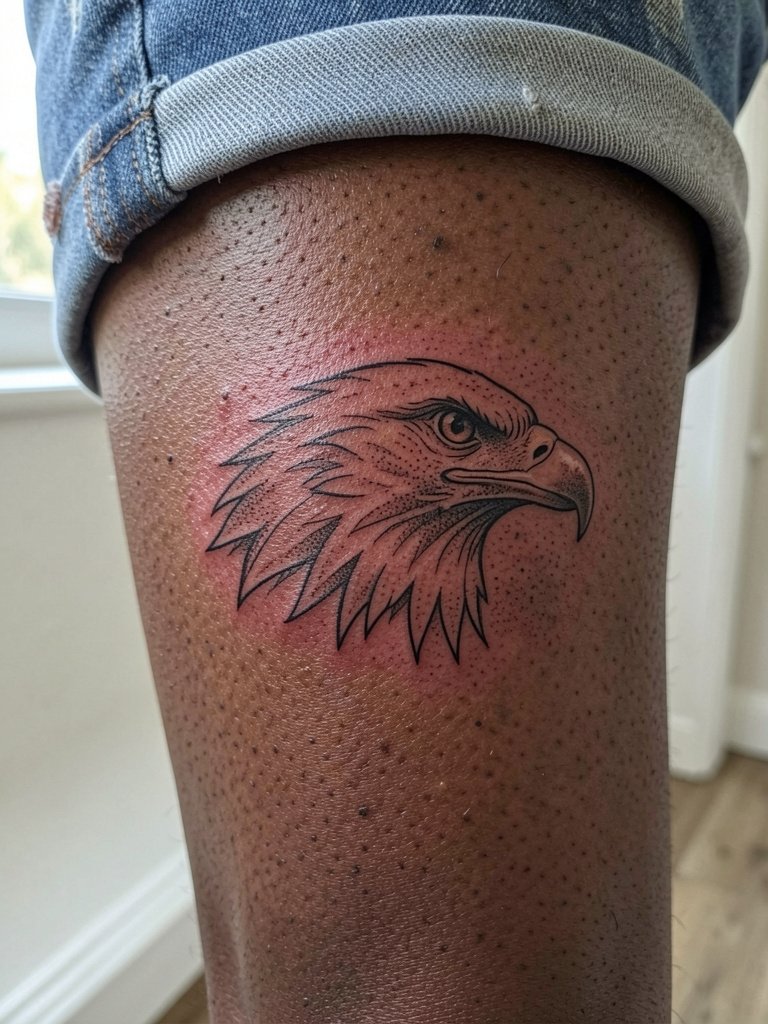
Single-needle on the calf reads delicate and elegant when scaled to a palm-length portrait. I recommend slightly enlarging fine details compared with reference art so the stippling and thin contours do not merge after two years. Calf sessions are comfortable for most and often done in a single two-hour block. A common error is using single-needle for extremely dark shadow areas. If you spend a lot of time outdoors, expect a color or contrast refresh at year two.
9. Eagle and Mountain Ribcage Panel

Fine-line ribs split artists into two camps. One group argues the skin stretch and motion blur ribs easily within two years, especially along the chest-flank curve. The other group says that with slightly heavier spacing and proper depth, fine line settles and looks crisp in three-year healed photos. If you choose ribs for this eagle, specify the spacing for the mountain detail and request a staging session so the artist shows healed examples on similar skin. Rib sessions are among the most painful, so plan for short breaks and realistic session pacing.
10. American Traditional Flying Eagle on the Bicep

Classic American traditional gives eagles a timeless, aging-friendly look because the thick outlines and saturated colors resist blowout and fading. I suggest this over a realism bicep piece if you want low maintenance and strong contrast. Ask for mock-ups showing the banner curvature at full bicep flex so the design does not warp when muscles move. Bicep sessions are one of the least painful and are often completed in under two hours. For afternoon shows, this placement pairs well with sleeveless utility vests that expose the arm.
11. Watercolor Abstract Eagle on the Shoulder Blade

Watercolor eagles read dreamy on the shoulder blade but age unpredictably because soft color edges can blur. I favor bolder contour anchors with watercolor fills so the silhouette survives fading. During consults, ask the artist to designate saturated anchor points that will still read if the washes soften. Shoulder blade sessions are medium and usually finished in one to two sittings. Touch-ups for color bleed are common at the two-year mark for this style.
12. Eagle Claw Micro on the Finger

Finger tats divide opinion routinely. One camp says fingers fade and blur fast because of constant washing and thin skin, making micro detail unreliable. The other camp argues that bold, simplified iconography with thicker outlines and planned touch-ups can keep finger work legible for years. If you choose a finger talon, request simplified shadow blocks instead of tiny feather lines and schedule a follow-up touch-up at three to six months. The sensation is sharp and shallow, but sessions are brief. For the studio, wear fitted short-sleeve shirts that let the artist access the hand without fabric interference.
13. Small Eagle Flight at the Collarbone

Collarbone eagles look refined when left minimal and sized to the bone contours. I recommend this over a larger chest eagle when you want a discrete visible piece that layers well with shirts. Ask for placement stencils while standing and sitting so the eagle sits true with your posture. Collarbone sessions can bite when the needle crosses bone, rated higher on most pain scales. Expect small-line touch-ups at one year if you sleep on your side frequently.
14. Compass-Eagle Hybrid on the Outer Arm
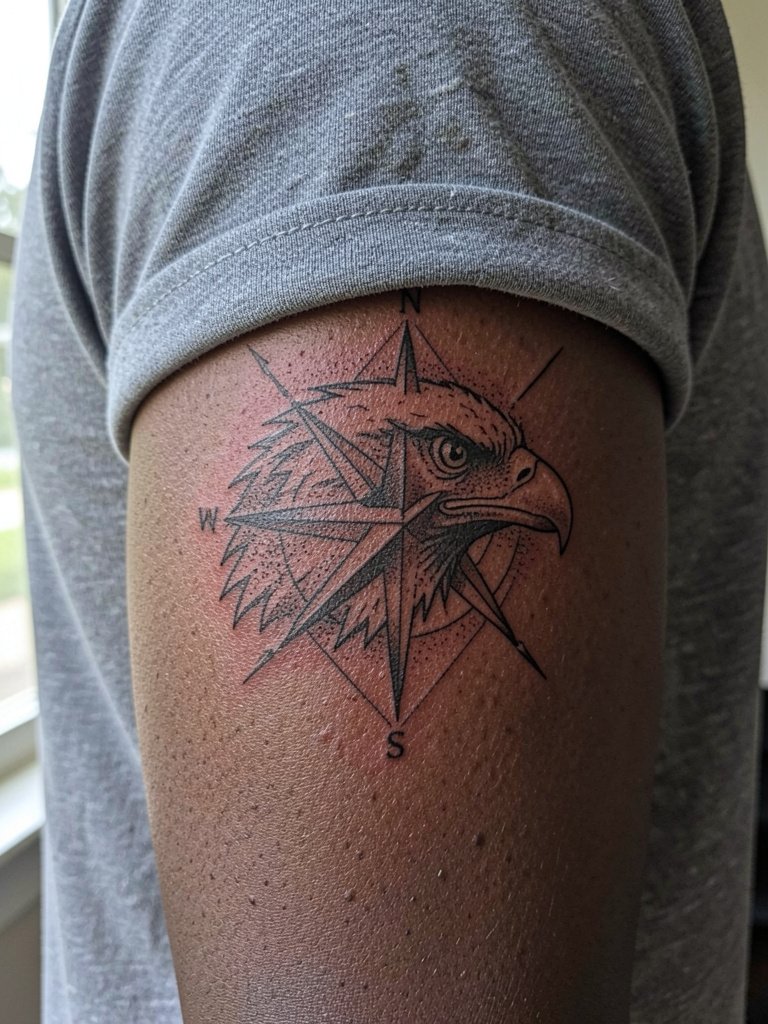
Pairing an eagle with a compass gives meaning and keeps the composition geometric enough to age well. I suggest this hybrid for men who want symbolism with crisp edges instead of full realism. During consultation, have the artist show the compass tick size increased slightly to avoid future merging. Outer arm work is mild for pain and usually a single session under two hours. For show-off looks, this style pairs nicely with rolled-sleeve chambray shirts that frame the outer arm.
15. Tiny Eagle Silhouette Behind the Ear

Behind-the-ear placements are intimate and require a light touch because the area is small and the skin is thin. I recommend simplified silhouettes rather than head portraits to avoid illegibility after healing. Mention the hairline during consultation so the artist places the eagle where it will show when hair is up. Sessions are quick but the site is sensitive. Consider specialized artists experienced with tiny placements for the cleanest results.
16. Mandala Eagle Thigh Wrap on the Outer Thigh

Mandala wraps give eagles a decorative, symmetrical frame and perform well on the outer thigh because the skin is stable. Use this design if you want geometry blended with organic feather texture. During planning, request a radial guide so the dot work maintains even spacing around the wing curve. Outer thigh sessions tolerate longer sittings, and pain is moderate. If the mandala references a cultural motif, acknowledge its origin and ask the artist about respectful adaptation.
17. Hyper-Real Eagle Eye on the Side Neck

Neck realism reads intense and demands precise depth control because neck skin moves and stretches differently. I recommend slightly simplified feather edges combined with a crisp pupil so the eye remains expressive after healing. Note that neck placements are visible and may carry social considerations, so plan placement carefully. Sessions can be painful due to thin skin. Seek an artist who shows healed neck work on similar skin tones.
18. Eagle and Anchor Forearm Panel with Rope

A nautical eagle-anchor pairing adds narrative and frames well along the forearm anatomy. I recommend bold rope lines so they do not disappear under hand motion and frequent washing. During consult, ask the artist to plan rope thickness increments to compensate for forearm taper. Forearm sessions are moderate and often completed in a single sitting under three hours. For outfits that highlight the panel, try a rolled-cuff denim jacket that stops just above the design.
19. Feather Script Row Along the Flank

Feather rows create movement along the torso but are sensitive to skin stretch. I recommend slightly increased spacing between feathers and using thicker script strokes for legibility over time. Ask for mockups with the body relaxed and slightly twisted so the row sits naturally. Rib/flank work is higher on most pain scales and often requires staged sessions. Expect the script to need a touch-up at one year if sleeping posture puts pressure on the area.
20. Eagle Skull Blackwork Calf Sleeve

Blackwork skull eagles deliver bold contrast and stay dramatic as they age because solid fills mask small blowouts. I recommend full-black anchor zones balanced with negative space to keep the skull readable. Calf sessions are comfortable and often done in two medium-length sittings. For footwear that shows off the sleeve, pair it with low-cut canvas sneakers so the art sits above the shoe line.
21. Tiny Ankle Eagle Motif

Ankle motifs are small statements that suffer from friction from socks and shoes. I prefer compact silhouettes with thicker outlines so the shape survives frequent rubbing. During consult, ask the artist to place the motif slightly above the ankle bone to reduce contact with footwear. Ankle sessions are brief but can be scratchy. Expect a touch-up within a year for designs exposed to heavy footwear contact.
22. Wing Half-Sleeve on the Upper Arm with Color Accents

A wing half-sleeve balances visibility and coverability, and selective color accents keep the piece modern without high maintenance. I prefer limited palette choices so only small areas require color refresh later. Discuss exact accent shades with your artist, and request saturated test swatches on similar skin so you know how the blue will heal. Upper arm sessions are manageable and often completed over two sittings. For outfits, this placement looks sharp with short-sleeve linen shirts that let the arm show.
23. Sailor-Style Eagle Near the Pocket Line

Small sailor eagles near the pocket line are wearable and flirt with visibility when you wear button shirts. I recommend solid outlines and compact shading to avoid the piece breaking down with torso motion. Ask to preview the design with the shirt on so the placement reads with clothing. Chest-side sessions are moderate and quick for small pieces. Expect a light touch-up if the banner text starts to soften in the first two years.
Frequently Asked Questions
Q: How do eagle tattoos on ribs compare to those on the chest for longevity?
A: Rib pieces experience more stretch and motion than central chest work, so fine details on ribs often soften faster. If you want ribs, request wider spacing and slightly bolder lineweight so shadows and feather breaks stay legible for longer.
Q: Where can I find healed portfolio examples and discovery pathways without naming artists?
A: Search platform tags like #EagleTattooHealed, filter location on social platforms to see local studios, and browse portfolio sections on dedicated tattoo platforms for healed photos. Reddit tattoo threads also surface before-and-after pictures across skin tones when you search specific placements like "rib eagle healed" or "forearm eagle healed."
Q: Are finger and hand eagle tattoos worth it given fading concerns?
A: Finger and hand tattoos fade faster due to constant washing and thin skin, so simplified, bold icons with planned touch-ups are the practical route. Schedule an early touch-up window at three to six months and accept that periodic maintenance keeps the piece sharp.
Q: What should I wear to a session for a thigh or rib eagle?
A: For thigh work, wear fitted shorts or loose drawstring pants that expose the area without rubbing the fresh tattoo. For ribs bring a fitted cropped top or sports bra that stays in place so the artist can work without fabric shifting. Consider breathable cotton options to reduce post-session irritation.
Q: How often do color accents need refreshing compared with blackwork?
A: Color accents typically need refreshing sooner than saturated blackwork, especially on high-sun areas or thin skin. Expect a color refresh around year two to three for bright pigments if you want the contrast to stay vivid.