
The quietest Christian tattoos I see in shops are the ones planned around how they will age on real skin, not the ones picked from a flat photo. Small script on the inner wrist looks delicate at the appointment, then swells and softens if it was drawn too fine. Start with a clear intent for the symbol you want and the placement you plan to wear every day, and the result will feel like a sacred piece for years.
1. Fine Line Ichthys on Inner Wrist

A small ichthys on the inner wrist makes a quiet daily reminder that still reads like a design instead of a smudge if you plan properly. I recommend sizing it at three to four centimeters and asking for a slightly heavier single-needle weight than the reference image so the fish contour holds at year two. Common mistakes are going too tiny and expecting delicate script-level detail to survive constant wrist flex and handwashing. Session time is short, often 20 to 40 minutes, and pain is mild. Expect the first six months to show crisp edges and at two years the center line may soften slightly. For showing it off, pair with a rolled-sleeve linen shirt that lets the wrist peek out without rubbing.
2. Micro Cross Behind the Ear

A behind-the-ear cross reads intimate without asking for constant attention. The area needs a steady hand and short session bursts, usually 15 to 30 minutes, because the skin is thin and vibration feels sharp. One common error is asking for ultra-fine lines with no buffer space; they can blur into a dot in two years. For the session wear, pull hair into a loose topknot so the artist has clear access. To frame it in daily life, a simple stud earring and an open-collar shirt complement the placement, and a good lightweight updo keeps the tattoo visible. Because the spot is small, touch-up within 12 to 24 months is typical for restoring fine edges.
3. Stippled Sacred Heart on Upper Arm
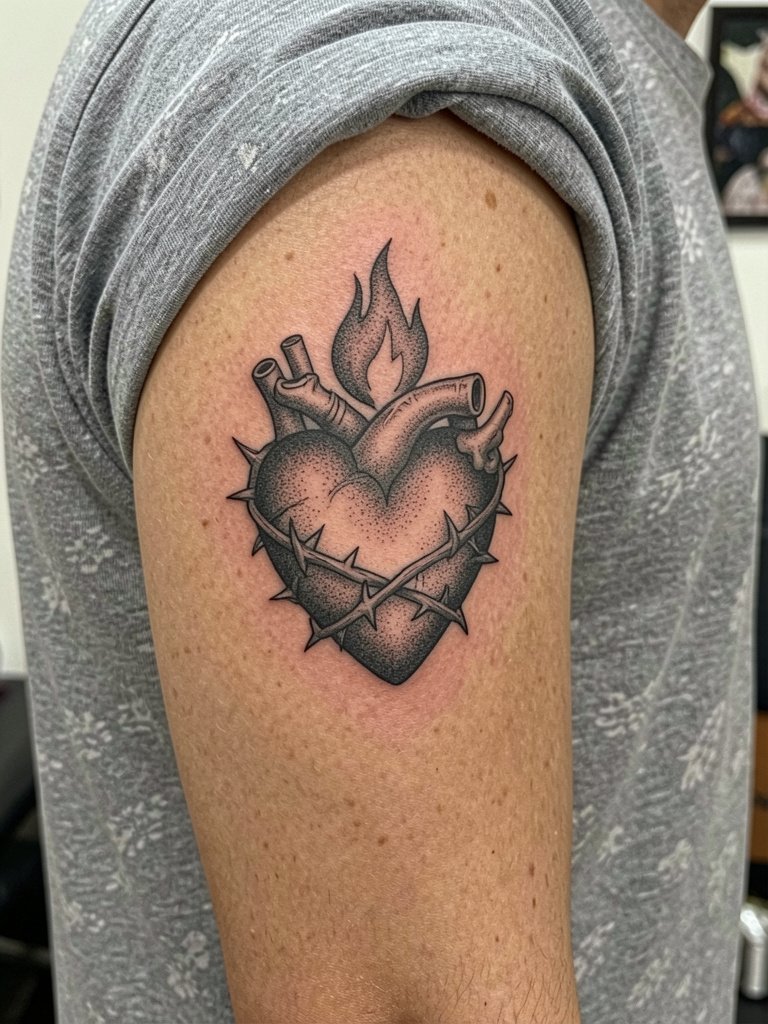
A stippled sacred heart balances symbolism and texture and tends to age gracefully when given room to breathe. This works well on the outer bicep because the skin there is stable and the stippling holds without turning into a mush of dots. In the consult, bring detailed reference images that show the exact level of stipple density you want so the artist can map spacing for longevity. Expect a moderate session of one to two hours and mild to moderate pain. A common mistake is crowding the thorns and flame into a two-inch square. For casual outfits, this placement pairs with short-sleeve linen tees that let the image sit as part of your everyday look.
4. Long Scripture Line on Ribcage

Script on the ribs splits artists into clear camps. One camp says the skin stretch and frequent movement make fine line script blur and thin within two to three years. The other camp argues that with slightly wider letter spacing and controlled needle depth, ribs can hold fine script and show three-year healed photos to prove it. If you lean toward the conservative approach, ask for medium-weight lettering and extra spacing between words. Rib sessions are longer and more painful, often two to three hours in staccato passes, and numbing strategies should be discussed precisely. Wear a fitted sports bra so the artist can check alignment and you can sit comfortably. Touch-up is common at year two for denser script.
5. NegativE-Space Dove on Collarbone

A negative-space dove uses block tone to create a white silhouette and reads strongly from a distance. This approach avoids fragile single lines and gives that sacred motif more visual longevity on the collarbone. The session is moderate and the pain level sits between wrist and ribcage. Tell your artist you want a broad black field with intentional untouched skin for the dove so they plan the edges rather than trying to carve the shape later. This area pairs well with open-neck tops; try an open-back blouse for evenings when you want the shape to show without direct sun exposure. Expect a touch-up window at 12 to 18 months for saturation.
6. Anchor and Saltire on Outer Forearm

An anchor crossed with a saltire draws from maritime and devotional imagery and holds up well on the outer forearm. Solid black outlines and flat fills age into a readable silhouette, unlike ultra-fine options that can blur under constant sun and friction. For the consult, specify how heavy you want the fills and ask the artist to map the anchor so it sits with the arm at rest. Session time is often one to two hours and pain is mild to medium. For everyday wear, this placement pairs with rolled-sleeve shirts or short-sleeve jackets that let the composition be visible without exposing the whole arm. Touch-up is usually optional at year two for saturated blacks.
Session Day Picks
These first six pieces include exposed wrist, collarbone, and forearm work, so a few session-day items make the appointment smoother.
- Stencil transfer paper kit. Lets you preview line placement directly on skin before inking, which helps for small script and wrist pieces above.
- Topical numbing cream. Apply as directed before longer rib or sternum sessions to get through the first pass without tensing.
- Thin protective film roll. Keeps forearm and wrist work clean during the first week when friction from sleeves and watches is highest.
- Fragrance-free gentle body wash. Helpful for showering around collarbone and chest pieces without irritating fresh ink.
- Aquaphor healing ointment. Thin application during the first few days protects fine line work without suffocating the skin.
7. Hand-Edge Trinity Dots

Hand-edge tattoos show quickly and act as deliberate statements, but they carry higher rates of fading because hands get washed and scrubbed constantly. Artists fall into two camps about micro details on the hand. One group argues hands are too abrasive and too much detail will disappear within a year. The other group points to careful placement near knuckle edges and precise saturation as proof that small dot clusters can last if reinforced with yearly touch-ups. If you choose this spot, plan for touch-ups and accept that saturation will never be as permanent as forearm work. Session time is short but the sensation is sharp. For everyday styling, a simple cuff bracelet or a few thin rings frame the placement without rubbing the ink.
8. Neo-Traditional Lamb on Thigh

A neo-traditional lamb on the upper thigh blends figurative reverence with bold lines that age reliably. The thigh's thicker, less-exposed skin holds color and detail much better than hands or ribs. Plan for a one-to-three-hour session depending on color, and expect low to moderate pain. A common mistake is cramming too many small florals into a compact area; give the lamb room and let the florals read as accents. For session comfort, wear fitted bike shorts or loose shorts so the artist can access and you can sit comfortably. This placement also grants privacy while giving the option to reveal the piece with mid-length skirts.
9. Tiny Aramaic Word on Collarbone

Script in a non-Latin alphabet carries both meaning and the risk of becoming unreadable if done too small. Some artists argue this work holds if spaced and rendered with a slightly heavier stroke. Other artists caution that intricate scripts on the collarbone can blur if placed too close to the bone and subjected to jacket friction. Name both concerns in your consult and request a test stencil at full size. Session time is usually under an hour and discomfort is mild. Wear a wide-neck top so the artist can check alignment. For showing it off, a lightweight open-front cardigan layers without rubbing the area.
10. Small IHS Monogram on Calf

A calf placement for a monogram gives you visibility with minimal daily wear. The outer calf sees less rubbing than the ankle, so the letterforms hold their edges. Specify that you want the serif weight slightly bolder than a printed sample so the letters remain legible at year three. Sessions average 30 to 60 minutes and the pain is moderate. A typical mistake is choosing fonts with very thin crossbars and expecting them to stay crisp. For footwear and outfit pairing, mid-calf boots or cropped pants frame the monogram without constant contact. Touch-up is rare but recommended at two to three years for small lettering.
11. Rosary Beads Along the Side of Hand

Rosary bead chains look delicate and meaningful on the side of the hand, but constant washing and friction mean those dots need spacing and occasional reinforcement. I recommend asking for slightly larger bead dots and a connecting line that is visible without competing for fineness. The session is short, but sensation is sharp on the hand. A frequent error is asking for micro-beads placed too close together. For outfits, thin hand chains or open-finger rings complement the bead rhythm without rubbing the tattoo, and a light bandage the first 48 hours helps avoid scuffs. Consider scheduling a touch-up within a year to refresh bead edges.
12. Minimalist Fish Scale Sleeve Accent

A repeating fish scale motif works as a subtle sleeve starter and reads well when executed with consistent spacing. If you want this to age cleanly, tell the artist to scale the pattern for visibility at two inches per repeat rather than micro repeats. Sessions for this area vary by coverage but often run one to two hours for a solid band. A common mistake is asking for too tight a repeat pattern which can blur into texture. For showing off the pattern, roll sleeves up or wear cropped casual shirts so the motif peeks out naturally. Expect touch-up along the outer edges after 18 months if you choose lighter line weight.
13. Single Needle Latin Phrase on Inner Bicep

Inner bicep scripture has a private feel and tends to stay protected from sun, which helps preserve fine work. However, the inner bicep is soft and mobile, and ultra-fine single-needle text can spread if the spacing is too tight. Some artists favor slightly heavier single-needle strokes for inner-arm text, others push for maximum finesse. For this spot, request a test stencil at full size and ask the artist to show how it sits when your arm is at rest. Session time is usually under an hour and the pain is moderate. For the appointment wear, choose a sleeveless tee so the artist can easily work without fabric bunching. Touch-up after 12 to 24 months is common for single-needle text.
14. Byzantine-Style Miniature Icon on Sternum

Sternum icons feel very deliberate and need an artist experienced with chest anatomy because skin tension and breast movement affect healing. Artists are split on fine detail here. One camp says the sternum's motion and stretch will soften micro-detail quickly. The other camp maintains that careful depth control and slightly enlarged details will hold and retain the intended iconography. If you choose the sternum, plan for a staged session and precise stencil placement. Pain is high compared with forearm work and sessions are shorter but intense. Wear a fitted sports bra so the area is accessible and supported. Expect a touch-up plan at the six- to twelve-month mark for crispness.
15. Crossed Palm Lines on Palm Edge

Palm-edge work is symbolic and shows immediately, but it comes with high fade risk because the palm regenerates faster than other skin. Ask for bolder, simple strokes rather than intricate detail to maximize lifespan. Sessions are short but feel sharp and sometimes sting more than forearm work. The most common mistake is requesting micro detail in the palm, which nearly always requires frequent touch-ups. For daily wear, keep the area moisturized and avoid abrasive cleaners. Because palm tattoos often require annual refreshes, factor that into your long-term plan.
Frequently Asked Questions
Q: How do I preserve a small script tattoo like the wrist or inner bicep?
A: In my experience, size and spacing are the biggest factors. Ask for slightly heavier single-needle strokes and more space between letters so the script does not merge with time. Avoid constant sun exposure and use broad-spectrum sunscreen after the piece fully heals.
Q: Are there placements I should avoid if I want longevity for fine line Christian symbols?
A: Hands, fingers, and the palm are the most likely to fade quickly because those surfaces get washed and rubbed constantly. Forearm, calf, and thigh offer more stable skin and will hold detail longer. Plan for at least one touch-up within one to three years for visible hand or wrist work.
Q: Where can I find portfolios and healed examples without naming artists directly?
A: Search platform filters and community tags for healed work, for example using keywords on social platforms and portfolio sites. Look for hashtags and location filters on social video sites and gallery pages that show "healed" shots in different skin tones so you can judge longevity. Reddit tattoo threads and portfolio collections with "healed" in the title often surface real-life timelines.
Q: How should I prepare for a rib or sternum session from a practical standpoint?
A: Eat a solid meal a couple of hours before and wear a fitted top that gives easy access without slipping during the session. Numbing strategies, pacing breaks, and a staged session plan help for higher-pain areas, and bringing a spare shirt avoids fabric contact with the fresh piece after you leave.
Q: If I want a culturally respectful icon or hymn text, what should I say in the consultation?
A: Explain the origin and meaning behind the design and offer to share references that show how the symbol should appear. Ask the artist to avoid stylistic elements that are not part of the tradition and to suggest alternatives that honor the source while fitting the tattoo medium.