
Small, mechanical pocket watches read like personal time capsules. A tiny cracked face on the wrist can tell a long story, and a saturated blackwork piece on the chest can anchor a sleeve. I wrote this list to cover pocket watch motifs that last visually and feel right during a session, with wardrobe tips for showing them off and concrete consultation points that get the details right from stencil to healed result.
1. Fine-Line Pocket Watch on Inner Forearm
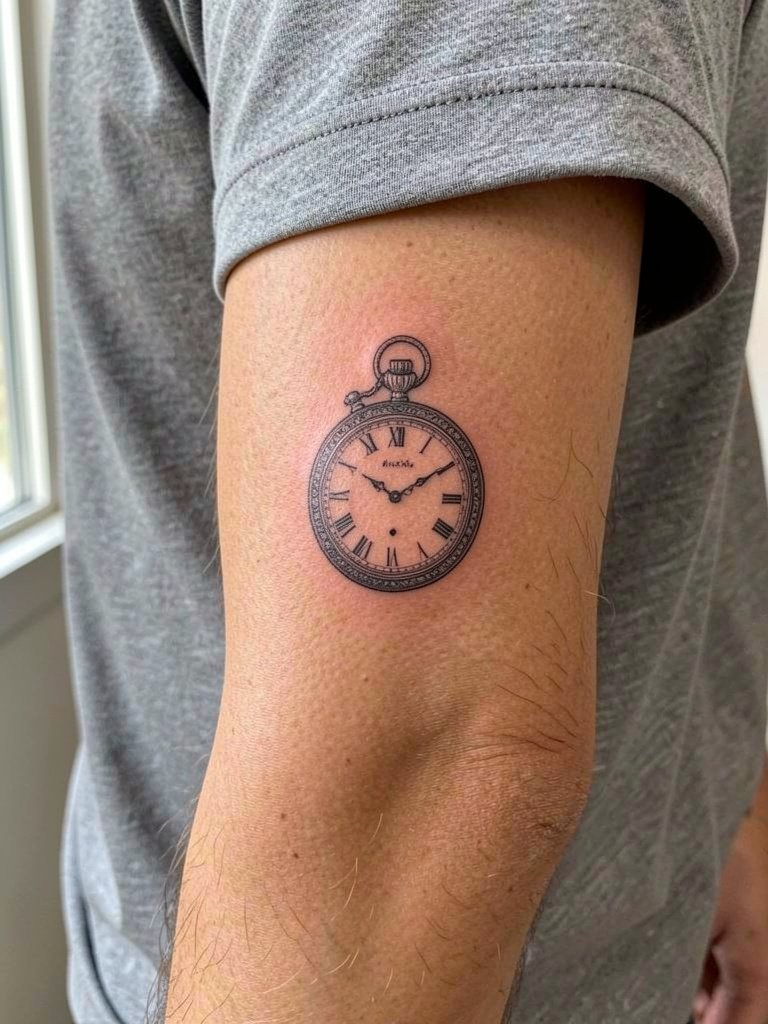
This placement reads well at three to four inches across. I recommend it when you want a delicate, readable watch without heavy color. Lineweight matters here because the inner forearm is smooth and moves frequently. Ask for slightly bolder numerals than the reference so the numbers stay legible at year two. Common mistake is pushing filigree too tiny, which fills in over time. Expect crispness at six months, softer edges at two years, and a small touch-up at five if you want razor clarity. For showing it off, roll sleeves and pair with a linen tank that keeps the forearm visible.
2. Blackwork Pocket Watch on Sternum
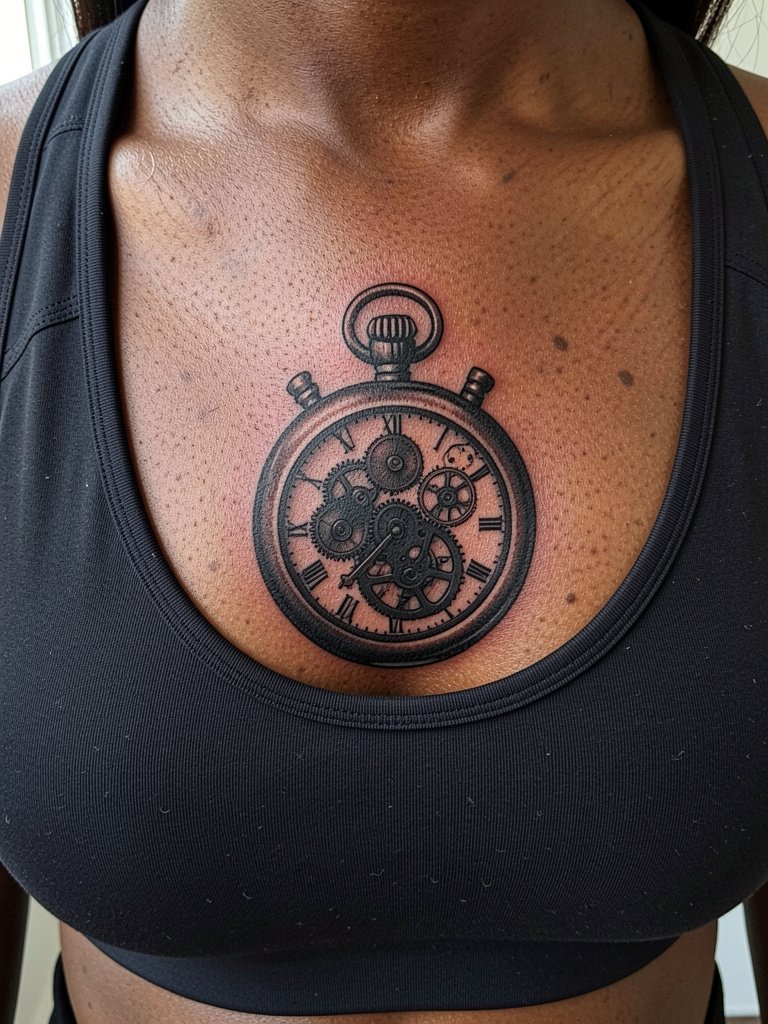
Fine-line supporters warn that sternum skin shifts with breathing and body changes, which can blur thin numerals within a couple of years. Other artists argue that slightly heavier linework and deliberate spacing solve that problem, and they point to healed photos that back up that approach. If you prefer bold contrast that stays readable, pick saturated blackwork and plan for a longer single session. The sternum can be a high pain area, so wear a supportive fitted top to your appointment and be ready for 90 to 150 minutes under the needle. For evenings out, a low-cut square-neck blouse frames the piece without rubbing against it.
3. Roman Numeral Pocket Watch on Outer Bicep
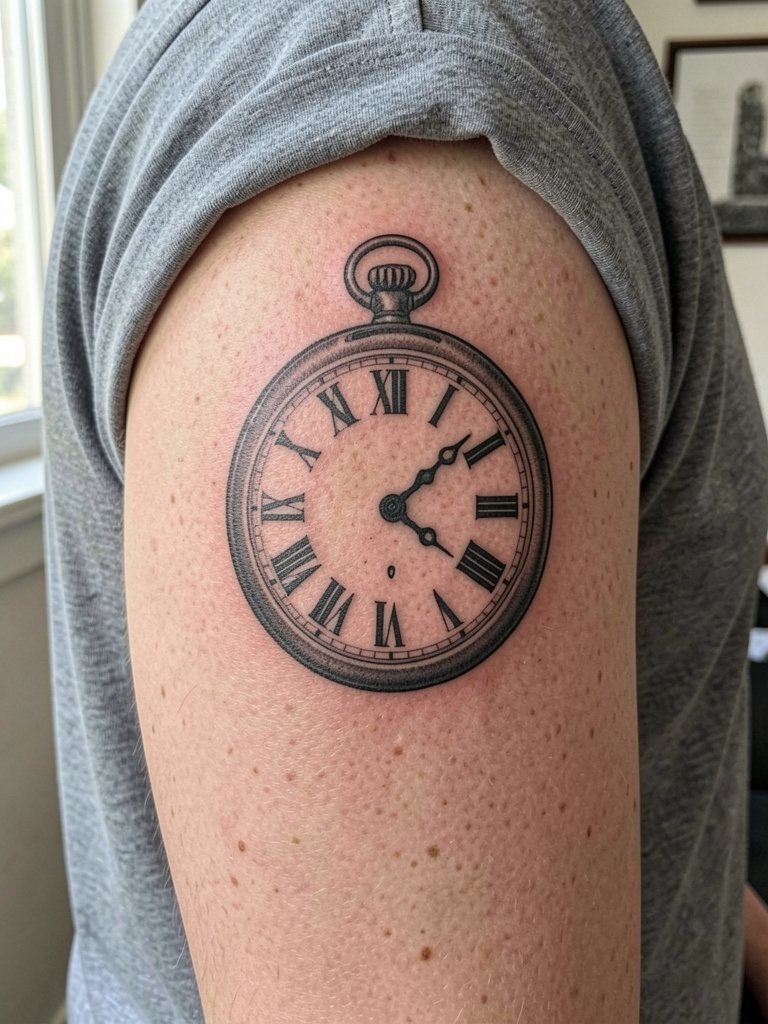
This is a go-to when you want the watch to read at a glance from across the room. The outer bicep tolerates slightly larger, bolder linework. During the consult, bring a photo showing the exact numeral weight you want. A common aging issue is numerals competing with decorative hands. Ask for simplified hands if you want longevity. Session time is moderate, usually under 90 minutes for a three-inch face. Pair the finished piece with rolled sleeves and a lightweight chambray shirt to keep the bicep visible when you want it noticed.
4. Pocket Watch with Open Gears on Chest Side
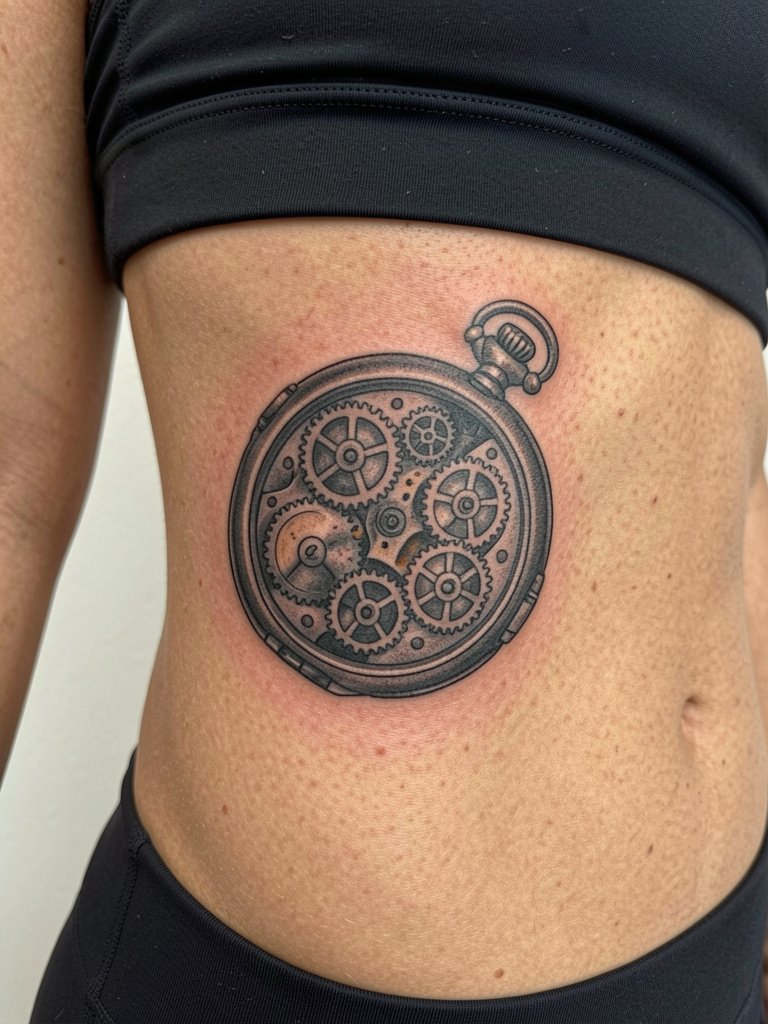
Ribcage pieces demand spacing because the skin there rubs against clothing and flexes with breathing. One camp says fine-line detail on ribs blurs quickly. The other camp says appropriate spacing and depth keep detail legible. For an open-gear design I favor slightly wider gear teeth and heavier shading between parts so the mechanical structure reads as the piece ages. Expect a longer session and higher pain than forearm work. Wear a fitted cropped top that the artist can slightly lift without pulling fabric. The look pairs well with a loose tank and bralette combo when you want to show the mechanics.
5. Mini Pocket Watch on Wrist with Chain
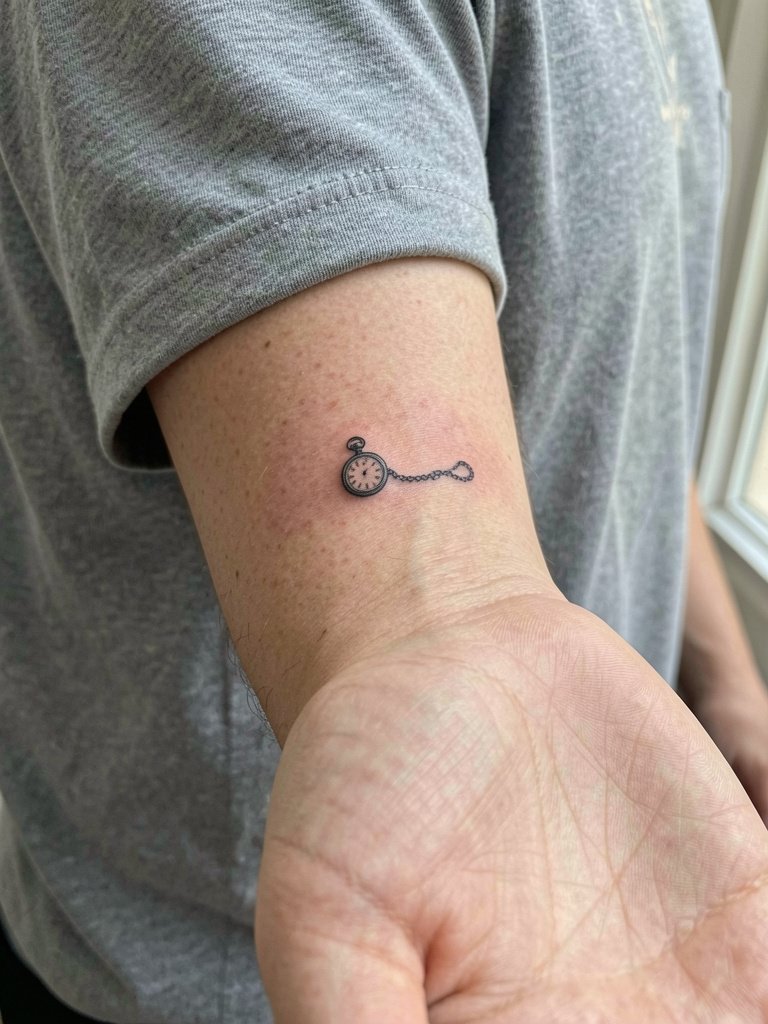
Wrist placements are visible every day and face a lot of washing and friction. Keep the watch face at least two inches across to avoid smudging of tiny numerals. A common mistake is chaining too many tiny links. Larger, slightly spaced chain links age much better. Sessions are short, but the wrist often needs a touch-up by year two if the linework was ultra-fine. For the appointment, wear a loose sleeve that you can roll without tugging the wrist. For styling, a thin cuff bracelet layered with the tattoo works, and you can shop for a complementary minimal metal cuff.
6. Pocket Watch with Floral Wrap on Upper Thigh
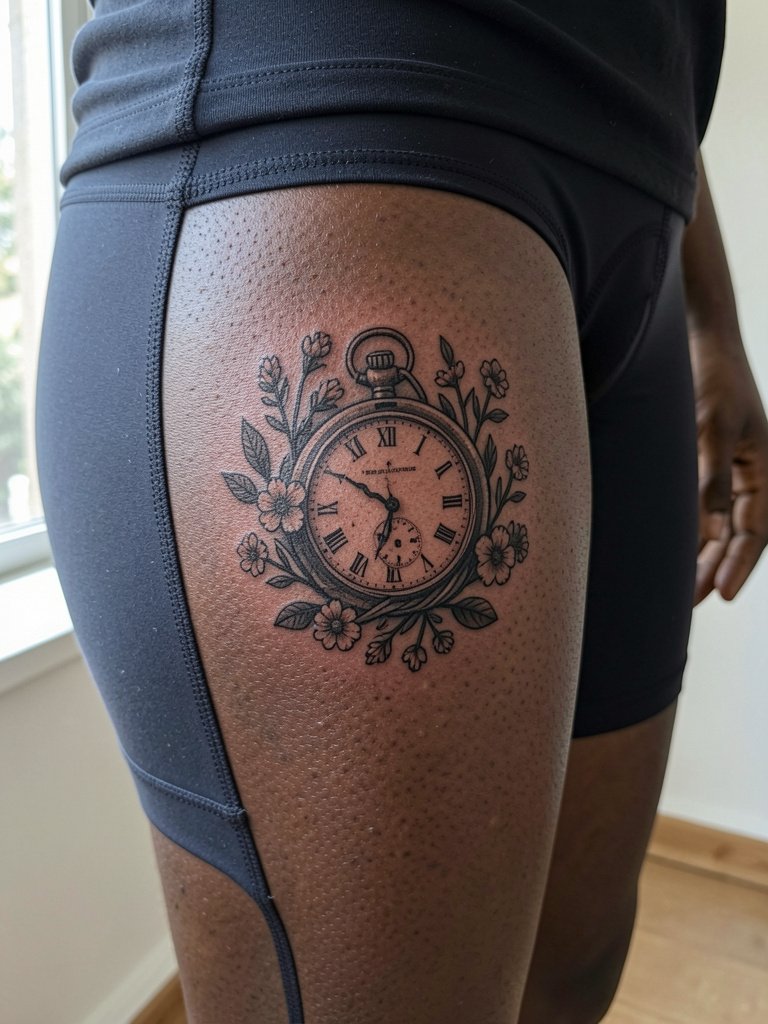
The upper thigh is forgiving for texture and detail because it rarely faces abrasive daily friction. I suggest stipple shading for the floral wrap to keep depth without heavy saturation. Common mistake is packing too many tiny petals into a small area. Space the flowers for longevity and readability. Session time can be a single long pass or two shorter sessions depending on size. For the studio day wear a pair of loose drawstring linen pants so you can roll the leg up easily without pressure on the area.
Session Day Picks
These items help smooth short sessions and the first week of healing for the forearm, wrist, chest, and thigh pieces above.
-
Stencil transfer paper kit. Useful for printing and repositioning intricate pocket watch layouts so you can preview exact placement on skin before the artist starts.
-
Topical numbing cream. Apply as directed before sternum or rib sessions to reduce discomfort without altering the artist's linework.
-
Thin protective film roll. Small strips keep wrist and hand pieces protected from friction in the first 48 hours.
-
Gentle fragrance-free body wash. A mild, non irritating wash helps during the first week when cleansing the tattooed area.
-
Aquaphor healing ointment. A light layer in the first days helps lock in moisture for linework while you follow your artist's exact aftercare routine.
7. Antique Key-and-Watch Micro-Realism on Collarbone
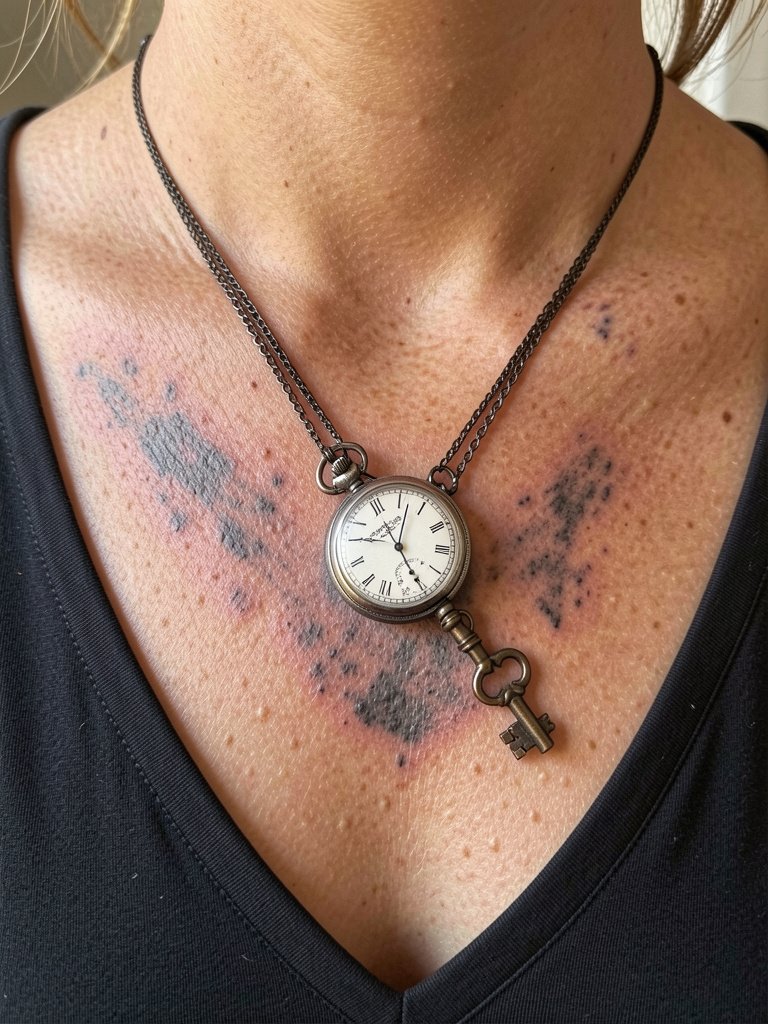
Collarbone skin is thin and shows detail beautifully for the first year, then fine shading fades faster than bolds. Micro-realism works if the face is at least three inches so the tiny hands and key keep definition. Ask for slightly darker midtone shading in the face to preserve depth at year two. Session time is usually under 120 minutes for a compact composition. For showing the piece, open-neck blouses and delicate chains play well. Try pairing with a delicate pendant necklace that sits above the tattoo without rubbing.
8. Pocket Watch as Compass on Calf
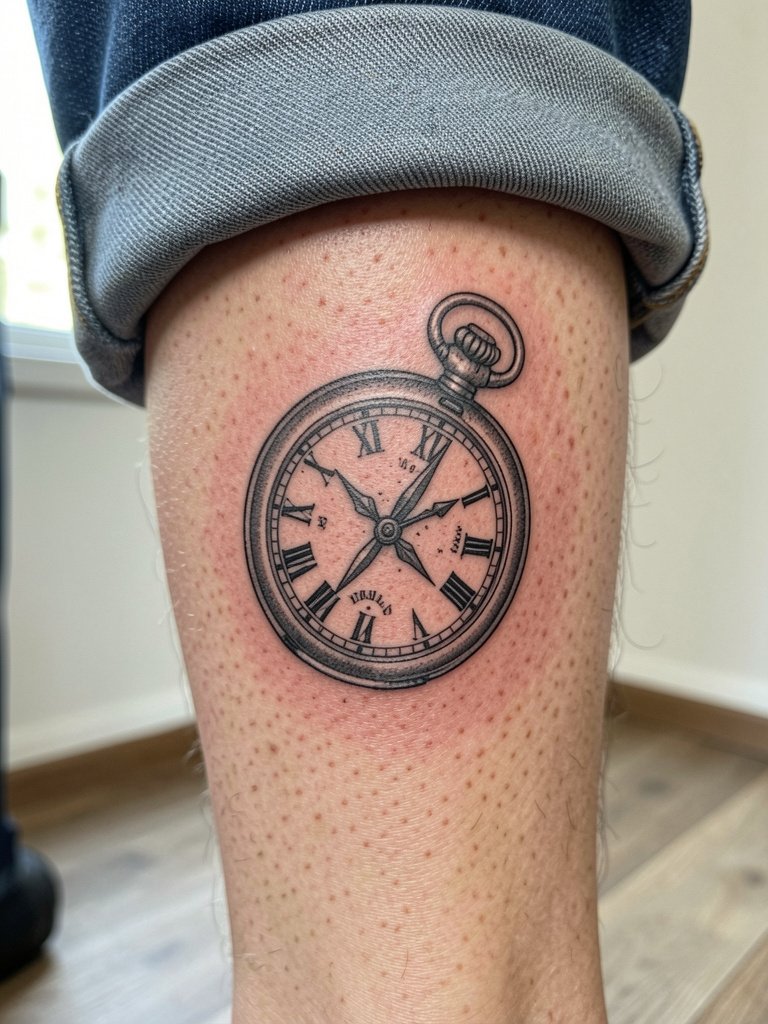
Calf placements handle larger scale and bold contrast because the skin there is thick and stable. If you want directional symbolism, widen the compass points and make the watch face distinct with heavier outer rims. Mistake is confusing the compass marks with ornate filigree so the piece reads cluttered. Session is comfortable for most people and often done standing or seated. Style it with cropped trousers or midi skirts so the calf shows, and consider a pair of rolled cuff jeans for casual display.
9. Etched Pocket Watch with Date on Ribcage
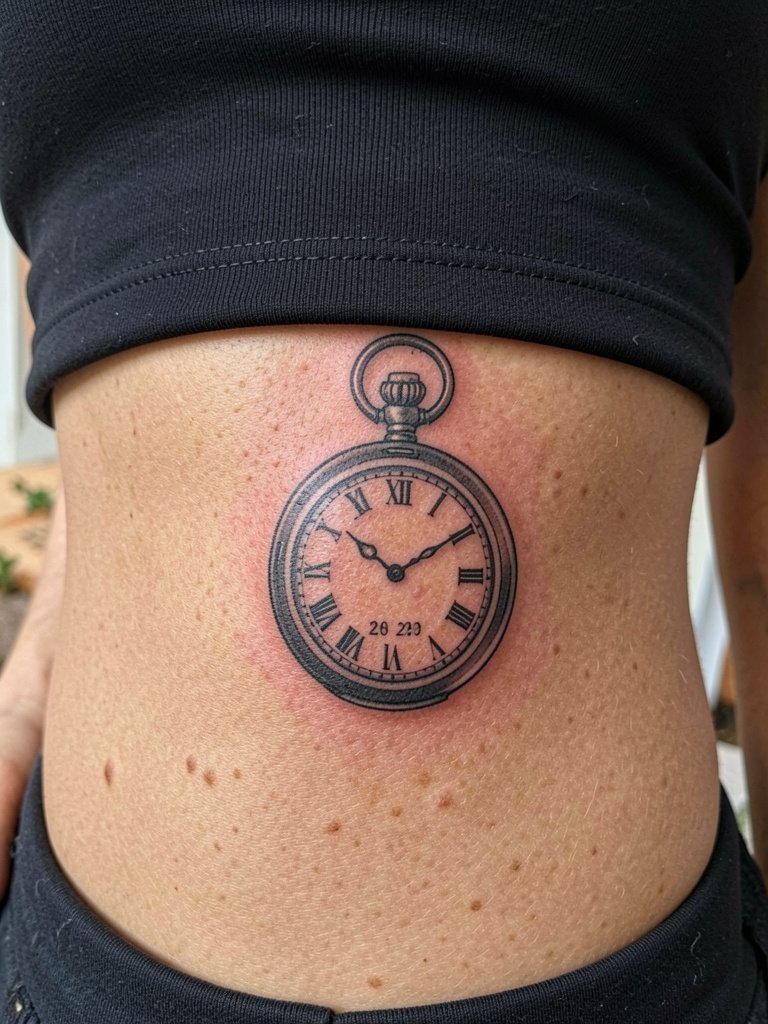
Dates in tiny type on ribs are elegant but risky. One group of artists warns that the thin roman numerals will blur on side torso skin within a couple of years. Another group says that if you increase the numeral weight slightly and maintain spacing the date stays legible, and they will show healed photos to back that up. For this spot, push the date to a slightly larger size than your reference. Expect a painful session with deep breaths, so plan for short breaks and bring a supportive top you can wear under the artist's barrier. For the reveal, a cropped wrap top frames the area without constant friction.
10. Chain-and-Compass Half-Sleeve on Outer Forearm
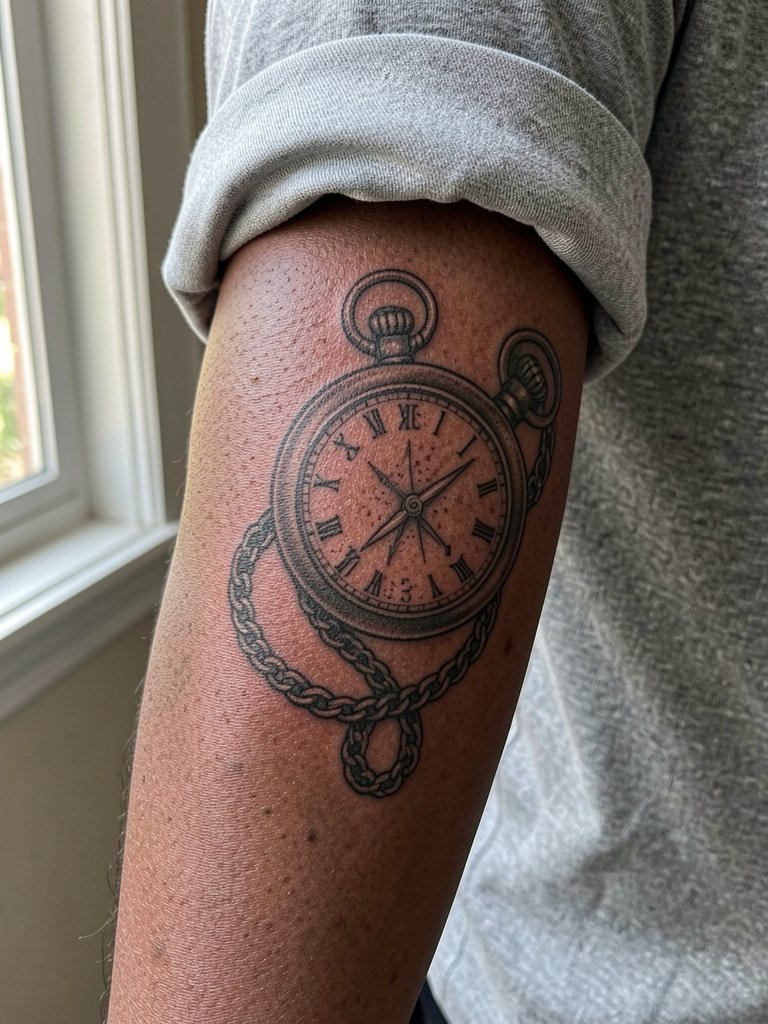
The outer forearm allows for dynamic flow and works well for chain elements that curve. A design that incorporates negative space around gears reads better than one that fills the whole area. A common mistake is crowding the chain too tightly so it looks like a shadow after healing. Discuss lineweight transitions with your artist and request a small mockup scaled to the forearm circumference. Session length depends on coverage, often two to three hours. For showing it off, short sleeves and rolled cuffs work. A rolled-sleeve button-up keeps the art visible.
11. Geometric Pocket Watch on Back of Hand
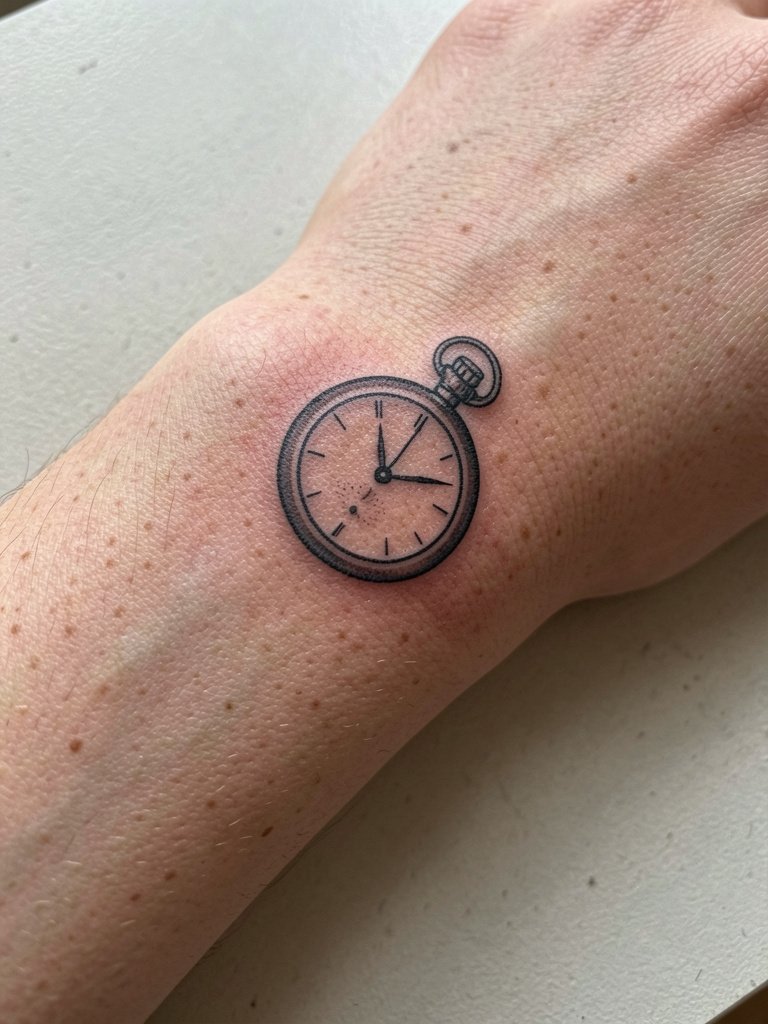
Hand tattoos face heavy use and fast fading because of constant washing and exposure. The back of the hand is high risk for early blurring when details are too fine. For a hand watch, pick bold geometric forms and fewer tiny numerals. A typical error is requesting micro-detail that the skin cannot hold long term. Expect a one-hour session and a likely touch-up within a year. For styling, rings and thin bracelets keep attention on the hand. Consider pairing with a minimal stack ring set that sits above the knuckle.
12. Ornate Pocket Watch with Lace on Upper Arm
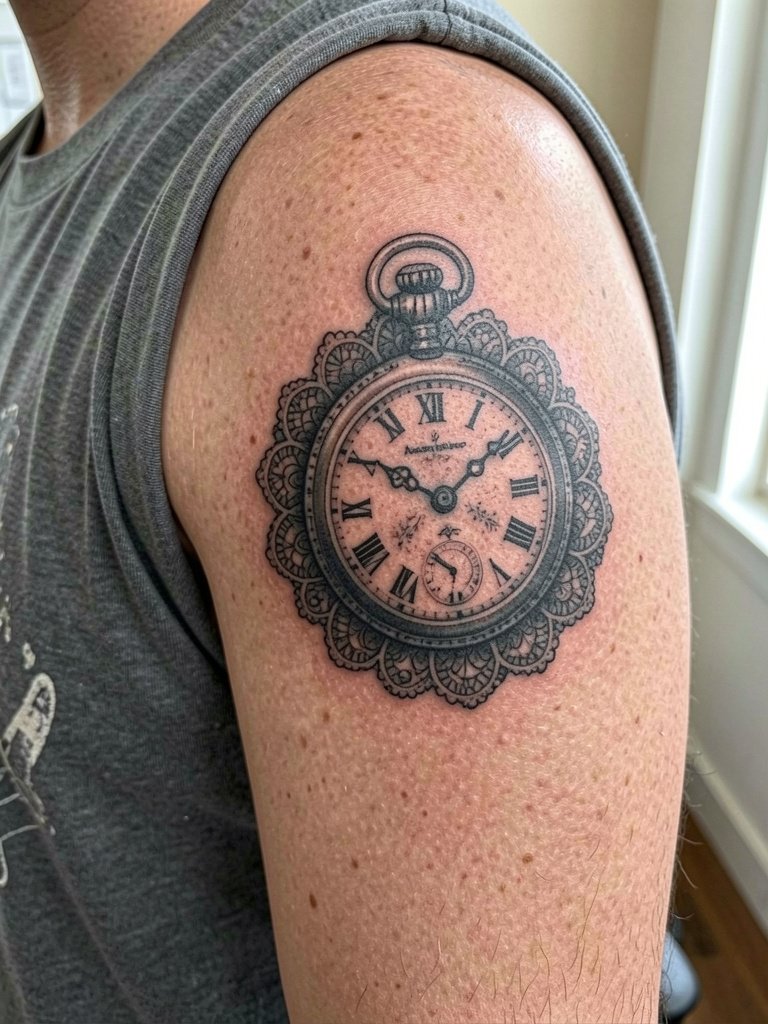
The outer upper arm is forgiving and ideal for decorative halos around a central watch. Lace-like filigree works if the negative spaces are deliberately sized. A mistake is overworking filigree so the pattern reads as gray noise after healing. Ask for a healed mockup to check density. Sessions are comfortable and usually under two hours for a moderate piece. For wearability, tank tops and sleeveless dresses pair naturally. A flowy sleeveless dress lets the shoulder art show without rubbing.
13. Open-Face Pocket Watch on Thigh Inner Edge
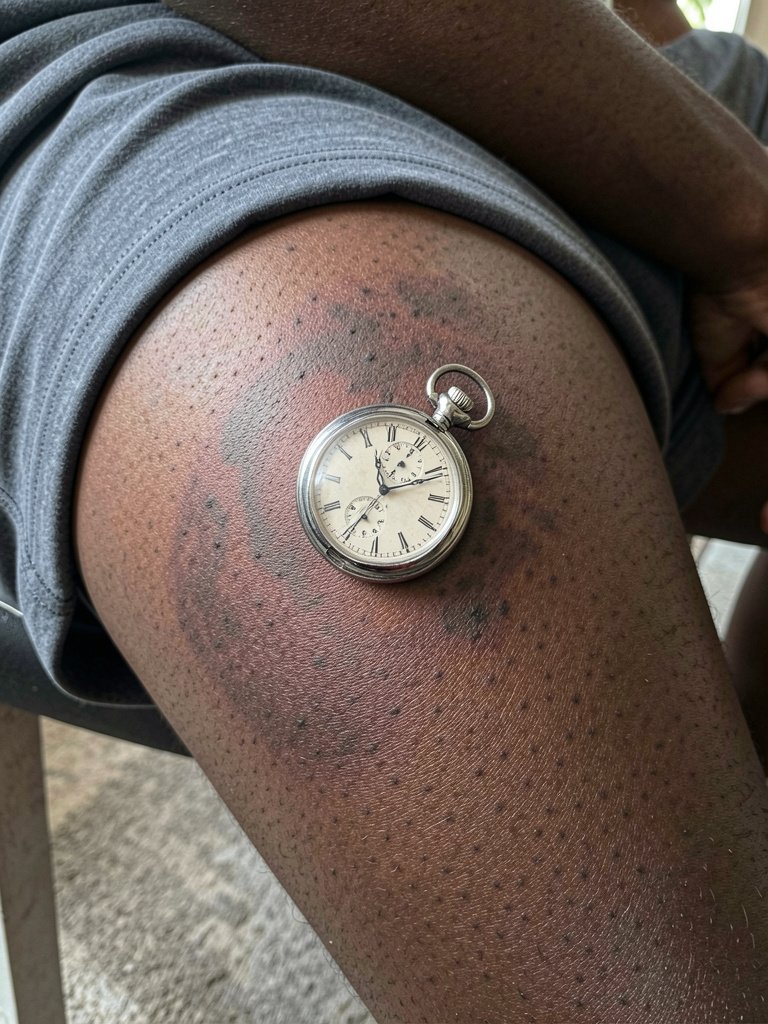
Inner thigh skin is soft and offers a private canvas with good longevity for detail, provided the piece avoids the underwear line. A frequent mistake is placing the watch too close to the groin where friction accelerates fading. Leave a few centimeters of clearance from elastic edges. Sessions are low to moderate pain and often relaxed. For studio wear, bring loose shorts or a skirt that you can keep on without pressure on the area. When you want to display it, midi skirts or slits work well and pair nicely with a midi wrap skirt.
14. Pocket Watch with Scripted Time on Rib-to-Sternum Transition
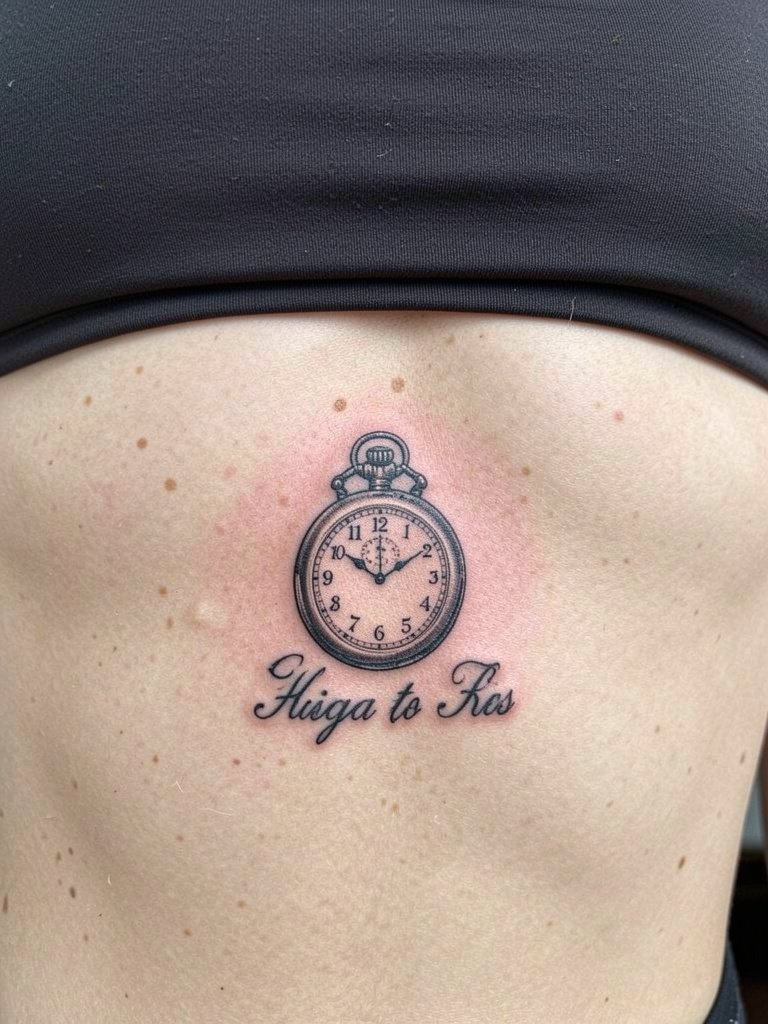
Script below a watch looks elegant when the lettering is bold enough to weather movement. Some artists insist that thin script on the sternum blurs quickly and avoid it. Other artists say heavier single-line script with a small baseline keeps the message legible and will show healed photos to illustrate. For this placement pick mid-weight script and request a draft scaled across the sternum so the letters are not cramped. The session can be more intense here, so schedule short blocks and allow breaks. For clothing, a bandeau or wide V-neck top highlights the piece without constant abrasion.
15. Pocket Watch Fragment Tattoo for Healed Patchwork
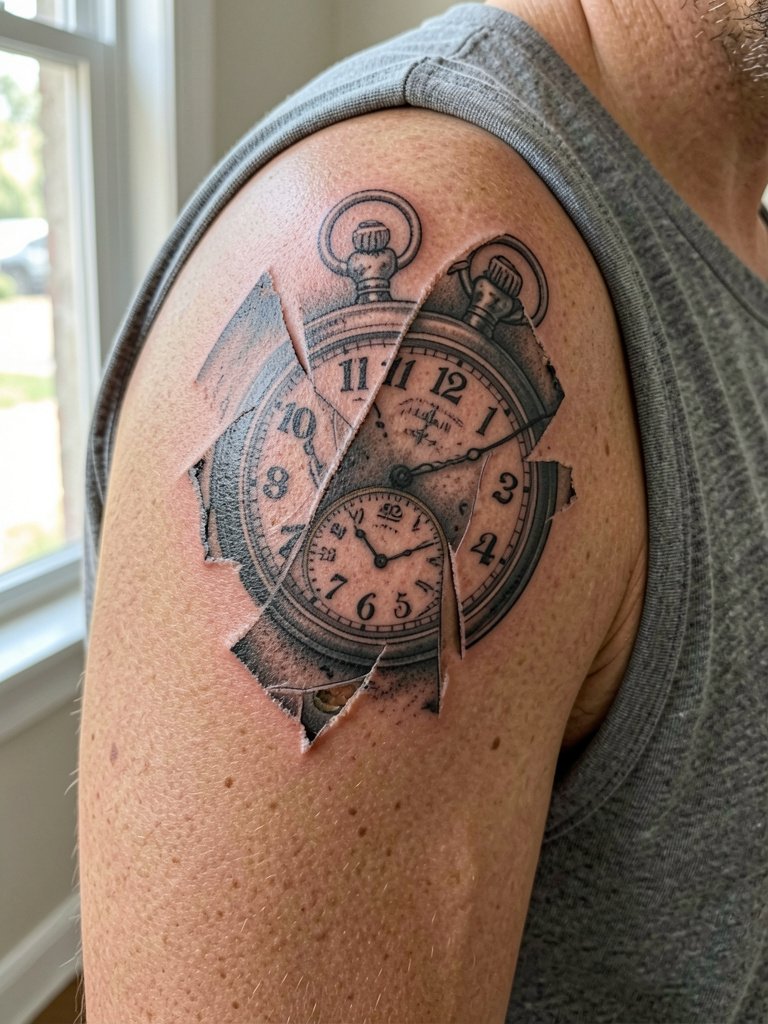
Fragment pieces are great when you plan future additions because they read well at any scale. A common mistake is committing to a fully detailed watch fragment that clashes with future styles. Tell your artist the likely direction for expansion so the edges and shading match planned additions. Expect a short session if the fragment is compact. Should you later blend it into a sleeve, the patchwork will look cohesive if the tones and stipple patterns match. For casual showing, tee sleeves and open-shoulder tops work. Try a tank with wider straps that keeps the shoulder visible.
Frequently Asked Questions
Q: Will a fine-line pocket watch fade faster than a bold blackwork version?
A: Fine-line faces can soften sooner because very thin numerals and filigree have less margin for movement. One camp says thin work on mobile skin blurs within a couple of years. The other camp says slightly heavier lines and careful spacing keep fine work legible for much longer. My suggestion is to show scaled references and ask for a small increase in numeral weight if you want the piece to age conservatively.
Q: How should I prepare clothing for a sternum or ribcage session?
A: Wear a fitted sports bra or a bandeau that the artist can work around without being pulled. Avoid bulky layers that press on the area after the session. A breathable fitted top in neutral tones will make changing and aftercare easier.
Q: Where can I find healed pocket watch examples and portfolios without naming specific artists?
A: Search social platforms with focused hashtags like #pocketwatchtattoo, #mechanicaltattoo, and #watchfaceink and add location filters to find nearby portfolios. Look for healed photos posted six months or more after the session to judge longevity. Tattoo-focused forums and portfolio galleries that let you filter by style and skin tone are also useful discovery pathways.
Q: How often do these designs need touch-ups?
A: Touch-up timelines vary with placement and lineweight. Hands, wrists, and the back of the hand often need attention by year one or two. Outer arm, calf, and thigh usually hold longer. Plan for a possible touch-up between two and five years depending on how aggressive the initial linework is and your daily exposure.
Q: What should I wear to the appointment for an inner thigh or upper thigh tattoo?
A: Bring loose shorts or a skirt that you can keep on and that lets the artist access the area without tugging. A pair of modest athletic shorts works well for comfort and privacy during the session.
