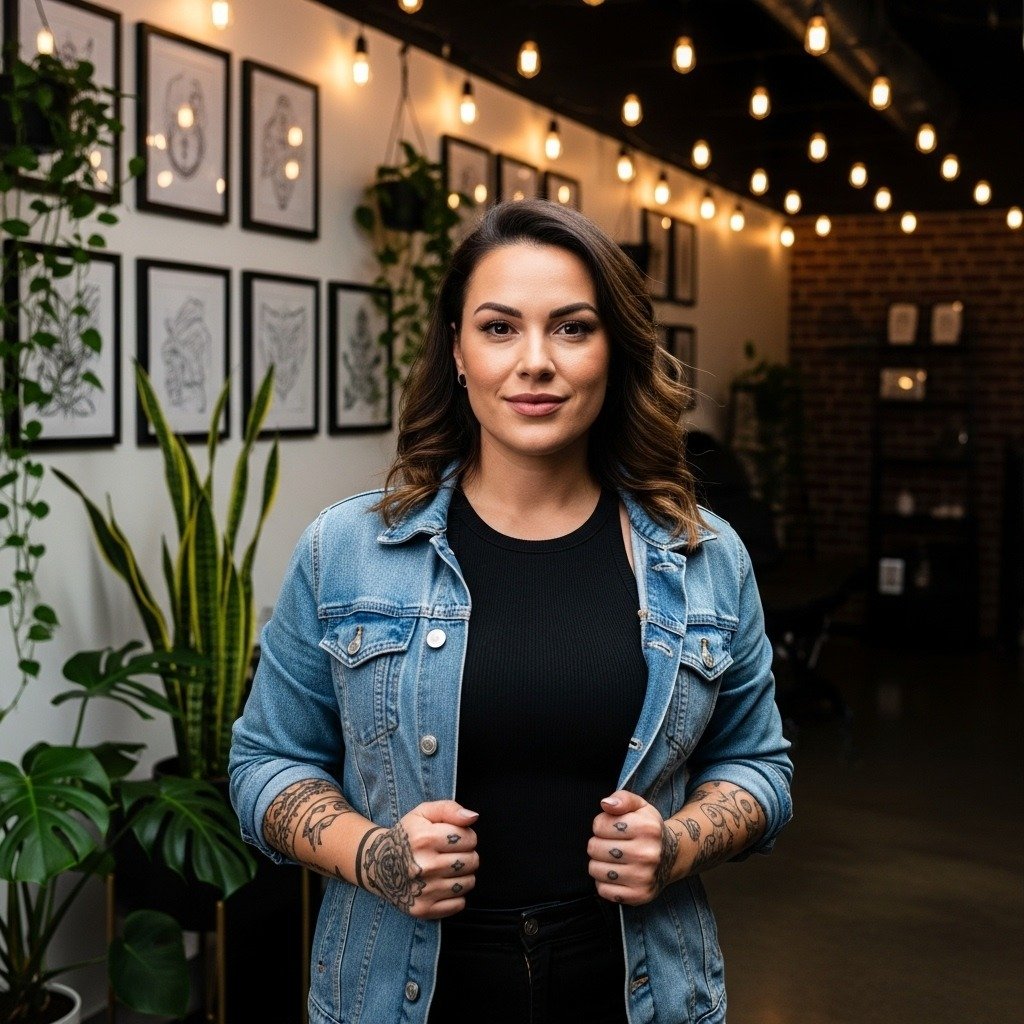
Bold black silhouettes and heavy saturation often outlast dainty single-needle work, especially on textured forearms and chests. I have seen thick-lined blackwork retain clarity where micro-detail lost its edge after a few years. If you want a piece that still reads bold at year five, plan spacing and saturation from the start, not as an afterthought. The suggestions below favor readable shapes and placement choices that hold up.
1. Bold Bandwork on Inner Forearm
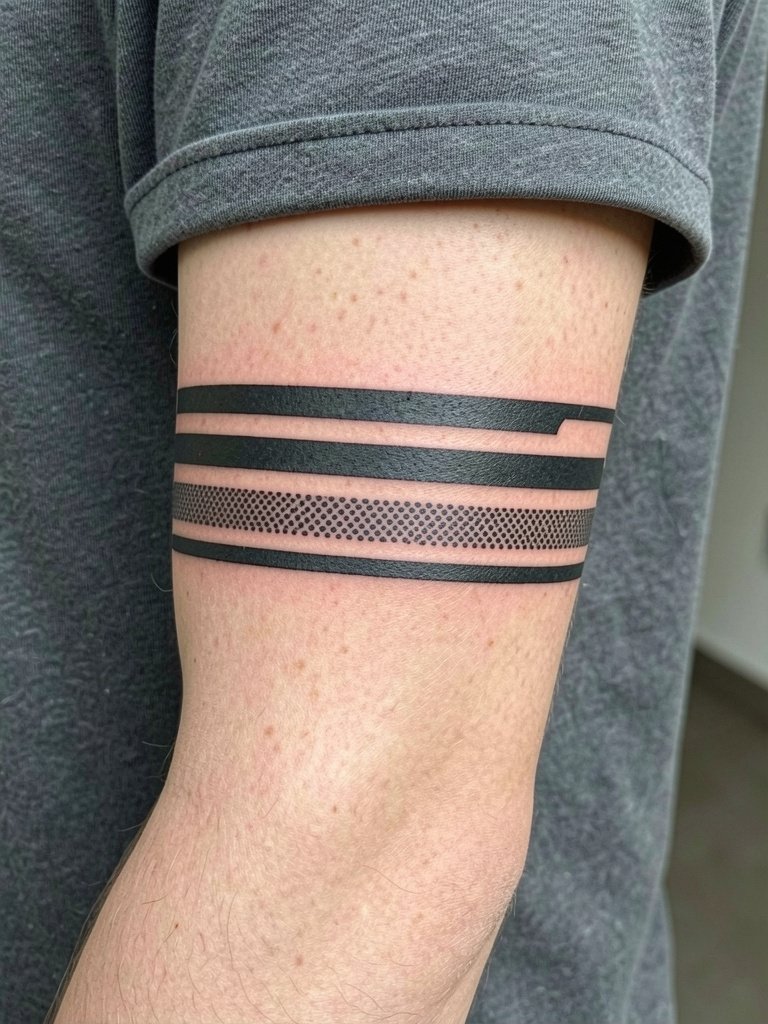
This bandwork idea reads sharp because the solid fills remove dependence on ultra-fine detail. I recommend it for anyone who wants a readable forearm piece that stays bold at two and five years healed. Ask for clear spacing between solid areas so the negative stripes do not merge as the skin changes. Expect a one- to two-hour session with medium pain on the inner forearm and a possible touch-up at the one-year mark if saturation thins. Styling note, roll the sleeve of a short-sleeve linen shirt to show the wrap without crowding the wrist.
2. Blackwork Geometric Chest Patch

This chest patch is great when you want an anchor that reads from a distance without relying on color. It is best for people with moderate chest exposure during summer or for those who wear open-collar shirts. Specify to your artist that the negative-space lanes must be wide enough to avoid merging under the collarbone movement. Expect a two- to three-hour session with moderate pain. For showing it off, a wide V-neck shirt frames the pattern without competing with the geometry.
3. Full-Black Sleeve Accent Panel

A saturated panel works as a visual anchor in a larger sleeve and hides earlier faded work or patchy shading. Recommend this when you want solidity on the forearm and then more intricate dot work toward the elbow. Talk with the artist about saturation depth so the block does not feel patchy at three years. Session time varies with size, typically two to four hours. Wear a long-sleeve you can roll for the appointment so the artist has clear access without tugging fabric.
4. Blackwork Mandala on Upper Arm
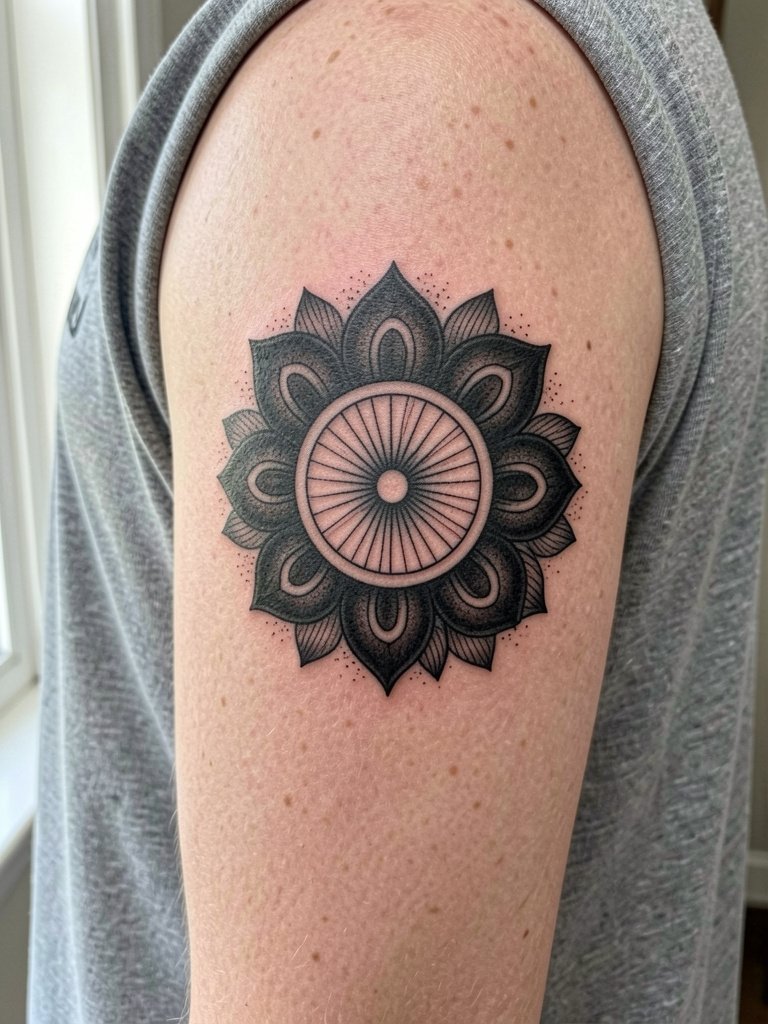
A mandala in blackwork reads sculptural when scaled properly. I suggest a slightly larger diameter than many online samples because thin radiating spokes blur on moving shoulder skin. During consult, show two reference sizes so the artist can map how the pattern sits when the arm moves. Expect medium pain and two to three hours. Common mistake is keeping the center too tight which causes the inner dots to congest by year three. For evening wear, a fitted short-sleeve button-up lets the deltoid piece peek naturally without full exposure.
5. Heavy Arrow Motif on Ribcage

Ribcage is a high-movement zone that punishes fine detail. I prefer bold silhouettes here that survive stretching and seasonal weight changes. Tell the artist to bias the design slightly along the rib curve so the arrow reads straight when standing. Pain will be higher on the ribs and session time about one to two hours depending on size. Some artists are split on fine-line ribs. One camp says thin lines blur and lose definition within two years. The other camp claims that with slightly deeper placement and wider spacing, fine lines can settle well and they will point to healed portfolios to back that up. If you want to show the piece without a shirt off, try a fitted cropped tee so the lower edge sits naturally above the arrow.
6. Blackwork Geometric Calf Panel

Calf skin handles saturation well and offers a low-blowout risk compared with inner arm or wrist. This vertical panel works for those who wear shorts and want a statement that ages predictably. Request moderately wide negative bands to avoid filling in over time. Session time usually two to three hours with moderate pain. Pair with rolled cuff jeans so the panel is visible without going barefoot.
Session Day Picks
These items help with the session logistics and the early healing concerns raised in the pieces above.
- Stencil transfer paper kit. Lets you preview line placement on skin before the first pass, useful for the forearm bands and chest tessellation above.
- Topical numbing cream. Applied 45 minutes before most sessions reduces the edge for rib and sternum work without muddling the linework.
- Thin protective film roll. Keeps ankle and finger pieces cleaner during the first week of friction from socks and footwear.
- Fragrance-free body wash. Gentle cleansing helps avoid irritation on large saturated areas during showering in the healing window.
- Aquaphor healing ointment. Thin application for the first few days supports moisture balance on heavy black fills while reducing scabbing that hides crisp edges.
7. Minimalist Black Compass on Wrist
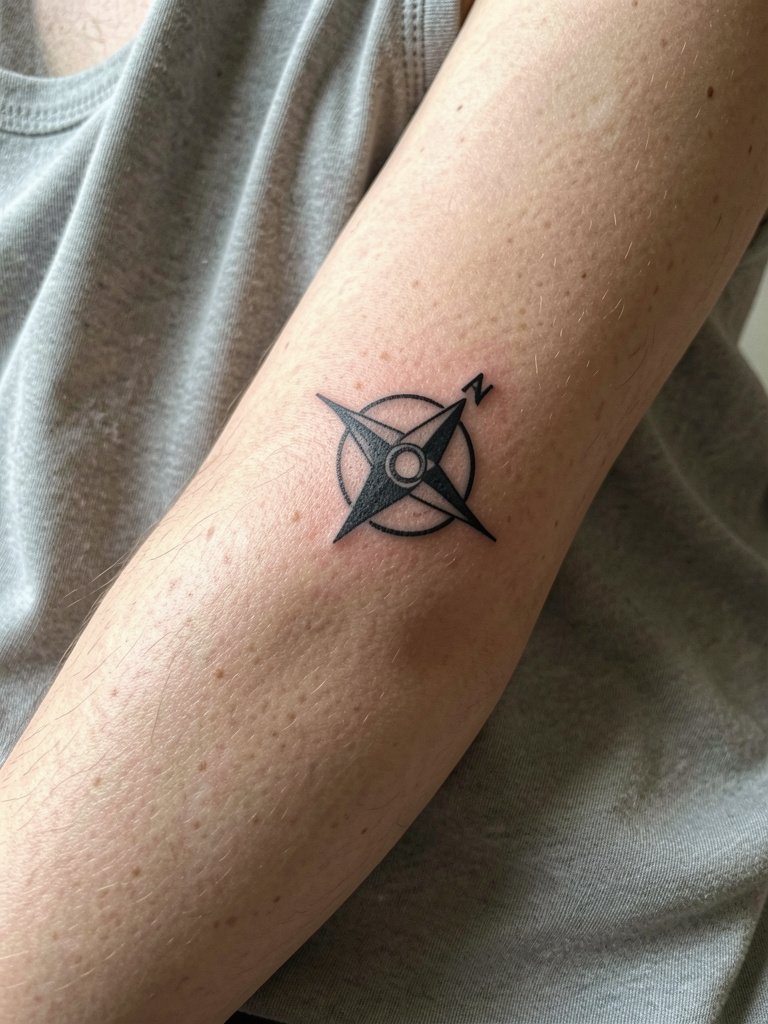
Wrist pieces face friction from watches and daily washing so make line weight modestly heavier than pure single-needle. Bring two reference sizes so the artist can show how the compass reads at one inch versus two. Expect a short session under an hour and a potential touch-up within eight months if the edges soften. Styling-wise, a slim minimalist watch frames the compass without rubbing directly on the ink.
8. Blackwork Shell on Outer Thigh

Outer thigh is forgiving and perfect for heavier black silhouettes that still allow stipple interior work. Recommend this placement for people who want a larger piece without constant visibility. Clarify edge contrast in the consult so the silhouette remains crisp at three to five years. Sessions can be two to three hours with low to moderate pain. For casual show-off, pair with modest athletic shorts that leave the outer thigh visible.
9. Blackwork Collarbone Script

Fine script along the collarbone looks understated but the area shifts with breathing and shoulder movement. I recommend slightly thicker strokes than typical single-needle scripts so the word remains legible at year two. Show the artist examples of line weight you like and ask them to map how the curve sits with movement. Session time is usually under an hour and pain is moderate. To wear it without a full shirt off, a wide-neck tee exposes the collarbone effectively.
10. Blackwork Neo-Traditional Dagger on Bicep

A neo-traditional dagger adapts well to blackwork by relying on silhouette and heavy outline rather than color gradients. It is ideal for someone who wants a bold focal piece on the arm without bright inks. Ask for a mockup that shows the hilt scale relative to the bicep width so it does not wrap oddly. Expect one to two hours and moderate pain. For casual looks, a fitted crewneck tee frames the bicep cleanly when sleeves are short.
11. Blackwork Wave Sleeve Accent

Wave motifs in blackwork are forgiving because motion translates into readable flow rather than tiny detail. Ask the artist to map the crest lines across the arm so they do not align with creases at the wrist where blowout risk increases. Sessions vary from one to three hours depending on length. If you want to show the flow on warm days, cuff a sleeve and pair with a lightweight bomber jacket that you can wear open.
12. Solid Black Neck Anchor

Neck tattoos are visible and require a commitment because they are not easy to hide. For this anchor, thicker linework preserves shape as the skin moves and ages. Plan for a one-hour session and expect a touch-up within a year if the area receives sun exposure. There is debate in the community about hand and neck visibility. One camp warns that such placements limit career and social options and age awkwardly. The other camp argues that with proper saturation and placement, neck pieces can look deliberate and age as intended. If you choose neck work, factor in wardrobe choices and sun protection.
13. Blackwork Floral Sleeve Band
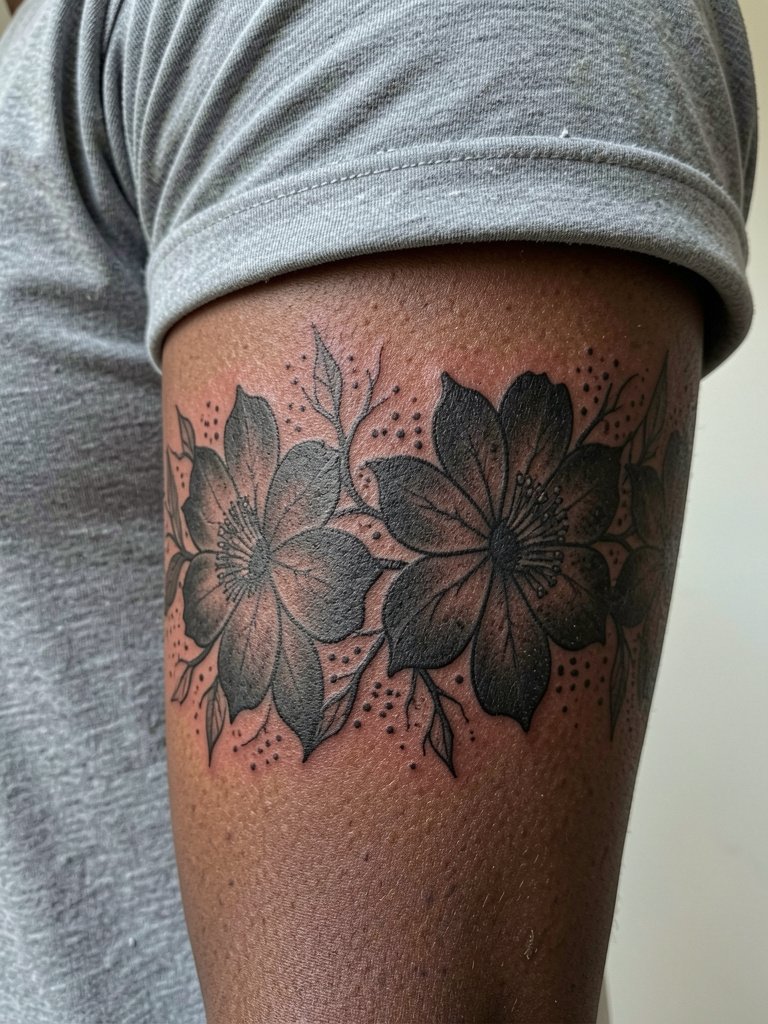
A floral band in blackwork reads masculine when the petals use bold massing rather than delicate filigree. Tell the artist you want emphasis on silhouette so the band does not lose clarity where the arm bends. Expect medium pain and one to two hours. A common mistake is packing tiny leaf veins that blur; keep interior detailing punchy instead. For nights out, a rolled sleeve shirt shows the band without overexposing the rest of the sleeve.
14. Solid Black Sternum Emblem

Sternum placements heal differently than flat chest surfaces because of breathing motion and fabric contact. I recommend a bold emblem rather than intricate filigree so the piece stays readable. Discuss how the emblem sits relative to the breastline so the ring does not warp with movement. Sessions are typically one to two hours and pain is higher. For sessions, wear a fitted sports bra to keep the area accessible without adjusting fabric. Note, some artists debate fine-line sternum work. One camp says the constant expansion and contraction blurs fine detail. The other camp says if the lines are slightly heavier and spacing increased, it settles well and shows healed examples to support that view.
15. Blackwork Large Back Panel

Upper back panels offer large canvases for bold blackwork and are lower risk for blowout than thin-skinned areas. Ask the artist to lay the knotwork so it aligns with the shoulder blades when you are standing naturally. Sessions will be longer, often multiple sittings over several hours. When showing off in summer, a low-back tank reveals the panel while remaining casual.
16. Thick-Lined Finger Symbols

Finger tattoos face heavy friction and frequent washing so keep shapes solid and simple. I recommend thick outlines and minimal interior work to delay blurring. Make sure the artist maps the pattern across knuckle creases so the symbol avoids the highest flex points. Sessions are short but expect touch-ups sooner than other placements, often within six to twelve months. For minimal wrist and hand pairing, a slim leather bracelet can complement the finger symbol without rubbing the tattoo during healing.
17. Blackwork Palm-Sized Compass on Back of Hand
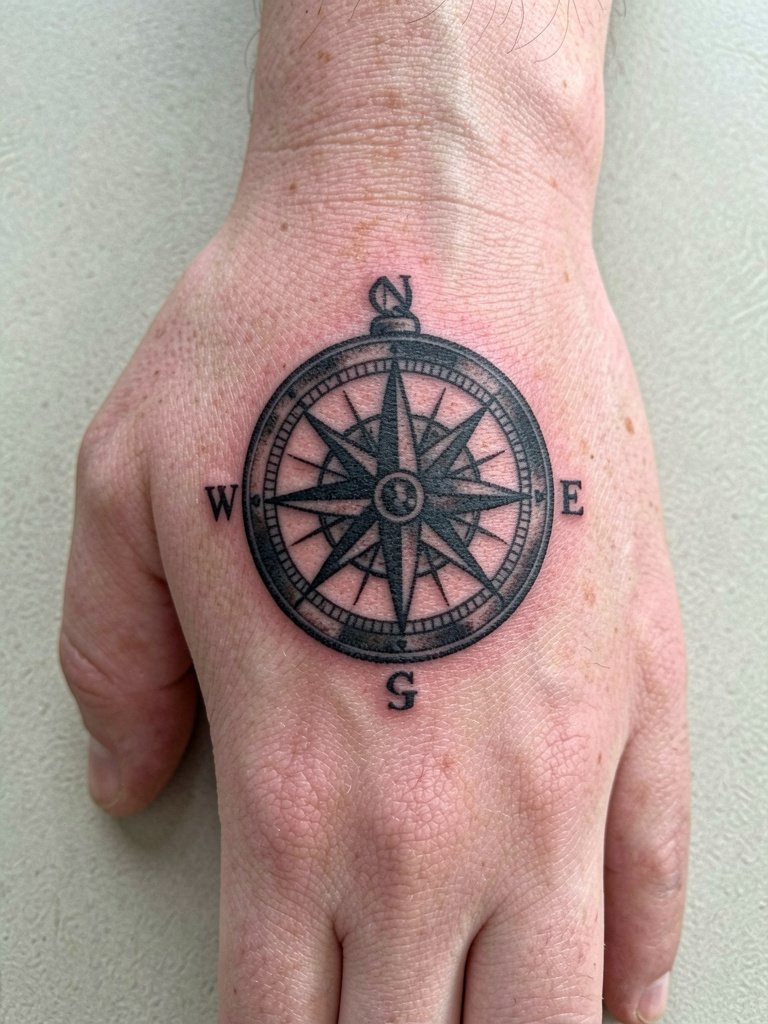
Hand pieces are visible and exposed to sunlight and frequent contact. For a compass here, keep the artwork tough with thick points and bold fill so it ages into a crisp blotted silhouette rather than a smudged sketch. Expect higher fade and a likely touch-up at six to nine months. If you work with your hands a lot, consider a slightly smaller scale to reduce abrasion. No aftercare products are linked here, reserve those for the product block.
18. Ornate Blackwork Thigh Crest

Upper-thigh pieces let you play with scale and detail because the area is low-friction. This ornate crest benefits from dot work inside the shield while keeping the outer ring punchy. Discuss how the crest edges will look when seated and standing so the layout does not warp. Sessions run two to three hours and pain is moderate. For shows, a mid-thigh short keeps the piece visible while comfortable.
19. Stippled Black Portrait Silhouette on Upper Arm

Silhouette portraits in stipple age better when the artist focuses on contrast and avoids tiny facial line detail that can smear. If you want a likeness, bring photos with clear lighting and specify the contrast level you prefer. Sessions vary with complexity but typically two hours. Avoid asking for delicate facial lines that will likely need touch-ups. For casual framing, a cut-off tee shows the upper arm piece without full sleeve removal.
20. Bold Tribal-Inspired Arm Band

Tribal-inspired motifs can look striking in blackwork but they require cultural sensitivity. One camp argues such designs should be worn only when you can trace a personal or ancestral connection and understand the symbols. The other camp believes stylized, non-specific motifs adapted from traditional elements can be worn respectfully if credit is given and the work is not a direct copy of sacred art. If you choose a tribal-inspired band, ask the artist to adapt patterns into a personal composition and avoid exact replicas of culturally specific marks. Sessions are one to two hours with moderate pain. A short-sleeve henley shows the band with rugged styling.
21. Solid Black Mandala Knee Cap

Knee tattoos must account for constant flexing. I recommend bold outer rings and simplified inner spokes to preserve the mandala shape. Plan for at least one follow-up touch-up because the joint sees more wear. Pain is high and sessions may pause and resume. Athletic shorts in normal condition work for the appointment and you can show it off with casual shorts.
22. Blackwork Pocket-Sized Ankle Sigil

Ankle tattoos face shoe friction so keep the sigil compact and heavy in outline. Ask how the shape aligns with the ankle bone to avoid distortion when wearing shoes. Expect short sessions and a likely touch-up window within the first year. For showing it off, cuffed jeans or low-rise sneakers work best, try a low-top sneaker to pair the ankle art with footwear.
23. High-Contrast Back-of-Neck Bar

A simple bar at the nape reads clean and stays legible because of the low movement there. Ask for mapping under natural posture and with hair both up and down so you know how visible it will be. Sessions are short and pain is mild to moderate. If you plan to wear longer styles, check how the piece looks with hair down during the mockup so expectations match the final visibility.
Frequently Asked Questions
Q: How do blackwork pieces age across different placements?
A: Blackwork ages based on placement, line weight, and saturation. High-motion zones like fingers, wrists, and ribs lose crisp thin detail faster, whereas calves, thighs, and upper back keep solid fills longer. In practice, heavier linework and slightly wider negative-space lanes usually mean fewer early touch-ups.
Q: Are there cultural concerns I should know for tribal-inspired blackwork?
A: Yes, treat cultural motifs with care. One perspective says avoid sacred or clearly identifiable traditional symbols unless you have a direct cultural link. The other perspective accepts adapted stylistic references when the artist creates an original composition and the wearer acknowledges the source. When in doubt, request a custom design that abstracts the motif into a personal image.
Q: Where can I find blackwork portfolios and discovery pathways without naming artists directly?
A: Search hashtags on social platforms like #BlackworkTattoo, #BlackworkInspo, and #BoldBlackwork, use location filters on TikTok and Instagram for nearby healed portfolios, and browse tattoo community forums for curated healed photos. Reddit portfolio threads and platform keyword searches often reveal multiple healed examples across skin tones.
Q: How often do blackwork tattoos need touch-ups?
A: It depends on placement and saturation. Large saturated panels may only need a subtle refresh every five to seven years, while fingers and hands often need touch-ups within one year. Expect mid-range placements like forearms and chest to be evaluated at the one-year mark and again at three years.
Q: What should I wear to my session for different placements?
A: Wear clothing that gives the artist clear, comfortable access without being pulled or adjusted. For shoulder or upper-arm work, a sleeveless tee works. For rib or sternum pieces, a fitted sports bra or cropped top prevents fabric shifting. For ankle and calf pieces, wear jeans fully zipped and rolled to expose the area naturally. If you want specific gear, a loose tank top covers many appointment scenarios.