Black and gray chest work usually wins for longevity, not the wispy single-needle scripts you see on social feeds. On the chest the skin stretches with breathing and posture, so confident spacing and lineweight matter more than tiny detail. If you want bold impact now and a piece that still reads in five years, think about scale and negative space as part of the design plan for the upper chest and sternum.
1. Cross over the heart, small black cross on left pec

A small cross over the heart reads clean when the artist gives it breathing room and slightly heavier anchors where lines intersect. I recommend this as a one-session starter if you want a piece that can sit alone or lock into a future left-shoulder flow. Common mistake is asking for ultra-thin tiny lines that look delicate fresh and blur into a soft spot by year two. Talk with the artist about line spacing and a hair more saturation at intersections so the cross keeps its silhouette. For showing it off, an open-collar crew neck tee keeps the area visible without awkward bunching during the session.
2. Symmetrical chest wings spanning both pecs

Wings are a natural match for the chest because they follow the clavicle line and the pec curve. For symmetry on both pecs ask for mirrored stencils and have the artist mark the centerline on your sternum so both halves align. A common aging pitfall is packing tiny feather detail too close together. Ask the artist to design larger feather shapes with stipple shading inside instead of micro detail so the wings still read at two years. Expect a two-hour session for a medium-sized pair. When you want to show them off, a wide V-neck shirt keeps both sides visible without covering the sternum anchor.
3. Geometric mandala centered on the sternum

A sternum mandala looks intricate when scaled properly. Since the sternum is a high-movement zone from breathing, pick a size that keeps each segment at least a quarter inch wide so the radial lines do not merge later. One mistake is demanding ultra-fine symmetrical rings that disappear into a gray blur at the two-year mark. Mention exact outer diameter during the consult and bring a ruler reference photo so the artist can show how it reads at three and five inches. Expect moderate pain on the sternum and a one- to two-hour session depending on detail. For session comfort wear a zip-up hoodie or loose button-down so you can open the front without shifting the fabric.
4. Japanese chest panel with koi or dragon motif
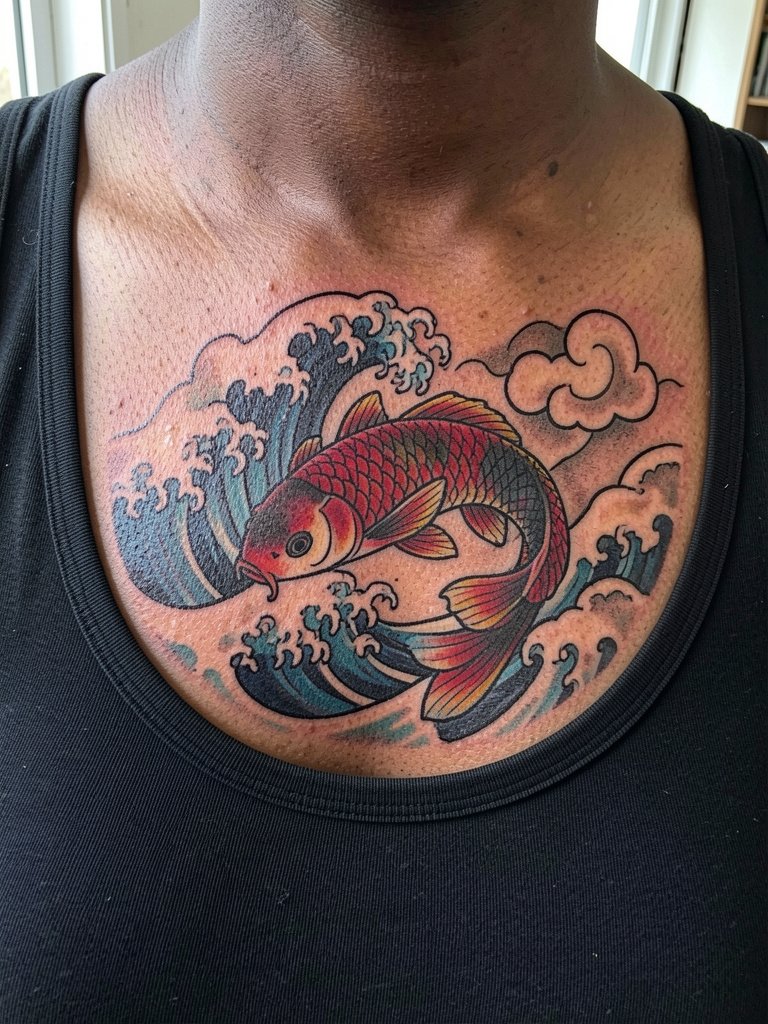
Color versus black and gray is a live debate with large chest panels. One camp favors black and gray because it ages more predictably on the chest and keeps contrast over time. The other camp prefers color for Japanese pieces because saturation and bold outlines create dramatic visual flow across the pec and shoulder. If you choose color, ask the artist about pigment saturation strategies and realistic touch-up timelines so the koi or dragon stays vivid. Large Japanese flow is best booked as multiple sessions and planned to expand toward the shoulder if you might add a sleeve later.
5. Word or quote across the upper chest in bold script

Text across the chest needs generous letter spacing and strong downstrokes to avoid blurring. One camp says script reads best when it is delicate and small. The other camp says thicker script with robust spacing holds up much better on the chest. Avoid copying tiny Instagram scripts without asking the artist to widen counters and thicken key strokes. Bring the exact wording and two font references and ask the artist to show the phrase at the actual width it will sit on your chest. During the session wear a [button-down shirt you can open] (https://www.amazon.com/s?k=button+down+shirt&tag=inkalerts-20) so the front stays out of the way.
6. Roman numerals centered on the sternum or upper chest

Roman numerals look structured but suffer if letterforms are too narrow. A common error is using hairline serifs that blur together. Specify numeral height and ask for slightly heavier strokes so each character keeps separation as the skin ages. Sternum placement brings a sharper pain rating than the upper pec, so plan brief breaks and hydration. For showing off or layering with necklaces, a simple chain necklace sits above the numerals without covering the ink.
Session Day Picks
The first six designs run from small over-the-heart pieces to sternum-centered scripts, and a few session-day items smooth the appointment and the first week.
-
Stencil transfer paper kit. Lets you preview exact placement and symmetry for the wings and mandala ideas so both halves align before the needle hits skin.
-
Topical numbing cream. Applied per directions about 45 minutes before can make sternum and upper-chest sessions more manageable without affecting linework.
-
Thin protective film roll. Useful for keeping the edge of a chest panel clean during the first shower and for avoiding friction from shirt collars.
-
Fragrance-free gentle body wash. Clears sweat and dirt during healing without stripping ink or irritating sensitive chest skin.
-
Aquaphor Healing Ointment. A trusted mainstream option for the initial thin layer in the first days to protect fresh chest work while preventing excessive scabbing.
7. Large lion realism centered on the chest

A central lion benefits from a slightly larger scale so facial features keep proportion over time. If you want realism, insist on healed portfolio shots from the artist that show the same scale and skin tone. A common mistake is squeezing a portrait into too little space which forces the artist to pack detail and causes early softening. Expect 2 to 4 hours for a medium-realism head and a touch-up window at six to twelve months. For casual wear that frames the image, plain crew neck tees in solid tones prevent visual competition. Choose a plain crew neck tee in cotton for show-off days.
8. Tiger on one pec with diagonal flow toward the shoulder

A one-pec tiger reads strongly because the diagonal flow complements the shoulder line. If you plan later sleeve expansion, ask the artist to leave negative space that follows the deltoid so a future arm piece can connect naturally. A frequent error is packing too much background into a single session which flattens the tiger's form. Schedule the piece as a focused one- to two-session project and check healed photos of similar scale on comparable skin tones. For visibility during summer, a muscle tank top shows the flow without cutting off the shoulder line.
9. Owl centered on the upper chest with perched composition

The owl fits the chest center because a round pec can frame a face-like composition. When you want the face detail to stay readable, give the artist a minimum face diameter to work with so eyes and feathers are not micro-sized. People often ask for tiny photorealism and then find the eyes soft at year three. Tell the artist your minimum face diameter and ask them to show the same concept at that scale on healed examples. During the session wear a fitted scoop-neck tank so the artist has clear access without fabric bunching.
10. Eagle across both pecs, wings beating outward

An eagle across both pecs benefits from a strong center anchor so each wing reads independently. One common mistake is high-contrast detail near the sternum that becomes a muddy focal point as skin moves. Instead, request clear wing edges and leave the middle with a crisp negative space line. Pain is moderate on the pecs and increases toward the sternum. For a classic look pair the eagle with a layered chain necklace that echoes the centerline without covering ink.
11. Heart realism over the left pectoral
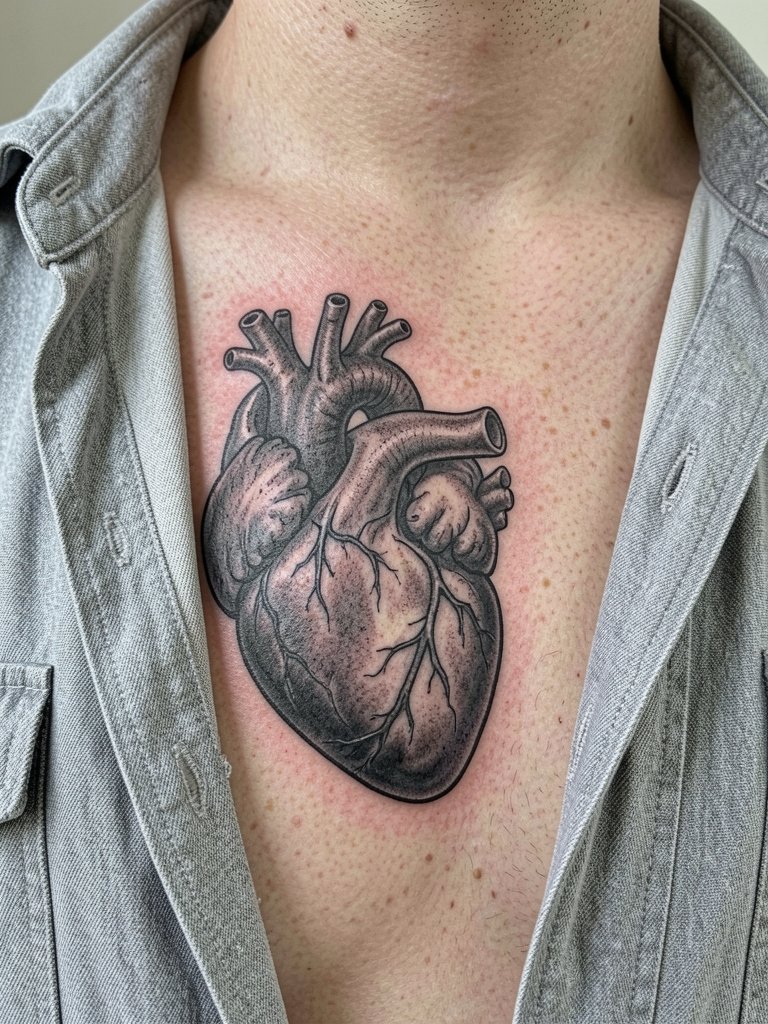
A realistic heart over the pectoral juxtaposes masculine placement with anatomical detail. Small realism must balance detail with scale. The mistake is cramming too much tiny shading into too small a space which softens into a gray patch. Ask the artist for healed micro-realism examples at a similar scale and for a touch-up plan at six to twelve months. Session feel is similar to any pec tattoo with steady buzzing and light vibration. For show-off wear consider an open-placket shirt so the chest area sits flat and visible.
12. Snake wrapping from shoulder onto the chest

Snakes work well as transitional pieces designed to connect chest and arm work later. A common error is ending the snake abruptly at the shoulder edge which looks pasted on. Instead, plan the tail to fade into ornamental background or negative space so future sleeve flow is seamless. Ask for a flow sketch during the consultation that shows how the snake will contour with muscle movement. This placement tends to be mid-pain because of the shoulder-pec junction. For session access and display, a fitted sleeveless tee keeps the shoulder free and showcases the wrap.
13. Portrait on a single pec
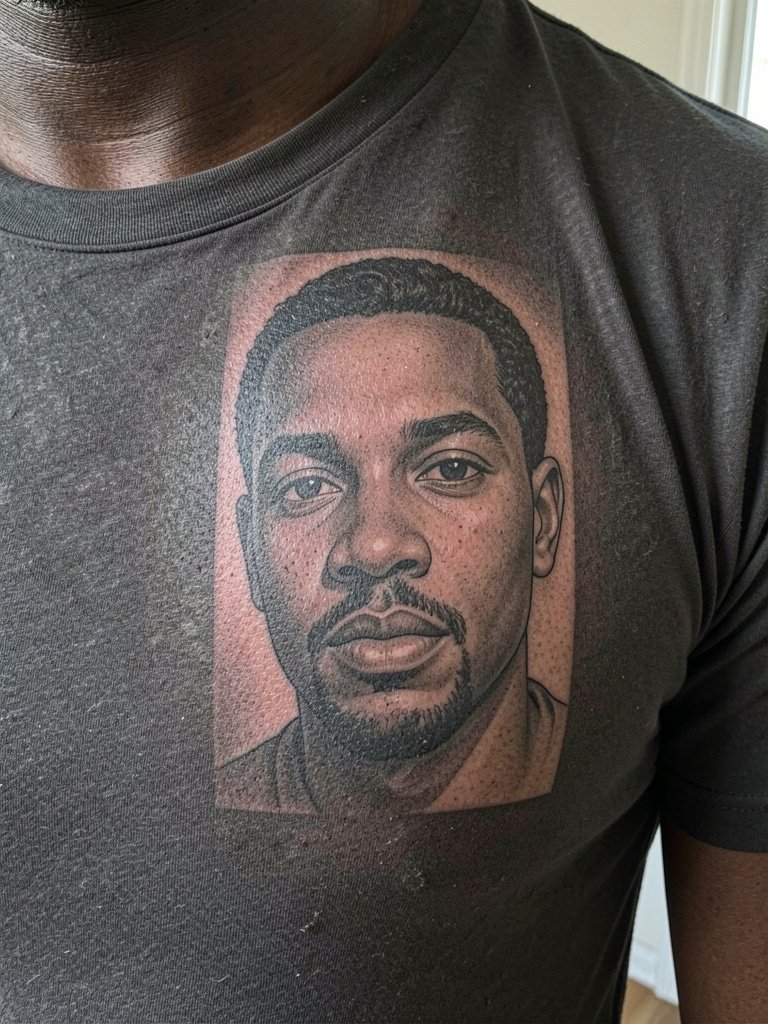
Portraits need enough real estate to preserve facial features. The worst mistake is asking for a tiny portrait that loses the eyes and nose definition as the skin ages. Bring the exact photo and ask the artist to redraw the portrait at a size that keeps the eye sockets readable at two years. Realism often needs a multi-session approach and a planned touch-up window at six to twelve months. For visual balance pick fitted tees that do not wrinkle over the pec. A fitted crew neck tee works well.
14. Armor-inspired tribal wrap from shoulder to chest

Tribal wraps read like armor when the black panels follow muscle contours. Avoid random shapes that ignore anatomy because they will fold and distort with motion. Tell the artist you want the piece to accent the pec bulge and shoulder cap so they map bold blocks along natural tension lines. Blackwork is time-consuming but tends to age predictably when saturated. For sessions wear a black fitted tee or tank so the shapes remain the focus.
15. Geometric chest composition with negative space

Geometric work uses negative space to create modern impact and it holds when lines have breathing room. The common mistake is shrinking the geometry so the angles blur into one another. Insist on minimum line lengths and axis spacing so the triangles and circles keep their shape at two and five years. Geometric pieces are low on session pain but high on stencil precision. For a clean presentation pick solid basics like a plain crew neck tee when you want the shapes to dominate.
Frequently Asked Questions
Q: How painful is the chest compared with other spots and where does it hurt most?
A: The sternum and collarbone area are typically the most sensitive on the chest because the skin sits close to bone and vibration feels sharper there. The upper pecs and lateral chest are usually less intense and more tolerant. Bring snacks, hydrate well the day before, and ask the studio about short breaks so you can handle a longer panel session.
Q: Should I go small over the heart or commit to a full chest panel?
A: If you are unsure about future expansion choose a mid-sized piece that follows pec anatomy and leaves negative space for later work. A small over-the-heart icon is low-commitment and usually one session, but very small details blur faster on the chest than on forearms. Think about whether you want a standalone piece or a starting element for a shoulder or sleeve transition.
Q: How will a chest tattoo age across different skin tones and what should I tell the artist?
A: Darker skin tones read differently because contrast is key, so ask the artist for heavier anchor lines and saturated blacks that create a silhouette. Lighter skin tones can carry more subtle gradients but still need clear spacing to avoid early softening. Bring healed portfolio shots the artist has done on skin tones similar to yours and ask them to show the same design scaled for longevity.
Q: Where can I find healed examples and local artists without relying on single Instagram posts?
A: Search hashtags like #chesttattoo and #blackworktattoo then filter by city so you see local portfolios and healed progress images. Tattoodo and booking platforms let you narrow searches by style and placement. Reddit communities such as r/tattoos and r/tattooadvice are good for first-person healed shots and sizing feedback. For local searching use queries like "[your city] chest tattoo studio" and prioritize galleries that show healed photos rather than just fresh ink.
Q: How often do chest tattoos need touch-ups and which styles are most likely to require one?
A: Fine-line scripts and micro-realism typically need touch-ups earlier, often in the first one to two years, because the chest moves and lines can soften. Bolder blackwork and larger geometric panels usually keep contrast longer and may not need a touch-up for several years. Plan a six- to twelve-month check for realism and color work to correct any early settling.
Q: What should I wear to my session and what should I bring to help the artist get the best result?
A: Wear clothing that the artist can move away from the area without disrobing you, such as a button-down, zip hoodie, or a loose tank that stays in place. Bring reference images at scale, a ruler or tape measure if you want exact sizing, and an extra long-sleeve shirt for the ride home so nothing rubs the fresh ink. A loose button-down shirt is a practical session option that keeps the chest accessible and the fabric from sticking to bandaged areas.