
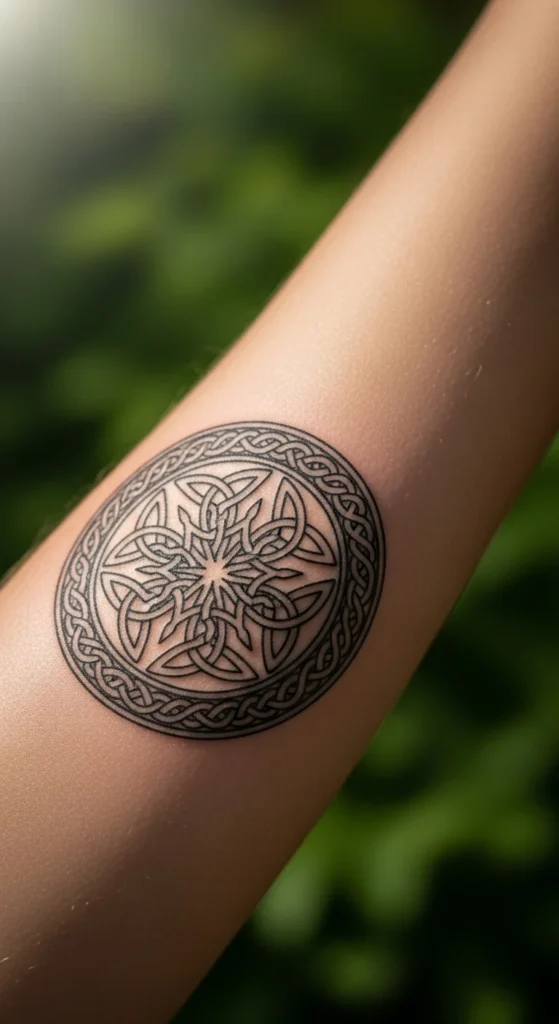
Celtic circle tattoos carry stories about connection, continuity, and the unbroken flow of life. People choose these designs to express loyalty, resilience, ancestry, or spiritual grounding. Whether minimal or filled with knotwork, the circle keeps everything centered. This guide brings you designs that feel symbolic, approachable, and adaptable for different budgets. Each idea is simple to understand, easy to plan with your artist, and perfect for anyone wanting body art that feels personal and lasting.
1. Classic Celtic Knot Circle
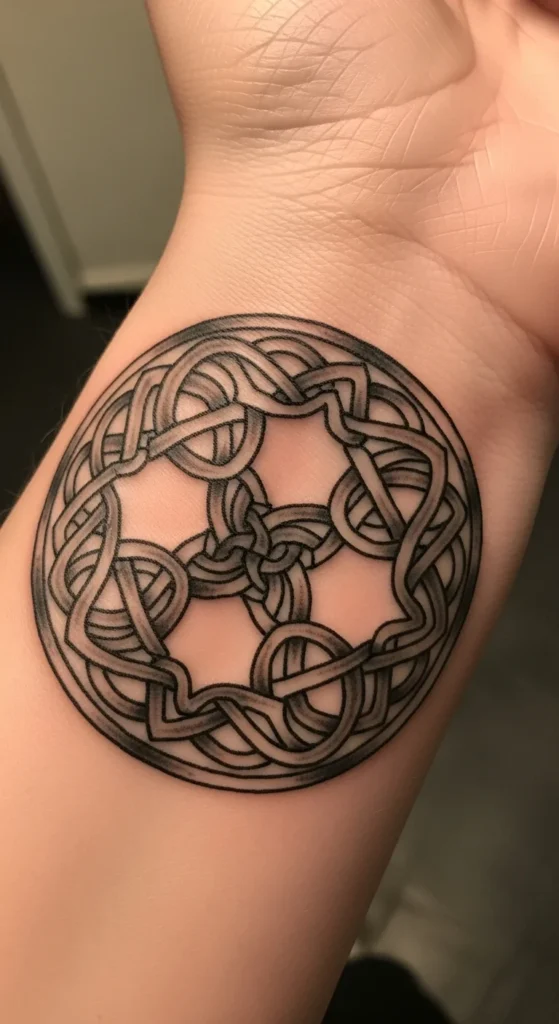
This design works well for people who want something recognizable and timeless. The endless loops create a clean look that sits nicely on the wrist, shoulder, or ankle. You can keep it small to make sessions quick and affordable. Many artists can adapt the pattern to match your personal style. Bring a printed reference to stay aligned with the exact shape you like. If your budget is tight, ask your artist to simplify the knot strands so the work stays clear without adding long shading hours. Adding thin spacing lines also keeps the tattoo breathable and gentle on sensitive skin.
2. Trinity Knot Circle
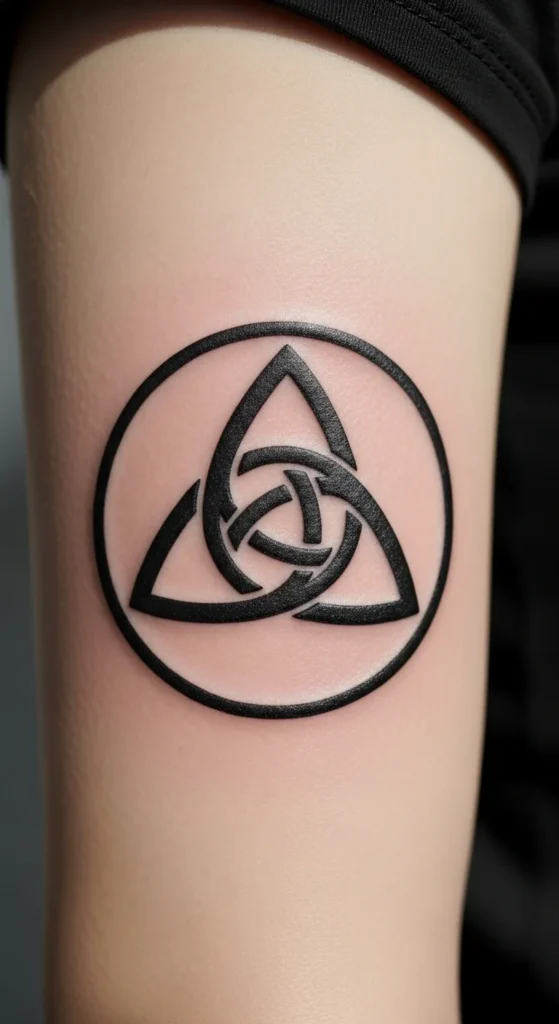
A trinity knot inside a circle creates a balanced look with symbolic layers. Some choose it to show unity or personal connection. The design stays neat even at smaller sizes, making it a solid option for people trying their first tattoo. You can place it on compact areas like the inner forearm or shoulder cap. To save on cost, go for solid lines instead of heavy shading. Trace the outline onto paper at different sizes to see what fits your proportions best. If you want more depth later, you can return to add accents without needing a full redesign.
3. Celtic Circle With Spiral Paths
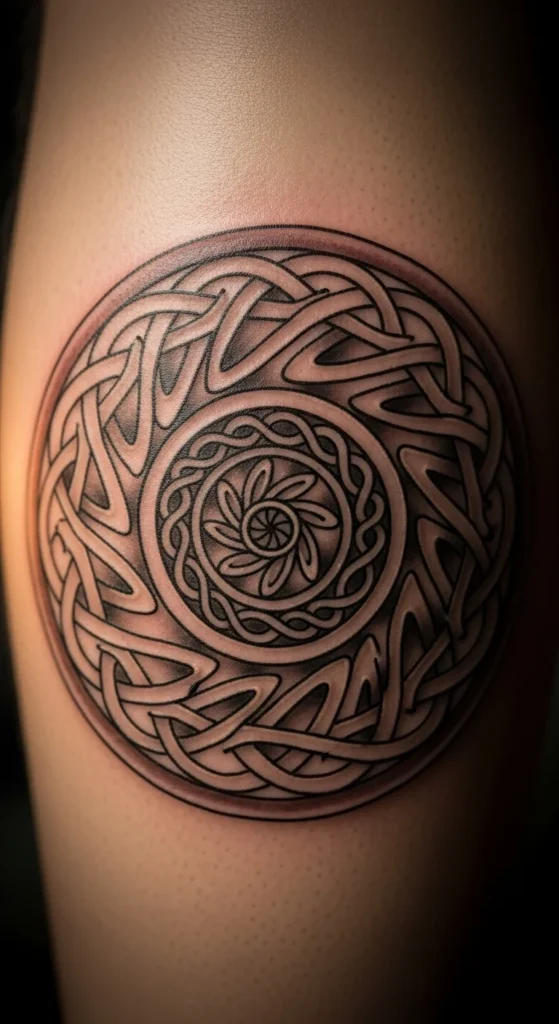
Spiral paths add movement to the traditional circle shape. This design works well for people who want something symbolic without feeling busy. You can keep the spirals bold or thin depending on your comfort level with detail. It fits naturally on rounded areas like calves or shoulders. If you’re planning this at home, sketch several spiral lengths to see which one feels balanced. You can also ask your artist to test-stamp the shape on your skin so you can adjust placement before committing. Keeping the spirals evenly spaced helps the tattoo age cleanly.
4. Double-Ring Celtic Circle
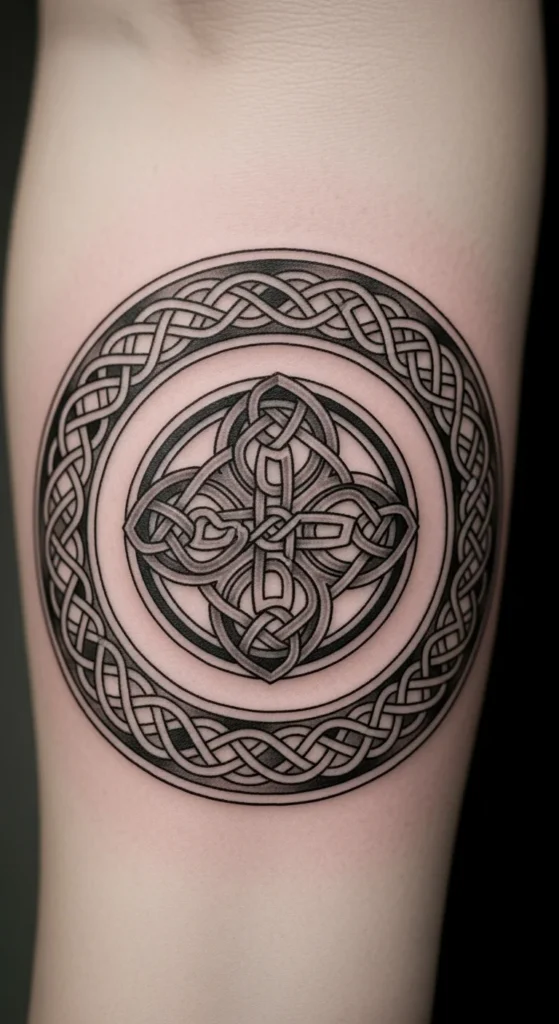
Two rings create a stronger visual anchor. Many people like this because it sits confidently without needing extra decoration. The contrast between thick and thin lines adds texture. Try placing it on a flatter area like the outer forearm so the rings stay even. To keep the session shorter, ask your artist to keep the knot pattern simple and consistent. Trace two circles at home using household items like lids or bowls so you can experiment with spacing before your appointment. If you want to personalize it later, you can add small dots or accents between the rings.
5. Minimal Line Celtic Circle
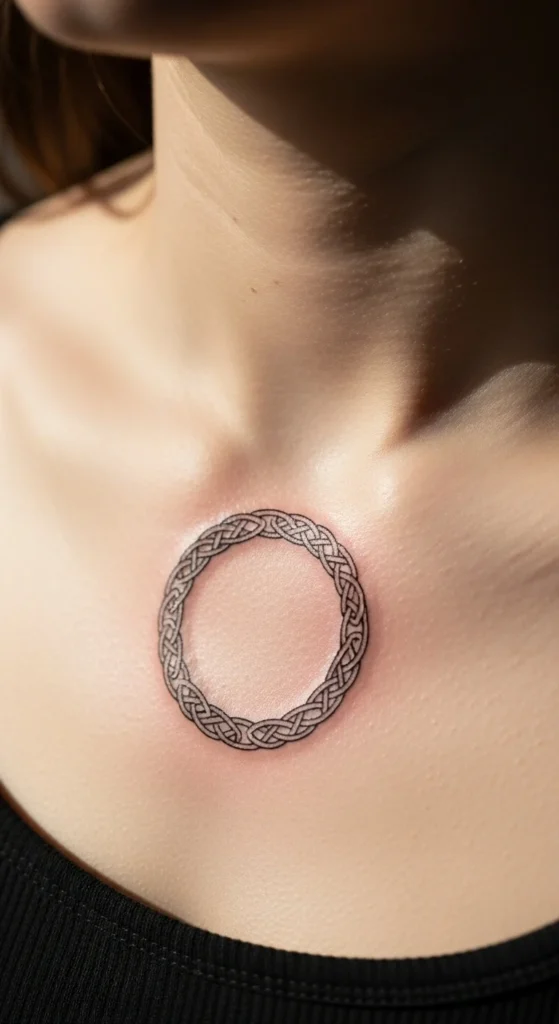
If you love subtle tattoos, thin lines offer a gentle feel. A minimal Celtic circle keeps the symbolism while avoiding heavy ink. It looks great on the collarbone, ribs, or inner wrist. This design also heals quickly, which helps if you’re working with a tight schedule. Ask your artist for a single-pass method to avoid thick buildup. You can also print out circles at different thickness levels to find the one that feels right. If you’re watching your budget, minimal lines usually take less time and keep the cost friendly.
6. Celtic Circle With Leaf Accents
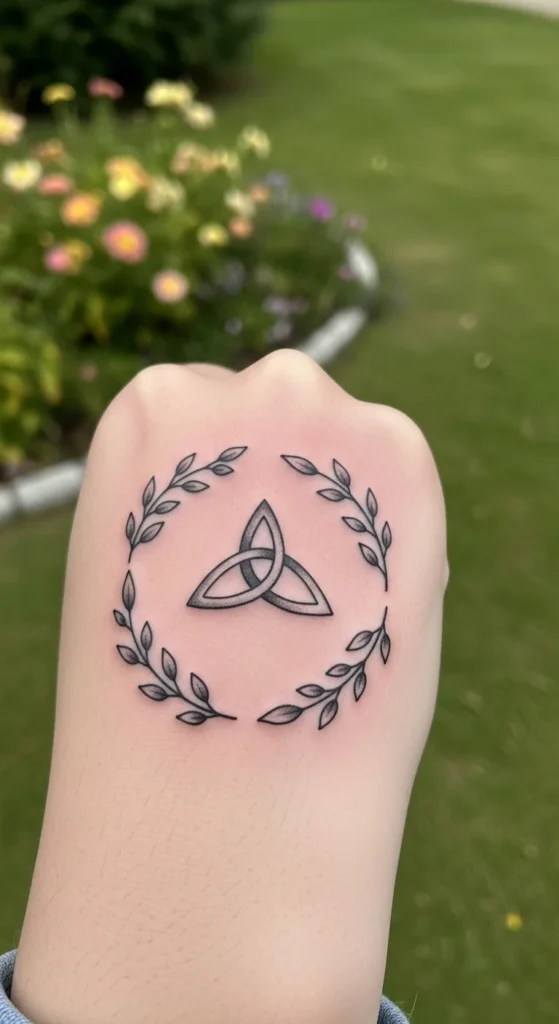
Adding leaves brings a grounded feel to the circle. This design pairs well with anyone who enjoys nature themes or wants softer shapes. You can keep the leaves small so they feel like quiet extensions of the knotwork. Try placing this on the shoulder blade for a gentle curve. If you prefer a more affordable approach, choose fewer leaves. You can revisit the tattoo later and expand the foliage gradually. Sketching simple leaf shapes beforehand makes the design easier to plan without adding complexity.
7. Bold Blackwork Celtic Circle
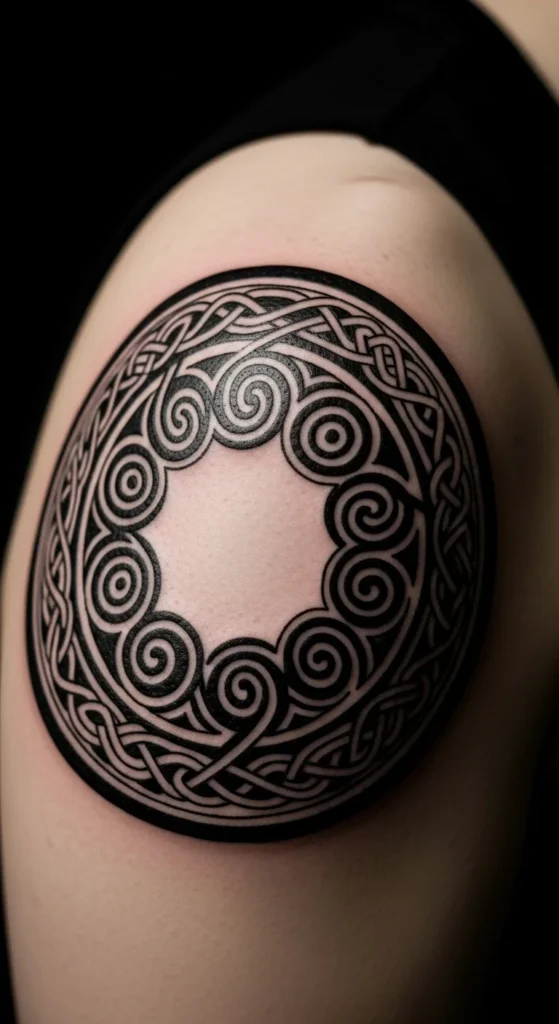
This style stands out immediately. Strong shading and thick lines create a grounded look. It works well for larger placements like the back or shoulder. Keep the circle large enough so the knot shapes stay readable. If budget is a concern, ask your artist to remove filled sections and keep the design mostly line-based. You can fill in darker areas later. Testing the size with paper cutouts at home helps you visualize how bold the piece will feel on your body.
8. Interwoven Animal Motif Circle
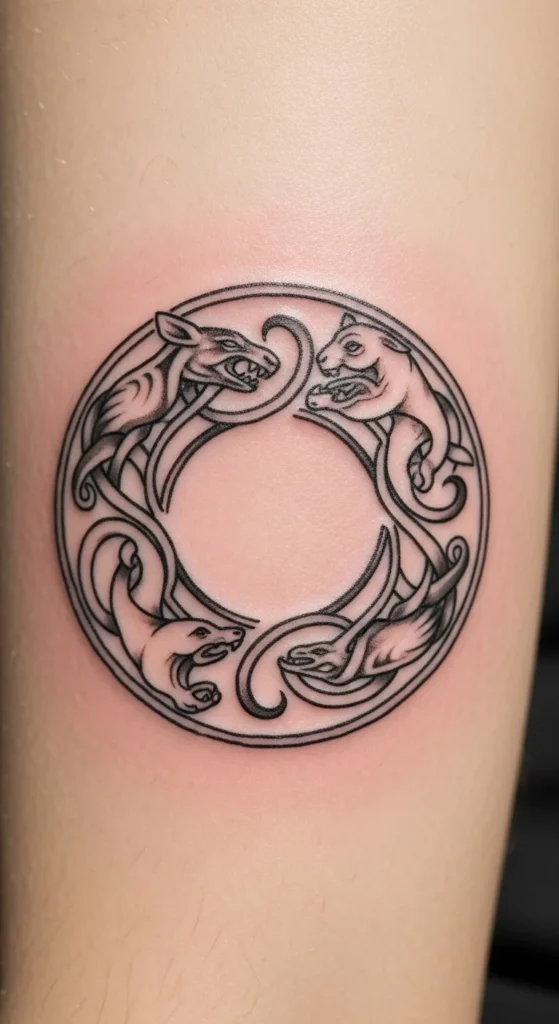
Animal motifs add storytelling to your circle. People often choose wolves, birds, or hounds. Even simple silhouettes work well. You don’t need a lot of detail to make the idea meaningful. Keep the animals balanced around the circle so they feel like part of the pattern. If you prefer an affordable session, choose just one animal and mirror it. This keeps the workflow simple for your artist. You can draft the shapes using reference photos, then reduce them to basic curves so they suit circular designs.
9. Celtic Sun Circle
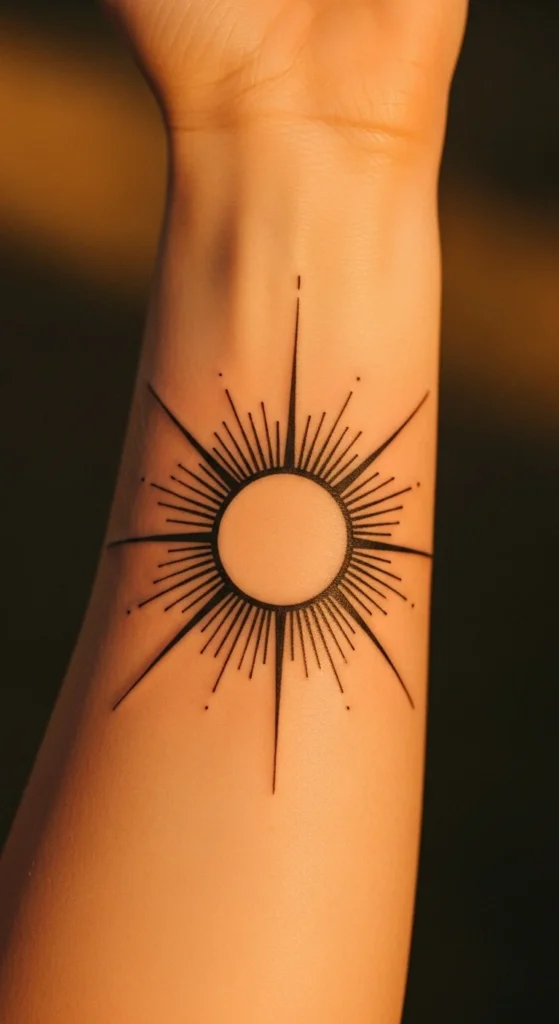
A sun circle adds warmth to your tattoo without needing extra shading. The rays can be short, long, sharp, or rounded. You can place this on the forearm or chest for easy visibility. If you want a gentle version, keep the rays thin and evenly spaced. Try sketching a few ray lengths on tracing paper to explore what feels best. Budget-friendly tip: keep the inner circle simple and let the rays do the visual work. This reduces tattoo time while still giving a strong look.
10. Moon Phase Celtic Circle
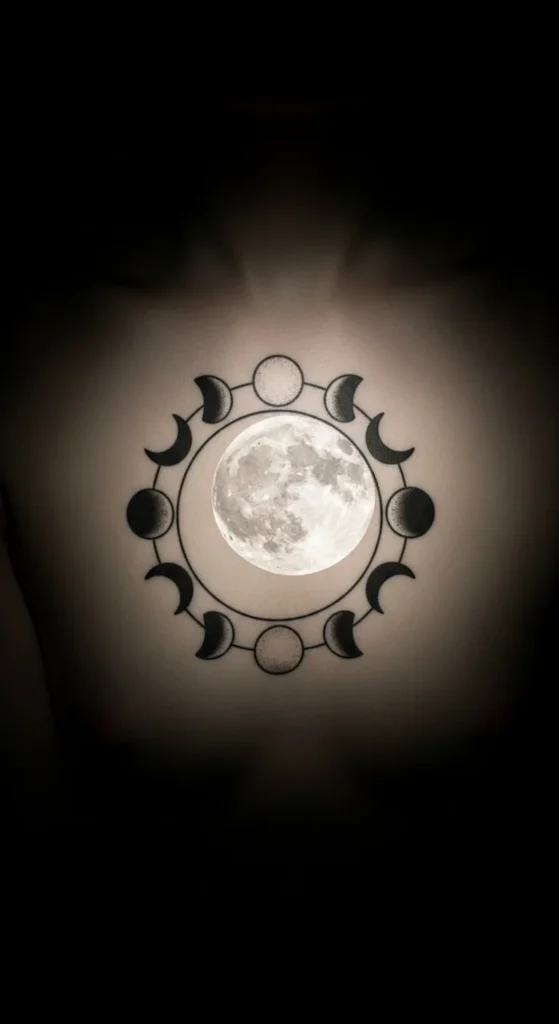
This idea brings a calm mood. The circle represents continuity, while the moon phases show cycles and change. You can place it on your forearm, thigh, or back. Try keeping the phases minimal so the circle stays the main focus. If you want something budget-friendly, use dot shading instead of full gradients. Print moon shapes at home to explore spacing. If you want a later upgrade, your artist can add stars or small accents without reworking the original circle.
11. Celtic Circle With Dots and Lines
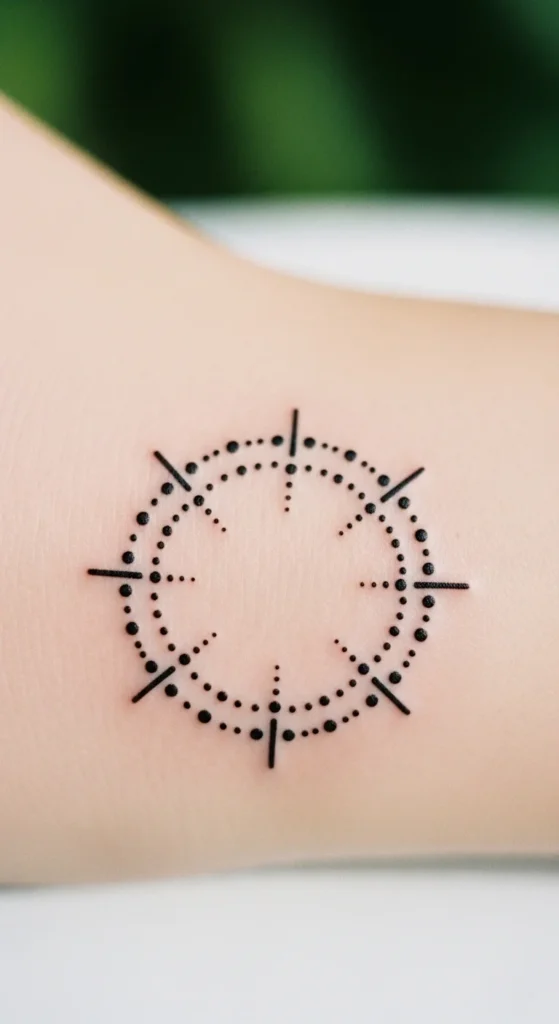
Dotwork gives the tattoo a gentle rhythm without adding weight. You can use dots to mark corners, fill gaps, or outline curves. Straight lines help stretch the circle visually. This design works well for small or medium placements. If you’re watching your budget, dotwork often takes less time than heavy shading. Try using a ruler to draft straight lines around a traced circle to play with spacing. Dots can also help create symmetry even if the circle is kept simple.
12. Tree of Life Celtic Circle
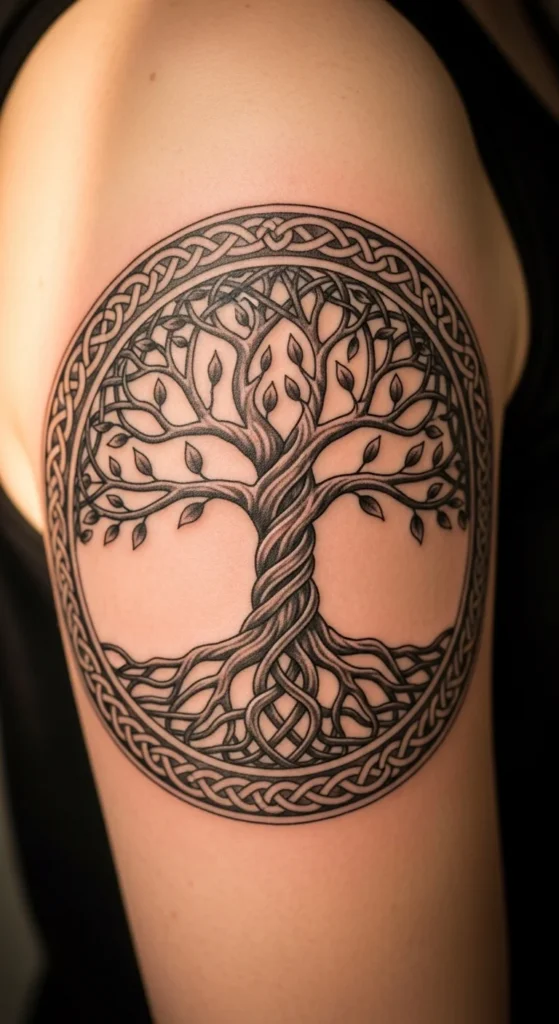
The Tree of Life feels grounding and calm. The circle helps bring balance to the branches and roots. Many people choose this for the back or forearm where there’s space to show detail. You can simplify the branches if you want a small version. To keep the cost friendly, ask your artist to focus on the outline first. Later, you can add shading and texture when ready. Sketching branches that extend slightly past the circle can also give the design more personality without complicating it.
13. Braided Border Celtic Circle
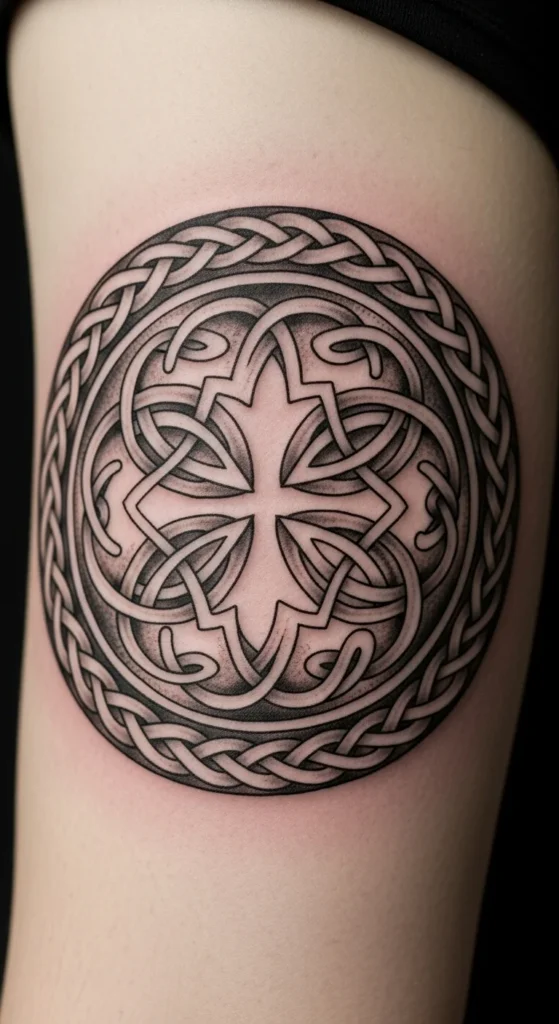
A braided border adds strength without overwhelming the central design. You can place it around a simple circle, symbol, or blank space. This versatility makes it easy to match with future tattoos. If you’re keeping an eye on cost, choose fewer braid turns or repeat the same pattern for quicker linework. Use thick markers at home to test how bold you want the border to feel. This helps you visualize balance before booking your session.
14. Knot Circle With Heart Accent
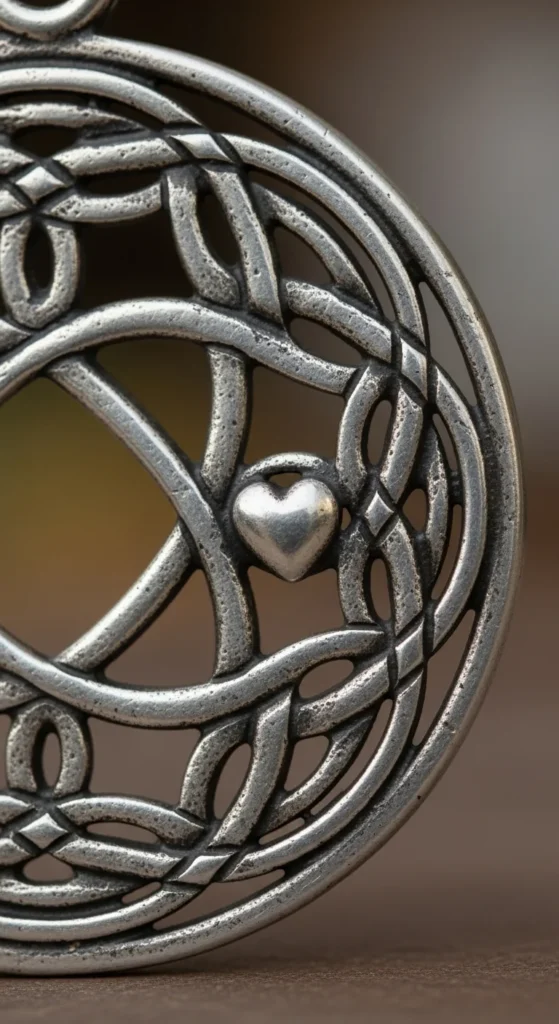
A small heart adds warmth without changing the core shape. This design works well for couples, family themes, or personal milestones. The heart can be tiny and tucked into the knot so only you notice it. This keeps the tattoo subtle while still meaningful. If you want to save on cost, keep the heart as a simple outline. Practice sketching the heart inside the circle to see where it looks best. You can always add small lines around it later to create a soft glow.
15. Celtic Wave Circle
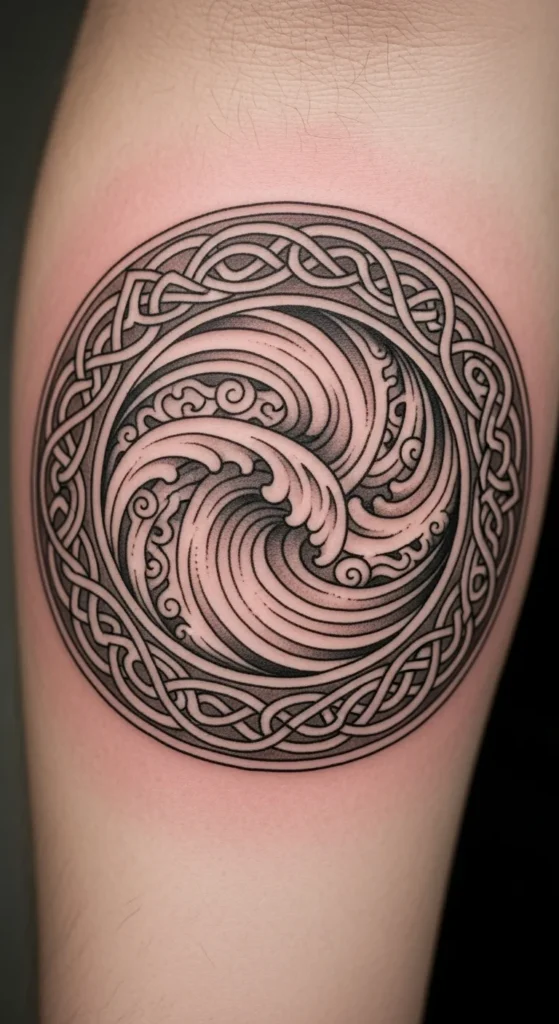
Wave patterns bring a smooth flow to the circle. This design works beautifully for people with a connection to the sea or movement. You can keep the waves simple and rhythmic. It fits naturally on the thigh, arm, or ribs. Ask your artist to keep the waves consistent in width to help the tattoo age nicely. If cost matters, skip heavy shading and stick to linework. You can also test wave shapes with curved rulers to find a pattern that feels calming.
16. Celtic Circle With Arrow Points
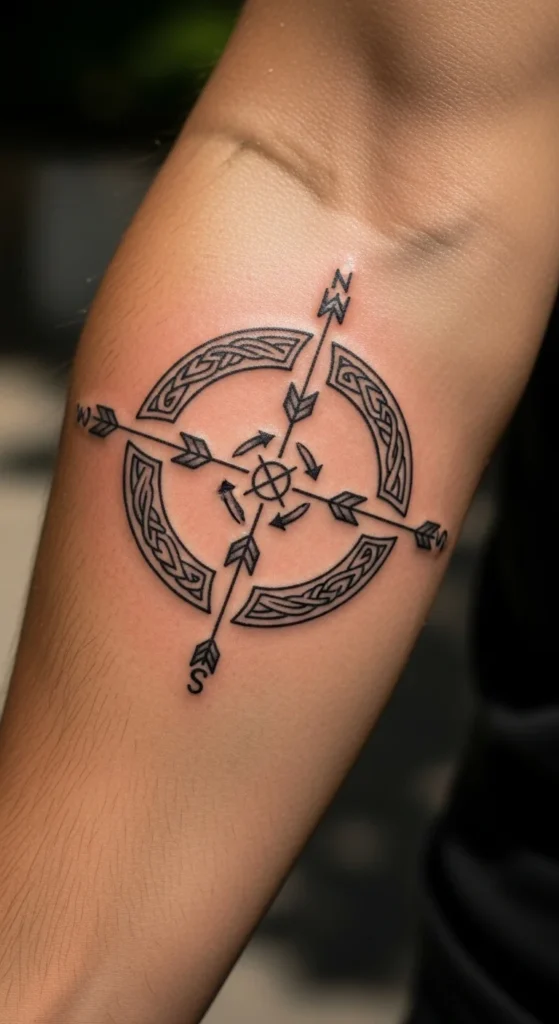
Arrow points add a clear sense of direction. They can represent guidance, focus, or personal movement. You can place the arrows at four fixed spots to keep the shape clean. This works well on the forearm where alignment is easy. To keep the budget friendly, choose simple arrow shapes instead of detailed ends. Try printing out circles and marking different arrow placements until one feels right. Arrows also give room for future add-ons like small dot trails.
17. Crescent-Framed Celtic Circle
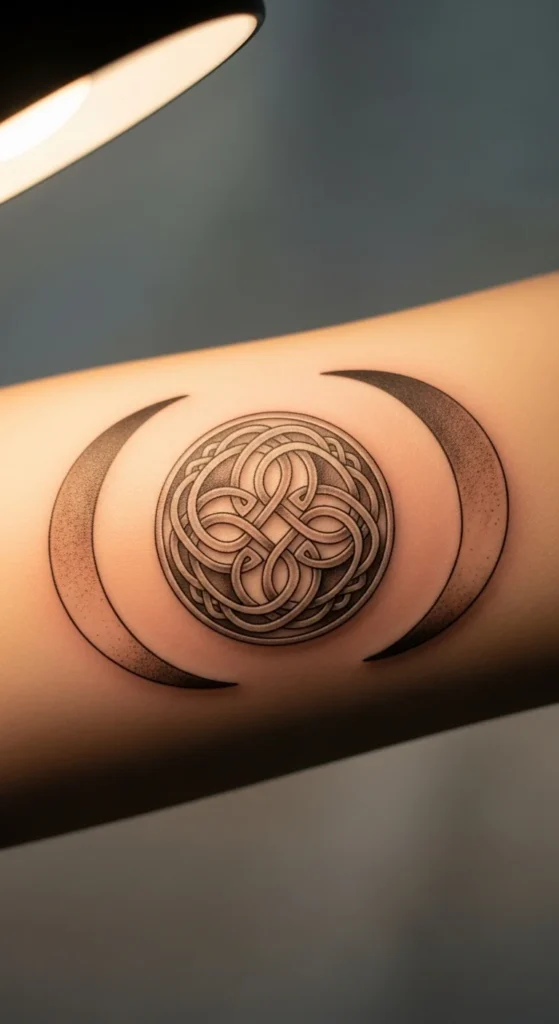
This design brings a quiet balance between curves and symmetry. The crescents cradle the circle without overpowering it. It fits nicely on the collarbone, ribs, or spine. You can keep the crescents thin for a delicate look or make them bolder if you want more presence. To reduce tattoo time, avoid shaded crescents and stick to simple outlines. Use tracing paper to adjust their curve before meeting your artist. This helps you find a shape that feels harmonious.
18. Celtic Knot Circle With Tiny Stars
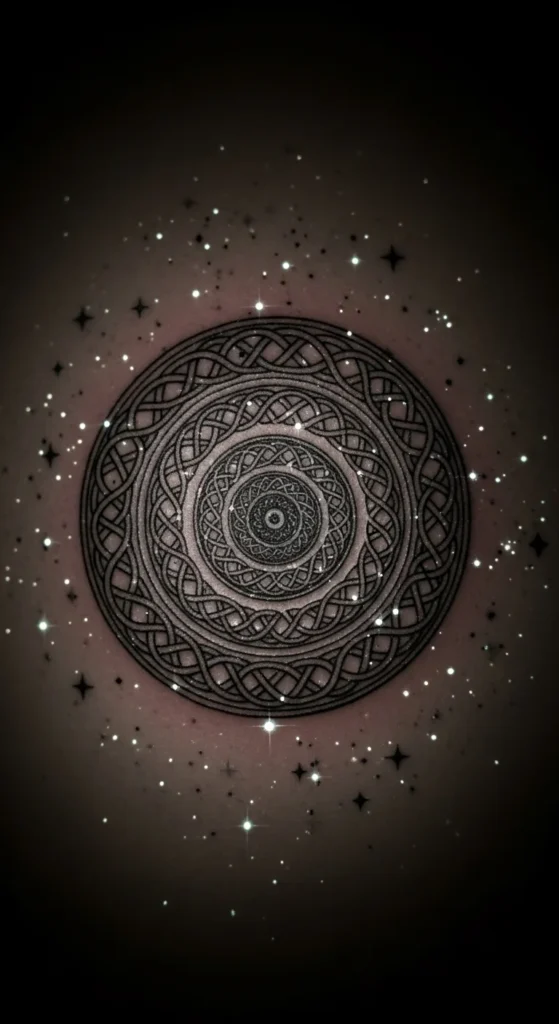
Adding tiny stars gives your tattoo a soft celestial touch. They look lovely around knot patterns without making things crowded. You can place the stars randomly or in small clusters. This keeps the design playful and lightweight. If you’re on a budget, tiny dots take minimal time. Try using a pencil to tap small specks around a circle sketch to find the spacing you enjoy. You can always add more stars later as your tattoo collection grows.
19. Overlapping Rings Celtic Circle
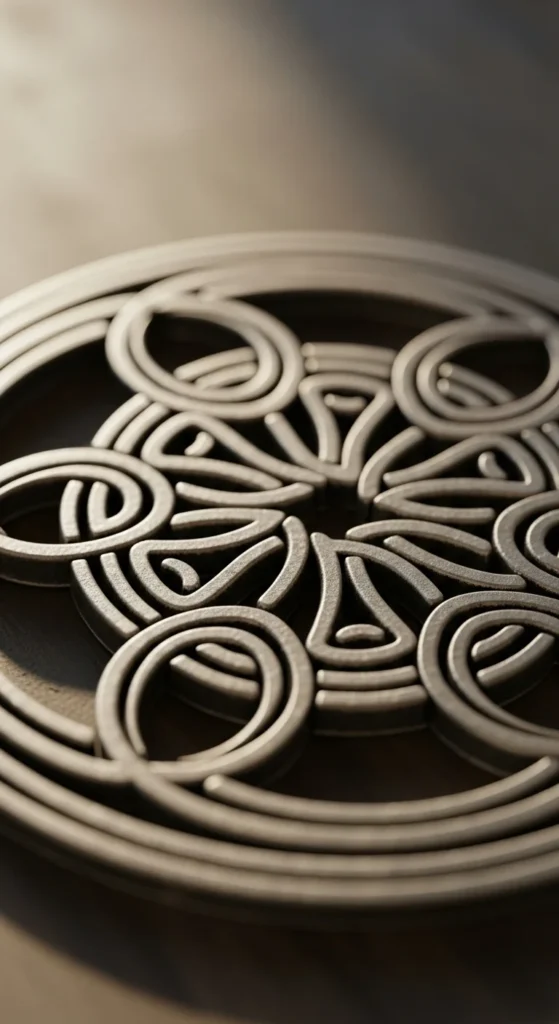
Multiple rings create a sense of layered time and connection. This design works well for people who like geometric patterns with a Celtic feel. You can keep the rings thin so the design doesn’t feel heavy. Try placing it on the inner arm or upper back. If you want to save time, limit the number of rings and keep overlaps clean. Drafting rings with household objects like cups or lids helps visualize layouts. You can add knot accents later if you want more detail.
20. Broken-Edge Celtic Circle
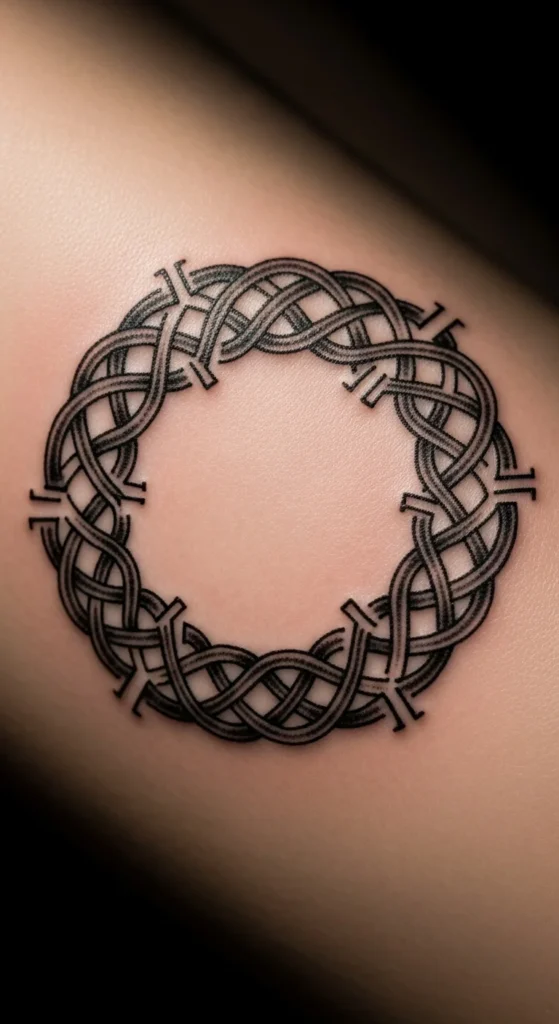
This style creates an interesting balance between structure and freedom. The gaps keep the tattoo airy and allow the knot patterns to breathe. You can place this design on areas that move often, like the forearm or shoulder, without losing clarity. Ask your artist to keep the breaks clean and intentional so the design stays readable. If you’re keeping things affordable, remove shading and focus on bold, simple lines. Sketching broken edges at home helps you find breakpoints that feel natural.
21. Celtic Circle With Center Dot
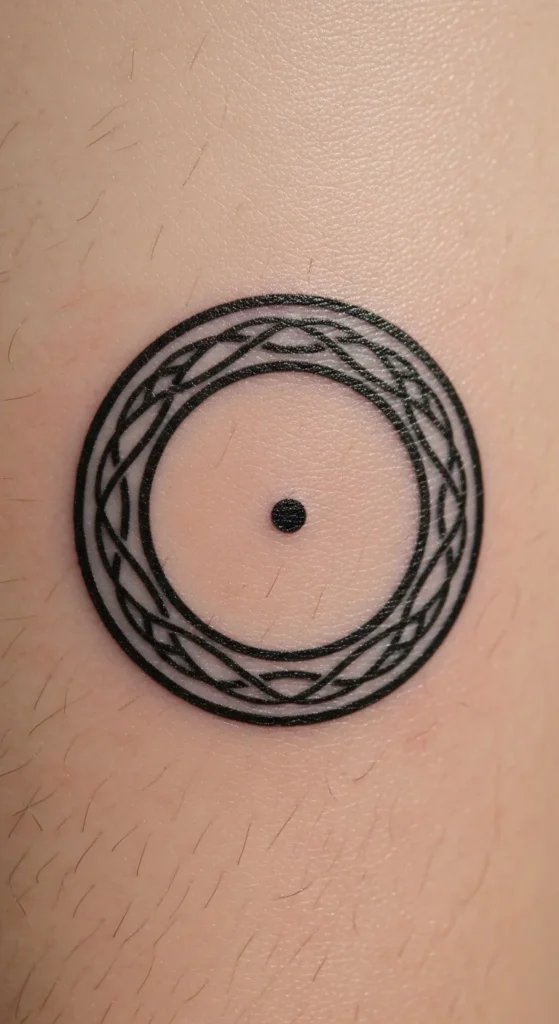
A center dot creates a quiet focal point without adding clutter. This design suits people who enjoy symbolic minimalism. You can place it almost anywhere, but the wrist and inner forearm work especially well. If you’re on a budget, this is a quick tattoo to complete. You can size the dot using a pen at home to see what feels balanced. The simplicity also makes it easy to add surrounding shapes later, like rays or tiny lines.
22. Tri-Circle Knot Pattern
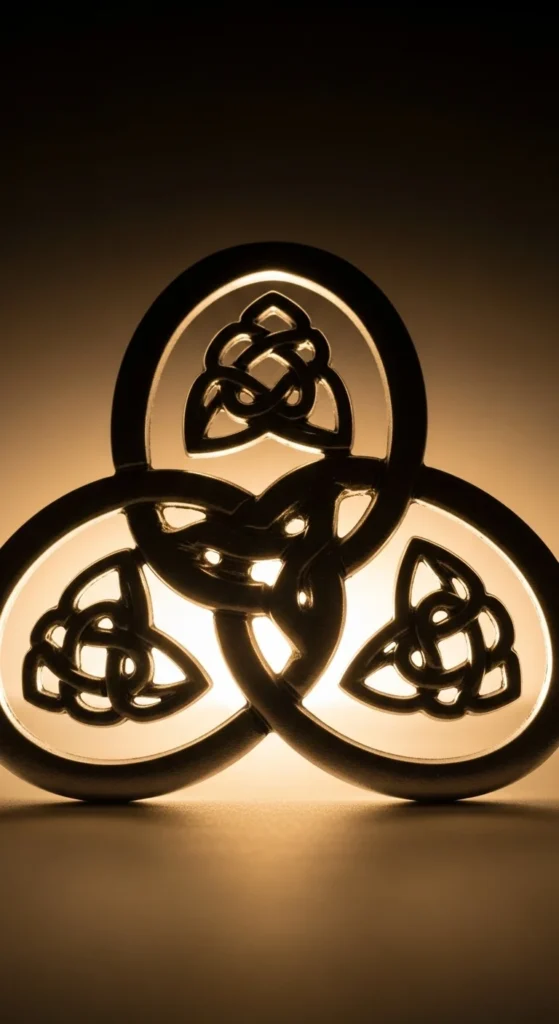
Three circles connecting creates a balanced shape that holds deeper symbolism for many people. You can keep the circles thin or bold depending on the mood you want. This design fits nicely on the upper arm or thigh. If you want a more affordable option, avoid heavy shading and stick to linework. Trace three circles at home and move them around until you find an intersection that feels right. This small planning step makes the final tattoo much easier to visualize.
23. Spiral-Knot Celtic Circle
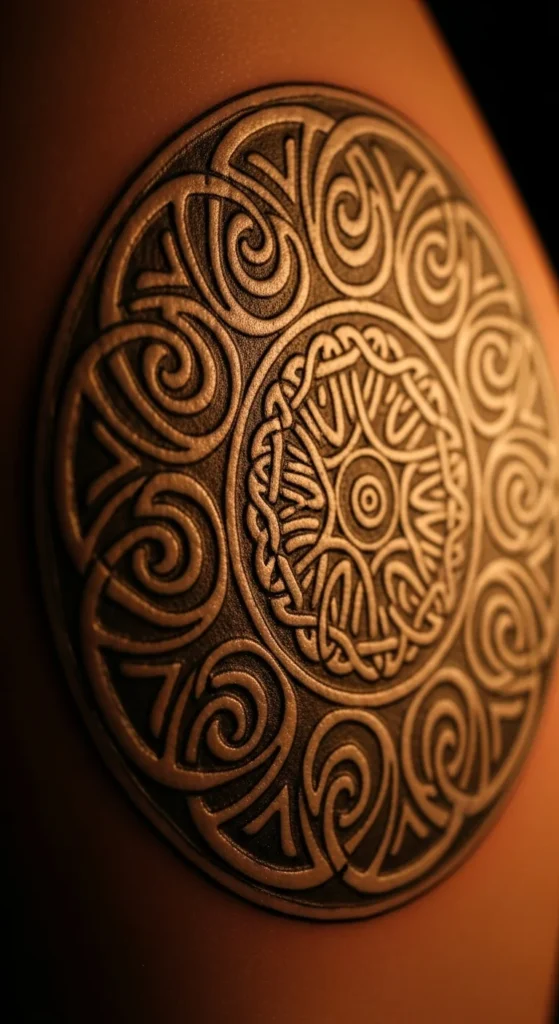
Spiral knots give the tattoo a soft sense of movement without needing a large canvas. You can keep the spirals uniform or mix different sizes. This works well on the forearm, ribs, or upper back. Ask your artist to keep spacing generous so the knots don’t blur over time. If you want to keep costs low, choose fewer spirals and increase blank space. Try sketching spirals inside a circle to find patterns that feel calm and centered.
24. Stacked Celtic Circle Pair
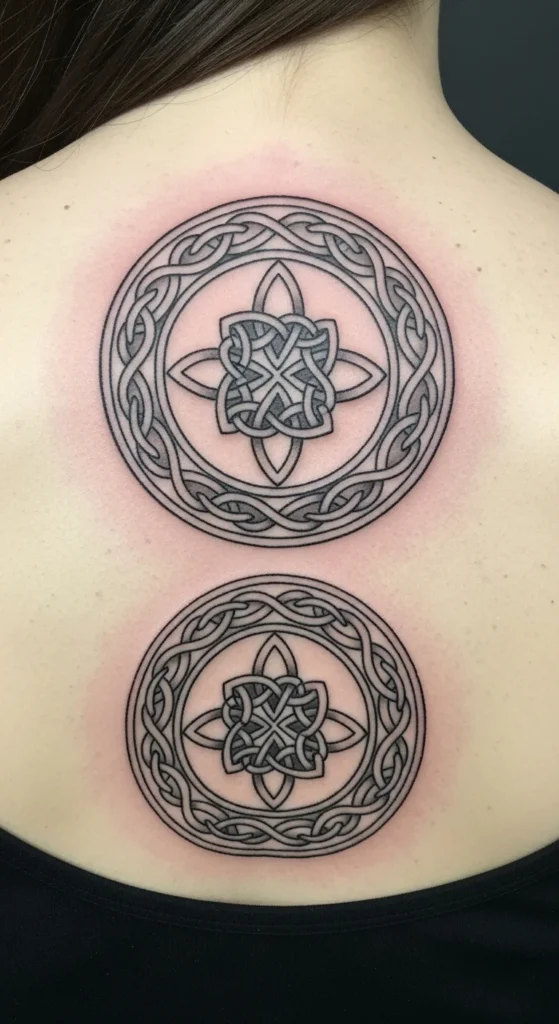
Two circles stacked together create a layered story. You can keep both identical or make one more detailed. This works beautifully along the spine or sternum. If you’re budgeting, keep both circles line-based. You can add knot details to one circle later. Cut out two paper circles and tape them on your body to test spacing. This helps you decide whether you prefer a close pair or a slightly wider gap for breathing room.
Conclusion
Celtic circle tattoos offer simple shapes with meaningful structure. Whether you want something subtle or bold, each idea here gives you room to plan a tattoo that fits your story, your budget, and your comfort level. Try sketching a few favorites, test placements at home, and bring clear references to your session. With a little preparation, you’ll walk away with a design that feels grounded and lasting.