Fine-line butterfly tattoos can look like a fragile whisper the day you get them and like a smudge a few years later if the placement and scale are wrong. Thicker contour, slightly more spacing in the wings, and choosing skin that does not stretch daily are small moves that make a big difference in how the design reads over time. Below you will find creative options and practical notes to help you pick a butterfly that lasts.
1. Fine Line Single-Needle Butterfly on the Inner Forearm
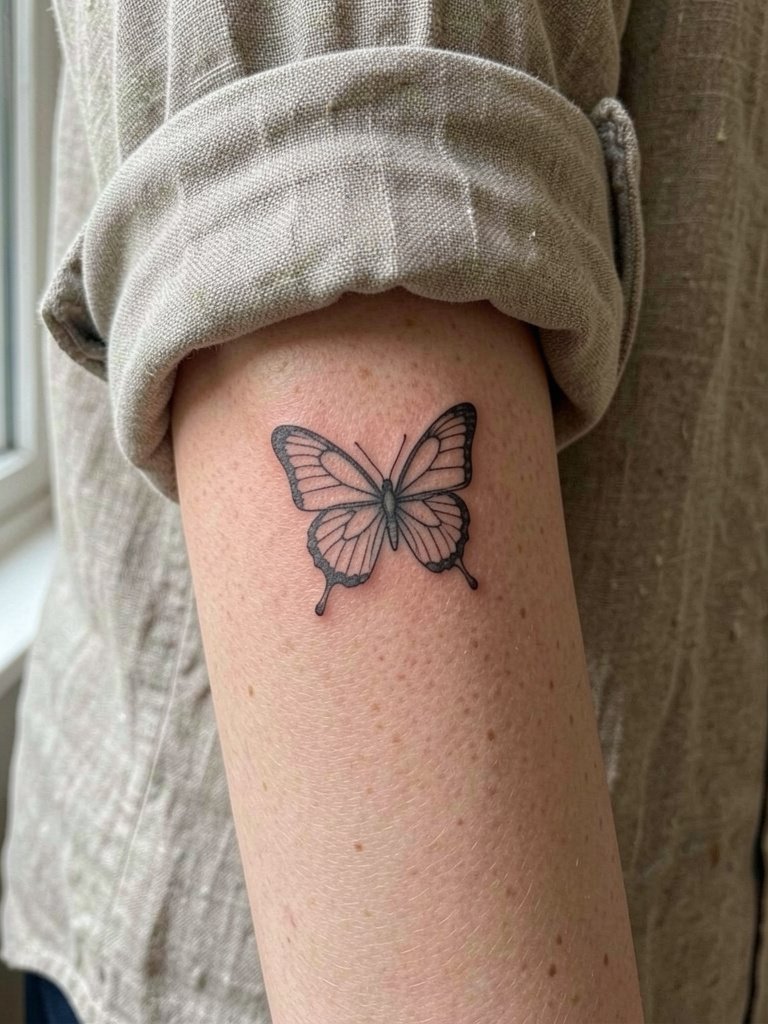
A single-needle butterfly is the go-to for first-timers who want a discreet piece that follows wrist and arm movement. Recommend it when you want a subtle accent that still shows in photos, and scale it slightly larger than the smallest reference to avoid early softening. Tell your artist you want the line weight a hair heavier than a typical single-needle sample so the contour keeps reading at 12 to 24 months. The inner forearm is low on pain and gives the artist a flat, easy canvas. For showing it off, pair with a linen button-down shirt with the sleeves rolled to mid-forearm.
2. Watercolor Gradient Butterfly on the Lateral Hip Bone
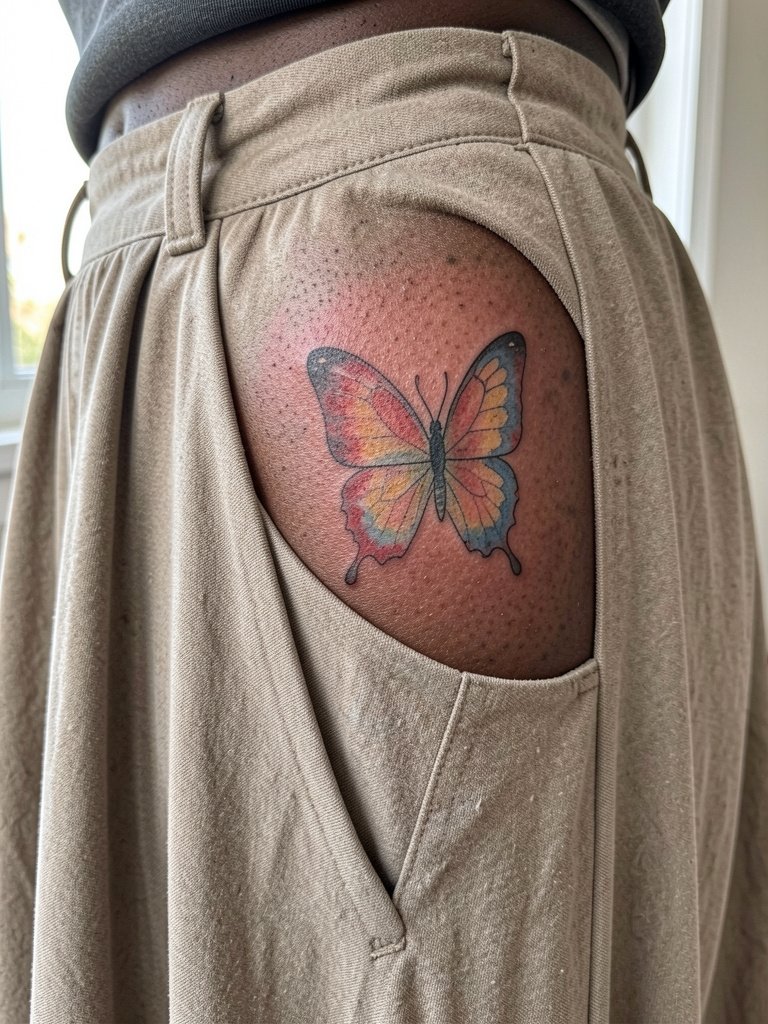
Watercolor butterflies sing in photos but often lose saturation faster than solid fills. Choose this if you value painterly edges and are ready for occasional touch-ups to refresh the washes. When you book, bring three reference images of the exact color blend so the artist can match pigment choices to your skin tone. Avoid tiny watercolor hip pieces because the wash needs breathing room to keep its softness after healing. For nights out, the tattoo pairs well with high-waisted flowy skirts in pastel tones that echo the gradients.
3. Neo-Traditional Butterfly with Gem Accents on the Sternum
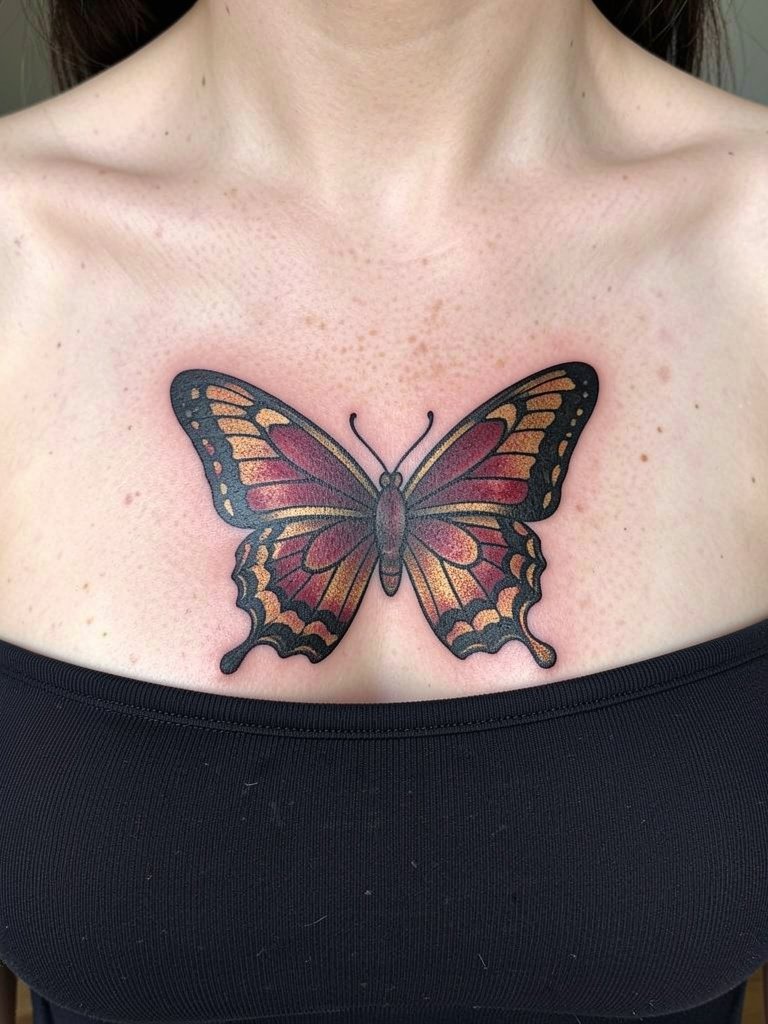
Saturated neo-traditional butterflies age visually better because the bold outlines lock in the shape as saturation fades. Opt for this style when you want a strong central chest piece that still reads under clothing. Discuss exact jewel placements and contrast points with your artist so metallic shading sits where the collarbone and neckline will frame it later. Sternum work can be more sensitive than the forearm, expect moderate pain and multiple short sessions for correct saturation. For styling, strapless tops and layered pendants bring attention to the gem accents and let the piece read like jewelry.
4. Blackwork Ornamental Butterfly with Mandala Wings on the Inner Thigh
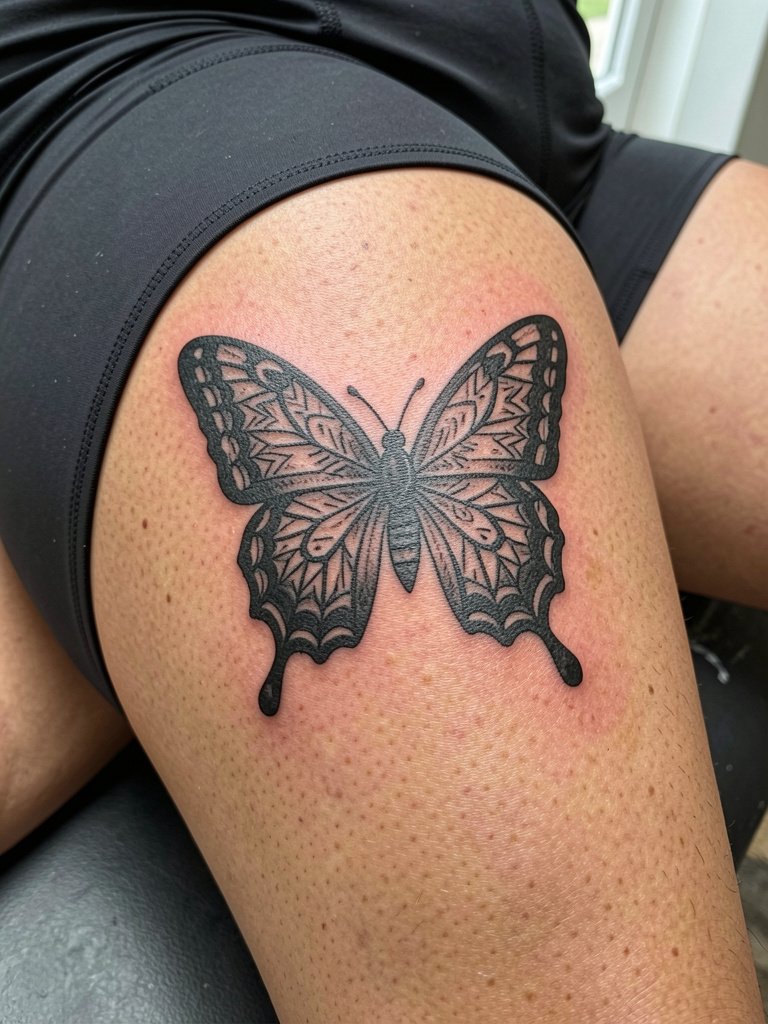
This is the pick when you want a bold, graphic butterfly that reads like a shield. Inner-thigh skin accepts dense blackwork well because it is less exposed to sunlight. Note that the area is intimate and can be more tender during the session. Ask for slightly larger mandala spacing so the negative space survives stretching and aging. A common mistake is packing too many tiny mandala details into a small foot-print. For session comfort, wear loose drawstring shorts so the artist can roll the leg up without pressure on fresh skin.
5. Micro-Realism Butterfly with 3D Shading on the Inner Upper Arm
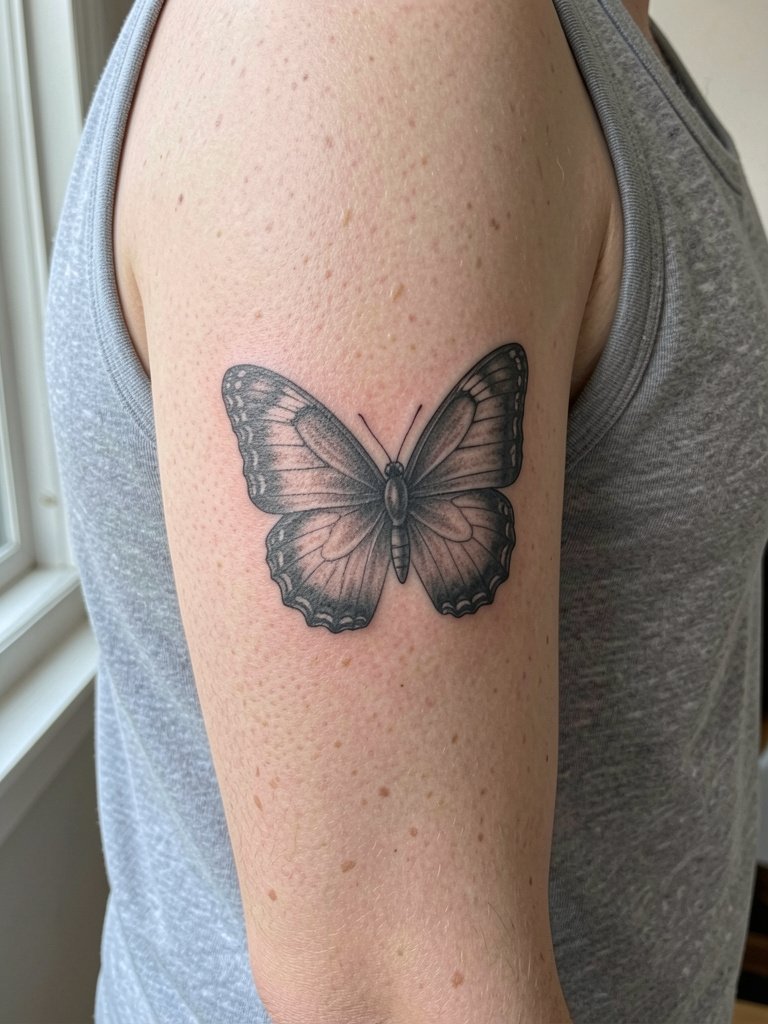
Micro-realism gives a tiny butterfly the appearance of depth, but it demands high saturation and patience across multiple sessions. Choose this when you want lifelike wings and are prepared for touch-ups to preserve the 3D texture. Specify dot-work and stipple shading preferences with the artist so highlights and shadows land in the right places. The inner upper arm is fairly low- to medium-pain and photographs well in sleeveless tops. For show-off outfits, sleeveless tanks in neutral tones and thin bangles bring subtle contrast to the rendered detail, and a cream linen tank is good session wear.
6. Ignorant-Style Butterfly on the Nape
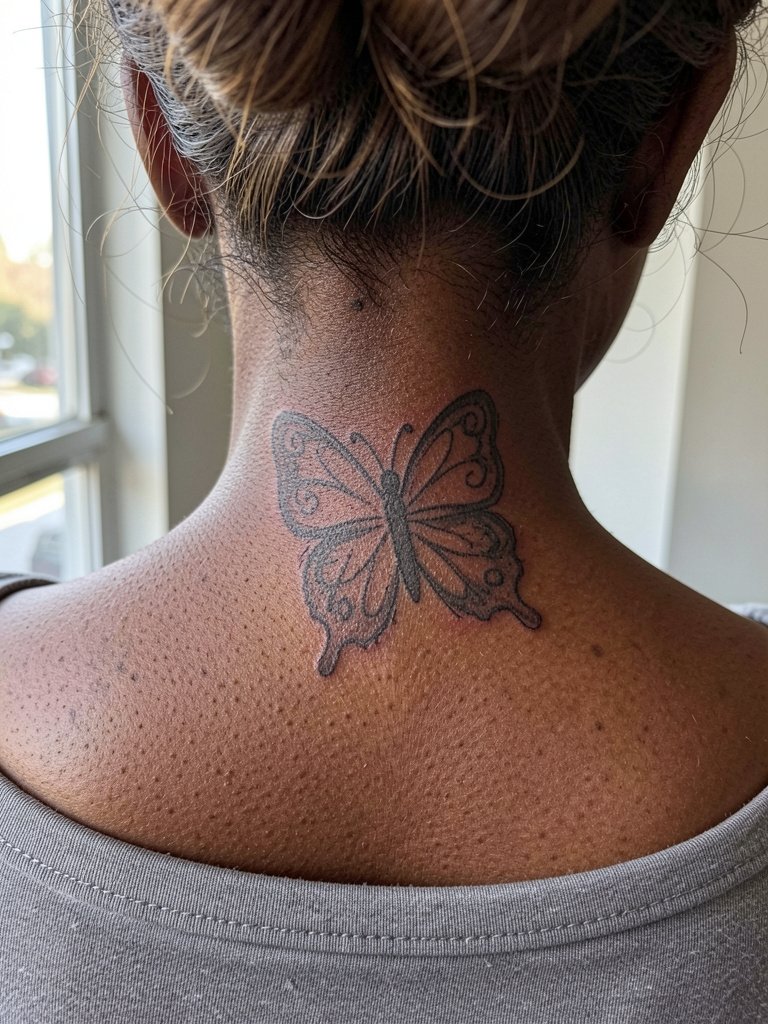
Ignorant-style butterflies lean into spirited imperfection, which can be freeing for someone who dislikes polished flash. Expect a quick single-session appointment with minimal touch-up needs if you accept slightly uneven lines. The nape is low to moderate pain and photographs best with hair up. A common mistake is asking for a "messy" look without giving examples; bring 2 to 3 reference photos that show the exact looseness and stroke weight you want. Style it with off-the-shoulder tops and simple hairpins, like a delicate gold hair pin set, to let the nape reveal read clearly.
Session Day Picks
These first six ideas cover both fine-line forearm work and denser blackwork, so a few focused items smooth the session and the first week of healing.
- Mad Rabbit Tattoo Balm. A thinner balm some people prefer for color retention on darker skin tones and for avoiding heavy occlusion over fine line work.
- Dragon's Blood Balm. Natural-ingredient option for sensitive skin that offers light moisture without heavy petroleum feel.
- Tattoo Cure Thin Balm. Popular in certain communities for a non-greasy finish that supports delicate healed texture in micro-realism pieces.
- Ink Jelly. Lighter than standard ointments and often recommended to avoid clogging fine-needle channels in close-line work.
- Hustle Butter Deluxe. A mainstream balm used by many for initial moisturization that some clients find easier during the first week on larger color pieces.
7. Ornamental Butterfly with Floral Vine on the Inner Upper Arm
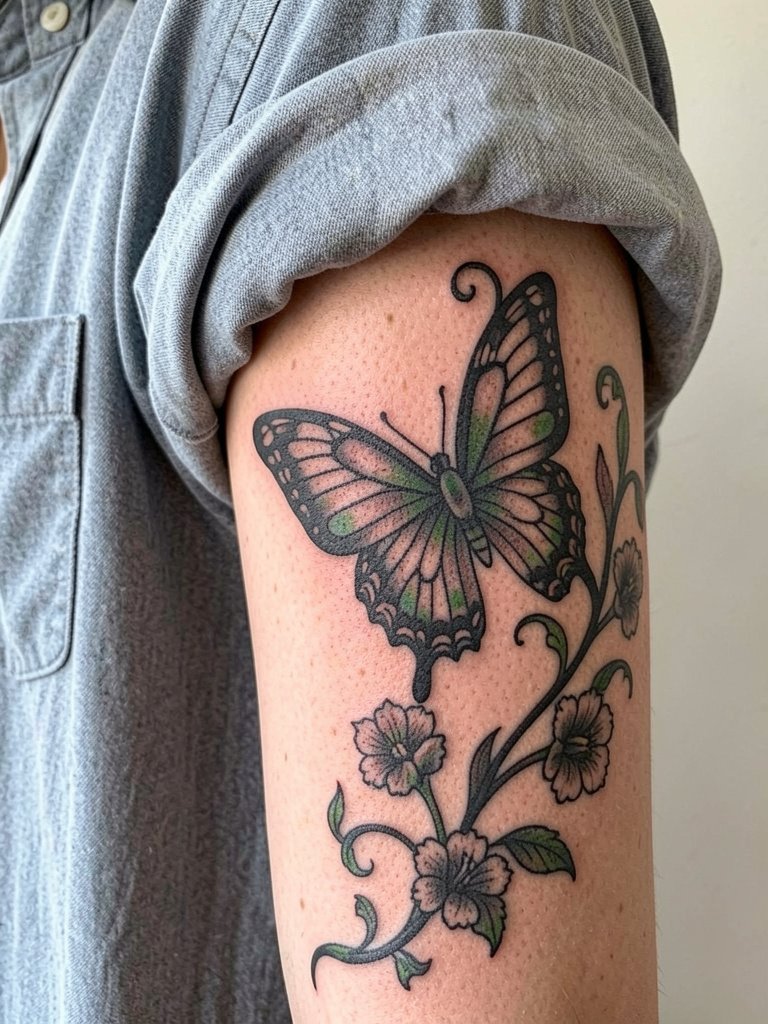
This style connects the butterfly to a botanical motif and reads beautifully when the vine flow follows arm contours. Favor larger negative spaces in the vines so they do not fill in as the skin ages. In consultation, request that the artist sketch the vine curvature on your arm so you can see movement while standing and reaching. The inner upper arm tolerates moderate sessions and the area photographs well with rolled sleeves. Pair it with a loose button-down shirt for casual show-off looks and wear a short-sleeve or tank to the appointment.
8. Dainty Gold-Foil Accent Butterfly on the Upper Chest
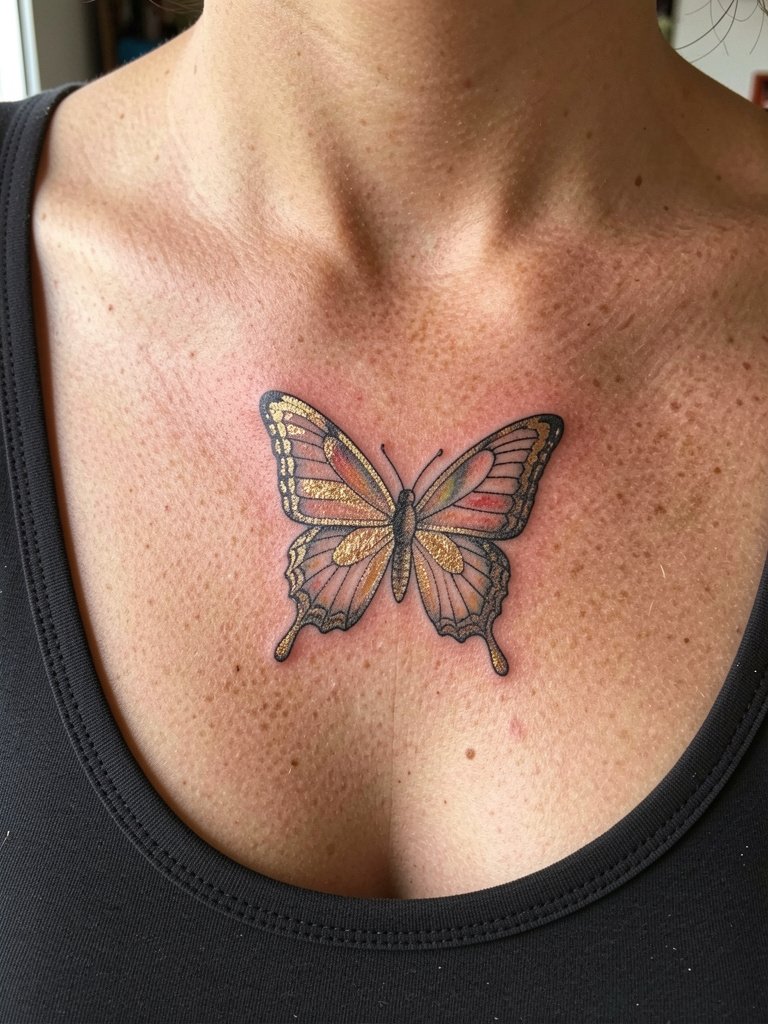
Gold-foil accents create a jewelry-like flash that can pop on a range of skin tones if placed with contrast in mind. This is a good option if you want a chest piece that can be both intimate and visible. Ask your artist how they will simulate metallic shine so the highlights land where jewelry would naturally catch light. Sternum and upper-chest skin can be sensitive, plan for a short session and a steady break for saturation checks. Wear a strapless or scoop-neck top to reveal the piece without fabric rubbing while healing.
9. Black and Grey Sketch Butterfly on the Inner Forearm
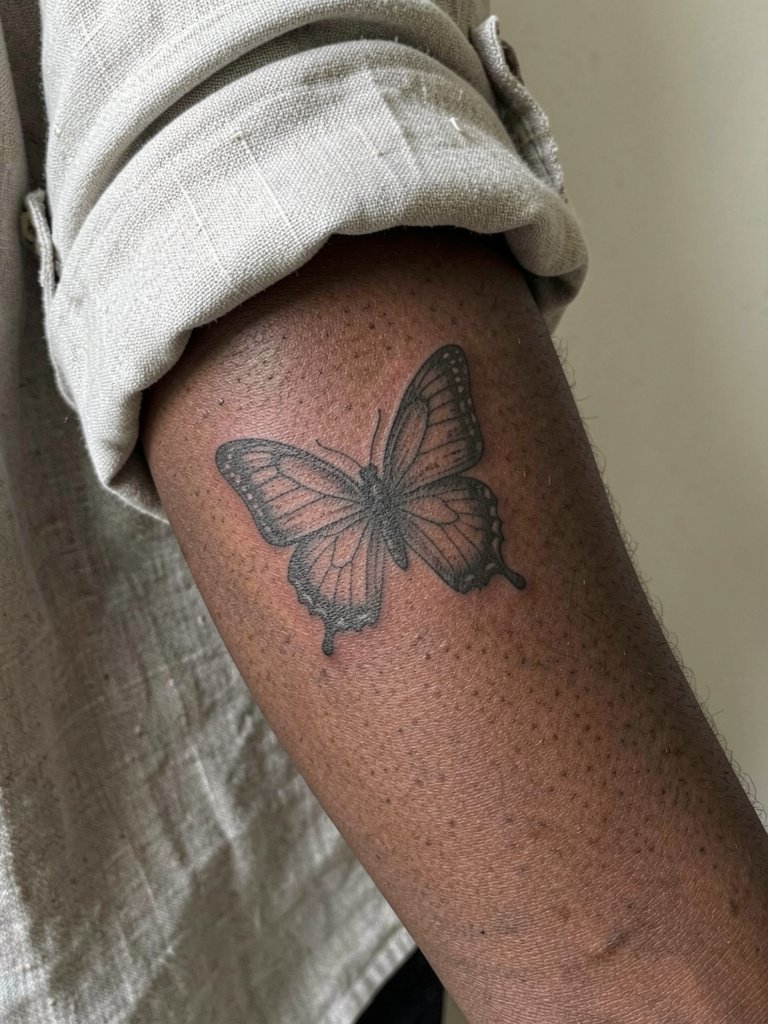
A sketch-style butterfly reads like it was lifted from a sketchbook, which is ideal if you want visible strokes and a hand-drawn feel. The common mistake is making the strokes too fine; ask for visible stroke width that mimics pencil marks so the shading ages gracefully. Inner forearm placement keeps the piece visible and low-pain. If you photograph a healed piece for aftercare records, use natural window light and ask the artist for an in-studio healed shot to compare touch-up needs.
10. Butterfly Transformation Series on the Front Upper Thigh
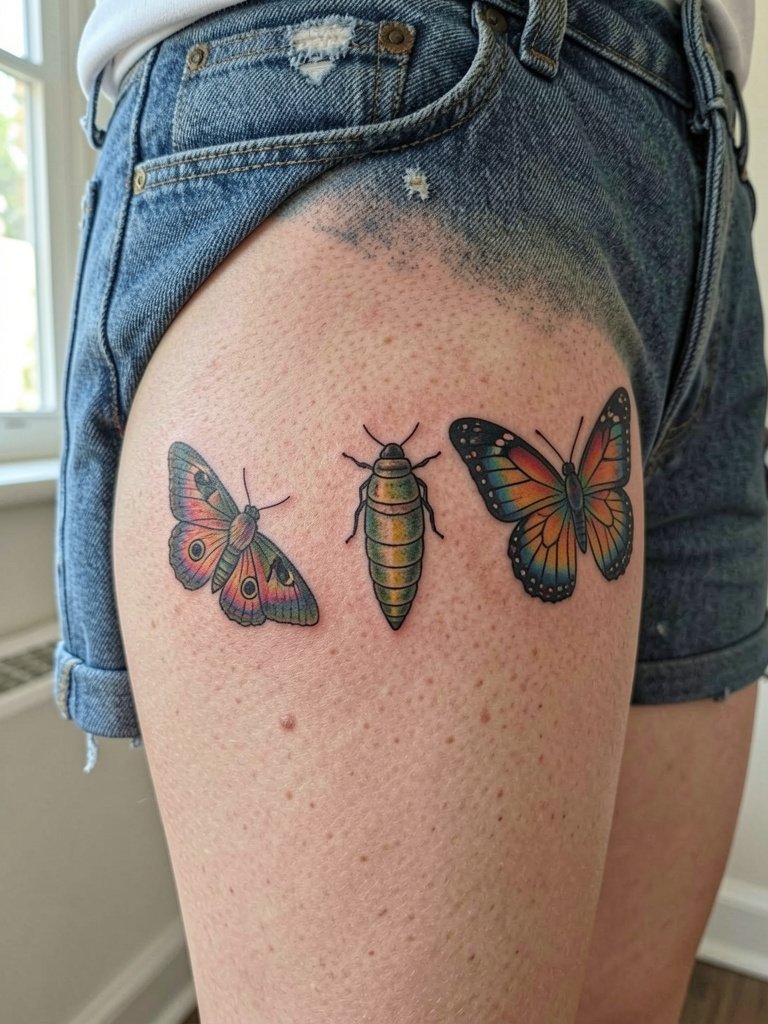
Series pieces map personal stages visually and need consistent scale so each panel reads at a glance. Choose this if you want narrative progression and are prepared for multi-session work. Bring a timeline note such as dates or milestones so the artist can proportion the panels according to the space. Outer thigh tolerates long sessions and holds color well. For clothing, high-waisted shorts and skirts highlight the gradient and let you control when the piece shows, so try high-waisted shorts for warm-weather reveal.
11. Minimalist Outline Butterfly on the Lateral Neck
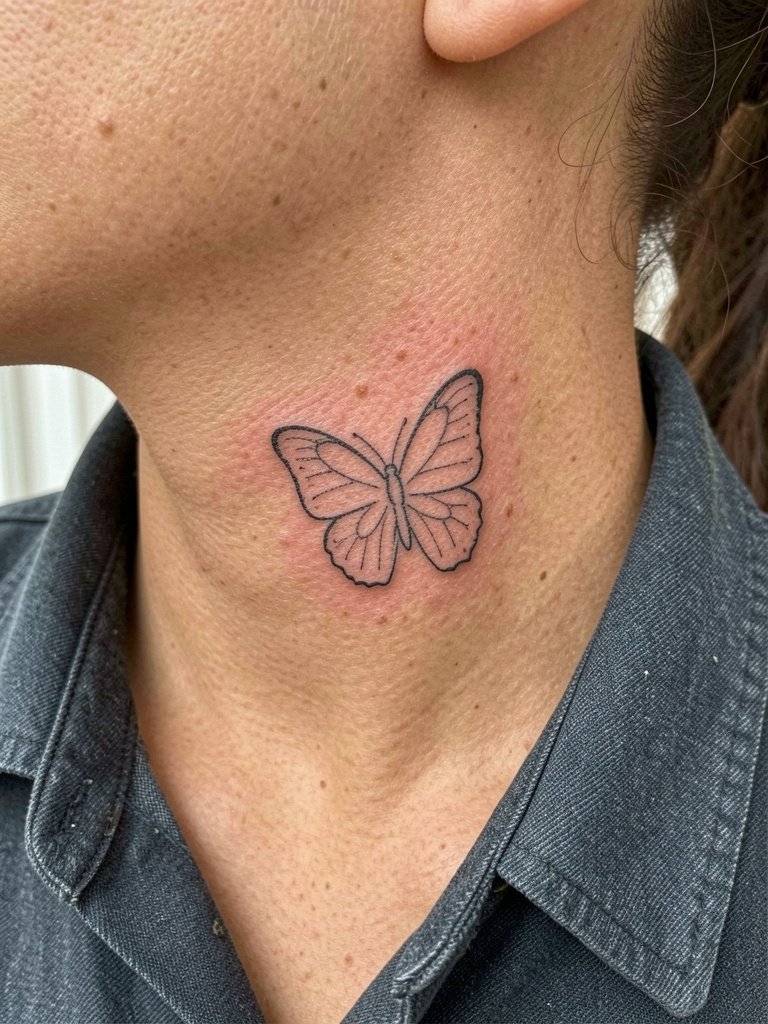
A lateral-neck outline is quietly visible and works well for tiny script or linework. Scale it up slightly from a one-inch reference so the line does not blur into skin texture after a year or two. Neck skin heals differently than forearms, so expect slightly faster fade in the thinest strokes. For showing the piece off, pair with collared shirts or high-neck sweaters and a delicate pendant to frame the area, like a silver pendant necklace. Plan for touch-up within 12 months if you favor single-needle thinness.
12. Broken-Wing Butterfly on the Side Torso Ribcage
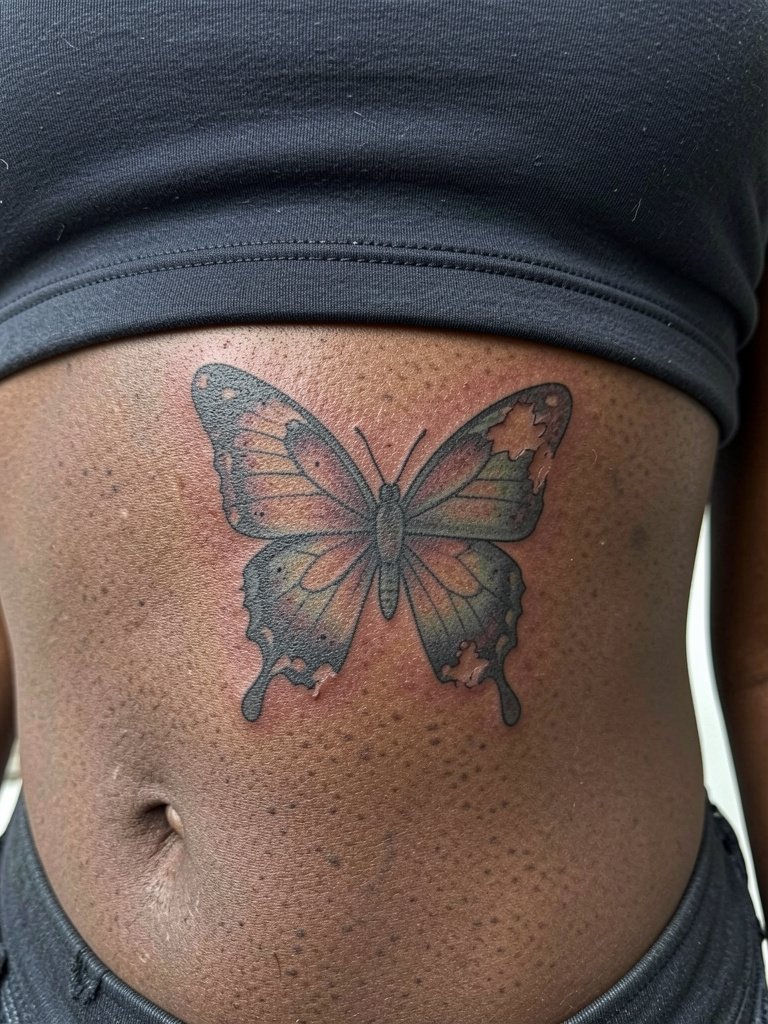
Fine-line work on the ribs draws a clear split among practitioners. One camp argues that ribs stretch and shift daily, making thin lines blur within two years and especially where bras compress the skin. Another camp insists fine line can settle well on ribs with slightly wider spacing and precise depth, and they cite healed examples at three years to support that view. If you want a broken-wing rib piece, ask the artist to show healed ribcage photos at multiple ages and pick the approach with documented longevity. Side torso work is higher on the pain scale and benefits from short breaks.
13. Jewel-Encrusted Butterfly with 3D Gem Effect on the Sternum
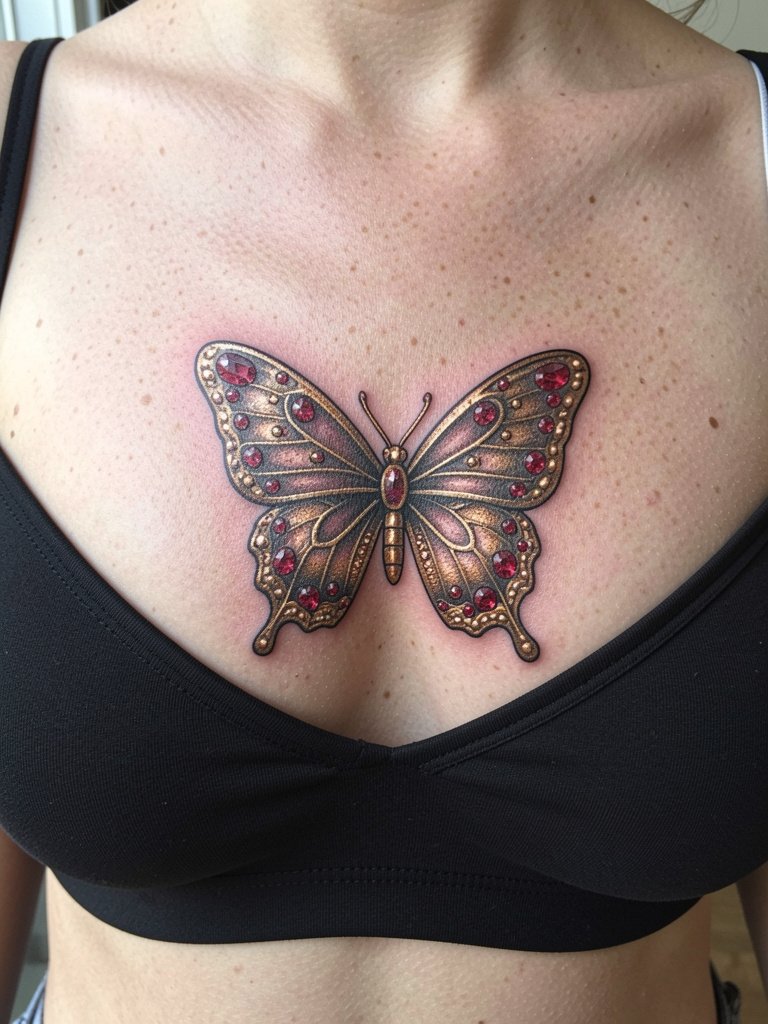
This is for someone who wants their chest piece to read like luxury jewelry. It needs heavy contrast points so the gems keep their three-dimensional illusion as saturation softens. Ask how the artist will render metallic highlights and under-shadow so the gems do not flatten with healing. Sternum sessions are moderate in pain and usually require two saturation passes. For evening looks, deep V or strapless dresses make the gem effect pop, and layered gold necklaces pair without competing.
14. Butterfly with Infinity Integration on the Inner Forearm
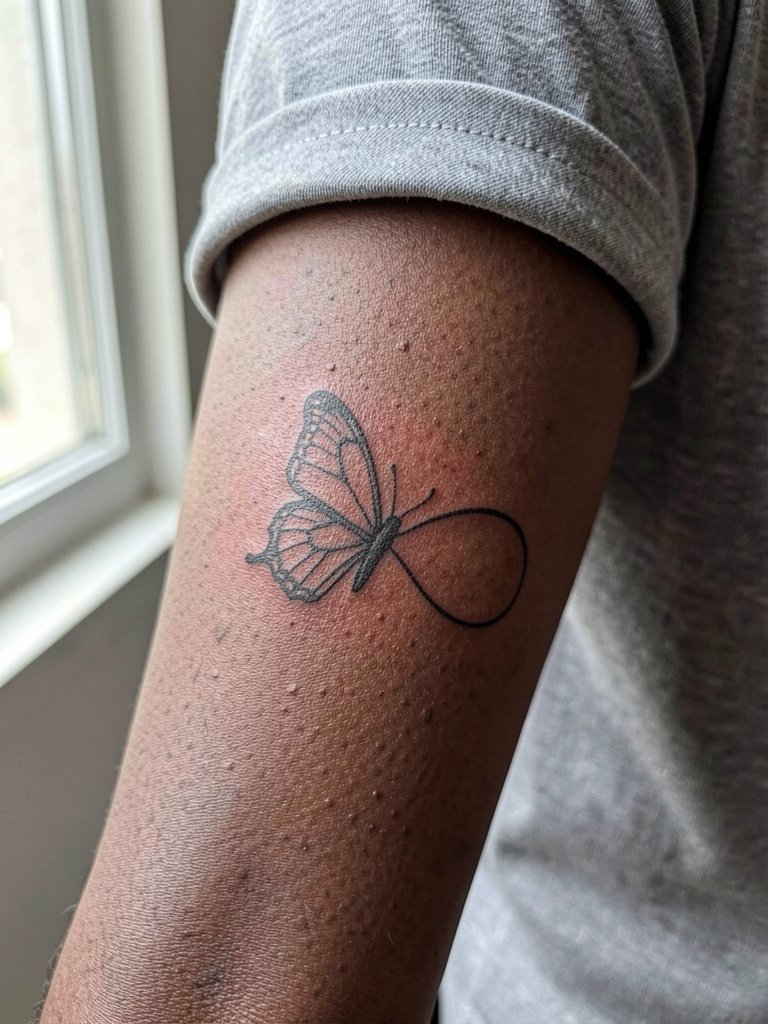
Combining a butterfly with an infinity loop gives a compact symbol that reads cleanly when planned at a slightly larger scale. The key is clear spacing where the loop intersects the wings so the two elements do not merge over time. Specify the exact overlap points during consultation and have the artist trace the loop on your arm so you can see the movement. Inner forearm placement keeps the piece visible and low on pain. For casual styling, collared tops and a delicate silver pendant necklace frame the area.
15. Butterfly with Roman Numerals on the Inner Upper Arm
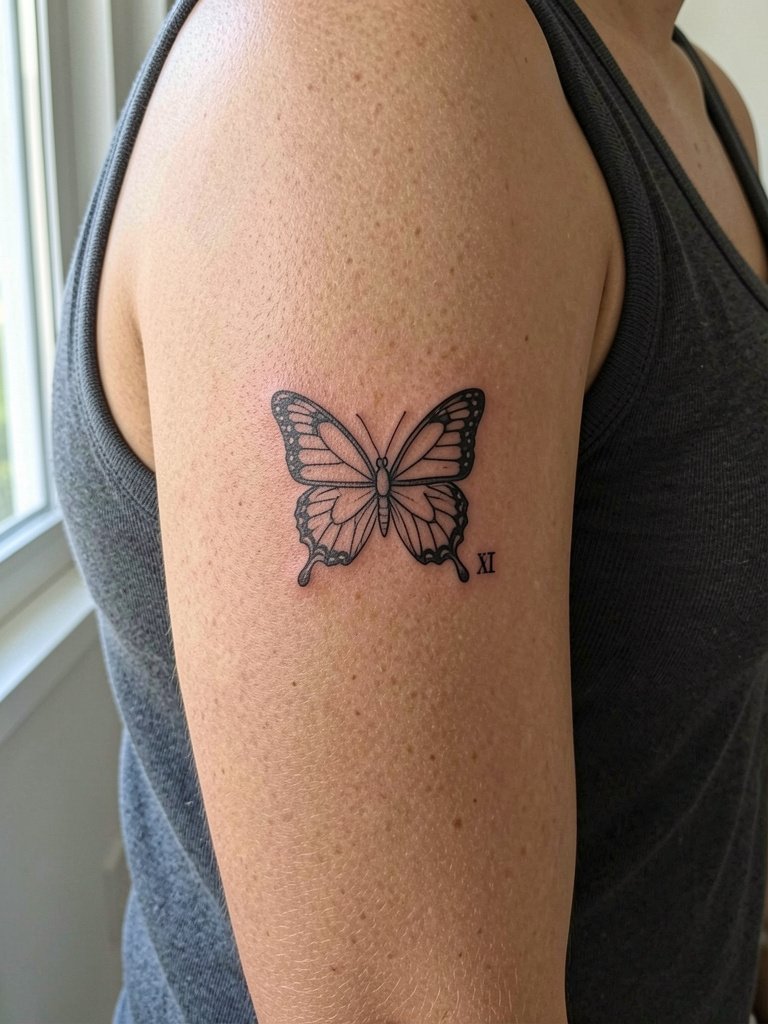
Adding Roman numerals lets you mark a date without heavy script crowding the butterfly. Ask the artist to place the numerals just outside a wing so they read as a companion element rather than a caption. The inner upper arm provides a smooth canvas that tolerates small script well, but tiny numerals should be scaled to at least three to four millimeters in height for longevity. For session wear, bring a tank top so the artist has unobstructed access.
16. Micro-Realism Wing Study on the Inner Bicep
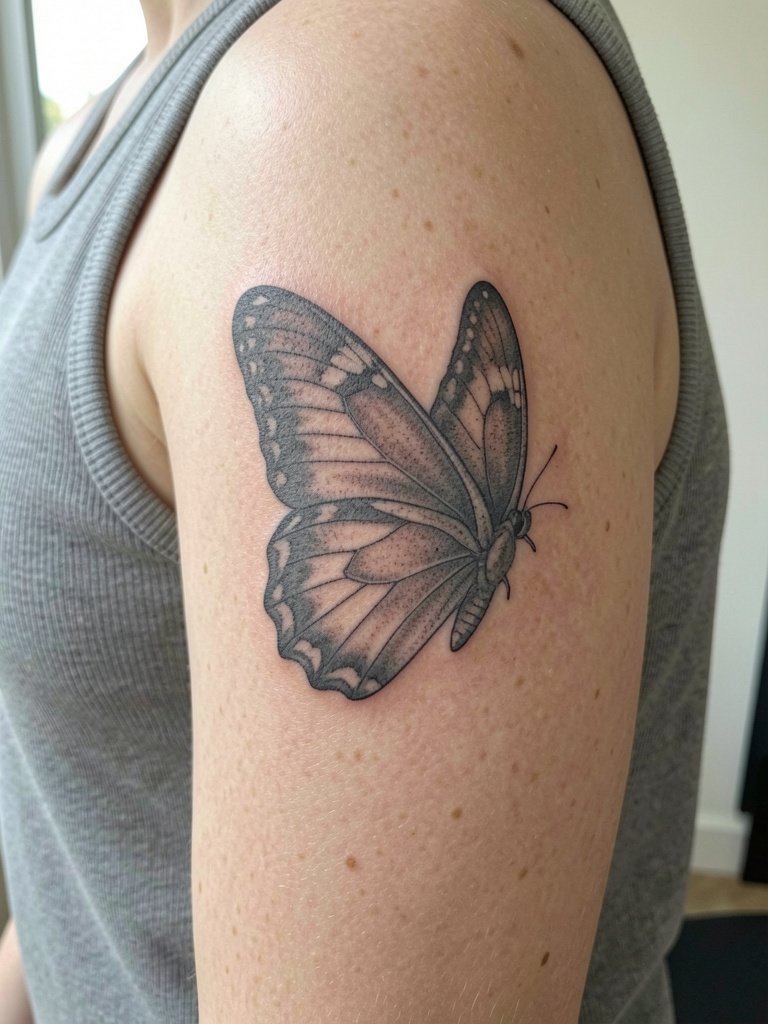
A single-wing study reads like a botanical specimen and lets the artist focus saturation on tiny texture. Pick this when you want realism without a full-body piece. Request reference photos showing the exact feathering and scale density so stipple and whip shading can be planned. Inner bicep skin is forgiving for long, concentrated detail sessions. For show-off wear, sleeveless tops and thin bangles draw the eye to the tiny textural work.
17. Blackwork Geometric Butterfly on the Medial Inner Thigh
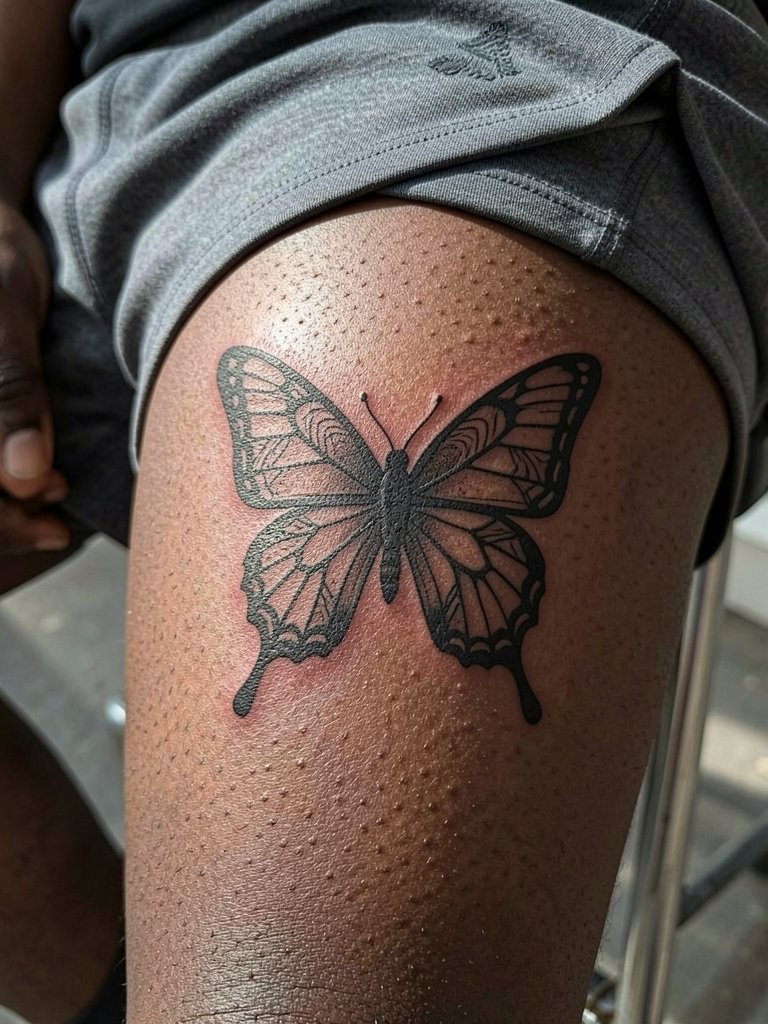
Geometric blackwork reads bold and architectural, which is ideal if you want a statement piece that survives frequent sun exposure when you show it off. Size matters here; mandala wings need room so lines do not look crowded after a year. Inner-thigh sessions can be tender and may require breaks. For wardrobe, high-low skirts or maxi skirts with a higher slit reveal the pattern without constant rubbing, and minimalist silver anklets can balance the look.
18. Sketch-Style Asymmetrical Butterfly Behind the Ear
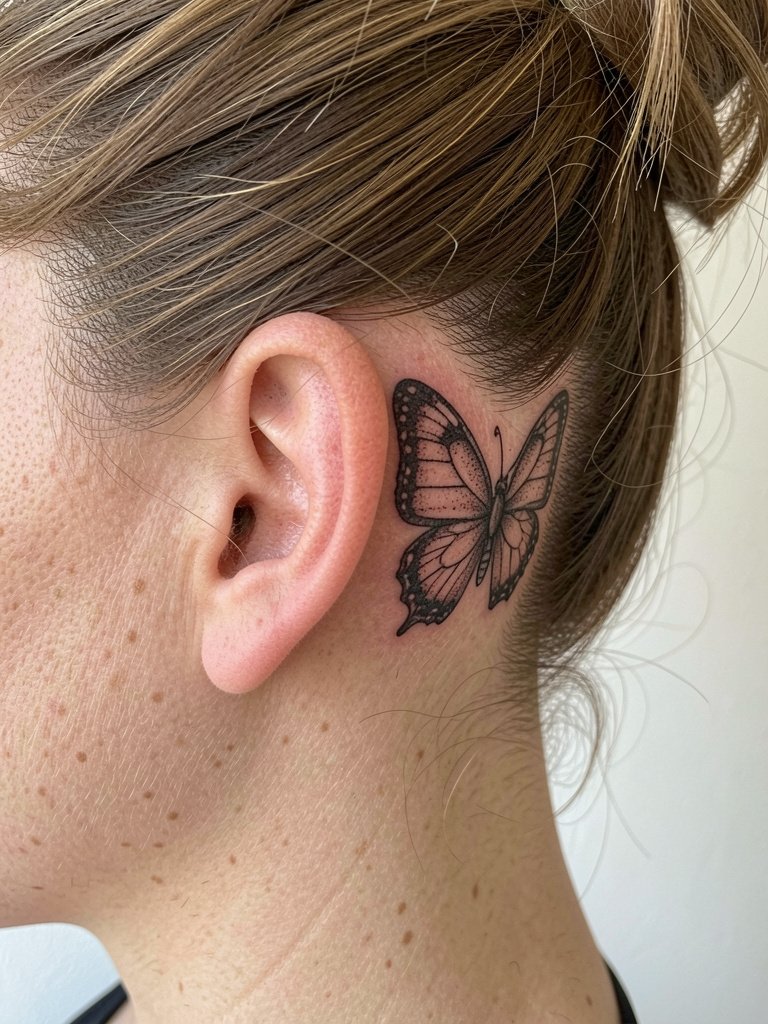
Behind-the-ear placements are discreet and heal quickly, but the space is small so line clarity is crucial. Ask the artist for exact line weight and to mock the placement with a stencil while standing so you see how hair and movement interact. This area takes tiny single-needle work well if you want a whisper of ink. For reveal moments, wear hair up and add small hairpins or a delicate choker to frame the spot and keep hair away from fresh ink.
19. Ornamental Butterfly with Vine Wrap on the Outer Thigh
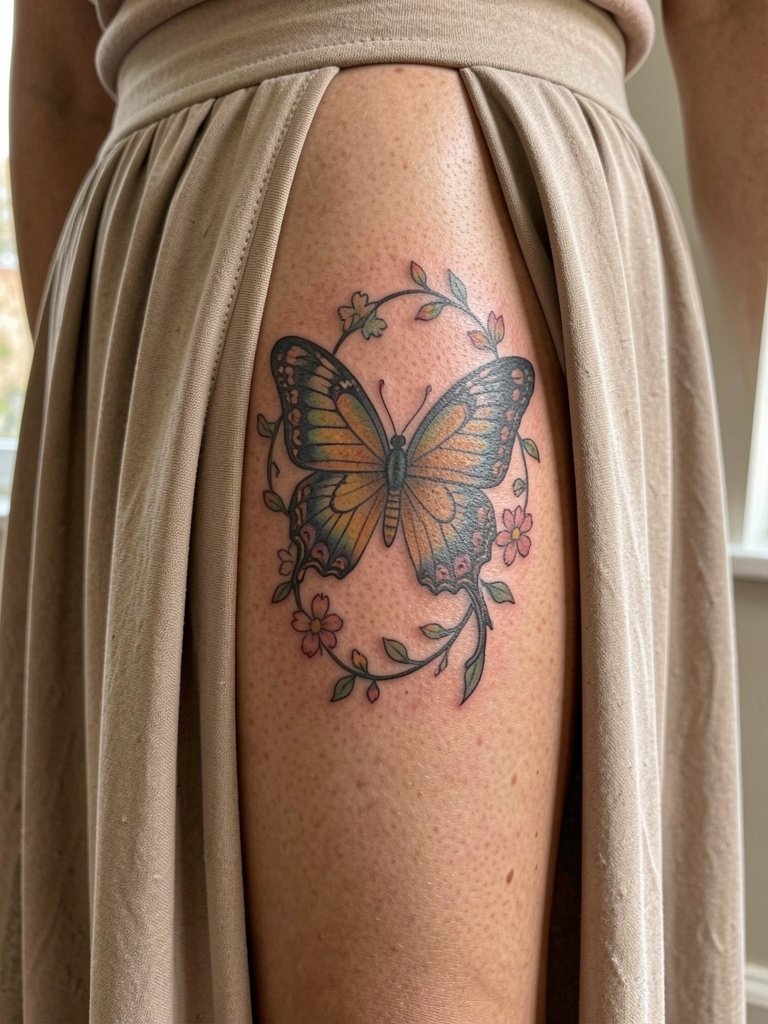
An outer-thigh ornamental butterfly reads like a framed illustration when vines wrap naturally around leg contours. Big mistake is compressing too many tiny flowers into a small footprint. Ask the artist to map how the vine will sit when you stand and sit so the composition does not warp. Outer thigh tolerates longer sessions and keeps color well. For show-off outfits, warm-toned skirts or layered anklets create movement that complements the vine flow, and layered gold anklet sets can finish the look.
Frequently Asked Questions
Q: Will a fine-line butterfly on my ribcage blur faster than one on my forearm?
A: Ribcage skin moves and stretches more than forearm skin, so thin single-needle lines have a higher risk of softening there over time. Some artists avoid ultra-fine rib work for that reason, while others use slightly heavier line weight and wider spacing and report stable healed results. If ribs are your chosen spot, request healed photos from the artist of ribcage pieces at different ages and plan touch-up options into the timeline.
Q: How do I prevent color loss on darker skin tones for a watercolor or gold-foil butterfly?
A: On higher melanin skin, denser saturation and stronger contrast help color read in photos and from a distance. Ask about pigment choices and larger blocky color areas rather than tiny washes so the color keeps presence. If you want gold-like accents, discuss metallic simulation techniques with the artist so highlights sit against deeper outlines for lasting pop.
Q: Are numbing creams safe to use for a ribcage or sternum butterfly?
A: Artists and clients split on numbing cream use. One camp warns that topical numbing can cause skin swelling and subtle texture changes that complicate precise shading. The other camp finds numbing useful for first-timers and longer sessions when applied as the artist recommends, and they say careful application does not harm healing. If you plan to use a topical, mention the exact product, timing, and any skin sensitivity history so the artist can advise on safe use.
Q: Where do I look to find healed portfolios and local artists without naming specific shops?
A: Search hashtags like #butterflytattoo, #finelinetattoo, and #neotraditionaltattoo on Instagram and TikTok and then filter by location to find nearby portfolios. Tattoodo and Inked App let you search by keywords such as "fine line butterfly" or "neo-traditional butterfly with gems" and display healed examples. Reddit communities like r/tattoos and r/tattooadvice often surface peer recommendations and before-and-after threads across skin tones.
Q: What should I wear to a session for an inner thigh or hip butterfly?
A: For hip or inner-thigh placements, wear loose drawstring pants or shorts that can be rolled or slid down without pressure on the fresh piece. A fitted cropped tee that naturally exposes the area works well so the artist has clear access without you needing to adjust fabric during the session. Bring a cover-up to wear home that avoids tight waistbands over the fresh ink.
Q: How soon will a fine-line butterfly need a touch-up?
A: Expect a touch-up window within the first 6 to 12 months for very thin single-needle work, especially on mobile skin areas. Denser outlines and neo-traditional fills usually hold longer. Plan touch-ups as part of ownership rather than a failure; they are routine maintenance for certain line weights and placements.