
The smallest music note can outlast a trend when it gets one thing right, placement and line weight. A single-needle quaver on a wrist looks gorgeous on day one and can blur into a fuzz by year three if the skin, spacing, and artist approach are all wrong. Read the first idea to learn a practical tweak that saves fine-line pieces from early fading.
1. Single Fine Line Eighth Note on the Inner Wrist

A classic first-tattoo pick, the inner-wrist eighth note reads intimate and repeatable in real life. Practical tweak: ask for a hair-heavier line weight than your reference so the artist can account for the wrist's friction and movement. Pain level is mild to medium and most sessions run 20–40 minutes for this scale. Common mistake is making it too tiny, which sacrifices legibility in photos and speeds fading on washing days. For showing it off, rolled or cropped sleeves in linen work well with this placement, try linen crop tops for a casual look during summer.
2. Treble Clef Entwined with Florals on the Inner Forearm

This neo-traditional treble clef is a favorite for people who want a music symbol with presence and color. Ask the artist to map the floral stems so the clef retains negative space around the staff loop; that spacing keeps color from muddying as it heals. Expect two to three sessions for the color saturation and layering. For visibility and style, roll sleeves on a button-down for casual reveals, and try oversized linen shirts to frame the inner-forearm piece without hiding it. The forearm location ages better than the wrist since it sees less constant flex.
3. Musical Staff with a Custom Song Notation Across the Outer Forearm

Translating an actual melody into tattoo form needs planning. Bring a one-line transcription and specify whether you want literal notation or a simplified, tattoo-friendly version with fewer ledger lines. Line spacing matters: staff lines should be at least 3–4 mm apart to avoid overcrowding as the piece settles. Session time depends on note count but plan for 45–90 minutes. Styling tip: cuffed sleeves or rolled cuffs on chambray shirts frame this placement well, try linen button-down shirts to keep the arm visible without shouting.
4. Watercolor Music Notes with Ink Splatter on the Outer Upper Arm

Watercolor notes look beautiful fresh and photograph well, but the style is divisive on longevity. One camp says watercolor blurs and muds in five to ten years because color diffusion reduces contrast. The other camp argues that expert color separation and controlled depth keep watercolor readable long term. If opting for watercolor, demand strong black anchors or a frame to protect the color fields and expect touch-ups eventually. Session count is typically two to three for layered color. Wear a sleeveless top to session to give the artist unhindered access, and show it off with off-shoulder pieces like tank tops to highlight the deltoid placement.
5. Blackwork Music Note with Geometric Shapes on the Inner Upper Arm

Blackwork gives music-note imagery long-term readability on darker skin tones because saturation and contrast are high. This style uses solid fills that age predictably, and touch-ups are infrequent. Plan for one to two sessions depending on coverage. For a session, wear a sleeveless top so the artist can access the medial bicep without pressure on fresh skin. This version works well for a masculine-coded aesthetic without leaning on florals or watercolor fuss.
6. Micro-Realism Music Note with Shadow on the Outer Wrist

Micro-realism requires a technical hand and close collaboration on reference lighting. Ask the artist to preview the highlight and shadow orientation so the illusion reads from different angles. Session time is often 60 minutes for this tiny scale, and the outer wrist can feel like a constant vibration from the needle. Common mistake is compressing too much detail into a very small area, which can become muddy within a couple of years. For showcasing, a delicate watch on the opposite wrist looks balanced, or go no-jewelry and let the note be the focal point.
Session Day Picks
This short set of items smooths chair time and the first week after small music-note pieces like the wrist and finger ideas above.
- Viking Revolution Beard Balm. Lightweight balm some folks repurpose as a maintenance moisturizer for healed ink; useful for keeping surrounding skin supple without heavy shine once the tattoo is fully healed.
- Eucerin Advanced Repair Cream. Thick, fragrance-free moisturizer many people use months after healing to maintain skin elasticity and help older linework stay crisp.
- Raw Unrefined Coconut Oil. A natural option some users apply during long-term maintenance rather than in the initial scabbing phase; opinions vary, so use it only after the tattoo is fully healed.
- Redemption Tattoo Balm. Boutique balm favored in some international communities for ongoing hydration of mature tattoos and for smoothing dry skin without heavy petroleum.
- Aquaphor Healing Ointment. A mainstream, fragrance-free ointment people often use in the first few days of traditional dry-healing to prevent excessive cracking on fine-line work, especially in dry climates.
7. Treble Clef with Sound Wave Accent on the Ankle

A treble clef paired with a sound-wave slice reads as both musical and professional. The ankle sees shoe friction and seasonal hiding, so size up slightly to avoid early break-up of thin lines. One session typically suffices. For session comfort, bring slip-on sandals and loose pants so the artist can access the ankle without pressure. Show it off with strappy sandals, for example strappy sandals, flat, which keep the placement in view.
8. Descending Notes Running Down the Spine
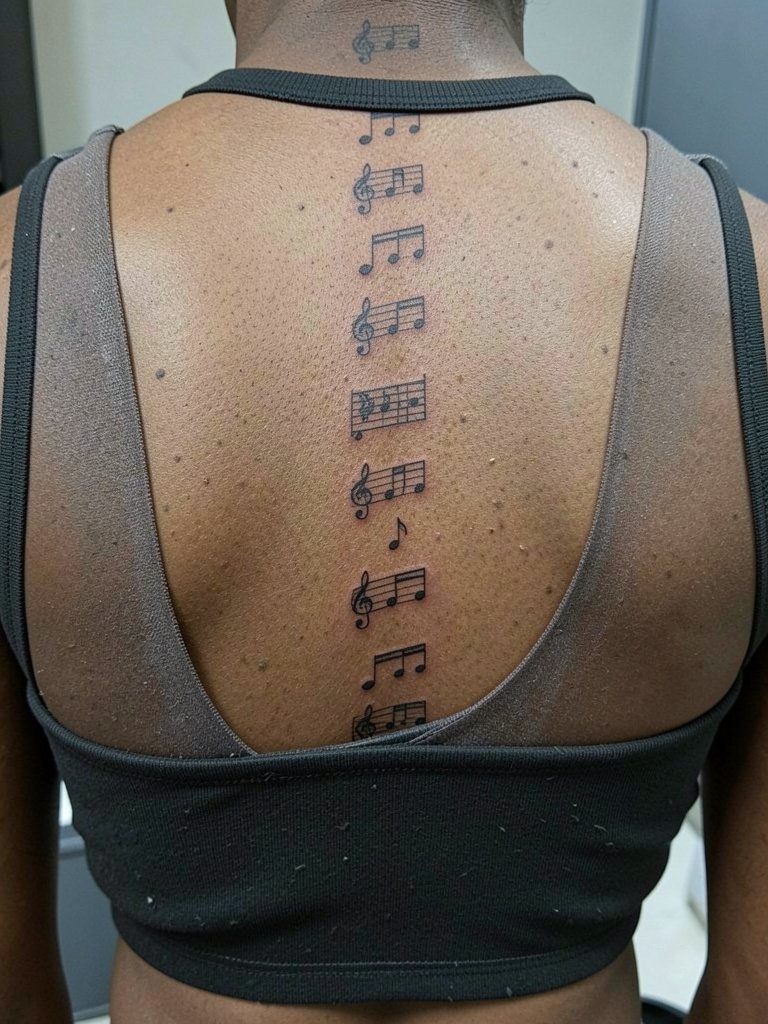
Stacked notes down the spine make a graceful vertical composition that flows with posture. Placement on the spine requires careful mapping to avoid crossing high-movement zones; spacing should be slightly larger than for the forearm. Plan for two sessions and expect medium pain because spinal bone vibrations transmit. This is a private-feeling placement for people who want a long, linear motif that reads when hair is up or when wearing backless tops.
9. Music Note with Lyrics Script Wrap on the Lateral Neck

Neck pieces read as public and personal at once, so plan both design scale and visibility. For script wraps, ask for letters at a slightly larger size than your phone screenshot so characters remain readable after healing. Expect one to two sessions and a higher pain level than forearm work. Styling tip: tuck hair behind the ear or wear a side-part to reveal the lateral-neck piece, and try minimalist stud earrings like minimalist stud earrings to balance the area. Note that neck tattoos may require a specialized consultation for placement near sensitive tissue.
10. Quaver Pair in Bold Traditional Flash on the Outer Forearm

Traditional flash quaver pairs age well because of strong outlines and solid fills, which preserve shape through years of wear. One session typically handles this scale and style. If you want a bolder, masculine look without adding flourishes, request classic flat color fills and a single highlight color. Show it off with short sleeves or rolled cuffs; a simple white tee is a reliable backdrop. Avoid tiny details that the traditional approach does not need.
11. Minimalist Single-Beam Eighth Notes Pair on the Wrist Crease

A small connected pair hits the micro-tattoo trend while staying practical when done slightly larger than the Instagram reference. The wrist crease means the piece sees constant bending, so a modest increase in line weight prevents early blur. Expect 20–45 minutes for the session and plan on light touch-ups over time. For session wear, remove bracelets and watches to keep the area accessible. Keep nails neutral to avoid visual competition, for example neutral nail polish.
12. Ornamental Mandala with Musical Staff Border on the Ribcage

Ribcage ornamental pieces read as intimate and can be deeply symbolic without being public. Be realistic about pain; ribs are usually rated higher and sessions are longer because of careful shading and breathing management. One controversy to note is fine-line work on ribs. One camp says thin lines blur quickly because the skin there stretches and moves with respiration. Another camp says properly spaced line weight and correct depth let fine line settle cleanly on the ribcage. If the piece is private, a ribcage mandala with musical staff is a strong choice for scale and longevity.
13. Ignorant-Style Music Note Blob on the Hand

Hand tattoos are always visible and subject to a lot of wear from washing and friction. This ignorant-style blob embraces an anti-aesthetic approach that tolerates blurring rather than fights it. Expect a one-session visit and quicker fading than arm or torso work. Keep in mind fingering and knuckle anatomy increase blowout risk for very thin lines. If you get a hand music note, plan for occasional touch-ups and adopt a gentle hand-care routine during healing.
14. Music Notes Merged with a Heartbeat Line on the Inner Wrist

This hybrid pairs musical symbolism with life-affirming rhythm and suits healthcare workers or music therapists. Placement on the inner wrist exposes the piece to frequent hand washing and bracelet abrasion so make the line weight strong enough to last. One camp prefers occlusive second-skin aftercare for fine-line wrist pieces, saying it speeds healing and reduces visible scabbing. The opposing camp warns that occlusive dressings can trap moisture and lead to issues and they prefer gentle washing plus thin ointment. Choose your aftercare plan based on skin type and follow the artist's skin-specific instructions.
15. Dotwork Music Note Constellation on the Outer Upper Arm
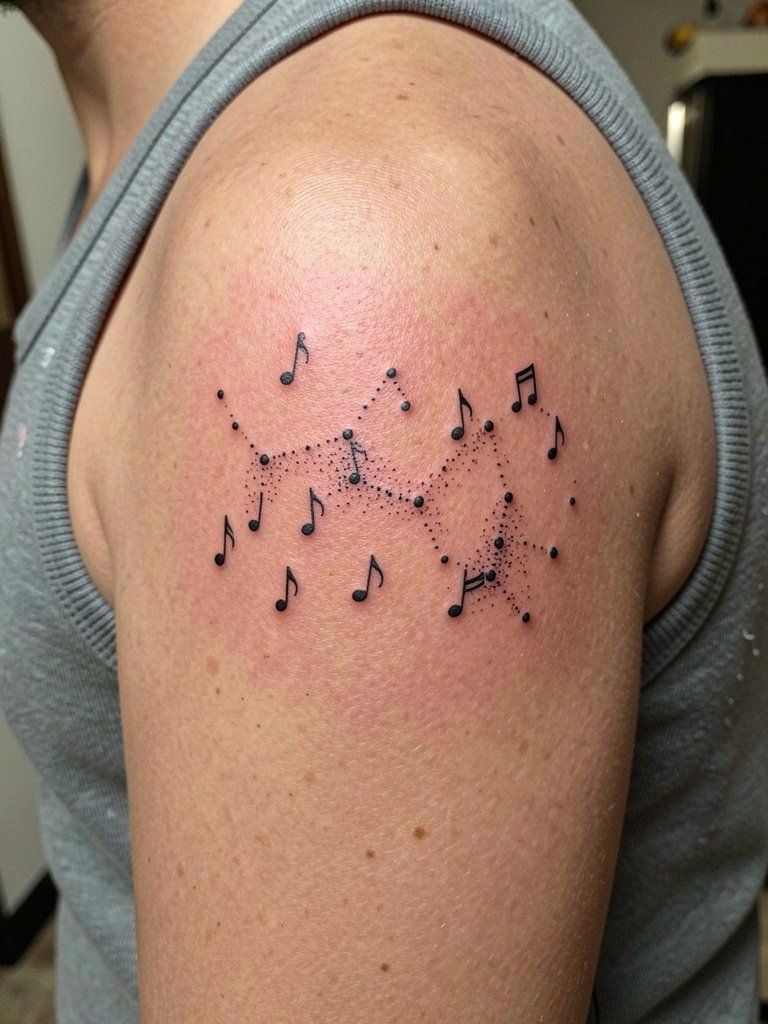
Dotwork offers a softer visual texture that often ages gracefully because the stipple spreads evenly. Expect two to three sessions depending on complexity. Dot density should be planned so the negative space endures as the skin changes. For session wear, choose removable tank tops and bring a clean, loose cover-up for the walk home. This placement pairs well with minimalist summer clothing like cropped shorts or plain solid shorts.
16. Bass Clef with Geometric Shadow on the Calf

Calf pieces allow larger scale and bolder shapes that hold for years. The thicker skin and lower friction in this area make blackwork and geometric fills ideal for longevity. Sessions are usually one to two hours depending on size. Show it off with cropped pants or athletic shorts and choose simple sneakers like white canvas sneakers to balance the look.
17. Piano Key Ribbon Forming a Staff on the Front Thigh
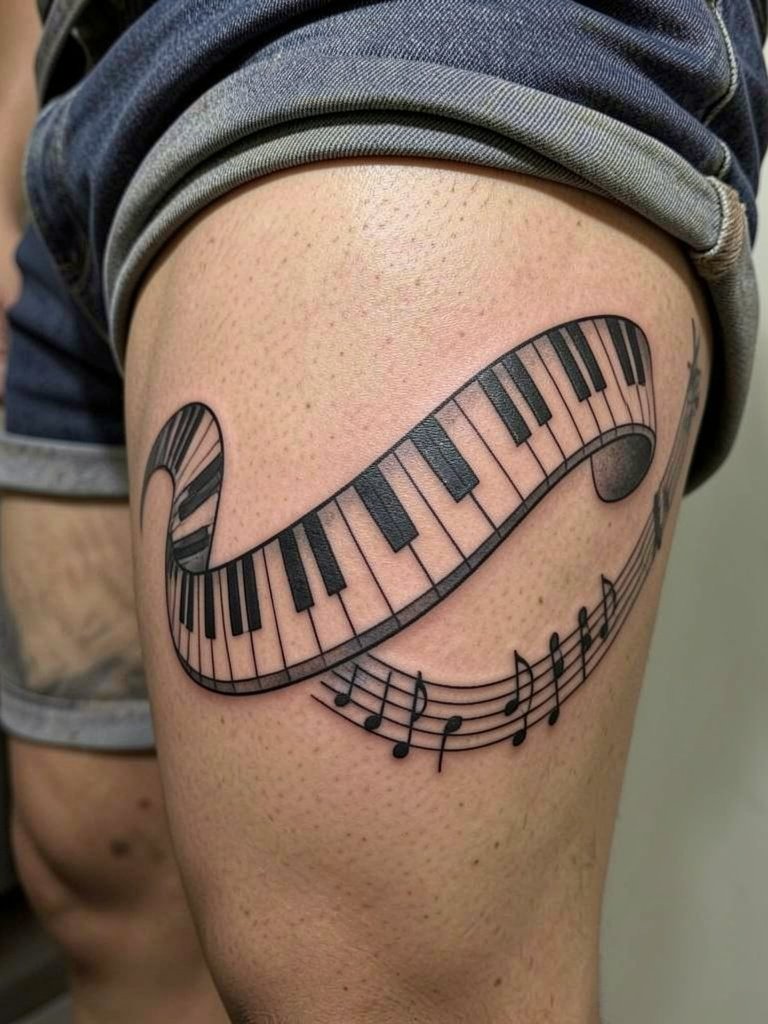
Thigh placements give artists room to translate complex imagery like piano keys into a flowing ribbon. This placement hides easily and tolerates larger, detailed pieces that age predictably. Sessions can be longer so plan for breaks and comfortable clothing to travel home. For summer styling, pair with athletic or casual shorts that let the piece read clearly.
18. Minimal Note Behind the Ear for a Tiny Secret Mark
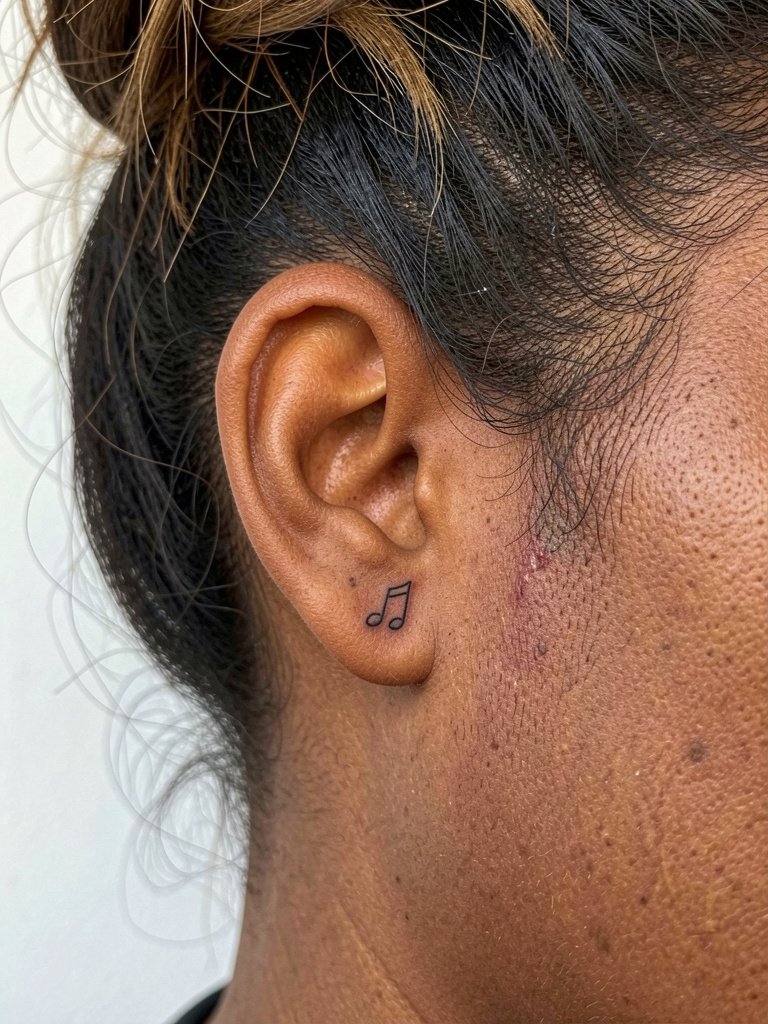
Behind-the-ear placements are private and easy to conceal with hair. Keep the note size modest but not microscopic so the detail survives routine hair contact. Sessions are quick, and the area can be slightly tender. For visibility, wear hair up styles such as a clip or bun that reveal the spot. This placement often suits micro-trend seekers who want a low-visibility symbol.
19. Constellation of Notes on the Collarbone

Collarbone pieces frame jewelry and neckline choices, so plan spacing so the notes sit along the bone without crowding. Sessions are moderate and pain varies by proximity to bone. Styling with layered thin chains works well; try layered thin chain necklaces to complement the cluster. Keep the design airy to avoid early blurring where the skin is thinner.
20. Sternum Micro Staff Between the Breasts

Sternum pieces are intimate and can be shown selectively. Pain can be higher near the sternum and sessions require careful breathing. For clothing, low-cut tops and certain swimwear reveal the piece elegantly. Consider how bra straps and underwire could rub during healing and choose session wear like a fitted sports bra that stays in place.
21. Vinyl Record with Floating Notes on the Upper Back

Upper-back vinyl motifs read like a hidden piece until revealed by updo hair or low-back clothing. The area tolerates scale, so balance black fills with negative space for longevity. Sessions are comfortable for longer durations and touch-ups are less frequent than on hands or wrists. Show it off with backless dresses or tops that frame the tattoo.
22. Tiny Note on the Side of the Finger
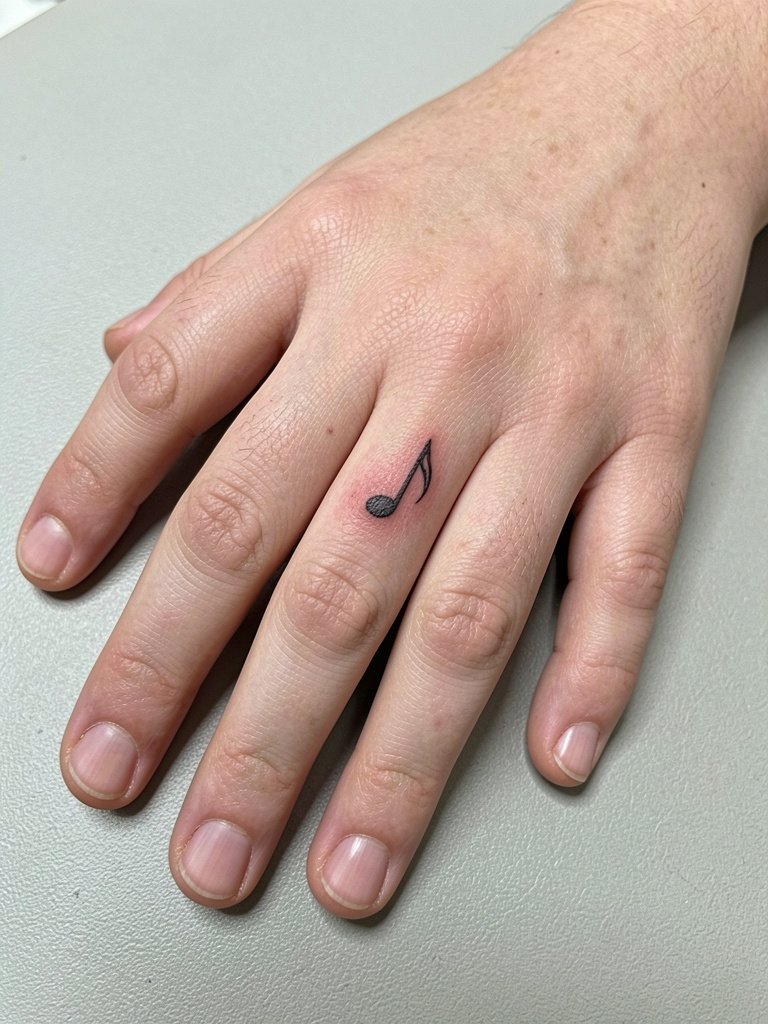
Finger tattoos are high-visibility and high-maintenance because of constant washing and friction. Keep designs simple and slightly larger than the Instagram reference. Expect touch-ups more often than for arm placements. For session wear, keep nails neat and avoid rings on the tattooed finger during healing.
23. Sheet Music Fragment with Subtle Grayscale Wash on the Thigh

Thigh pieces provide a forgiving canvas for grayscale effects that read editorially. If translating complex bars to skin, simplify notation so the melody remains recognizable without tiny ledger lines. Sessions can be longer and the piece hides easily for professional contexts. Summer style pairs include plain shorts and minimal sandals.
24. Discrete Note at the Nape of the Neck

Nape tattoos are easy to conceal with hair and reveal with an updo. The area needs careful scale choices so the note does not become indistinct as hair rubs it. Sessions are quick and the pain level is moderate. For visibility, wear updo styles or try hair clips, and a simple hair clip updo keeps the area readable.
25. Stylized Clef as a Lower Back Accent

Lower-back placements are private and seasonal. They tolerate larger scale without fuss. Plan for a design that sits above the waistband so daily clothing does not rub the fresh tattoo. Session wear that allows the artist to access the lower back without pressure is essential. For summer, pair with low-rise pants or open-back dresses to reveal the motif when desired.
26. Minimal Notation Wrapped Around the Thumb Base

Thumb-base tattoos are unusual and always visible during hand gestures. They face high movement and hand washing, so slightly heavier line weight helps. Sessions are short but expect more frequent color loss over time. This tiny placement pairs well with neutral nail polish and simple rings on the opposite hand to balance visual weight.
27. Waveform of a Favorite Song Across the Rib Side

Waveform tattoos are a literal visual translation of sound and can be cropped to any scale. For rib placements, space the peaks and troughs so the waveform keeps clarity as skin flexes. Expect two sessions for design adjustment and careful placement. If the piece commemorates a specific recording, bring the audio file so the artist can generate a clean waveform and adapt it for tattoo legibility.
Frequently Asked Questions
Q: How much should I expect to pay for a simple music note tattoo?
A: Small music-note tattoos typically fall in a range from $150 to $400 depending on shop minimums, line weight, and whether color or multiple sessions are needed. Larger or color pieces commonly start higher. These are ranges and final quotes depend on the artist, region, and session time.
Q: Do fine-line music notes last on wrists and hands?
A: Fine line works on wrists and hands, but longevity varies. One group of artists and collectors reports that thin single-needle work on high-movement areas blurs within three to five years because of constant friction and washing. Another group says fine line can hold if the artist increases line weight slightly and spaces elements, and they point to healed examples at five years that still read well. Plan for touch-ups more often on wrists and hands than on torso placements.
Q: What aftercare approach should I pick, Saniderm or dry healing?
A: The aftercare debate is split. Some artists recommend second-skin products like Saniderm because they create an occlusive environment that reduces scabbing and can speed a flat heal. Other artists and many clients prefer dry healing with gentle washes and thin ointment because they believe it reduces trapped moisture and infection risk. The best choice depends on skin type, climate, and the artist's experience with each method.
Q: Where can I find quality music-note tattoo portfolios without asking for specific artist names?
A: Search hashtags like #musicnotettattoo and #finelinetattoo on Instagram and TikTok, then use the location filter to find nearby work. Tattoodo and platform searches let you combine keywords such as "fine line music note" and filter by city. Reddit communities like r/tattoos and r/tattooadvice often have regional threads with healed photos and peer recommendations. Tattoo conventions and guest-spot schedules are also useful if local options feel limited.
Q: Which music-note styles show up best on darker skin tones?
A: High-contrast options like bold blackwork, traditional flash, and denser black fills generally read better in photos and from a distance on darker skin. Fine single-needle work can be visible on darker tones when done by artists experienced with those skin tones, but it is riskier for micro-detail. Consider slightly heavier line weight or small amounts of solid fill for the best long-term visibility.
Q: How often will I need touch-ups for a small music tattoo?
A: Touch-up frequency depends on style and placement. Fine-line wrist pieces often need touch-ups every 2–3 years. Bold blackwork may go 5+ years before a refresh. Budgeting for at least one small touch-up within the first five years is realistic.
Q: What should I wear to a session based on placement?
A: Match clothing to the placement so the artist has easy, pressure-free access. For wrist and forearm work wear short sleeves or rolled cuffs. For rib or sternum work bring a sports bra or bandeau. For ankle or foot tattoos wear slip-on sandals. If you plan on visiting the shop right after a session, choose loose, comfortable layers that will not rub the fresh area. If you want specific options, try searching for loose drawstring linen pants for thigh or hip sessions.