I watched a friend stare at the same four script designs for months before he booked anything. The real struggle was not the verse itself. It was choosing a lettering style and placement that will still read like ink in five years. Below are twenty dark, masculine bible verse tattoo ideas, each with design notes, aging advice, and what to say at the consult so the final piece actually holds up.
1. Philippians 4:13 Script Forearm Band
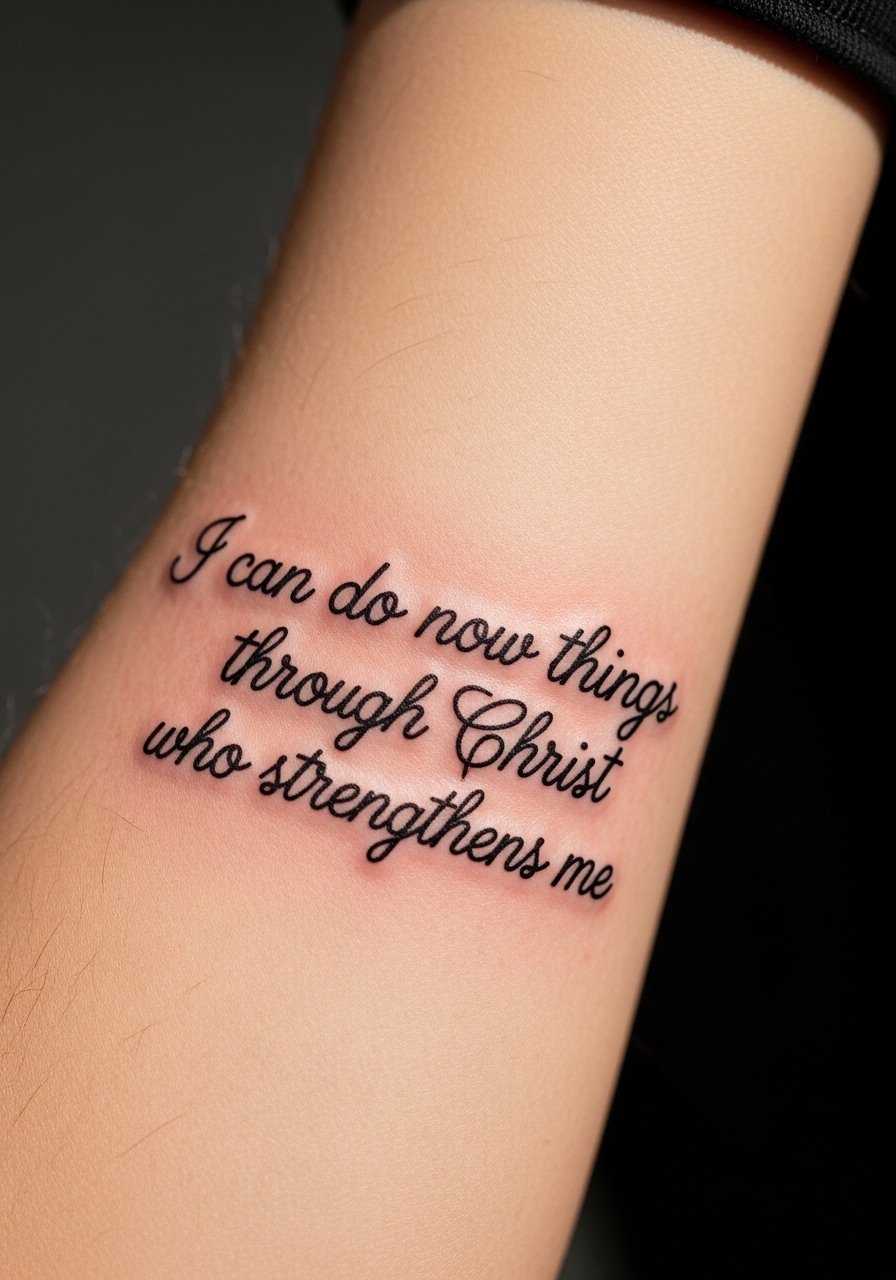
Someone I know first saw this as a forearm band and used it as a sleeve starter. Say you want medium weight linework and consistent spacing so the letters do not compress when wrapped. Expect moderate pain for the outer forearm and a one to two hour session if you keep the band 2 to 3 inches tall. Fine line versions often blur after a few years because the strokes are too tight. Ask for slightly increased spacing and stronger initial saturation so the script heals thicker without looking heavy.
2. Joshua 1:9 Bold Upper Arm Sleeve Starter
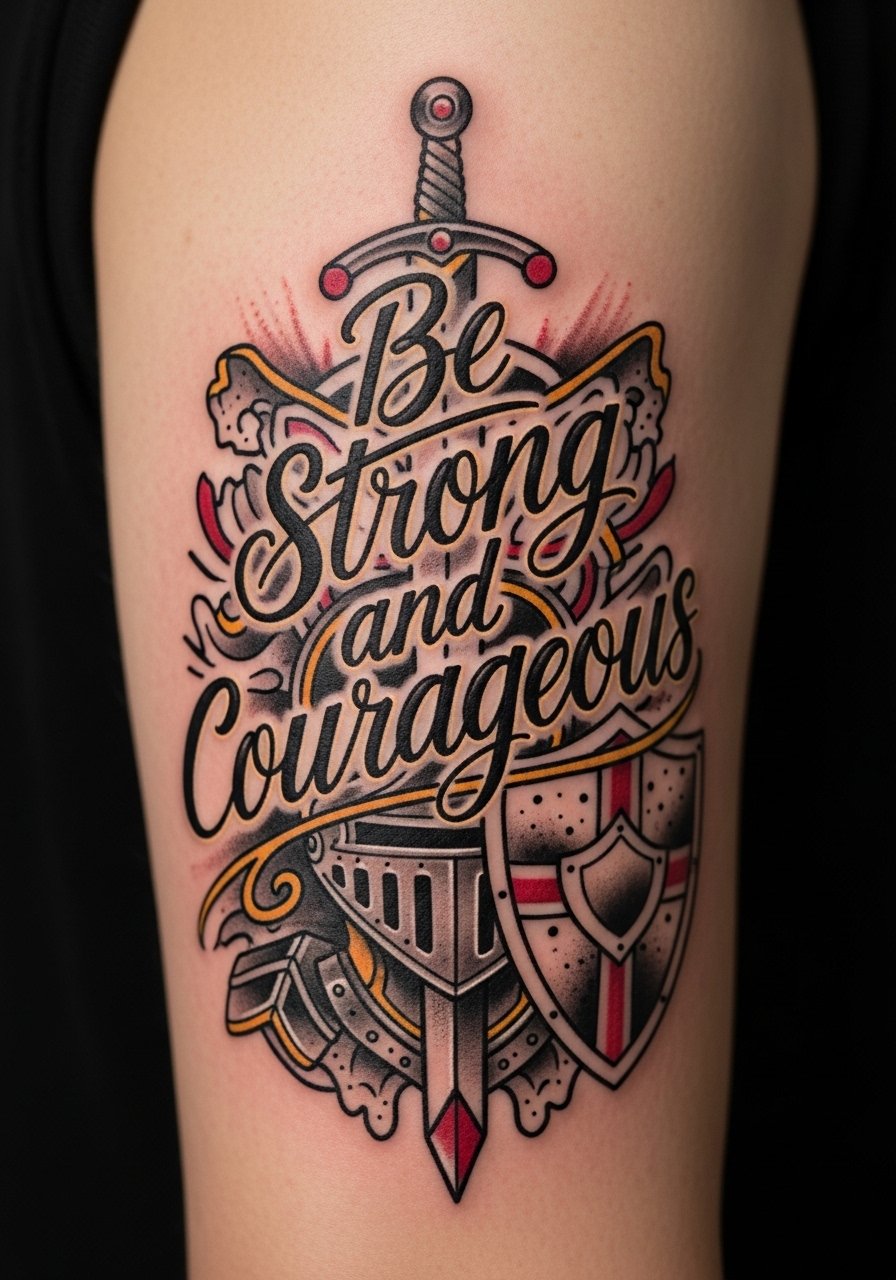
Visual impact matters when you want a motivational sleeve piece. For this one, request neo-traditional lettering with modest serifs and a tiny armor motif tucked behind the final words. The outer upper arm is forgiving on linework, so session time is usually two to three hours. The common mistake is asking for ultra-fine script linked to a bold motif. If the type is too thin it vanishes next to heavy blackwork. Plan a touch-up at year two to keep saturation even across the armor details.
3. John 15:13 Center Chest Brotherhood Script
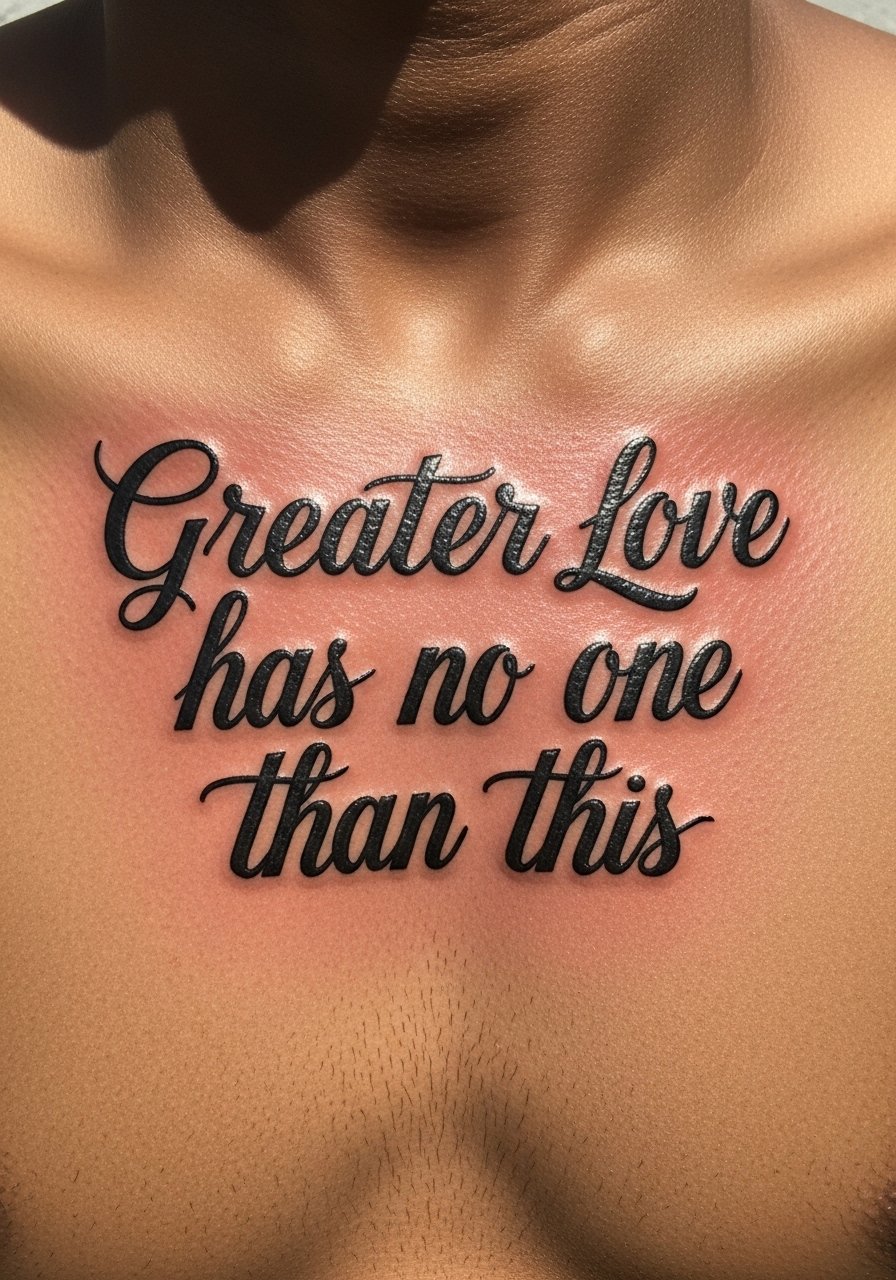
Fair warning, chest placements can bruise and look swollen during healing. This verse reads as a badge for veterans and men who want a frontal, center message. Tell your artist you want bold letter forms that read from a distance but still show hand-lettered character up close. Expect a one session piece that lasts longer if the letters are slightly thicker. A common mistake is placing the baseline too high on the sternum. That makes the composition slope as the chest moves. Ask for a mockup while standing.
4. Psalm 27:1 Vertical Ribcage Script
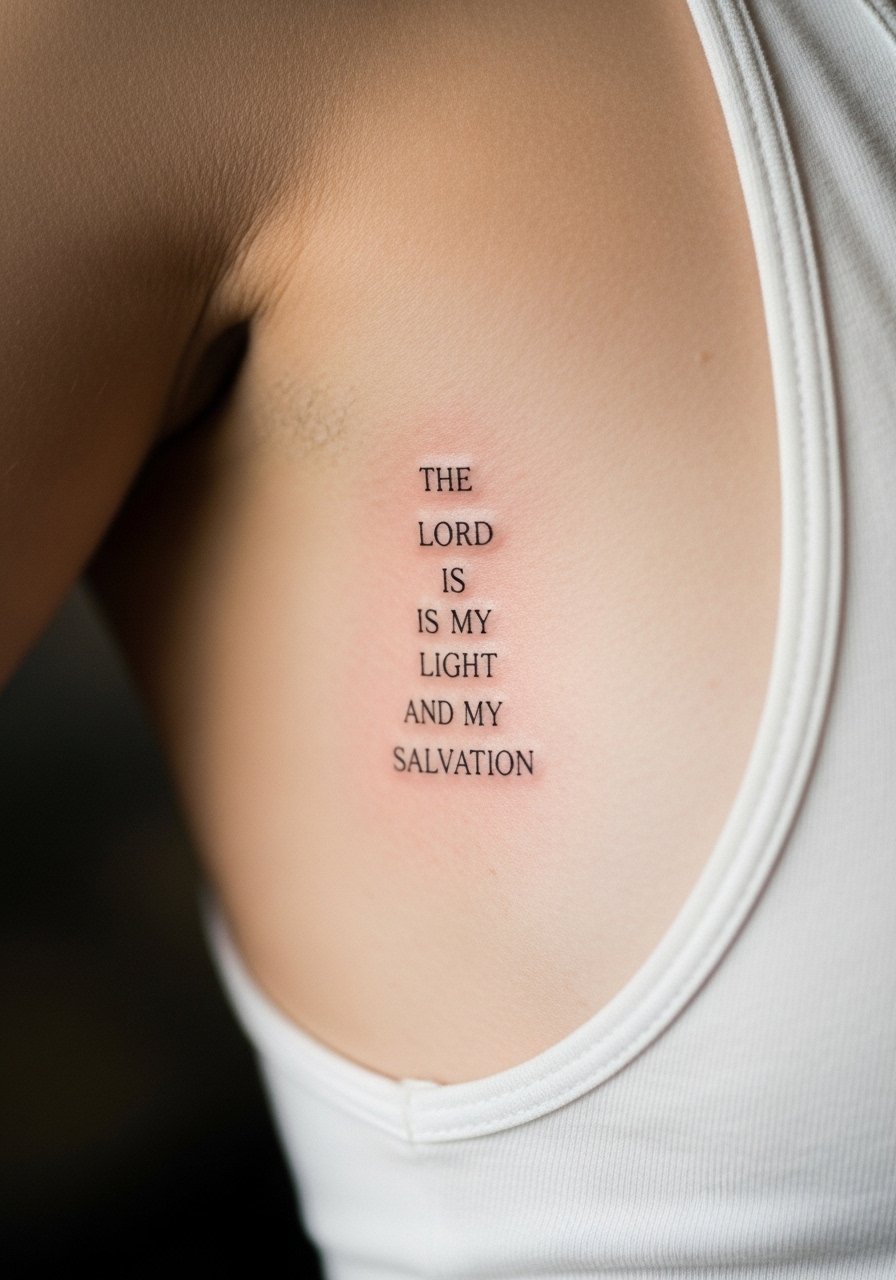
Fair warning, the ribcage is a seven out of ten on most pain scales. Most people tolerate it for short text pieces but expect breaks. Artists split on fine line here. One camp says ribs stretch and thin lines blur within a couple of years. The other camp says with spaced lettering and proper depth, it settles fine. When you consult, ask where your artist stands and how many touch-ups they typically recommend for rib text. Keep the lettering tall rather than narrow to avoid the common blur.
5. Isaiah 40:31 Eagle Wing Upper Back Panel
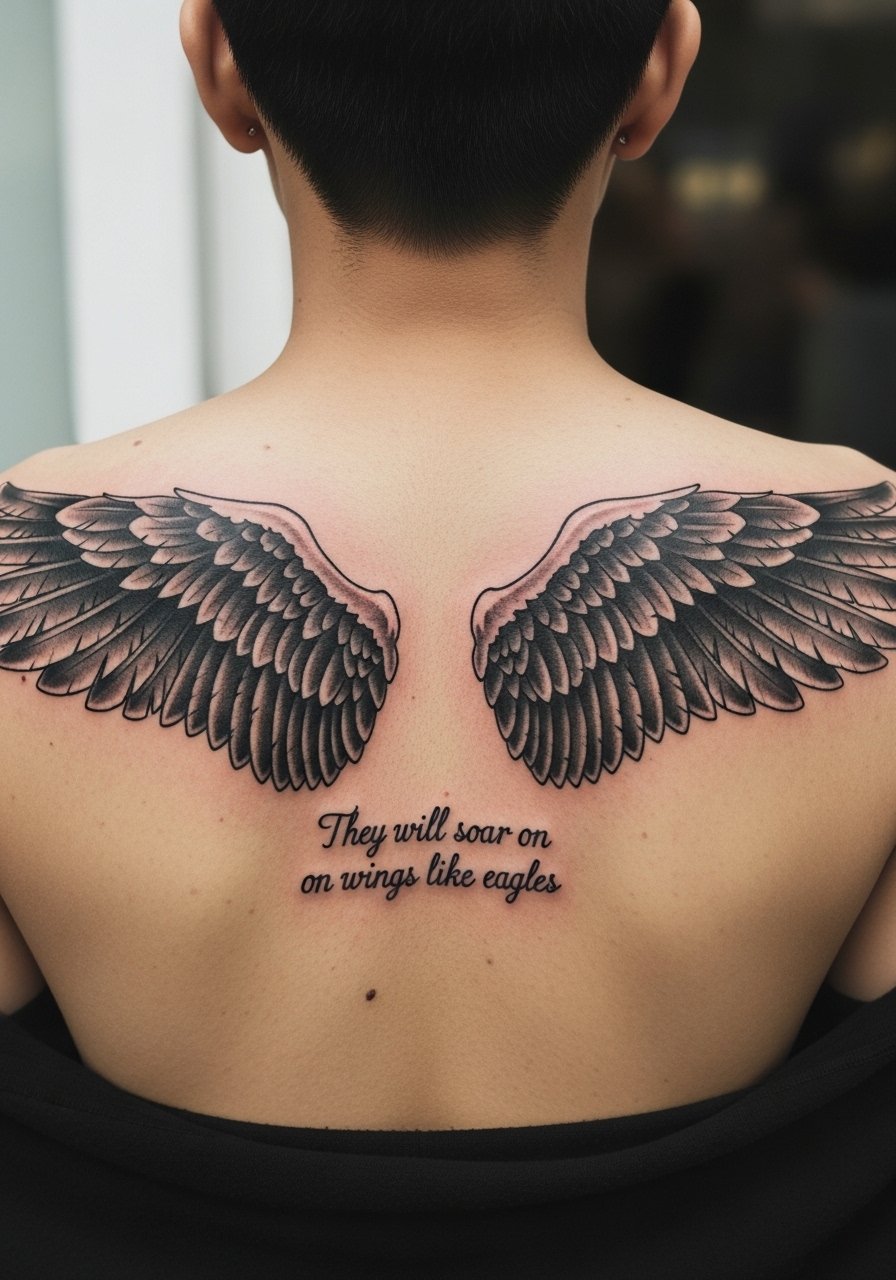
There is a lot you can do combining text and imagery on the back. For wings, expect multiple sessions depending on size. Tell the artist you want the script secondary to the wings, placed under the center spine or along the lower curve. The back tolerates heavier saturation, which helps the script age more predictably. A real mistake is packing the text into the wing texture. That makes legibility suffer when the piece settles. Leave the lettering on clear skin with a touch-up scheduled in year two.
6. John 1:16 Inner Forearm Fine Line Arch
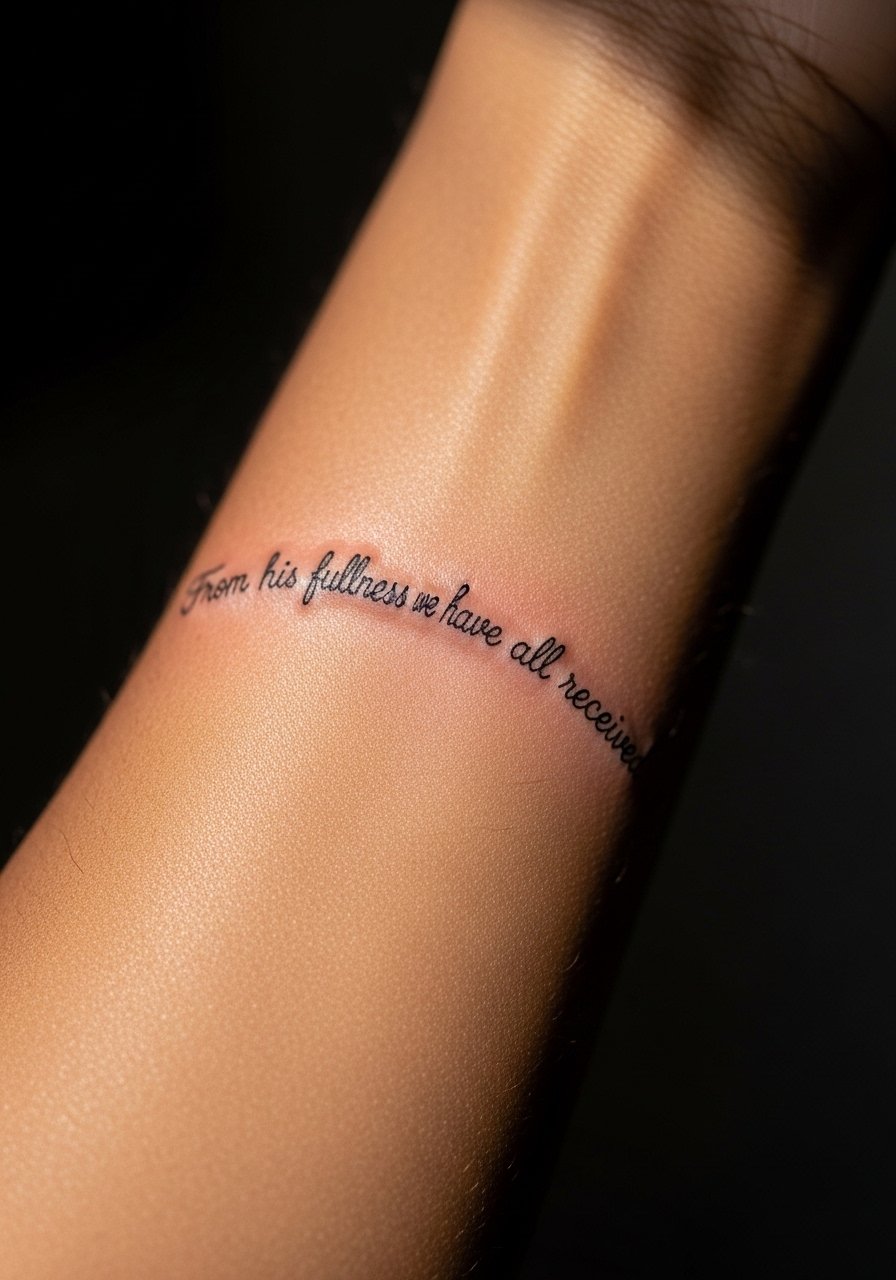
When you sit with an artist for this one, bring two reference pieces showing exact line weight. Inner forearm heals cleaner than outer forearm because it sees less sun. Fine line here can look elegant for a few years if the strokes are not hairline thin. Expect a light pain and a one hour session for a three inch arch. A common error is choosing tiny letters with tight spacing. That choice forces premature blur and the need for an early touch-up.
7. Leviticus 19:28 Inner Wrist Cuff
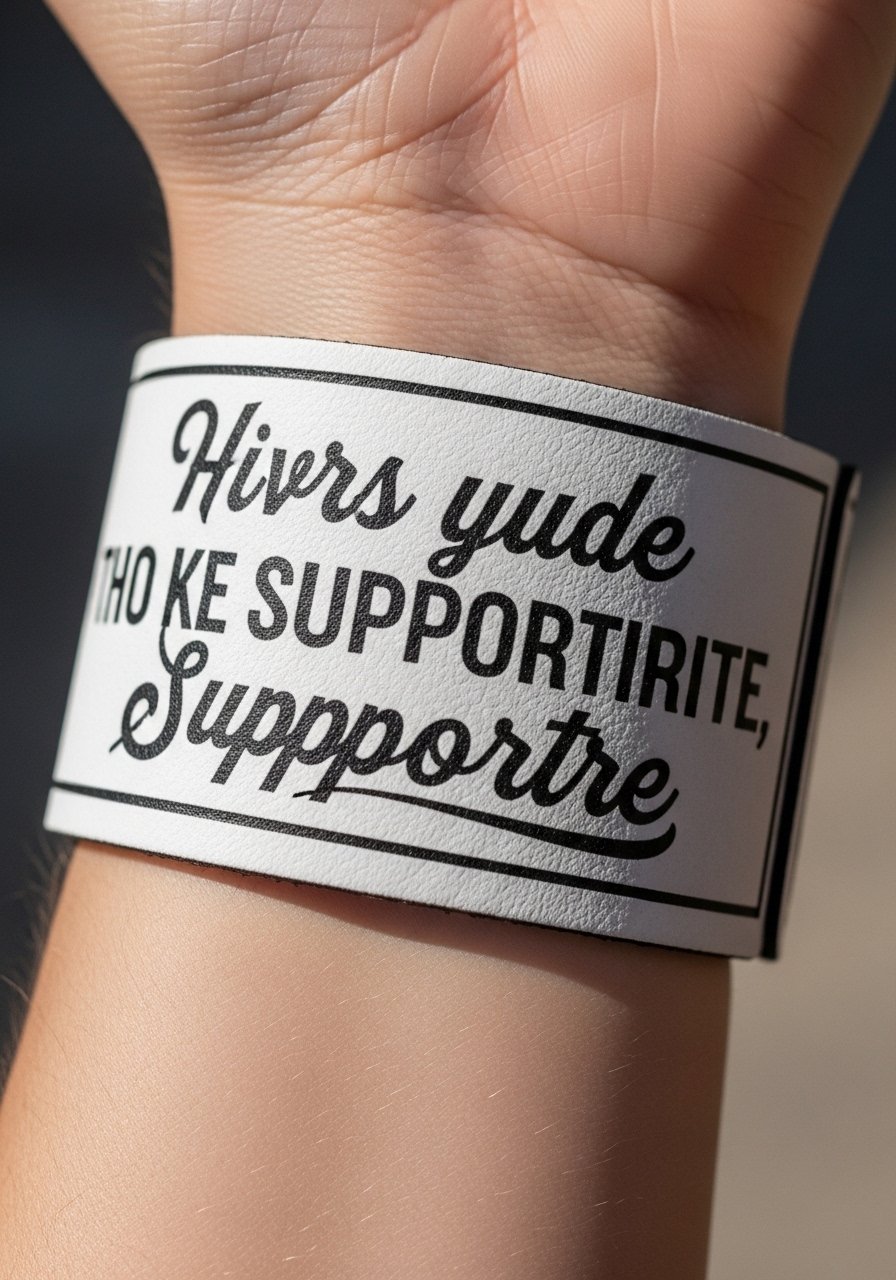
This verse introduces an explicit debate. One camp reads it as a clear ban on tattoos and avoids marking their skin. The other camp argues the wording targets ritual mourning and not modern tattooing practice. I name both sides because people ask about this verse when they plan ink. Wrist cuffs are visible and easy to show or hide depending on your sleeve. Expect one hour, noticeable movement during healing, and talk to your artist about baseline height so the cuff does not roll when you bend your wrist.
8. Romans 8:28 Inner Bicep Micro Script
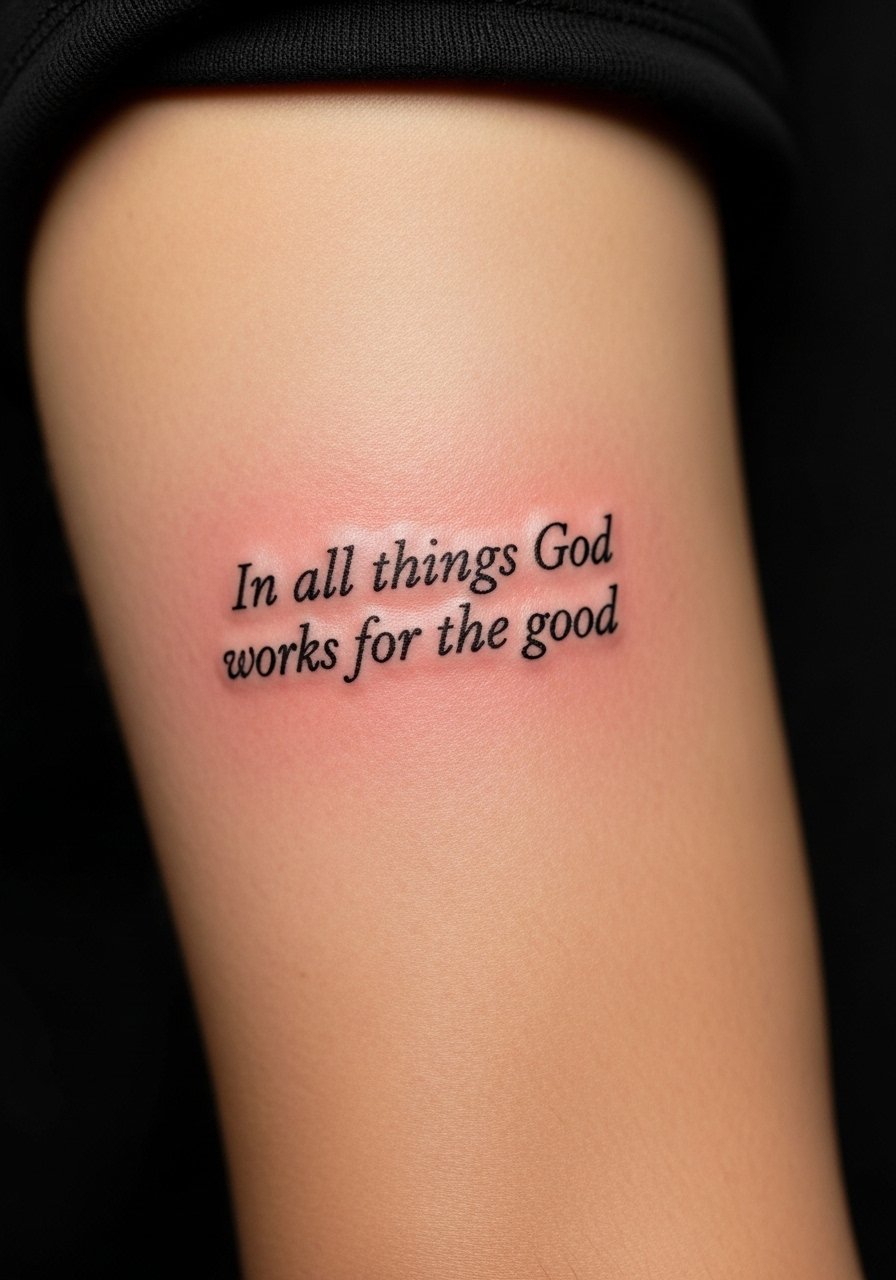
There's a quiet feel to inner bicep placements. The skin here is soft and accepts small script well if the letters are not too tight. The session lasts about an hour and the pain is moderate. Artists warn that micro script often needs spacing increased to survive two to three years without blurring. A real mistake is asking for scripture as one long line without breaks. Break the phrase into logical segments so the eye can rest and the ink can heal with space.
9. Proverbs 3:5 Beulah Collarbone Accent
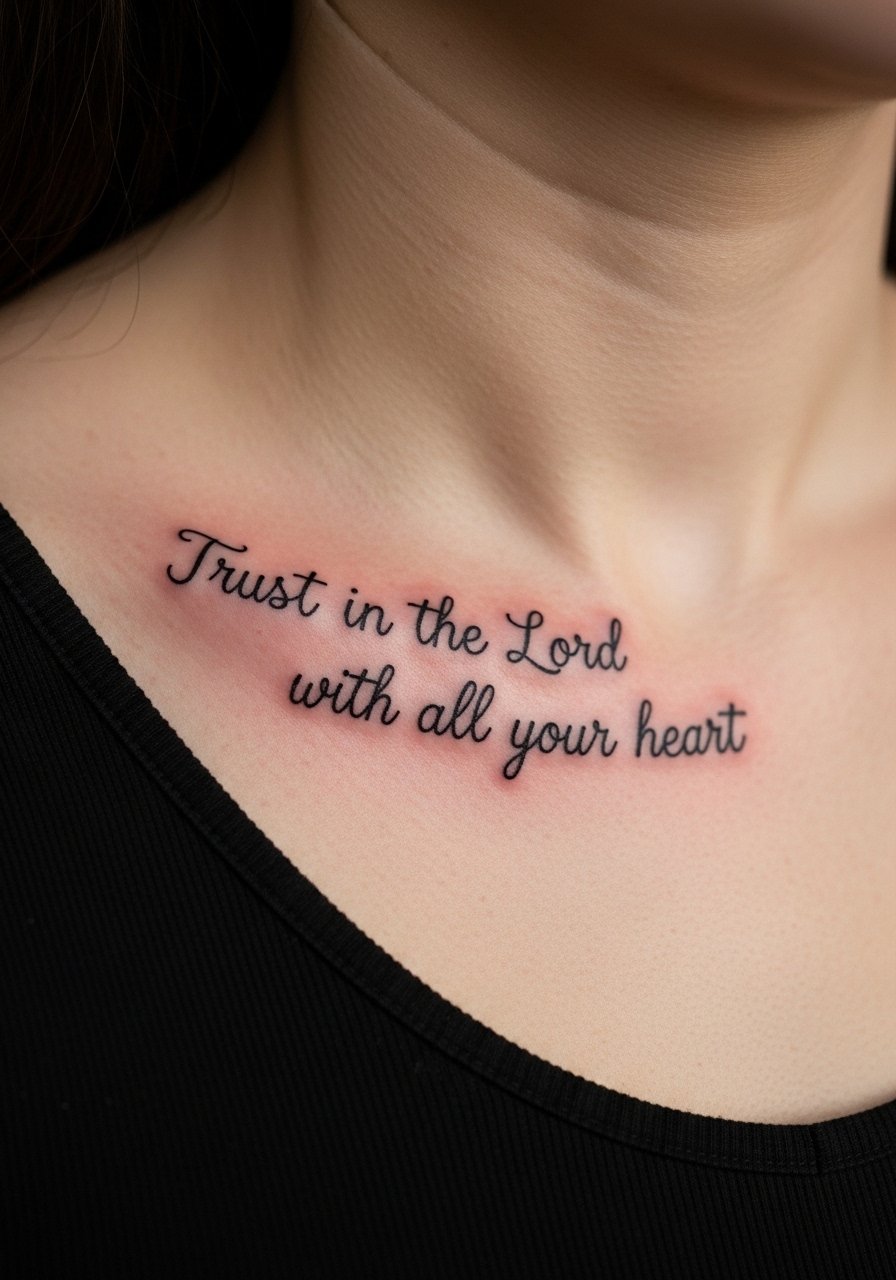
There's something about collarbone placement that reads intimate and visible at the same time. Expect a short session and sharp spots during the needle work because the area is bony. Ask for slightly thicker strokes near the ends of words to combat the tendency for distal ink to fade faster. Many people request tiny script here and later regret the lack of legibility. When in doubt, scale up the lettering by 10 to 20 percent.
10. Psalm 23 Short Phrase Over Shoulder
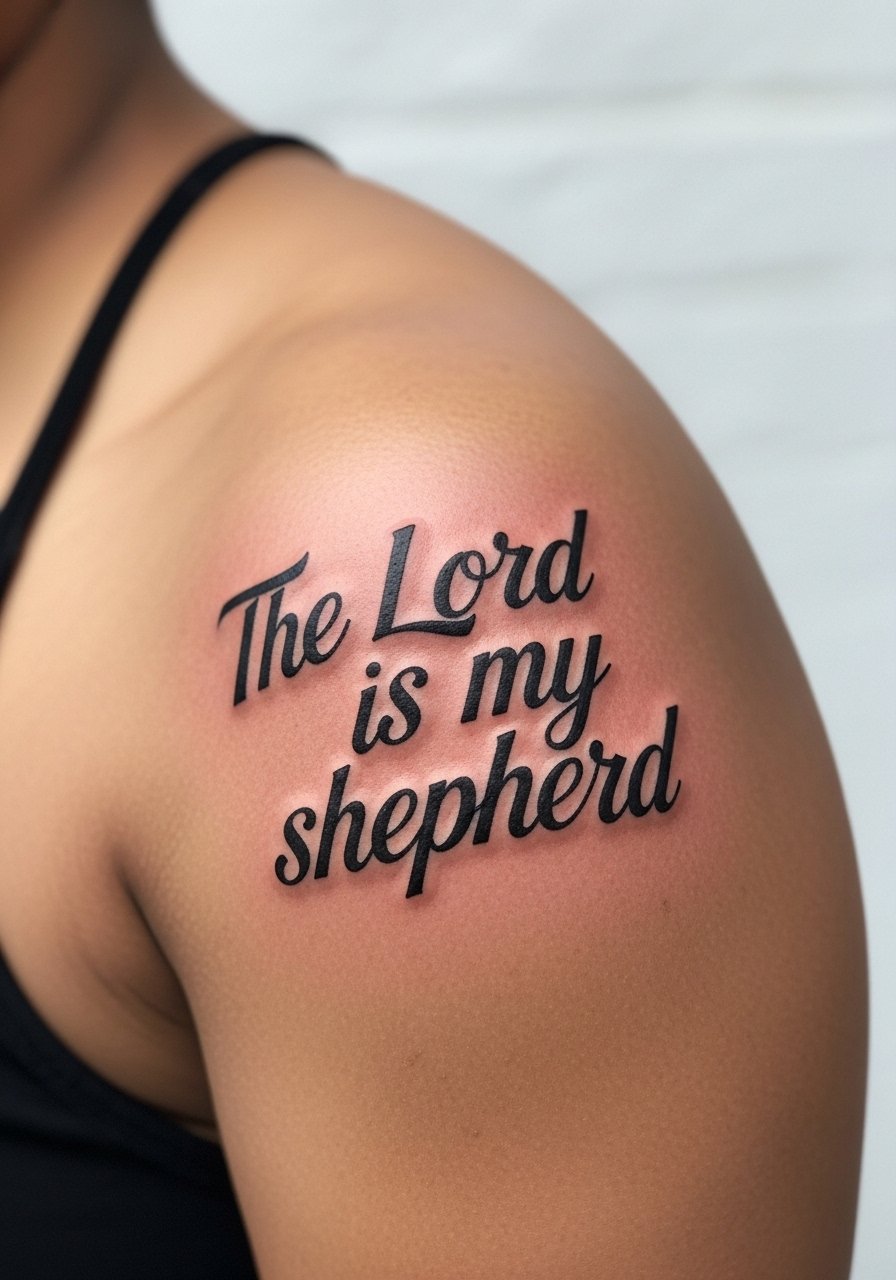
Visual impact lead works here because shoulder pieces show in short sleeves and can anchor a sleeve later. Request bold italic letters with room between words so the type does not compress when you move your arm. Session time is usually one hour. The shoulder's thicker skin helps saturation last longer than thin areas. Common mistakes include putting the verse too close to existing tattoos. Keep a decent margin so the script reads independently as it ages.
11. Matthew 5:14 Upper Chest Light Box Script
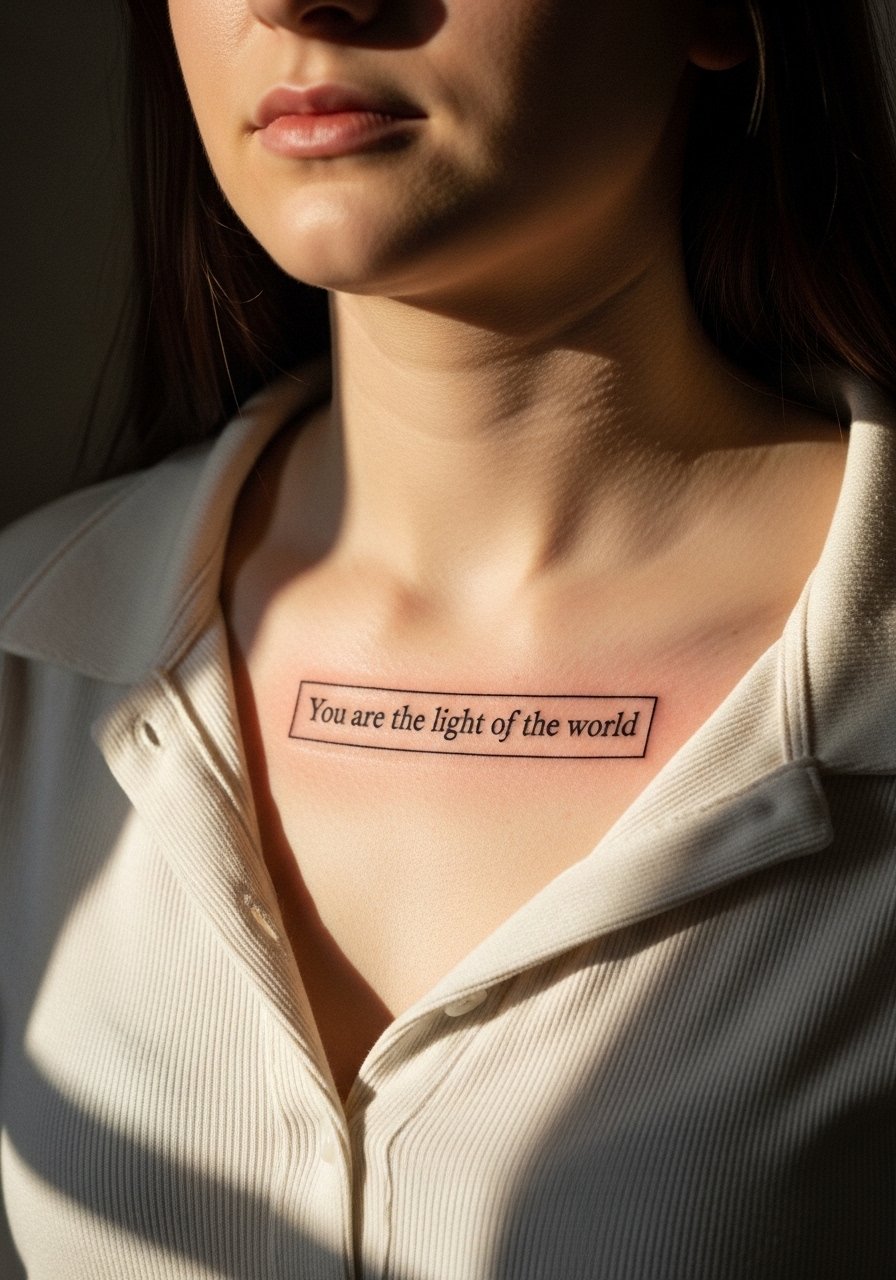
A boxed approach creates a modern look and protects the text from bleeding into imagery. Tell the artist you want a clear rectangular margin around the phrase. Expect moderate pain and a one to two hour session depending on line crispness. Boxes age well if the lines are solid. The common mistake is making the box too narrow. Let the lettering have breathing room and plan a touch-up for the box corners if needed.
12. Galatians 2:20 Inner Wrist Script with Date
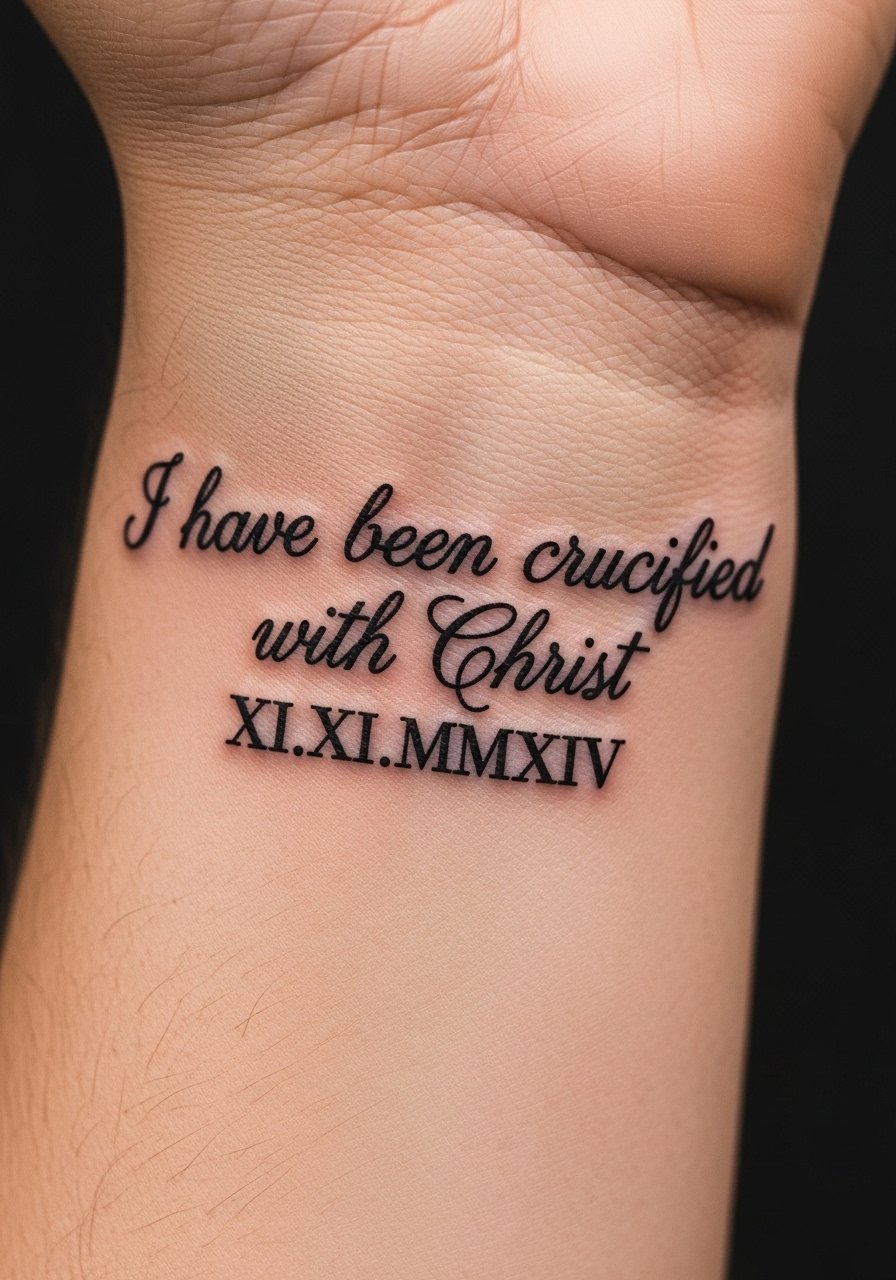
Consultation lead is key for wrist text plus dates. Bring the exact date format you want because numerals need precise sizing to match the script. The wrist heals exposed and the outer edge can lose saturation faster. Keep the line weight steady across the phrase and the date. A common oversight is mismatching serif weight between the script and numerals. Ask for the artist to balance the two in the mockup.
13. Ecclesiastes 3:1 Ribcage Curved Script
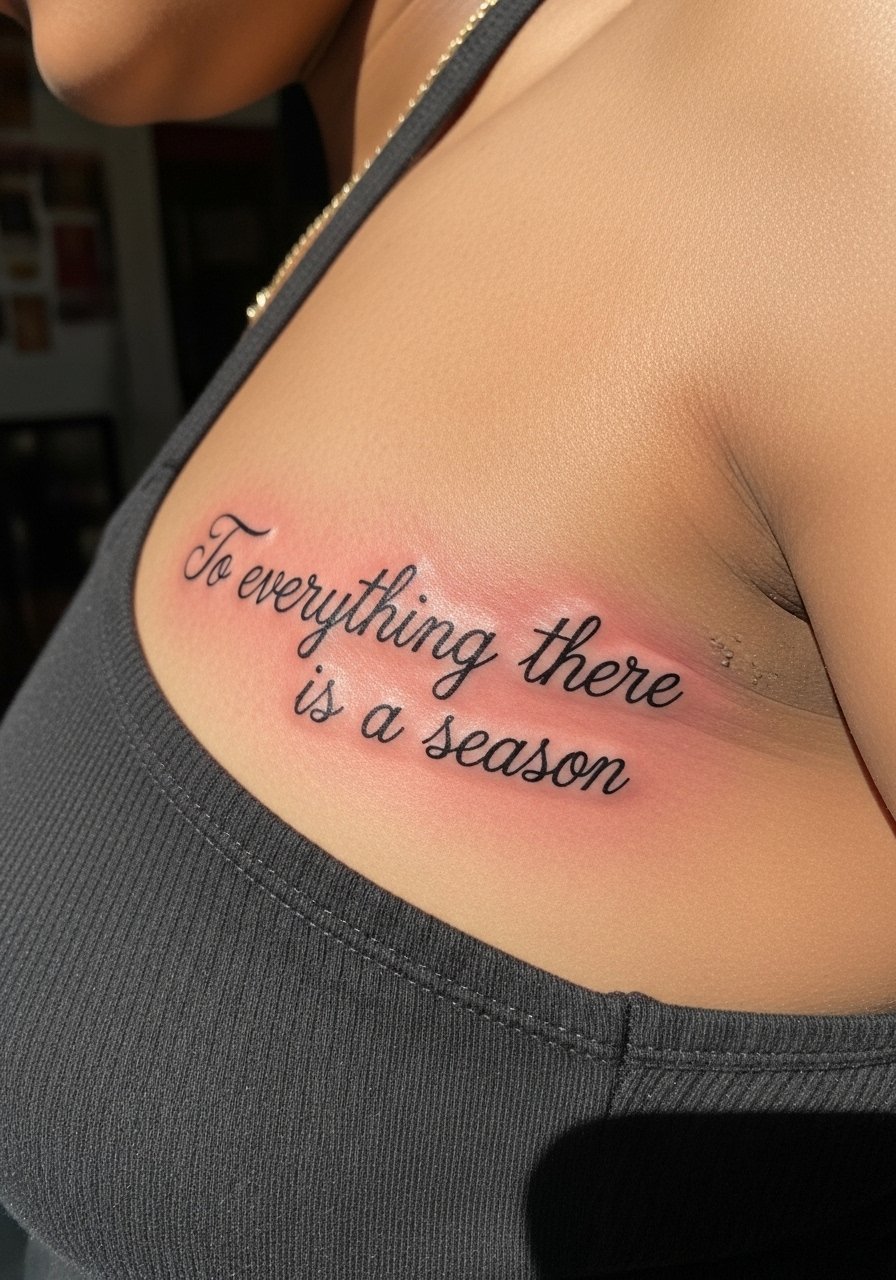
Aging and healing matter here. Most curved rib scripts look great fresh but can soften after two years without proper spacing. If you want long-term legibility, ask for a slightly bolder initial pass and clean negative space around each word. Pain is higher on the ribs and sessions may be split. A mistake to avoid is tiny flourish strokes that the rib tissue cannot hold. Keep decorative elements minimal.
14. Hebrews 11:1 Inner Forearm Stipple Shading Accent
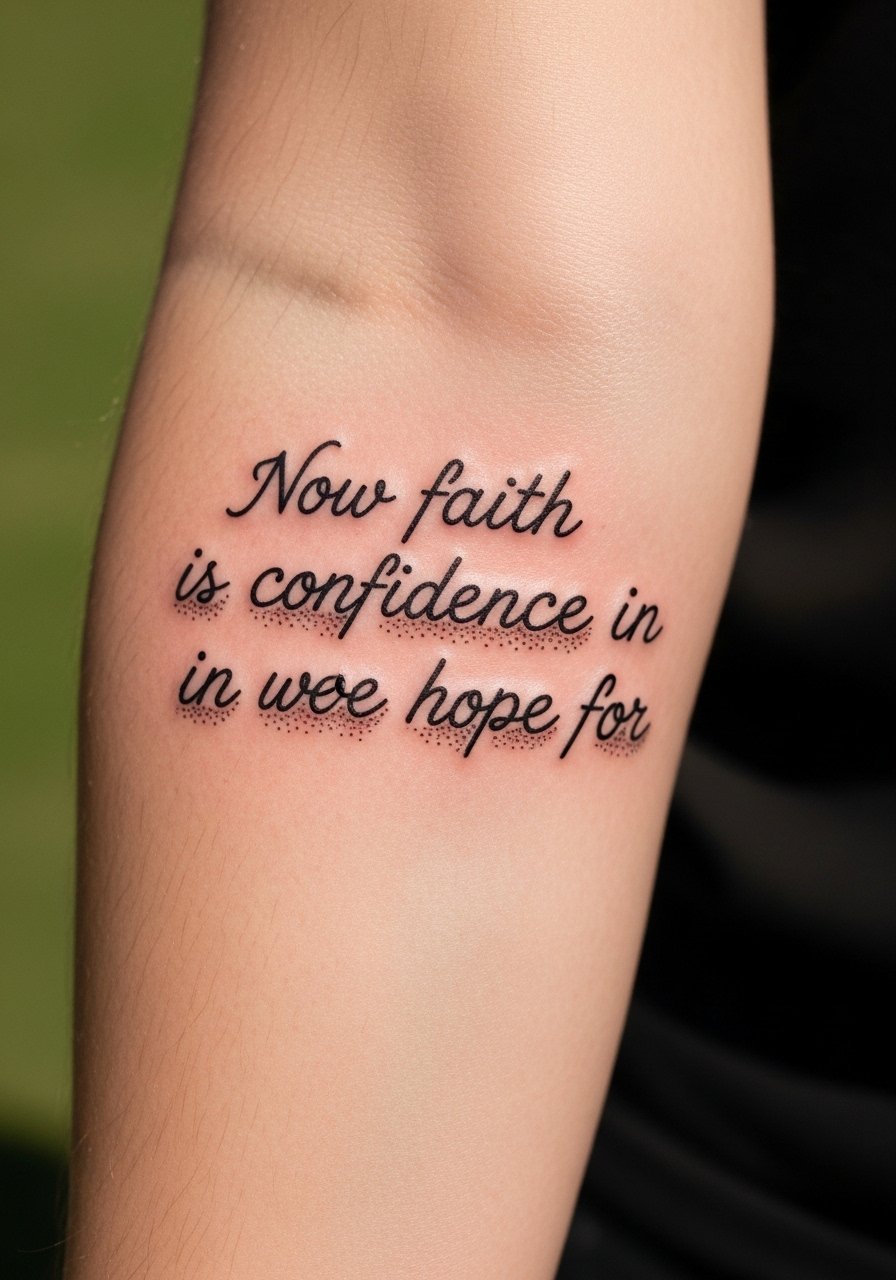
A stipple shading accent gives depth without overpowering script. Tell the artist you want dot work shadowing instead of a solid wash. Forearm placement keeps the text visible and shields it from too much sun if you cover up occasionally. Session time is one to two hours depending on dot density. Expect touch-ups in three to five years for dot clarity. A common mistake is requesting heavy shading that competes with the letters.
15. 1 Corinthians 13:13 Thumb or Side Hand Micro Script
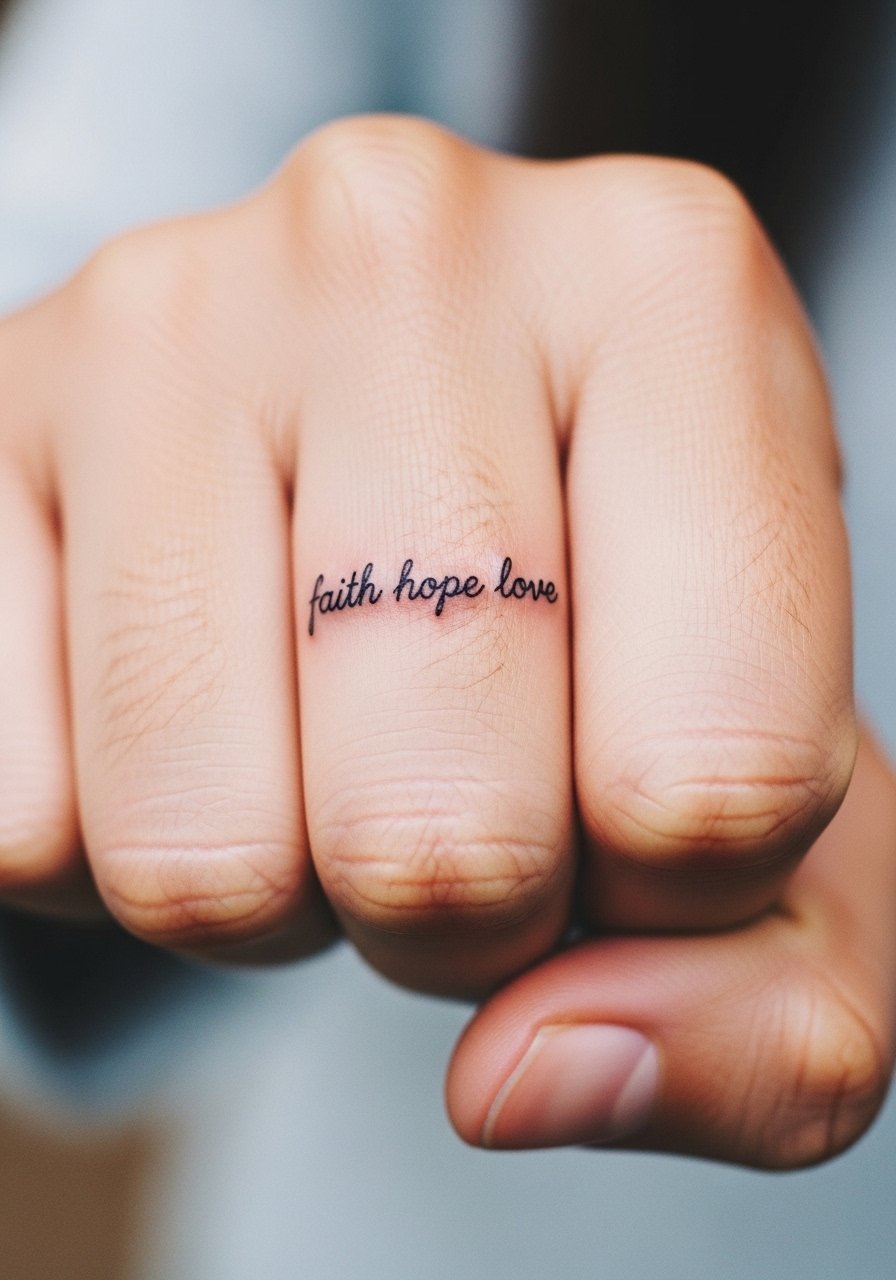
Hand and thumb placements require a specialized approach. Hand tattoos fade faster and need frequent touch-ups. If you choose this area, look for an artist who specializes in hands. Expect short sessions but rapid early fading. A professional opinion matters a lot here because skin on the hand moves and sheds differently. Plan for annual touch-ups and avoid overly fine cursive that will disappear first.
16. Psalm 46:10 Forearm Minimalist Block Text
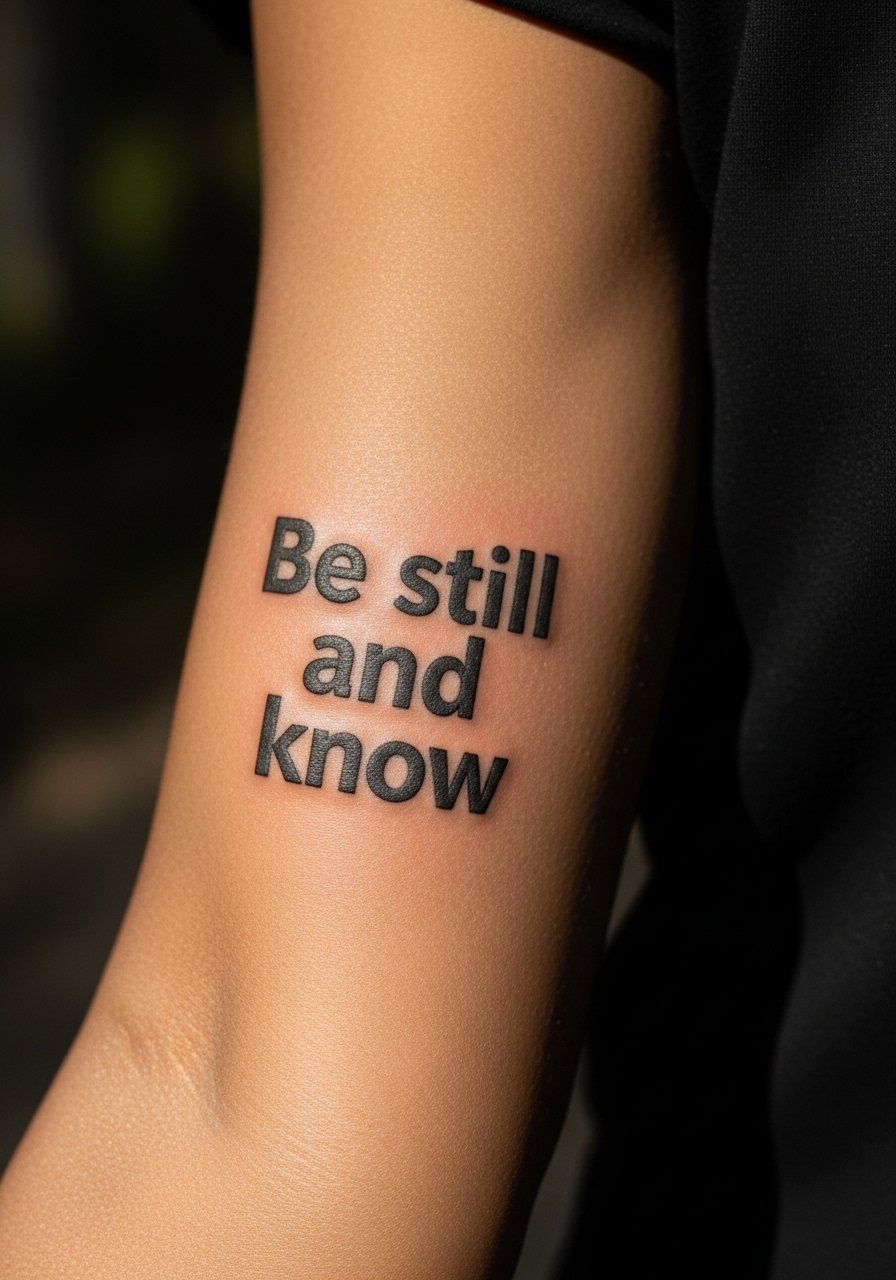
There is clarity to block text that ages predictably. The outer forearm reads well from a distance and tolerates strong saturation. Tell the artist you want even kerning and a mid-weight stroke. Session time is around an hour. A mistake is mixing two very different fonts in one short phrase. Keep type consistent for the best healed look and schedule a touch-up if you plan to add surrounding work.
17. Psalm 121:1-2 Across Upper Shoulder Line
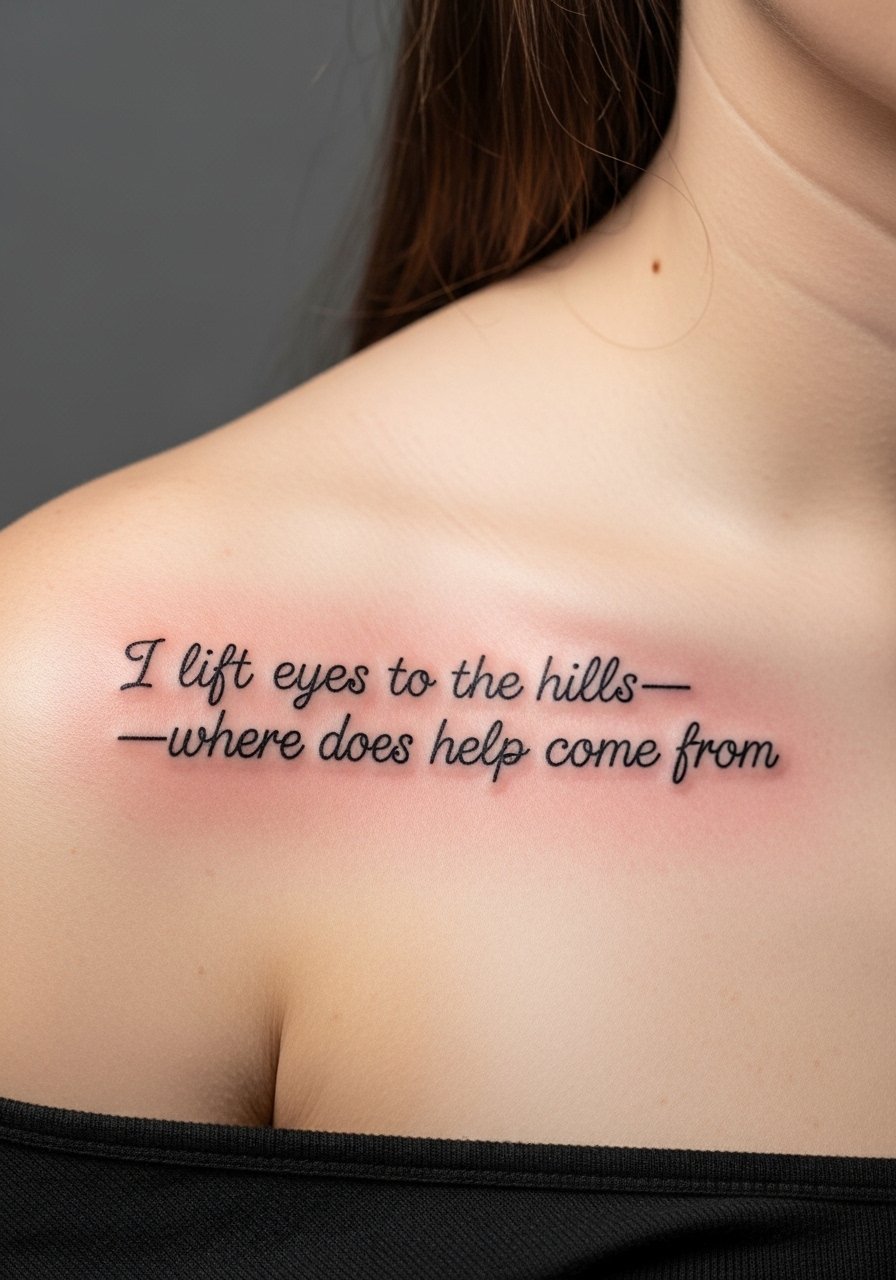
Mistake lead matters because long single-line compositions can wrap poorly with shoulder movement. Break long verses into two lines or stagger them so the phrase reads naturally as you move. Expect two hours if you keep it on the wider shoulder area. Keep the lettering size large enough to survive five years without major blur. Discuss spacing and alignment while standing to guarantee how the piece sits with your posture.
18. Romans 12:2 Inner Thigh Script Panel
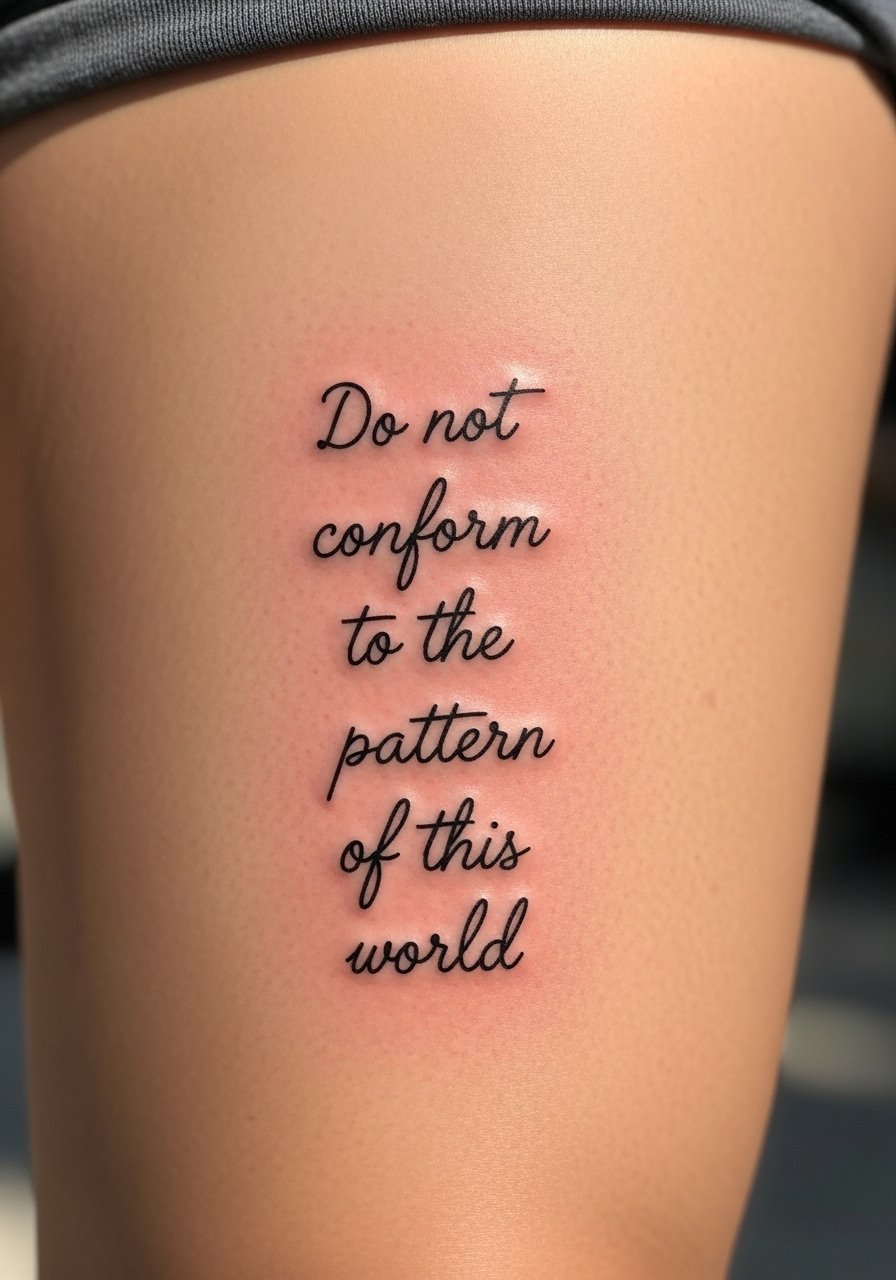
There is a private quality to inner thigh placements and they heal covered which helps saturation. Session time can be one hour and pain varies. Tell your artist if you want a panel that will later connect into a leg piece. A real mistake is choosing ultra-fine letters for an area that rubs against clothing frequently. Make the initial pass slightly bolder and plan a touch-up schedule based on how often you wear tight clothing.
19. Jeremiah 29:11 Upper Arm Circle Script
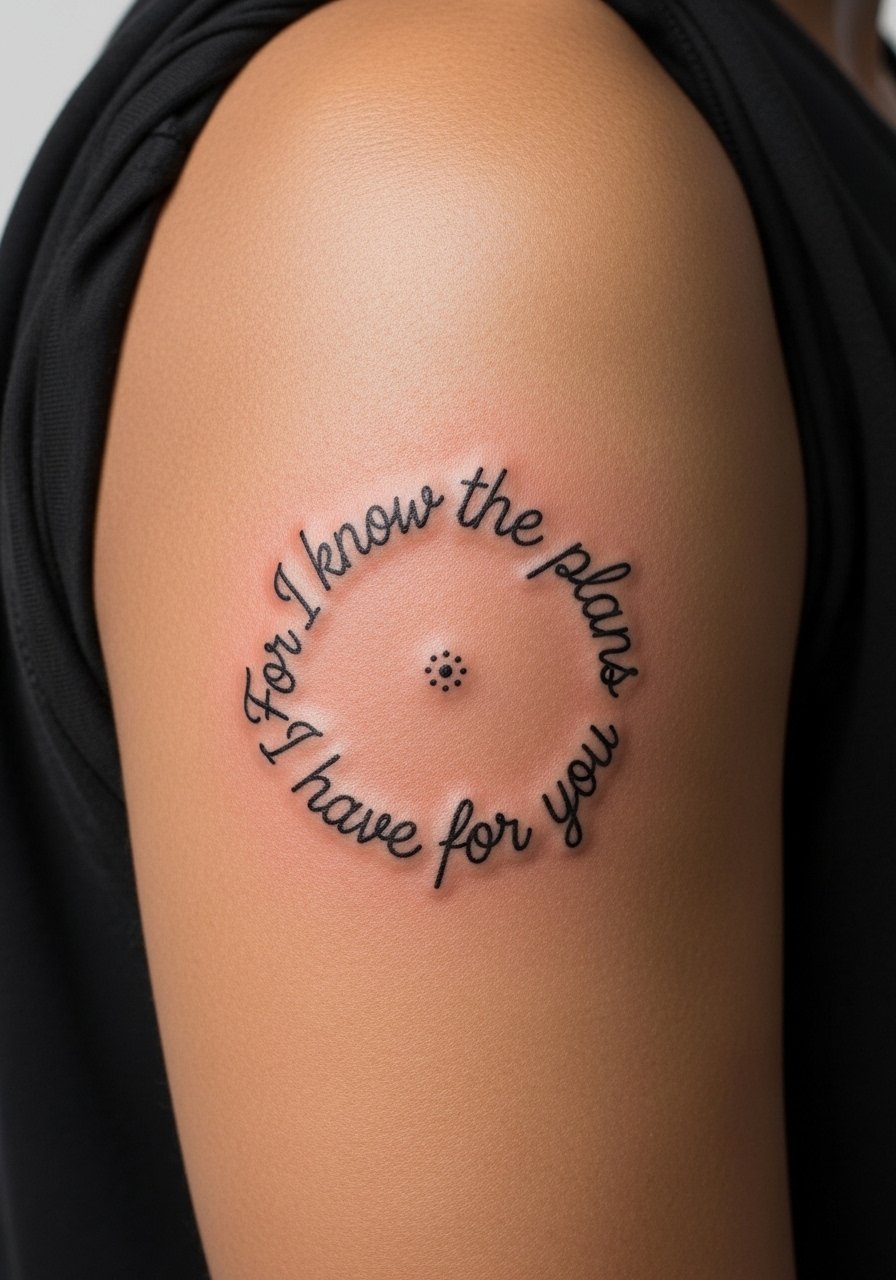
Visual symmetry can help with longevity when you wrap a verse as a circle. Ask for balanced letter spacing so the circle holds when your arm moves. Expect a two hour session for clean curves. A common error is letting the artist compress words to fit the circle which makes the type unreadable from a distance. Tell them to prioritize spacing over squeezing every word into a single radius.
20. Matthew 28:20 Foot Arch or Ankle Small Script
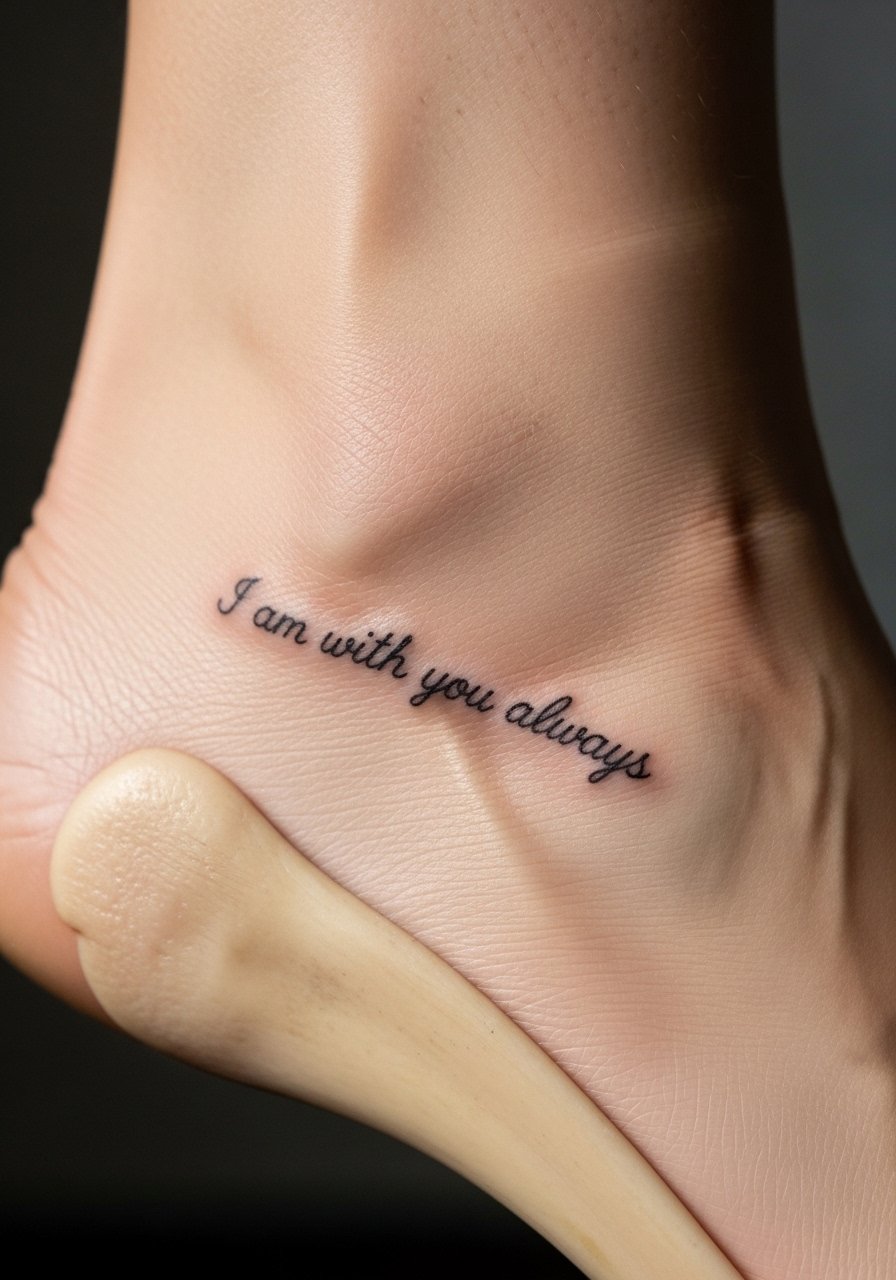
Pain warning applies for ankle work because the area is bony. Small ankle and foot scripts fade faster from friction with socks and shoes. If you choose this spot, request slightly stronger saturation and accept a likely touch-up by year two. The mistake I see is tiny connected cursive that pulls apart as the skin shifts. Use simple letter forms and ask your artist about expected touch-up intervals.
Tattoo Prep and Aftercare Essentials
When a verse piece finishes, what you use during the first two weeks affects how clear the script looks later. Below are practical items grouped for prep, healing, and maintenance. I include one mainstream option and the rest are specific or generic descriptors to match real availability.
Healing and aftercare essentials
Fragrance-free gentle foaming cleanser for tattoos. Use for the first week to remove ointment and debris without stripping ink. Clean twice a day with lukewarm water.
Lightweight fragrance-free balm, non-comedogenic. Apply thin layers after cleansing once the artist clears you. Keeps skin supple while avoiding pore-clogging.
Medical-grade second skin bandage, 6-inch roll. Useful for large back or rib panels to protect during the first 24 hours.
Breathable gauze pads and hypoallergenic tape. For wrapping and gentle pressure when needed.
Pre-appointment prep
Soft long-sleeve shirt or loose clothing pack. Wear loose clothing that will not rub the fresh tattoo.
Non-irritating electrolyte drink or snack pack. Keep energy up for longer sessions and steady skin hydration.
Long-term maintenance
Aquaphor Healing Ointment. One small tub for initial first-day care if your artist recommends an occlusive. This is the single mainstream product listed here.
Fragrance-free broad-spectrum SPF lotion, 30+. Use for years after healing to protect script and prevent UV fade.
Every tattoo is different. Always follow your artist's specific aftercare instructions. Consult a dermatologist if you have skin concerns or unusual healing issues.
Frequently Asked Questions
Q: How much does a bible verse tattoo typically cost?
A: It depends on placement and style. Expect a small forearm or wrist script to fall into the 100-400 range and a multi-session chest or back panel to fall into the 300-1,000 range. Prices vary by shop and by city. Ask for session estimates during the consult and factor in at least one touch-up visit in the first two years.
Q: Will fine line verse text blur faster than bold script?
A: From what I have gathered, fine line tends to soften quicker, especially on areas with thin, stretchy skin. Bold or mid-weight lettering holds detail longer. If you love fine line, request slightly wider strokes and extra spacing so the letters do not merge as the tattoo heals.
Q: How should I approach the Leviticus 19:28 debate when planning ink?
A: There are two clear camps. One reads the verse as a prohibition on tattoos and chooses not to get ink for religious reasons. The other reads it as context-specific to ritual marking and feels it does not apply to modern tattoos. If this verse matters to you, consider the social and family implications and discuss placement and wording that align with your beliefs.
Q: Do ribcage and sternum scripts require special aftercare?
A: They do not need different products but they are more sensitive and can blister more easily. Keep clothing loose while healing and be prepared for slightly longer redness. Consider a medical-grade second skin for the first 24 hours on these areas, and plan your sleeping position to avoid pressure.
Q: How often will I need touch-ups for a verse tattoo?
A: Touch-up frequency depends on placement, sun exposure, and initial line weight. In general, expect a possible touch-up around year two to three for fine script and every three to five years for bolder work. Hands, feet, and wrists usually need the most frequent refreshes.
Q: Can I add imagery later to a simple verse band or sleeve starter?
A: Yes. Many men start with a single verse band or forearm script and expand into armor motifs, animals, or full sleeves later. When you plan for growth, leave negative space and think about the scale of future elements during the initial consult.
Q: Is there a safe way to find artists who specialize in scripture lettering?
A: Use local shop directories, tattoo convention listings, and hashtag searches on social platforms to find portfolios. Spend time looking for healed photos of script on skin tones similar to yours. A short consult or shop visit gives you a feel for their lettering work without naming specific artists.