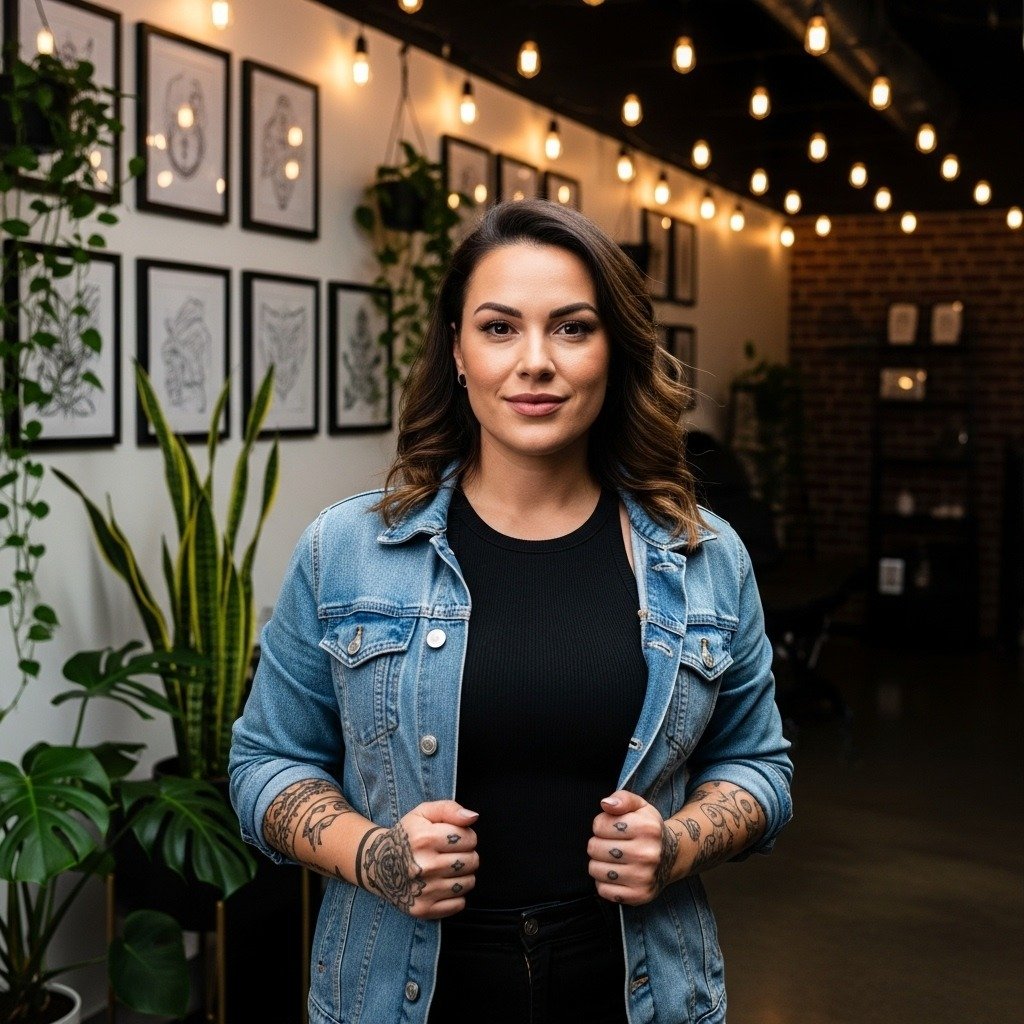
Someone I know spent months staring at wolf tattoos and kept running into the same problems. Fine line pieces on hands blurred within a year, small paw prints suddenly cost three times more, and a booked sleeve got postponed twice. I spent time in five shops across Brooklyn and at a tattoo convention asking about what lasts and what fails. Below are 25 wolf ideas that balance look and longevity, with practical notes for consultation, healing, and placement so you pick a design that still reads after a few seasons.
1. Neo-traditional snarling wolf head on the outer forearm
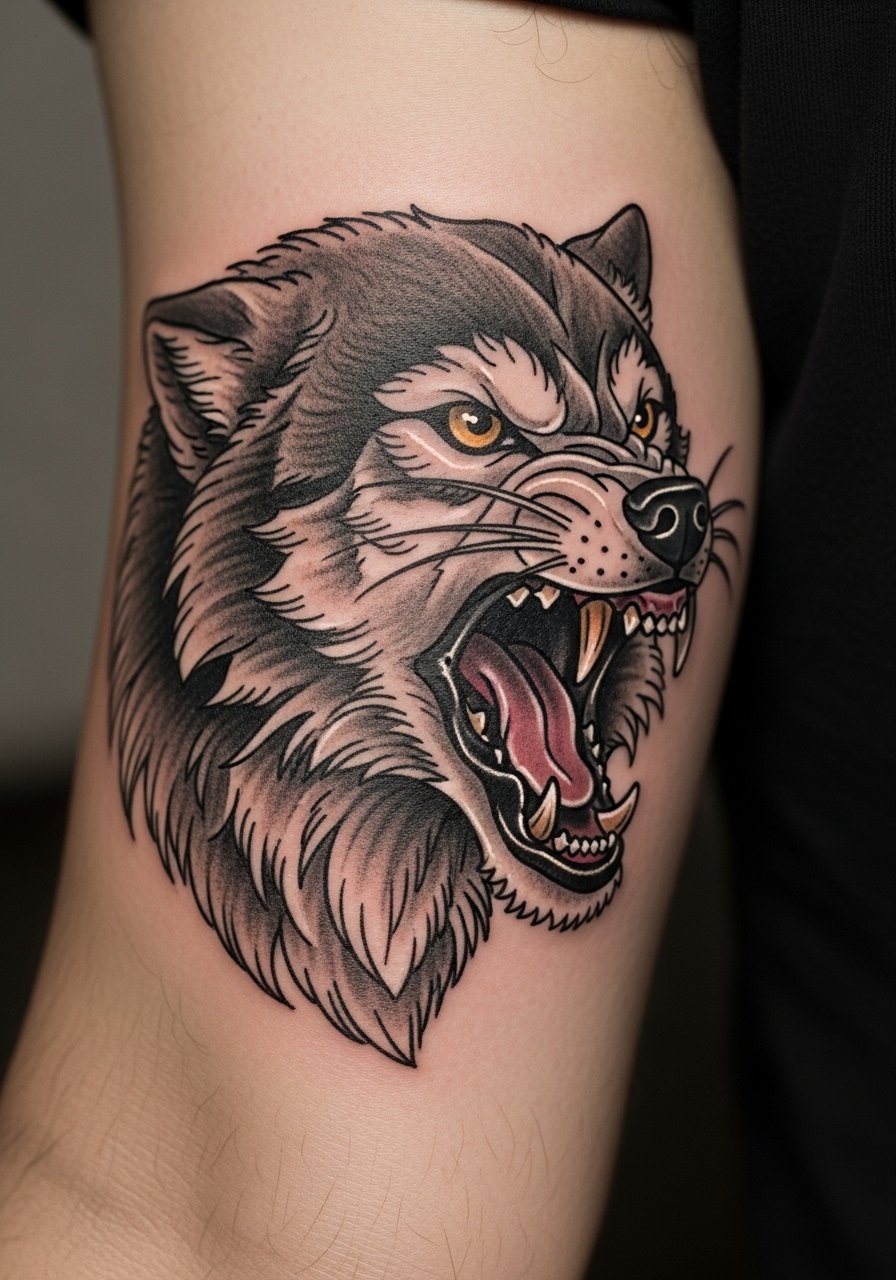
Someone I met at a convention got this on his outer forearm and told me how the red accents keep the expression alive from across a room. Expect a medium pain level on the forearm and plan for two sessions to build contrast and saturation. Tell your artist you want strong linework with controlled saturation rather than heavy, flat fills. A common mistake is packing too many small color accents that blur over time. At six months the lines will look crisp, at two years the reds may fade faster than black, and a touch-up around year two to three often restores the vibrancy.
2. Geometric symmetrical wolf face on the chest
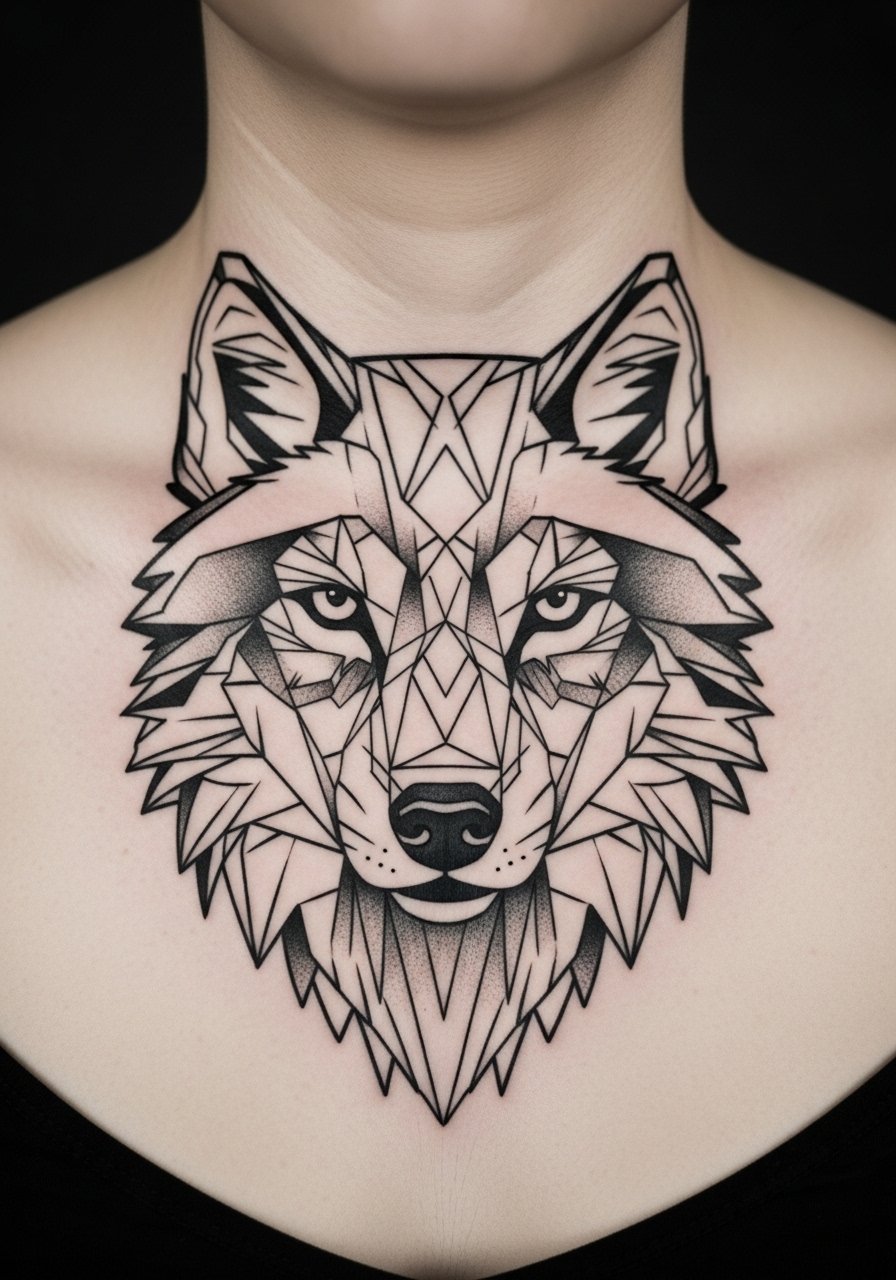
Fair warning, chest tattoos can shift slightly with weight changes and torso movement, so size matters. Geometric faces need breathing room to keep symmetry after healing. Ask for thicker primary linework with negative space in the design so the shapes remain distinct as the skin ages. This usually fits a one-session appointment for a 3-inch piece. People often make it too small and lose the crisp intersections. Expect reasonable pain and a touch-up window at around two years if lines begin to soften.
3. Black-and-gray Celtic knot wolf on the shoulder blade
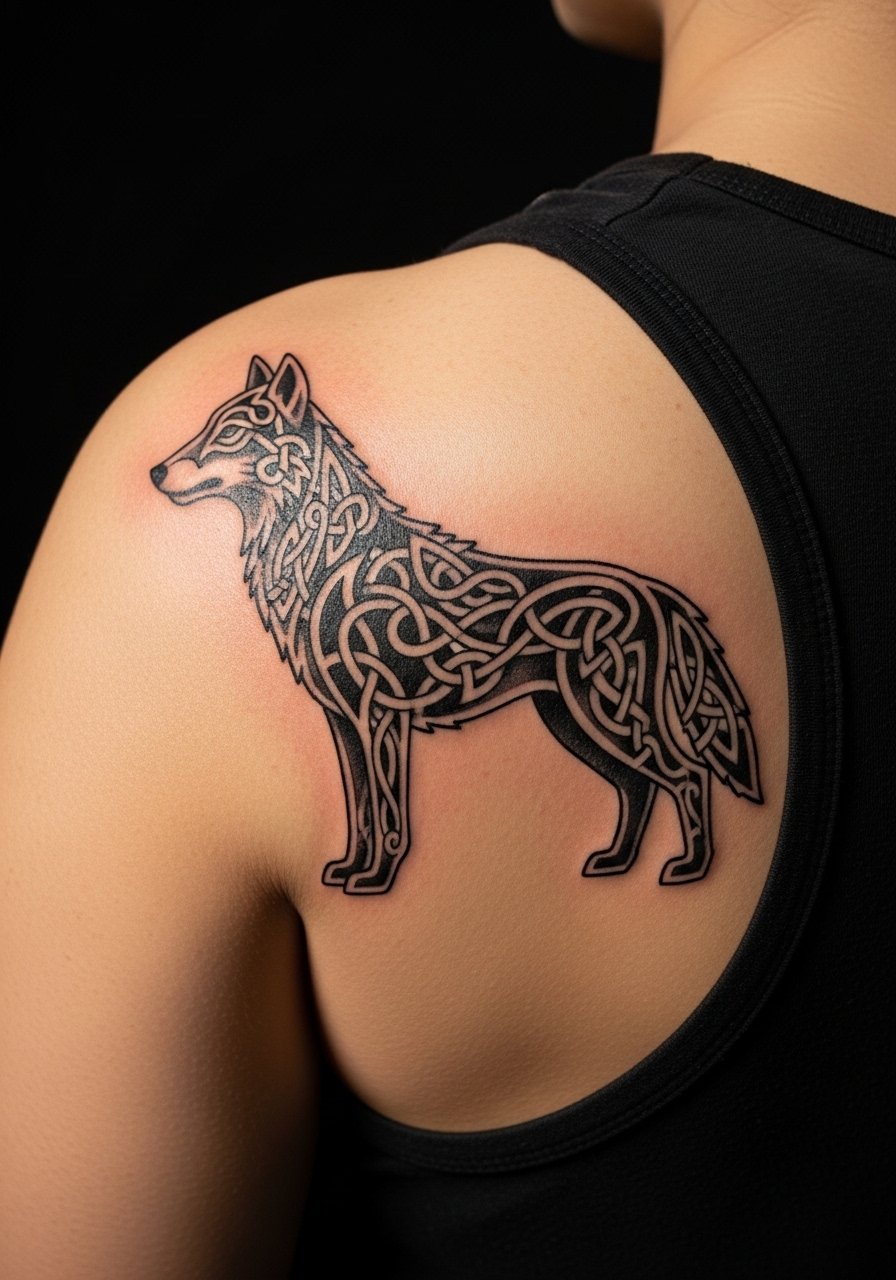
Shoulder blade placement is forgiving for detail and it hides under shirts easily. For Celtic knotwork ask the artist to map knot junctions with slight spacing so the weave reads after a year. This design benefits from two to three sessions for layered shading. A common misstep is requesting ultra-fine knot lines, which can merge. At six months the grayscale holds nicely, at two years expect some softening and a touch-up if you want the knots redefined. Respect the cultural origins by discussing motifs rather than copying sacred symbols directly.
4. Howling wolf pack silhouette on the upper arm
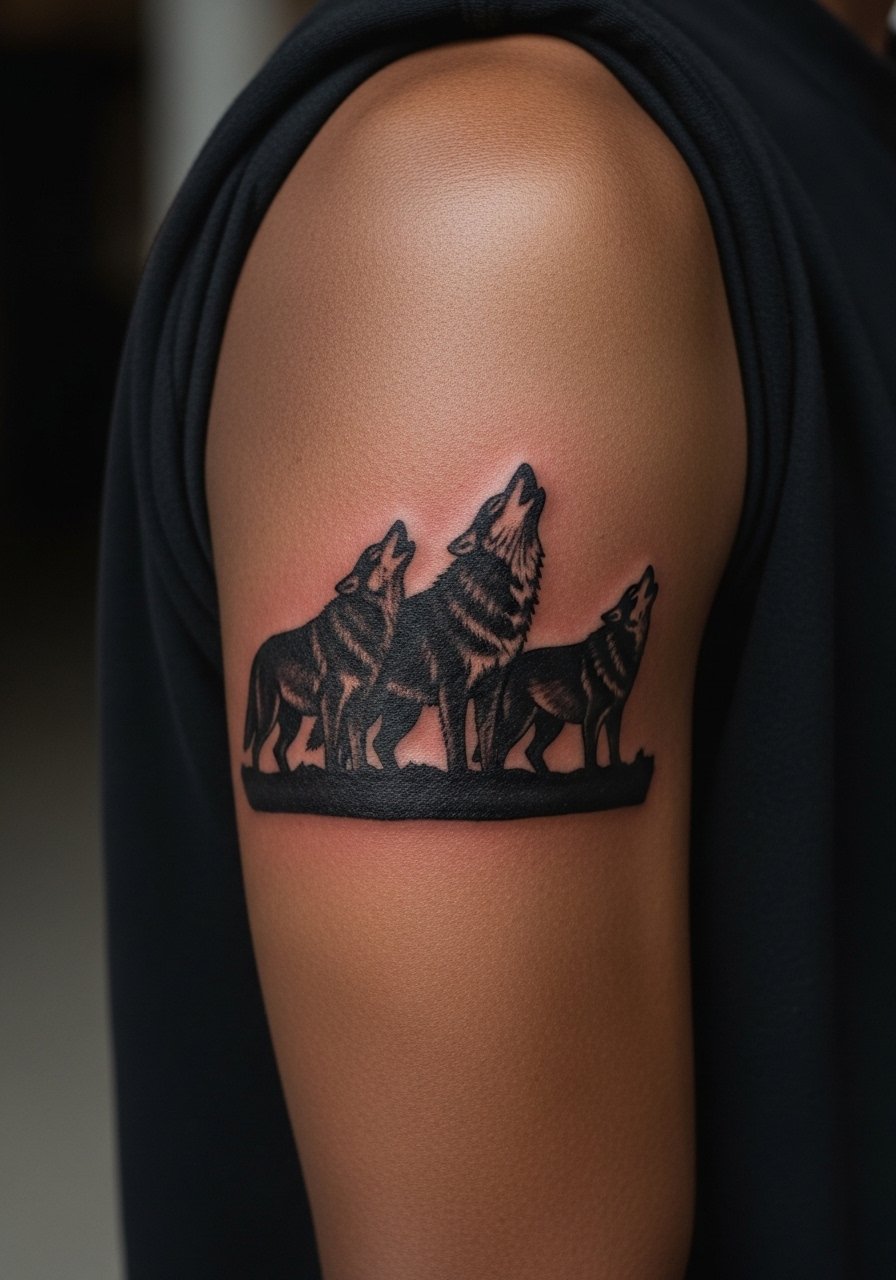
There is a clear appeal to pack silhouettes on the upper arm because they read at a distance. Upper arm placement handles six-inch vertical layouts well and generally hurts less than ribs. When you consult, specify whether you want distinct negative-space separation between wolves or a merged silhouette for a softer look. A frequent error is crowding too many figures into a small vertical space, which blurs after healing. At two years the single-ink silhouette will age predictably and usually only needs minor touch-ups for edge crispness.
5. Micro-realism snarling wolf starting a sleeve on the outer bicep
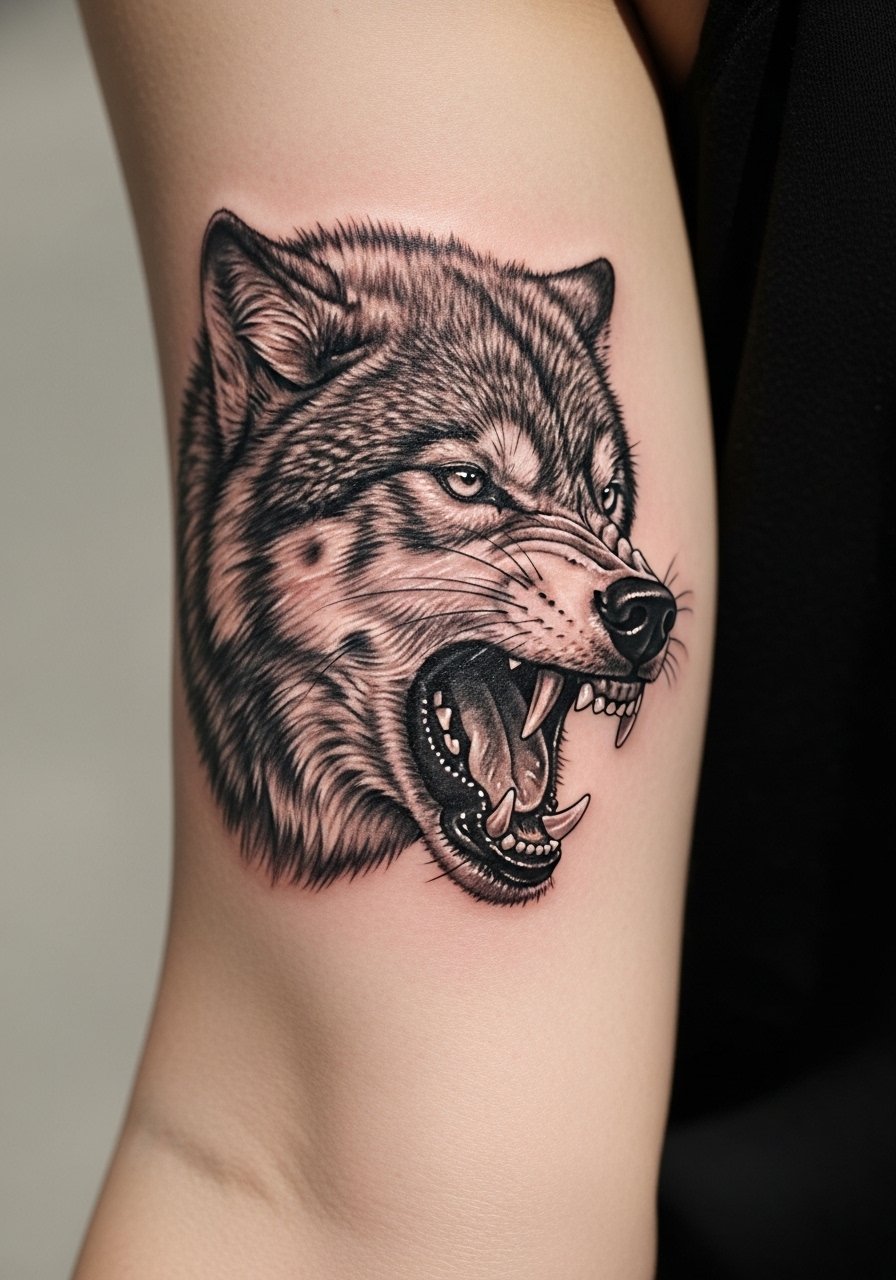
If you want hyper-detail this is an investment in time and sessions. Expect multiple long sessions and a higher pain tolerance for deeper shading zones. Tell your artist you want layered texture and reference photos that show fur direction. The common mistake is compressing too much detail into one 4-inch panel, which fades into a gray patch. At six months micro-detail reads well, at two to five years some contrast loss is normal and touch-ups are part of preserving facial detail. Plan for four plus sessions when starting a sleeve.
6. Tribal wolf curves and flicks across the ribcage
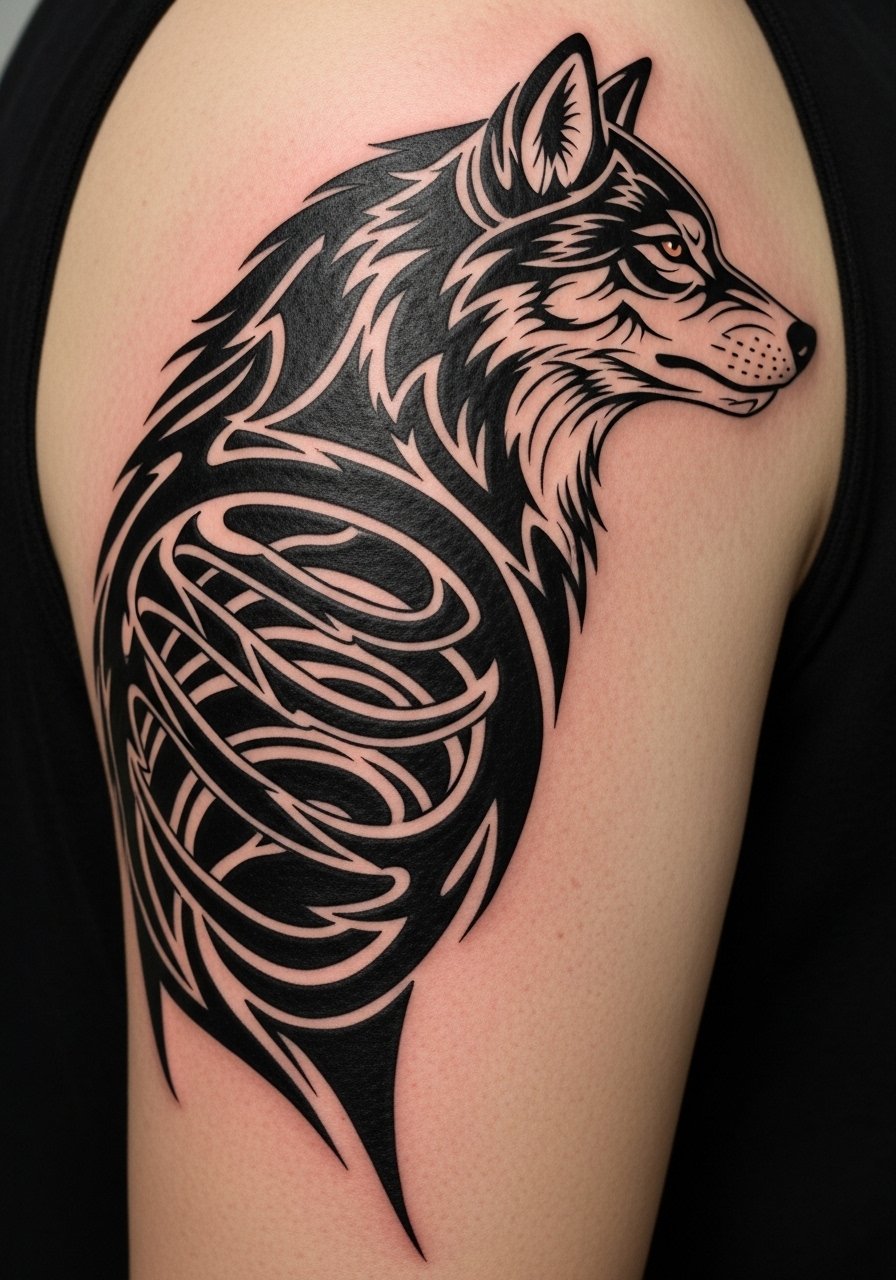
Fair warning, ribs rate high on most pain charts, but the contours there let tribal work flow with the body. For dark skin choose thicker, high-contrast curves so the shapes stay visible as pigment settles. A typical mistake is asking for very thin flicks that vanish after healing. This style usually takes two sessions and ages well if lines are given room. If you have career concerns remember ribs are easy to conceal. Ask for stencil placement while standing so the composition follows your torso when you move.
7. Wolf head with mandala feathers on the inner forearm
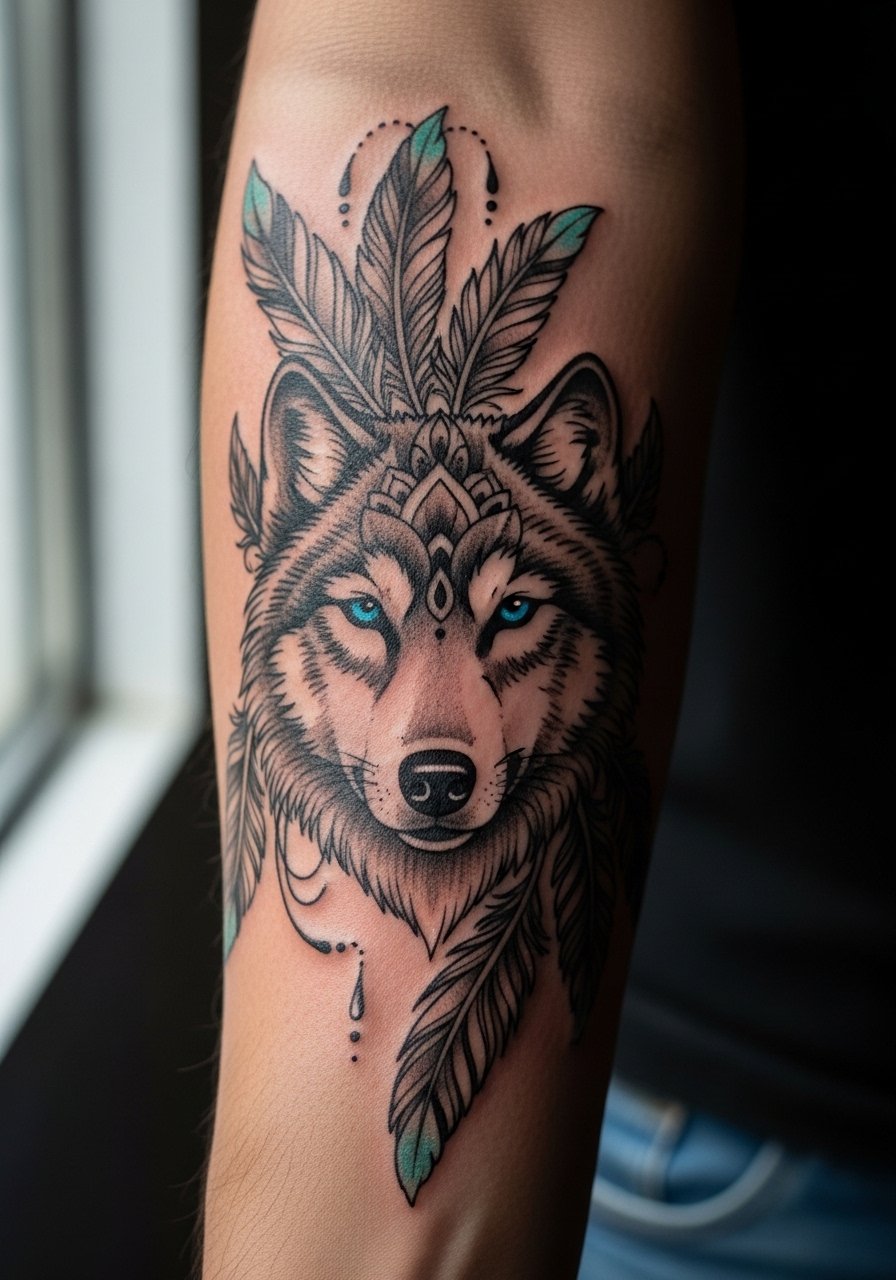
Inner forearm is a great canvas for ornamentation and lower on the pain scale. When booking, bring mandala references and specify how much negative space you want between feathers and fur. A common error is overfilling the forearm with tiny dot work that blends later. Expect three sessions for a balanced ornamental piece with controlled color. At two years the black and gray holds better than pale color spots. For mandala elements that trace back to spiritual traditions mention origin respect with your artist.
8. Lone wolf vs bear confrontation half-sleeve on upper arm
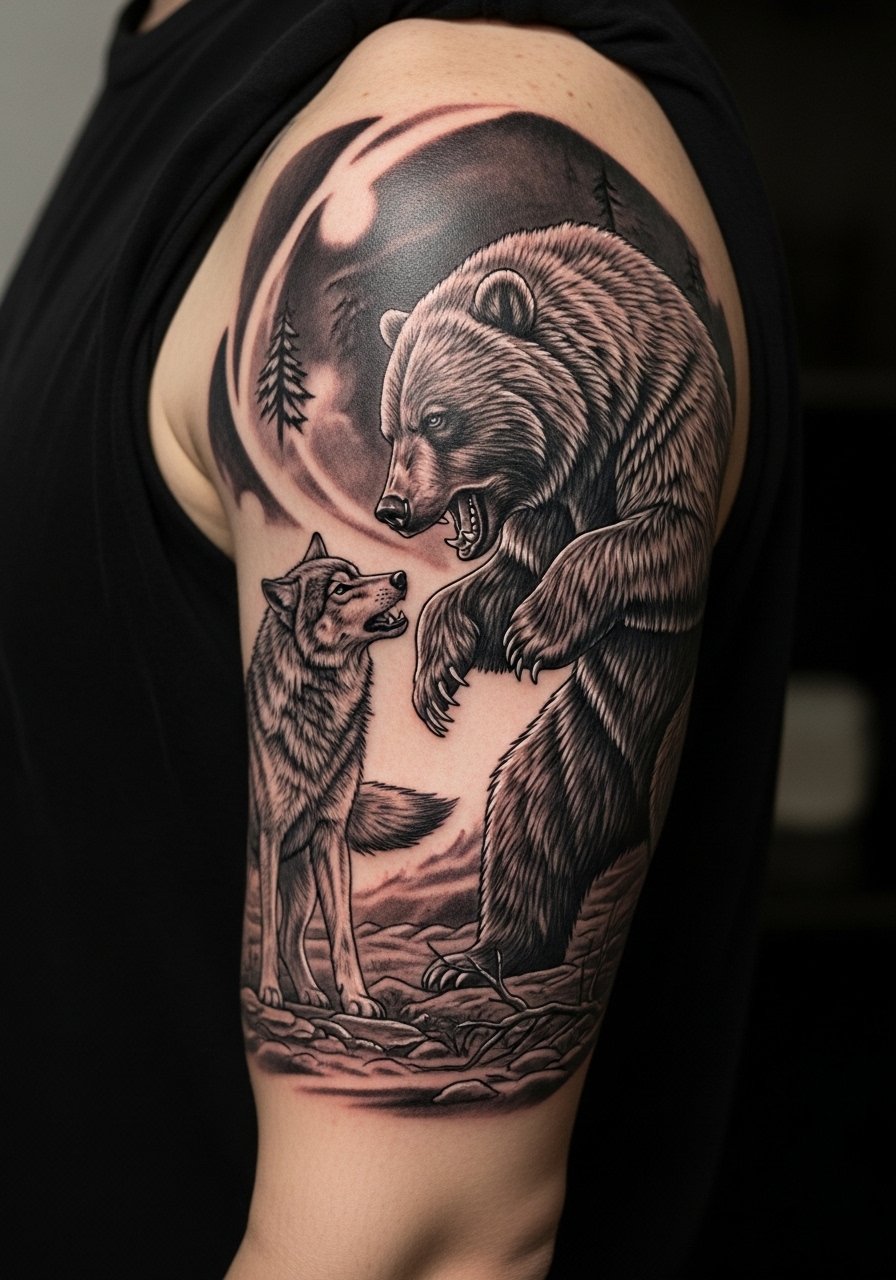
Narrative scenes need planning and composition time. This half-sleeve suits upper arm placement, which offers good canvas space and hides easily. Tell your artist the emotional focus you want so the scene does not become a busy collage. Pain is moderate and five sessions is common for a 10-inch narrative. People often try to cram extra background detail that muddies focal action. Expect subtle softening at two years and plan touch-ups to keep the contrast between animals strong.
9. Fine line howling wolf outline on the wrist
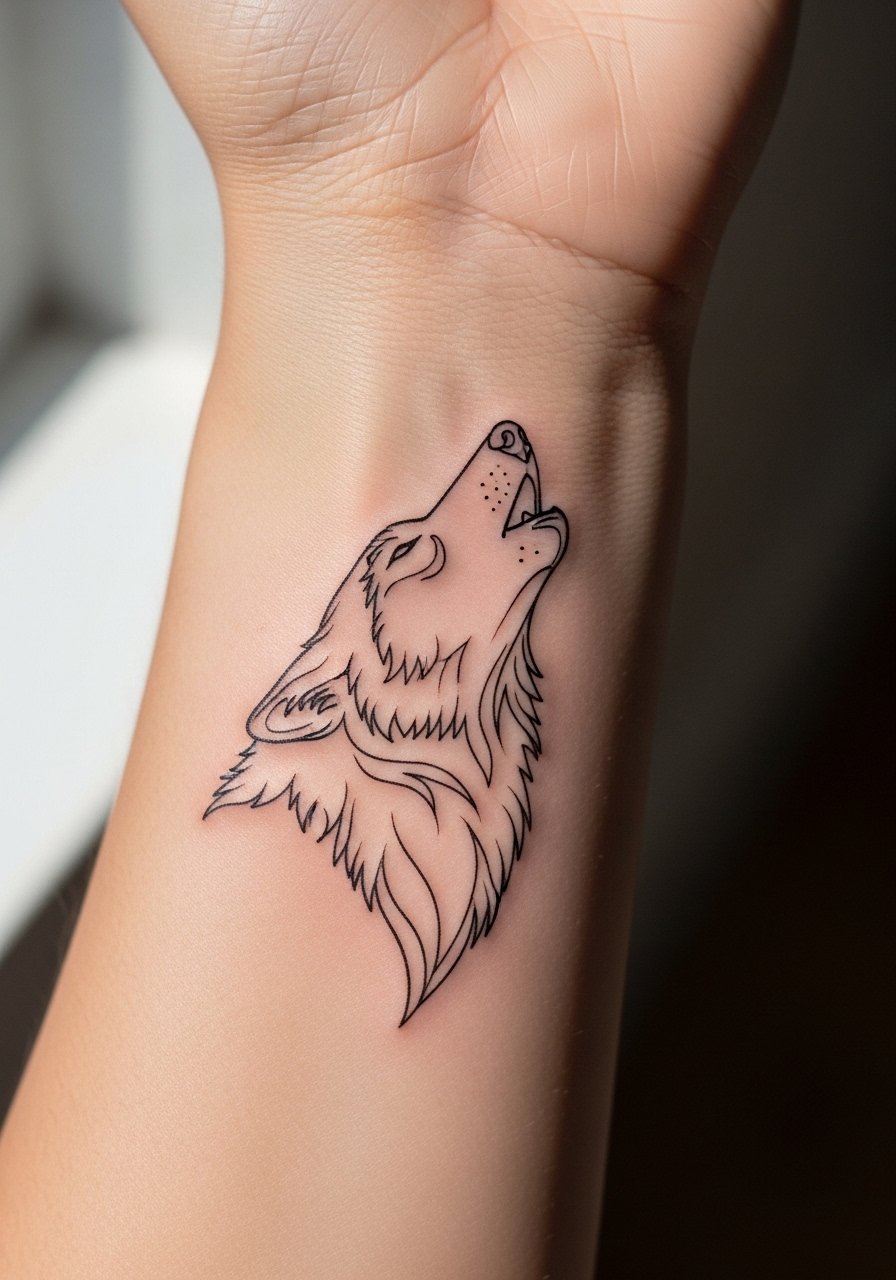
Wrist placements are visible but age faster from sun and friction. Fine line works on wrists if you make the outline slightly larger than you'd first imagine. One session can do a small 2-4 inch piece. Controversy appears here because one camp says fine line blurs on hands within a year. The other camp argues that with proper needle depth and spacing the lines hold. Ask the artist where they stand and expect touch-ups every two years for maintained crispness. Keep sunscreen on the area to reduce fading.
10. Native-inspired black wolf rider scene on the thigh
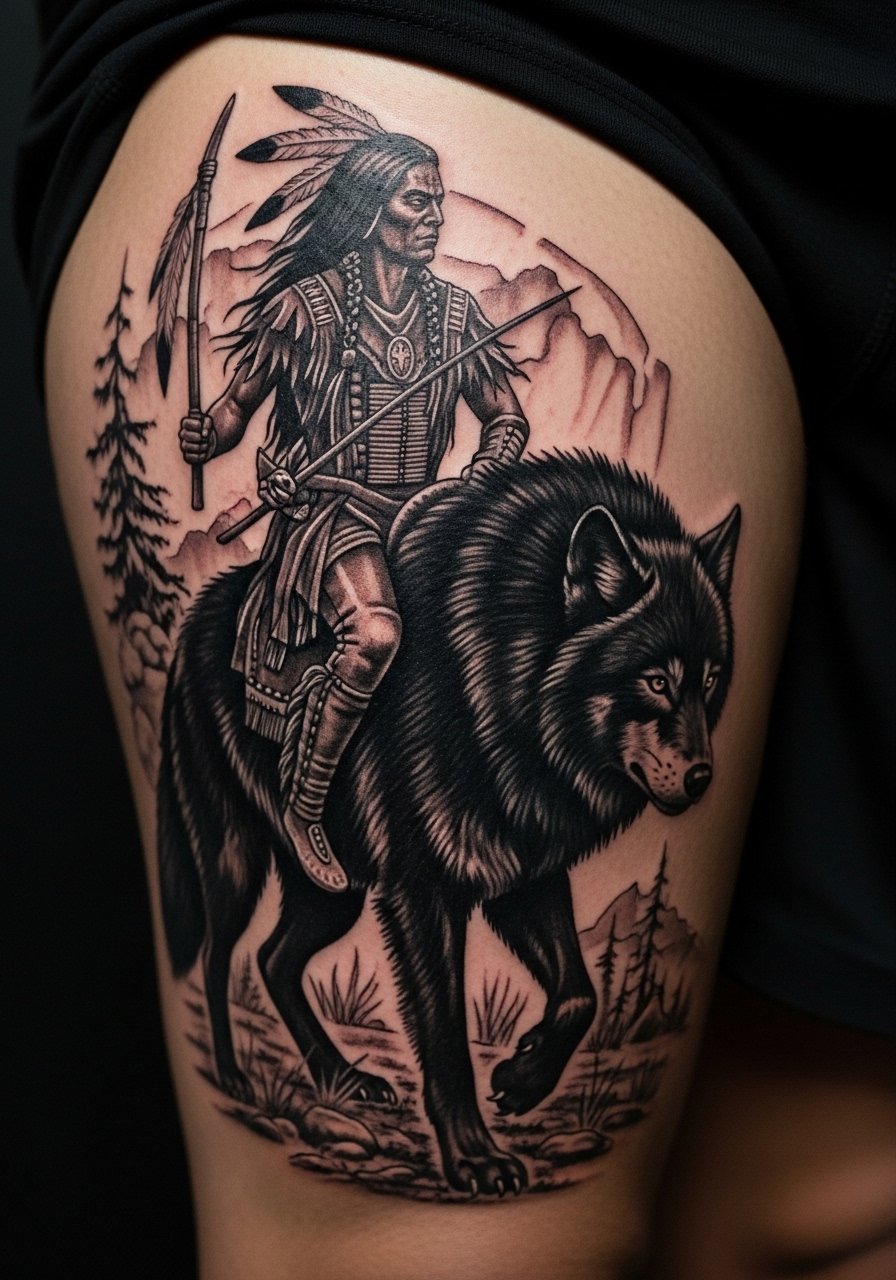
Thighs take large narratives well and are comfortable during long sessions. For culturally rooted imagery be explicit about respectful motifs and avoid direct replication of ceremonial art. This placement is stable against stretch, but large pieces may need six plus sessions. A common mistake is overcomplicating the story with small unreadable figures. At six months the shades settle, at two years expect consistent grayscale performance and targeted touch-ups where contrast fades. Plan consults that discuss composition from standing and seated views.
11. Patchwork wolf elements with birth flowers on the forearm

Patchwork forearms are perfect if you want to build a sleeve over years. Start with a modular wolf head panel and reserve space for floral inserts. Tell your artist to design negative space seams so new pieces slot in later. A mistake is committing to a single scale now that prevents later additions. At two years the patchwork holds if spacing is respected and touch-ups every few years keep petal colors vibrant. This approach suits collectors who want to add pieces over time.
12. Ignorant style blocky wolf face on the chest
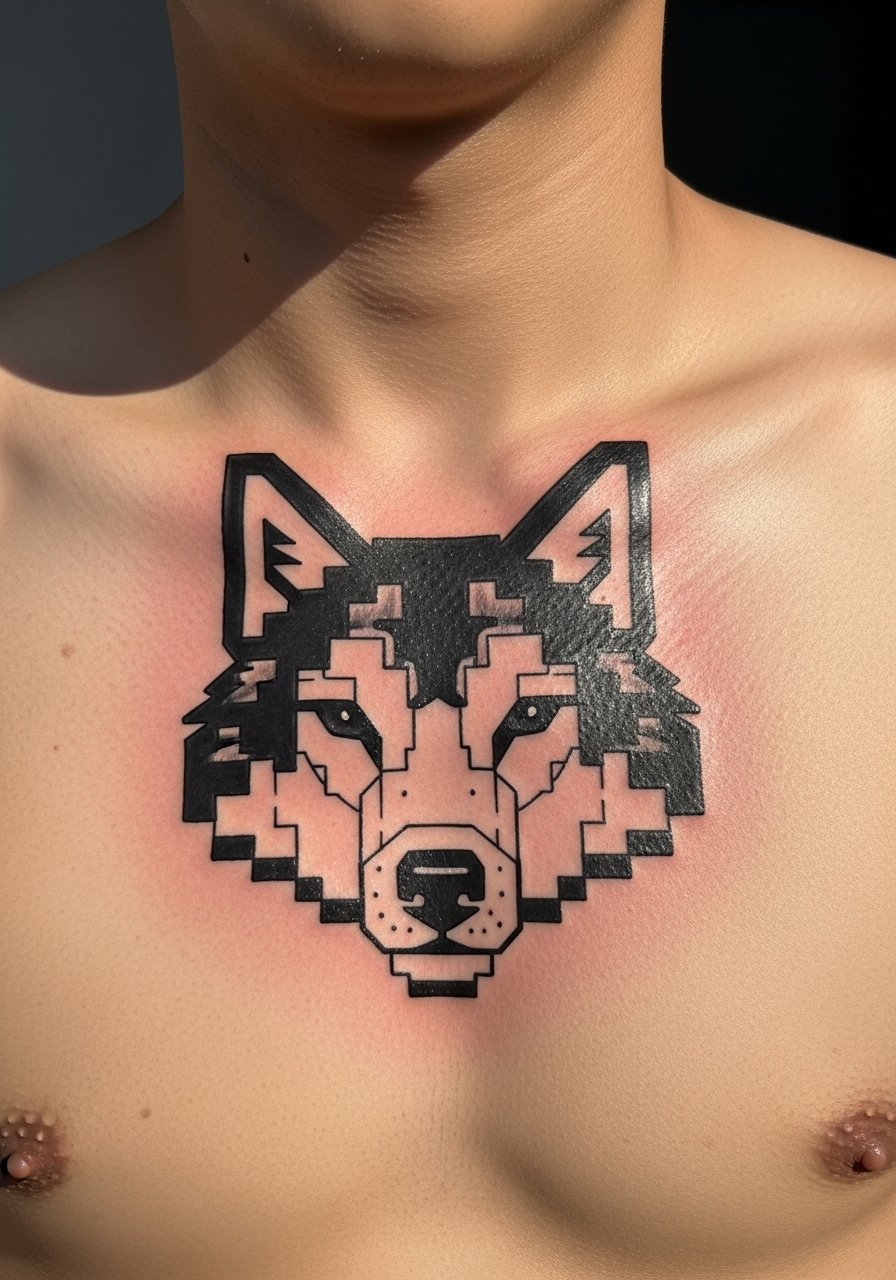
Ignorant style benefits men who want bold shapes that age predictably in sun-exposed areas. Chunky black blocks resist blur and keep form from a distance. Ask for deliberate block sizes and minimal micro-detail. One or two sessions usually complete a 5-inch chest piece. A common error is mixing tiny accents that do not translate into the ignorant aesthetic. At two years the blocks remain legible and rarely need touch-ups unless sun damage occurs. This style pairs well with larger chest compositions.
13. Watercolor wolf splash with pack on the calf
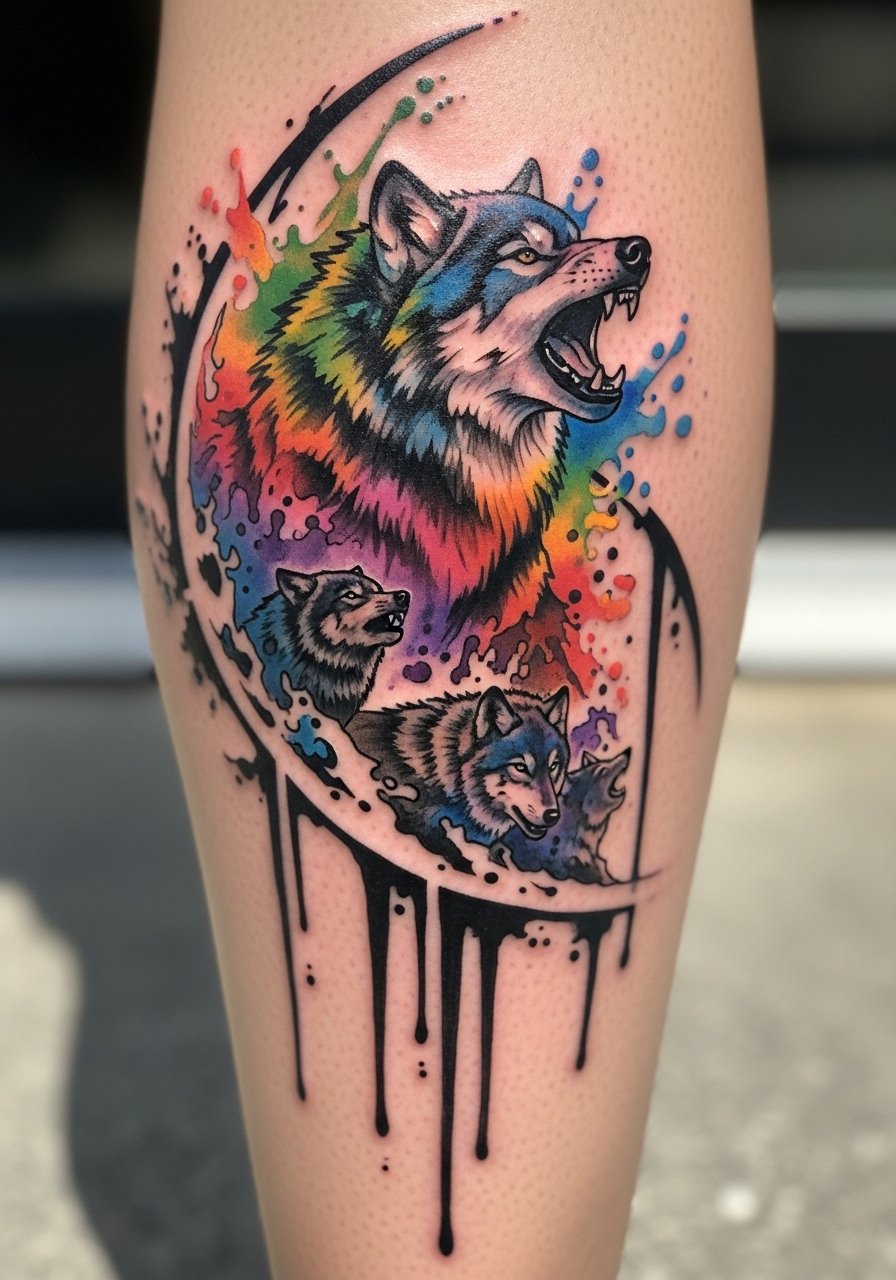
Watercolor effects show beautifully on calves and allow for artistic washes, but color longevity is the debate. One group objects because washes fade into muted tones. Another group says careful saturation and sun protection extend them. When you consult, ask about pigment choices and aftercare that limits UV exposure. This design suits clients who accept periodic color refreshes. Expect three sessions for layered washes and minor blending. If you prefer fewer touch-ups opt for black-and-gray accents under the watercolor to support definition.
14. Realistic wolf portrait on the back shoulder
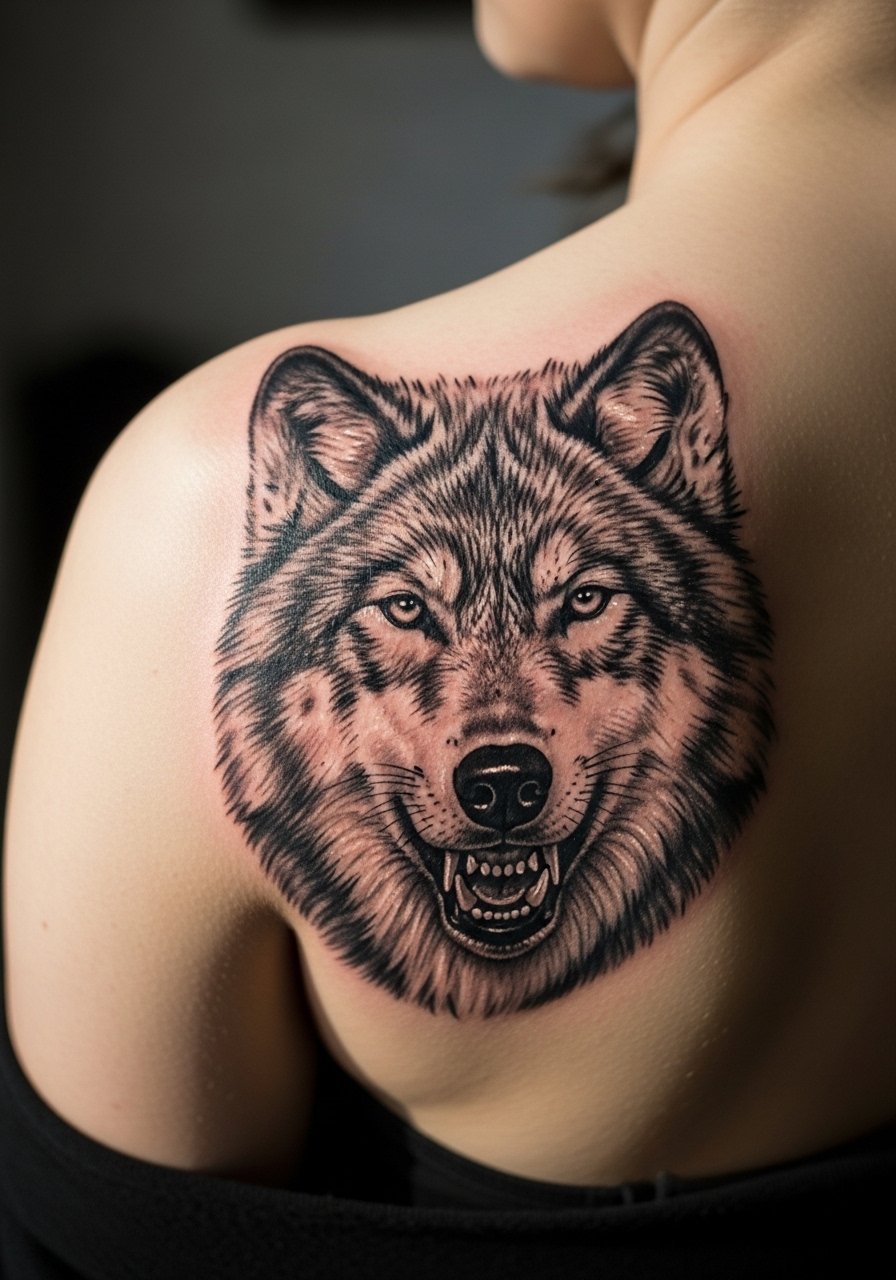
Back shoulders give artists room for a 6-8 inch realistic portrait and have moderate pain. For realism bring clear reference photos that show fur direction and eye reflections. A common mistake is asking for hyper-detail in too small a space. This style usually takes multiple sessions to build saturation and texture. At six months hair detail is visible, at two years contrast may soften and a touch-up can sharpen eyes and key highlights. This placement is easy to conceal and displays well in open shirts.
15. Minimalist geometric paw trail ankle wrap
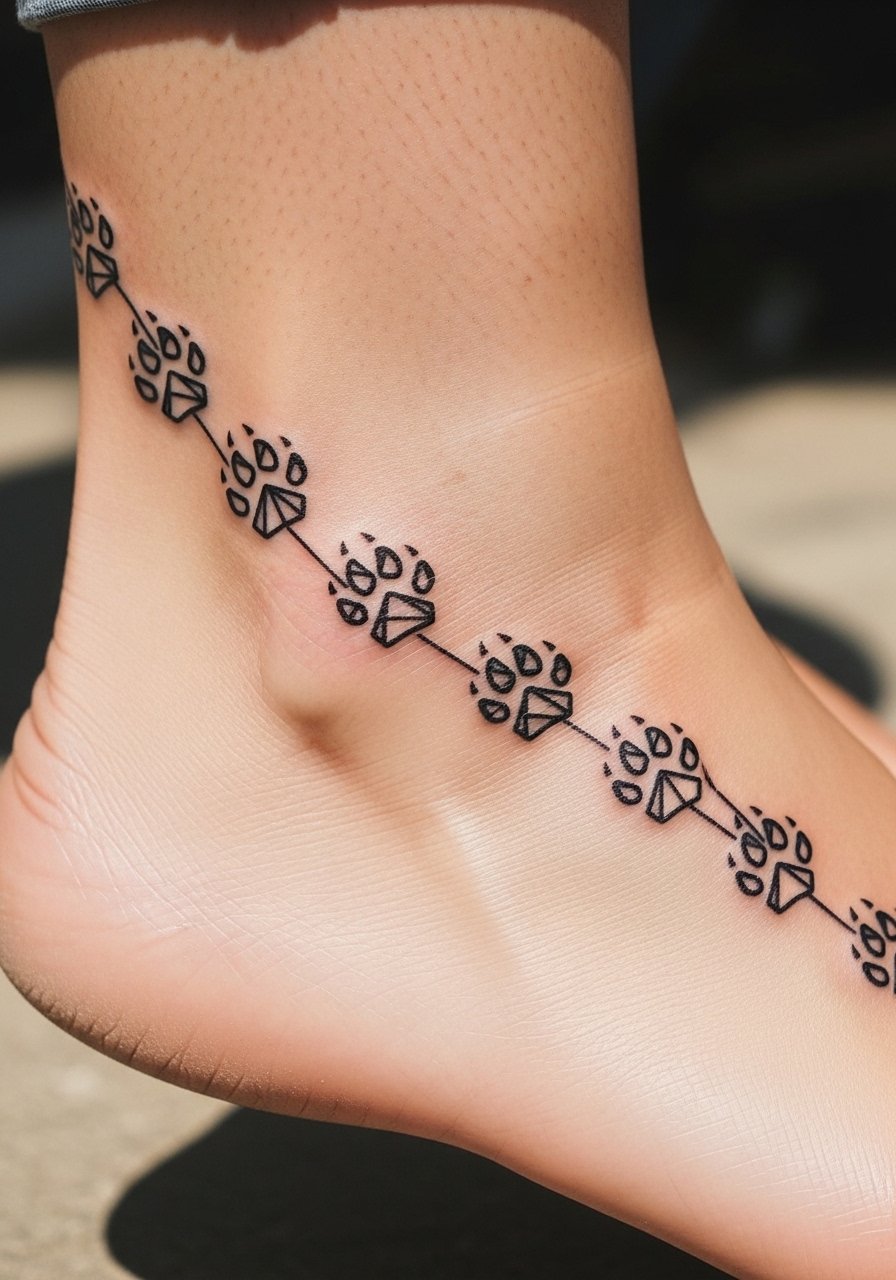
Ankle wraps are small and hit by constant wear and rubbing, so size and line thickness matter. Geometric paw trails require slightly bolder shapes than pure fine line. Ask for a negative-space buffer so the trail does not blur into the ankle crease. One session can complete this. People often pick too small a scale, which leads to loss of definition. Expect touch-ups earlier than forearm pieces because of friction and shoes. This design suits someone who wants subtle placement and modular future additions.
16. Stipple shading wolf eye on the inner bicep
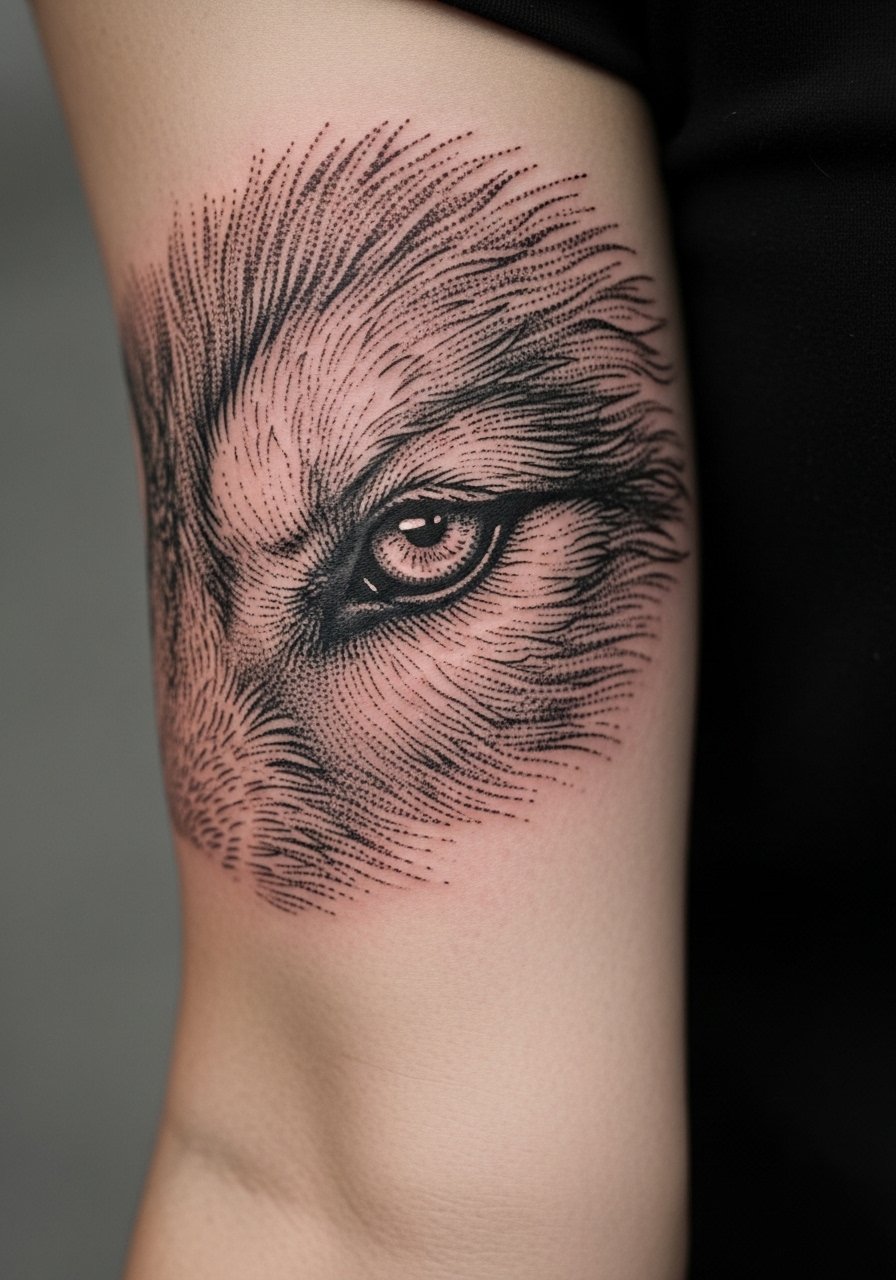
Inner bicep dot work offers control and less sun exposure than outer limbs. Request deliberate dot density maps for shadows and midtones so the stippling remains readable. A common error is asking for ultra-tight dot clusters in a small zone, which can merge into gray. Sessions vary but expect two for a richly stippled eye. At two years stipple holds differently than sweep shading and often looks good without major touch-ups. If you plan a sleeve later, discuss how stipple will sit beside whip or solid shading.
17. Forearm wolf bite with mandala backdrop
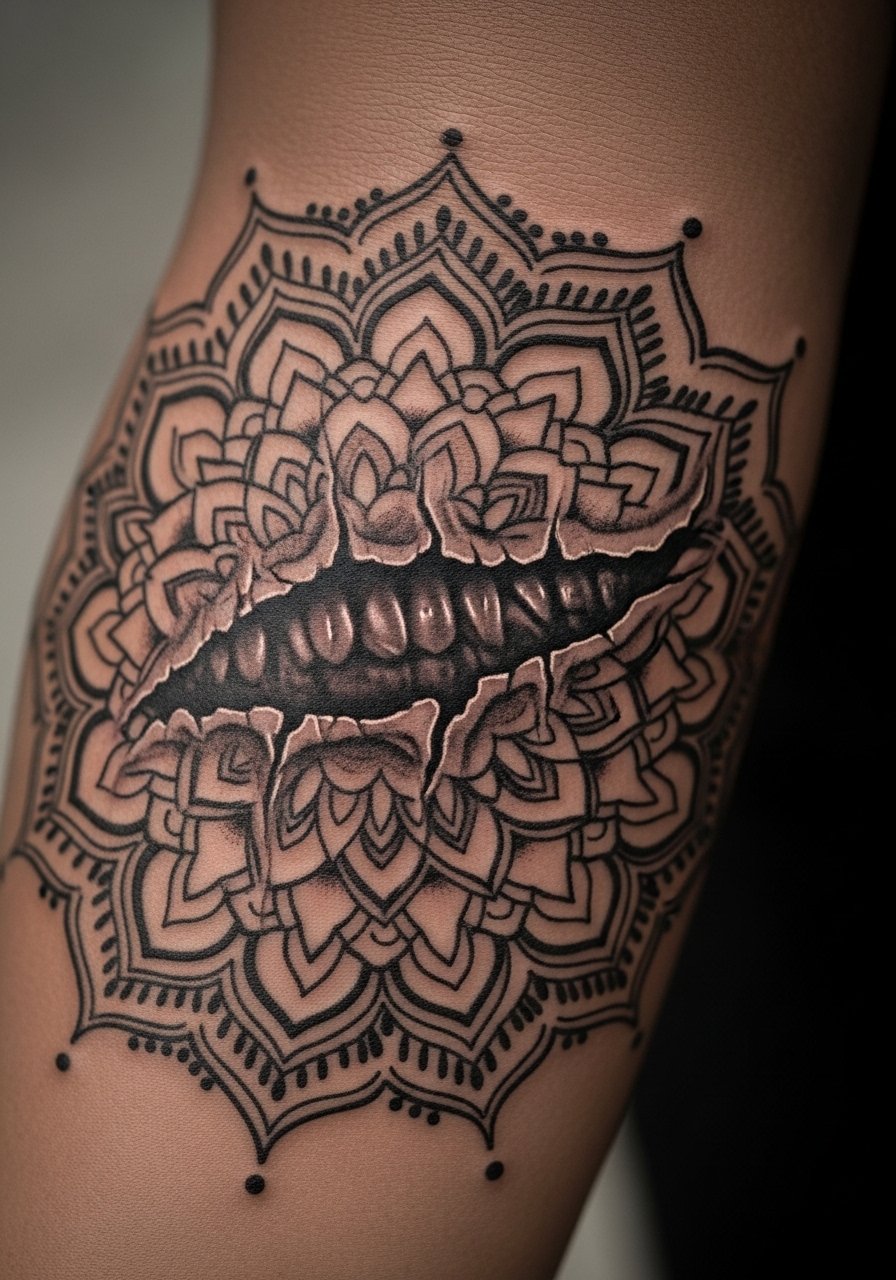
A forearm bite motif with mandala background reads strongly when the mandala frames the jaw line. For dark skin prioritize contrast by asking for thicker mandala spokes and deeper gray fills. One mistake is over-detailing the mandala with tiny dots. This design usually takes two to three sessions to balance focal intensity and ornamental fill. At six months the composition is clear and at two years the mandala spokes may need a touch-up to keep radial clarity. Discuss cultural origins of mandala elements with your artist.
18. Small wolf pawprints behind the ear
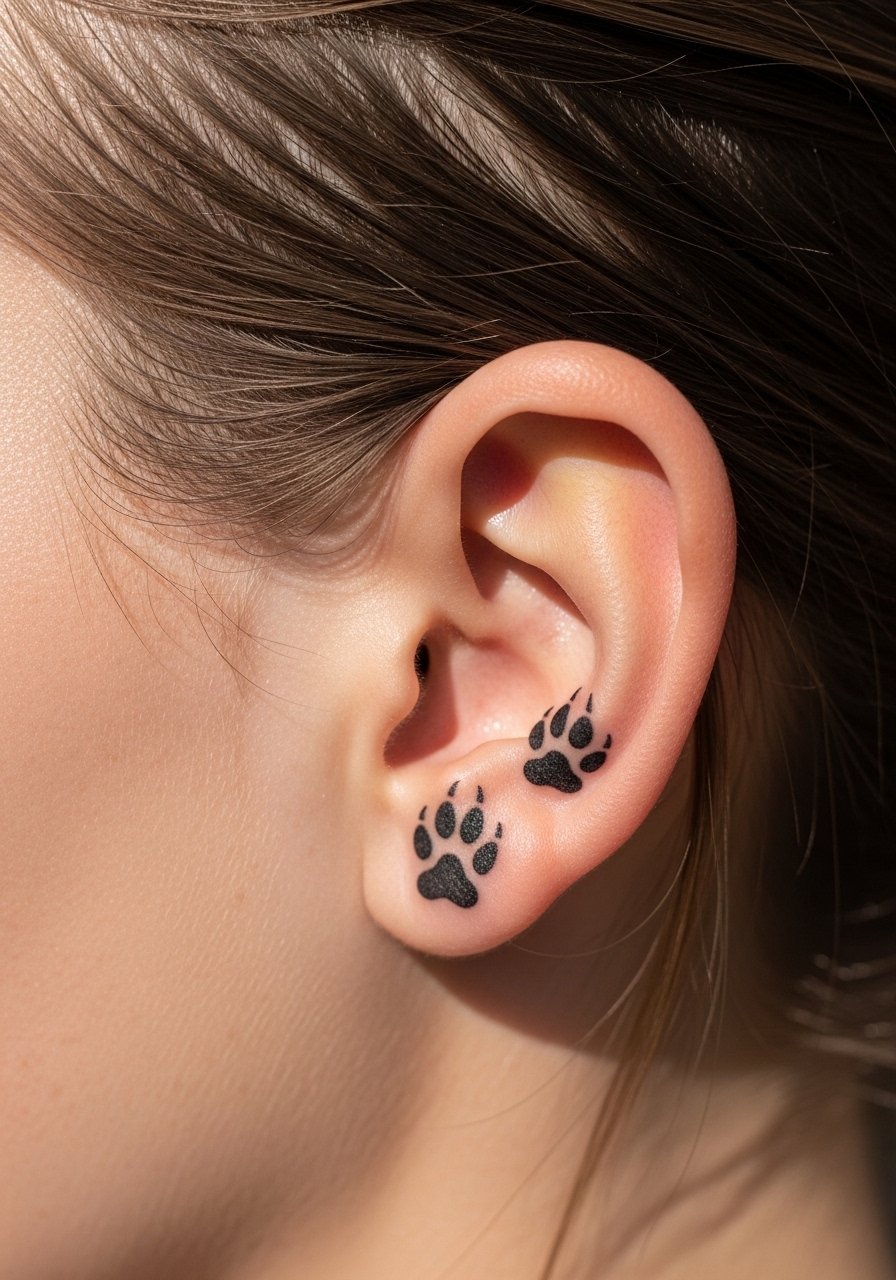
Behind the ear is very sensitive and hair growth can affect visibility. Small paw prints work if slightly larger than a coin and with enough spacing. One session usually completes two to three tiny prints. The common mistake is choosing too small a print that becomes indistinct as hair grows back and skin shifts. Expect faster fading from sun and shampoo, and consider touch-ups within one to two years. If you work in an industry where visible placements matter, note that behind-ear marks can be hidden by hair.
19. Celtic knot wolf sleeve connector on the calf to ankle
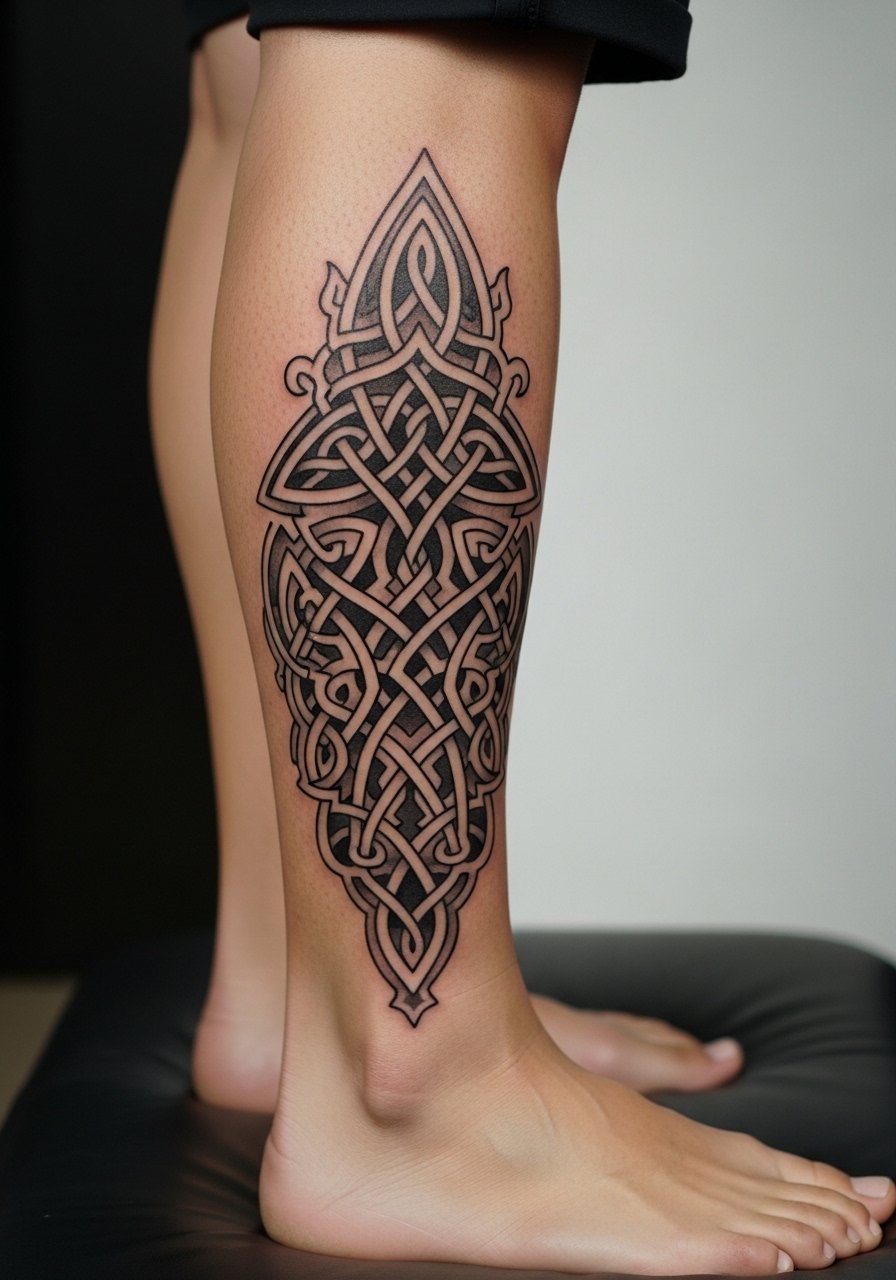
Connecting pieces between calf and ankle need composition that follows muscle contours. For Celtic knot connectors specify seam widths and knot spacing so the weave remains readable when you walk. This usually requires two to three sessions depending on size. A mistake is matching knot scales to chest pieces rather than limb proportions, which can look crowded. At two years the connector remains legible if negative space is preserved and touch-ups focus on junction edges. The calf is forgiving for future sleeve expansions.
20. Blackwork wolf silhouette across the sternum
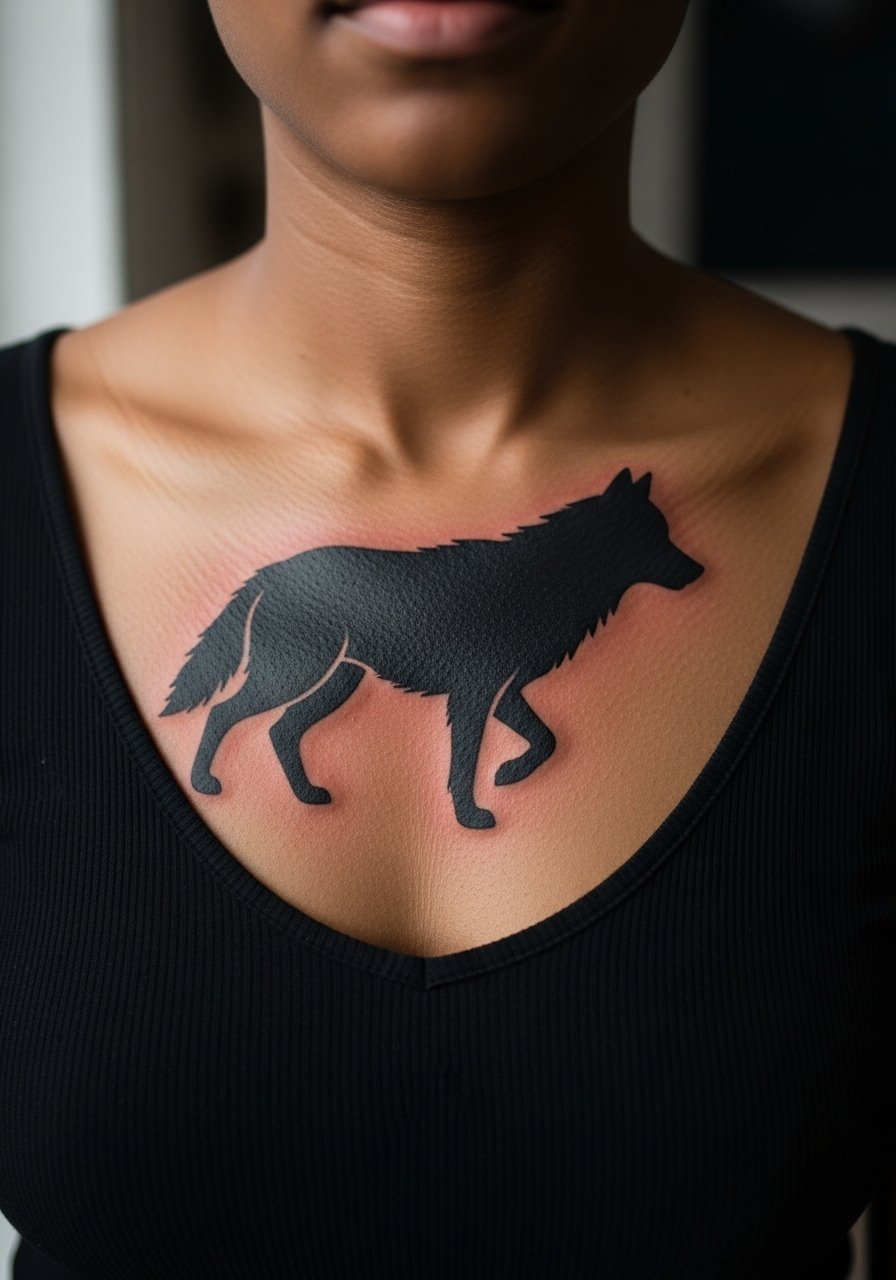
Sternum work hits a high-sensitivity area and people split on pain tolerance. Solid blackwork works well here because fills heal uniformly. Ask for a design that respects chest anatomy with curves that follow the sternum. A common mistake is choosing a complex interior texture that does not read in blackwork. Expect two sessions for a well-saturated piece. This location is visible in low shirts and has professional considerations for some careers. Discuss placement with your artist while standing.
21. Whip-shaded wolf muzzle on the calf
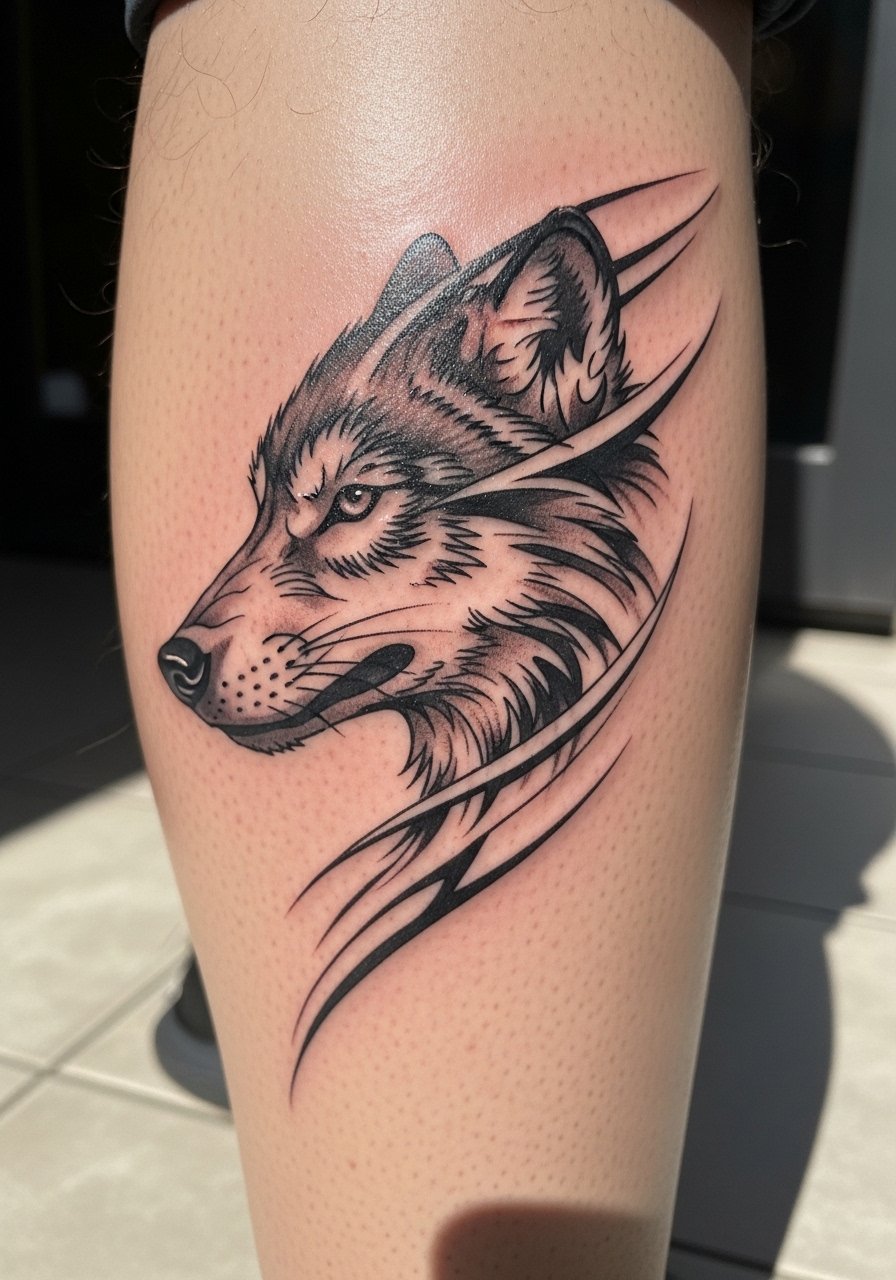
Whip shading creates motion and suits muscles like the calf. Request directional shading strokes that follow fur flow so the muzzle reads with suggested movement. People often ask for too many fine strokes that blur; instead ask for measured whip density. One to two sessions will achieve the look. At two years whip shading keeps texture well without needing aggressive touch-ups unless sun exposure is high. Calf placement is comfortable for healing and shows well on casual wear.
22. Small geometric wolf head on the inner ankle
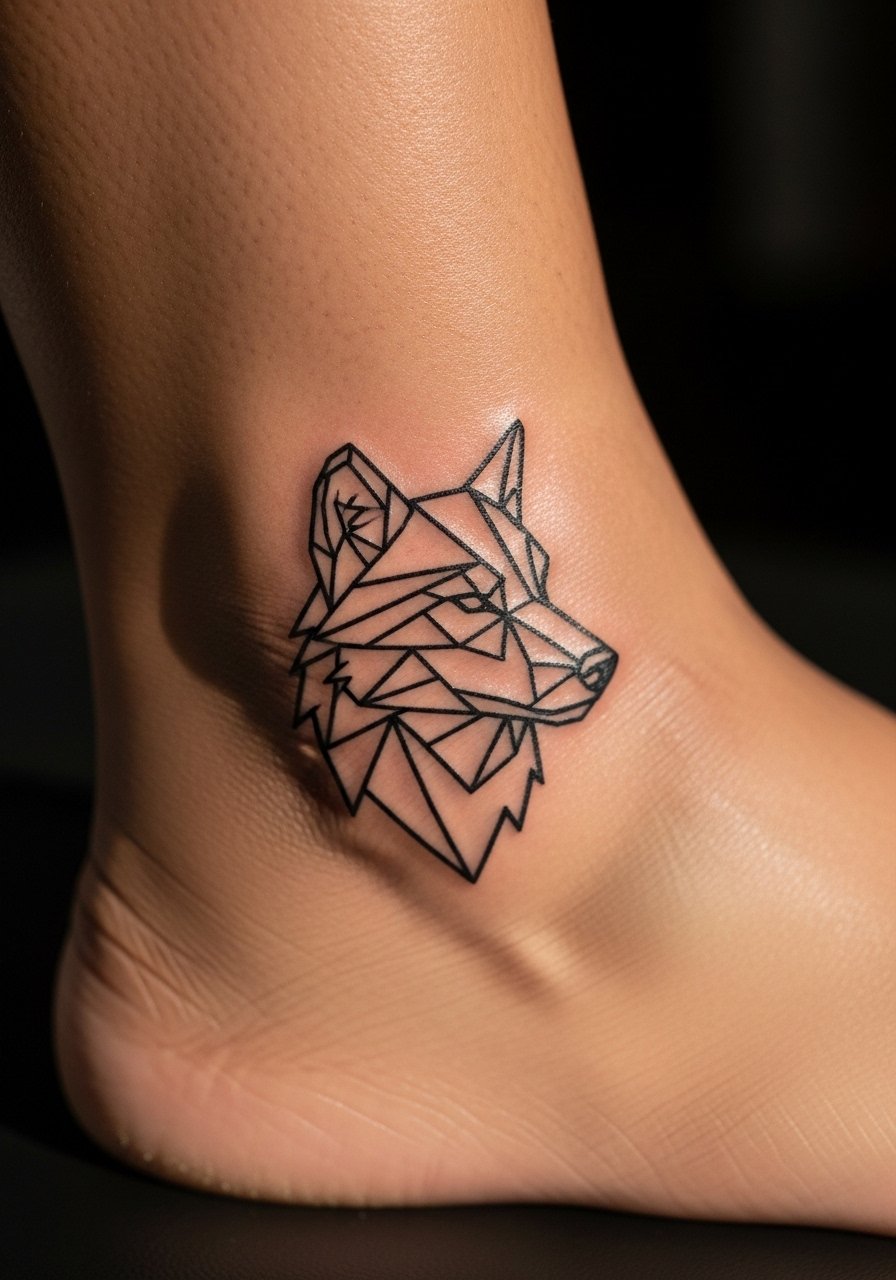
Inner ankle is sensitive and exposed to shoe friction, so pick slightly bolder linework for a geometric head. One session does small angular designs. The common error is making the geometry too intricate for the scale. Expect earlier touch-ups than forearm pieces because of constant wear. If you plan to add to a lower leg gallery later, ask your artist to orient the geometry so later panels align without forced rotation.
23. Realistic howling wolf across the upper back
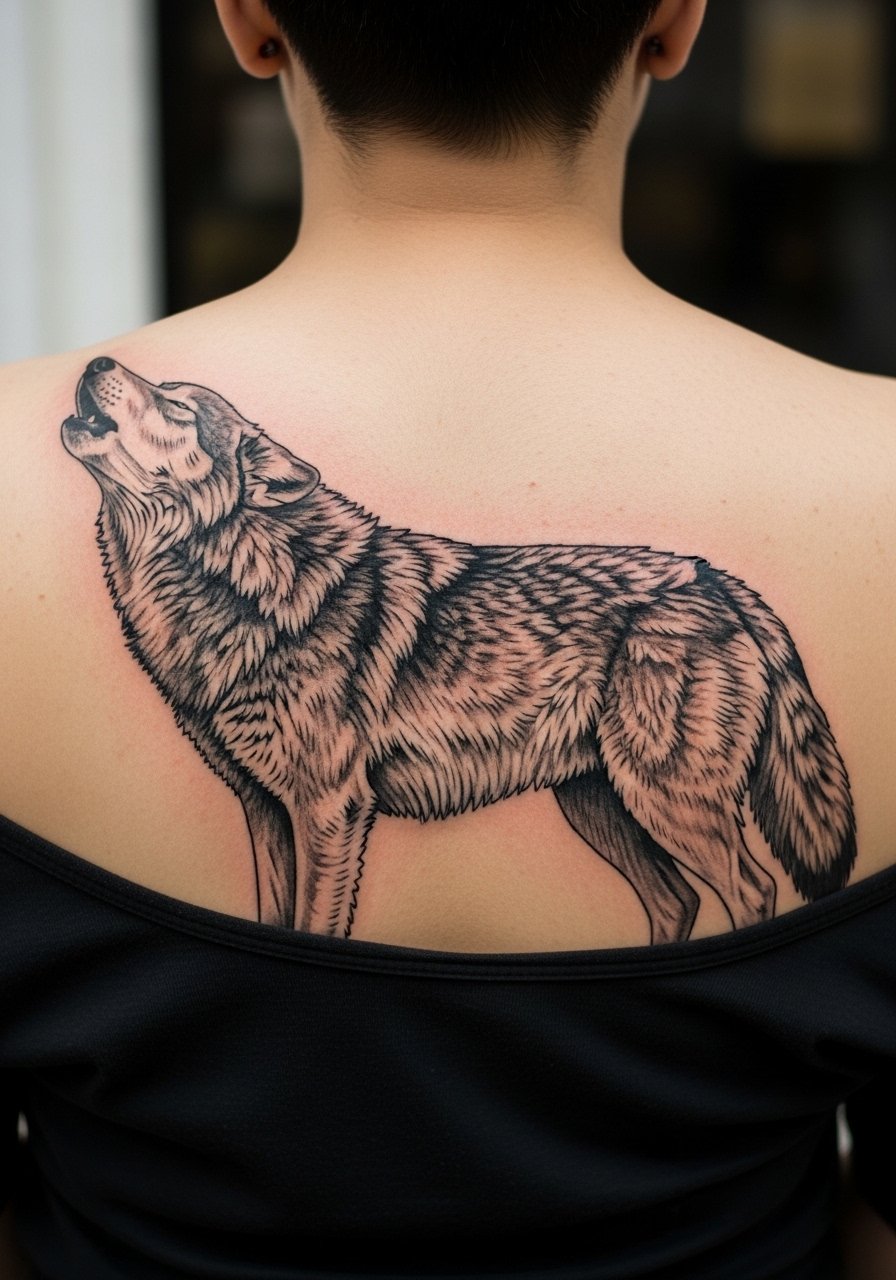
Upper back allows a wide composition with natural breathing room and lower distortion from weight fluctuation. For realism request focal contrast in the eyes and snout so the howl reads at a distance. Many people try to pack additional background elements that compete with the howl. Multiple sessions are standard and touch-ups two to four years later can refresh key highlights. This area is forgiving and displays well with open-back shirts or layered pieces.
24. Dot work wolf geometric mandala on the chest center
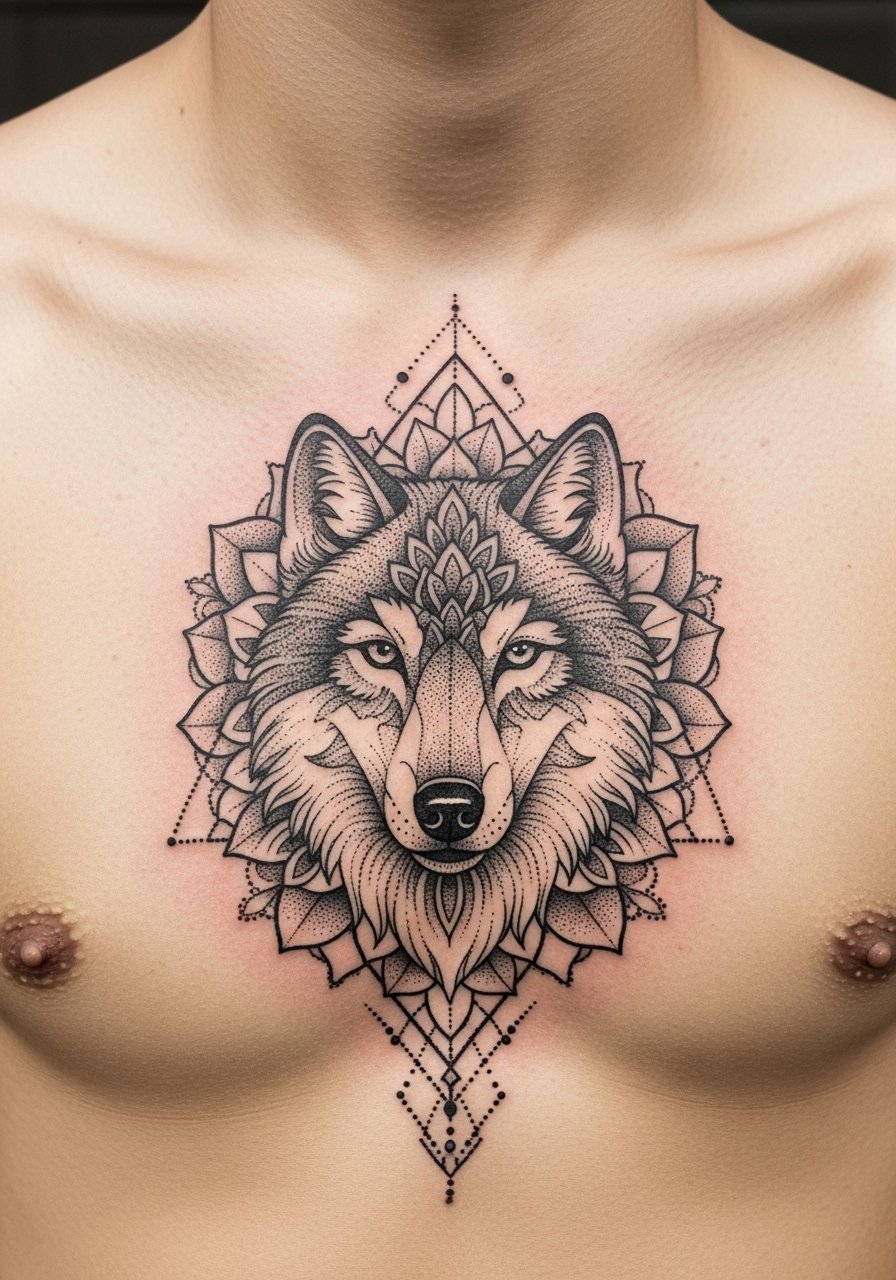
Chest center is ideal for radial mandala-dot compositions because it sits on the sternum axis. Request mapped dot density rather than random stippling for smooth gradients. A common mistake is too tight dot spacing which produces muddy midtones. Dot work takes patience and multiple passes for tonal control. At two years dot gradients often need minor reconditioning via touch-up to maintain crisp transitions. Note the cultural origins of mandala patterns and adapt respectfully in your references.
25. Hand-placed wolf paw with geometric symmetry on fingers
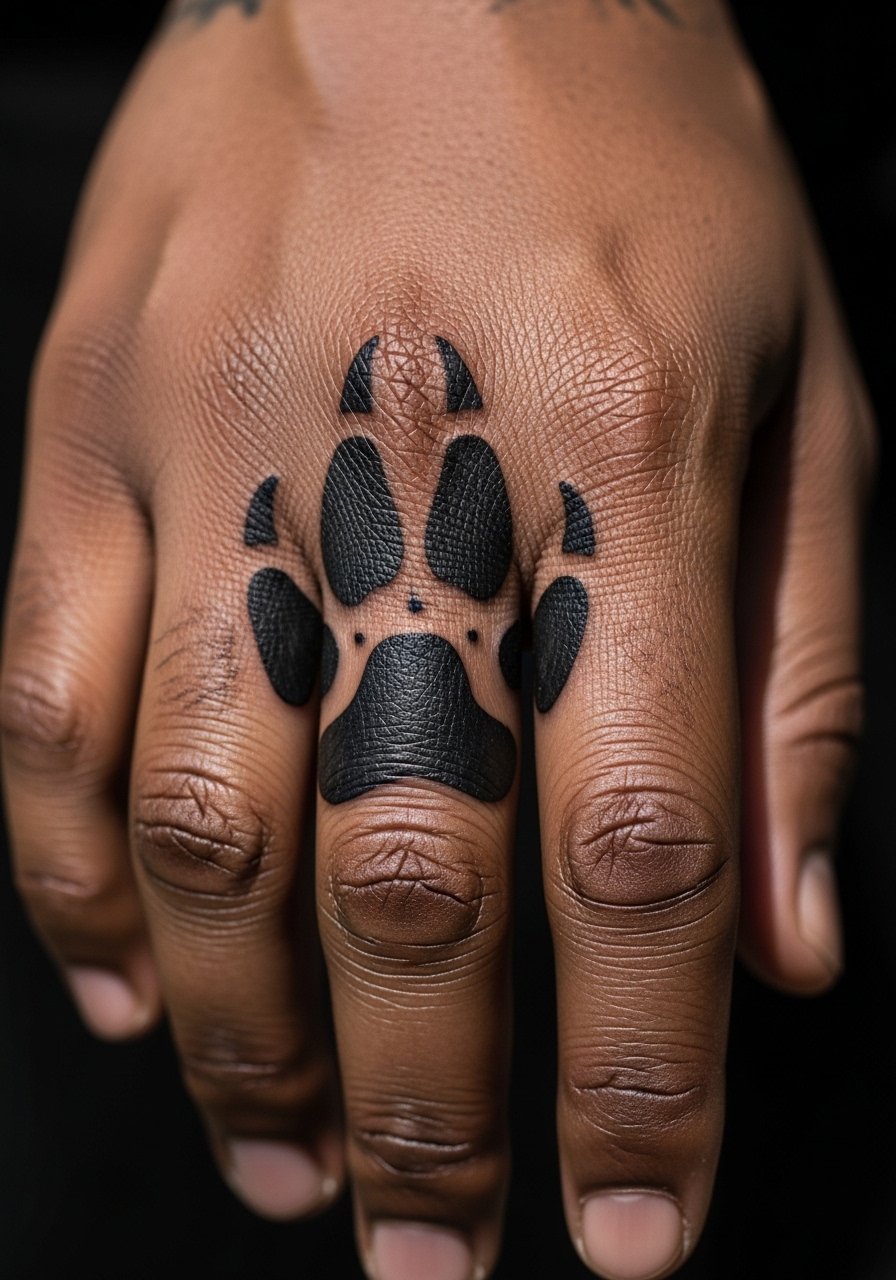
Finger and hand placements are the highest maintenance tattoos because of friction and washing. If you want paw marks across fingers ask for bolder geometric shapes and plan for frequent touch-ups. A common mistake is choosing fine detail that disappears quickly. Single sessions can do simple finger marks but expect to refresh annually. Hand tattoos can affect certain job prospects, so consider career implications. For long-term clarity pick chunky geometry and accept maintenance as part of the plan.
Tattoo Prep and Aftercare Essentials
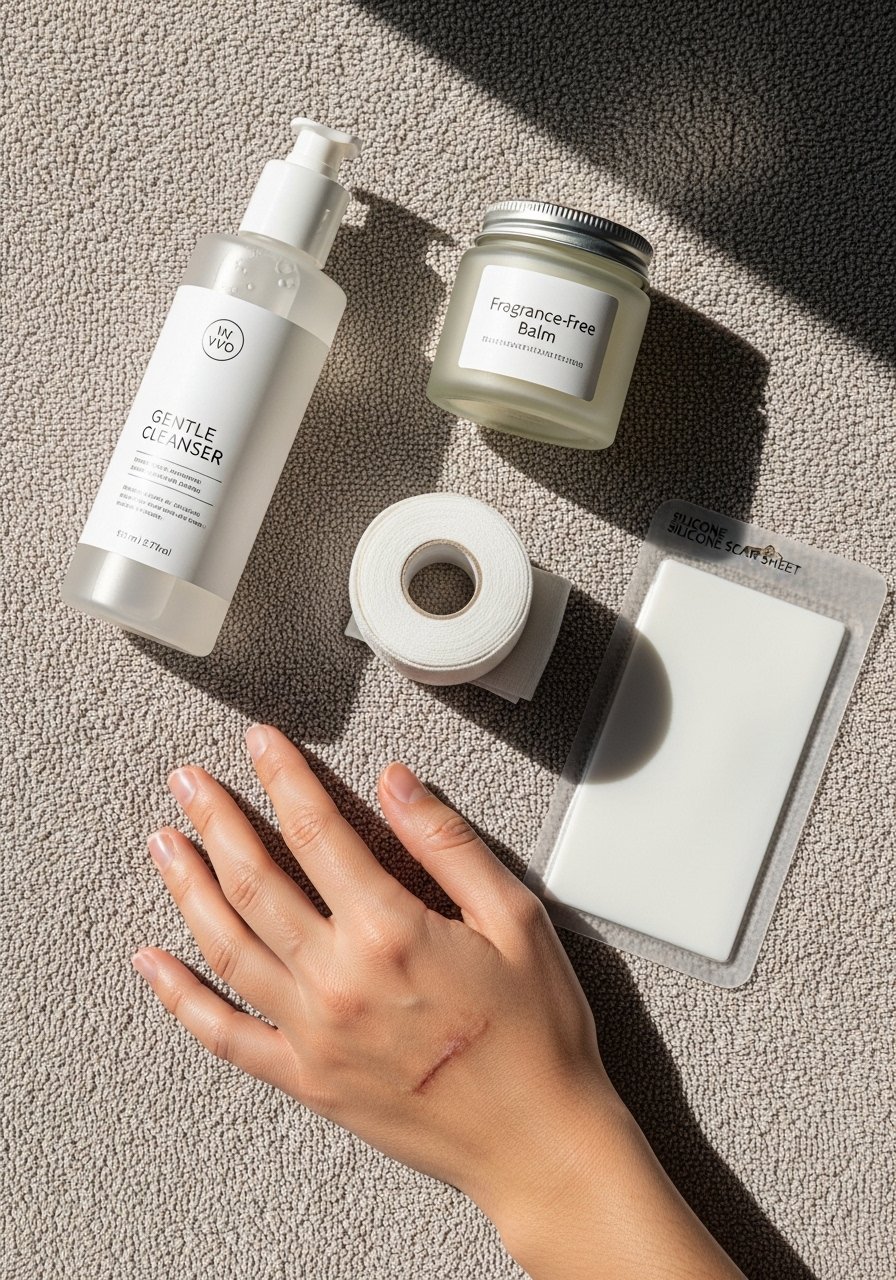
Fragrance-free gentle foaming cleanser for tattooed skin. Use in the first week to remove ointment residue without stripping pigment. Clean twice daily for the first five to seven days unless your artist advises otherwise.
Lightweight fragrance-free balm for finishing healing. A small amount after the first week keeps skin elastic and reduces scabbing that can pull on linework.
Medical-grade occlusive bandage, 6-inch roll. Useful for rubbing areas like ribs or calves during the first 24 hours.
Silicone scar-minimizing sheet, small pack. Apply after initial healing to reduce raised scarring that can blur fine details.
Lightweight SPF 50 mineral stick for small areas. UV protection is the single most important step to preserve saturation on exposed tattoos.
Soft, breathable clothing for the first week. Choose cotton or bamboo fabrics that will not rub against the new ink.
Long-term moisturizing lotion, fragrance-free. Use daily after full healing to maintain skin elasticity and color saturation.
Every tattoo is different. Always follow your artist's specific aftercare instructions. Consult a dermatologist if you have skin concerns or unusual healing issues.
Frequently Asked Questions
Q: Will fine line wolf tattoos blur if I get a full sleeve of small faces?
A: It depends on scale and placement. Fine line faces need spacing and slightly larger proportions on a sleeve so each face breathes. Artists differ on technique, so ask where they place needle depth and how often they recommend touch-ups. Expect touch-ups every two to four years for small fine line elements on high-friction areas.
Q: Do watercolor-style wolf packs need different aftercare than black-and-gray pieces?
A: In practice the basics are the same, but watercolor washes benefit from diligent sun protection because pigments used for washes tend to fade faster. Keep sunscreen on exposed areas after healing and consider a satin balm for the first months to preserve saturation. The shopping list above includes an SPF stick that is easy to apply to calves and forearms.
Q: How should I tell an artist I want a patchwork wolf sleeve to allow future additions?
A: Say you want modular panels with consistent negative-space margins and unified line weights so future modules slot in visually. Bring images of desired connectors and ask about session timelines for three to five smaller pieces rather than one massive block. That approach avoids the common mistake of scale mismatch.
Q: Are tribal wolf outlines better than fine line for darker skin tones?
A: From what I have seen, higher-contrast tribal outlines read longer on darker tones because thicker curve widths maintain separation as pigment settles. Fine line can hold if the artist intentionally increases primary line weight and plans for touch-ups. Discuss contrast strategy with someone experienced in darker skin work before booking.
Q: How often do geometric mandalas need touch-ups on ribcage placements?
A: Ribcage pieces may soften faster if you undergo significant weight change, but if the geometry is sized correctly you can expect a touch-up around year two to three. One camp argues ribs stretch and blur lines quickly. The other camp says precision and spacing prevent that. Ask your artist which approach they use.
Q: Can I get a wolf hand tattoo and keep it looking good long term?
A: Yes but plan for maintenance. Hands see constant washing and abrasion so choose chunky geometry or bold blackwork over tiny details. Expect annual refreshes and discuss placement with your artist to avoid high-friction zones on knuckles.
Q: If my artist cancels a multi-session wolf sleeve, what should I do to keep my timeline?
A: Consider booking a guest spot at a reputable studio via directories or searching city-tagged social posts to find available artists. Communicate your timeline clearly and ask about deposit transfer or scheduled make-up sessions. Multiple small bookings at experienced shops can keep momentum without sacrificing quality.