
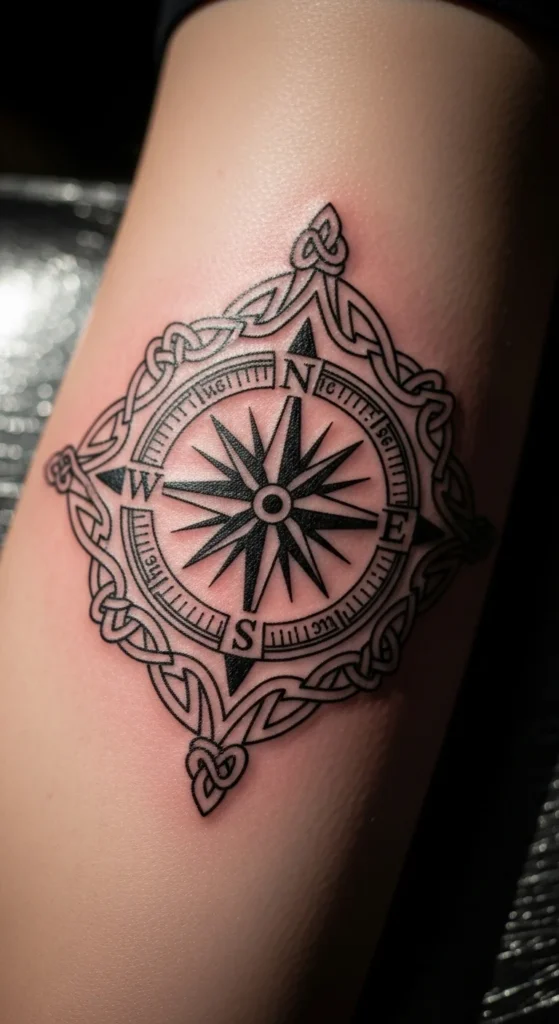
Irish compass tattoos speak to people who want to mark direction, purpose, and steady intention on their skin. When combined with Irish symbolism—like knotwork, shamrocks, or ancient patterns—the meaning becomes even more personal. This list offers practical, creative ideas you can use as inspiration, especially if you want something meaningful without overly complex details. Each style here lets you keep things simple, expressive, and achievable, even on a budget.
1. Celtic Knot Compass
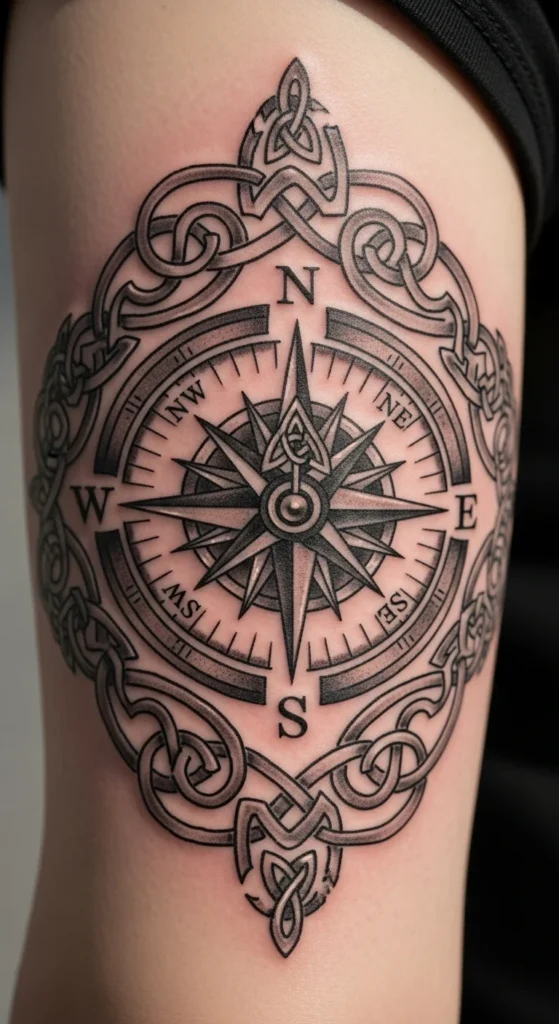
A Celtic knot compass is a strong choice when you want something symbolic without leaning into heavy shading. The knotwork gives you movement while the compass stays clean and readable. Keep the design small if you’re planning a wrist or ankle placement. It looks great in black ink, but you can add a hint of soft green to the intersections for subtle contrast.
This style works well for people who prefer geometric patterns that still feel personal. Ask your artist to keep the knot lines thick enough to age well. If you’re sketching ideas on your own, print a basic compass outline and overlay knot loops using a pencil. This keeps the design budget-friendly since your artist won’t need to rework everything from scratch.
You can also create a version with just partial knots around the top or bottom. This reduces visual weight while keeping the Irish influence. If you’re new to tattoos, placing it on the forearm gives more room and prevents the lines from compressing. Long term, this layout offers clarity and direction without looking crowded.
2. Compass With Shamrock Center
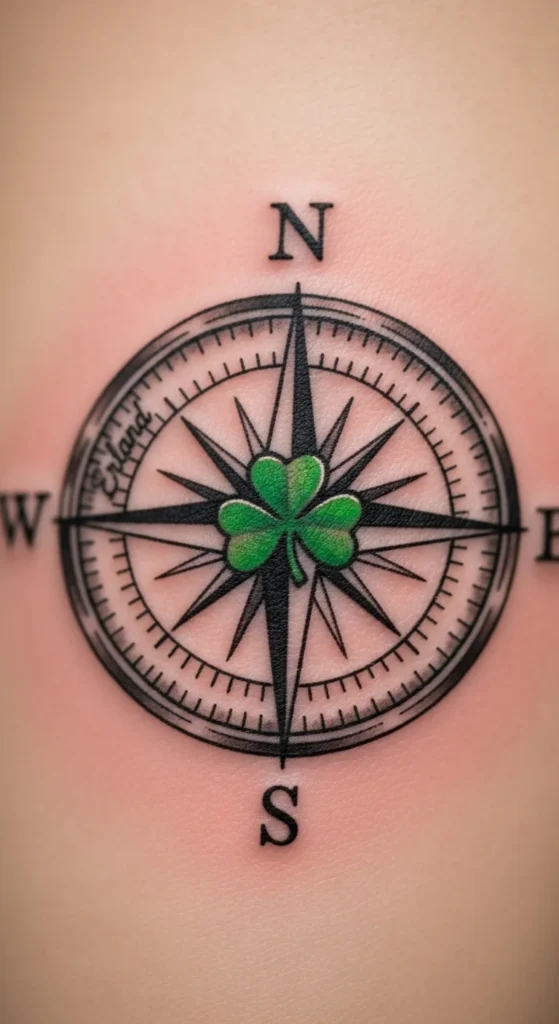
A compass with a shamrock center adds a simple touch of Irish identity without overwhelming the main symbol. The shamrock replaces the usual dot or circle in the middle, giving the tattoo a soft focal point. Many people like this choice because it keeps the compass recognizable while adding a meaningful detail tied to heritage or personal luck.
You can keep the rest of the compass minimal. Thin lines and light shading help the shamrock stand out more. This is an easy style for smaller placements like the inner wrist, collarbone, or near the ankle. If you’re designing at home, sketch the shamrock first, then place the compass lines around it. This helps you balance proportions so the center doesn’t look oversized.
Adding green ink is optional, but even a tiny bit creates contrast. If you want to stay monochrome, ask your artist to shade the shamrock with dotwork instead. This keeps costs lower and gives the tattoo nice texture. People who choose this design often want something that feels grounding while staying soft, symbolic, and easy to personalize.
3. Old-World Map Compass
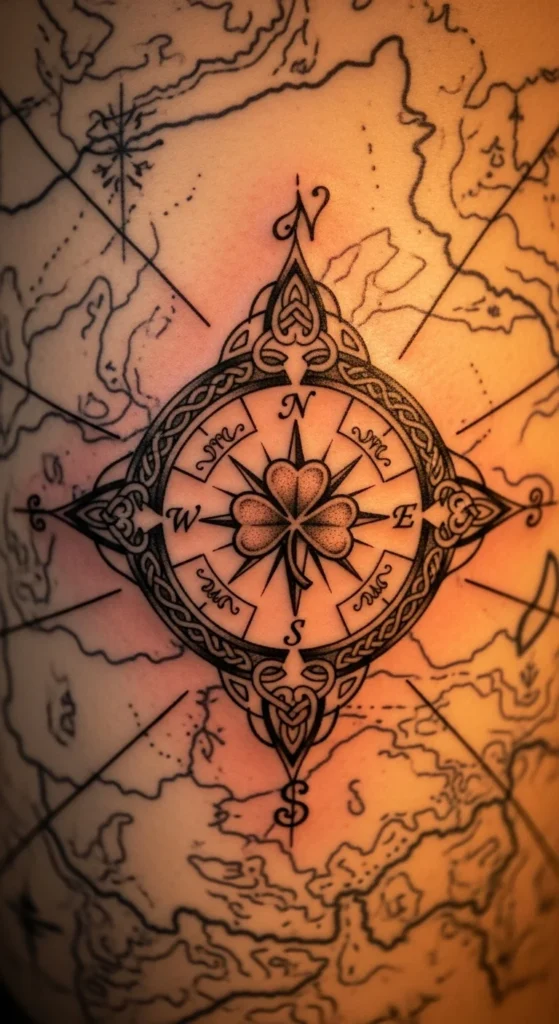
An old-world map compass works well for people who connect direction with travel or heritage. The map lines don’t have to be elaborate. Light contour lines behind the compass give the look without requiring a full background. This keeps your appointment time shorter and more affordable.
Many choose to include faint outlines of Ireland tucked behind the compass. It doesn’t need to be a full map—just a gentle suggestion of shape. You can also add small dotted paths leading into the center point, symbolizing choices or journeys taken. When sketching this yourself, start with the compass because it’s the anchor. Then layer in map lines with a soft pencil so you can erase freely.
This style works well on the shoulder or upper arm because it provides room for gentle curve lines. Keep shading light so the compass stays dominant. People often choose this because it reflects both direction and heritage without feeling heavy or dark. If you want to personalize it even more, add a single star or dot marking a meaningful location.
4. Minimal Line Compass
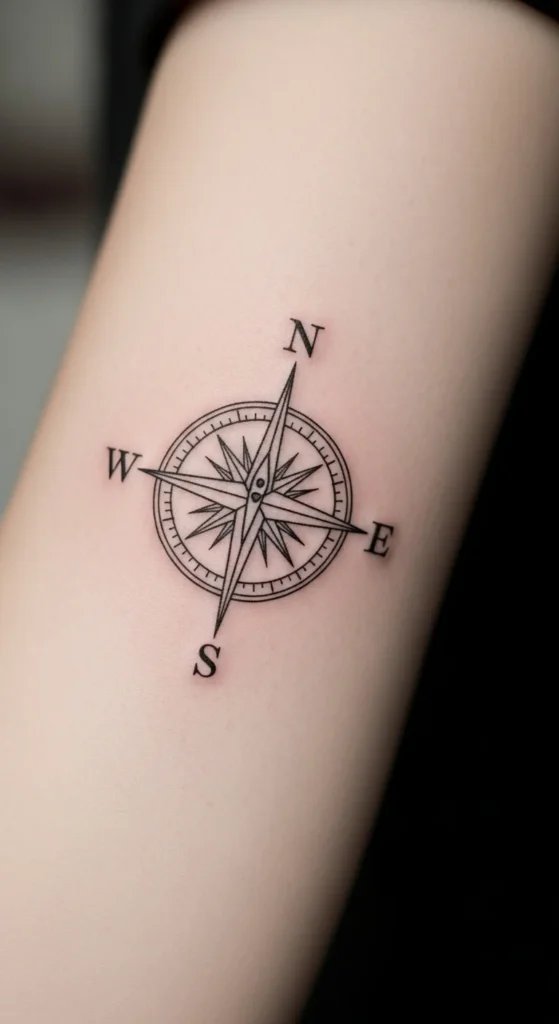
A minimal line compass is perfect if you enjoy simple tattoos with crisp structure. This design relies on precision instead of large decorative elements. The lines are thin, clean, and spaced enough to remain visible over time. Many people choose this because it matches a minimal lifestyle or pairs well with existing tattoos.
You can incorporate Irish influence by adding a tiny knot or clover near one of the points. It doesn’t need to be centered; even a small accent still ties the theme together. If you’re working on ideas at home, grab a ruler and lightly sketch the compass axes first. This keeps spacing even so the design doesn’t tilt.
Budget-wise, minimal linework is one of the easiest styles to tattoo. Appointments are shorter, and touch-ups stay simple. This design works great for inner arm placements because the skin stays smoother and the lines hold shape longer. If you prefer something smaller, consider a two-inch version near the wrist for a subtle reminder of direction.
5. Compass With Irish Script
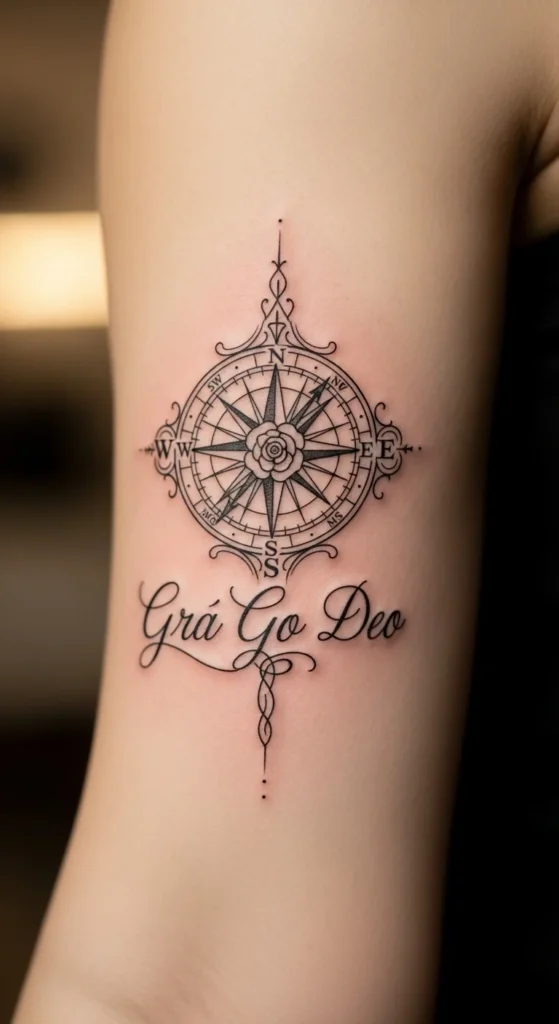
Pairing a compass with Irish script adds a personal phrase without overwhelming the design. Many choose short words or names written in a flowing hand. The key is keeping the script tight so it doesn’t compete with the compass. A curved layout that follows the bottom arc works best.
If you’re exploring ideas, try writing your phrase in several handwriting styles first. This helps you see what feels natural before committing. Keep the script thin; thicker lettering can make the design feel heavy. The compass remains the main element, while the text gives emotional meaning or a nod to family roots.
This style works beautifully on the forearm or ribs where the curve of the body supports the shape. It also stays budget-friendly because the artist only needs to draw clean lines instead of detailed shading. Choose a placement that won’t stretch much over time so the script stays clear.
Short, simple words often look best. If you want something even quieter, tuck the script behind the compass slightly so it feels woven into the design.
6. Compass With Celtic Triskele
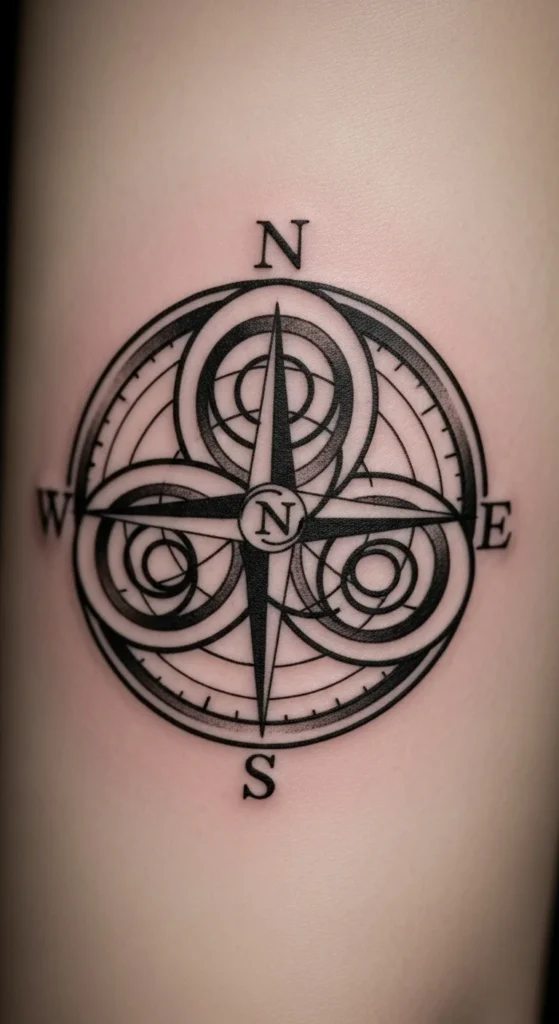
A compass with a Celtic triskele adds movement and history. The triskele’s flowing curves contrast nicely with the compass points, creating balance between structure and motion. Many people choose it because it feels symbolic without requiring complex shading.
Start with the triskele on the outer ring, not the center. This keeps the compass easy to read. If you’re sketching it yourself, use simple spiral shapes first, then adjust the curves to fit the ring. Keeping the spirals slightly separated prevents the tattoo from becoming visually crowded.
The design looks great on the upper arm because you get enough room for the curves. If you want something smaller, reduce the compass size but keep the spirals open. Too much compression can blur over time. This style stays budget-friendly since it relies on linework rather than layered shading.
People often choose this combination to express movement, growth, and personal direction. If you want to add a touch of color, place a very faint green gradient behind the triskele to keep attention on the center compass.
7. Irish Stone Compass
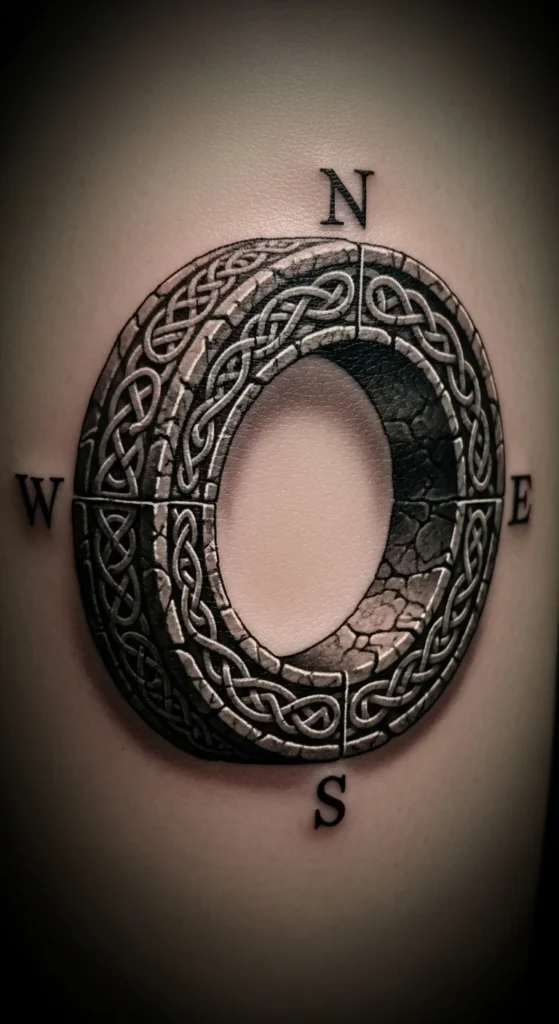
Stone-inspired Irish compasses create a rugged feel without requiring heavy lines. The texture comes from gentle shading that mimics carved stone patterns. Artists often use dotwork to keep the tattoo soft and organic. If you’re designing at home, try shading with a pencil using tiny taps instead of long strokes.
This style works well for people who appreciate old monuments or Irish stone carvings. The compass can remain simple while the outer ring carries the texture. Keeping the shading light prevents the tattoo from becoming too dark.
It looks great on the shoulder or upper back where you get enough surface area for the stone effect. You can personalize it by adding small cracks or etched knot patterns around the ring. These details stay subtle and still match the theme of direction and heritage.
If you want to save time and cost, keep the stone effect only on half the ring. This creates contrast while reducing the amount of shading your artist needs to complete. Many choose this style because it feels grounded and symbolic without leaning into complex artwork.
8. Compass With Harp Accent
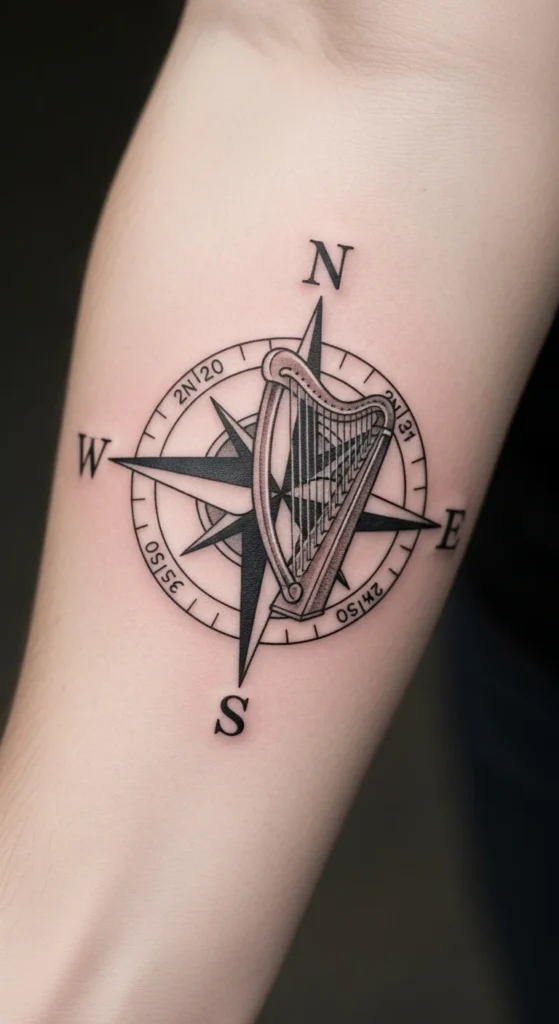
Adding an Irish harp accent gives the compass a quiet reference to heritage. You don’t need a detailed harp—just a small outline easily recognizable by shape. Placing it on one point of the compass makes the design feel personal without distracting from the main structure.
If you’re sketching ideas, start with a tiny harp silhouette. Then place the compass around it so you can balance spacing. Avoid making the harp too elaborate, since fine lines can blur over time. Keeping it minimal helps the tattoo age cleanly.
This style works nicely on the forearm or calf because the shape stays readable at different angles. You can pair it with a thin border circle or leave it open for an airy feel. Many choose this idea for its subtlety. It feels meaningful without being bold or loud.
For a budget-friendly addition, ask your artist to use linework only. No shading keeps the tattoo affordable and crisp. People drawn to music also enjoy this variation because it mixes direction with artistic identity.
9. Compass With Knot Border
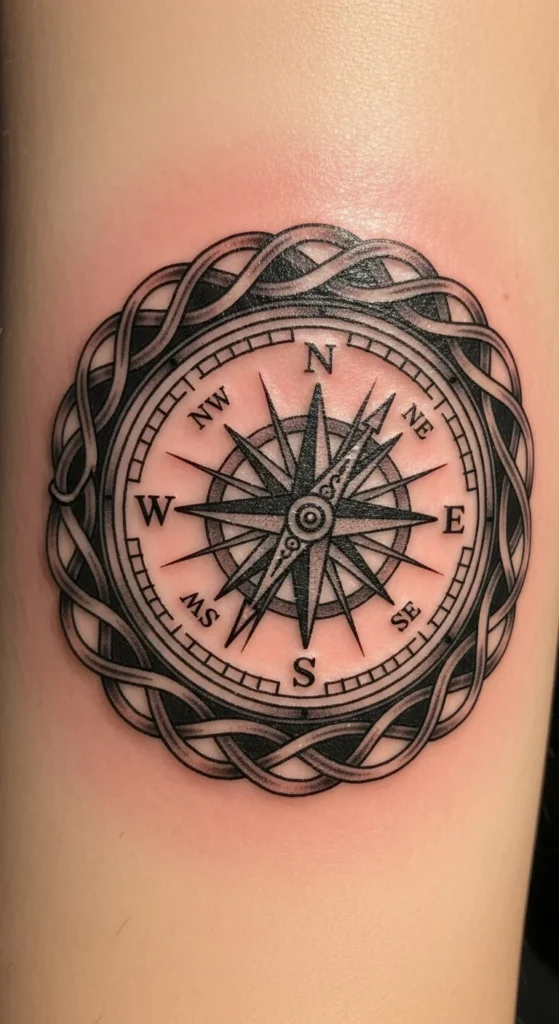
A knot border transforms a simple compass into something bold yet structured. The knots wrap around the outer circle, giving the design a unified frame. This helps the compass feel more complete while maintaining an Irish influence.
Sketching this at home is simple: draw the compass, then add looping knot segments around the edge. You don’t have to make every knot identical. Small variations add personality without affecting the overall effect. Keep the knots thicker than the compass lines so they read clearly.
This style works best on areas with more flat space, such as the thigh, upper arm, or back of the shoulder. The larger surface helps keep the knot loops clean. If you want something smaller, reduce the knot details instead of shrinking everything evenly.
Linework-only versions stay affordable and clean. Many people choose this because it balances structure and movement. You can personalize the border by adding small shapes—tiny clovers, spirals, or dots—between knot sections.
10. North-Only Compass
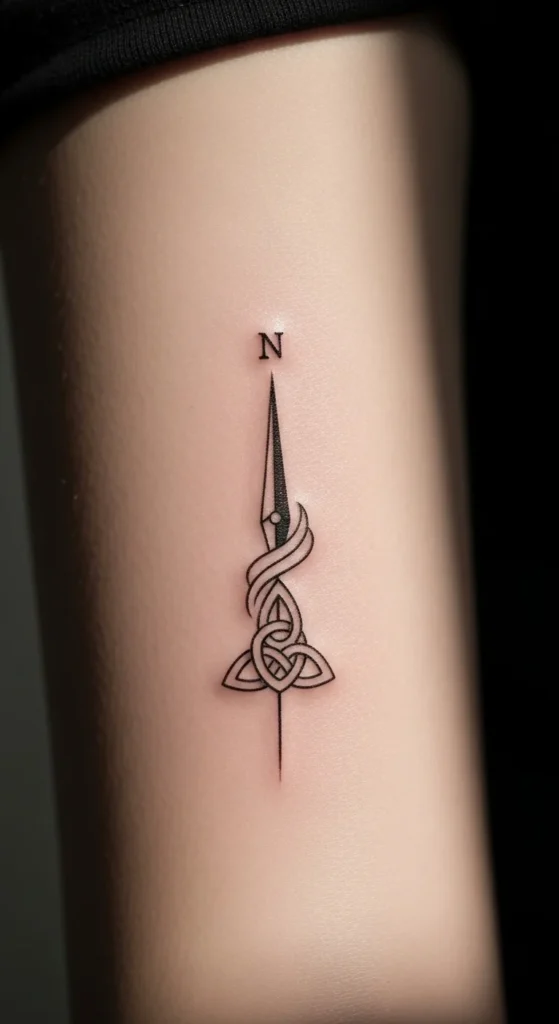
A north-only compass tells a simple story: the direction you want to return to or follow. This pared-down version removes extra lines, leaving one meaningful point. It’s perfect if you enjoy tattoos with plenty of open space.
You can add a touch of Irish symbolism with a tiny knot placed beneath the north point. This keeps the theme without clutter. When sketching ideas, draw the north arrow first, then decide whether you want a circle border or prefer the arrow on its own.
This idea works beautifully for people who prefer subtle tattoos. Small designs like this fit well on the wrist, behind the ear, or along the collarbone. Keep the lines slightly thicker so they last longer.
If you want to personalize it, angle the north point by a few degrees to match a direction meaningful to you. This makes the tattoo feel unique without adding detail. Many choose this variation for its simplicity and personal focus.
11. Compass With Celtic Animals
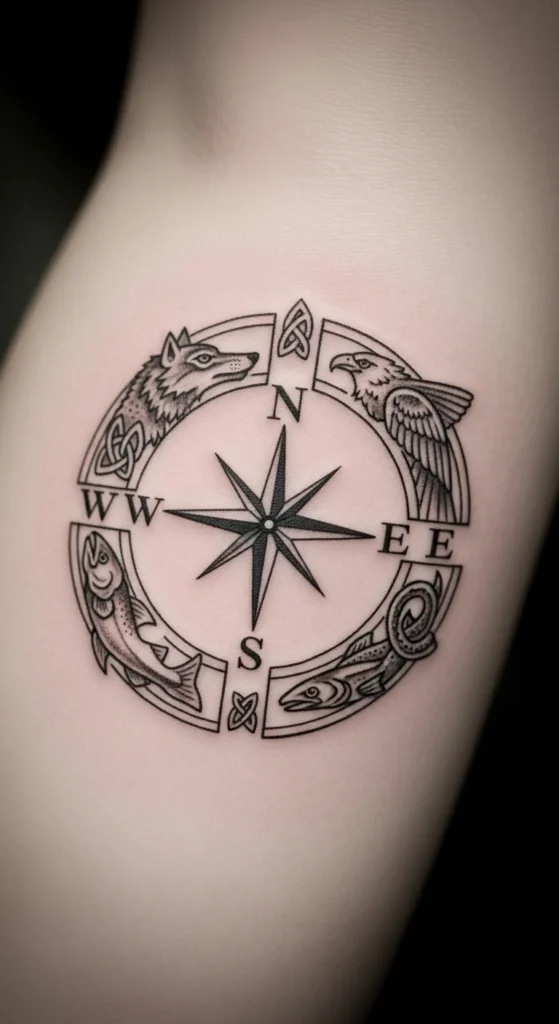
Irish and Celtic animal imagery—like hounds or birds—can quietly frame a compass without taking over the design. Artists often stylize the animals to mimic traditional carved forms. This makes them blend naturally with compass geometry.
If you’re sketching ideas, choose one or two animals and keep their shapes simple. Overly detailed features can warp with time. Placing them on opposite sides of the compass brings balance. You can use linework only for a clean finish.
This tattoo suits people who connect with symbolic animals. It works well on the shoulder, thigh, or upper arm where the round shape sits nicely. Keep shading minimal so the compass remains readable.
For a lower-cost session, reduce the animals to silhouettes instead of full patterns. The shapes alone still carry meaning. Many people enjoy this style because it merges tradition with personal direction.
12. Compass With Gaelic Coordinates
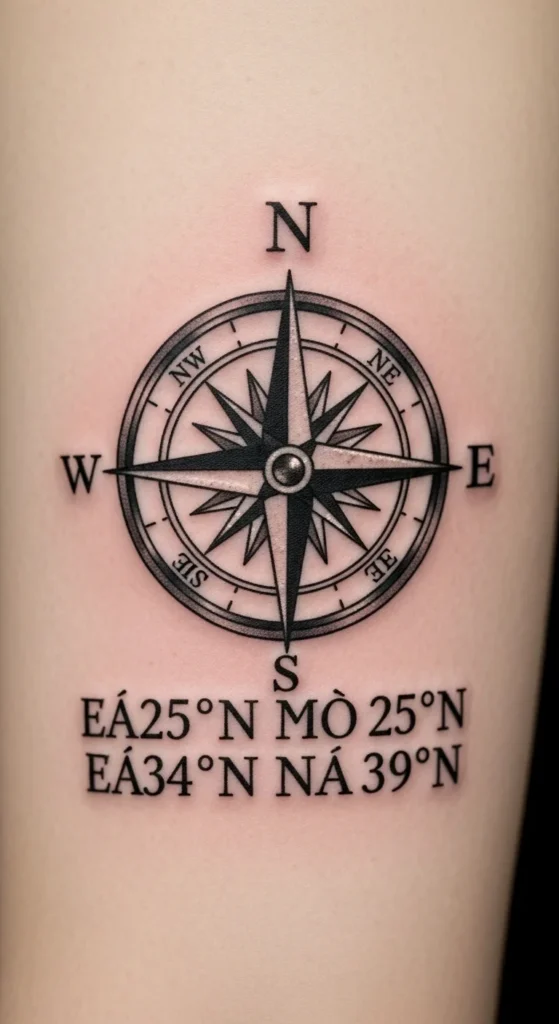
Gaelic coordinates can mark a meaningful location—like a hometown, family spot, or personal milestone. Placing these beneath a compass gives the tattoo emotional value without making the design too busy.
Sketch the compass first. Then test different coordinate placements using small handwriting. Horizontal layouts work well, but curved placements can soften the look. Keep the text thin so it doesn’t overpower the compass.
This idea works well for the forearm, rib, or back of the shoulder. The design stays affordable because it focuses on linework instead of shading. If you’re designing on a budget, use all caps for the coordinates. This makes spacing easier and reduces rework time.
People choose this tattoo because it ties direction to a real place in their life. You can keep the coordinates visible or place them slightly tucked under the compass edge for a hidden detail.
13. Compass With Irish Floral Accents
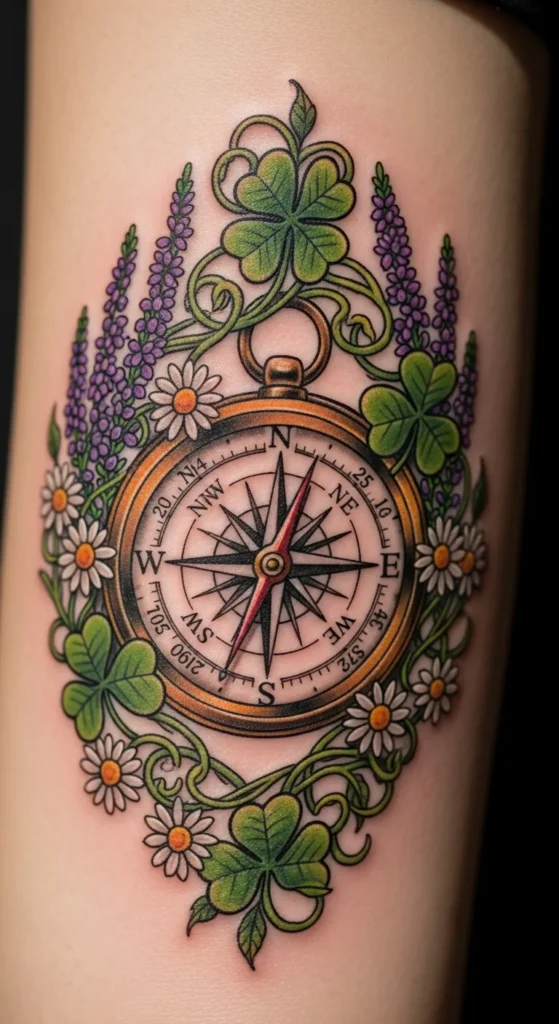
Adding Irish floral accents brings softness to a directional tattoo. Flowers like heather or clover blend well with compass lines without feeling overwhelming. This combination works nicely for people who want symbolism with a gentler style.
Sketching this is simple: draw the compass, then add small clusters of flowers around one or two sides. Avoid circling the entire compass unless you want a fuller look. Light linework keeps the flowers airy and easy to read.
This style works great on the forearm or thigh, where you get space for delicate stems. Shading can be minimal—just a few soft lines. If you’re keeping costs low, skip color. Black-only floral outlines still look beautiful.
This design often appeals to people who want a blend of direction and nature. Each flower can hold personal meaning, making the tattoo both expressive and grounded.
14. Compass With Ogham Script
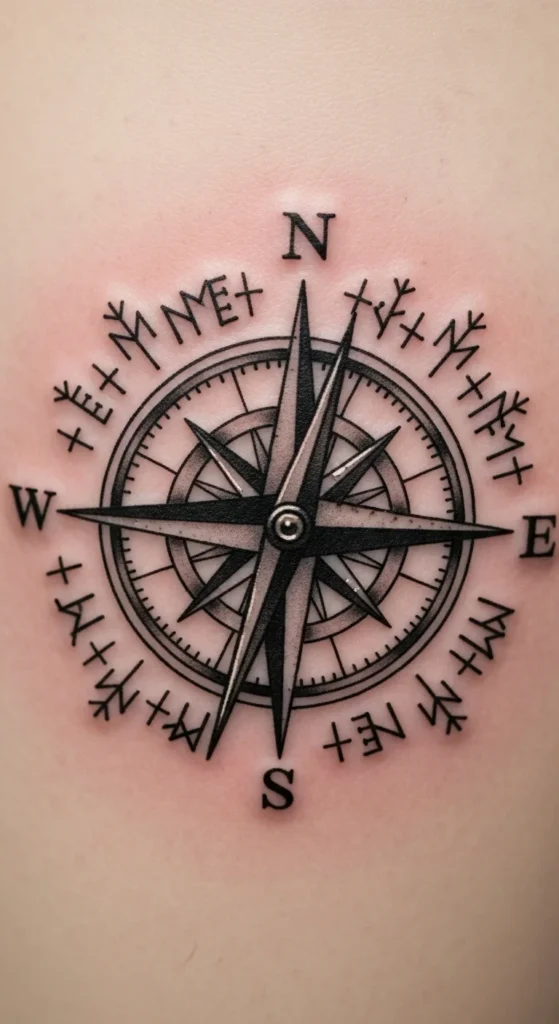
Ogham script offers a unique way to personalize a compass tattoo. The vertical lines fit neatly along the outer border or across one compass arm. You can use names, traits, or locations. The simplicity of Ogham pairs well with compass geometry.
When sketching ideas, write the Ogham lines separately first. Then place them around the compass to see where they balance best. Avoid placing too many lines because they can crowd the design. One or two inscriptions usually look strongest.
This style fits nicely on the forearm or calf. The long vertical lines complement these areas well. Keeping the tattoo line-based keeps the cost down and the final look clean.
People who enjoy ancient Irish elements often choose this idea. The script stays subtle enough that most viewers won’t recognize it immediately, which adds a quiet personal touch.
15. Compass With Broken Ring
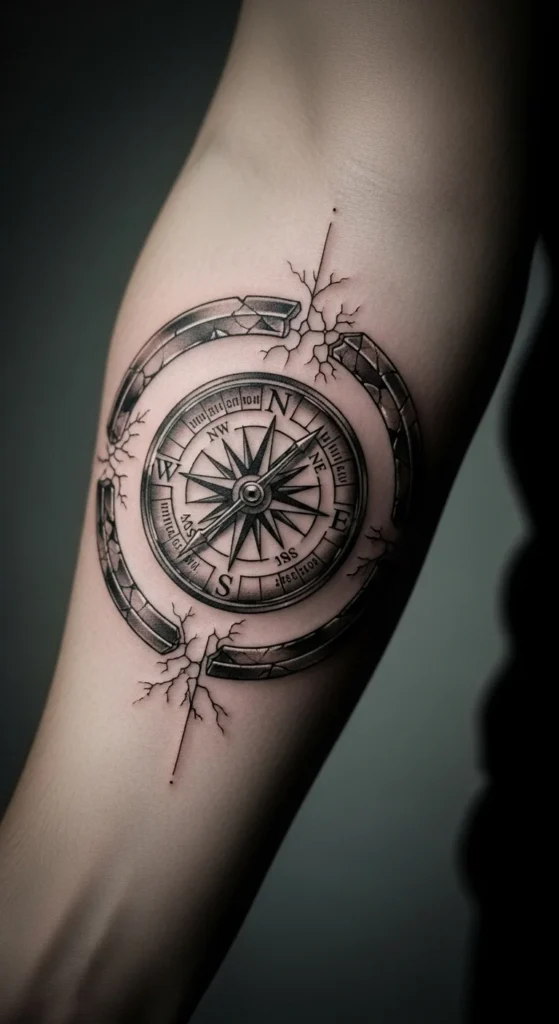
A broken ring compass symbolizes personal choice or a shift in direction. Instead of a full border, one section remains open. This simple tweak can add emotional meaning without requiring complex imagery.
Sketch the compass first, then draw a full circle. Erase a small section to create the break. You can add small cracks or leave the gap clean. Both versions work well. This design remains very readable even as a small tattoo.
People often place this on the inner arm or upper back. It adapts well to different sizes because the break adds interest without needing extra decoration. If you’re keeping costs low, stick to linework and skip shading.
This tattoo often appeals to those who feel their path has changed recently. The compass stays a grounding symbol, while the open ring reflects new space in life.
16. Compass With Irish Hill Silhouette
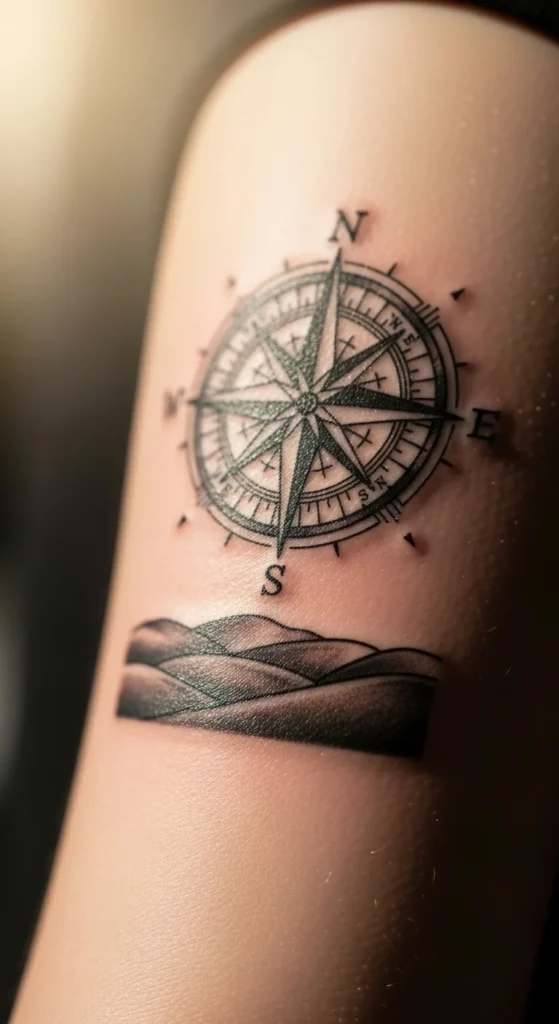
Adding a hill silhouette beneath a compass creates a peaceful landscape feel. The hills stay minimal, often drawn as two or three curved lines. This gives the tattoo a sense of place without requiring detailed scenery.
Sketch the compass first, then lightly draw the hills below it. Keep them low and wide so the compass remains the key focus. You can add a small tree or stone outline for personalization, but keep details soft.
This tattoo works beautifully on the forearm or upper arm. The curves of the hills follow the shape of the muscle, making the piece feel natural. Linework-only versions stay affordable and clean.
People who choose this design often want something grounded and connected to memories or landscapes. Even a simple silhouette can carry strong meaning when paired with direction.
17. Compass With Celtic Braids
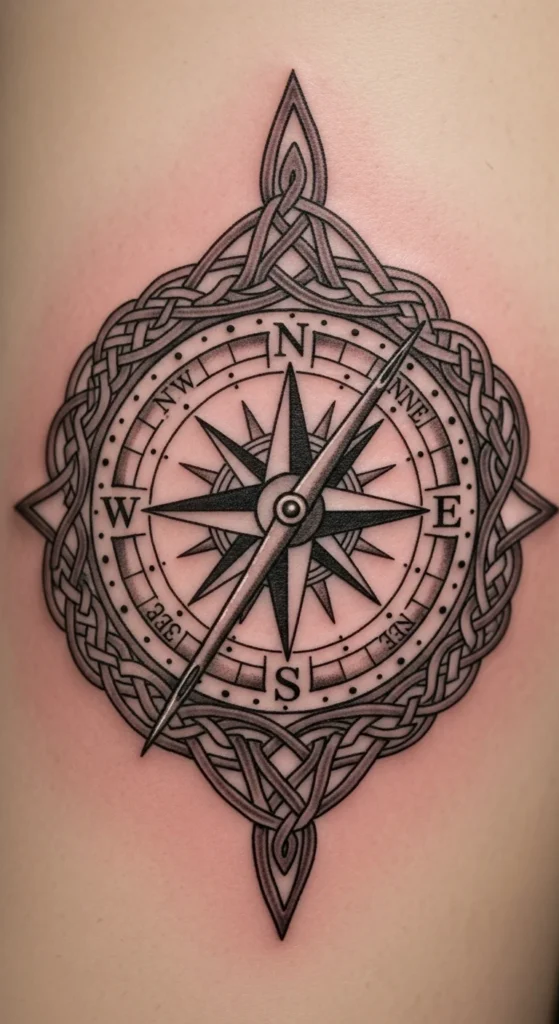
Celtic braids add motion and harmony to a compass design. The braid loops can run around the entire circle or just along one side. This adds texture without weighing the tattoo down.
If you’re designing at home, sketch the braid separately first. Once the loops feel consistent, place them around the compass border. It’s easier to adjust the braid size than redraw the compass multiple times.
This style works well on the thigh or upper arm because these areas offer room for the braid flow. You can keep the shading minimal or skip it entirely if you’re watching your budget. Crisp linework is enough for this style.
People often choose braided accents when they want something visually balanced that still ties into Irish roots. It pairs beautifully with minimalist compasses or more detailed versions.
18. Compass With Standing Stones
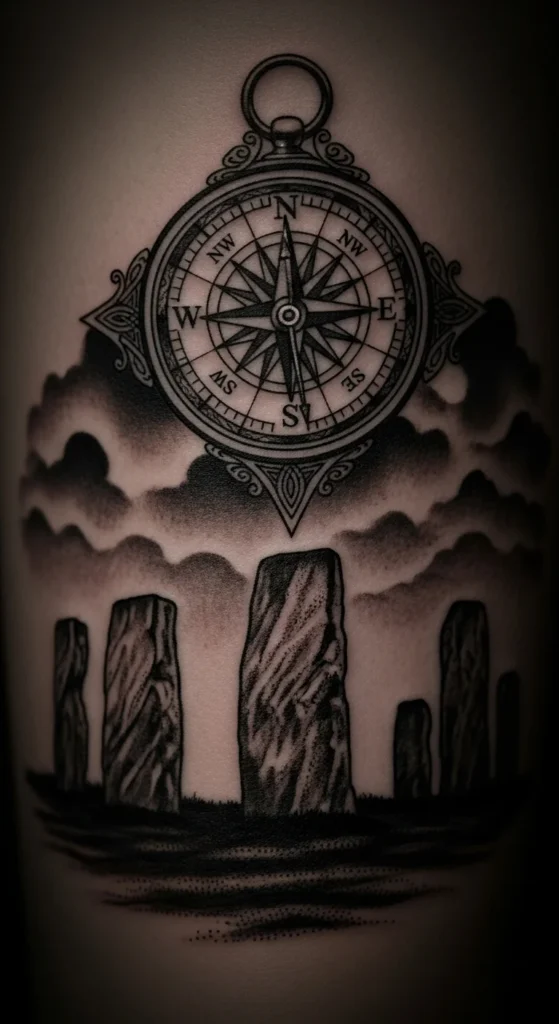
Standing stones add a mystical tone to a compass tattoo. You don’t need detailed stone texture—simple silhouettes create plenty of impact. Place a row of two or three stones under the compass to keep the design grounded.
If you’re sketching ideas, draw the stones first, then center the compass above them. This creates a strong composition. Keep the stone shapes varied so they don’t look repetitive. Small cracks or uneven tops add character.
This idea works especially well on the forearm or calf, where vertical layouts feel natural. Linework-only designs keep things budget-friendly while still looking meaningful.
People choose this concept when they want something tied to history or ancestry without leaning into heavy imagery. The stones stay subtle while the compass carries the main theme of direction.
19. Compass With Irish Flag Hints
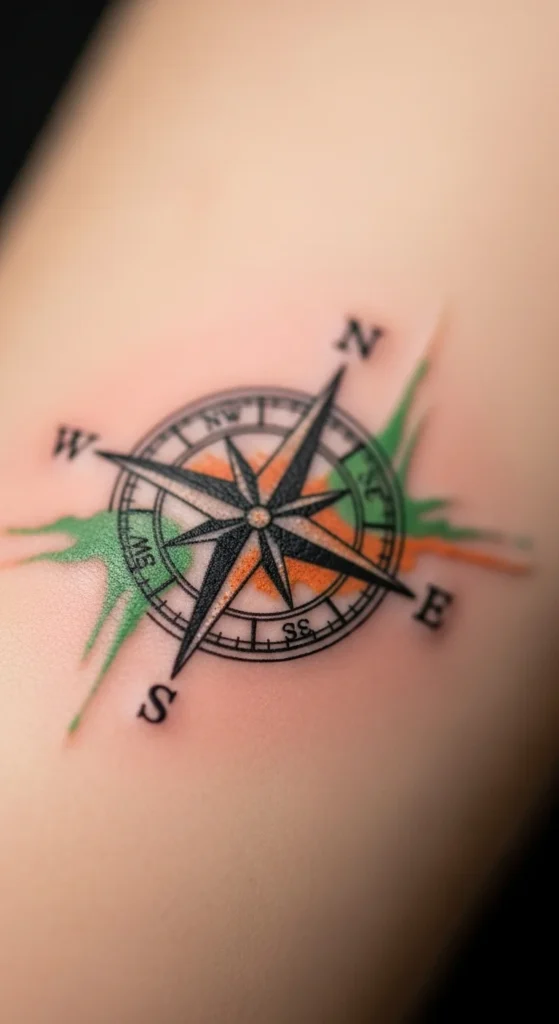
Adding tiny hints of Irish flag colors can personalize a compass tattoo without making it too bold. Instead of fully coloring segments, use faint strokes or soft gradient touches behind two compass arms.
Sketch the compass first. Then test color placement on tracing paper layered behind the design. This helps you keep the colors subtle. Too much saturation can overpower thin compass lines, so lighter touches work best.
This idea suits the forearm or upper arm. If you’re watching budget, keep the color minimal so the session stays short. You can also skip shading entirely and focus on crisp linework.
Many choose this option because it adds identity without making the tattoo loud. A small amount of color can shift the tone of the whole design.
20. Compass With Irish Wolfhound Silhouette
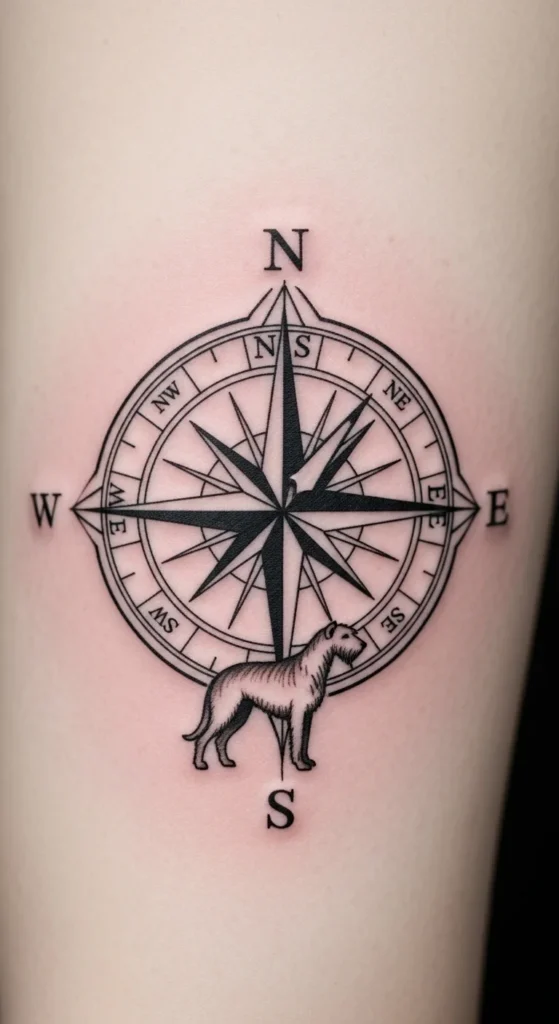
Adding an Irish wolfhound silhouette gives a personal nod to heritage or loyalty themes. The silhouette stays simple, avoiding fine details that might blur. Place it beneath the compass or off to one side.
Sketch the wolfhound shape separately, keeping the legs and tail minimal. Once you like the silhouette, position it under the compass. This keeps the compass readable while the dog form adds meaning.
This style fits well on the forearm, shoulder, or calf. Linework-only designs keep the appointment quick and affordable. This layout appeals to people who value strength paired with direction.
If you want more personalization, add a small dot pathway leading from the silhouette toward the compass center.
21. Compass With Celtic Sunburst
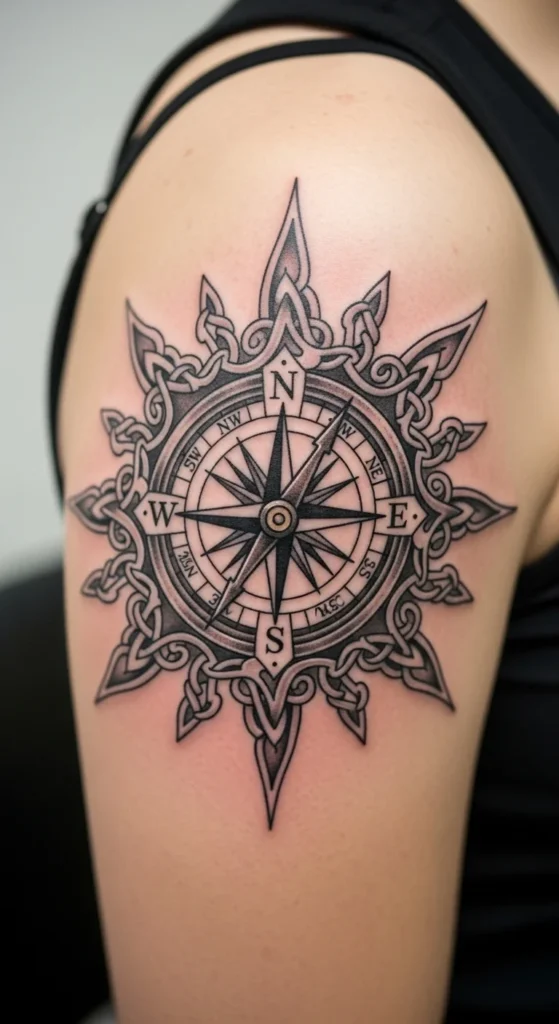
A Celtic sunburst around a compass adds warmth and motion. The rays don’t need to be sharp; rounded knot-style rays create a softer feel. This design works well if you enjoy symbolic imagery that spreads outward.
When sketching, draw the compass first, then experiment with ray length. Keep them evenly spaced so the tattoo feels cohesive. You can create rays through knot loops or simple curved lines.
This tattoo sits well on the upper back or chest. The spreading rays complement these larger areas. If you’re staying budget-conscious, keep the rays line-only without shading.
This concept resonates with people who see direction as something connected to energy or growth. Even minimal rays can change the feel of the entire tattoo.
22. Compass With Irish Crown
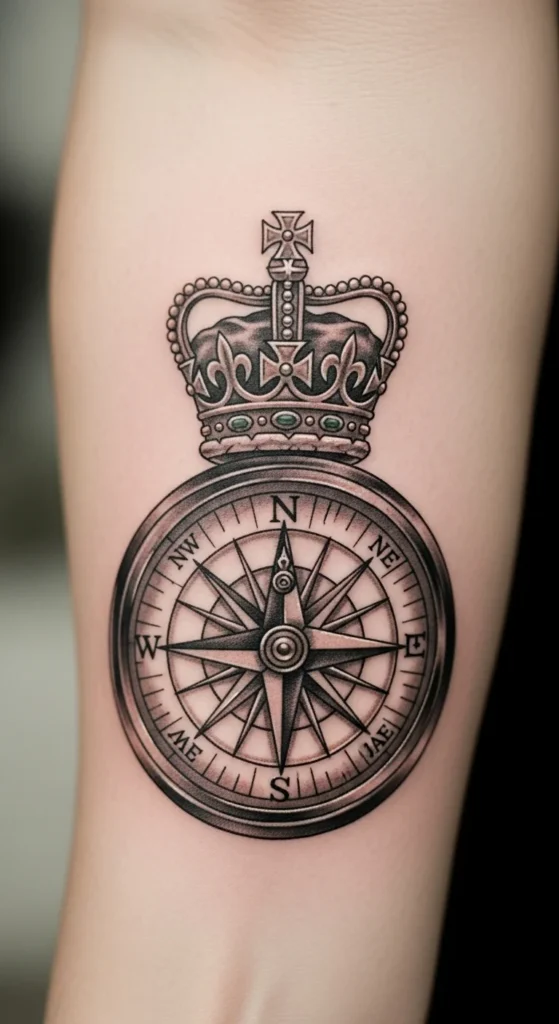
A small Irish crown placed above a compass can represent loyalty or commitment. The crown doesn’t need ornate detail. Thin lines and simple points keep it readable.
Sketch the compass first. Then place the crown directly above the north point. This gives the design a centered, balanced feel. Avoid overly detailed jewels or patterns—simple shapes age better.
This style works well on the sternum or forearm. These areas allow the crown to sit naturally above the compass. Keeping shading minimal also keeps the tattoo affordable.
People choose this design when they want something symbolic but still subtle. A small crown adds meaning without taking attention from the compass.
23. Compass With Irish Waves
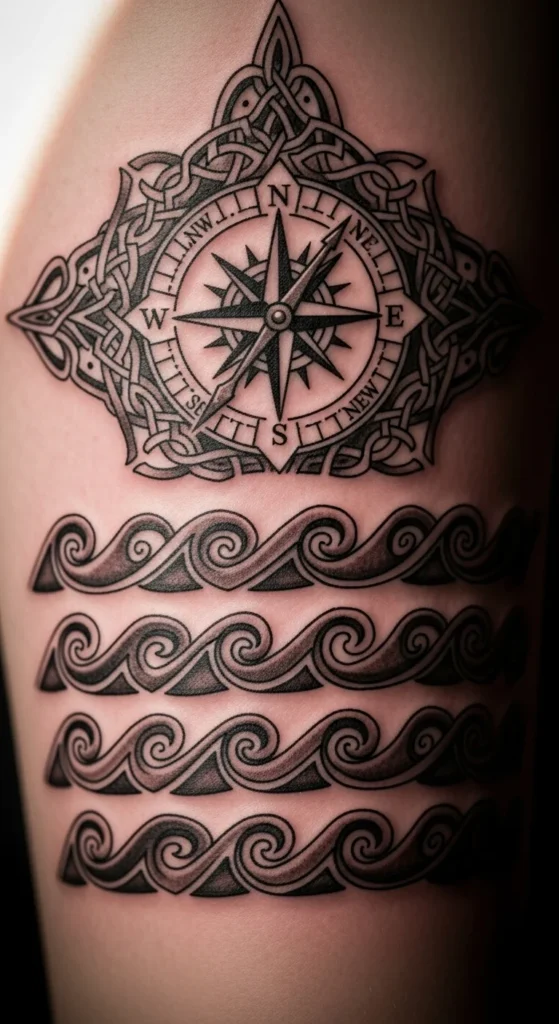
Irish wave patterns bring motion and flow to a compass tattoo. The waves stay stylized—often drawn as repeating curves. These patterns pair well with clean lines and give the tattoo a gentle sense of movement.
Sketch the compass first, then add curves beneath it. Keep the waves low enough that they don’t compete with the compass arms. You can add tiny dots or lines inside the waves for texture if you want something extra.
This tattoo works nicely on the forearm or calf. If you’re keeping costs lower, stick to single-line waves. They still look strong without shading.
Many people choose this style because waves can symbolize emotional movement, travel, or connection to the coast.
24. Compass With Irish Cross Accent
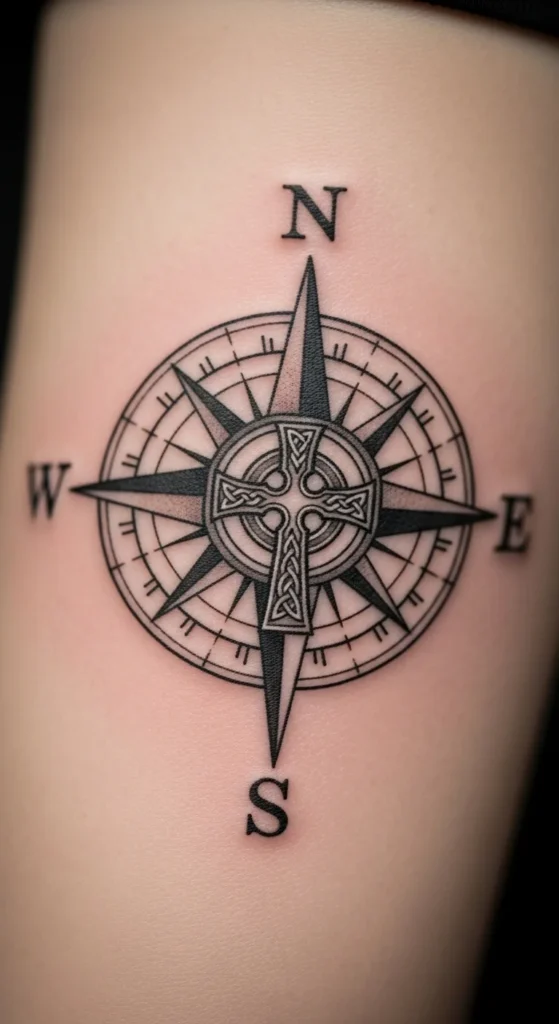
A Celtic-style cross at the compass center adds meaning without changing the overall layout. Keep the cross small and symmetrical so the compass remains easy to read.
Sketch the cross lightly first, then place the compass around it to test spacing. Keeping the cross simple helps it age cleanly. You can add knotwork to the cross arms if you prefer more detail, but light linework works well too.
This idea suits the upper arm or back of the shoulder. The cross stays visible without making the design heavy. Linework-only styles keep the cost manageable.
This tattoo appeals to people who want direction paired with faith or heritage themes. A small center cross creates balance in the design.
25. Compass With Celtic Frame
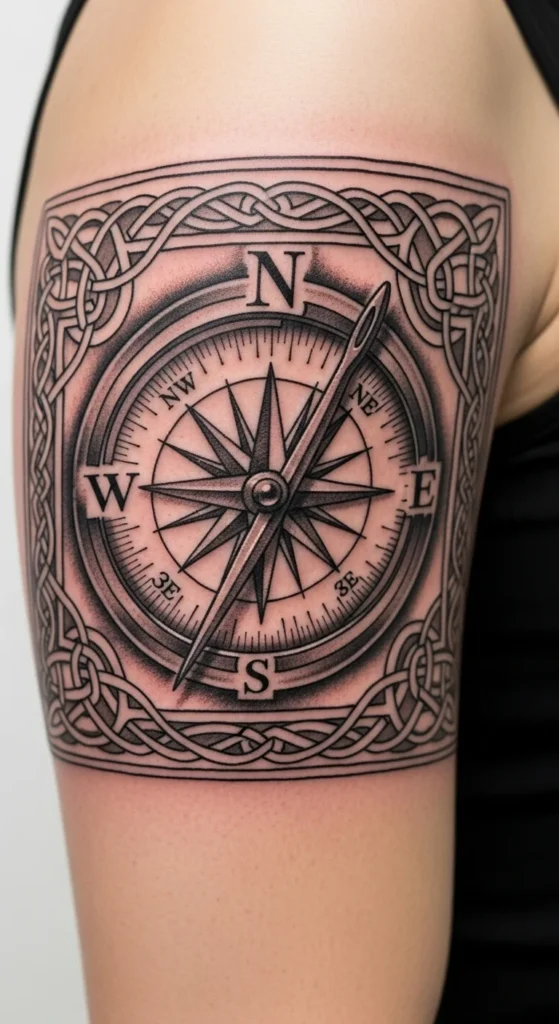
A square Celtic frame around a round compass creates striking contrast. This layout feels structured and balanced without becoming overwhelming. The frame doesn’t need heavy detail—simple knot lines are enough.
Sketch the compass first. Then add the frame with equal spacing on all sides. If you’re designing at home, use a ruler to keep the lines even. Add light knot loops inside the square for texture.
This style works well on the thigh or upper back. The square frame provides clear boundaries and structure. Keeping shading minimal helps the compass remain the focal point.
People choose this idea when they like geometric contrasts mixed with Irish influence. It also pairs well with existing tattoos if you enjoy structured pieces.
26. Compass With Clover Trail
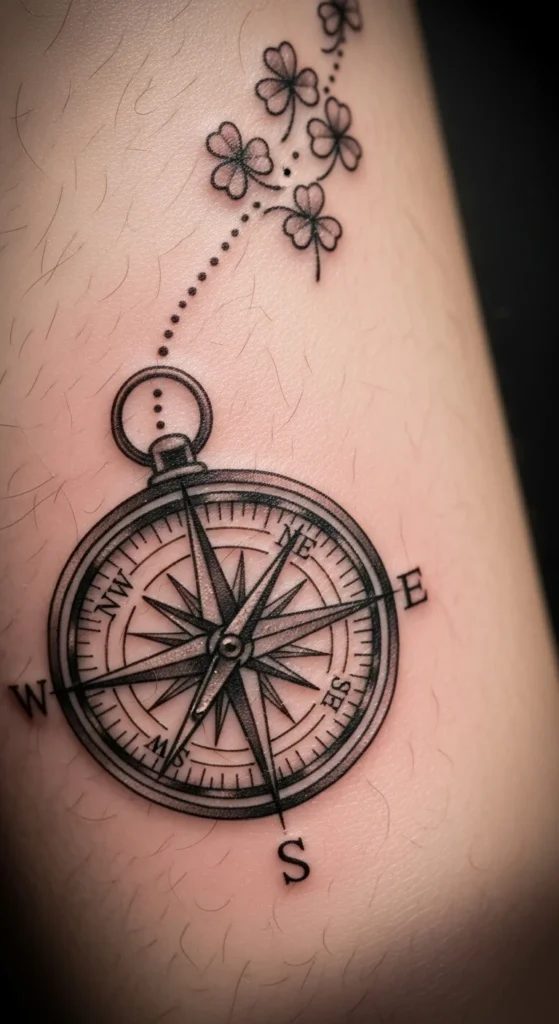
A dotted trail flowing from the compass to tiny clovers adds movement and charm. The clovers stay small—no need for big shapes. This creates a quiet storytelling effect.
Sketch the compass first, then draw a dotted curved path leading outward. Add a few clovers at the end. Keep the trail light so it doesn’t overwhelm the compass. You can place this on the forearm, ribs, or calf.
This style stays budget-friendly because it relies on small linework elements. If you want color, a hint of green inside the clovers works well, but black-line versions look just as strong.
People often choose this layout for its gentle, playful feel. It ties direction to growth in a quiet way.
27. Compass With Celtic Spear Points
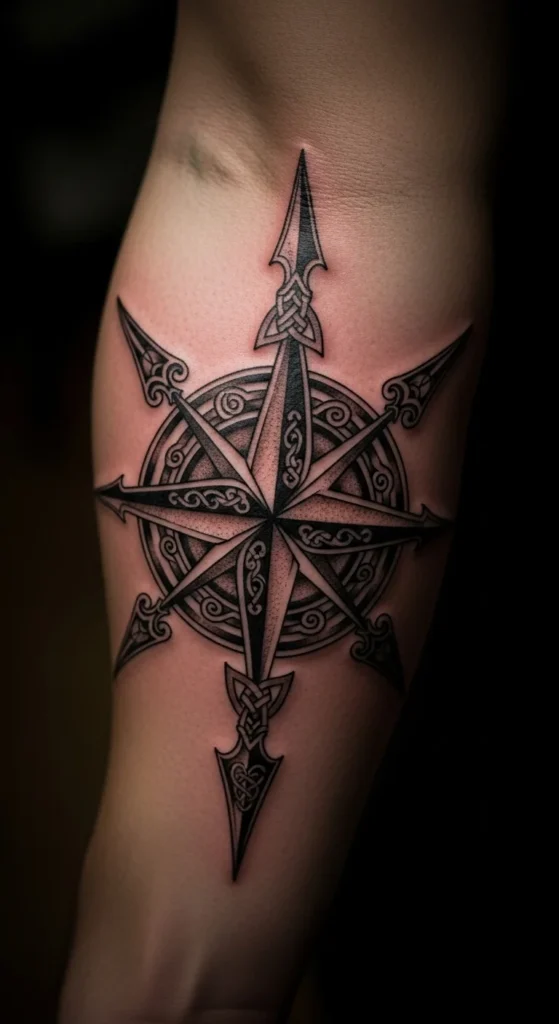
Adding spear-shaped accents to the compass points gives the tattoo strong structure. The shapes mimic traditional Celtic weapon motifs, lending boldness without requiring heavy detail.
Sketch the compass first, then experiment with spear tip shapes. Keep them symmetrical for clarity. If you’re designing on your own, outline several versions before settling on the one that feels best.
This idea works well on the upper arm or calf. The extended points lengthen the design in a flattering way. Keeping it line-only makes the tattoo crisp and affordable.
People pick this style when they want a stronger look tied to heritage or personal resilience. The compass still guides the design, but the spear accents add an assertive touch.
28. Compass With Stone Ruins
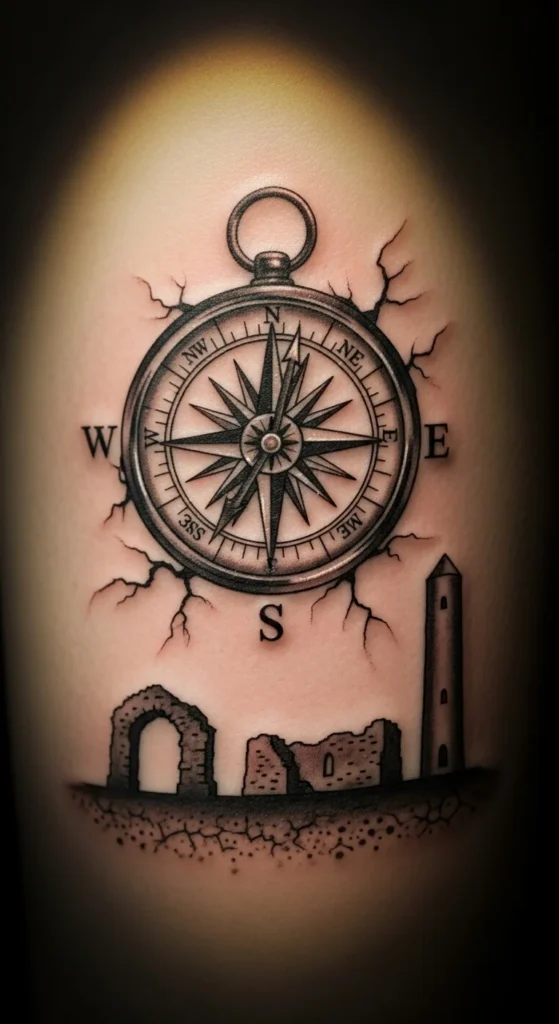
Stone ruins add quiet historic character to a compass tattoo. The ruins don’t need detail—just blocky silhouettes of broken towers or walls. This keeps the focus on the compass while grounding the design.
Sketch the ruins first. Keep them low so the compass remains dominant. Adding tiny cracks or a single leaning arch gives personality without clutter. This design works nicely on the thigh or forearm.
Linework-only versions remain budget-friendly, and the simple shapes age well. People choose this idea for its reflective tone and connection to heritage landscapes.
29. Compass With Irish Stars
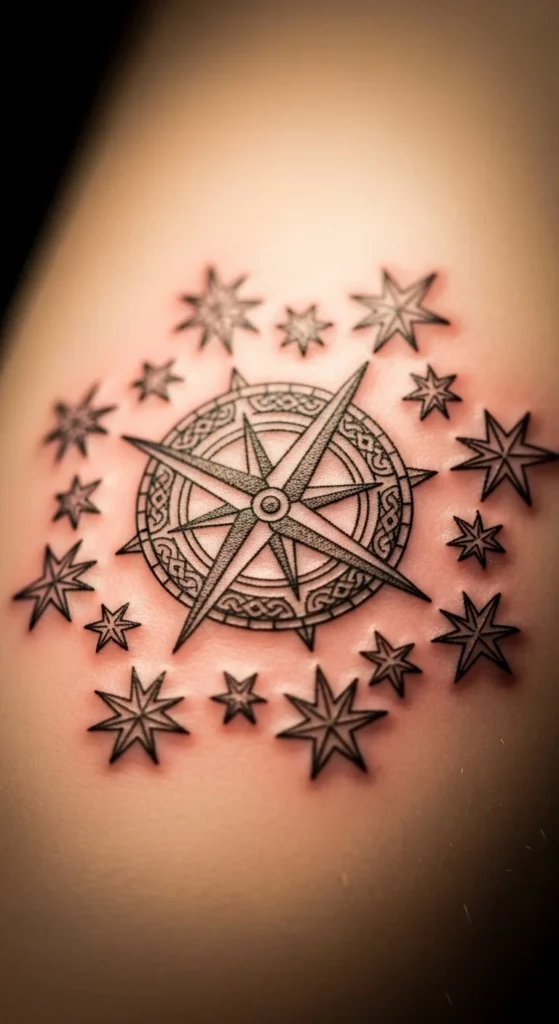
Small star clusters placed around a compass create a quiet nighttime theme. The stars stay tiny—simple dots or short-line bursts. They add atmosphere without distracting from the compass arms.
Sketch the compass first. Then scatter stars lightly around the top half or full circle. Keep spacing loose so the tattoo doesn’t look crowded. This style works great on the shoulder or upper back.
If you’re watching cost, stick to dot stars only. They take very little time to tattoo and age nicely. People often choose this style when they see direction as something connected to night sky themes or personal reflection.
Conclusion
Irish compass tattoos can feel personal, symbolic, and expressive without requiring complex artwork. Whether you prefer minimal lines, knot accents, landscapes, or meaningful symbols, each idea here gives you a clear path to design something that fits your style. Save the concepts you connect with most, sketch a few variations at home, and bring them to your artist so you can shape a tattoo that reflects your sense of direction.