
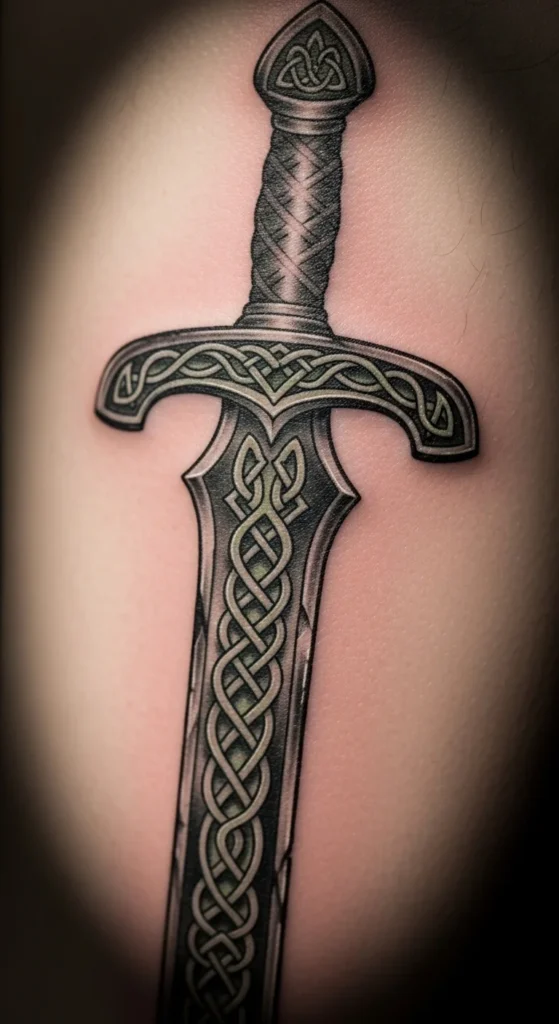
Irish sword tattoos carry a sharp, expressive energy that’s perfect for people who love bold symbolism. Many designs tie into Celtic stories, family identity, or personal strength. Others focus on clean lines, striking silhouettes, and simple shading. This list helps you explore styles that feel strong without being complicated or expensive. You’ll find ideas that work for first-timers, as well as people planning a larger piece. Each concept comes with practical suggestions you can use when planning your tattoo, sketching at home, or talking with an artist.
1. Celtic Blade With Knotwork Spine
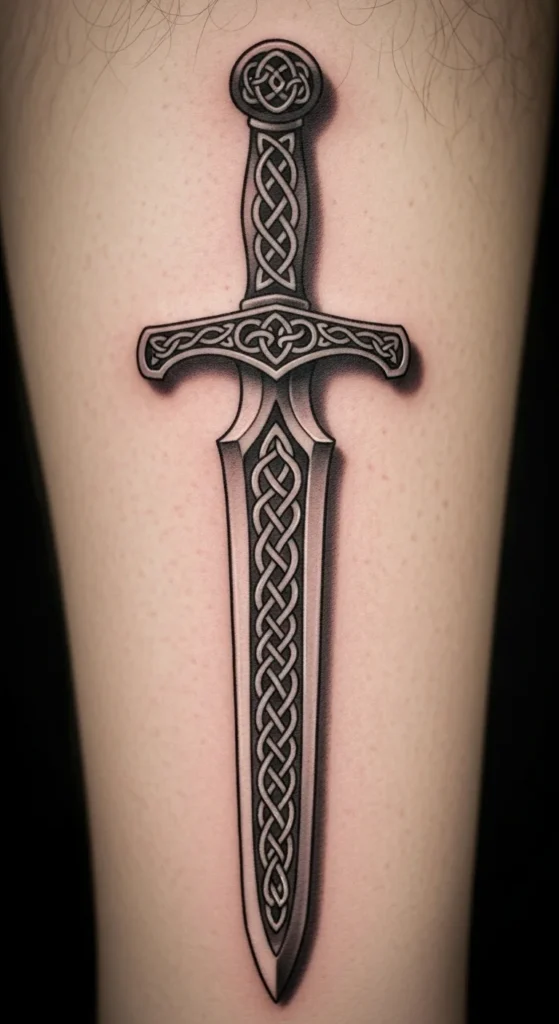
This design suits anyone drawn to simple, structured lines. The knotwork adds movement while the straight blade keeps the layout clean. It works well on the forearm or calf where long shapes sit naturally. If you want to try sketching variations, print a blank sword outline and test knot patterns with a pencil. Keep the costs low by choosing a single-needle style or light shading instead of heavy fills. Talk with your artist about line thickness so the design stays readable over time. You can simplify the knots if you prefer something lighter. This idea grows easily into a larger Celtic theme later.
2. Sword With Triskelion Guard
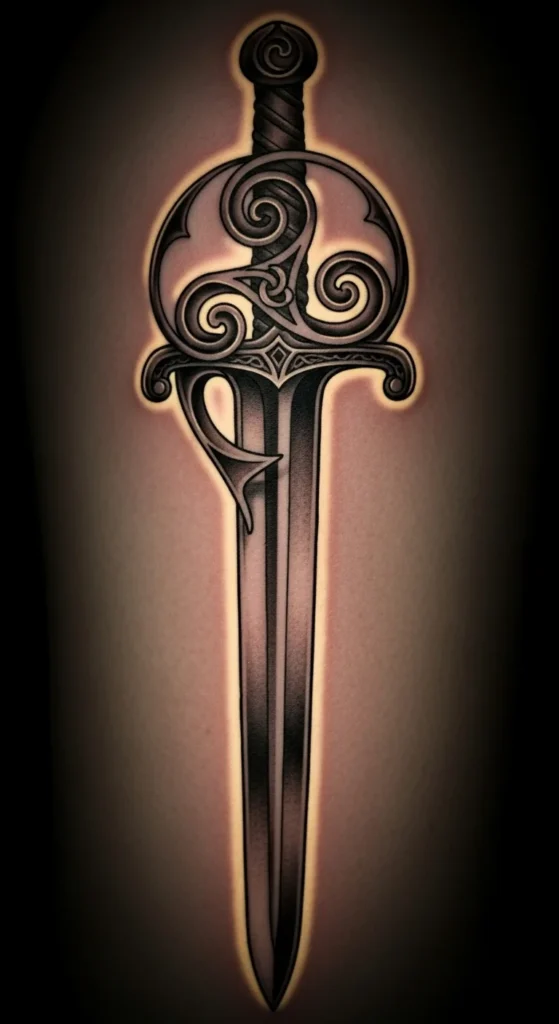
This concept blends motion with strength. The triskelion symbol brings a spiraled rhythm that balances the straight blade. It fits nicely on the upper arm or between the shoulder blades. You can experiment with pencil curves to find a swirl size that feels right. If you want to keep the price friendly, choose a simple black-and-gray version. For a bit of texture, add subtle shading near the guard. This design works for people who like grounded shapes but still want a touch of flow. Your artist can round or sharpen the lines depending on the mood you prefer.
3. Irish Longsword With Braided Handle
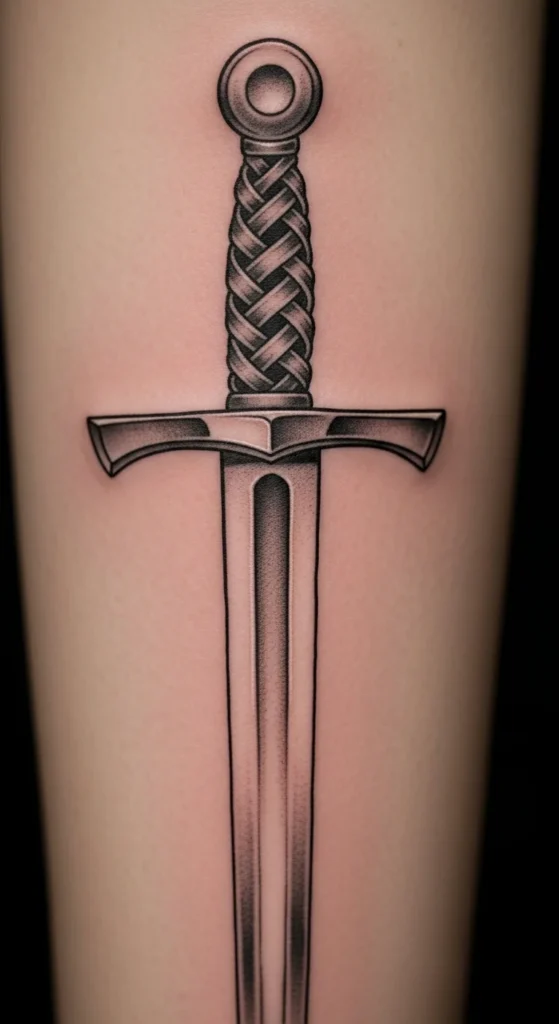
The braided handle gives this piece tactile charm. Even in simple ink, the pattern adds a handmade feel. It fits well on the forearm, ribcage, or outer thigh. You can practice the look by drawing interwoven bands on scrap paper. For a budget-friendly version, keep shading minimal and let the linework capture the texture. This sword pairs well with small accents like dots or short knot motifs. If you want a stronger presence, extend the blade length slightly. The straightforward layout works for both small and mid-size tattoos.
4. Broken Sword With Celtic Runes
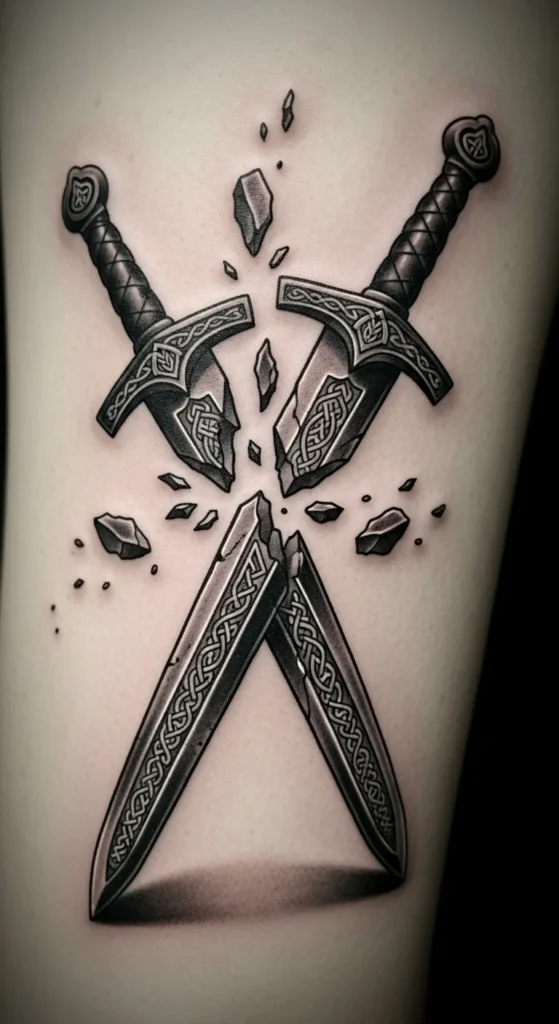
A broken sword can represent personal change, endings, or a hard-won moment. The design stays simple while holding emotional weight. You can place it on the upper arm, chest, or behind the shoulder. Sketch a straight sword and draw a clean break to explore shapes that feel right. Add small rune marks for extra detail without driving up the cost. Light shading under the fragments helps create lift. This style suits anyone who wants a story without layers of heavy art.
5. Sword Piercing a Celtic Shield
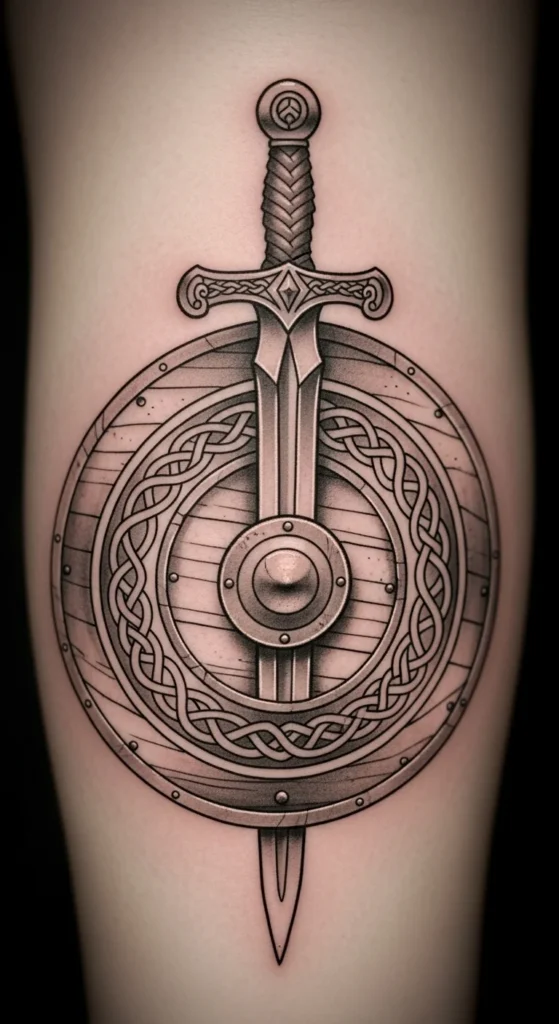
This design adds a sense of action without being busy. The round shield keeps the composition centered, making it great for the upper arm or shoulder. You can make a cheap paper mock-up by cutting a circle and sliding a pencil “blade” through it to test proportions. For a cleaner look, keep the knot lines bold instead of detailed. Black-and-gray shading works well and stays friendly to the wallet. The symbolism leans toward strength, protection, and personal boundaries.
6. Minimal Line Sword With Tiny Celtic Star
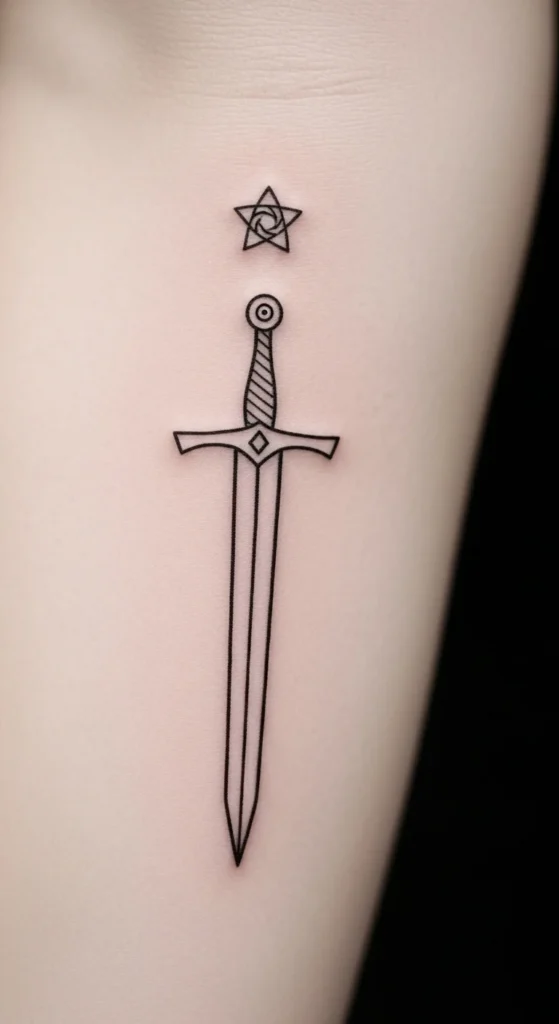
A minimal sword suits anyone who prefers quiet expression. It also keeps the price low because it focuses on lines over shading. The tiny Celtic star adds just enough charm without crowding the layout. Try tracing basic sword shapes on a phone screen protector or scrap paper to find a line weight you enjoy. This idea works for wrists, ankles, or behind the arm. You can enlarge the star later if you want more presence.
7. Sword With Braided Celtic Border
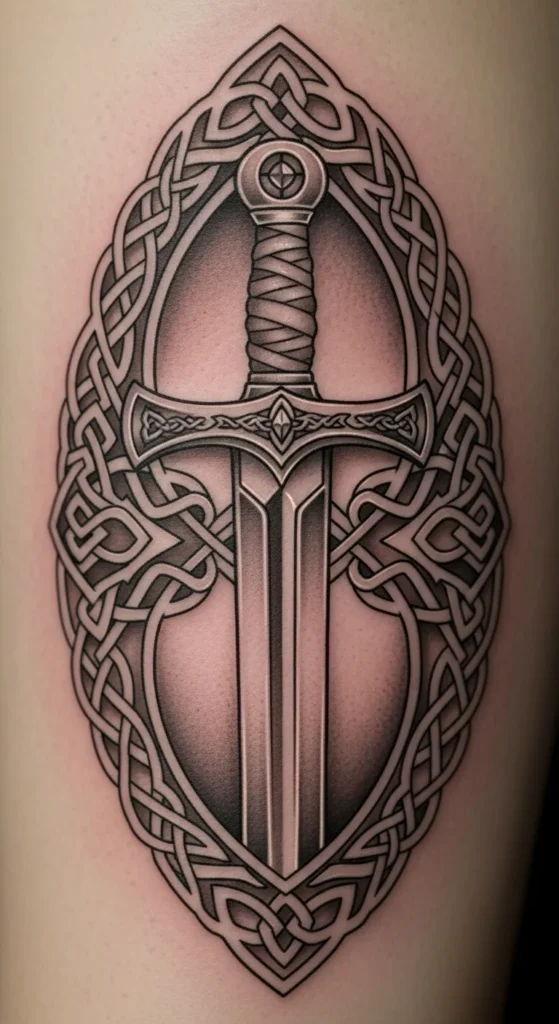
This layout turns the sword into a centerpiece. The border adds symmetry and control. It works well for the forearm or shoulder panel. To save money, keep the border simple and avoid heavy shading. Try sketching square or oval borders to see which shape feels natural. This design works for people who like framed art or want to expand into a sleeve later.
8. Fiery Sword With Celtic Sparks
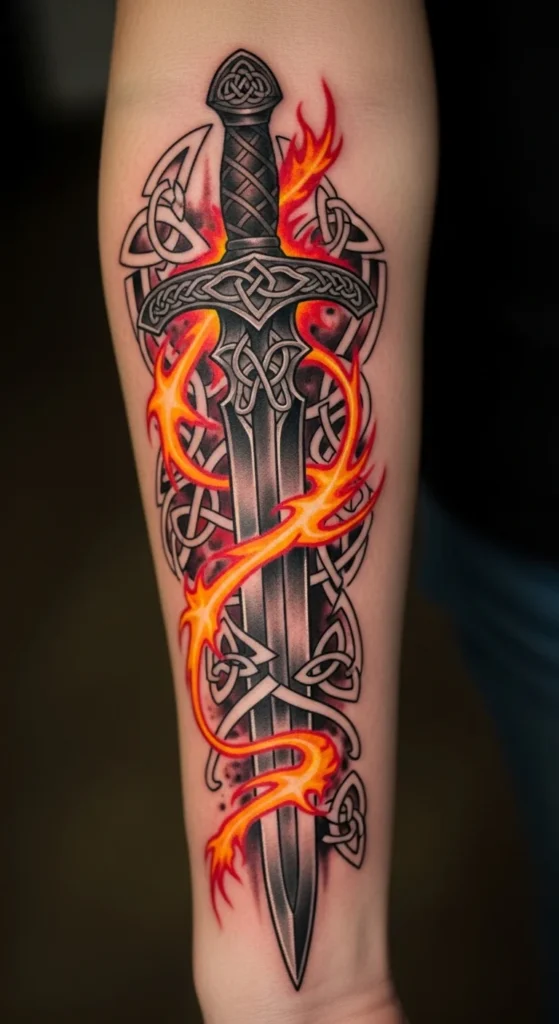
This idea relies on motion and intensity. The sparks can be curved or jagged, depending on the vibe you want. You can draw small flame shapes with knot-inspired twists to test your favorite look. Keeping everything in black and gray saves money while still capturing energy. This tattoo works for the forearm, ribs, or shin. If you want the design to feel larger, extend some sparks outward.
9. Sword and Harp Fusion
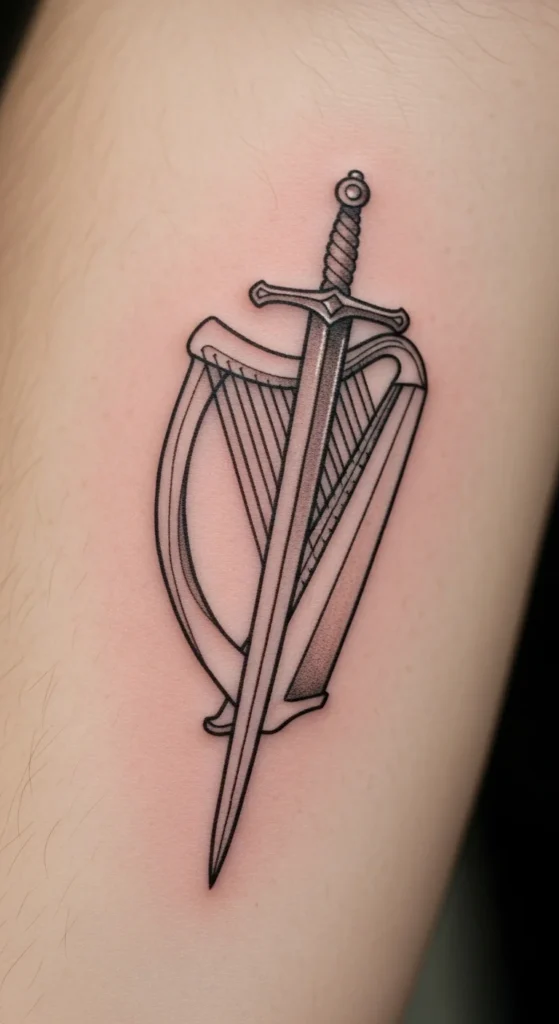
This fusion design combines two strong Irish icons. The frame of the harp pairs nicely with a straight blade. You can keep the harp outline thin to avoid a crowded look. This works well for medium placements like the bicep or thigh. To test the look at home, overlay sword and harp outlines on tracing paper. Light shading helps separate the shapes while staying affordable.
10. Sword Wrapped in a Celtic Serpent
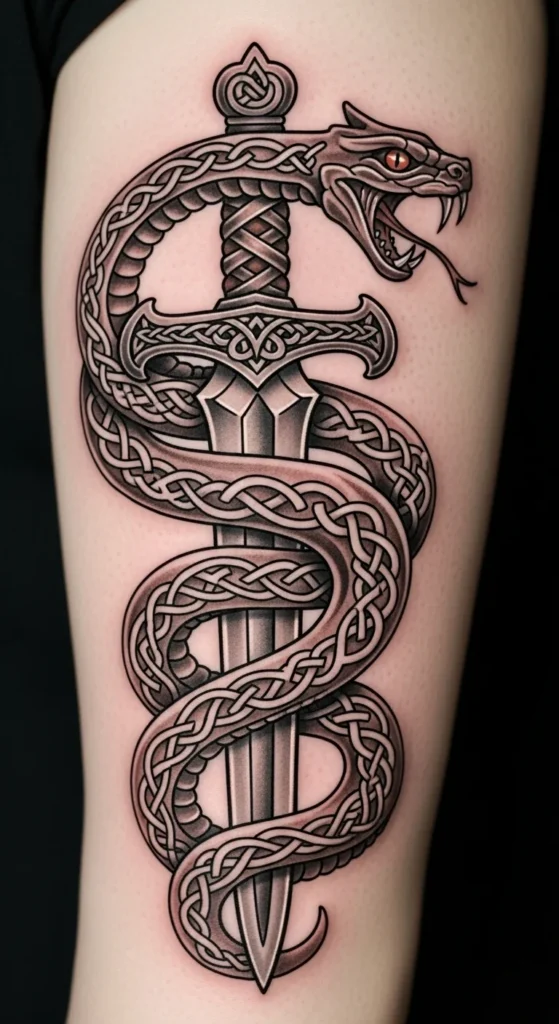
This idea adds motion and symbolism in a single stroke. The serpent wraps around the blade, giving the layout a vertical flow. You can draw a simple curved line to plan the serpent’s path before adding details. Keeping the scales small reduces ink cost. This design suits the arm, leg, or spine. It also pairs well with shading that stays soft and subtle.
11. Twin Swords Crossing Over a Knot Circle
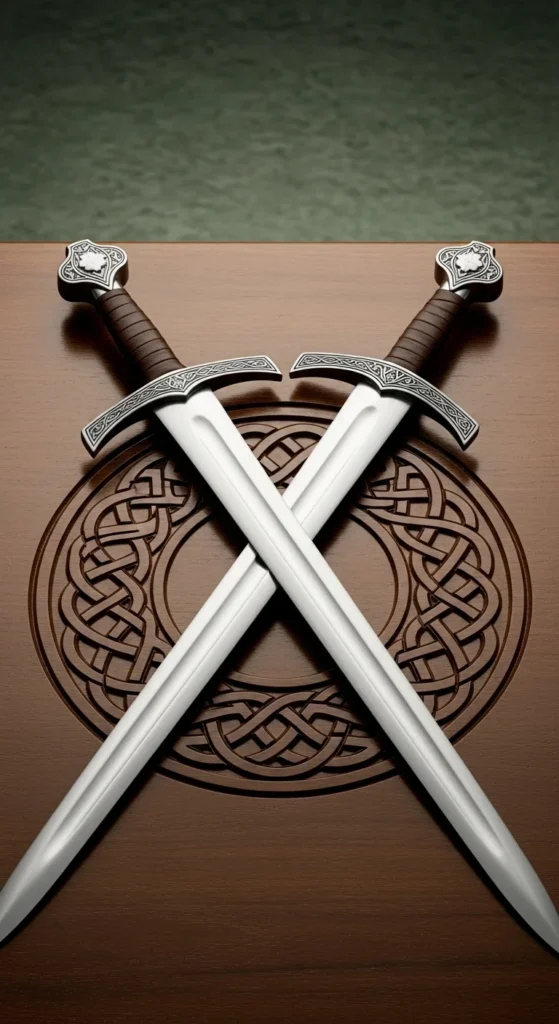
Crossed swords create balance and symmetry. The knot circle behind them keeps everything anchored. You can adjust the circle size to fit your placement. To test proportions, fold notebook paper into a square and draw the circle inside. This helps you plan spacing cheaply. Keep the knot lines bold to make the tattoo age well. This style works on the upper back, chest, or thigh.
12. Sword With Clover Guard
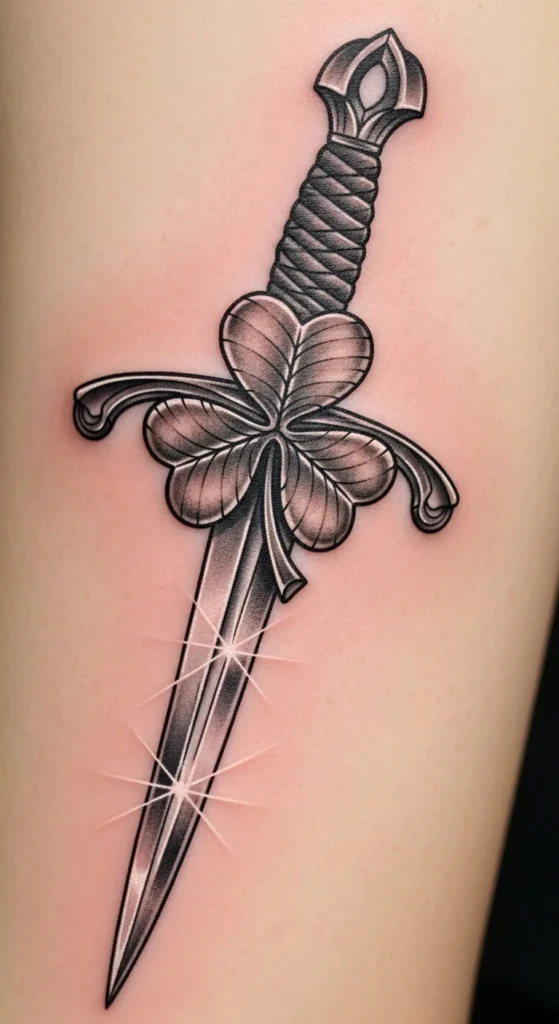
The clover guard adds a small nod to Irish heritage without taking over the design. It works amazingly well for people who prefer subtle meaning. The shape is easy to test by sketching clover outlines and rotating them into a guard shape. Choose thin lines for a softer look or thicker lines for boldness. This tattoo works anywhere from the forearm to the ankle.
13. Engraved Sword With Weathered Texture
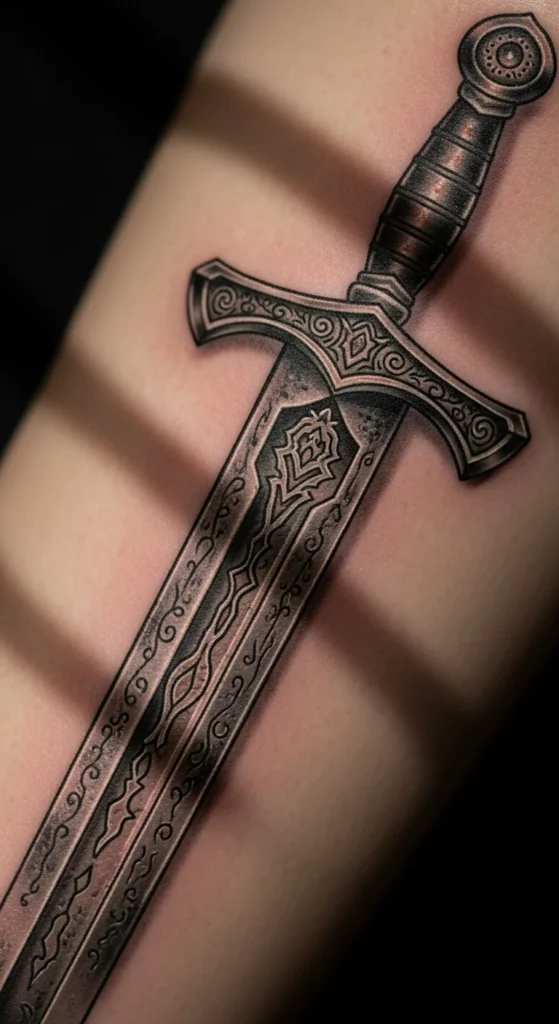
The worn texture gives this design character. It doesn’t require heavy shading; just a few broken lines can make the blade look aged. You can experiment by drawing scratches or marks across a simple sword outline. This design works for the arm or thigh. It also suits people who like pieces that feel lived-in rather than polished.
14. Sword Framed by Stone-Style Celtic Patterns
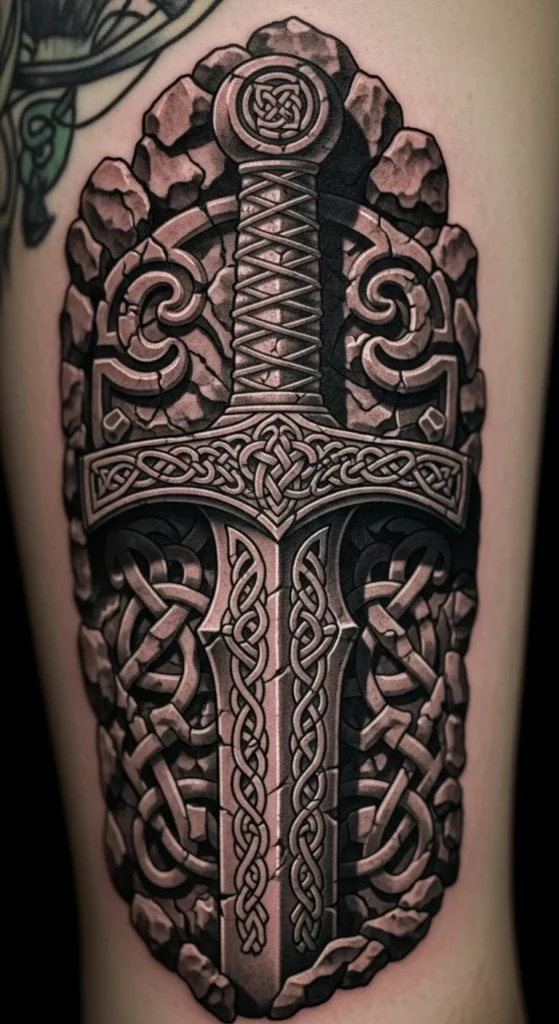
This design brings a carved-stone feeling without needing too many elements. The patterns can be simplified so the tattoo doesn’t take long to complete. You can test texture ideas using charcoal pencils on paper. This tattoo works for larger spots like the bicep or calf. The stone look adds depth while staying friendly to the wallet.
15. Sword With Winged Irish Motifs
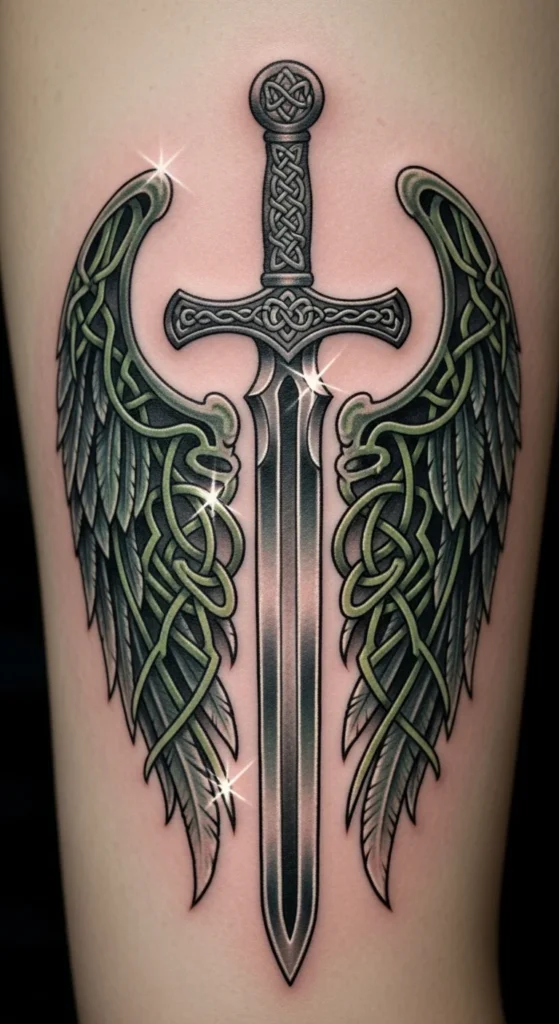
A winged layout brings lift and openness. The wings don’t need heavy detail to look nice. You can sketch simple feather shapes and add a few knot influences near the base. This design works well for the upper back or chest. Choosing a black-and-gray palette keeps the project light on cost.
16. Sword Embedded in Celtic Stone
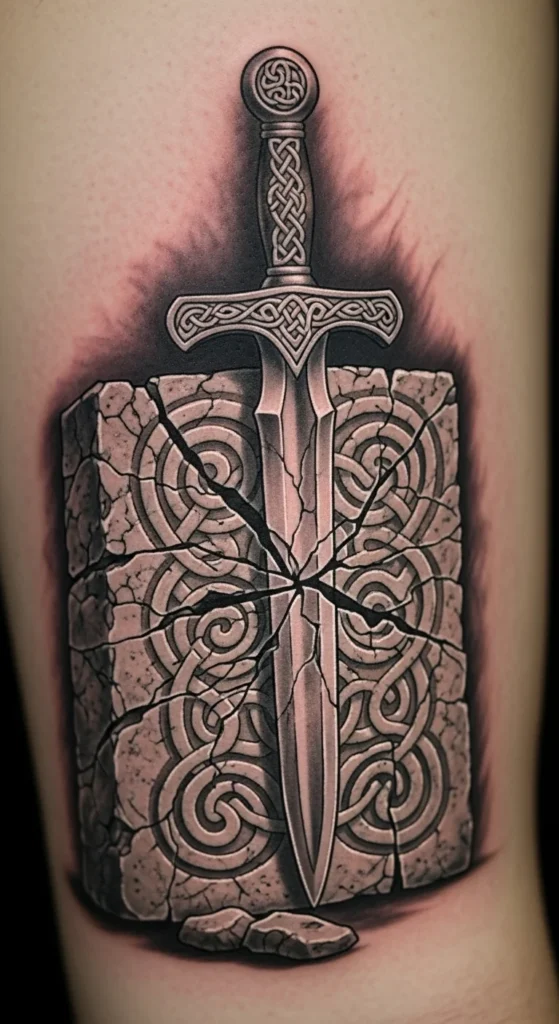
This idea gives a grounded, strong presence. The stone can be simple, with just a few lines indicating texture. Try sketching rectangles and adding cracks to see what shapes you like. This tattoo works for the shin, forearm, or back. If you want to keep the session short, limit shading to the base of the stone.
17. Sword With Spiral-Style Aura
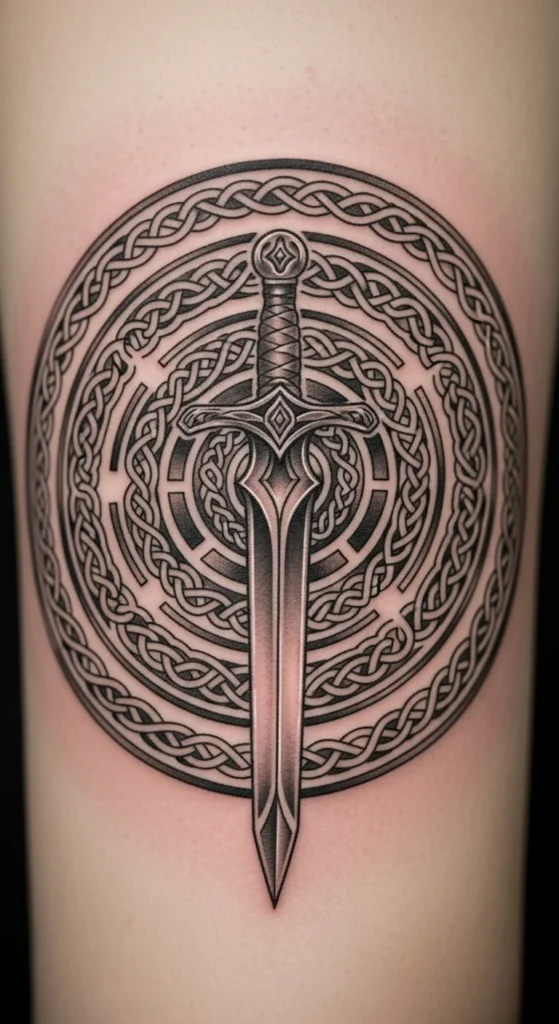
The spirals add rhythm and a sense of breath. This design fits narrow spaces like the forearm or ribs. You can draw loose spirals at home to experiment with spacing. Keeping the spirals thin helps the sword stand out. This is a very wallet-friendly idea since it relies mostly on linework.
18. Sword With Celtic Arrow Tips
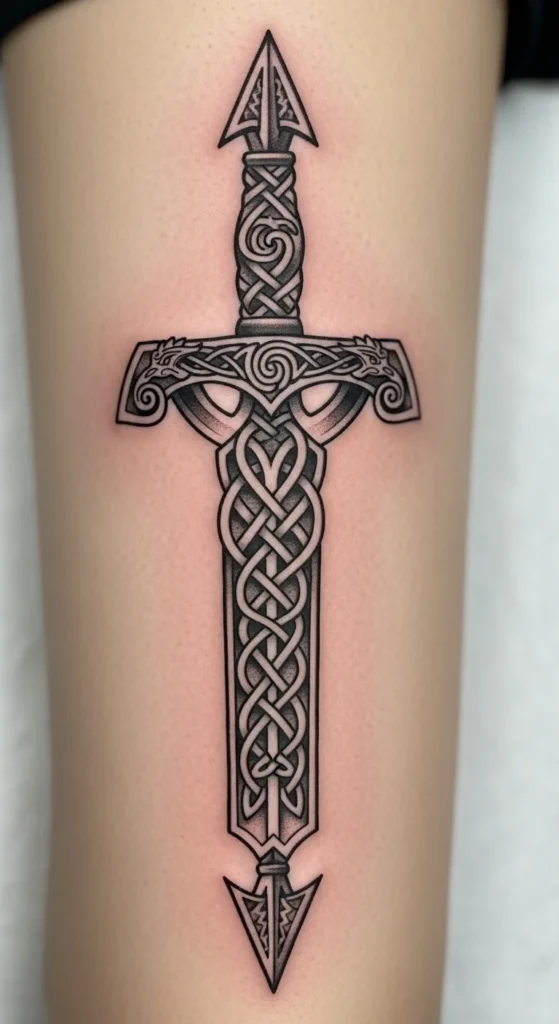
This design is great for long placements where you want a bit of ornament without a heavy look. The arrow tips mimic ancient patterns while staying clean. Try sketching triangle shapes and adding small curves to create an Irish feel. This works on the forearm, spine, or thigh. Minimal shading keeps cost and time low.
19. Sword Wrapped in Ribbon With Simple Knots
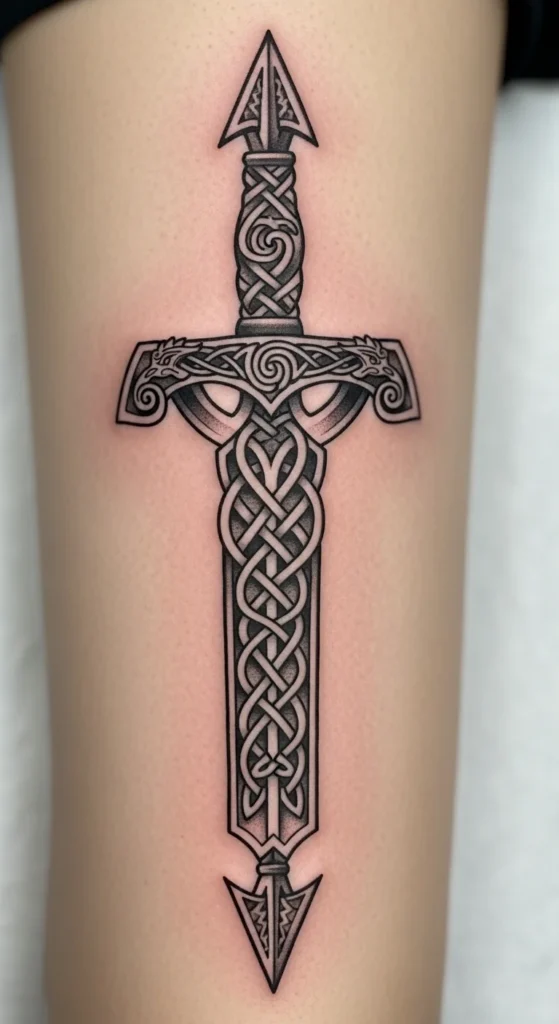
The ribbon softens the sword’s edge, giving a calm but structured look. The knot marks add subtle meaning without requiring much detail. You can test ribbon placement with a piece of string wrapped around a pencil. This tattoo works well on the arm or leg. Black-and-gray shading gives it dimension while staying light.
20. Irish Sword With Vertical Ogham Script
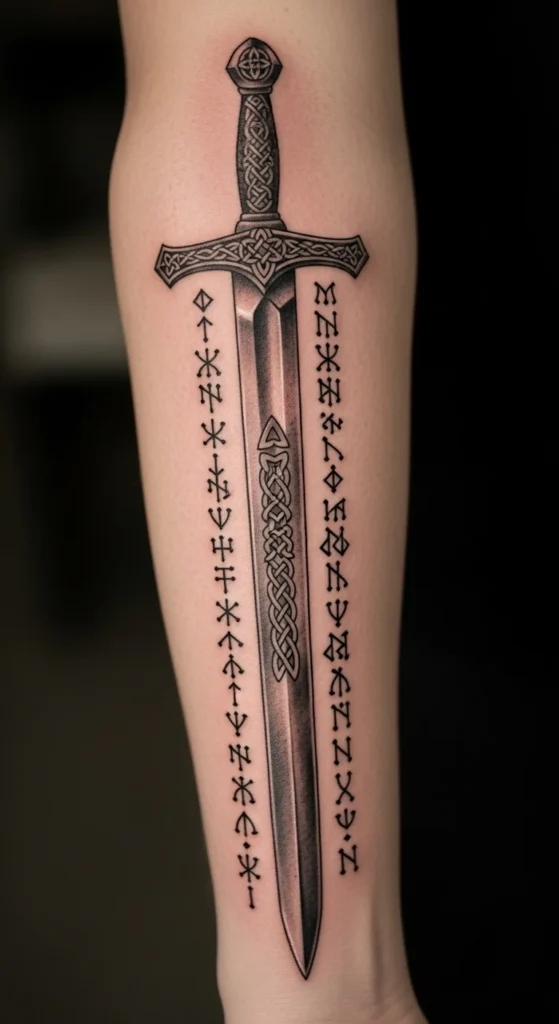
Ogham lines match the sword’s vertical flow, making the design tidy and readable. You can look up simple Ogham letters and draw them with straight strokes. The placement works for the forearm, ribs, or thigh. Since the script uses clean lines, this idea stays affordable. Keep the blade shape simple to maintain balance.
21. Sword Emerging From Celtic Fog Shapes
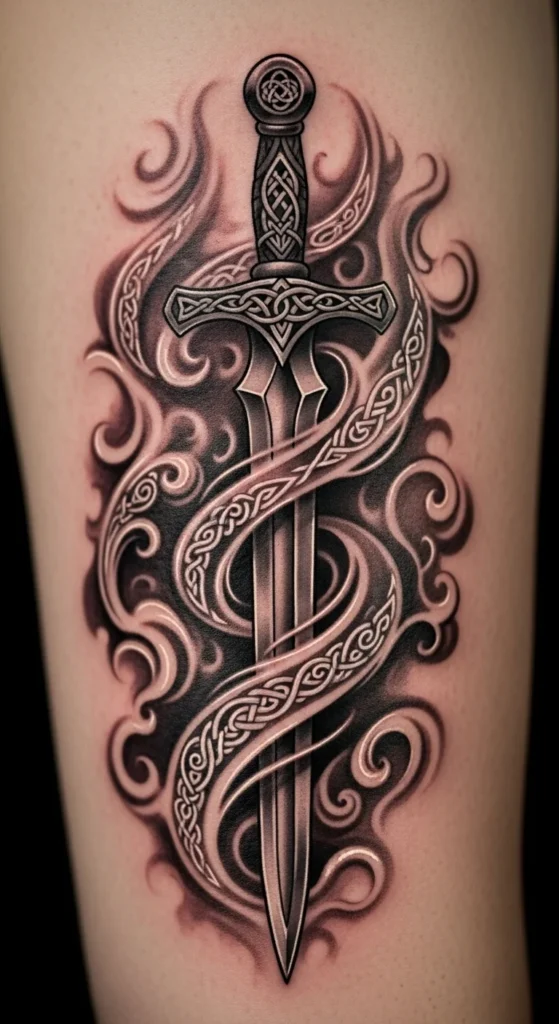
Fog shapes add mystery without crowding the blade. You can draw curved waves on a blank page to test density. This style suits people who like movement but want something soft around the edges. It works nicely on the shoulder, ribs, or shin. Keep shading light for a more airy feel.
22. Sword With Simple Knot Halo
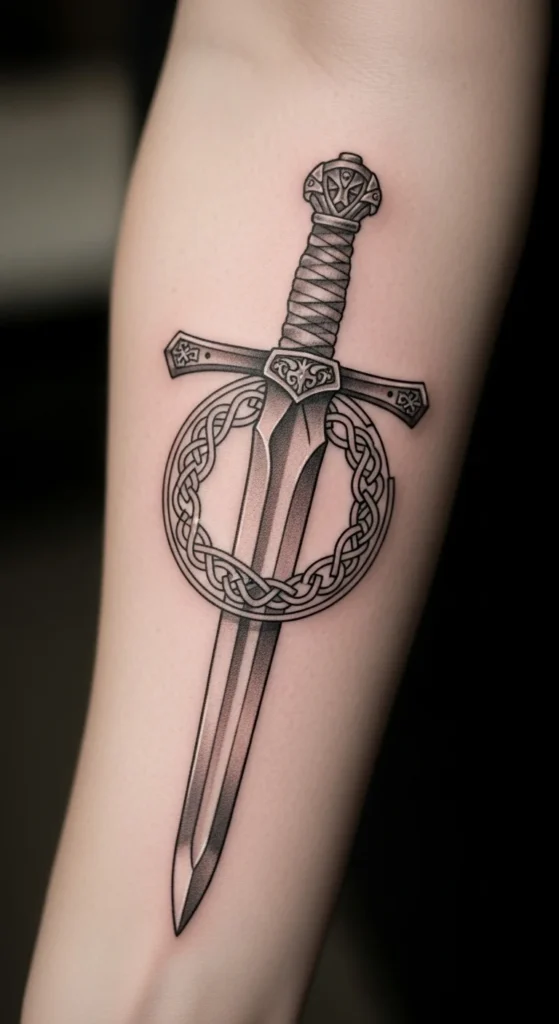
The halo keeps the sword feeling centered and intentional. The knot circle doesn’t need to be complex; even a few loops create a nice effect. You can draw circles using a cup or lid, then add small knot lines. This tattoo works for compact placements like the inner arm or back of the shoulder. The design stays budget-friendly and clean.
23. Sword With Irish Floral Accents
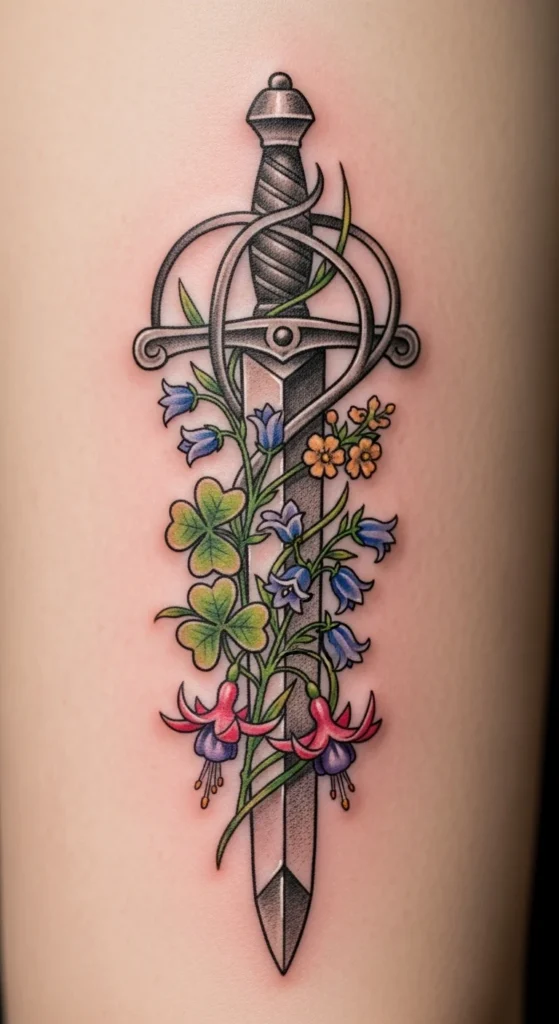
Floral touches give the sword a softer personality without reducing its strength. You can choose small flowers like primrose or bell-shaped blooms. Try sketching them lightly next to a sword outline to see spacing. This design works well on the thigh, forearm, or calf. Light shading keeps the look gentle and the cost low.
Conclusion
Irish sword tattoos offer a wide range of styles, from simple linework to textured pieces filled with motion. Each idea in this list helps you explore shapes, symbols, and layouts without feeling overwhelmed or locked into one direction. Whether you prefer bold lines, quiet details, or designs that mix tradition with personal meaning, you now have plenty of options to sketch, test, and bring to your artist with clarity. Use these ideas as a starting point and shape them into something that fits you well.