
A fresh tattoo can look perfect on day one—crisp lines, rich color, and that “wow” factor. But the real flex? A tattoo that still looks clean and readable years later. The good news: you can predict aging pretty well before the needle ever touches your skin.

Understand What “Aging” Actually Looks Like
First, let’s get real about what changes over time. Tattoos don’t usually “ruin” overnight—they slowly soften.
Common aging signs include:
- Lines spreading slightly (they can look thicker over time)
- Tiny details blurring together (especially if they’re packed tight)
- Color fading (often from sun exposure, skin changes, and placement)
- Shading losing contrast (soft gradients can flatten out)
A tattoo that ages well is one that stays readable and balanced, even when the edges aren’t razor-sharp anymore.
Check the Design for Breathing Room
If you want a tattoo to hold up, spacing is everything. The number one red flag? Designs that rely on micro-details.
Look for:
- Clear negative space between elements (gaps that won’t close up later)
- Simplified shapes you can still recognize from a few feet away
- Bold outlines (even if they’re not super thick)
A quick test:
- Zoom out on the design (or squint at it).
- If it still reads clearly, you’re on the right track.
- If it turns into a “blob of vibes,” it may not age gracefully.
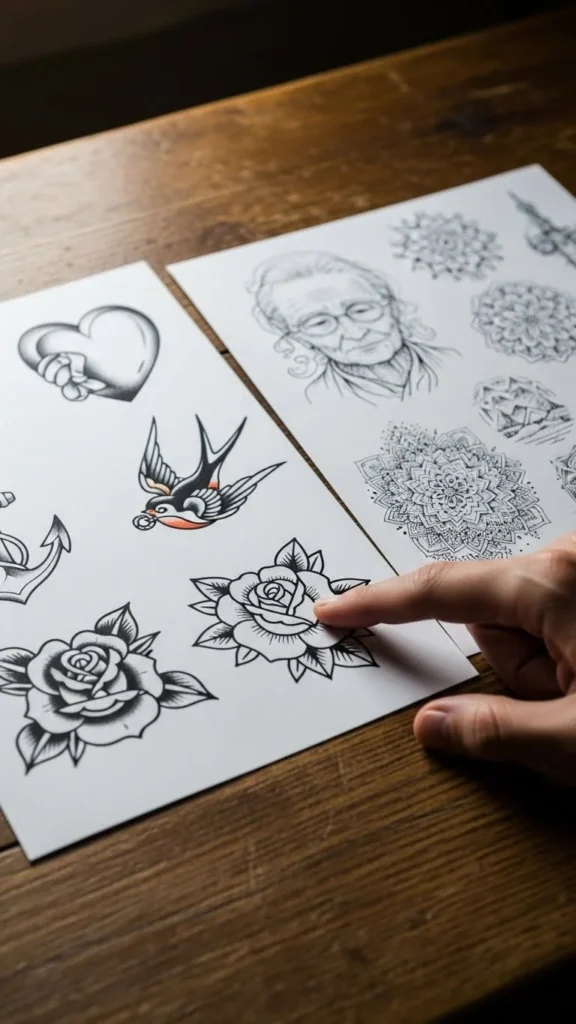
Know Which Styles Tend to Age Better
Some tattoo styles are naturally more “future-proof” because they’re built with clarity in mind.
Styles that often age well:
- Traditional / neo-traditional (bold outlines, strong contrast)
- Blackwork (solid shapes that stay readable)
- Simple fine-line (if not too tiny and placed well)
- Minimalism with space (clean, not crowded)
Styles that need extra planning:
- Super detailed realism in small sizes
- Micro tattoos with tiny lettering
- Very light, low-contrast designs (they can fade faster)
This doesn’t mean you can’t get the style you love—it just means you should size it appropriately and choose an artist who understands longevity.
Choose Placement Like You’re Thinking 5 Years Ahead
Placement can make or break aging. Skin moves, stretches, and rubs—and some areas get more sun than others.
Typically tougher spots for longevity:
- Hands and fingers (lots of friction, frequent washing)
- Feet (shoe rubbing, pressure)
- Inner biceps/inner thighs (more skin-on-skin friction)
- Ribs and stomach (stretch changes can affect the look)
Typically more stable spots:
- Outer upper arm
- Forearm (especially outer)
- Calf
- Upper back/shoulder blade
Ask yourself:
- Will this area rub against clothing all day?
- Does this area see a lot of sun?
- Does this area change a lot with movement or weight shifts?
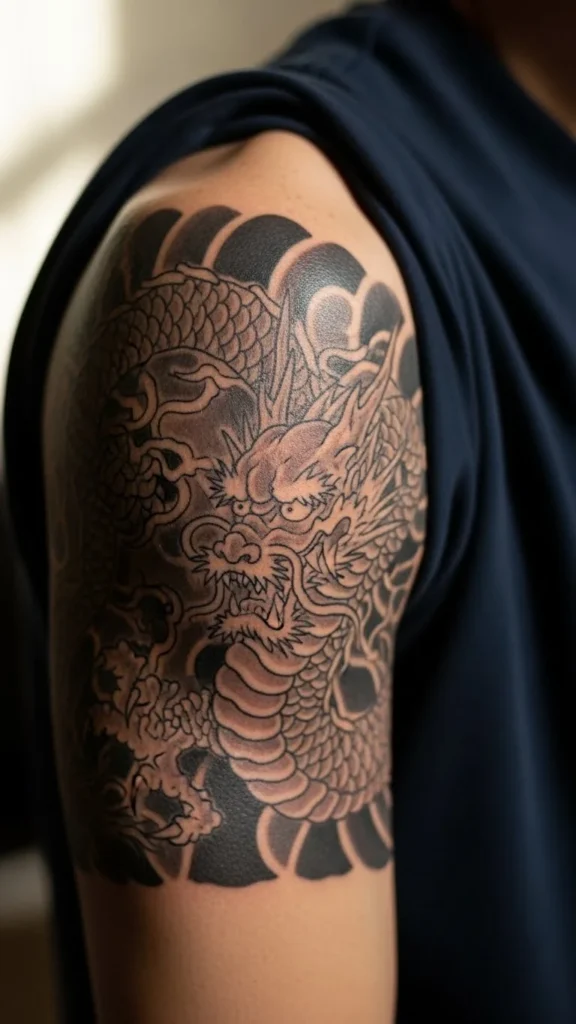
Look for Contrast (Because Contrast = Readability)
A tattoo that ages well usually has strong contrast—meaning light and dark areas are clearly different.
If you’re reviewing a design, check for:
- Defined outlines (or strong edge control in realism)
- Dark values where needed (not everything mid-gray)
- Clear focal point (your eye knows where to look)
If your design is all light shading with no deep shadows, it might look dreamy at first… and then fade into “soft blur” later. Adding a little contrast now can save the tattoo later.
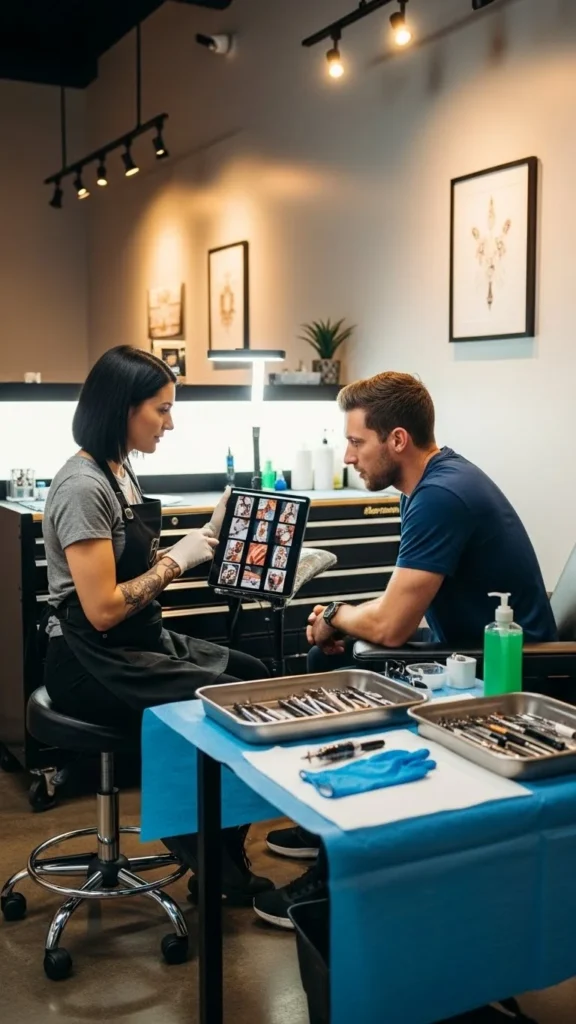
Vet Your Artist Like It’s a Long-Term Investment
Aging isn’t just about your skin—it’s also about the artist’s technique.
Green flags:
- Their portfolio includes fully healed work
- They post aged tattoos (months/years later)
- Their linework is consistent (not shaky or patchy)
- Their shading looks smooth and intentional
- They talk about sizing and placement instead of just saying yes to everything
A simple message you can send:
- “Do you have photos of this style healed and a year or two old?”
- “Would you recommend making this slightly larger for longevity?”
If an artist helps you adjust the design to age better, that’s a great sign—they’re thinking beyond the appointment.
Plan Aftercare and Sun Protection From Day One
Even the best-designed tattoo can age poorly if it’s not cared for—especially in the first few weeks.
Basic rules that protect your results:
- Follow your artist’s aftercare exactly (don’t freestyle it)
- Don’t pick scabs or peel flaking skin
- Avoid soaking (pools, long baths) during healing
- Once healed, use SPF on the tattoo when exposed to sun
- Keep the skin moisturized (healthy skin shows ink better)
Think of it like this: your tattoo lives in your skin. The better your skin is treated, the better the tattoo will look.
Quick “Will This Age Well?” Checklist
Before you commit, run through this:
- ✅ Can I recognize it clearly when I zoom out?
- ✅ Does it have enough spacing and breathing room?
- ✅ Is the size appropriate for the detail level?
- ✅ Does it have contrast (not just light shading)?
- ✅ Is the placement relatively stable and low-friction?
- ✅ Does the artist show healed/aged work?
- ✅ Am I willing to protect it from sun long-term?
If you hit most of these, you’re setting yourself up for a tattoo that still looks great years down the line.
Takeaway: Future-You Will Thank You
The best aging tattoos aren’t always the most complicated—they’re the ones designed with clarity, placement, and real-life skin in mind. Give your design space, choose the right artist, and protect your ink like it matters.