
Someone I know spent eight months saving reference photos and still felt stuck. The real problem was not the images. It was knowing which zodiac pieces hold up on your skin and which look like yesterday's trend after two years. After talking with artists at five shops across Brooklyn and seeing healed pieces on wrists and chests, I focused on designs that read well now and age without fuss. Here are ten zodiac sign tattoo directions that actually work in real life, and what to ask for at your consult.
1. Floral Aries glyph on inner wrist, fine line balance
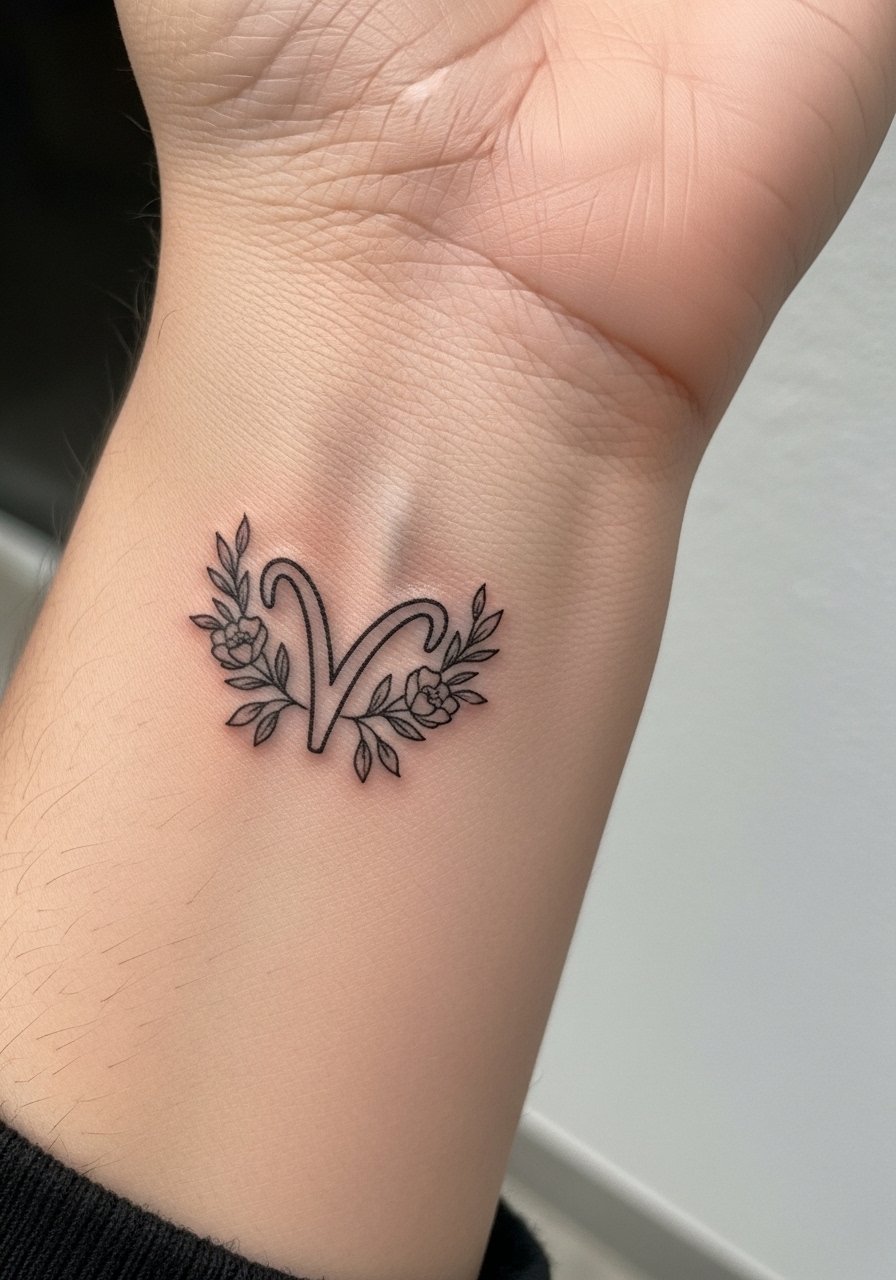
Someone I know first saw this paired with a pastel dress and booked it on impulse. The floral Aries keeps the ram's energy but softens the stance for a daily-wear wrist piece. Tell your artist you want slightly bolder linework around the glyph and delicate petal accents, so the glyph stays legible as the flowers feather. Fine line here looks crisp at six months and then may need a light touch-up by year three. Common mistake is asking for ultra-micro petals that blur on the wrist. Expect a quick session and low pain, but note the wrist moves a lot so pick slightly thicker stems to avoid early fading.
2. Geometric ram across the forearm, blackwork momentum
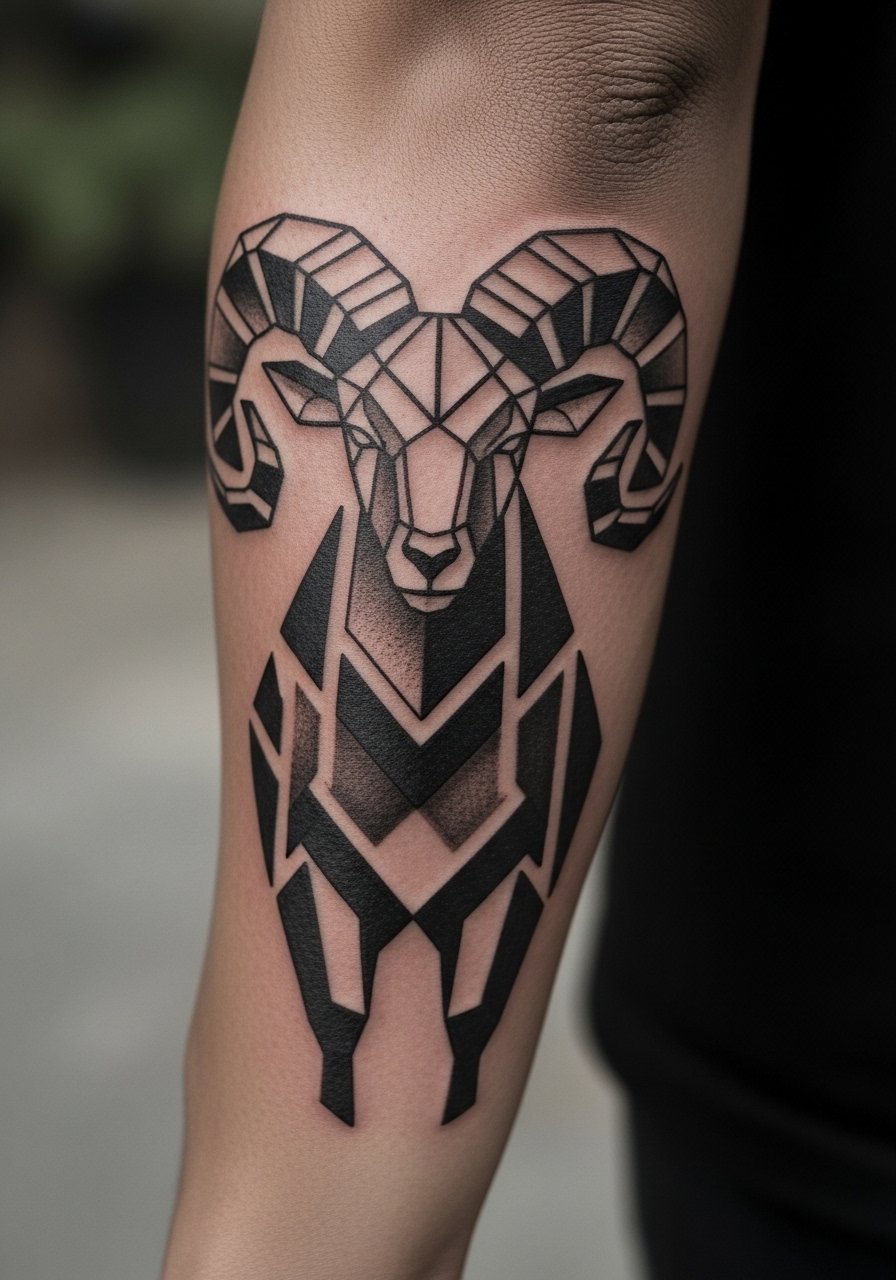
Fair warning: the forearm is one place where geometric angles read from across a room, and they also reveal shaky linework. The biggest mistake is asking for tiny angles packed close together. Bring clear references that show edge spacing and tell your artist you want consistent lineweight and negative-space planes for contrast. Healing at six months usually shows strong saturation and crisp linework, and at two years the shapes keep their identity as long as lines had room to breathe. Plan for one or two sessions depending on size, and ask about touch-up timelines for bold blackwork.
3. Bull silhouette wrapped in flowers on the shoulder, neo-traditional warmth
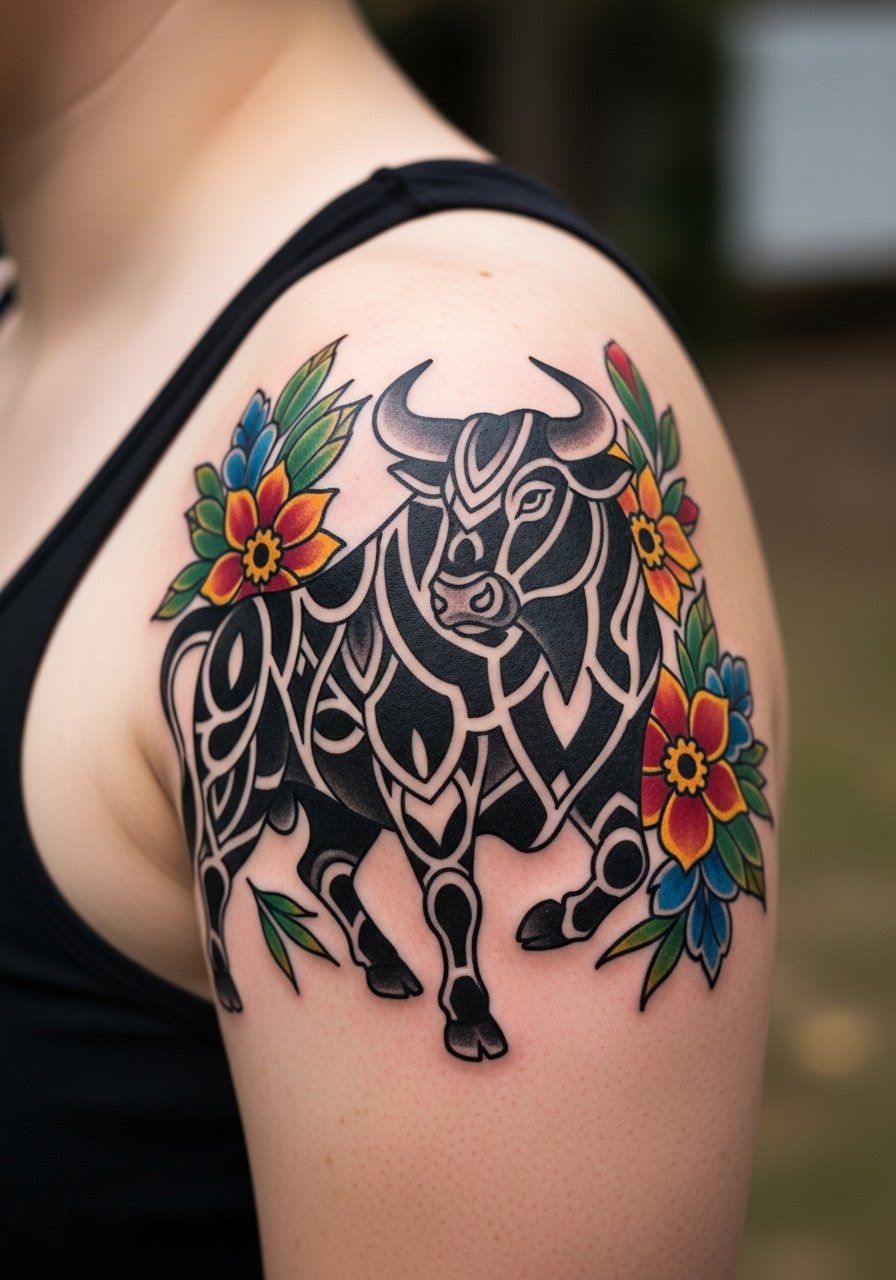
When you want grounded presence without shouting, a bull silhouette with floral wrapping hits the balance. Bring photos of the specific flower types you want so the artist can scale petals around the curve of your shoulder. If you go too small the floral details will blur into the silhouette after a year. On the shoulder the pain is moderate and the piece tolerates color saturation well. Ask for color blocked areas rather than tiny stipple fills to keep the flowers readable. Expect one to two sessions and plan a possible touch-up to restore saturation after sun exposure.
4. Taurus glyph plus lily of the valley on collarbone, minimalist botanical
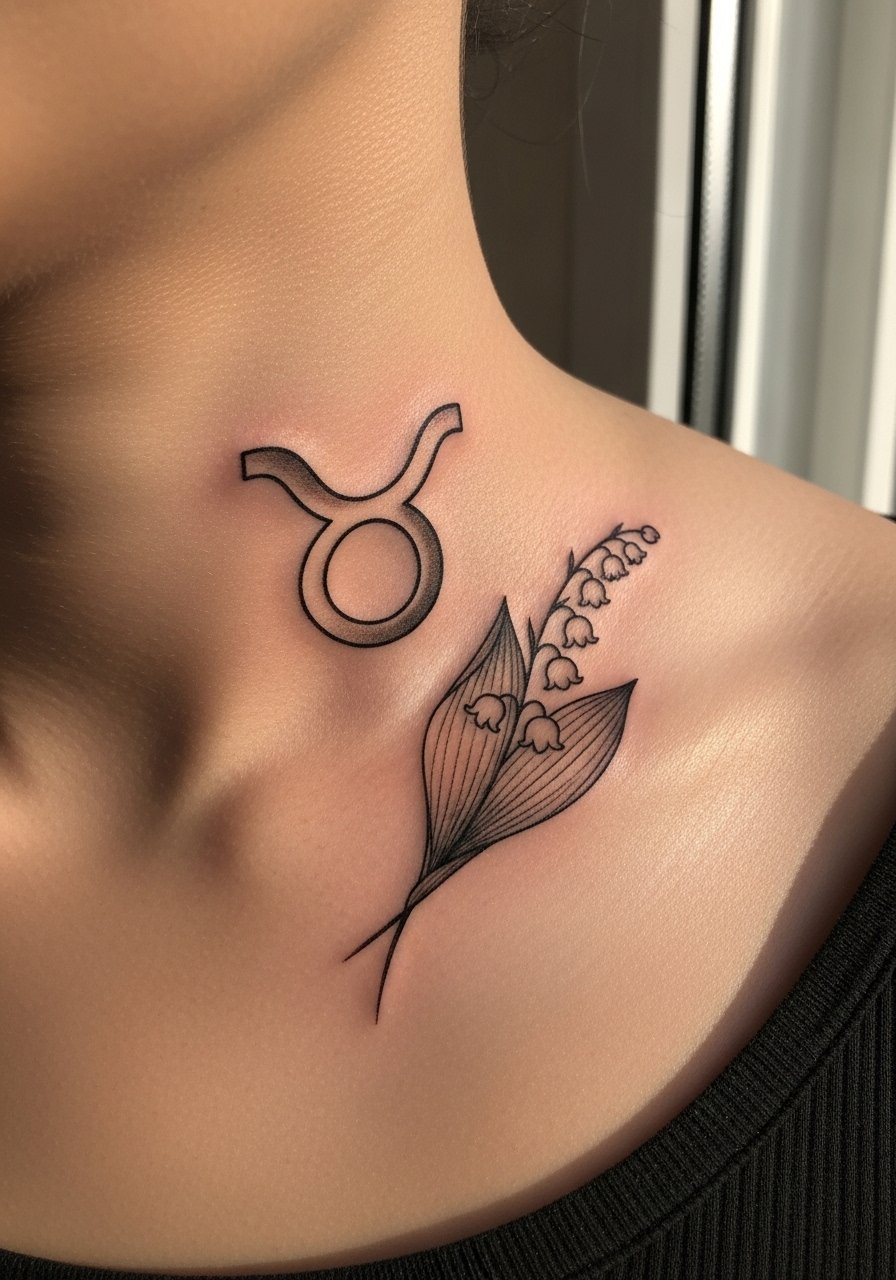
When you want subtle placement that still reads as intentional, collarbone botanicals do the trick. Mention to your artist that you prefer slightly heavier glyph lines and soft gray shading on the flower stems. The collarbone moves with clothing so ultra-fine stems can break up during healing. A common error is placing the glyph too close to the floral stem, which causes visual crowding as it ages. Expect one short session with a stinging but manageable pain level. At two years the glyph should remain clear if the linework started with solid depth.
5. Twin faces for Gemini on the ribcage, illustrative drama
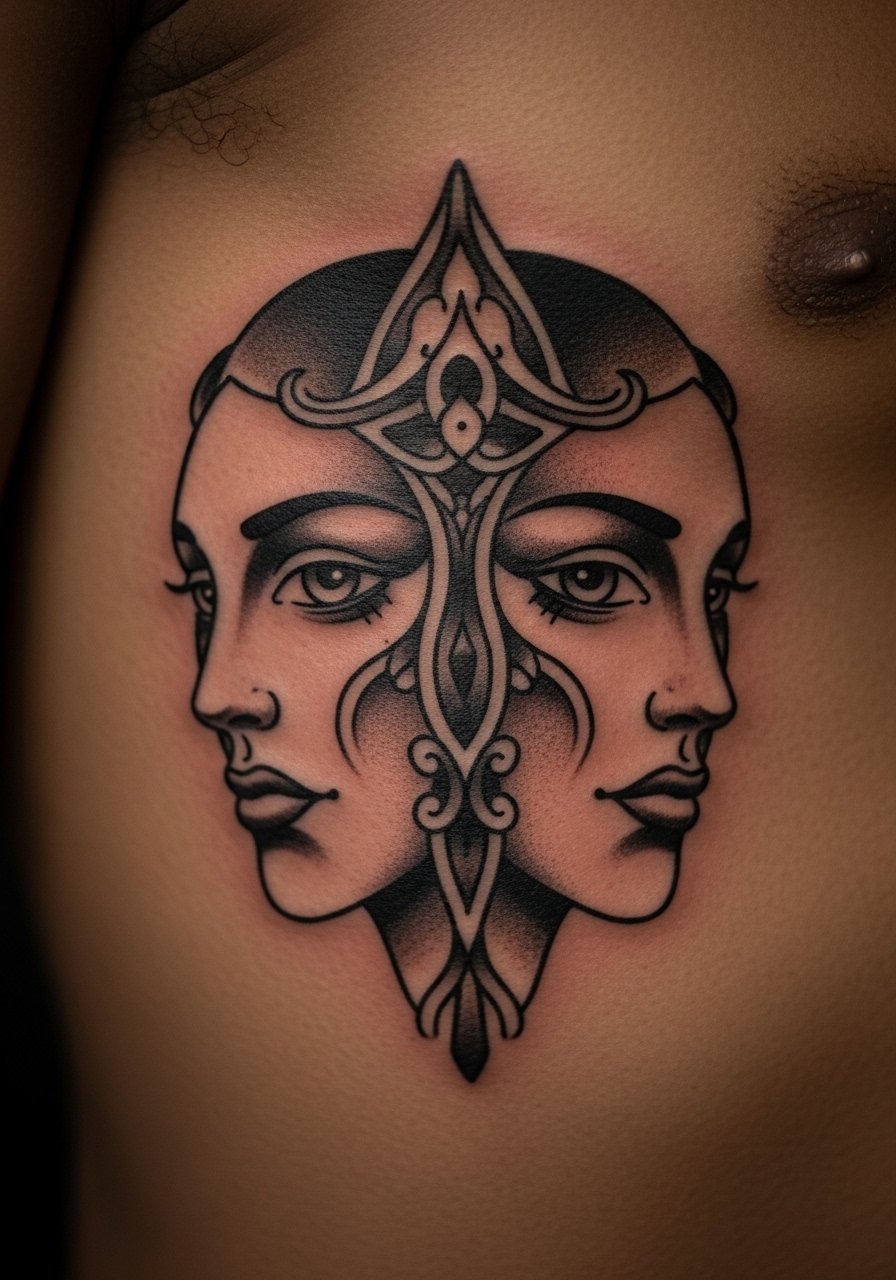
The ribcage is a seven out of ten on most pain scales, but the canvas allows narrative pieces that breathe. The mistake I see is asking for too much micro detail in a single sitting. Ask your artist to map the faces so each has its own negative space and to avoid hairline shading that can dissipate with movement. Artists split on fine line on ribs. One camp says skin stretch and motion blur fine lines within two years. The other camp says with proper depth and spacing fine line settles fine. Name both camps and ask where your chosen artist stands before booking. Expect one to two sessions and plan for a touch-up if the shading softens.
6. Mirrored crescent moons for Gemini on ankle or finger, micro celestial
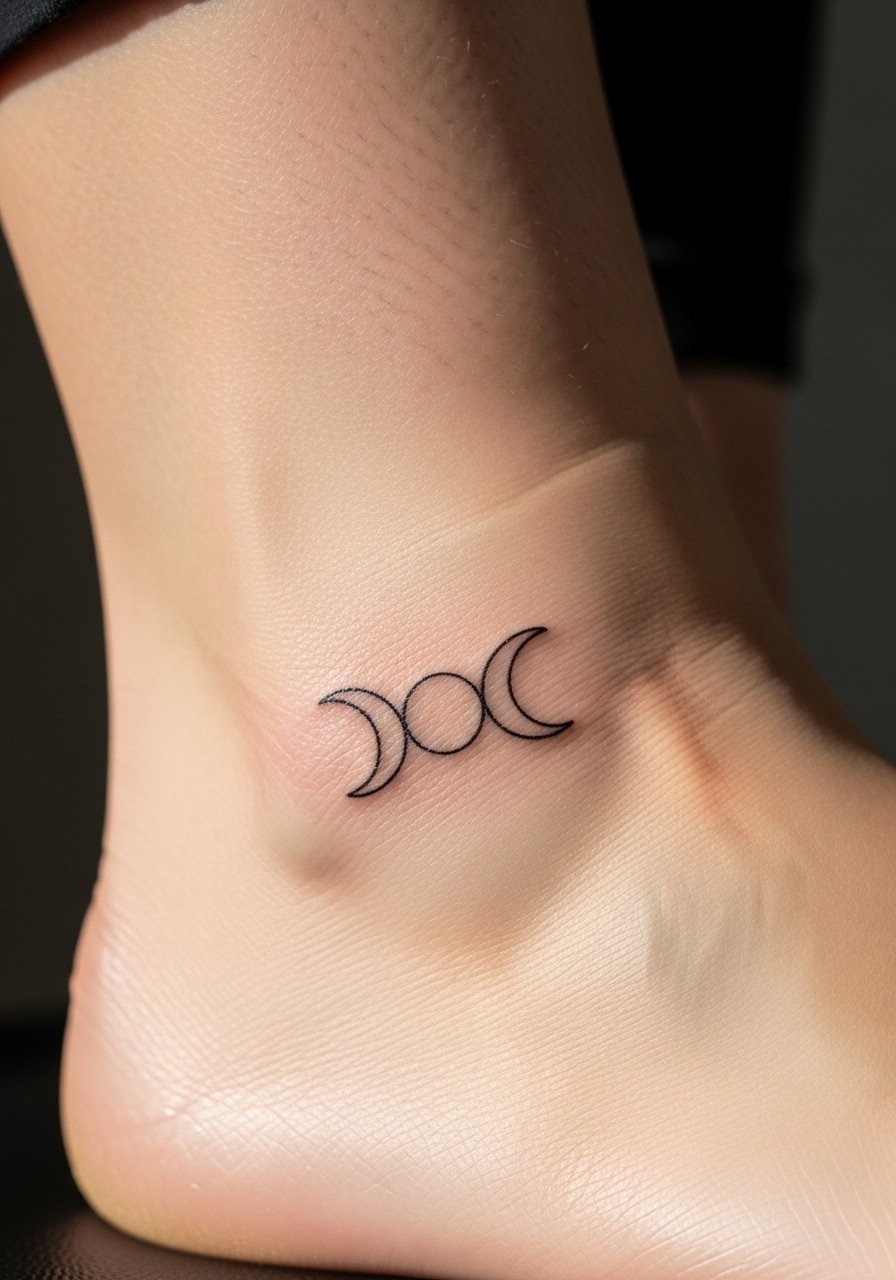
There is a debate in the community about fine line on fingers and other high-movement spots. One group argues that ultra-fine moons on fingers fade within a year. The other group says a slightly heavier line and frequent touch-ups keep the symbol crisp. If you want this on a finger, ask for a bolder outline and realistic expectations about annual maintenance. On the ankle this design fares much better and requires less upkeep. The session is quick and pain is mild on the ankle. A common mistake is asking for dots and micro shading on fingers without accounting for friction from rings and daily use.
7. Delicate scales for Libra behind the ear or inner forearm, minimalist balance
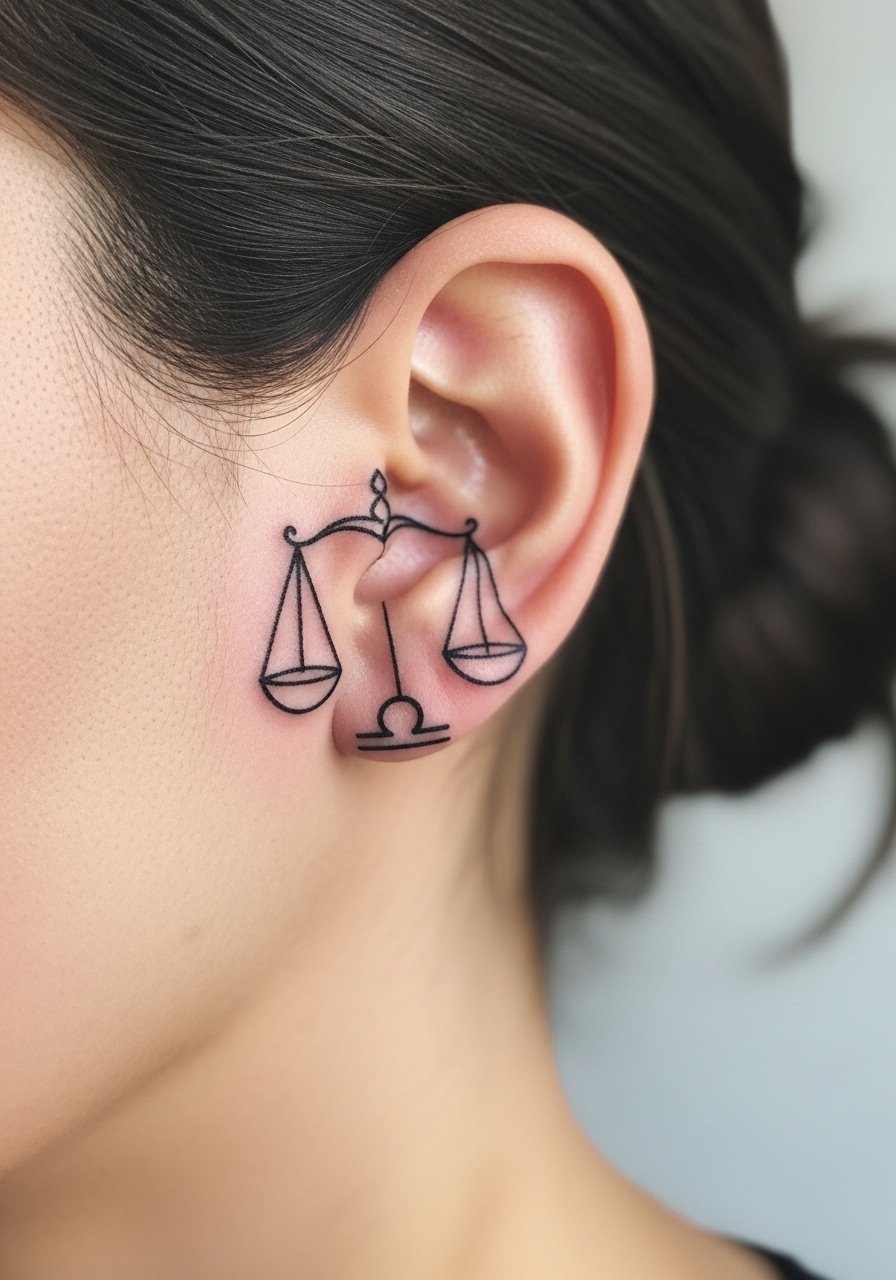
When you choose scales to echo Libra's love of symmetry, placement changes the whole story. Behind the ear reads like a personal talisman and holds up well visually, although small lines there can soften sooner. On the inner forearm the piece becomes a clearer statement and ages better if the lines are slightly bolder. Artists are split about fine line longevity. One camp favors the elegance of ultra-fine work and accepts more frequent touch-ups. The other camp prioritizes longevity and recommends firmer lineweight. Talk about lifespan during your consult and ask to see healed photos on skin tones similar to yours.
8. Libra constellation layered with Venus on upper arm, cosmic layering
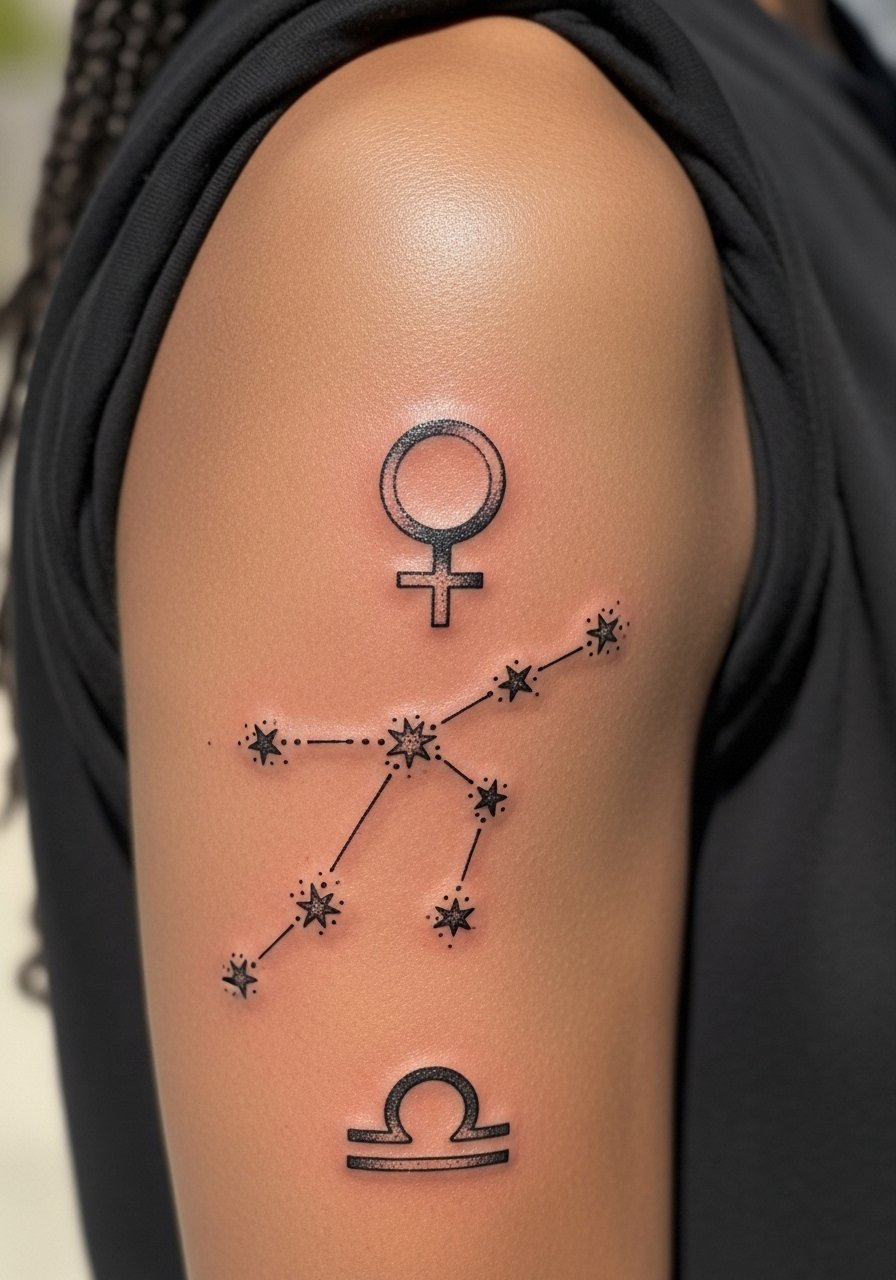
I like constellation layering when someone wants extras beyond a glyph without crowding the design. Ask for slightly separated star dots and a clear Venus symbol so the constellation does not read as a cluster. On the upper arm you avoid the constant friction smaller placements suffer. Expect one session and low to moderate pain. A real mistake is asking for tiny star dots with minimal spacing. At two years stars that started with tight clustering often merge visually. Request reference photos of healed constellations from your artist to confirm spacing.
9. Capricorn sea-goat mountain landscape on calf, blackwork scenery
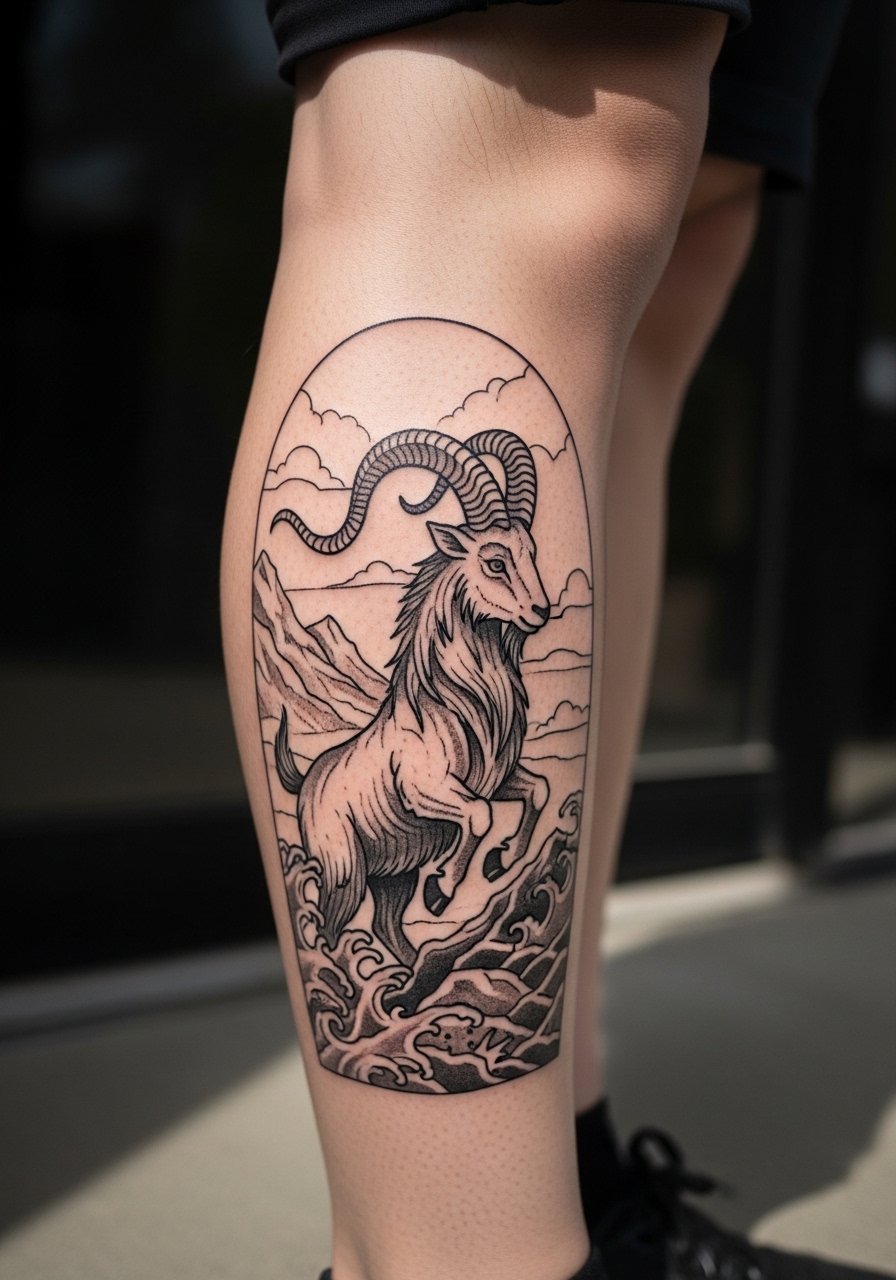
There's a quiet appeal to turning the sea-goat into a wearable landscape that wraps the calf. The calf handles medium-large blackwork well and the muscle movement keeps dissemination even. When you consult, describe the horizon line you want and where the goat silhouette should sit. The mistake is compressing too many tiny landscape details into a small patch. Expect two to three sessions depending on scale, and plan a touch-up if gray washes fade unevenly. At five years the composition maintains its silhouette if saturation was dense and UV protection was consistent.
10. Aquarius flowing waves on ribcage or wrist, abstract fine line
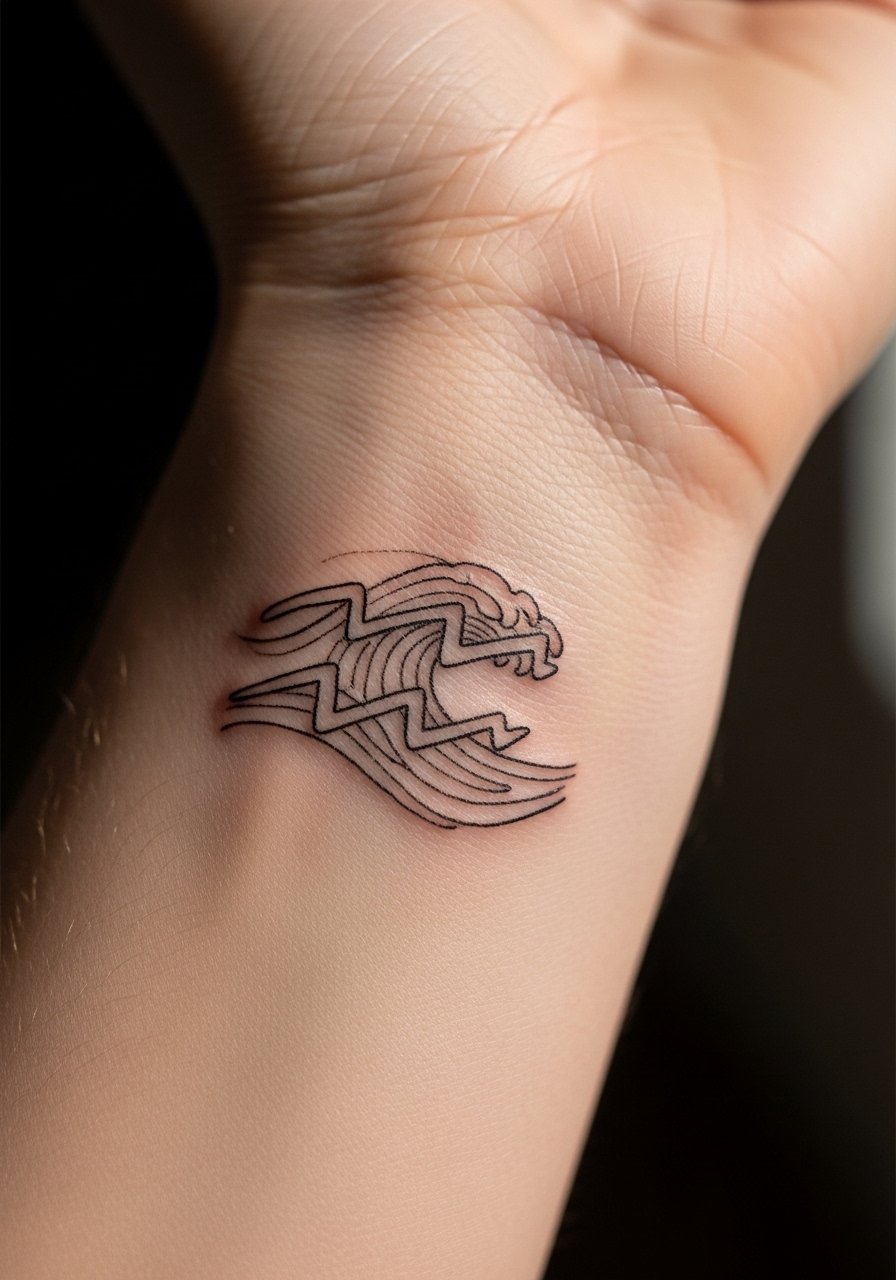
When Aquarius leans abstract, flowing waves modernize the water bearer. If you pick the wrist, go for slightly firmer lineweight to resist friction. On the ribcage the waves can be more sprawling and appear sculptural. The common mistake is overcomplicating the flow with too many tiny curls that blur in high-motion areas. Tell your artist you want clear directional lines and ask how they plan to space them for long-term readability. Sessions are short for wrist pieces and more involved on the ribs. Touch-ups are common around year two if you pick ultra-fine linework.
Tattoo Prep and Aftercare Essentials
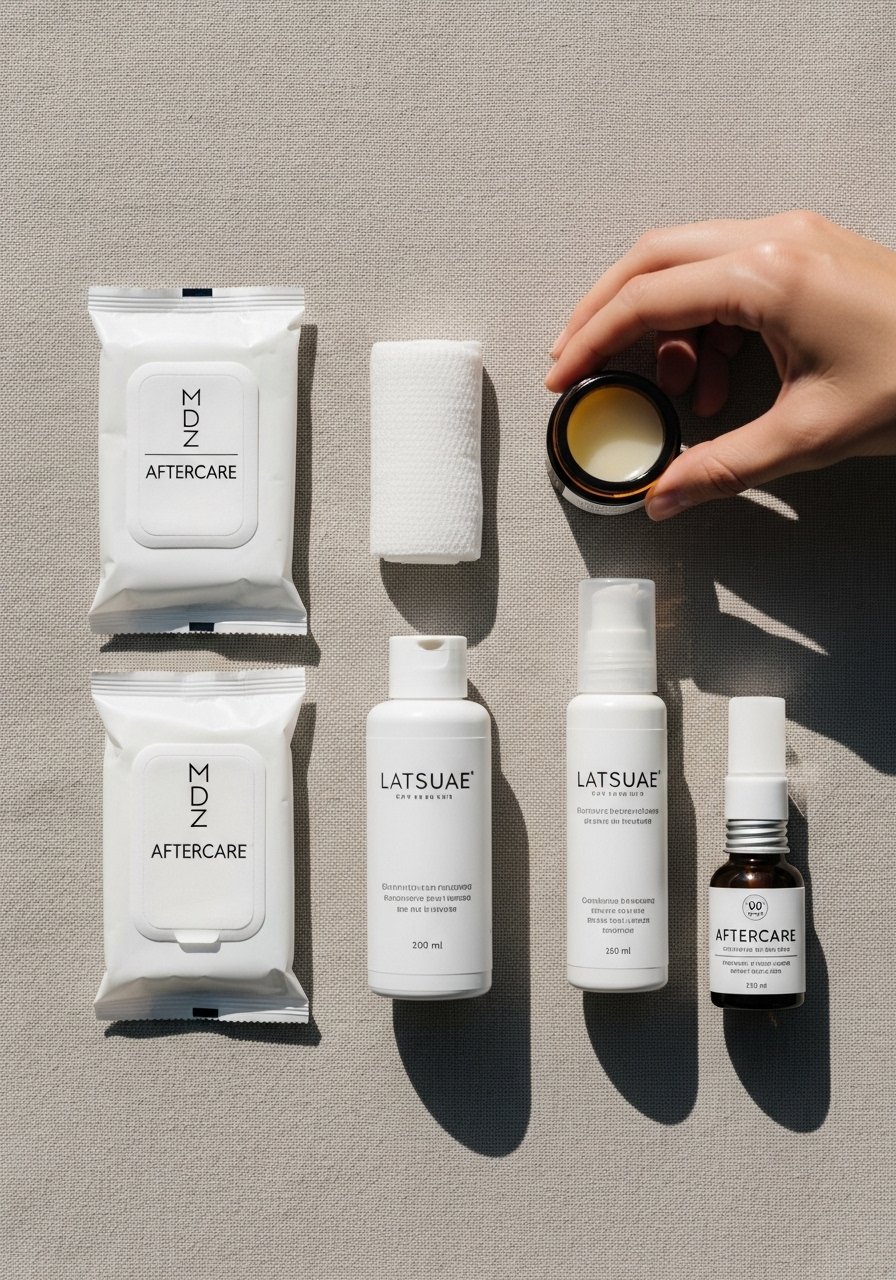
Lightweight fragrance-free balm for daily moisturizing. Use during the later stages of healing when skin feels dry. It keeps flaking soft without clogging pores.
Gentle saline wound spray. Great for rinsing sweat and debris after light activity. Spray and pat dry gently rather than scrubbing.
Medical-grade occlusive bandage roll, 6-inch. Useful for larger pieces or to protect fresh ink during travel. Replace per artist instructions.
Non-scented gentle foaming cleanser. Use for the first week to wash away excess plasma and avoid irritation.
Breathable tattoo aftercare dressing strips. Handy for small areas that need protection from clothing.
Medical adhesive removal spray (gentle). Helps if you are using an occlusive bandage and need safe removal without tugging the skin.
Saniderm-style second skin bandage. This is the one mainstream product I mention. Some artists recommend it for the first 24 to 48 hours to reduce scabbing.
Broad-spectrum mineral sunscreen, lightweight. Use on healed tattoos to protect saturation. Apply gently and reapply after sweating.
Every tattoo is different. Always follow your artist's specific aftercare instructions. Consult a dermatologist if you have skin concerns or unusual healing issues.
Frequently Asked Questions
Q: Will fine line zodiac glyphs blur faster on fingers and hands than on forearms?
A: From what I've seen, high-movement areas like fingers and palms accelerate fading. If you want glyphs there, ask for firmer lineweight and expect touch-ups possibly every one to two years. The forearm usually holds fine line longer because it sees less friction.
Q: How do constellation tracings age compared with solo glyphs?
A: Constellations that use spaced dots and modest connecting lines tend to age better than tiny, dense glyph clusters. Ask your artist to leave breathing room between stars so the pattern keeps its structure as dots spread slightly with time.
Q: Are chest or ribcage zodiac pieces worth the pain for longevity?
A: Chest and ribs offer great canvas and usually age well if the artist spaces lines correctly. The pain is higher, but those areas avoid constant abrasion. Expect longer sessions and potentially a touch-up if fine shading softens.
Q: Should I avoid color for zodiac pieces on darker skin tones?
A: Not necessarily. Black and deep gray give reliable contrast, but pigments can be chosen to complement darker skin. Ask to see healed photos on skin tones like yours and request stronger saturation for colors you want to read clearly in photos.
Q: If I want an Aquarius planetary pairing, what should I tell my artist?
A: Say you want Saturn and Uranus glyphs paired with clear spacing and specify placement, such as finger versus neck. For fingers request bolder outlines. For neck, mention discreet sizing and ask about career considerations.
Q: How often do I need a touch-up for fine line zodiac work on a wrist?
A: It depends on sun exposure and friction from clothing. From what artists tell me and what I have seen, expect a possible light touch-up around year two to three for wrists with fine detail. Use sunscreen on healed ink to slow fading.