
Fine line sun and moon pairs that still look intentional after five years usually avoid razor-thin single-needle fills. Bold contour and clear negative space give each element breathing room, so the crescents and rays do not fuse into a single blot. Expect subtle adjustments to scale and spacing up front, and the result reads like a composed emblem rather than two symbols fighting for attention.
1. Fine Line Sun Crescent on Inner Forearm

A narrow inner forearm sun and crescent works when you want a readable piece without dominating your sleeve. Recommend slightly heavier linework than a reference single-needle sample, because the underside of the forearm softens detail by year two. Discuss exact line weight and dot spacing so the artist can map out the negative space, and bring both a three-inch and a five-inch scale reference so you can see how it reads at different sizes. Session time is usually under an hour, pain is low, and a light touch of stipple shading keeps the moonscape from looking flat. For showing it off, roll sleeves and wear open cuff shirts to frame the inner forearm.
2. Geometric Sunburst on Outer Calf

Outer calf geometry benefits from radial symmetry that reads from across a room, and it ages predictably because the skin there holds saturation well. If you want the sunburst to remain crisp, ask for slightly wider spacing between the inner concentric lines so they do not merge over time. Expect a medium pain level and a single two-hour session for a mid-sized piece. For evenings out, the design pairs with rolled jeans and ankle boots to expose the burst. A common mistake is asking for ultra-tight micro-lines, which can blur into a softer ring as the calf settles.
3. Stipple Moon Phase Band Around Wrist

A phase band can work like a slim bracelet when the dots and crescents keep consistent spacing. Wrist skin moves a lot, so insist on slightly bolder dots in the stippling to prevent early fading and blowout. Session time is short, but expect touch-up or refresh within two to three years for micro work. Wear simple jewelry that sits adjacent to the band, and consider delicate chain bracelets that do not rub directly over the ink during the first month. The main mistake is making the moons too tiny. Give the phases room to breathe so each one reads after healing.
4. Crescent And Sun Over Sternum

Sternum pieces look intimate and graphic, but they split opinion on technique. One camp warns that thin single-needle detail on sternum skin blurs within a couple of years because the area moves with breath and clothing. The other camp argues that with slightly wider spacing and controlled needle depth the piece can hold fine detail and point to healed photos. Pain here is higher than the forearm, and sessions can need small breaks. For the appointment, wear a fitted sports bra so the artist has clear access while avoiding constant fabric friction during healing.
5. Half-Mandala Sun Nestled at the Collarbone
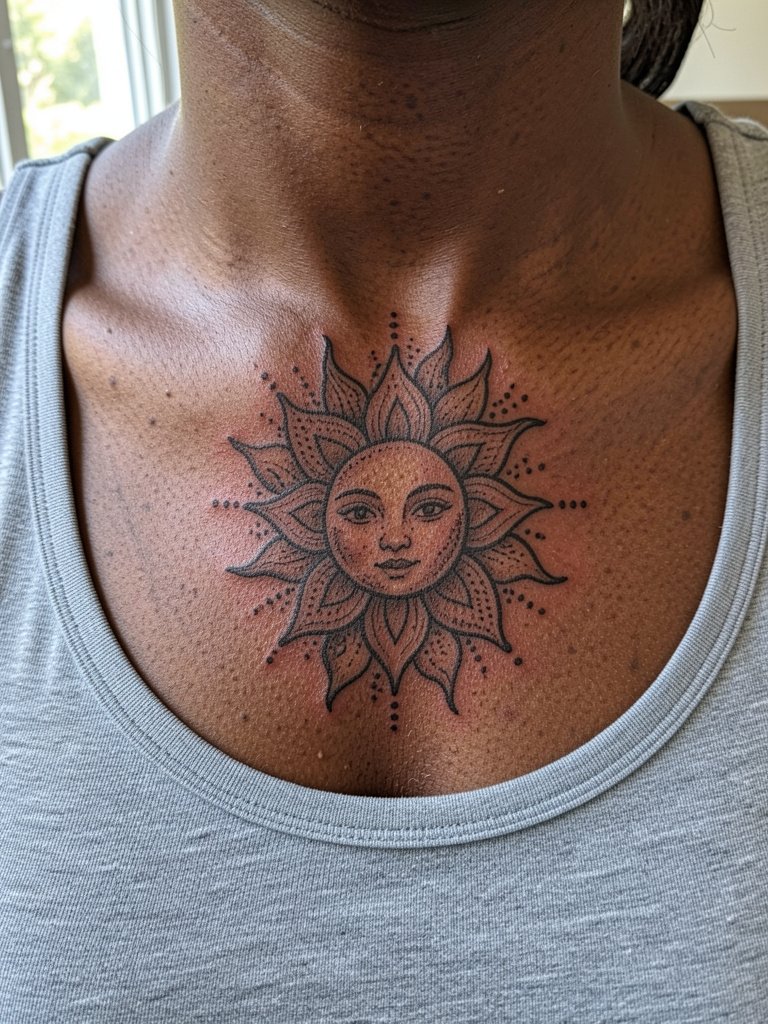
A half-mandala that follows the collarbone reads like jewelry when proportioned to the clavicle. Ask for a composition that mirrors the bone curve so the mandala does not look lopsided when you move. Expect a medium pain level and a single two-hour session for a six-inch piece. For showing it off, pair with wide-neck linen tops that sit naturally and frame the collarbone. The common mistake is crowding the design too close to the bone, which can make the linework feel jagged after healing.
6. Tiny Solar Dot Work Behind the Ear
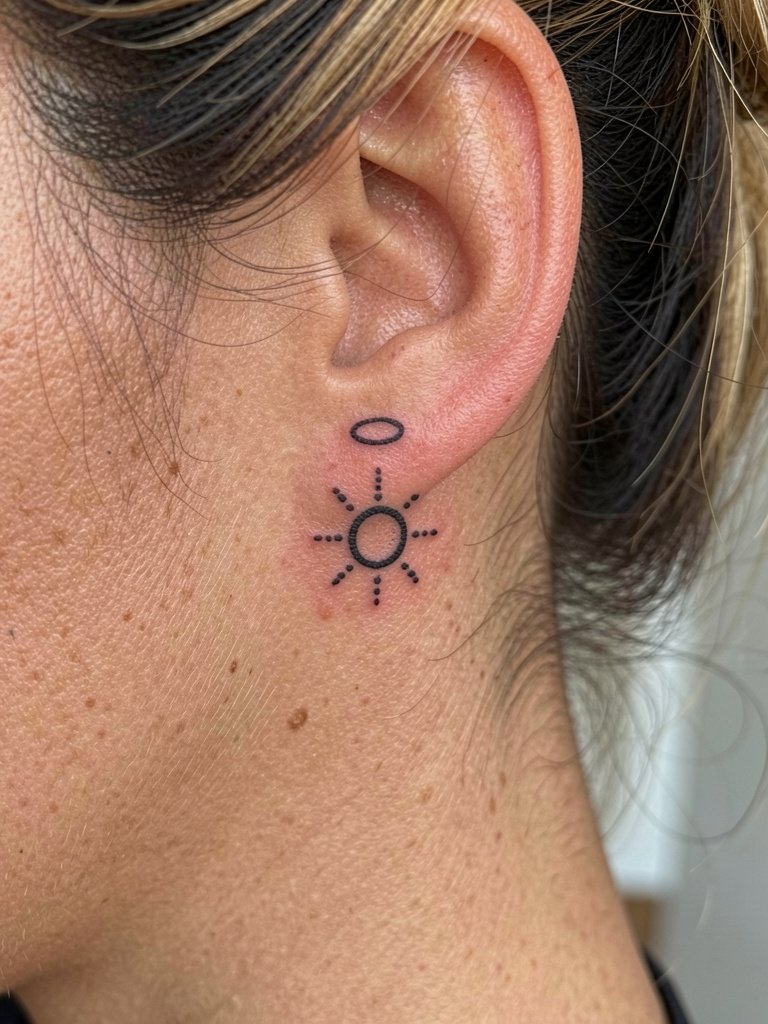
Behind-ear pieces read as a subtle accent and are ideal if you want the motif to peek out with an updo. The area needs precise placement because hairlines shift and small dots can blur, so request slightly larger dot spacing than your smallest reference. Pain is low but expect short, sharp needle stings. For the session, pull hair into a naturally secured updo and avoid heavy conditioners that deposit oil on the skin. A common mistake is choosing text or micro-detail there. Stick to symbols and dot work that will survive regular shampooing.
Studio Day Picks
These items smooth chair time and the first week of healing for the wrist, sternum, and collarbone pieces above.
-
Stencil transfer paper kit. Lets you preview placement directly on the skin so you can test how the sun and moon align across the collarbone or sternum.
-
Topical numbing cream. Applied per instructions about 45 minutes before the session it eases sharp spots behind the ear and across the sternum without altering linework.
-
Thin protective film roll. Useful for small wrist pieces and for keeping friction off an inner forearm moon during the first two days.
-
Fragrance-free gentle body wash. Cleans healing skin without stripping oils or irritating fine linework on the collarbone.
-
Aquaphor healing ointment. A thin layer during the initial healing window helps lock in moisture for delicate dot work and assists with touch-up readiness.
7. Neo-Traditional Sun With Crescent Eye on Shoulder Blade
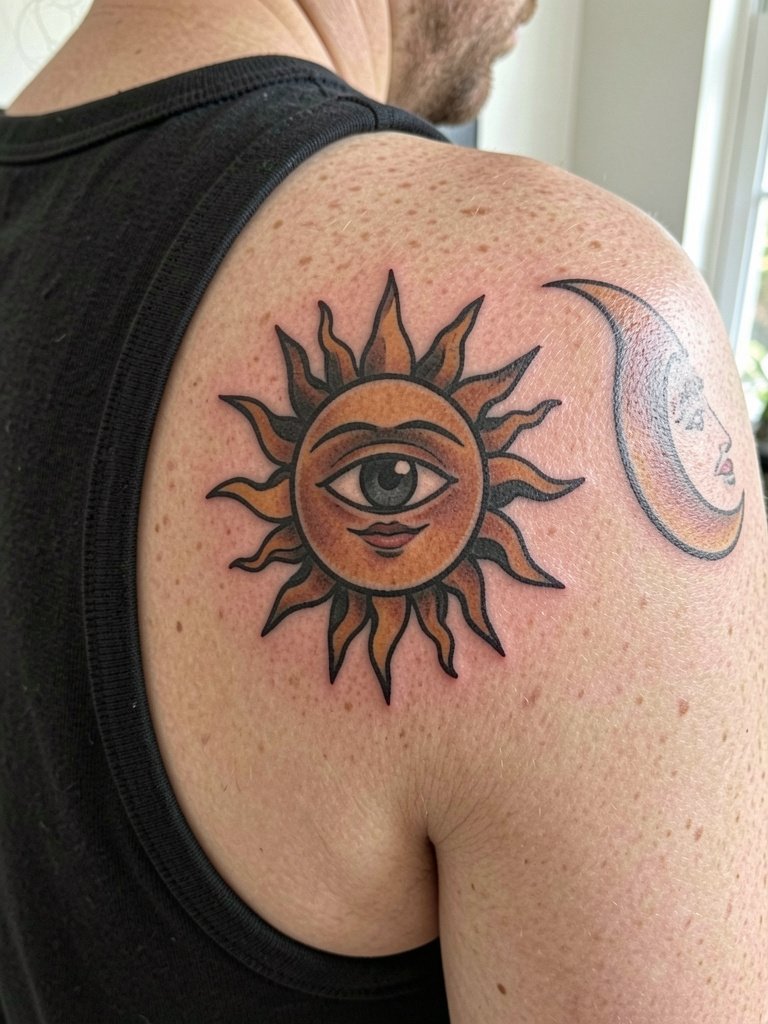
The shoulder blade takes saturated color and bold linework well, so neo-traditional suns maintain strong saturation for years. When you want longevity, prioritize solid black outlines and even color saturation over feathered micro-shading. Session time can be two to three hours depending on color. For outfit pairing, the piece plays well with open-back tops that let the design show without rubbing. A common misstep is squeezing too many tiny details into the blade area. Give the shapes room to breathe so the color fields do not merge.
8. Minimalist Sun And Moon Finger Stacks
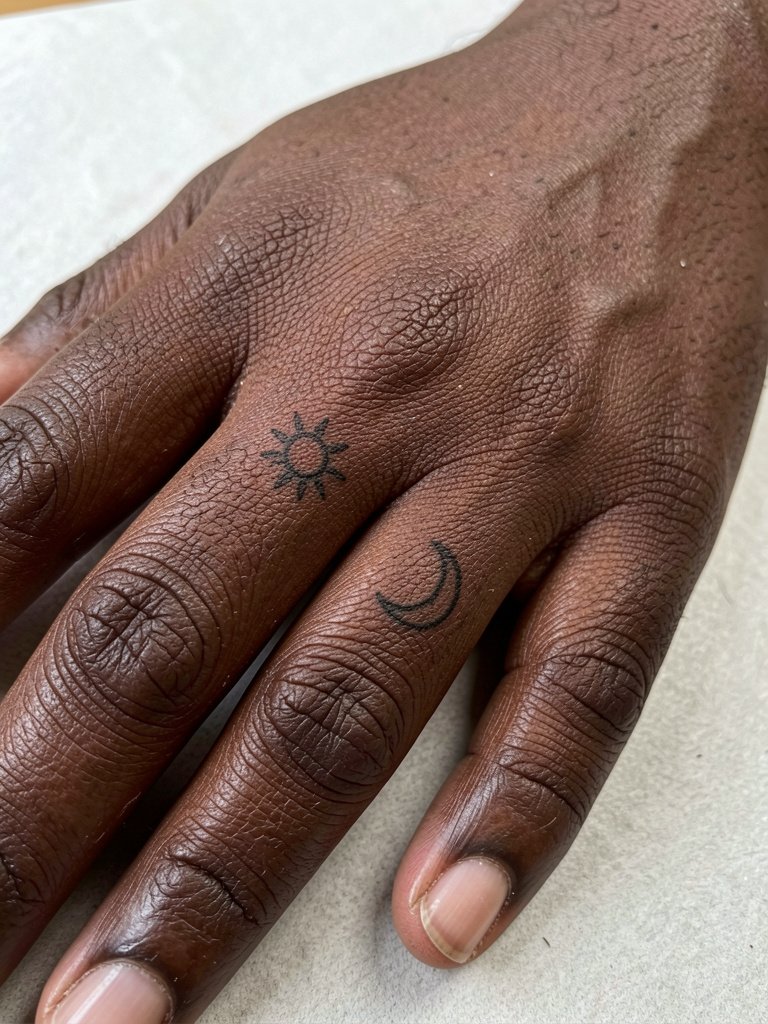
Finger tattoos look delicate but are high maintenance. The skin on fingers reforms quickly and tiny dots or hairlines can blur, so plan for touch-ups in the first year. Discuss scaling that uses slightly bolder strokes than your reference to increase longevity. Sessions are short and sharp. For showing them off, choose rings that sit adjacent to the tattoos rather than directly on top, and consider thin stacking rings to complement the placement. The most common mistake is requesting extreme micro detail that will soften after normal use and washing.
9. Solar Compass on Upper Back Between Scapulae

A centered upper-back compass pairs the symbolic sun with directional geometry. The skin there holds linework well, but large central dots or heavy black spots can sit too dense, so ask for distributed stippling rather than solid black fills. Expect a longer session when the piece expands past three inches. For wardrobe, the design looks great with low-back dresses or tops that reveal the upper back without chafing, and a lightweight open-back dress highlights the compass. Avoid packing too many small elements into the center point to reduce blowout risk.
10. Blackwork Moon Emblem on the Hand

Hand tattoos create immediate impact and they spark debate in the tattoo community. One group warns that hand and finger placements are exposed to heavy sun and washing so they fade and blur faster than torso work. The other group counters that bold blackwork and high saturation are the right way to approach hands because heavy ink survives better than delicate linework. If you want visibility, plan for more frequent touch-up cycles and prioritize bold silhouettes over micro detail. Pain is moderate and sessions are quick. Wear gloves or avoid harsh cleaners during healing.
11. Solar Mandala Thigh Panel
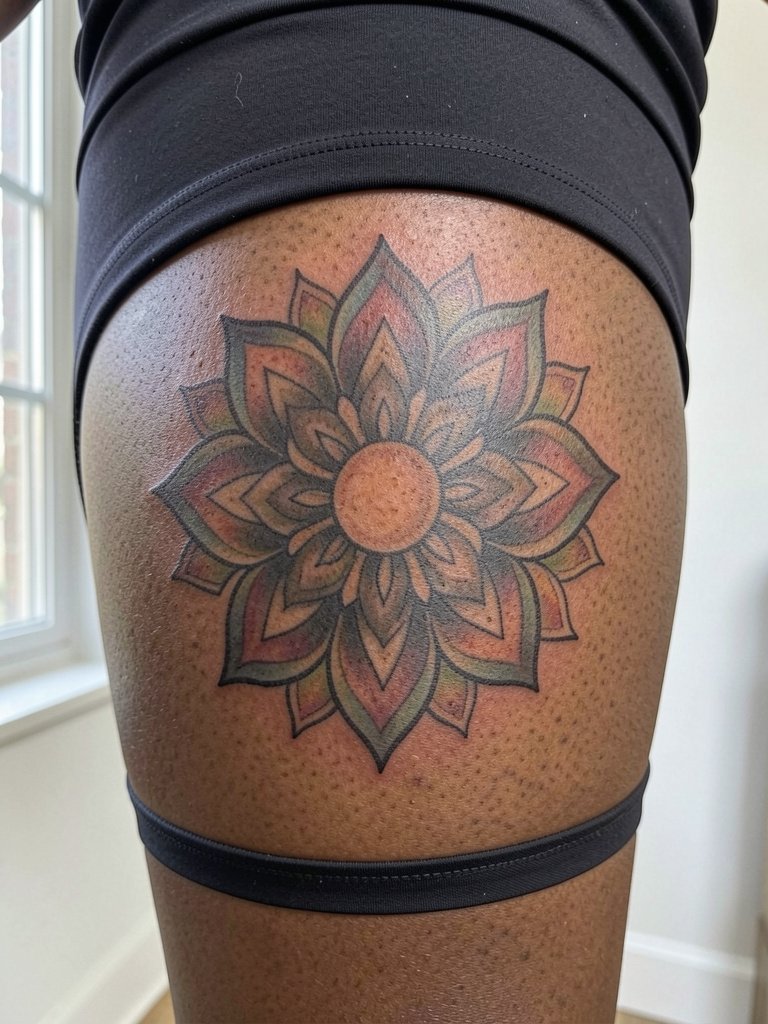
Upper-thigh mandalas can be bold and wearable, and the skin tolerates saturation well so the motif stays defined. For scale, insist the central sun has at least a 2.5-inch diameter so the interior petal detail does not compress. Sessions are comfortable for many people because the thigh is fleshier, but expect a longer block for a detailed panel. Pair with skirts or shorts that reveal the outer thigh, and consider flowy midi skirts for a show-off look. A common error is requesting ultra-tight micro lace at the edge that loses shape after healing.
12. Tiny Crescent Near the Ankle

Ankle tattoos face a lot of friction from socks and shoes so solid silhouettes outperform filigree here. If you want longevity, opt for a slightly thicker outline and avoid tiny inner dot work that can blur from repeated rubbing. Session pain is moderate due to thin skin near bone. For the appointment, wear low socks and shoes that slip on easily so you do not press fabric against the fresh ink. For display, rolled jeans and sandals pair well with ankle motifs and let the crescent breathe.
13. Solar Linework Across the Ribcage

Ribcage placements age unevenly when tiny lines are used because the skin there stretches with breath, and that causes debate among artists. One camp argues that fine single-needle ribs will blur within two years due to movement and thin skin. The other camp says that controlled needle depth and a slightly wider line spacing allow fine work to hold, and they can show three-year healed examples. If you choose the ribs, discuss planned spacing and depth with the artist and expect higher pain and a longer session. For the studio, wear a tightly fitted sports bra so the area is accessible while avoiding fabric friction during the first week.
14. Sun And Moon Sleeve Accent Near Elbow
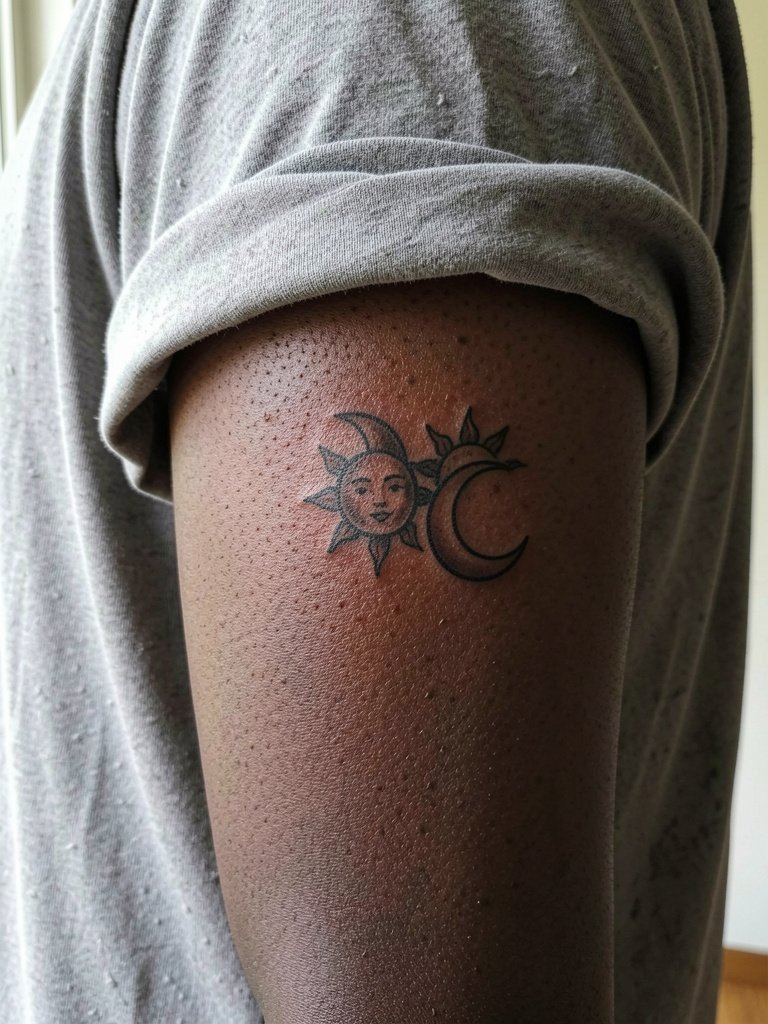
The elbow area sees a lot of movement and bending, so integrate sun and moon motifs into the sleeve flow instead of forcing a standalone micro piece. Ask the artist for flexible composition that uses negative space to avoid stitching across the crease. Sessions near the elbow can be more uncomfortable due to thin skin, and touch-ups are common for crease-adjacent lines. For daily wear, roll sleeves to just above the elbow and choose fabrics that do not snag the healing ink. Accessorize with light cuff bracelets rather than heavy watches during the first month.
15. Sun Halo Above a Small Back Crescent

A subtle back crescent with a sun halo is a discreet placement that still feels balanced when sized correctly. The lumbar and lower upper back area tolerates finer shadings, but remember that low-rise waistbands can rub during the first week. Ask for the halo to have spaced dots rather than a solid band to reduce dense saturation near a moving seam. Session time is moderate and pain is lower than sternum or ribs. Wear low-rise jeans and a cropped tank on the day of the appointment so the artist can access the area easily.
Frequently Asked Questions
Q: How do I choose between fine line and bold blackwork for a sun and moon piece on visible areas like the wrist or hand?
A: Think about longevity and lifestyle. Fine line reads delicate in photos but often softens more quickly on hands and wrists because of washing and sun exposure. Bold blackwork or slightly heavier line weights tend to hold longer in those spots, and planning for an eventual touch-up makes either approach practical.
Q: Where can I find healed portfolio examples and discovery pathways without naming artists directly?
A: Search platform tags and keywords that match the style you want, such as #SunMoonBlackwork, #SolarMandalaHealed, and #FineLineMoonHealed. Use location filters on TikTok and Instagram to find nearby shops, browse specialized tattoo portfolio sites by style keyword, and check community forums for healed photo threads across skin tones. This approach gives you a range of healed examples without relying on single artist recommendations.
Q: What should I wear to a sternum or ribcage session to make the appointment smoother?
A: Choose fitted, minimal-coverage clothing that exposes the area without shifting, for example a sports bra or fitted bandeau for sternum work, and a cropped athletic top for ribs. These keep fabric from rubbing the stencil and let the artist work with clean access. Avoid loose garments that need constant adjusting.
Q: How often will sun and moon micro pieces need touch-ups compared with larger saturated work?
A: Micro pieces on high-movement areas usually need touch-ups within one to three years, while larger saturated blackwork can go longer between sessions. Plan for a realistic refresh timeline when you pick scale and line weight. Keeping the area protected from sun shortens the time between touch-ups.
Q: Can I pair a new collarbone sun motif with jewelry while it heals?
A: Avoid necklaces that rest directly on fresh ink for the first two weeks. Light open-neck tops and statement collar clips that do not contact the tattoo are fine. If you want a show-off outfit, try an open-neck linen top that frames the collarbone without rubbing the healing skin.
