The chest reads like a personal billboard for what you want the world to notice when you walk into a room, and the design choices you make now shape how those pieces look after a few years. Pick spacing and line weight with aging in mind, not just the photo you saved at midnight. Below the surface, placement and clothing change how a chest tattoo breathes and shows up in everyday outfits, and the first idea here leans into that reality.
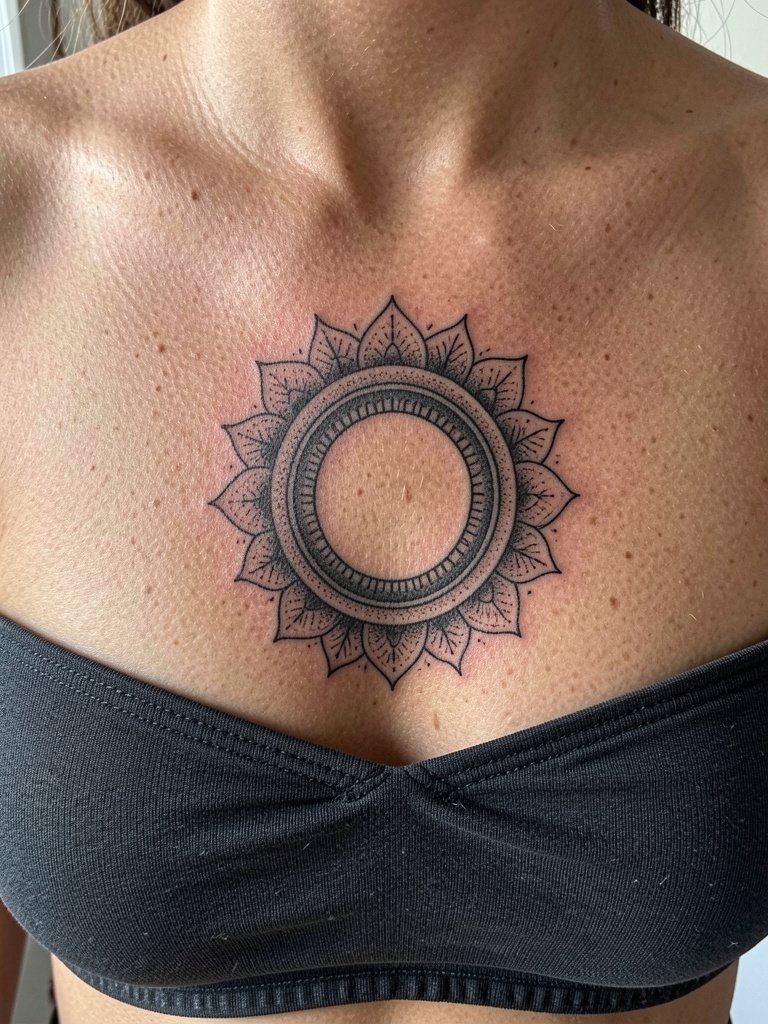
1. Symmetrical Mandala on the Sternum
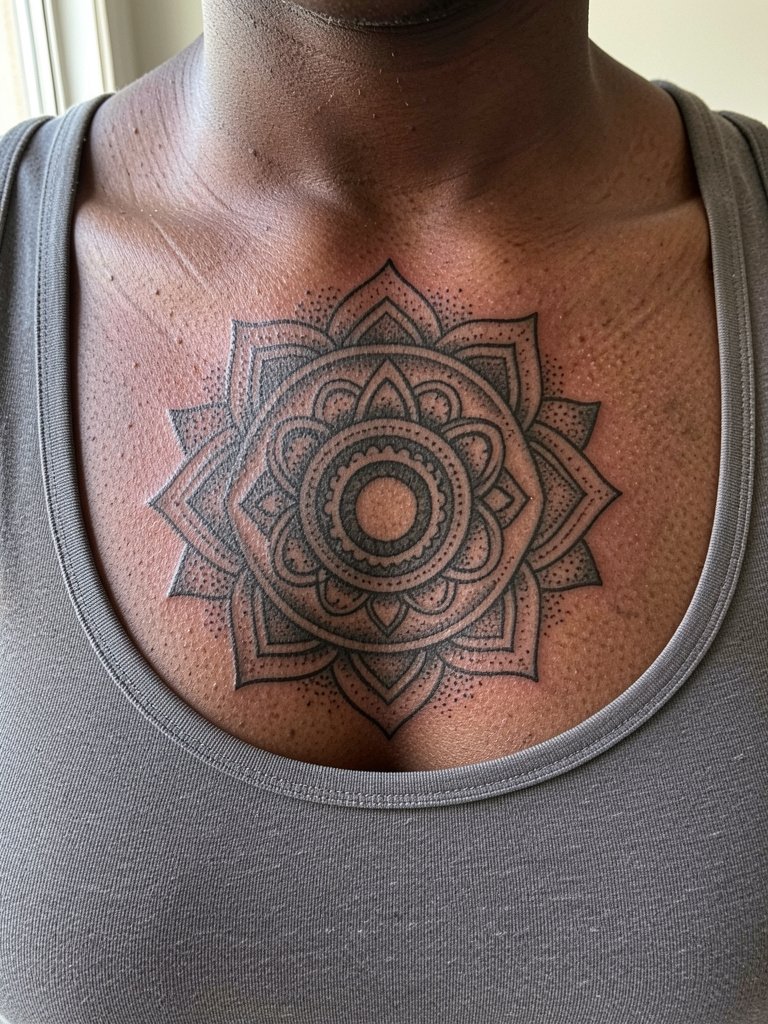
A centered mandala reads architectural on the sternum when scaled to the chest width, and that spacing matters for longevity. Fine line mandalas placed too small tend to blur inward over time, so I recommend slightly thicker linework with open negative space between rings to preserve the pattern at year three and five. Session time is often two to three hours depending on size, and the sternum can be unexpectedly sensitive so plan for breaks. Professional considerations matter here, seek an artist who routinely tattoos underbust and sternum work because breast contour changes and careful stencil placement are essential.
2. Bold Neo-Traditional Rose at the Upper Chest
Neo-traditional roses with bold black outlines and saturated color punch through the natural texture of chest skin, and they age into a readable statement longer than ultra-fine florals. Pick slightly heavier linework around petals so the silhouette stays crisp at two years and beyond. Expect a two-hour session for a palm-sized piece and light stinging on the clavicle edge. A common mistake is cramming tiny petal detail into an area that moves when you breathe. This placement pairs well with open-back tops for evenings out, try a scoop-back midi dress that frames the bloom without obscuring it.

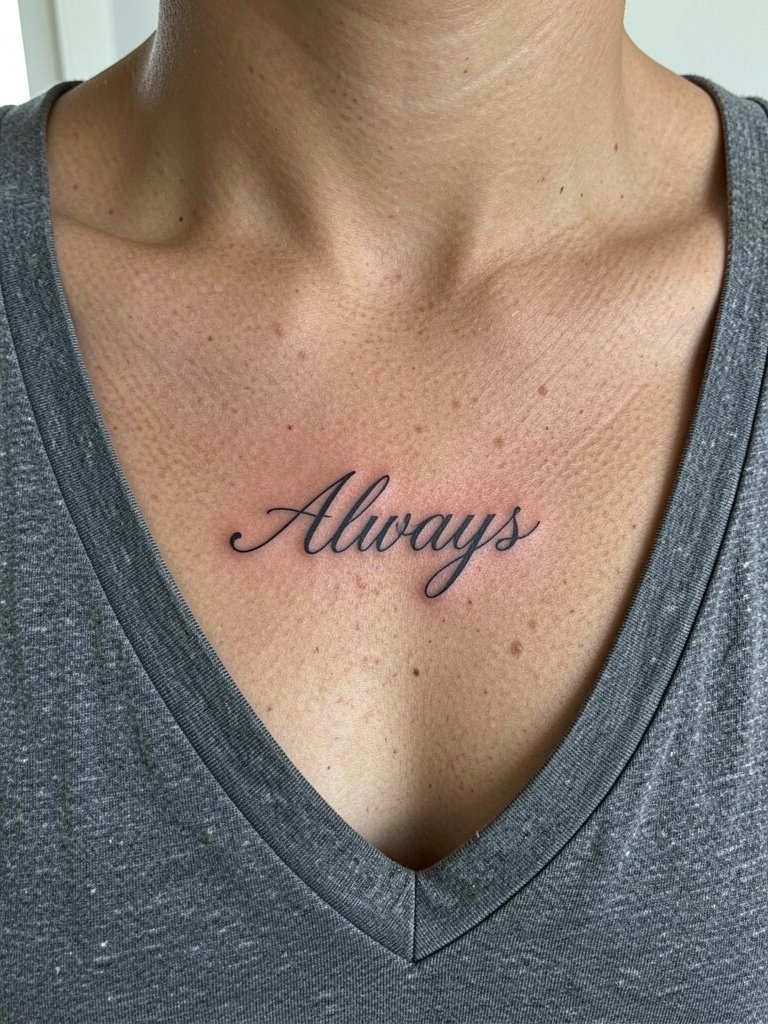
3. Minimalist Script Under the Collarbone
A single-word cursive placed under the collarbone reads intimate and deliberate when the script is scaled to three to four inches. Single-needle script that is too thin on chest skin can feather, so choose a slightly stronger hairline and allow the letters to breathe. The session is usually short, 30 to 60 minutes, and the clavicle can be bony so expect sharp, shallow sensations. For showing this piece, low scoop tees and delicate layered chains work best, try pairing with a thin chain choker that sits just above the script to frame it without covering.
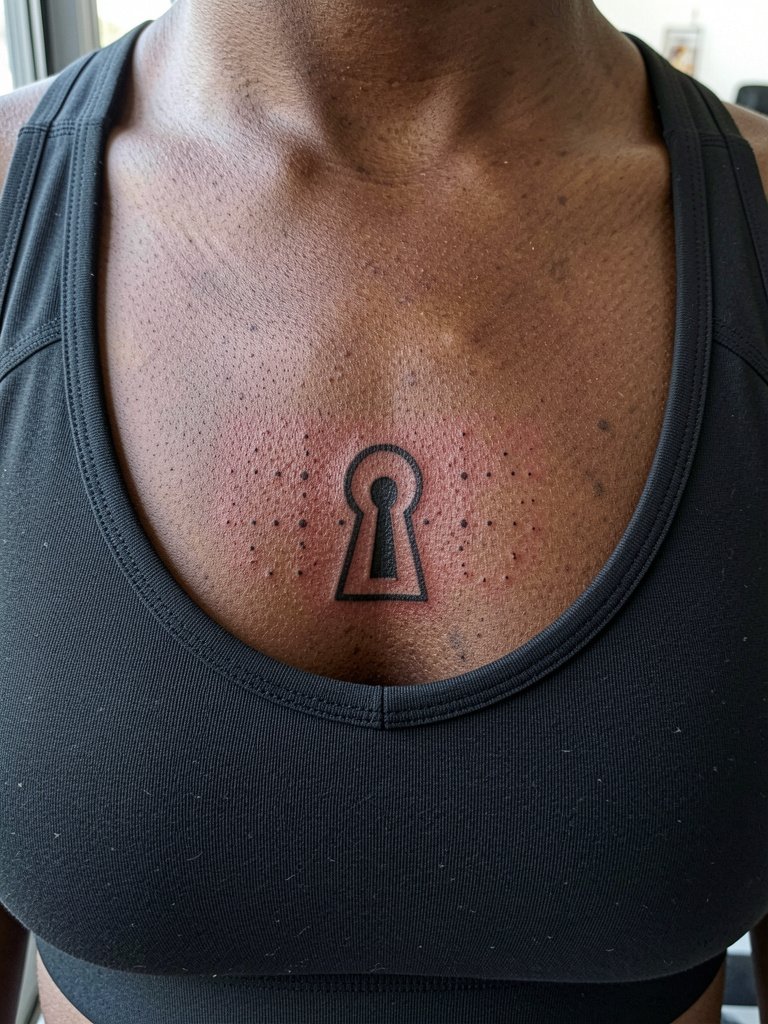
4. Symmetric Keyhole Cutout Underbust Line
A horizontal keyhole or small geometric motif sitting under the bust becomes a confident visual anchor for lingerie and summer tops. People sometimes ask for filigree too close to the breast fold and then find their lines distort with normal body movement. I prefer compact geometry with clear negative space so the shape keeps its silhouette at five years. Expect moderate pain and a one- to two-hour session. For sessions wear a loose sports bra or bandeau so the artist has clear access, and for showing off try a lace bralette that highlights the underbust without compressing the area.
5. Centerpiece Bird Span Across the Upper Chest
A low-slung bird with wings tipped along the upper chest reads expansive and moves with breath, and that movement can help a design feel organic rather than pasted on. The trick is to keep internal detail moderate so feather texture does not clog; stipple shading inside primary feathers gives depth without crowding the linework. Session time varies from one to three hours by scale. Wear a top with a wide neckline for the appointment to let the artist position the stencil easily.

Heal Smart
The upper-chest placements above sit on moving skin and near sweat zones, so a few simple products and small session hacks smooth the first two weeks.
-
Tattoo stencil transfer paper. Helps preview how motifs like the mandala and bird read on the chest before the needle touches skin.
-
Topical numbing cream. Apply per product instructions about 45 minutes before a sternum or upper-chest session to blunt surface sting while still allowing the artist to work.
-
Thin protective film roll. Keeps chest work clean under straps and during the shower period when friction is higher.
-
Fragrance-free gentle body wash. Mild cleansers help avoid irritation where the bra sits and where fabric rubs the fresh ink.
-
Aquaphor healing ointment. A thin layer during the first 48 hours keeps fine line work hydrated without clogging the channels that need to heal.
6. Minimal Geometric Piece Along the Cleavage
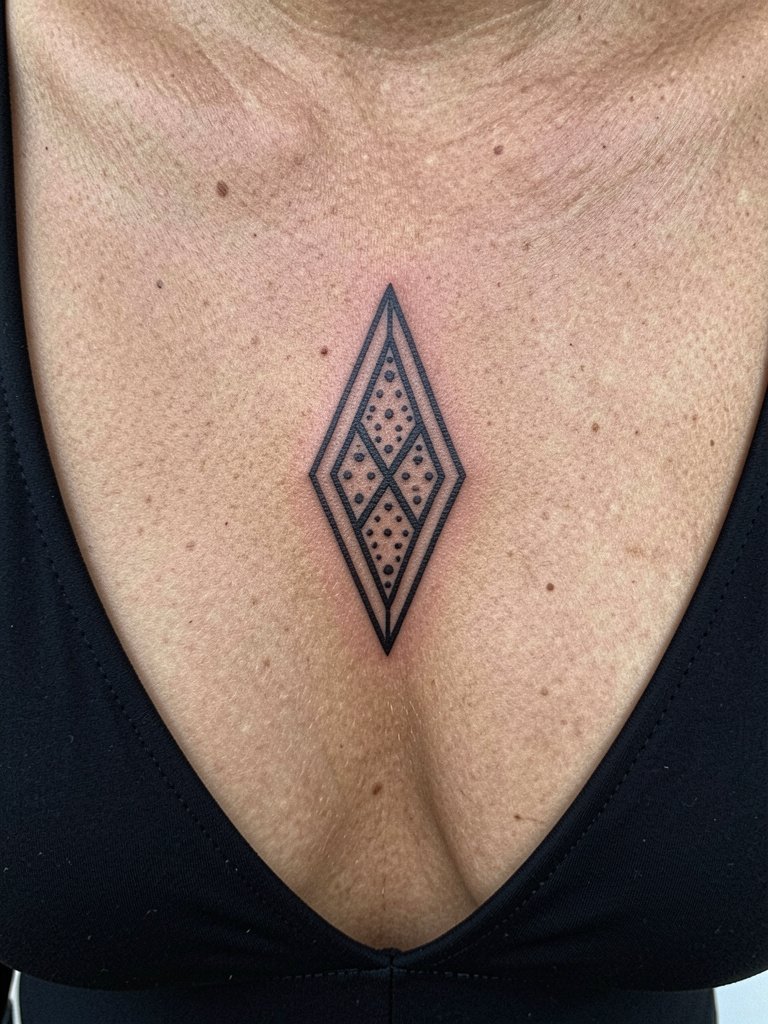
A vertical geometric bar or small diamond set into the cleavage can elongate the torso visually when placed carefully, and spacing from the neckline is everything. Small, dense patterning in the cleavage area often softens into a gray tone, so choose bold contour lines with airy interior details. Sensation is moderate because the area moves with breathing, and session time is usually under two hours for small work. For show-off pairings, scoop-neck bodysuits and open-front blouses expose the design cleanly, try a plunge bodysuit that lays flat against the skin without rubbing.
7. Illustrated Floral Panel Across the Upper Chest
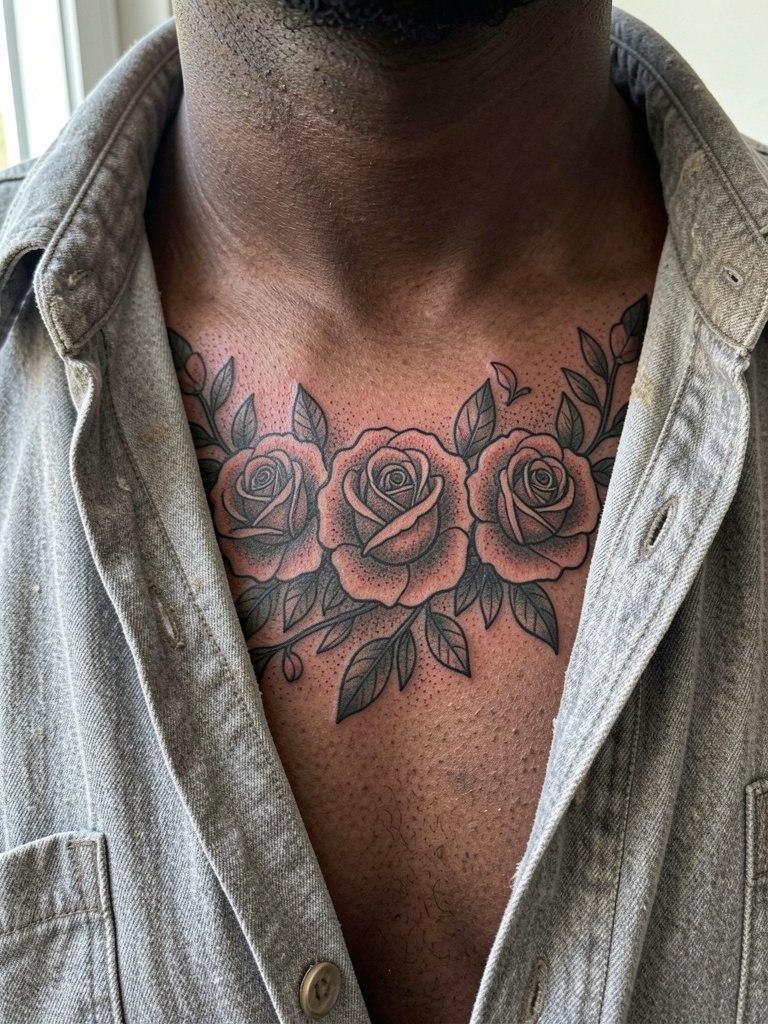
A painterly, slightly illustrative floral panel that spans the chest works best when the main blooms are spaced to follow the collarbone line. People often pick very dense bouquets that compress into a muddled patch after healing. I recommend three to five blooms with open stem lines and selective color saturation so highlights remain crisp at two years. Session time is proportional to color amount and can run three to four hours for broader coverage. For session comfort wear a button-front shirt so you can open it without lifting anything over your head.
8. Small Heraldic Crest at the Center
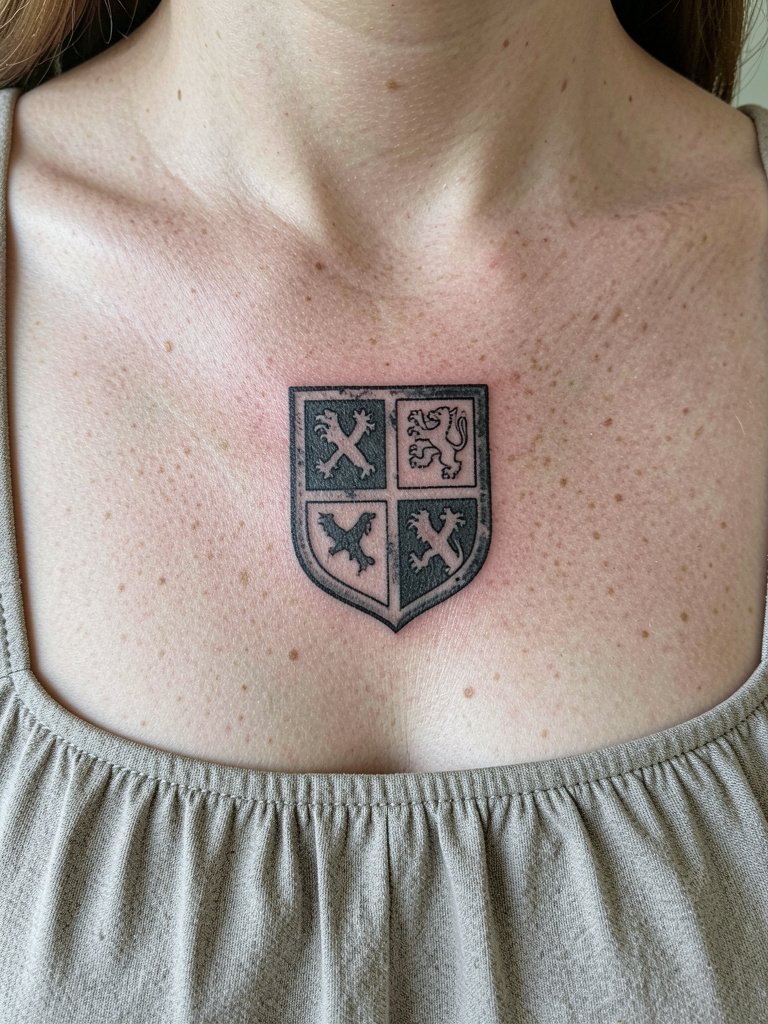
A small heraldic crest or shield can be rendered with distressed edges to feel classic rather than literal. Tiny internal heraldry details tend to merge, so simplify the four panels and rely on texture and bold borders to keep the crest readable. This is a good choice if you want a compact central anchor without heavy color. Sessions are brief and relatively low discomfort. For outfits that complement the chest crest, try low-strap dresses or a square neckline blouse that frames the central motif.
9. Crescent Moon Trio Over the Left Clavicle
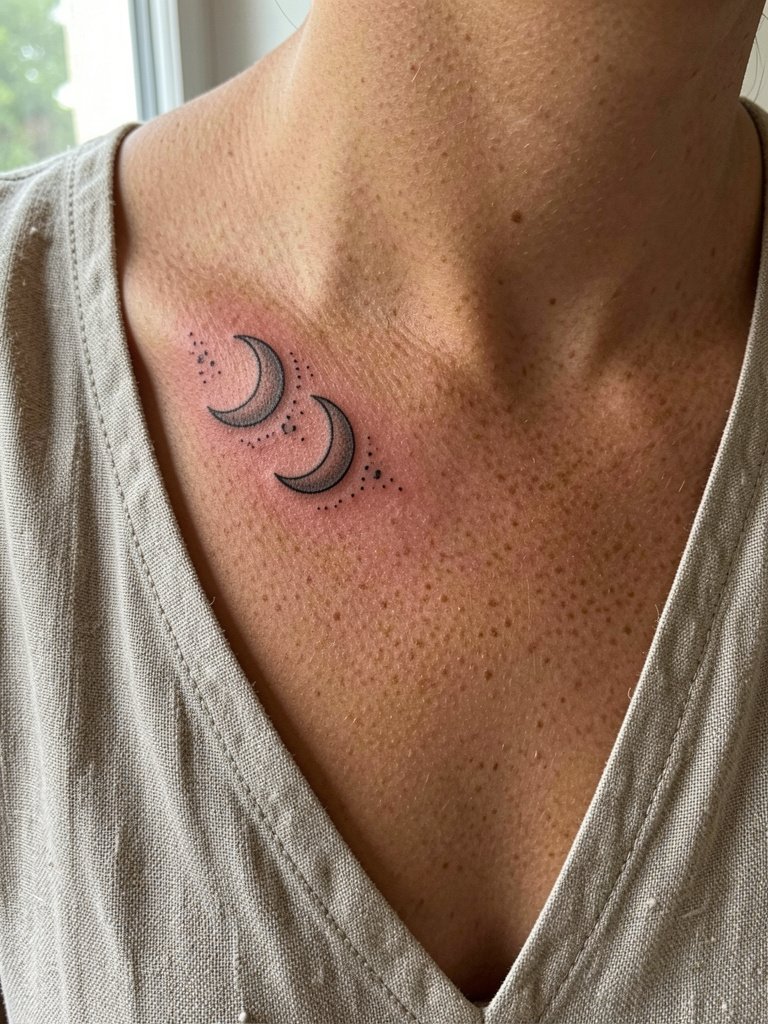
Three tiny crescent moons stacked near the clavicle look deliberate when equidistant and aligned to the bone. The mistake is placing them too tightly where the crescents merge over time. Slightly increase spacing and use crisp single-needle crescents with tiny dot accents for longevity. Session time is short, pain level low to moderate. For showing off, sleeveless linen tops and dainty layered necklaces complement the trio, consider pairing with a delicate pendant necklace that sits above the crescents.
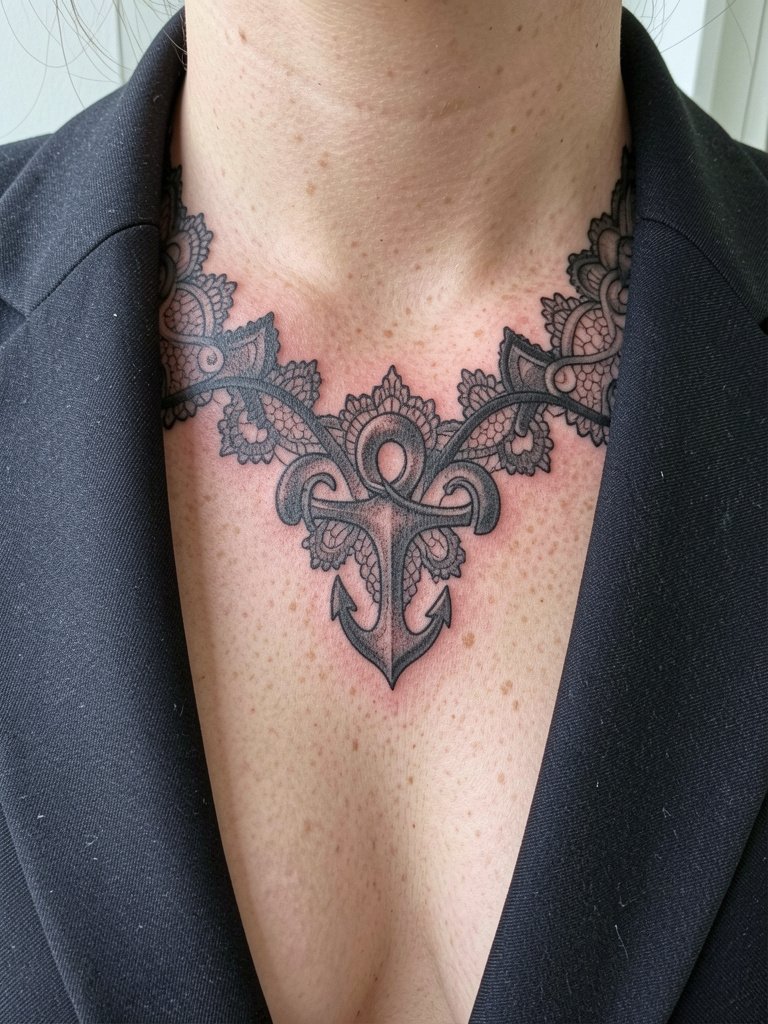
10. Lace-Inspired Filigree Along the Upper Chest
Lace filigree mimicking a neckline looks refined when the pattern follows natural bone landmarks. The aging pitfall is over-detailing with tiny openwork that fills in; instead use stronger anchors and let the pattern breathe. Expect a two-hour session depending on coverage. If you wear structured jackets often then the filigree can peek out from open collars, and a low-button blouse or structured blazer with a low cut shows it off without rubbing against the design.
11. Fine Line Botanical Branch Across the Chest
A single botanical branch that travels diagonally across the chest can map to muscle and bone for pleasing flow. Fine line branches that are too thin often lose definition after two years, so slightly weight the stem line and use stipple shading on leaves. Expect mild but persistent sensitivity near the sternum. This piece pairs well with semi-sheer blouses for layered looks, try a semi-sheer button-up you can wear open for evenings where the branch is an accent.

12. Small Compass Centered Above the Sternum
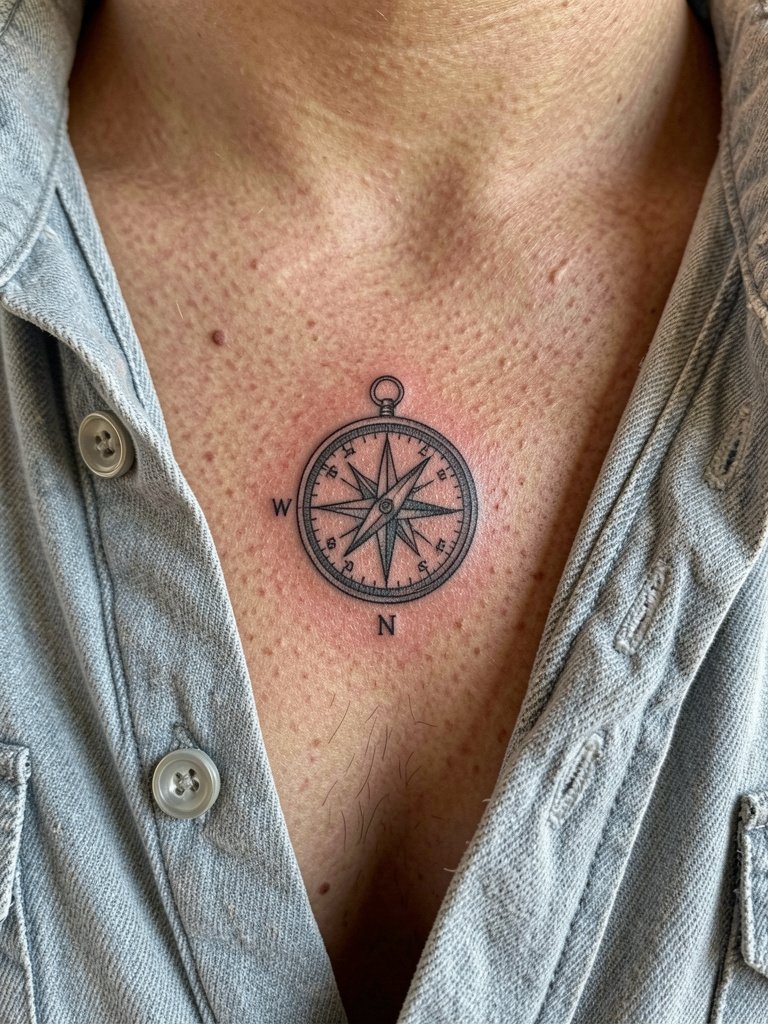
A compact compass motif centered above the sternum works as a travel-minded symbol and reads well if the directional lines are kept bold. The common error is squeezing tiny tick marks that later softens. Keep cardinal markers simple and make the north marker slightly larger so the design keeps orientation after healing. For sessions expect a focused 45 to 90 minutes. If you like button-front shirts for appointments, pick ones that open front to avoid fabric tugging during stencil placement.
13. Mirror-Symmetric Floral Halves on Each Side
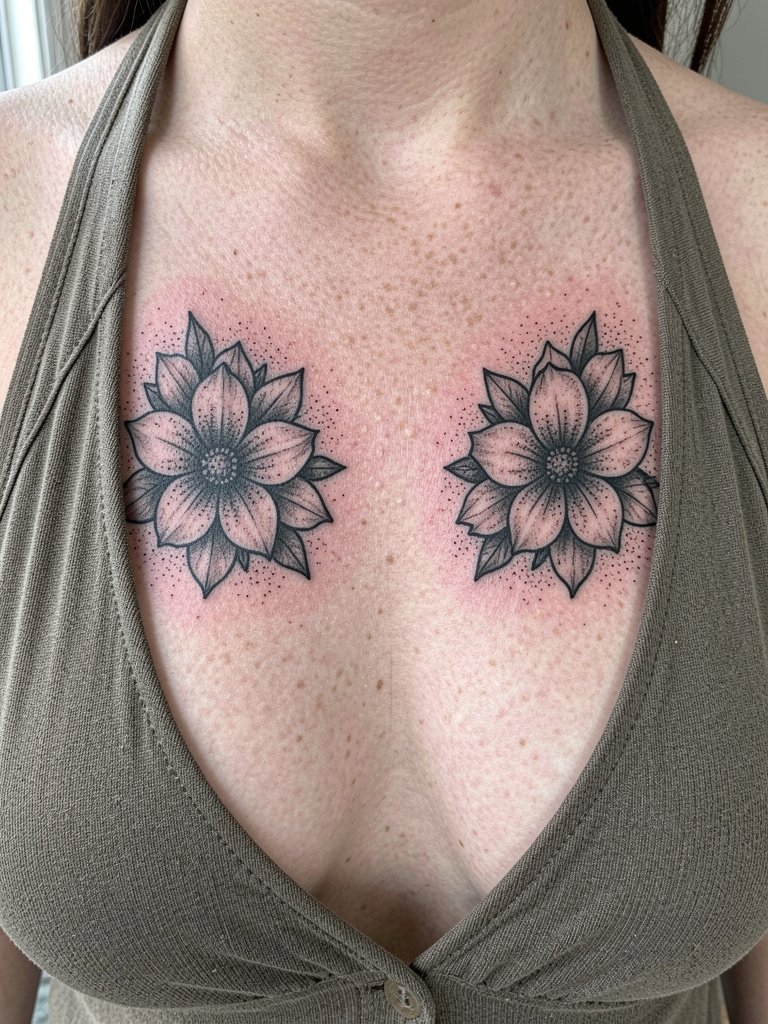
Two matching floral halves positioned symmetrically on either side of the sternum read deliberate when proportions match across the center. A common mistake is unequal petal spacing that becomes obvious after healing. I advise bringing mirrored reference photos and allowing the artist to adjust scale on the spot for symmetry. Session time doubles for two mirrored pieces, and you will feel the right and left sides separately. For outfits, halter tops and balconette bras highlight the mirrored work, and a halter dress shows the balance without squeezing the area.
14. Script Banner Following the Collarbone Curve
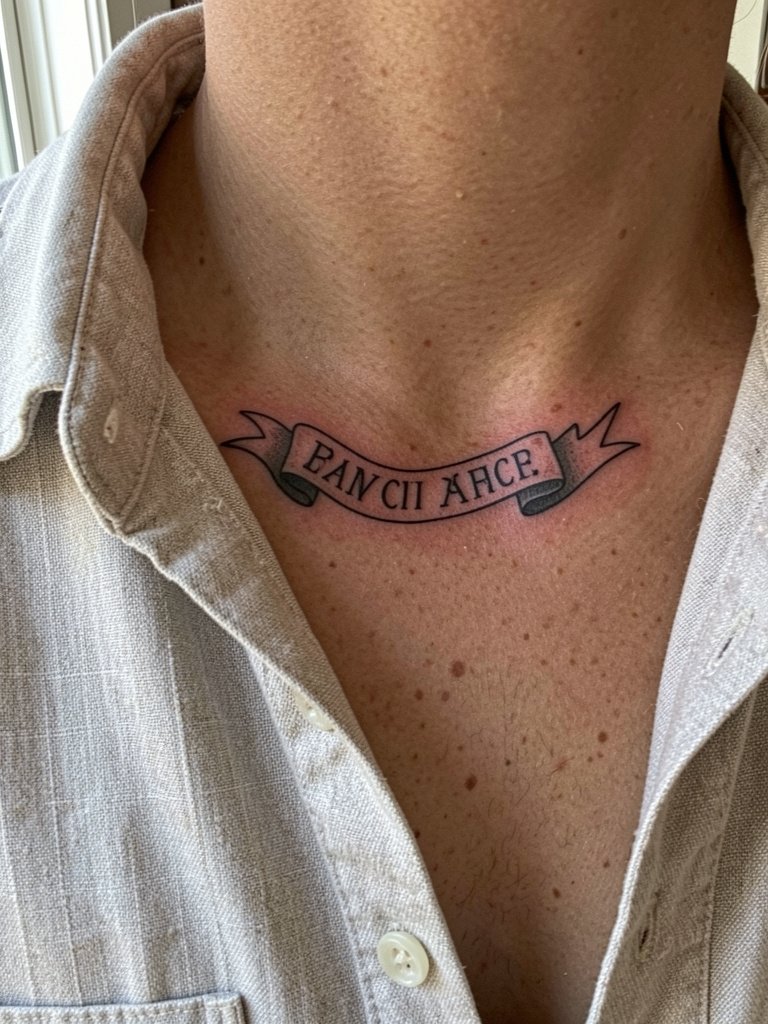
A small banner-style script that follows the collarbone curve can hug bone structure in a flattering way if the kerning is tested on skin first. Scripts that ignore natural curvature often end up looking tilted once the body moves. Ask for a stencil mockup curved to your collarbone so you see how spacing reads at rest and during a full breath. Session time is usually under an hour. Pair with open-collar shirts in lightweight fabrics to reveal the curve, a linen button-down works well to frame the typography.
15. Botanical Crescent Under the Right Clavicle
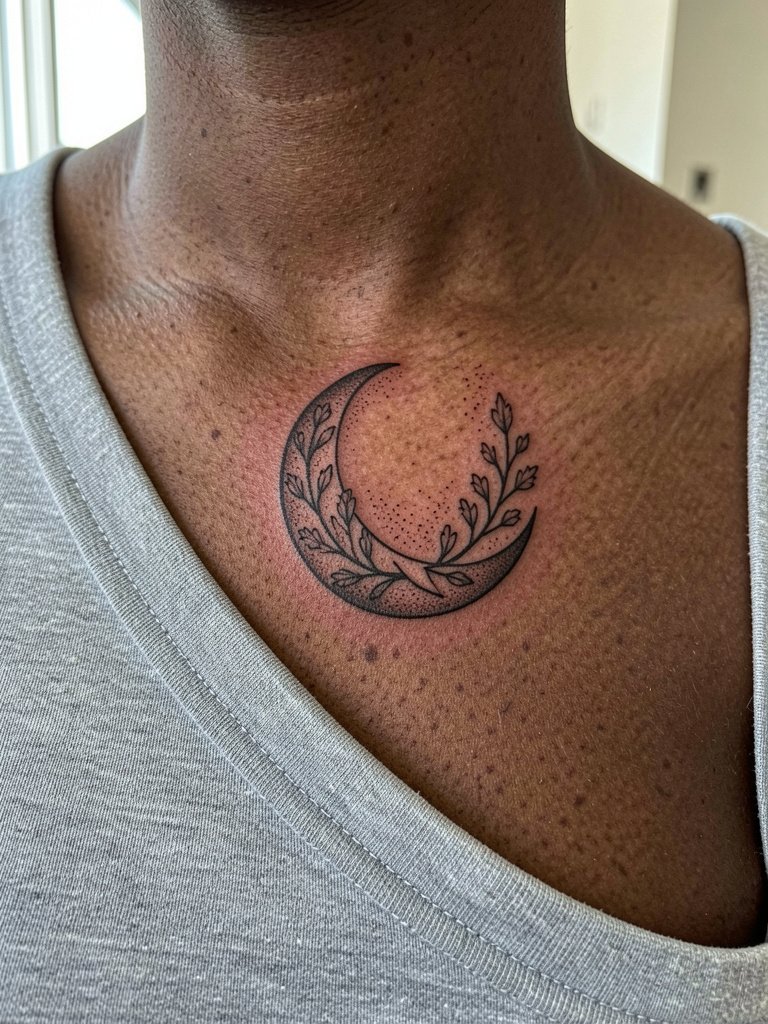
A small crescent filled with botanical motifs under the right clavicle reads like a private accent when leaf lines are kept airy. The risk is overfilling the crescent which leads to loss of separation between botanical elements. I suggest lighter internal stippling and a stronger crescent contour so the shape holds. Session time is short and sensations are usually mild. For night looks try pairing with an asymmetrical dress or a one-shoulder top that frames the single-side detail.
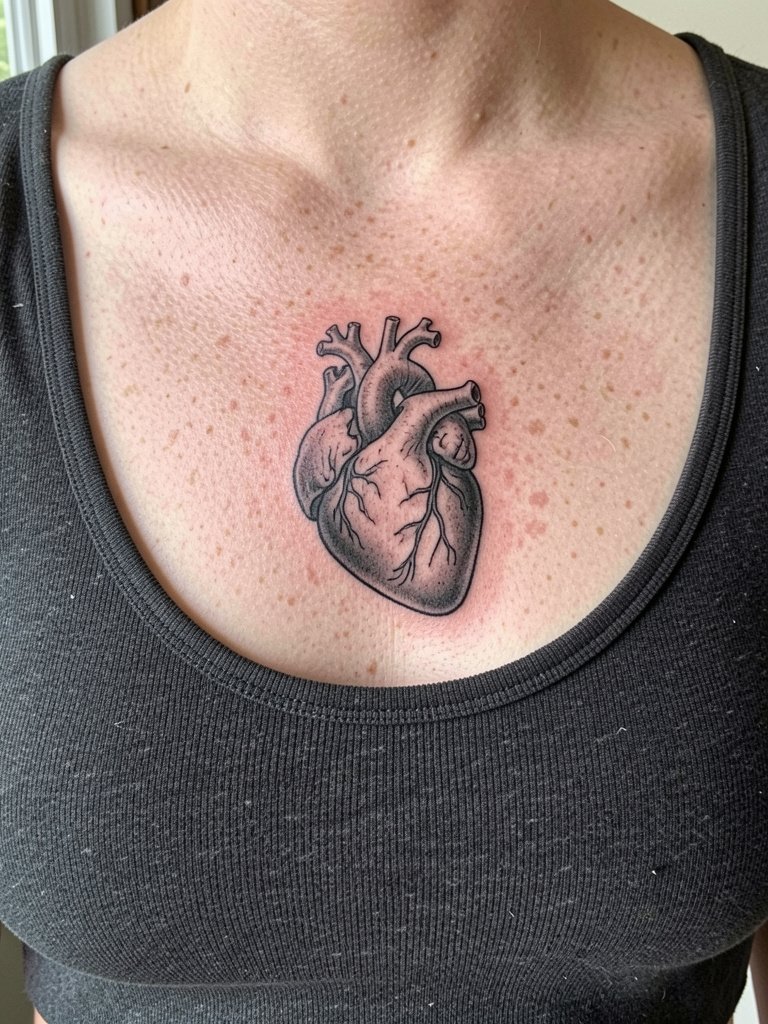
16. Micro-Realism Heart Centered Above the Sternum
Tiny micro-realism hearts or anatomical heart sketches centered just above the sternum can be striking when the shading is kept minimal. Micro-realism that tries to add too much detail at small scale often becomes muddy, so aim for crisp edges and selective shadow. Session time can be brief but requires a steady hand from the artist. For daytime outfits try high-neck tanks with open sides to let the piece peek through, like a cropped tank top.
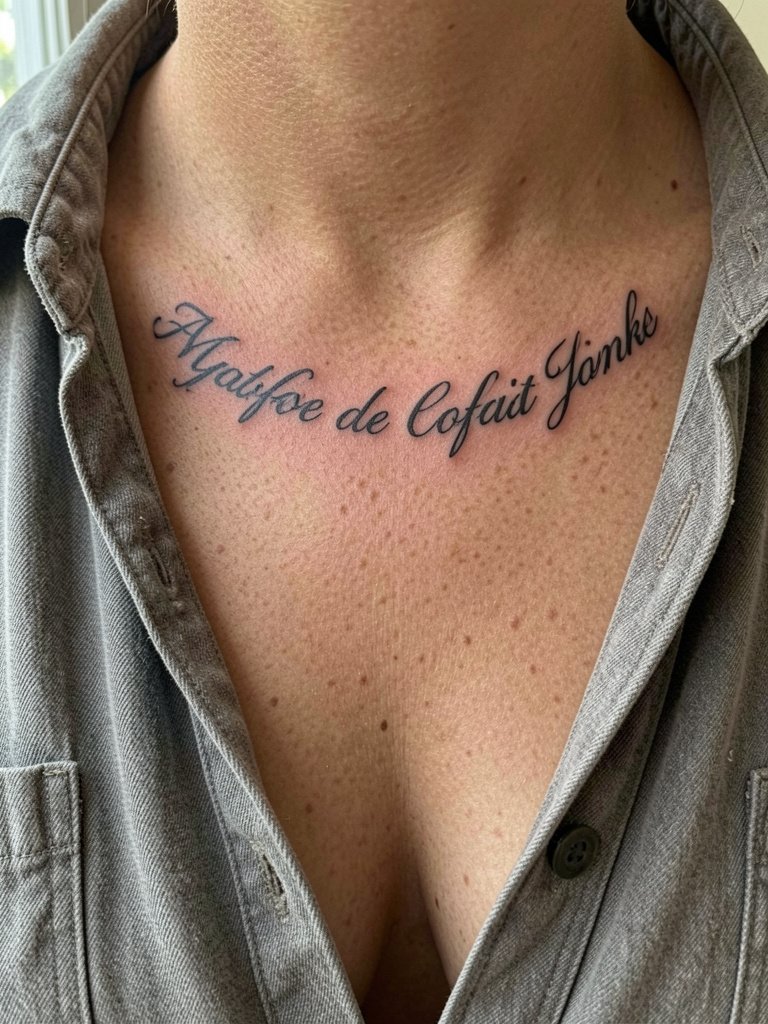
17. Horizontal Script Along the Upper Bust
A short phrase cupped by the upper bust line works best when spaced to avoid the natural curvature. The error I see most is letting script follow too tightly into the breast fold which causes distortion. Choose a slightly elevated baseline so the letters stay off the crease. Touch-ups are common for thin scripts after the first twelve months. For appointment comfort wear a front-opening top so access is easy and your arms are free.
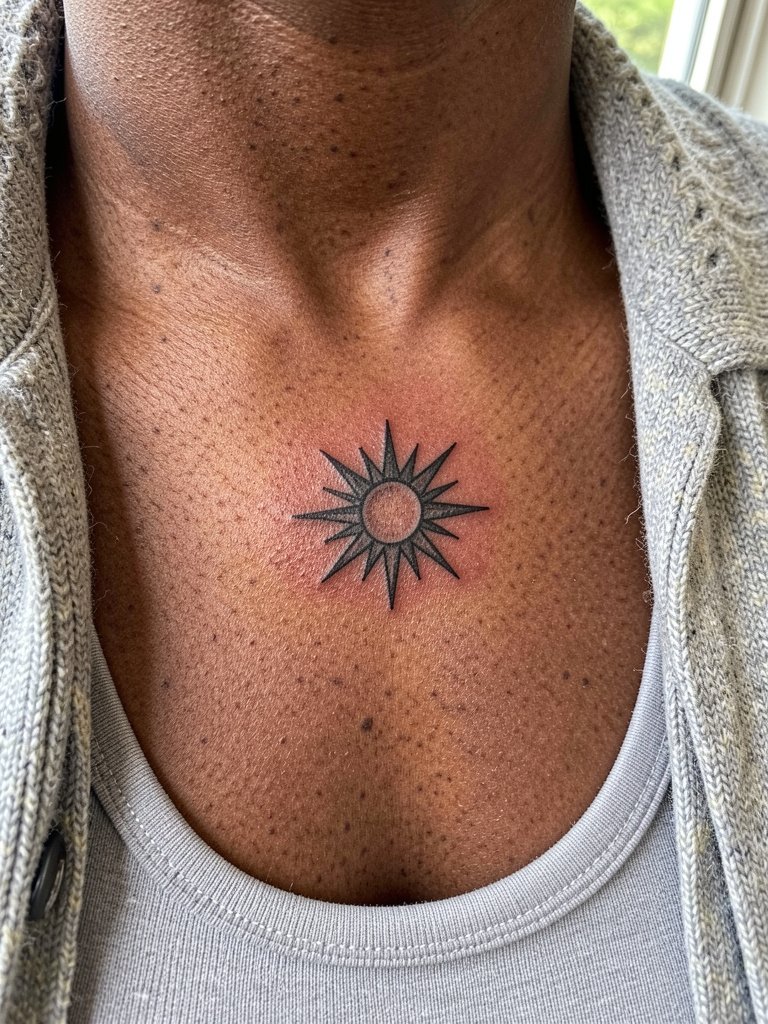
18. Small Geometric Sunburst Centered Near the Clavicle
A compact sunburst with clean rays is a low-maintenance option for the upper chest that reads well at multiple distances. Rays too thin or too close together can gray out, so keep the rays bold and limit internal cross-hatching. Session time is short and pain is typically low around the clavicle unless you get close to bone. For styling, layered open-front cardigans and tank tops expose the motif without rubbing, consider a lightweight cardigan.
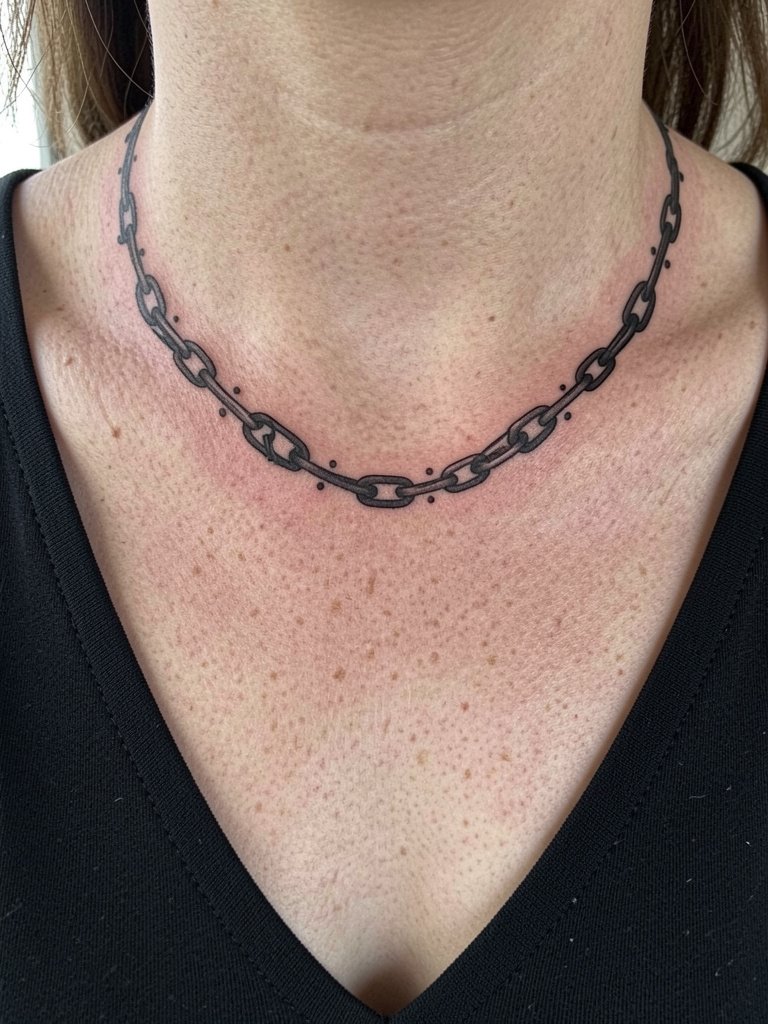
19. Ornamental Chain Motif Across the Collarbone
A thin ornamental chain or delicate beaded motif that follows the collarbone can mimic jewelry without metal. Avoid ultra-thin links that blur; choose links with small solid dots or micro-anchors so the chain keeps definition. Expected session time is under an hour and pain is mild. For showing this piece use v-neck tops or open necklaces that echo the chain, try a layered necklace set that complements the ink without covering it.
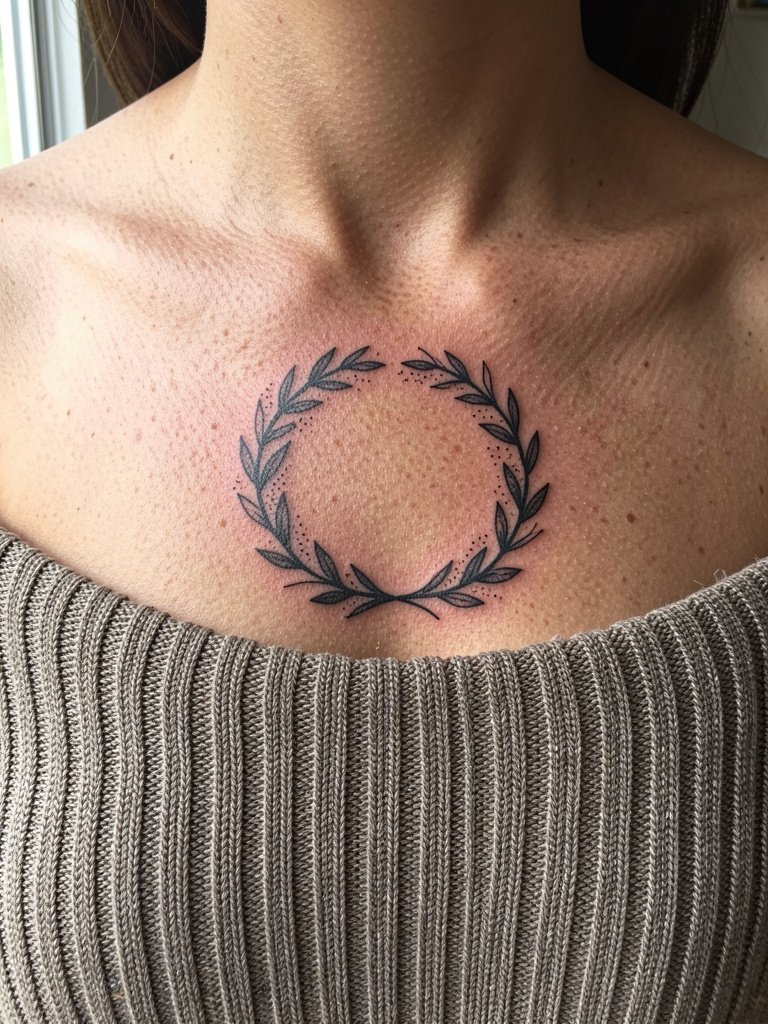
20. Botanical Wreath Framing the Upper Chest
A small wreath that frames the upper chest edge reads seasonal and soft when leaves are placed with negative space. Overfilling the wreath makes it read as a blotch after a few years. Aim for directional leaf strokes and slight asymmetry for a natural look. Sessions for this scale run one to two hours. For outfits that showcase the wreath try scoop-backed or off-the-shoulder tops, and a soft off-shoulder sweater shows the curve without rubbing.
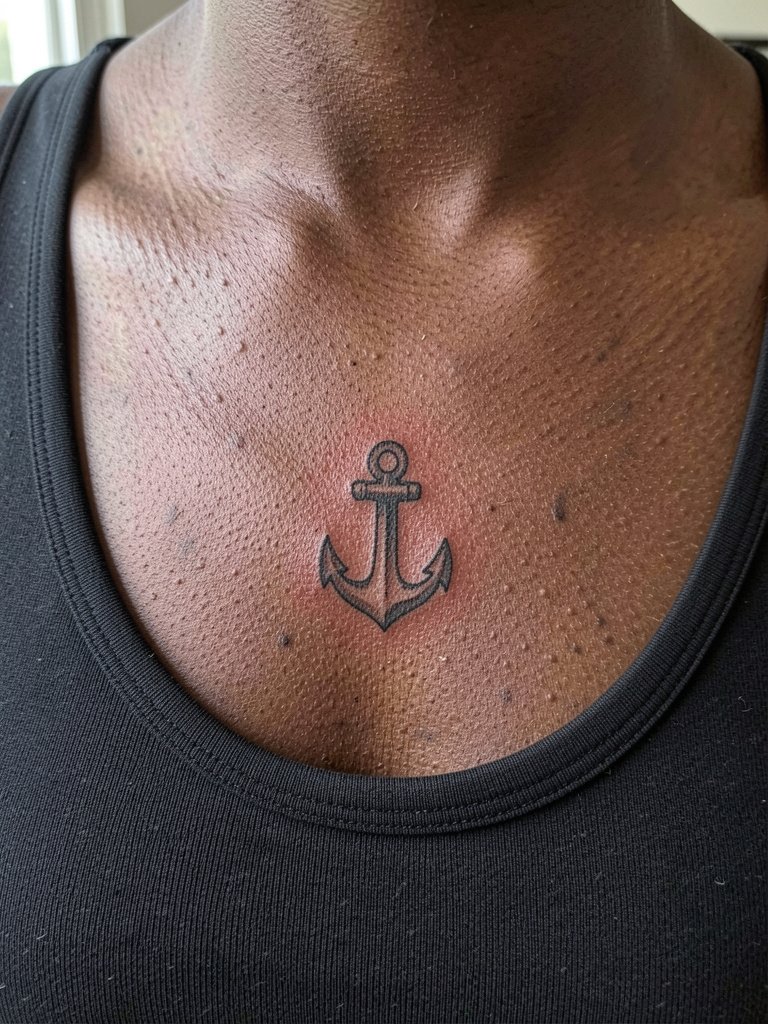
21. Tiny Anchor Tucked at the Base of the Sternum
A tiny anchor placed low on the sternum can be a subtle signifier and holds well if the silhouette is bold. Fine anchor lines that are too delicate get soft, so increase contour thickness to preserve shape. Session time is under an hour and sensation is moderate since the area sits near cartilage. This placement is easy to show with low-rise or cropped tops for a peek.
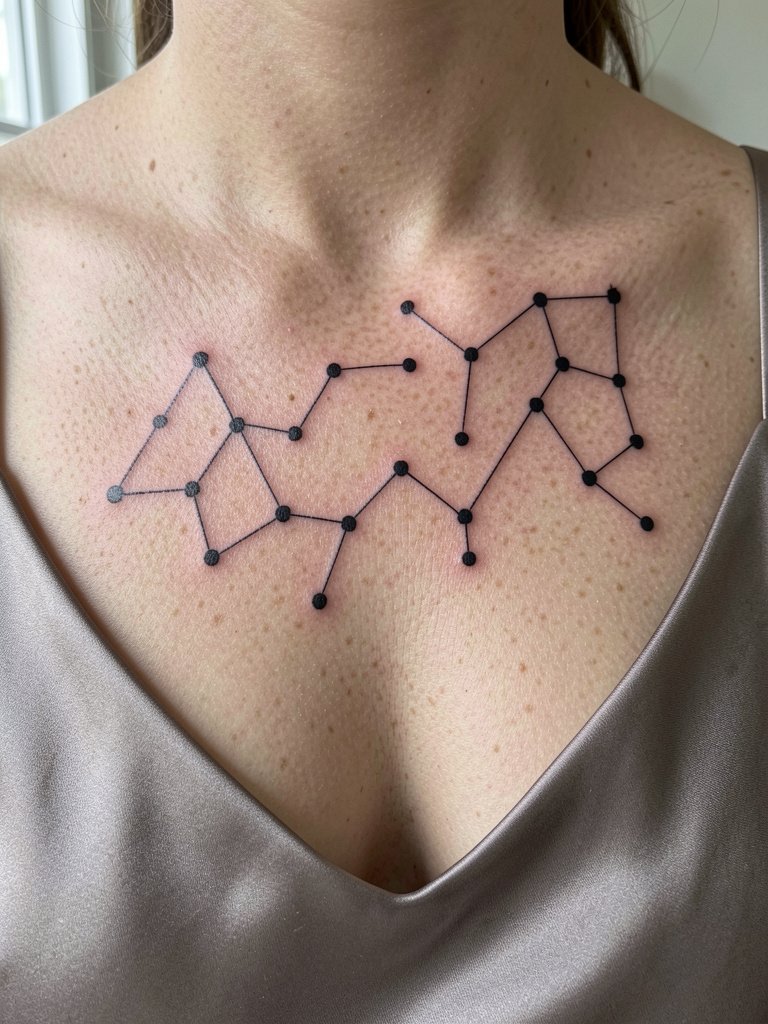
22. Whisper-Thin Constellation Mapping Across the Chest
Constellation pieces can be ethereal when dots and connecting lines are balanced for chest skin. The chest drinks up tiny dots, so make the star dots slightly larger and keep connecting lines delicate but deliberate. Expect a short session and low pain. For show-off dressing, layered slip dresses and delicate camisoles mean the constellation sits against softer fabrics without being obscured, consider a silk camisole.
23. Split Arrow Motif Crossing the Chest
A pair of split arrows meeting at the centerline gives a directional feel without heavy coverage. The common error is making the shafts too thin which causes blowout risk where skin is softer. I recommend slightly thicker shaft lines and minimal fletching detail. Sessions are brief and discomfort ranges from low to moderate. Opt for tops with easy front access for the appointment.

24. Classic Anchor with Rope Accent on the Side Chest
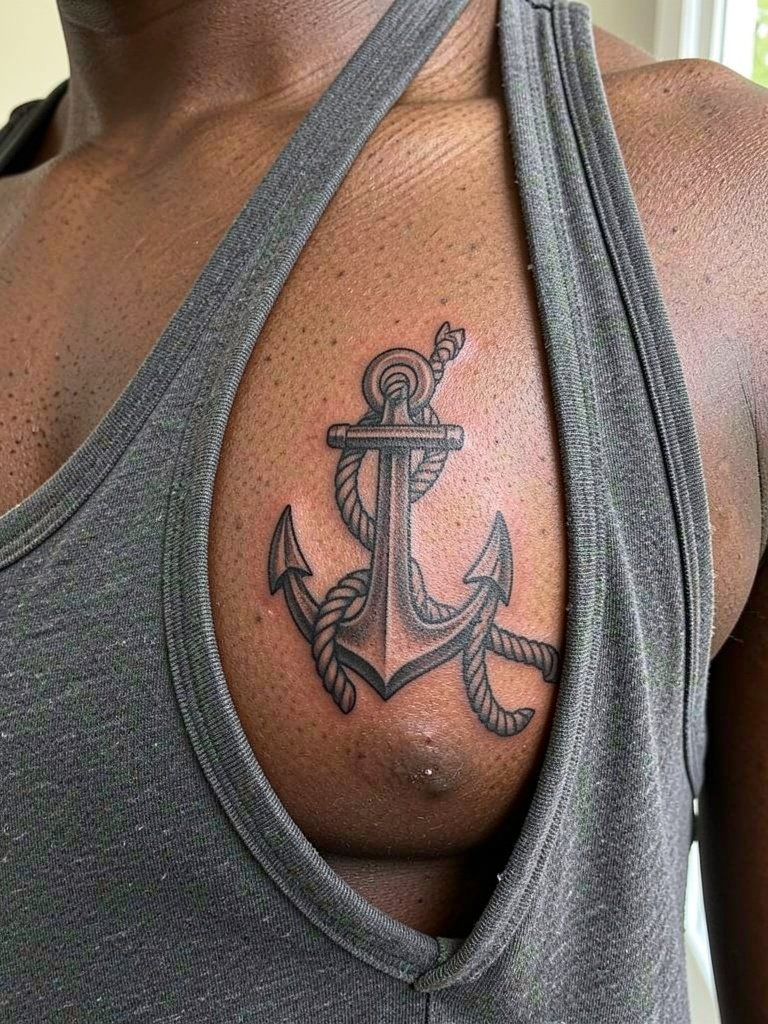
A classic anchor sitting on the lateral chest with a rope accent ages well if rope lines are bold enough to survive softening. Thin twisted rope detail often looks lost after a year. Choose increased lineweight and selective negative space in the rope loops. Session time is one to two hours. For styling, racerback tanks that reveal the lateral chest or low-slung swimwear make the piece visible without friction, try a racerback tank.
25. Decorative Anchor Under One Collarbone
An anchor tucked under one collarbone reads distinctive when paired with asymmetrical clothing. The single-collarbone placements sometimes blur if anchors are overly detailed at a small scale, so simplify the silhouette and preserve negative space. Sessions are short and pain is mild. For night looks, one-shoulder dresses show off the single-side motif effectively, and a one-shoulder dress highlights the asymmetry.

26. Script Curve Nestled in the Upper Chest Crease
A small curve of script that tucks into the natural upper-chest crease can sit almost hidden until you want it seen. Scripts that hug creases too tightly risk distortion with movement, so place the letters slightly above the crease and account for breathing. Expect a brief session. If you prefer subtlety, low-cut but supportive tops show the curve without pressing directly on the ink, consider a supportive plunge bra top.

27. Mandala-Inspired Chest Piece That Nods to Tradition
A larger mandala that spans the upper chest can be compelling when it avoids cultural shorthand and focuses on pattern quality. Designs with specific cultural origins raise valid concerns. One camp argues that borrowing sacred motifs without context is disrespectful and harms communities. The other camp believes that respectful adaptation with attribution and collaboration can honor the original while creating new expression. If you choose a mandala-style piece, discuss lineage and intent openly and consider design elements that avoid direct appropriation of sacred symbols.
Frequently Asked Questions
Q: Does chest skin make fine-line tattoos blur faster than other placements?
A: In my experience chest skin can be forgiving if you plan for it. One common issue is choosing ultra-hairline single-needle work and placing it over areas with frequent motion or fabric friction. Slightly heavier linework, clear spacing, and stencils adjusted to how you move usually keep fine-line details readable at two to five years.
Q: Are there pain differences between sternum, clavicle, and upper chest?
A: Yes, the sternum and clavicle edges tend to be sharper sensations because of the bone proximity, and people describe a thinner, more intense feeling. The fleshy upper chest away from bone is milder. Breaks and short sessions help, and topical numbing applied per instructions can take the edge off for sensitive spots.
Q: How can I find healed chest tattoo examples and avoid bad copies?
A: Search visual platforms with targeted keywords and location filters for healed examples. Try hashtags like #ChestTattooHealed and #CollarboneInk, filter reels or posts by "healed" or "progress," and browse portfolio tags on tattoo platforms that show multiple-year photos. Reddit threads also surface honest healed shots in different skin tones if you look for "healed chest tattoo" threads.
Q: What should I wear to a chest tattoo session for the best access and comfort?
A: Pick clothing that gives the artist clear access without needing to be lifted over your head. Button-front shirts, front-opening tops, or bandeaus are good. If you plan work near the sternum, a bandeau or a buttoned tank avoids fabric tugging. Bring layers to stay comfortable if the studio runs cool.
Q: How often do chest tattoos need touch-ups compared with arm or back pieces?
A: Touch-up frequency depends on line weight, sun exposure, and clothing friction. Thin scripts and tiny dot work on the chest may ask for a touch-up around the one- to two-year mark more often than larger, bolder pieces. Solid black or neo-traditional chest work with solid saturation often holds longer with less need for early touch-ups.
Q: How do I responsibly approach designs with cultural origins?
A: Be explicit about intent and avoid directly copying sacred symbols without context. One group says these motifs should stay within their communities, and another believes respectful collaboration and attribution can create new work. If a design references a specific cultural tradition, consider working with artists familiar with that tradition and adjusting visual language to avoid appropriation while honoring roots.