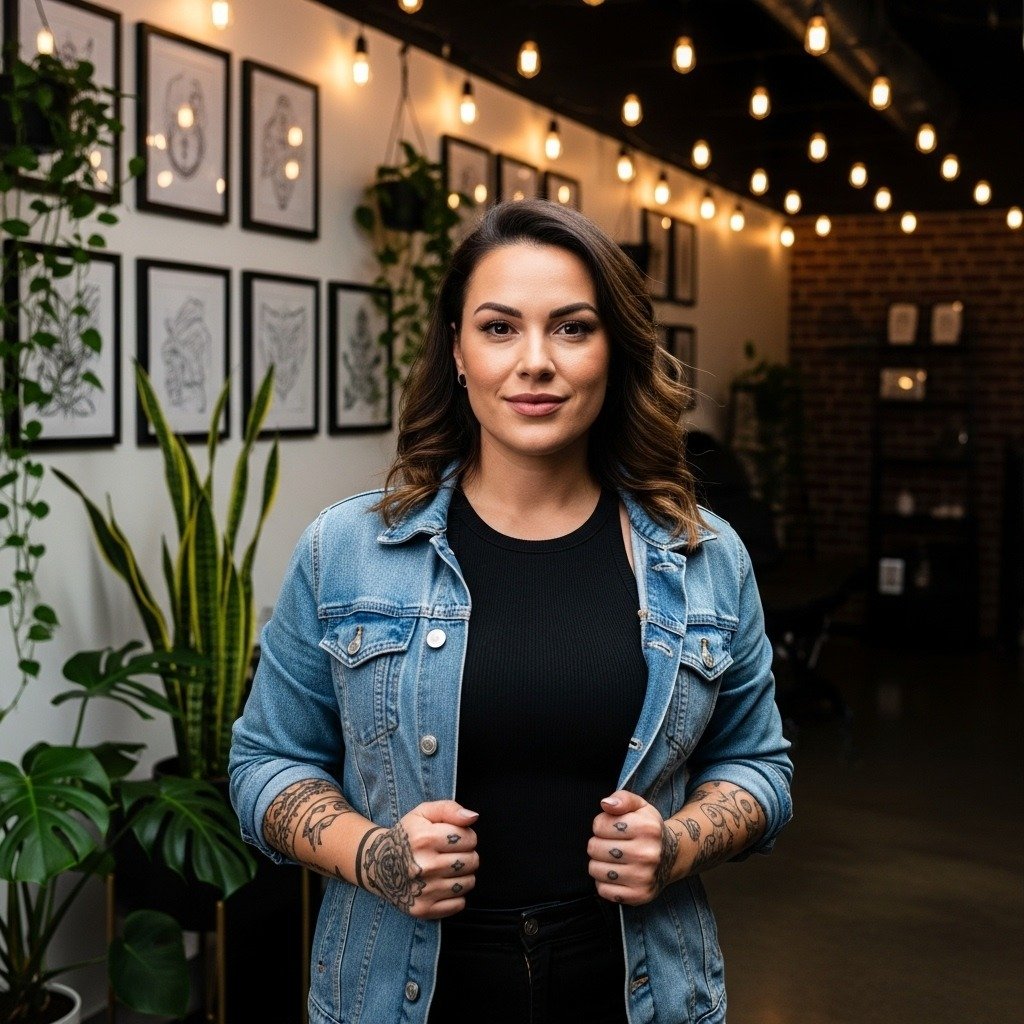
The chest lion pieces that still read crisp after three years are often the ones that plan for movement and breath. Thin single-needle manes look gorgeous fresh, yet the sternum and pectoral skin stretches and rubs. This list balances visual choices with how the skin moves, what to wear during a session, and which details actually survive a few summers of sun and weight change.
1. Realistic Lion Portrait, Greyscale on Sternum
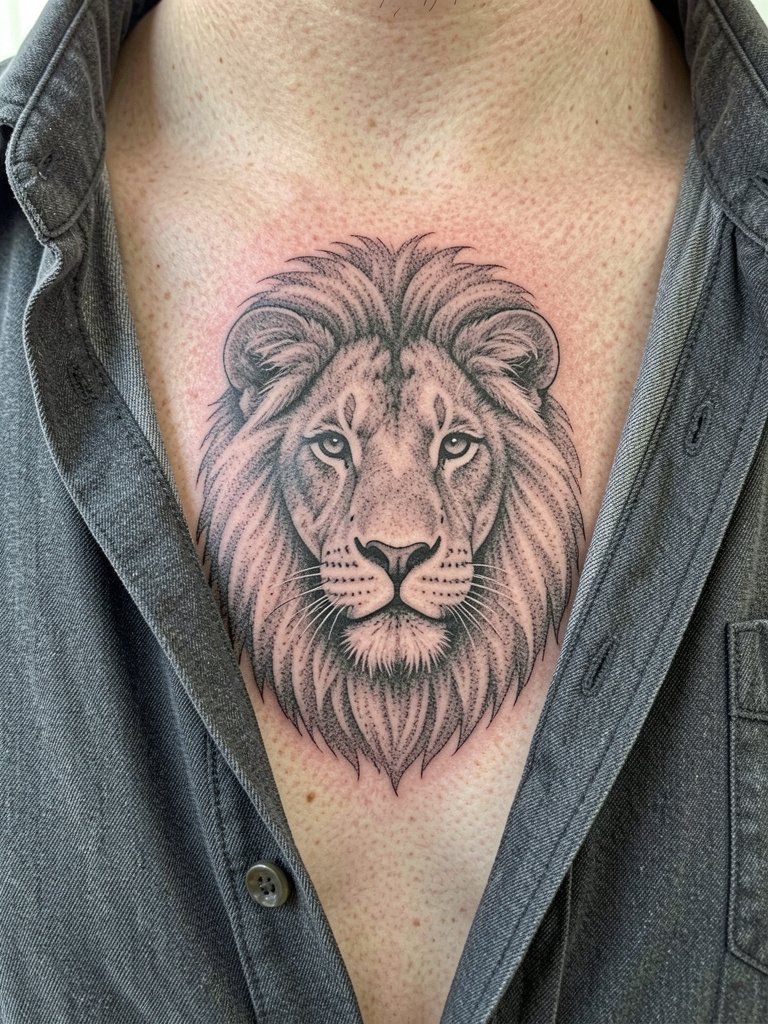
A full-chest realistic portrait anchors well in the sternum because the circular ribcage gives a natural frame. Expect two to three long sessions and concentrated stipple shading to keep contrast in the eyes. For consultation bring a close-up eye reference and a mid-distance portrait so the artist can map contrast and saturation across a 10–14 inch canvas. Pain on the sternum is higher than on muscle-packed pectorals, so plan breathing breaks and short pauses. Many people pick heavier anchor lines in the mane to avoid early blur. For showing this off, pair it with a low-cut black tank top that frames the portrait without covering the collarbone.
2. Geometric Lion Face Below the Clavicle
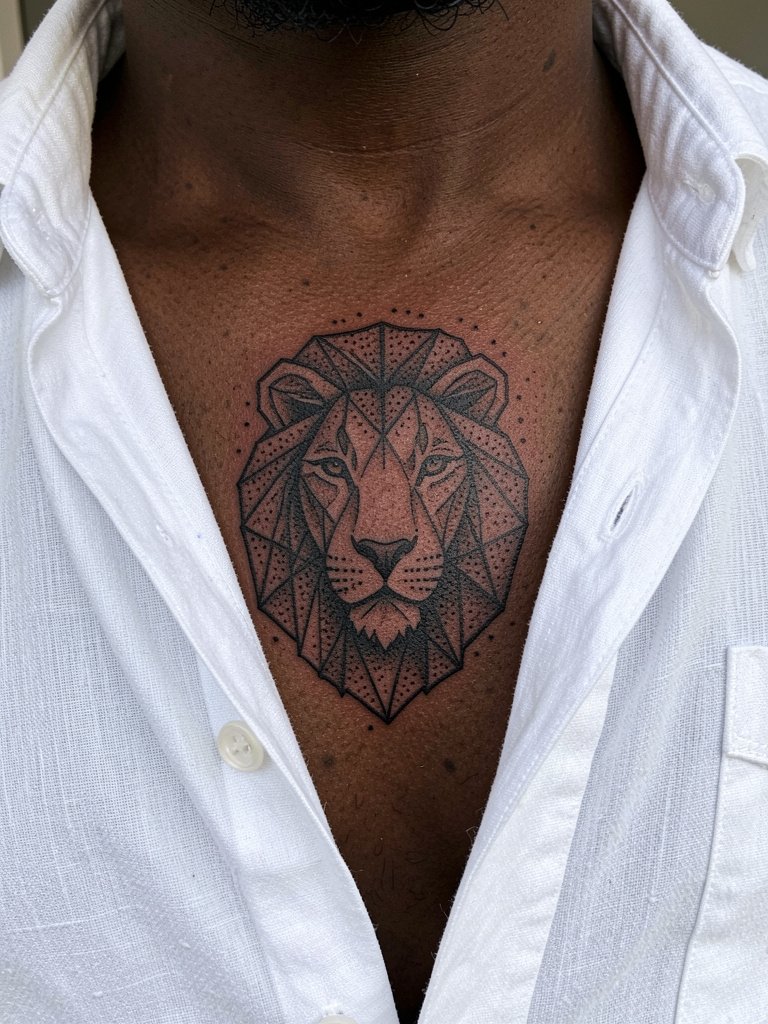
Sharp geometry reads strongly on the collarbone because the bone provides a flat mature surface for crisp linework. Pick slightly thicker lineweight than the smallest reference art so shapes remain distinct as the skin ages. A mid-scale 6–9 inch piece often finishes in one to two sessions. Mistakes happen when artists try to cram tiny facets into a small area. During the consult point out which polygon edges must stay sharp and which can soften with stipple shading. To frame this piece, wear a linen button-down with the top two buttons open for photos and events.
3. Crowned Headwear: Lion with Crown Centered on Chest
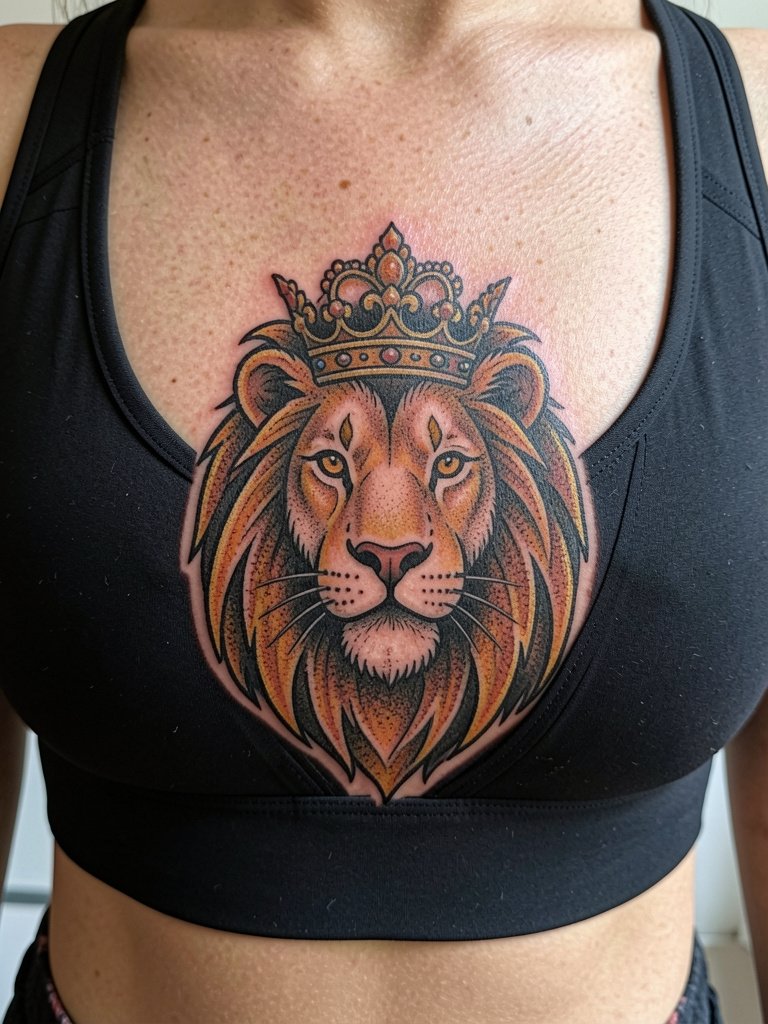
A crowned lion makes a strong center medallion on the chest. Choose bold outlines and saturated fills so the crown details keep contrast. If you want gold tones, expect touch-ups in two to three years on any warm pigments near high-exposure zones. Clarify with your artist which crown highlights are decorative and which are necessary for readability at distance. Session time is usually one or two long sittings for medium-scale work. This placement pairs well with a layered gold chain necklace in photos. Try a layered gold chain necklace that sits above the piece without competing.
4. Mandala-Lion Fusion as Central Medallion
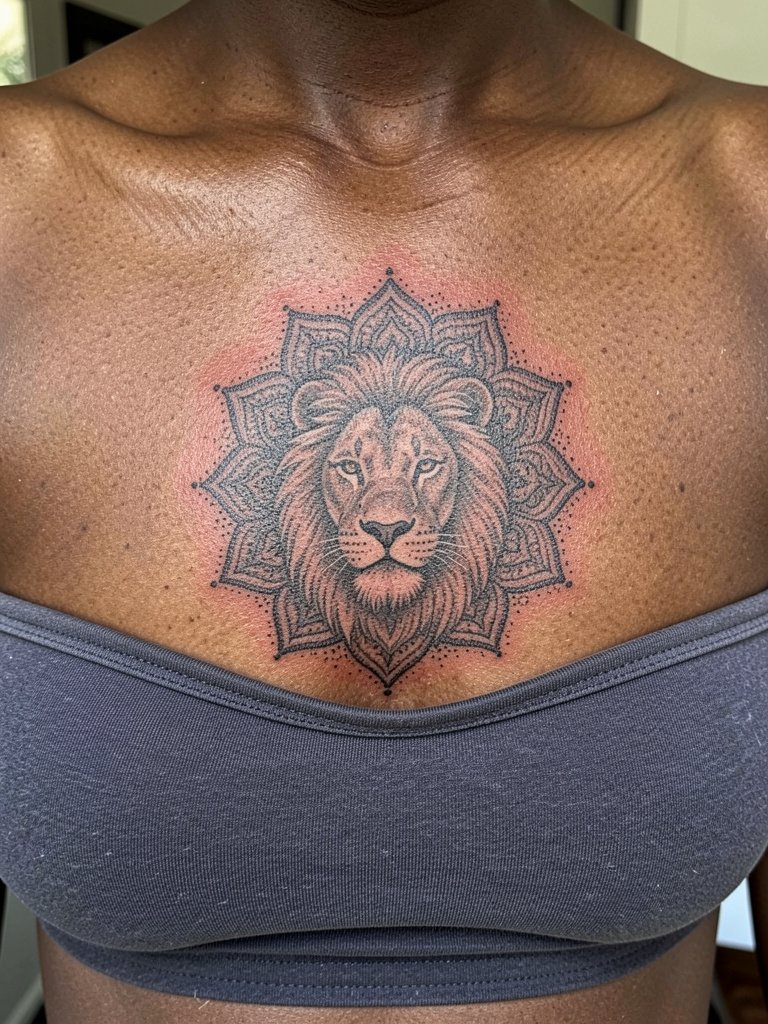
Mandala fusion uses dot work to create a spiritual frame that stabilizes visual weight across the sternum. The heavy dot fields invite longer session times and produce dense saturation that ages predictably. The common error is placing too many tiny mandala elements close to the mane. Give the artist spacing rules for outermost rings so they do not turn into a muddy texture by year two. For session wear, a fitted bandeau or button-down lets the artist work without fabric friction during healing. If you prefer showing the piece, a simple silk camisole with a wide neckline lets the mandala breathe visually.
5. Lion and Warrior Chest Scene
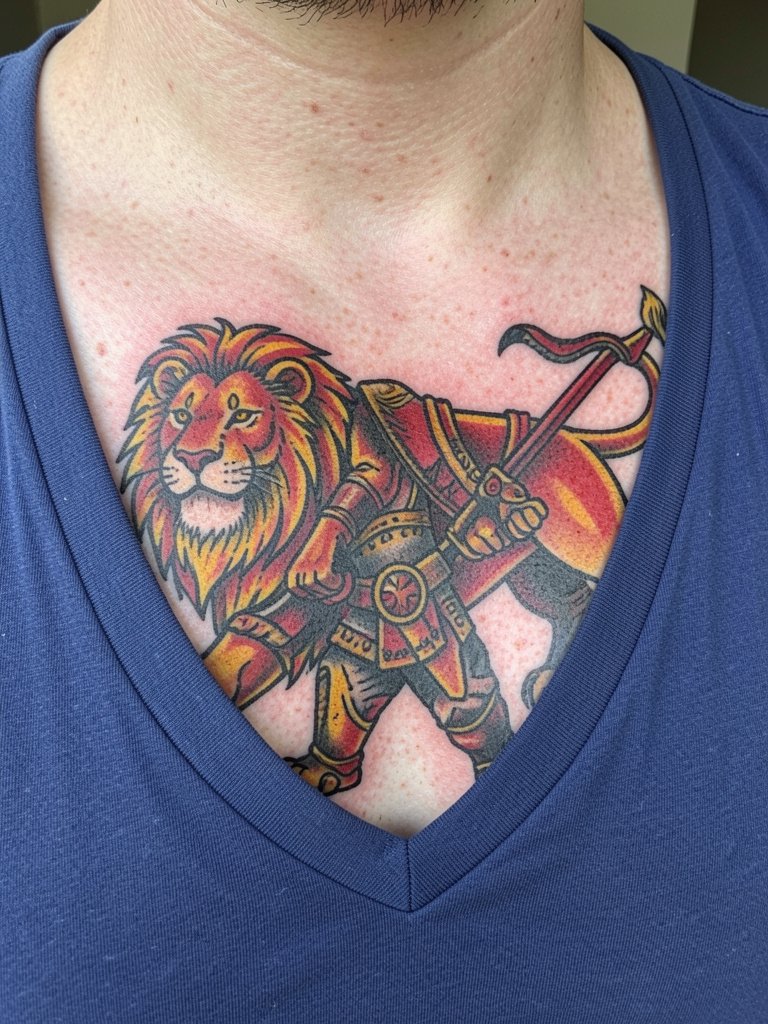
Narrative chest scenes need clear negative space so each figure reads from across the room. Choose bold lines and saturated fills so colors keep definition as the piece ages. Bring references that show the warrior pose at full scale so the artist can plan flow across both pectorals. Expect two sessions and a higher tip rate for long discomfort placements. For a casual frame, pair this style with a solid v-neck tee in olive or charcoal that mirrors the piece’s color palette and shows the composition cleanly.
6. Warm Color Sun-Lit Lion Face
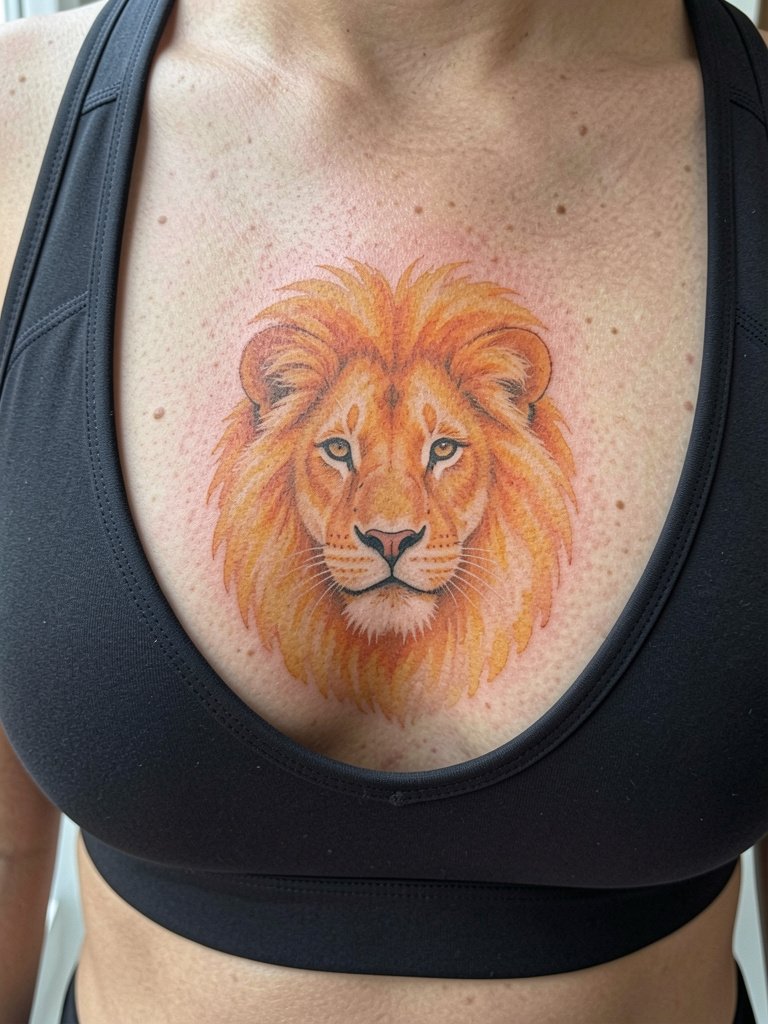
Color adds warmth and dimensionality, but warm pigments like orange can fade faster on the chest than neutral gray. One camp argues that bright color here will lose vibrancy quickly because of sun and skin oils. Another camp points out that modern pigments and disciplined SPF use preserve color longer. Both views matter. If you pick color, ask the artist about layered saturation passes and a likely touch-up window. For show-off looks, a neutral scoop or low-cut top keeps the color readable. Try a low-cut tank in deep navy for evenings.
Heal Smart
These first six chest approaches highlight the sternum and collarbone in different ways. A few products smooth the session and the first-week healing window for pieces that sit close to clothing.
-
Hustle Butter Deluxe. An emollient balm many artists recommend after the initial scab phase to help skin remain supple on the sternum and reduce tightness around dense dot work.
-
Mad Rabbit Tattoo Balm SPF. A thin, tinted balm with SPF that helps protect bright pigments during short outdoor exposure after healing.
-
Tattoo Milk Aftercare. A lightweight post-healing lotion often praised for not clogging pores on sensitive chest skin during long warm months.
-
Dr Bronner's Unscented Castile Soap. A gentle wash many people use during the first week to keep the sternum area clean without irritating fresh linework.
-
Saniderm Second Skin. A protective film option some artists prefer for chest placements to reduce friction from clothing during the most vulnerable first five days.
7. Blackwork Silhouette Lion on Center Chest
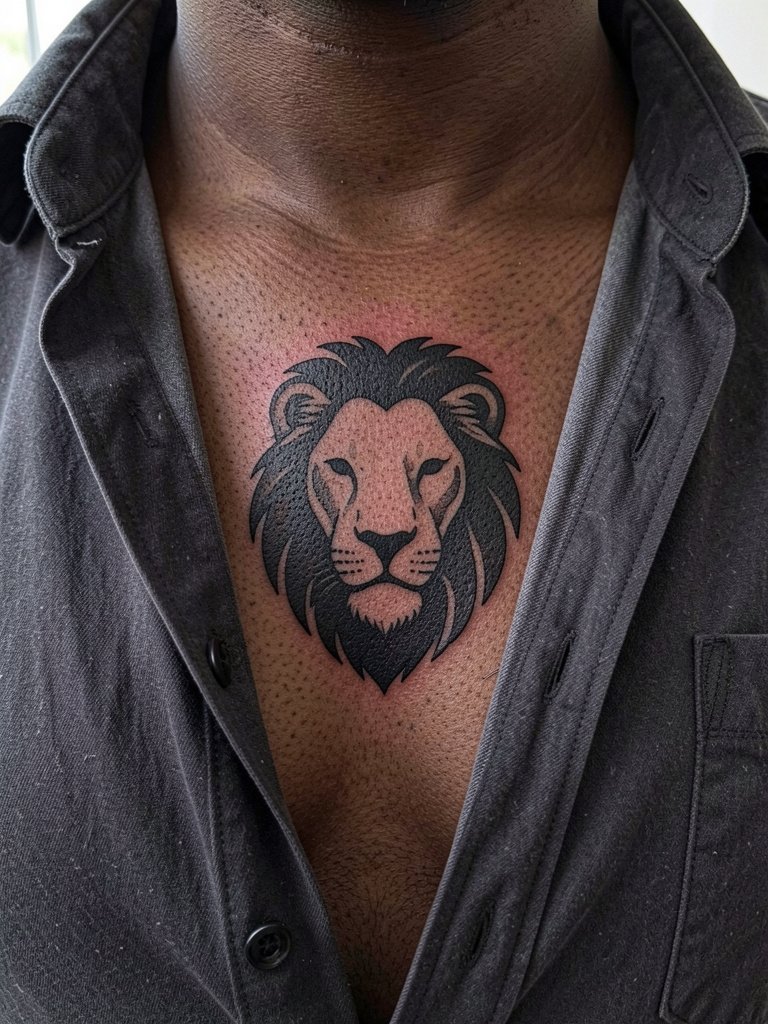
Silhouettes read well from a distance and age predictably when they use solid fills. This is a strong option if you want a dramatic chest piece that avoids fine mane detail. Discuss edge crispness and placement symmetry to keep the silhouette balanced across the sternum. Blowout risk is lower when the artist uses a larger needle grouping for saturated fills. For an effortless frame, a solid v-neck tee helps the silhouette remain the focal point.
8. Fine Line Minimalist Profile Near Collarbone
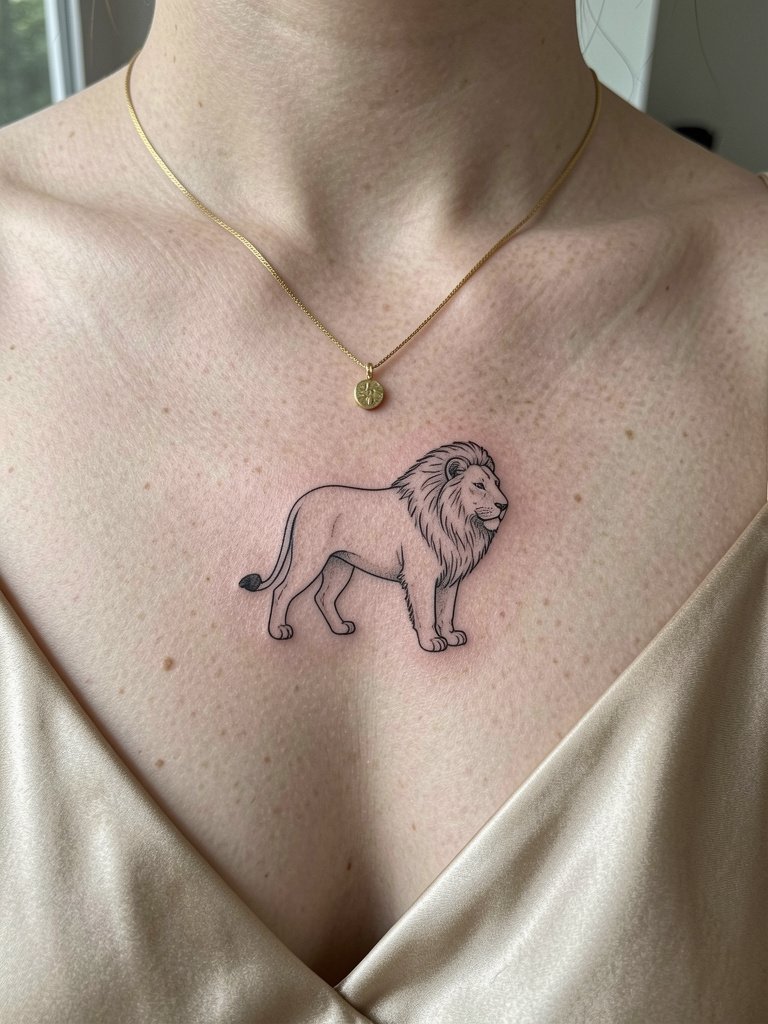
Fine-line profiles look refined but they spark a well-known debate. One camp says chest skin stretches and compresses with bras and movement, so ultra-thin manes blur within a couple of years. The other camp argues that with exact needle depth and slightly wider spacing, fine-line work can remain crisp, and they show healed photos out to three years as proof. If you want this look, specify minimal floral fill and ask the artist to slightly thicken critical contour lines so the silhouette stays readable. For evening wear, a thin gold pendant necklace complements without covering the art.
9. Abstract Brushstroke Lion Over Sternum
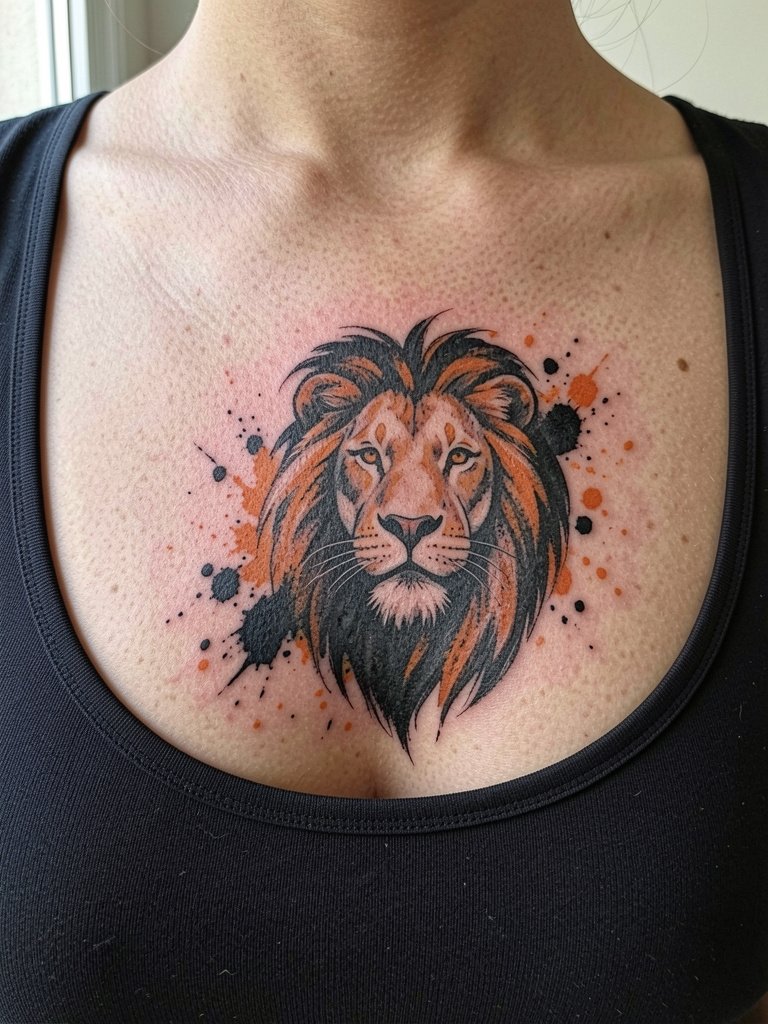
Abstract brushwork lets the artist suggest a mane without relying on dense fine lines that can blur. It is a good choice when you want motion without literal strands. Discuss where the strongest strokes should be so the face remains legible. Expect a one-to-two session workflow with some color glazing if you add warmth. For casual shows, a wide V-neck blazer layered over a neutral tank frames the brushwork while keeping the design central.
10. Floral Mane Lion on Upper Chest
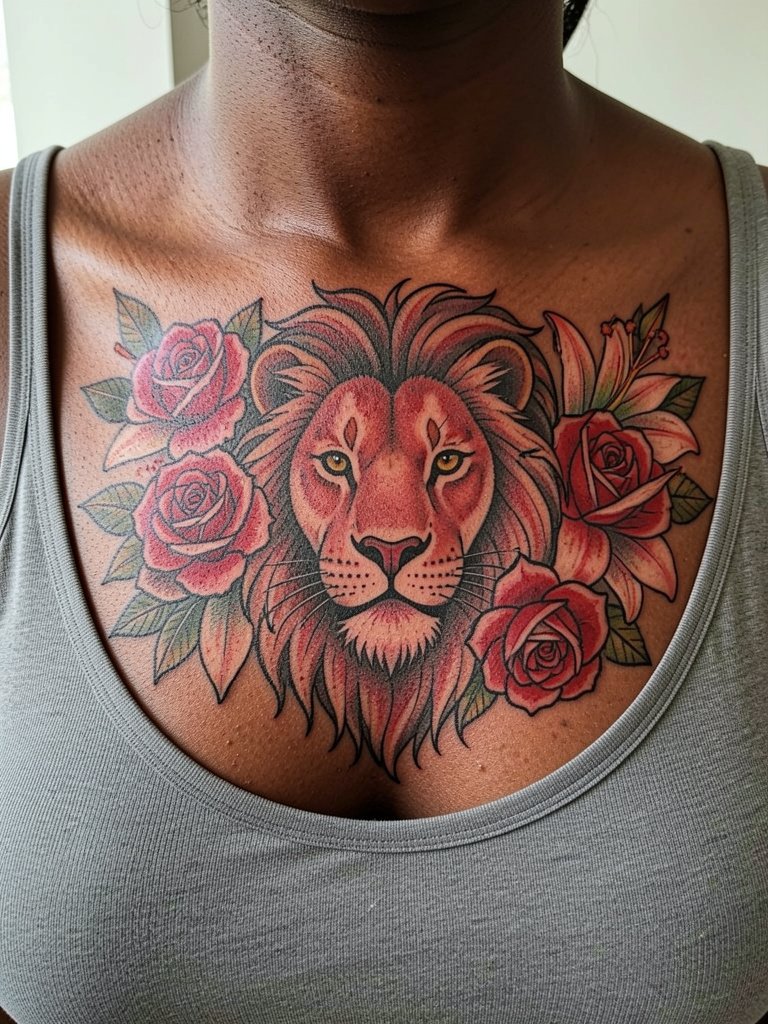
Integrating florals softens a lion portrait without losing clarity. Ask which flowers will be solid color fills and which will be linework so you know what may need touch-ups. A common mistake is too-small petal detail that becomes indistinguishable after healing. For showing the piece, a silk camisole wide neck complements the floral tones and keeps the neckline clean.
11. Twin Lions Facing Each Other Across Chest
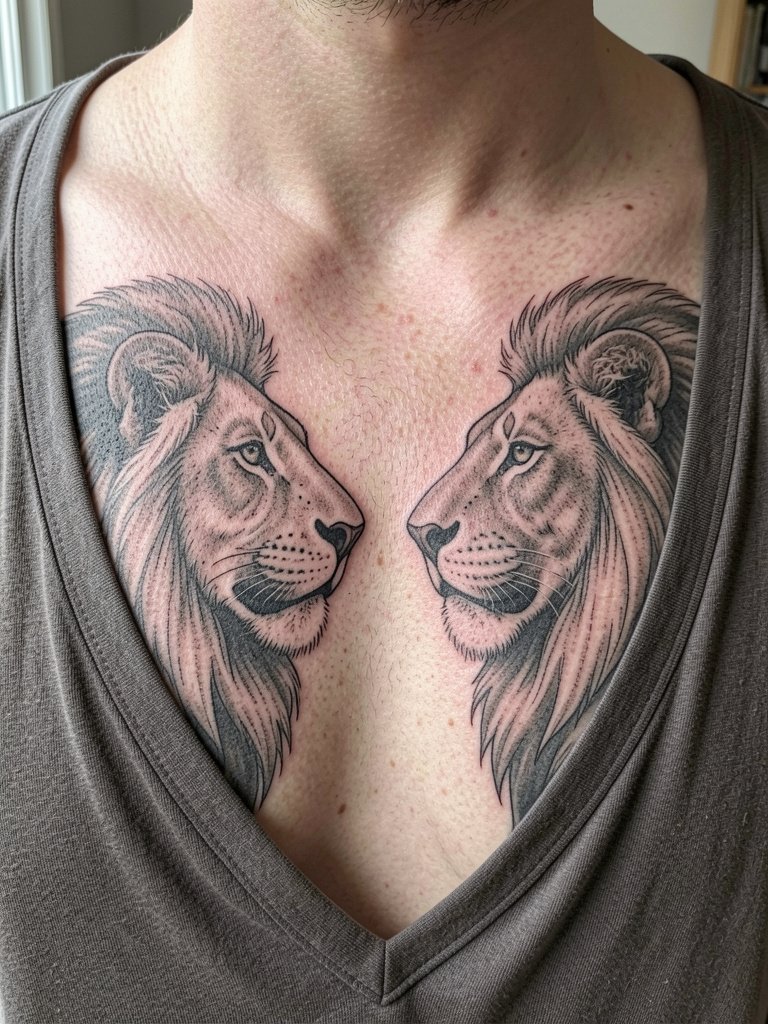
Symmetrical twin heads require careful mirroring during stencil placement so the central sternum axis reads balanced. This layout often needs three sessions for large-scale symmetry work. Point out which facial planes must match and which can be asymmetric for expression. Heavy anchor lines in the manes reduce early blurring, especially where chest movement is greatest. For a casual frame choose a v-neck tee that highlights the symmetry.
12. Tribal Curve Lion Emblem Near Clavicle
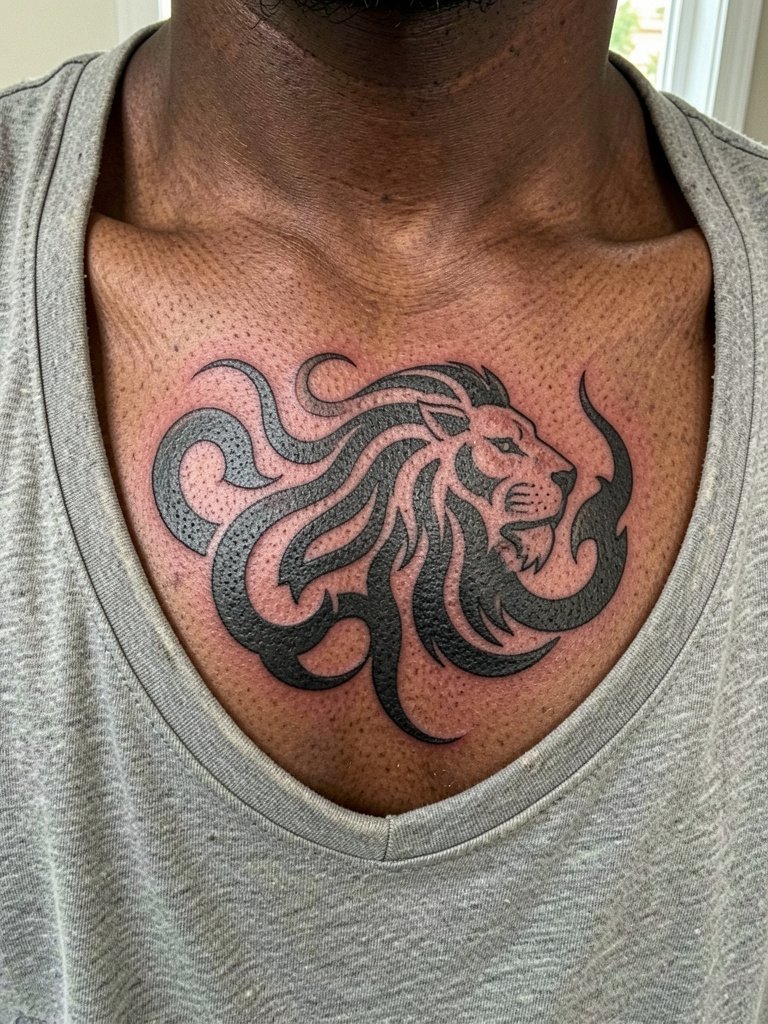
Tribal curves use bold blacks which stand up well on chest skin. Because this aesthetic borrows from cultural motifs, state the origin respect in your consult and ask the artist how they adapt line forms authentically. These pieces usually finish in a single session if mid-scale. For styling pair with a short-sleeve linen top that keeps the collarbone visible and the pattern framed.
13. Side-Profile Shadow Mane on Lower Sternum
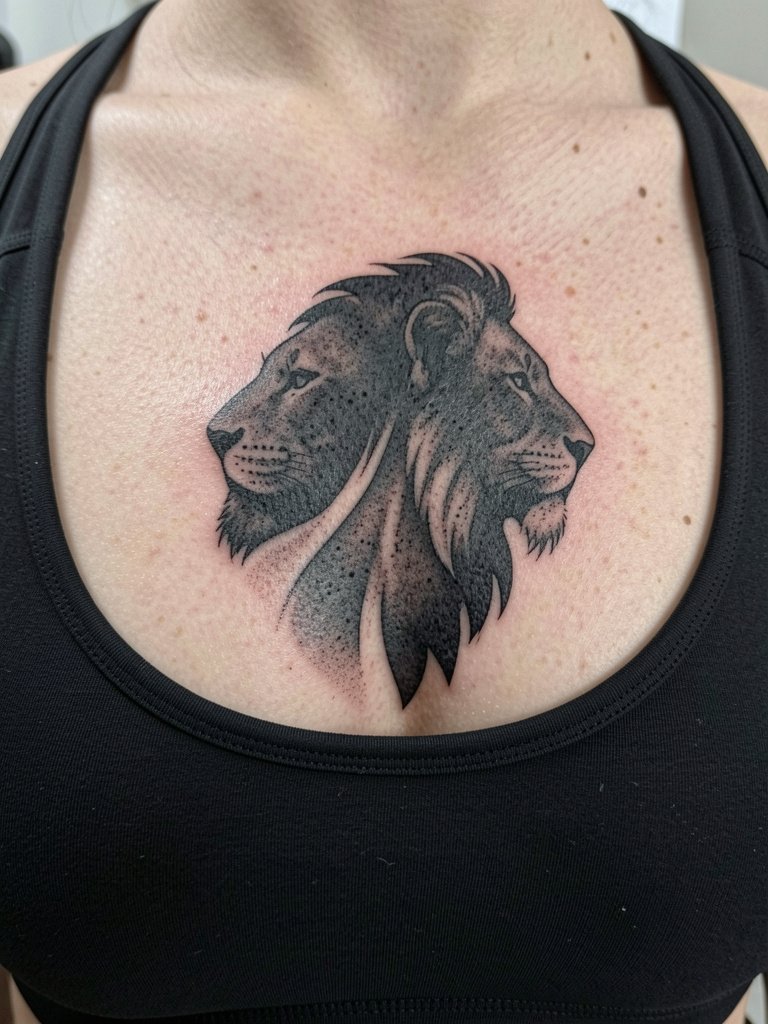
A profile with a shadow mane makes a smaller visual footprint while staying readable because it relies on silhouette rather than fine mane detail. That makes it a good choice if you want chest placement without an overwhelming canvas. The session tends to be shorter and the blowout risk is low with solid shapes. Wear a strapless or wide-neck top to keep chest access simple on session day.
14. Hidden Under-Pectoral "Only-When-Lifted" Lion
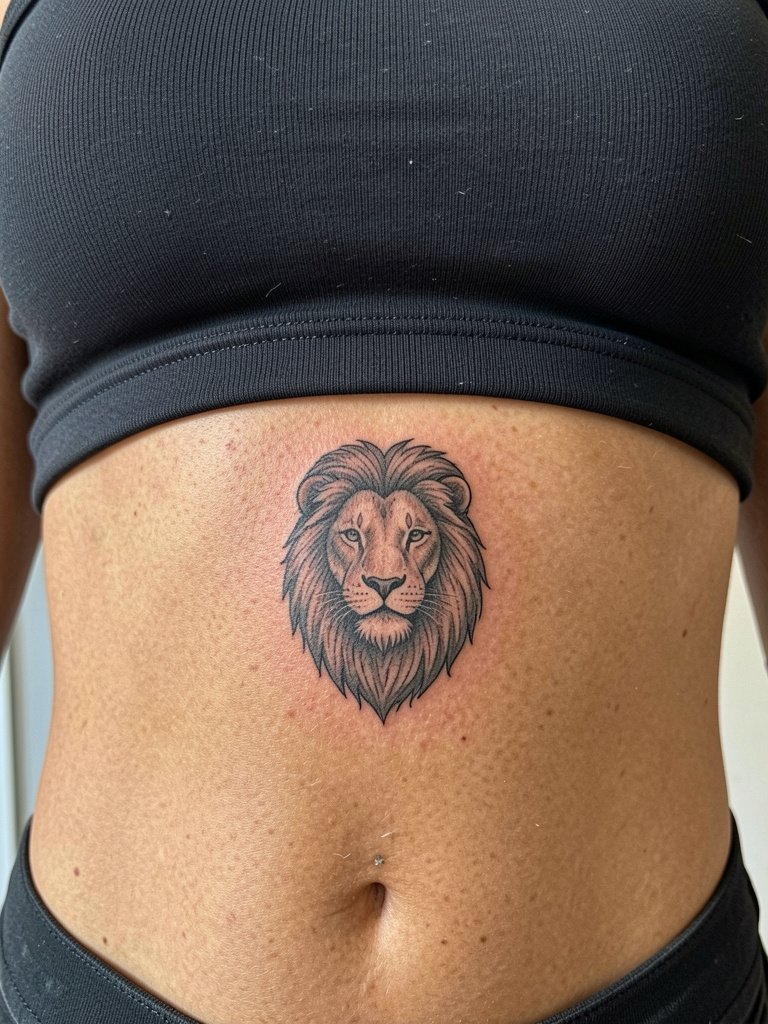
Hidden chest pieces are intentionally private until you pick a top or raise your arms. They are forgiving in size and work great in the lower sternum where movement is less aggressive. The main mistake is asking for overly fine mane detail in a small hidden spot. For session wear choose a loose open-front top so the artist can access the area without tight straps rubbing the fresh ink. No styling link is required here since the reveal is the styling choice itself.
15. Crown as Necklace: Lion with Pendant Chain
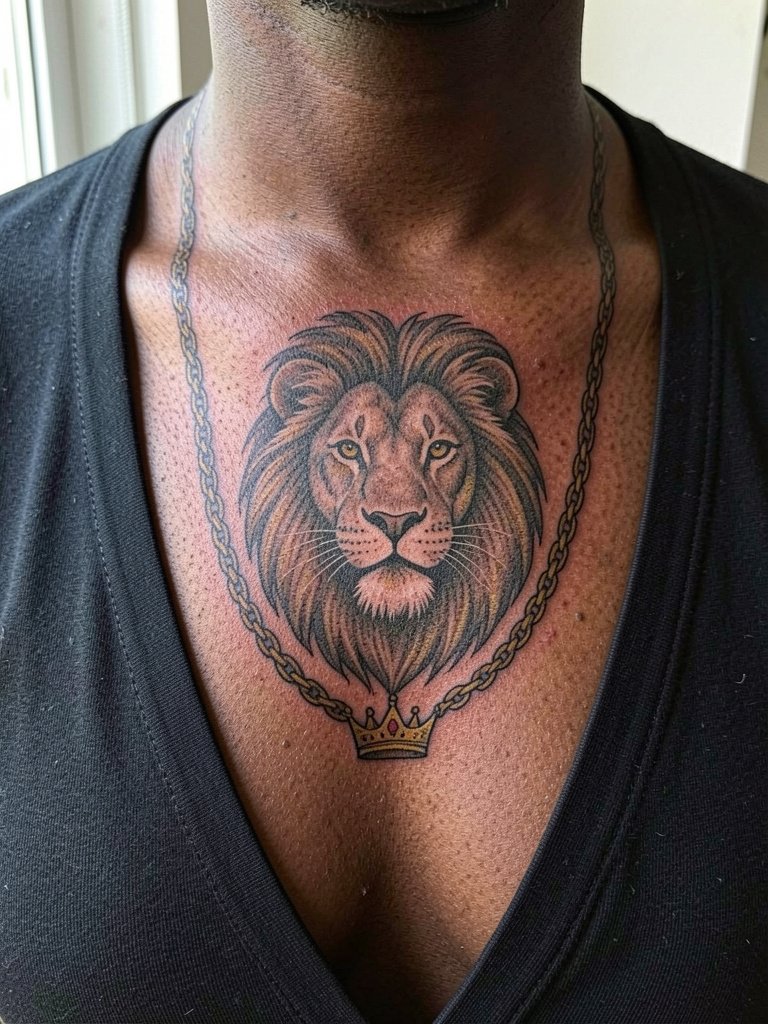
Placing a crown as a necklace is a fresh translation that plays nicely with chest anatomy and jewelry. Make sure the chain spacing follows natural collarbone curves. Ask the artist to show the chain in multiple scales so you can see how it reads under necklaces. For photos and events, pair with a layered gold chain necklace that sits above the tattoo without crowding the pendant detail.
16. "Breath" Lines: Roar Suggestion with Wavy Marks
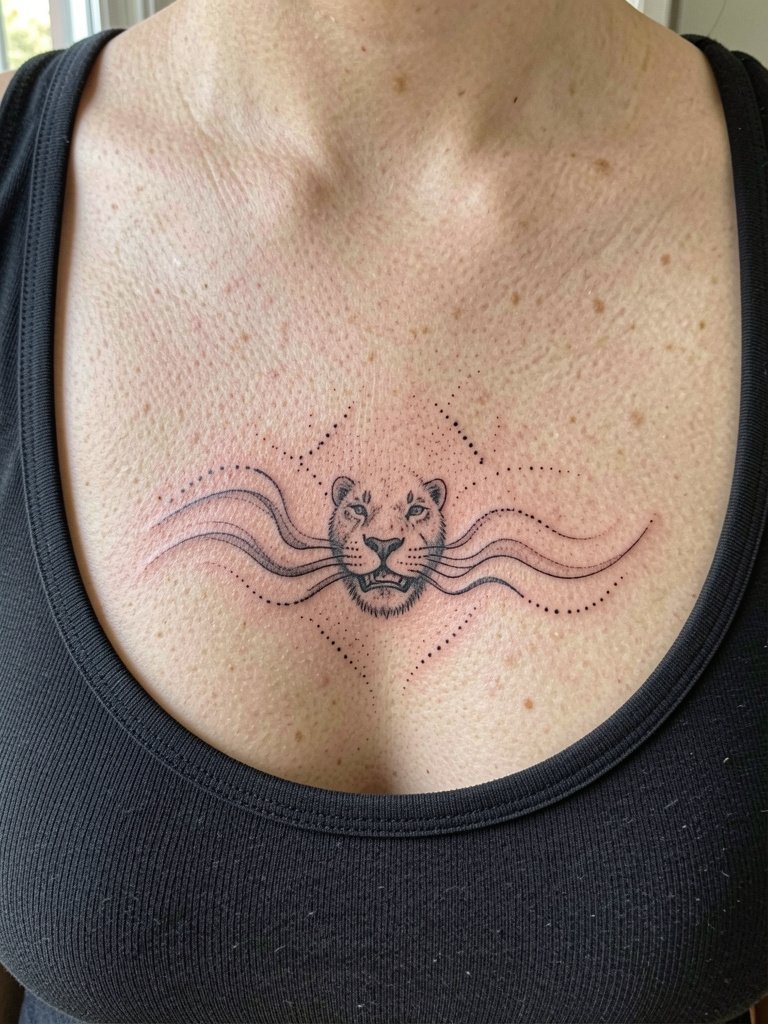
Tiny breath lines add narrative movement with minimal risk of future blur if they are spaced properly. The trick is to keep them sparse and use dot work to suggest air rather than dense single-needle strands. This detail sits well above or beside the mane so it does not compete. It is low-pain and often completes in a single shorter session. For styling, a scoop-neck tank top keeps the breath lines visible in casual settings.
17. Half-Face, Half-Abstract Split Composition
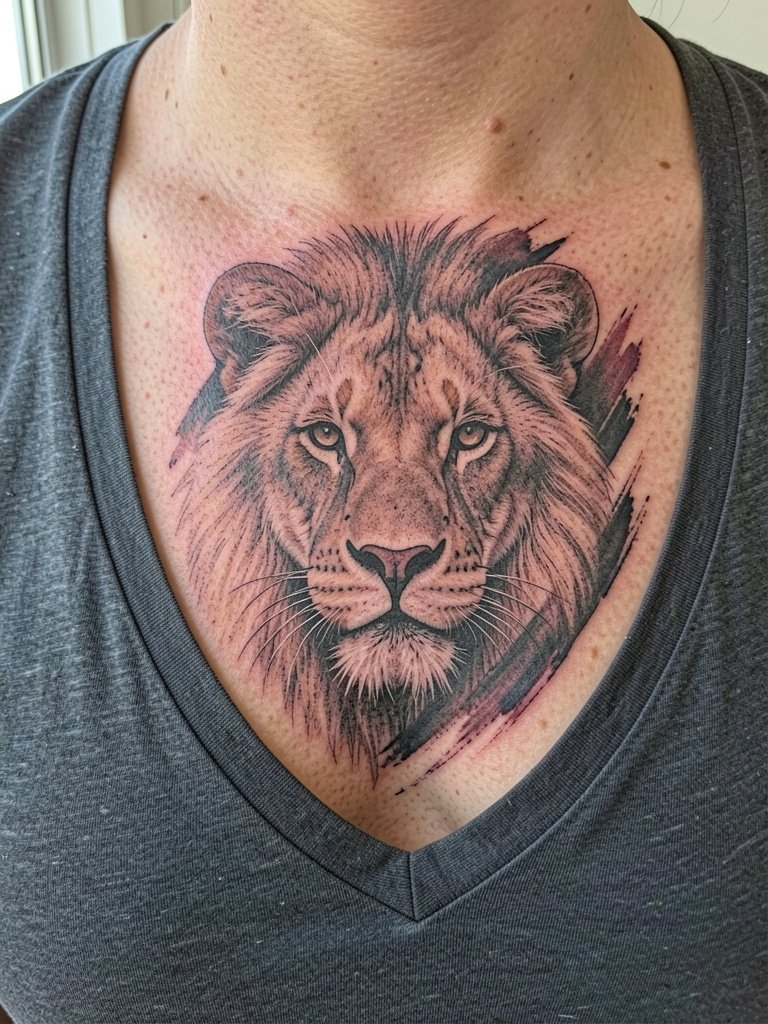
A split composition keeps one half tightly detailed and the other intentionally loose so the whole piece reads as a concept. During consultation specify which half carries the gaze and which half exists as texture. These designs often require two sessions so the artist can switch tools and shading approaches. For framing on nights out, a structured blazer with collar popped creates a curated contrast between formal clothing and the piece.
18. Stipple-Shaded Ornamental Lion Medallion
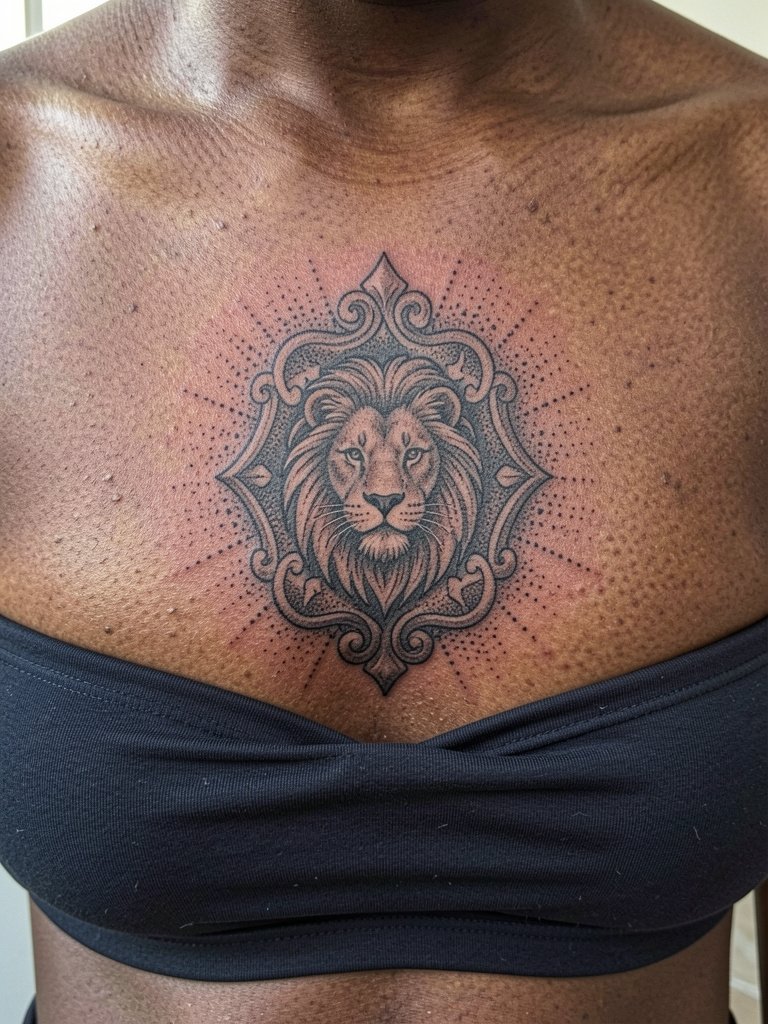
Stipple delivers texture without relying on long fine lines that might blur. It ages predictably when dots are spaced for future skin movement. Discuss the dot density with the artist so you understand where touch-ups may be needed in two to five years. Session time is moderate to long because dot work is meticulous. A fitted bandeau keeps the medallion fully visible for photos and avoids irritation from straps during healing.
19. Micro-Lion Center on Lower Sternum
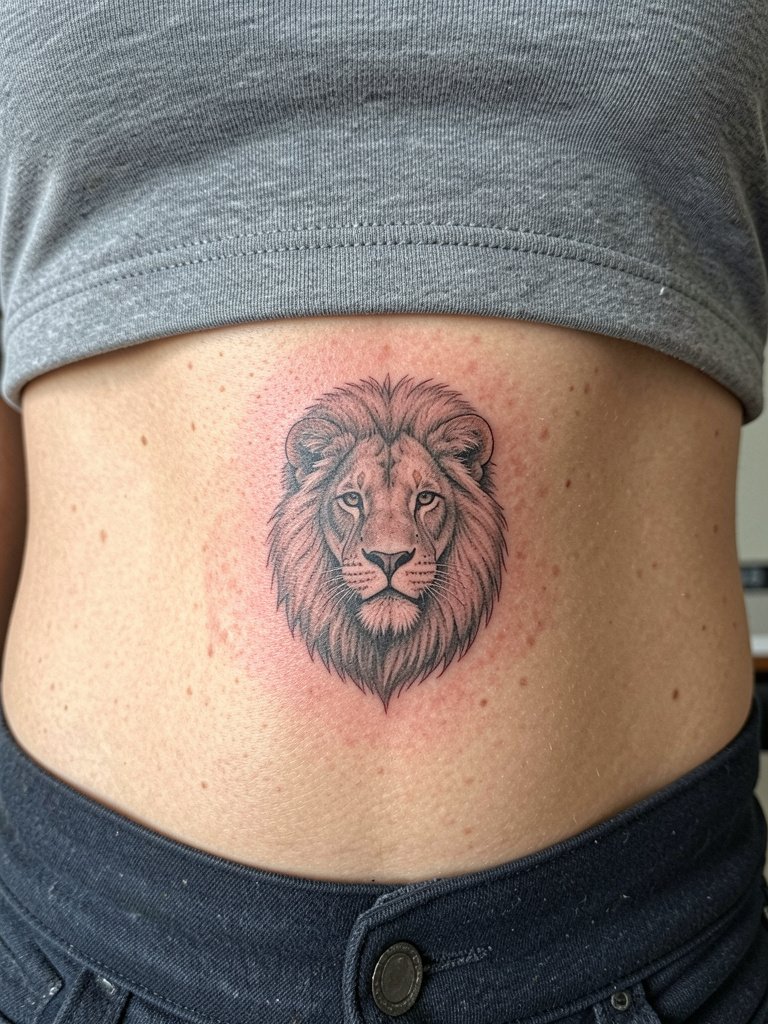
Micro portraits on the chest are risky because of the tendency to lose fine detail. If you want a compact center piece, ask the artist to prioritize a clear focal plane such as the eye and jawline while simplifying fur texture into stronger value blocks. This keeps the face readable at smaller scales. The session is shorter and typically lower-pain. For session wear, a loose open-front top will make access simple without rubbing the fresh ink.
20. Lioness Portrait for a Softer Look
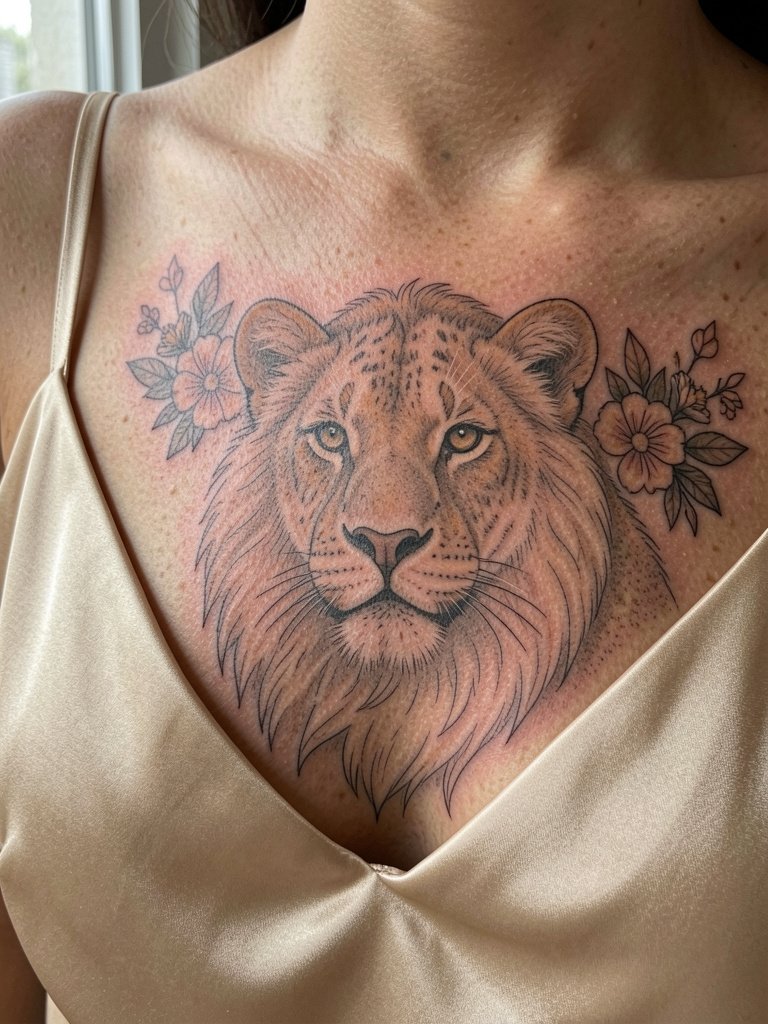
If you want a less traditionally bearded look, a lioness portrait focuses on contour and soft shading rather than heavy mane texture. Request references that show the jawline and eye detail you prefer so the artist avoids defaulting to a "king" beard. This option is often recommended for people who want a chest lion that reads across gender presentations. For outfits, a silk camisole or thin pendant keeps the look delicate.
21. Armor-Plate Chest Lion with Geometric Panels
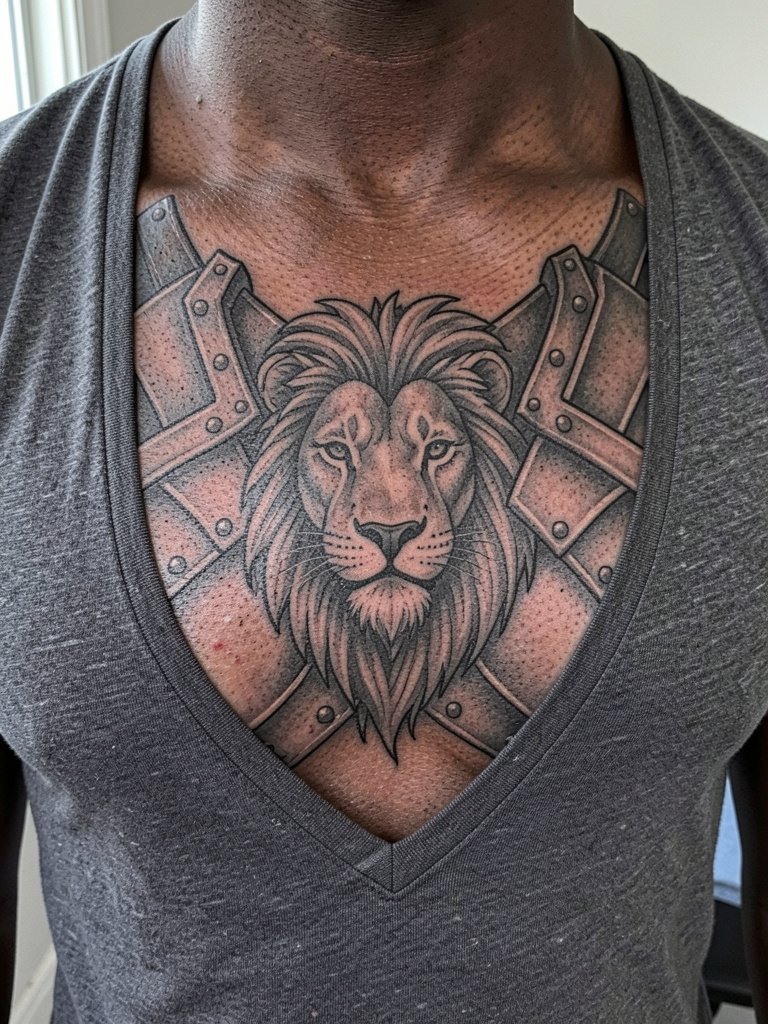
Armor-plate designs use panels to protect focal facial features with strong shapes that age well. Map the plates across the chest so seams land on relatively stable skin rather than high-movement areas. Panels make touch-ups easier because you can retouch isolated areas without reworking the whole piece. For a rugged look, pair with a loose button-down in an open front for sessions and styling.
22. Negative Space Lion: Cutout Mane Technique
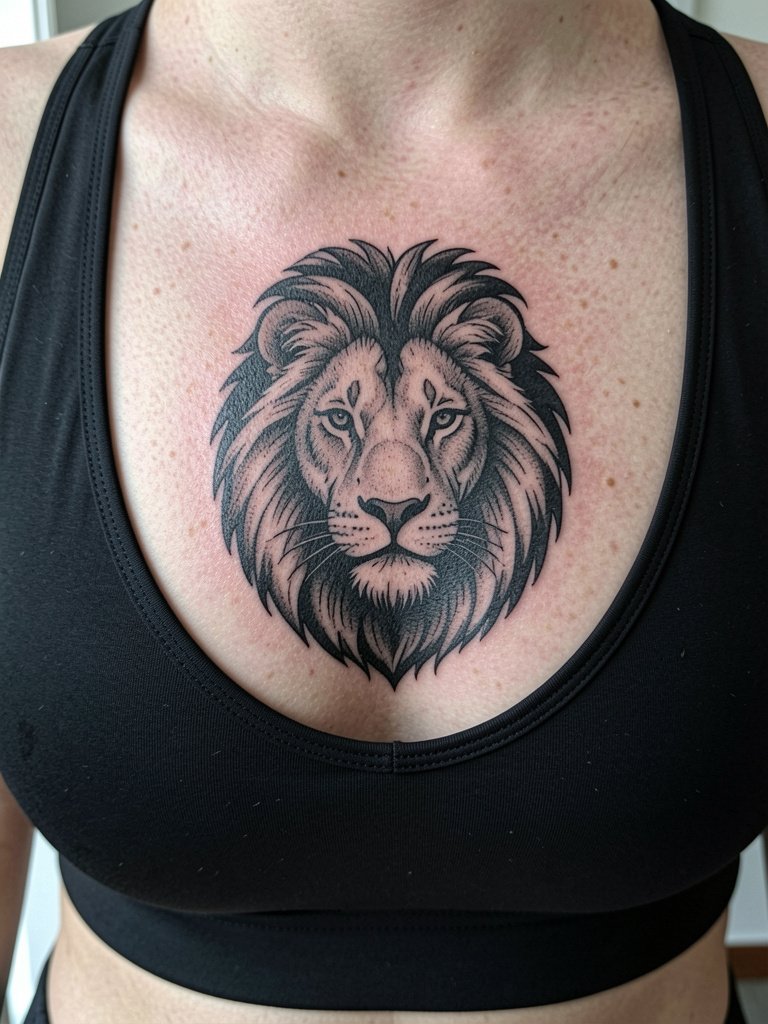
Negative-space work depends on bold surrounding fills to keep the central face crisp. The advantage is fewer delicate internal lines to blur, however planning is essential so the “cutout” reads against the background. Discuss which areas of bare skin you want preserved and which the artist can shade. This approach ages favorably if the surrounding saturation remains solid. No styling link here, the visual effect is the primary consideration.
23. Compass or Map Lion for Travel Themes
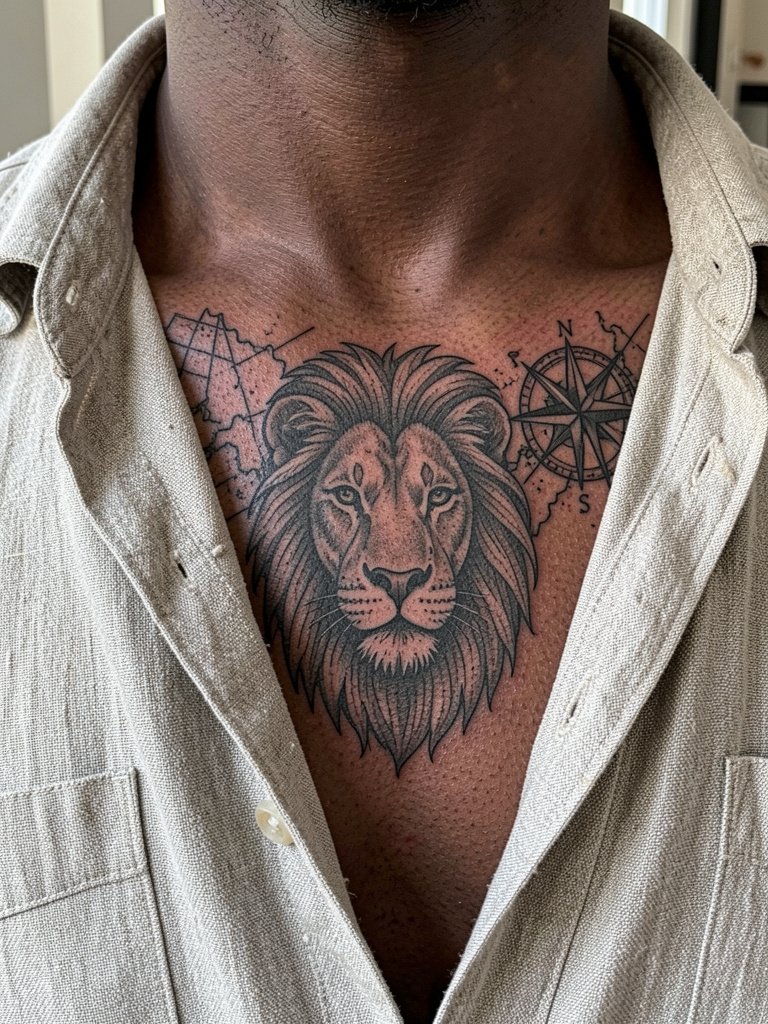
Maps and compasses add context without overwhelming a central lion portrait. Keep map lines light and let the lion’s eye be the focal point. Ask the artist to demonstrate how maps read at full scale so tiny route ticks do not vanish. For events and photos, a linen button-down with open collar keeps the upper chest visible and tastefully styled.
24. Half-Mask Human-Lion Hybrid Across Pectoral
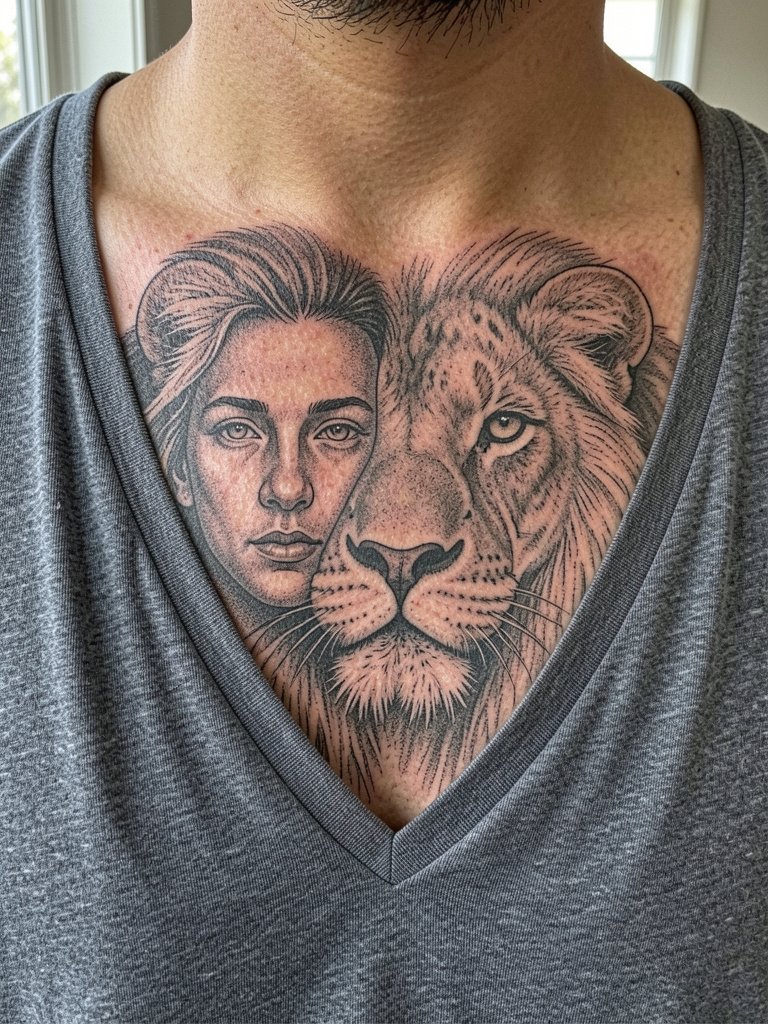
Hybrid portraits are concept-heavy and require clear discussion about which features must align at the sternum seam. These pieces usually take multiple sessions and careful reference matching. The main mistake is under-planning symmetry expectations. For style pairing, a solid v-neck tee keeps the focus on the central merge.
25. Mandala Border with Constellation Accents
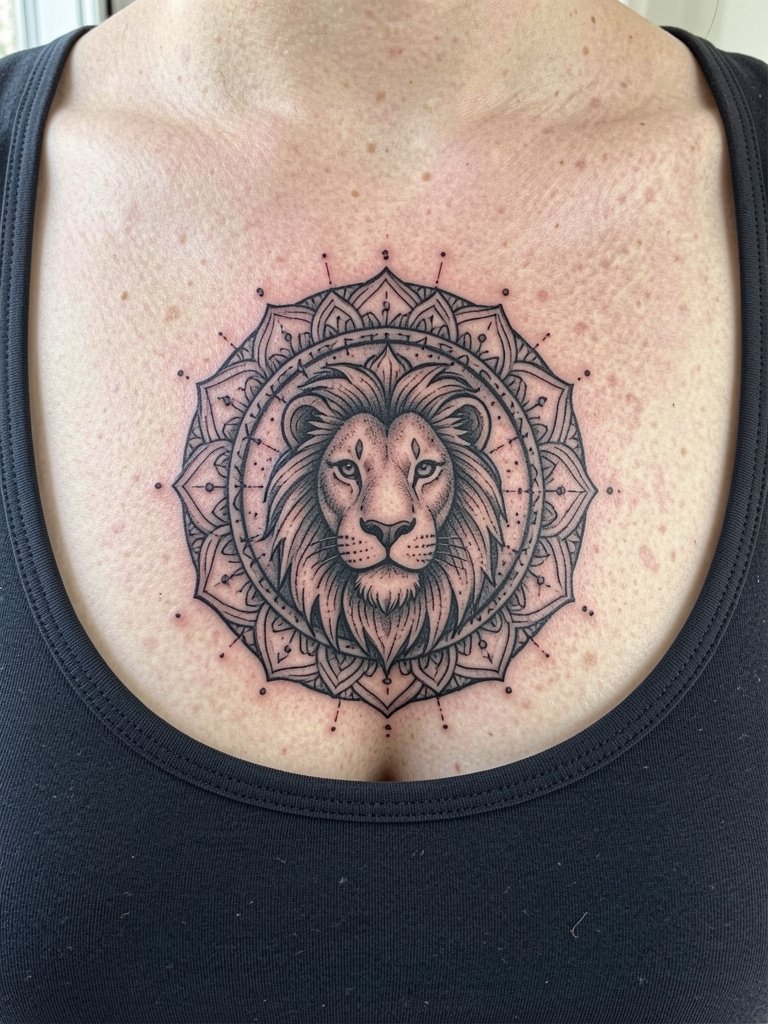
Combining mandala borders with small celestial accents gives you both ornament and storytelling without forcing heavy mane detail. Keep constellation lines sparse and anchor them far enough from the mandala edge to avoid blending over time. This design suits someone who wants an ornamental chest piece with personal symbols embedded. For a subtle reveal, a low-cut tank top frames the mandala for photos.
Frequently Asked Questions
Q: How much should I budget for a chest lion tattoo?
A: Expect a wide range because size, detail, and color all change the session count. For a small to mid chest piece plan on a range in the lower hundreds to mid thousands for multi-session realism and color. Bigger, fully detailed chest portraits typically land at the higher end of that range and often require two to three sessions.
Q: Does fine-line work on the chest hold up?
A: Artists are split into two camps. One camp says fine-line manes on chest skin blur within a couple of years because the sternum and under-breast area compress and move daily. The other camp argues that with precise needle depth and slightly wider spacing fine line can settle well, and they often point to healed examples out to three years. Decide by asking the artist to show healed photos from similar placements and to demonstrate line weights at the consult.
Q: Should I pick color or black-and-gray for longevity?
A: Opinions divide into two camps. One camp recommends black-and-gray for chest pieces because warm pigments like orange and red can fade faster with sun exposure and natural skin oils. The other camp says modern pigments can hold color if you commit to strict SPF and occasional touch-ups. Both points are valid, so choose with both aesthetics and your willingness to maintain protection in mind.
Q: How should I prepare clothing-wise for my chest session?
A: Wear something the artist can easily move aside without rubbing the area later. For sternum and lower chest pieces a button-down works well for session access. For collarbone pieces a linen button-down or tank lets the artist reach the area. For any chest piece avoid tight straps and bring a loose top to wear home.
Q: Where can I find artists and healed portfolio examples without relying on names?
A: Search platform tags like #liontattoo, #realistictattoo, and #chestlion on Instagram and TikTok then filter by your city. Tattoo-specific directories let you search keywords like "realistic lion portrait" and show portfolios. Reddit tattoo threads often surface healed examples for different skin tones. Use those filters to find shops that publish healed work rather than just fresh photos.