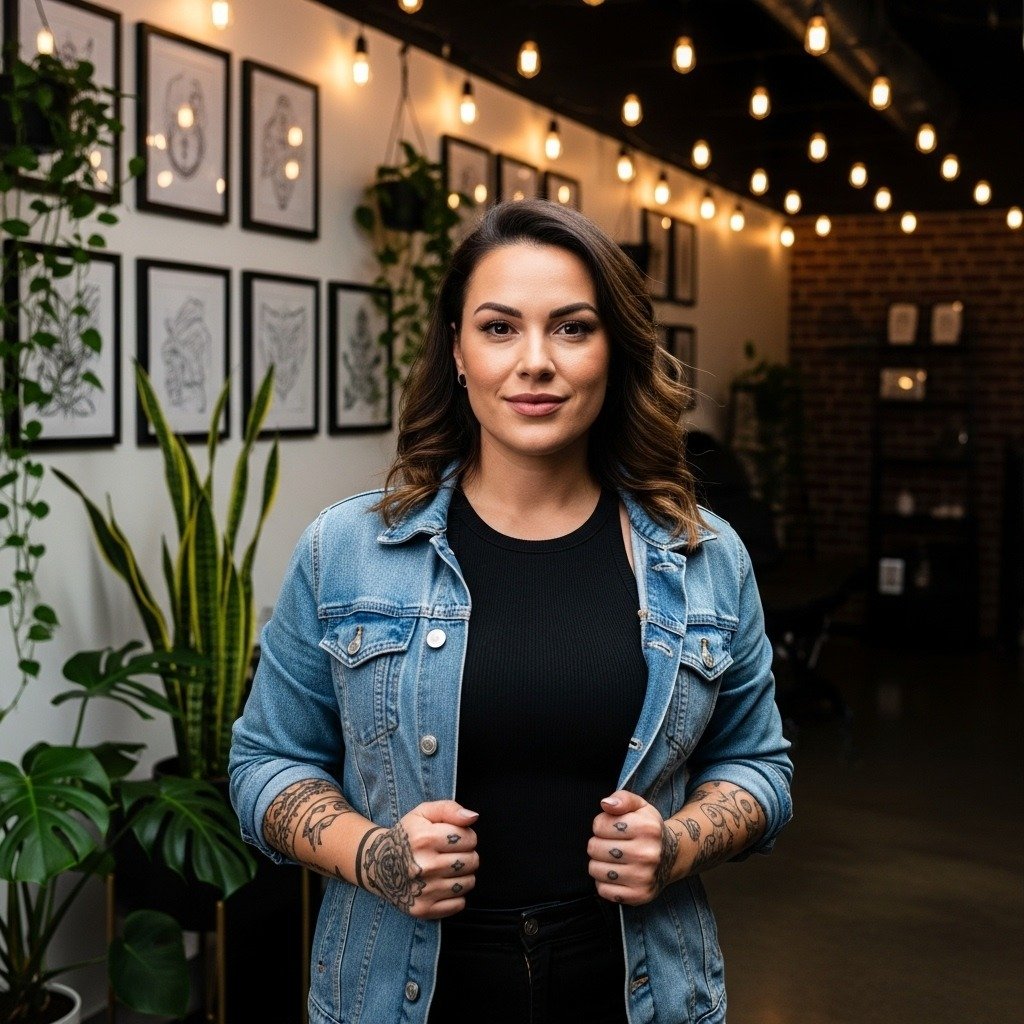
Geometric wolf tattoos read like architecture on skin. Pick the wrong scale or line weight and the snout blurs into a generic dog. Pick the right scale, placement, and wardrobe cues and the design snaps into place for years. Below you will find carefully chosen geometric wolf approaches, where to ink them, what to tell your artist about line weight and spacing, and how to wear them so they show up in photos.
1. Split-Face Geometric Wolf (Half Realistic, Half Geometric)
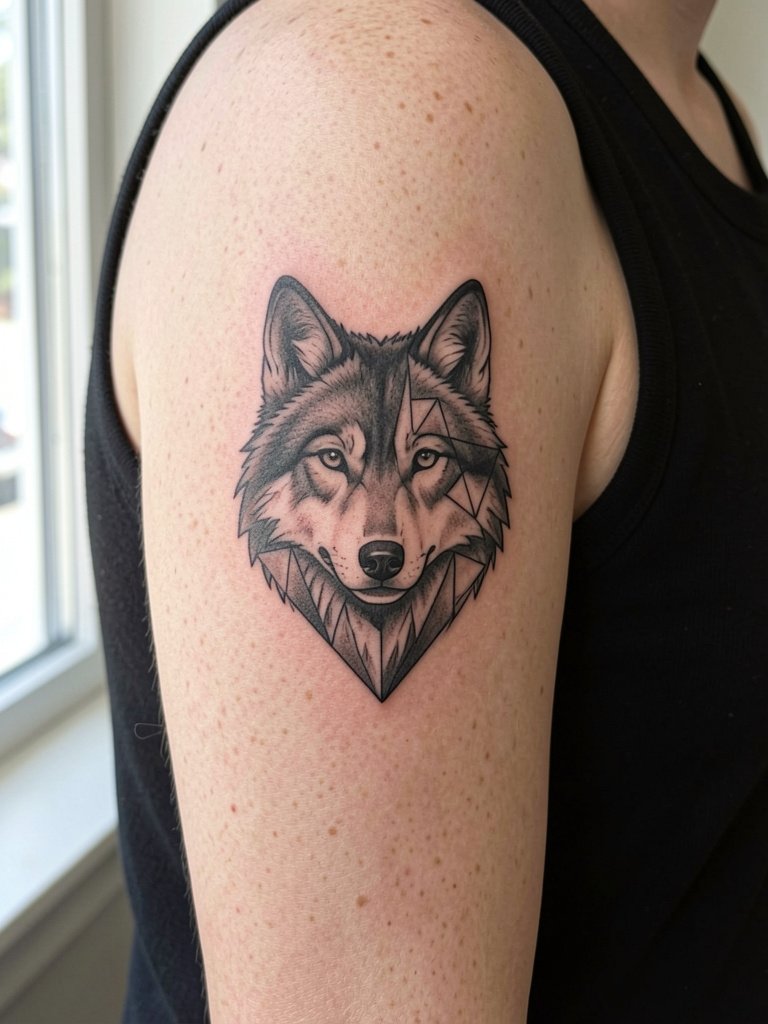
This split-face design needs deliberate line contrast so the two halves read as one face. I recommend a three to four inch face for clear mouth and eye detail. For the session wear a sleeveless top so the artist has unobstructed access. For show-off outfits pair it with sleeveless black tops so the inner arm sits cleanly on display. A common mistake is asking for identical line weight across both halves. Tell the artist to keep portrait shading softer and the geometric side slightly heavier so photographic contrast stays for years.
2. Solid-Black Geometric Wolf Silhouette with Dotwork Stars
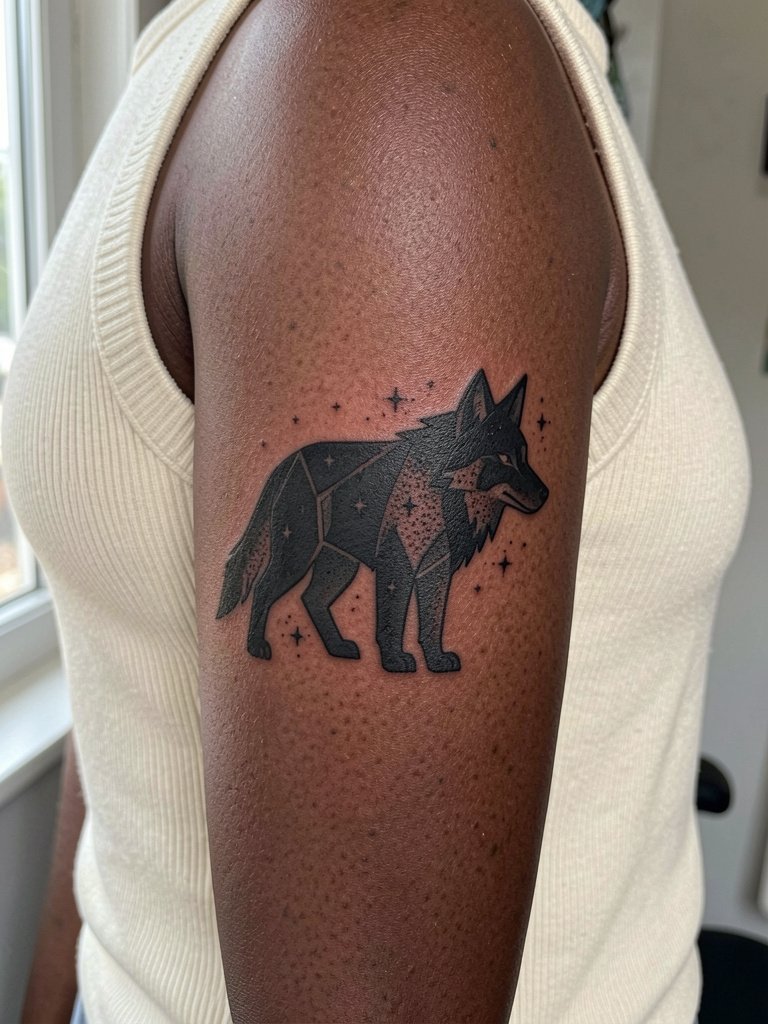
Solid black silhouettes resist early blur and photograph well on melanated skin when the fill is saturated. This placement heals reliably because the arm area avoids waistband or strap friction. For showing it off choose sleeveless cream tops that leave the inner arm visible. Expect a single session for a small silhouette. A frequent error is converting a detailed portrait into a silhouette at too small a scale. Keep the silhouette at least three inches wide to preserve the wolf shape.
3. Minimalist Single-Line Geometric Wolf Head
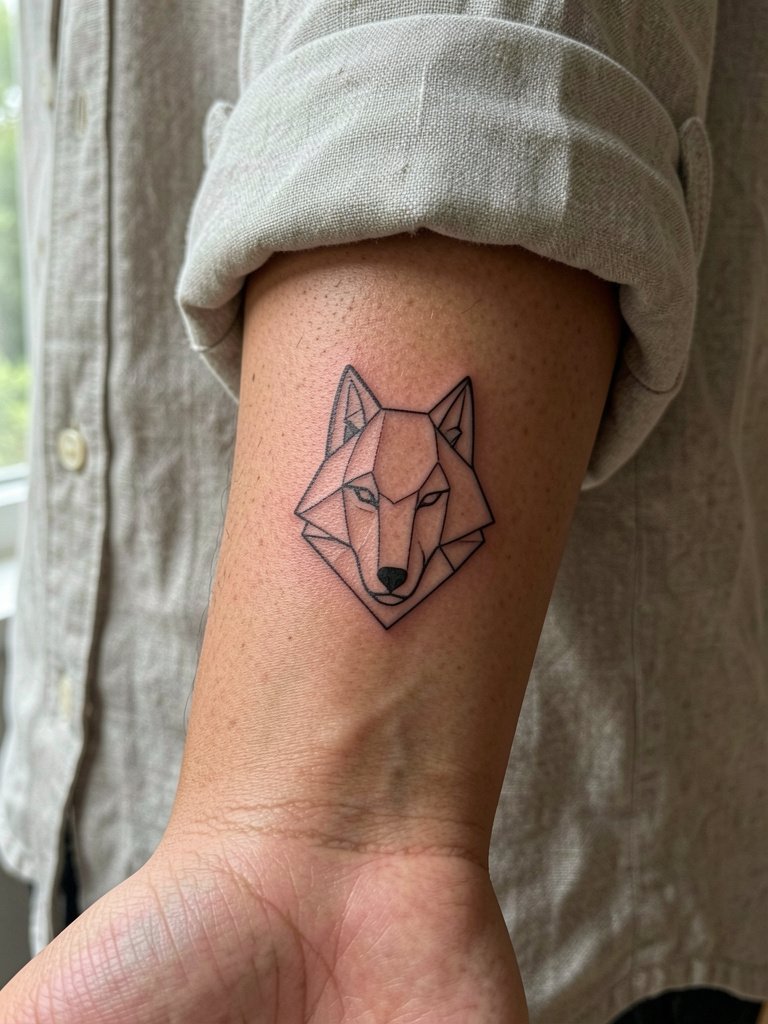
Fine single-line geometry can look elegant, but artists disagree on longevity. One camp says fine-line geometric wolves blur within two to three years on mobile skin like the forearm. The other camp argues that with slightly wider spacing and correct needle depth those single lines hold for longer, and they point to healed portfolios to back that claim. For a forearm single-line wolf bring a reference that shows exact line thickness at three inches. During the session wear a loose button-down you can roll to expose the inner forearm. Pairing for photos: linen button-down shirts in cream to keep attention on the linework.
4. Geometric Wolf Framed by Sacred Geometry (Flower of Life Background)
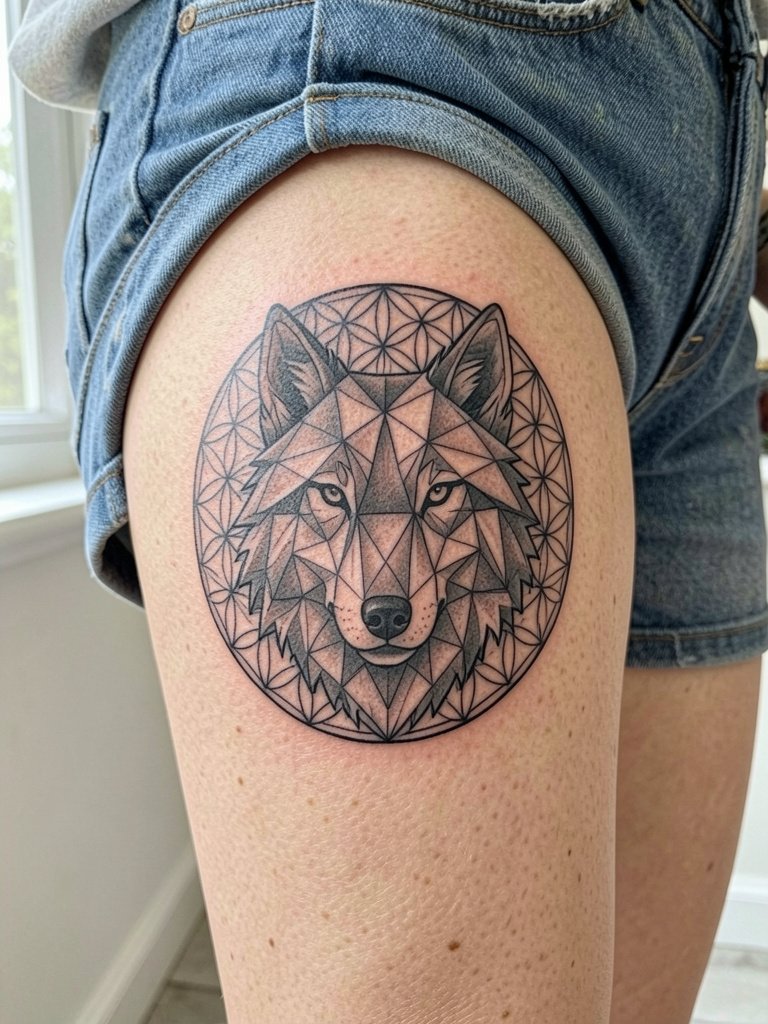
Circular mandala frames add visual balance for thigh placements, and they give the wolf more "breathing room" so small facial lines do not merge. Tell the artist to build extra negative space around the nose and eyes so the face stays readable after a few years. For sessions on the thigh wear loose drawstring shorts so elastic does not press on fresh ink. When you show the piece, high-waisted shorts keep the tattoo framed without compressing the design during wear.
5. Geometric Wolf with Watercolor Accent Splashes
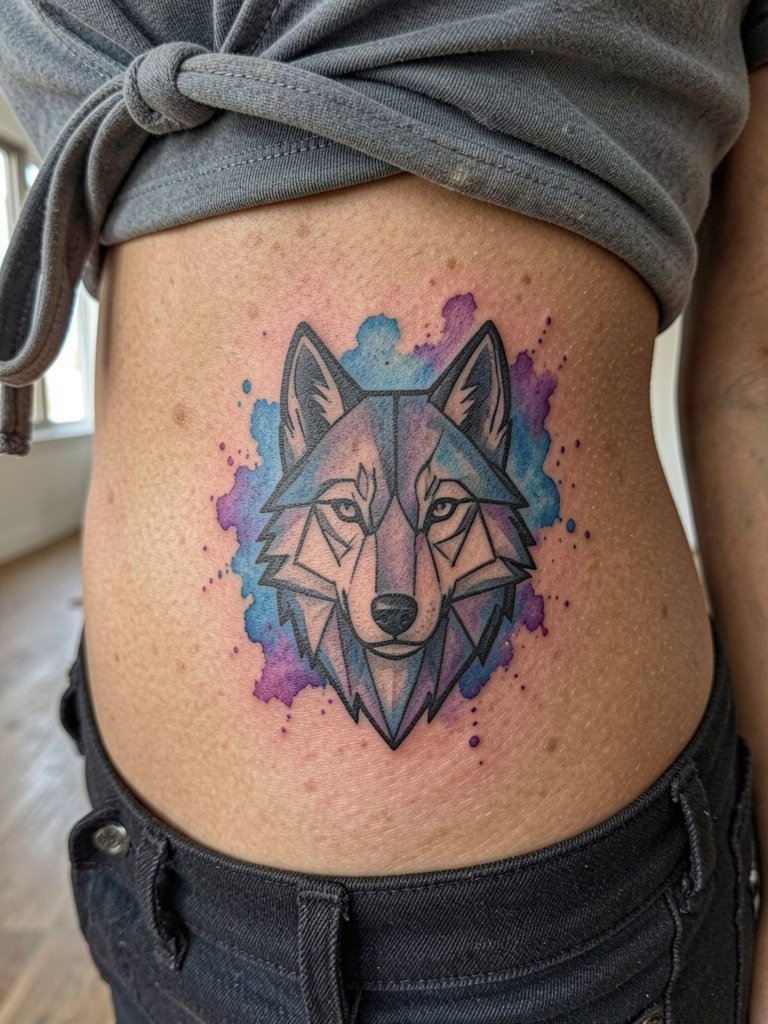
Color splashes can be beautiful but they fade faster than solid black. For hip pieces, brief color accents in blue or purple keep a dreamy feel without committing to full washes. Ask the artist to confine color behind hard black edges so touch-ups later are simpler. Session wear for this placement: loose side-zip or drawstring pants so the waistband does not rub the fresh ink. Photographs look best with neutral side-tie tops that let the color pop.
6. Geometric Wolf Mandala Hybrid (Wolf Inside Circular Mandala)
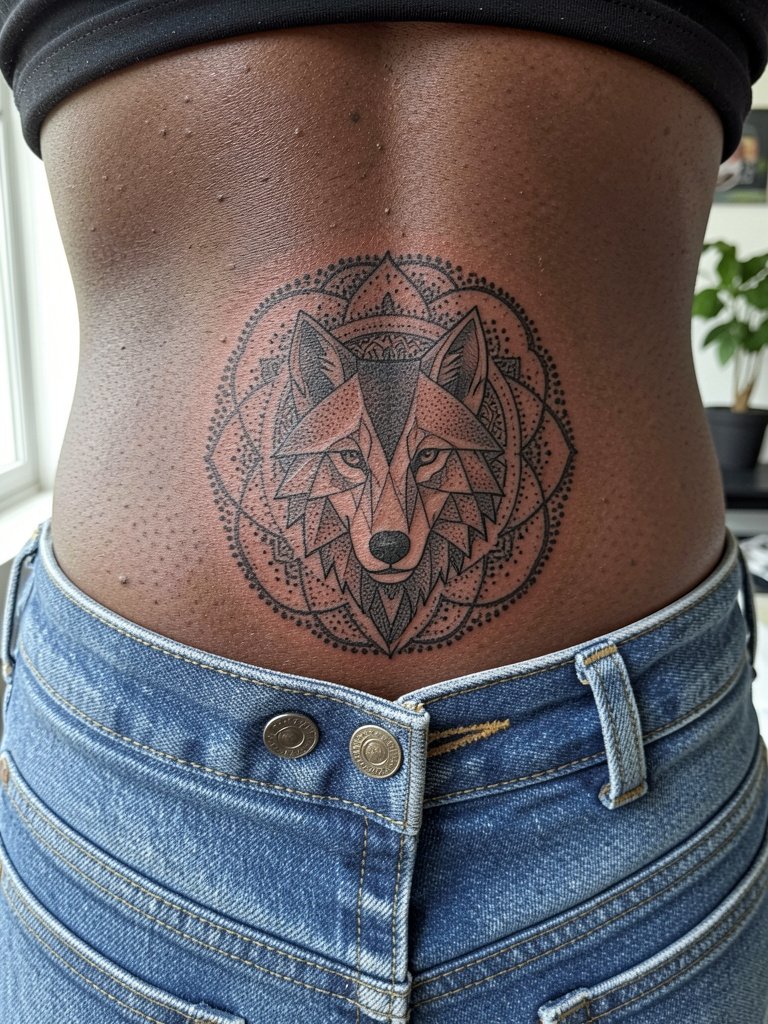
This piece benefits from scale. A small mandala packed with detail often looks muddled after healing. One group of artists says mandala-centered wolves hold forever because the geometry reads at any distance. Another group cautions that overly fine mandala lines can blur where the lower back stretches, especially with tight waistbands. If you pick this, plan for two sessions and wear low-rise jeans on session day so nothing compresses the area while it heals.
7. Abstract Geometric Wolf Body (Fragmented Triangles, No Face)
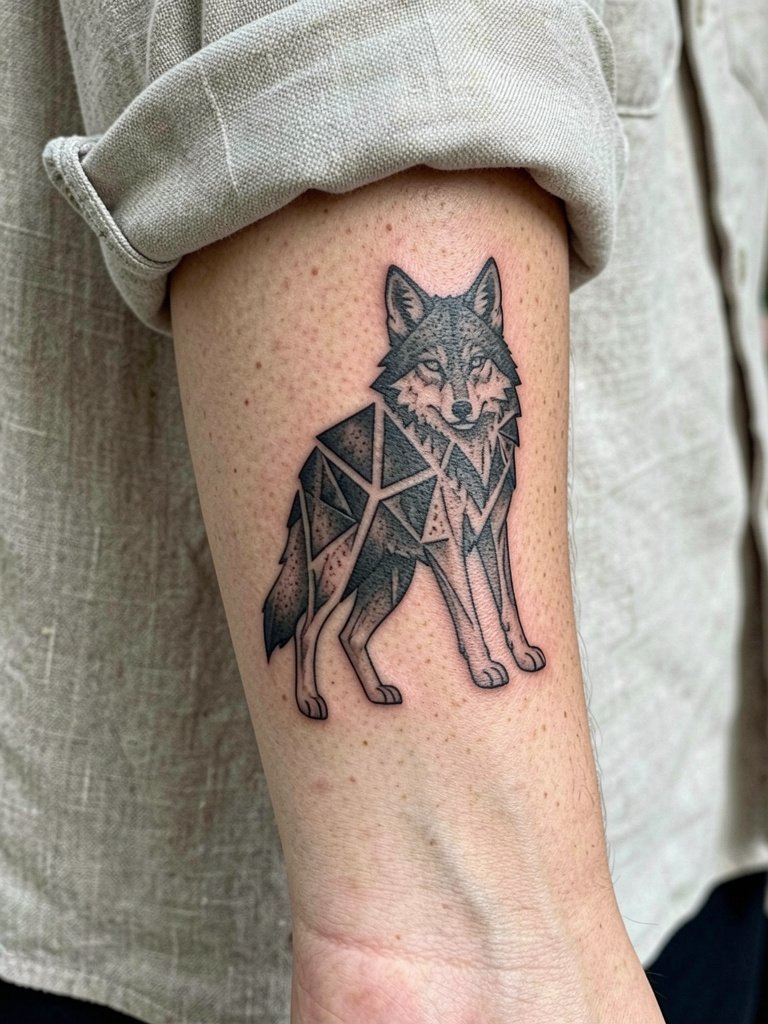
When you prefer shape over portrait, the fragmented body reads clean at smaller sizes and avoids the "bear or dog" trap. For a forearm body piece, ask the artist to emphasize the silhouette edges and keep internal triangles moderate in scale. Wear rolled cuff linen shirts during photo sessions to frame the inner forearm. This style usually settles well because the design relies on negative space rather than micro detail.
8. Fine-Line Geometric Wolf with Floral Overlay
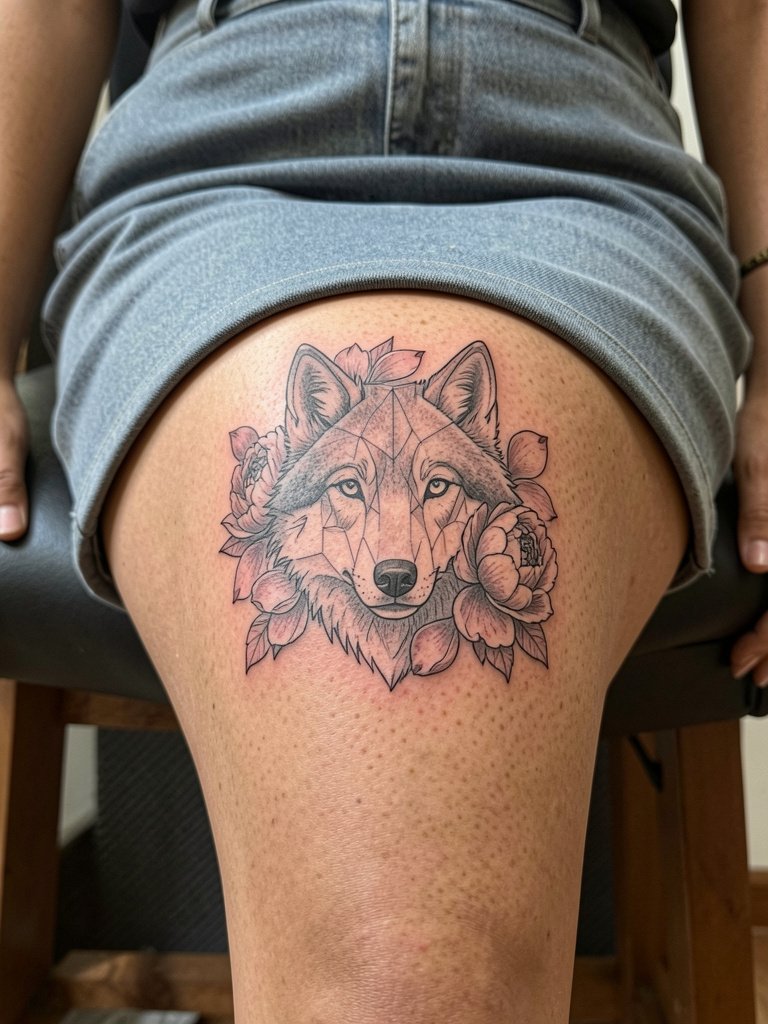
Fine-line floral overlays soften an angular wolf beautifully on the inner thigh. Because the inner thigh sees stretch and sweat, choose slightly bolder floral outlines than the wolf lines. For session comfort wear loose drawstring pants so the artist can roll the leg without tight elastic. A common mistake is asking for ultra-thin petals and ultra-fine wolf detail together. The thigh benefits from a modest line-weight hierarchy so each element reads after healing.
9. Geometric Tribal Wolf (Bold Black Patterns)
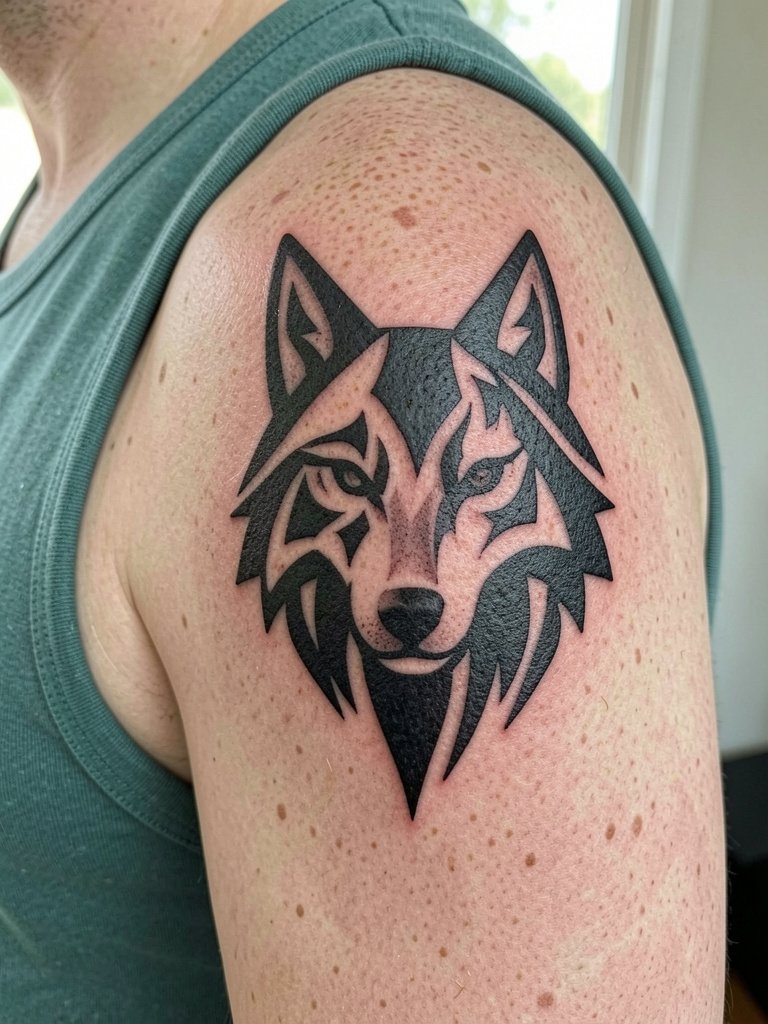
Tribal geometry reads strongly on the shoulder and ages well because thick black resists blowout. Session time is moderate and pain is low to moderate on the shoulder cap. For both the appointment and photos, choose sleeveless tank tops so the shoulder is visible without tight straps. The main mistake is chopping too many tiny negative shapes into a small shoulder piece. Keep the negative spaces chunky so the design holds.
10. Geometric Wolf Howling Profile (Angular Full Body)
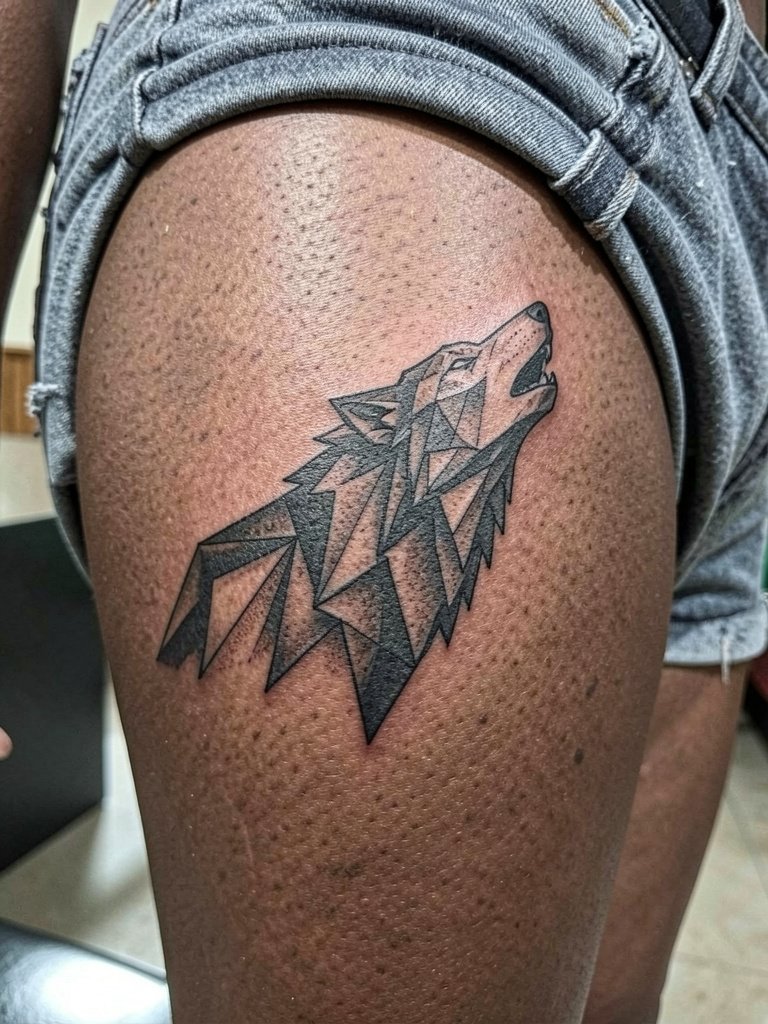
A howling profile reads well at a larger scale and pairs with dramatic wardrobe choices. For session day wear high-waisted shorts that can be rolled down slightly so the artist has full thigh access without tight bands. For photos, cropped skirts or high-waisted shorts work best. Avoid packing too many interior planes into the muzzle; keep facial angles clear so the howl silhouette remains distinct across years.
11. Micro-Realism Geometric Wolf Head
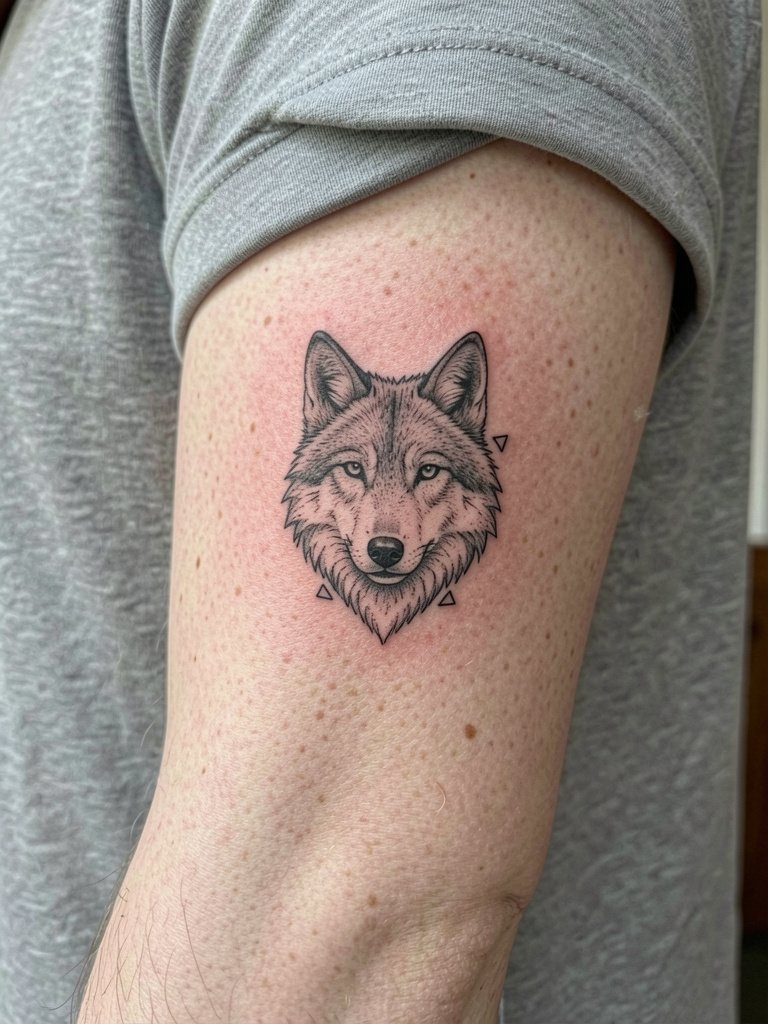
Micro-realism can look impressive but it demands careful sizing. Many artists recommend a minimum of three inches for a head if you want eyes and snout to stay distinct. If you prefer small, accept that the piece will rely on a crisp silhouette rather than tiny fur detail. For session wear choose short sleeves that do not press on the inner forearm. Photographs come out best when you keep the wrist area clean and minimal.
12. Geometric Wolf with Mountain Landscape Base
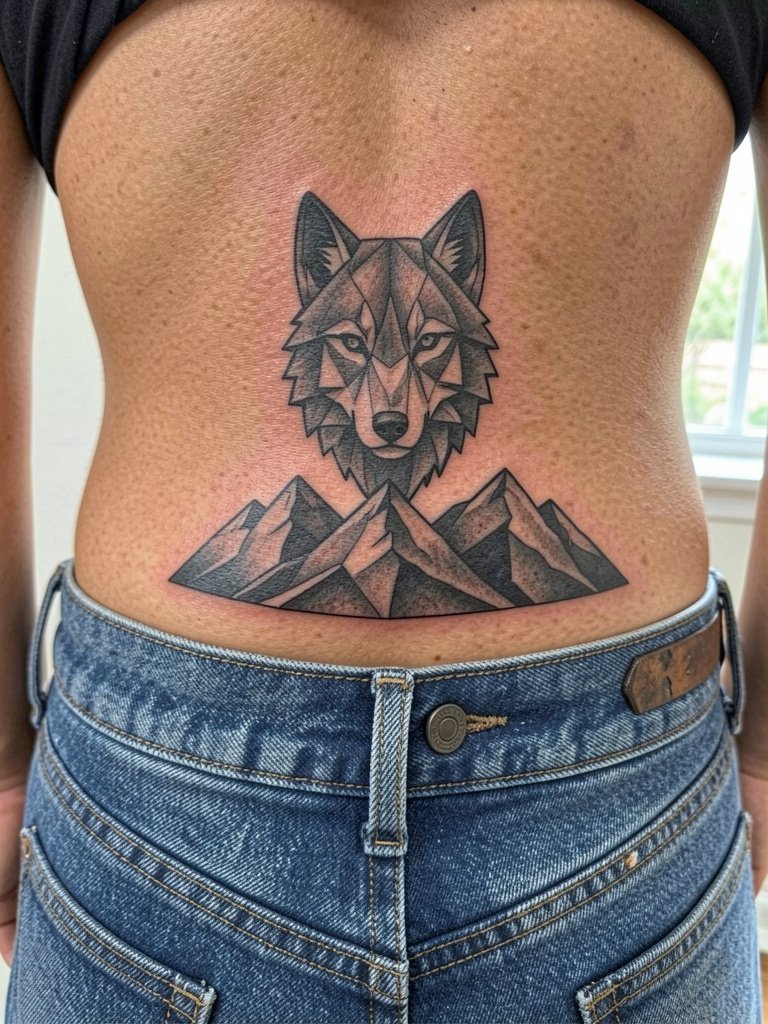
A landscape base ties the wolf to place and scales well across the lower back. Lower back skin moves with bending and sitting, so lines around the mountain ridges should be slightly bolder than you might pick for the face. For the session wear low-rise pants so the waistband does not press the small of the back while it heals. Photographs look best with neutral tops that keep attention on the back detail.
13. Geometric Wolf Silhouette with Starfield Background
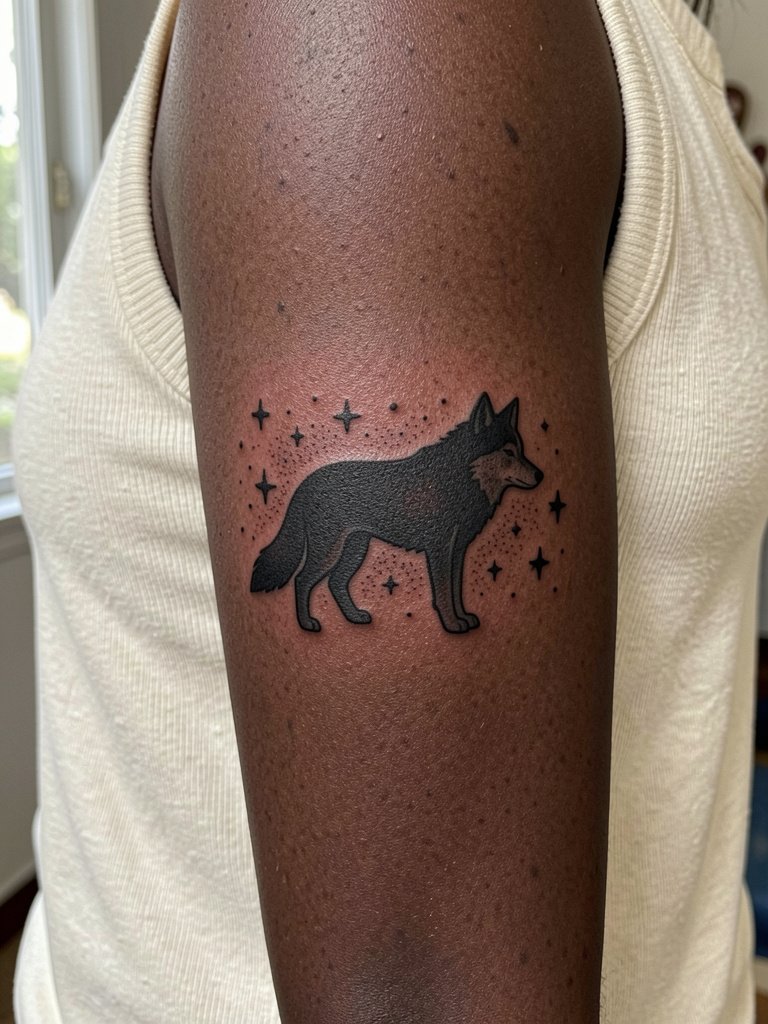
The starfield dot-work gives a celestial context without adding fragile gray shading. This style photographs well when paired with sleeveless tops. Keep the silhouette large enough to hold the wolf shape and ask for tighter stippling density near the silhouette edge so the background reads long-term. For sessions, wear a loose short-sleeve or sleeveless top so the artist can reach the inner arm without cuff pressure.
14. Geometric Wolf with Minimalist Line Art Background
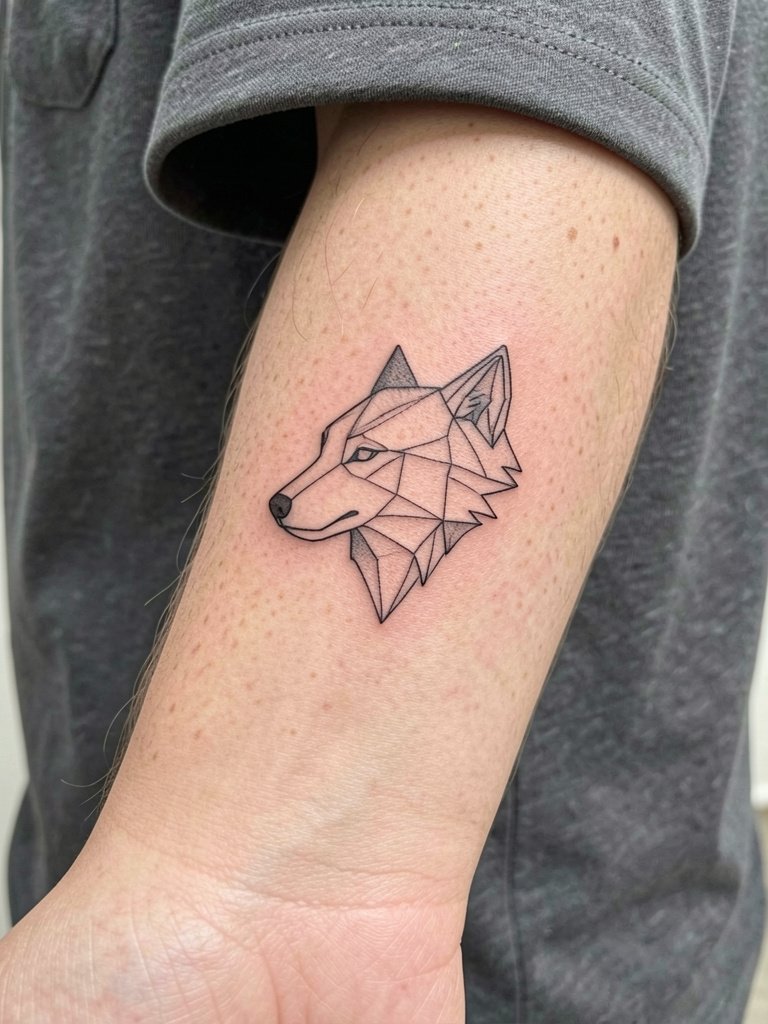
Wrist placements need restraint. Very thin single-needle lines can fade on the wrist faster than on the forearm. For the session avoid watches and bracelets on that wrist and wear short sleeves so the artist can work without obstruction. To highlight the wrist for photos, try a minimalist watch on the opposite wrist. Keep the design to simple outline shapes so it remains legible after a couple of years.
15. Geometric Wolf with Octagon/Hexagon Frame
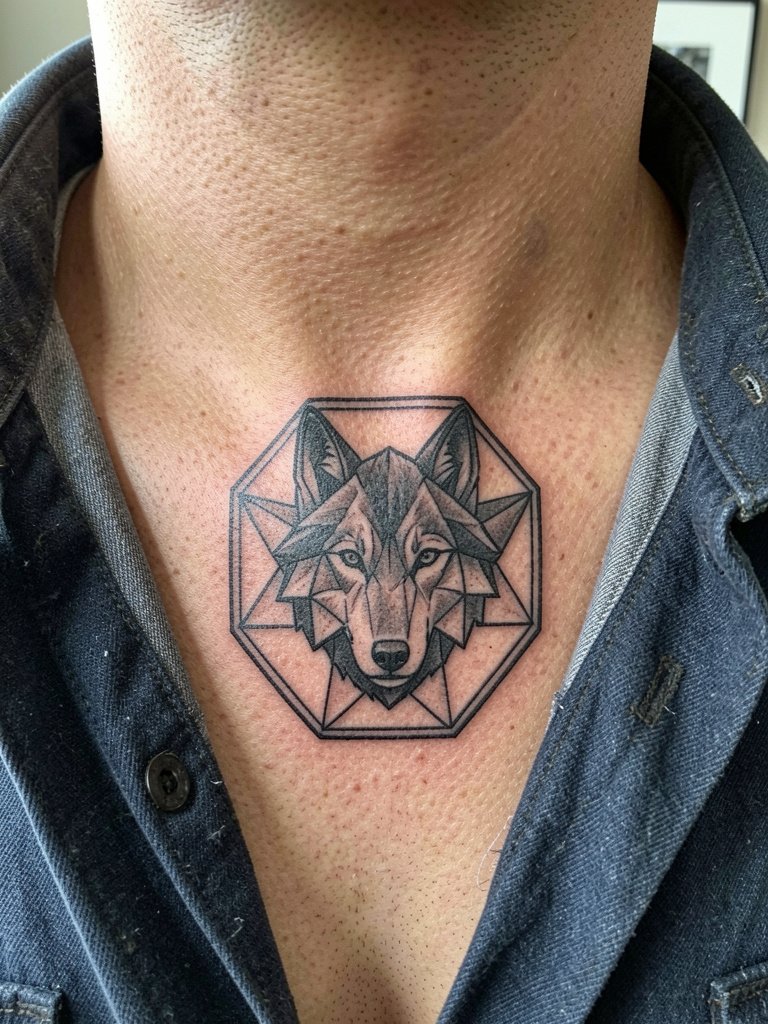
Encased-frame designs suit the collarbone because the straight lines echo bone structure. For session day wear an open-collar shirt so the artist can access both sides of the chest without tight straps. For show-off looks consider V-neck or open-collar tops to frame the piece. The main mistake is shrinking the frame to fit a pendant necklace. Keep the octagon large enough that the wolf features have spacing.
16. Geometric Wolf with Floral Crown
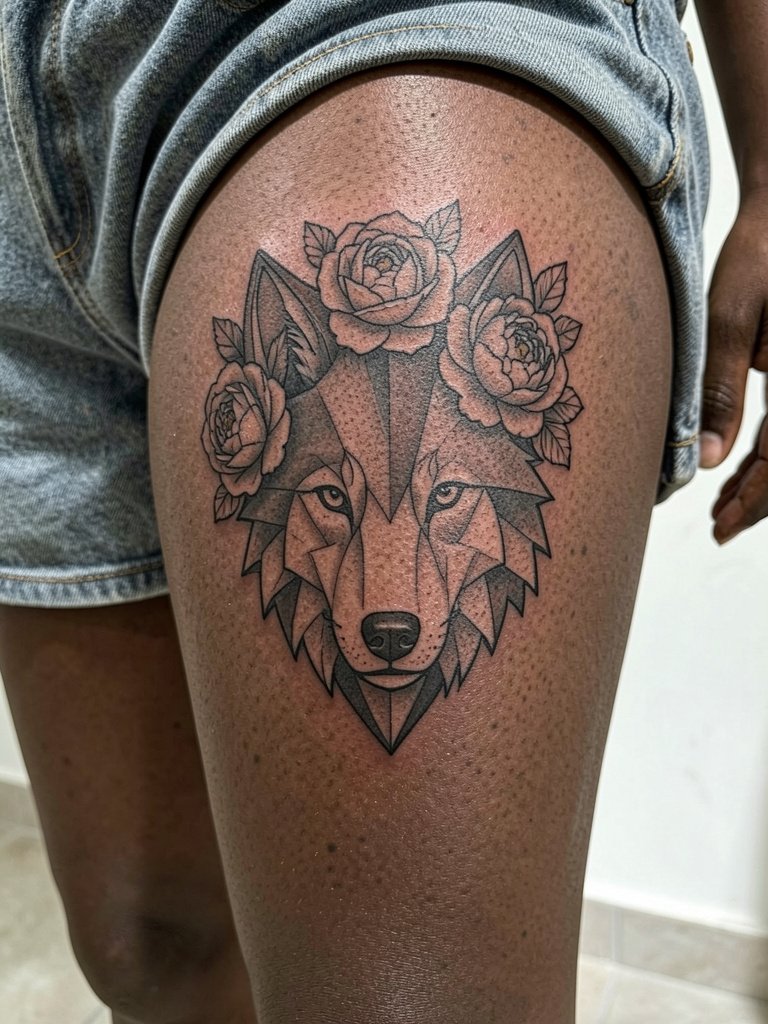
A floral crown softens the predatory edge and looks great on the thigh. Ask for flowers to have slightly thicker outlines than the tiny wolf details so they do not disappear with time. Bring photos showing flower scale. Wear high-waisted shorts or skirts to display the piece and avoid elastic that might rub the fresh tattoo during healing.
17. Geometric Wolf Negative-Space Portrait
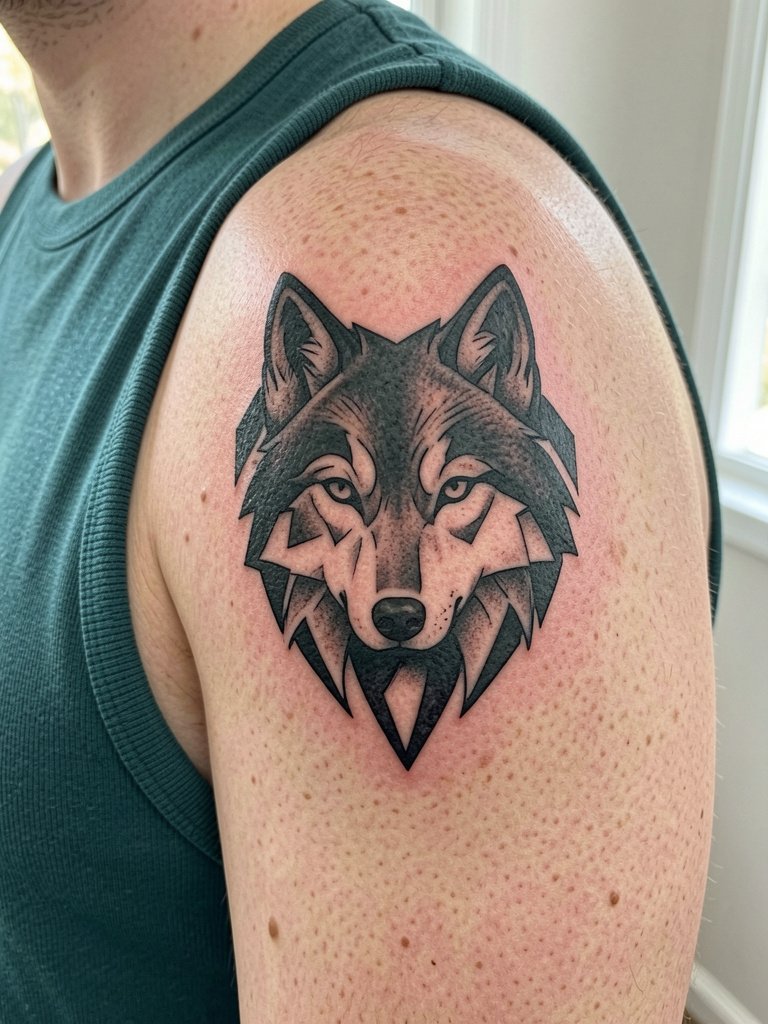
Negative-space portraits are forgiving because the design is defined by the background rather than tiny internal details. They work especially well on shoulders where the skin is sturdy. For session day choose sleeveless tops and avoid tight straps. To keep the negative shapes crisp over time, request saturated black fills and confident edges rather than stippled or scratchy fills.
18. Geometric Wolf with Compass Elements
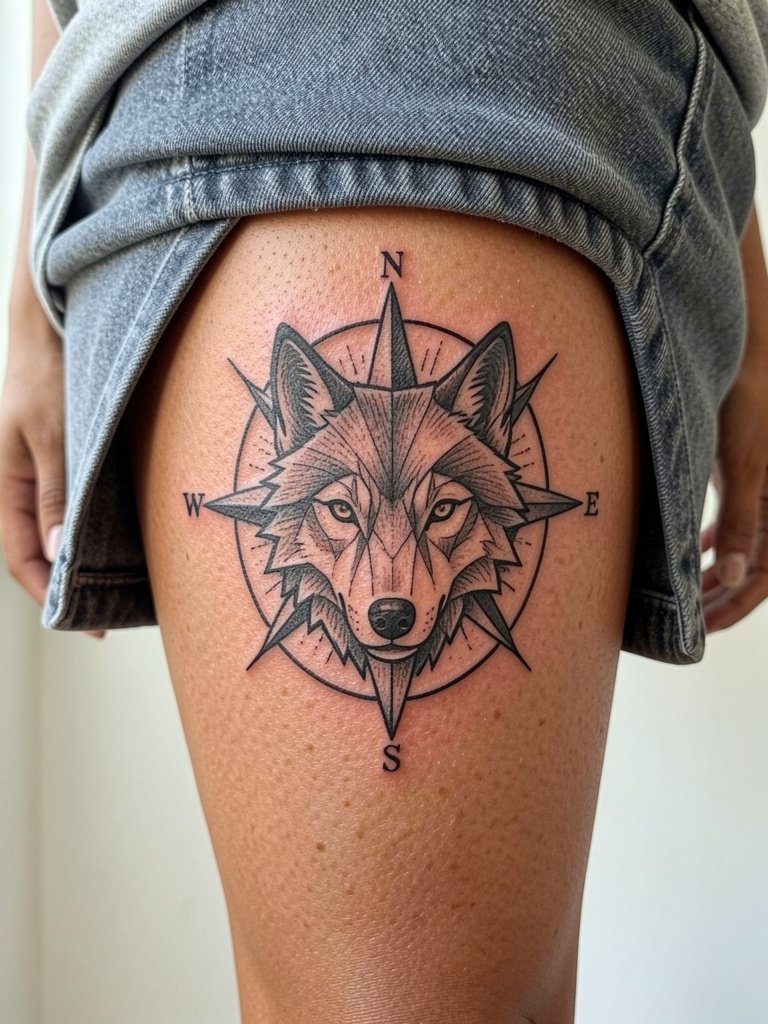
Adding compass lines gives intentional directionality to the wolf motif. For thigh placements, use clothes that expose the area cleanly in photos like cropped skirts. During the session, wear loose drawstring shorts so the artist can roll the hem without tight elastic. A common pitfall is overlapping compass points with facial detail. Tell the artist to keep the compass slightly offset so each element reads separately.
19. Geometric Wolf Half-Sleeve (Layered Triangles and Space)
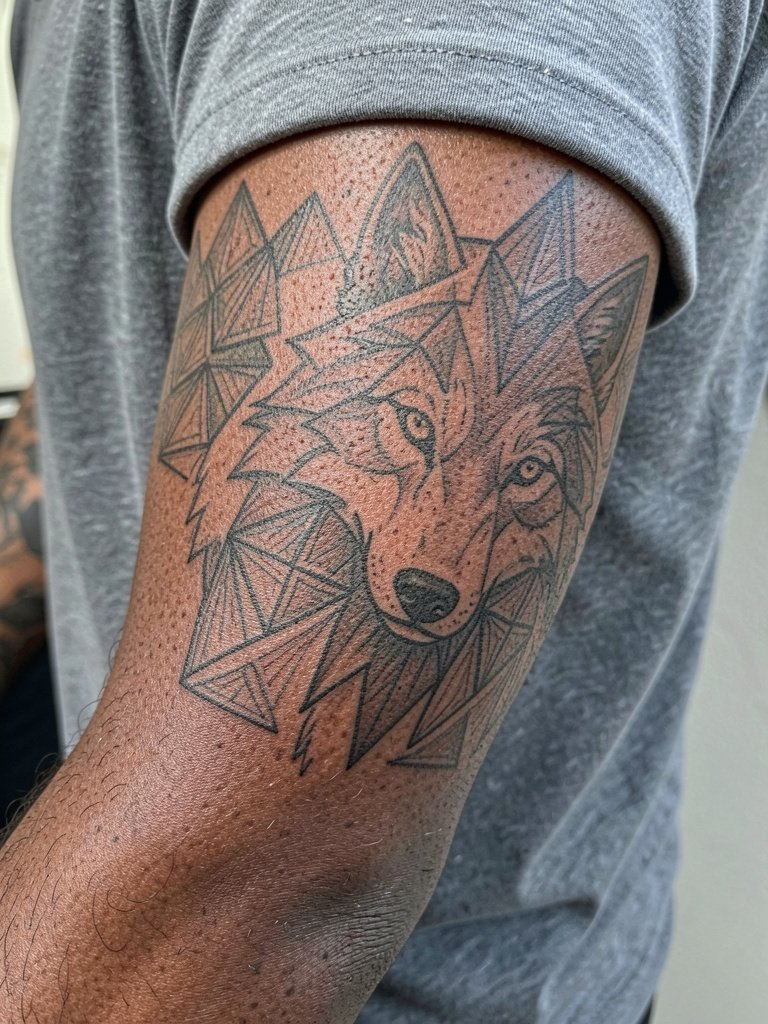
Half-sleeves need composition planning so elements flow around the arm. Expect multiple sessions and plan clothing accordingly for appointments. During the session a short-sleeve shirt that can roll is ideal. The mistake here is repeating identical triangles without variance; ask for at least two triangle scales so the arm reads depth rather than a flat pattern.
20. Geometric Wolf with Stipple Shading and Negative Sky
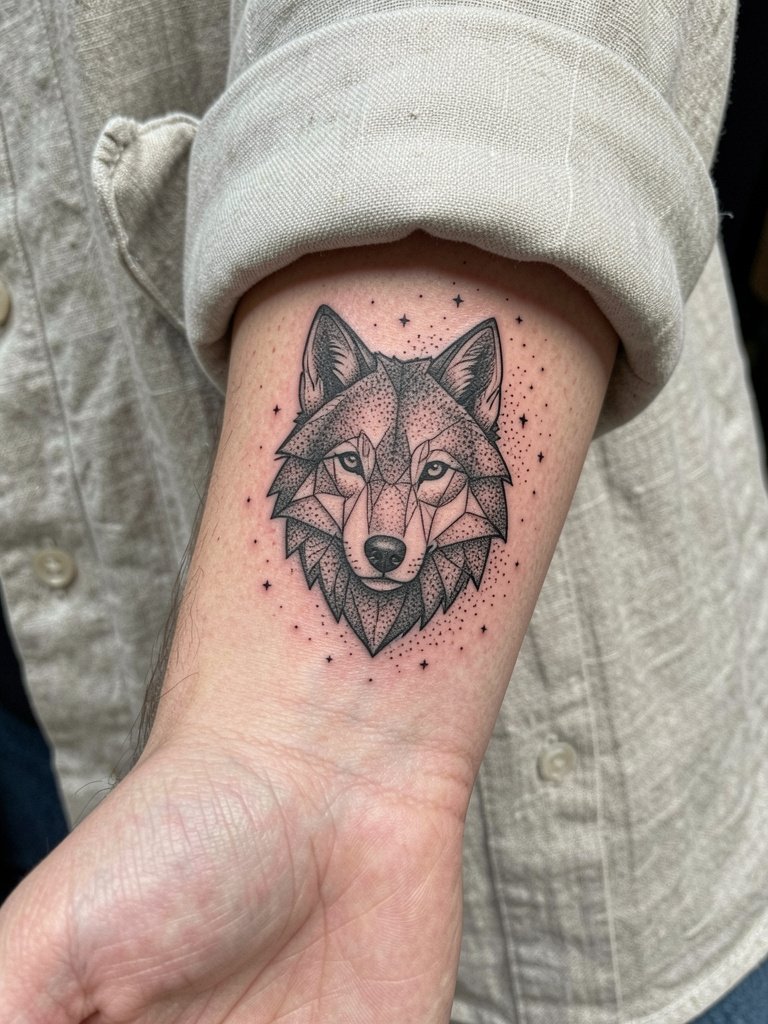
Stipple shading ages well when dot density is planned. Ask the artist to show how dot spacing will vary at three inches so you can see future contrast. For photos, rolled sleeves help frame the inner forearm. A typical error is over-tight stippling density that looks muddy after healing. Request graded stippling with clearer negative-sky edges.
21. Geometric Wolf Collarbone Accent with Layered Chains
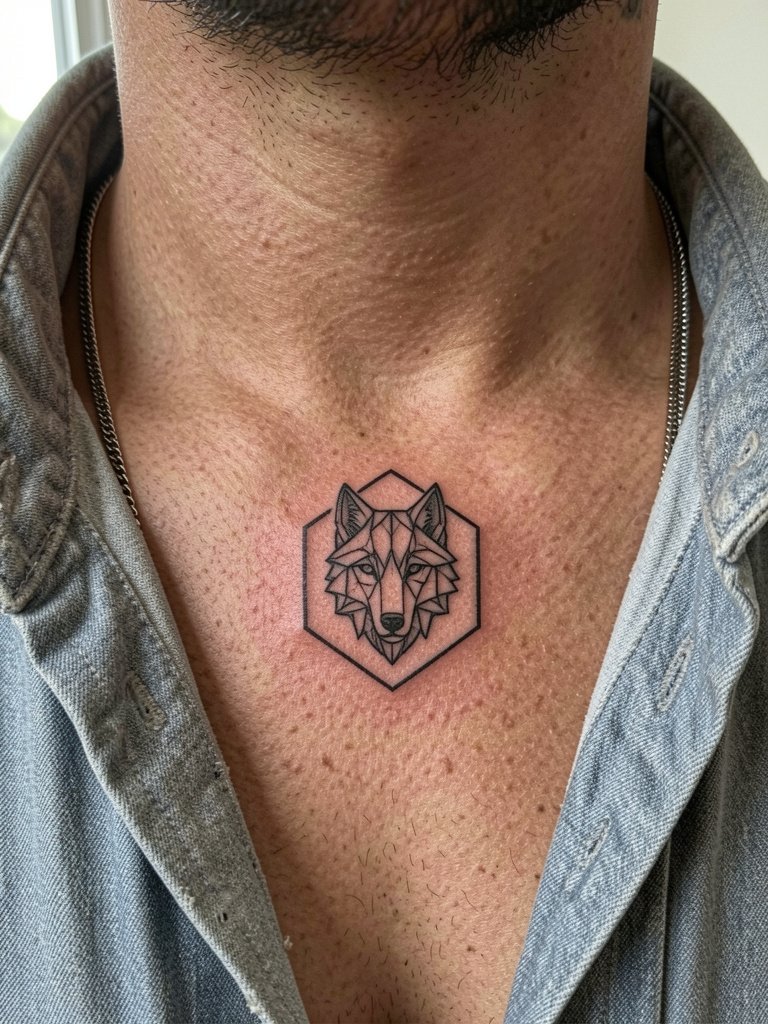
Collarbone placements look refined with minimal jewelry. For showing it off choose V-neck or open-collar tops. For session wear bring an open-collar shirt so the artist can work without tight necklines. A styling option is a layered minimal chain necklace on the opposite side to balance the collarbone piece. Avoid making the frame so small that the facial angles have no space to read.
22. Geometric Wolf in Motion (Angular Running Pose)
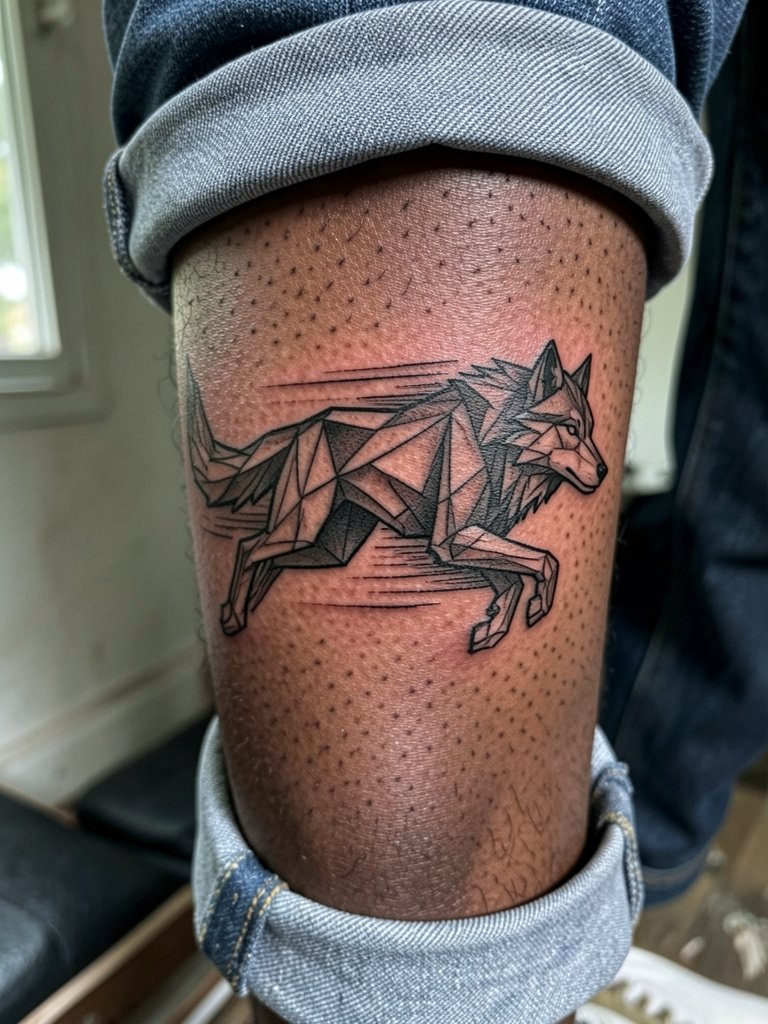
Calf placements are forgiving for motion pieces. Motion lines and angled planes keep the image readable while giving muscular flow. For the session wear jeans with normal cuffs or shorts so the calf is free. Avoid packing tiny motion details that become indistinct at normal viewing distance. Keep main motion lines bold enough to survive over time.
23. Geometric Wolf with Floral Tail Extension
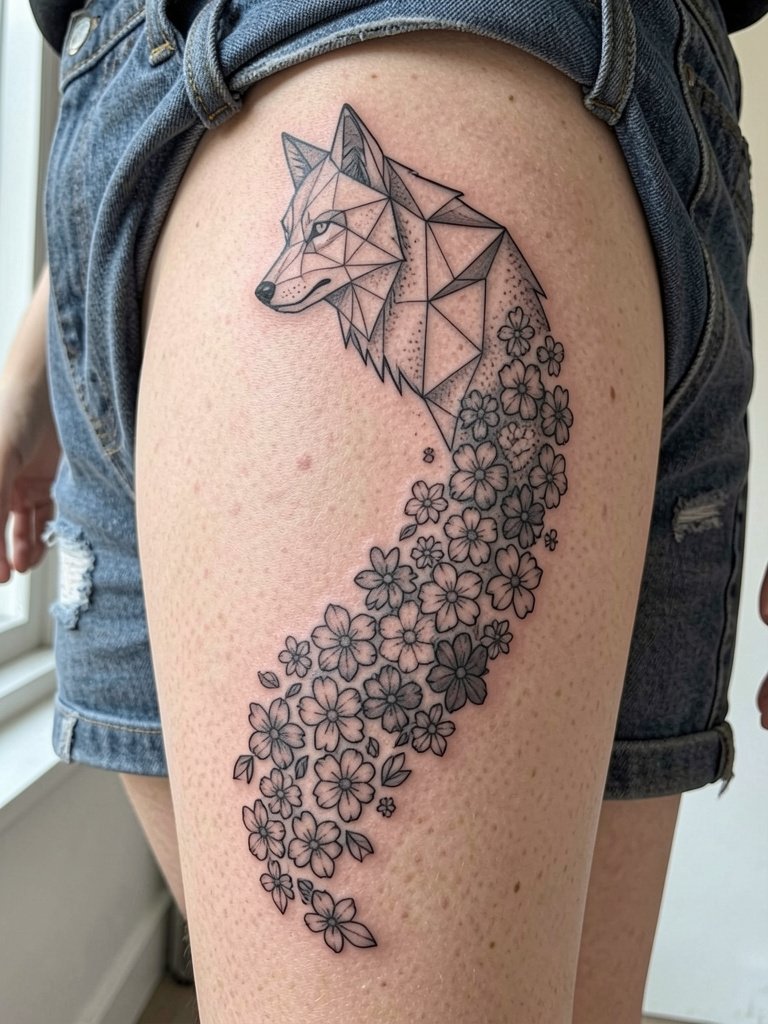
Floral tail extensions give direction and movement for thigh compositions. During the session roll up loose pants rather than stretch elastic. To photograph, high-waisted shorts frame the work. The typical error is making the floral tail so intricate it competes with the wolf head. Ask for slightly bolder florals to balance the geometric head.
24. Geometric Wolf Frontal Mandible Focus (Jawline Detail)
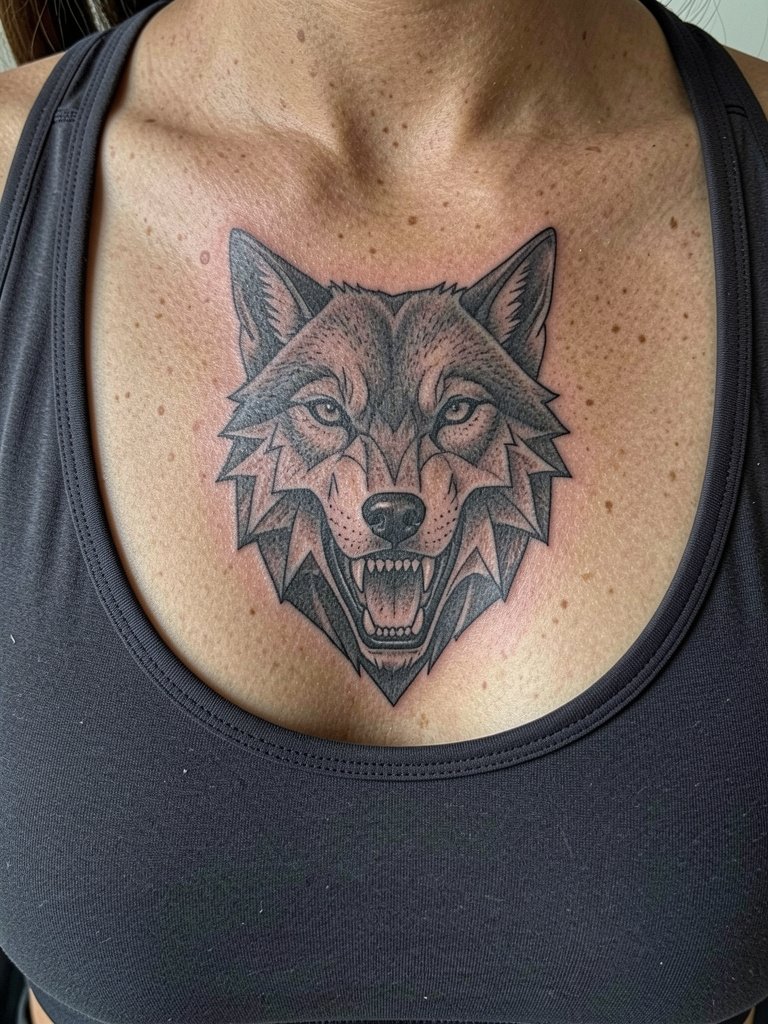
Sternum and underbust designs need careful planning because the area compresses with clothing. For the session wear a fitted but non-restrictive sports bra so the artist can work while supporting modesty. A common mistake is dropping too many tiny interior details into the jaw; keep the mandible planes confident and give interior details room to age.
25. Geometric Wolf with Negative Geometry Halo
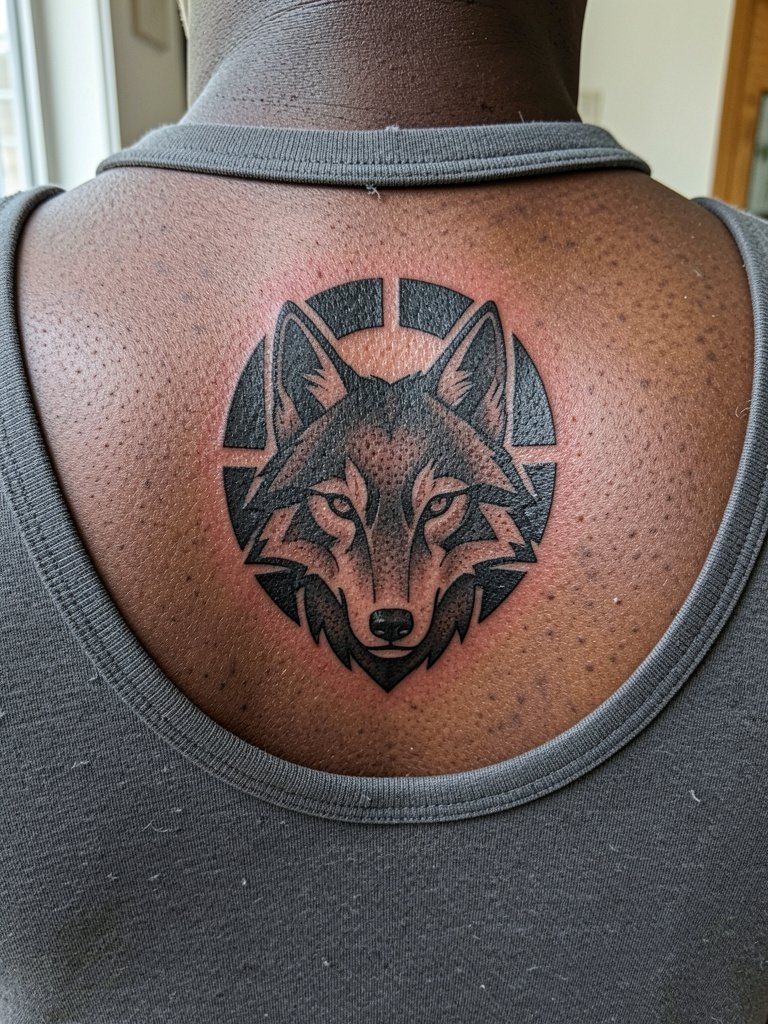
Upper-back negative halos let the wolf sit centrally and read from across a room. For sessions wear a wide-neck top so the artist can access the area without fabric tugging. Make the halo shapes bold so they stay distinct after a few years. The main mistake is making the halo lines too thin; ask for saturated black fields around the negative circle.
26. Geometric Wolf with Octagonal Badge on Hip
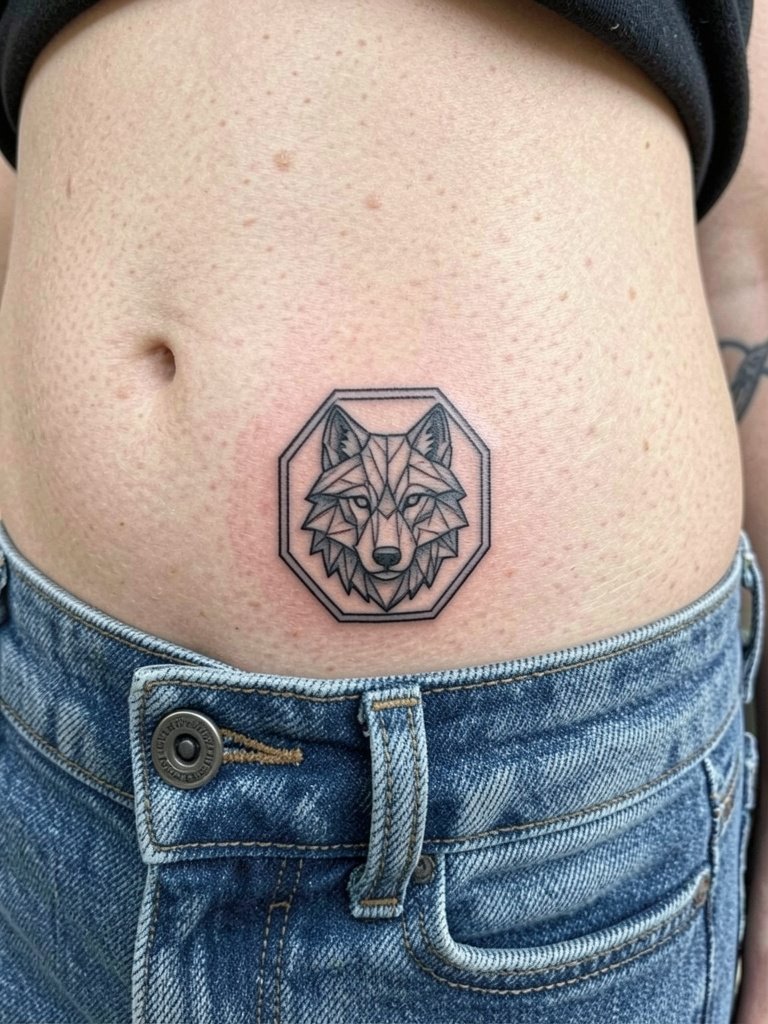
Small badge designs on the hip are sleek and wearable. For session wear low-rise jeans that do not compress the area during healing. When planning, ensure the octagon has enough internal spacing so the faceted wolf face does not collapse into a single dark bite. For show-off looks, side-tie tops reveal the hip area without rubbing the fresh ink.
27. Minimal Geometric Wolf Ear Outline (Behind the Ear Accent)
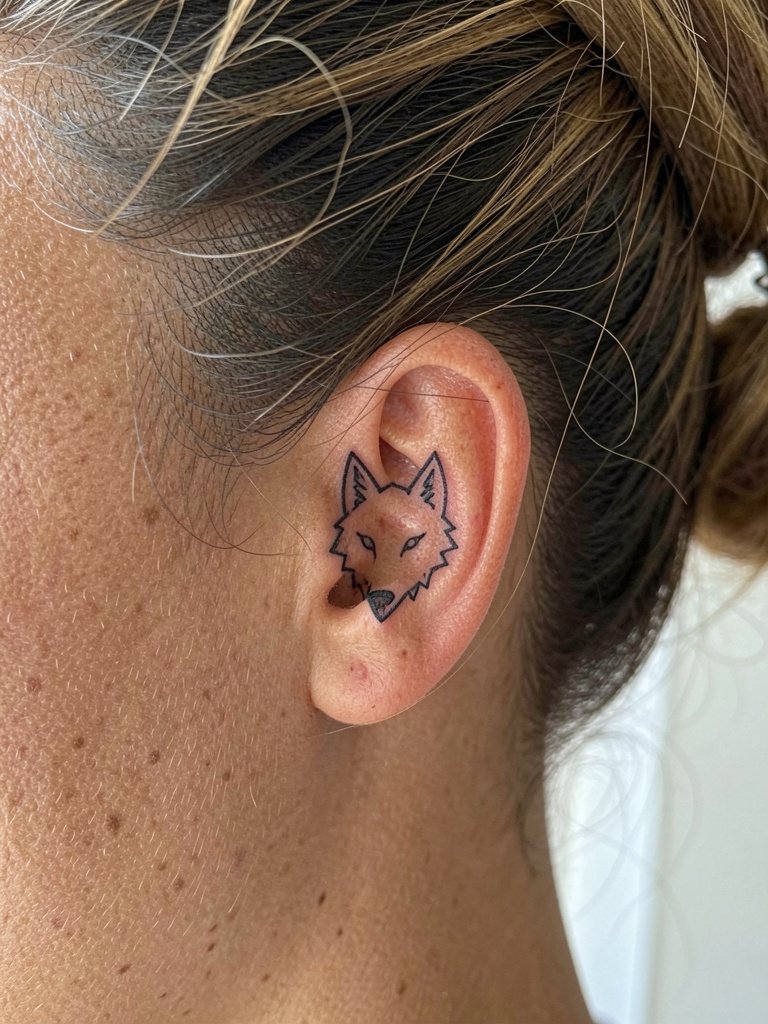
Small tattoos behind the ear read as personal accents. Because the skin there is thin, expect sharper pain and a quick session. If you want the tiny ear to hold shape, ask the artist to use a slightly heavier line than a typical single-needle script. Hair styles that pull back will reveal the piece for photos. Keep the design simple so it does not blur as the skin ages.
Session Day Picks
The first six ideas above include collarbone, inner arm, hip, thigh, and lower-back placements, so a few targeted items make the session and first week easier.
- Japanese tattoo balm. A thinner, less greasy balm artists mention for black-and-gray work, useful if you prefer a non-petroleum option for short-term moisture.
- Australian tattoo aftercare oil. A lightweight oil some people use to reduce scarring on stretched areas like ribs and hips.
- Non-stick silicone healing sheets. Small anatomical sheets help prevent friction from waistbands and bra straps during the first few days.
- Loose drawstring linen pants. Comfortable for rib, hip, and thigh sessions to avoid elastic rubbing while healing.
- Strapless top women black. Handy for collarbone or upper chest appointments where shoulder straps would interfere.
Frequently Asked Questions
Q: How small can a geometric wolf head be before it starts to look like a different animal?
A: In my experience the safe minimum for a recognizably wolf head is roughly three inches across. Below that, facial cues like muzzle length and eye spacing vanish and the design risks reading as a generic canine. If you need something smaller, choose a silhouette or very simple angular badge instead.
Q: Are fine-line geometric wolves okay on the ribs, or is that asking for trouble?
A: Artists split on ribs. One camp says the skin there stretches and thin lines blur within two to three years. The other camp says that with slightly wider spacing and proper needle depth fine lines can settle well, and they show healed examples to back it up. If you choose ribs, plan a slightly bolder line weight than your Pinterest reference and wear a loose tank for two weeks after the session.
Q: How often will a fine-line geometric wolf need a touch-up?
A: Expect most fine-line pieces to benefit from a touch-up between six and twelve months, especially on mobile areas like forearms and ribs. Bold black fills usually need touch-ups far less frequently. Treat touch-ups as standard maintenance rather than a sign of bad work.
Q: Where’s the fastest way to find artists who actually post healed geometric wolf photos?
A: Search hashtags like #geometricwolftattoo and #wolfgeometric on Instagram and TikTok, then filter by location. Use Tattoodo keyword searches such as "geometric wolf blackwork" to find portfolios that sometimes include healed shots. Reddit communities like r/tattoos and r/TattooDesigns surface peer recommendations and healed examples across skin tones. Booksy and Inked App let you filter studios by specialty for local options.
Q: Do watercolor accents fade faster than black-and-gray geometric work?
A: Yes, color accents, especially soft washes, tend to fade faster than solid black. For longevity choose controlled splashes of saturated pigment rather than full watercolor washes. If color is a priority, ask for denser saturation and expect potential touch-ups in the first few years.
Q: What should I wear to a collarbone or thigh session to make the appointment easier?
A: For collarbone work wear an open-collar or V-neck top so the artist can access the area without tugging. For thigh pieces pick loose drawstring shorts or high-waisted shorts that can be rolled down a bit. If you want a quick option to show photos after healing, bring a neutral open-collar shirt that frames the piece.