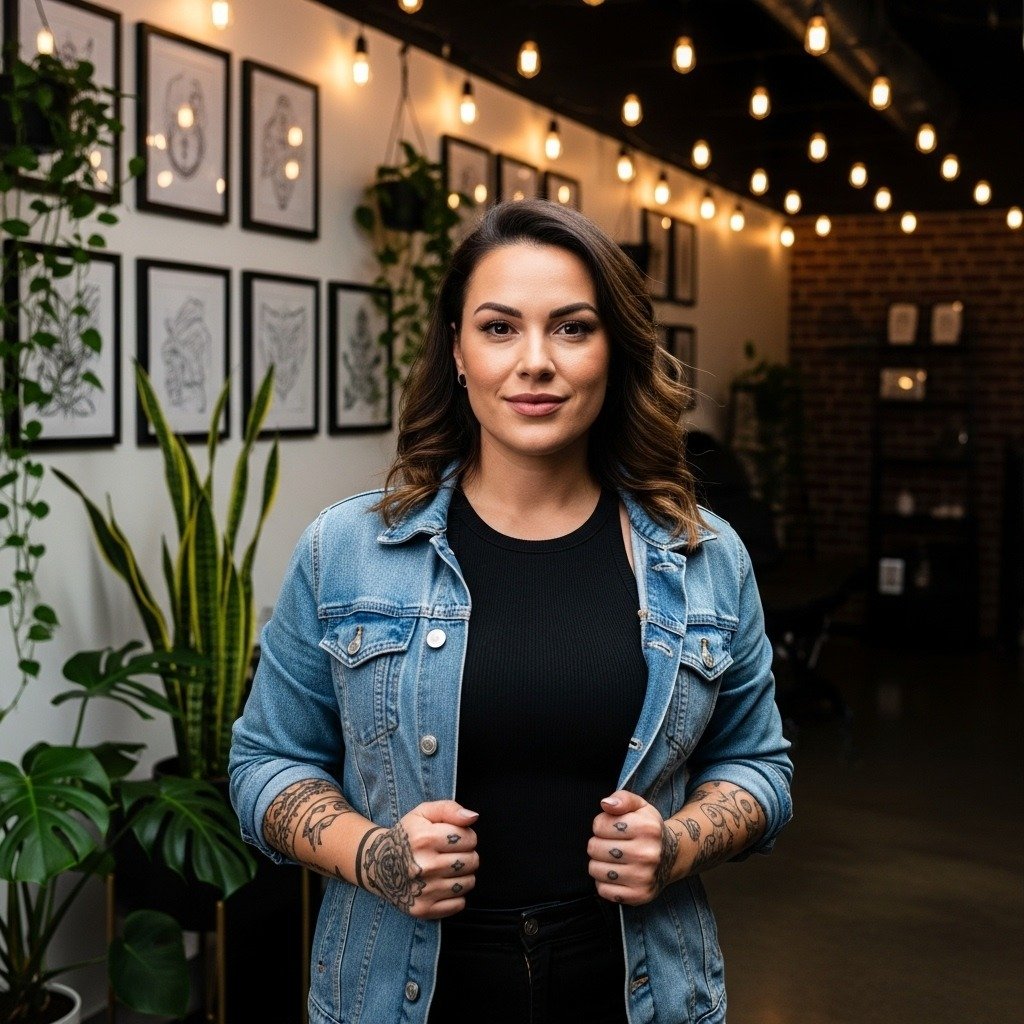
Tiny UV tattoos behave differently from regular ink. They can be invisible in daylight and then pop under a blacklight, so spacing, line weight, and placement matter more than you might expect. Think of them as a private accent you plan for the long term. Below the surface are practical choices that make a tiny fluorescent motif last and still look intentional years from now.
1. Minimalist UV Line Symbol on Lateral Hip Bone
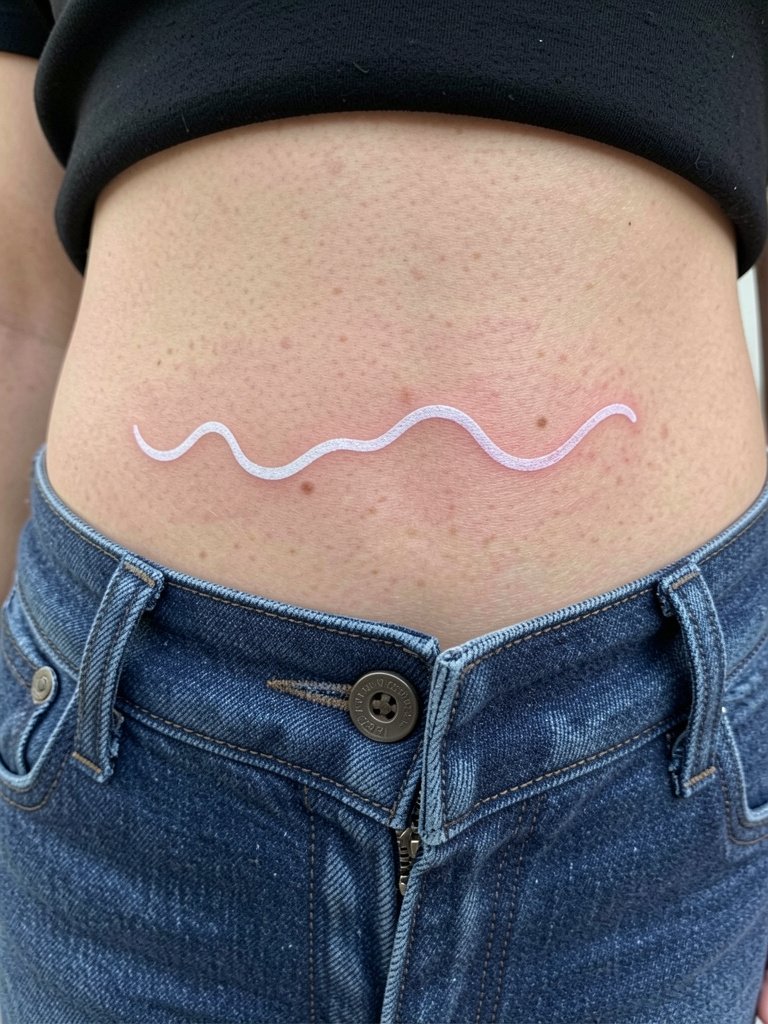
A single continuous line on the lateral hip works when you want something tiny but reliably placed. I recommend a slightly heavier lineweight than the thinnest single-needle reference. In the consultation, bring two reference photos that show the exact loop size at the scale you want. Tiny, hairline lines can blur on hip skin if placed near stretch points. Expect mild soreness while you sit for a lateral hip piece and plan for a 30 to 45 minute session for a 1cm motif. For show-off outfits, low-rise linen pants and layered waist chains frame the area without competing with the ink, try low-rise linen pants and a layered gold waist chain.
2. UV Celestial Constellation at the Nape
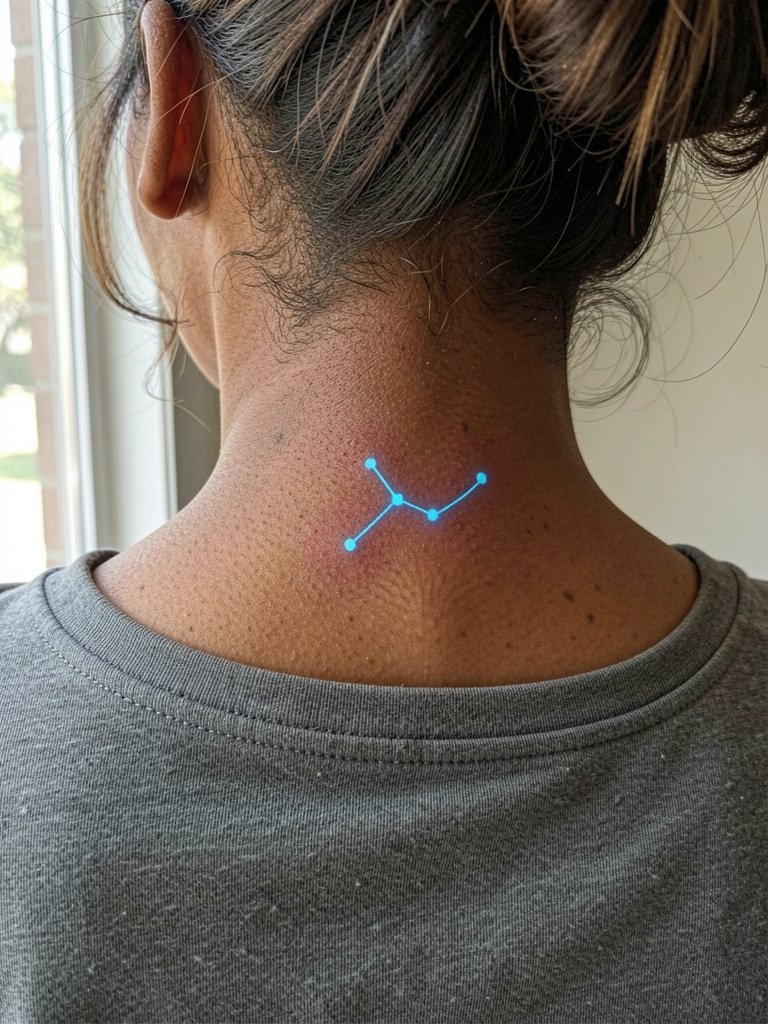
A tiny constellation on the nape reads delicate and private when the hair is down and becomes a reveal with an updo. Ask for dot sizes and line spacing drawn on skin so you can see how the spacing plays with hairlines. The common mistake is asking for micro-dots that are too close together, which merge into a gray blur as the tattoo ages. Nape skin moves with collars and hair, so choose slightly larger dots and soft stipple shading for longevity. Session time is short, often under 30 minutes. For evenings out, an open-back dress and a delicate silver hair clip draw the eye to the nape without competing with the tiny UV points.
3. Hidden UV Firefly on the Inner Forearm
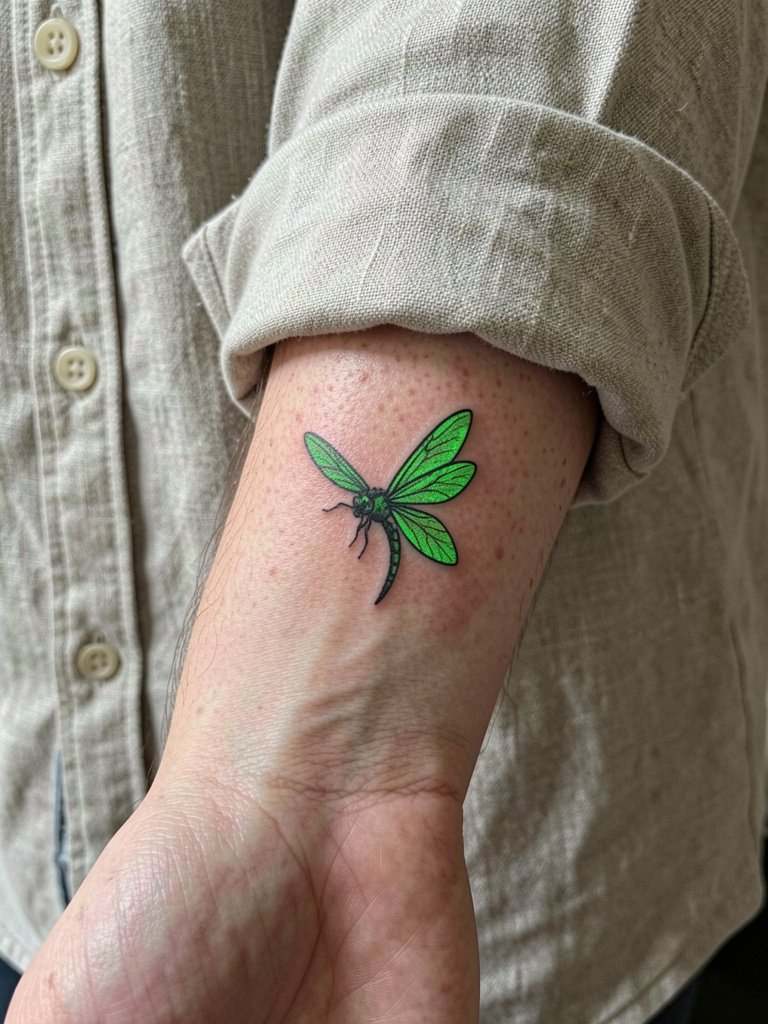
A single glowing winged accent fits the inner forearm if you want everyday visibility when paired with a tiny black outline. Specific guidance to give at booking: request the artist map the wing glow area on skin so you see how much of the motif will be UV-only. The inner forearm eats fine detail less than the wrist, but ultra-thin fills still lighten over time. Expect a 30 to 60 minute session and mild vibration discomfort. A common error is skipping the minimal black body, which leaves the UV wings floating and harder to locate in daylight. For showing it off, roll a linen button-down sleeve and keep the palette neutral with linen button down shirts.
4. UV Heartbeat Line at the Collarbone
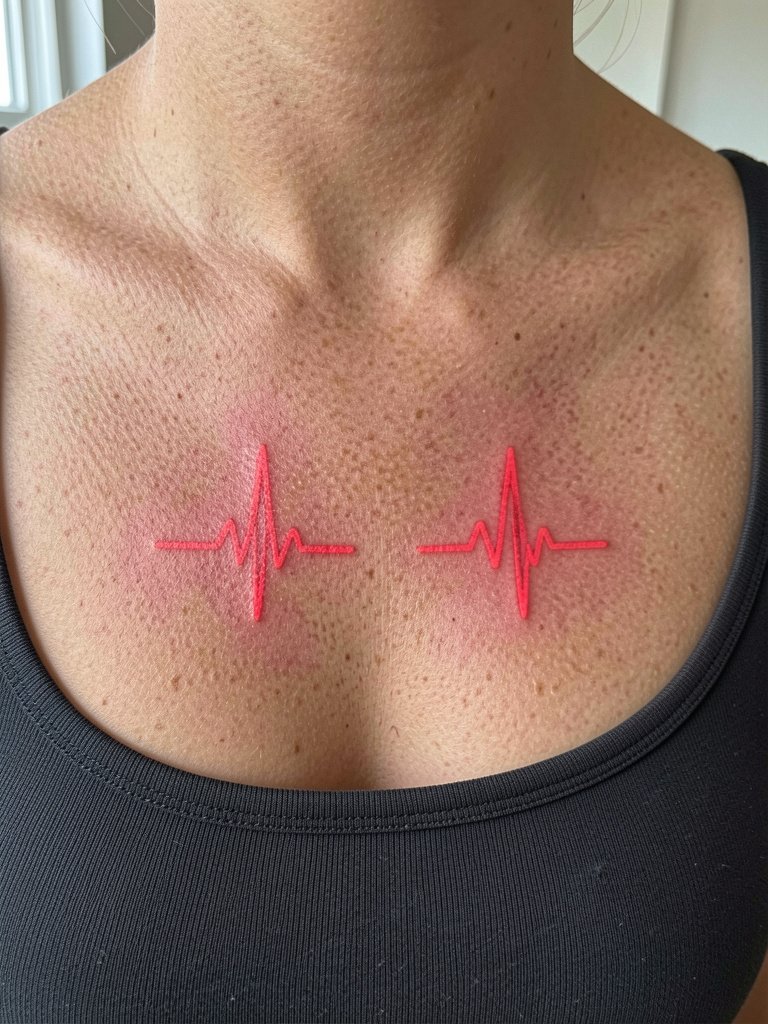
A collarbone heartbeat reads modern when you ask for a clean, slightly spaced EKG line so the peaks do not merge with time. Tell the artist the exact peak heights you want so they can set spacing that resists blowout along clavicle contours. Tiny collarbone pieces can be tender because the skin sits over bone, but the session is brief. Common aging issue is compressing peaks into a faint bar if the line is too thin. For daytime styling, strapless tops and layered thin chains frame the clavicle. Try a strapless top for easy reveal during healing and photos.
5. UV Galaxy Dust Speck on Lateral Hip Bone
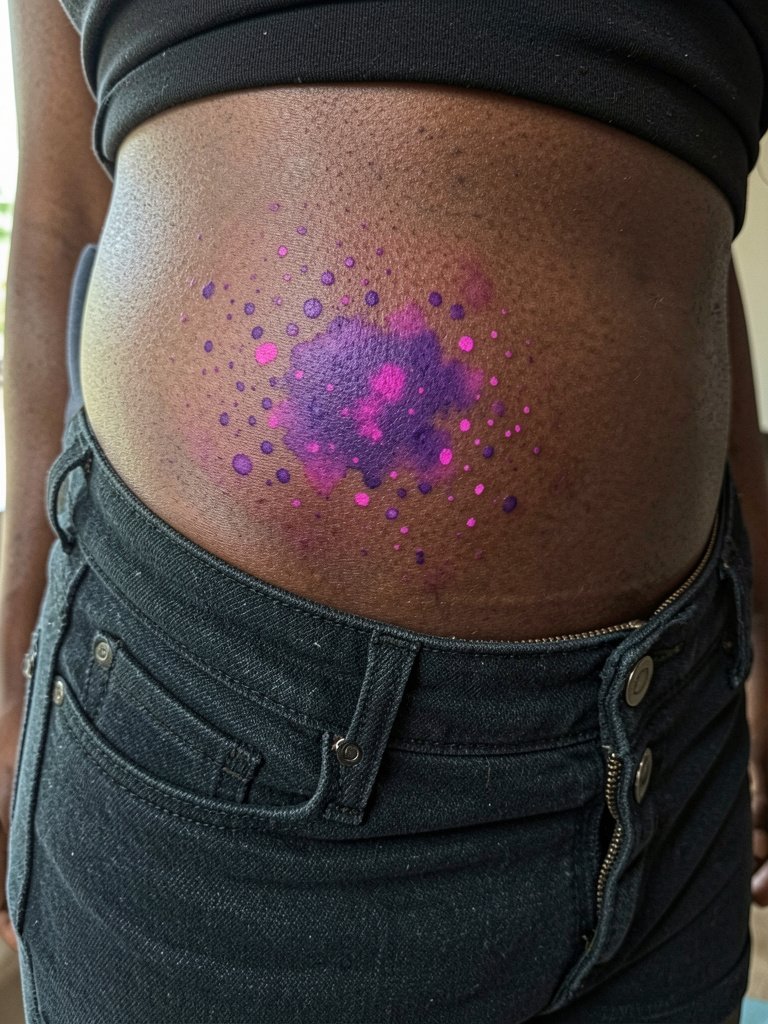
Galaxy dust clusters are great when you want texture rather than a single motif. Ask for soft stipple shading and micro-dot density mapped on the skin. The mistake is packing dots so tightly that the cluster reads like a smudge after one year. Lateral hip skin tolerates this style but avoid placing clusters directly on high-stretch seams. A 45 to 75 minute session is common for a 1.5cm cluster. Because UV colors vary in how they sit under different skin tones, make sure the artist shows healed examples on similar skin. For seasonal looks, low-rise linen shorts and subtle gold chains make the hip pop when you want to reveal it.
6. UV Whisper Quote on Inner Upper Arm
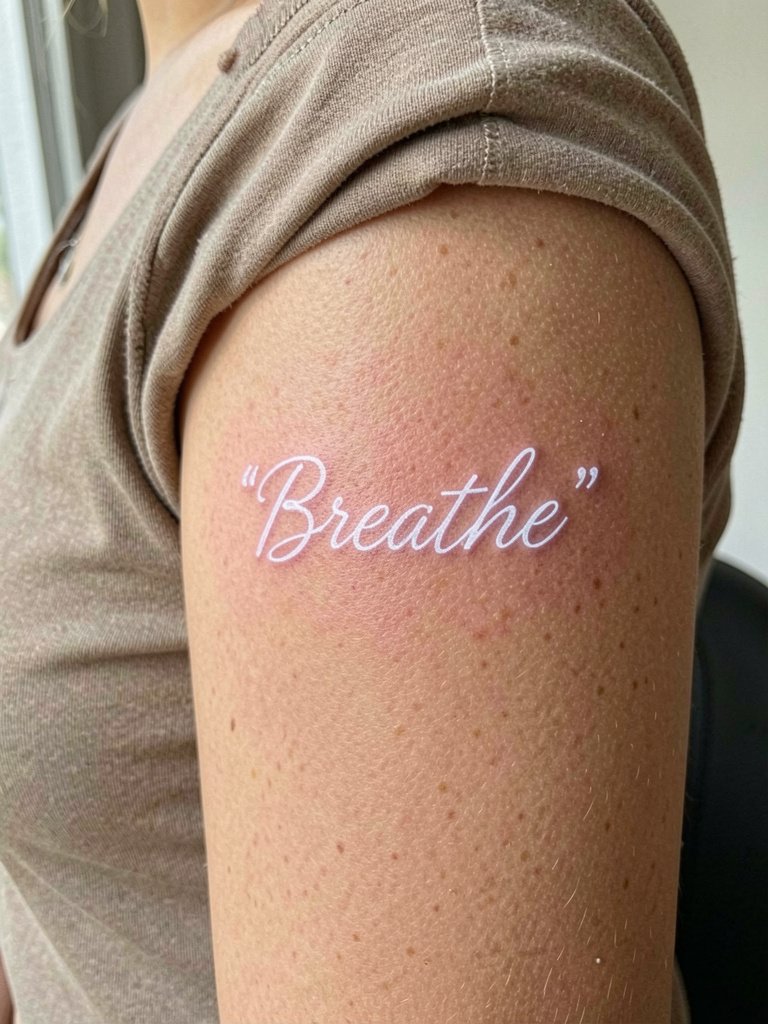
A tiny script on the medial bicep works when the lettering is spaced and slightly bolder than a single-hairline stroke. Bring the exact font or hand-lettering sample and request the artist trace it on your arm at the intended 1cm width so you can confirm legibility. The common error is picking a tiny cursive that collapses into an indistinct smudge as the tattoo heals. Inner upper arm pain is low to moderate and sessions under 45 minutes are normal. For session day, wear an off-shoulder top so the artist can access the arm without fabric pressure.
Session Day Picks
These small UV motifs share healing needs for the first week, so a few tools smooth the chair time and the early healing window.
-
Fluorochrome artist-grade UV ink. Artist-only quality inks make a measurable difference in fluorescence and saturation, which matters for tiny single-color accents.
-
Sakura Healing lightweight balm. Thinner balms avoid clogged pores on micro work and keep fine line channels from crusting.
-
SkinGuard UV adhesive bandages. Protective film that blocks UV for the first few days helps stop incidental UV exposure during early healing.
-
365nm UV flashlight. Use this to check fluorescence without overstressing the area with prolonged club blacklight exposure.
-
Broad spectrum SPF 50+ sunscreen. Once healed, consistent sunscreen on the area helps preserve fluorescent pigments and reduces the need for early touch-ups.
7. UV Abstract Geometric Shape on Inner Forearm
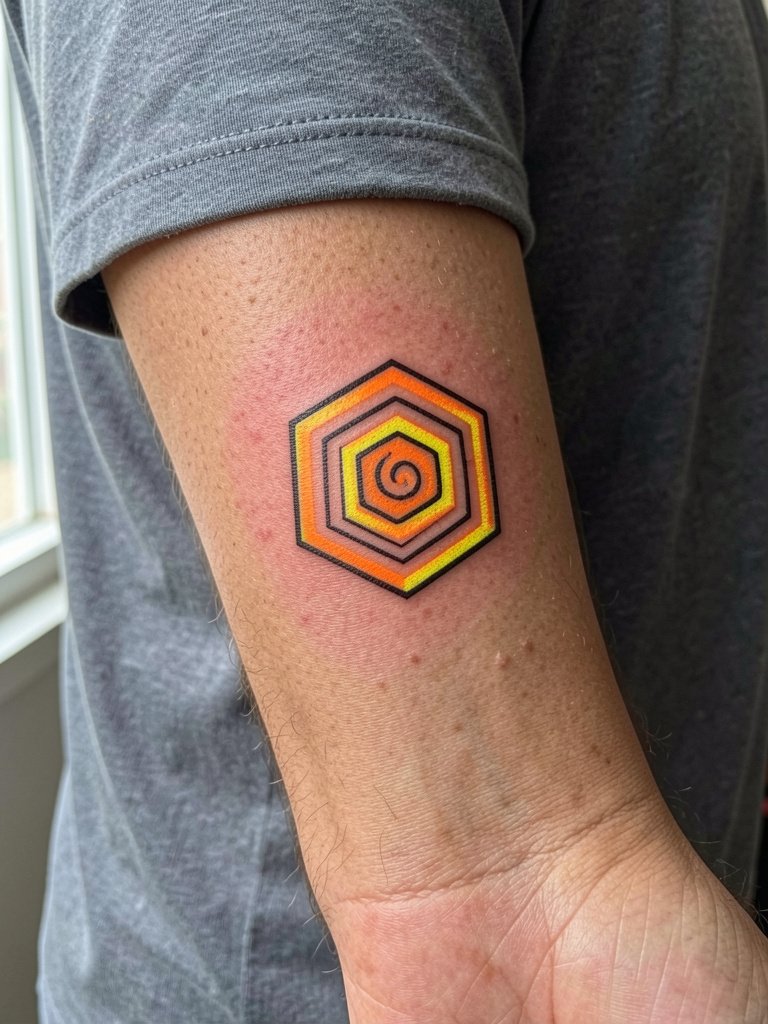
Geometric UV shapes need crisp linework and precise spacing to avoid optical muddiness as the ink ages. Request a mock stencil photographed on your arm so you can check how the geometry reads at arm scale. The inner forearm tolerates straight lines well, but very tight angles can soften into fuzzy joins over several years. A common session-time note is to expect a calm buzz and gentle pressure across this flat surface. For durability ask for slightly wider black outlines to pair with the UV fill so the motif reads in daylight and under blacklight.
8. UV Hidden Star Behind the Ear
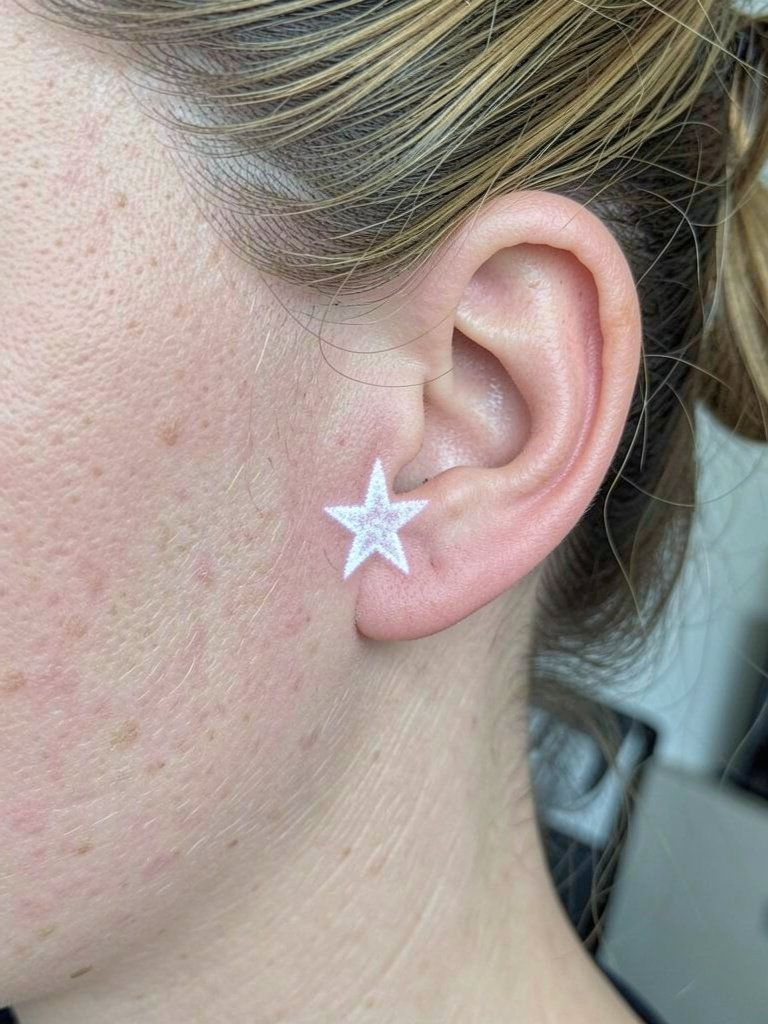
Behind-the-ear stars are tiny and discreet, so clarity is everything. Ask for single-needle placement mapped on the mastoid area and check that the artist will avoid too-small points. The mastoid skin is thin, which reduces blowout risk, but visibility is low in daylight without a blacklight. Sessions are brief and healing is fast. For hair styling that frames this spot, use delicate silver hair pins or clips to expose the star without competing with it. Try delicate silver hair pins for styling.
9. UV Cyberpunk Circuit on Inner Forearm
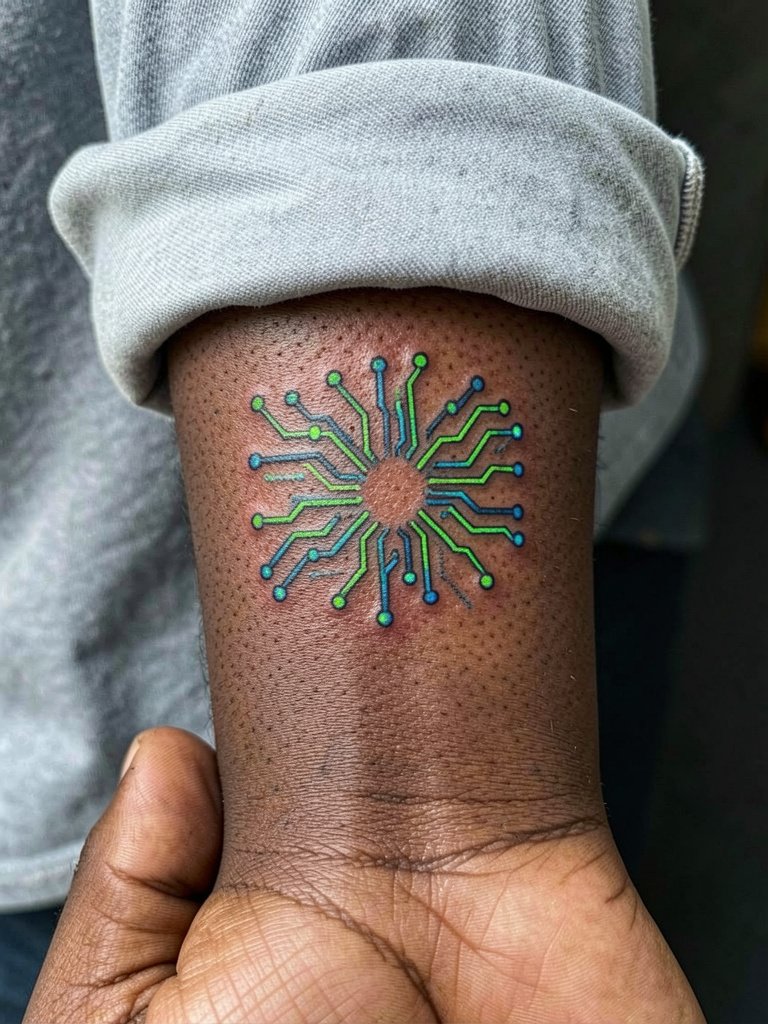
Cyberpunk circuit lines read best with deliberate spacing and crisp node points. Tell the artist you want geometry tested on the forearm at full scale so they can adjust line weight to account for natural skin texture. The controversy around UV longevity comes up here. One camp says fluorescent pigments fade noticeably within a year and lose their neon under blacklight. The other camp argues that high-quality fluoroscopic inks and correct needle depth keep fluorescence visible for several years. That debate affects how many UV-only lines you add versus pairing with black outlines. Inner forearm sessions run 45 to 90 minutes for intricate circuits and may need a touch-up at one year if the UV saturation lightens.
10. UV Minimalist Moon at the Collarbone
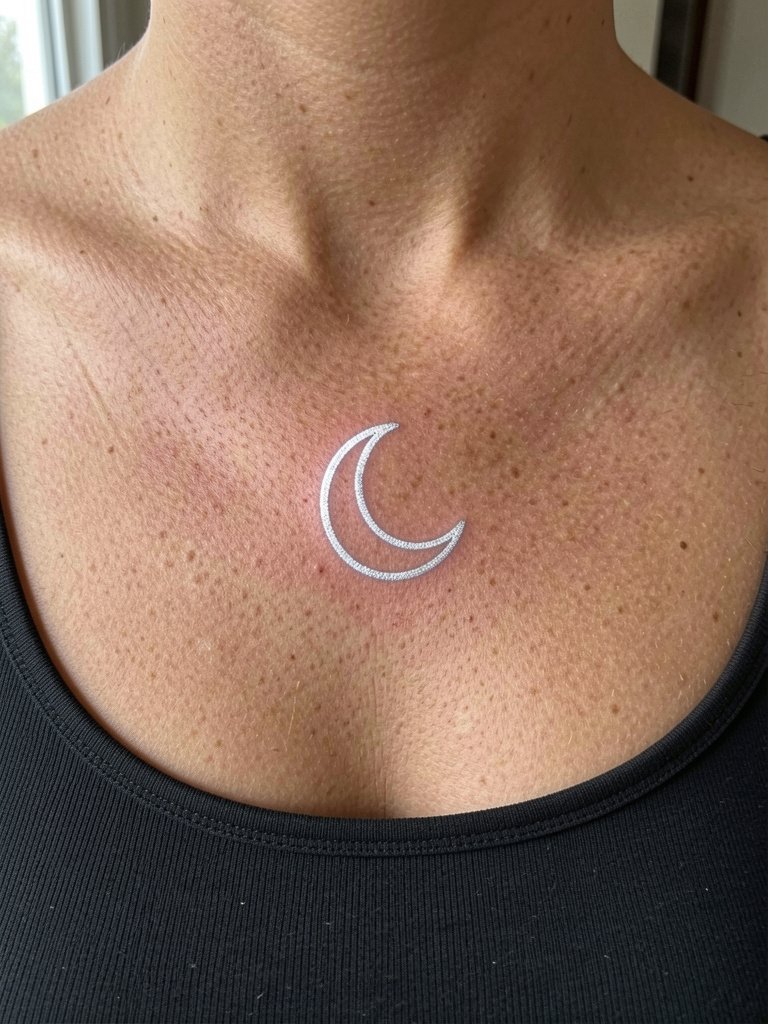
A tiny crescent on the collarbone is elegant when the outline is slightly bolder than a hairline. Tell the artist to set the crescent on an angle that follows your bone so it does not become a soft smudge over time. Collarbone skin is thin and the area needs gentle aftercare for two weeks to avoid scab pulling. The result pairs well with layered thin chains that do not rest directly over the tattoo. For frames, try a layered thin chain necklace to keep attention on the upper chest without choking the area.
11. UV Hidden Butterfly on the Inner Thigh
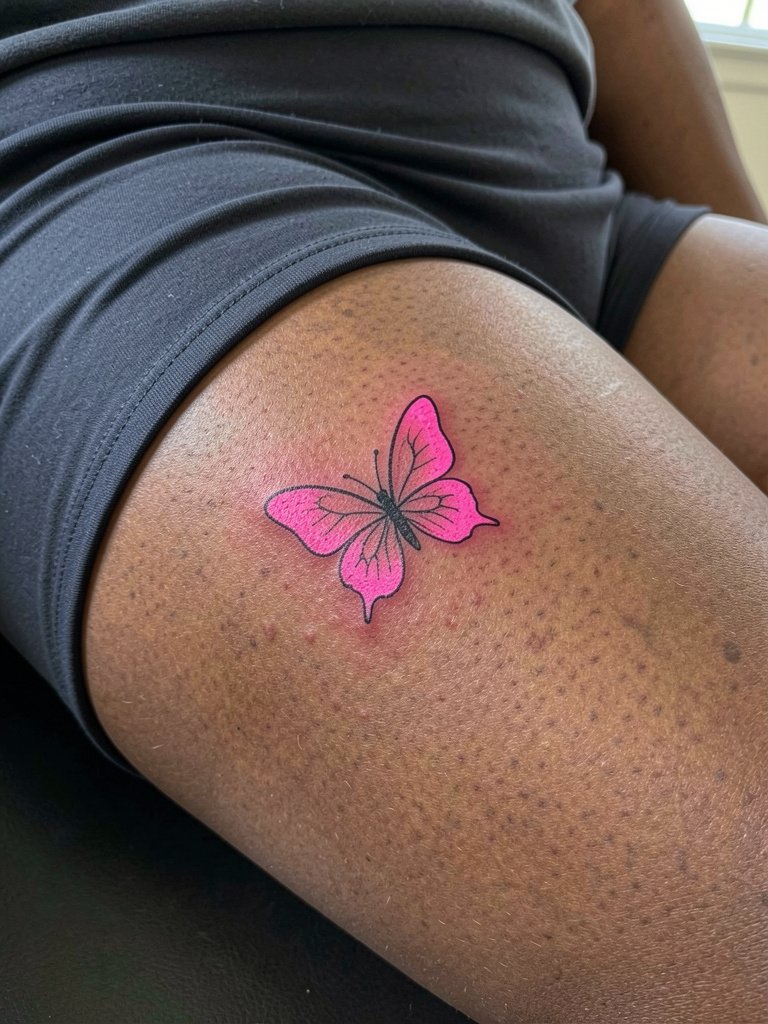
Inner thigh placements are intimate and heal differently because of friction and moisture. Ask for placement maps while seated to ensure the butterfly sits on the smooth medial thigh skin, not near the groin or waistband. One camp of artists says UV ink on soft, high-friction areas fades and loses glow faster. The other camp maintains that with slightly larger shapes and thicker UV fills, the pigment holds up as well as many regular tattoos. For session wear, choose high-waist shorts so the artist can roll a leg without tight waist pressure. When you want to reveal the piece, high-waist shorts or skirts keep the look effortless and framed.
Frequently Asked Questions
Q: How long do tiny UV tattoos usually keep their fluorescence?
A: It depends on ink quality, placement, and sun exposure. Some people see a drop in fluorescence within 6 to 12 months if the pigment was thin or the area got frequent UV exposure. Others report sustained fluorescence for multiple years when the artist used high-quality fluoroscopic ink and slightly heavier saturation. In practice, plan for a possible touch-up in the first 12 to 18 months if maintaining strong blacklight intensity matters to you.
Q: What aftercare helps protect the UV effect during healing?
A: Keep the fresh tattoo clean and dry, avoid direct sunlight and club blacklights for the first 2 to 3 months, and use a thin, non-comedogenic balm while the skin peels. Once healed, apply a broad spectrum SPF 50+ on the area when you expect sun exposure to slow pigment breakdown. Short, incidental UV checks with a 365nm flashlight are OK after full healing, but do not substitute those for protective practices.
Q: Where can I find artists with real UV healed photos and portfolios?
A: Search social platforms for style-specific hashtags like #blacklighttattoo and #uvtattoo and apply your city filter. Tattoodo and booking apps let you search by keywords such as "UV constellation" or "blacklight accent" and show portfolios in your area. Reddit threads in tattoo communities also surface peer recommendations and healed photos across skin tones, which helps verify an artist’s UV work.
Q: Will a tiny UV tattoo show on darker skin tones?
A: UV pigments show differently across skin tones, and visibility under blacklight depends on contrast and ink choice. On medium and dark skin, white or neon blue tends to read better under blacklight when paired with a thin black outline. Ask the artist to show healed examples on similar skin and to plan slightly larger dots or lines for long-term legibility. Consider a test patch if you are concerned about how color translates.
Q: Can I photograph my UV tattoo with a phone?
A: Most phone cameras do not capture fluorescence under normal conditions. Use a 365nm UV flashlight for photos or shoot under venue blacklights to reveal the effect. If you want daytime photos too, pair the UV element with a small black outline so the design remains visible in regular light.