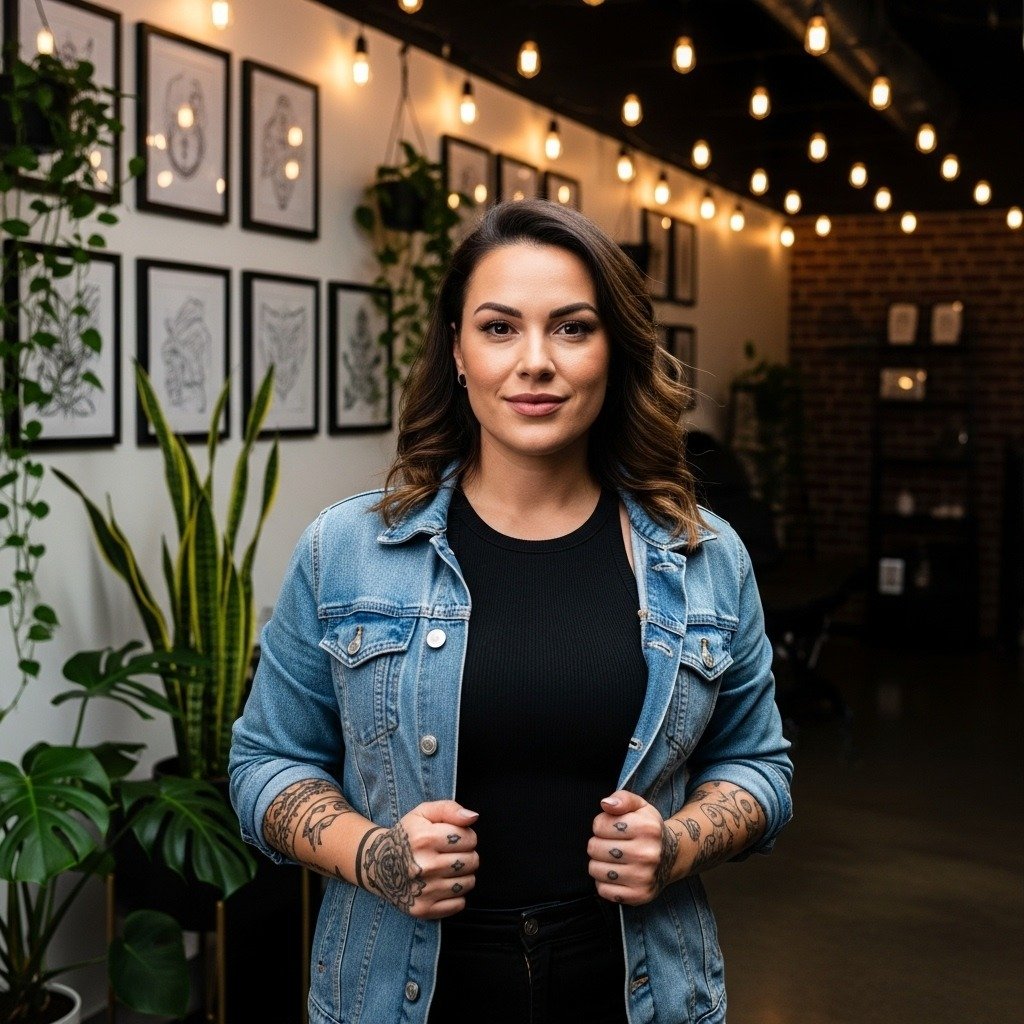
The sleeve that still looks sharp five years from now usually started with space, rhythm, and muscle-aware flow, not a wall of uninterrupted black. Plan negative-space breaks, let motifs follow the bicep curve, and expect multiple shorter sessions so saturation settles without excessive trauma. Read these ideas with an eye for how they wrap, how they heal, and what to wear on chair day to keep the session smooth.
1. Modern Tribal Flow Full Sleeve
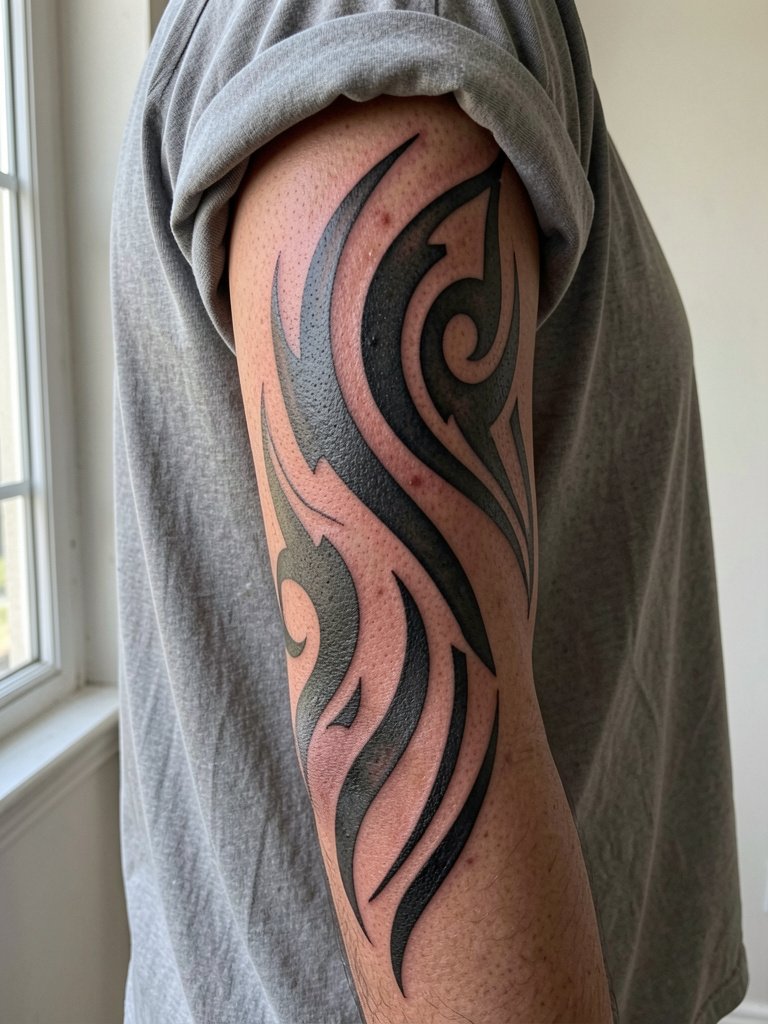
Modern Tribal Flow uses broad, athletic curves that read with the arm in motion. Choose this over super-dense geometric options when you want the ink to accentuate muscles rather than sit like wallpaper. Expect multiple sessions of 90 to 120 minutes to build saturation gradually. A common mistake is packing solid fields with no skin breaks, which can blur into a mass over a few years. For the session, wear a loose short-sleeve tee so the artist can access shoulder to wrist without tugging the fabric.
2. Polynesian Tatau Full Sleeve
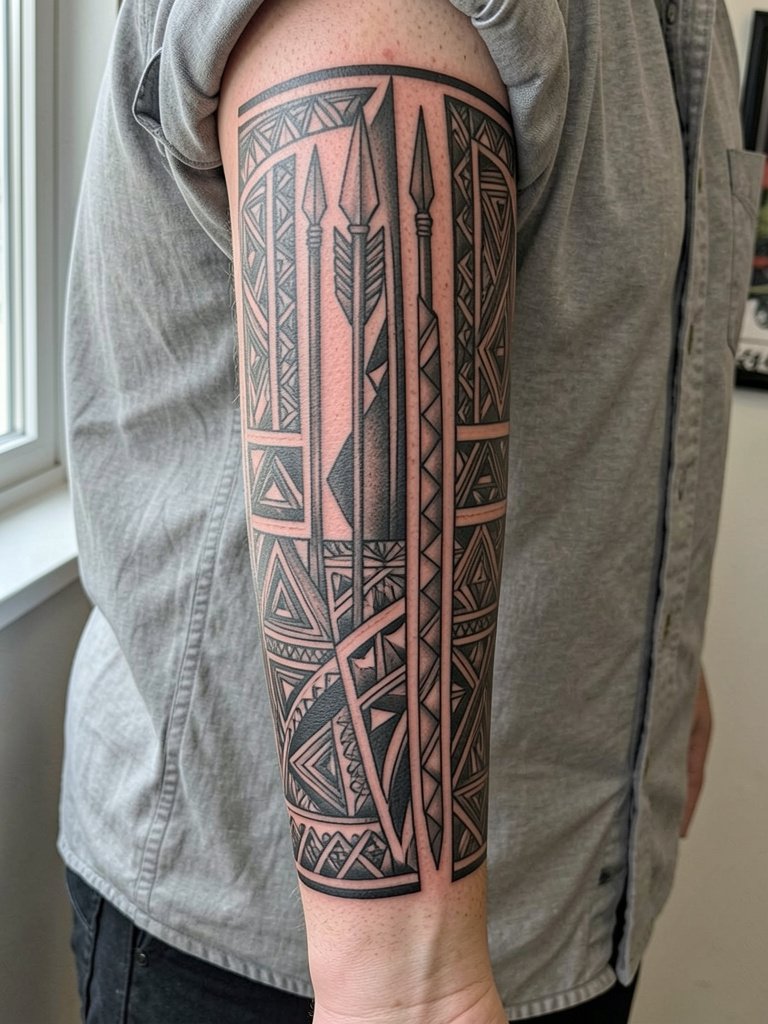
Polynesian sleeves are dense and symbolic, so verify the motif rules for the tradition you reference. Two camps argue this style differently. One camp treats the motifs as heritage with strict rules about placement and meaning. The other camp sees modern adaptations as creative expression that can borrow forms. If you want authentic patterns, bring clear references that show healed work so your artist can adapt scales and spacing to avoid copy-paste flash that looks flat after healing.
3. Maori Koru Spiral Sleeve
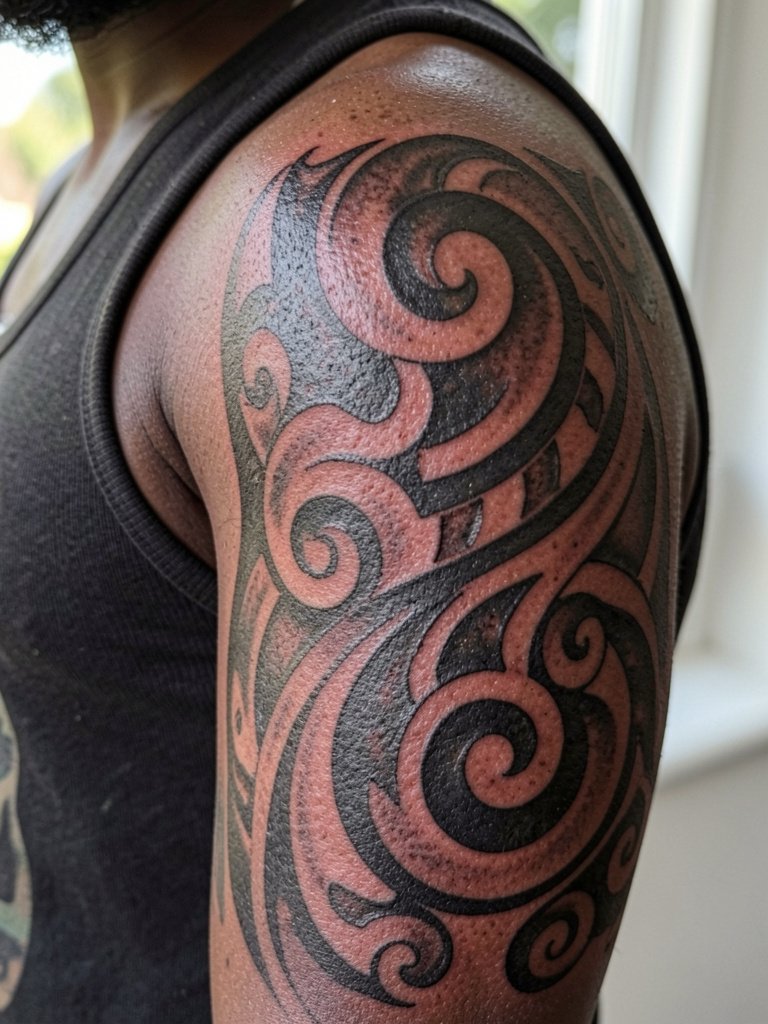
Koru work needs room to breathe so the spirals keep their carved look. When planning, confirm spiral scale so small inner curls do not disappear into the black mass. Pain is moderate on the deltoid but increases near the inner bicep. Healed at six months the koru should read crisp; over five years the edges relax, so ask for slightly stronger lineweight than what looks "delicate" on paper. For showing it off, open-back tops highlight the shoulder flow.
4. Samoan Upper-Arm Armband Starter
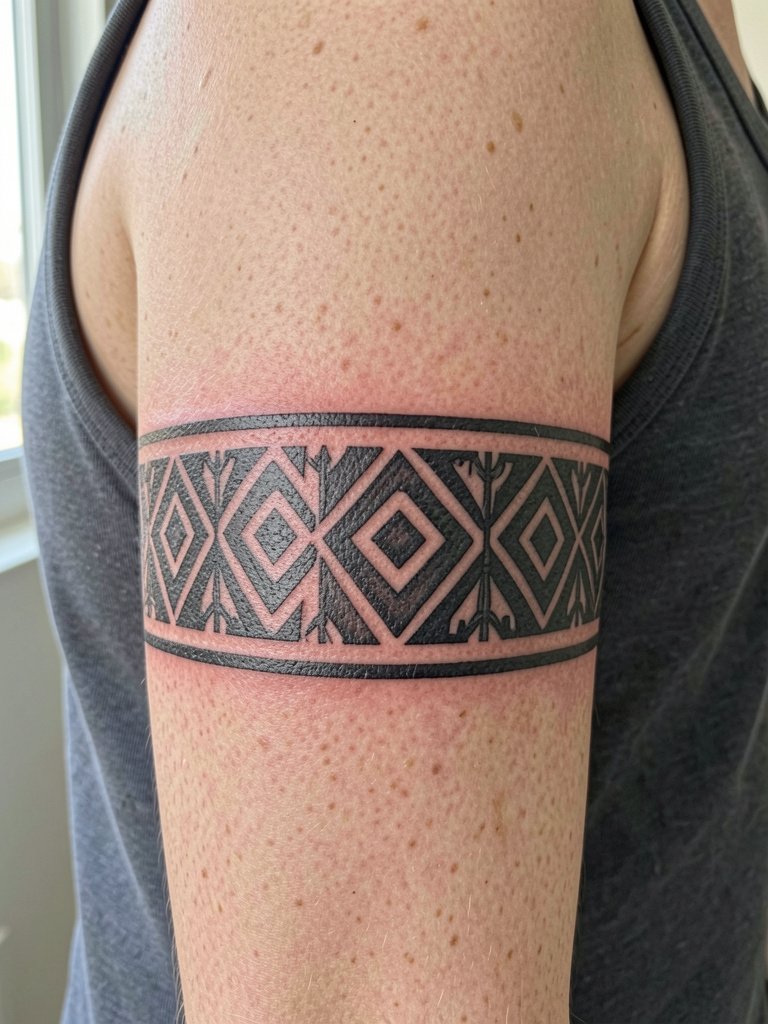
An armband is a smart starter for a sleeve because it tests pain and healing on a contained surface. Expect a single 60- to 90-minute session for a bold band. Avoid ultra-thin repeats that will blur; thick, repeating motifs with negative spaces read longer. Session day tip: wear a sleeveless tank top so the artist can wrap and adjust the stencil without fabric interference.
5. Celtic Knotwork Blackwork Sleeve
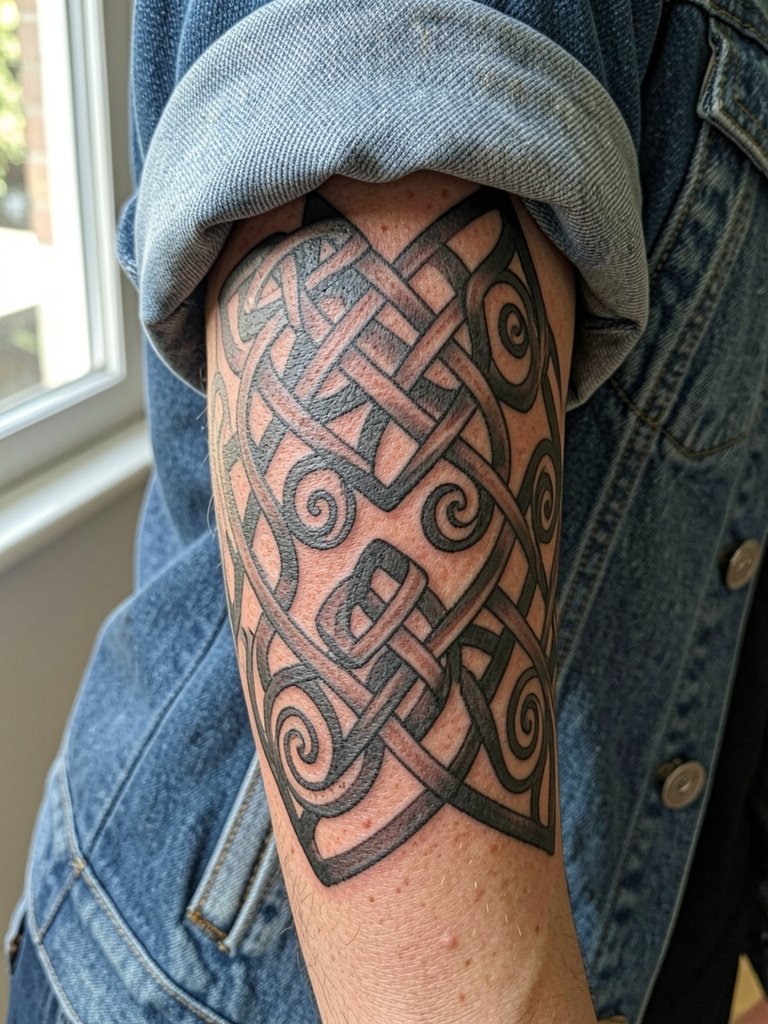
Celtic knotwork must be sized to avoid tiny crossings that fill in. I recommend knot aisles at least the width of a pinky to keep the negative loops readable after a few years. Common error is shrinking knotwork to fit the whole arm with no breathing room. If you wear fitted athletic shirts, the continuous knotwork pairs nicely with form-fitting sleeves that mirror the pattern's flow.
6. African Adinkra Symbol Sleeve
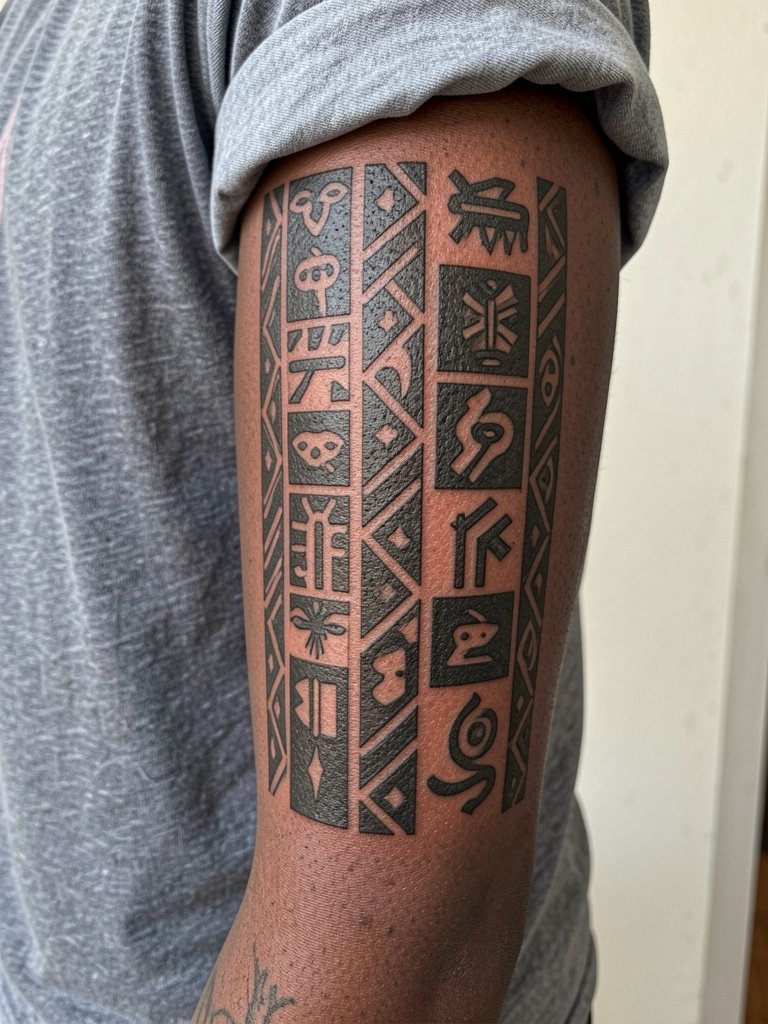
Adinkra symbols carry specific meanings, so identify which icons you want and ensure their shapes are large enough to avoid merging. A common mistake is reducing symbols to tiny stamps that lose identity when healed. Session feel is moderate to intense on areas with high saturation. For nights out, pair the sleeve with short-sleeve graphic tees to let the symbols read against a simple background.
Pre-Session Essentials
The armband starter and full sleeves above demand different prep than single-needle work. These picks smooth chair day and address dense blackwork concerns raised in ideas 1–6.
- Tattoo Goo aftercare balm. A thinner balm option for dense blackwork that users say avoids the "muddy" look on dark skin while keeping the surface supple during healing.
- Mad Rabbit Tattoo Serum. A lightweight maintenance product for long-term blackwork saturation maintenance after the initial healing window.
- Fauna Mother's Milk. Hydrating, low-grease product that helps black ink read clearly on darker skin tones without clogging pores.
- Hustle Butter Deluxe. Works well for massage and skin prep as an alternative to petrolatum for areas needing deep saturation during long sessions.
- Saniderm Second Skin. Protective film that reduces friction and keeps heavy blackwork from picking on clothes in the first 48 to 72 hours.
7. Neo-Tribal Patchwork Sleeve
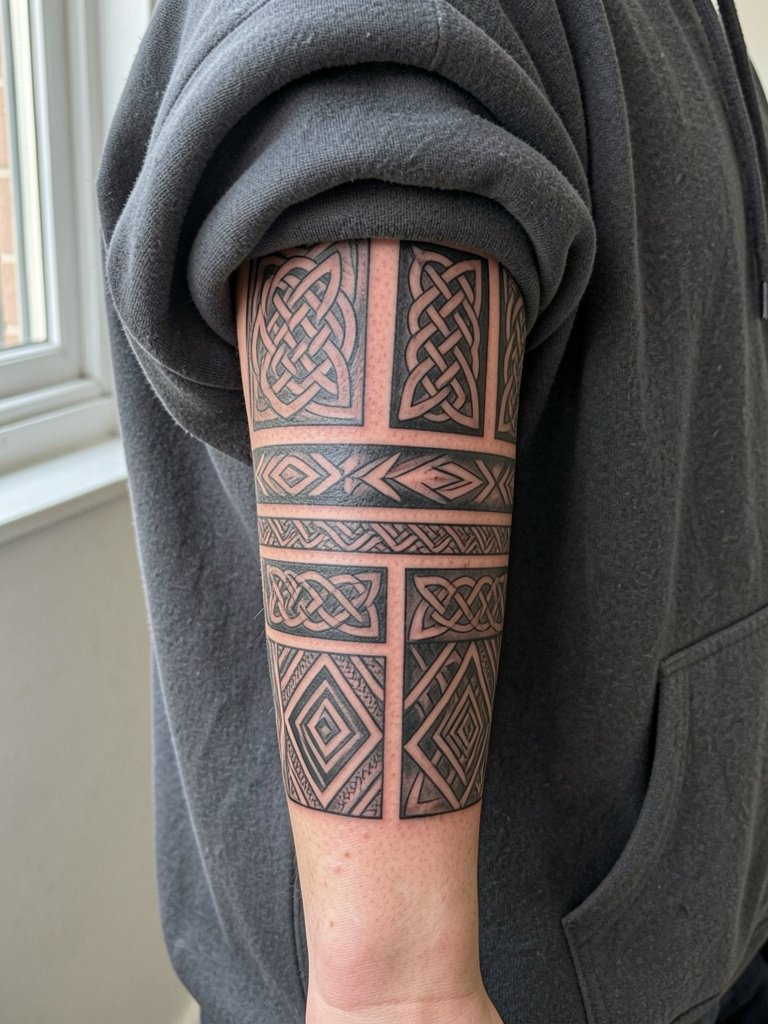
Patchwork sleeves let you combine motifs from different traditions if you deliberately separate them visually. One controversy splits artists into two camps. One camp embraces cultural mixing for personal storytelling and uniqueness. The other camp warns that mixing without careful attribution can read as a mashup lacking integrity. If you blend styles, establish clear visual buffers and ask for healed portfolio examples that show how the motifs hold up when adjacent.
8. Bicep Definition Tribal Sleeve
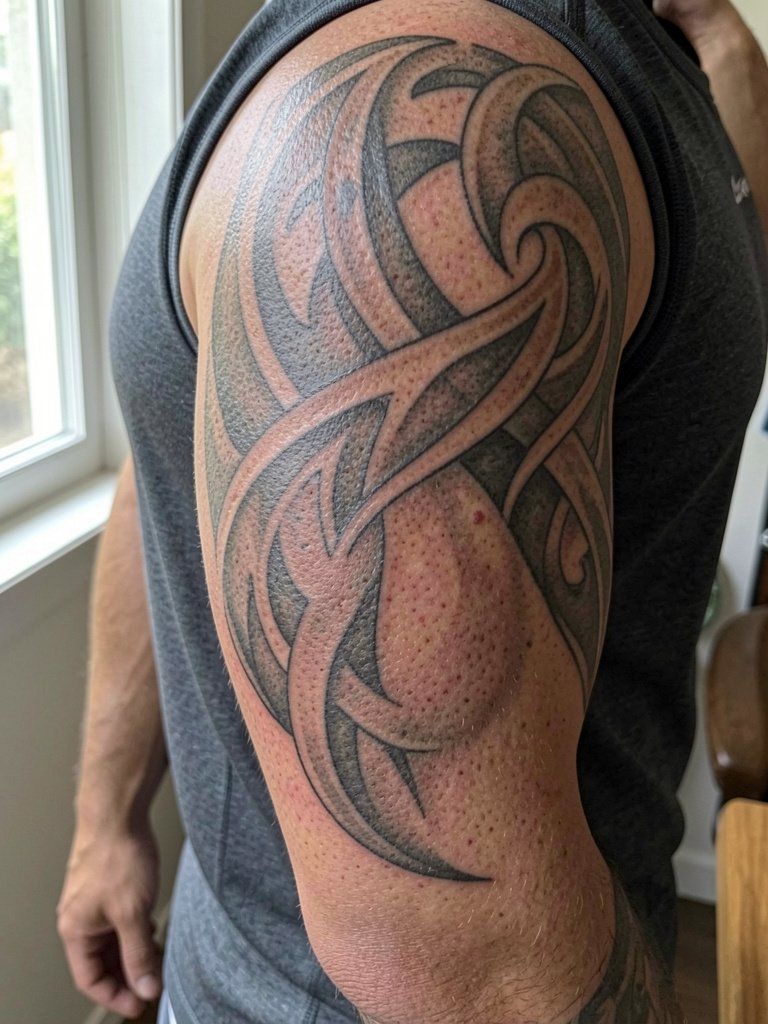
Designs for bicep definition should be mocked up on the limb so the curves hit the muscle exactly where you want them. Expect shorter sessions focused on the bicep peak and longer for the tricep wrap. Avoid static templates that ignore muscle bulge. For the session, a fitted athletic tee helps the artist see muscle contours while letting you stay comfortable.
9. Forearm Power Tribal Sleeve
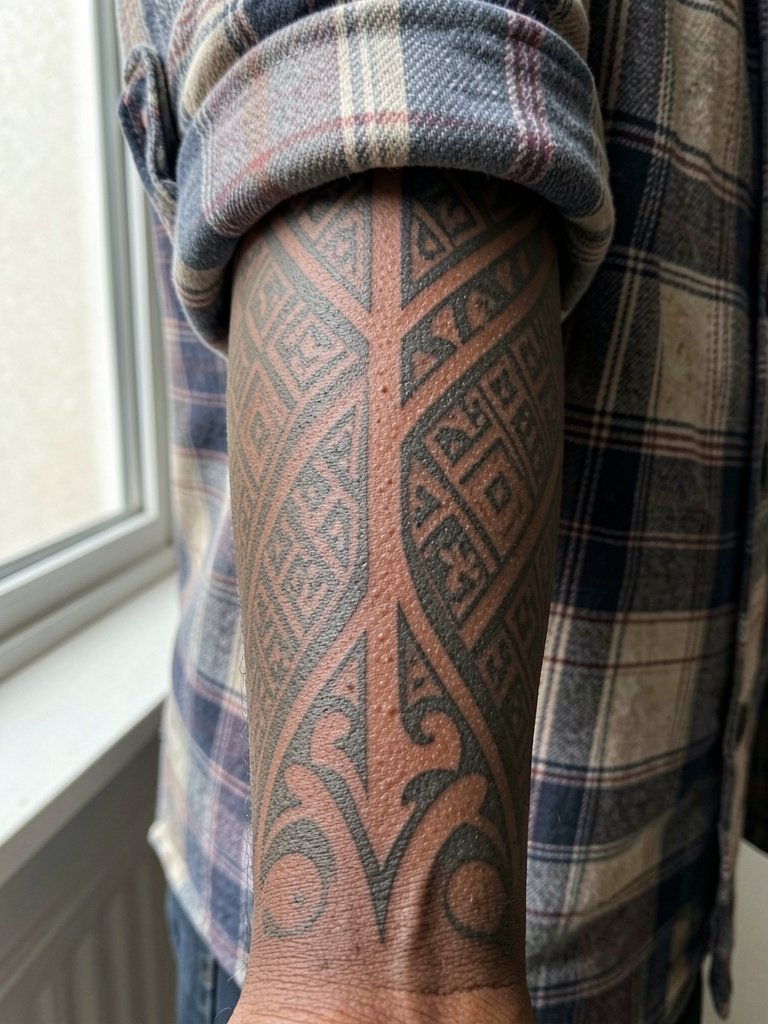
Forearm-heavy sleeves demand careful tapering at the wrist so the hand and wrist remain readable. The forearm typically tolerates dense work better than inner bicep, but the inner wrist eats detail over time. A common mistake is carrying full forearm density into the wrist, which ends up fuzzy. For a work wardrobe, rolled-up flannels or short-sleeve work shirts frame the forearm effectively.
10. Minimalist Tribal Armband
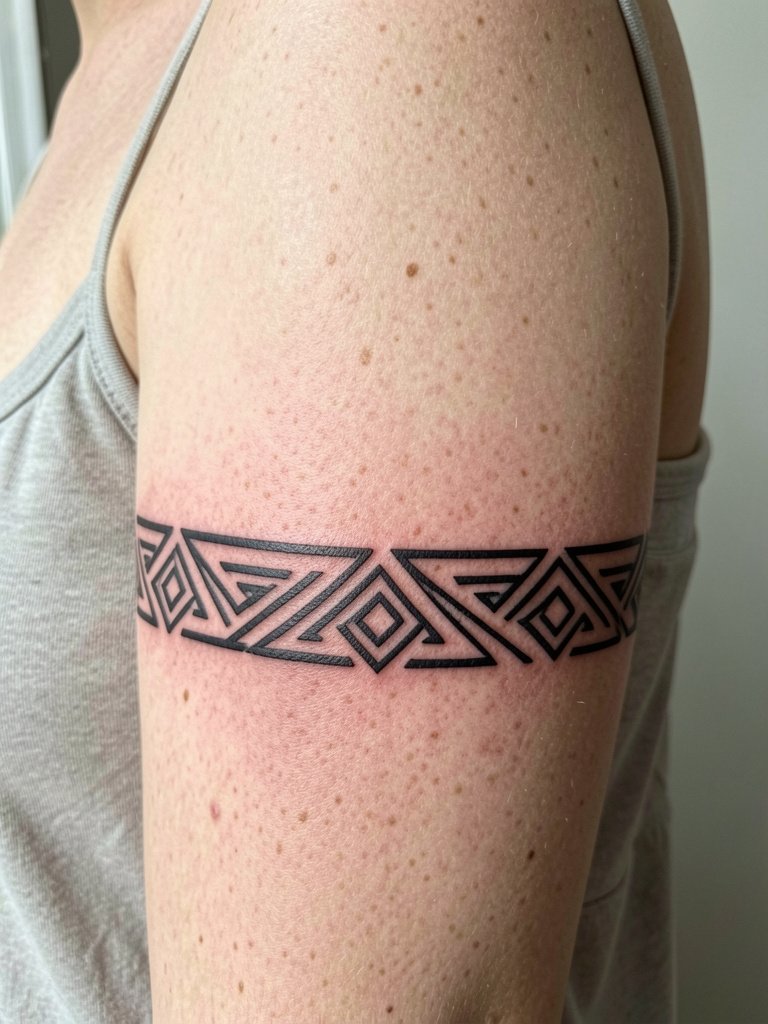
Minimalist armbands read well when scaled slightly larger than you expect because fine lines fade faster. If you want a lighter look with lower pain, pick wider bands with fewer repeated elements. The session is short and tolerable, but expect touch-ups sooner than heavy blackwork. For outfits, thin-strapped tops or off-the-shoulder dresses let the band be the focal point, and the right bracelet can complement without crowding the arm.
11. Shoulder-to-Wrist Flow Sleeve Connecting Back Art
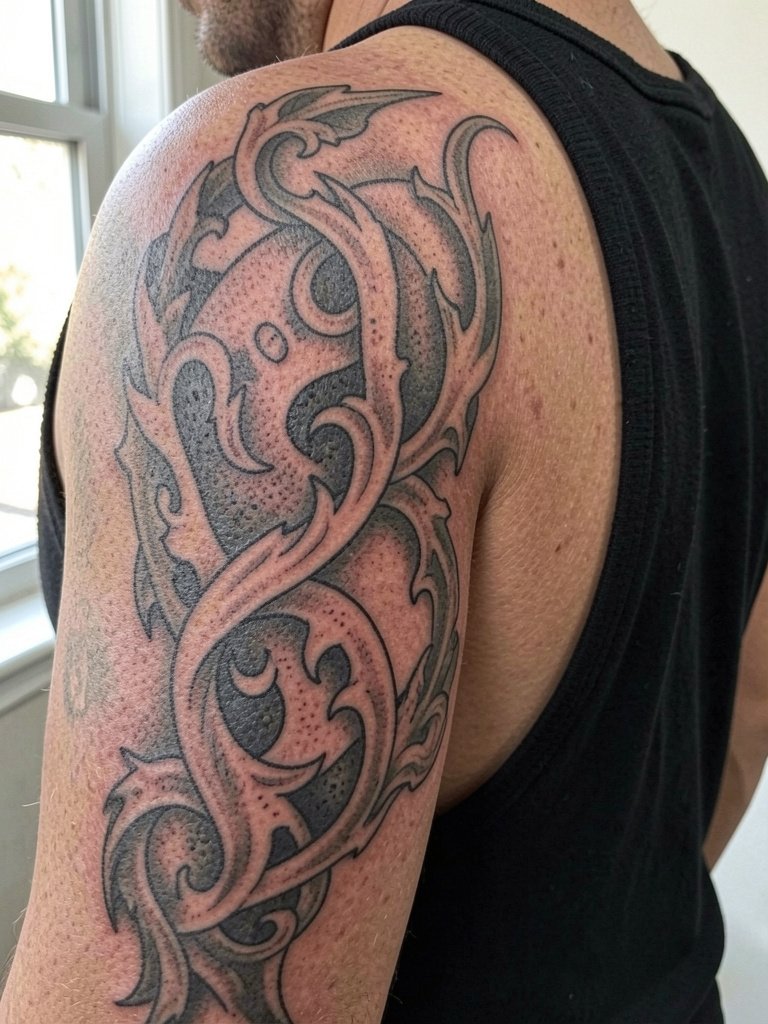
The transition between shoulder cap and back is where many sleeves fail visually. The fix is to design a flow piece that crosses the deltoid with graded scale and a deliberate motif that appears on both surfaces. During consultation bring photos of your shoulder from multiple angles so the artist can sketch directly on skin. For show-off looks, open-back shirts reveal the shoulder-to-back continuity.
12. Solid Black Bands with Negative Space
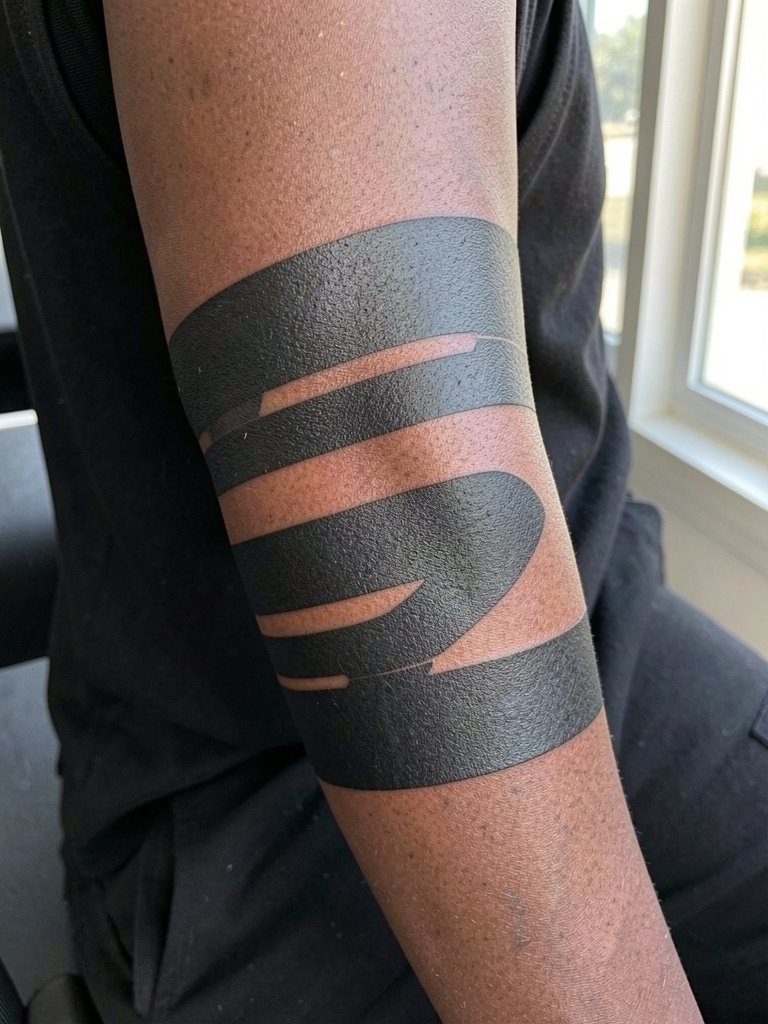
Solid black tension creates a dramatic look, but there is a technical debate about density. One camp insists that heavy saturation is the only way to get the hero black look. Another camp warns that too much unbroken black will blur into a blob without planned breaks. The compromise is deliberate negative space and controlled layering across multiple sessions. For outfits, monochrome clothing helps the negative-space shapes read crisply.
13. Gender-Fluid Tribal Sleeve
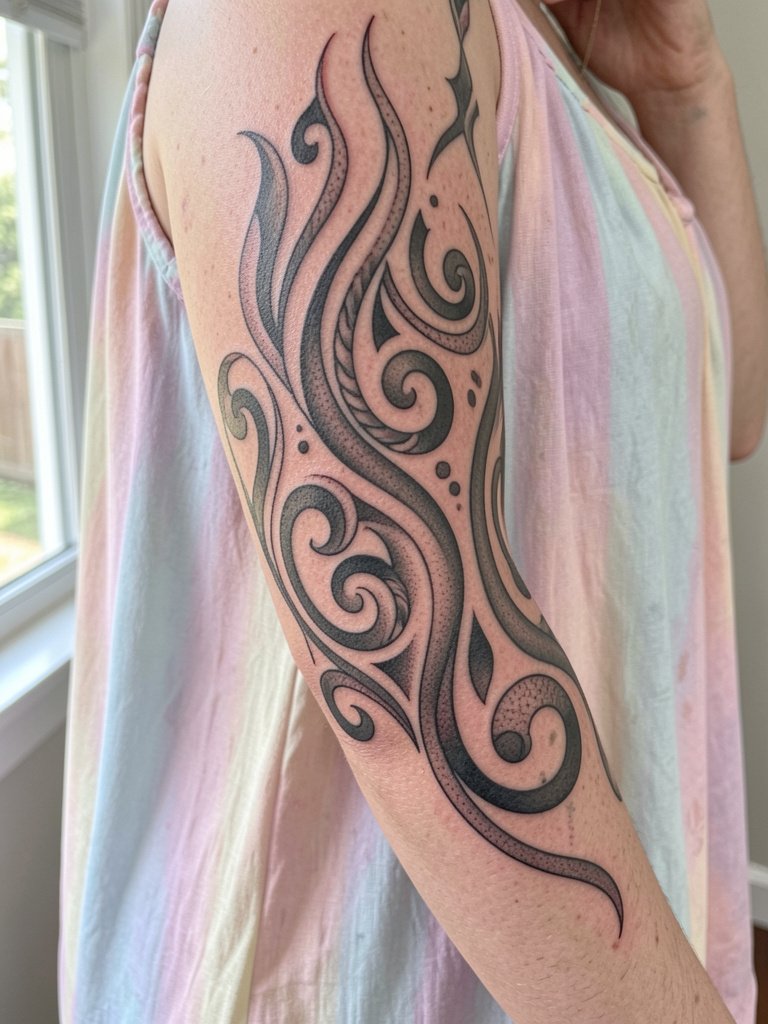
Softening the tribal palette is more than thinner lines. It means introducing wider negative space, alternate motif scales, and gentle curves. The session plan usually splits the arm into three to four sessions to manage pain and give you room to assess flow as ink heals. For styling, soft pastel tops and sheer layering can balance the heaviness of blackwork and create a different visual narrative.
14. Custom Symbol Integration Sleeve
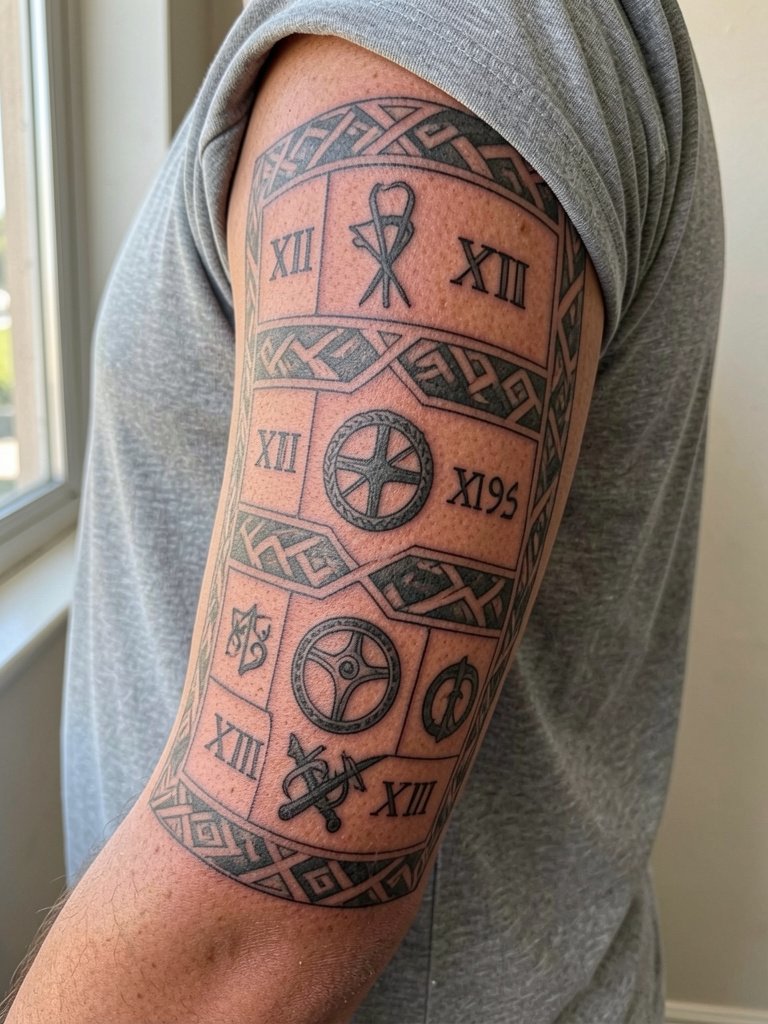
Personal symbols work when they are integrated into the tribal architecture rather than tacked on. Bring exact text or numbers you want rendered and specify font weight and scale. A frequent error is shrinking a date or initial too small; place it within negative-space panels so it reads over time. For session wear, pick a loose short-sleeve tee so the artist can stencil and adjust as needed.
15. High-Contrast Blackwork Sleeve
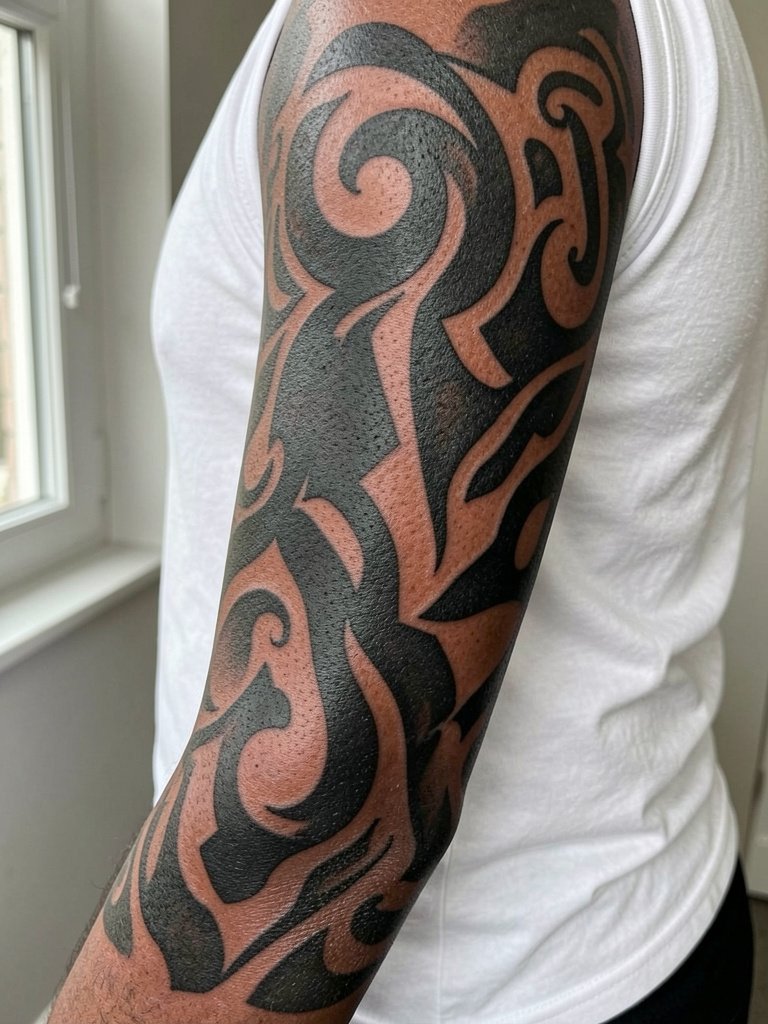
High-contrast sleeves rely on pure black shapes that read from a distance. Plan spacing carefully so the black does not coalesce over time. A common mistake is placing too many adjacent heavy blocks without skin separators. For wardrobe cohesion, monochrome outfits help the ink feel integrated into your look. This is also a heavy-session series, so schedule multiple shorter appointments.
16. Forearm Band Patch Sleeve
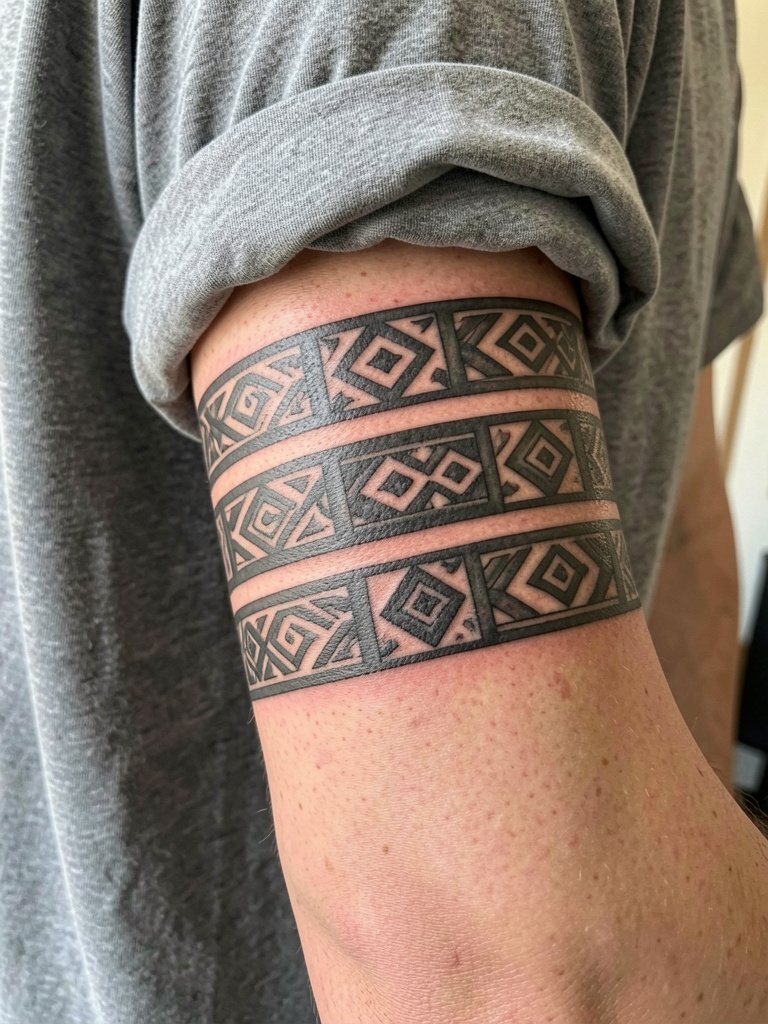
Forearm band patches let you create visible breaks that help aging. The forearm tolerates tight geometry better than the wrist. Keep the bands spaced and avoid tiny interior details. For the session wear, a loose tee or short-sleeve work shirt makes access easy and keeps the artist from tugging.
17. Sleeve with Stipple and Dot Work Accents
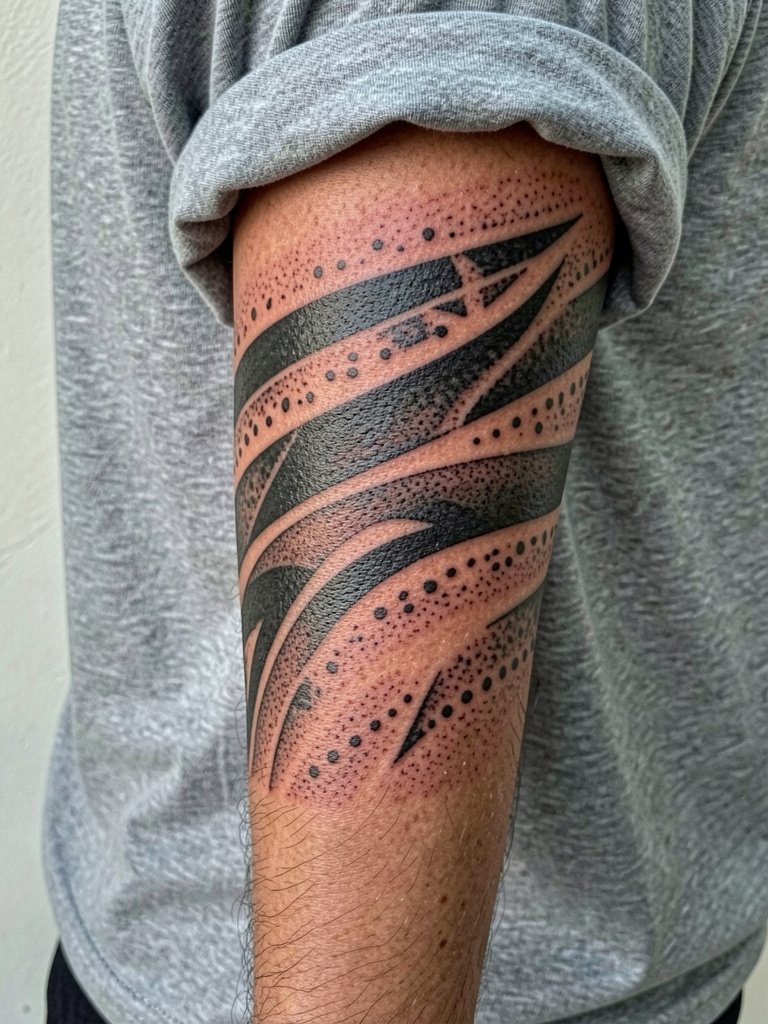
Dot work can reduce the need for heavy grey washes while preserving depth. It also ages differently from solid fills, so ask for sample healed photos showing stipple at two and five years. A common mistake is placing stippling in high-friction areas where it fades unevenly. For clothing, rolled sleeves or short-sleeve shirts show the texture without covering it.
18. Inner Bicep Curved Panel Sleeve
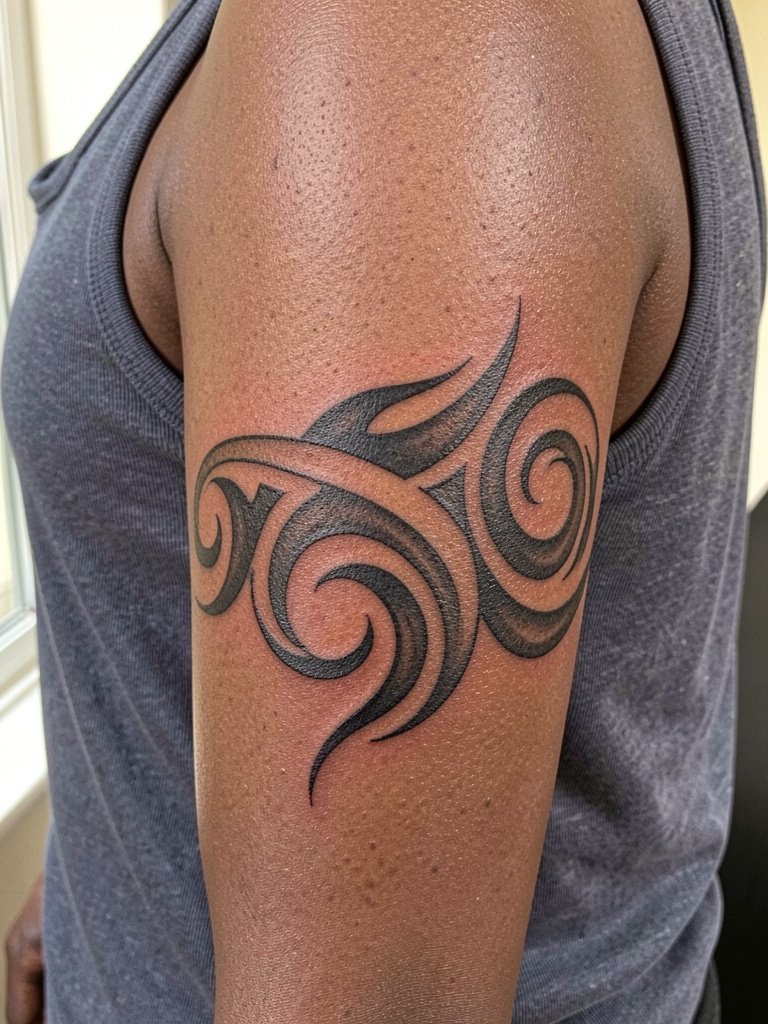
Inner bicep panels need generous scale because the skin there is softer and detail can blur. Expect elevated pain near the armpit edge and plan for touch-ups at one to three years. A frequent mistake is asking for intricate micro-detail in this area. For session wear, a tank top gives the artist full access while keeping you comfortable.
19. Tapered Wrist Tribal Details
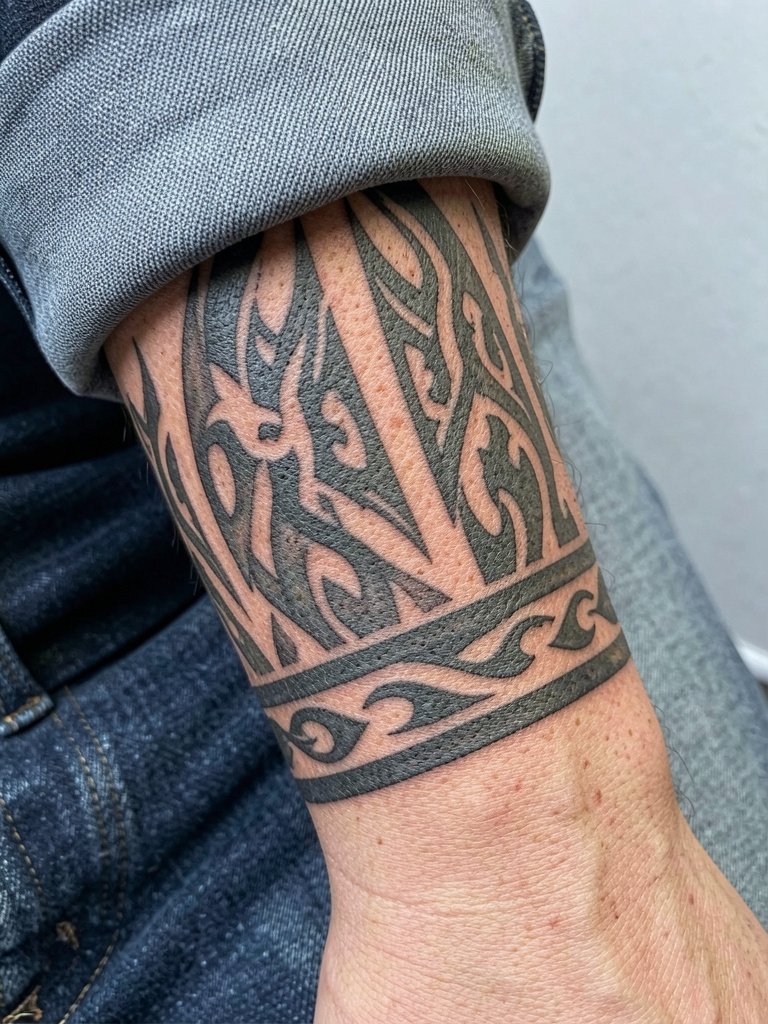
The wrist eats fine detail faster than the forearm. Taper large motifs into simplified bands within the final two inches to keep the wrist readable. Session pain spikes around the distal wrist tendon are common. For daily wear, a dainty bracelet set can highlight the wrist bands without covering them.
20. Armor Plate Deltoid Sleeve
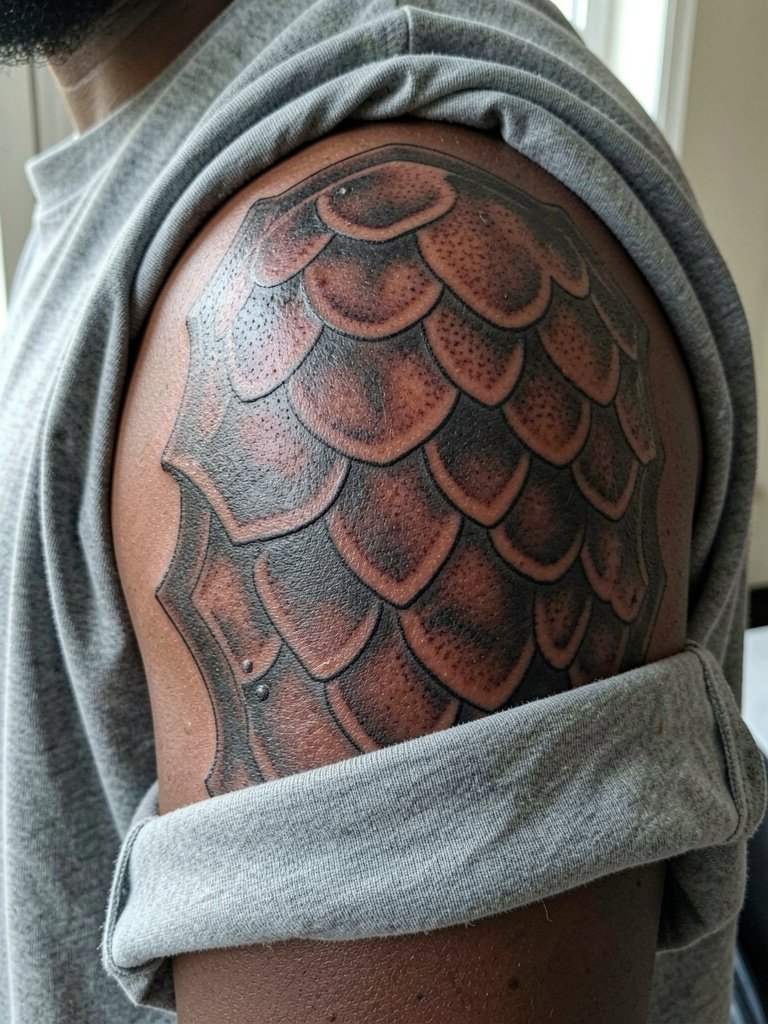
Deltoid armor-style tattoos can create an "armored" silhouette that pairs well with seasonal rolled sleeves. The shoulder tolerates solid black well, but transitions to the bicep need softer edges to avoid a stuck-on look. For the session, wear a loose short-sleeve shirt so the artist can access the shoulder cap freely.
21. Negative Space Shell Motifs Sleeve
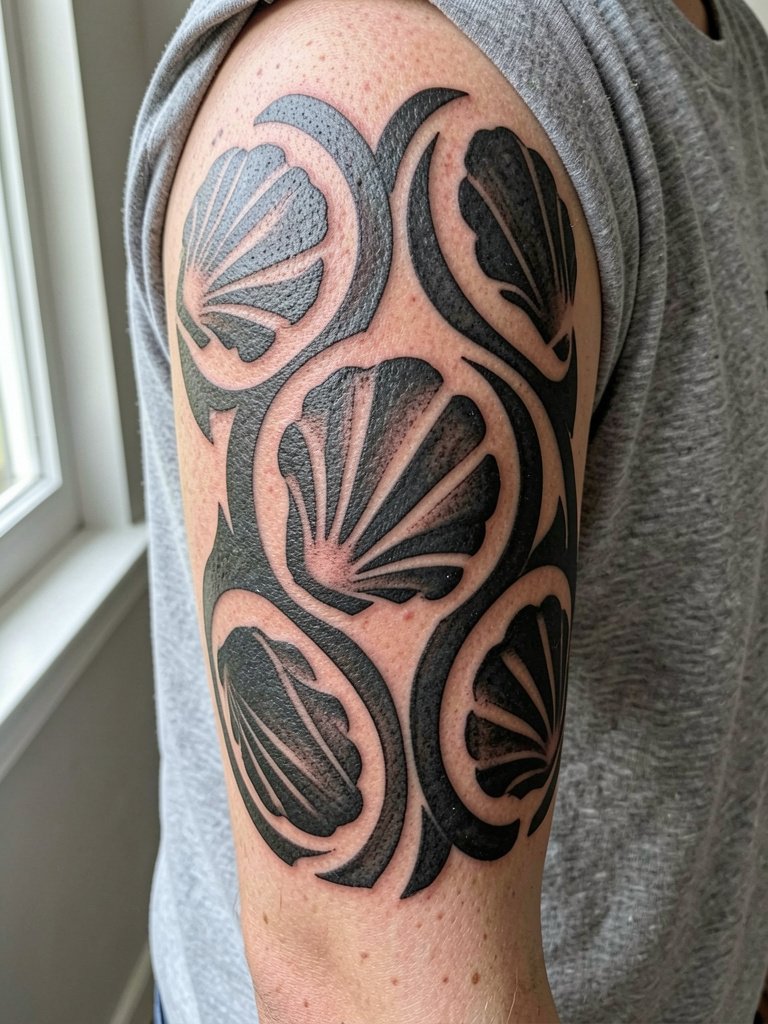
Negative-space shells give the eye resting points and reduce the blurring risk for dense blackwork. A mistake I see is equating negative space with a lack of planning. Each gap must be deliberate. For day-of session clothing, pick a loose tee so the artist can step back and see how the negative areas interact with motion.
22. Tribal Sleeve for Darker Skin with Extra Breaks
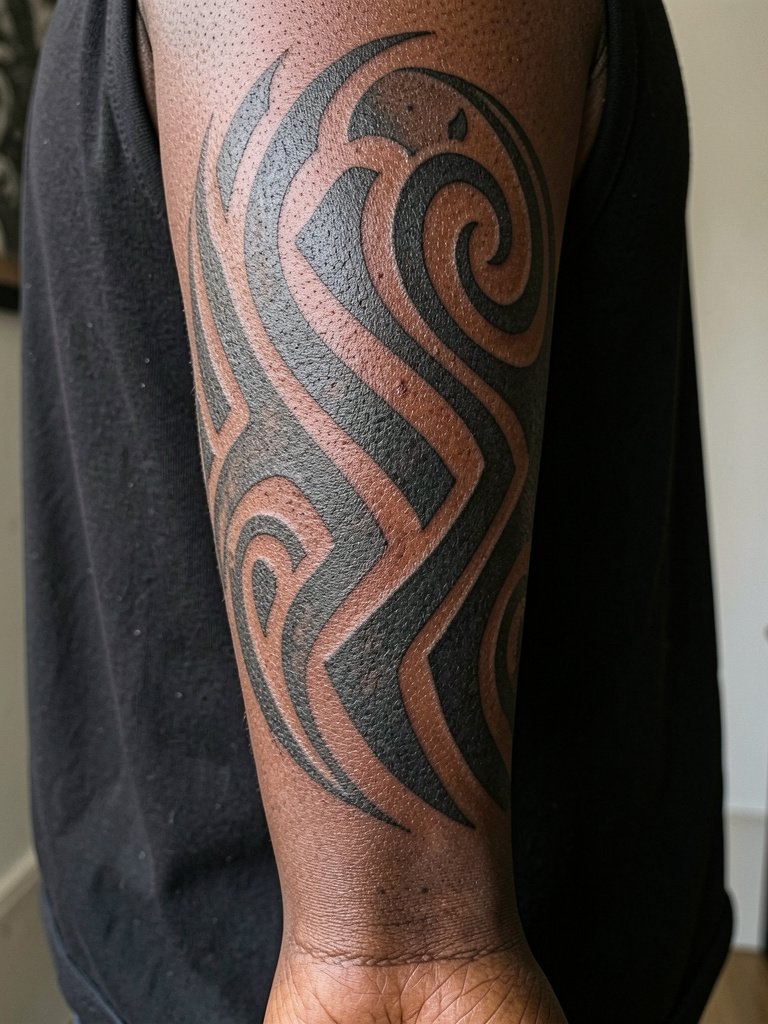
On darker skin, solid black can read like a single mass without intentional breaks. Use larger motif scales and high-contrast negative spacing so motifs stay legible. Healed comparisons at six months and two years are essential when choosing an artist who understands how saturation behaves across tones. For showing the work, an all-black tee or a white tee can make the blackwork pop depending on your aesthetic.
23. Sleeve That Starts as an Armband Expansion Plan
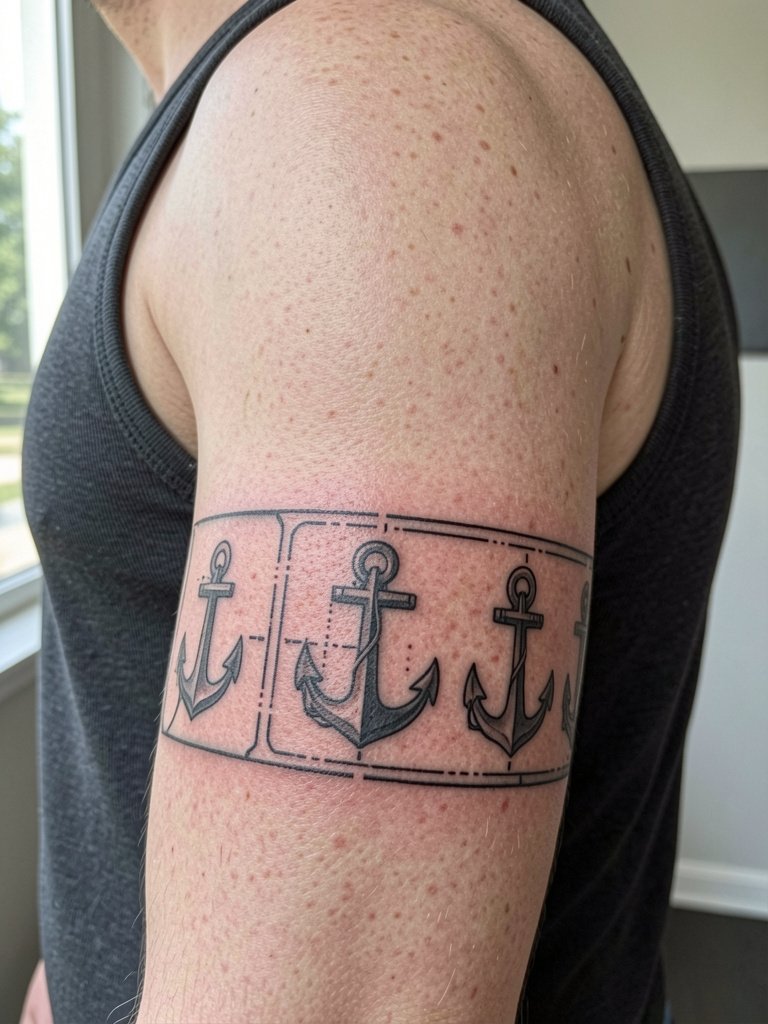
Starting with an armband gives you a chance to test pain and healing before committing to a full sleeve. Design the band with intentional corridors and anchor points so later panels connect cleanly. A common misstep is leaving no room for future elements. Session day wear: a muscle tank or loose short-sleeve shirt makes access and stencil alignment easy.
24. Neo-Polynesian Geometric Sleeve
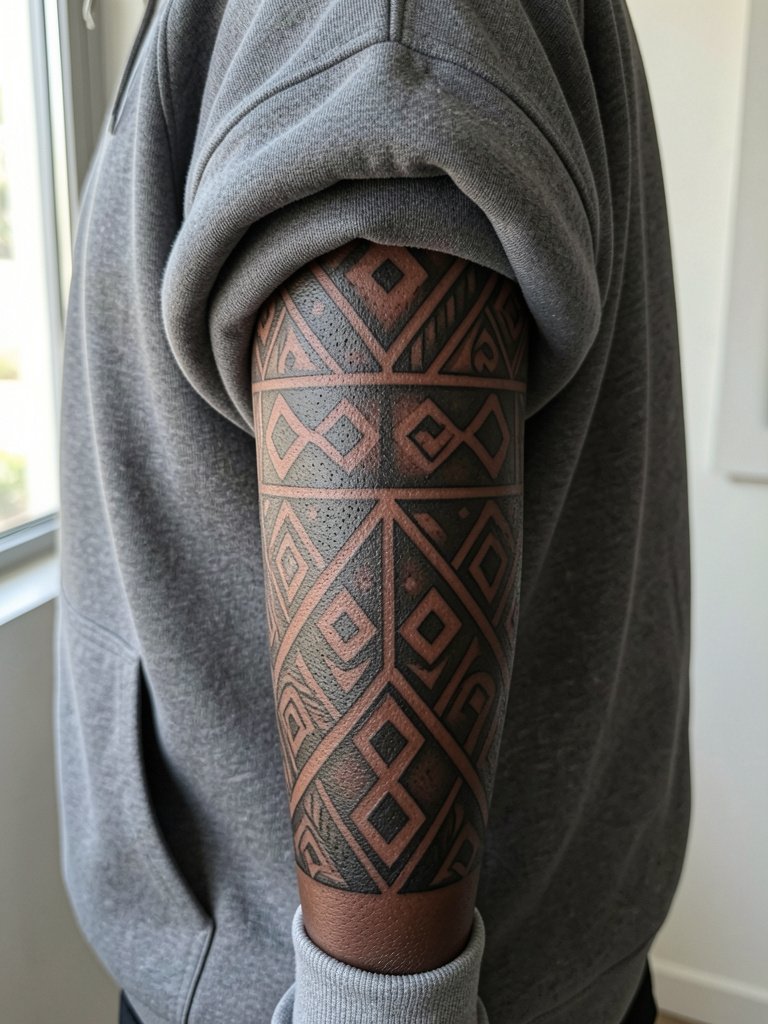
Neo-Polynesian blends traditional forms with contemporary composition. The ethical debate about cultural borrowing exists, and it is worth naming both positions. One group supports creative reinterpretation and personal storytelling through mixed motifs. The other group cautions that mixing forms without proper understanding can be disrespectful. If you choose this route, document your design rationale and ask for healed examples that show respectful adaptation.
25. Sleeve with Staggered Touch-Up Timeline
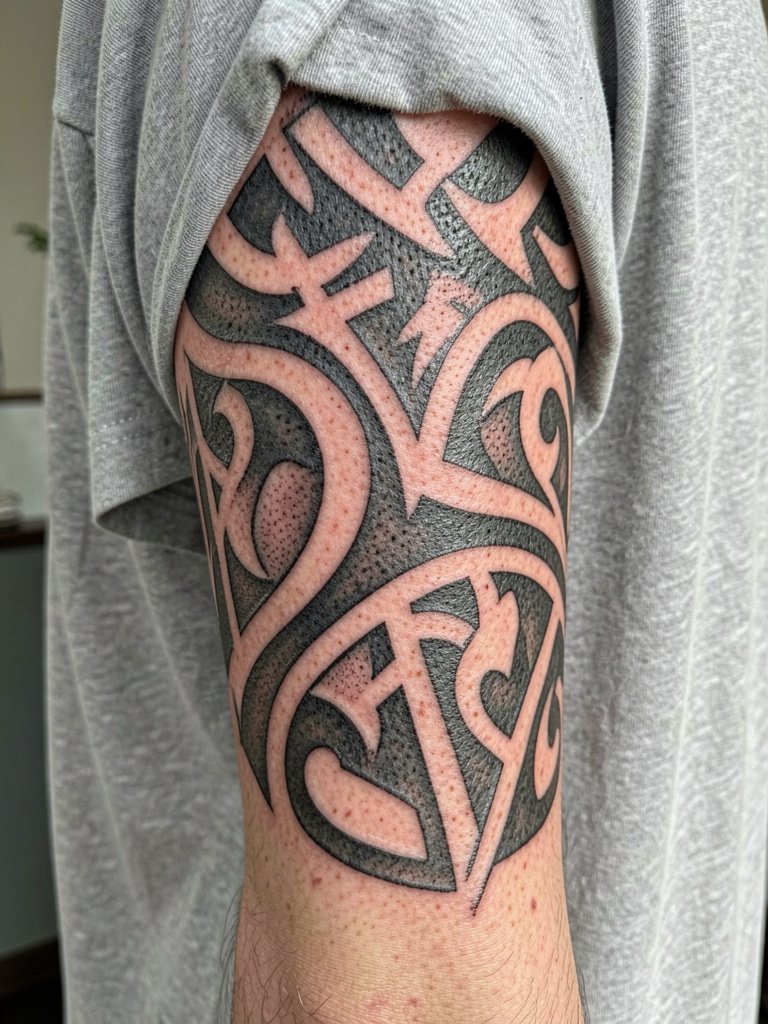
Plan touch-ups as part of the timeline, not as an afterthought. Dense black areas often need a second saturation session three to six months after healing. A smart schedule spaces those touch-ups to let skin recover fully. For the session wear, a loose tee provides comfort during multi-hour work and makes it easier for the artist to return to the same panel.
26. Sleeve Integrating Adinkra and Tribal Bands
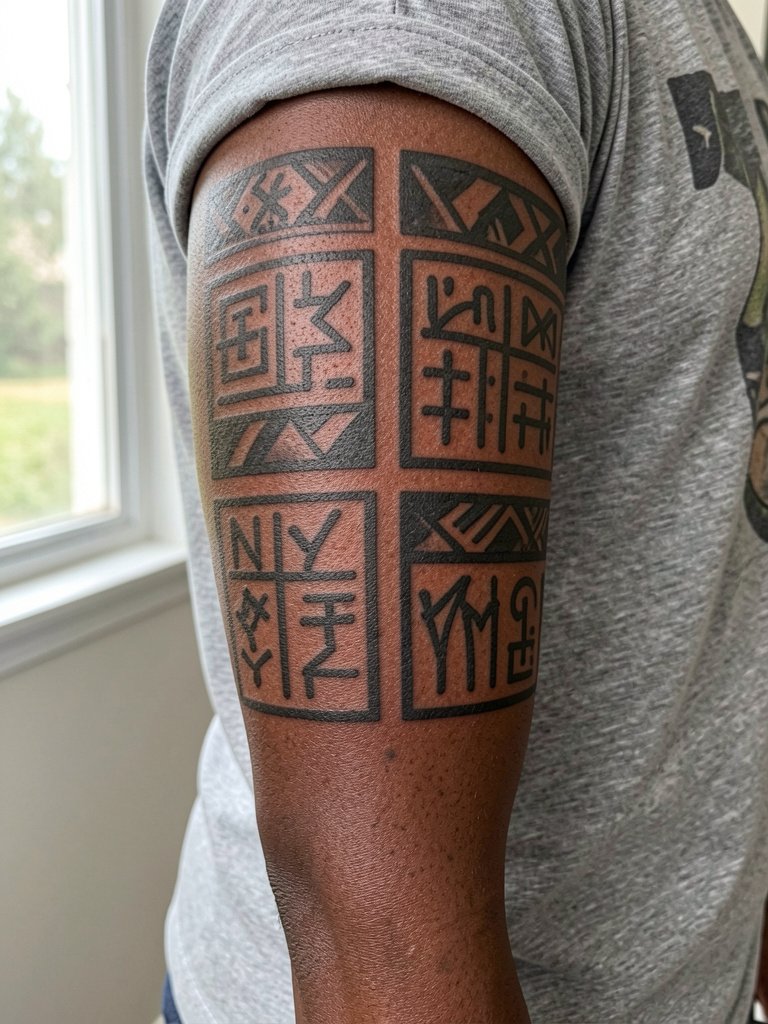
When combining West African iconography with other tribal bands, keep symbols large and isolated so they stay legible. A usual error is shrinking symbolic marks into decorative filler. For wardrobe choices, casual tees and comfortable jeans present the panels clearly and reduce friction during healing.
27. Patchwork Sleeve with Color Accent Option
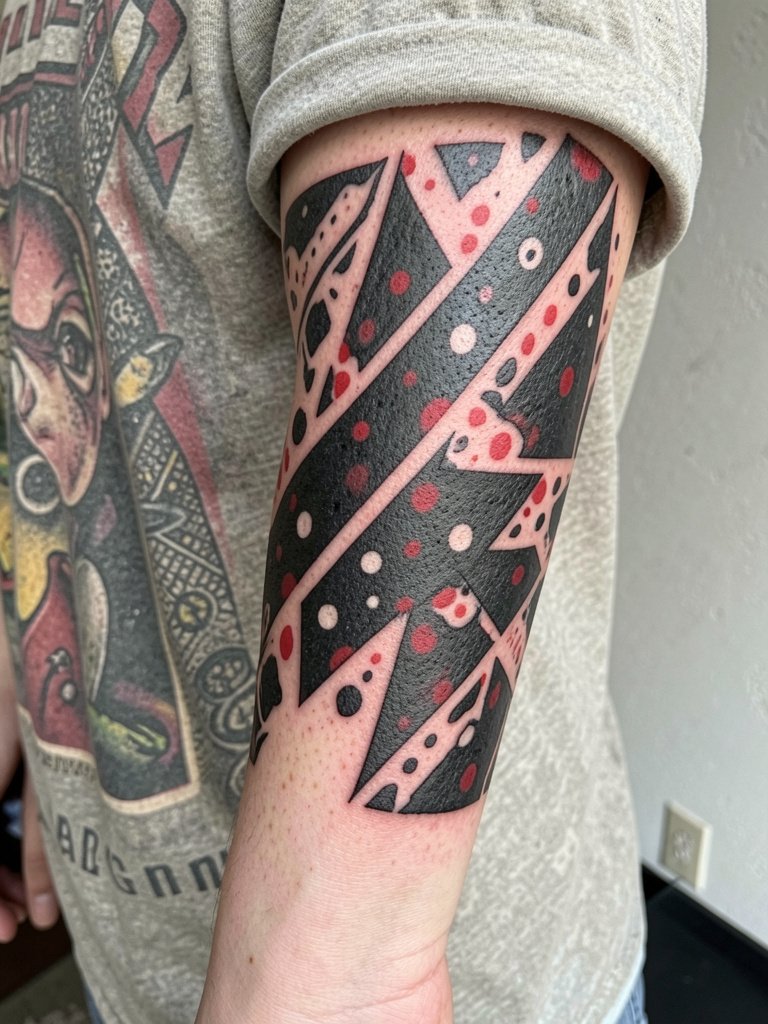
A single-color accent can lift a blackwork sleeve visually, but keep it minimal to avoid competing with the core tribal language. Artists disagree about color inclusion in dense blackwork; small conservative accents are usually safer. For casual styling, oversized hoodies or vintage tees nod to the patchwork aesthetic and can be pulled up to show the work.
28. Forearm Arrow and Spearhead Cascade
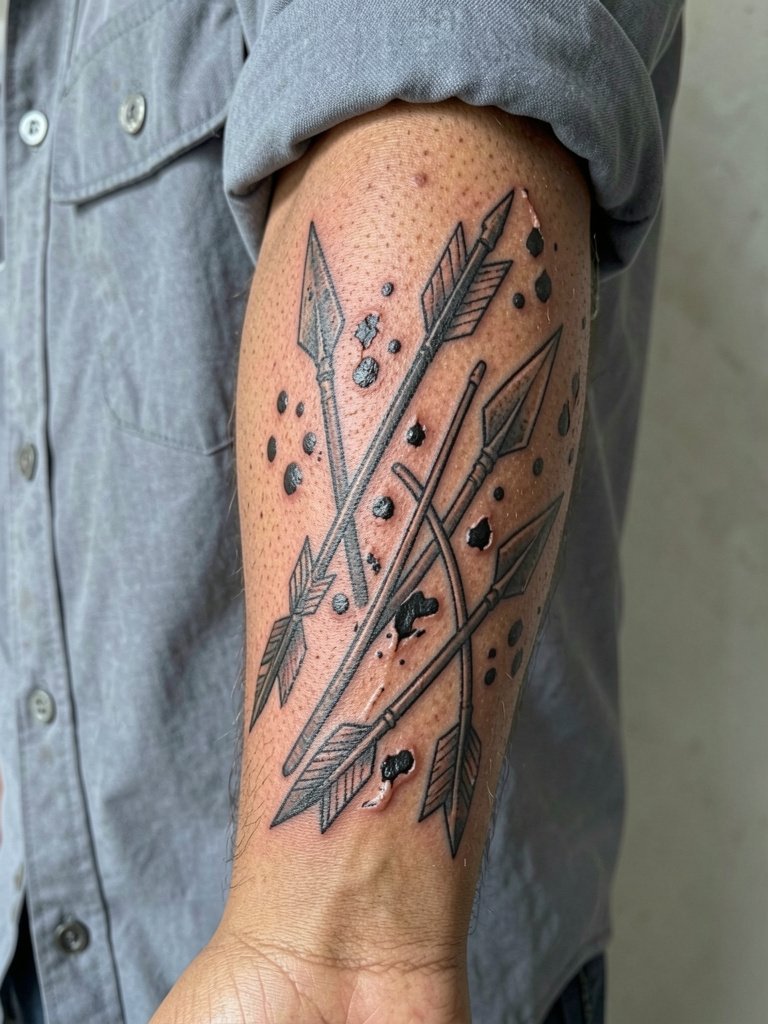
Linear spearhead cascades work well for a forearm-centered sleeve because they emphasize motion. Keep motifs large enough to survive frequent washing and friction. Session sensation is moderate and manageable for most people. Rolled-up flannels or short-sleeve shirts frame the cascade in everyday wear.
29. High-Flow Full Sleeve for Active Lifestyles
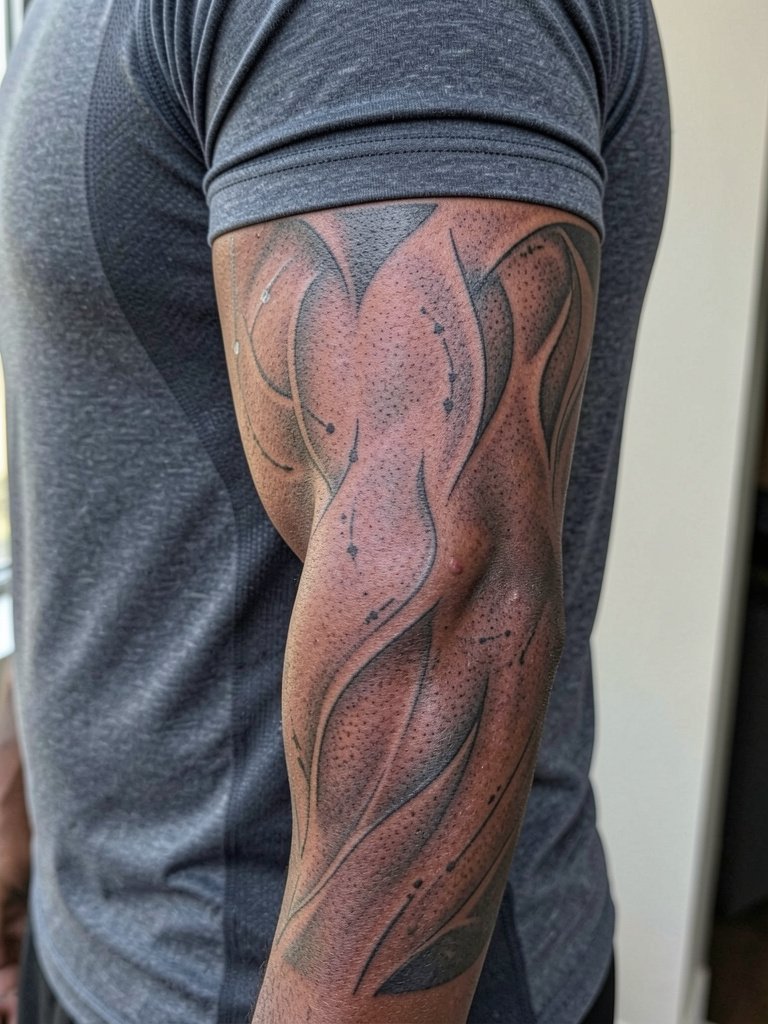
If you lift heavy or expect body changes, design the sleeve to follow the major muscle directions and avoid tiny elements over peak muscle. Discuss scale adjustments for projected bulk changes and map out where bands will sit when the arm is both relaxed and flexed. Fitted compression-style shirts make the final look easier to preview during the consult.
Frequently Asked Questions
Q: How much should I budget for a full tribal sleeve with heavy blackwork?
A: Expect a full saturated sleeve to fall in a high range because of the repetitions and multiple passes required to lock in saturation. Budgets vary by studio and artist, and the true cost depends on session length and density. Plan sessions and cash flow rather than a single upfront number so you can prioritize touch-ups.
Q: How do I find artists who show healed tribal work across different skin tones and traditions?
A: Search hashtags like #tribaltattoo, #polynesiantattoo, #maoritattoo, and #blackworksleeve on Instagram and TikTok and filter by location. Use Tattoodo keyword searches for healed portfolio images and check Reddit threads in r/tattoos or r/tattooadvice for peer recommendations and real healed shots. Booksy and the Inked App also let you filter studios by specialty when you want a local search.
Q: What should I wear to a session that covers shoulder to wrist?
A: Wear a loose short-sleeve shirt or a button-down you can roll up so the artist has full access without fabric pressing on freshly worked skin. Bring comfortable, loose pants to stay relaxed during multi-hour appointments. For upper-arm-only starts, a tank top is practical. A loose short-sleeve tee works for most full-arm sessions.
Q: Will heavy black tribal work hurt more than shaded pieces?
A: Yes, dense black saturation often requires multiple passes over the same area, which increases discomfort. Most artists plan several shorter sessions to manage pain and allow skin recovery. Numbing strategies vary and should be discussed concretely with the studio ahead of booking.
Q: How do I avoid a tribal sleeve turning into a "black blob" after a few years?
A: Use deliberate negative space, larger motif scale, and controlled saturation layering. Request healed photos showing the artist’s blackwork after two to five years. Ask for wider line weights where appropriate so the design has room to relax without merging.
Q: Can I mix Celtic knots and Polynesian spearheads in one sleeve?
A: Mixing is possible but sensitive. One viewpoint favors creative blending for unique sleeves. Another viewpoint warns about losing historical integrity and risking offense. If you combine motifs, separate them visually, document your design choices, and confirm the artist can show healed examples of successful integrations.