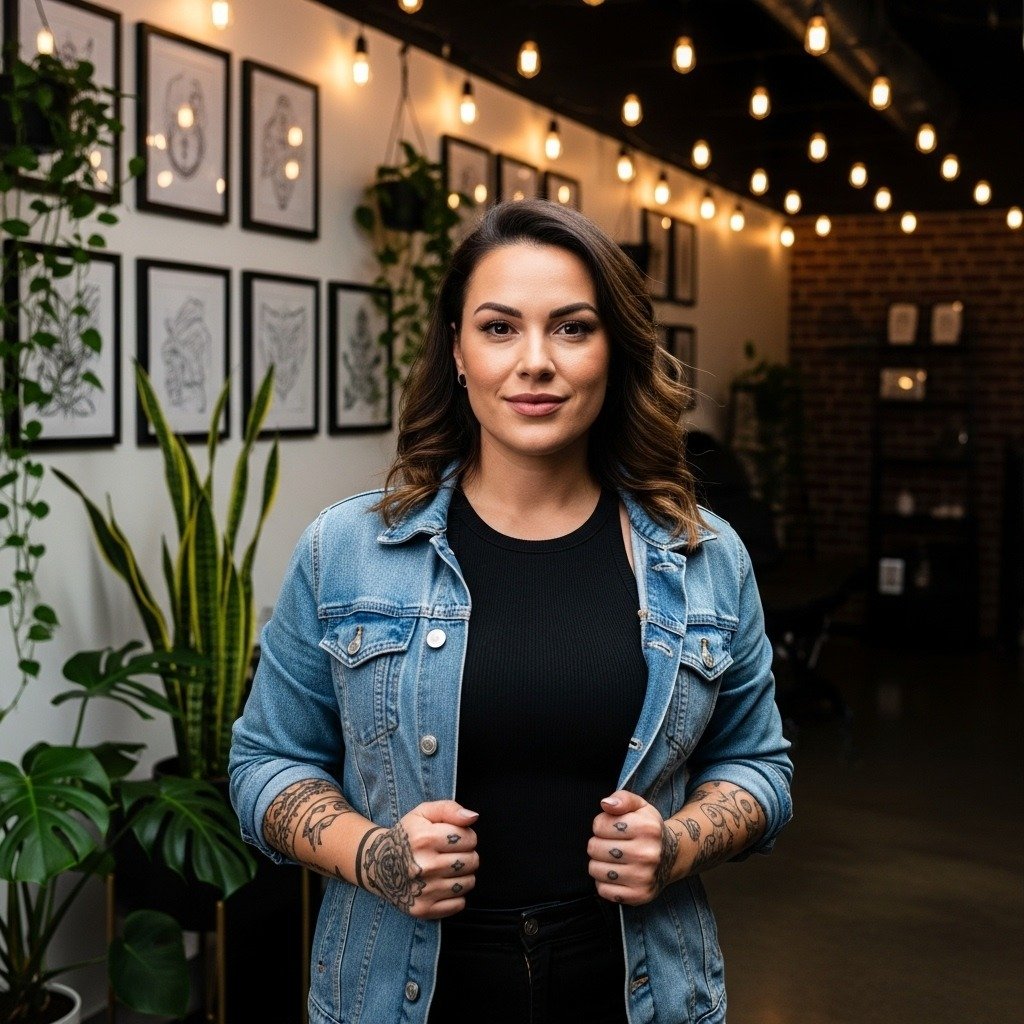
Bold black bands and carved geometric panels keep coming back for one reason. They age into a clear, masculine silhouette on moving skin while fine detail often softens into blur. If you want a tribal piece that still reads at year five, plan spacing and saturation up front and pick placements that tolerate heavy fill. The first idea below starts with a classic armband that proves that spacing beats tiny detail every time.
1. Bold Polynesian Armband
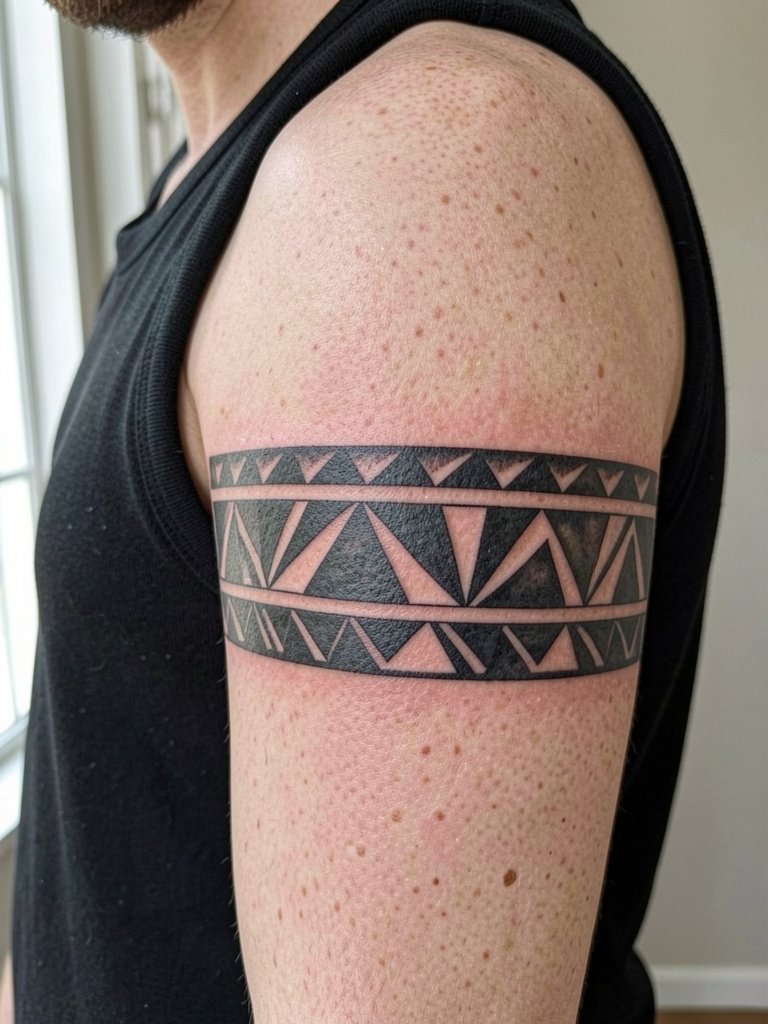
This armband is the go-to first tribal for guys who want bold presence without a sleeve. Pick 1–2 inches of solid fill with a 3–6 inch width so the negative space reads over time. Ask the artist to set line weight heavier than the reference, the arm swells and contracts and the extra room preserves crispness. A common mistake is asking for too many tiny motifs in a narrow band and watching them blur at year three. For the session wear a sleeveless black tank so the artist has full outer arm access.
2. Maori Koru Spiral Motif
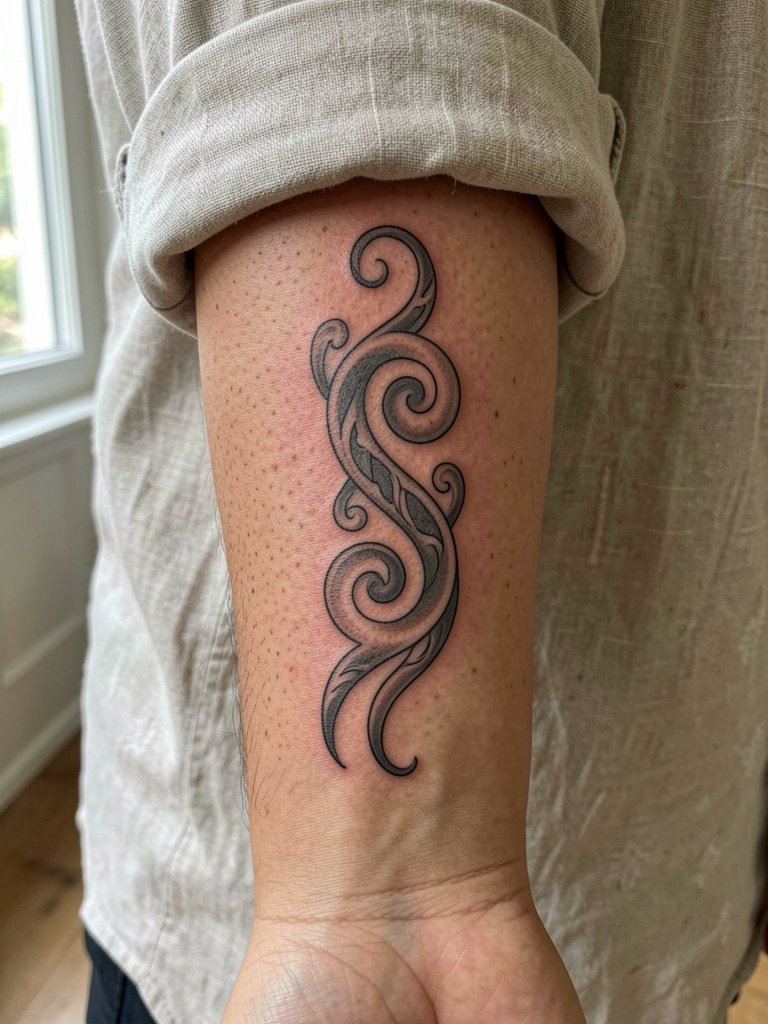
Maori koru spirals rely on organic flow and breathing room to follow muscle lines. One camp insists these patterns follow strict cultural grammar and must be rendered with traditional motifs to show respect. The other camp accepts modern adaptation so long as the artist creates original, cohesive work and does not claim lineage. When you consult, bring two scale references so the artist can show how a four-inch versus six-inch spiral sits on the forearm. For show-off outfits, rolled-up neutral linen shirts in cream or olive help the linework read, and you can wear a linen button down on cooler days.
3. Samoan Triangular Spearhead Pattern
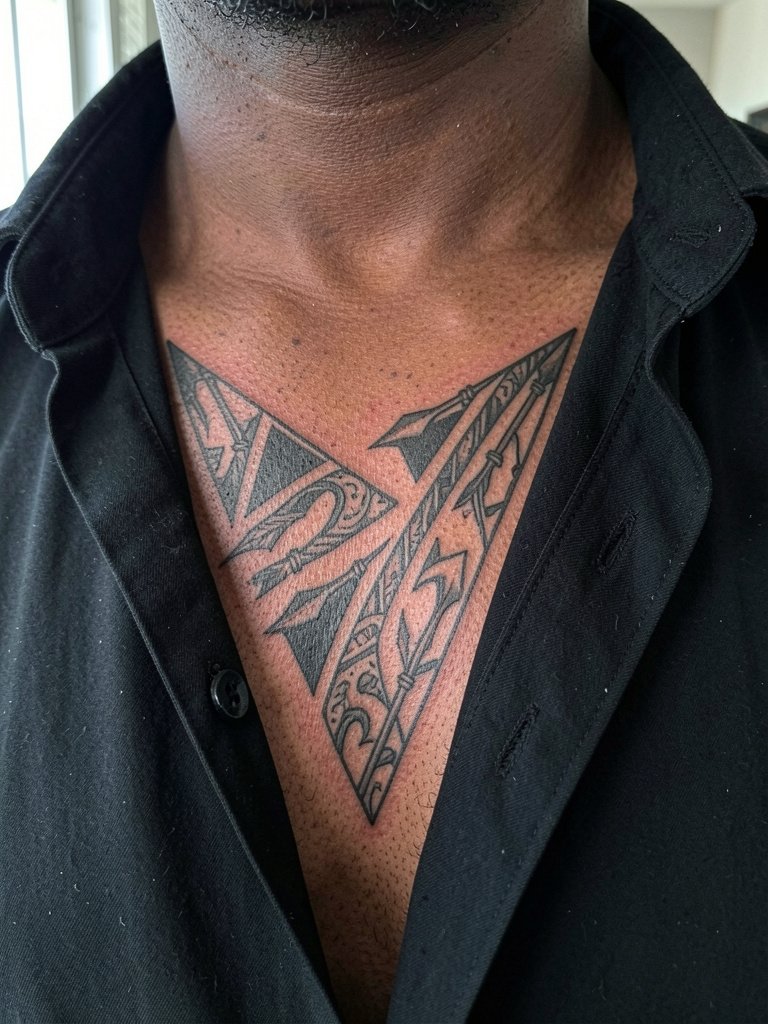
Spearhead panels read aggressive and sculpt the chest silhouette. Expect deep saturation sessions that feel hotter than linework only. One common error is compressing too many small triangles near the sternum which blurs as the skin stretches. Specify edge-to-edge spacing and ask for a session break if saturation becomes intense, most artists will plan two passes. For wardrobe, an open-neck solid black or white button-down frames the panel, and wearing a solid black button down the day of the session makes access easy.
4. Celtic Knotwork Band
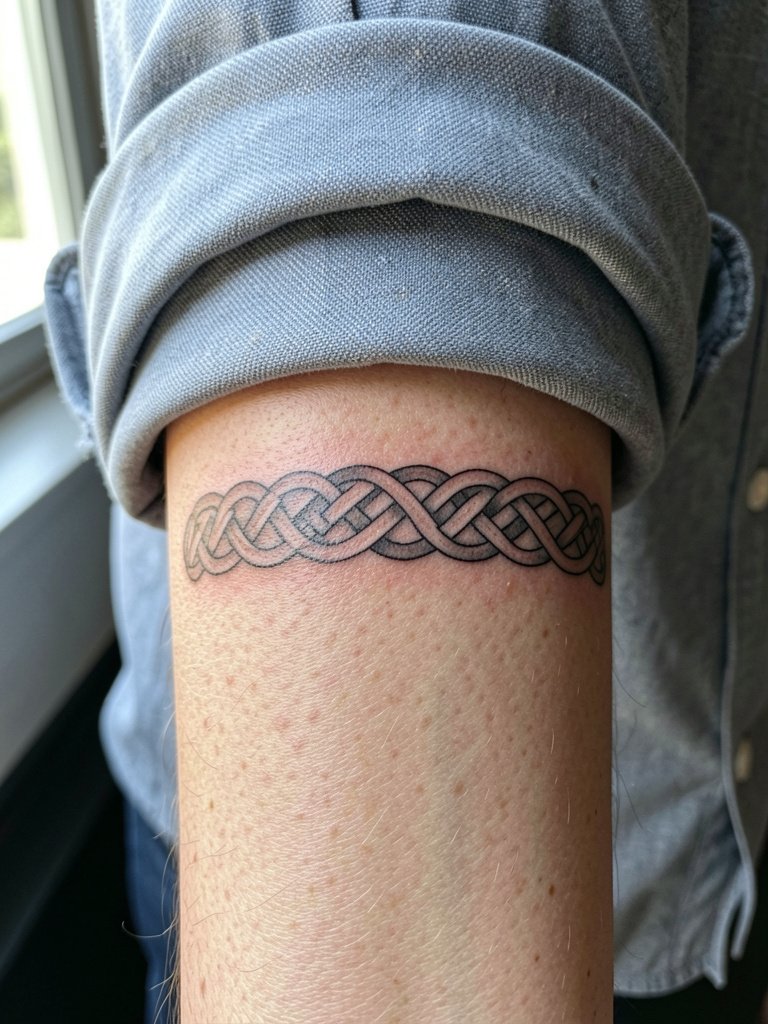
Knotwork needs generous negative space to keep loops from merging. If you like interlocking knots, plan for medium line weight and ask for a mockup wrapped around the arm so proportions stay consistent. The mistake is asking for ultra-fine knots in a two-inch band, which turns into a muddied braid after healing. This placement is low on blowout risk, but expect a one-session touch-up window if lines soften at year three. To show it off, roll sleeves and wear a linen button down.
5. Modern Tribal Abstract Sleeve
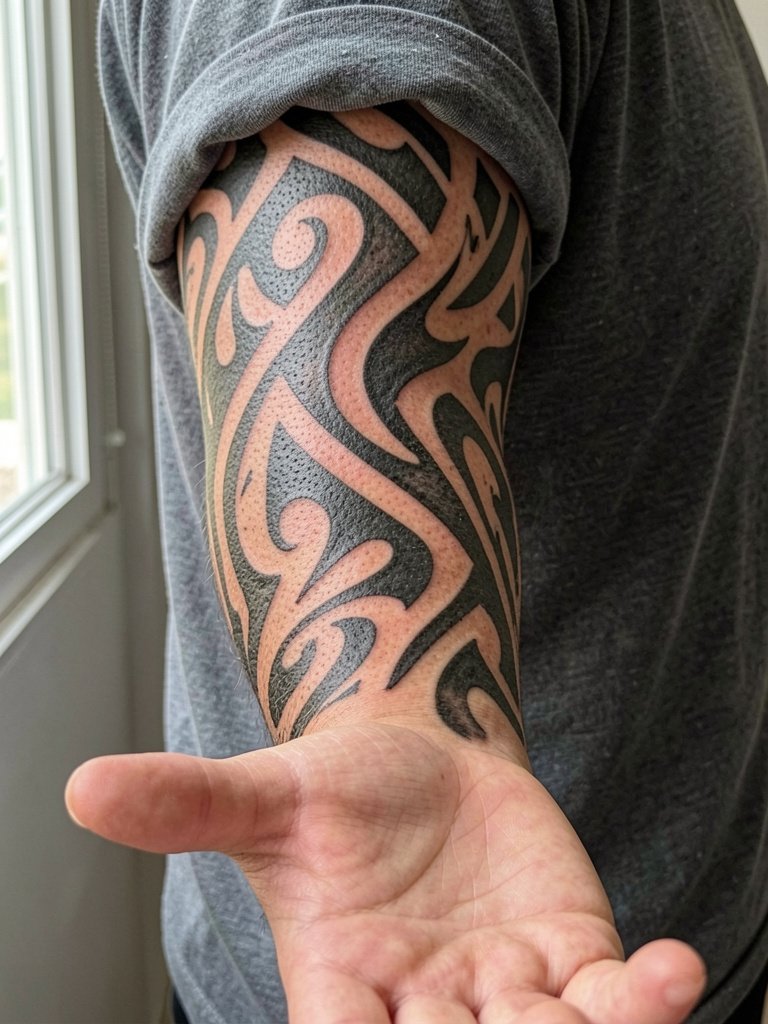
Full sleeves built from modern tribal shapes are customizable and age well if planned in zones. One argument in the community says heavy solid black increases pain and healing time. Another argues that with correct needle depth and breaks, saturation is manageable and heals comparably to outline work. Ask your artist for a session plan that alternates shading and fill so the skin recovers between passes. For session comfort, wear a short sleeve tank so the artist can work the whole arm without pressure from cuffs.
6. Polynesian Shoulder Cap
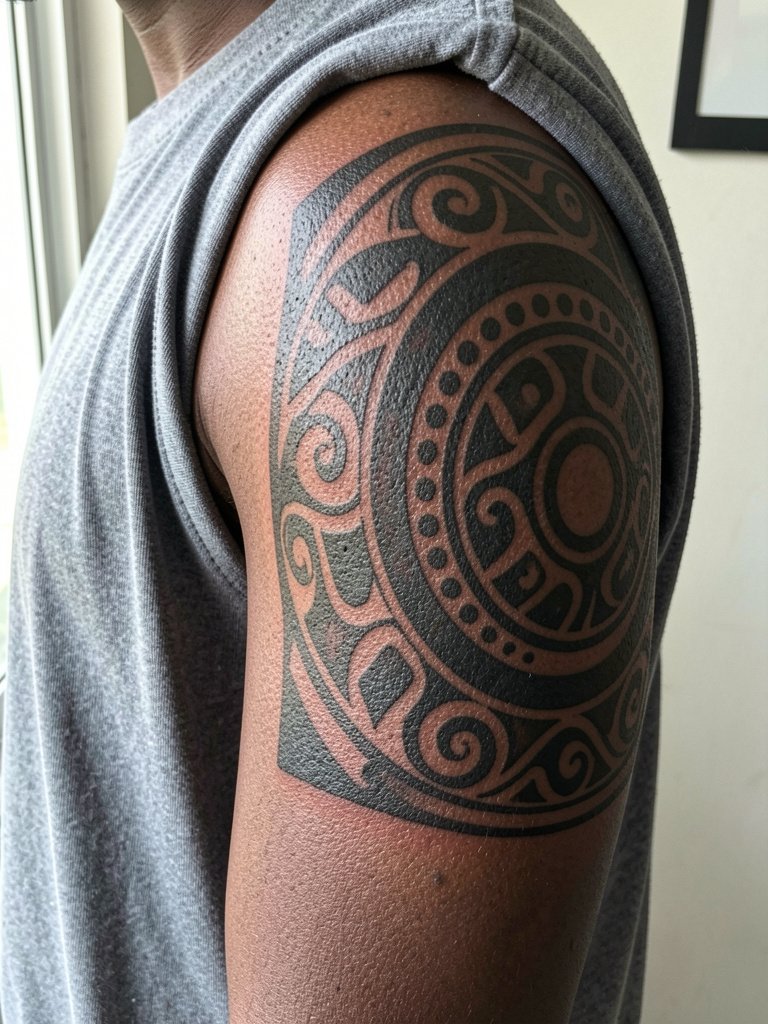
Shoulder caps anchor larger projects and handle dense saturation well. One camp insists Polynesian motifs require cultural accuracy and lineage to avoid misappropriation. Another camp accepts modern reinterpretation when artists make original, respectful designs without false claims. Be explicit about origin in your consultation and ask which motifs are traditional and which are modern fills. Wear a loose short-sleeve shirt to the session so the artist can access the deltoid without pressure from tight cuffs.
7. Samoan Mala Torso Panel
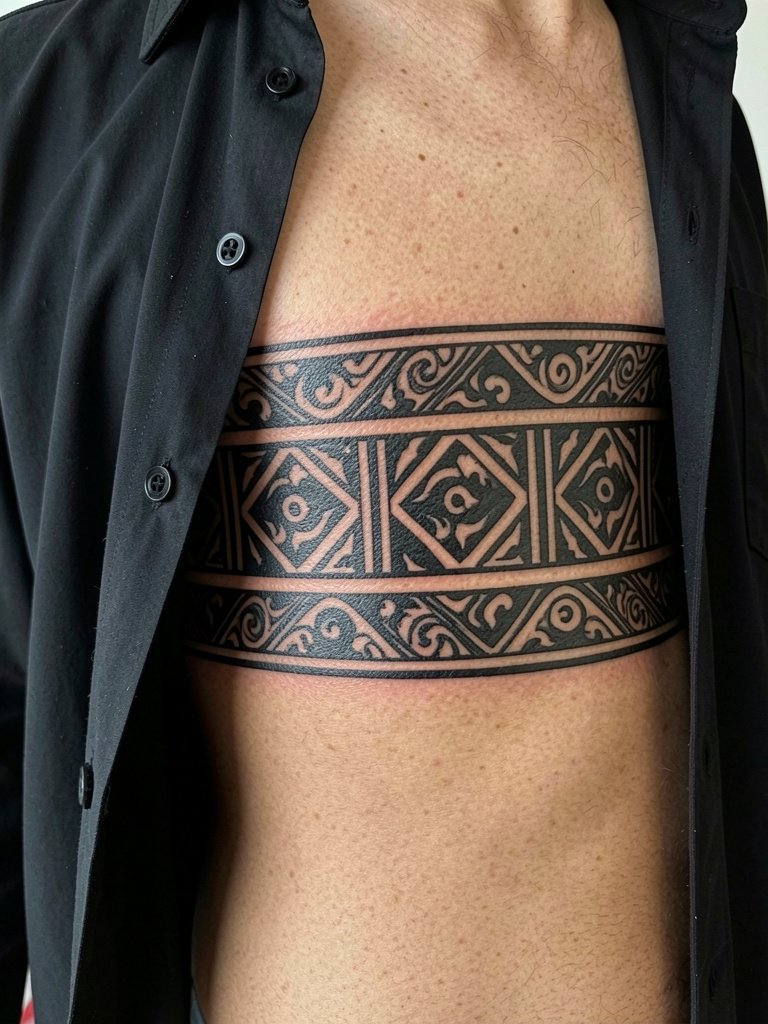
Large torso panels shift with weight and breathing so pattern placement is critical. The biggest mistake is letting a reference sit unchanged on a different body type; ask for a stencil preview while standing and while bending so flow is correct. This placement needs multiple sessions and careful aftercare to avoid ink migration along rib creases. For the session, wear a button-down so you can remove or fold it away easily and keep the area clean.
8. Maori Pakuhiri Thigh Panel
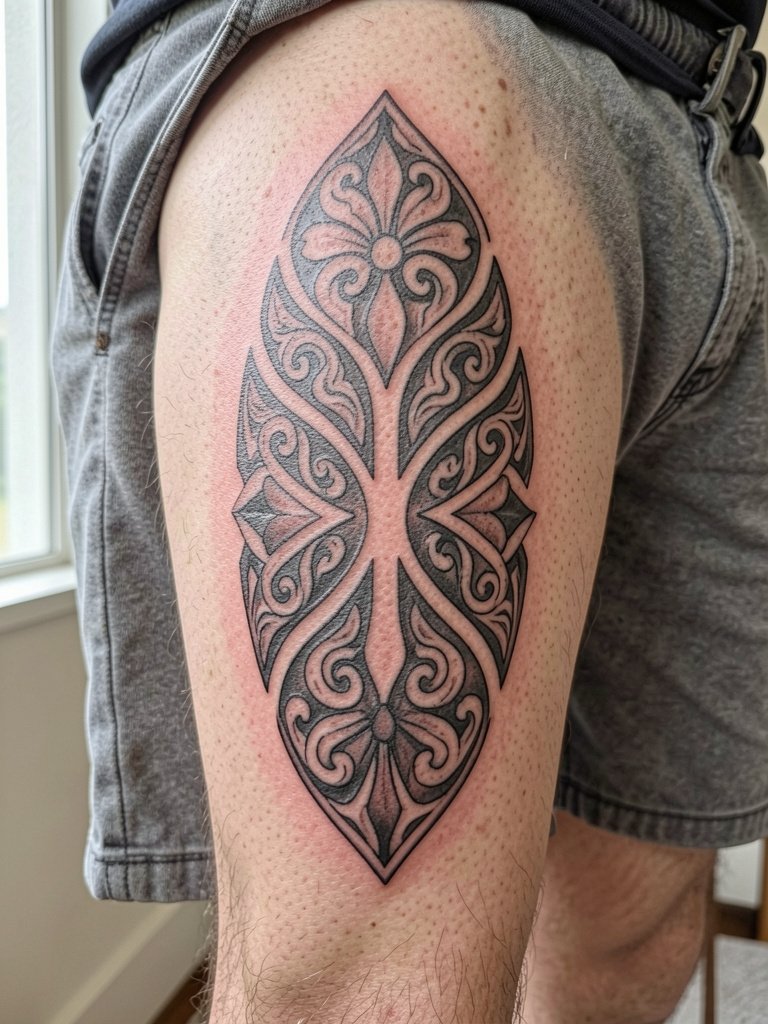
Thigh panels handle scale and movement elegantly, but they need symmetry checks while standing and seated. A common error is centering the design without checking how it reads while walking. Ask for a mirrored sketch and request the artist test how the pattern sits with the leg flexed. For show-off looks pair with mid-thigh shorts in olive or sand and a mid thigh shorts men olive so the design shows naturally.
9. Celtic Spiral Shoulder Accent
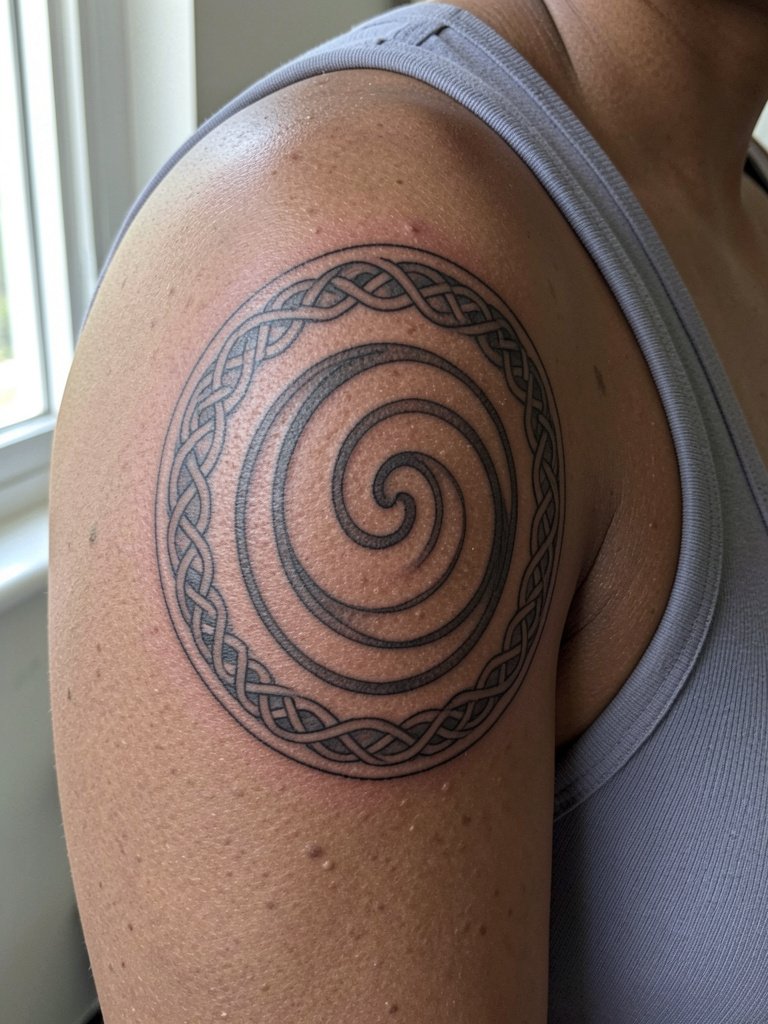
Spiral motifs need clean spacing to avoid merging across curved deltoid surfaces. Ask the artist to mark the spiral center on your shoulder while you move your arm so it stays balanced. Small, tight spirals usually age poorly when placed on rounded muscle. For session wear choose a crew or V-neck tee so the shoulder is reachable and the neckline frames the piece.
10. Modern Tribal Back Band
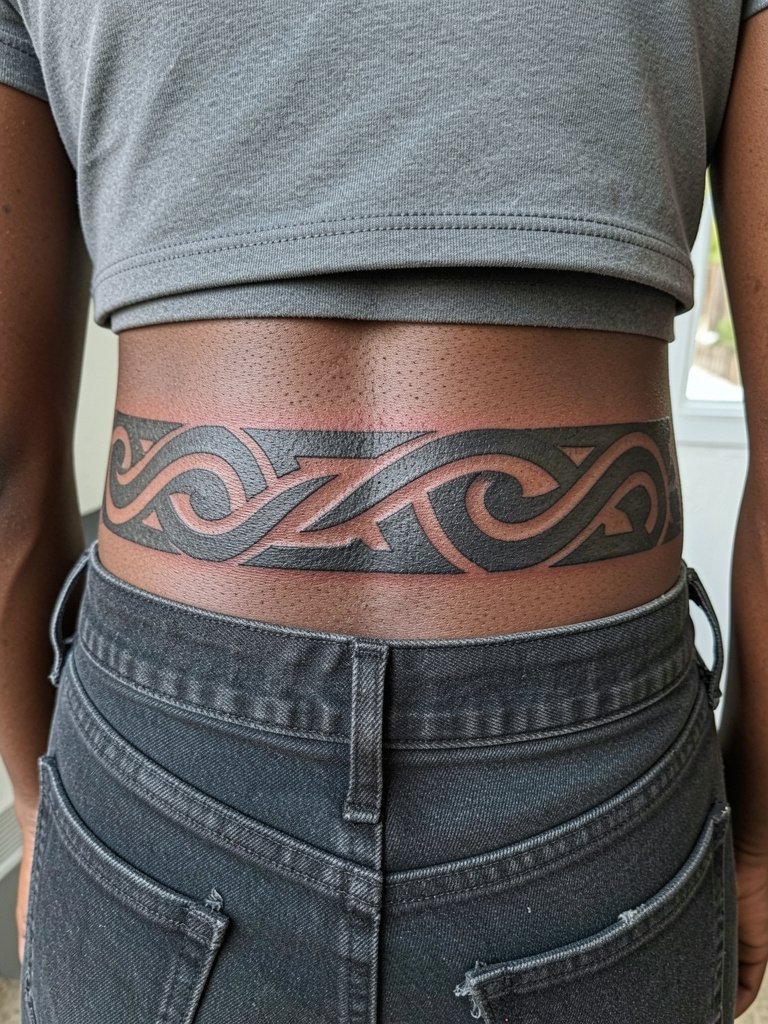
Lower back bands are easy to conceal and bold to reveal, but they sit near the waistband so friction matters. Specify a bit of extra height above the waistband when stenciling so daily clothing does not rub fresh edges. The design ages well if you avoid tiny internal details that the waistband will abrade. Pair with low-rise dark jeans and a cropped top for evenings out and wear loose drawstring pants to your session.
11. Polynesian Hand (Moko) Markings
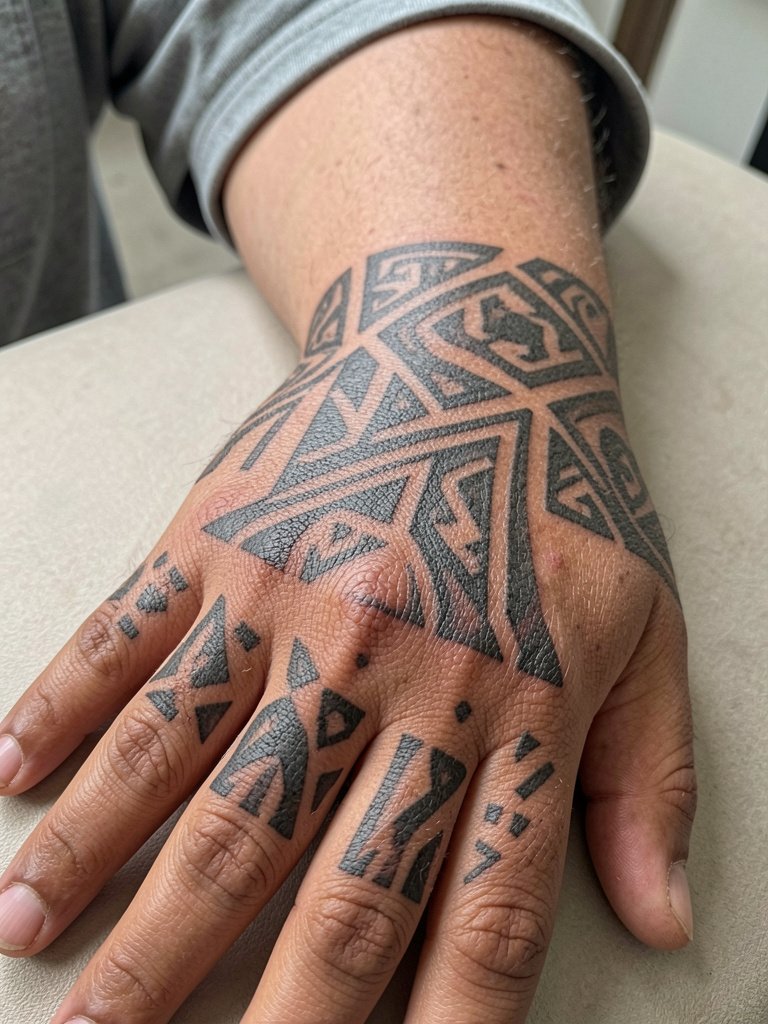
Hands heal differently because of constant washing and movement. The risk is faster fading and patchy wear at finger joints. One common mistake is cramming too many lines across small hand panels. Ask the artist for bolder single motifs spaced apart and plan a touch-up at six to twelve months. Keep rings off the tattoo hand during the session and avoid bracelets for the first week.
12. Samoan Full Leg Coverage
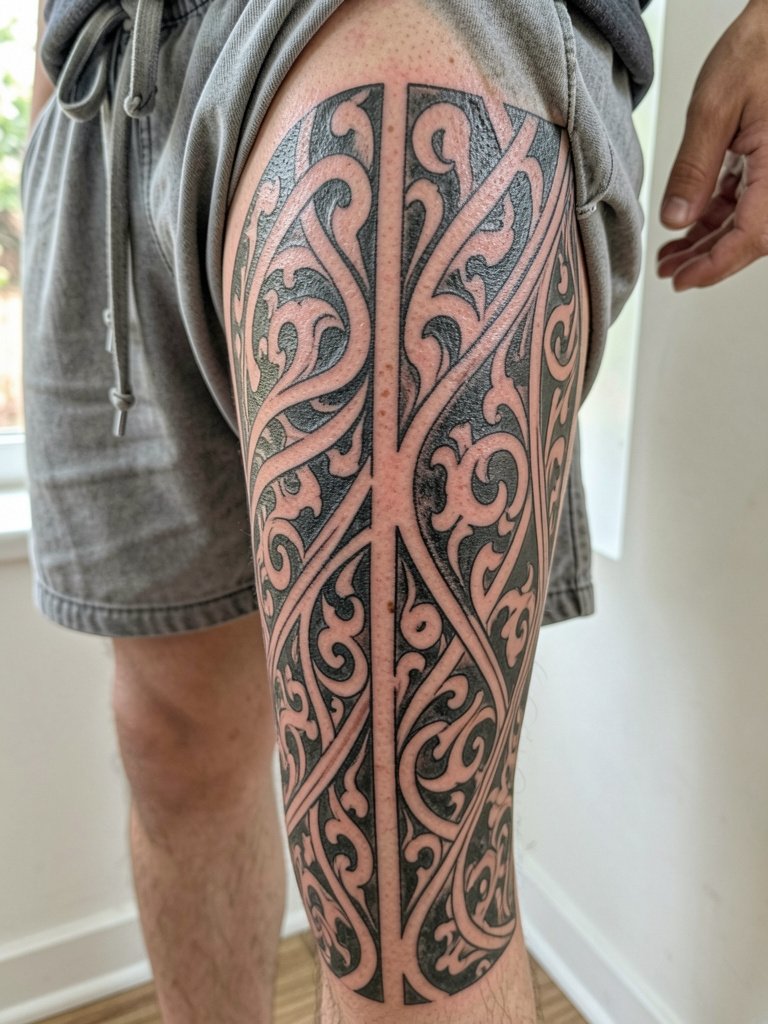
A full leg project is a multi-session commitment and looks best when patterns flow with muscle lines. Weight fluctuations change torso panels more than sleeve work, but leg pieces can still distort with major mass shifts. Discuss session pacing and how the artist will layer saturation over four to six visits. For the session wear loose drawstring shorts so the artist can roll the leg up without pressure on fresh skin.
13. Celtic Forearm Lock
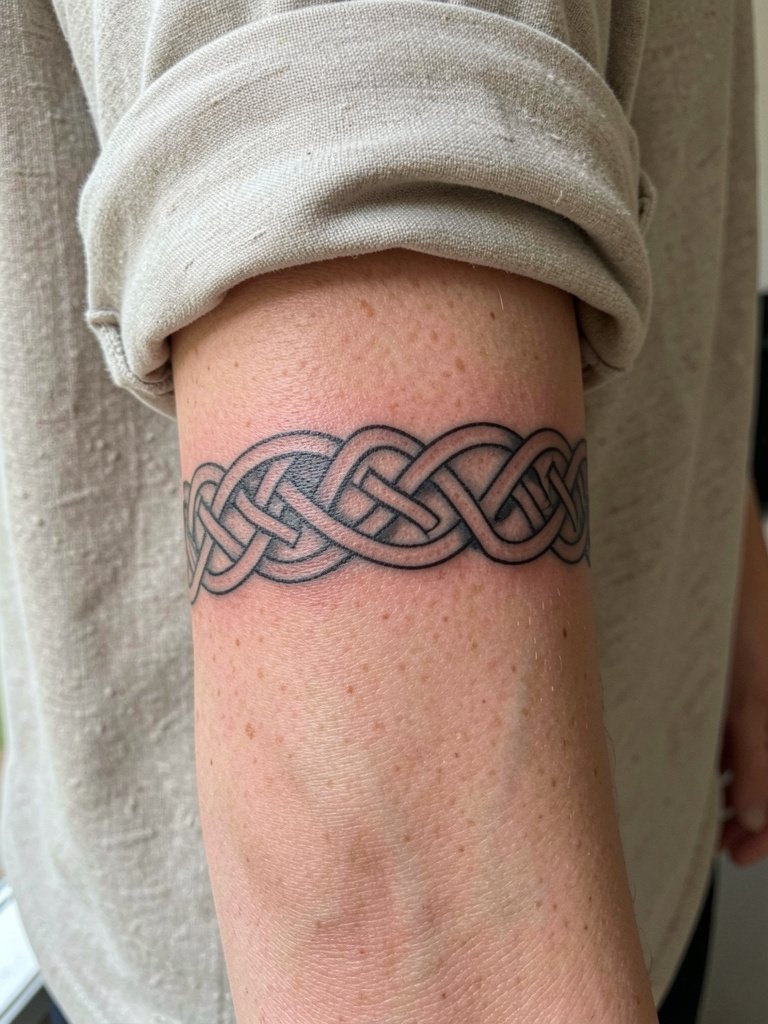
This locked knot band is ideal for someone who wants repeatable symmetry and modest scale. The inner forearm is forgiving for medium line weights, but avoid single-needle loops in a tight band. Request an exact wraparound stencil so the knot joins cleanly under your arm. To show it off, roll sleeves and try dainty bracelets on the opposite wrist, and wear a dainty silver stacked bracelet set when you want a subtle accessory.
14. Modern Tribal Nape Accent
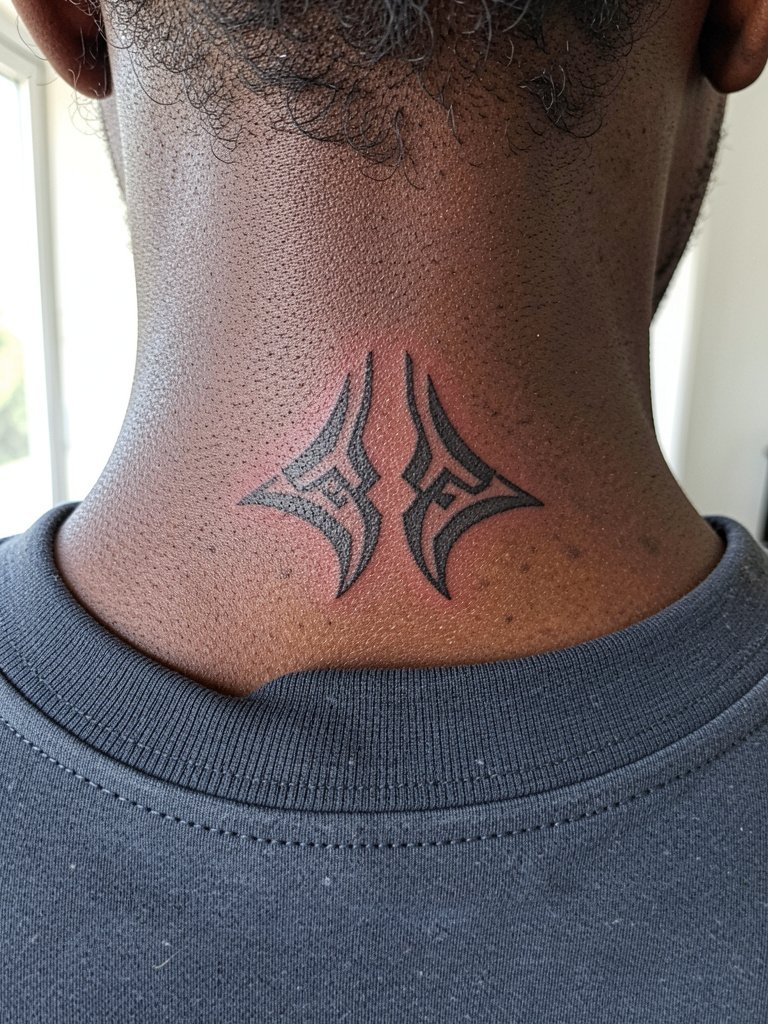
The nape is small but visible with short hair or certain collars, and it heals with low blowout risk. Tiny, overly detailed motifs on the nape will soften, so choose clean silhouettes. If you care about visibility, wear crew or V-neck tees that reveal the nape naturally. Note that neck work can be more sensitive for some people and requires an experienced hand.
15. Polynesian Sternum Center Panel
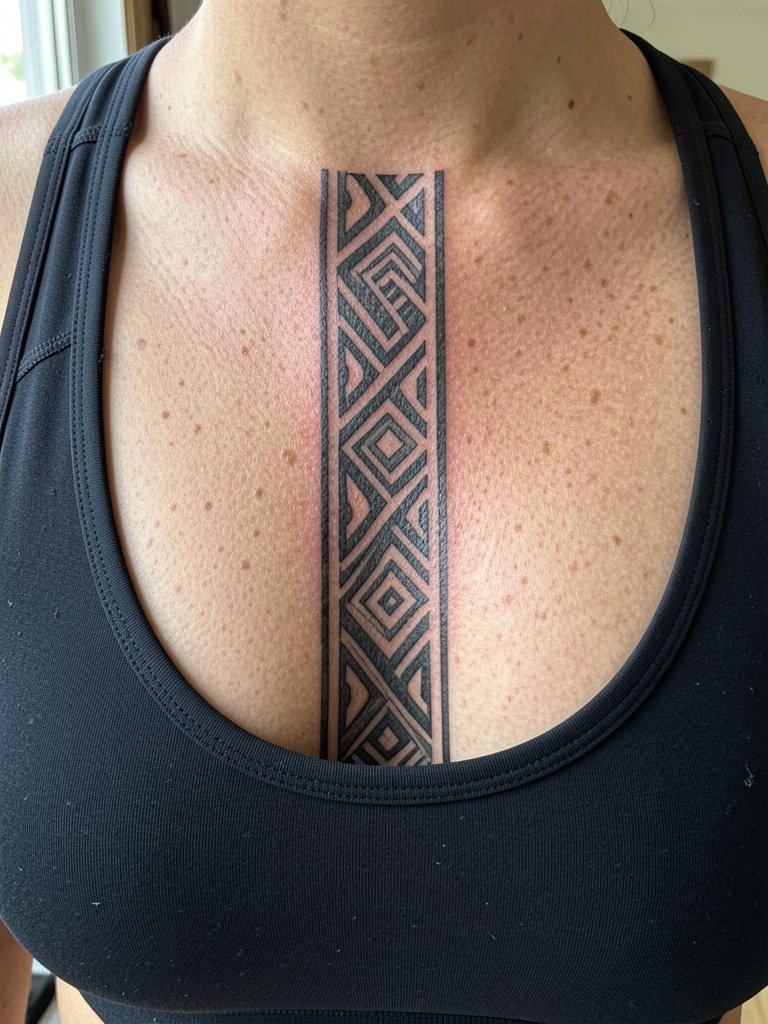
Sternum panels are high-visibility and require stencil checks while sitting and standing so vertical symmetry holds. Pain varies here; expect a sharp sensitivity for many. A common mistake is placing too much micro-detail near the center where skin movement blurs lines. For the session wear a fitted sports bra or button-down you can easily remove to give the artist clear access.
16. Ankle Tribal Band
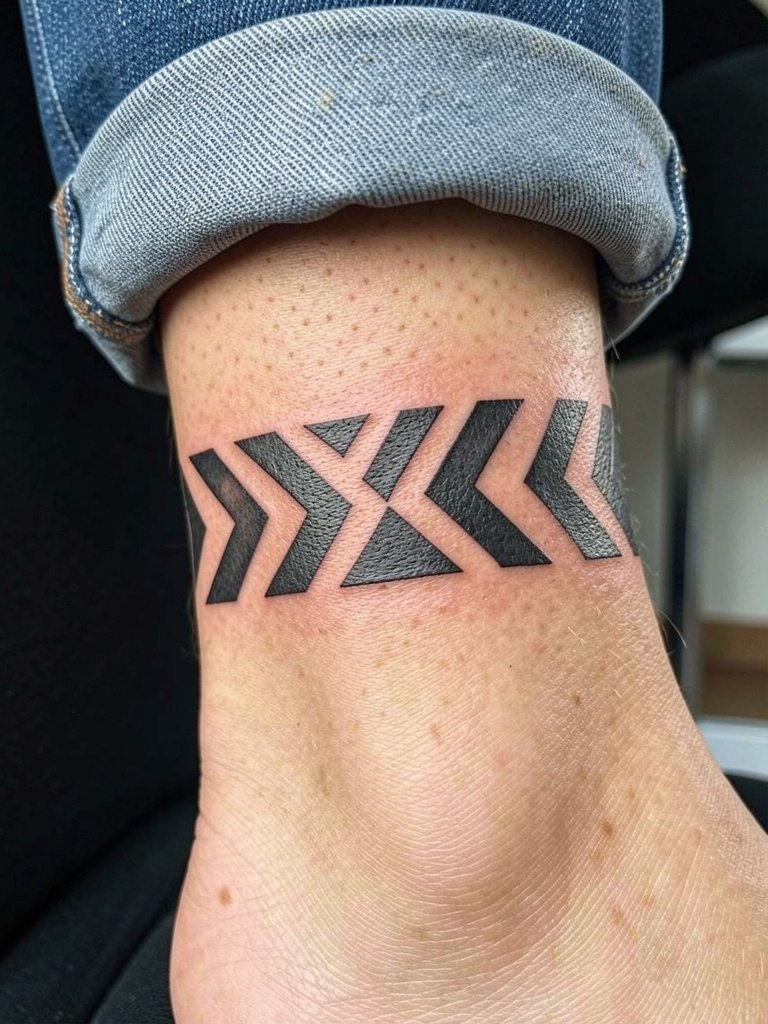
Ankle bands survive well when bold and simple because the area sees abrasion from shoes. The biggest error is using tiny interlocking detail that the sock or shoe will rub away. Ask the artist to keep the band slightly thicker than a visual reference to prevent early fading. For session wear jeans with cuffs rolled up so the artist can access the ankle without exposing other areas.
17. Ribcage Tribal Panel
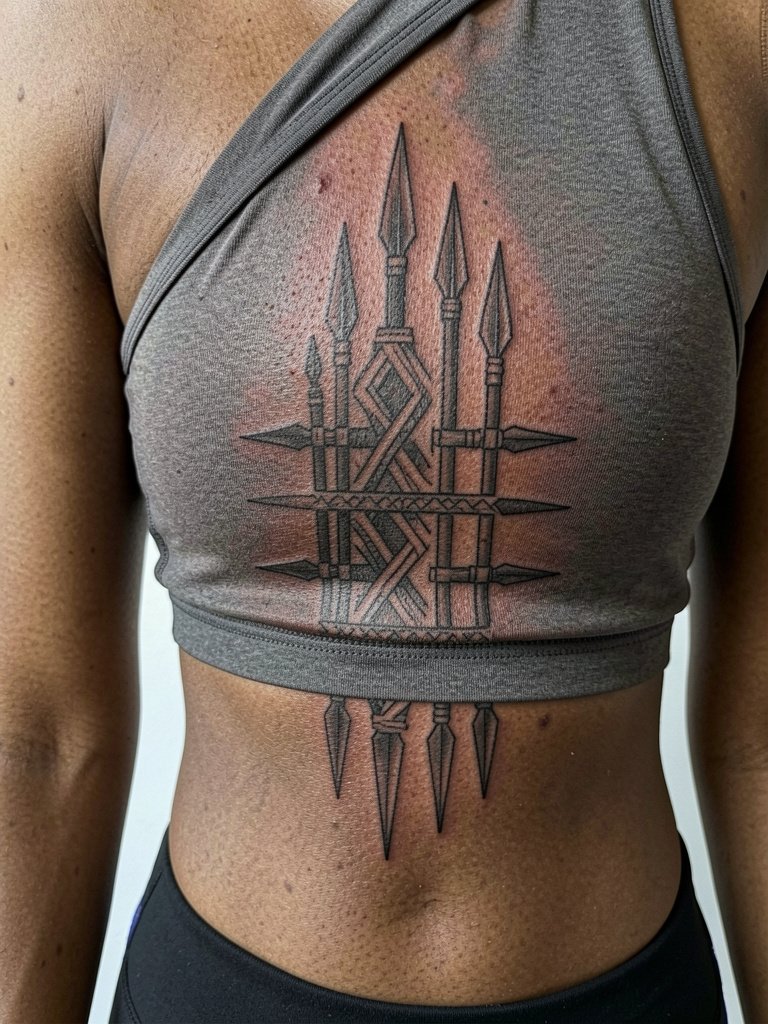
Ribcage tattoos are high on the pain chart and require realistic session pacing. One common aging issue is skin stretch at the waistline blurring tight patterns. Ask for slightly wider spacing and a two-pass plan so the skin is not overworked in a single sitting. The rib area needs firm aftercare and sun protection to preserve contrast.
18. Tiny Finger Tribal Marks
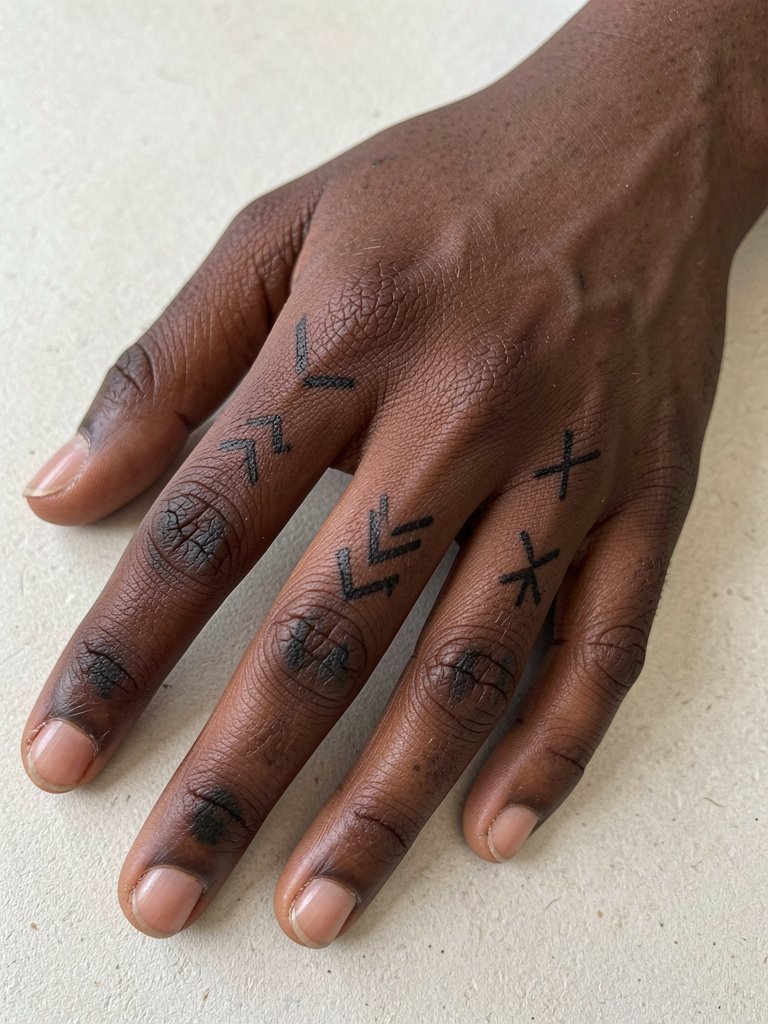
Fingers fade fastest due to constant washing and contact. The mistake is expecting finger marks to last like forearm work. If you want longevity, choose thicker glyphs and accept touch-ups every few years. Keep the area free of rings during the session and expect a quicker touch-up timeline compared with larger pieces.
19. Calf Tribal Panel
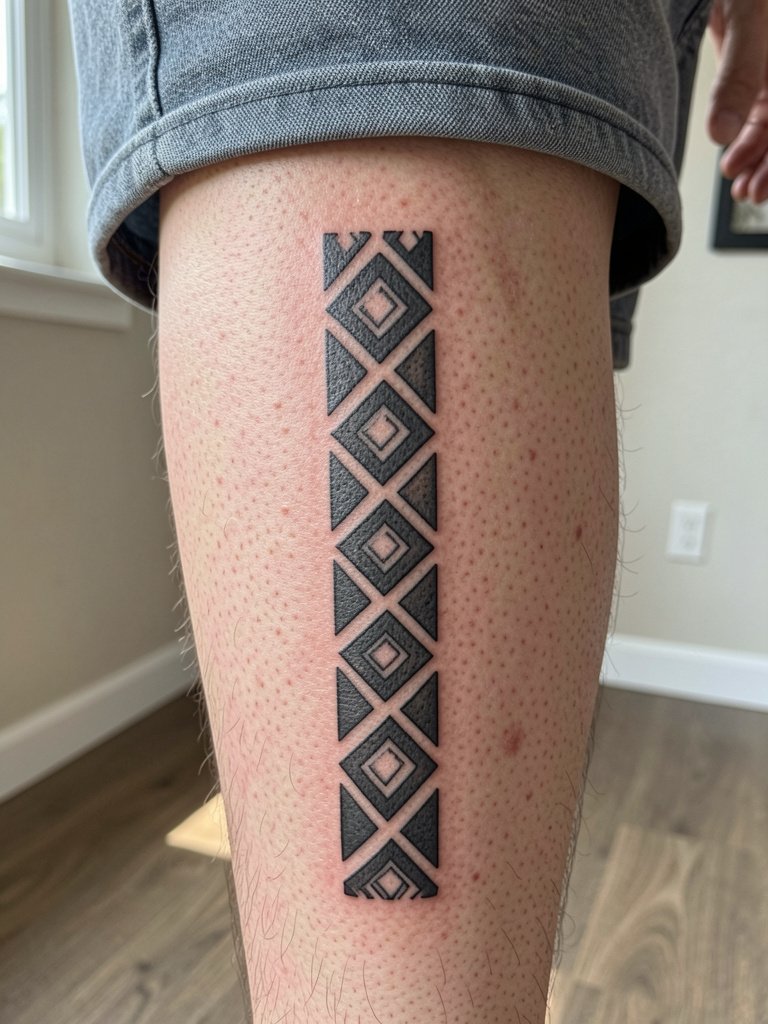
Calf panels take well to saturation and show from behind when you wear shorts. They tolerate medium detail because the skin stretches less than the torso. A common misstep is aligning the main motif where the calf muscle peaks without checking how it sits while walking. Ask the artist to preview the design while you flex and relax the leg. For session wear mid-calf shorts so the artist can work comfortably.
20. Transitional Armband Set
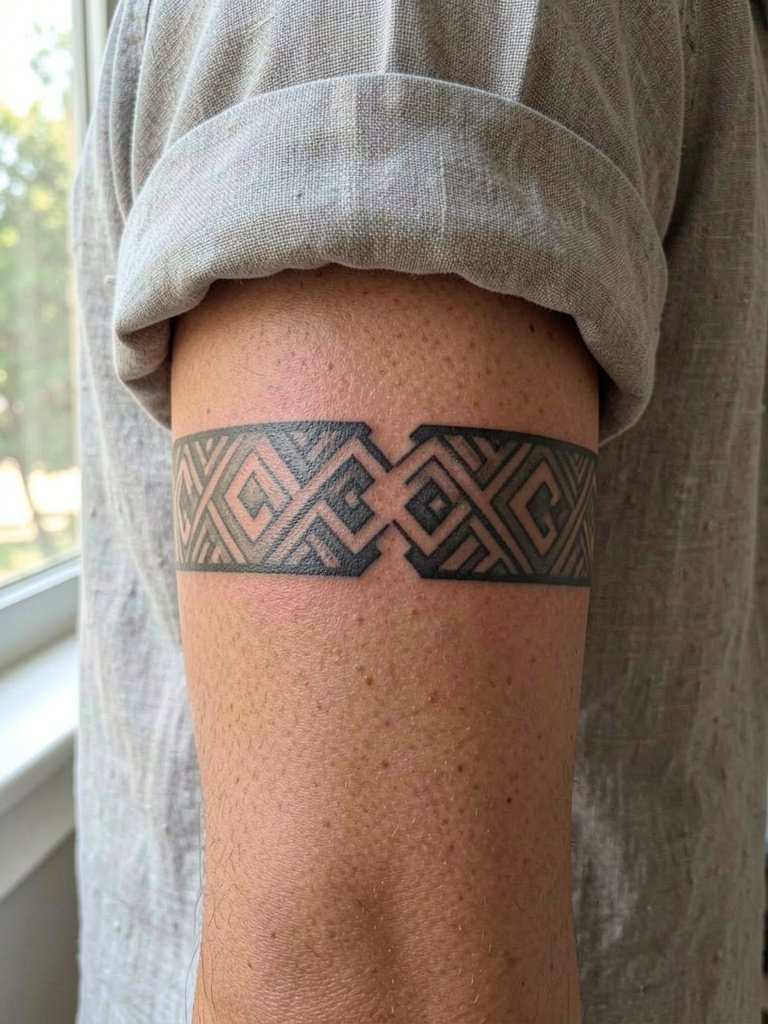
Stacked armbands let you build a sleeve over time while keeping each band readable. Mistakes happen when spacing between bands is too narrow, which causes edge bleed. Request precise gap measurements during the consultation so future bands can align. For outfit pairing try rolled-up linen shirts and a rolled cuff linen shirt men for a relaxed look.
21. Minimalist Tribal Wrist Accent
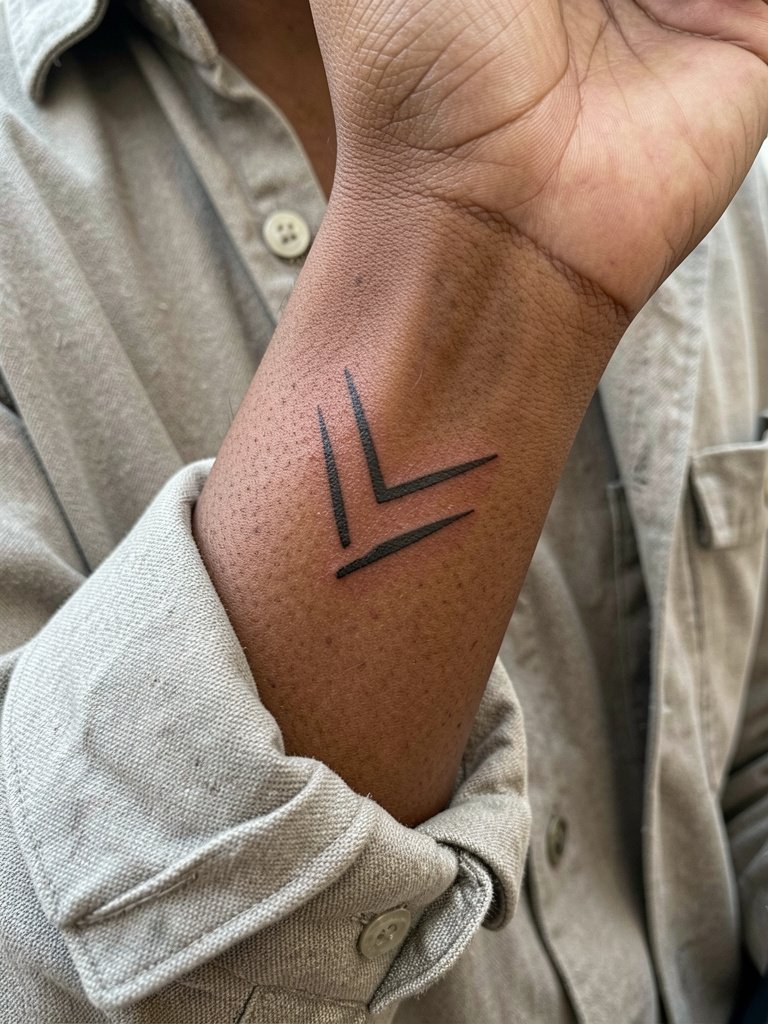
Wrist accents are visible and delicate, but the inner wrist eats single-needle detail over time. The safe approach is to nudge line weight up and keep spacing. Ask for a mockup at two sizes so you can see what holds from six inches and from arm's length. For the session wear a loose button-down that allows the cuff to sit above the wrist without constriction.
22. Tribal Scapula Panel
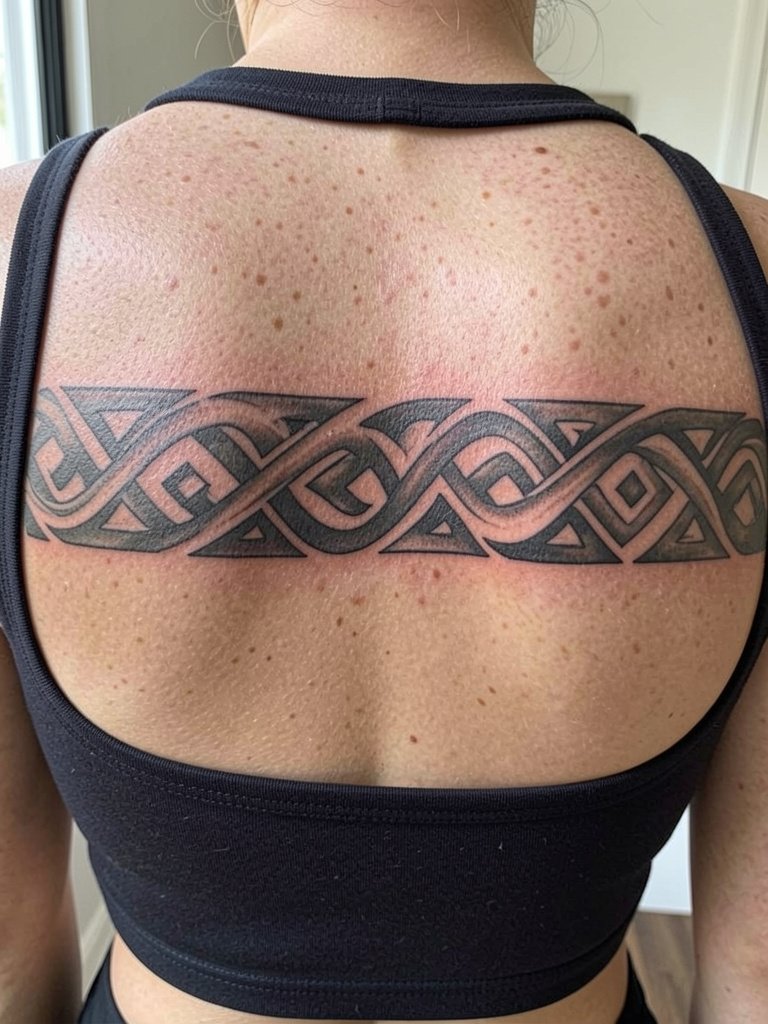
Scapula pieces look dramatic in open-back shirts and survive well with bold shapes. The main issue is stencil placement while standing versus leaning forward. Ask the artist to check the stencil on you while you shift positions so the piece sits centered on the blade. For evenings out an open-back top will show the panel without exposing other areas.
23. Geometric Tribal Sternum Chevron
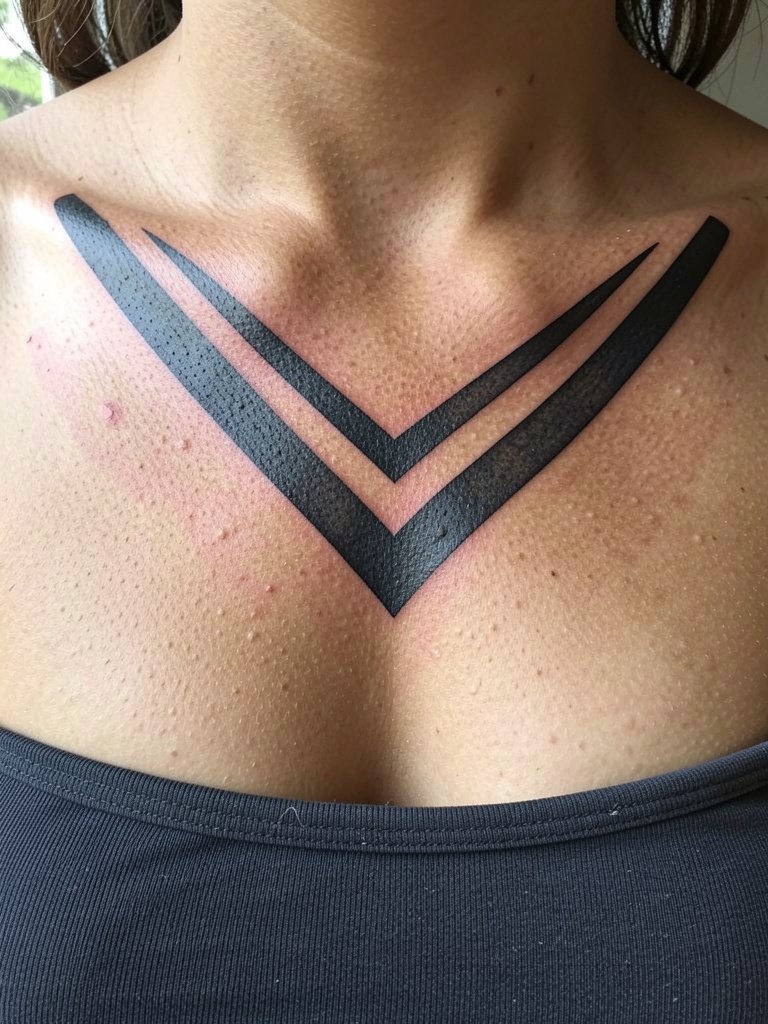
Sternum chevrons read strong but need symmetry and solid fills to avoid patchy healing. The mistake is using thin chevrons that fade into faint shadows. Request a centered stencil and ask the artist to mark reference points relative to the clavicle. Session wear a fitted bandeau or button-down that allows the area to be reached easily.
24. Tribal Collarbone Accent
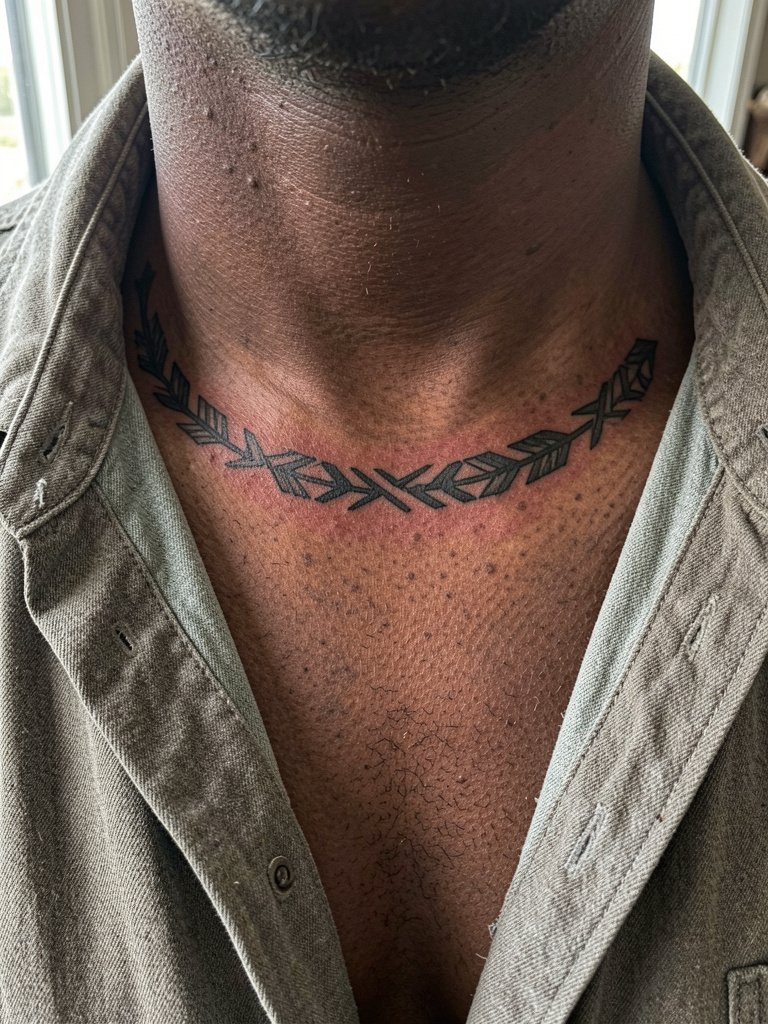
Collarbone accents need clean negative-space edges to read against clothing. The collarbone area moves with posture so ask for slightly bolder shapes that keep contrast. Avoid needle-fine details that the chest will smooth out in two to three years. For show-off pairing try an open-necked button-down and bring a open neck button down shirt men for post-session photos.
25. Tribal Hand Connector to Wrist
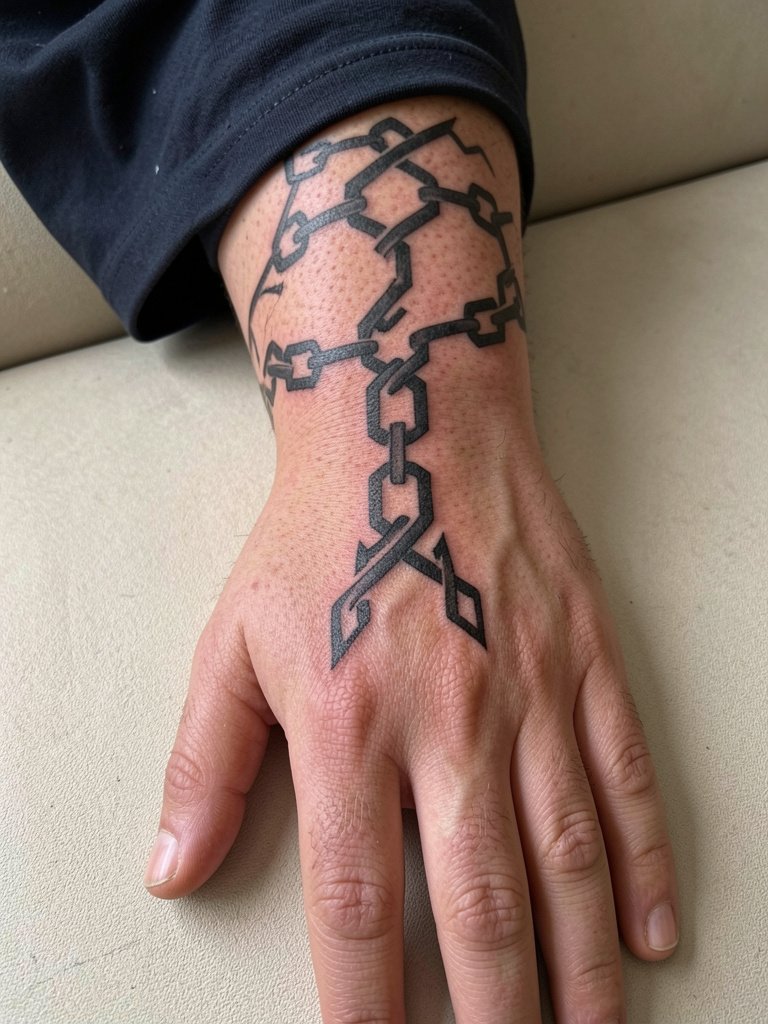
Bridging a hand piece to the wrist improves visual continuity and balances the high-wear hand area with a more stable wrist anchor. The risk is overworking the hand during the session. Ask the artist to prioritize the wrist anchor for saturation and treat the hand section as a companion that can be touched up later. Keep jewelry off the tattooed hand during the appointment and for the first week.
26. Thigh-to-Groove Flow Panel
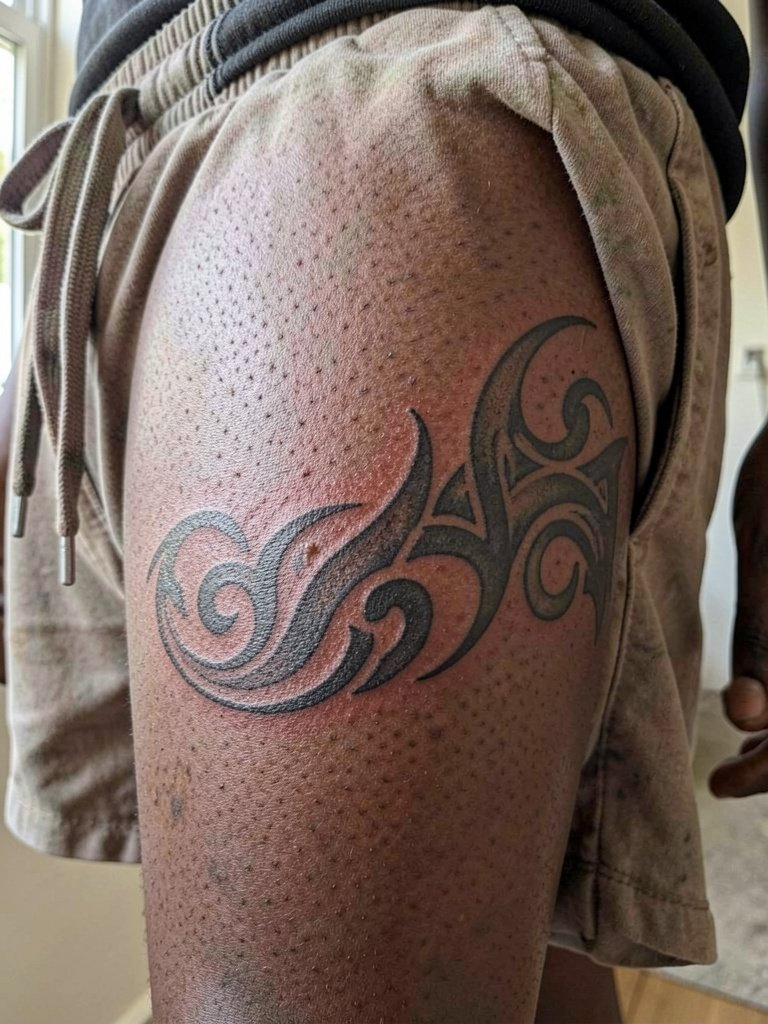
Thigh panels that approach the groin must avoid intimate placement and respect anatomy. The designer should mark the safe margin from the underwear line and check comfort when you sit. A frequent error is mapping a panel too close to seams, which leads to rubbing and infection risk. For the session wear loose drawstring shorts so the artist can access the area without fabric pressure.
27. Vertical Spine Tribal Column
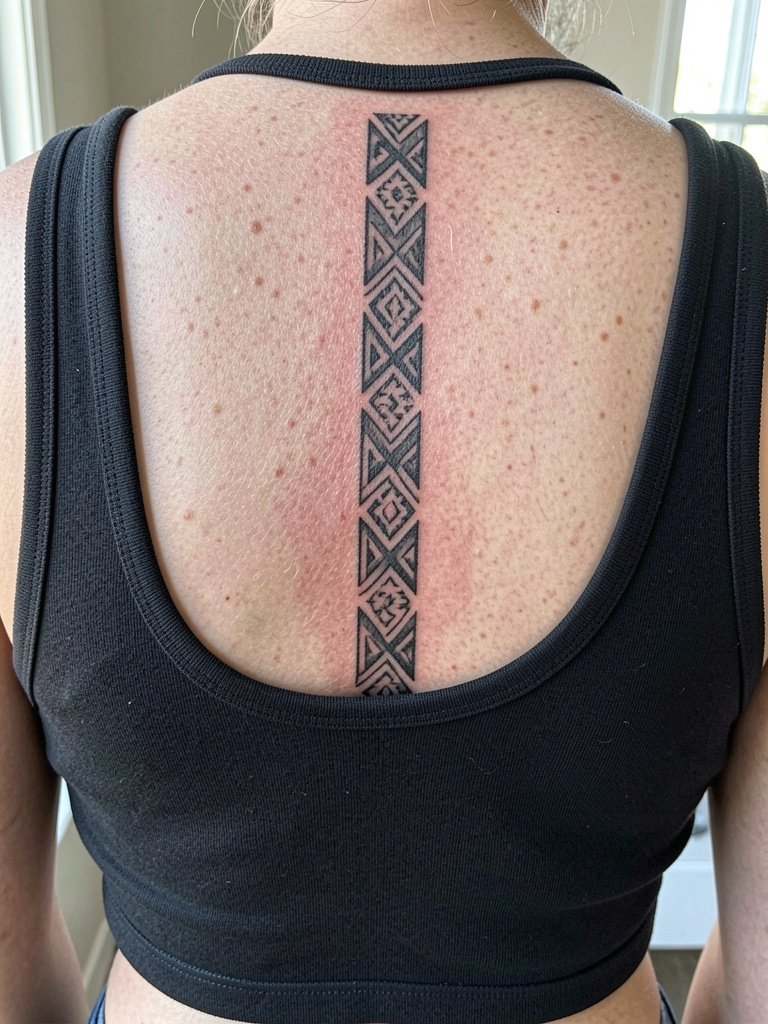
A spine column reads architectural and suits symmetrical bodies. Make sure the artist aligns the stencil with your vertebrae while standing straight and while leaning forward. Small internal details along the center can blur with posture changes, so prioritize bold motifs with clear negative-space gaps. For sessions wear a fitted cropped tank so the artist can reach the midline without shifting fabric.
Session Day Picks
Those first six pieces above include a lot of hand, forearm, and chest work, so the right supplies smooth the session and first week.
- Australian Tattoo Balm Byron Bay. A thinner balm option that users report less pore clogging during dense blackwork healing, helpful after shoulder and thigh saturation.
- Japanese Tattoo Healing Gel. Lightweight gel that some artists outside the US recommend for blackwork because it dries without heavy occlusion.
- Matte Tattoo Finish Spray. Reduces shine in photos and can improve contrast for healed black panels like armbands and shoulder caps.
- High SPF 50+ Sunscreen. Essential once the piece is healed to slow line blur and prolong saturation, especially on exposed forearms and shoulders.
- Saniderm Tattoo Bandage. A protective film option for the first 24 to 72 hours that many people use after heavy blackwork to reduce scabbing.
Frequently Asked Questions
Q: How often do tribal tattoos need touch-ups?
A: It depends on placement, sun exposure, and skin type. Lined armbands and hand markings commonly need touch-ups sooner than large saturated panels. Plan a realistic range and expect at least one touch-up within five years for high-contact zones.
Q: What should I tell my artist about line weight and spacing?
A: Be specific. Ask for slightly heavier line weight than your reference for curved or high-movement placements, and request measured negative-space gaps so the artist can show how the design reads at three inches versus five inches. Bring scaled references and ask to see a stencil wrap.
Q: How do tribal tattoos look on darker skin tones after healing?
A: Slightly thicker lines and selective grey shading help contrast on darker skin, and healed photos often read differently than fresh shots. Photographers can overexpose, so for healed visibility consider bold silhouettes and controlled shading rather than lots of micro detail.
Q: Where can I find tribal portfolios and healed examples without naming artists?
A: Search hashtags like #tribaltattoo, #polynesiantattoo, and #blackworktattoo on Instagram and TikTok, then filter by location to find nearby portfolios. Tattoodo and Booksy let you search by keywords such as "Polynesian shoulder cap" or "modern tribal sleeve" and surface healed images. Reddit communities like r/tattoos and r/tattooadvice are useful for peer recommendations and healed shots across skin tones.
Q: Are there clear red flags to avoid when booking for tribal work?
A: Yes. Avoid artists or shops that have no healed tribal photos in their portfolio, refuse to show a stencil on your body, or push single-session saturation for a large panel. Those are signs the artist either lacks experience with heavy blackwork or is prioritizing speed over longevity.