
Bold forearm tigers that still read crisp after a few years usually share one thing. The stencil was sized to breathe. Linework was pitched toward longevity. Saturation and negative space were balanced so stripes do not collapse into a gray field as skin settles. Read these 23 forearm tiger ideas with practical aging notes and outfit tips so you can pick a design that looks as good at year three as it does at year one.
1. Watercolor Tiger on Inner Forearm (palm-up surface, wrist to elbow)
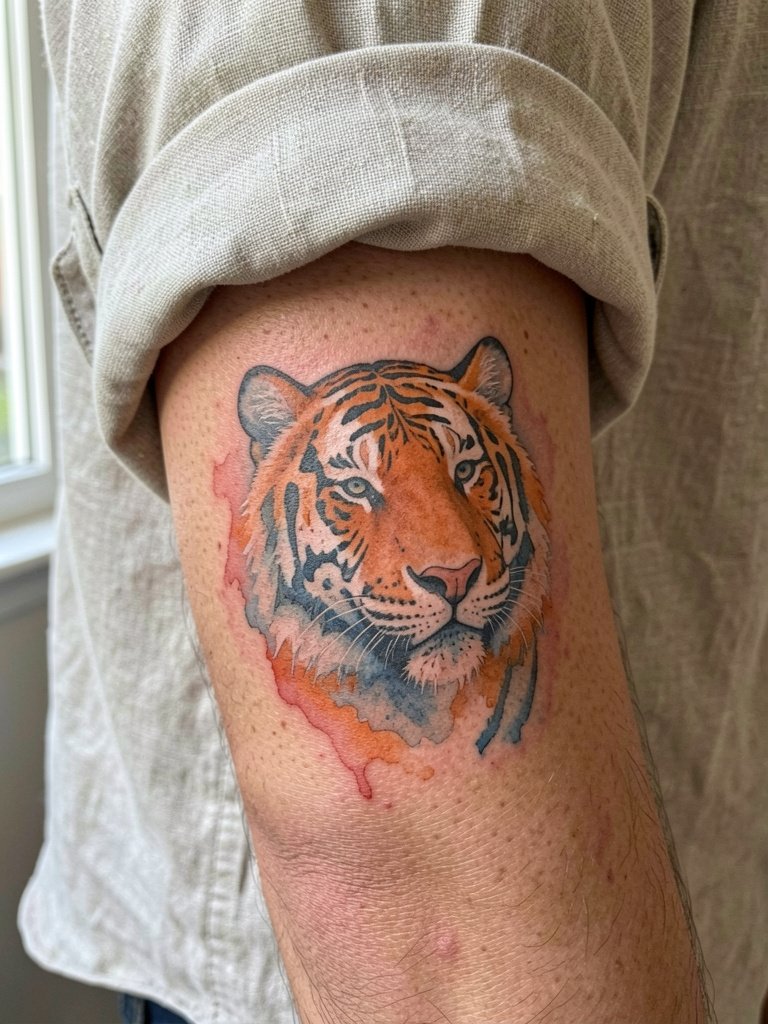
Watercolor tigers read painterly on the inner forearm because the palm-up surface lays flat for viewing. One common mistake is asking for totally outline-free color at a very small scale. One camp argues watercolor without outlines fades and loses definition within one to two years. The other camp says saturated layered fills can hold if the color is layered deep and the piece is large enough. If you want this look, ask for slightly larger scale and a touch of dark contrast tucked into the stripes to keep the image readable as it ages. For showing it off, try a rolled cuff linen shirt in cream or olive. Session wear: loose button-down so the artist can access the full inner forearm.
2. Realistic Tiger Face on Outer Forearm
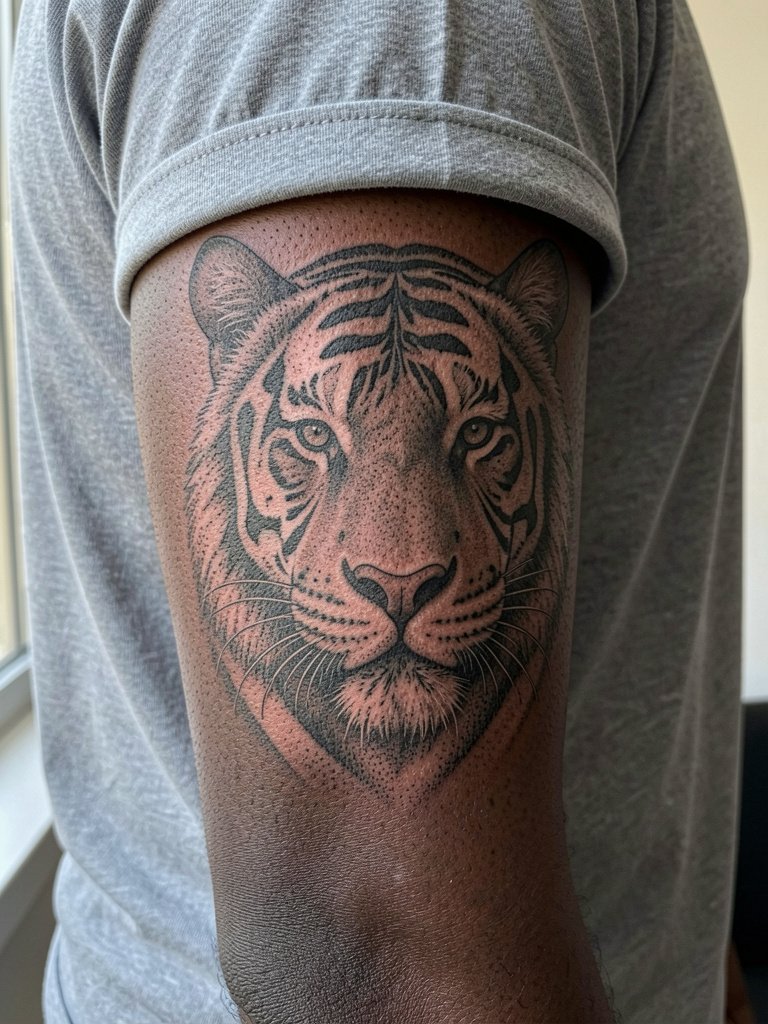
This one is about scale and saturation. A highly detailed, realistic tiger face needs room for stipple shading and saturation so the stripes separate clearly after a year. A mistake is compressing that face into a small patch on the forearm where blowout and ink migration will blur the contrast. Plan for a longer session and expect two sittings for very dense pieces. Bring layered reference photos that show the exact eye shape and tooth detail you want. For session comfort, wear a solid color short sleeve tee so the artist can roll the sleeve up without pressure. Touch-up timeline: many people schedule a light touch-up at 12–24 months for realism pieces.
3. Japanese Irezumi Tiger with Waves on Outer Forearm
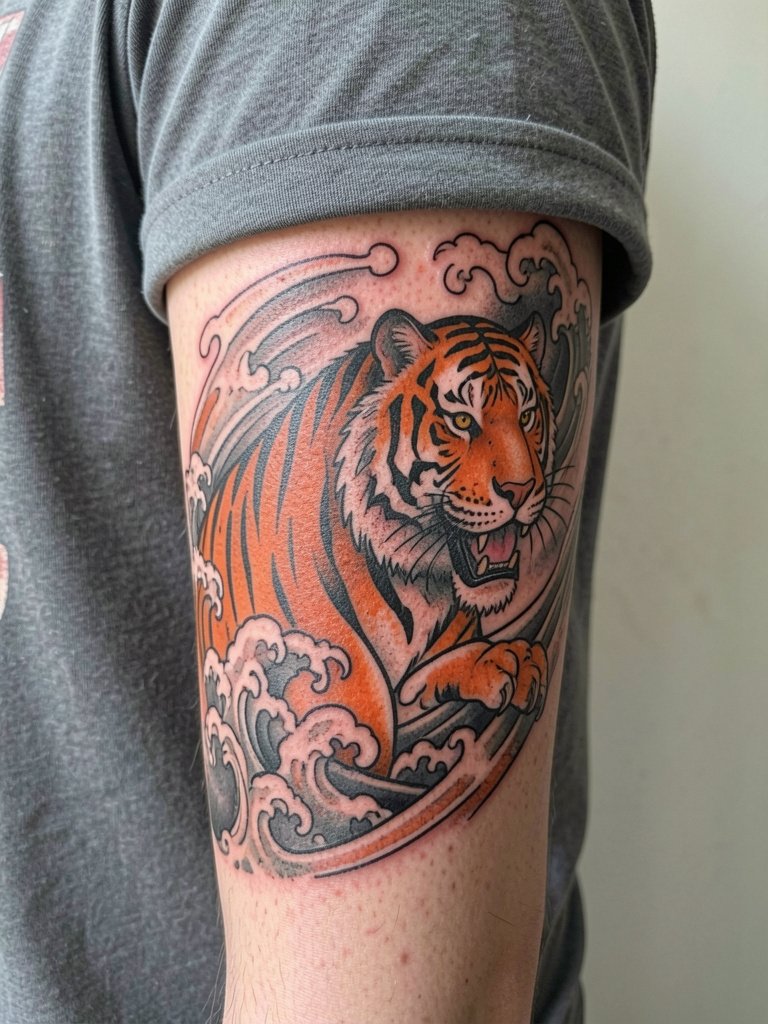
Traditional Japanese tigers rely on strong linework and color saturation, which is why they age well on forearms. The common aging mistake is shrinking the motif so the pattern loses its negative space. If you prefer this route, specify the line thickness and how much open water or wind you want around the tiger so the composition breathes. For evenings out, pair this piece with a solid black short sleeve tee to let the saturated orange pop. Session feel is steady rubbing during color packing, and most clients say the outer forearm is moderate in pain.
4. Minimalist Tiger Silhouette on Inner Forearm
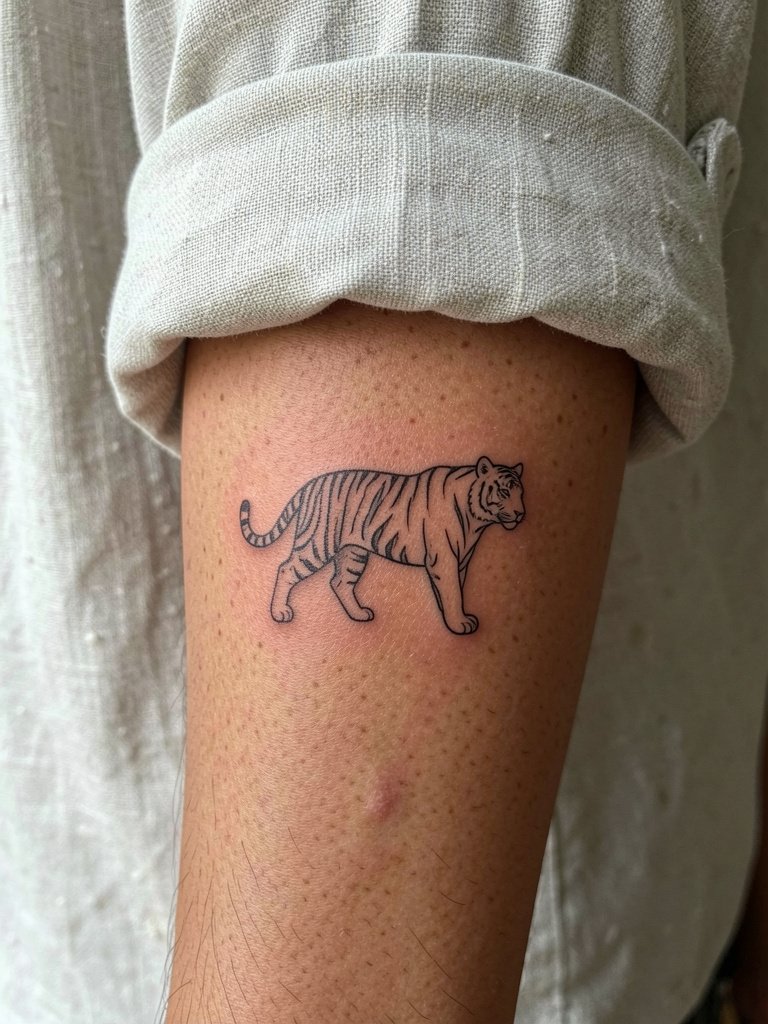
Minimal silhouettes are elegant but prone to one big issue on the forearm: too-thin linework. Fine line on the inner forearm splits opinion. One camp says fine-line tigers blur within two years due to skin stretch and daily motion. The other camp says meticulous depth and slightly wider spacing lets fine line hold. To balance that, choose a modestly heavier single-needle weight or ask for a hair stronger line than the reference. A styling trick is to wear dainty gold bracelets on the opposite wrist so the minimalist silhouette stays the focal point. For appointment day, a loose button-down makes access clean.
5. Tiger + Floral Half-and-Half on Inner Forearm
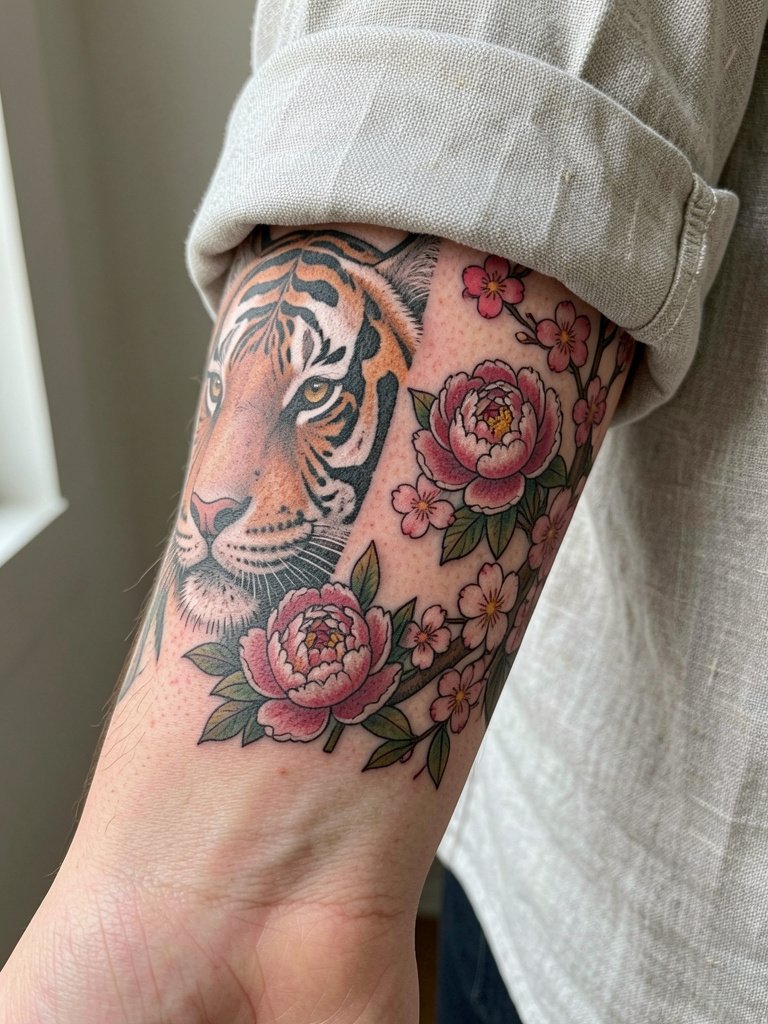
Combining floral with a tiger visually softens the composition while giving the stripes a place to fade into without losing form. A common mistake is adding tiny floral details that become muddy after a year. During consultation, bring photos that show exact flower types and color palettes so the artist can balance saturation with the tiger's black-and-grey. For outfit pairing, this placement looks great with dainty stacked bracelets on the opposite wrist. Touch-up note: colored petals often need a light refresh at 12–18 months.
6. Roaring Tiger Face on Outer Forearm
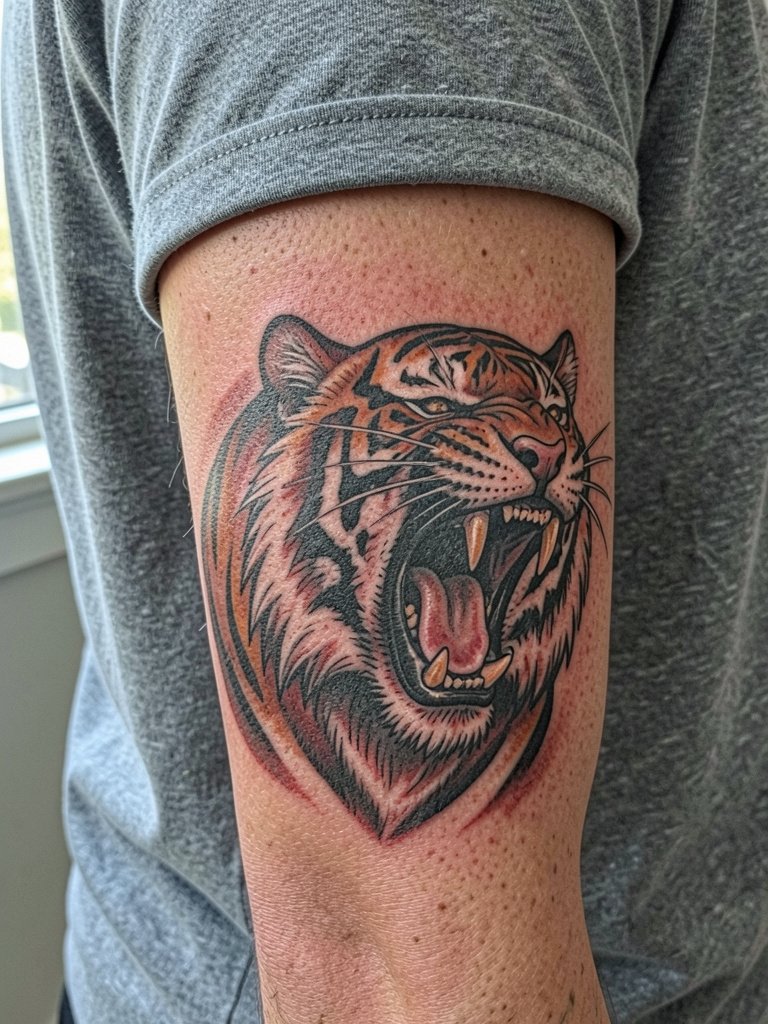
The roaring face is showy and reads well from a distance with bold linework. Mistakes happen when people request maximum detail in a cramped vertical layout. If you want this, specify how much tooth and tongue detail matters and whether you prefer full color or black-and-grey. For session wear and show-off styling, a solid tee works best so the face sits center-stage. The outer forearm is forgiving for saturation. Expect moderate pain and plan a 1–2 hour block for a medium-size roaring face.
Session Day Picks
The first six ideas span inner forearm and outer forearm approaches, so a few practical items make the session and first week easier.
-
Boscop Tattoo Balm. A thinner aftercare balm reported by some users to avoid pore clogging while still keeping color vibrant during the first week.
-
TattooGoo Tattoo Balm. Thin, non-greasy formula that people mention when they want less sticky residue on forearm pieces.
-
Mad Rabbit Tattoo Balm Thin Version. The thin variant is designed for forearm areas where sweat and movement can trap heavier ointments.
-
Saniderm Protective Film. A short-term seal for the first 24–72 hours that keeps friction and dirt off fresh forearm work while you sleep or commute.
-
Hustle Butter Deluxe. A popular skin-friendly option for ongoing moisturization after the initial healing window.
7. Geometric Tiger with Mandala Overlays on Outer Forearm
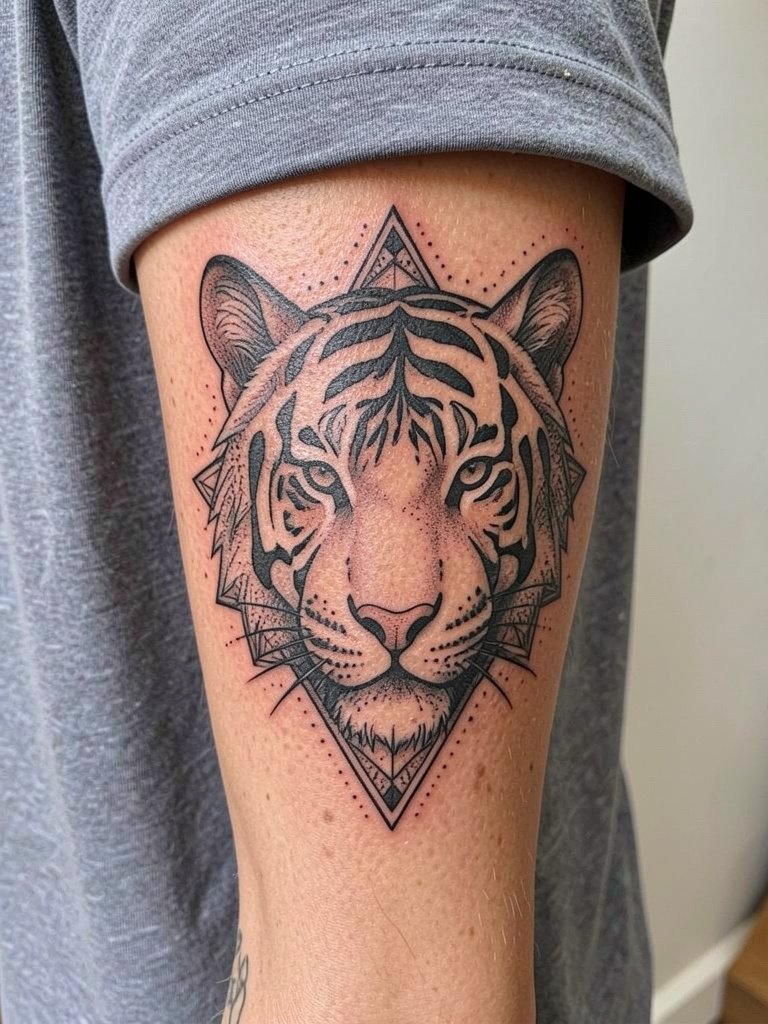
Geometric treatments need breathing room so lines do not visually merge. The typical mistake is cramming complex geometry into a narrow band. Bring scaled stencils so you can see how triangles interact with muscle curves. This style benefits from dot work and negative space, which also reduces blowout risk compared with continuous solid fills. For an on-purpose modern look, pair with a minimalist watch on the opposite wrist rather than heavy bracelets.
8. Tiger Cub Illustration on Inner Forearm
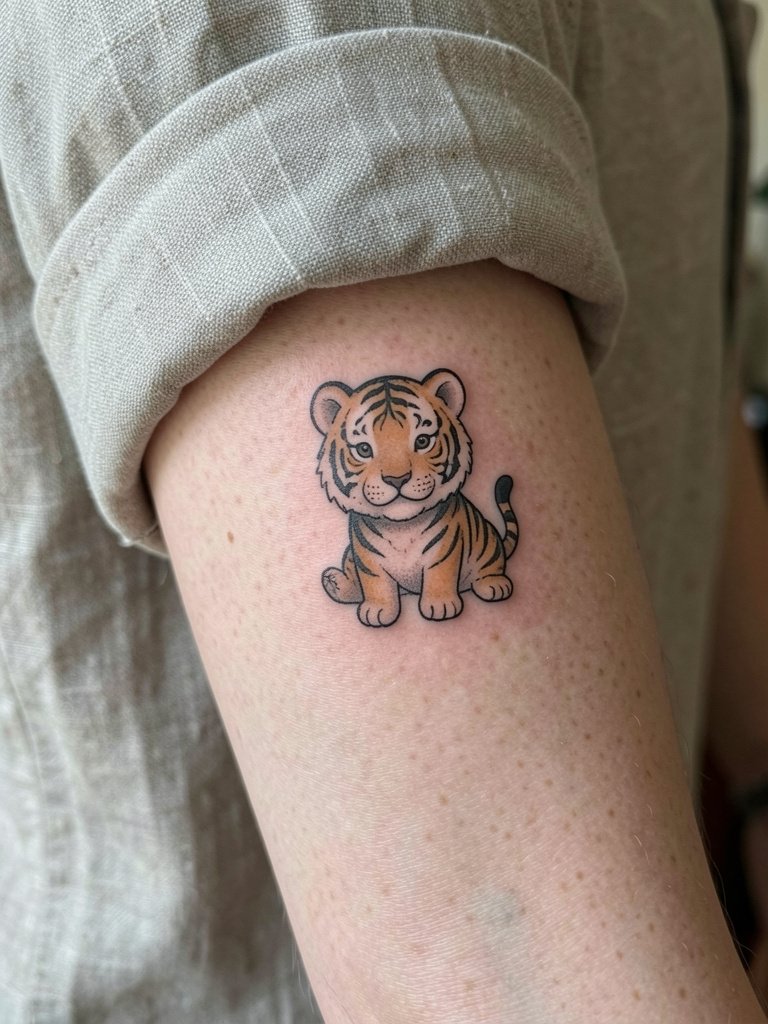
A cub is a good first tattoo because it reads softer and carries less visual aggression. The usual error is making the features too tiny. Make sure the eyes and nose have enough saturation to photograph well on darker skin tones. This idea ages nicely at small to medium scale, and touch-ups are infrequent if the linework is built slightly heavier. Session wear: short sleeves. To show it off, a thin chain bracelet on the opposite wrist keeps focus on the cub without crowding the forearm.
9. Tiger + Dragon Intertwined Half-Sleeve on Outer Forearm
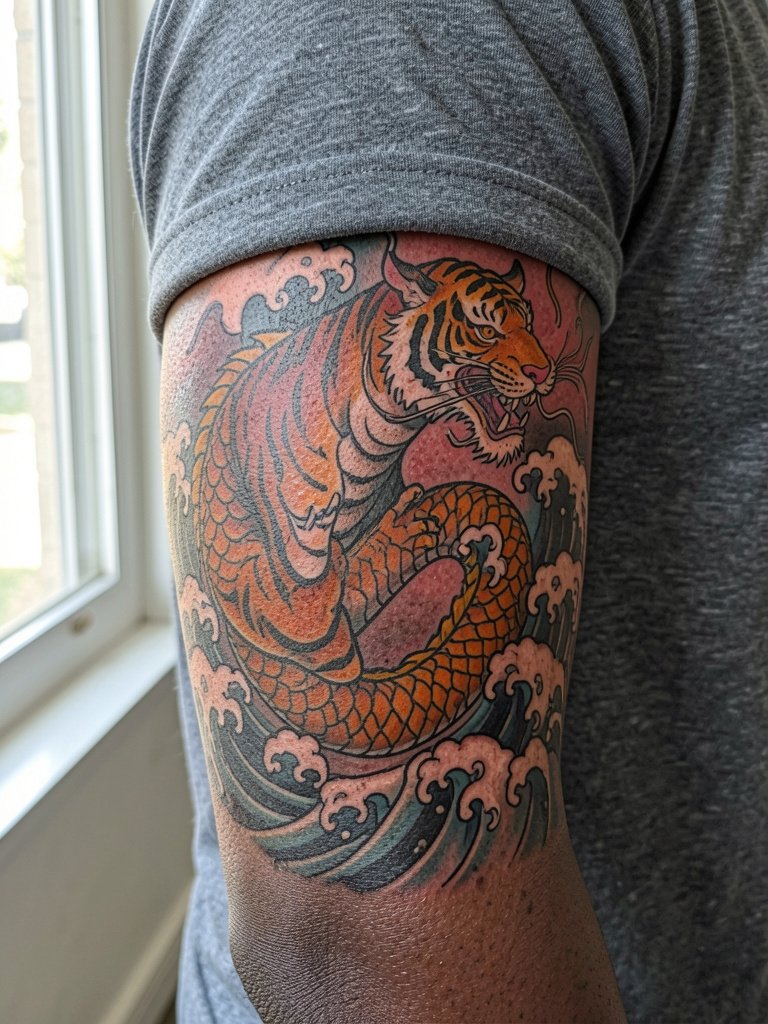
This large-scale combo demands a clear narrative so neither creature competes visually. The mistake is overwhelming the forearm with too many small motifs. Ask for a compositional sketch that shows the overlap and focal points before booking. These require longer sessions and may need two sittings. For wardrobe, a sleeveless tank or short sleeve keeps the view clean when you want to show the half-sleeve.
10. Tiger Paw Print Trail Wrapping Inner Forearm
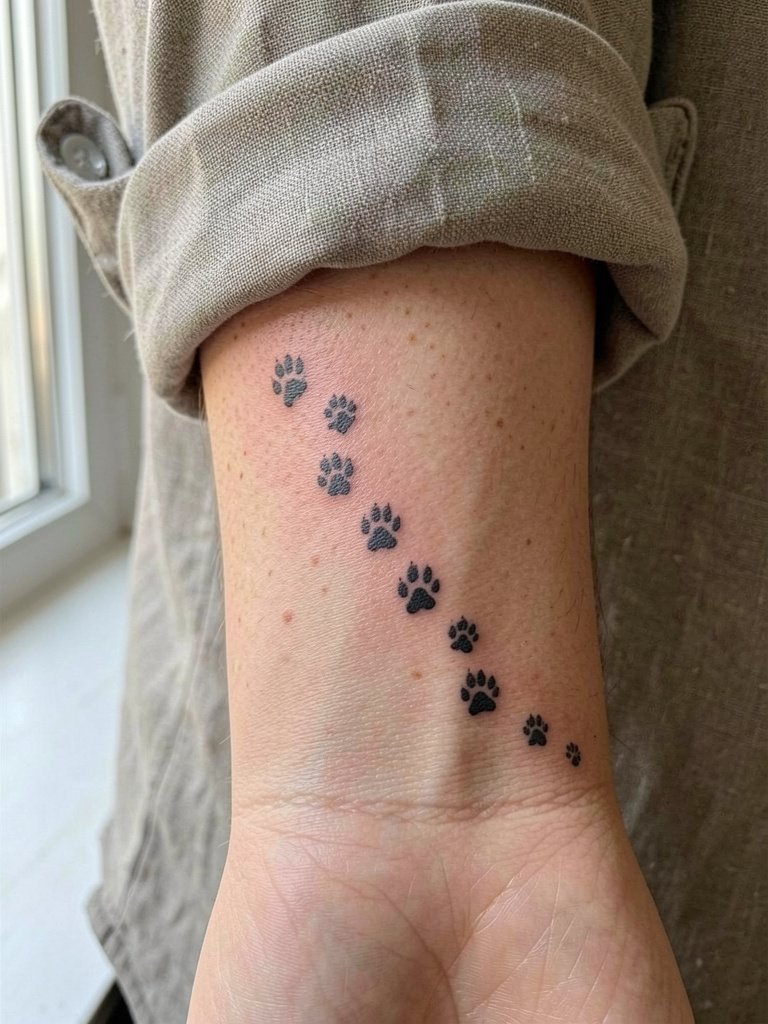
Small repeating motifs wrap well on the inner forearm because the surface curves gently. Watch out for spacing errors where prints bunch at the wrist. Ask for a mockup that wraps around the arm so you can approve spacing. Sleep and friction from sleeves can fade tiny prints faster, so plan on a subtle touch-up after 12 months. For session day, wear a button-down you can roll up, or choose a rolled cuff linen shirt for clean access.
11. Tiger Eye Close-Up on Inner Forearm
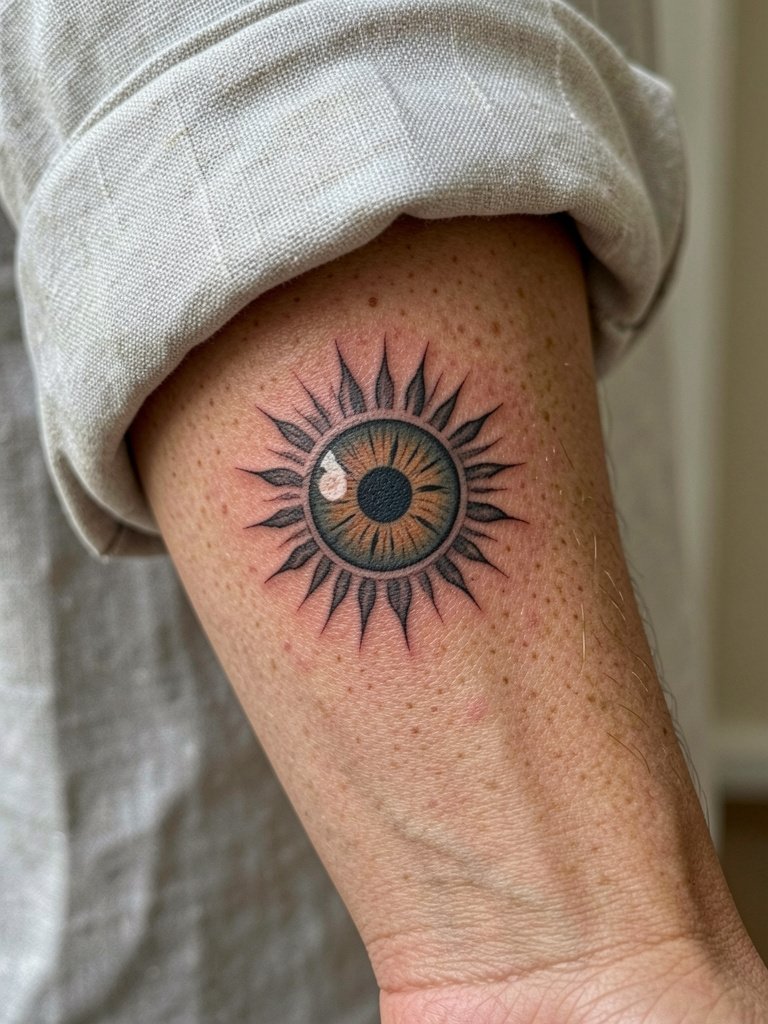
A single eye can be hypnotic but depends on meticulous contrast. The common error is under-defining the iris so the eye looks flat once healed. During consultation, specify how bright you want the highlight and whether you want color in the iris. For visibility on darker skin tones, adding a saturated color accent can help the pupil pop. Expect a focused one-session piece and a possible light touch-up at year one.
12. Tiger Breaking Through Skin 3D Illusion on Outer Forearm
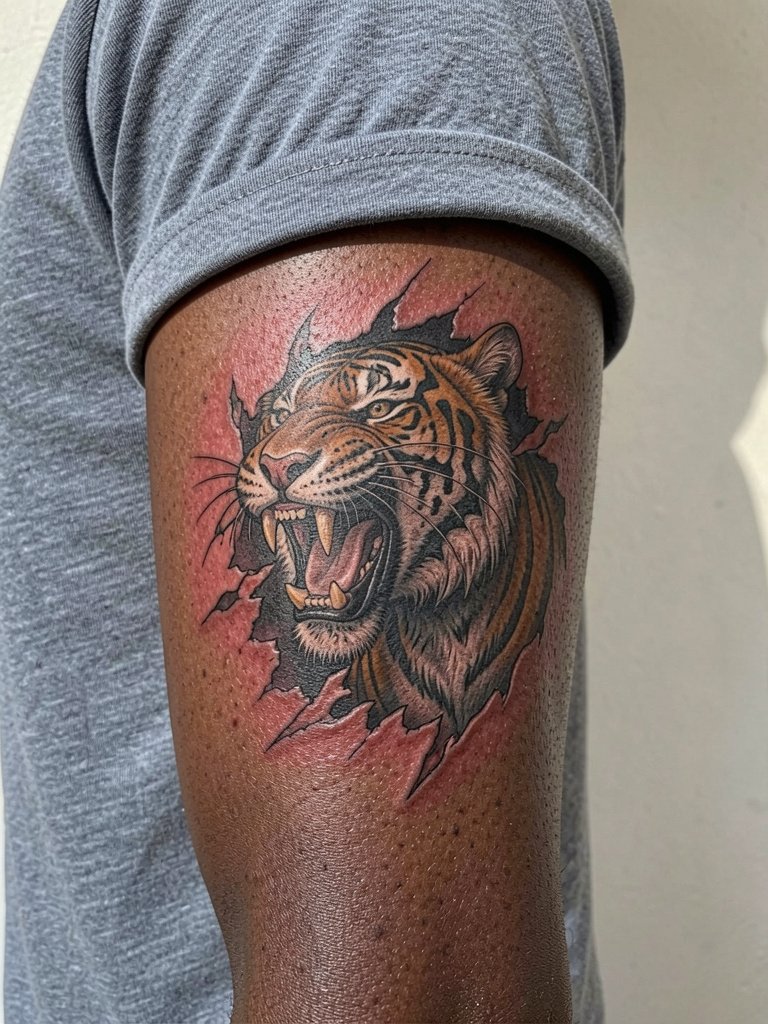
3D effects need bold shadowing to sell the lift of skin and the tiger beneath. A mistake is soft shading that fails to separate layers, making the piece read flat after healing. Ask to see healed 2–3 year examples of similar techniques so you know how the edges hold. For session wear, a short sleeve allows repeated adjustments with no sleeve pressure on fresh shading. These pieces often need more time for the artist to build contrast.
13. Surreal Tiger-Human Face Blend on Inner Forearm
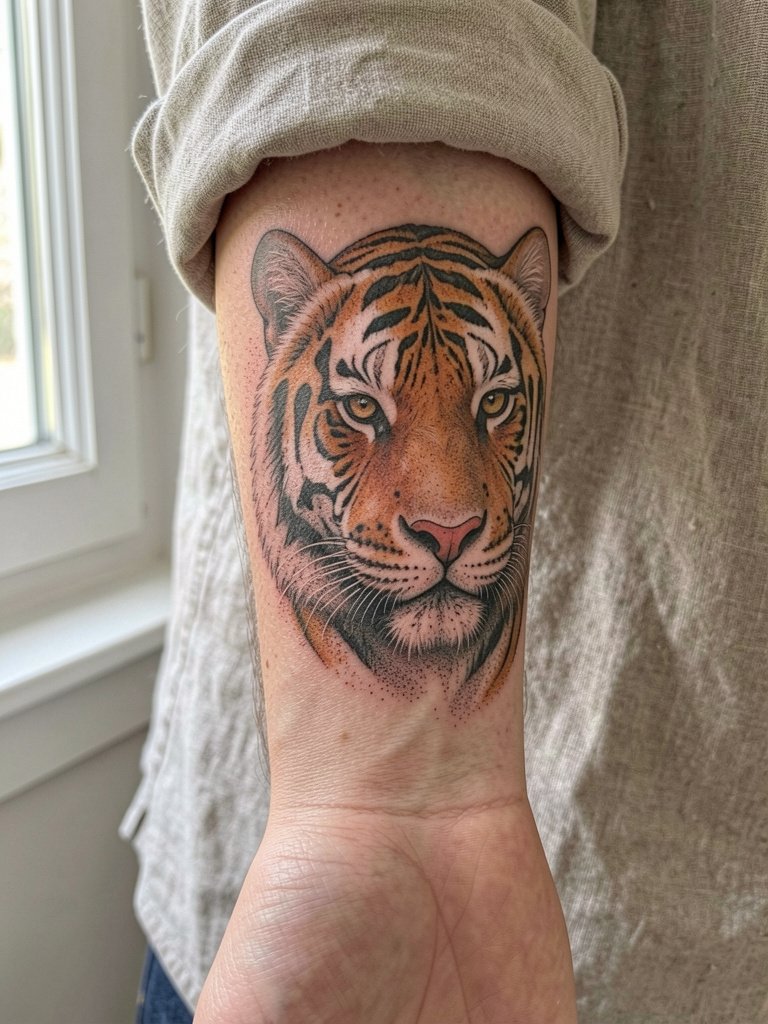
Surreal fusions rely on clear transitions between human skin and tiger fur. The usual misstep is letting one half overpower the other. During the consult bring images that show exactly which human features remain and which tiger traits you prefer emphasized. For show-off styling, a neutral short sleeve or a dainty gold stacked bracelet set on the opposite wrist frames the blended portrait without competing.
14. Tribal Blackwork Tiger on Outer Forearm
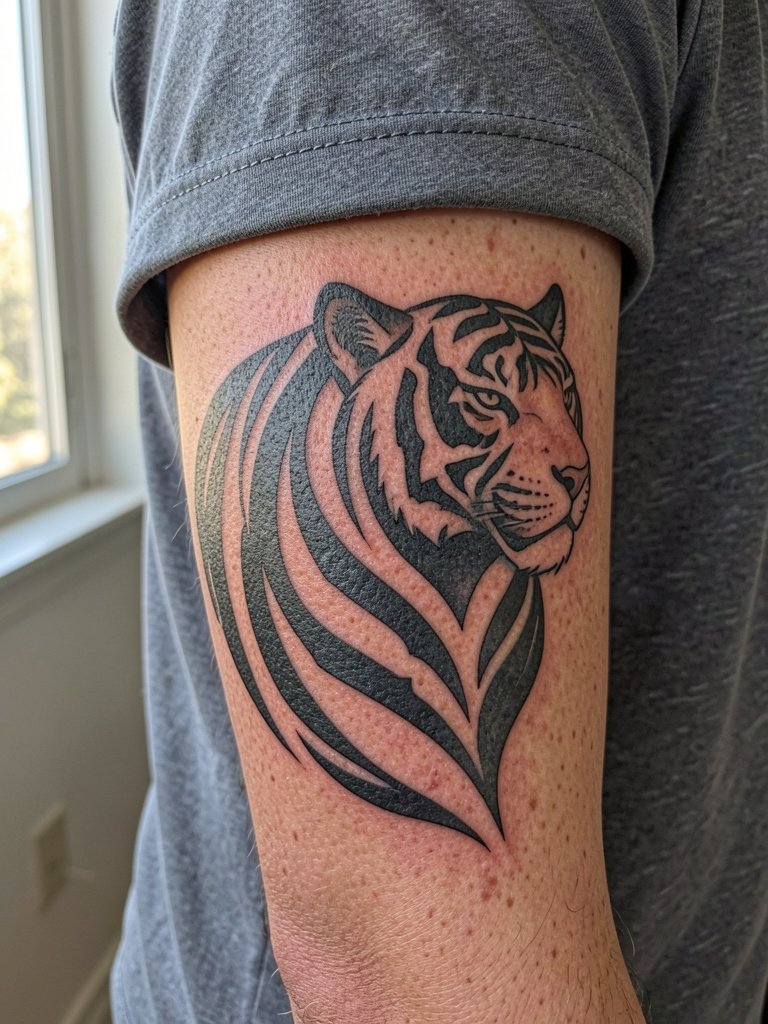
Tribal blackwork is straightforward but unforgiving if shapes are misaligned with muscle flow. Mistakes come from ignoring the forearm's natural curves. Request a stencil preview wrapped around the arm to approve how the negative space plays from different angles. Solid black ages well if saturation is deep from the start. For session comfort, sleeveless or short sleeve is best so the artist can see the arm's contours.
15. Chinese Character “Tiger” with Silhouette on Inner Forearm
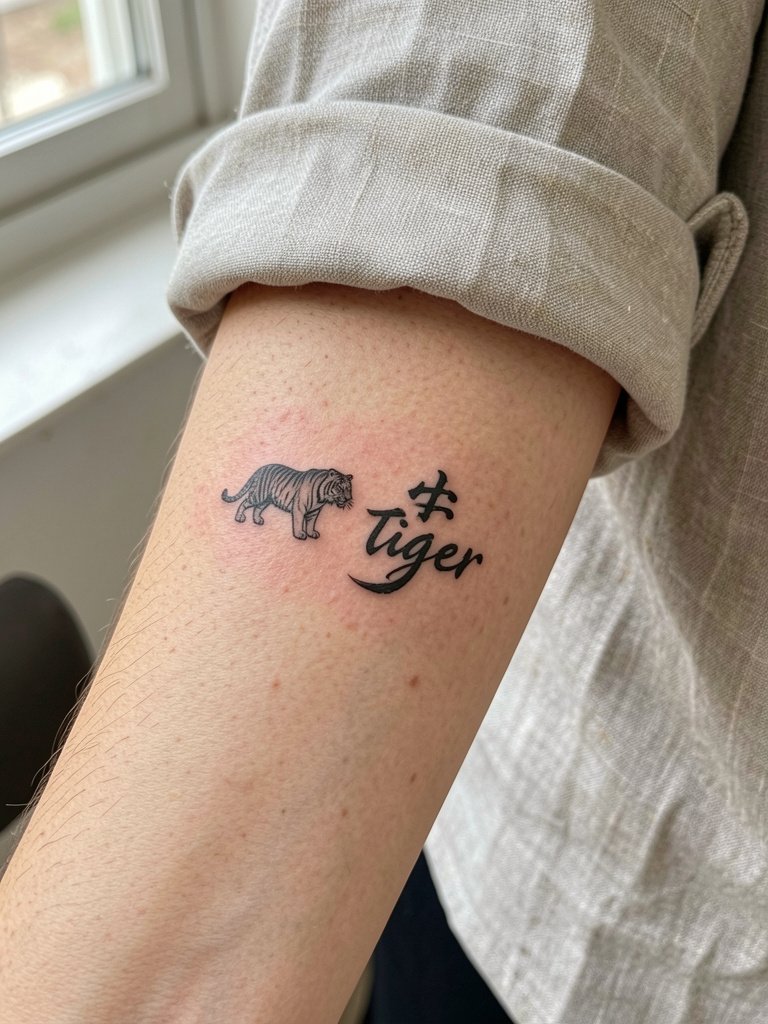
When combining script and iconography, the common error is choosing a font that blurs at small sizes. Ask the artist to show exact character sizing in the stencil before work begins and confirm you want a simple brush style rather than ornate calligraphy. For session wear, short sleeves or a roll-up style shirt gives the artist room to place the stencil accurately. For aftercare photography, the contrast of black ink against a neutral sleeve helps images show detail.
16. Micro-Realism Tiger Stripe Band on Forearm
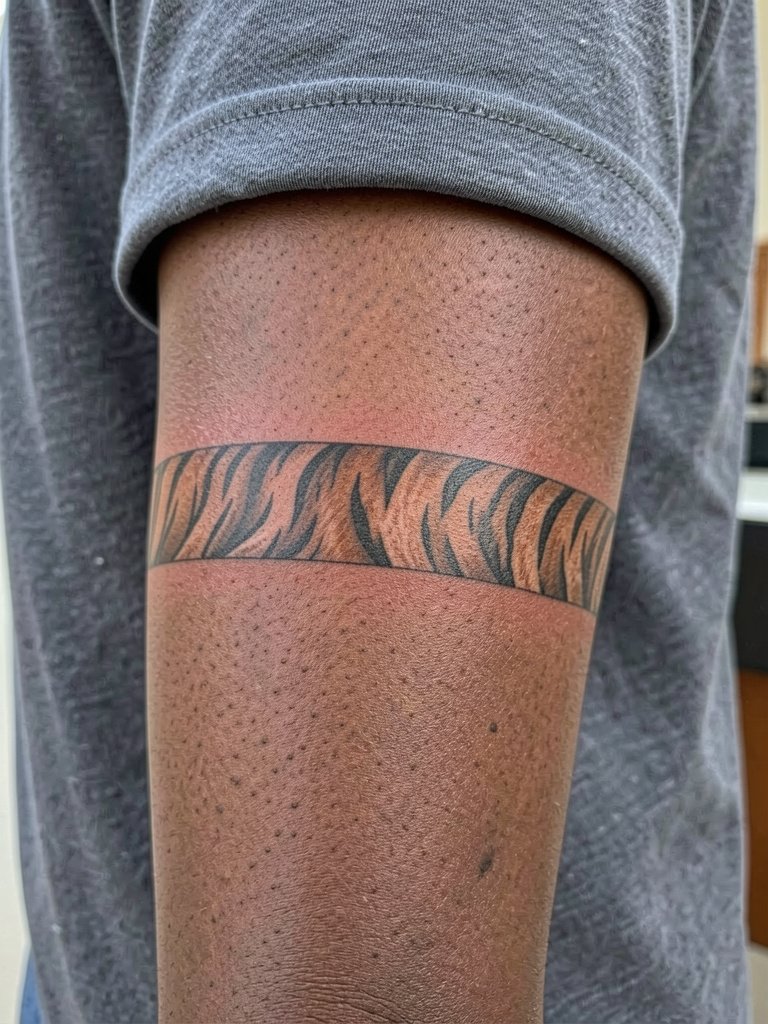
A stripe band is a graphic take that needs even spacing and consistent saturation. The mistake is making the stripe too thin; narrow bands lose texture quickly. For darker skin tones, ask for a stronger black and a subtle highlight to keep the fur texture visible in photos. Expect a focused single session and a possible touch-up at 12 months for texture refresh.
17. Ornamental Tiger with Gold Leaf Accents on Outer Forearm
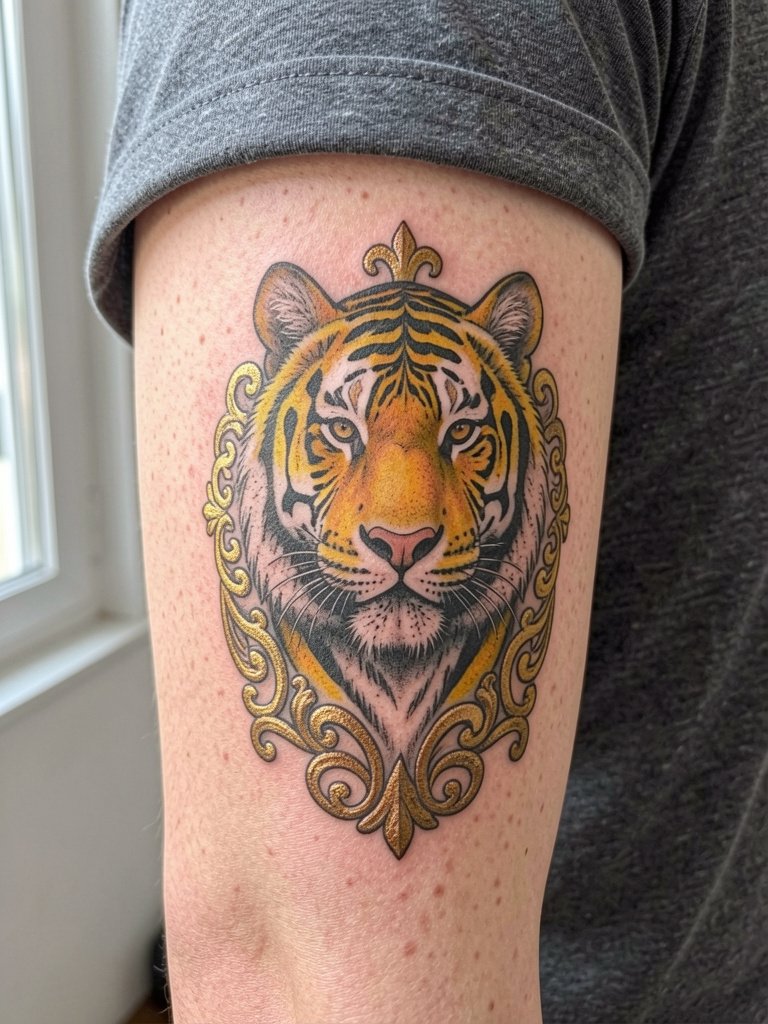
Metallic-style accents read like highlights when done with saturated yellows and warm shading. The main error is relying on shine that does not translate in healed skin. Request samples of healed yellow pigment on similar skin tones. For an evening look, this pairs well with a solid color short sleeve tee or a simple bracelet to keep the focus on filigree details.
18. Small Wrist Tiger Silhouette
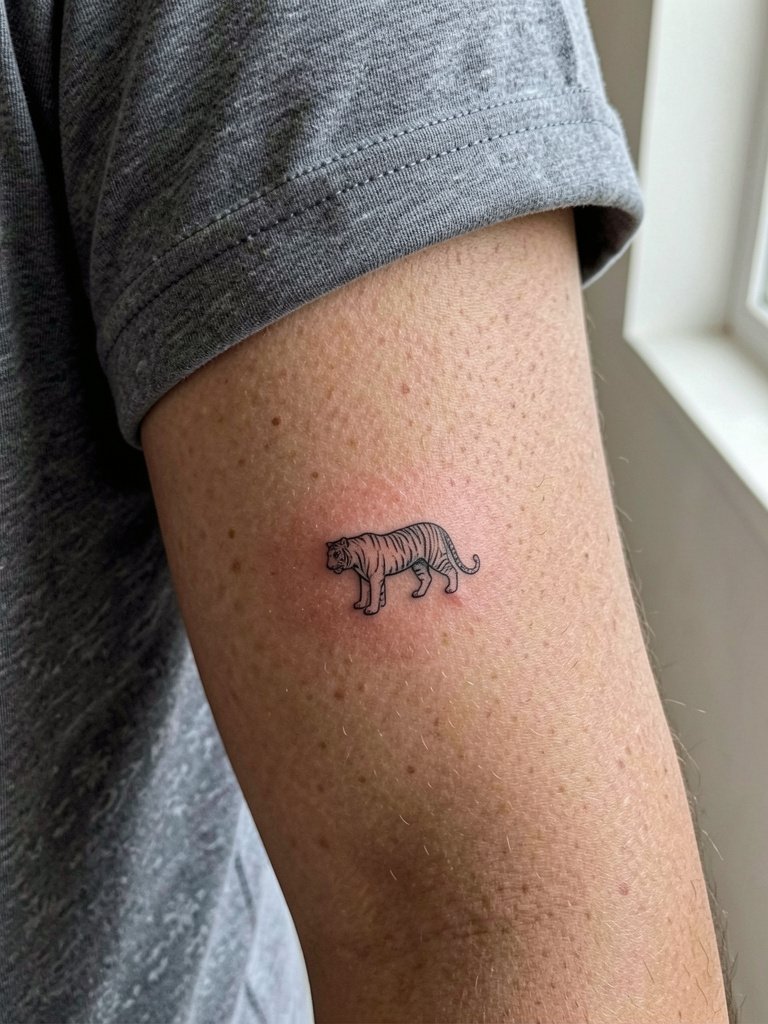
Wrist placements are visible and intimate, but the skin there moves a lot. The common mistake is asking for ultra-thin details that the wrist cannot maintain. If you want a small silhouette, choose a slightly heavier outline and accept a simple shape rather than minute internal detail. Do not wear watches or bracelets on the tattooed wrist for the first week. For showing it off, a minimalist watch on the opposite wrist complements the tiny silhouette nicely.
19. Mandala Backdrop with Tiger Foreground on Inner Forearm
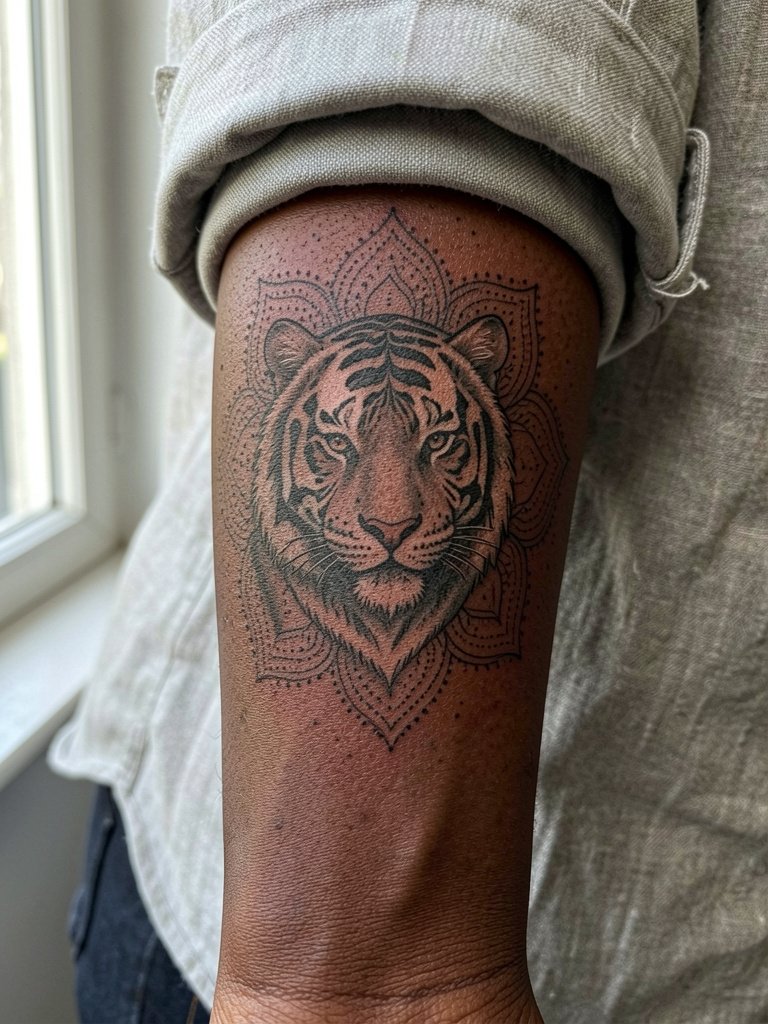
Mandala backgrounds require careful spacing so dots and lines do not collapse. The mistake is over-detailing the mandala in a narrow band. Bring a stencil scaled to your arm circumference so the artist can show you how the mandala repeats. For an everyday look, a neutral shirt with rolled sleeves keeps attention on the tiger foreground. Touch-ups for dot work may be needed at 12–24 months.
20. Negative Space Tiger Outline on Outer Forearm
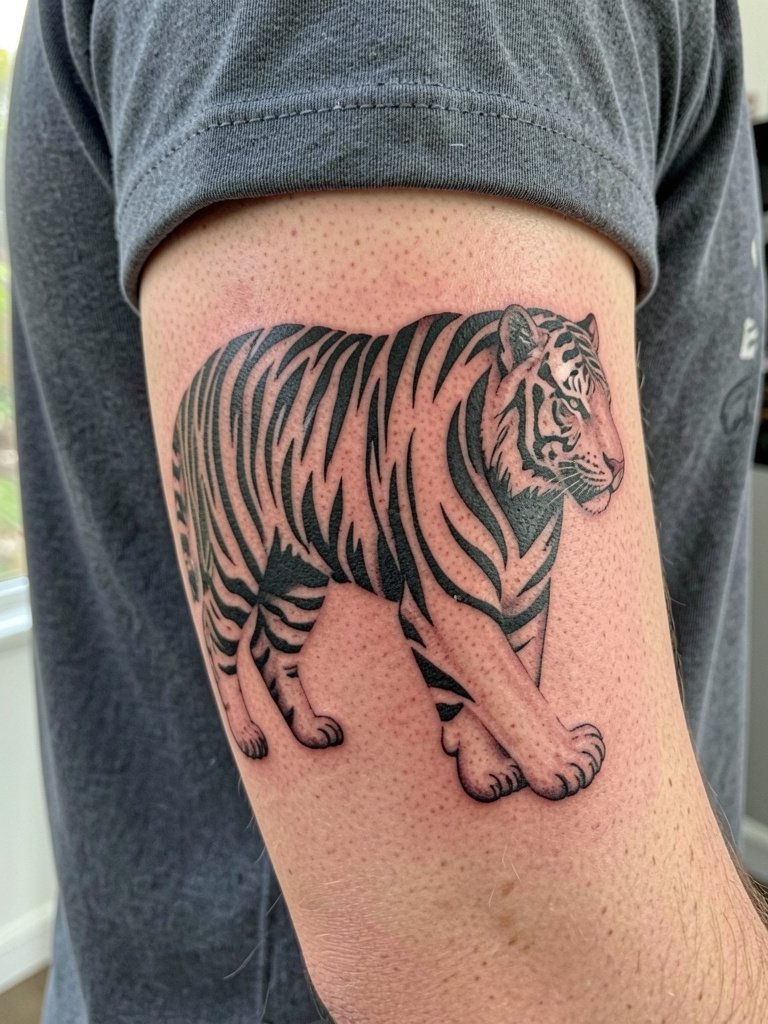
Negative space pieces look dramatic when the surrounding saturation holds. The risk is that large black fields can gray or pick up texture over time. Ask for a plan that staggers solid fields with thin breaks so the design keeps its shape as it ages. For session day, a short sleeve tee keeps the area accessible and prevents sleeve rubbing afterwards.
21. Botanical Tiger with Vines on Inner Forearm
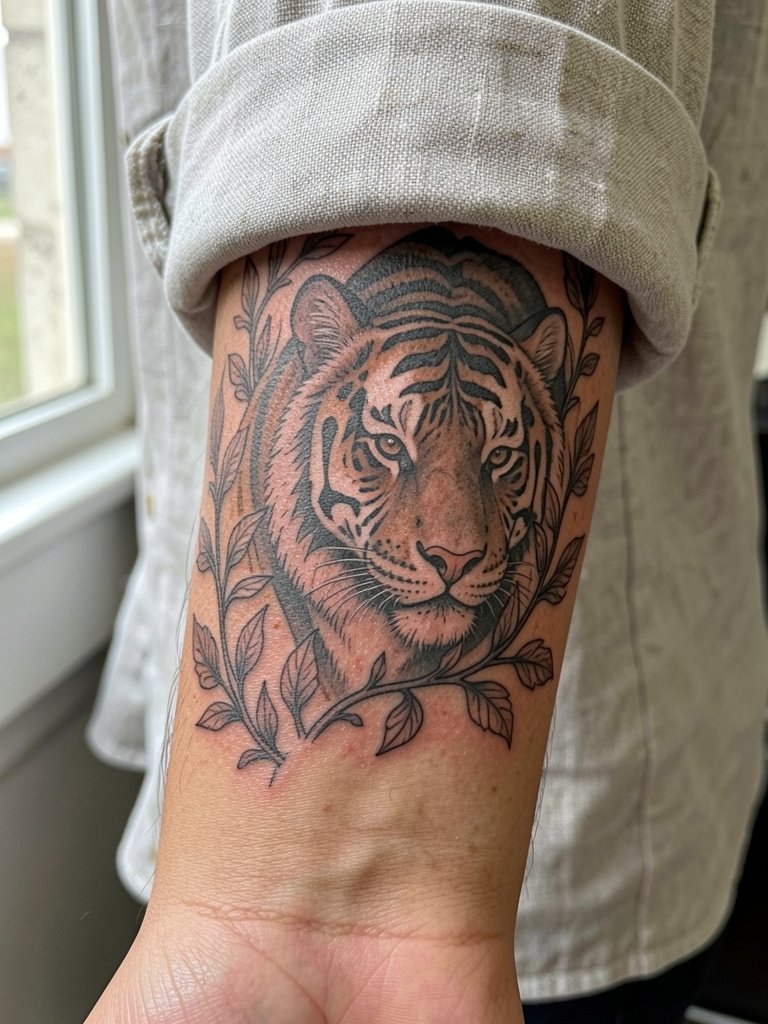
Botanical elements soften the tiger and give the artist places to fade details gracefully. The typical mistake is too many tiny leaves that blur into texture. To avoid that, pick a few larger botanical shapes and leave negative space between clusters. For outfit pairing, this design looks great with a linen button down rolled at the sleeve so the vines align with the shirt cuff visually.
22. Optical Illusion Tiger Pattern on Forearm
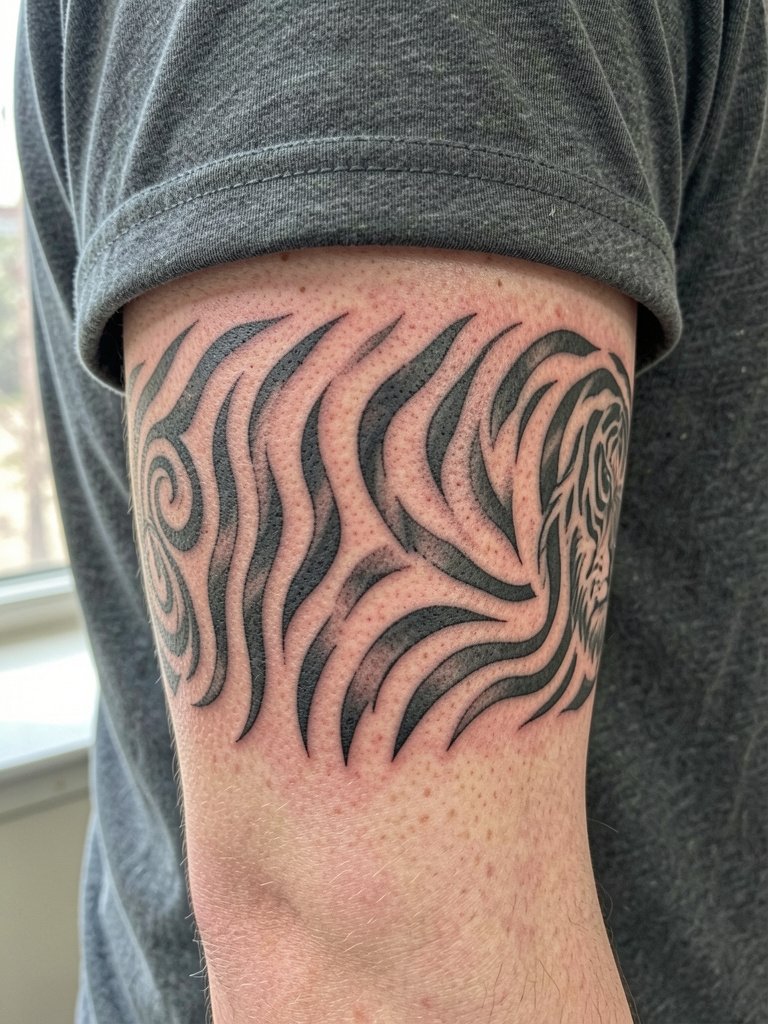
Optical patterns are striking but require precision. The mistake is letting small misalignments ruin the illusion. Demand a full-size stencil in position to verify how the ripple reads on your muscle contours. These designs can cause eye fatigue in photos, so consider how often you want the piece visible. Session wear: comfortable short sleeves to allow repeat position checks.
23. Forearm Half-Sleeve: Bamboo, Tiger, and Landscape
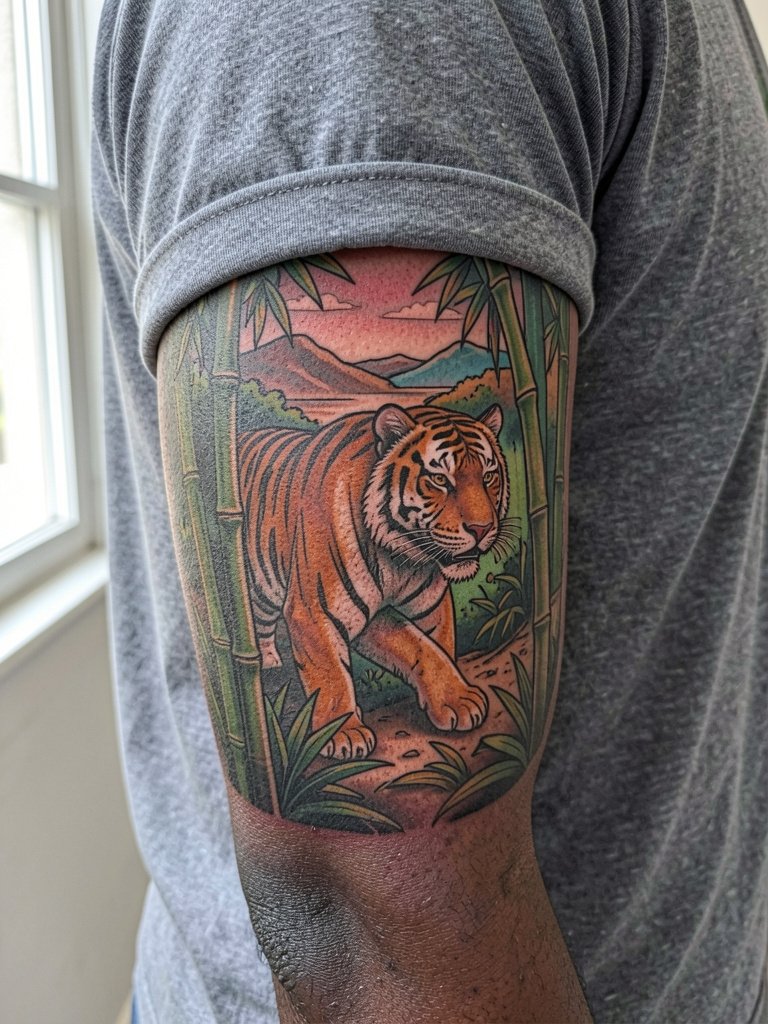
A full half-sleeve asks for pacing. The common error is collapsing too much detail into a short band. Ask the artist for a value sketch that shows where bamboo stalks and negative space will sit so the tiger remains central. These projects usually need multiple sessions. For outfits, a short sleeve or sleeveless top shows the wrap, and a neutral palette keeps attention on the landscape colors.
Frequently Asked Questions
Q: How do I make a forearm tiger show up well on darker skin tones?
A: High-contrast black-and-grey with saturated accents works best. I suggest adding targeted orange or warm highlights and asking for deeper black saturation in the stripes. Bring healed examples on similar skin tones so your artist can match depth and contrast rather than guessing from fresh ink photos.
Q: Will a fine line tiger on the forearm blur faster than a bold one?
A: Artists split into two camps on this. One group says fine line on forearms blurs within two years because the skin stretches and daily motion softens thin strokes. The other group argues fine line holds if line spacing and depth are adjusted and they will show healed three-year examples. If longevity matters, size up slightly and choose a modestly heavier lineweight rather than the thinnest single-needle look.
Q: Are watercolor tigers without outlines a bad idea for the forearm?
A: This is debated. Some people report that completely outline-free watercolor fades into a bruise-like patch after a year on the forearm. Others say deep layered color without outlines can remain readable if the piece is large and saturated. If you want the watercolor effect, request intentional dark anchor points or faint striping so your artist can preserve definition as pigments soften.
Q: Where can I find artists and healed examples without naming specific shops?
A: Search hashtags like #tigertattoo, #tigerforearmtattoo, and #tigerrealism on Instagram and TikTok while using the location filter to find nearby portfolios. Tattoodo and similar directories let you search keyword combinations such as "realistic tiger forearm" and often include healed shots. Reddit threads on r/tattoos surface peer recommendations and diverse healed examples across skin tones.
Q: What should I wear to my forearm tattoo session and what should I bring?
A: Choose loose short sleeves or a button-down you can roll so sleeves do not press on fresh ink. Bring reference images at two scales so the artist can show how a design reads at three inches versus five. For a cleaner look in post-session photos, a neutral shirt works best. If you want accessory ideas for showing off a finished inner forearm piece, a dainty wrist bracelet set on the opposite wrist pairs well.
Q: How often do forearm tiger tattoos need touch-ups?
A: It depends on style and placement. Bold, saturated Japanese and blackwork pieces can go several years before any refresh is needed. Fine line and small-color details often benefit from a light touch-up at 12 to 24 months. Expect realism pieces to sometimes need a small retouch after the first year to restore peak contrast.