The best tiger pieces last because they plan for years, not for the morning the stencil looks crisp. Wispy single-needle tigers often read great on camera the first month and then soften into muddy shapes. Bigger contrast, deliberate spacing, and placement choices that match skin texture are the practical moves that keep a tiger looking fierce. Read on for designs that balance visual impact with realistic aging, plus what to wear to the session and what to bring for a solid touch-up plan.
1. Half Tiger Face, Bold Neo-Traditional
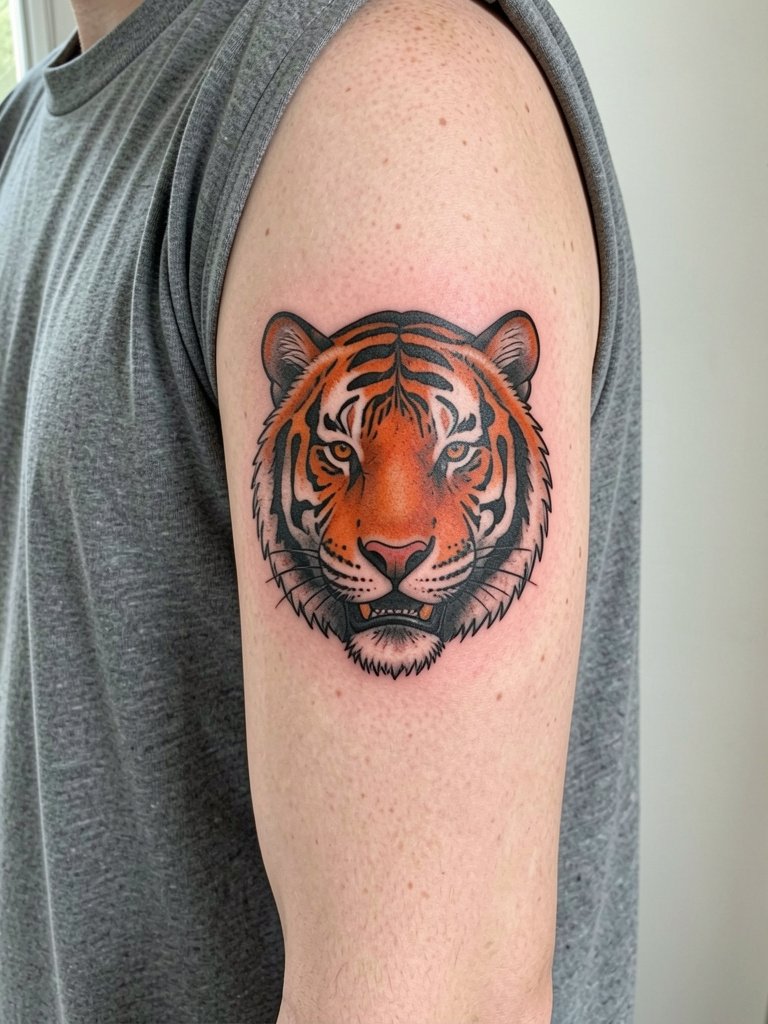
The half-face layout gives an intense gaze while staying compact and readable. For this inner upper arm placement plan 1–2 sessions and insist on slightly heavier linework than studio flash usually shows so the stripes keep separation over time. A common mistake is shrinking the design to fit tight sleeve cuffs, which makes delicate whisker detail vanish after a year. During the consult bring a photo that shows the face at both three and six inches so the artist can map line weight. For showing off, pair with a sleeveless crew neck tee in charcoal or olive so the upper arm sits clear and visible.
2. Tiger Eyes, Micro-Realism Forearm
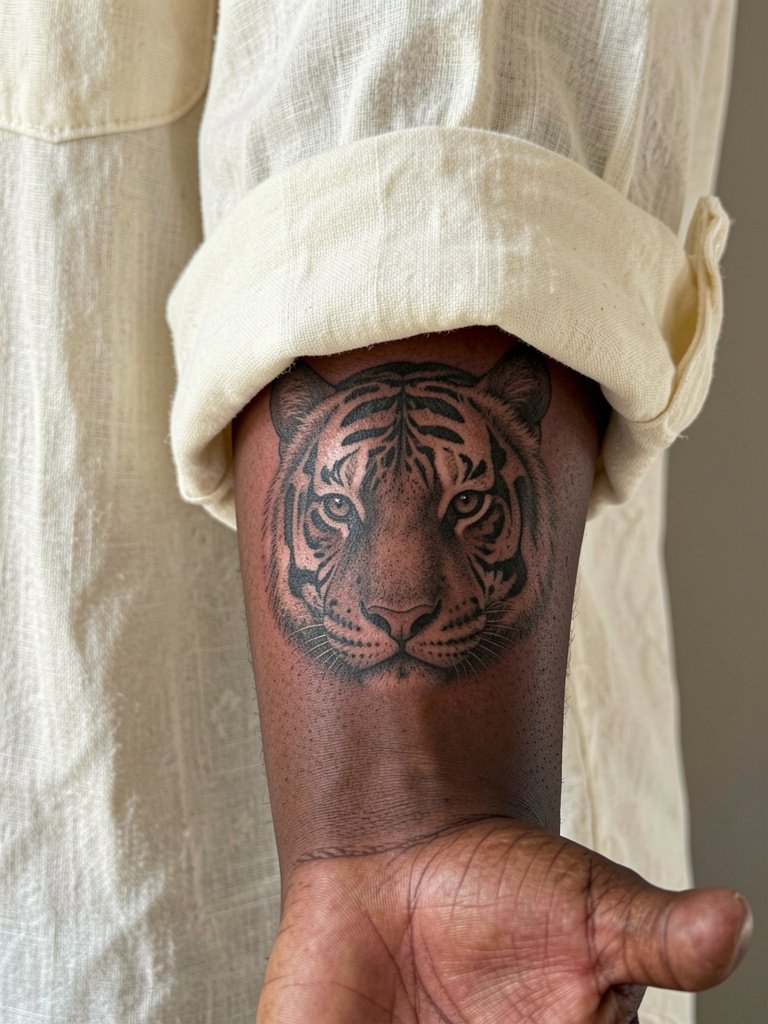
A pair of tiger eyes works as a standalone micro-realism piece that reads like intent rather than ornament. The inner forearm holds detail better than many other spots, but single-needle work can still soften by year two if you go too tiny. Tell the artist you want dense charcoal stippling instead of soft gray washes so contrast stays visible on darker skin tones. Session feel is mild to moderate and usually completes in one sitting for a 3–4 inch piece. When you want to show it off wear an open-cuff linen shirt in cream or sand so the forearm silhouette is clean.
3. Siberian Tiger Full Back, Blackwork Statement
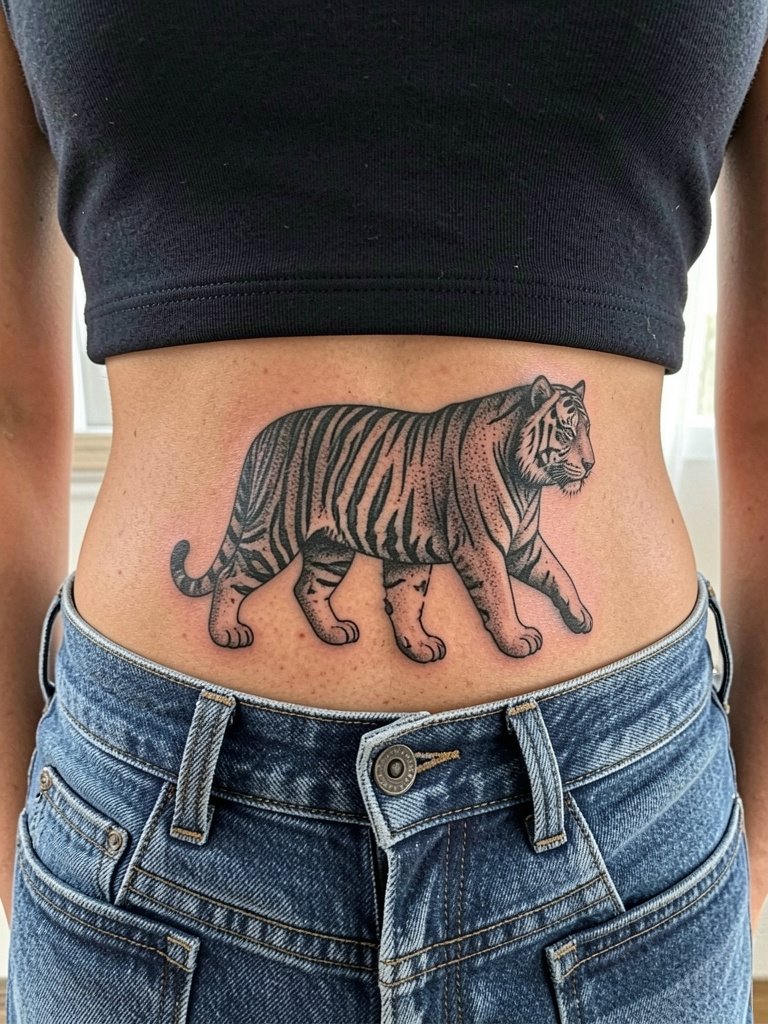
Large blackwork reads across distance and ages with fewer surprises than soft color pieces. Expect 3–5 sessions and a mix of heavy black fills plus stipple shading to create depth. The main mistake is packing too much midtone gray into a piece meant to be graphic; ask for distinct dark planes and open negative space so the pattern keeps its shape as skin shifts. Pain on the lower back is moderate and tolerable for most people. For wardrobe, low-rise jeans and cropped tees frame the lumbar work, try low rise jeans in dark wash when you want to show the silhouette.
4. Tiger Sleeve, Neo-Traditional Patchwork
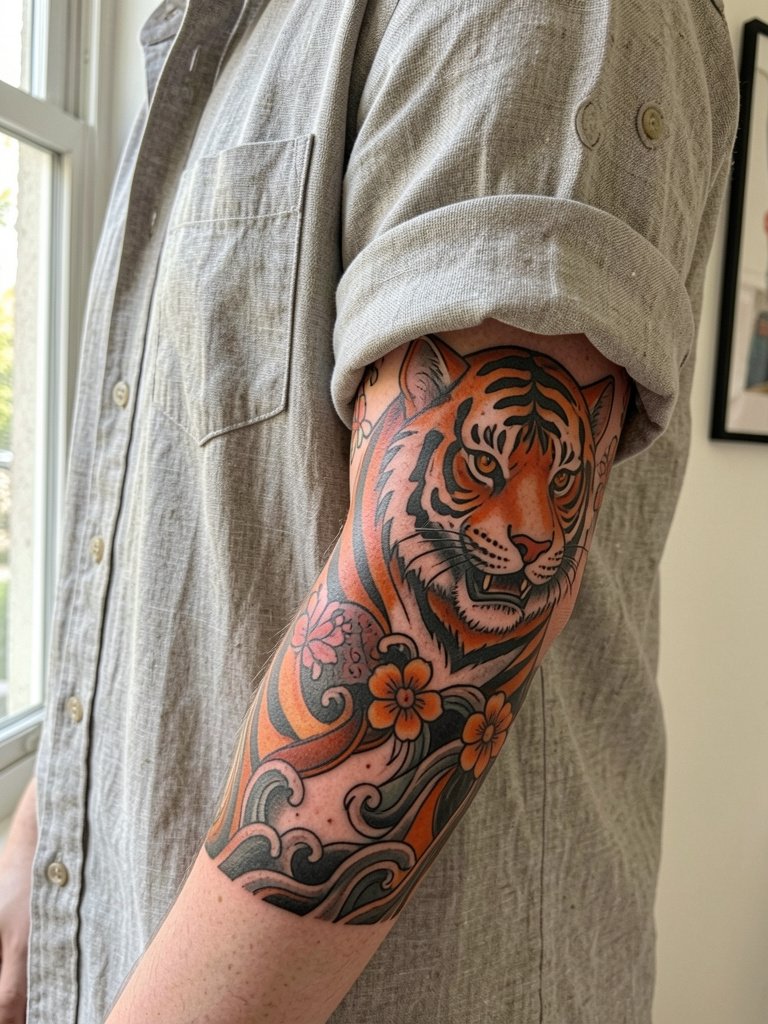
Sleeves are a project, not a single session. Plan for staged sessions and let the artist map negative space for future additions. A usual error is buying a flash piece and expecting it to read like a custom sleeve. If you want the tiger to be the focal point be explicit about placement so secondary motifs wrap without intruding on the face. The arm tolerates longer sittings, but bring easy clothing you can roll up like a linen short-sleeve button down so the artist can reach from the shoulder to the wrist without fabric pulling. Touch-ups are common at the seamlines between sessions.
5. Tiger Butterfly Yin-Yang, Ornamental Hip Fusion
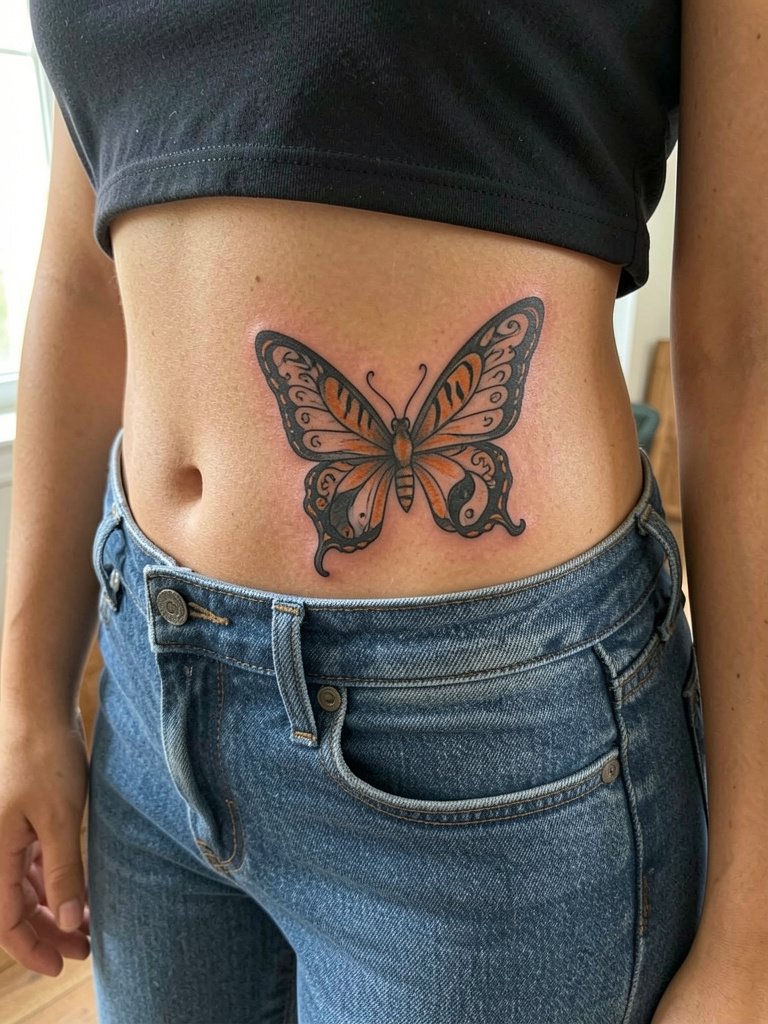
The hip gives a discreet canvas that looks great with ornamental symmetry. Because the area moves with belts and pants, bold outlines and moderate scale avoid early blurring. A common mistake is tiny filigree that the waistband rubs into oblivion. For the appointment wear low-rise pants and a loose top so the artist can access the lateral hip without fabric tugging. Showing off the piece works with low-slung jeans and a cropped tee, try low rise jeans in a muted wash to frame the design.
6. Royal Bengal Tiger Chest Piece, Traditional
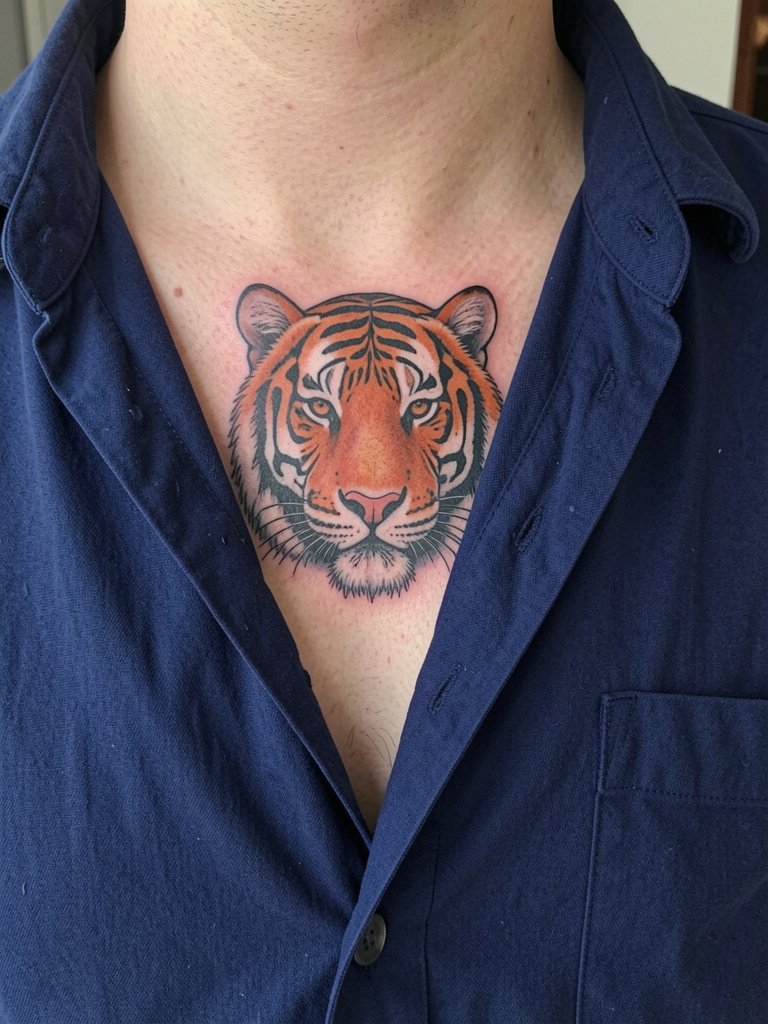
A chest piece can read regal if sized to sit under the clavicle without crossing into sternum detail. The chest is forgiving for bold traditional work so choose heavy linework and flat color planes to preserve contrast. Mistakes happen when clients insist on tiny chest heads that end up losing facial detail as they heal. For session wear bring a button-down you can open easily, and for evenings pair the piece with an open-collar polo left unbuttoned two or three buttons to frame the top edge.
Pre-Session Essentials
The first six ideas include small placement notes and high-contrast options, so pack a few items that smooth the appointment and the first healing days.
-
Tattoo Revive (Australian balm alternative). A lighter balm often praised for dry healing on larger blackwork areas without heavy greasiness.
-
Kaleo Tattoo Balm. A lighter Japanese-formulated balm noted for less residue, handy for areas where heavy creams smear against clothing.
-
Saniderm Second Skin (protective film). A multi-day sealant that reduces scabbing on long linear work like sleeves and chest pieces.
-
ReWound topical numbing cream. Useful for first-timers on high-pain placements but only use it after confirming the application protocol with the studio.
-
Hustle Butter Deluxe (thin healing balm). Lightweight for early aftercare on delicate linework, preferred by some for its non-greasy feel.
7. Dragon-Tiger Yin-Yang, Inner Thigh Balance
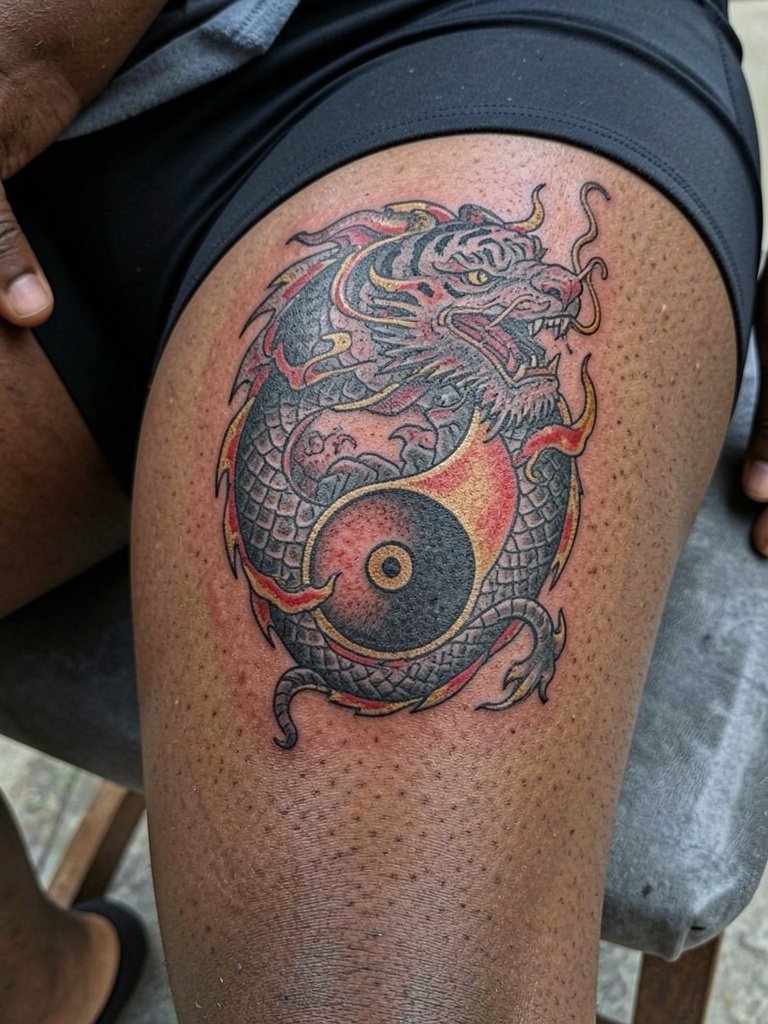
The inner thigh yields a private canvas with room for circular compositions that read well when you stand. Expect higher pain in this area and plan shorter sessions. Numbing cream is part of the debate for thigh work. One camp says numbing creams hide pain cues and risk shallow or overworked lines. The other camp argues modern creams let first-timers tolerate the session without harming ink when applied correctly. If you plan to use topical anesthetic, ask for a specific protocol like application timing and whether the studio re-cleans before tattooing.
8. Tiger Silhouette, Ignorant Style Forearm
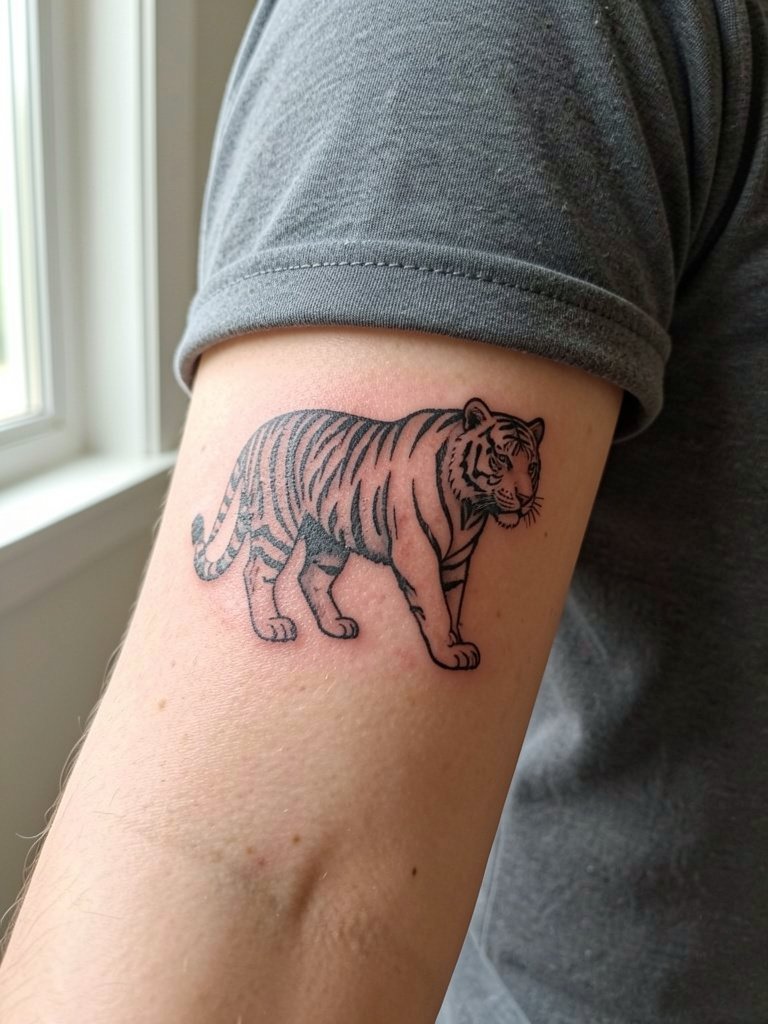
If you want raw and primal, the ignorant silhouette delivers a bold identity with minimal fuss. The style tolerates uneven execution because the irregular lines are intentional, but avoid going too small or the silhouette loses impact. The forearm is low-blowout risk compared with the hand, but the wrist end of the piece can feather over several years if the linework is too thin. For session comfort wear a short sleeve loose fit t-shirt so the arm sits relaxed and the artist can rotate the forearm freely.
9. Geometric Tiger Head, Fine Line
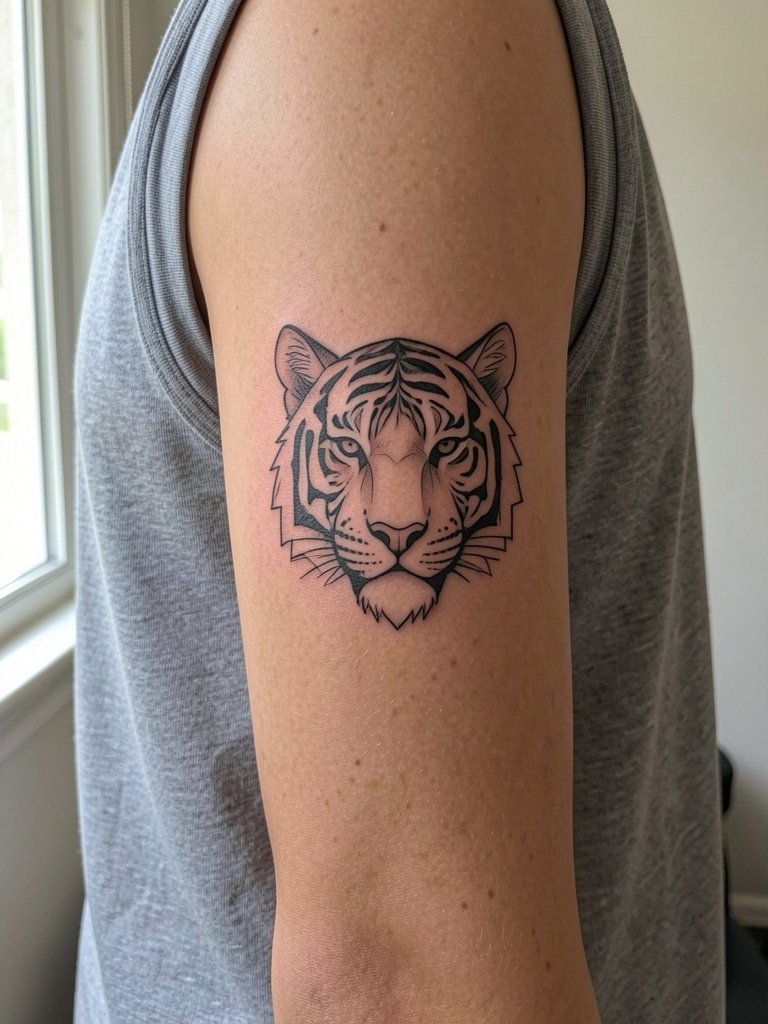
Geometric fine line reads contemporary, but scale is everything. The inner upper arm can hold detail better than the ribs, yet single-needle geometry less than four inches risks merging lines as the skin moves. Avoid squeezing too many intersecting angles into a space meant for a single focal plane. Discuss line spacing with the artist and request slightly wider gaps than a gallery sample so the angles breathe for five years plus. To frame the piece wear sleeveless crew neck tees in neutral tones that let the geometry read.
10. Tiger Paw Print, Minimalist Forearm Mark
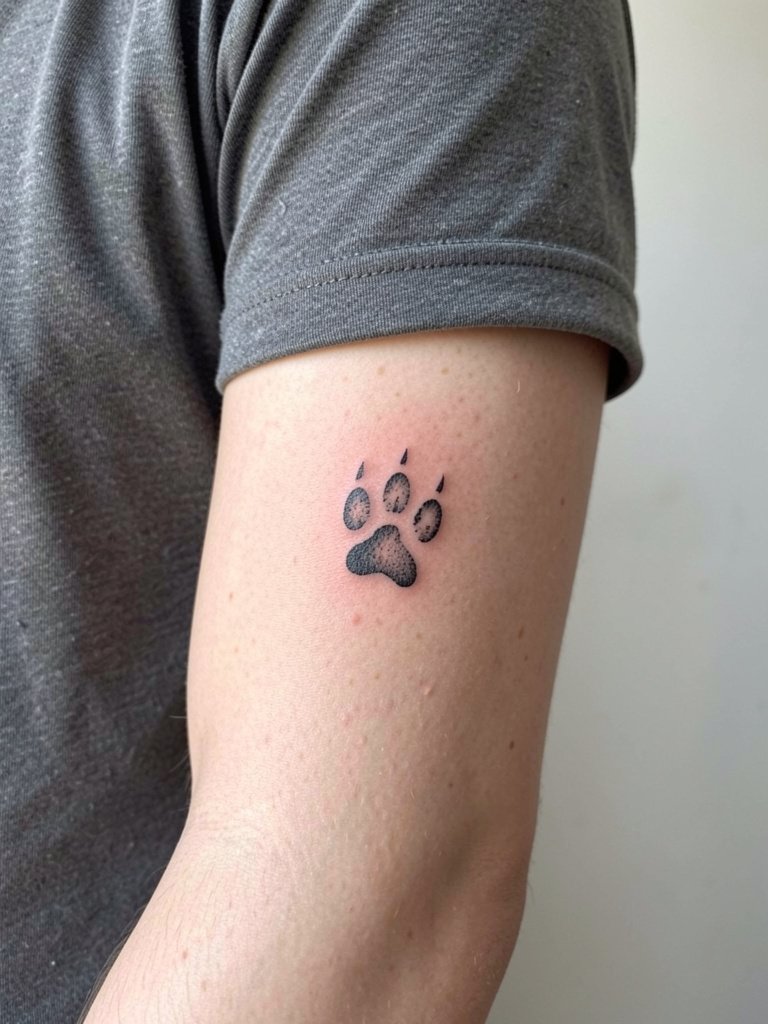
Tiny symbols like a paw print are perfect for someone after low-commitment placement that still carries meaning. The trick is to size it for visibility at arm length so it does not become a gray smudge in a year. A single-needle approach gives crisp dots initially, and a touch-up at 12–18 months is common for clarity. During the session keep your wrist free of bracelets and wear a short sleeve linen shirt so the artist can work without obstruction.
11. Tiger in Bamboo Forest, Watercolor-Influenced Thigh
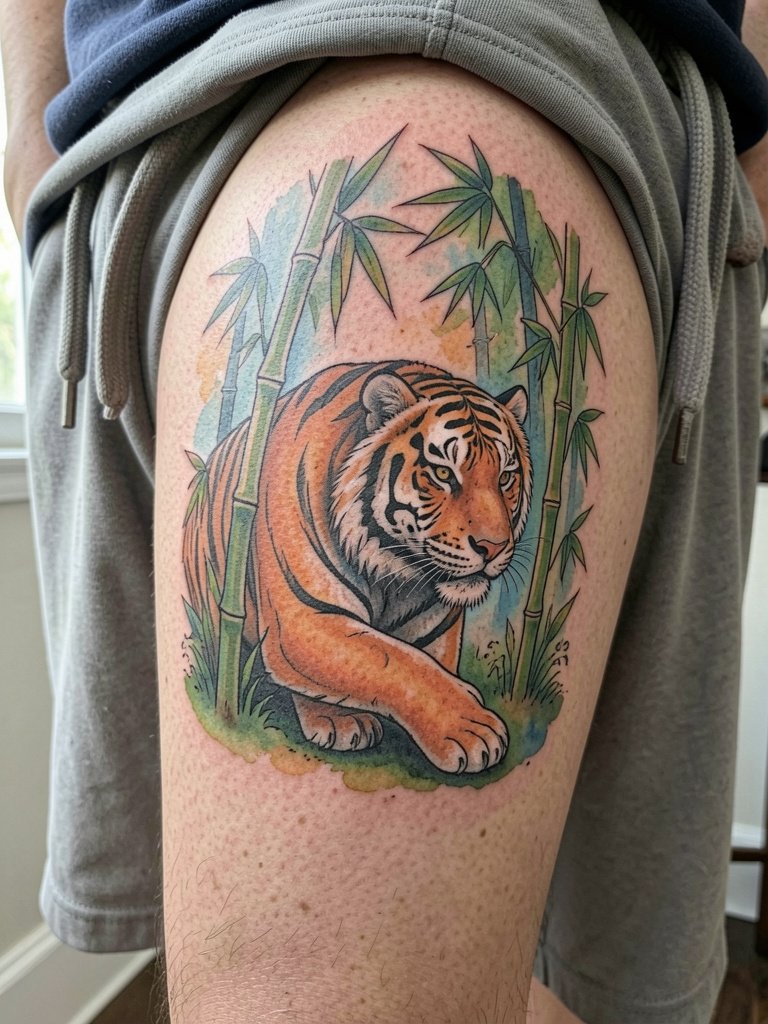
Thigh pieces allow painterly washes without daily friction from clothing. Watercolor edges age more quickly than solid fills, so if longevity is a priority ask the artist to anchor washes with bold contours. The outer thigh tolerates longer sessions and usually finishes in two sittings. For the appointment wear loose drawstring pants so the artist can roll the leg up without pressure on the area. When you want to show the work off try rolled chinos or light linen shorts that stop above the piece.
12. Tiger Skull with Roses, Side Torso Ribcage
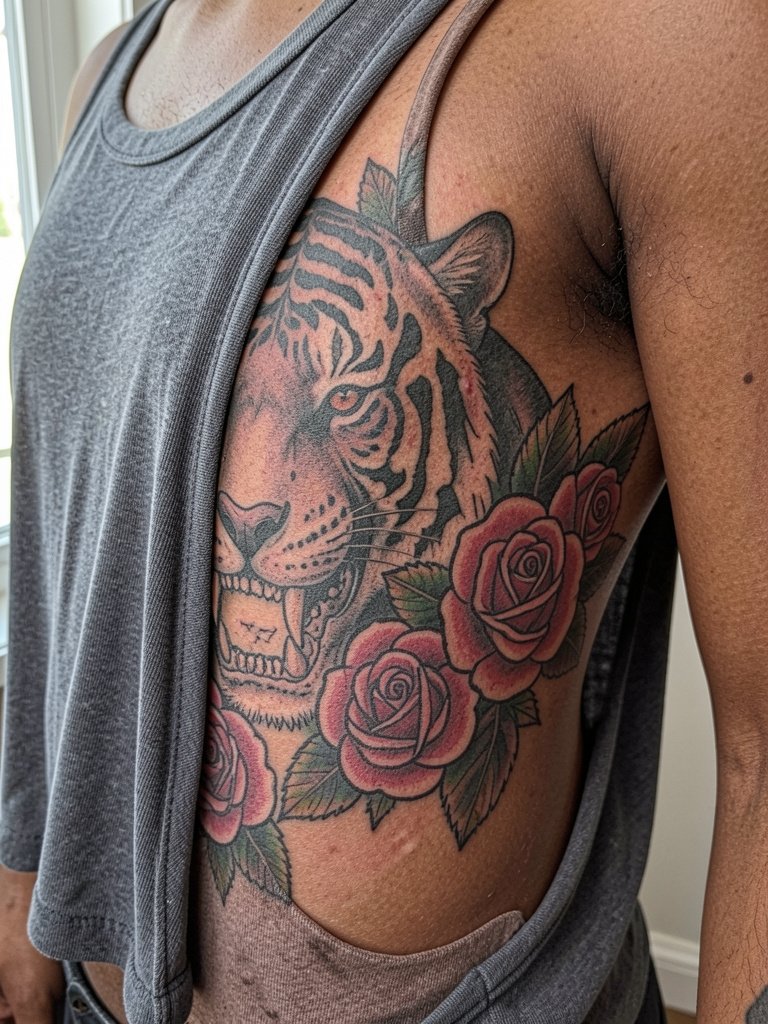
Ribcage tattoos raise two active debates that you should know. One camp says fine line on ribs blurs within 12–18 months because constant movement and skin stretch cause lines to merge. The other camp argues that with correct needle depth and slightly wider spacing fine-line work can hold, and they point to healed examples at two years for evidence. Numbing cream is another split. Some believe it masks pain cues and invites overworked strokes that affect ink depth. Others say modern creams let beginners tolerate high-pain areas and do not harm retention when used with the right protocol.
Practical guidance is to choose bold contour work for areas near the ribcage when you want long-term clarity. For the session schedule a morning slot, bring snacks, and wear a loose tank so the artist has full side access without fabric shifting.
13. Tiger Crown, Ornamental Nape
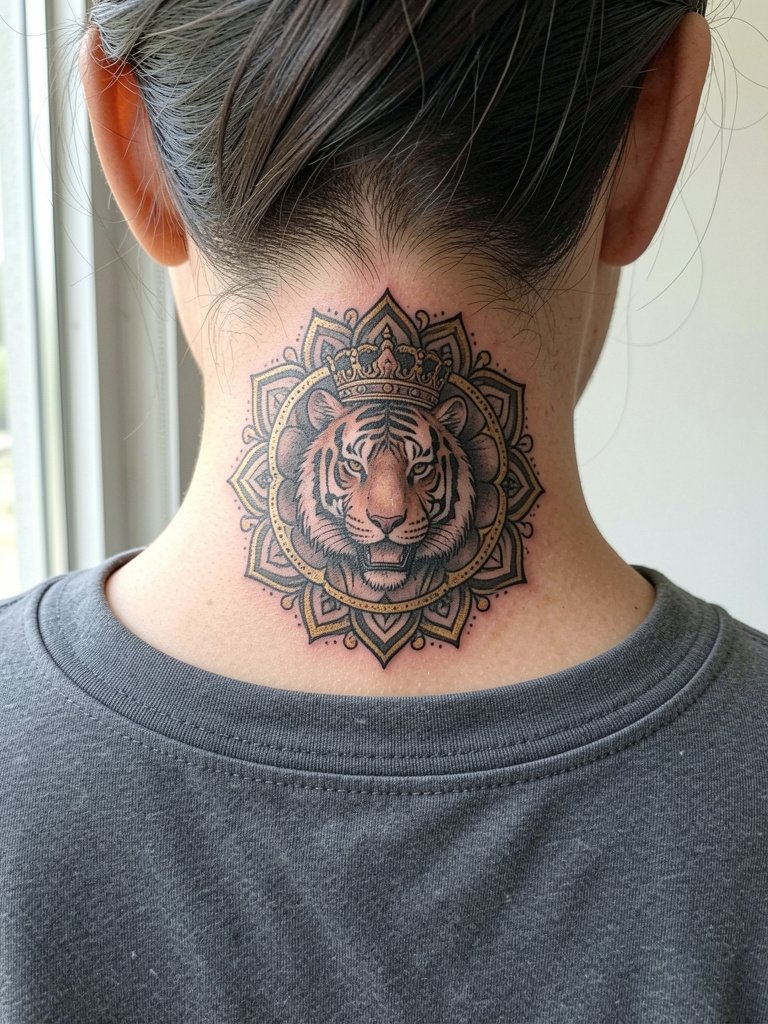
The nape is ideal for ornamental small work that reads tidy under short hair or a tied-back style. Expect quick sessions and low surface movement compared with the chest. A common error is overcomplicating the crown with tiny filigree that the hairline or neck folds obscure. For the appointment keep hair tied or clipped and wear a crew neck tee so the artist can access the nape without fabric getting in the way.
14. Tiger Roar with Sound Wave, Collarbone Illustrative
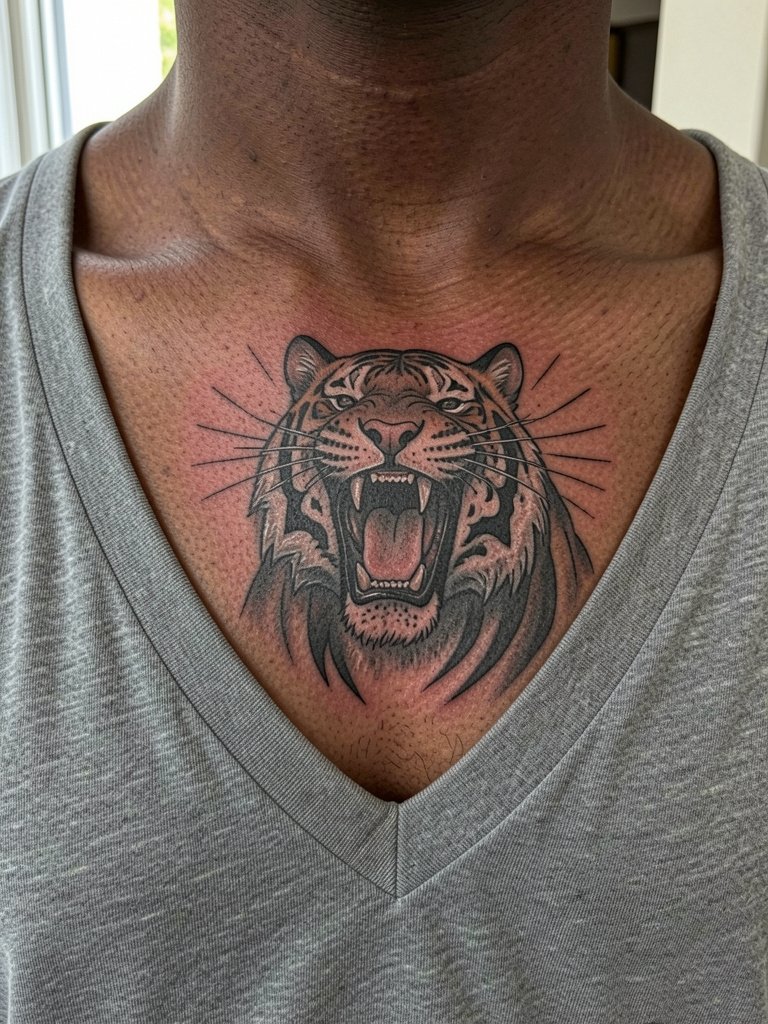
Combining figurative roar imagery with graphic wave lines lets you visualize voice as design. The collarbone accepts horizontal compositions well but avoid thin parallel lines too close to each other. The usual mistake is placing detailed teeth detail too low where chest movement softens the contour. For the session wear a button-down or wide V-neck shirt you can open easily, and consider a silver chain on the opposite side to balance the visual weight when you want to dress up.
15. Tiger Mask, Ukiyoe-Inspired Blackwork Neck
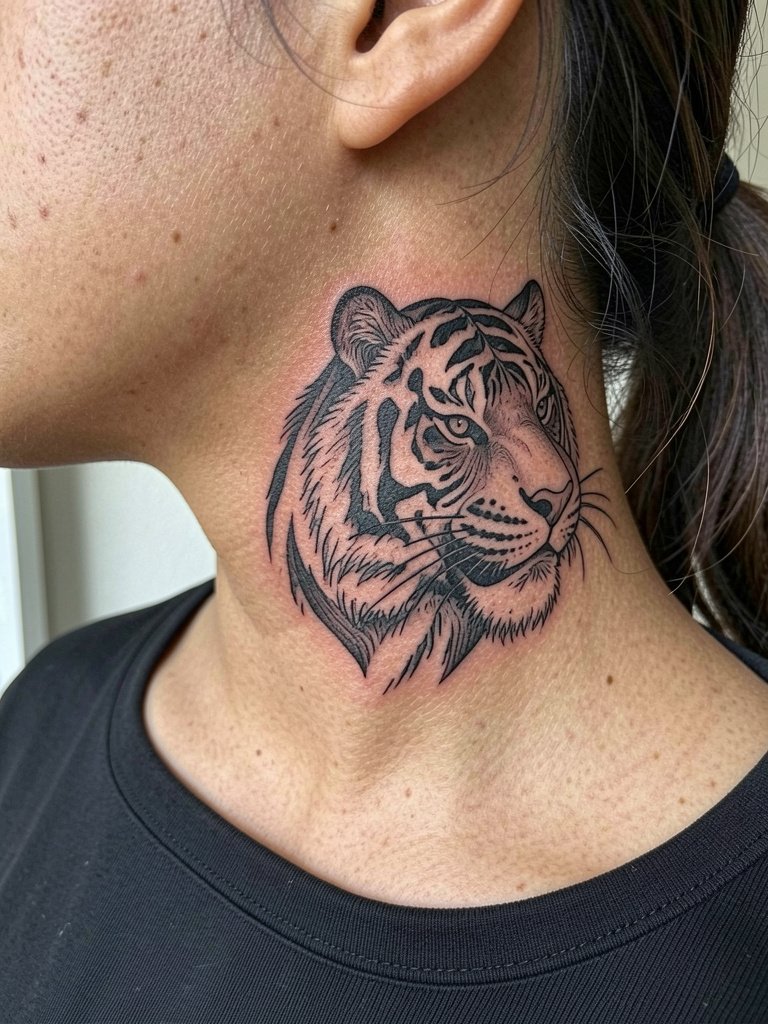
A mask-style tiger rooted in Ukiyoe texture becomes a shield motif on the neck. The side neck is a visible spot so bold contrast works better than fragile gray layers. One common issue is asking for dense texture too small for the neck, which turns into muddiness as the skin moves. Schedule a short session and ask for high-contrast woodgrain stippling rather than fine continuous shading. If you style hair short or pulled back a minimalist silver chain sits nicely with neck work without covering the tattoo.
Frequently Asked Questions
Q: How do tiger designs age on different skin tones?
A: Darker skin often renders low-saturation orange as muted, so high-contrast black-and-grey or bold outlines are safer for long-term clarity. Lighter skin can handle subtle washes and color grading, but keep contrast in mind so the stripes and facial detail hold up.
Q: What should I wear to a ribcage or side-torso session?
A: Bring a loose tank top or a cropped athletic top that rests naturally with no fabric being pulled. A morning appointment usually helps with endurance, and pack snacks for a long ribcage session.
Q: Where can I find healed tiger portfolios and local artists without naming individuals?
A: Search hashtags like #tigertattoo, #neotradtigertattoo, and #blackworktiger on Instagram and TikTok while using location filters to narrow results. Tattoodo and the Inked App let you search by style keywords such as "neo-traditional tiger half face" for healed examples. Reddit threads in r/tattoos and r/TattooDesigns also surface peer recommendations and before-and-after photos across skin tones.
Q: If I want fine line geometry but worry about blur, what should I request specifically?
A: Ask for slightly wider line spacing and a touch of stipple shading to anchor intersections. Bring two scale references so the artist can map how a three-inch and a five-inch version will age on the intended placement.
Q: How often should I plan touch-ups for micro-realism tiger eyes or fine-line work?
A: Expect a possible touch-up around the 12–18 month mark for single-needle pieces and micro-realism areas to restore crispness, and then plan touch-ups every few years depending on sun exposure and skin changes.
Q: Which aftercare approach is best for color-heavy chest pieces during summer?
A: Keep the area shaded and use an SPF protectant after the initial healing window. Many people prefer lighter non-greasy balms during hot months so sweat does not trap residues against fresh ink.
Q: Any wardrobe tips for showing off a thigh or hip tiger without risking the tattoo?
A: For thigh pieces choose rolled chinos or linen shorts that stop above the piece so straps and seams do not rub the area. On the hip low-rise jeans with the waistband sitting below the tattoo keep the design visible while avoiding constant friction.