The sun keeps showing up in fresh small tattoos because it reads clearly at tiny scale and folds easily into other ideas. Trends push ultra-thin single-line suns and crisp geometric versions on forearms, but real wear and daily friction change how those designs look after a few years. Read the options below with placement notes and session tips so you pick a sun that lasts and still feels like yours.
1. Single-Line Minimalist Sun on Inner Wrist
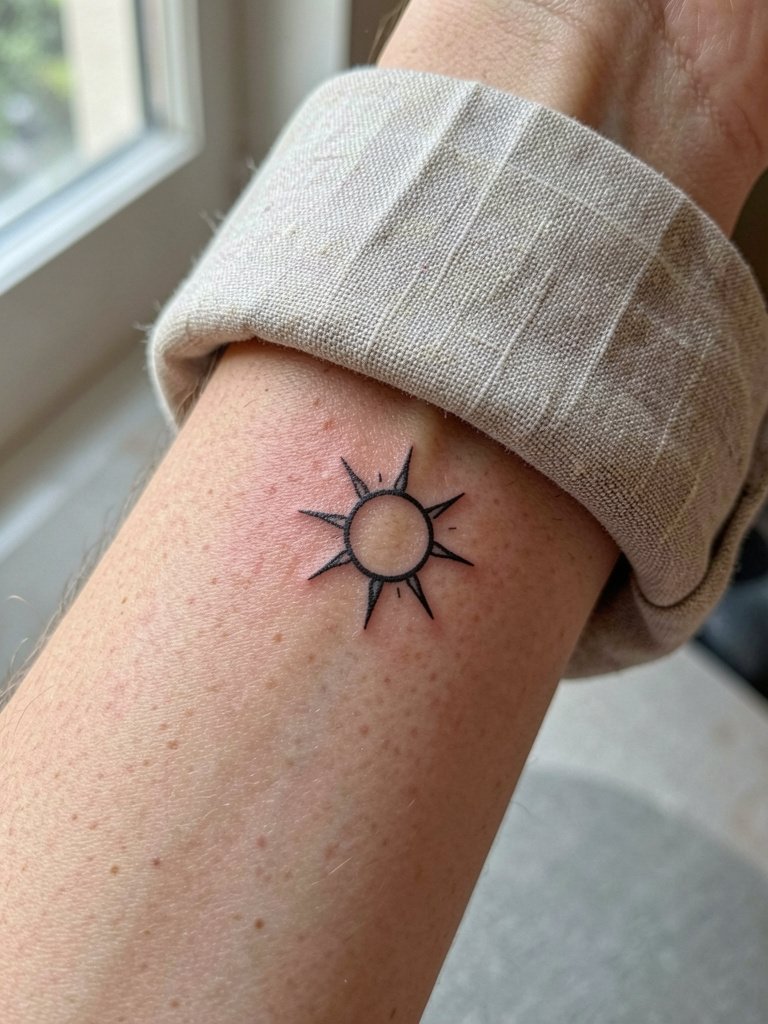
The single-line circle with a few hairline rays is the easiest first tattoo to live with. It reads like a sketch and the session is usually under 30 minutes with a single needle. On the inner wrist the skin is thin, so expect sharp linework at first that can soften by year five. Bring two scaled references so the artist can show how the same line weight reads at one inch versus two inches. A common mistake is asking for ultra-hairline rays without adding a touch more weight for longevity. For the session, wear a linen button down shirt so the cuff rolls cleanly and the artist has palm-up access.
2. Dot-Center Minimal Sun on Back of Wrist
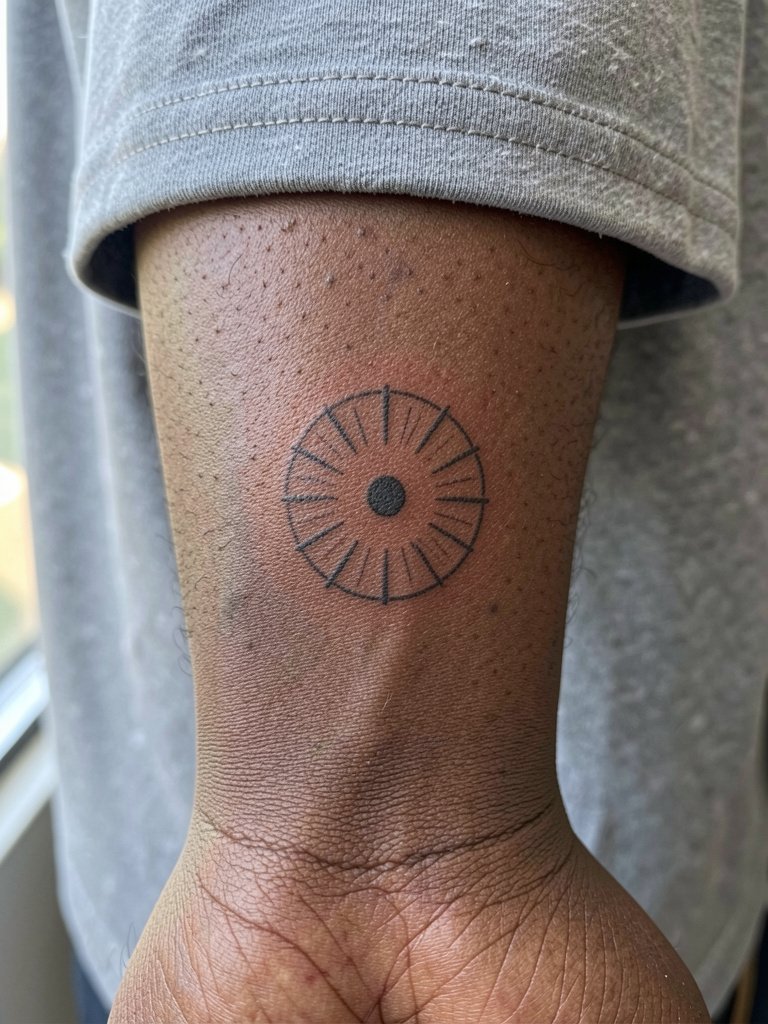
This dot-centered sun looks like a hand-sketched seal and holds up well because the solid dot anchors the thin rays. The dorsal wrist experiences more sun and abrasion than the inner wrist. Expect a quick 20–30 minute session and bring up contrast needs for darker skin tones so the dot keeps visual weight in photos. A common aging issue is faded outer rays that break into faint stubs; avoid asking for rays thinner than the reference dot when you want longevity. Pair the look with a minimalist watch on the opposite wrist to give balance when you show it off.
3. Geometric Precision Sun on Inner Forearm
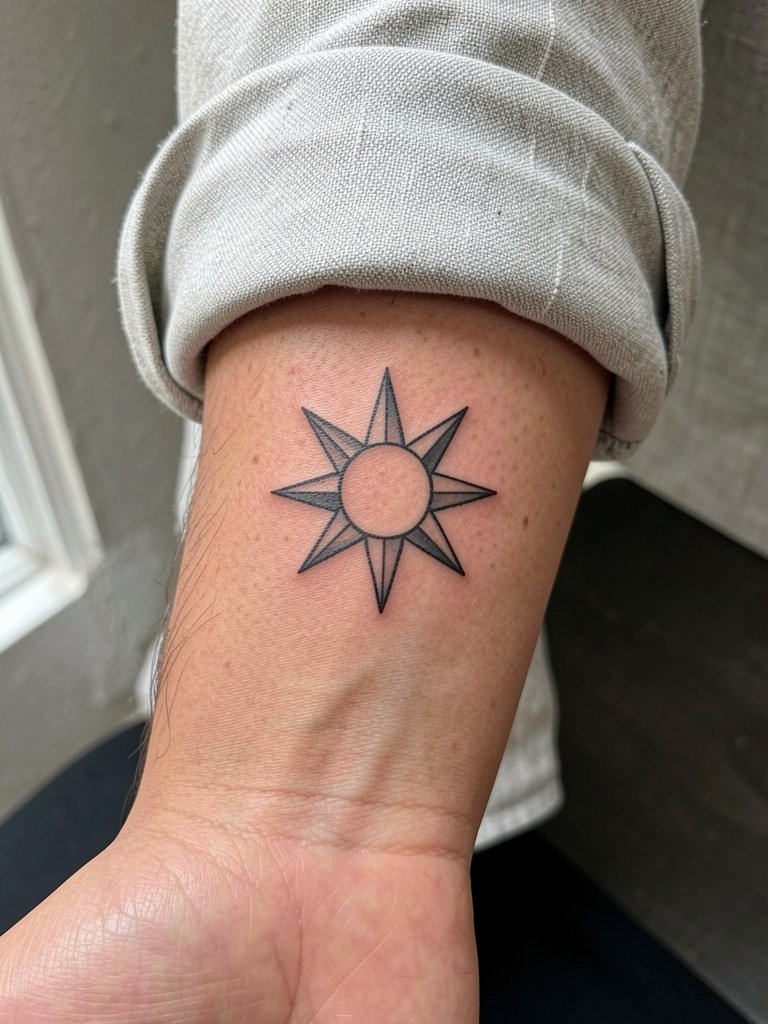
Collectors love geometric suns because the angles read like a small emblem when viewed from a distance. This one needs precise linework and a steady artist; bring clear photos showing the exact angle and the distance you want it to read from. The inner forearm keeps geometry stable with low blowout risk, but the artist will recommend slightly thicker linework at intersections so the star points do not blur over several years. The session is usually 30–45 minutes. When showing it off, rolled cuffs and neutral linen keep focus on the crisp angles; try a rolled cuff linen shirt for a clean frame.
4. Steampunk Gear Sun on Outer Upper Arm
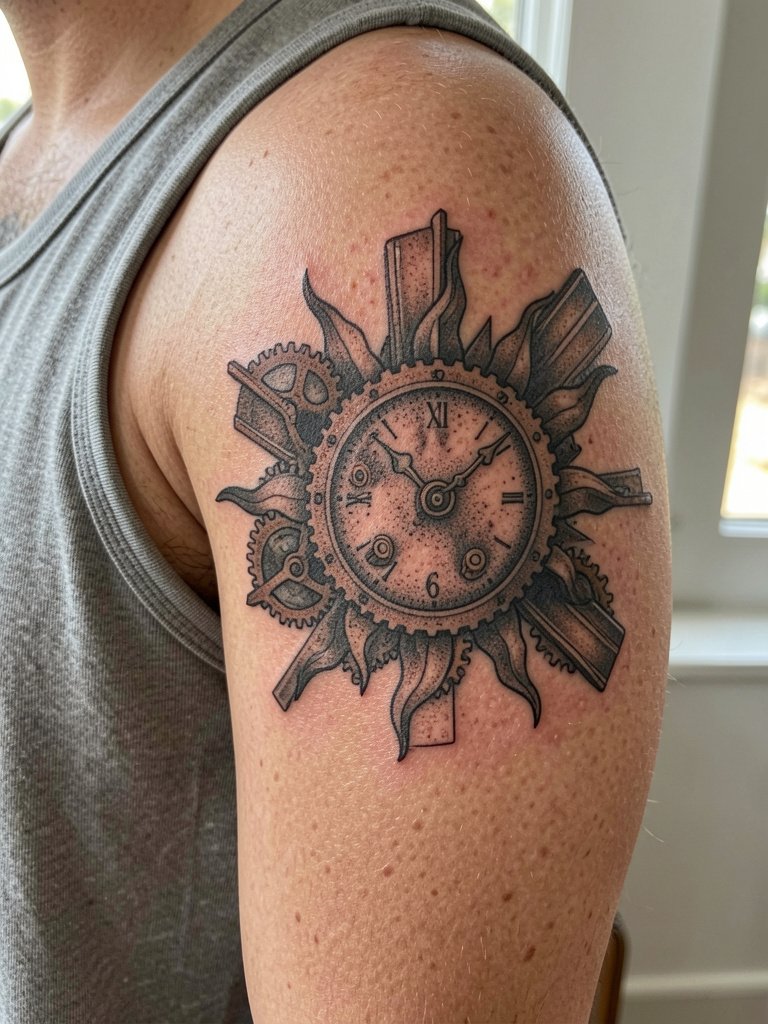
The gear sun mixes machinery and the celestial symbol for a compact neo-traditional piece. Outer upper arm skin tolerates shading and small stipple work well, so you can add slight gray fills without risking rapid loss of detail. Mention to the artist which elements you want crisp, for example the clock hands should have clean negative space so they do not sink into shading over time. Sessions run 45–90 minutes depending on complexity. For outfits that highlight the bicep, choose solid vintage cuts and try a solid color tank top when you want the gear motif to read clearly.
5. Feather-Ray Minimal Sun on Collarbone
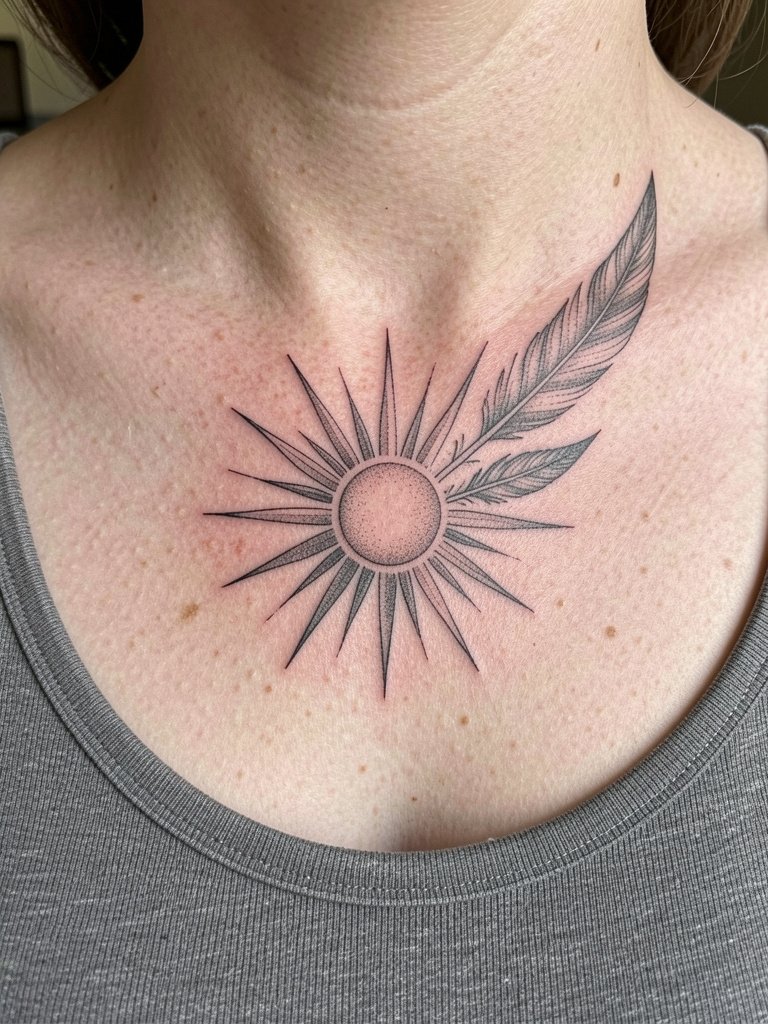
Feather-ray suns soften the geometry into an airy, illustrative motif that suits collarbone placement. The collarbone moves with breathing and bras, so ask the artist to sketch the feather tips slightly shorter than your visual preference so they do not blur into clothing lines after healing. Sessions are short, often under an hour. A common mistake is placing the design too close to the clavicle edge where shirts rub. For show-off outfits, layered delicate chains and an open-neck top frame the collarbone without covering the tattoo.
6. Broken/Melting Abstract Sun on Side Ribcage
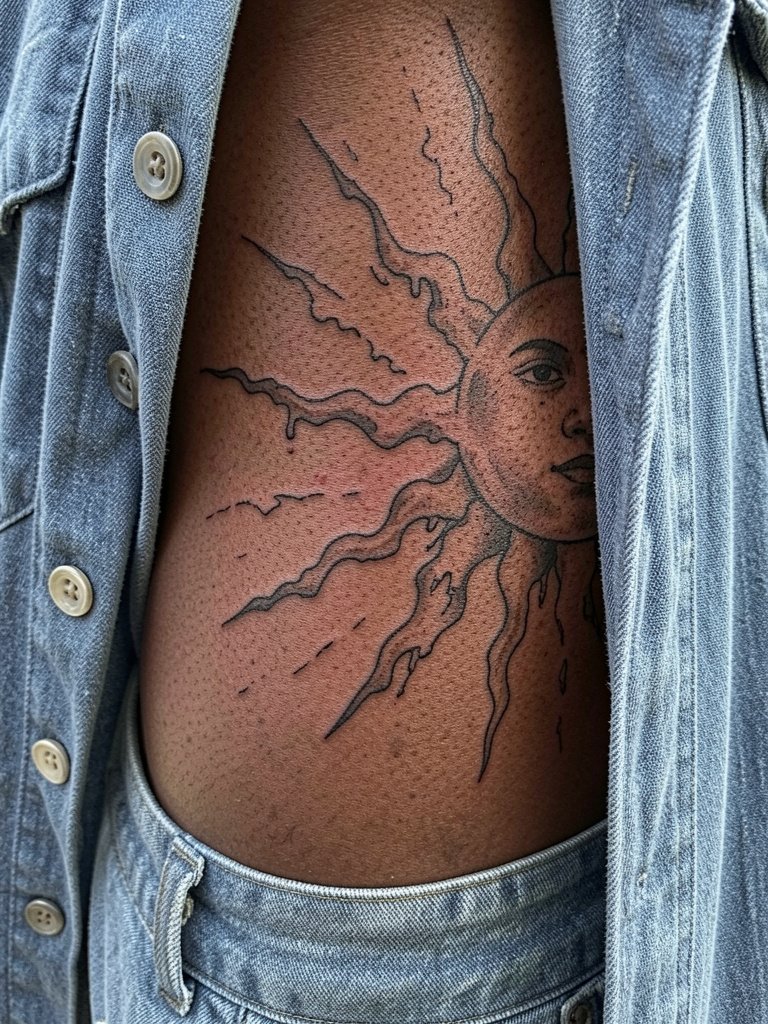
Ribcage placement gives this abstract sun room to breathe visually, but it also exposes a real debate. One camp says fine line on ribs blurs within two years because the skin stretches and shifts constantly under clothing and movement. The other camp argues that with proper needle depth and slightly wider spacing fine line settles fine and will point to healed examples after multiple years. If you want an abstract rib piece, request a slightly heavier lineweight at the outer rays and plan for a possible touch-up at the 5-year mark. Session feel: ribs are higher on the pain chart, bring strategies like steady breathing and a distraction playlist.
7. Mandala Sun Center on Sternum
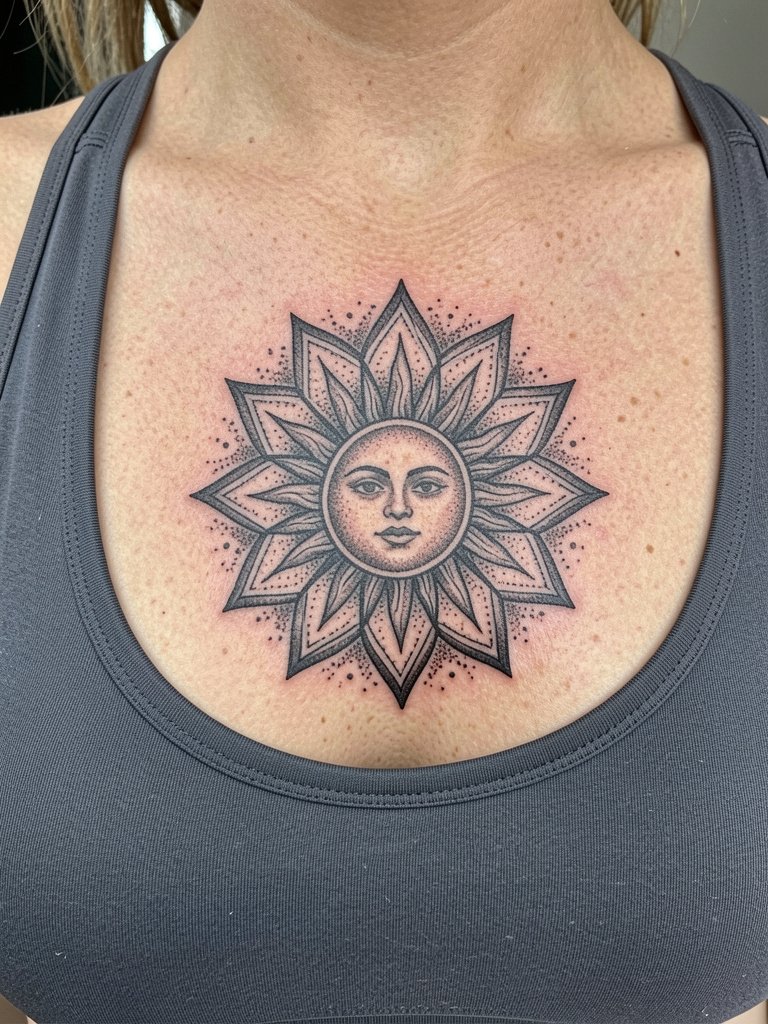
A sternum mandala sun is a statement that benefits from scale and careful spacing. This area can be sensitive and compresses under bras, so discuss how the design sits relative to your bra band and how it will look while lying down. Mandala details should have room; the smallest internal rings need slightly more spacing than they look good at on paper. Expect two to three sessions for a fully detailed center. Because the sternum is intimate, hire someone experienced with chest ornamentals and bring references showing the exact dot work density you want.
8. Blackwork Solid Disc Sun on Outer Forearm
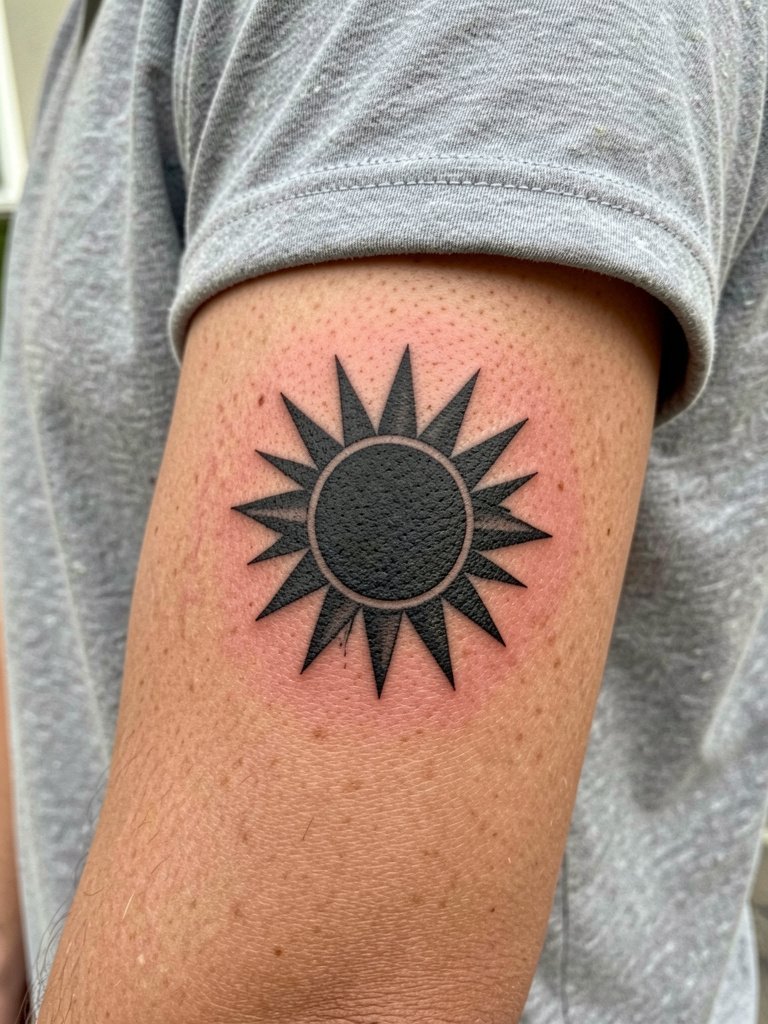
Blackwork suns read boldly and age into a dense silhouette rather than soft lines. The outer forearm tolerates saturated fills well. Tell the artist whether you want a matte solid that stays flat or subtle texture from stipple shading on the rays. A common collector mistake is undersizing a blackwork disc, which makes touch-ups more visible later. Sessions for solid fills move fast but are tiring for the skin; plan a single focused session and bring a loose short-sleeve shirt to avoid cuff pressure. For styling, solid black pairs well with vintage-cut tank tops that let the silhouette stand out.
9. Eclipse Minimal Sun on Inner Thigh
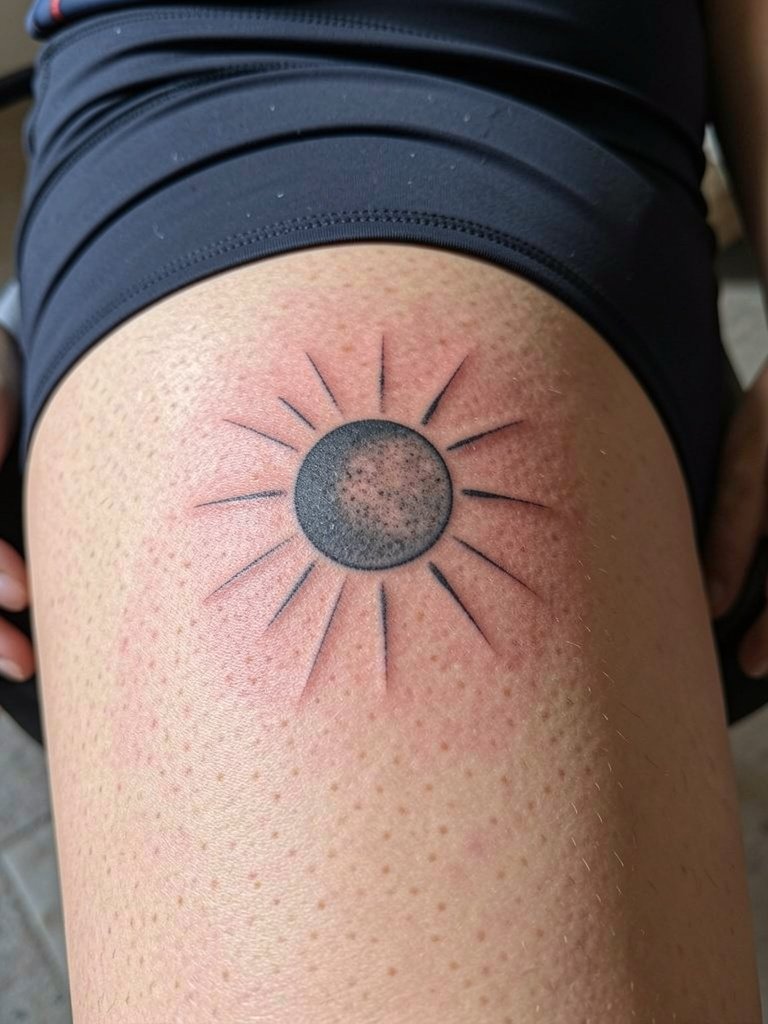
Inner-thigh placements are private and heal differently from limbs due to friction and moisture. The eclipse motif looks striking at micro scale but plan for slightly bolder visible rays so they remain distinct after healing. Discuss with your artist how the dark obscuring circle will be shaded; too much gray can blur into surrounding tissue over time. The session is low visibility and quick, but avoid tight bottoms for the first two weeks. For session wear, pull on loose shorts or a two-piece set so the artist has easy access without fabric rubbing.
10. Sunburst Linework on Finger
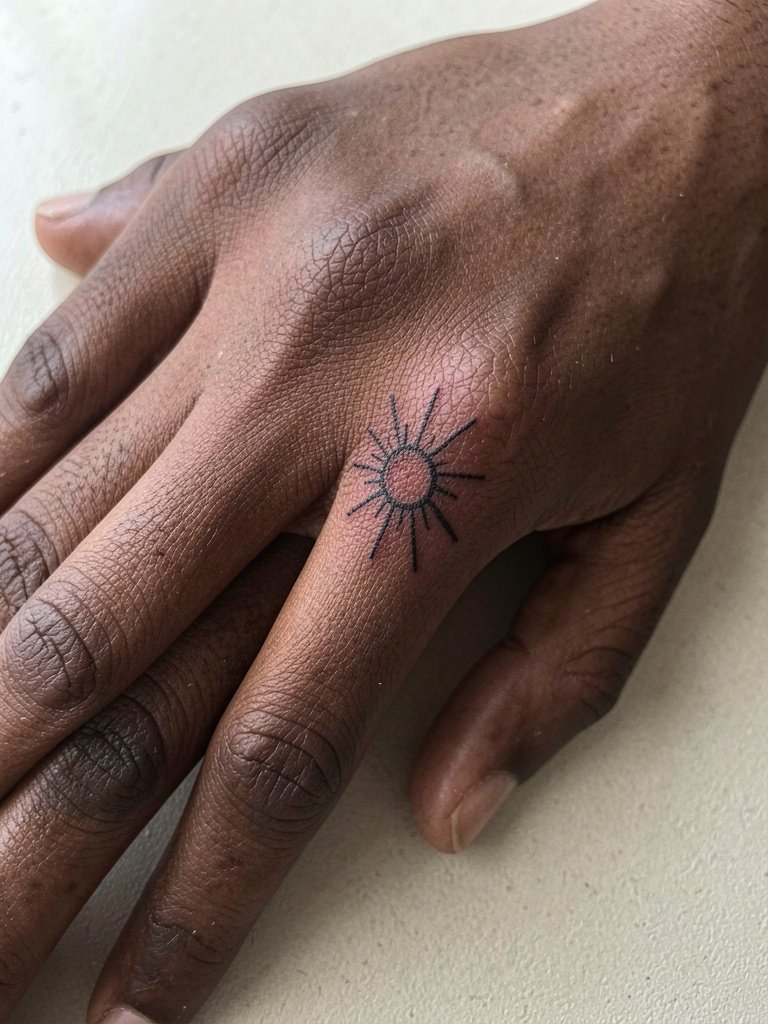
Finger tattoos face high friction and frequent washing, so sunburst linework needs thicker rays than you might like to survive. Expect the shortest session time but the highest chance of fading and eventual touch-up or migration. Ask the artist for a slightly denser core line and plan a possible touch-up within 1–3 years. Avoid wearing rings on the tattoo finger the day of the appointment so there is no immediate pressure on fresh ink. When showing off small finger sunbursts, pair with a minimalist ring set on other fingers to balance the look.
11. Aztec Sun Minimal on Shoulder Cap
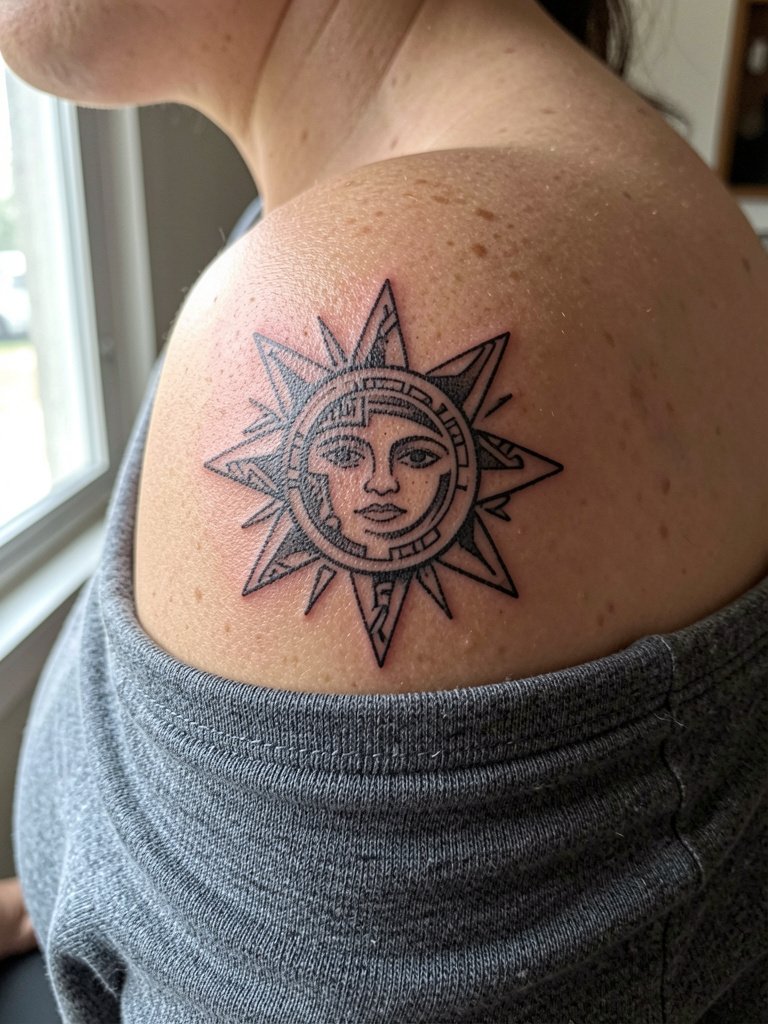
A reduced Aztec sun can honor cultural lines while staying clean and wearable. Because the motif has cultural roots, state that you want a respectful, stylized reduction rather than a direct copy of sacred iconography. The shoulder cap handles geometry well and rarely blurs, but keep the design slightly larger than you think so the small notches and rays do not merge over time. For session comfort and after, wear an off-the-shoulder top so the artist can access the area without tugging fabric.
12. Amaterasu Sun Symbol on Nape
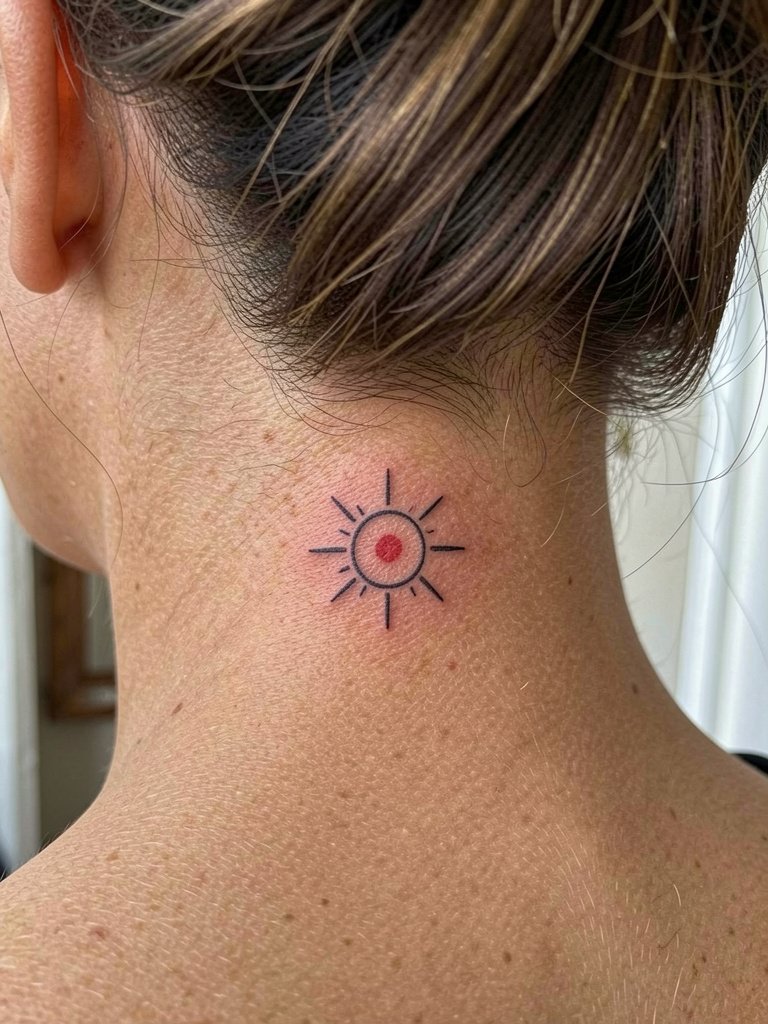
Nape placements make small circular motifs peek out when hair is up. If you want a tiny red center, ask the artist about pigment choices on nape skin, since red can behave differently in shallow placements. The session is quick but you will need to sleep on your side carefully for the first few nights to avoid pressure on the area. For show-off styling, open-back or low-collared dresses reveal the nape; try an open-back top for evenings.
13. Tarot Sun Card Outline Behind the Ear
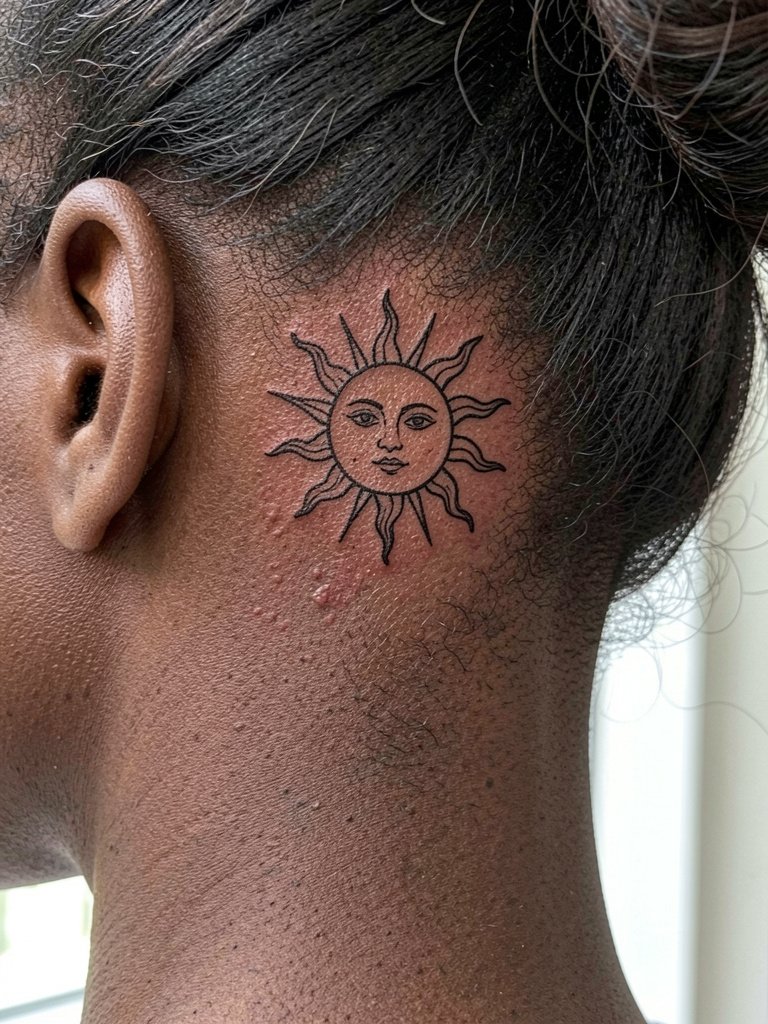
Behind-the-ear tattoos read like private sigils and suit minimalist tarot outlines well. The mastoid area is small, so request a bold-enough outline so the sun disc remains legible in photos. Session times are short and the area is sensitive to buzzing; plan for a quick break if the artist needs to reposition. Wear an updo on appointment day so the artist has clear access and show-off the result with a simple updo hair tool set when you want the piece visible.
14. Sunrise Landscape Micro on Ankle
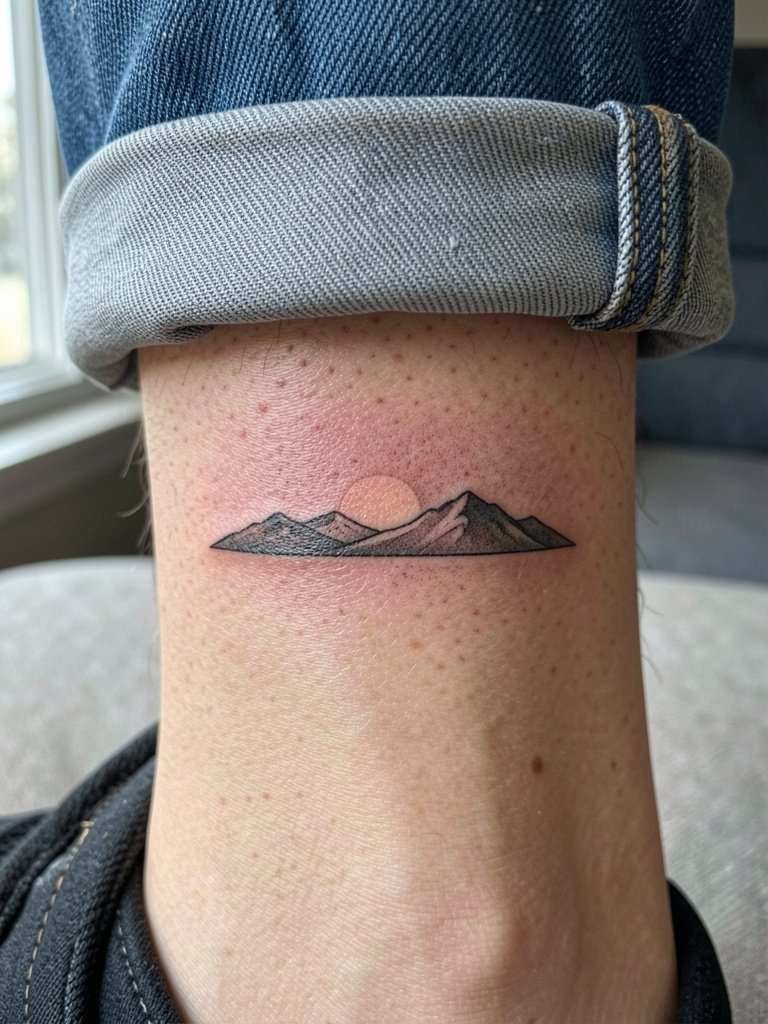
Micro-realism suns bring landscape depth into a tiny frame. The ankle experiences shoe friction and seasonal exposure, so tell the artist you want higher-contrast horizon lines and slight shading rather than soft gradients that wash out. Sessions are usually under an hour for a micro scene. For showing off the detail, choose open-toe sandals or low boots; a neutral sandal keeps the ankle visible without distraction.
15. Sol Invictus Minimal on Lower Back
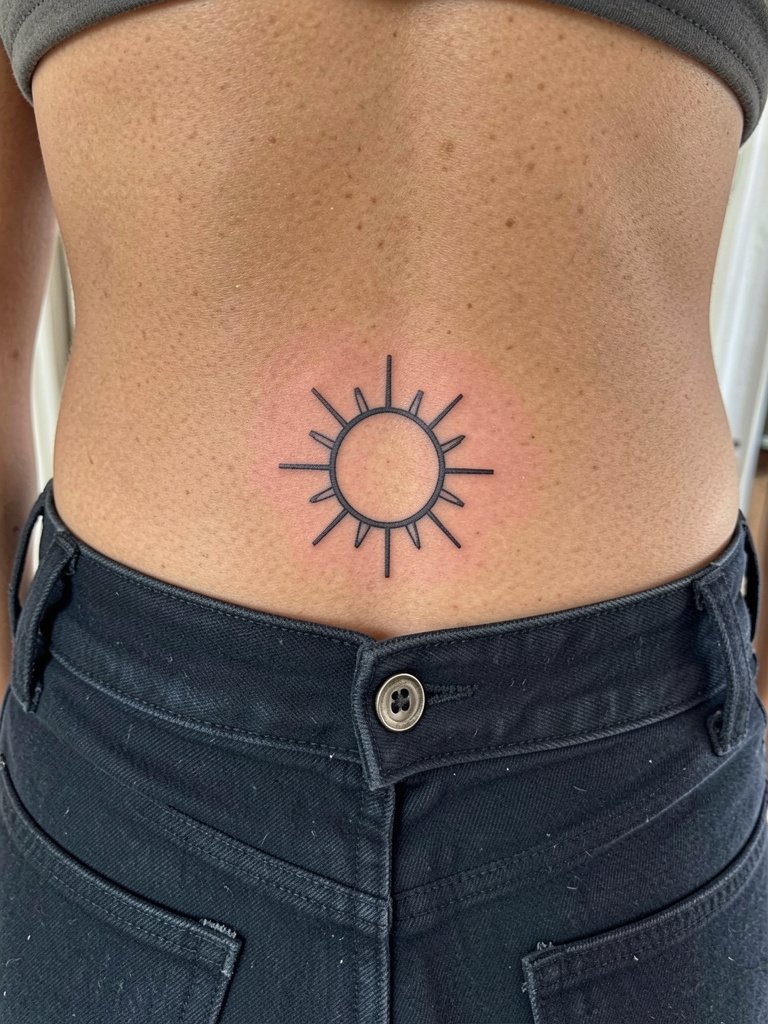
A lower-back Sol Invictus motif photos well when the rays are geometric and evenly spaced. This placement is forgiving for small geometric touches, but keep the rays slightly bolder than visual sketches to account for waistband pressure. Plan a single-session appointment with the artist showing full-size stencils so the piece sits centered on your spine. For wardrobe, low-rise pants or skirts reveal the small motif; try a low rise pant when you want it visible.
16. Sun With Dot-Mandala Hybrid on Rib Side
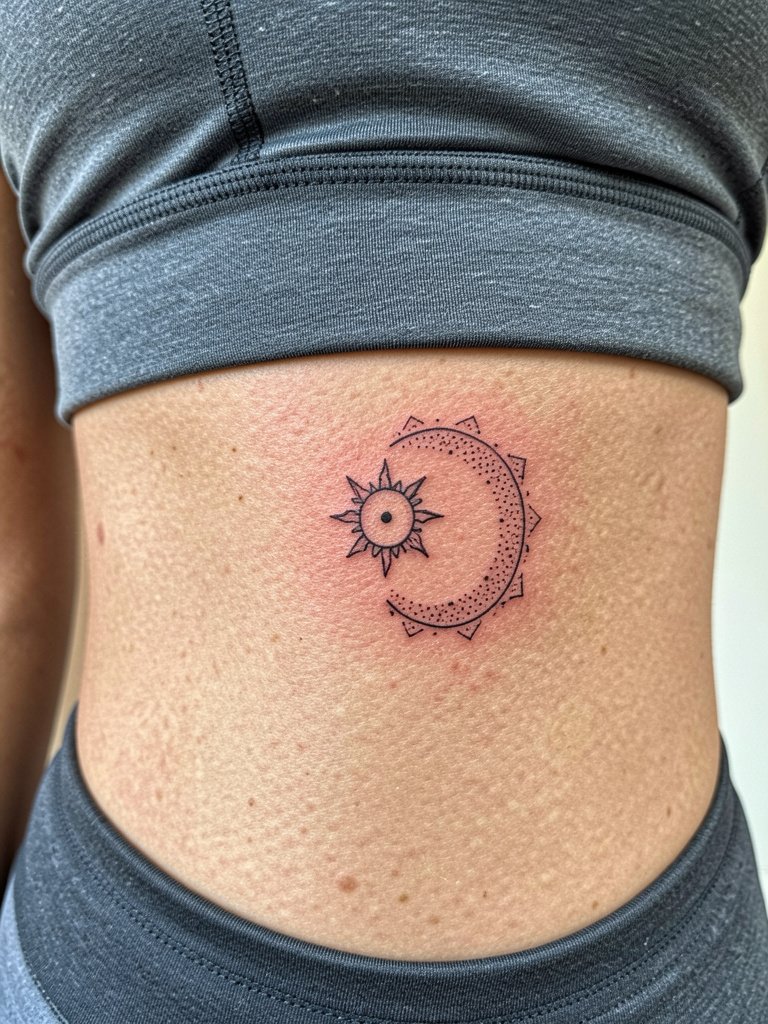
Combining a dot center with minimal mandala arcs gives symbolic complexity without a large footprint. Since the ribcage is contentious for fine lines, ask the artist to space dot work slightly wider and to test a small healed sketch placement. Expect a short session but plan for possible touch-up. The rib site is sensitive to tight clothes, so bring a loose button-down the day of the appointment and avoid underwires for the first week.
17. Tiny Radiant Compass on Sternum Side
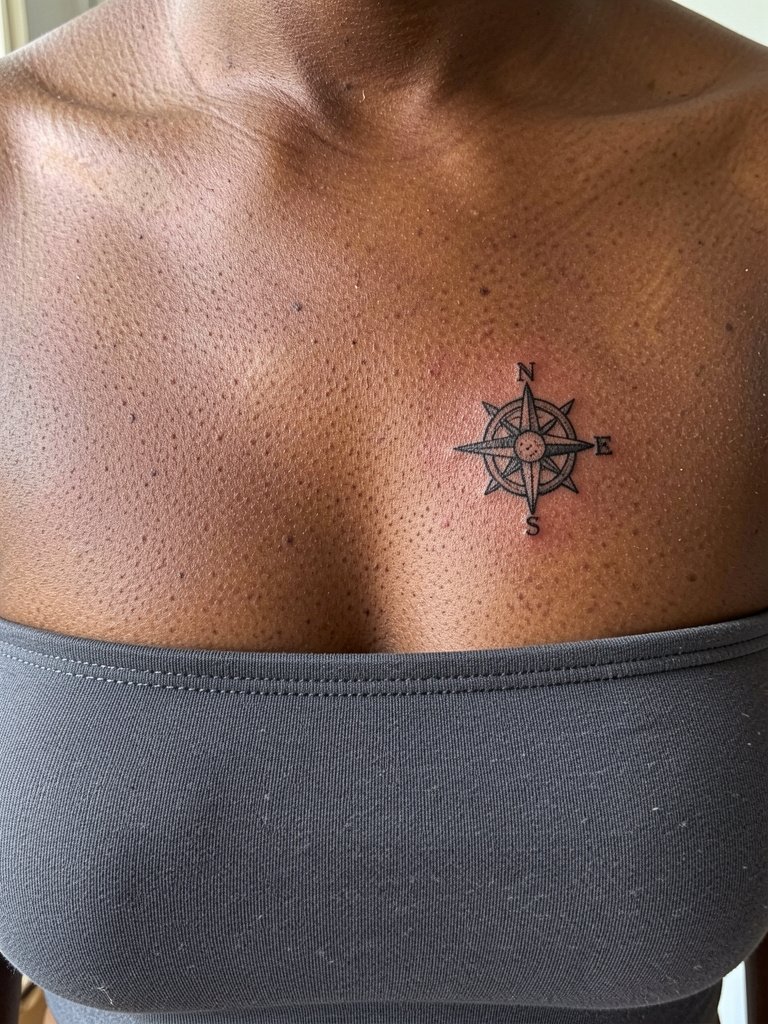
A tiny compass-sun near the sternum is discreet and reads as a personal marker. Because the sternum area can be tender, discuss needle pressure expectations and how deep you want the stipple shading. Choose a stencil placement while you are standing and again lying down so the artist can position it for both body states. Session wear for access: a strapless or bandeau top helps the artist see the sternum without adjusting clothes.
18. Minimal Solar Glyph on Upper Thigh
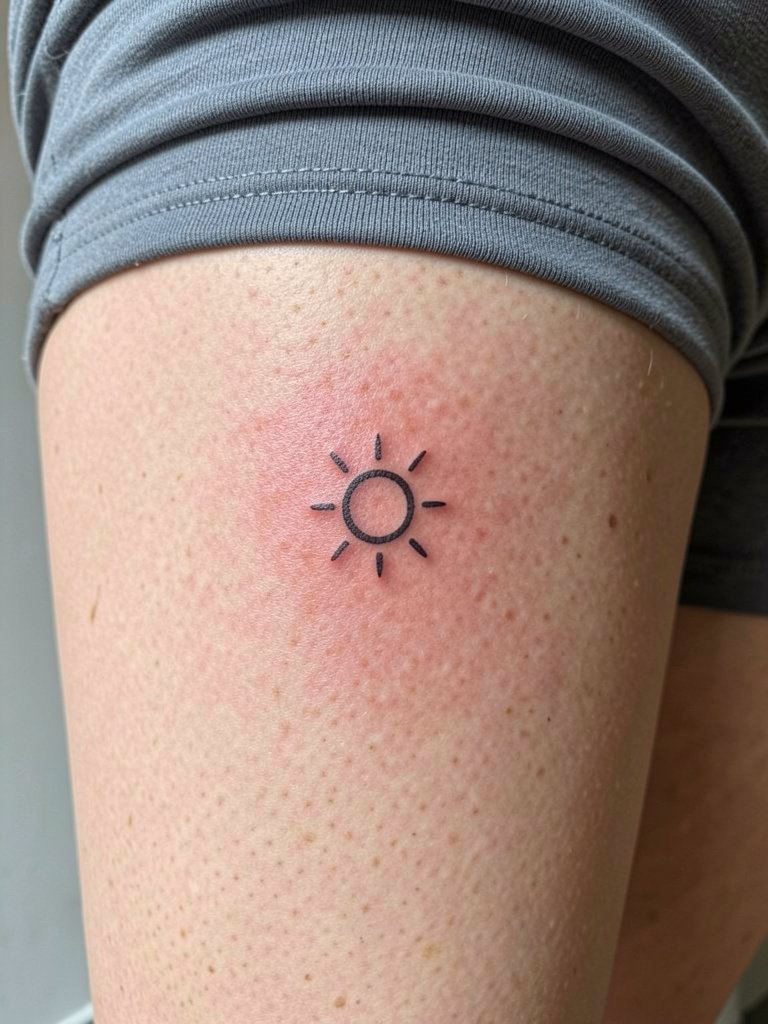
Upper-thigh placements are great for larger micro motifs that remain private. Talk to the artist about how the glyph looks when you sit and when you stand because thigh muscle shape alters the negative space. The session is low-visibility and usually quick, but avoid tight jeans or belts that press on the area while it heals. For session comfort, wear loose drawstring pants or shorts for easy access.
19. Concentric Rings Sun on Outer Calf
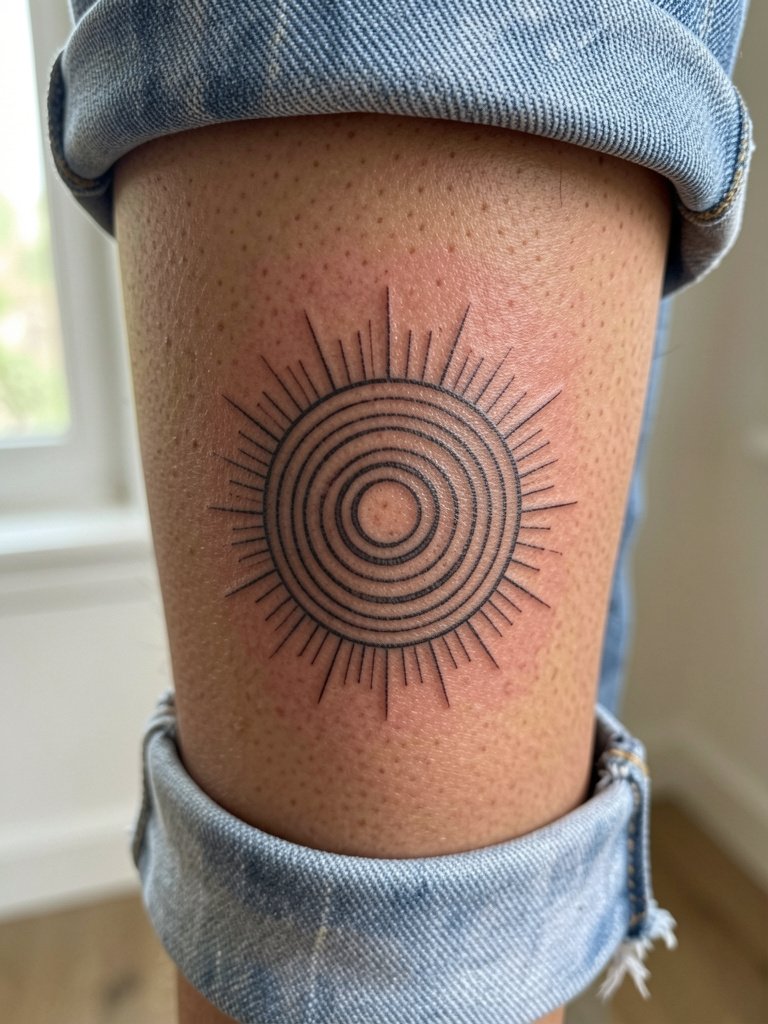
The outer calf is a forgiving canvas for concentric designs and holds linework without much blowout. If you want the inner ring to remain clear at year five, ask for slightly heavier inner lines and lighter outer rings so the hierarchy survives aging. Sessions run 30–45 minutes depending on ring count. For showing the calf, cropped jeans and neutral sneakers frame the work.
20. Tiny Solar Coordinate Tattoo near Ankle
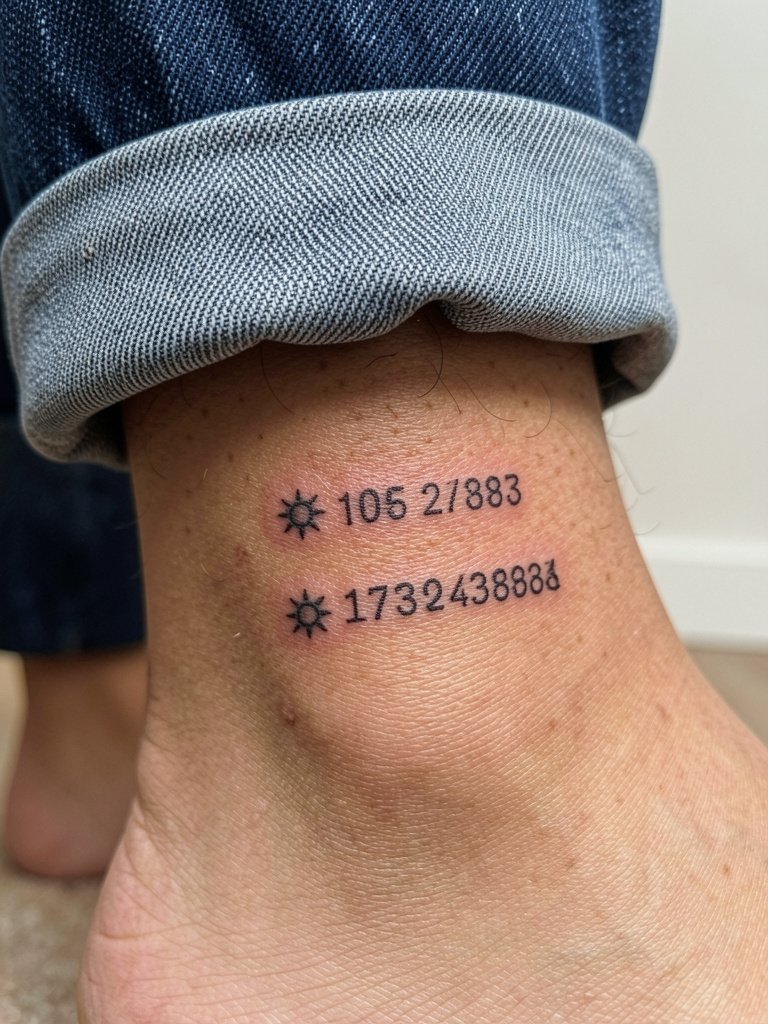
Pairing a tiny sun with coordinates makes the motif personal without cliché phrasing. Be precise with the exact text you want because tiny lettering can blur into smudges over time; choose a monospace or thin serif and check a physical stencil at appointment. The ankle endures shoe friction, so expect the need for a touch-up earlier than limb placements. For footwear that shows off the piece, try open-toe sandals.
21. Micro Solar Crest on Inner Arm
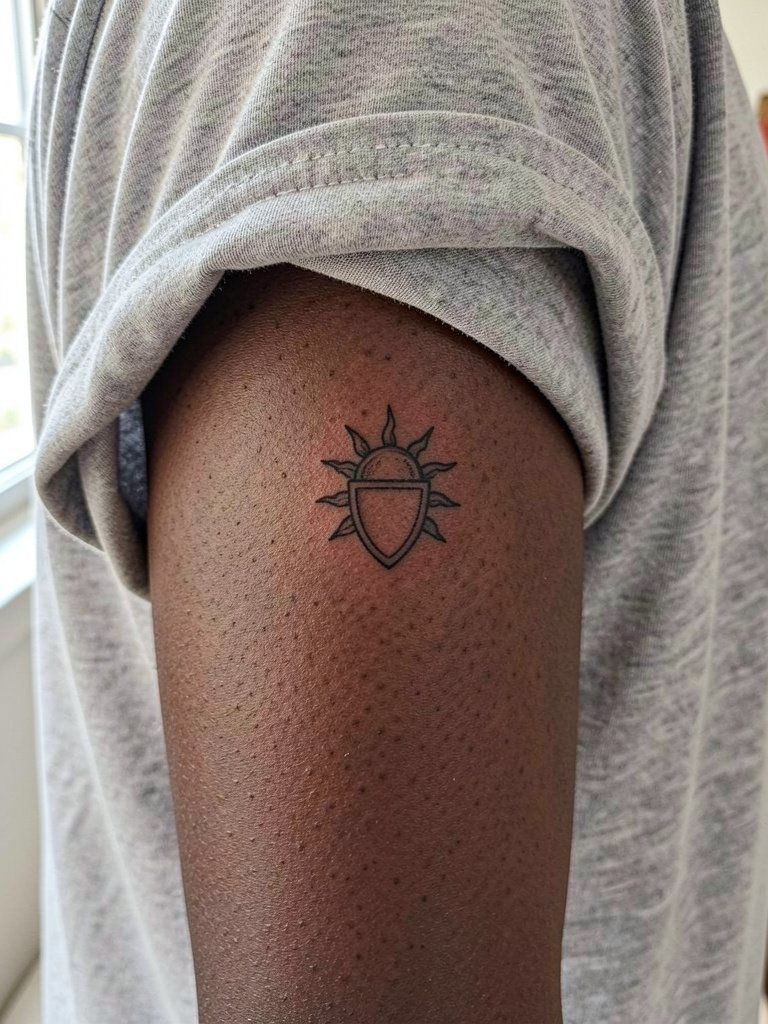
The inner arm shields micro crests from daily knocks and lets small heraldic details read for longer. Request that the shield's inner lines get a touch of spacing so stipple shading does not fill the negative space. Session time is brief and the area tolerates small touch-ups easily if needed. For the appointment wear a loose short-sleeve so the artist can roll the sleeve without tugging on fresh ink.
Before You Book
Small wrist and inner-arm pieces, and the rib and sternum motifs above, have different healing needs so a few tactical items smooth the session and the first week.
- Fragrance-free thin tattoo balm. A thinner balm avoids clogging pores on fine-line work and is helpful for the collarbone and inner wrist pieces listed above.
- Second-skin protective film. A second-skin dressing can speed initial healing and reduce scabbing on areas like the forearm and ankle.
- Topical numbing cream. For higher-pain zones like ribs or sternum, numbing cream applied per directions can help people through the session.
- Fine-line touch-up kit. Keep a simple touch-up kit for tiny pieces that might need a refresh after a few years.
- SPF 50 broad spectrum sunscreen. Sun protection preserves linework and is especially important for exposed placements like wrists and collarbone.
Frequently Asked Questions
Q: How much does a minimalist sun tattoo usually cost?
A: Expect a range depending on size and placement. Small fine-line wrist or finger suns commonly fall in the one-hundred-to-two-hundred range, while detailed geometric or mandala centers can push into the two-hundred-to-four-hundred-plus range. Remember that touch-ups and artist minimums can affect the final price.
Q: Should I use Saniderm or traditional dry healing for a small sun tattoo?
A: Artists and healers split into two camps on this. One camp says second-skin products lock in moisture, lower infection risk, and speed up initial healing. The other camp prefers dry healing, arguing that letting the tattoo breathe prevents clogged pores and can lead to better long-term saturation. Choose based on your skin type and the artist's experience with the method, and ask for a clear day-one routine.
Q: How do I find artists who specialize in fine-line sun tattoos without relying on a single name?
A: Search hashtags like #minimalistsuntattoo, #finelinesuntattoo, and #geometricsuntattoo on Instagram and TikTok and filter results by location. Tattoodo and the Inked App let you search portfolios by keyword phrases such as "fine line sun" and often show healed examples. Reddit threads in r/tattoos and r/TattooDesigns surface peer recommendations and healed shots across skin tones.
Q: Will a fine-line sun on my ribs blur quickly?
A: The ribcage is a high-movement, high-friction area so thin lines can soften faster than on limbs. One group of artists says ribs cause blur within two years because of constant skin stretch. Another group says with proper spacing and slightly heavier depth the lines can last much longer. If you love the ribs for placement, plan for a one- to three-year touch-up window and ask the artist to space interior elements a hair wider than the initial sketch.
Q: What should I wear to the appointment for a collarbone or sternum sun?
A: Wear something that gives the artist full access without you adjusting it mid-session. For collarbone and sternum work that means a strapless, bandeau, or button-down you can easily remove, such as a strapless top. Comfortable clothing also helps you relax and reduces fabric friction on fresh ink.
Q: How often do fine-line suns need touch-ups?
A: Many fine-line pieces benefit from a touch-up in the five-to-ten-year window depending on placement and sun exposure. High-friction zones like fingers and ribs often need refreshes earlier. Keep touch-up timelines realistic and budget time with the artist for a check-in after the first year.
Q: My skin is dark. How can I make a minimalist sun show up in photos?
A: Higher contrast and slightly heavier lineweight help. Ask to see healed photos of similar work on comparable skin tones and discuss ink saturation strategies. Strong central shapes like a dot or solid disc anchor the design visually and translate better in photos than ultra-thin rays alone.